
Cupping therapy hijama and auto immune thyroid disease
- Slides: 43
Cupping therapy (hijama) and auto immune thyroid disease DR. AMAL MOHAMMED OBEID MD DIRECTOR OF TRAINING IN PROPHETIC MEDICAL CHAIR CLINICS
Research team �Dr. Amal M. obeid: prophetic clinics �Prof Faiza Qary: endocrinology �Dr Ahmad Ajamy: Radiology �Dr M. Amine: medical statistics �Prof Soad Jaoni: chair president �Prof Sawsan Rohaim: chair vice presedent �Ms Zakia Abdullsattar: senior nurse �Mrs ofilia: laboratory
Points to be discussed 12345 - THEORY. OBJECTIVES. METHOD. OUT COMES. CONCLUSION.
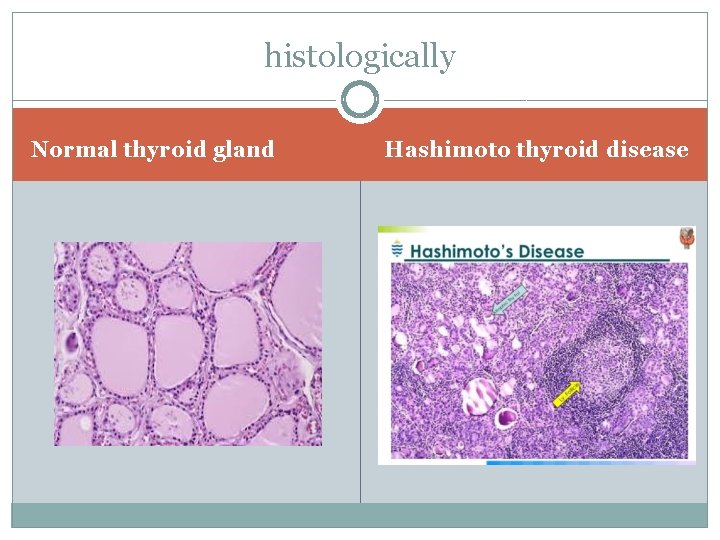
Hashimoto thyroid disease �Auto immune thyroid disease characterized by TPO: Thyroid peroxidase antibody TG: anti thyroglobulin antibody Resulting in lymphocytic infiltration of the thyroid gland which cause it to decrease its function partially or completely.
histologically Normal thyroid gland Hashimoto thyroid disease
Current medical management �Thyroxin supplementation, life long treatment Prognosis �Varying degrees of fibrosis and thyroid enlargement �Risk of the developing other auto immune conditions �Increased risk of thyroid lymphoma (rare).
Study Objective THE EFFECT OF ADDING HIJAMA (CUPPING THERAPY) TO THE CURRENT MEDICAL MANAGEMENT OF PATIENTS WITH AUTO IMMUNE THYROID DISEASE.
plan TO START WITH A SMALL PILOT STUDY AIMING FOR DESIGNING AN ACCURATE PLAN FOR A BIGGER STUDY
Why Hijama for hashimoto thyroiditis EVIDENCE BASED MEDICINE
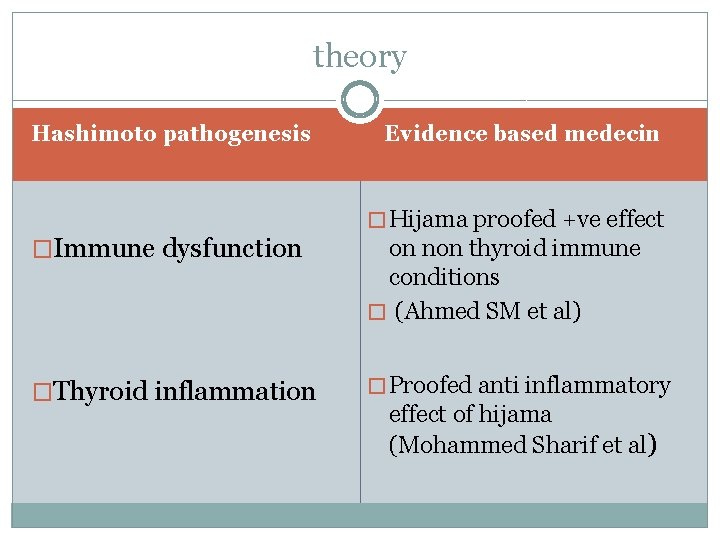
theory Hashimoto pathogenesis Evidence based medecin � Hijama proofed +ve effect �Immune dysfunction on non thyroid immune conditions � (Ahmed SM et al) �Thyroid inflammation � Proofed anti inflammatory effect of hijama (Mohammed Sharif et al)
Where to perform hijama ACCORDING TO THE PATHOLOGICAL PROCESS
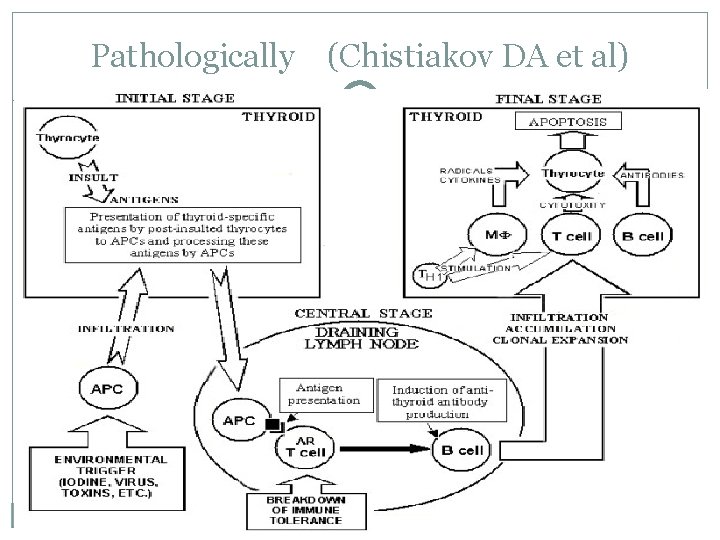
Pathologically (Chistiakov DA et al)
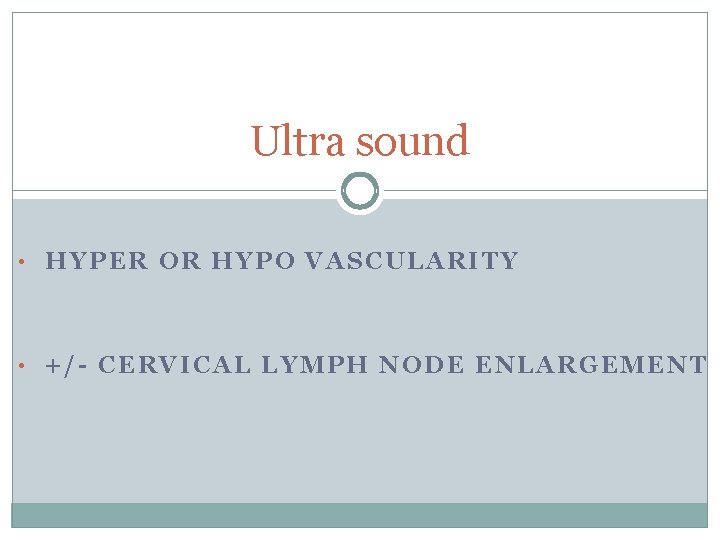
Ultra sound • HYPER OR HYPO VASCULARITY • +/- CERVICAL LYMPH NODE ENLARGEMENT
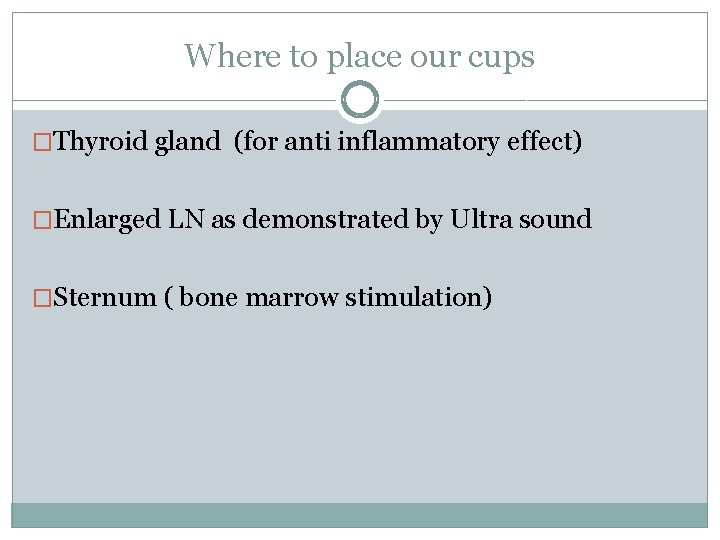
Where to place our cups �Thyroid gland (for anti inflammatory effect) �Enlarged LN as demonstrated by Ultra sound �Sternum ( bone marrow stimulation)
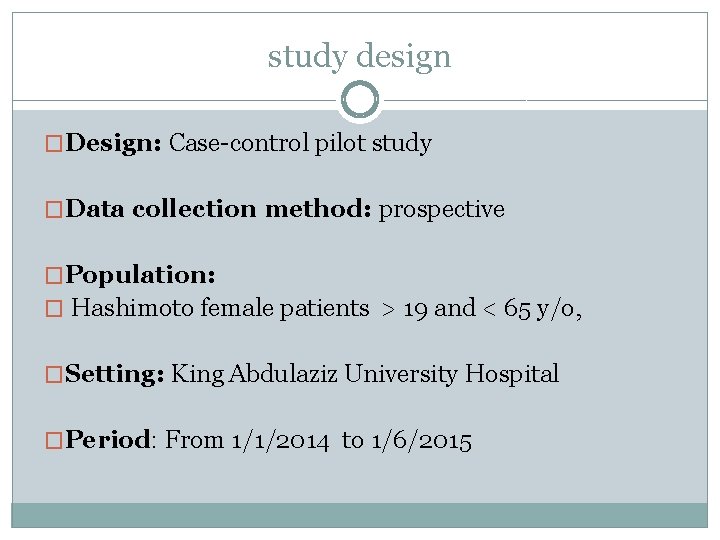
study design �Design: Case-control pilot study �Data collection method: prospective �Population: � Hashimoto female patients > 19 and < 65 y/o, �Setting: King Abdulaziz University Hospital �Period: From 1/1/2014 to 1/6/2015
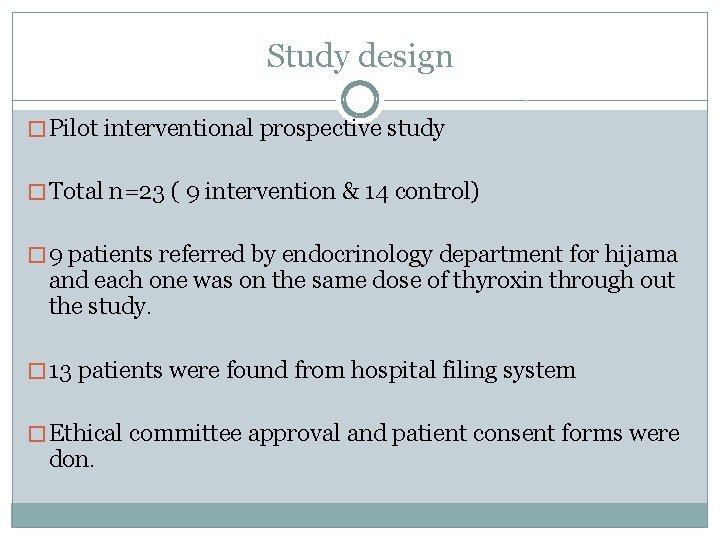
Study design � Pilot interventional prospective study � Total n=23 ( 9 intervention & 14 control) � 9 patients referred by endocrinology department for hijama and each one was on the same dose of thyroxin through out the study. � 13 patients were found from hospital filing system � Ethical committee approval and patient consent forms were don.
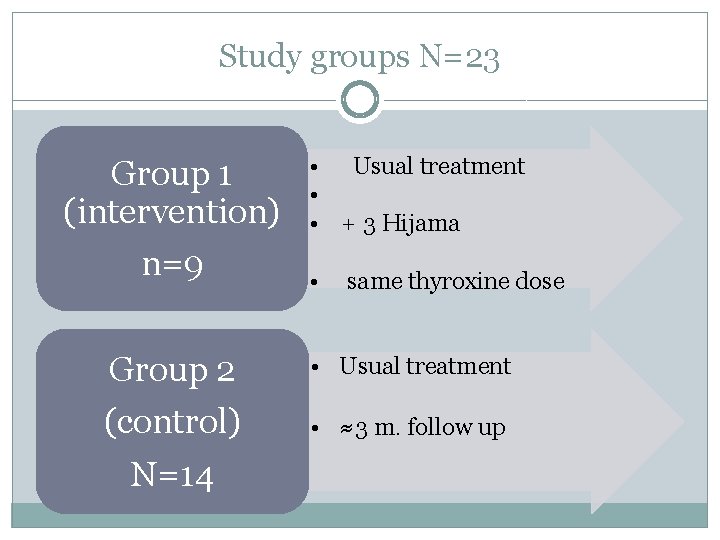
Study groups N=23 Group 1 (intervention) n=9 • Usual treatment • • + 3 Hijama Group 2 • Usual treatment (control) N=14 • ≈3 m. follow up • same thyroxine dose
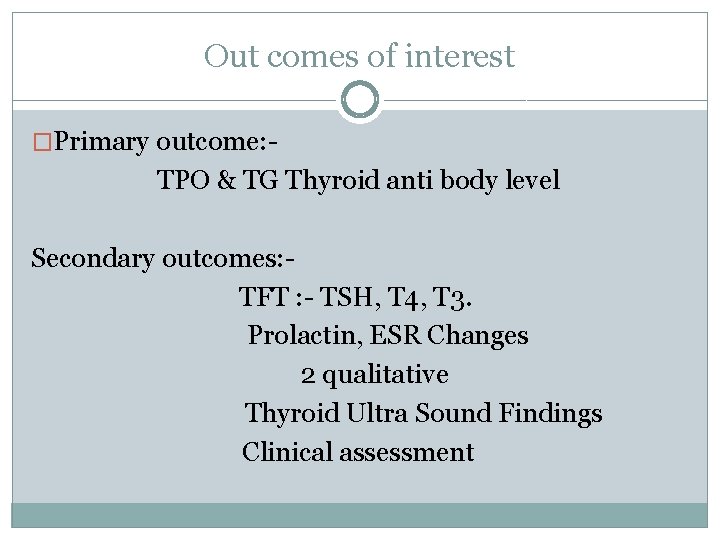
Out comes of interest �Primary outcome: - TPO & TG Thyroid anti body level Secondary outcomes: TFT : - TSH, T 4, T 3. Prolactin, ESR Changes 2 qualitative Thyroid Ultra Sound Findings Clinical assessment
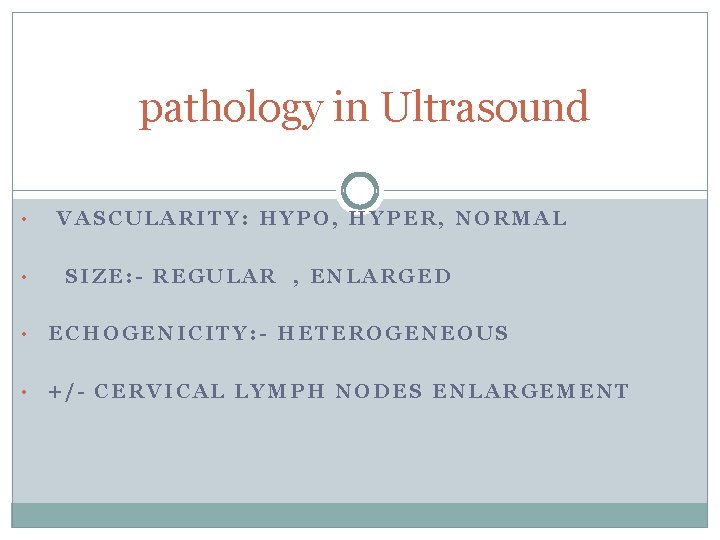
pathology in Ultrasound • • VASCULARITY: HYPO, HYPER, NORMAL SIZE: - REGULAR , ENLARGED • ECHOGENICITY: - HETEROGENEOUS • +/- CERVICAL LYMPH NODES ENLARGEMENT
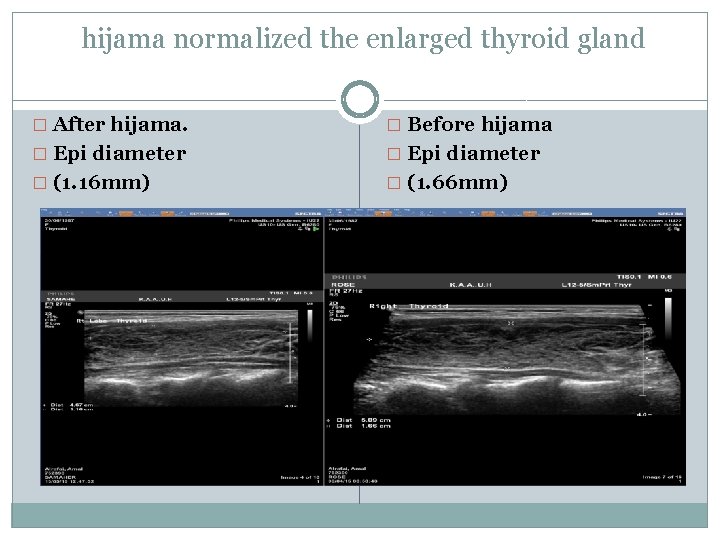
hijama normalized the enlarged thyroid gland � After hijama. � Before hijama � Epi diameter � (1. 16 mm) � (1. 66 mm)
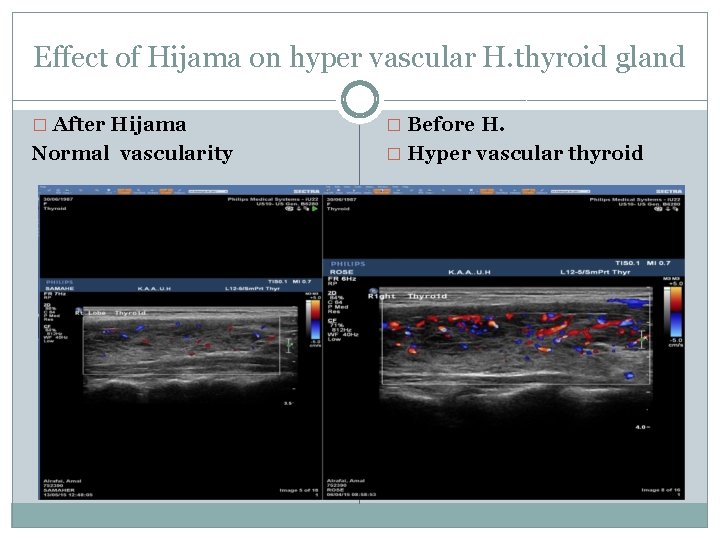
Effect of Hijama on hyper vascular H. thyroid gland � After Hijama � Before H. Normal vascularity � Hyper vascular thyroid
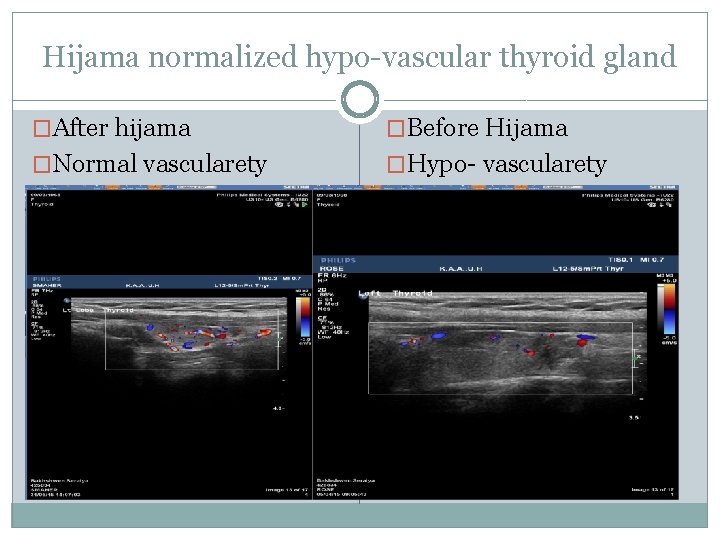
Hijama normalized hypo-vascular thyroid gland �After hijama �Before Hijama �Normal vascularety �Hypo- vascularety
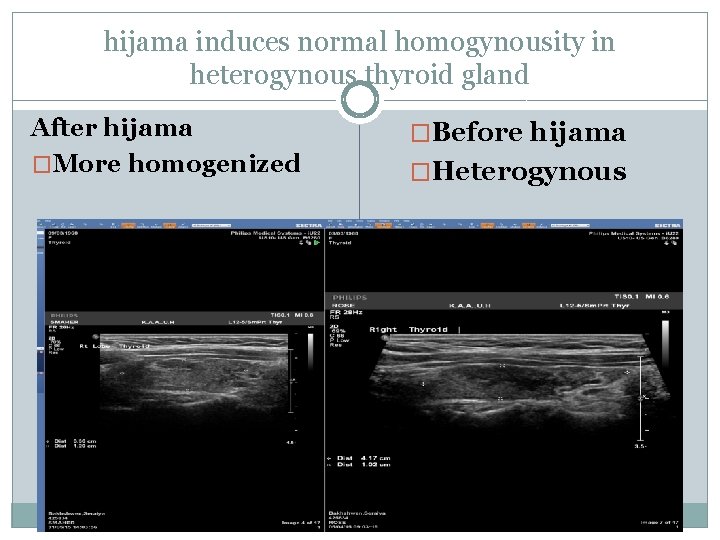
hijama induces normal homogynousity in heterogynous thyroid gland After hijama �More homogenized �Before hijama �Heterogynous
ultra sound changes with hijama �Brings tissues back towards normal physiological status. �Normalization of : �Size (thyroid and lymph node). �Vascularity �Homogeneous.
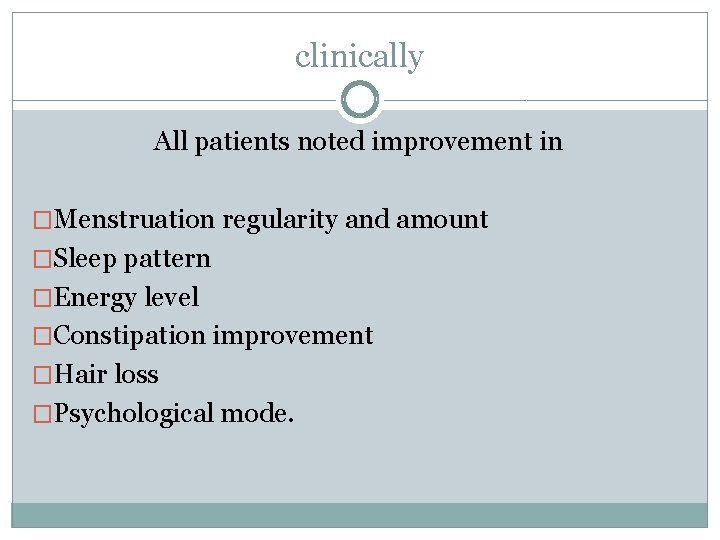
clinically All patients noted improvement in �Menstruation regularity and amount �Sleep pattern �Energy level �Constipation improvement �Hair loss �Psychological mode.
Results
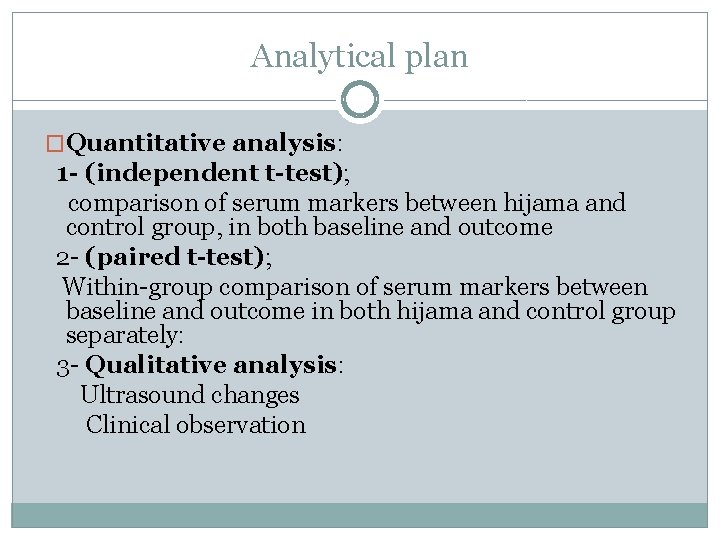
Analytical plan �Quantitative analysis: 1 - (independent t-test); comparison of serum markers between hijama and control group, in both baseline and outcome 2 - (paired t-test); Within-group comparison of serum markers between baseline and outcome in both hijama and control group separately: 3 - Qualitative analysis: Ultrasound changes Clinical observation
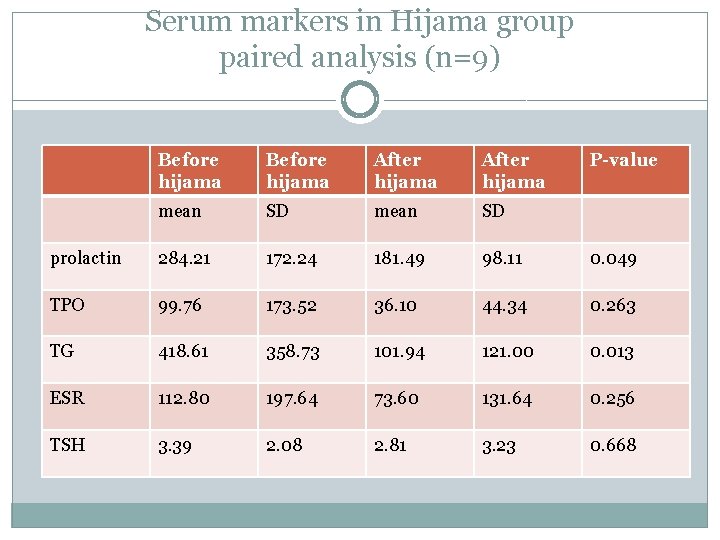
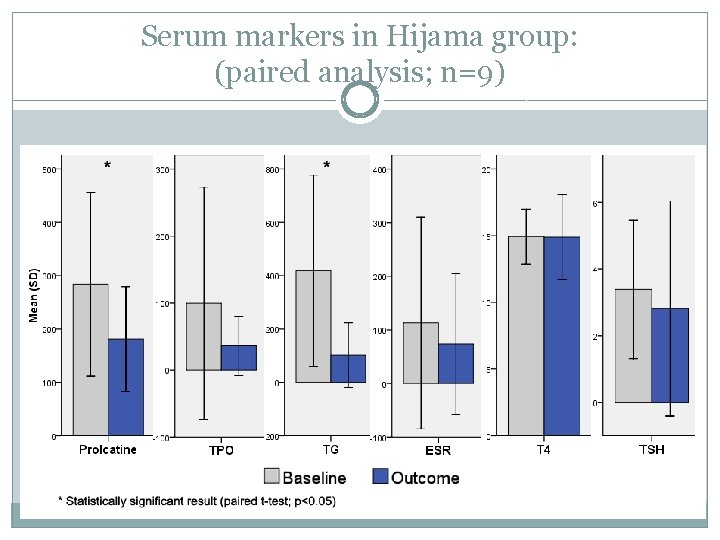
Serum markers in Hijama group paired analysis (n=9) Before hijama After hijama P-value mean SD prolactin 284. 21 172. 24 181. 49 98. 11 0. 049 TPO 99. 76 173. 52 36. 10 44. 34 0. 263 TG 418. 61 358. 73 101. 94 121. 00 0. 013 ESR 112. 80 197. 64 73. 60 131. 64 0. 256 TSH 3. 39 2. 08 2. 81 3. 23 0. 668
Serum markers in Hijama group: (paired analysis; n=9)
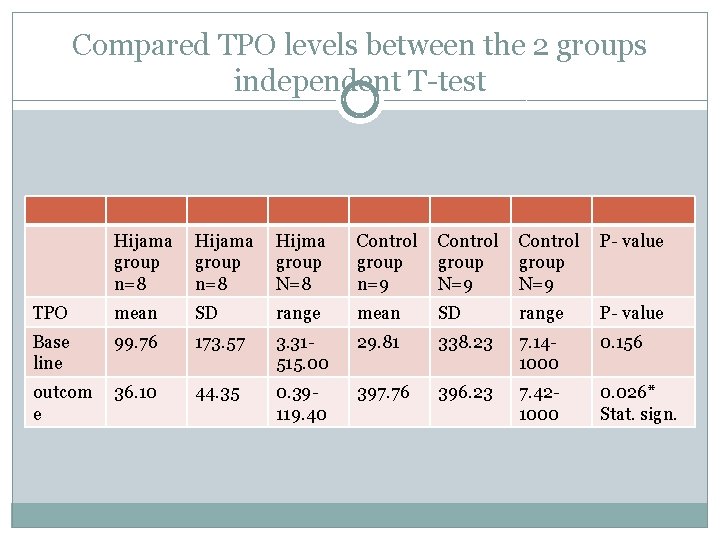
Compared TPO levels between the 2 groups independent T-test Hijama group n=8 Hijma group N=8 Control group n=9 Control group N=9 P- value TPO mean SD range P- value Base line 99. 76 173. 57 3. 31515. 00 29. 81 338. 23 7. 141000 0. 156 outcom e 36. 10 44. 35 0. 39119. 40 397. 76 396. 23 7. 421000 0. 026* Stat. sign.
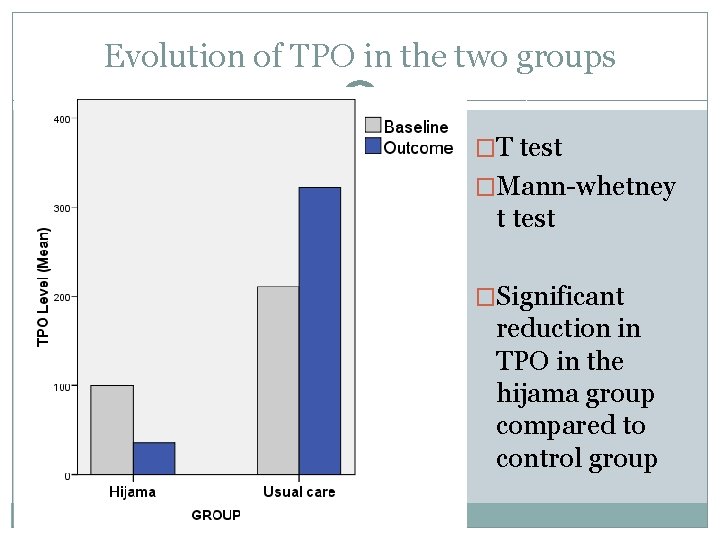
Evolution of TPO in the two groups �T test �Mann-whetney t test �Significant reduction in TPO in the hijama group compared to control group
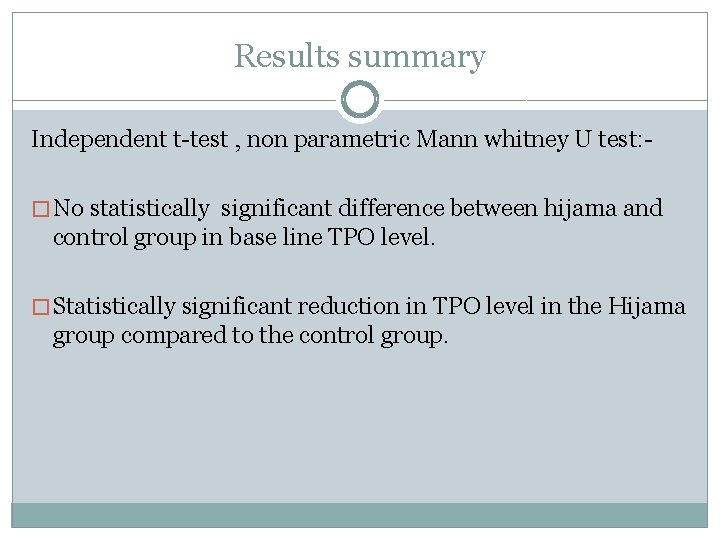
Results summary Independent t-test , non parametric Mann whitney U test: � No statistically significant difference between hijama and control group in base line TPO level. � Statistically significant reduction in TPO level in the Hijama group compared to the control group.
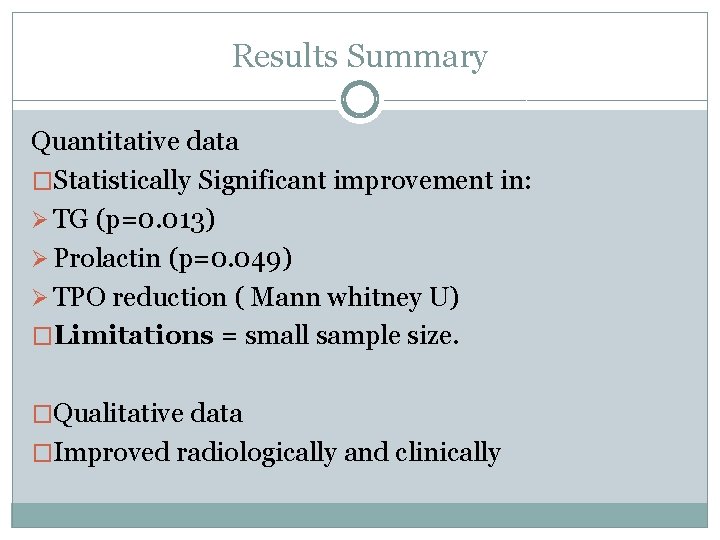
Results Summary Quantitative data �Statistically Significant improvement in: Ø TG (p=0. 013) Ø Prolactin (p=0. 049) Ø TPO reduction ( Mann whitney U) �Limitations = small sample size. �Qualitative data �Improved radiologically and clinically
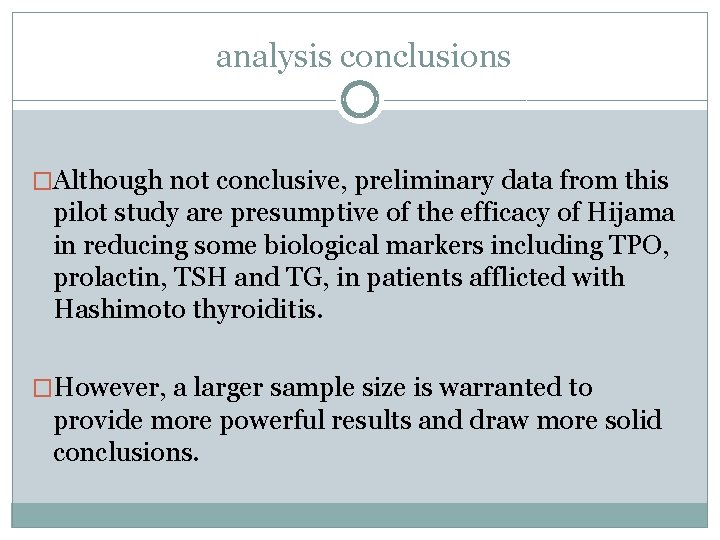
analysis conclusions �Although not conclusive, preliminary data from this pilot study are presumptive of the efficacy of Hijama in reducing some biological markers including TPO, prolactin, TSH and TG, in patients afflicted with Hashimoto thyroiditis. �However, a larger sample size is warranted to provide more powerful results and draw more solid conclusions.
Plolonged hijama course 2 PATIENTS CONTINUED ON HIJAMA FOR 11 SESSIONS
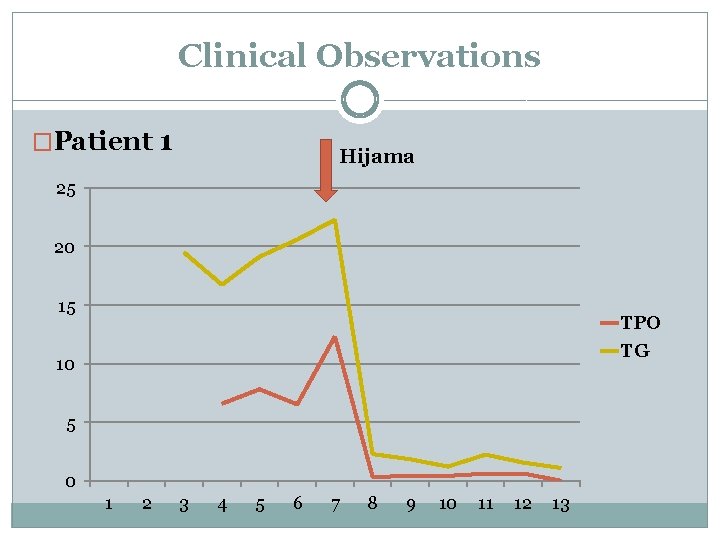
Clinical Observations �Patient 1 Hijama 25 20 15 TPO TG 10 5 0 1 2 3 4 5 6 7 8 9 10 11 12 13
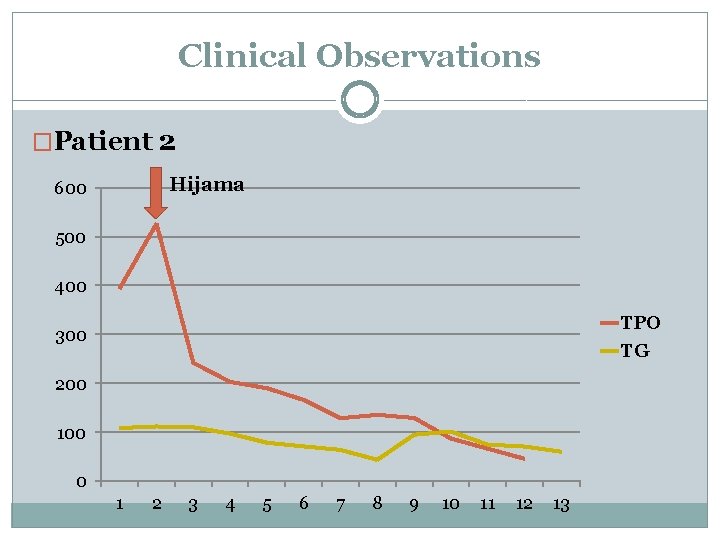
Clinical Observations �Patient 2 Hijama 600 500 400 TPO 300 TG 200 100 0 1 2 3 4 5 6 7 8 9 10 11 12 13
Clinical interpretation of data
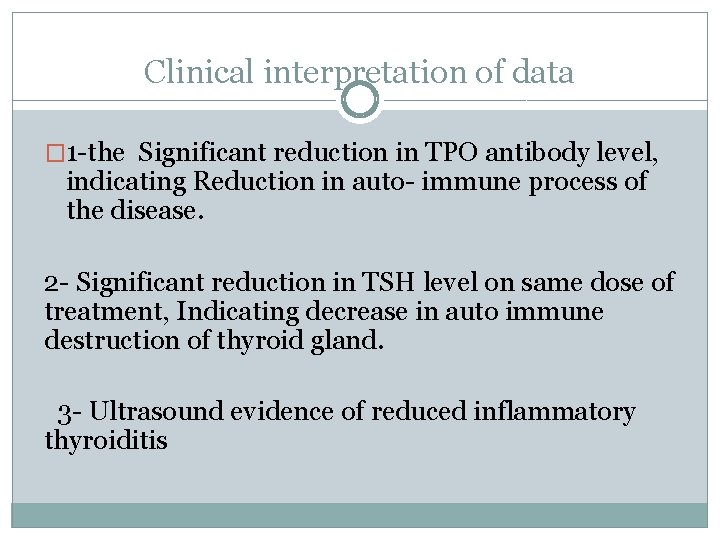
Clinical interpretation of data � 1 -the Significant reduction in TPO antibody level, indicating Reduction in auto- immune process of the disease. 2 - Significant reduction in TSH level on same dose of treatment, Indicating decrease in auto immune destruction of thyroid gland. 3 - Ultrasound evidence of reduced inflammatory thyroiditis
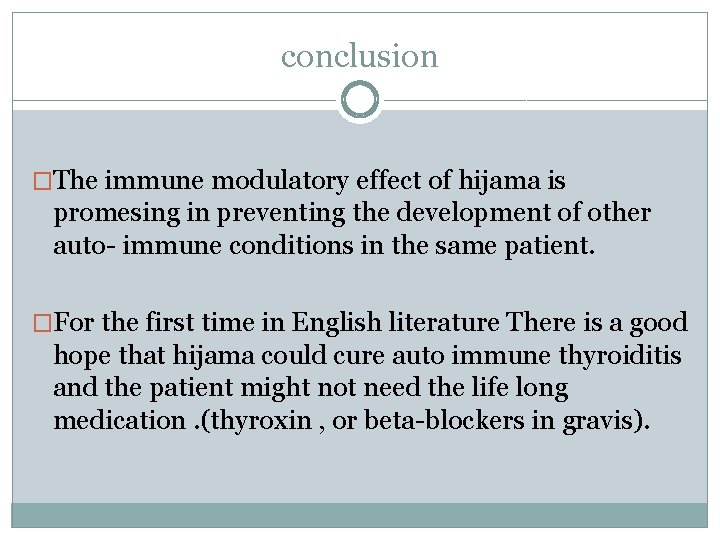
conclusion �The immune modulatory effect of hijama is promesing in preventing the development of other auto- immune conditions in the same patient. �For the first time in English literature There is a good hope that hijama could cure auto immune thyroiditis and the patient might not need the life long medication. (thyroxin , or beta-blockers in gravis).
Future recommendations �Bigger sample size �Longer study duration �Promising for auto immune thyroid disease �Include gravis disease (high antibody and high T 4 on B- blockers)
References � Ahmed SM et al; immune modulatory effect of blood letting cuppng therapy in patients with rhumatoid arthritis; Egypt J immunol. 2005; 12(2): 39 -51 � Mohammed Sharif S. et al; evaluation of wet cupping treatment in patients with chronic articaria; The open conference journal, 2013, 3, 1 -5 � Chistiakov DA et al; immunogenesis of hashimoto thyroiditis; J auto immune disease. Mar; 11; 2(1)pub. Med