
HLTAAP 002 Confirm Physical Health Status Lesson 6
- Slides: 26
HLTAAP 002 Confirm Physical Health Status Lesson 6 Endocrine System
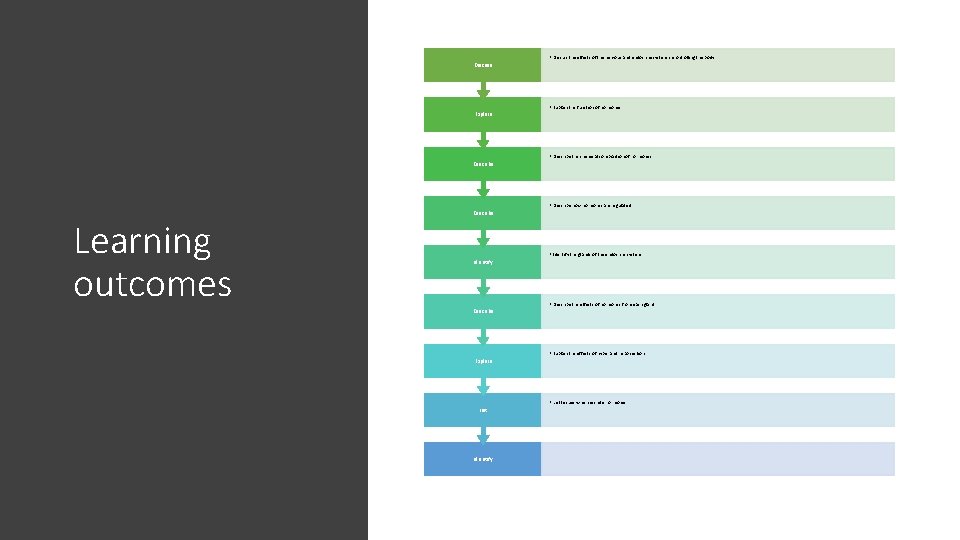
• Discuss the effects of the nervous and endocrine system in controlling the body. Discuss • Explain the function of hormones. Explain • Describe the chemical composition of hormones Describe • Describe how hormones are regulated. Learning outcomes Describe • Identify the glands of the endocrine system. Identify • Describe the effects of hormones from each gland. Describe • Explain the effects of hyper and hypo section. Explain • List tissues which secrete hormones List Identify
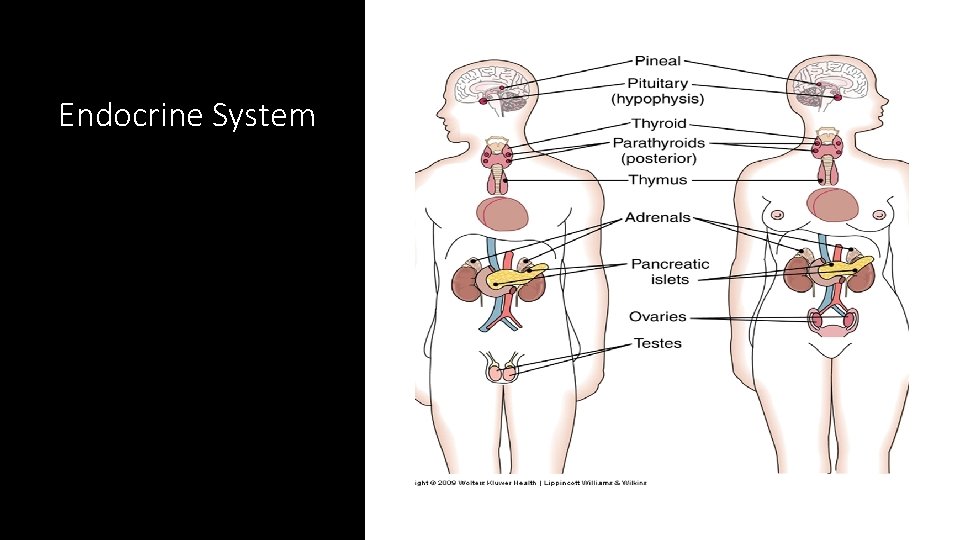
Endocrine System
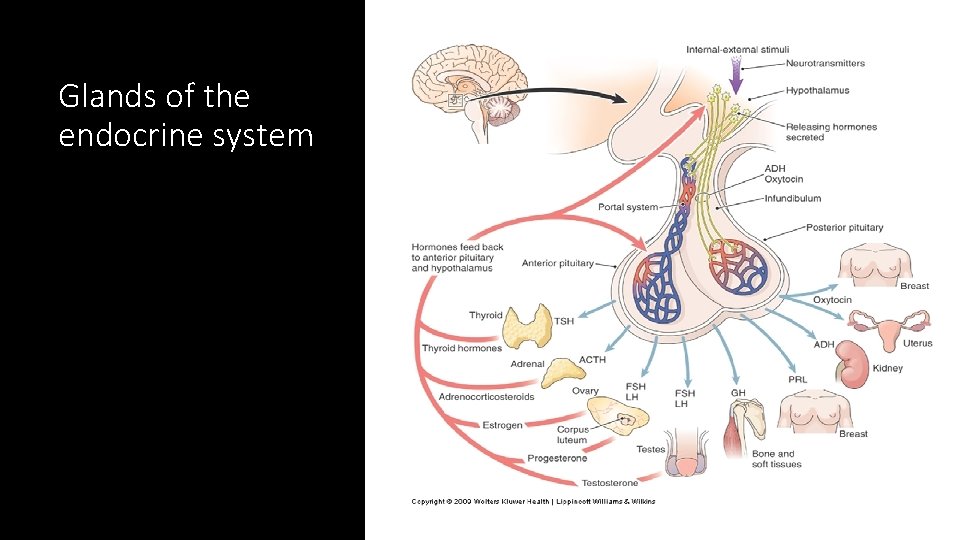
Glands of the endocrine system
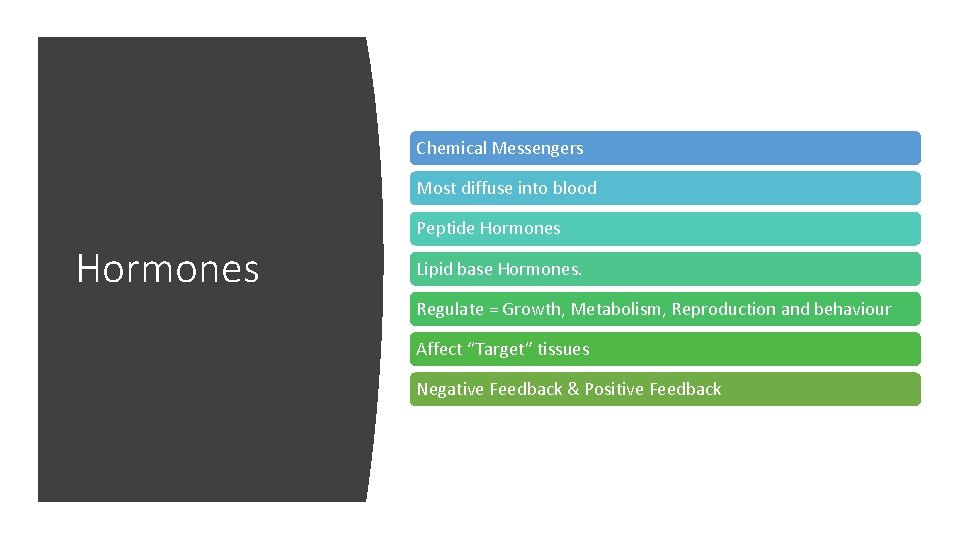
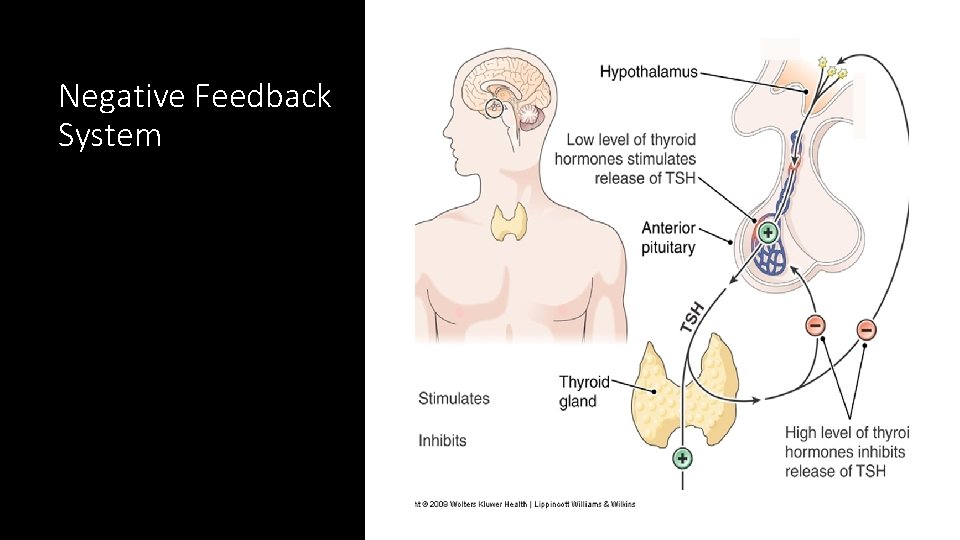
Chemical Messengers Most diffuse into blood Peptide Hormones Lipid base Hormones. Regulate = Growth, Metabolism, Reproduction and behaviour Affect “Target” tissues Negative Feedback & Positive Feedback
Negative Feedback System
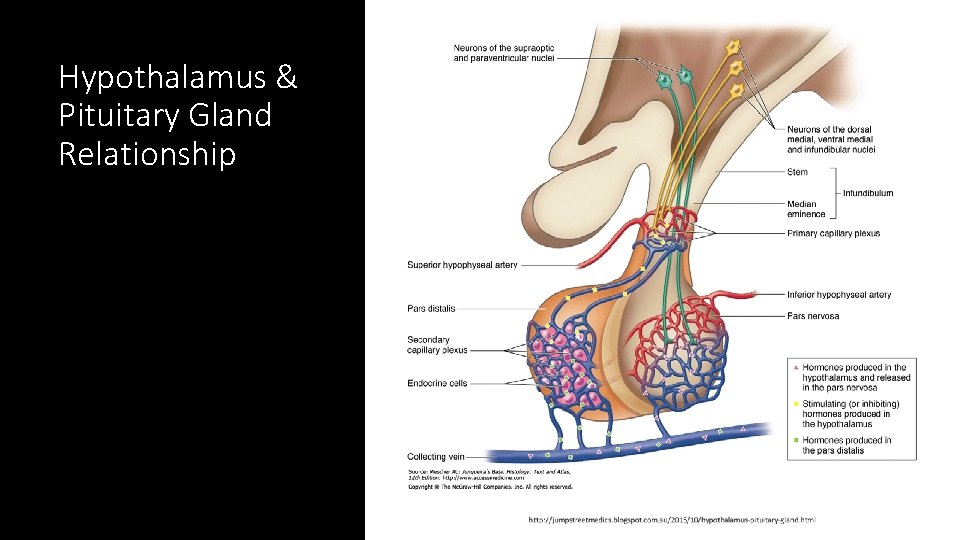
Hypothalamus & Pituitary Gland Relationship
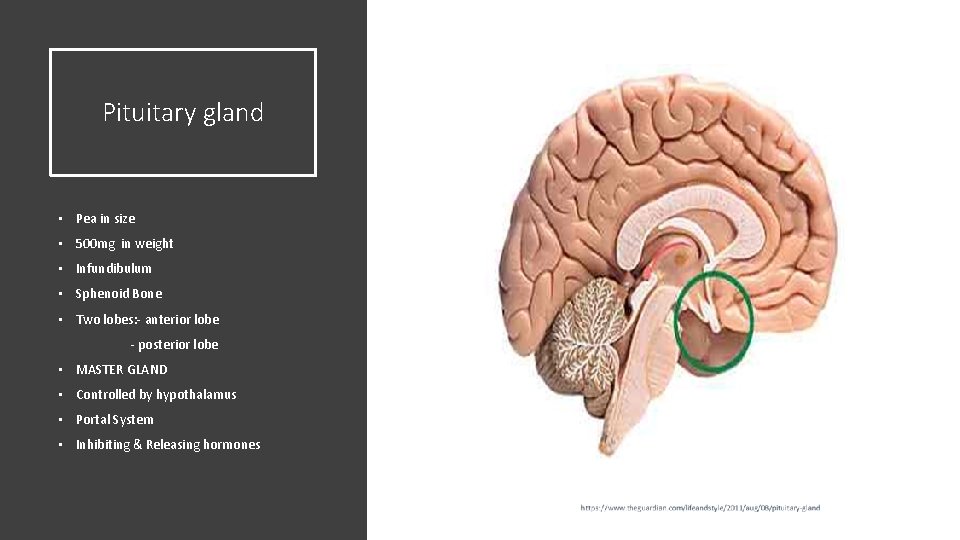
Pituitary gland • Pea in size • 500 mg in weight • Infundibulum • Sphenoid Bone • Two lobes: - anterior lobe - posterior lobe • MASTER GLAND • Controlled by hypothalamus • Portal System • Inhibiting & Releasing hormones
Pituitary gland – Anterior & Posterior Lobe Hormones • Six Anterior Lobe Hormones: • Growth Hormone (GH) • Two hormones of Posterior Lobe: • Thyroid-Stimulating Hormone (TSH) • Andiuretic hormone (ADH) • (ADH)-Vasopressin • Andrenocorticotropic Hormone (ACTH) • Oxytocin • Prolactin (PRL) • Follicle Stimulating Hormone (FSH) • Luteinizing Hormone (LH) • Releasing Hormones • Positive Feedback
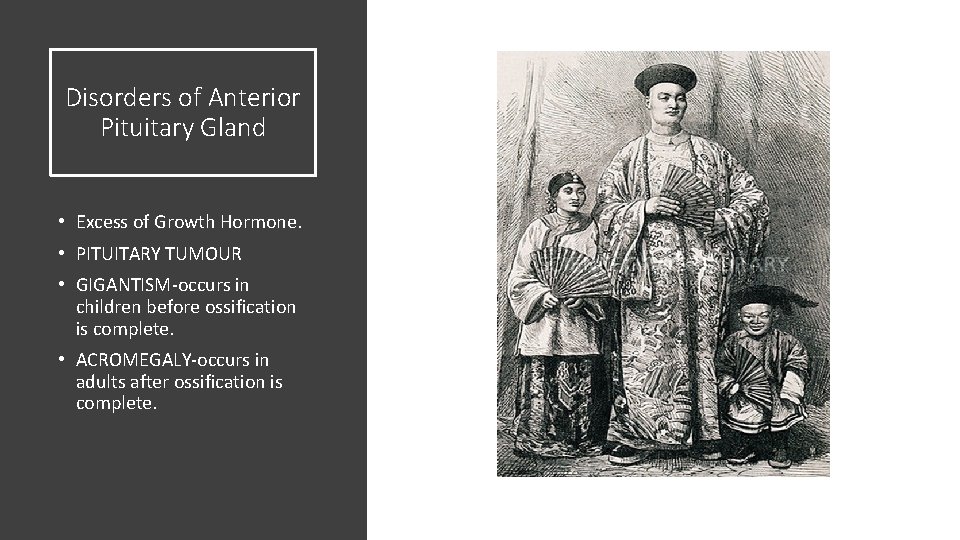
Disorders of Anterior Pituitary Gland • Excess of Growth Hormone. • PITUITARY TUMOUR • GIGANTISM-occurs in children before ossification is complete. • ACROMEGALY-occurs in adults after ossification is complete.
DIABETES INSIPIDUS Rare condition Caused by hyposecretion of ADH Disorders of Posterior Pituitary Gland Damage to hypothalamus-trauma, tumour, or infection. Water balance disturbance Specific Gravity 1. 001 -1. 005 POLYDIPSIA – 2 to 20 litres daily. Craves Cold water. Hypernatraemia and severe dehydration NOT TO BE CONFUSED WITH DIABETES MELLITIS
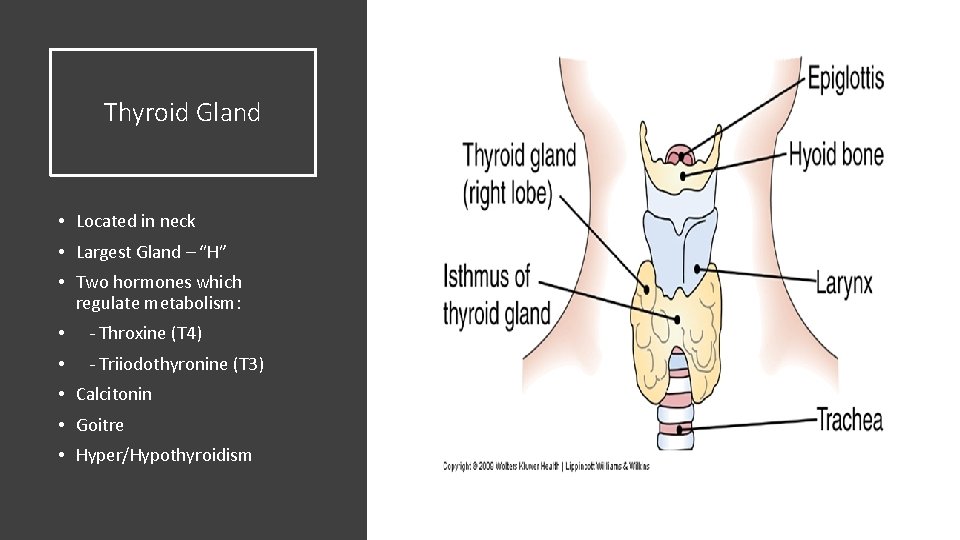
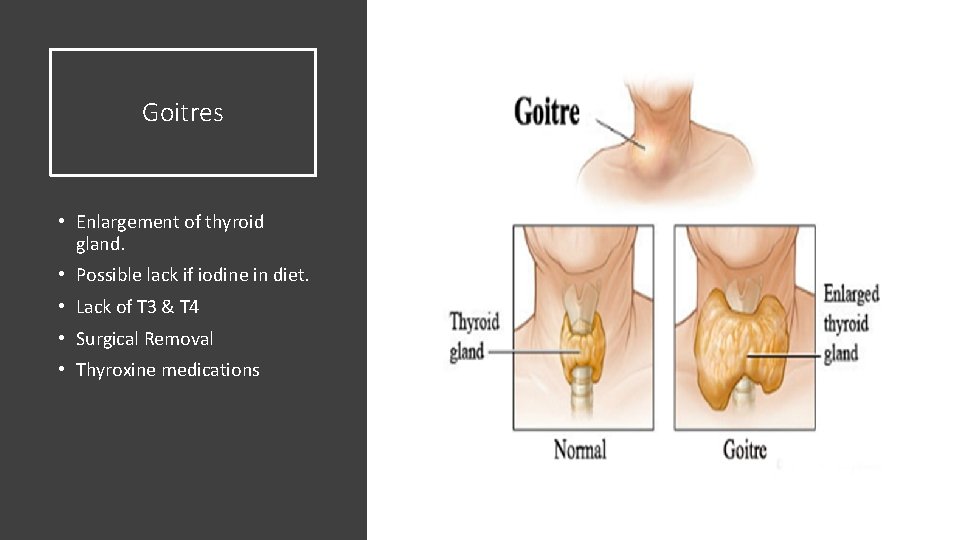
Thyroid Gland • Located in neck • Largest Gland – “H” • Two hormones which regulate metabolism: • - Throxine (T 4) • - Triiodothyronine (T 3) • Calcitonin • Goitre • Hyper/Hypothyroidism
Goitres • Enlargement of thyroid gland. • Possible lack if iodine in diet. • Lack of T 3 & T 4 • Surgical Removal • Thyroxine medications
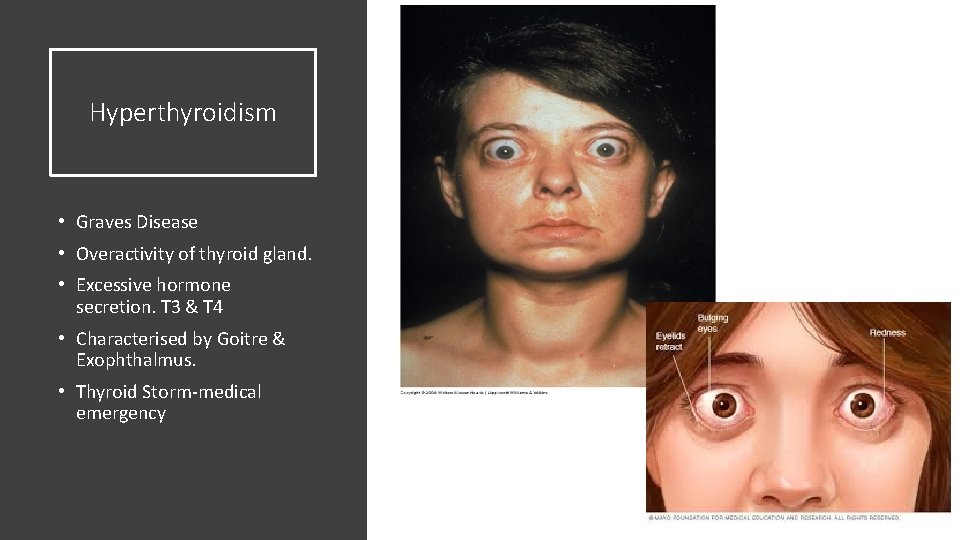
Hyperthyroidism • Graves Disease • Overactivity of thyroid gland. • Excessive hormone secretion. T 3 & T 4 • Characterised by Goitre & Exophthalmus. • Thyroid Storm-medical emergency
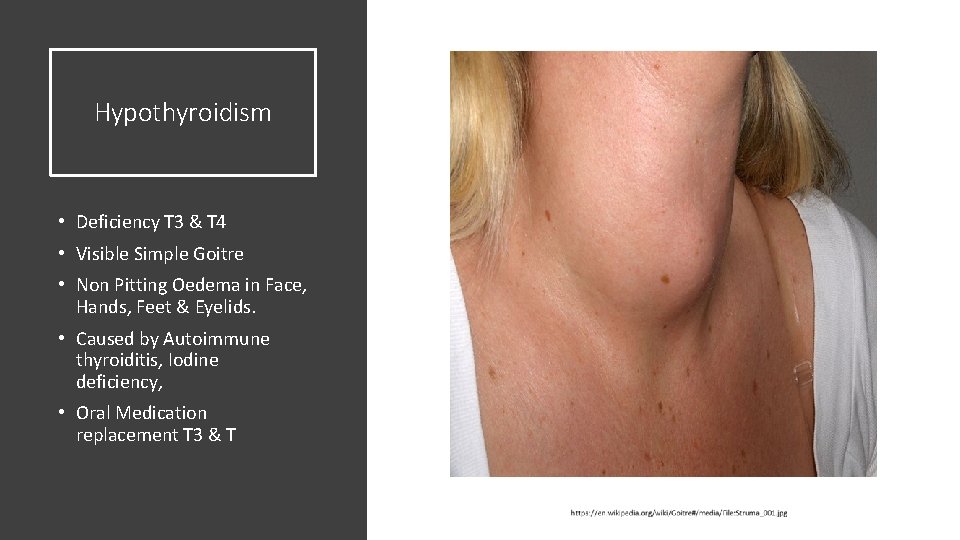
Hypothyroidism • Deficiency T 3 & T 4 • Visible Simple Goitre • Non Pitting Oedema in Face, Hands, Feet & Eyelids. • Caused by Autoimmune thyroiditis, Iodine deficiency, • Oral Medication replacement T 3 & T
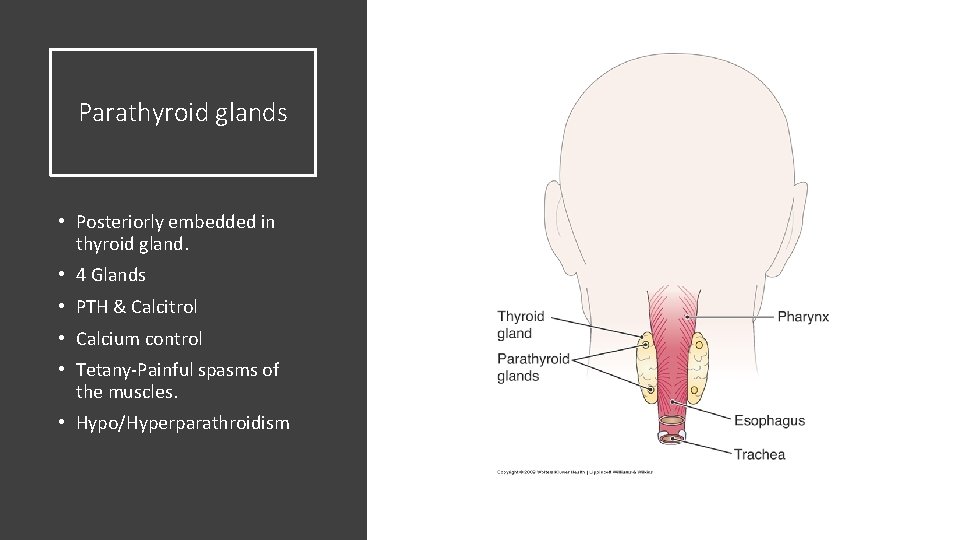
Parathyroid glands • Posteriorly embedded in thyroid gland. • 4 Glands • PTH & Calcitrol • Calcium control • Tetany-Painful spasms of the muscles. • Hypo/Hyperparathroidism
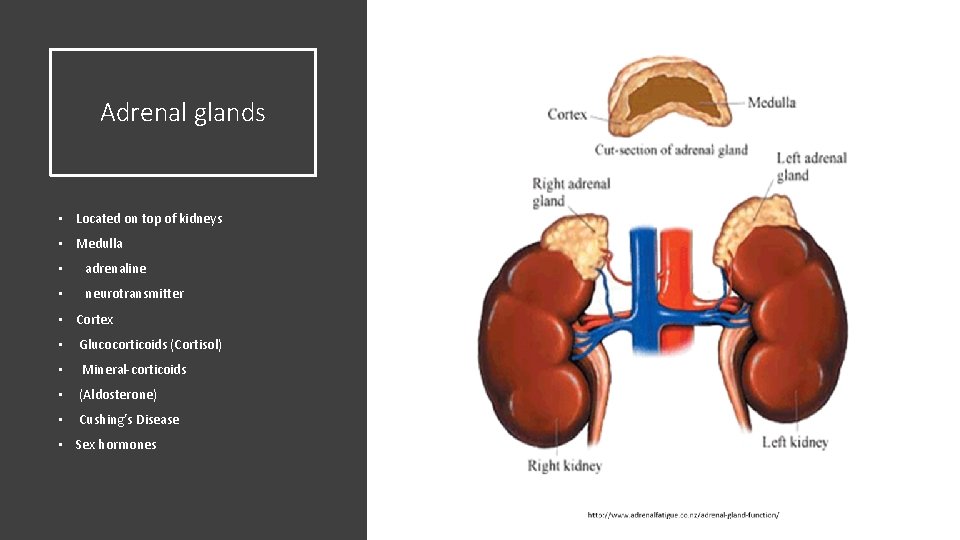
Adrenal glands • Located on top of kidneys • Medulla • adrenaline • neurotransmitter • Cortex • Glucocorticoids (Cortisol) • Mineral-corticoids • (Aldosterone) • Cushing’s Disease • Sex hormones
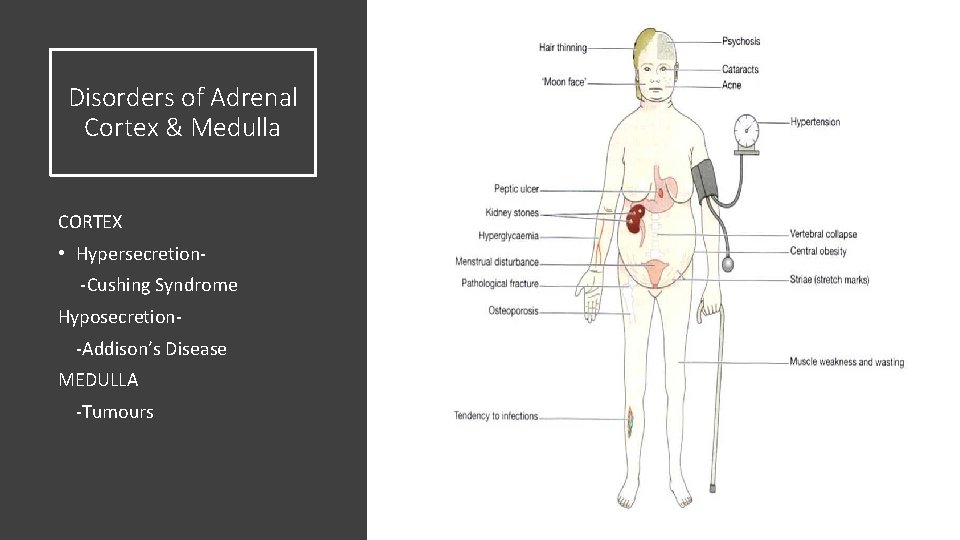
Disorders of Adrenal Cortex & Medulla CORTEX • Hypersecretion-Cushing Syndrome Hyposecretion-Addison’s Disease MEDULLA -Tumours
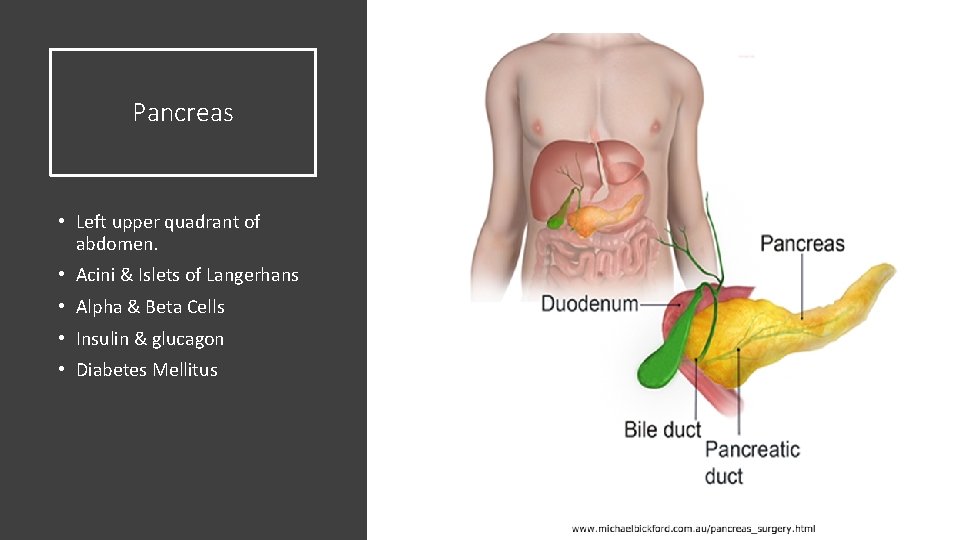
Pancreas • Left upper quadrant of abdomen. • Acini & Islets of Langerhans • Alpha & Beta Cells • Insulin & glucagon • Diabetes Mellitus
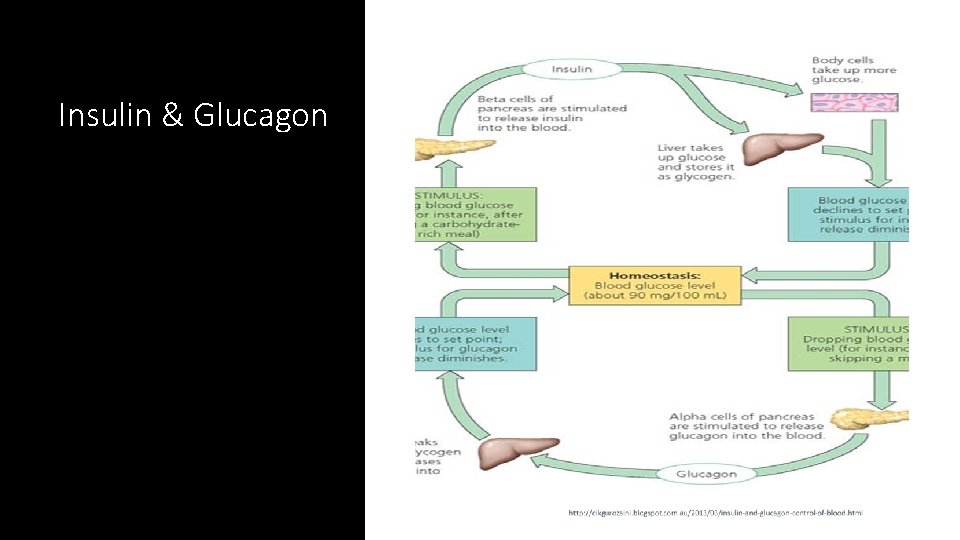
Insulin & Glucagon
Most common endocrine disorder Type 1 – Insulin Dependent Diabetes Mellitus Type 2 – Non Insulin Dependent Glycosuria & Polyuria Weight Loss Ketosis and Ketoacidosis Complications
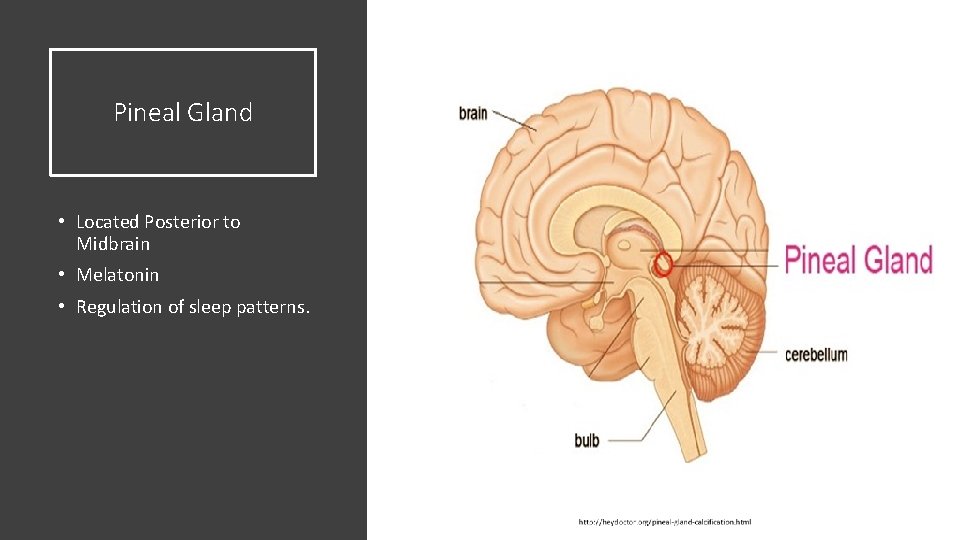
Pineal Gland • Located Posterior to Midbrain • Melatonin • Regulation of sleep patterns.
Stomach – Gastrin Small Intestine – Many Hormone Producing Organs Kidneys – Erythropoietin Brain – Releasing Hormones Heart – Atrial natiuretic peptide (ANP) Thymus – Thymosin Placenta - Many
Histamine-inflammatory response Local Hormones Serotoninneurotransmitter Prostaglandin – Potent Side Effects
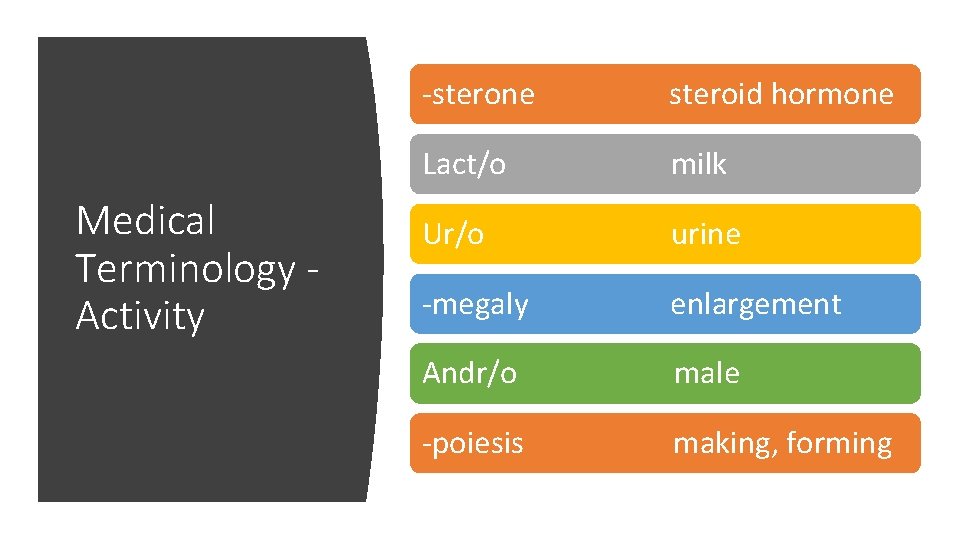
Medical Terminology Activity -sterone steroid hormone Lact/o milk Ur/o urine -megaly enlargement Andr/o male -poiesis making, forming
Ross & Wilson Anatomy & Physiology (2014) 12 th ed. A, & Grant A. , Churchill Livingstone Elsevier References Memmlers The Human Body In Health and Disease (2013) 12 th Lippincott Williams & Wilkins Andrew Huttons – An Introduction to Medical Terminology for Health Care. Self teaching package – (2017) 5 th ed.