
Subclinical Thyroid Disease Where Are We Now Dr
Subclinical Thyroid Disease: Where Are We Now Dr Praveen Shankar MD, MRCP(UK)

Definitions • • • Subclinical Disease The presence of a disease without obvious symptoms Usually indicates early stage in evolution of a disease Subclinical thyroid disease A biochemical diagnosis Subclinical hyperthyroidism • ↓ TSH • ↔ FT 4 & TT 3 Subclinical hypothyroidism • ↑TSH • ↔ FT 4 & TT 3.

How does Subclinical Thyroid Disease develop? • TSH secretion is very tightly controlled by T 4 & T 3 • Very small changes in serum T 4 & T 3 concentrations have large effects on TSH secretion • Log/linear relationship between serum TSH & FT 4 – alterations in serum FT 4 that is within normal range can cause increase/decrease in serum TSH concentrations that can be outside its reference range. JCEM 2002; 87: 1068– 72 JCEM 2004; 89: 1181– 87.

Subclinical Hyperthyroidism • With mildly suppressed TSH concentrations (TSH 0. 1 to 0. 4 m. U/L) • With completely suppressed TSH concentrations (TSH < 0. 1 m. U/L) • With progressive decline in TSH level chances of clinically significant consequences rises • In any population mild subclinical hyperthyroidism is more common • The population prevalence of subclinical hyperthyroidism higher in o Women o Old age o Geographical region with iodine-deficiency.


Subclinical Hyperthyroidism • Exogenous disease more common than endogenous form o 20 -40% of patients on LT 4 replacement have low TSH concentration o Reversible on lowering doses • Graves’ disease is the most common cause in young patients • Toxic adenoma/MNG most common cause in elderly • MNG is more typically associated with subclinical hyperthyroidism than Graves’ disease • In one study, about 20% of patients with Graves’ disease had a chronically suppressed TSH after a course of ATD or surgery , and were more likely to relapse than a comparable group with normal TSH levels. Acta Endocrinol (Copenh) 1990; 122: 623.
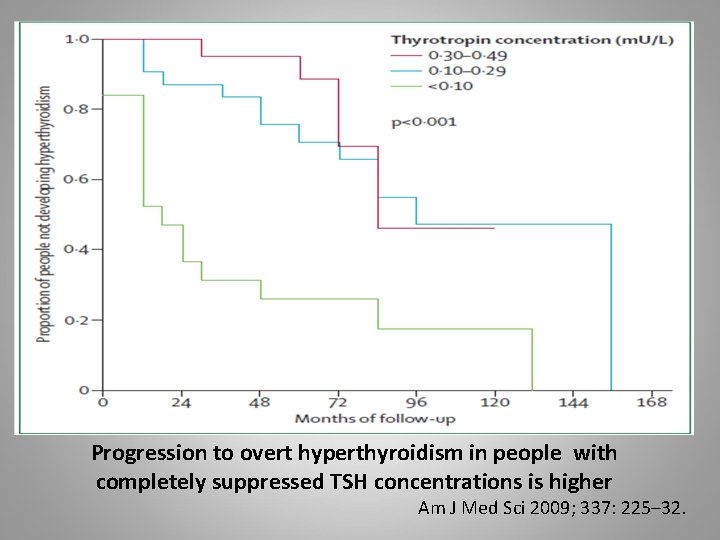
Progression to overt hyperthyroidism in people with completely suppressed TSH concentrations is higher Am J Med Sci 2009; 337: 225– 32.
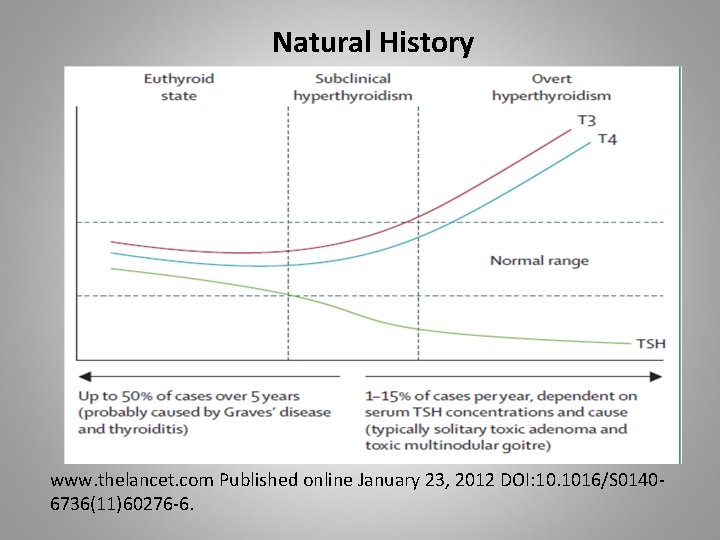
Natural History www. thelancet. com Published online January 23, 2012 DOI: 10. 1016/S 01406736(11)60276 -6.

Systemic effects • Similar to that of overt hyperthyroidism Bone & mineral metabolism • ↑ bone resorption • Cortical bone is affected more than trabecular bone • ↓BMD in postmenopausal women, but, little effect in men or premenopausal women • ? Whether this translates into increased risk of fracture in postmenopausal women. Atrial fibrillation • ↑ risk • Risk similar whether TSH <0. 1 or 0. 1 -0. 4 m. U/L • Prevalence similar to that in overt hyperthyroidism • May remit with ATD therapy.
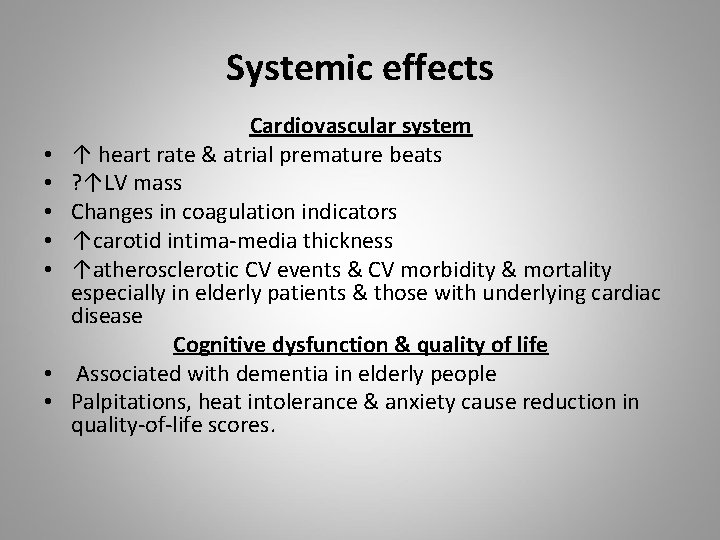
Systemic effects • • Cardiovascular system ↑ heart rate & atrial premature beats ? ↑LV mass Changes in coagulation indicators ↑carotid intima-media thickness ↑atherosclerotic CV events & CV morbidity & mortality especially in elderly patients & those with underlying cardiac disease Cognitive dysfunction & quality of life Associated with dementia in elderly people Palpitations, heat intolerance & anxiety cause reduction in quality-of-life scores.
Prevention of Exogenous subclinical hyperthyroidism important • Cause substantial morbidity especially in older patients o ↓BMD o ↑risk of AF • Important to carefully titrate LT 4 doses to maintain normal TSH level in those on replacement therapy • TSH suppressive therapy to decrease goitre or thyroid nodule size is no longer recommended • Less aggressive TSH suppression has been suggested for patients o With low-risk thyroid cancer o Older patients who have been shown to be disease-free on follow up. Thyroid 2009; 19: 1167. Thyroid 2010; 20: 135.
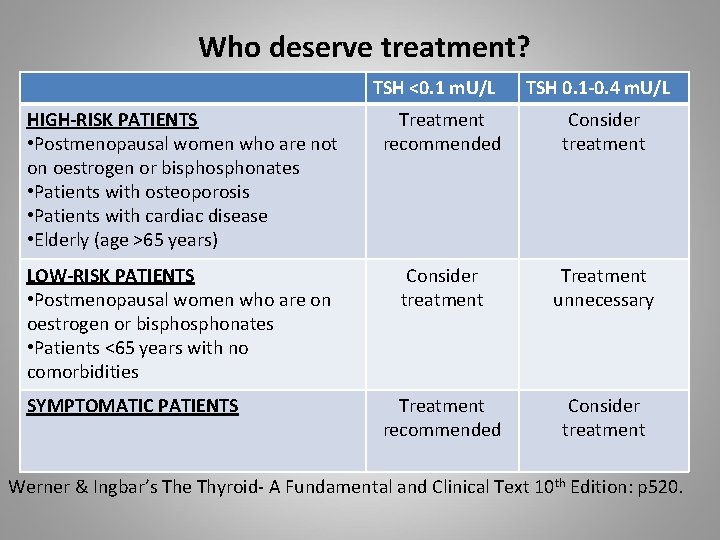
Who deserve treatment? TSH <0. 1 m. U/L TSH 0. 1 -0. 4 m. U/L HIGH-RISK PATIENTS • Postmenopausal women who are not on oestrogen or bisphonates • Patients with osteoporosis • Patients with cardiac disease • Elderly (age >65 years) Treatment recommended Consider treatment LOW-RISK PATIENTS • Postmenopausal women who are on oestrogen or bisphonates • Patients <65 years with no comorbidities Consider treatment Treatment unnecessary Treatment recommended Consider treatment SYMPTOMATIC PATIENTS Werner & Ingbar’s The Thyroid- A Fundamental and Clinical Text 10 th Edition: p 520.
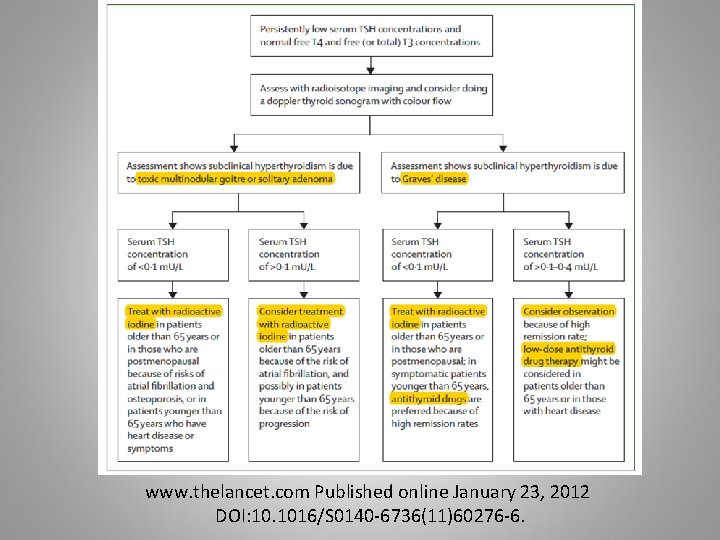
www. thelancet. com Published online January 23, 2012 DOI: 10. 1016/S 0140 -6736(11)60276 -6.

Subclinical hypothyroidism • Biochemical diagnosis, by definition can not be identified on the basis of signs & symptoms • Consensus lacking on the upper limit of normal for serum TSH • National Academy of Clinical Biochemistry Laboratory Practice Guidelines, 2003 recommendation (endorsed by AACE ) – 2. 5 m. U/L • Present data support the need for age-based normal ranges for serum TSH • Consideration of TSH measurement method is important – Immunometric assay (IMA) using nonisotopic (chemiluminescent or fluorescent ) technique (3 rd generation) commonly give upper limit of normal as less than 4. 5 m. U/L.
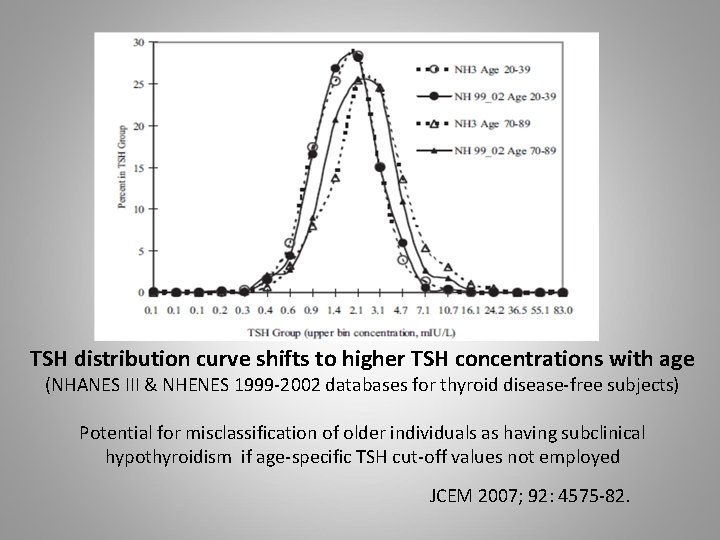
TSH distribution curve shifts to higher TSH concentrations with age (NHANES III & NHENES 1999 -2002 databases for thyroid disease-free subjects) Potential for misclassification of older individuals as having subclinical hypothyroidism if age-specific TSH cut-off values not employed JCEM 2007; 92: 4575 -82.
Prevalence • Higher in o ? Old age o White compared to black o Area with higher compared to lower, but not deficient, intake of iodine o Patients with Down syndrome, Turner’s syndrome, T 1 DM & possibly other autoimmune diseases, family history of autoimmune thyroid disease, endocrine or systemic autoimmune disorders • In a survey of pregnant women in the US, 2% had subclinical hypothyroidism and 58% had high anti-TPO antibody concentration.
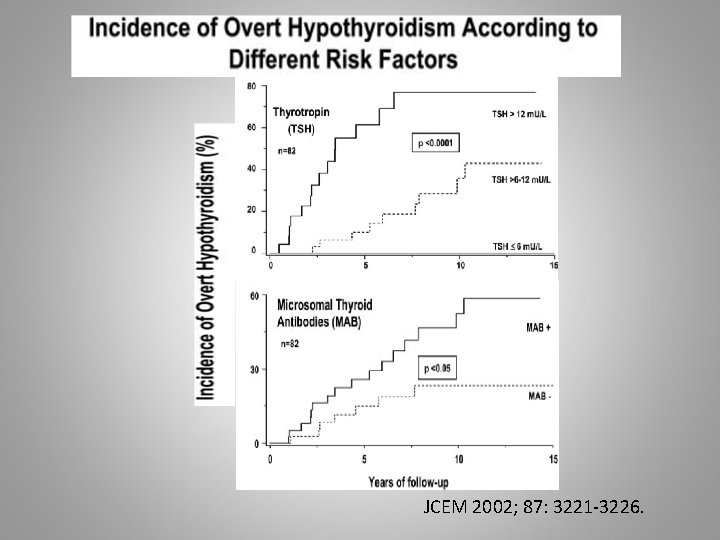
JCEM 2002; 87: 3221 -3226.
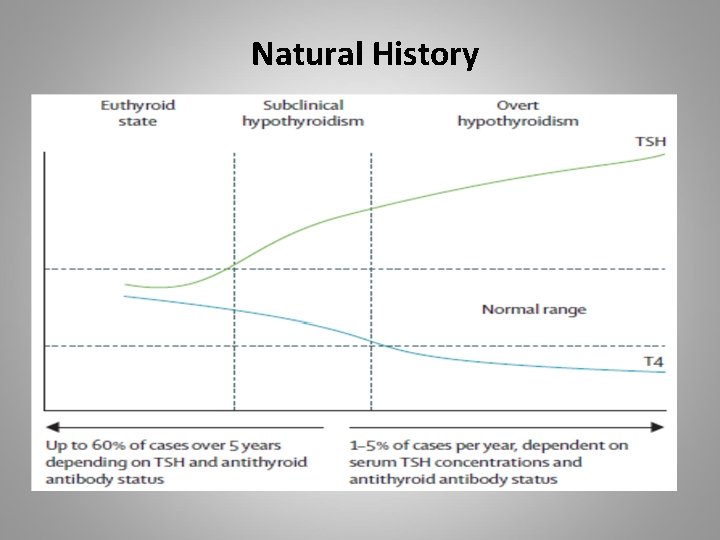
Natural History
Systemic effects Cardiovascular effects • Subclinical hypothyroidism is associated with hypercholesterolemia, atherosclerosis and other CV changes like ↑SVR & arterial stiffness, altered endothelial function & coagulability • ? Do they -result in adverse cardiovascular events: Conflicting data A meta-analysis of individual participant data done by Thyroid Studies collaborators o 11 prospective cohort studies o Total no. of participants 55, 287 o Subclinical hypothyroidism was defined as TSH between 4. 5 to 20 m. U/L with normal T 4 concentration.
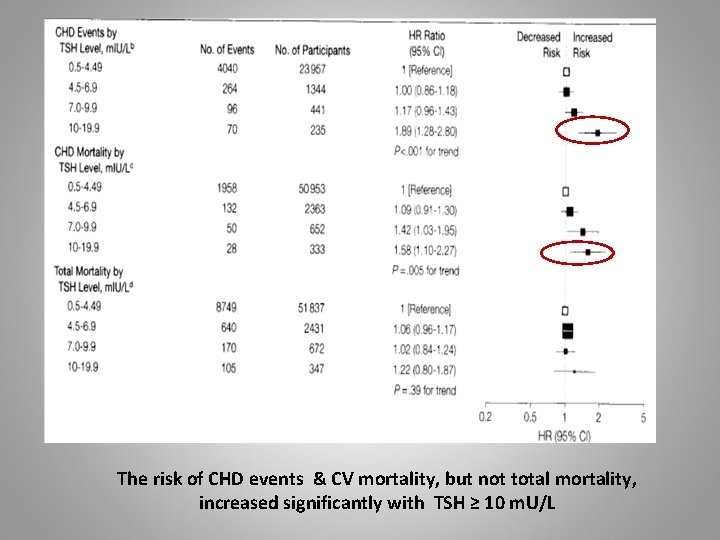
The risk of CHD events & CV mortality, but not total mortality, increased significantly with TSH ≥ 10 m. U/L
Women of reproductive age and during pregnancy • Prevalence is 0. 5 -5% depending on the cut-off value for TSH used to define the condition • Associated with serious obstetric complications- increased risk of miscarriage, placental abruption, preterm delivery, gestational HTN, LBW • Thyroid hormone essential for fetal brain development & maturation especially during 1 st trimester of pregnancy • Impaired mental development has been reported in children born to women who were inadequately treated for subclinical hypothyroidism • The Endocrine Practice guidelines recommends treatment of subclinical hypothyroidism in pregnancy. NEJM 1999; 341: 549 -55. JCEM 2012; 97: 2543 -65.
Neuropsychiatric health • It seems patients with autoimmune thyroid disease (majority will be subclinical hypothyroidism) have increased propensity towards depression • Patients with depression and subclinical hypothyroidism compared to those with depression & euthyroidism have o Higher prevalence of associated panic disorder o Poorer response to antidepressant drug therapy. Werner & Ingbar’s The Thyroid- A Fundamental and Clinical Text 10 th Edition: p 632.
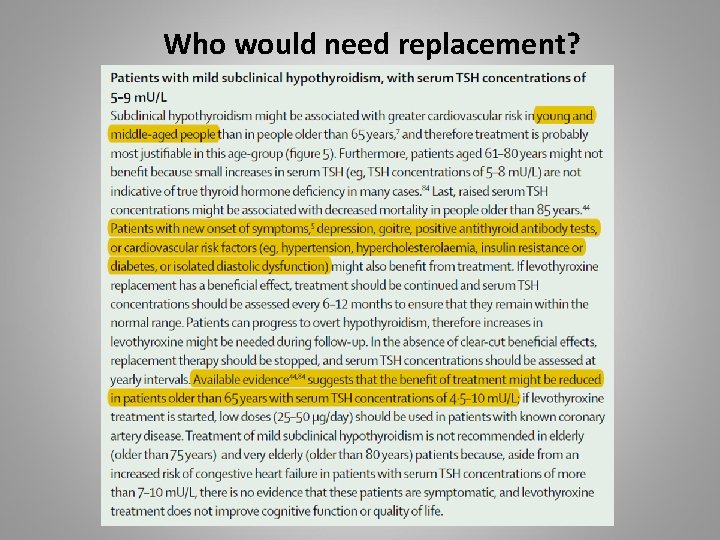
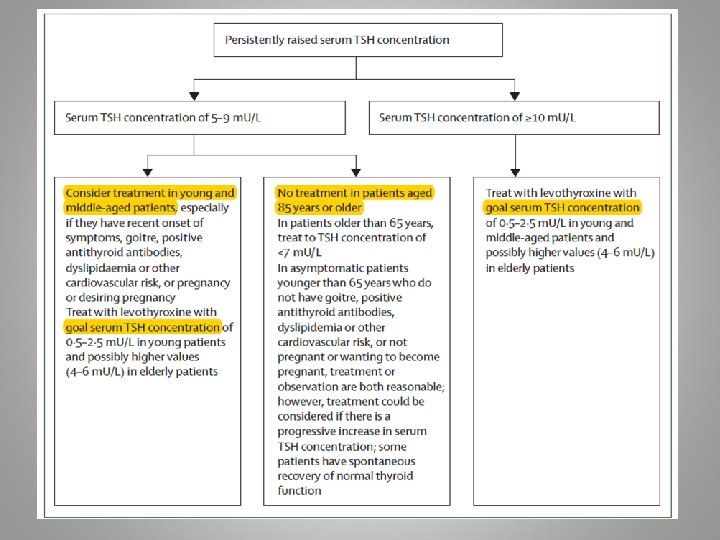
Who would need replacement?
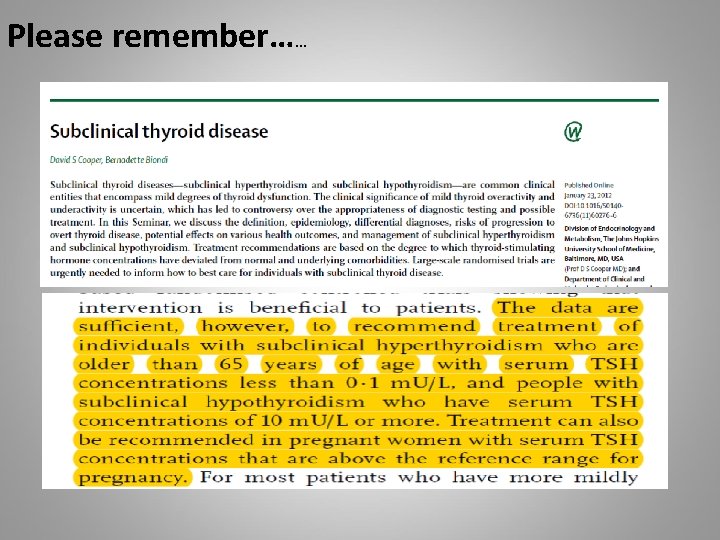
Please remember……
- Slides: 27