
Fast Multiscale Image Segmentation From Pixels to Semantics
- Slides: 65
Fast, Multiscale Image Segmentation: From Pixels to Semantics Ronen Basri The Weizmann Institute of Science Joint work with Achi Brandt, Meirav Galun, Eitan Sharon
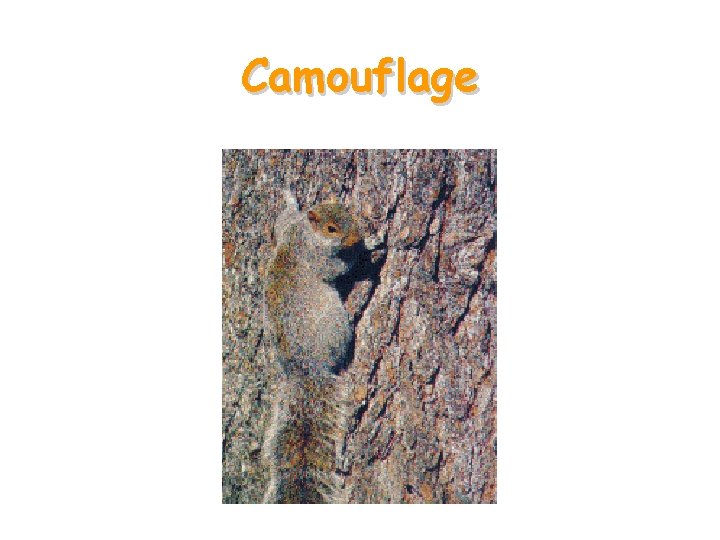
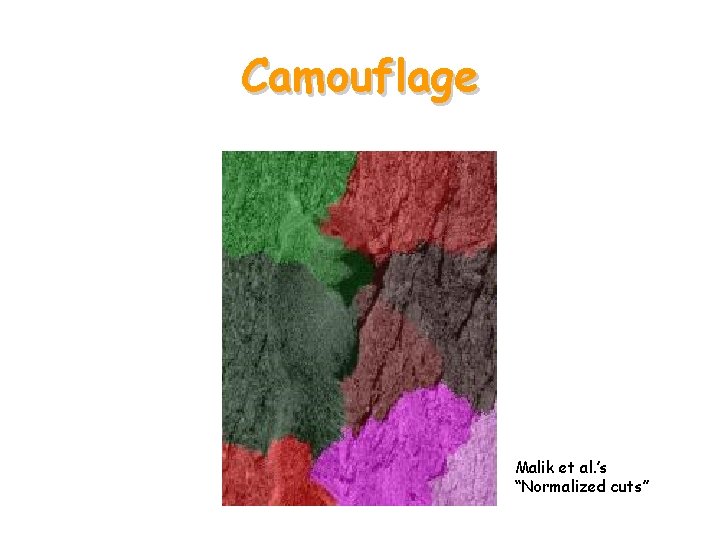
Camouflage
Camouflage Malik et al. ’s “Normalized cuts”
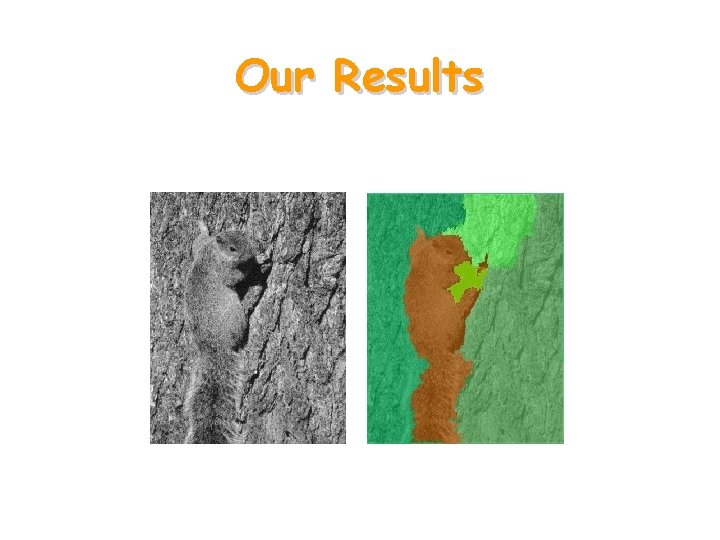
Our Results
Segmentation by Weighted Aggregation A multiscale algorithm: • Optimizes a global measure • Returns a full hierarchy of segments • Linear complexity • Combines multiscale measurements: – Texture – Boundary integrity
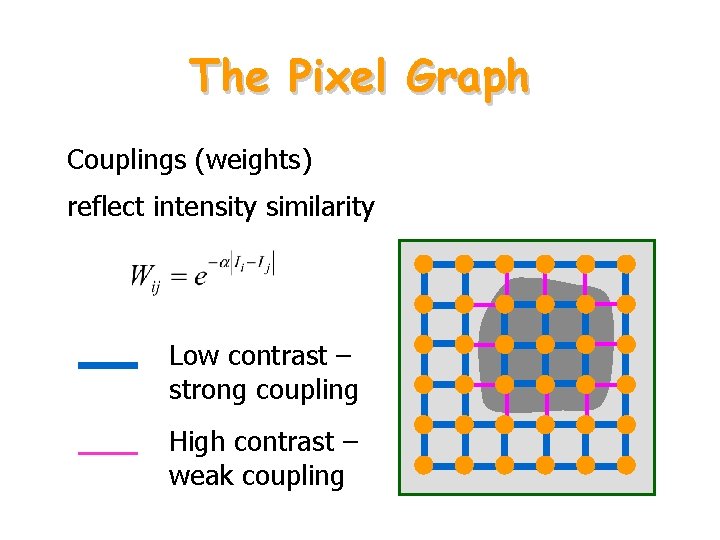
The Pixel Graph Couplings (weights) reflect intensity similarity Low contrast – strong coupling High contrast – weak coupling
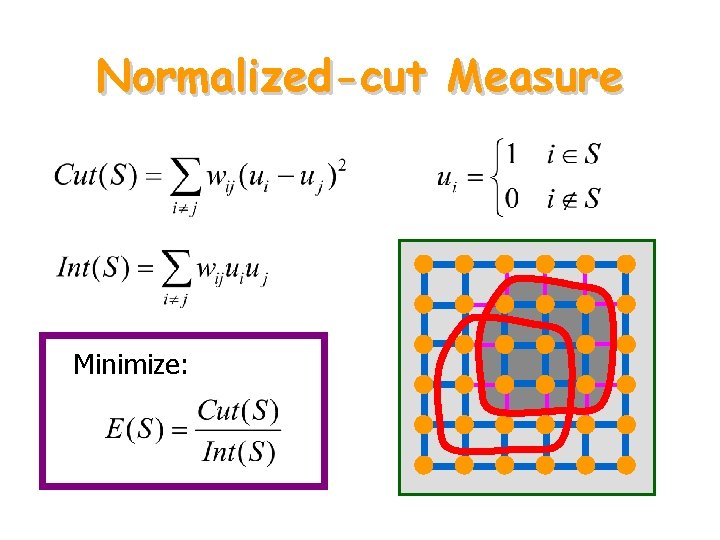
Normalized-cut Measure Minimize:
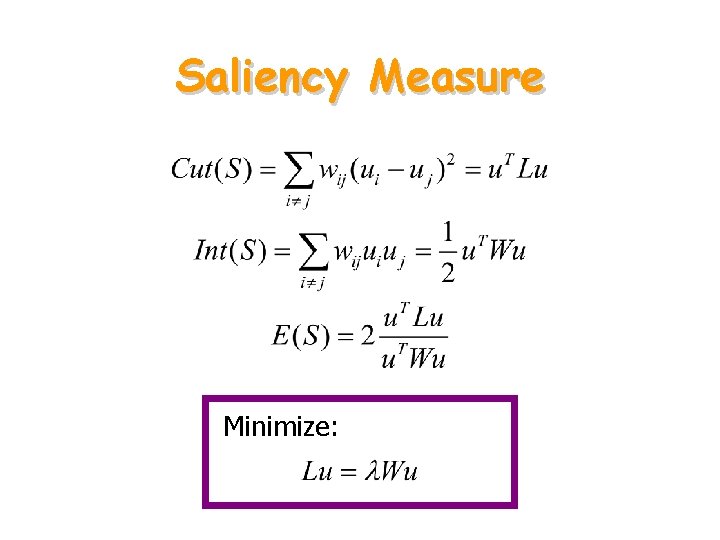
Saliency Measure Minimize:
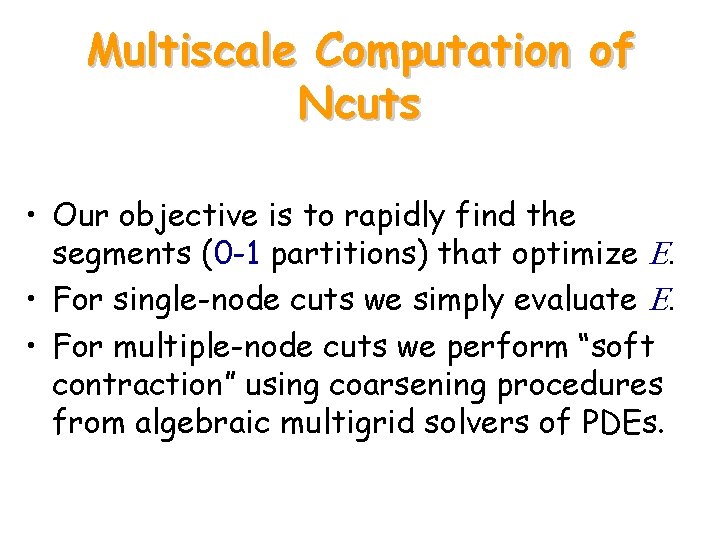
Multiscale Computation of Ncuts • Our objective is to rapidly find the segments (0 -1 partitions) that optimize E. • For single-node cuts we simply evaluate E. • For multiple-node cuts we perform “soft contraction” using coarsening procedures from algebraic multigrid solvers of PDEs.
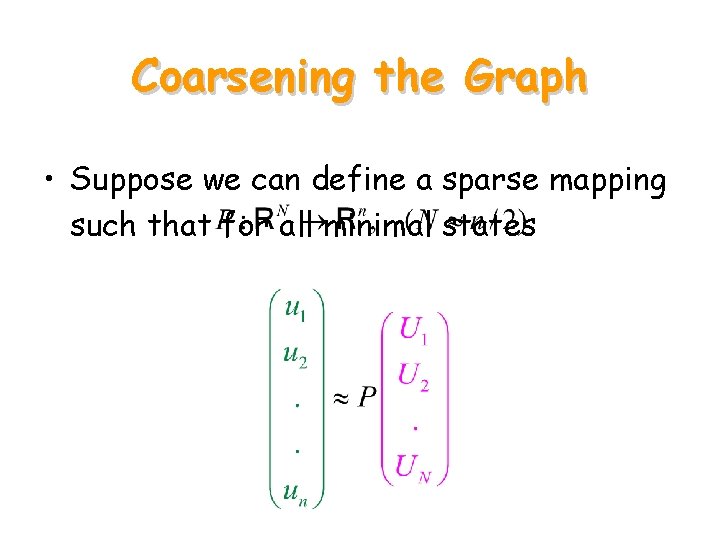
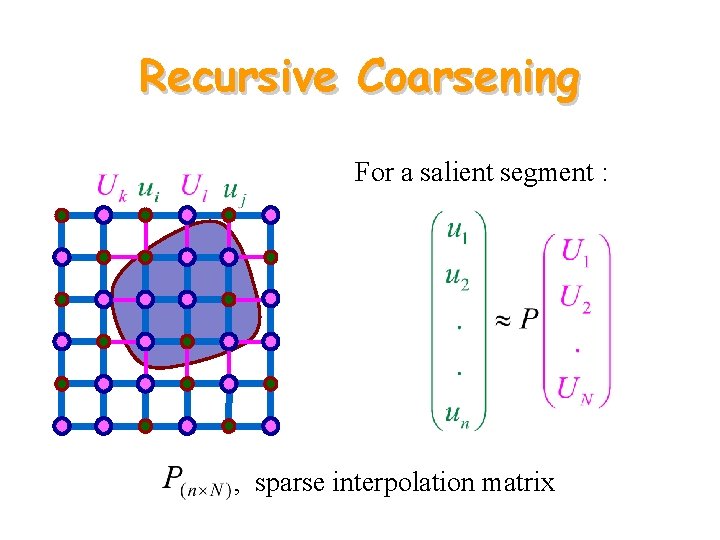
Coarsening the Graph • Suppose we can define a sparse mapping such that for all minimal states
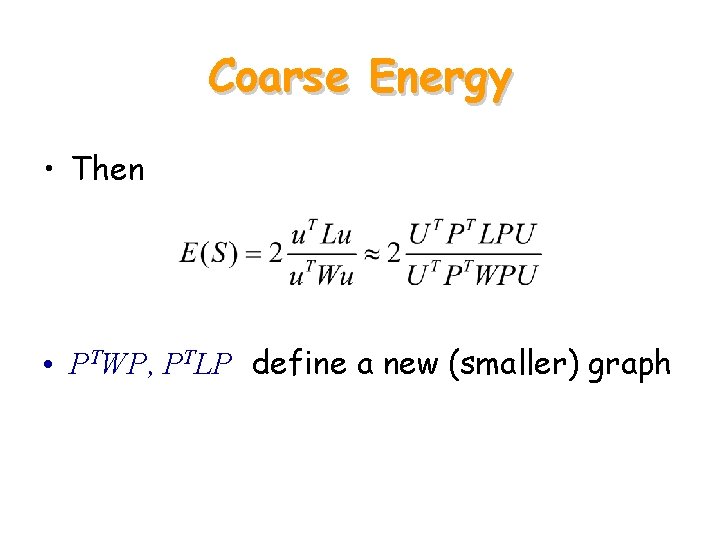
Coarse Energy • Then • PTWP, PTLP define a new (smaller) graph
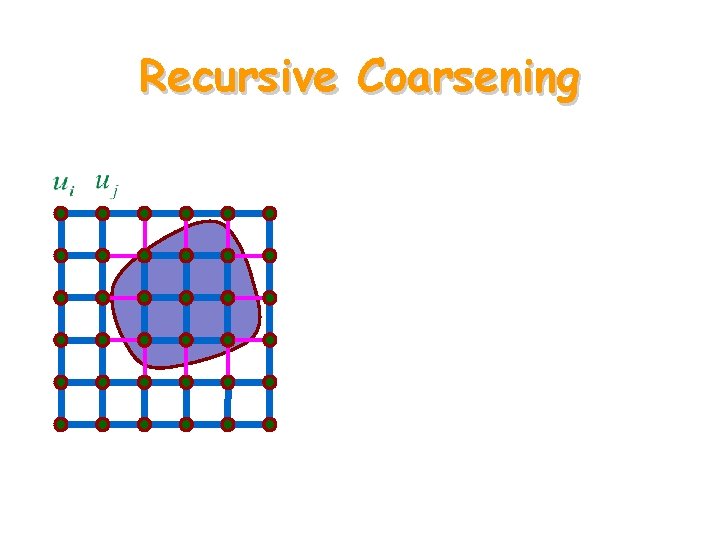
Recursive Coarsening
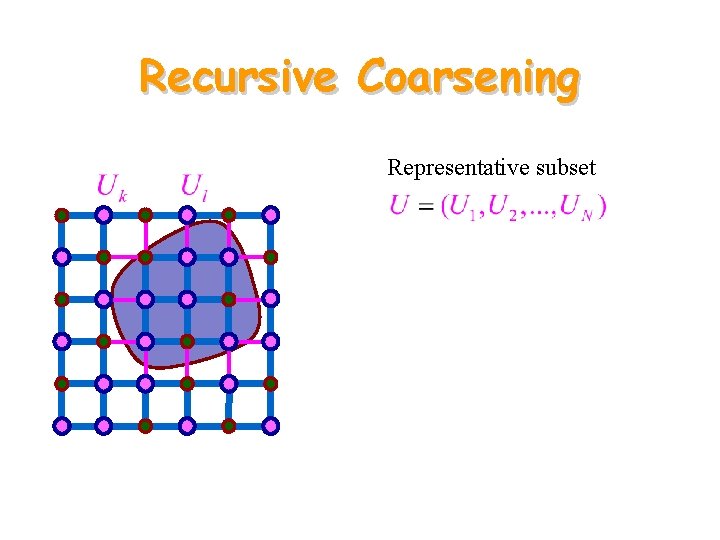
Recursive Coarsening Representative subset
Recursive Coarsening For a salient segment : , sparse interpolation matrix
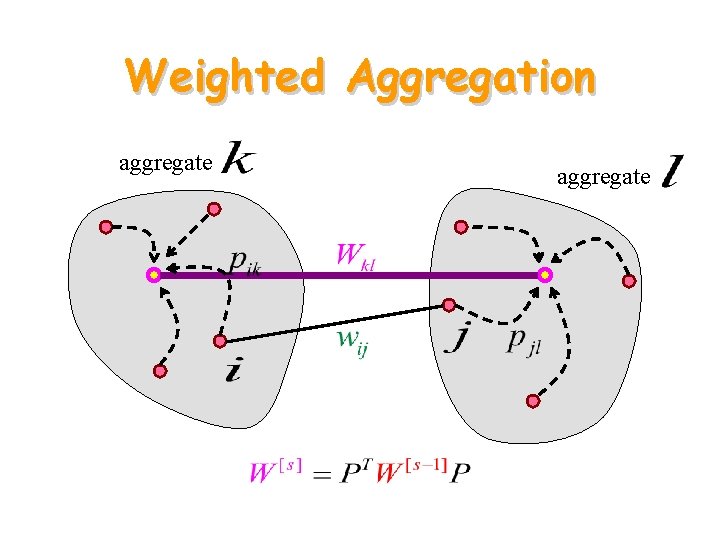
Weighted Aggregation aggregate
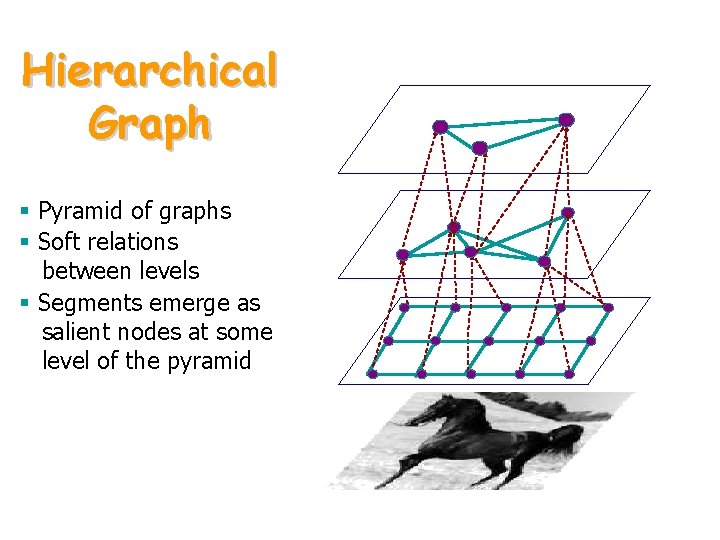
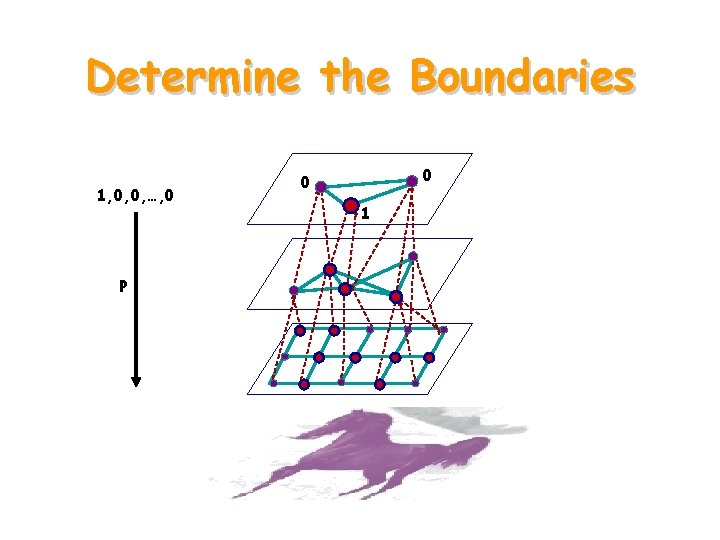
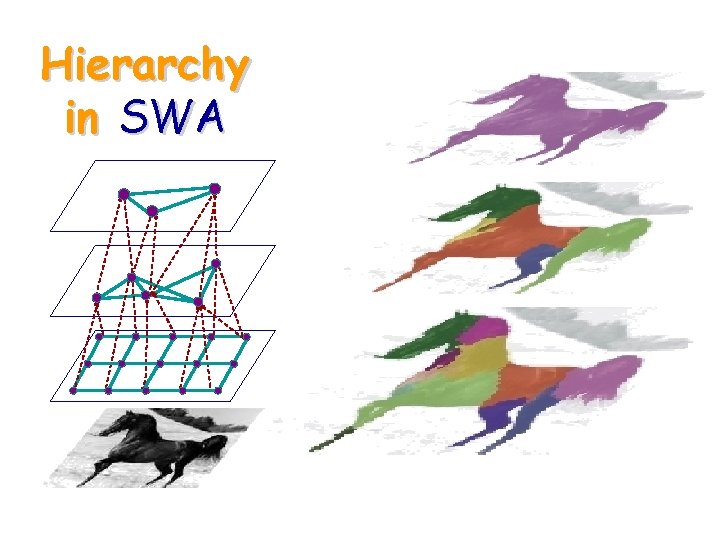
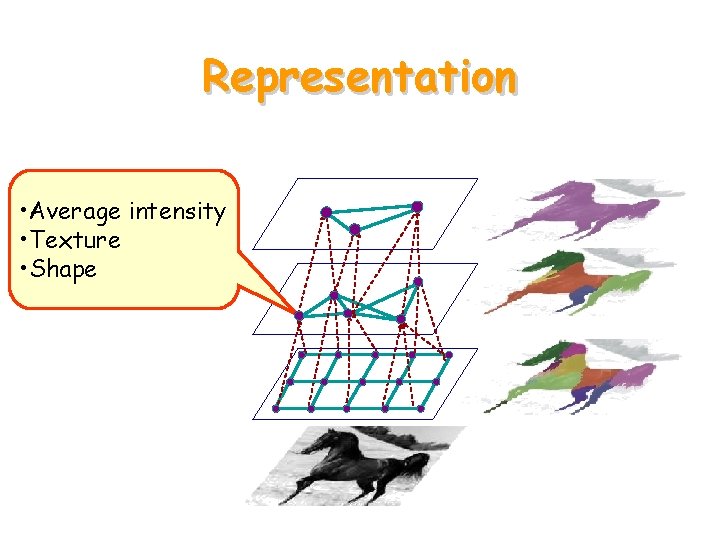
Hierarchical Graph § Pyramid of graphs § Soft relations between levels § Segments emerge as salient nodes at some level of the pyramid
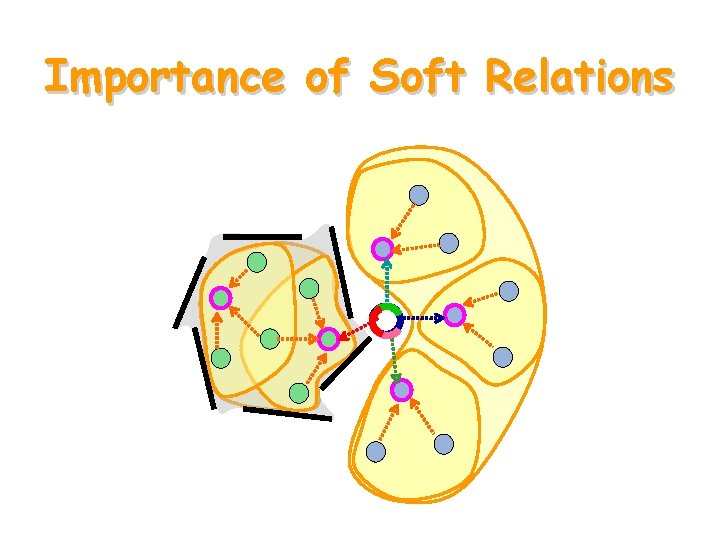
Importance of Soft Relations
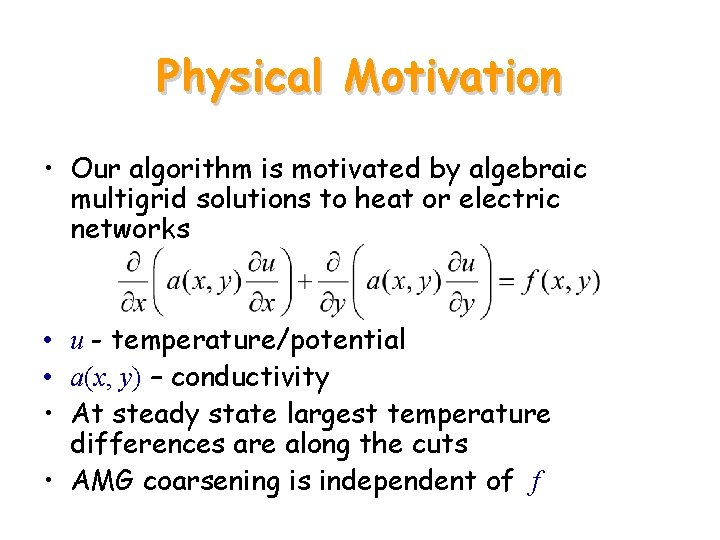
Physical Motivation • Our algorithm is motivated by algebraic multigrid solutions to heat or electric networks • u - temperature/potential • a(x, y) – conductivity • At steady state largest temperature differences are along the cuts • AMG coarsening is independent of f
Determine the Boundaries 1, 0, 0, …, 0 P 0 0 1
Hierarchy in SWA
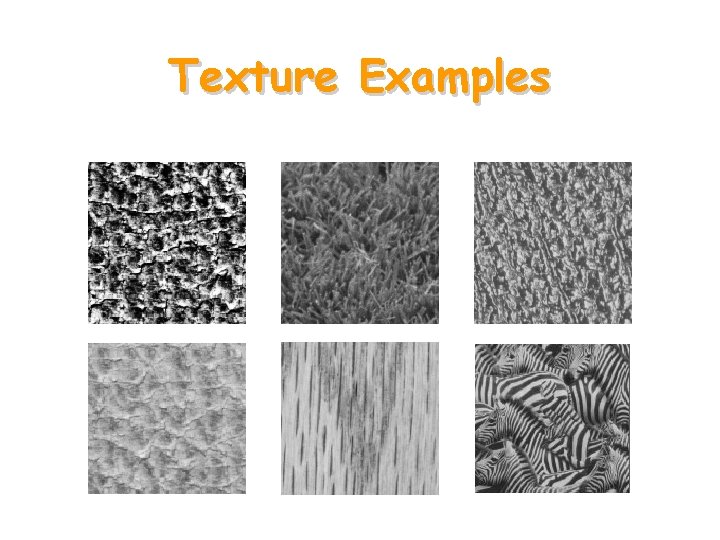
Texture Examples
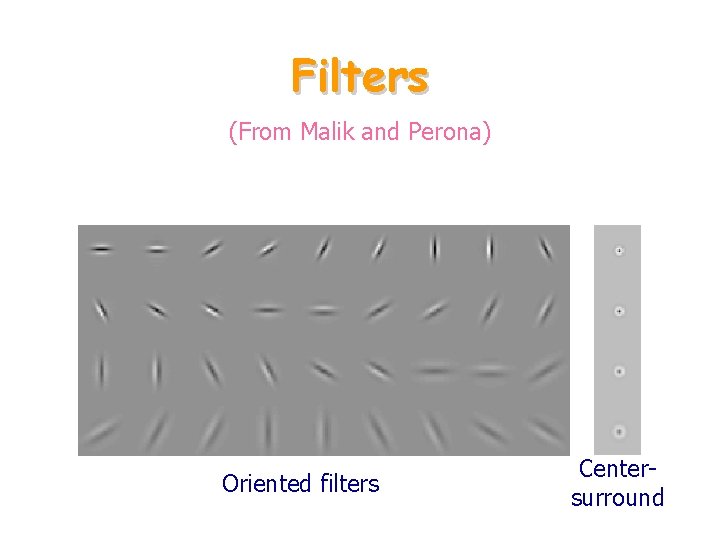
Filters (From Malik and Perona) Oriented filters Centersurround
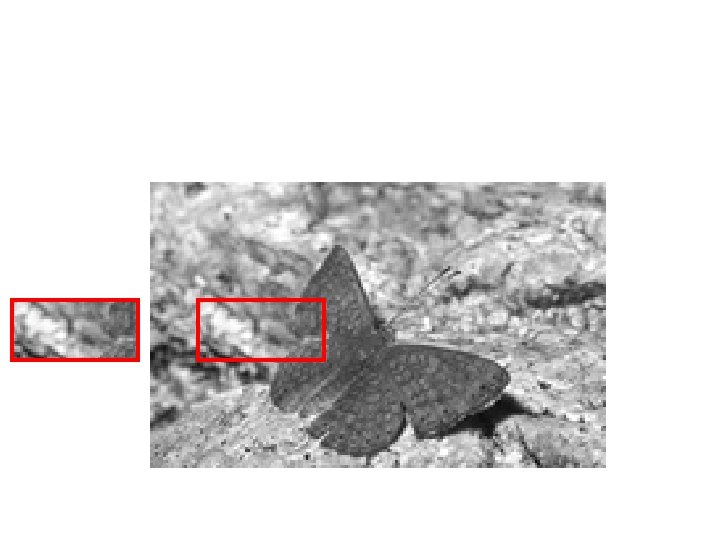
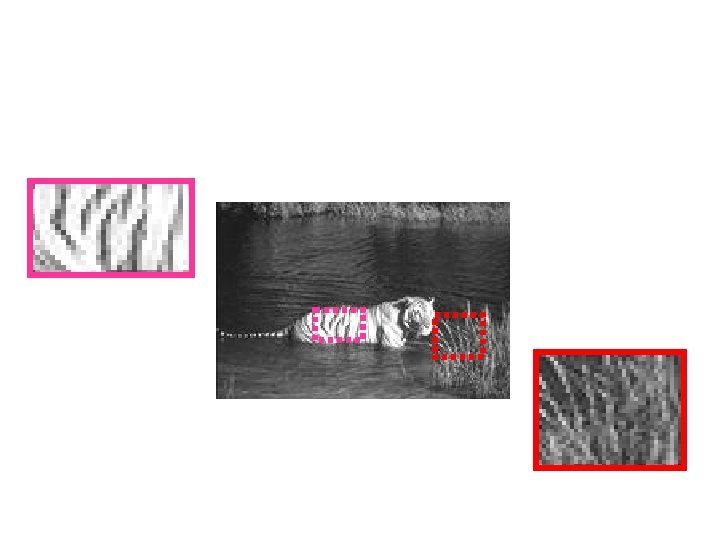
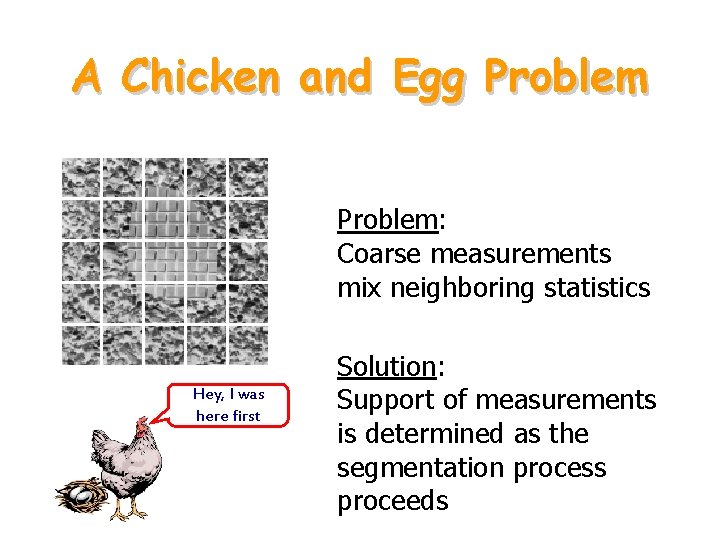
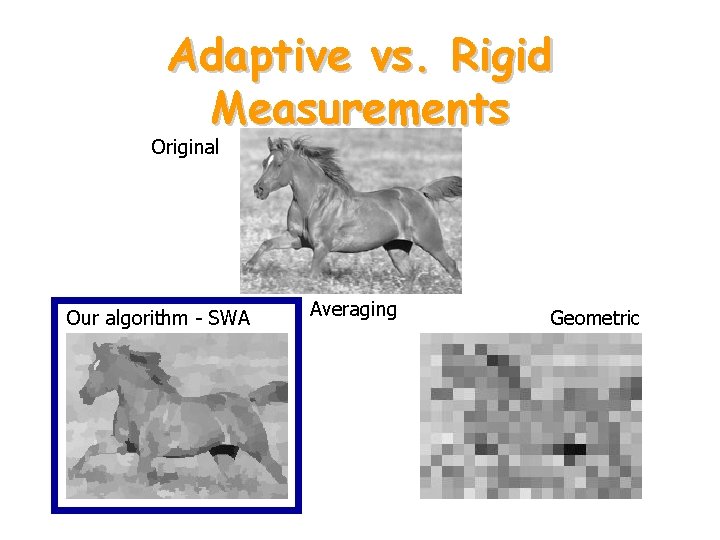
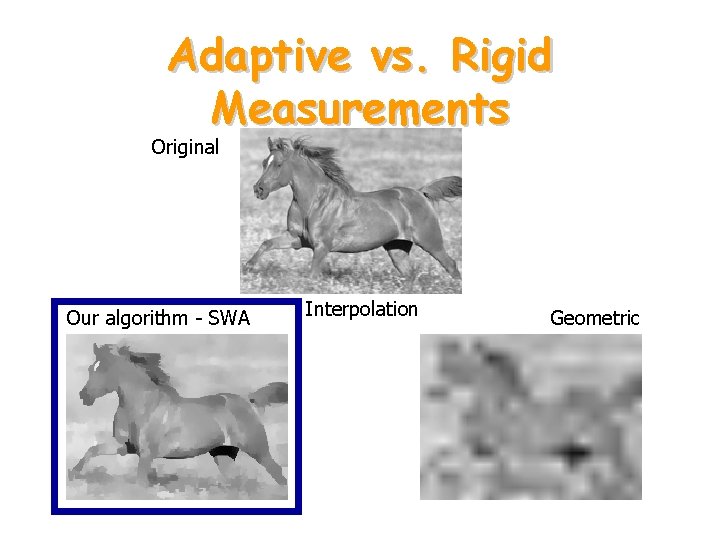
A Chicken and Egg Problem: Coarse measurements mix neighboring statistics Hey, I was here first Solution: Support of measurements is determined as the segmentation process proceeds
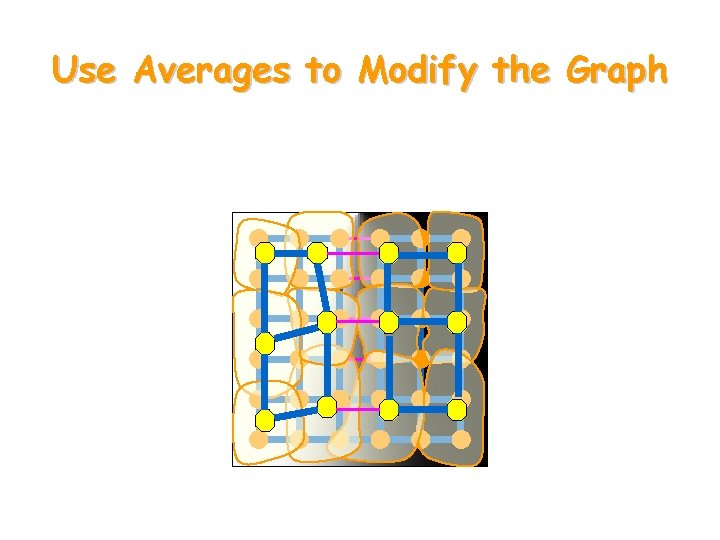
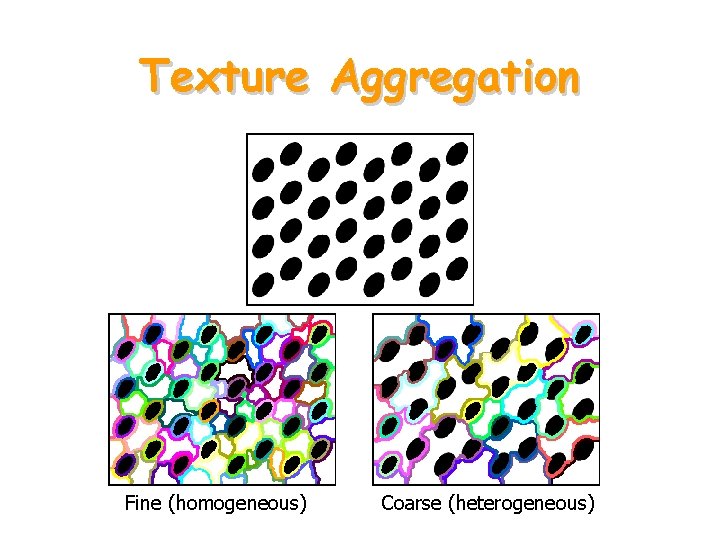
Texture Aggregation • Aggregates assumed to capture texture elements • Compare neighboring aggregates according to the following statistics: – Multiscale brightness measures – Multiscale shape measures – Filter responses • Use statistics to modify couplings
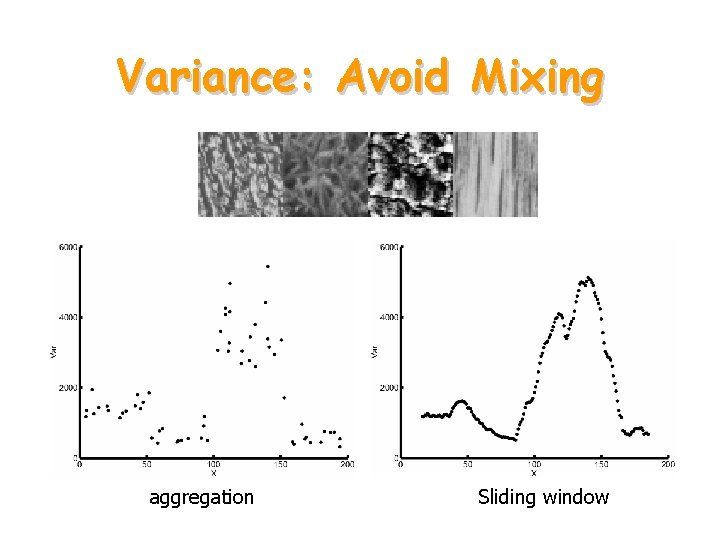
Recursive Computation of Measures • Given some measure of aggregates at a certain level (e. g. , orientation) • At every coarser level we take a weighted sum of this measure from previous level • The result can be used to compute the average, variance or histogram of the measure • Complexity is linear
Use Averages to Modify the Graph
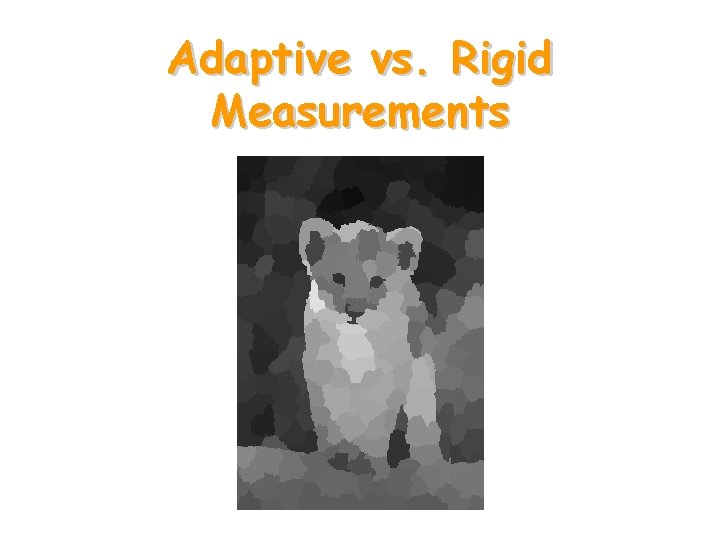
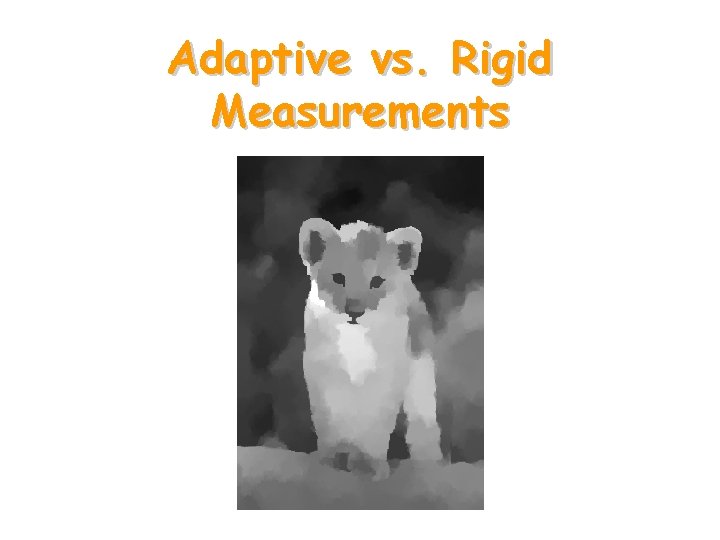
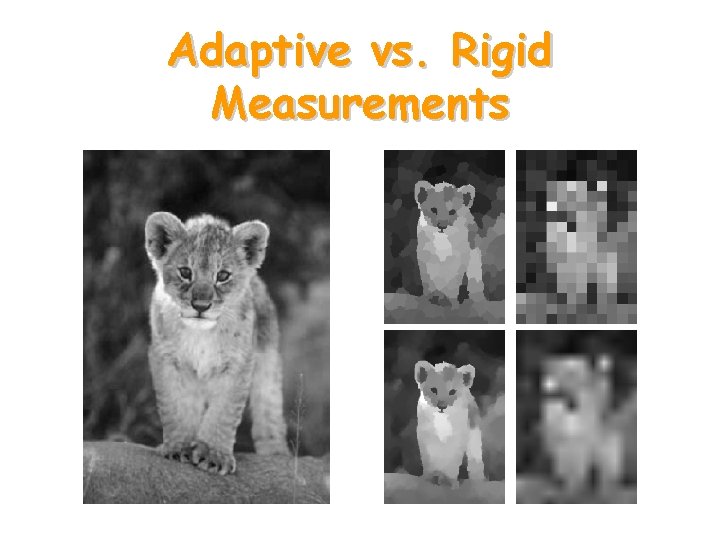
Adaptive vs. Rigid Measurements Original Our algorithm - SWA Averaging Geometric
Adaptive vs. Rigid Measurements Original Our algorithm - SWA Interpolation Geometric
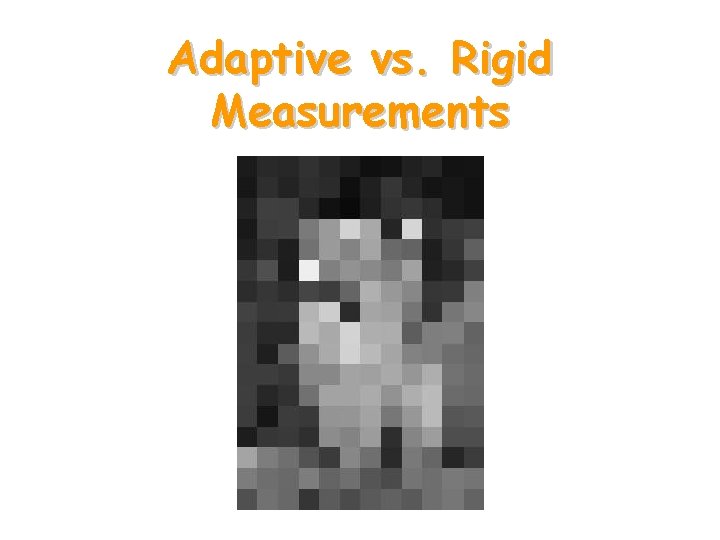
Adaptive vs. Rigid Measurements
Adaptive vs. Rigid Measurements
Adaptive vs. Rigid Measurements
Adaptive vs. Rigid Measurements
Adaptive vs. Rigid Measurements
Texture Aggregation Fine (homogeneous) Coarse (heterogeneous)
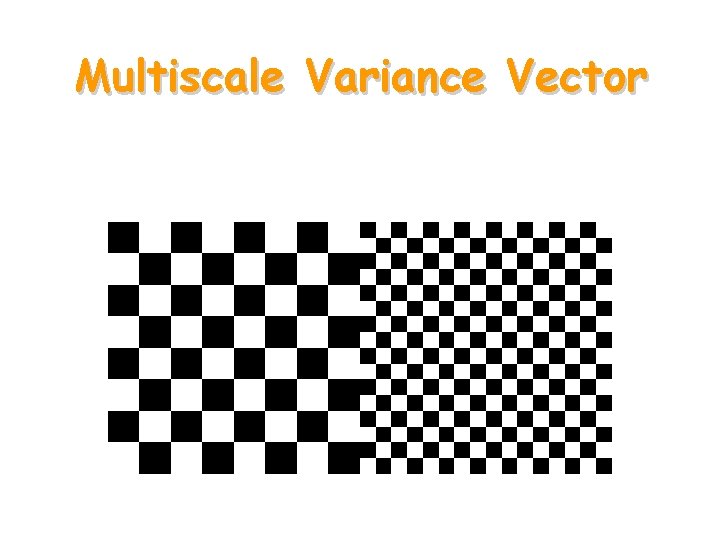
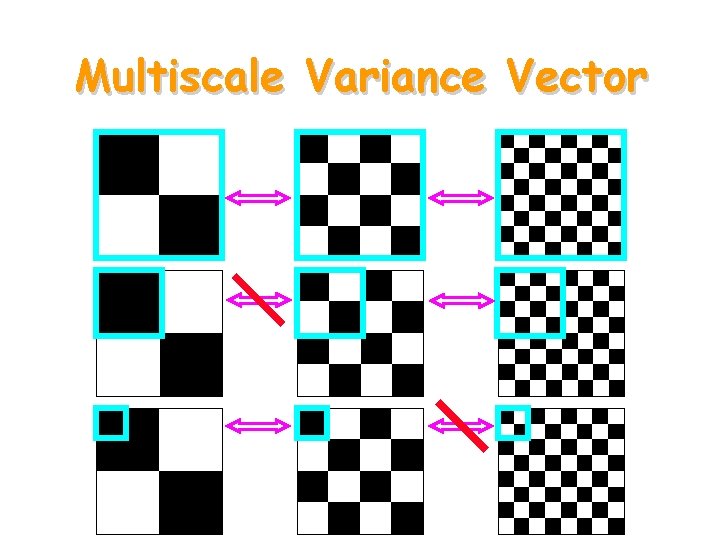
Multiscale Variance Vector
Multiscale Variance Vector
Variance: Avoid Mixing aggregation Sliding window
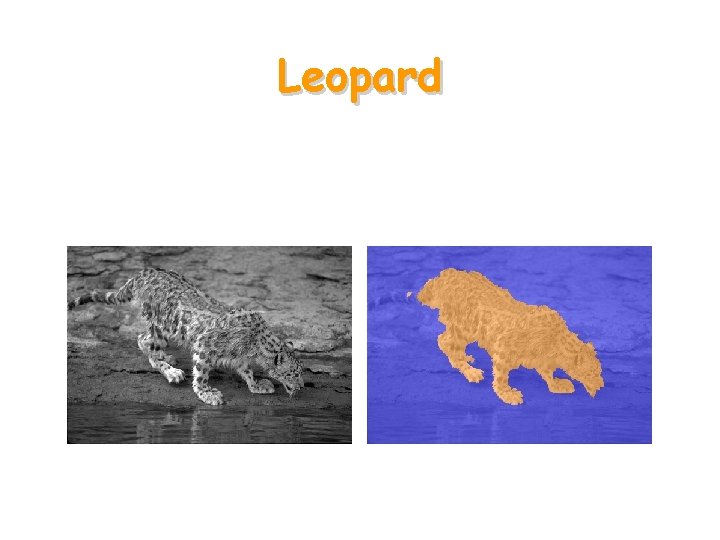
Leopard
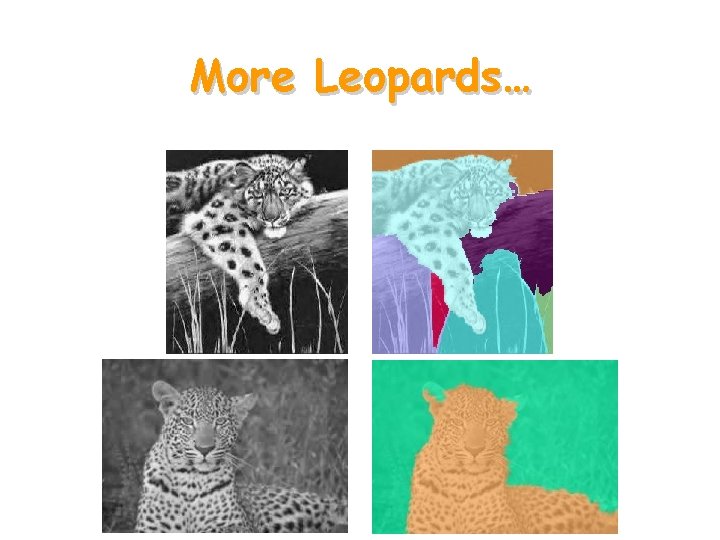
More Leopards…
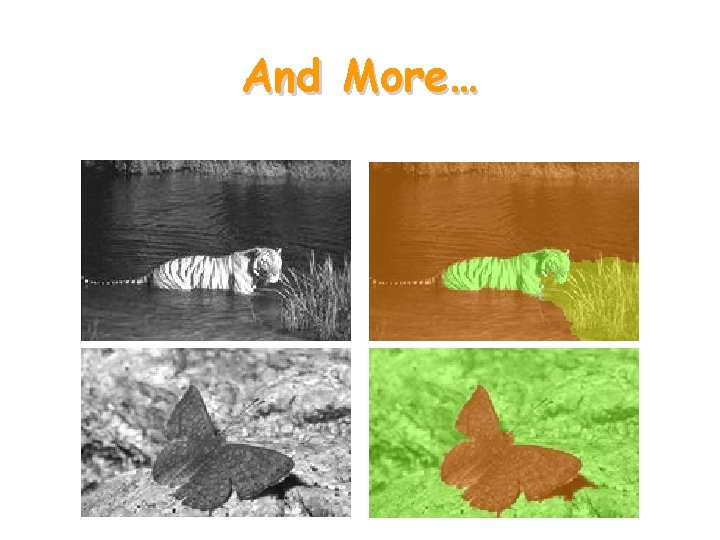
And More…
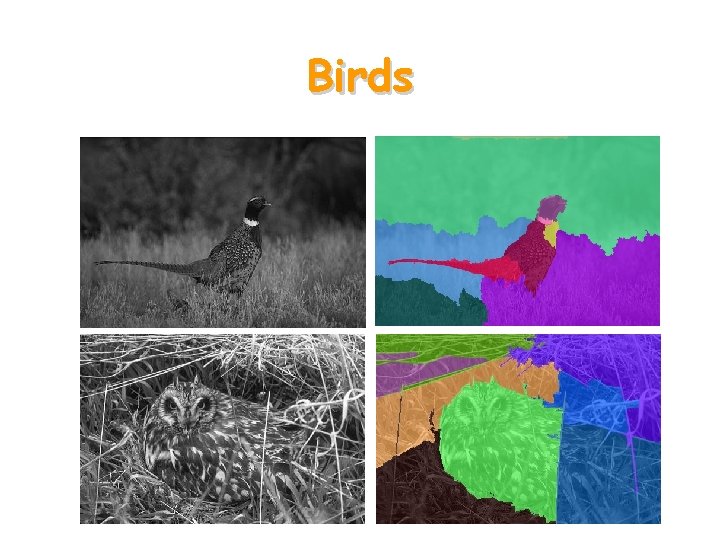
Birds
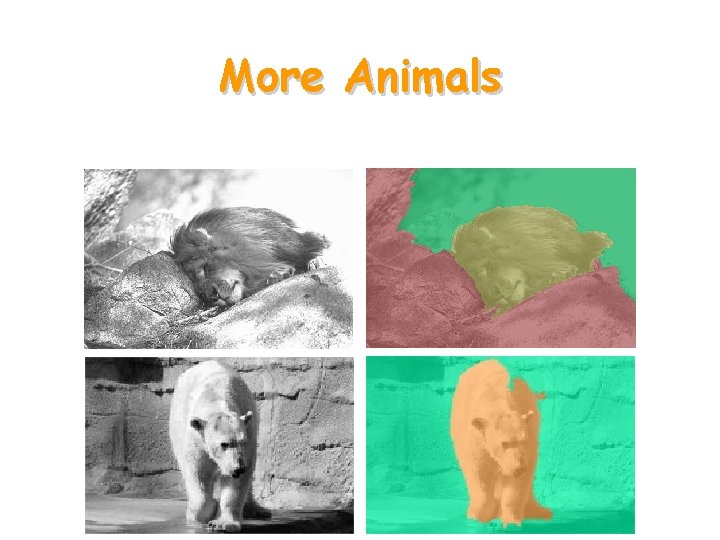
More Animals
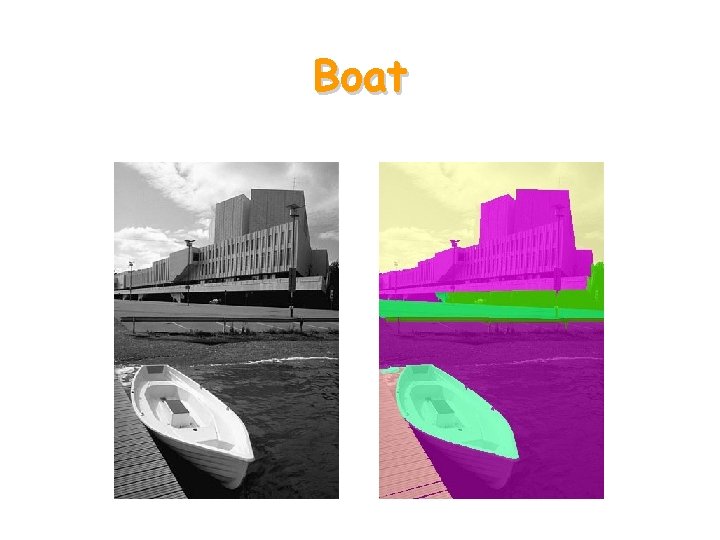
Boat
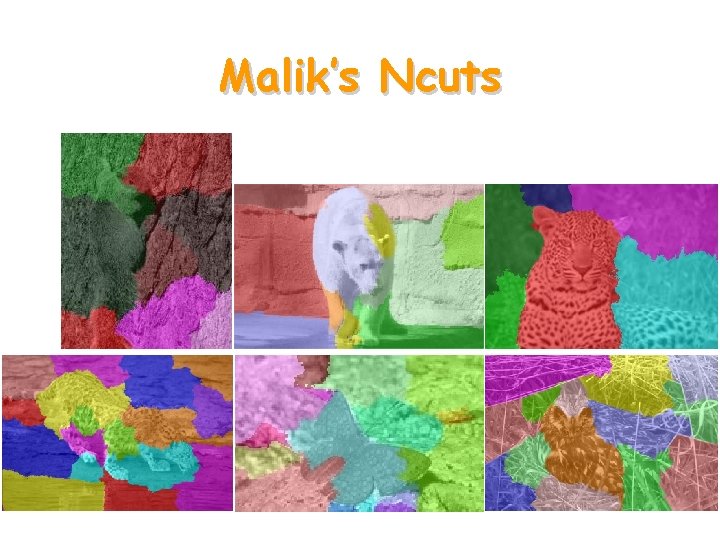
Malik’s Ncuts
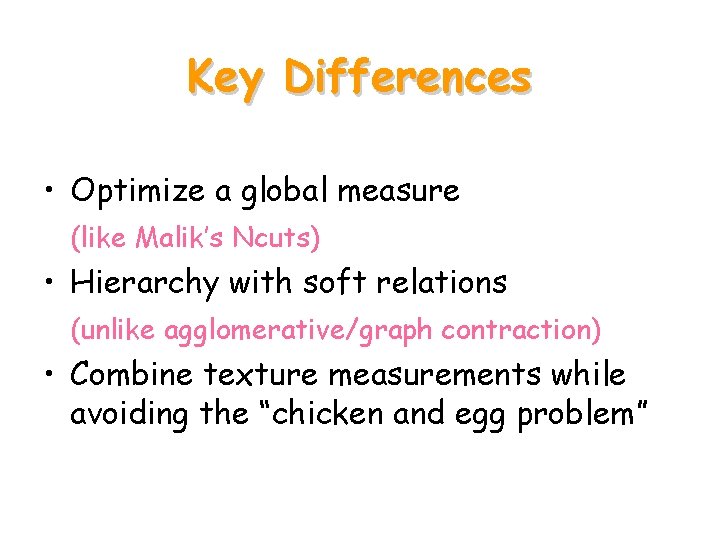
Key Differences • Optimize a global measure (like Malik’s Ncuts) • Hierarchy with soft relations (unlike agglomerative/graph contraction) • Combine texture measurements while avoiding the “chicken and egg problem”
Complexity • Every level contains about half the nodes of the previous level: Total #nodes 2 X #pixels • All connections are local, cleaning small weights • Top-down sharpening: constant number of levels • Linear complexity • Implementation: 5 seconds for 400 x 400
Representation • Average intensity • Texture • Shape
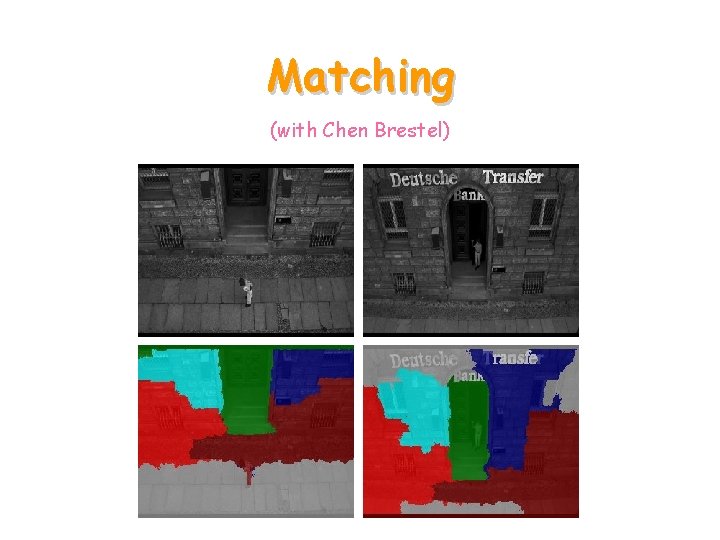
Matching (with Chen Brestel)
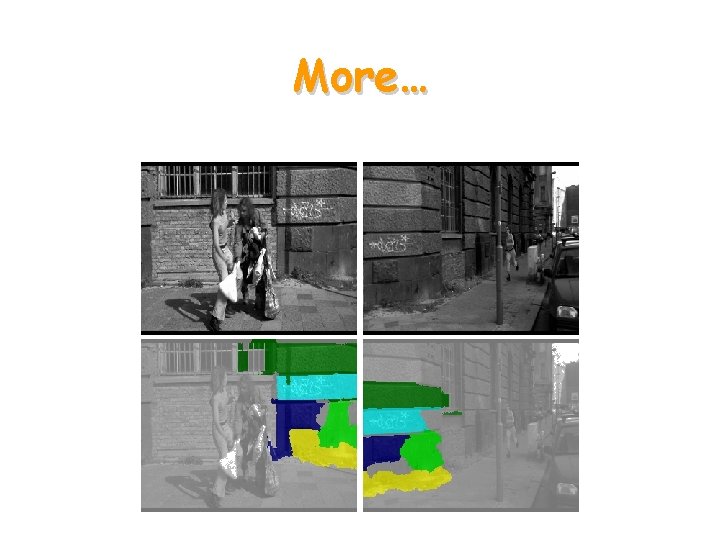
More…
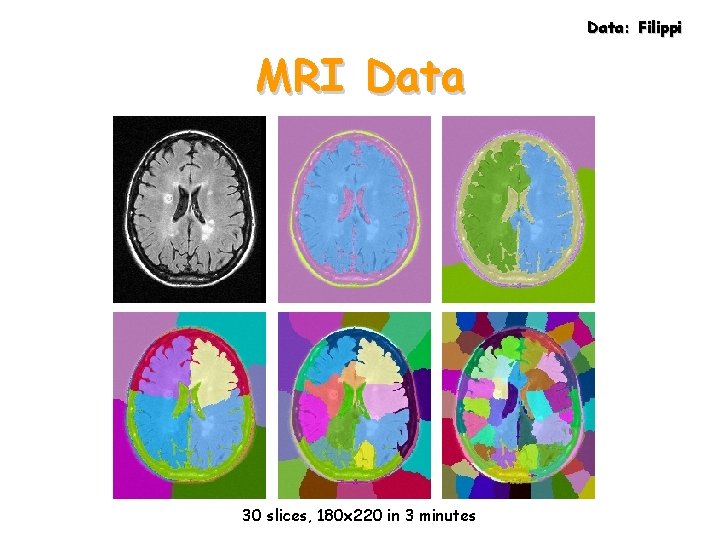
Data: Filippi MRI Data 30 slices, 180 x 220 in 3 minutes
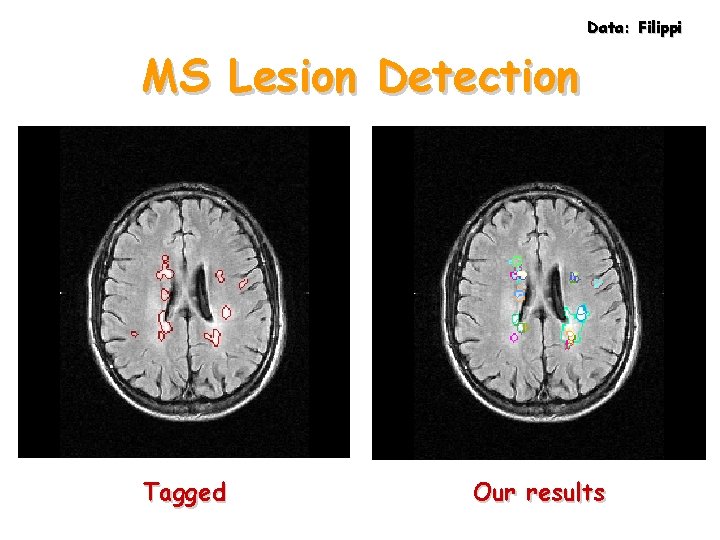
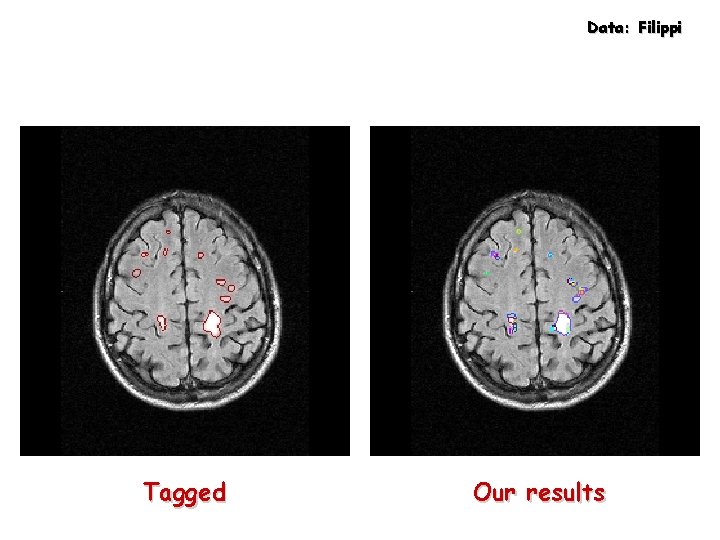
Data: Filippi MS Lesion Detection Tagged Our results
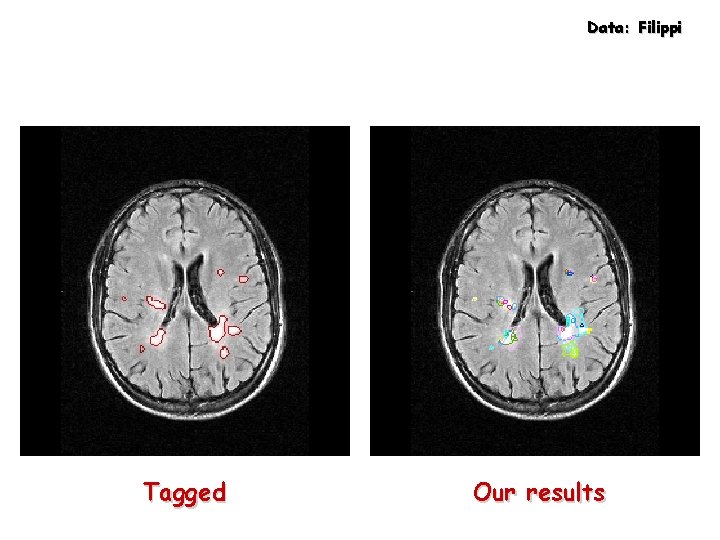
Data: Filippi Tagged Our results
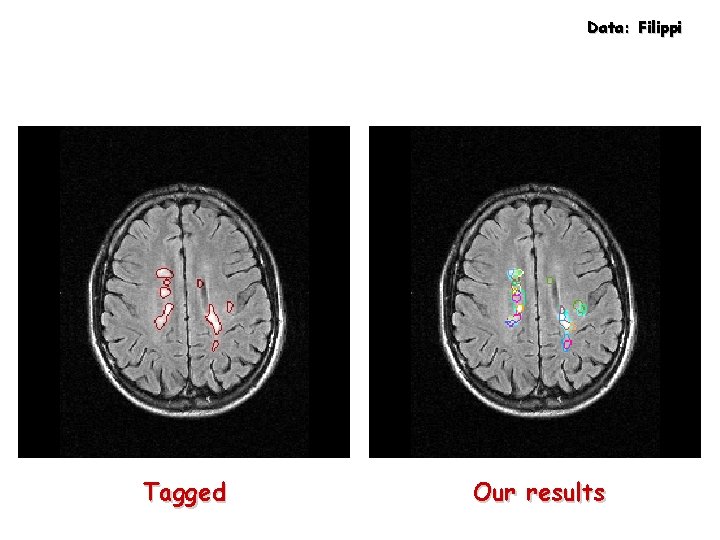
Data: Filippi Tagged Our results
Data: Filippi Tagged Our results
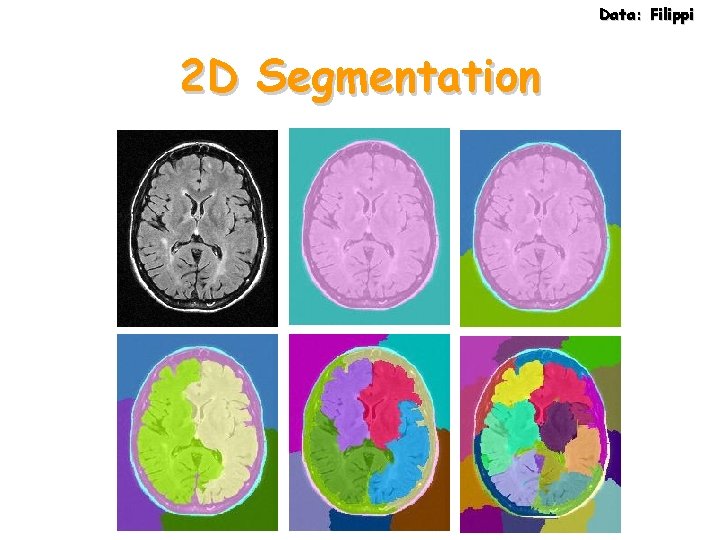
Data: Filippi 2 D Segmentation
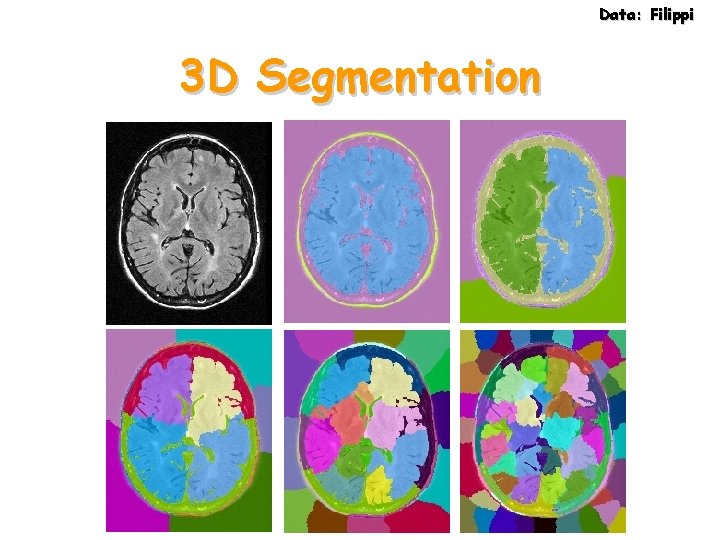
Data: Filippi 3 D Segmentation
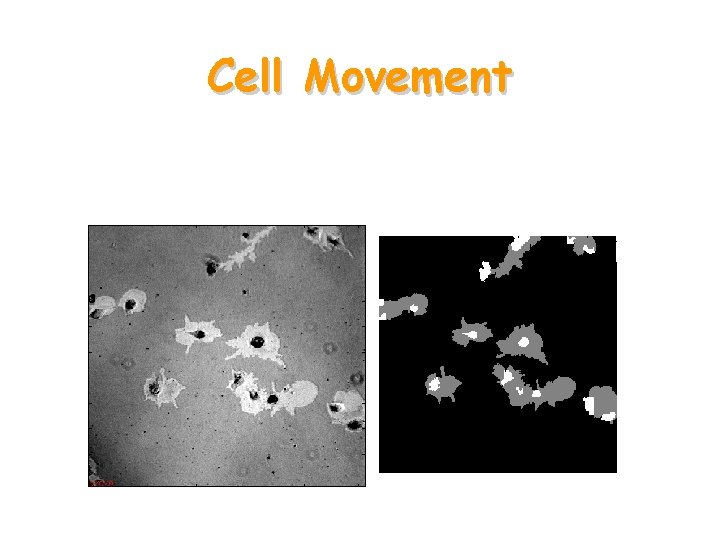
Cell Movement
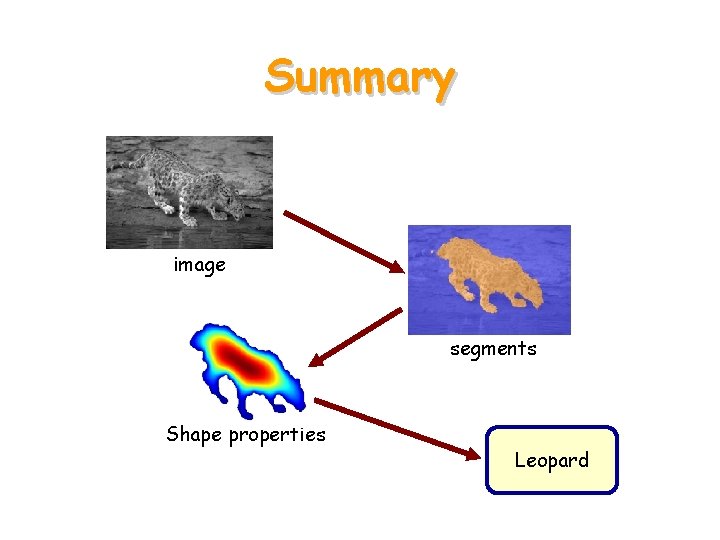
Summary image segments Shape properties Leopard