Example Approaches to Trust Tidal Trust and Eigen
- Slides: 55
Example Approaches to Trust : Tidal. Trust and Eigen. Trust Krishnaprasad Thirunarayan (T. K. Prasad) Professor, Department of Computer Science and Engineering Kno. e. sis - Ohio Center of Excellence in Knowledge-enabled Computing Wright State University, Dayton, OH-45435 [Some Slides from (Tang/Liu, WWW 2014)] 6/7/2021 Trust Networks: T. K. Prasad 1
Computing Trust in Social Networks Jennifer Golbeck College of Information Studies 2
Research Areas • Inferring Trust Relationships • Using Trust in Applications 3
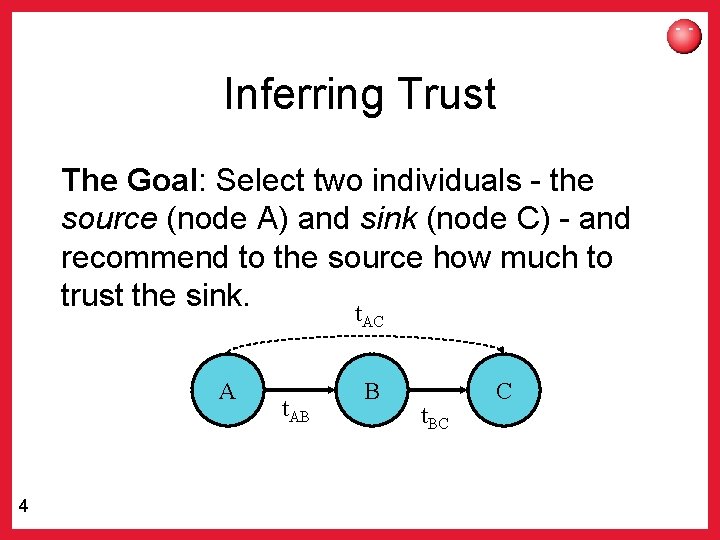
Inferring Trust The Goal: Select two individuals - the source (node A) and sink (node C) - and recommend to the source how much to trust the sink. t AC A 4 t. AB B t. BC C
Methods • Tidal. Trust – Personalized trust inference algorithm • SUNNY – Bayes Network algorithm that computes trust inferences and a confidence interval on the inferred value. • Profile Based – Trust from similarity 5
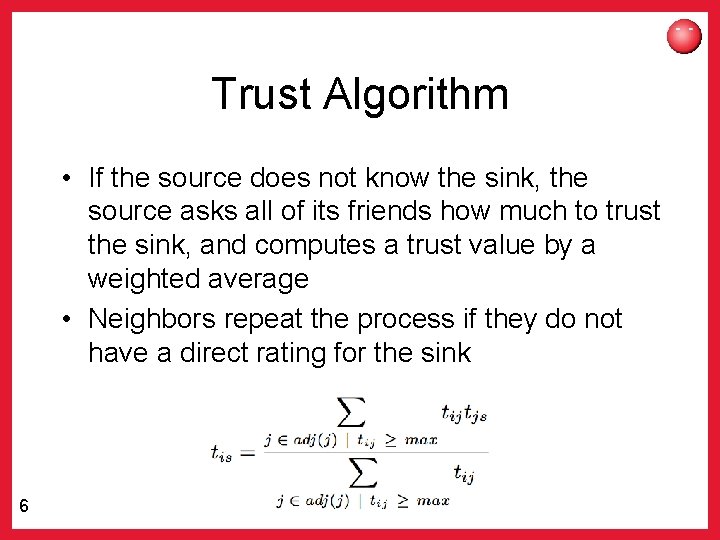
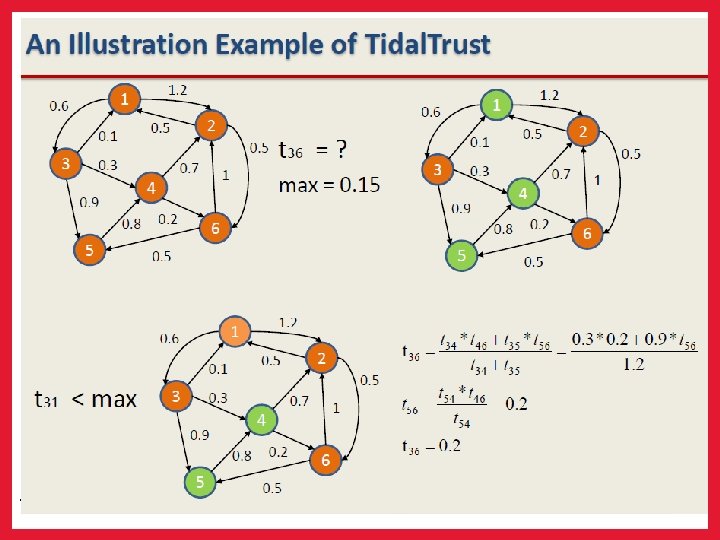
Trust Algorithm • If the source does not know the sink, the source asks all of its friends how much to trust the sink, and computes a trust value by a weighted average • Neighbors repeat the process if they do not have a direct rating for the sink 6
7
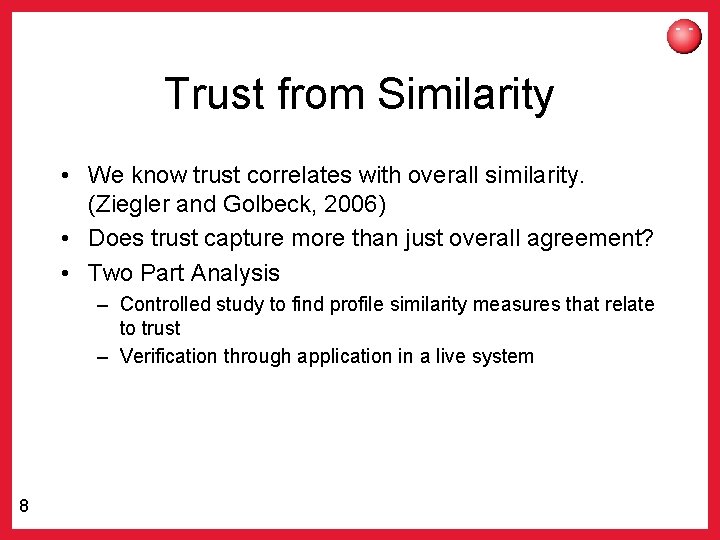
Trust from Similarity • We know trust correlates with overall similarity. (Ziegler and Golbeck, 2006) • Does trust capture more than just overall agreement? • Two Part Analysis – Controlled study to find profile similarity measures that relate to trust – Verification through application in a live system 8
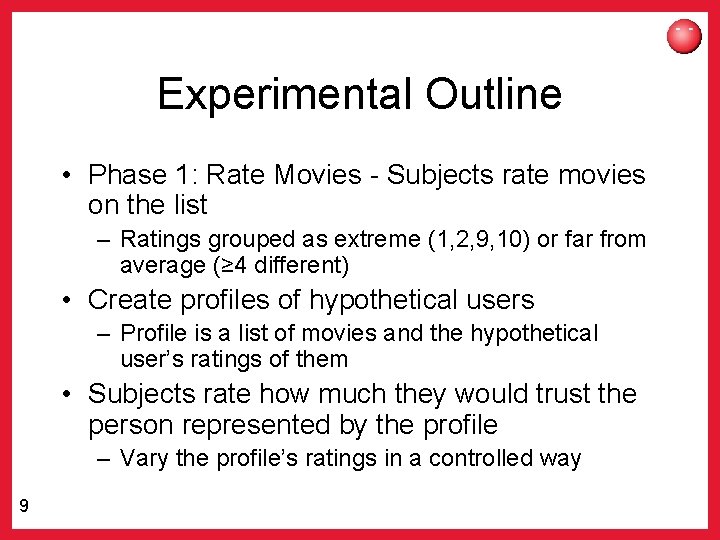
Experimental Outline • Phase 1: Rate Movies - Subjects rate movies on the list – Ratings grouped as extreme (1, 2, 9, 10) or far from average (≥ 4 different) • Create profiles of hypothetical users – Profile is a list of movies and the hypothetical user’s ratings of them • Subjects rate how much they would trust the person represented by the profile – Vary the profile’s ratings in a controlled way 9
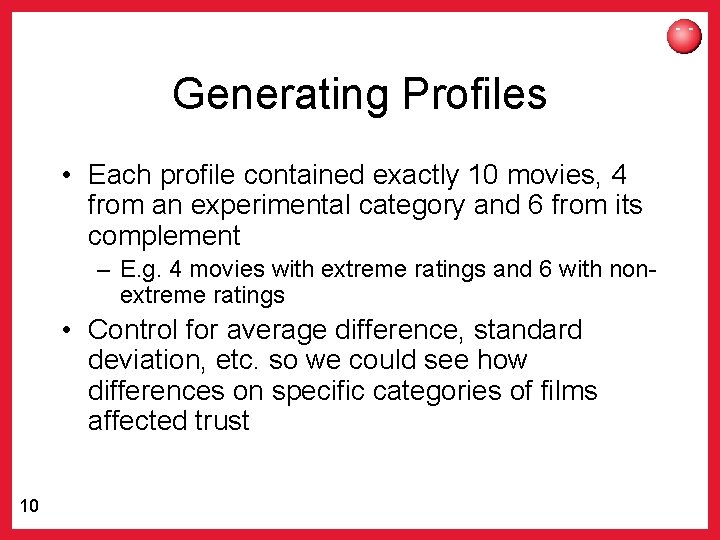
Generating Profiles • Each profile contained exactly 10 movies, 4 from an experimental category and 6 from its complement – E. g. 4 movies with extreme ratings and 6 with nonextreme ratings • Control for average difference, standard deviation, etc. so we could see how differences on specific categories of films affected trust 10
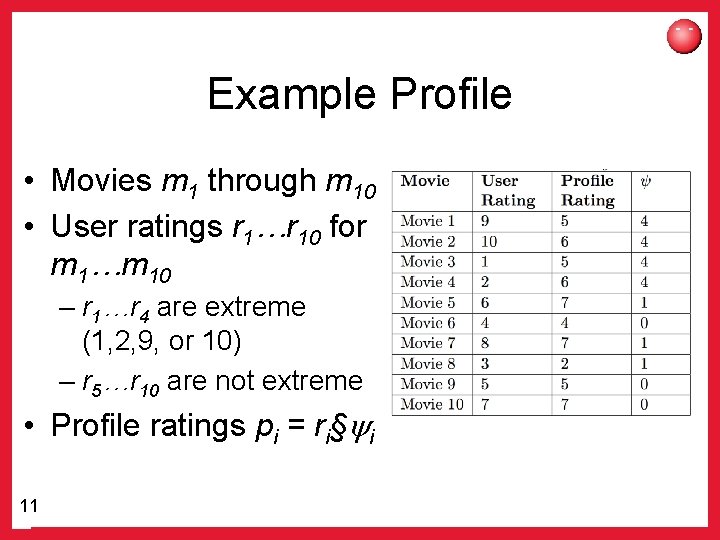
Example Profile • Movies m 1 through m 10 • User ratings r 1…r 10 for m 1…m 10 – r 1…r 4 are extreme (1, 2, 9, or 10) – r 5…r 10 are not extreme • Profile ratings pi = ri§ i 11
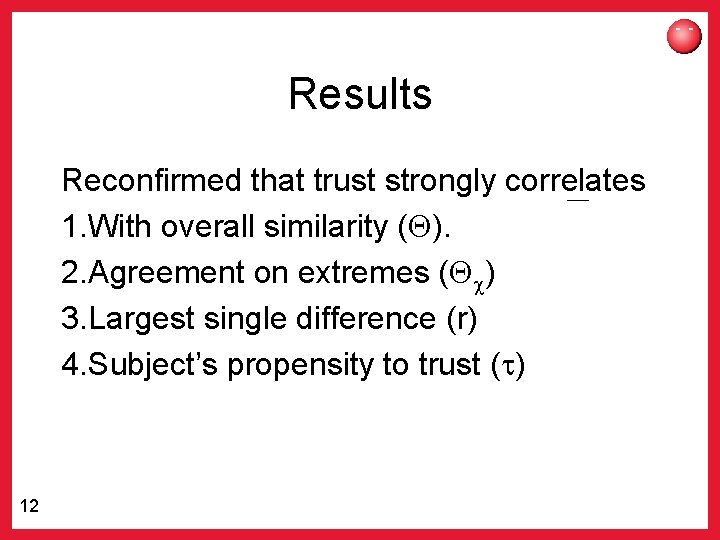
Results Reconfirmed that trust strongly correlates 1. With overall similarity ( ). 2. Agreement on extremes ( ) 3. Largest single difference (r) 4. Subject’s propensity to trust ( ) 12
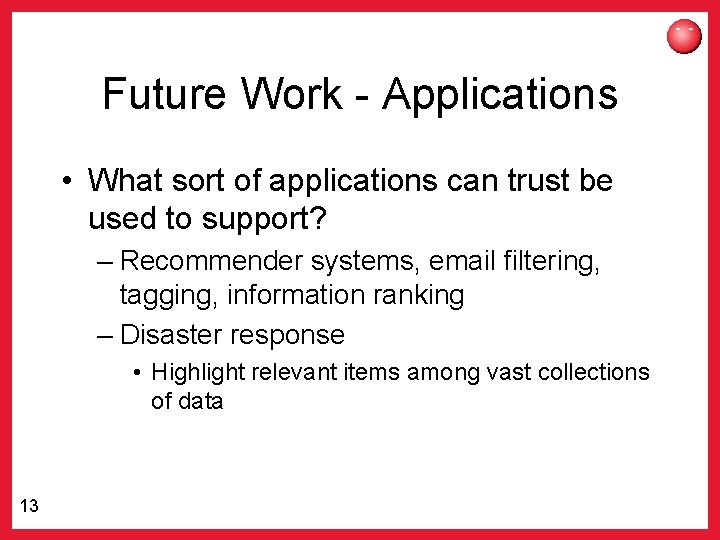
Future Work - Applications • What sort of applications can trust be used to support? – Recommender systems, email filtering, tagging, information ranking – Disaster response • Highlight relevant items among vast collections of data 13
The Eigen. Trust Algorithm for Reputation Management in P 2 P Networks Sepandar D. Kamvar Mario T. Schlosser Hector Garcia-Molina Stanford University
P 2 P Networks n Open and anonymous n Benefits n n Robust, Scalable, Diverse Problems n n Malicious peers Inauthentic files n n Viruses/Malware Tampered files Identifying malicious peers is more pressing than identifying inauthentic files
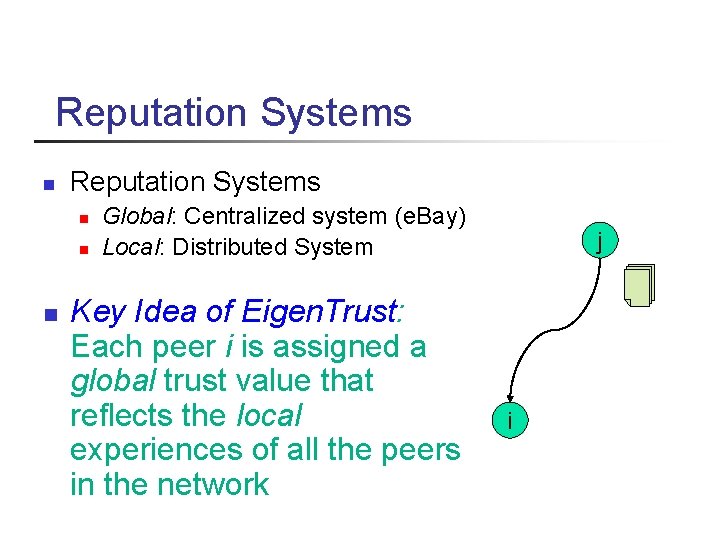
Reputation Systems n n n Global: Centralized system (e. Bay) Local: Distributed System Key Idea of Eigen. Trust: Each peer i is assigned a global trust value that reflects the local experiences of all the peers in the network j i
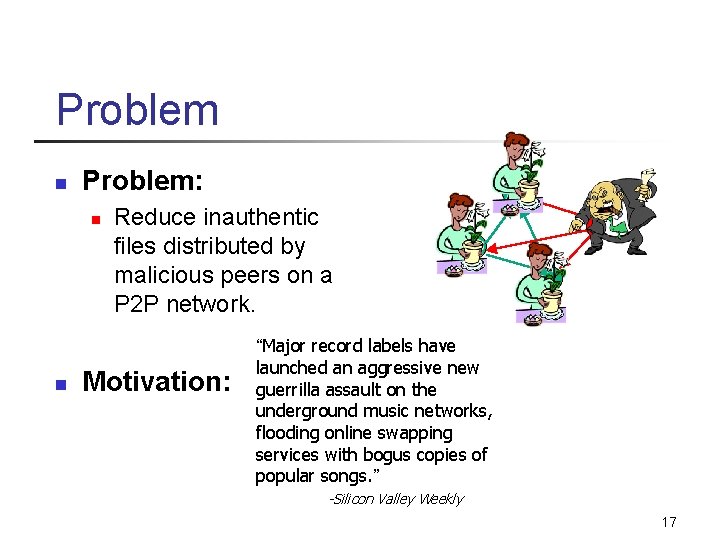
Problem n Problem: n n Reduce inauthentic files distributed by malicious peers on a P 2 P network. Motivation: “Major record labels have launched an aggressive new guerrilla assault on the underground music networks, flooding online swapping services with bogus copies of popular songs. ” -Silicon Valley Weekly 17
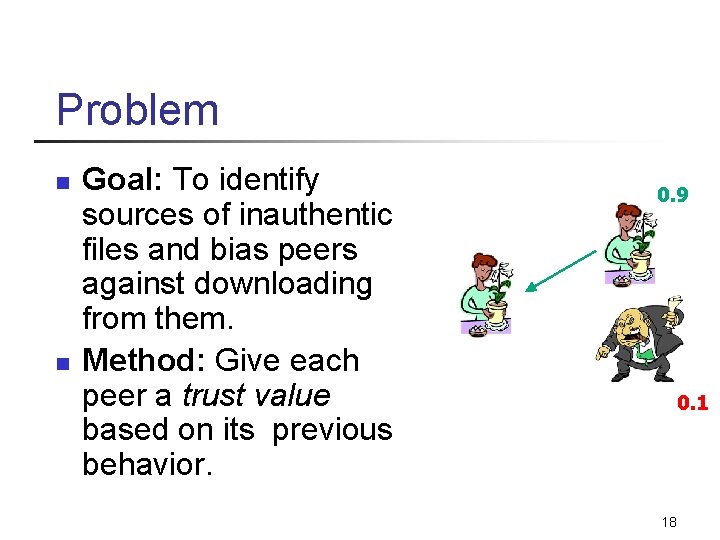
Problem n n Goal: To identify sources of inauthentic files and bias peers against downloading from them. Method: Give each peer a trust value based on its previous behavior. 0. 9 0. 1 18
Some approaches n n n Past History Friends of Friends Eigen. Trust 19
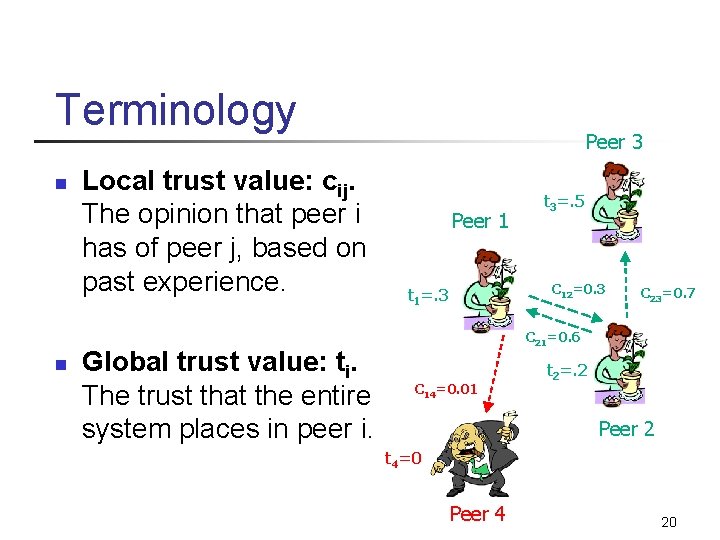
Terminology n n Local trust value: cij. The opinion that peer i has of peer j, based on past experience. Global trust value: ti. The trust that the entire system places in peer i. Peer 3 Peer 1 t 3=. 5 C 12=0. 3 t 1=. 3 C 23=0. 7 C 21=0. 6 C 14=0. 01 t 2=. 2 Peer 2 t 4=0 Peer 4 20
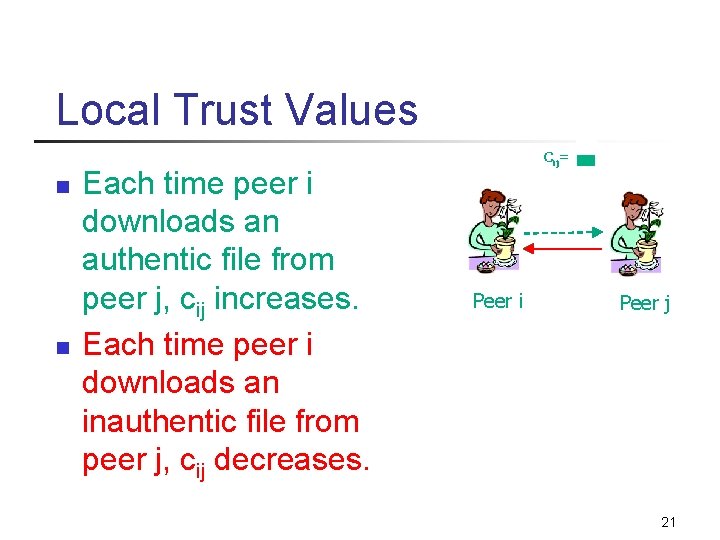
Local Trust Values n n Each time peer i downloads an authentic file from peer j, cij increases. Each time peer i downloads an inauthentic file from peer j, cij decreases. Cij= Peer i Peer j 21
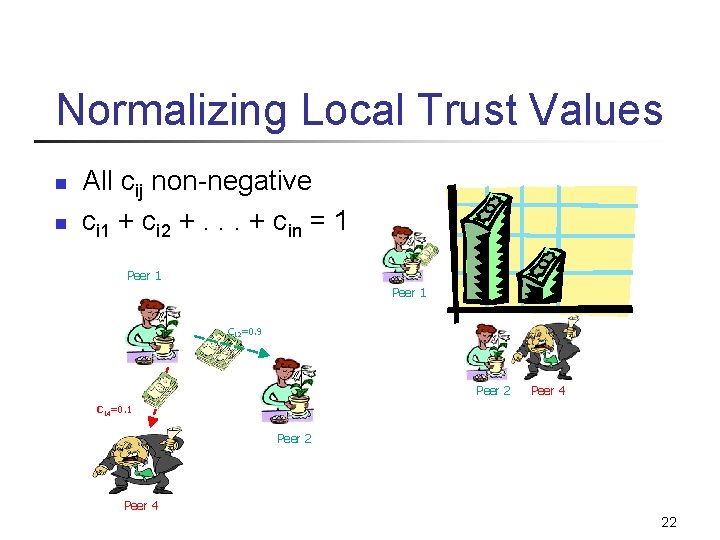
Normalizing Local Trust Values n n All cij non-negative ci 1 + ci 2 +. . . + cin = 1 Peer 1 C 12=0. 9 Peer 2 Peer 4 C 14=0. 1 Peer 2 Peer 4 22
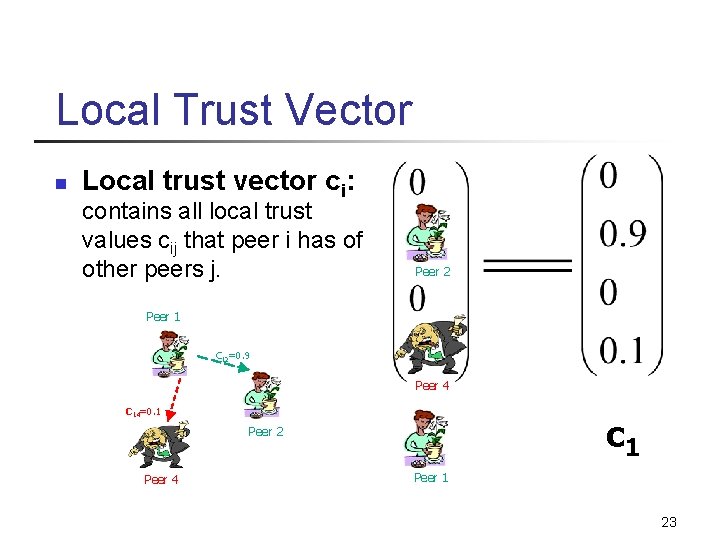
Local Trust Vector n Local trust vector ci: contains all local trust values cij that peer i has of other peers j. Peer 2 Peer 1 C 12=0. 9 Peer 4 C 14=0. 1 c 1 Peer 2 Peer 4 Peer 1 23
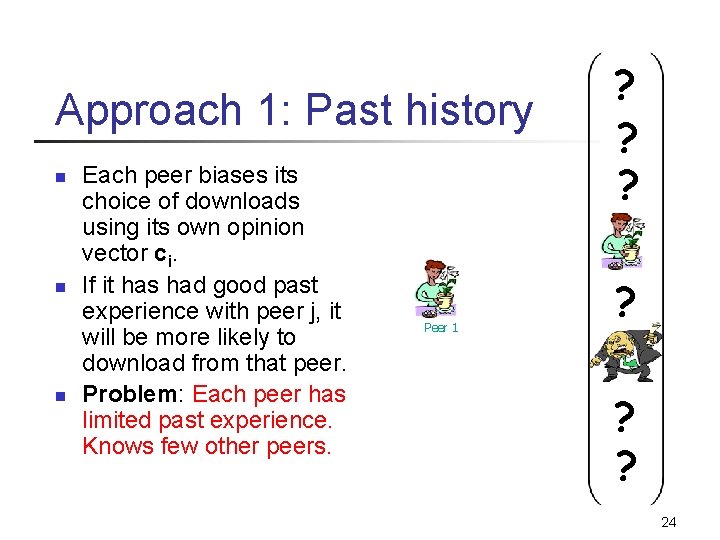
Approach 1: Past history n n n Each peer biases its choice of downloads using its own opinion vector ci. If it has had good past experience with peer j, it will be more likely to download from that peer. Problem: Each peer has limited past experience. Knows few other peers. ? ? Peer 4 Peer 1 Peer 6 ? ? 24
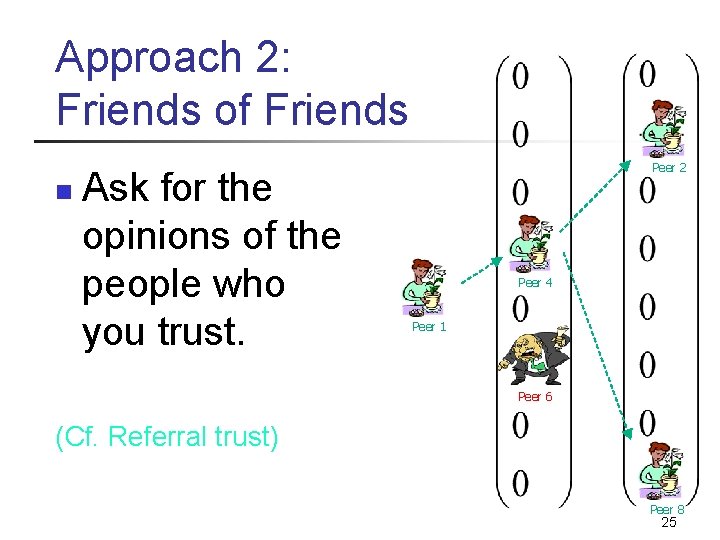
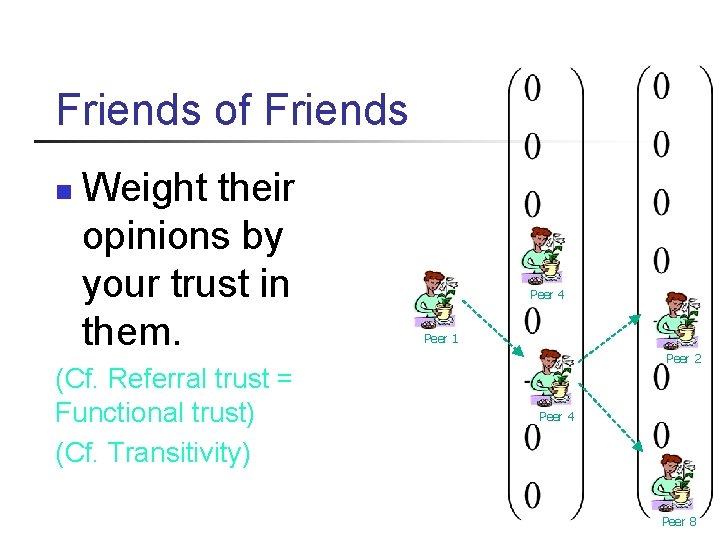
Approach 2: Friends of Friends n Ask for the opinions of the people who you trust. Peer 2 Peer 4 Peer 1 Peer 6 (Cf. Referral trust) Peer 8 25
Friends of Friends n Weight their opinions by your trust in them. (Cf. Referral trust = Functional trust) (Cf. Transitivity) Peer 4 Peer 1 Peer 2 Peer 4 Peer 8
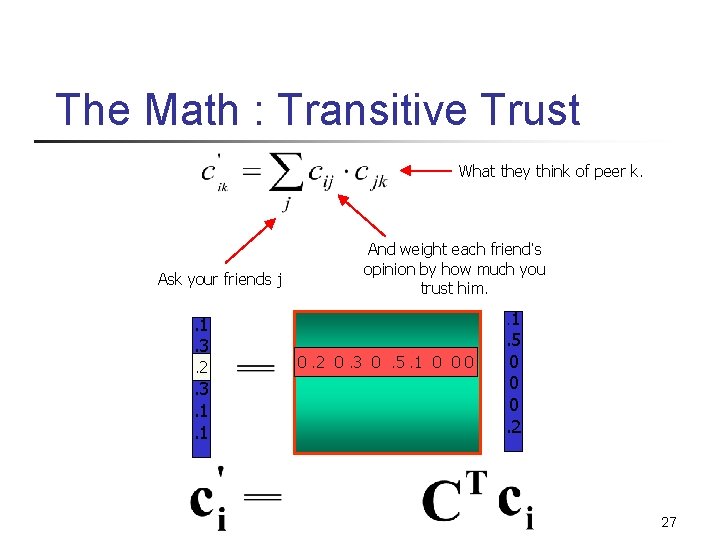
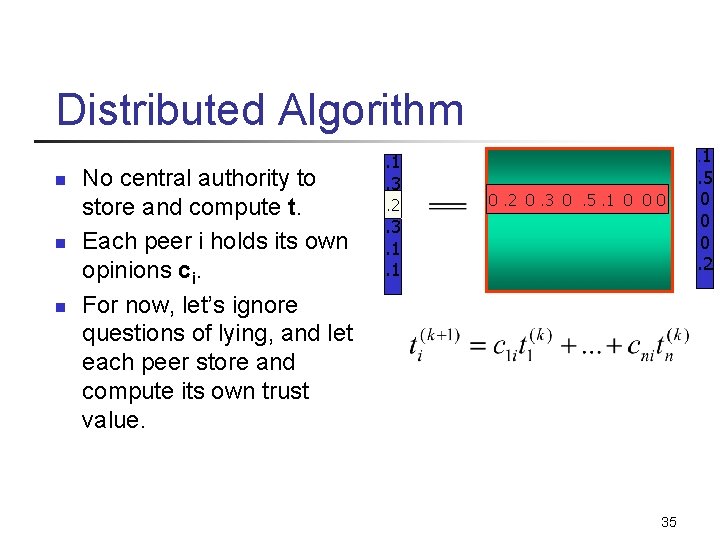
The Math : Transitive Trust What they think of peer k. Ask your friends j . 1. 3. 2. 3. 1. 1 And weight each friend’s opinion by how much you trust him. . 1 0. 2 0. 3 0. 5. 1 0 0 0 . 5 0 0 0. 2 27
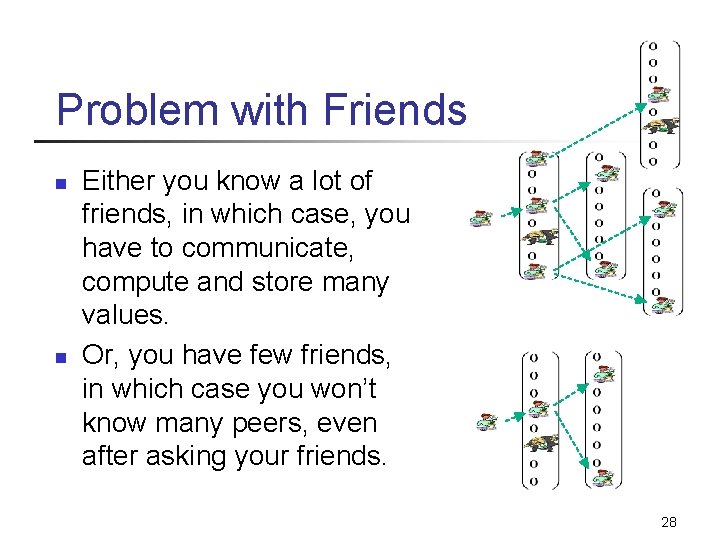
Problem with Friends n n Either you know a lot of friends, in which case, you have to communicate, compute and store many values. Or, you have few friends, in which case you won’t know many peers, even after asking your friends. 28
Eigen Trust: Dual Goal n We want each peer to: n Know all peers. n Perform minimal computation (and storage). 29
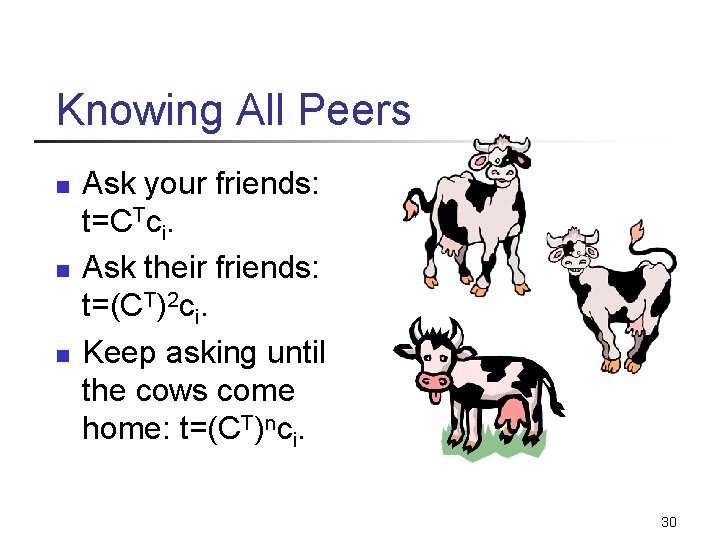
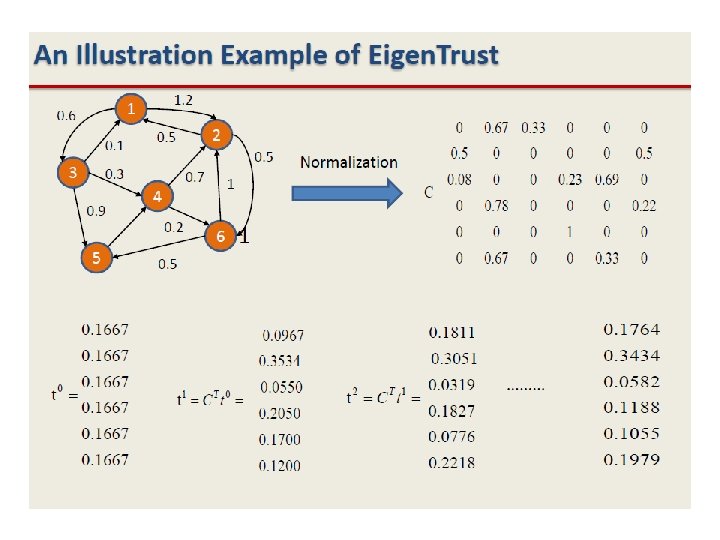
Knowing All Peers n n n Ask your friends: t=CTci. Ask their friends: t=(CT)2 ci. Keep asking until the cows come home: t=(CT)nci. 30
Minimal Computation n n Luckily, the trust vector t, if computed in this manner, converges to the same thing for every peer! Therefore, each peer doesn’t have to store and compute its own trust vector. The whole network can cooperate to store and compute t. 31
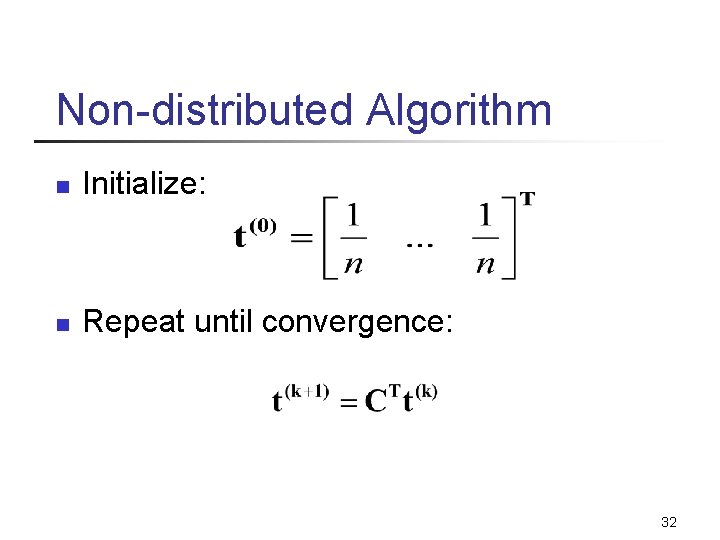
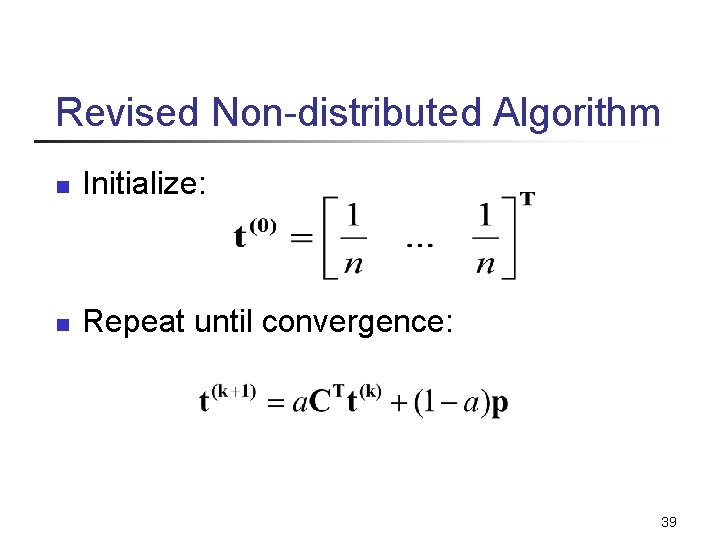
Non-distributed Algorithm n Initialize: n Repeat until convergence: 32
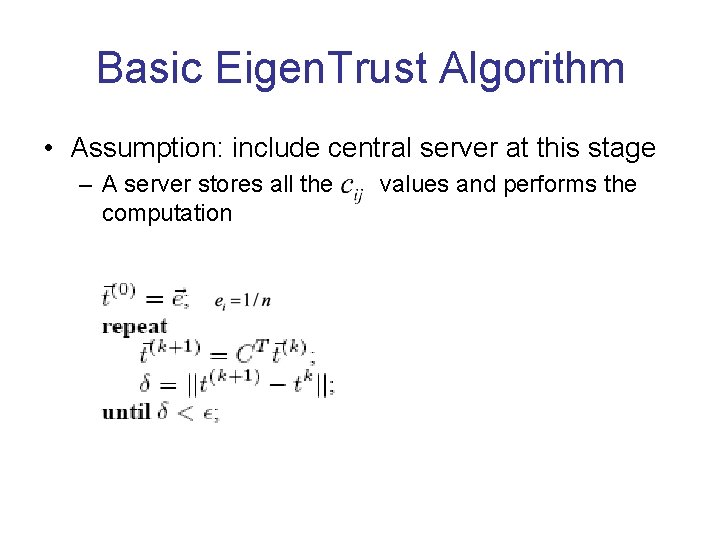
Basic Eigen. Trust Algorithm • Assumption: include central server at this stage – A server stores all the computation values and performs the
Distributed Algorithm n n n No central authority to store and compute t. Each peer i holds its own opinions ci. For now, let’s ignore questions of lying, and let each peer store and compute its own trust value. . 1. 3. 2. 3. 1. 1 0. 2 0. 3 0. 5. 1 0 0 0 35 . 5 0 0 0. 2
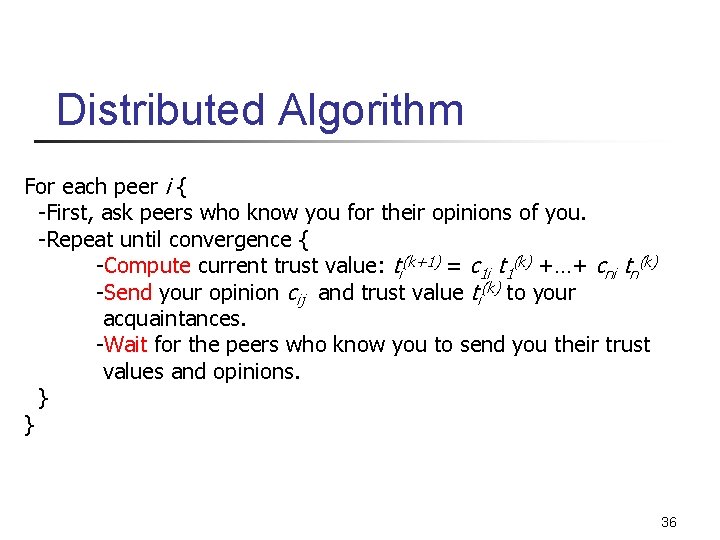
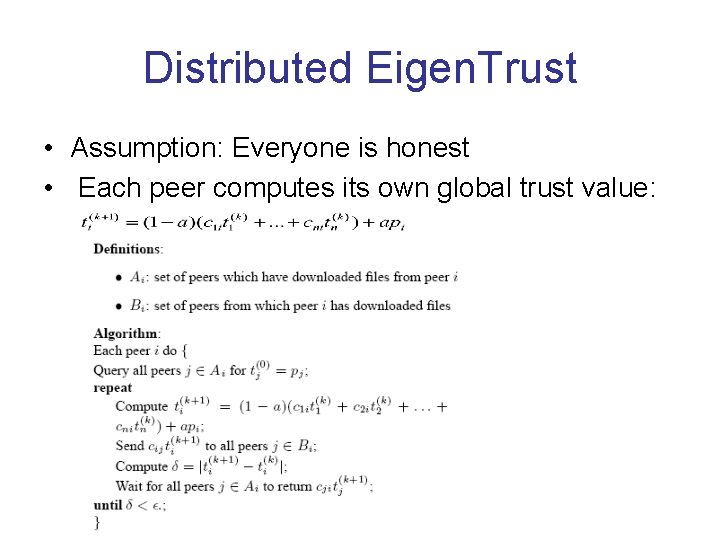
Distributed Algorithm For each peer i { -First, ask peers who know you for their opinions of you. -Repeat until convergence { -Compute current trust value: ti(k+1) = c 1 i t 1(k) +…+ cni tn(k) -Send your opinion cij and trust value ti(k) to your acquaintances. -Wait for the peers who know you to send you their trust values and opinions. } } 36
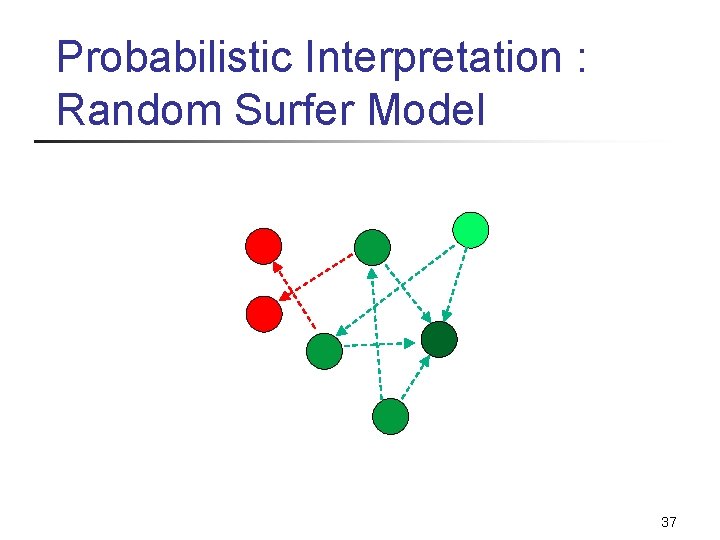
Probabilistic Interpretation : Random Surfer Model 37
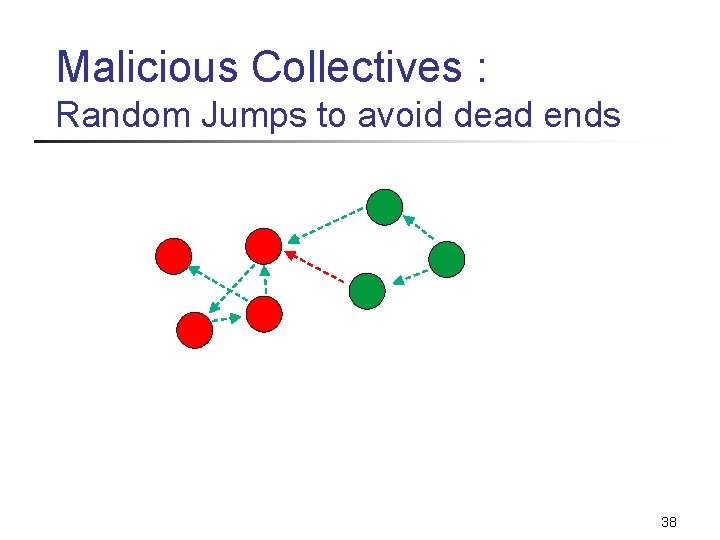
Malicious Collectives : Random Jumps to avoid dead ends 38
Revised Non-distributed Algorithm n Initialize: n Repeat until convergence: 39
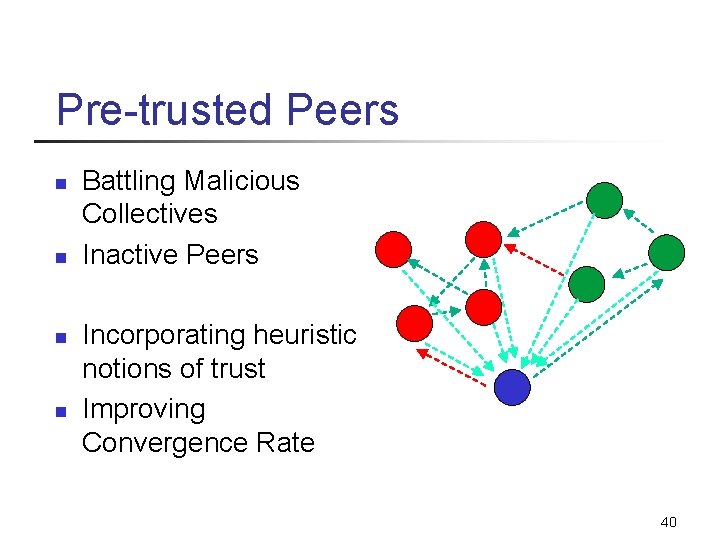
Pre-trusted Peers n n Battling Malicious Collectives Inactive Peers Incorporating heuristic notions of trust Improving Convergence Rate 40
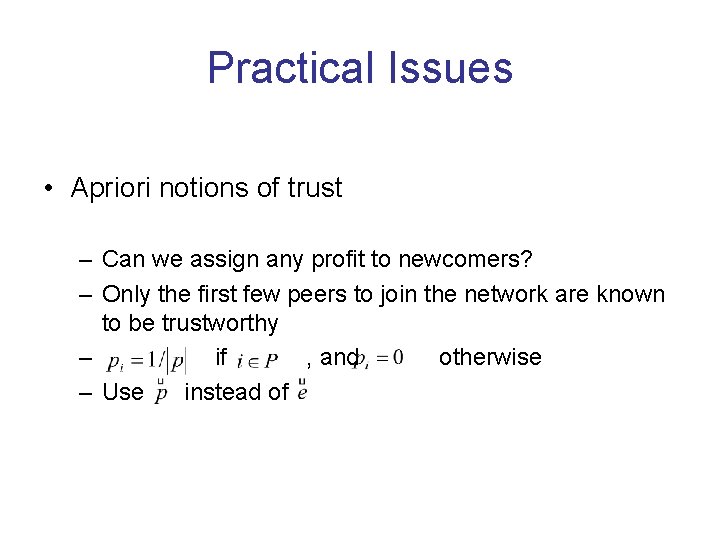
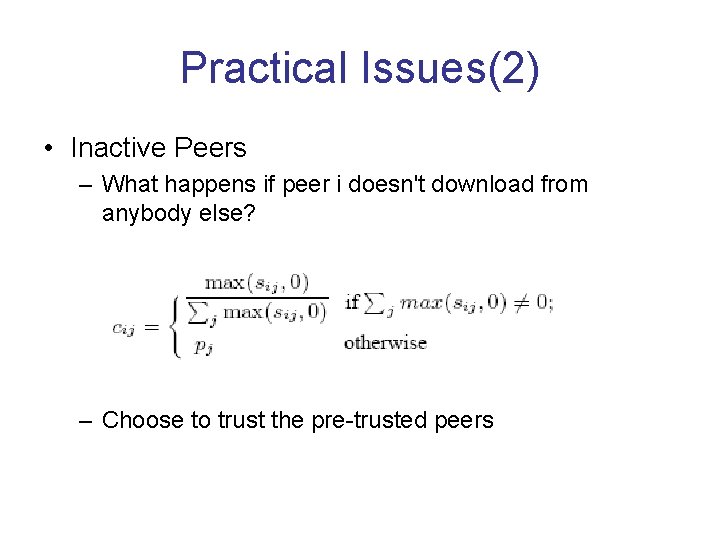
Practical Issues • Apriori notions of trust – Can we assign any profit to newcomers? – Only the first few peers to join the network are known to be trustworthy – if , and otherwise – Use instead of
Practical Issues(2) • Inactive Peers – What happens if peer i doesn't download from anybody else? – Choose to trust the pre-trusted peers
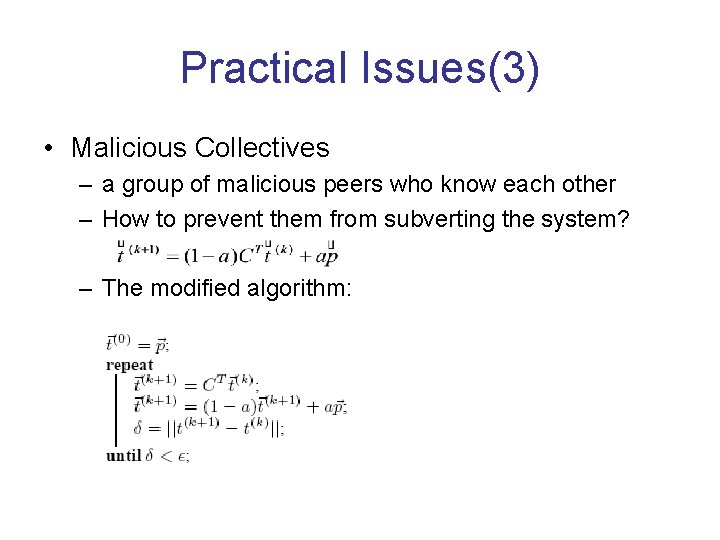
Practical Issues(3) • Malicious Collectives – a group of malicious peers who know each other – How to prevent them from subverting the system? – The modified algorithm:
Distributed Eigen. Trust • Assumption: Everyone is honest • Each peer computes its own global trust value:
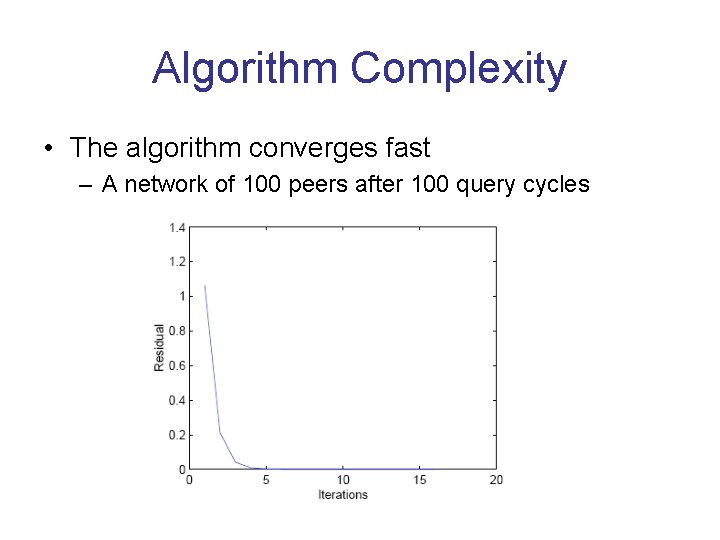
Algorithm Complexity • The algorithm converges fast – A network of 100 peers after 100 query cycles
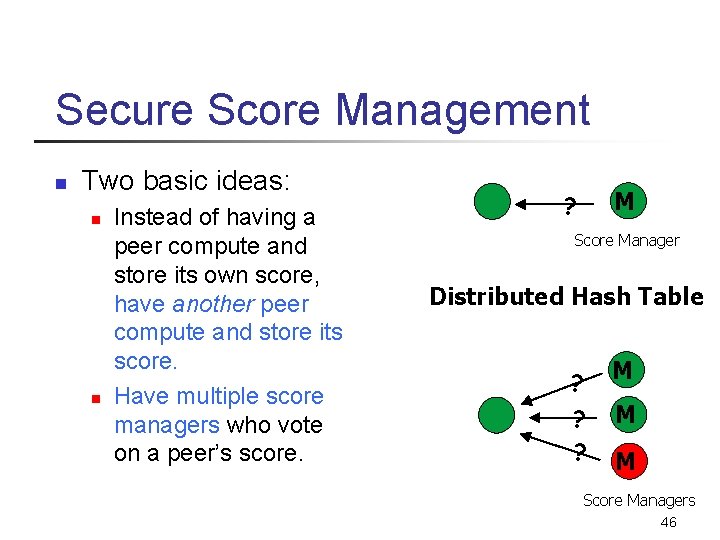
Secure Score Management n Two basic ideas: n n Instead of having a peer compute and store its own score, have another peer compute and store its score. Have multiple score managers who vote on a peer’s score. M ? Score Manager Distributed Hash Table ? M ? ? M M Score Managers 46
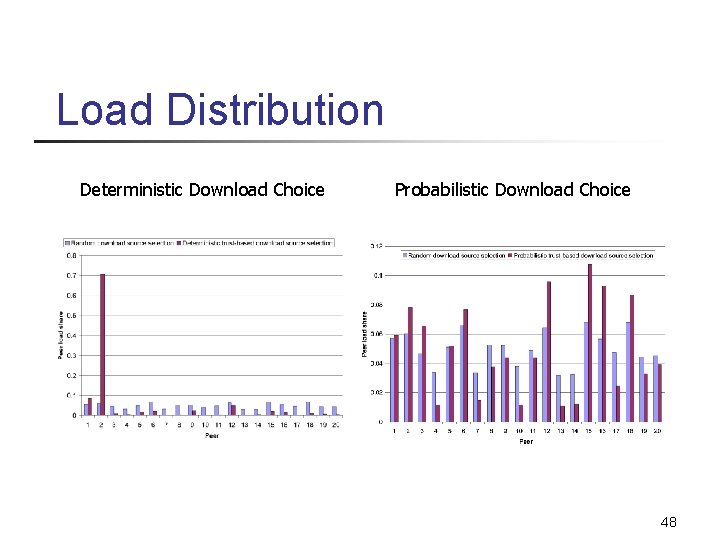
How to use the trust values ti n When you get responses from multiple peers: n Deterministic: Choose the peer with highest trust value. n n To avoid discriminating against new peer (at the risk of inviting malicious peer), occasionally use other peer. Probabilistic: Choose a peer with probability proportional to its trust value. n This approach improves load balancing. 47
Load Distribution Deterministic Download Choice Probabilistic Download Choice 48
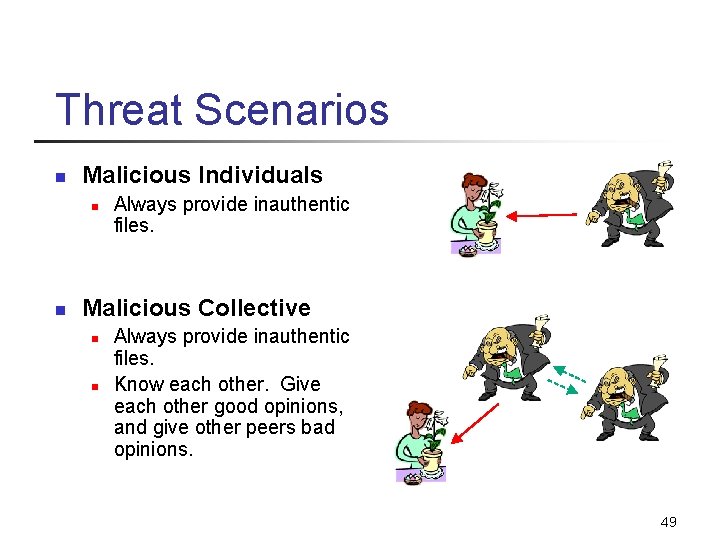
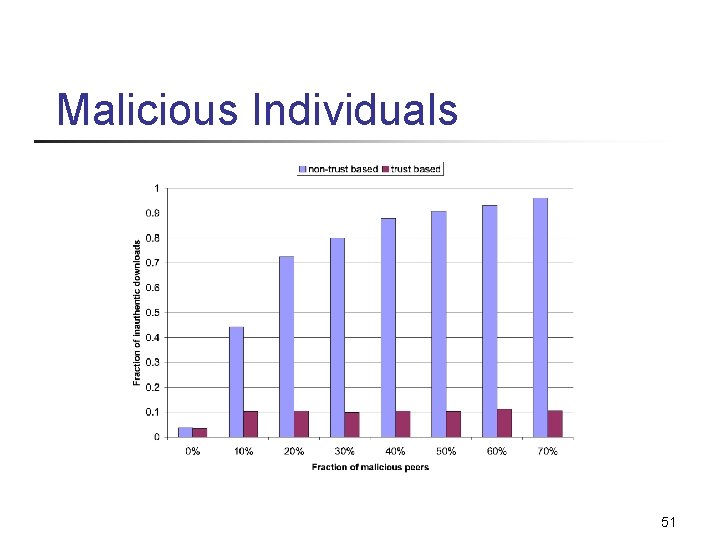
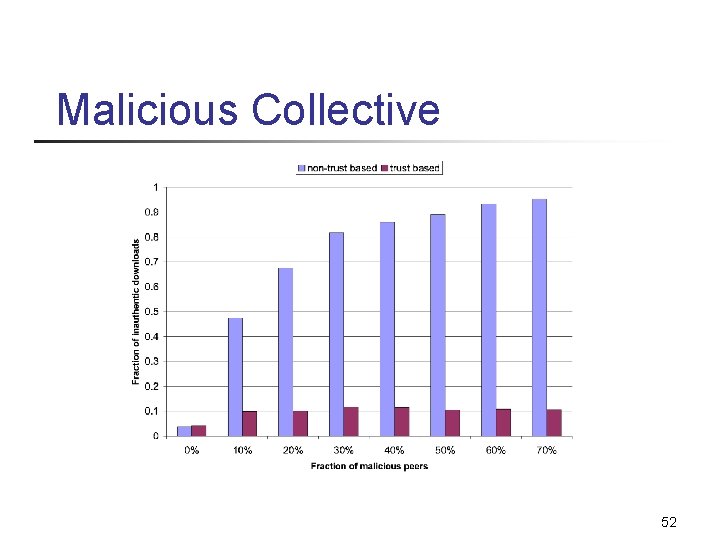
Threat Scenarios n Malicious Individuals n n Always provide inauthentic files. Malicious Collective n n Always provide inauthentic files. Know each other. Give each other good opinions, and give other peers bad opinions. 49
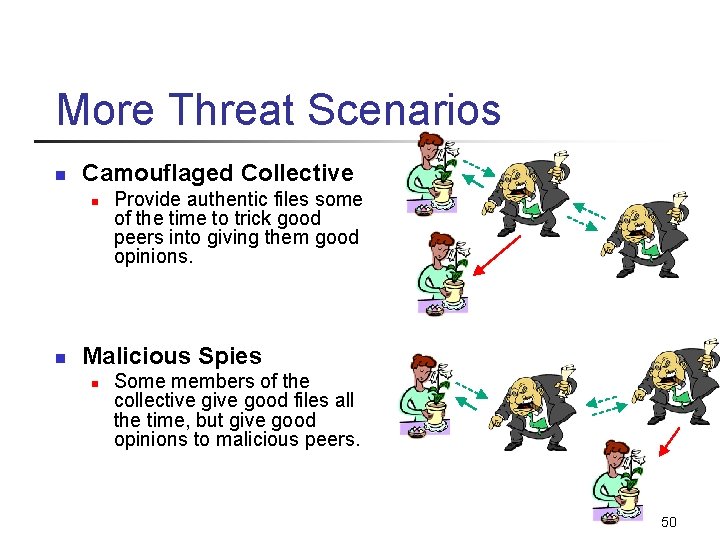
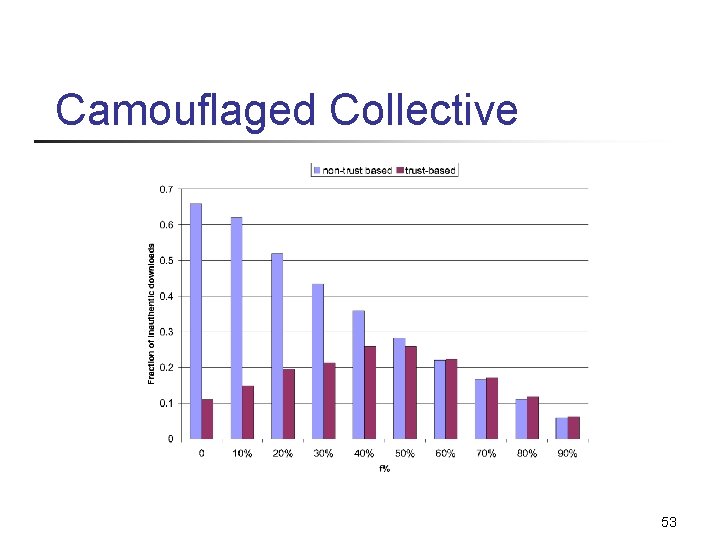
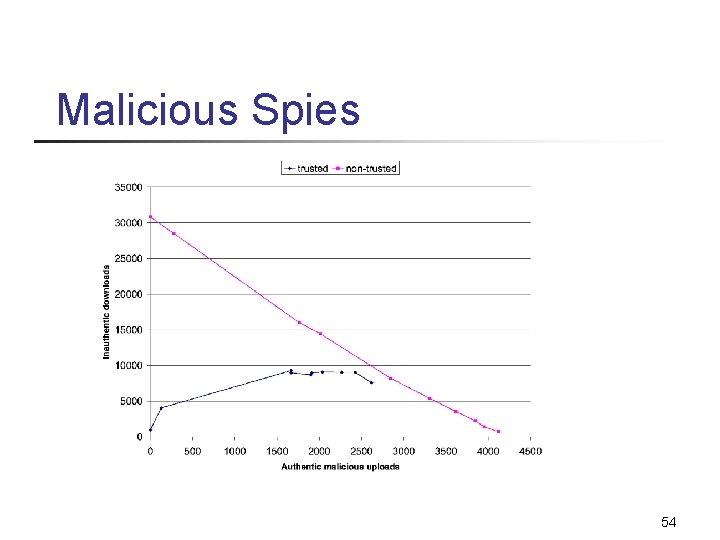
More Threat Scenarios n Camouflaged Collective n n Provide authentic files some of the time to trick good peers into giving them good opinions. Malicious Spies n Some members of the collective good files all the time, but give good opinions to malicious peers. 50
Malicious Individuals 51
Malicious Collective 52
Camouflaged Collective 53
Malicious Spies 54
Conclusion n Eigentrust n n Dramatically reduces number of inauthentic files on the network. Robust to malicious peers. Low overhead. Paper available at http: //www. stanford. edu/~sdkamvar/resea rch. html 55