Earth Pat Arnott Atmospheric Science physics climate chemistry

- Slides: 53
Earth Pat Arnott
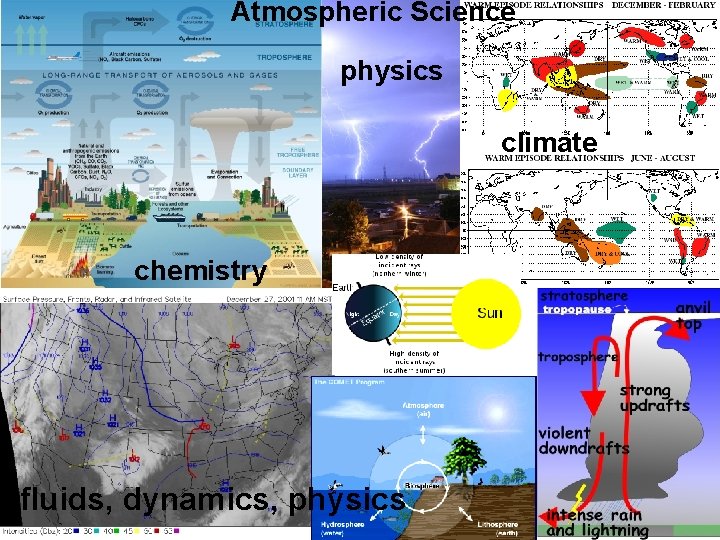
Atmospheric Science physics climate chemistry fluids, dynamics, physics Pat Arnott
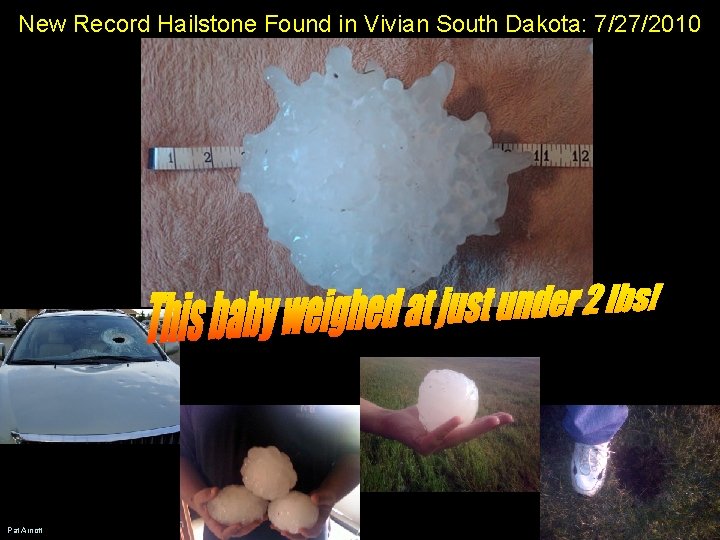
New Record Hailstone Found in Vivian South Dakota: 7/27/2010 Pat Arnott
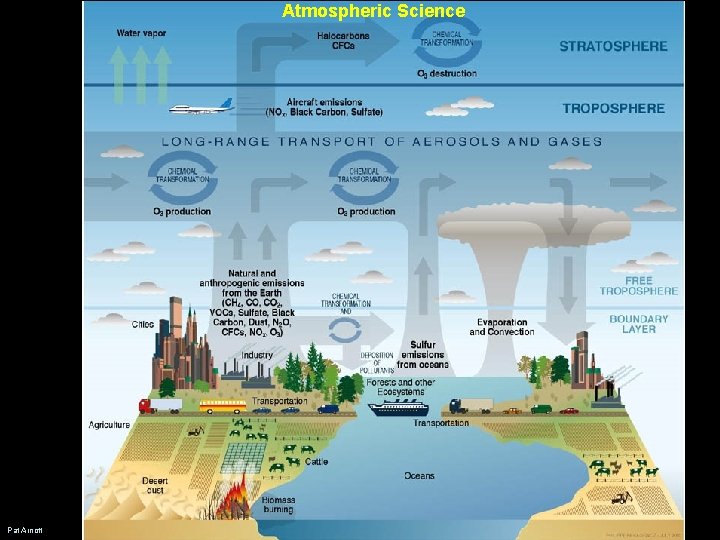
Atmospheric Science Pat Arnott
Atmosphere Pat Arnott
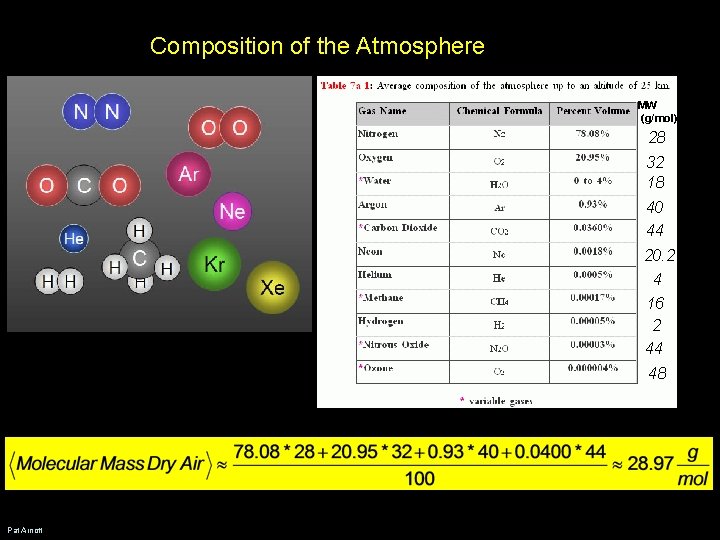
Composition of the Atmosphere MW (g/mol) 28 32 18 40 44 20. 2 4 16 2 44 48 Pat Arnott
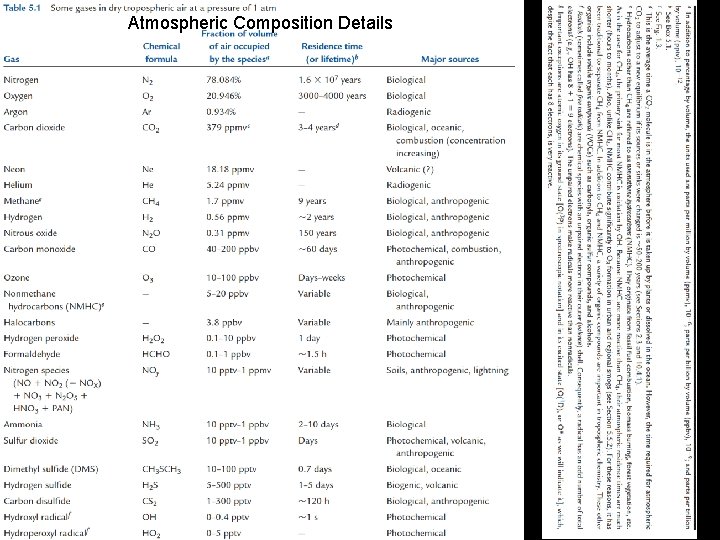
Atmospheric Composition Details Pat Arnott
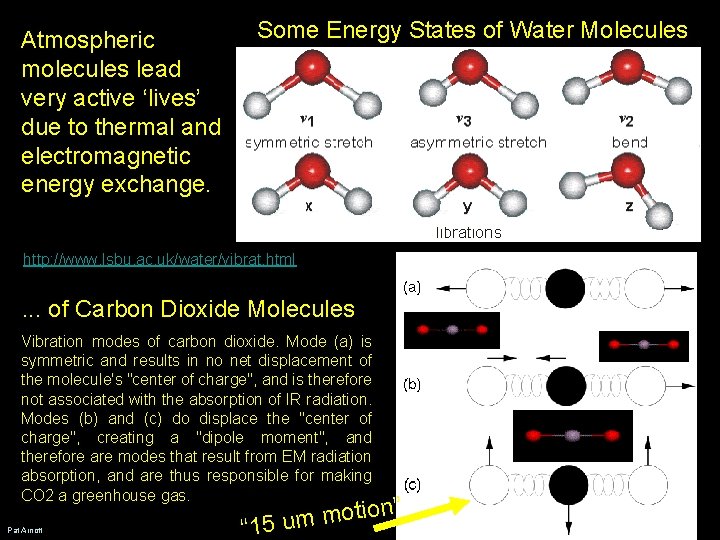
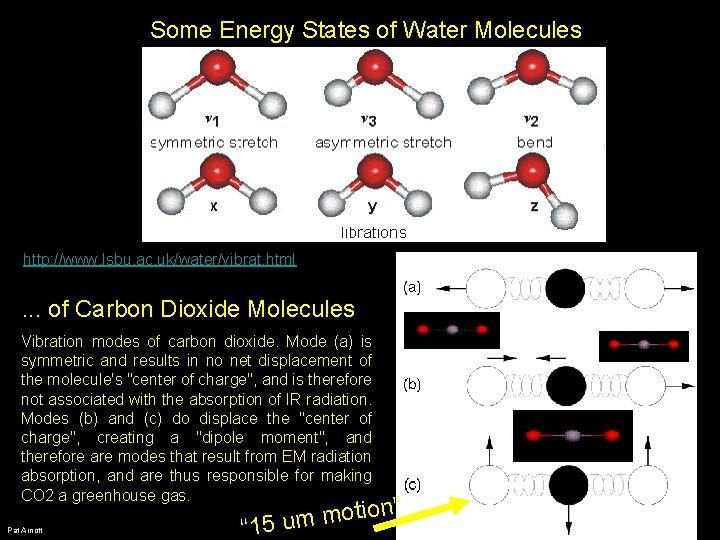
Atmospheric molecules lead very active ‘lives’ due to thermal and electromagnetic energy exchange. Some Energy States of Water Molecules http: //www. lsbu. ac. uk/water/vibrat. html . . . of Carbon Dioxide Molecules Vibration modes of carbon dioxide. Mode (a) is symmetric and results in no net displacement of the molecule's "center of charge", and is therefore not associated with the absorption of IR radiation. Modes (b) and (c) do displace the "center of charge", creating a "dipole moment", and therefore are modes that result from EM radiation absorption, and are thus responsible for making CO 2 a greenhouse gas. Pat Arnott on” i t o m m “ 15 u
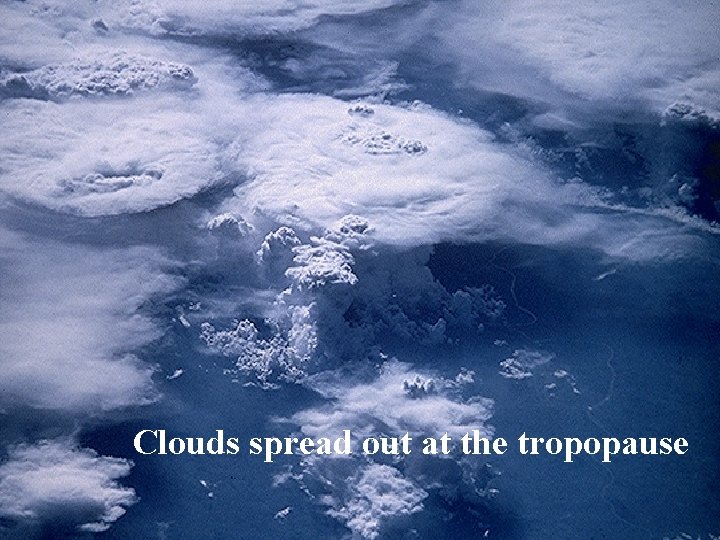
Clouds spread out at the tropopause Pat Arnott
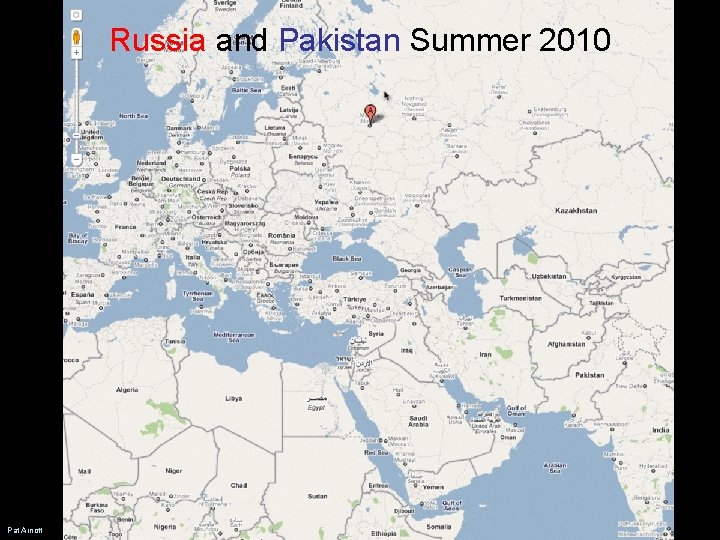
Russia and Pakistan Summer 2010 Pat Arnott
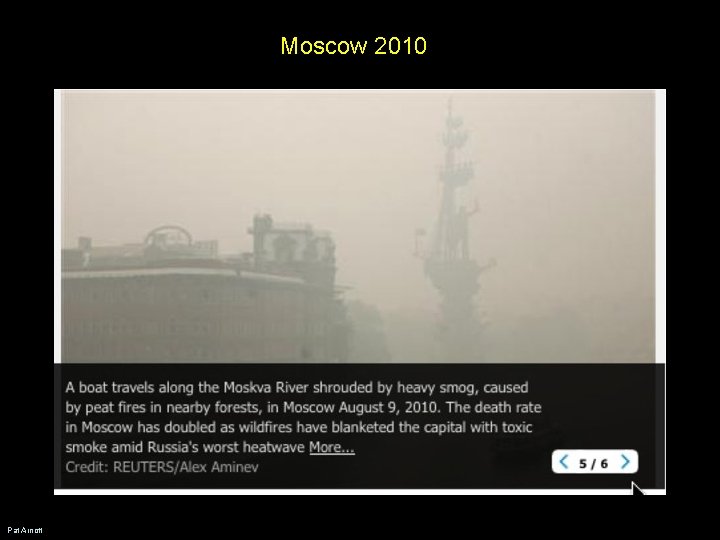
Moscow 2010 Pat Arnott
Southeast Asia Pat Arnott
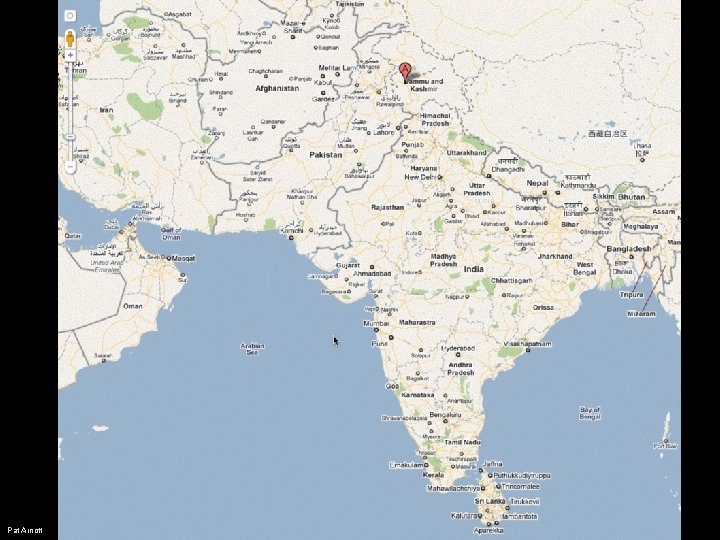
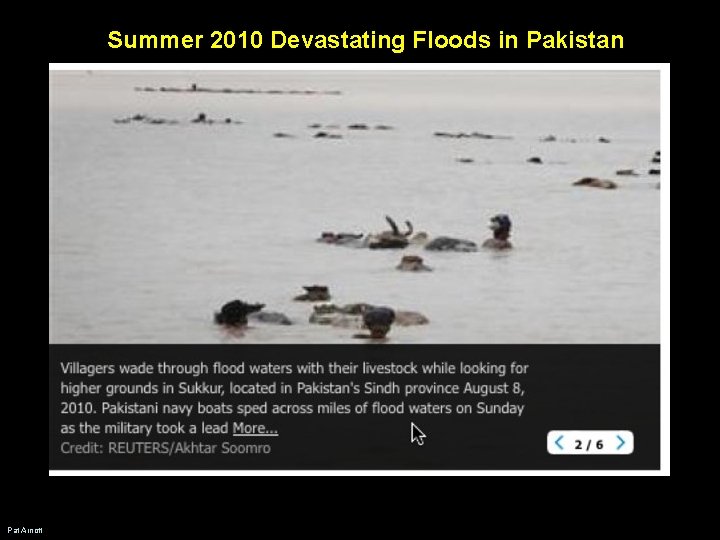
Summer 2010 Devastating Floods in Pakistan Pat Arnott
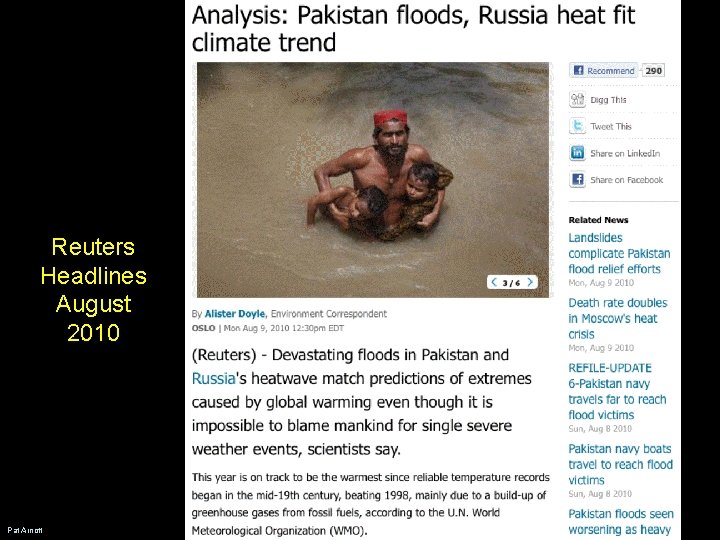
Reuters Headlines August 2010 Pat Arnott
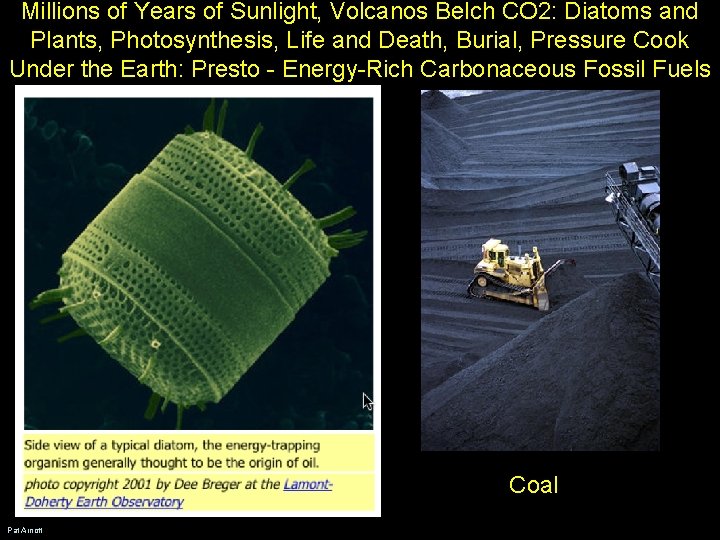
Millions of Years of Sunlight, Volcanos Belch CO 2: Diatoms and Plants, Photosynthesis, Life and Death, Burial, Pressure Cook Under the Earth: Presto - Energy-Rich Carbonaceous Fossil Fuels Coal Pat Arnott
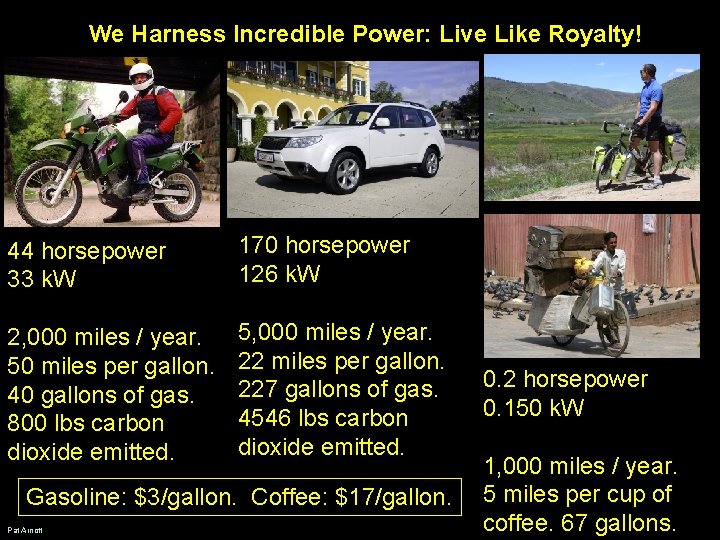
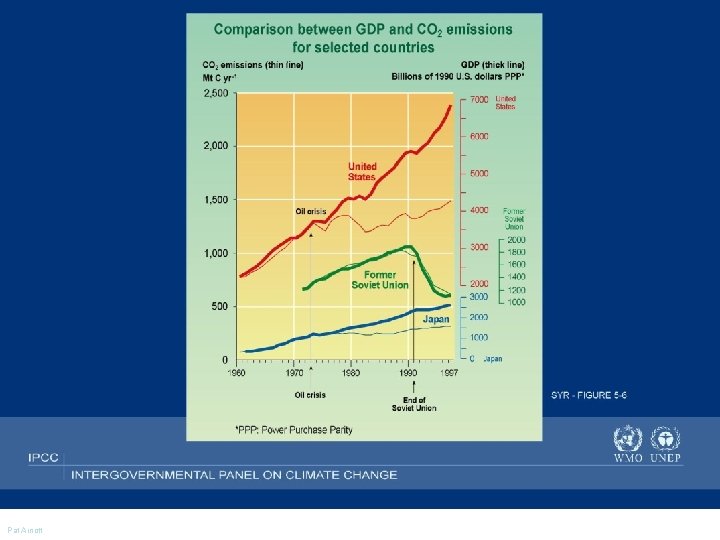
We Harness Incredible Power: Live Like Royalty! 44 horsepower 33 k. W 170 horsepower 126 k. W 2, 000 miles / year. 50 miles per gallon. 40 gallons of gas. 800 lbs carbon dioxide emitted. 5, 000 miles / year. 22 miles per gallon. 227 gallons of gas. 4546 lbs carbon dioxide emitted. Gasoline: $3/gallon. Coffee: $17/gallon. Pat Arnott 0. 2 horsepower 0. 150 k. W 1, 000 miles / year. 5 miles per cup of coffee. 67 gallons.
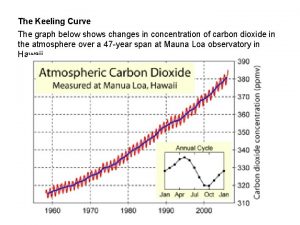
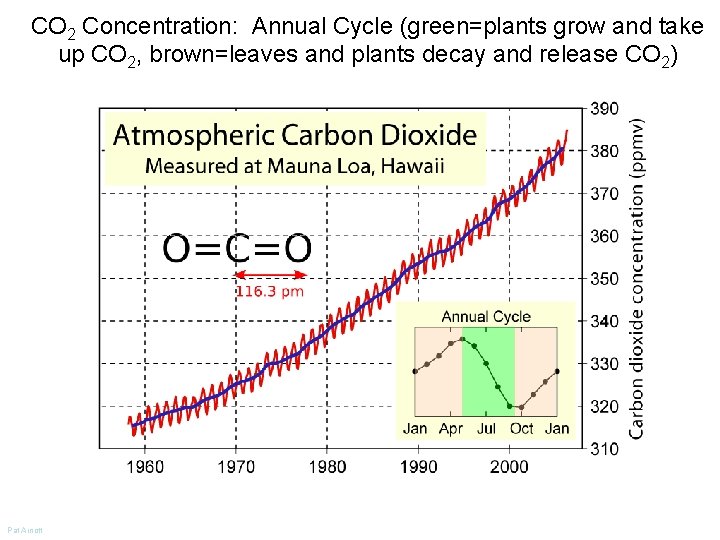
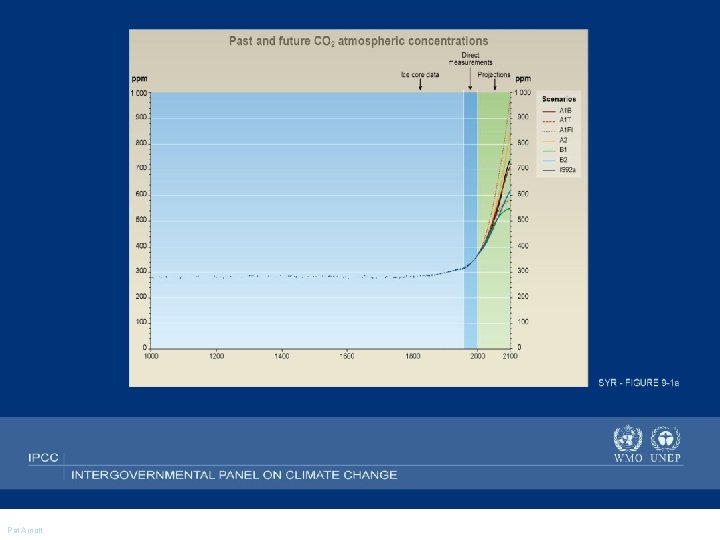
CO 2 Concentration: Annual Cycle (green=plants grow and take up CO 2, brown=leaves and plants decay and release CO 2) Pat Arnott
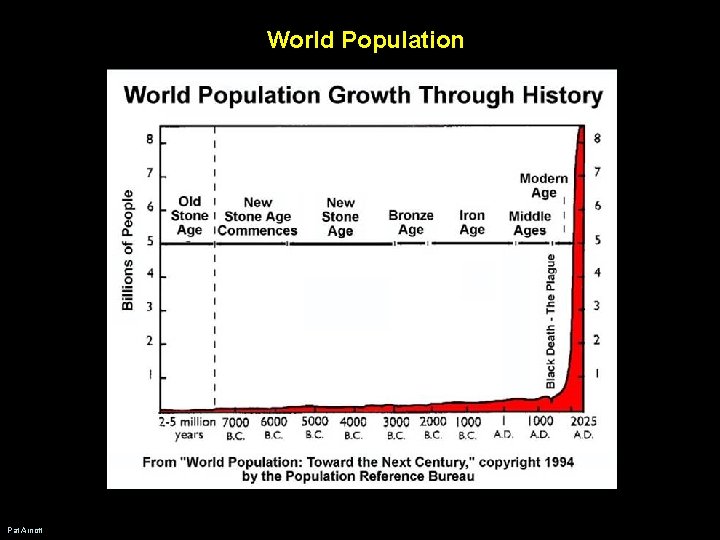
World Population Pat Arnott
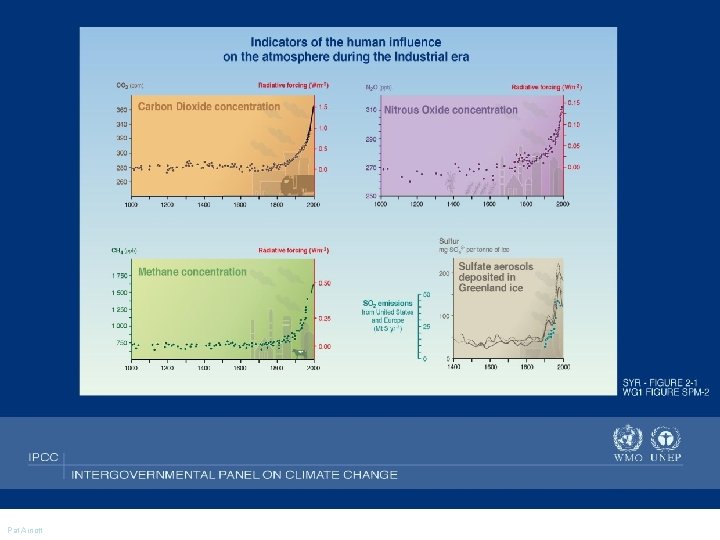
Pat Arnott
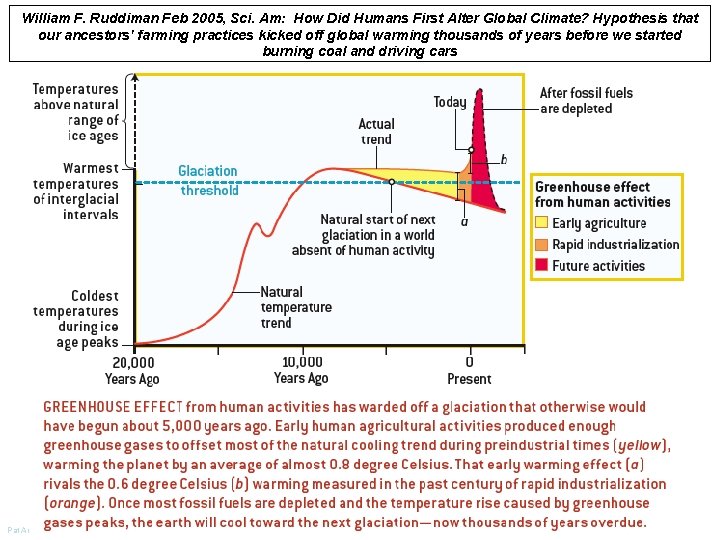
William F. Ruddiman Feb 2005, Sci. Am: How Did Humans First Alter Global Climate? Hypothesis that our ancestors' farming practices kicked off global warming thousands of years before we started burning coal and driving cars Pat Arnott
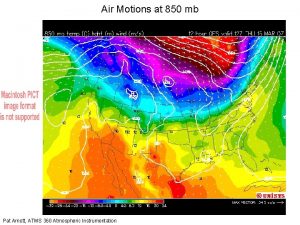
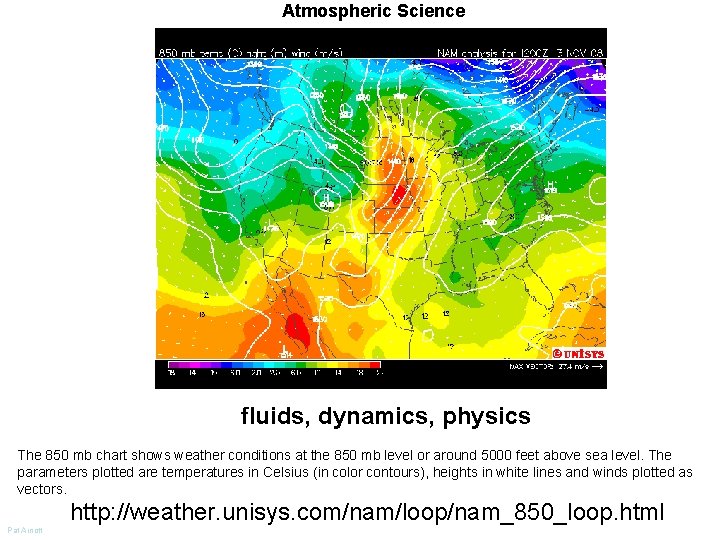
Atmospheric Science fluids, dynamics, physics The 850 mb chart shows weather conditions at the 850 mb level or around 5000 feet above sea level. The parameters plotted are temperatures in Celsius (in color contours), heights in white lines and winds plotted as vectors. http: //weather. unisys. com/nam/loop/nam_850_loop. html Pat Arnott
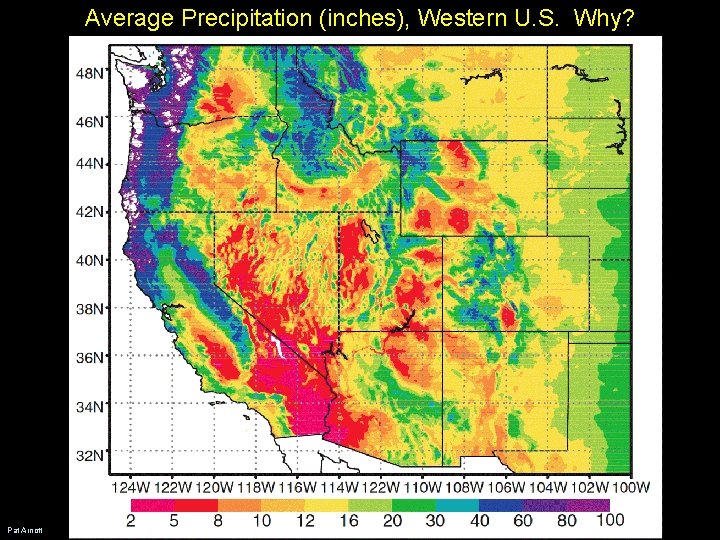
Average Precipitation (inches), Western U. S. Why? Pat Arnott
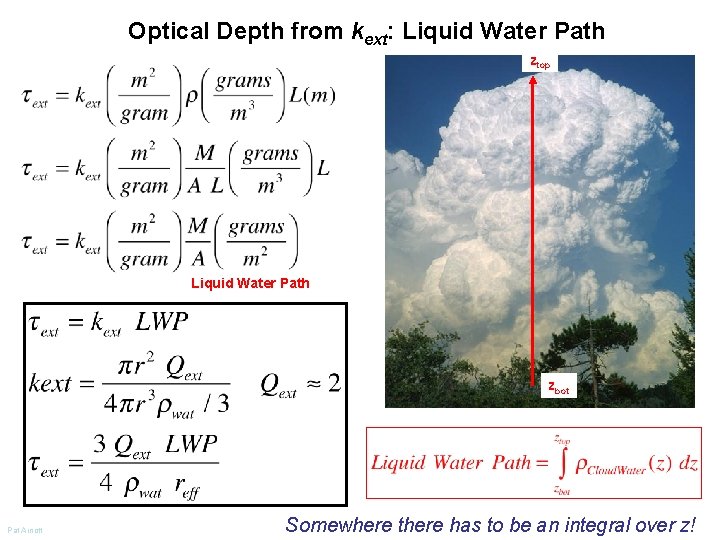
Optical Depth from kext: Liquid Water Path ztop Liquid Water Path zbot Pat Arnott Somewhere there has to be an integral over z!
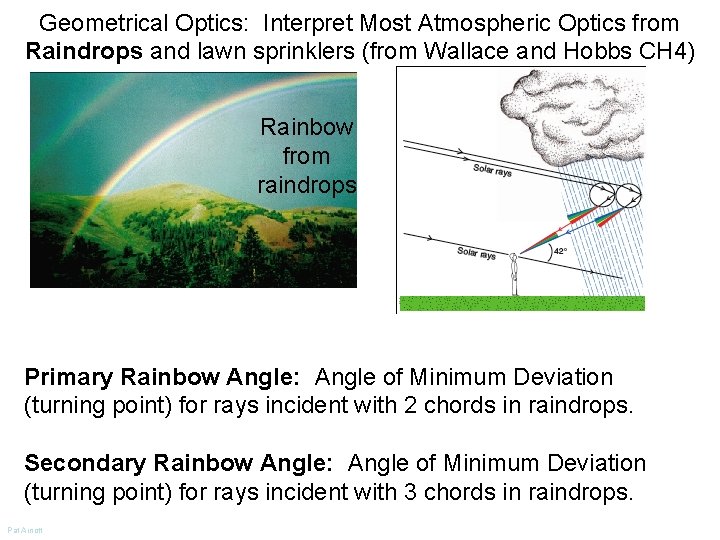
Geometrical Optics: Interpret Most Atmospheric Optics from Raindrops and lawn sprinklers (from Wallace and Hobbs CH 4) Rainbow from raindrops Primary Rainbow Angle: Angle of Minimum Deviation (turning point) for rays incident with 2 chords in raindrops. Secondary Rainbow Angle: Angle of Minimum Deviation (turning point) for rays incident with 3 chords in raindrops. Pat Arnott
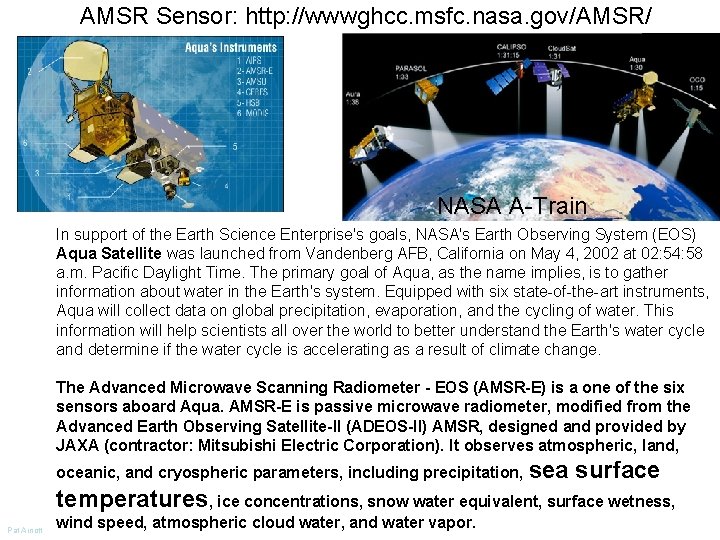
AMSR Sensor: http: //wwwghcc. msfc. nasa. gov/AMSR/ NASA A-Train In support of the Earth Science Enterprise's goals, NASA's Earth Observing System (EOS) Aqua Satellite was launched from Vandenberg AFB, California on May 4, 2002 at 02: 54: 58 a. m. Pacific Daylight Time. The primary goal of Aqua, as the name implies, is to gather information about water in the Earth's system. Equipped with six state-of-the-art instruments, Aqua will collect data on global precipitation, evaporation, and the cycling of water. This information will help scientists all over the world to better understand the Earth's water cycle and determine if the water cycle is accelerating as a result of climate change. The Advanced Microwave Scanning Radiometer - EOS (AMSR-E) is a one of the six sensors aboard Aqua. AMSR-E is passive microwave radiometer, modified from the Advanced Earth Observing Satellite-II (ADEOS-II) AMSR, designed and provided by JAXA (contractor: Mitsubishi Electric Corporation). It observes atmospheric, land, oceanic, and cryospheric parameters, including precipitation, sea surface temperatures, ice concentrations, snow water equivalent, surface wetness, Pat Arnott wind speed, atmospheric cloud water, and water vapor.
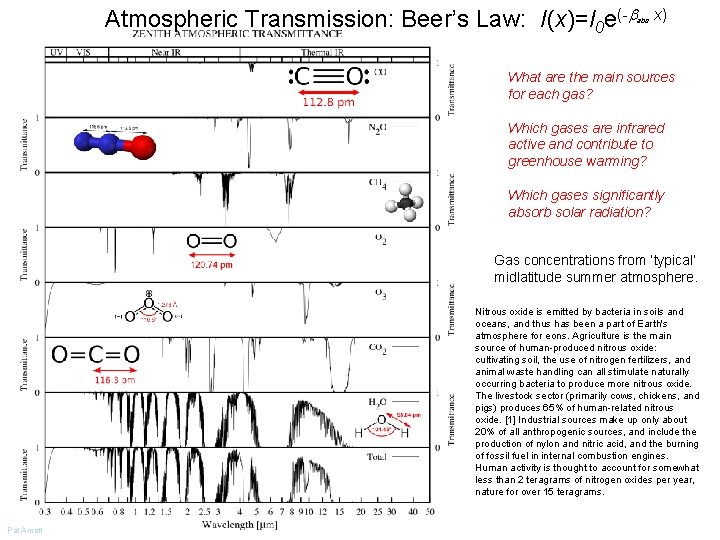
Atmospheric Transmission: Beer’s Law: I(x)=I 0 e(- abs x) What are the main sources for each gas? Which gases are infrared active and contribute to greenhouse warming? Which gases significantly absorb solar radiation? Gas concentrations from ‘typical’ midlatitude summer atmosphere. Nitrous oxide is emitted by bacteria in soils and oceans, and thus has been a part of Earth's atmosphere for eons. Agriculture is the main source of human-produced nitrous oxide: cultivating soil, the use of nitrogen fertilizers, and animal waste handling can all stimulate naturally occurring bacteria to produce more nitrous oxide. The livestock sector (primarily cows, chickens, and pigs) produces 65% of human-related nitrous oxide. [1] Industrial sources make up only about 20% of all anthropogenic sources, and include the production of nylon and nitric acid, and the burning of fossil fuel in internal combustion engines. Human activity is thought to account for somewhat less than 2 teragrams of nitrogen oxides per year, nature for over 15 teragrams. Pat Arnott
Some Energy States of Water Molecules http: //www. lsbu. ac. uk/water/vibrat. html . . . of Carbon Dioxide Molecules Vibration modes of carbon dioxide. Mode (a) is symmetric and results in no net displacement of the molecule's "center of charge", and is therefore not associated with the absorption of IR radiation. Modes (b) and (c) do displace the "center of charge", creating a "dipole moment", and therefore are modes that result from EM radiation absorption, and are thus responsible for making CO 2 a greenhouse gas. Pat Arnott on” i t o m m “ 15 u
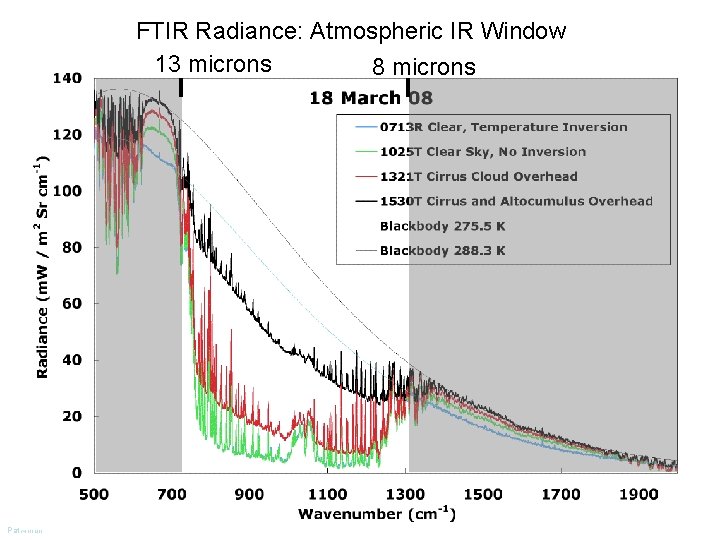
FTIR Radiance: Atmospheric IR Window 13 microns 8 microns Pat Arnott
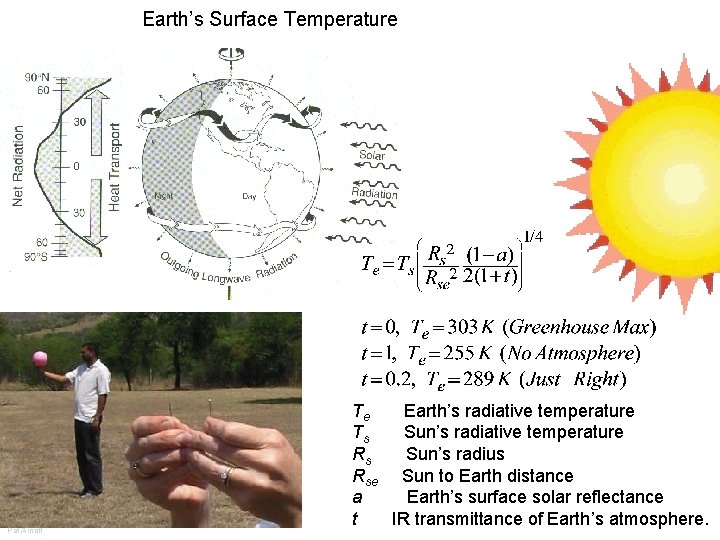
Earth’s Surface Temperature Pat Arnott Te Earth’s radiative temperature Ts Sun’s radiative temperature Rs Sun’s radius Rse Sun to Earth distance a Earth’s surface solar reflectance t IR transmittance of Earth’s atmosphere.
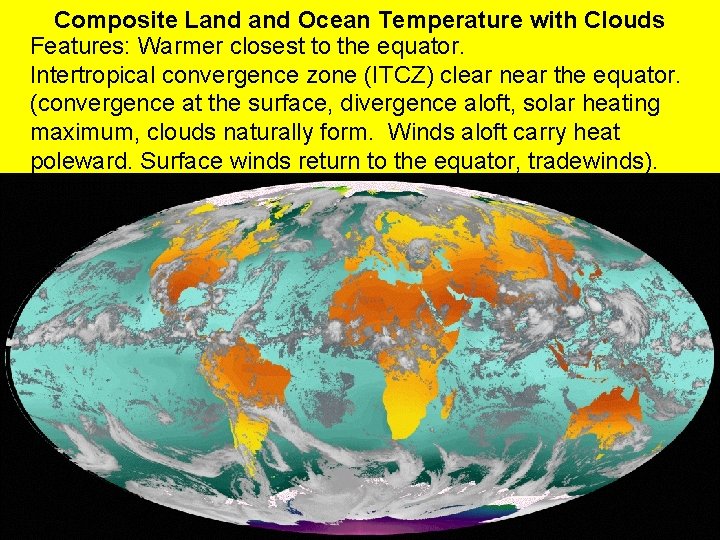
Composite Land Ocean Temperature with Clouds Features: Warmer closest to the equator. Intertropical convergence zone (ITCZ) clear near the equator. (convergence at the surface, divergence aloft, solar heating maximum, clouds naturally form. Winds aloft carry heat poleward. Surface winds return to the equator, tradewinds). Pat Arnott
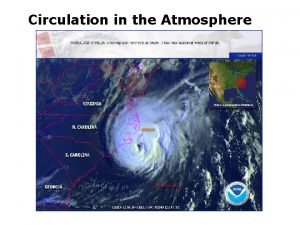
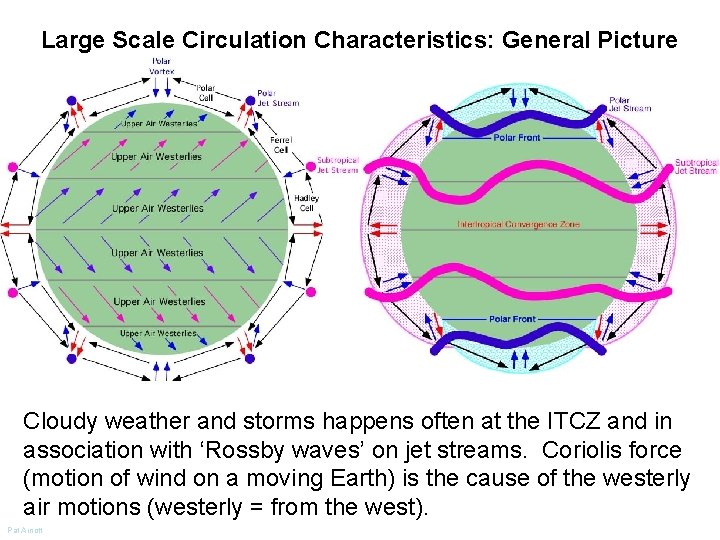
Large Scale Circulation Characteristics: General Picture Cloudy weather and storms happens often at the ITCZ and in association with ‘Rossby waves’ on jet streams. Coriolis force (motion of wind on a moving Earth) is the cause of the westerly air motions (westerly = from the west). Pat Arnott
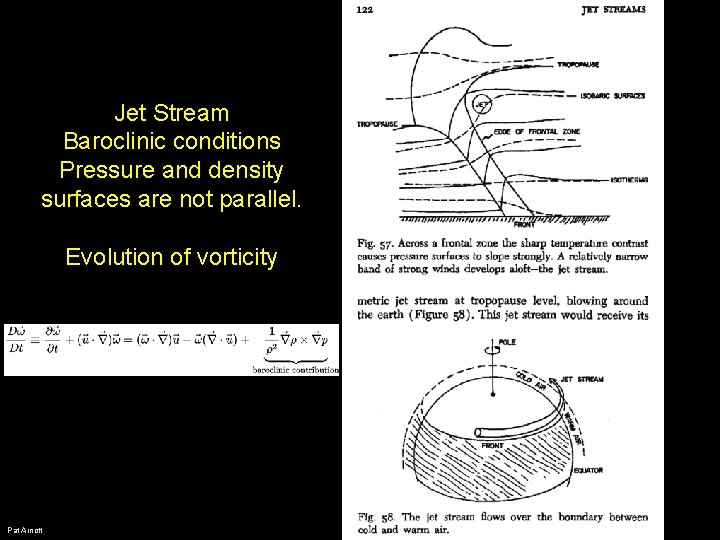
Jet Stream Baroclinic conditions Pressure and density surfaces are not parallel. Evolution of vorticity Pat Arnott
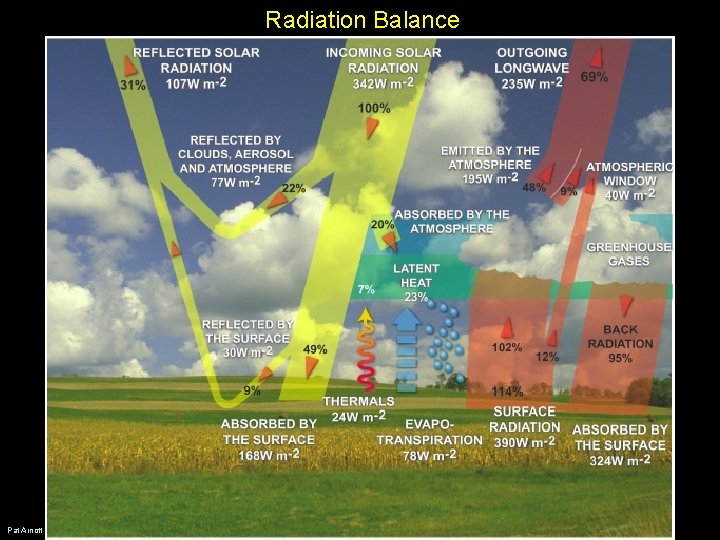
Radiation Balance Pat Arnott
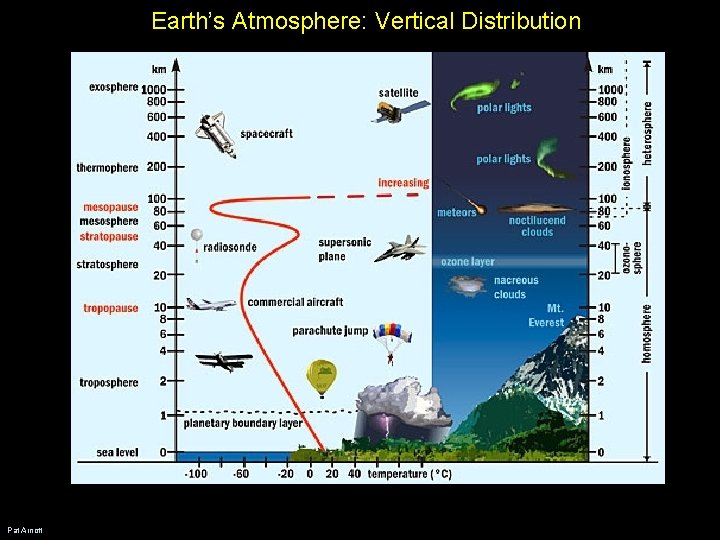
Earth’s Atmosphere: Vertical Distribution Pat Arnott
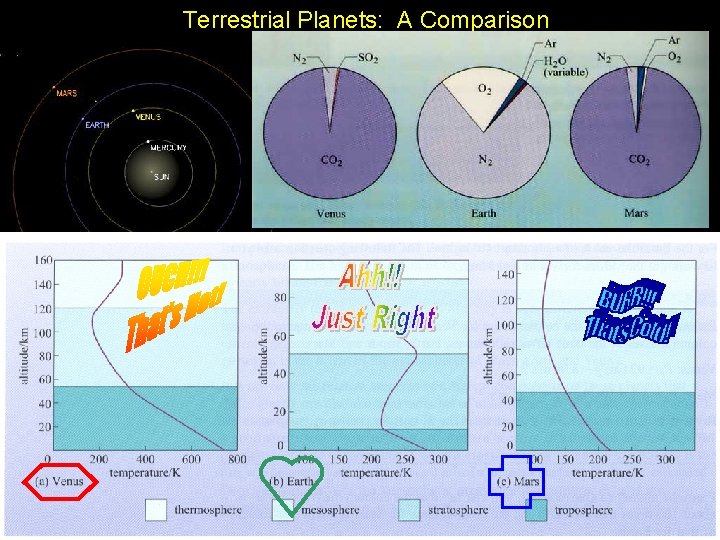
Terrestrial Planets: A Comparison Pat Arnott
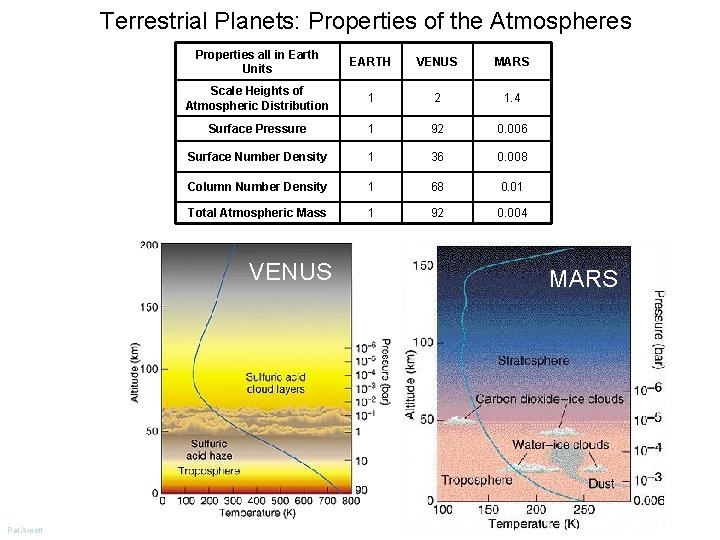
Terrestrial Planets: Properties of the Atmospheres Properties all in Earth Units EARTH VENUS MARS Scale Heights of Atmospheric Distribution 1 2 1. 4 Surface Pressure 1 92 0. 006 Surface Number Density 1 36 0. 008 Column Number Density 1 68 0. 01 Total Atmospheric Mass 1 92 0. 004 VENUS Pat Arnott MARS
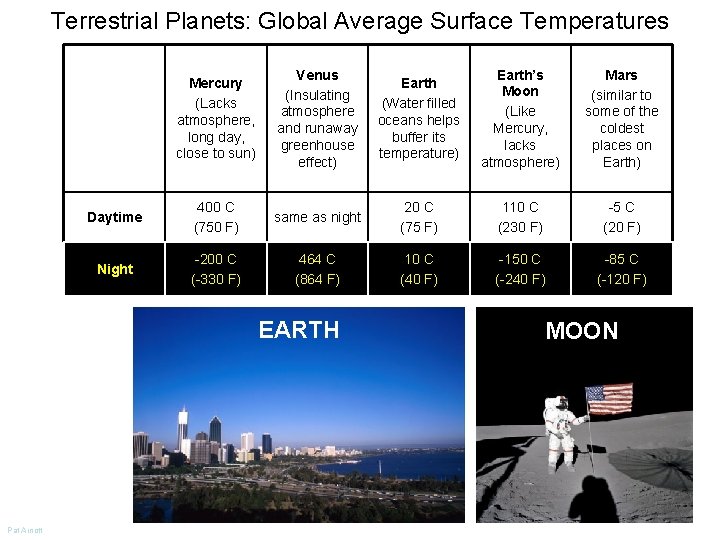
Terrestrial Planets: Global Average Surface Temperatures Mercury (Lacks atmosphere, long day, close to sun) Venus (Insulating atmosphere and runaway greenhouse effect) Earth (Water filled oceans helps buffer its temperature) Earth’s Moon (Like Mercury, lacks atmosphere) Mars (similar to some of the coldest places on Earth) Daytime 400 C (750 F) same as night 20 C (75 F) 110 C (230 F) -5 C (20 F) Night -200 C (-330 F) 464 C (864 F) 10 C (40 F) -150 C (-240 F) -85 C (-120 F) EARTH Pat Arnott MOON
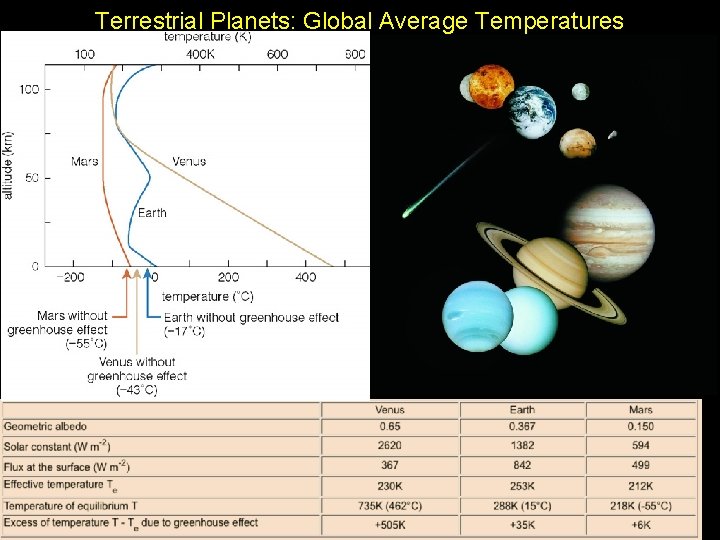
Terrestrial Planets: Global Average Temperatures Pat Arnott
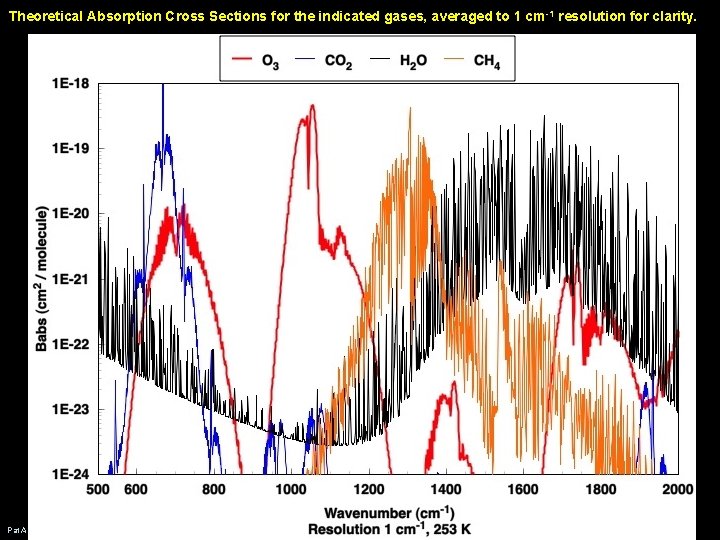
Theoretical Absorption Cross Sections for the indicated gases, averaged to 1 cm -1 resolution for clarity. Pat Arnott
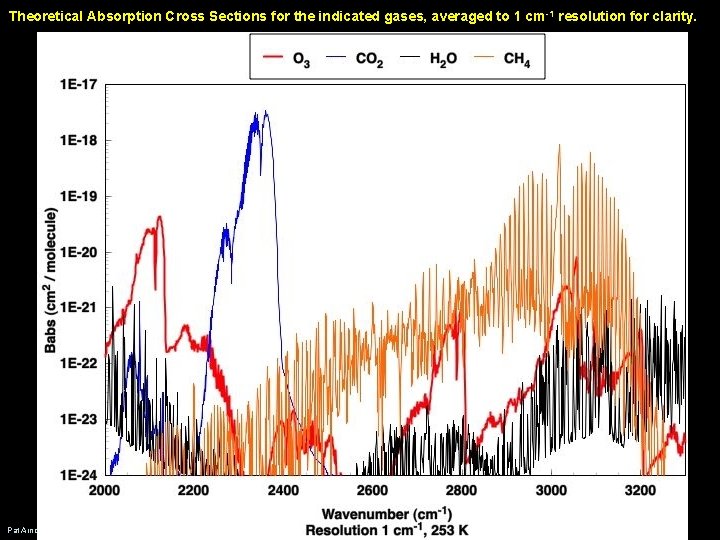
Theoretical Absorption Cross Sections for the indicated gases, averaged to 1 cm -1 resolution for clarity. Pat Arnott
Pat Arnott
Pat Arnott
Pat Arnott
Pat Arnott
Pat Arnott
Pat Arnott
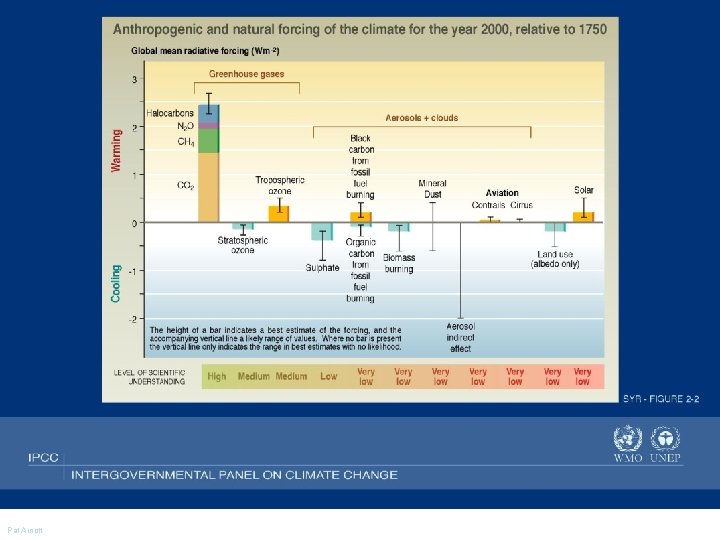
Aerosol Indirect Effect The impact of aerosols on cloud radiative properties Pat Arnott
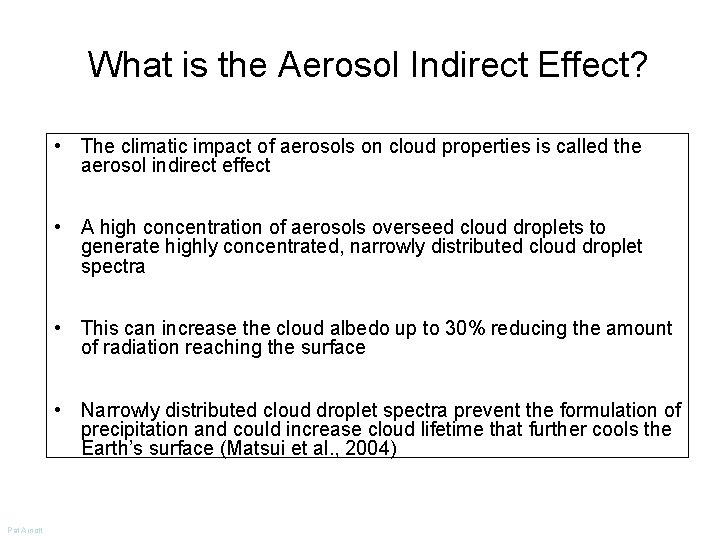
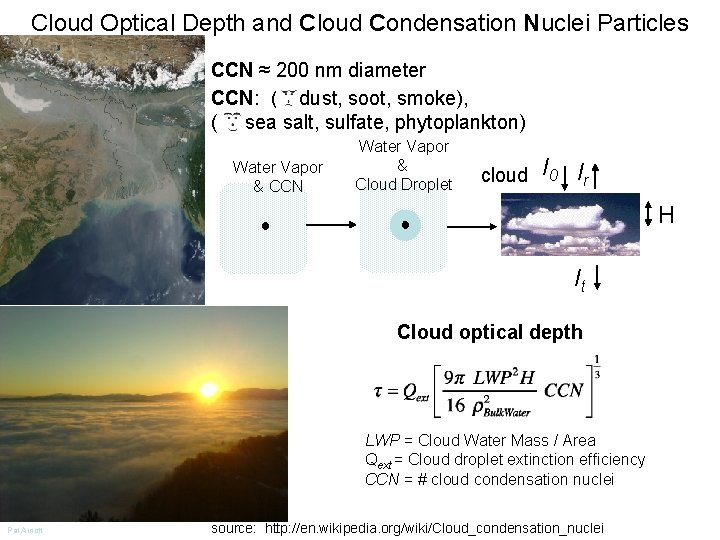
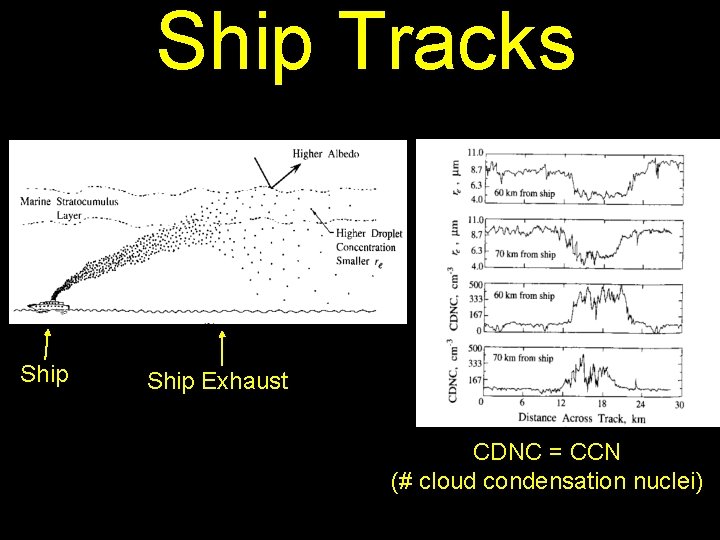
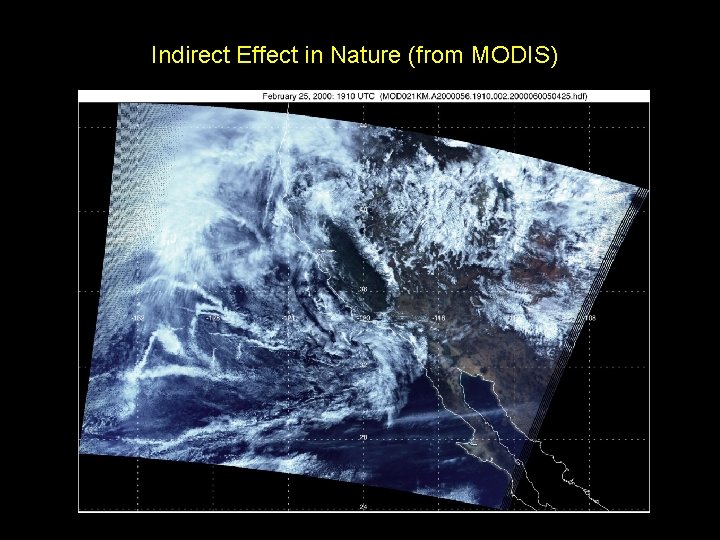
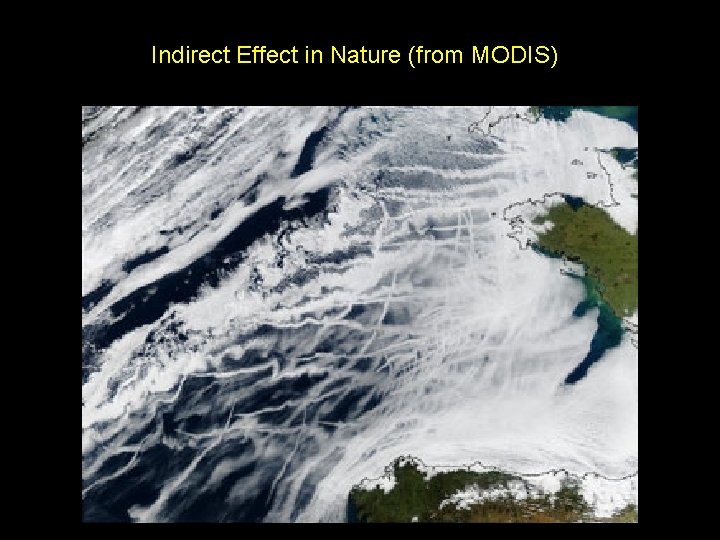
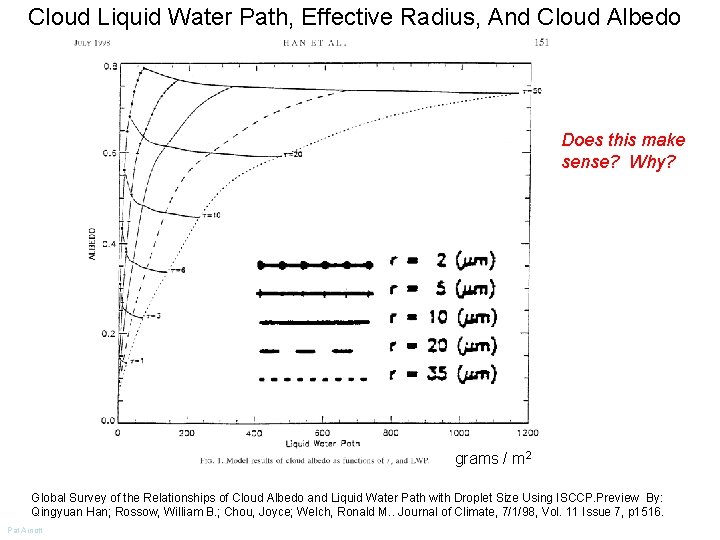
What is the Aerosol Indirect Effect? • The climatic impact of aerosols on cloud properties is called the aerosol indirect effect • A high concentration of aerosols overseed cloud droplets to generate highly concentrated, narrowly distributed cloud droplet spectra • This can increase the cloud albedo up to 30% reducing the amount of radiation reaching the surface • Narrowly distributed cloud droplet spectra prevent the formulation of precipitation and could increase cloud lifetime that further cools the Earth’s surface (Matsui et al. , 2004) Pat Arnott
Cloud Optical Depth and Cloud Condensation Nuclei Particles CCN ≈ 200 nm diameter CCN: ( dust, soot, smoke), ( sea salt, sulfate, phytoplankton) Water Vapor & CCN Water Vapor & Cloud Droplet cloud I 0 Ir H It Cloud optical depth LWP = Cloud Water Mass / Area Qext = Cloud droplet extinction efficiency CCN = # cloud condensation nuclei Pat Arnott source: http: //en. wikipedia. org/wiki/Cloud_condensation_nuclei
Ship Tracks Ship Exhaust CDNC = CCN (# cloud condensation nuclei)
Indirect Effect in Nature (from MODIS)
Indirect Effect in Nature (from MODIS)
Cloud Liquid Water Path, Effective Radius, And Cloud Albedo Does this make sense? Why? grams / m 2 Global Survey of the Relationships of Cloud Albedo and Liquid Water Path with Droplet Size Using ISCCP. Preview By: Qingyuan Han; Rossow, William B. ; Chou, Joyce; Welch, Ronald M. . Journal of Climate, 7/1/98, Vol. 11 Issue 7, p 1516. Pat Arnott