Does Higher Technology Result in Higher Levels of




- Slides: 92
Does Higher Technology Result in Higher Levels of Benefit? BCASLPA October 22, 2004 Ruth Bentler www. shc. uiowa. edu
What features? Dsp versus Analog p Directional Mics p Noise Reduction p Feedback Cancellation p
Dsp versus Analog Orange Juice or Tomato Juice p Cardiovascular or Weight-Bearing p Puppy or cable p
Dsp versus Analog Orange Juice or Tomato Juice p Cardiovascular or Weight-Bearing p Puppy or cable p
Digital versus analog Not a debate amongst (most) researchers p Easy to contrive the design p Often misleads the clinician p E. G. p n Wood & Lutman (March 2004, IJA)
Abstract Question: Are dsp hearing aids better than analog (linear) hearing aids? p Design: 100 first-time users, singleblinded, wore the HAs for 5 weeks each p n n p APHAB, GHABP, Qo. L, Diary REAR, Speech-in-Noise Results…
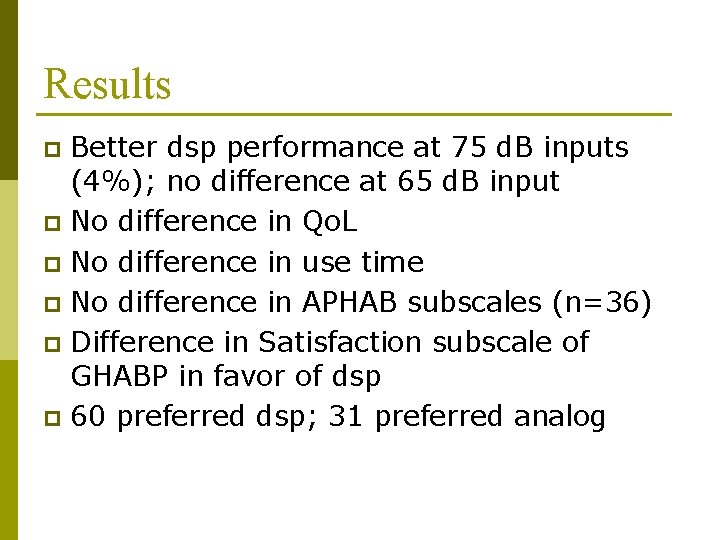
Results Better dsp performance at 75 d. B inputs (4%); no difference at 65 d. B input p No difference in Qo. L p No difference in use time p No difference in APHAB subscales (n=36) p Difference in Satisfaction subscale of GHABP in favor of dsp p 60 preferred dsp; 31 preferred analog p
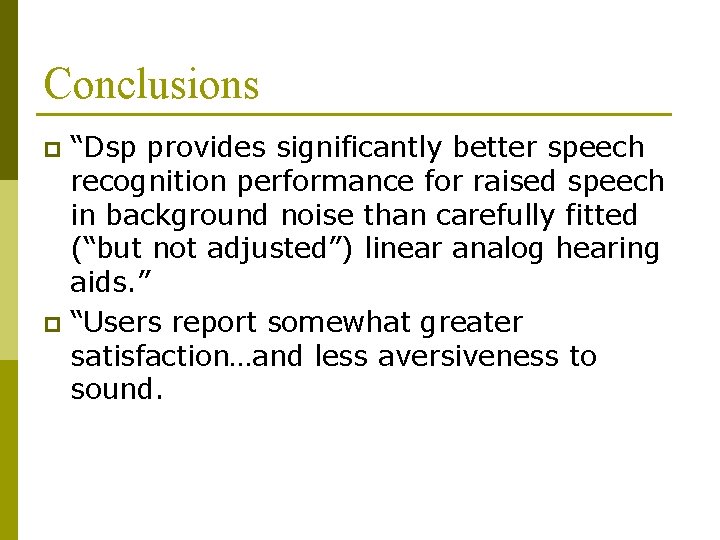
Conclusions “Dsp provides significantly better speech recognition performance for raised speech in background noise than carefully fitted (“but not adjusted”) linear analog hearing aids. ” p “Users report somewhat greater satisfaction…and less aversiveness to sound. p
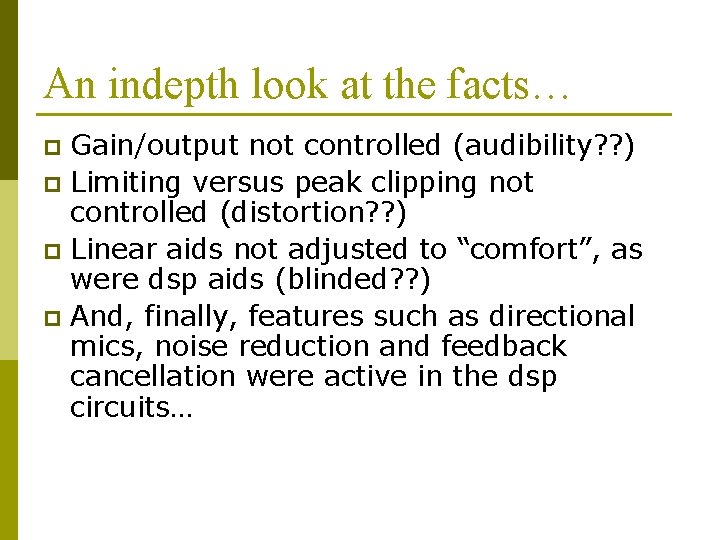
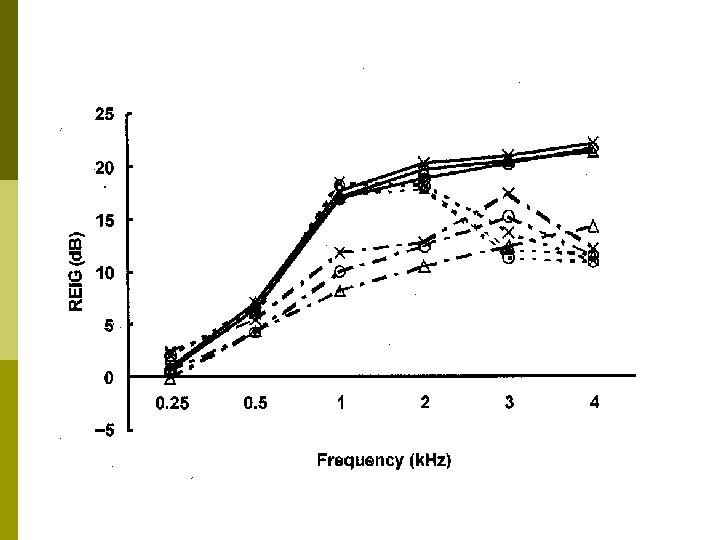
An indepth look at the facts… Gain/output not controlled (audibility? ? ) p Limiting versus peak clipping not controlled (distortion? ? ) p Linear aids not adjusted to “comfort”, as were dsp aids (blinded? ? ) p And, finally, features such as directional mics, noise reduction and feedback cancellation were active in the dsp circuits… p
So, one more time… p The advantages of dsp hearing aids (to the end user) lie in the features, if they lie at all… n Manufacturer benefits? n Dispenser benefits?
Directional Microphones?
What we know… One and two mic designs p Low frequency compensation p Mic noise goes up (and up) p Many companies use mic noise algorithm p
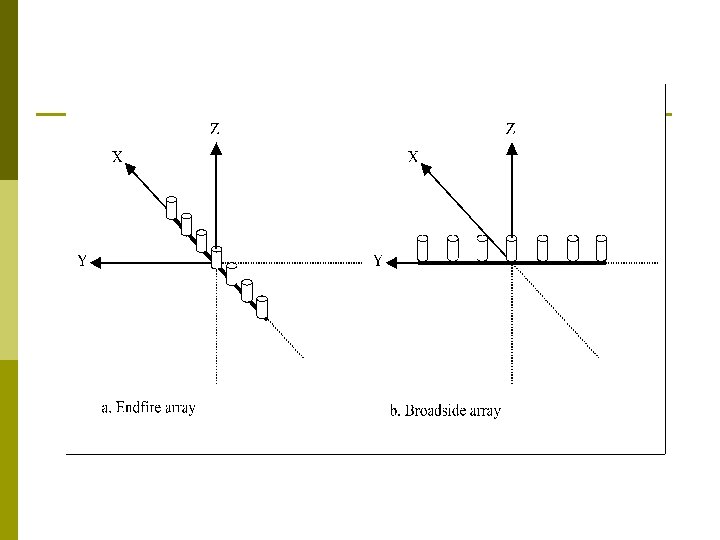
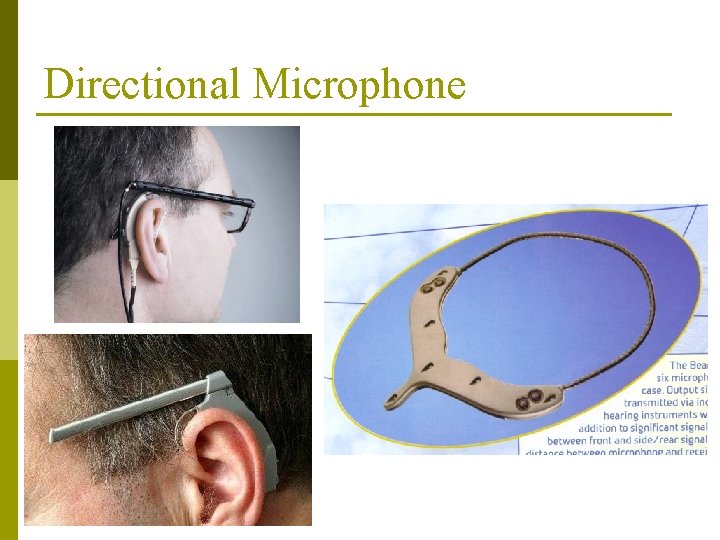
Quick Tutorial p Ways to build directivity into a hearing aid case: n n n Single mic with two ports Two omni mics Combination of omni & directional mics Three mics Mic array
Directional Microphone
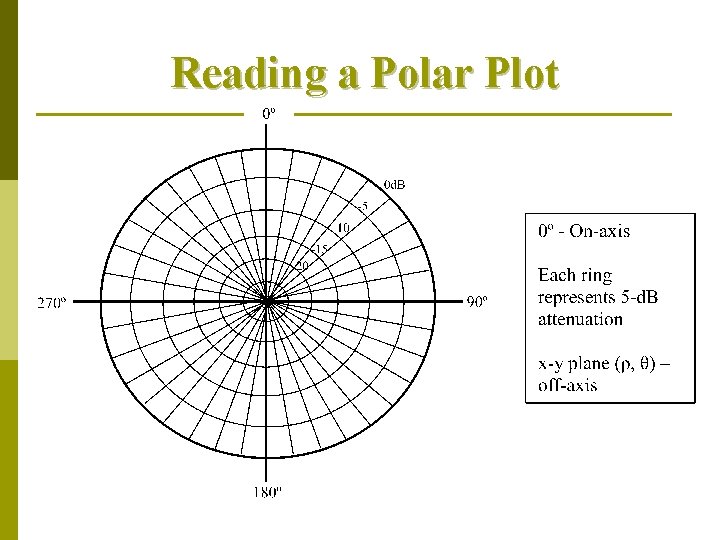
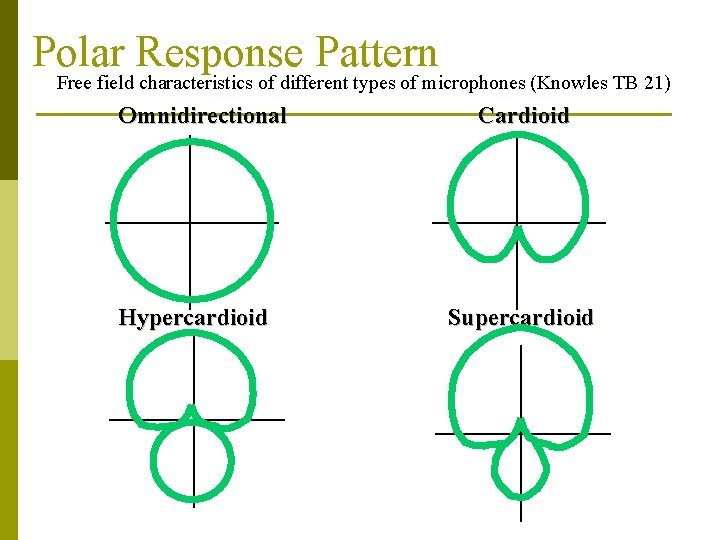
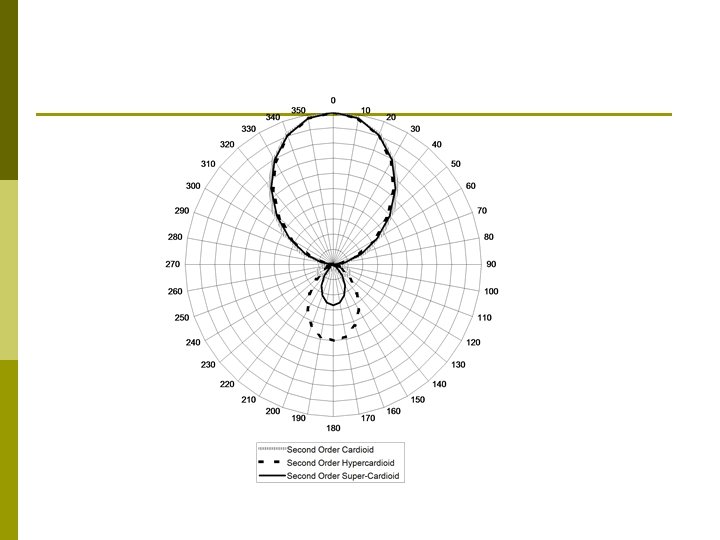
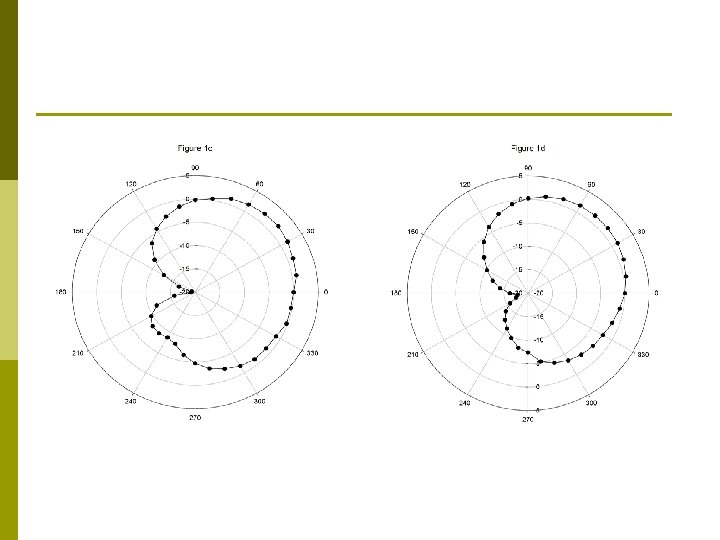
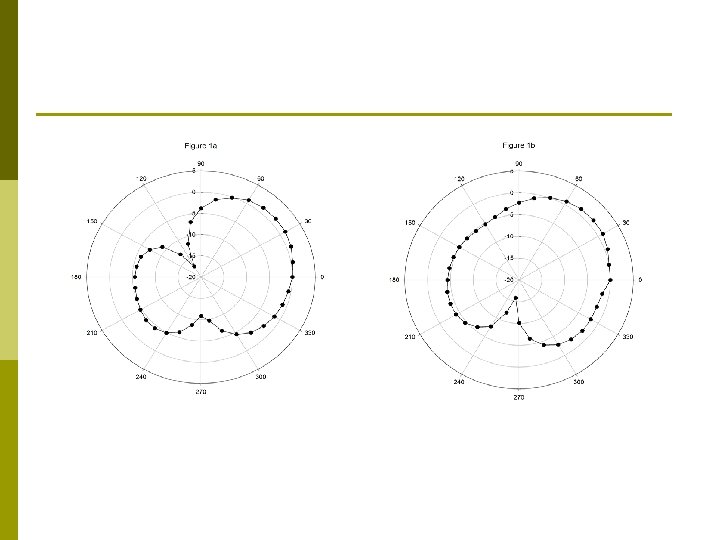
Reading a Polar Plot
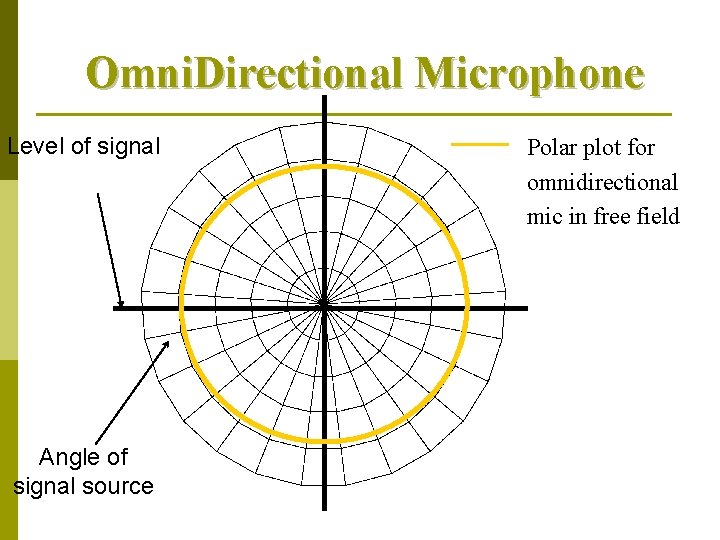
Omni. Directional Microphone Level of signal Angle of signal source Polar plot for omnidirectional mic in free field
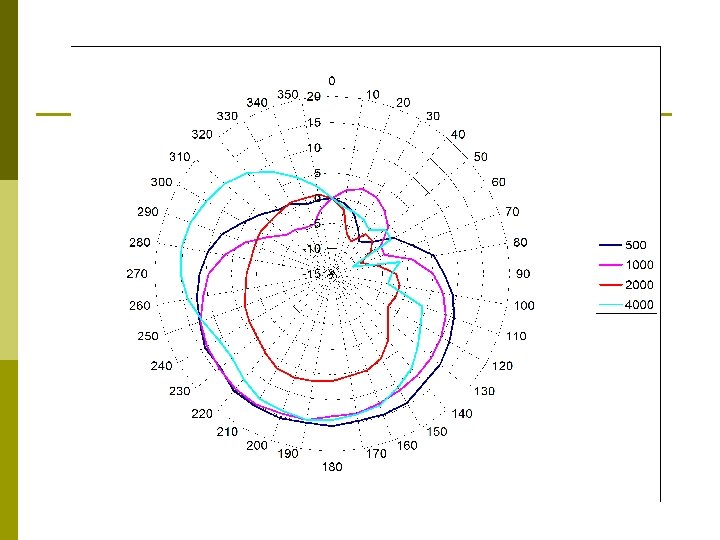
Polar Response Pattern Free field characteristics of different types of microphones (Knowles TB 21) Omnidirectional Hypercardioid Cardioid Supercardioid
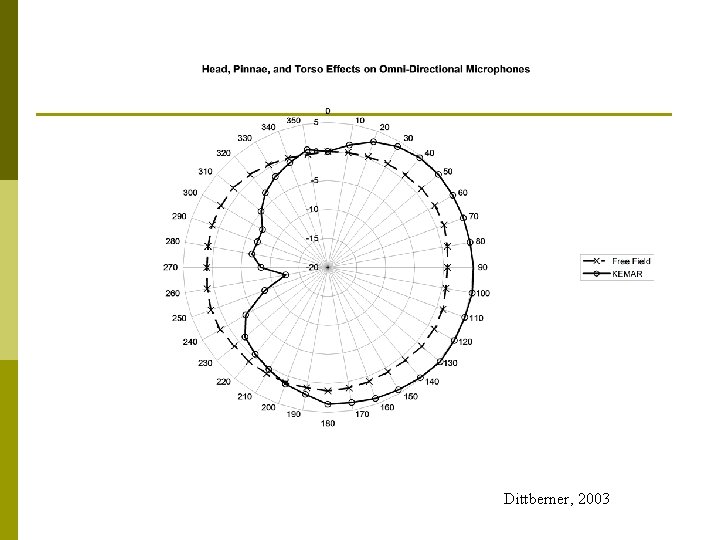
Dittberner, 2003
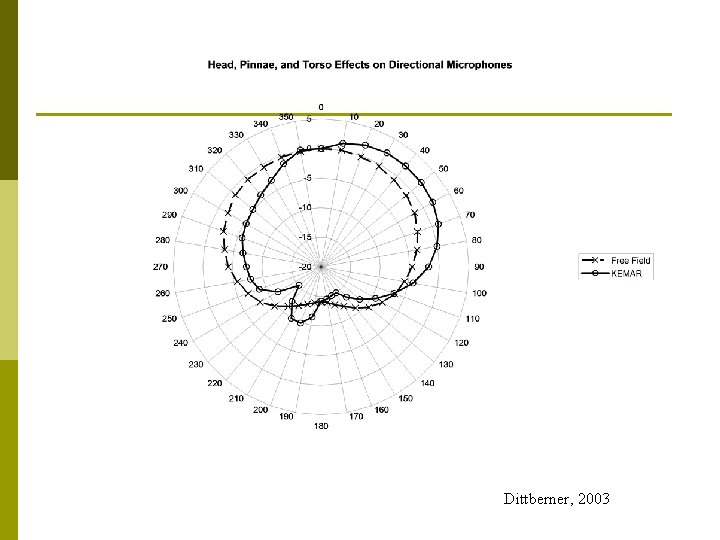
Dittberner, 2003
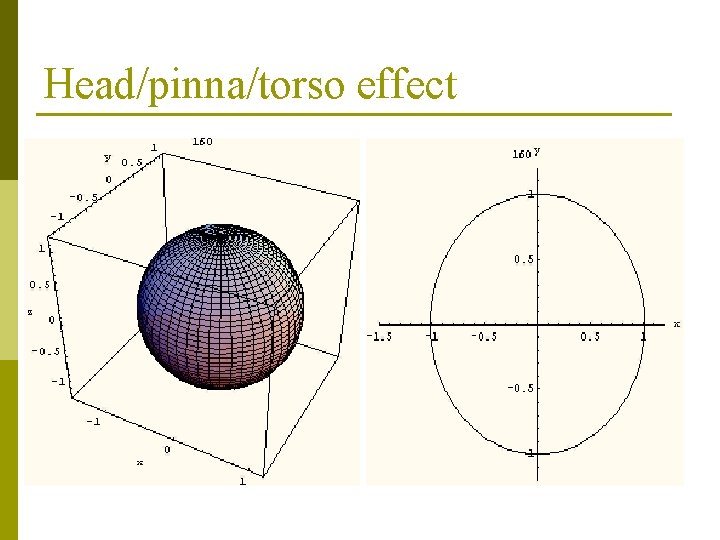
Head/pinna/torso effect
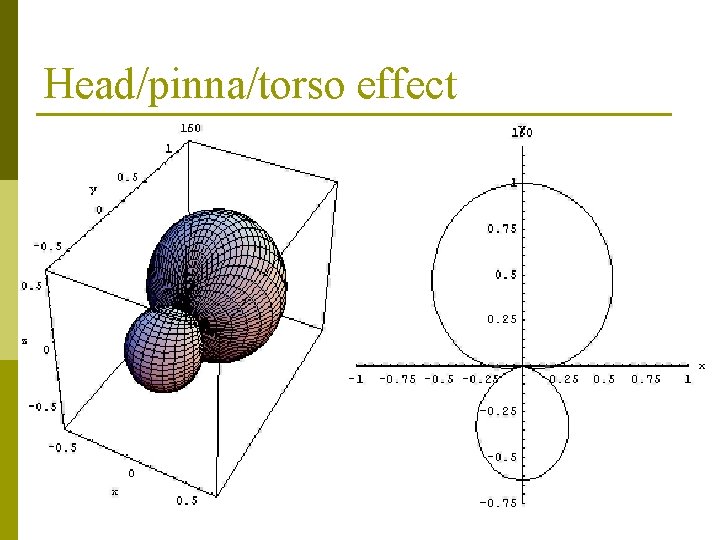
Head/pinna/torso effect
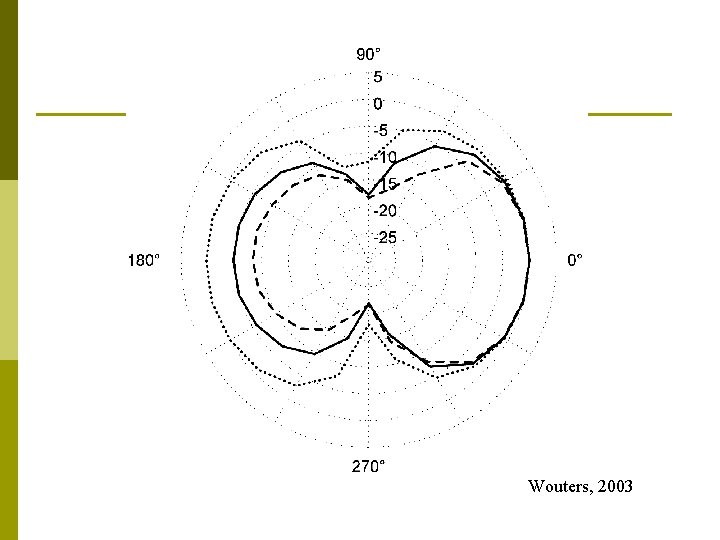
Wouters, 2003
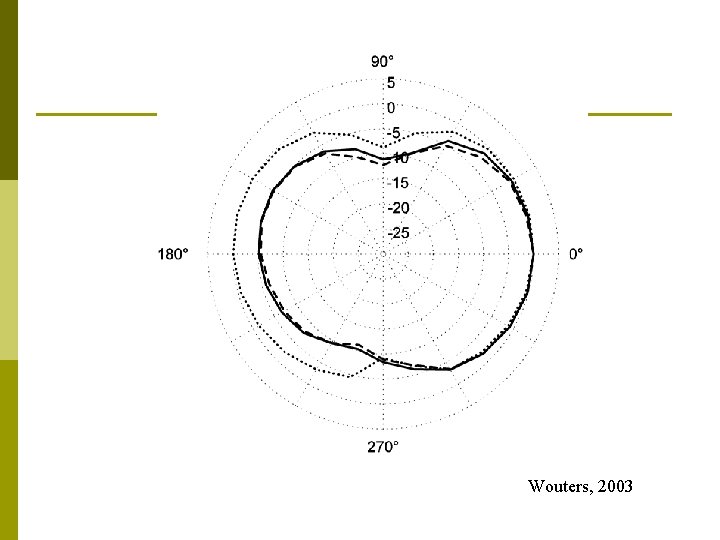
Wouters, 2003
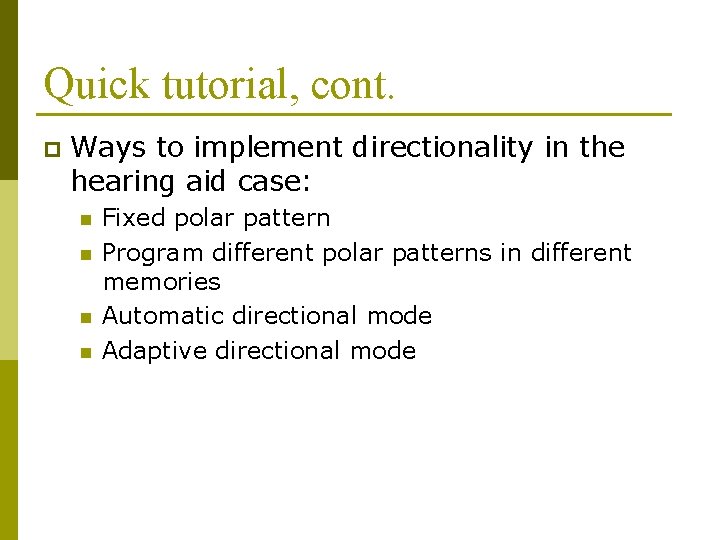
Quick tutorial, cont. p Ways to implement directionality in the hearing aid case: n n Fixed polar pattern Program different polar patterns in different memories Automatic directional mode Adaptive directional mode
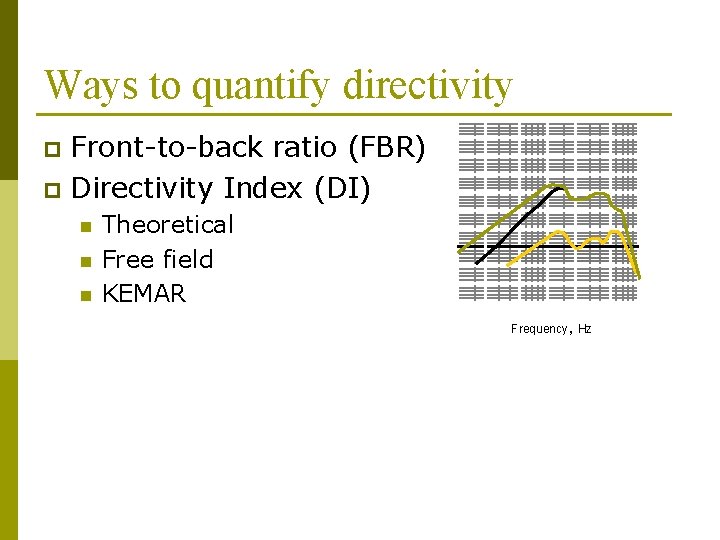
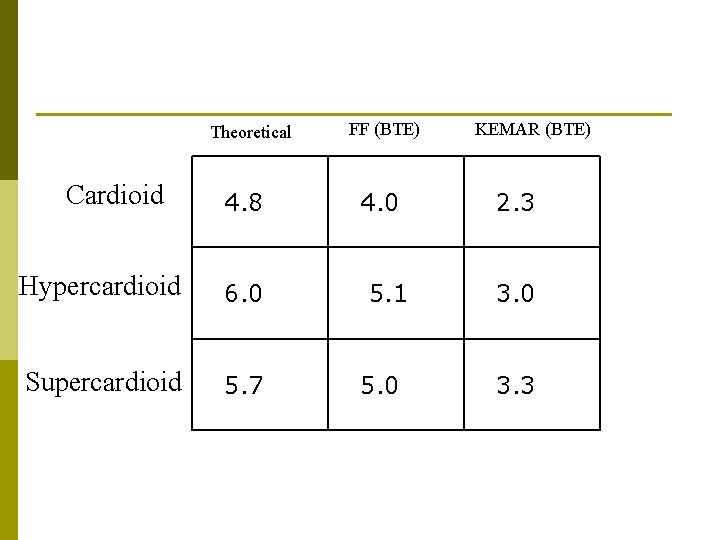
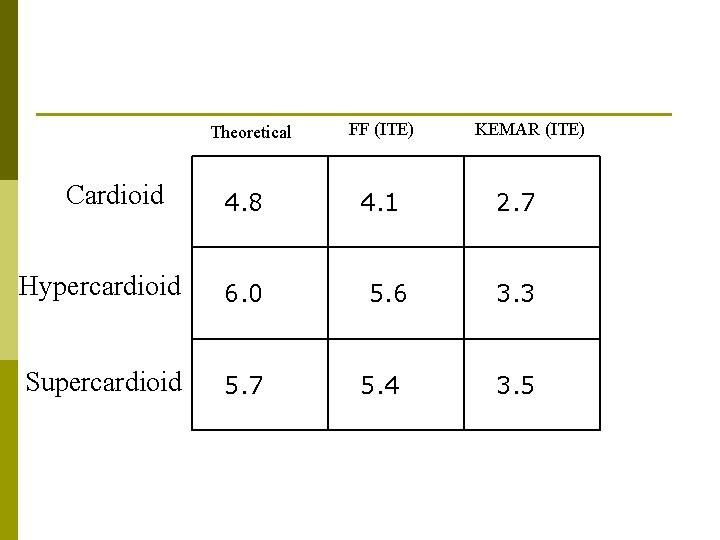
Ways to quantify directivity Front-to-back ratio (FBR) p Directivity Index (DI) p n n n Theoretical Free field KEMAR 80 70 60 50 40 30 20 10 0 -10 100 Hz 200 500 1 k. Hz 2 Frequency, Hz 5 10 k. Hz
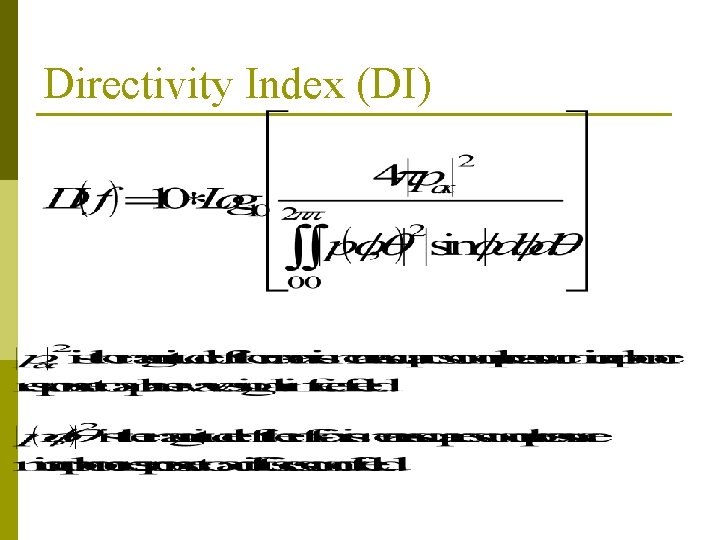
Directivity Index (DI)
Theoretical Cardioid 4. 8 Hypercardioid 6. 0 Supercardioid 5. 7 FF (BTE) 4. 0 5. 1 5. 0 KEMAR (BTE) 2. 3 3. 0 3. 3
Theoretical Cardioid 4. 8 Hypercardioid 6. 0 Supercardioid 5. 7 FF (ITE) 4. 1 5. 6 5. 4 KEMAR (ITE) 2. 7 3. 3 3. 5
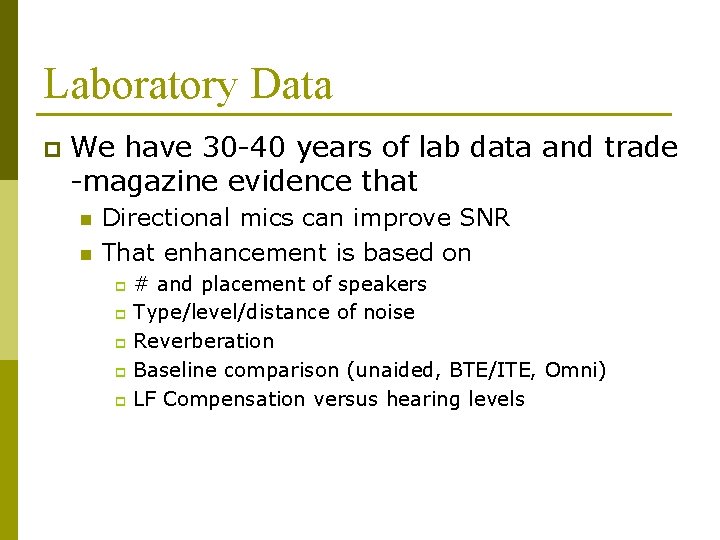
Laboratory Data p We have 30 -40 years of lab data and trade -magazine evidence that n n Directional mics can improve SNR That enhancement is based on # and placement of speakers p Type/level/distance of noise p Reverberation p Baseline comparison (unaided, BTE/ITE, Omni) p LF Compensation versus hearing levels p
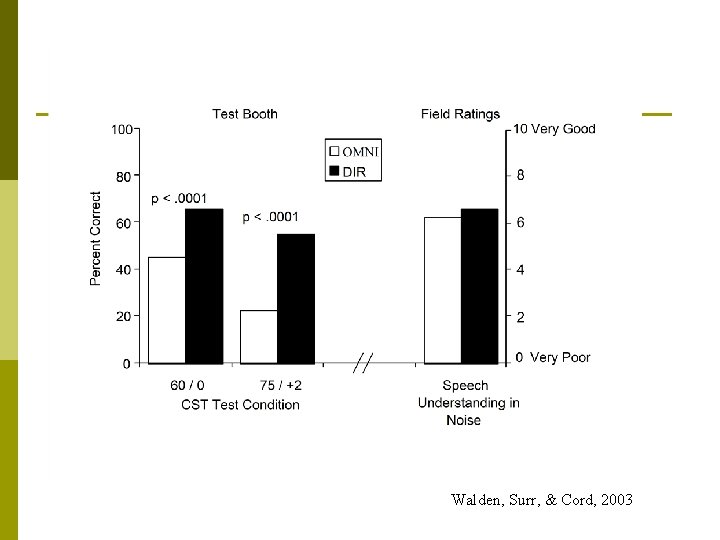
Laboratory Data AND, that lab data do not relate very well to self-report data p E. g. , Walden, Surr & Cord (Hearing Journal, 2003)… p
Walden, Surr, & Cord, 2003
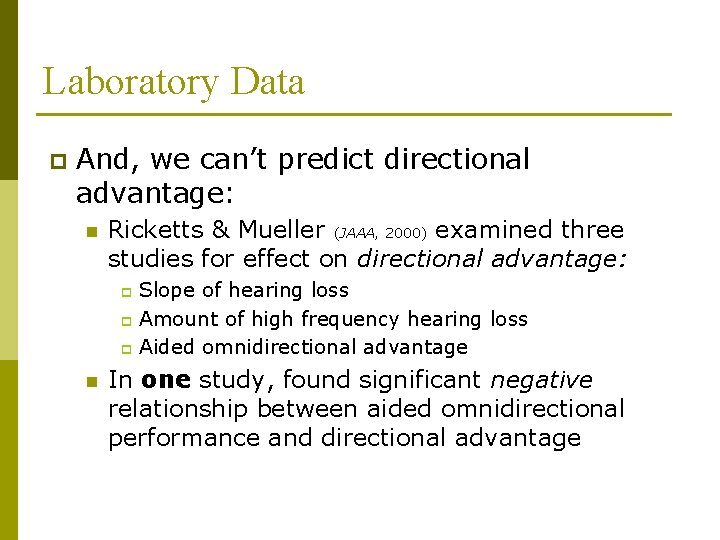
Laboratory Data p And, we can’t predict directional advantage: n Ricketts & Mueller (JAAA, 2000) examined three studies for effect on directional advantage: Slope of hearing loss p Amount of high frequency hearing loss p Aided omnidirectional advantage p n In one study, found significant negative relationship between aided omnidirectional performance and directional advantage
Cord, Surr, Walden & Olsen (2002) Performance of directional microphone hearing aids in everyday life, JAAA, 295 -307. p Called back users of directional mic hearing aids that fell into two groups n n p Those who used them regularly (deemed successful)(n=22) Those who did not, and used the default omnidirectional mode (deemed unsuccessful)(n=26) No predictive power in APHAB scores
Cord, Surr, Walden & Olsen (2002) Microphone Performance Questionnaire (MPQ) indicated directional mics preferred when signal is in front (near) and noise is in back p All 48 participants reported being satisfied with their HAs in each mic configuration; although the directional mic used less often, equally satisfied with it when they did. . . p
Walden and Walden (2004). Predicting success with hearing aids in everyday living, JAAA, 342 -353. p p p Purpose of the study: Investigate relationship between two measures of hearing aid success (IOI-HA and HAUS) and demographic and audiometric measures. No blinding; clinic appointment data (n=50) Not really a comparison of mic conditions, although n IOI-HA showed statistically significant difference across the groups p p n Omni only (n=29) Omni/Directional with a switch (n=21) NO difference in HAUS across two groups
Walden, Surr, Cord, and Dyrland (2004). Predicting hearing aid microphone preference in everyday listening. JAAA, 365 -396. p Purpose of the study: Define environments for which either the omnidirectional or directional mode was better (thus providing guidance): n Talker location n Noise location n Distance n Time n Ease of listening n (Indirectly assigned reverberation)
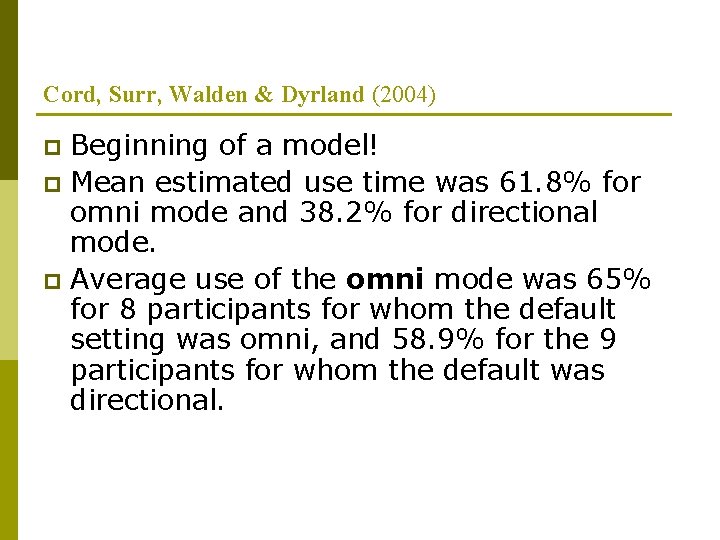
Cord, Surr, Walden & Dyrland (2004) Beginning of a model! p Mean estimated use time was 61. 8% for omni mode and 38. 2% for directional mode. p Average use of the omni mode was 65% for 8 participants for whom the default setting was omni, and 58. 9% for the 9 participants for whom the default was directional. p
Thus, the question of importance (to me!)
p Do experienced/trained users of hearing aids with directional microphones report better amplification outcomes in daily life than users of hearing aids without directional microphones?
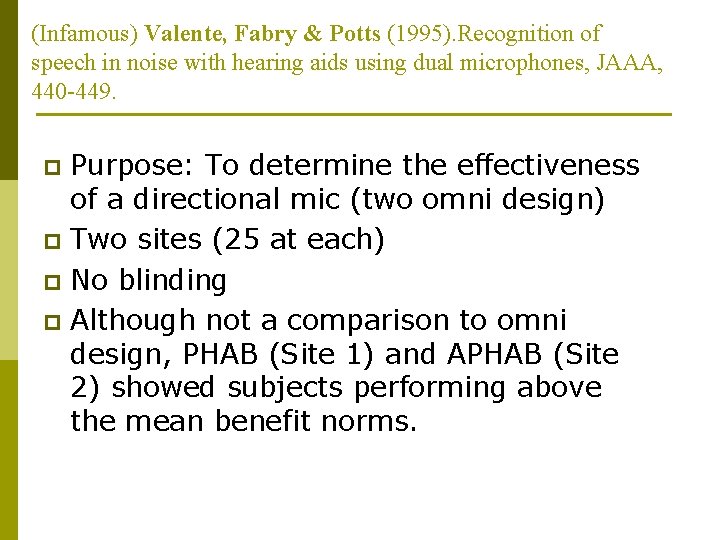
(Infamous) Valente, Fabry & Potts (1995). Recognition of speech in noise with hearing aids using dual microphones, JAAA, 440 -449. Purpose: To determine the effectiveness of a directional mic (two omni design) p Two sites (25 at each) p No blinding p Although not a comparison to omni design, PHAB (Site 1) and APHAB (Site 2) showed subjects performing above the mean benefit norms. p
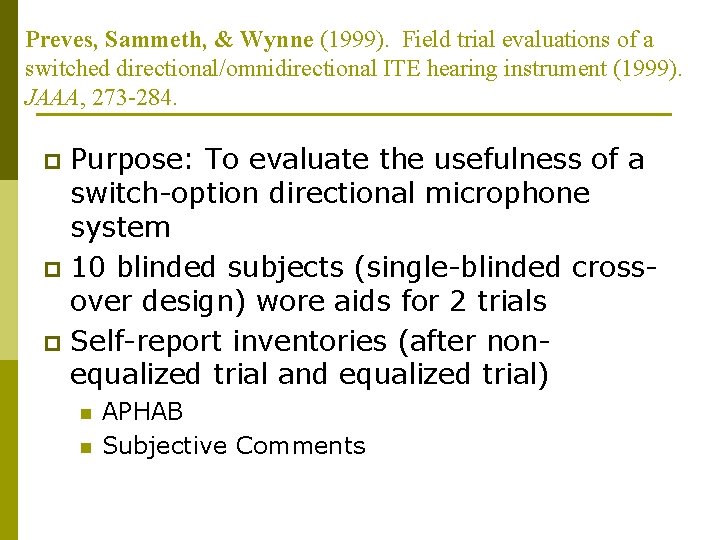
Preves, Sammeth, & Wynne (1999). Field trial evaluations of a switched directional/omnidirectional ITE hearing instrument (1999). JAAA, 273 -284. Purpose: To evaluate the usefulness of a switch-option directional microphone system p 10 blinded subjects (single-blinded crossover design) wore aids for 2 trials p Self-report inventories (after nonequalized trial and equalized trial) p n n APHAB Subjective Comments
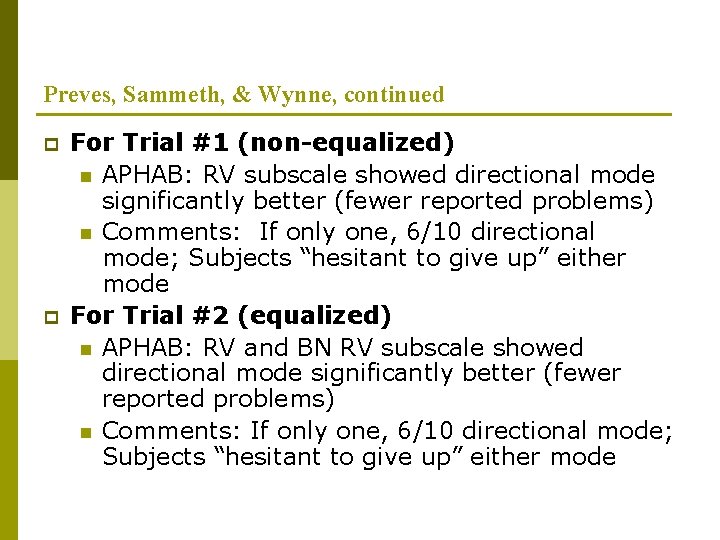
Preves, Sammeth, & Wynne, continued p p For Trial #1 (non-equalized) n APHAB: RV subscale showed directional mode significantly better (fewer reported problems) n Comments: If only one, 6/10 directional mode; Subjects “hesitant to give up” either mode For Trial #2 (equalized) n APHAB: RV and BN RV subscale showed directional mode significantly better (fewer reported problems) n Comments: If only one, 6/10 directional mode; Subjects “hesitant to give up” either mode
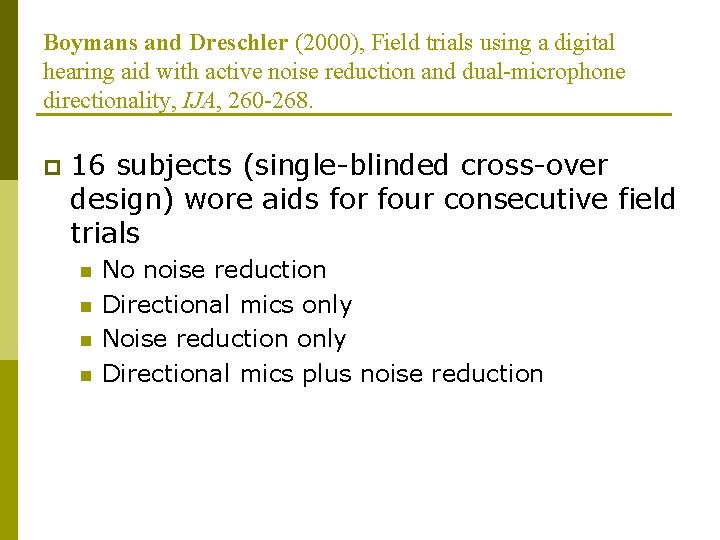
Boymans and Dreschler (2000), Field trials using a digital hearing aid with active noise reduction and dual-microphone directionality, IJA, 260 -268. p 16 subjects (single-blinded cross-over design) wore aids for four consecutive field trials n n No noise reduction Directional mics only Noise reduction only Directional mics plus noise reduction
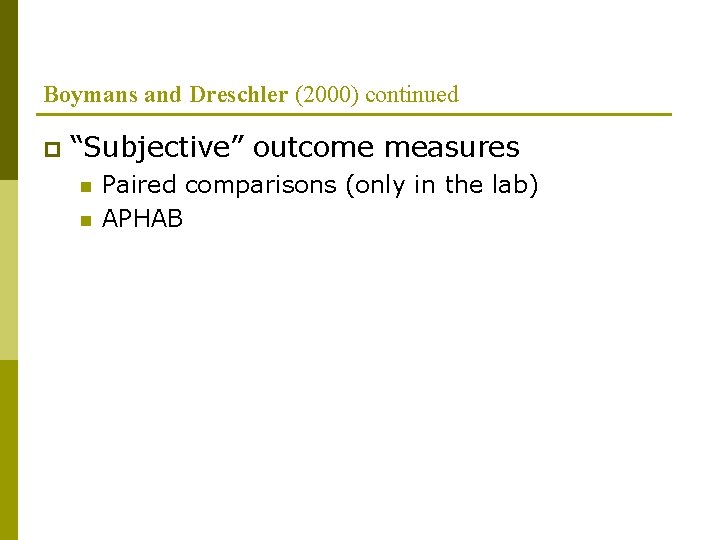
Boymans and Dreschler (2000) continued p “Subjective” outcome measures n n Paired comparisons (only in the lab) APHAB
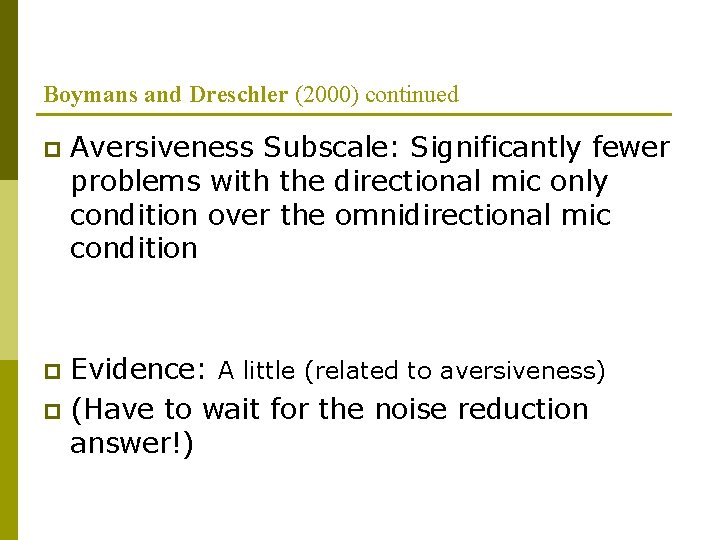
Boymans and Dreschler (2000) continued p Aversiveness Subscale: Significantly fewer problems with the directional mic only condition over the omnidirectional mic condition Evidence: A little (related to aversiveness) p (Have to wait for the noise reduction answer!) p
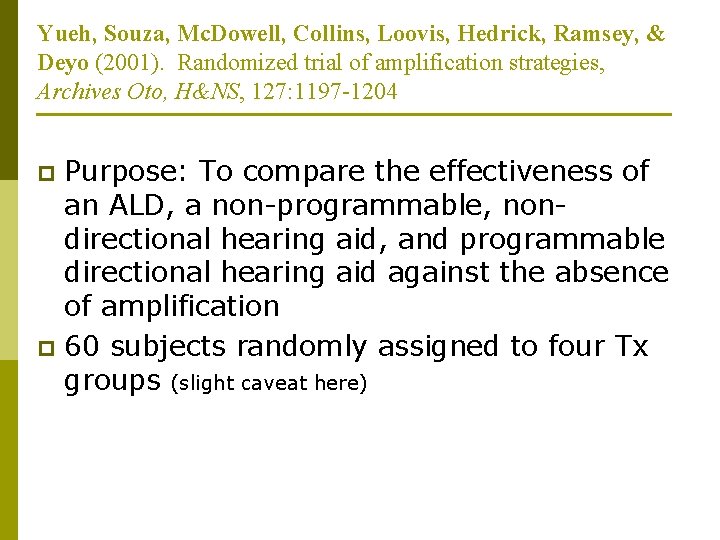
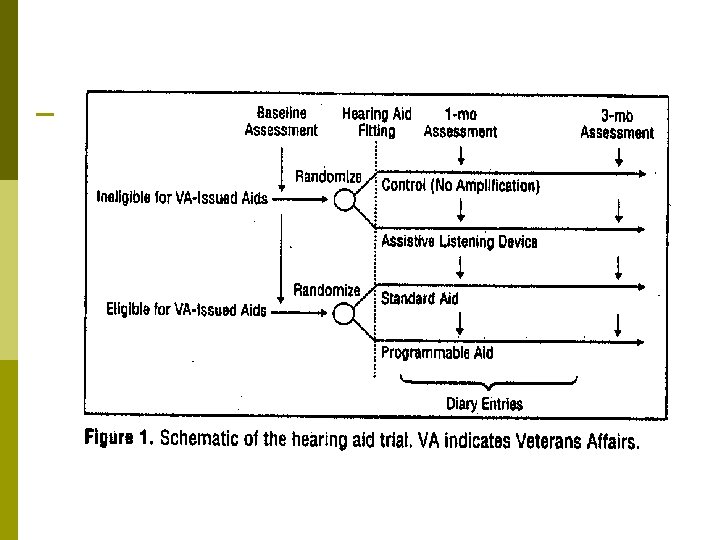
Yueh, Souza, Mc. Dowell, Collins, Loovis, Hedrick, Ramsey, & Deyo (2001). Randomized trial of amplification strategies, Archives Oto, H&NS, 127: 1197 -1204 Purpose: To compare the effectiveness of an ALD, a non-programmable, nondirectional hearing aid, and programmable directional hearing aid against the absence of amplification p 60 subjects randomly assigned to four Tx groups (slight caveat here) p
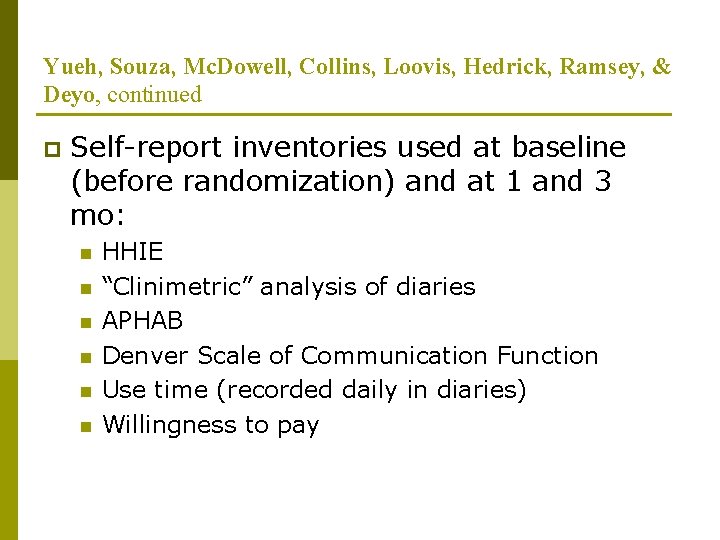
Yueh, Souza, Mc. Dowell, Collins, Loovis, Hedrick, Ramsey, & Deyo, continued p Self-report inventories used at baseline (before randomization) and at 1 and 3 mo: n n n HHIE “Clinimetric” analysis of diaries APHAB Denver Scale of Communication Function Use time (recorded daily in diaries) Willingness to pay
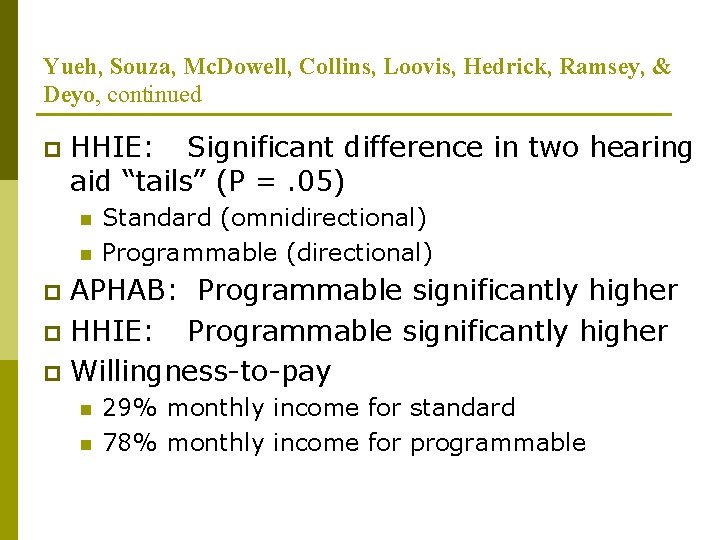
Yueh, Souza, Mc. Dowell, Collins, Loovis, Hedrick, Ramsey, & Deyo, continued p HHIE: Significant difference in two hearing aid “tails” (P =. 05) n n Standard (omnidirectional) Programmable (directional) APHAB: Programmable significantly higher p HHIE: Programmable significantly higher p Willingness-to-pay p n n 29% monthly income for standard 78% monthly income for programmable
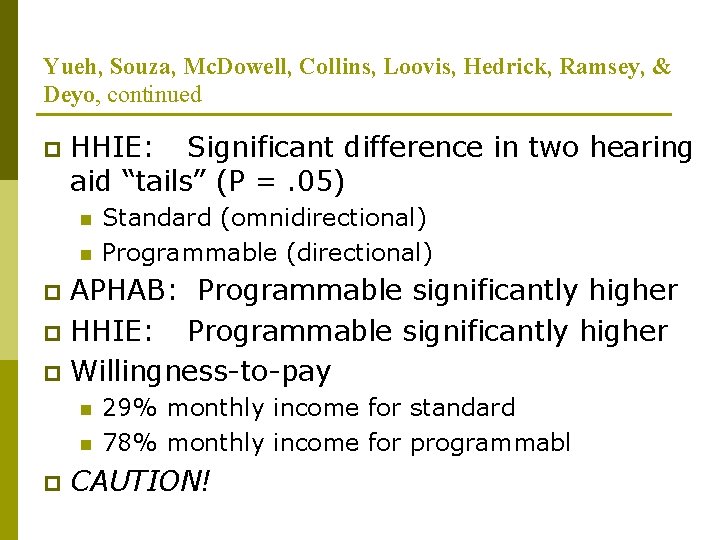
Yueh, Souza, Mc. Dowell, Collins, Loovis, Hedrick, Ramsey, & Deyo, continued p HHIE: Significant difference in two hearing aid “tails” (P =. 05) n n Standard (omnidirectional) Programmable (directional) APHAB: Programmable significantly higher p HHIE: Programmable significantly higher p Willingness-to-pay p n n p 29% monthly income for standard 78% monthly income for programmabl CAUTION!
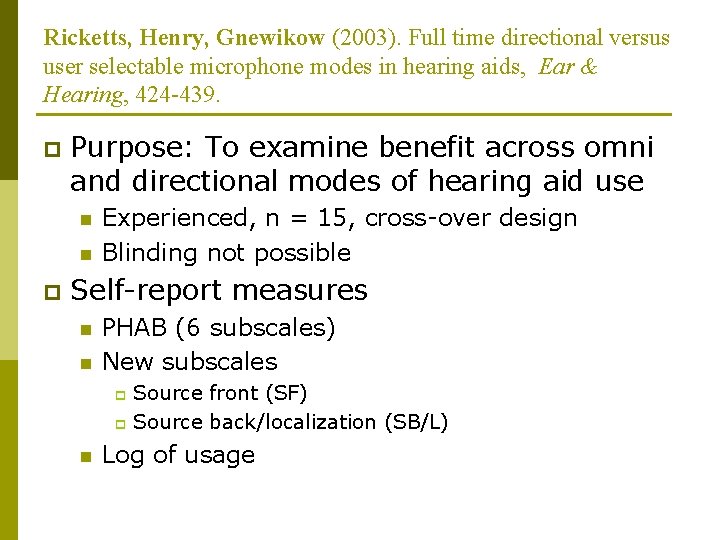
Ricketts, Henry, Gnewikow (2003). Full time directional versus user selectable microphone modes in hearing aids, Ear & Hearing, 424 -439. p Purpose: To examine benefit across omni and directional modes of hearing aid use n n p Experienced, n = 15, cross-over design Blinding not possible Self-report measures n n PHAB (6 subscales) New subscales Source front (SF) p Source back/localization (SB/L) p n Log of usage
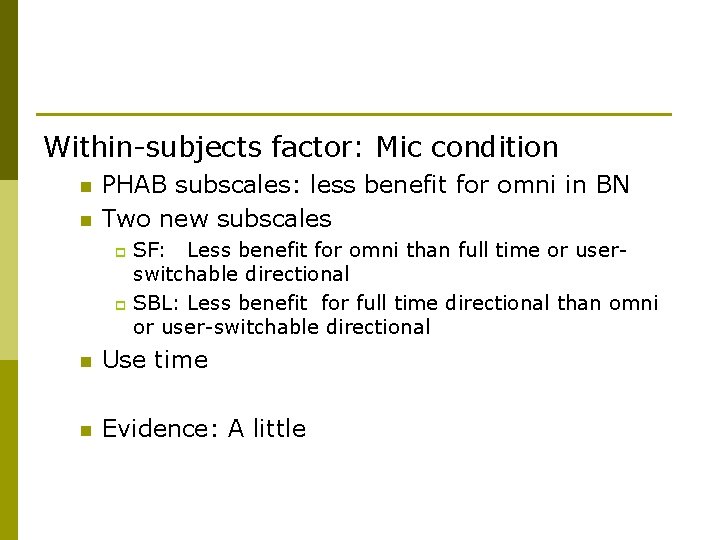
Within-subjects factor: Mic condition n n PHAB subscales: less benefit for omni in BN Two new subscales SF: Less benefit for omni than full time or userswitchable directional p SBL: Less benefit for full time directional than omni or user-switchable directional p n Use time n Evidence: A little
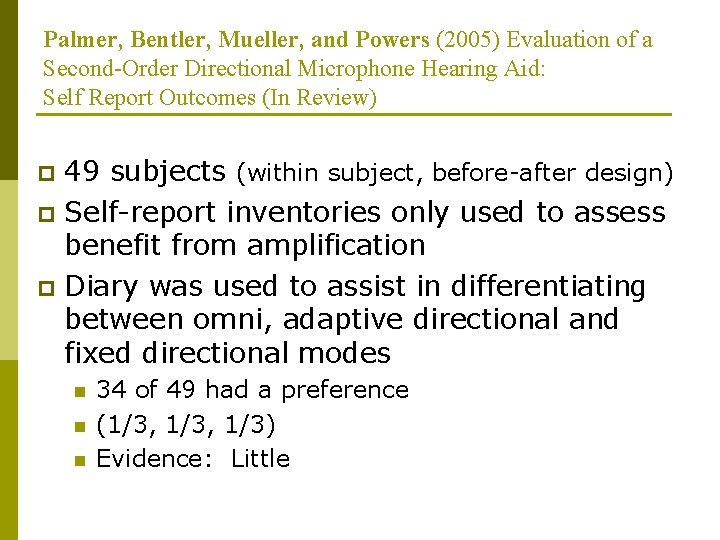
Palmer, Bentler, Mueller, and Powers (2005) Evaluation of a Second-Order Directional Microphone Hearing Aid: Self Report Outcomes (In Review) 49 subjects (within subject, before-after design) p Self-report inventories only used to assess benefit from amplification p Diary was used to assist in differentiating between omni, adaptive directional and fixed directional modes p n n n 34 of 49 had a preference (1/3, 1/3) Evidence: Little
Noise Reduction
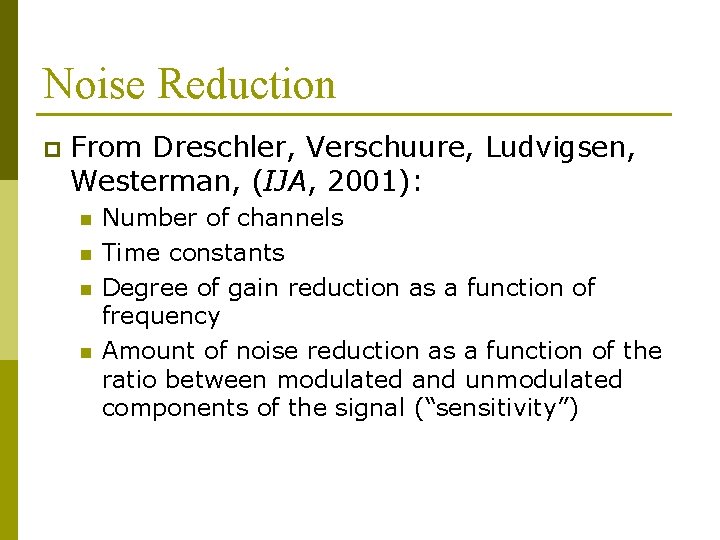
Noise Reduction p From Dreschler, Verschuure, Ludvigsen, Westerman, (IJA, 2001): n n Number of channels Time constants Degree of gain reduction as a function of frequency Amount of noise reduction as a function of the ratio between modulated and unmodulated components of the signal (“sensitivity”)
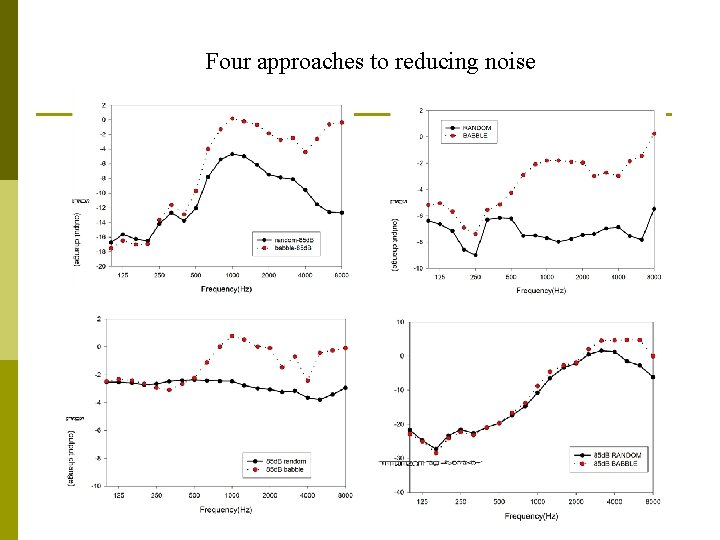
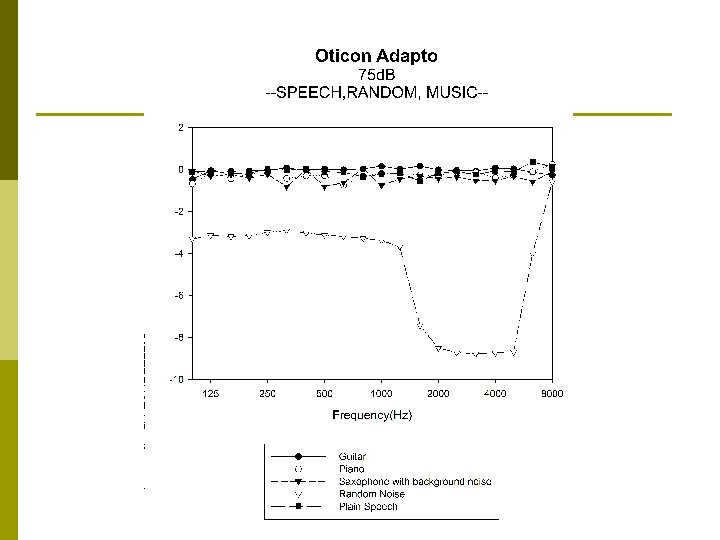
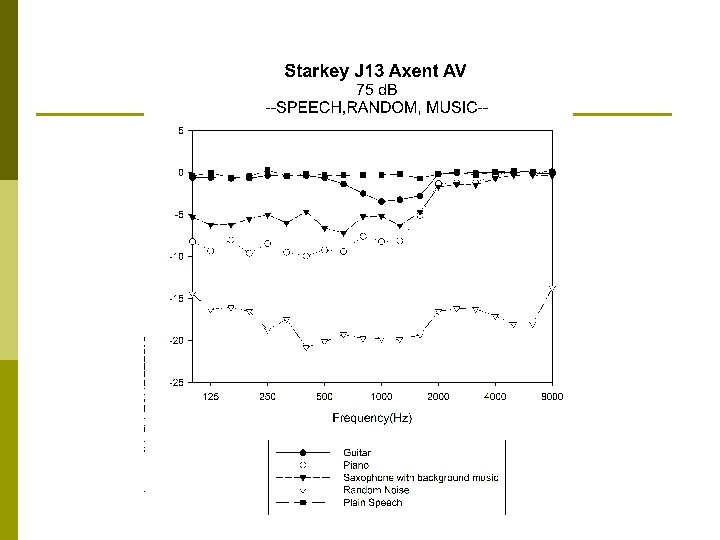
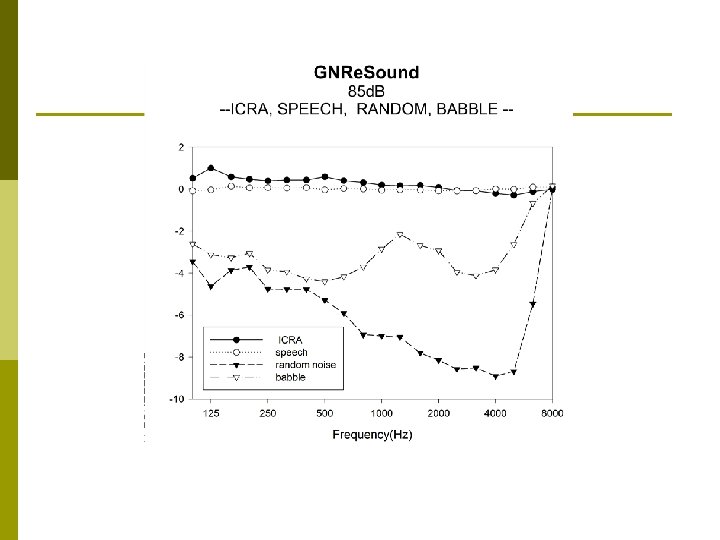
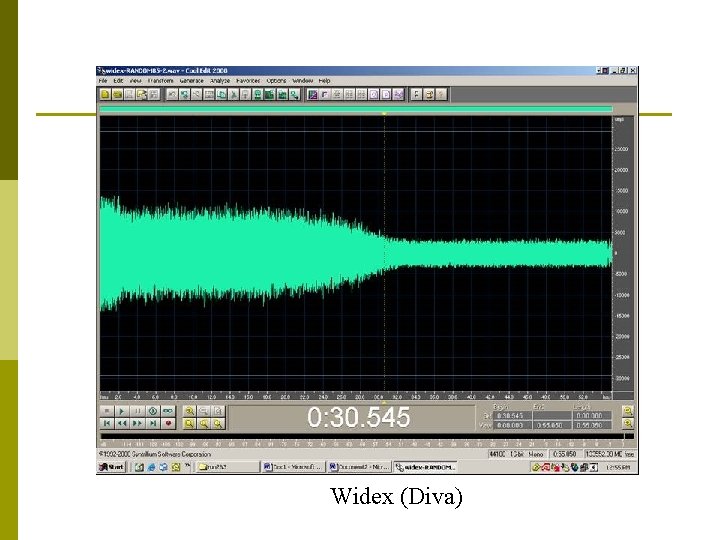
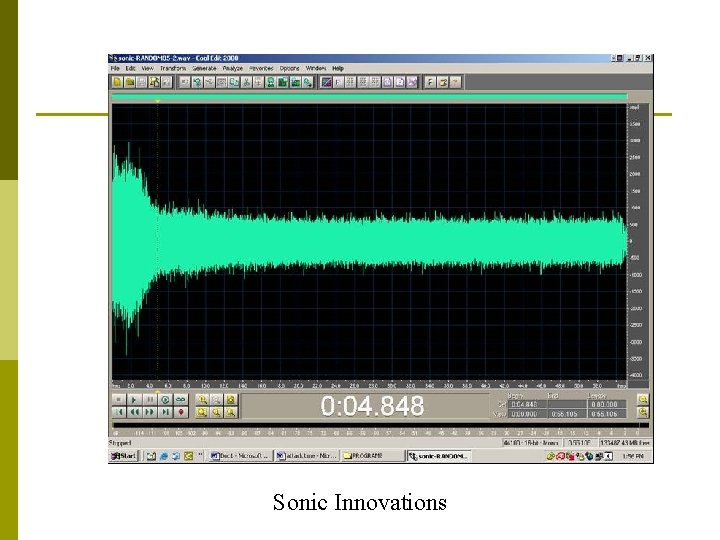
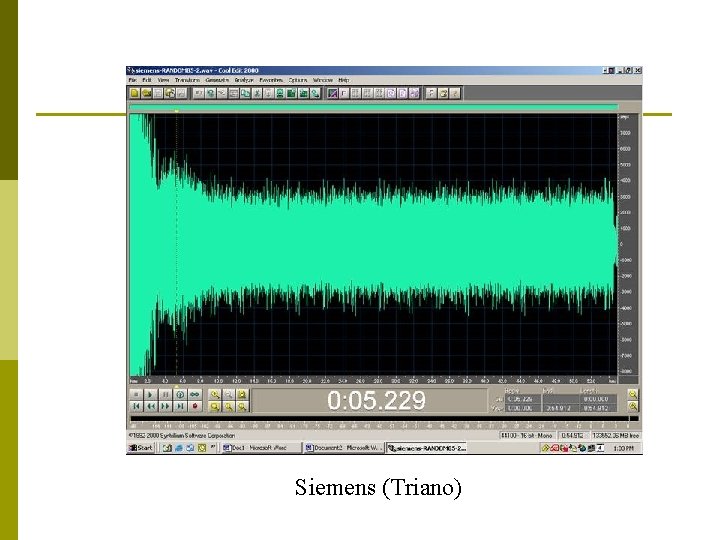
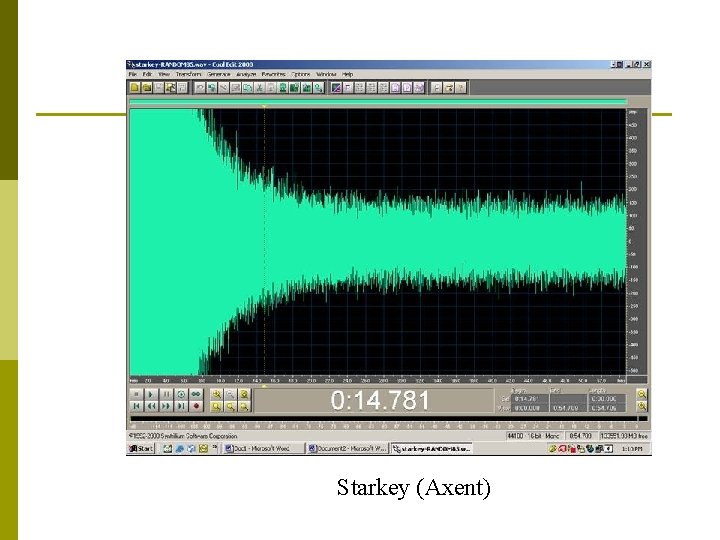
Four approaches to reducing noise
Widex (Diva)
Sonic Innovations
Siemens (Triano)
Starkey (Axent)
And so the important question… p Do users of digital noise reduction schemes currently implemented in wearable hearing aids report better amplification outcomes in daily life than users of hearing aids without noise reduction?
This effort… Noise reduction studies prior to 1995 p Noise reduction studies since 1995 p Total number of studies meeting criteria: 2. 5 p n n Peer-reviewed Self-report Blinded Appropriate design (n, statistics, etc)
…if I could understand the titles…
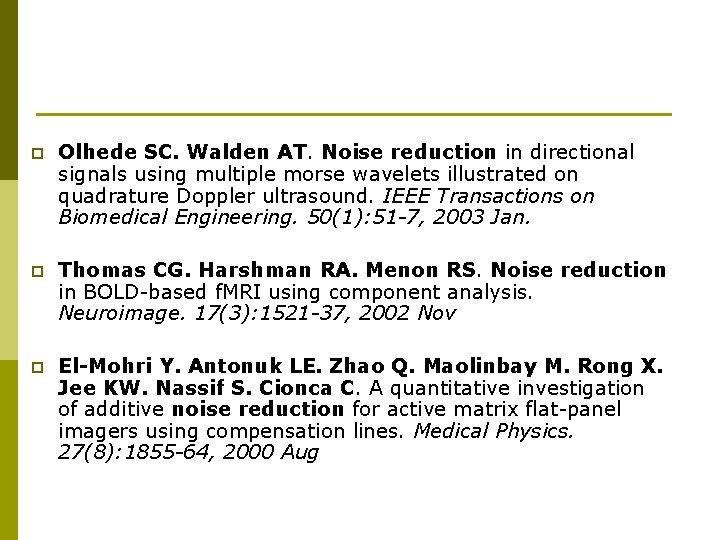
p Olhede SC. Walden AT. Noise reduction in directional signals using multiple morse wavelets illustrated on quadrature Doppler ultrasound. IEEE Transactions on Biomedical Engineering. 50(1): 51 -7, 2003 Jan. p Thomas CG. Harshman RA. Menon RS. Noise reduction in BOLD-based f. MRI using component analysis. Neuroimage. 17(3): 1521 -37, 2002 Nov p El-Mohri Y. Antonuk LE. Zhao Q. Maolinbay M. Rong X. Jee KW. Nassif S. Cionca C. A quantitative investigation of additive noise reduction for active matrix flat-panel imagers using compensation lines. Medical Physics. 27(8): 1855 -64, 2000 Aug
Data?
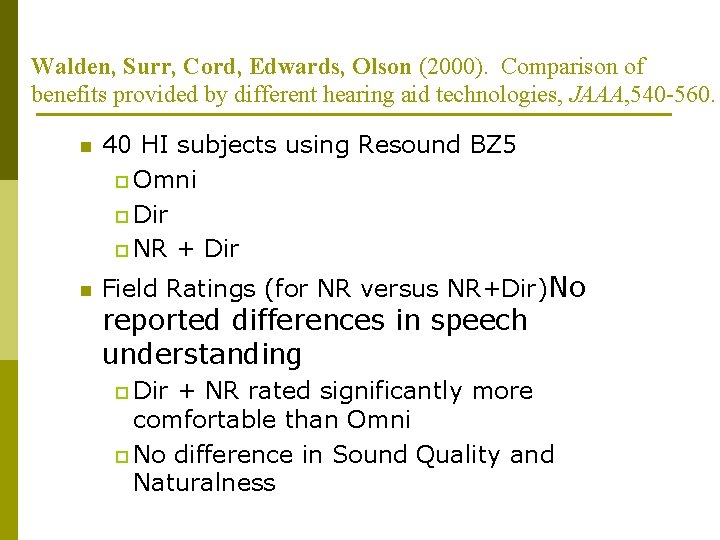
Walden, Surr, Cord, Edwards, Olson (2000). Comparison of benefits provided by different hearing aid technologies, JAAA, 540 -560. n n 40 HI subjects using Resound BZ 5 p Omni p Dir p NR + Dir Field Ratings (for NR versus NR+Dir)No reported differences in speech understanding p Dir + NR rated significantly more comfortable than Omni p No difference in Sound Quality and Naturalness
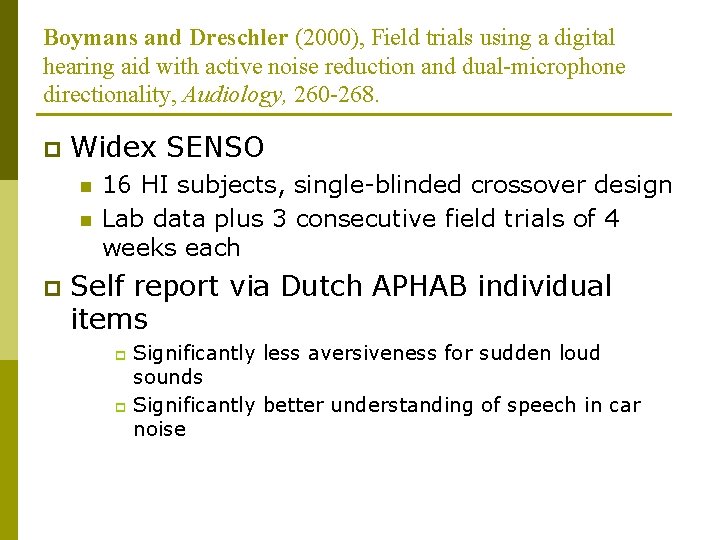
Boymans and Dreschler (2000), Field trials using a digital hearing aid with active noise reduction and dual-microphone directionality, Audiology, 260 -268. p Widex SENSO n n p 16 HI subjects, single-blinded crossover design Lab data plus 3 consecutive field trials of 4 weeks each Self report via Dutch APHAB individual items Significantly less aversiveness for sudden loud sounds p Significantly better understanding of speech in car noise p
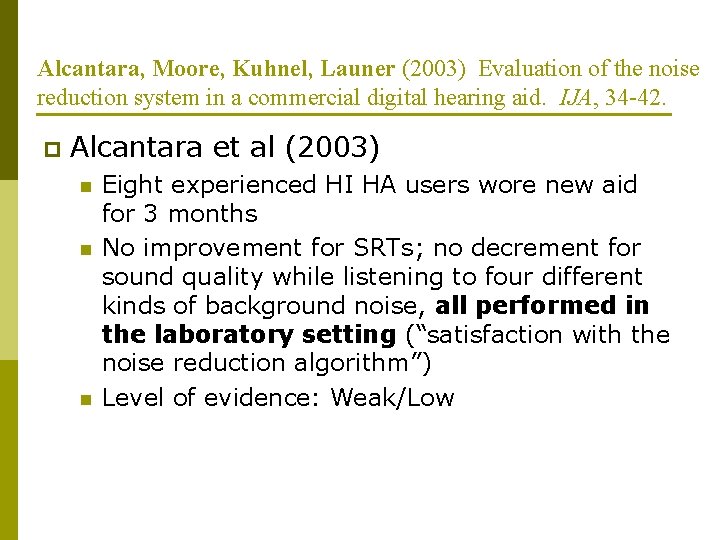
Alcantara, Moore, Kuhnel, Launer (2003) Evaluation of the noise reduction system in a commercial digital hearing aid. IJA, 34 -42. p Alcantara et al (2003) n n n Eight experienced HI HA users wore new aid for 3 months No improvement for SRTs; no decrement for sound quality while listening to four different kinds of background noise, all performed in the laboratory setting (“satisfaction with the noise reduction algorithm”) Level of evidence: Weak/Low
Feedback Cancellation
What did we do? Roll off the highs p Plug the vent p Remake the earmold p Turn down the VCW p Dampen the peaks p Adjust the gain in the narrow band p Hold the mold in tighter… p
Feedback Cancellation p Do users of feedback cancellation schemes currently implemented in wearable hearing aids report better amplification outcomes in daily life than users of hearing?
Feedback Cancellation p Do users of feedback cancellation schemes currently implemented in wearable hearing aids notice a difference?
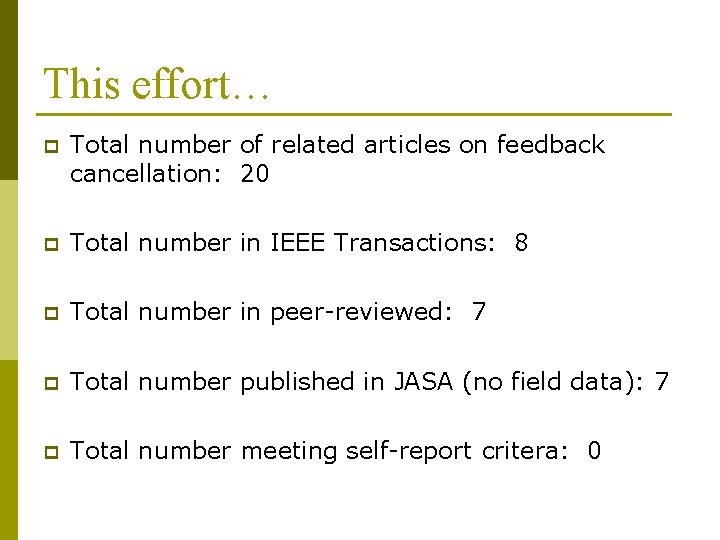
This effort… p Total number of related articles on feedback cancellation: 20 p Total number in IEEE Transactions: 8 p Total number in peer-reviewed: 7 p Total number published in JASA (no field data): 7 p Total number meeting self-report critera: 0
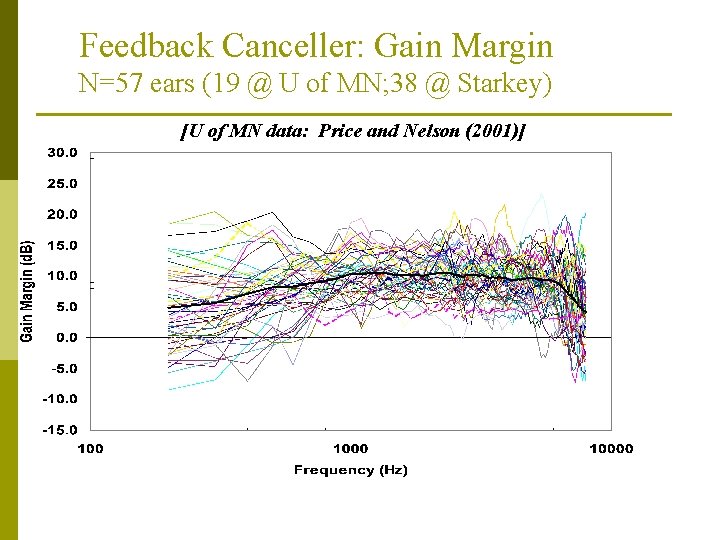
Feedback Canceller: Gain Margin N=57 ears (19 @ U of MN; 38 @ Starkey) [U of MN data: Price and Nelson (2001)]
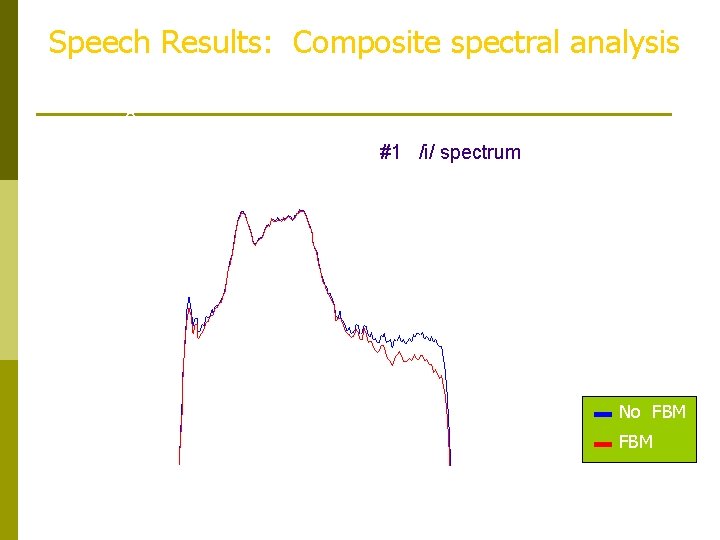
Speech Results: Composite spectral analysis 0 #1 /i/ spectrum -20 d. B -40 -60 -80 No FBM -100 0 2000 4000 6000 Hz 8000 10000
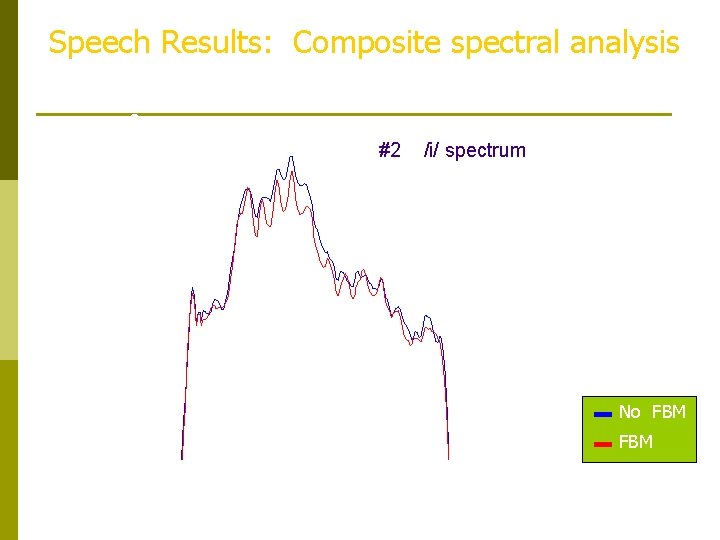
Speech Results: Composite spectral analysis 0 #2 /i/ spectrum -20 d. B -40 -60 -80 -100 No FBM 0 2000 4000 6000 Hz 8000 10000
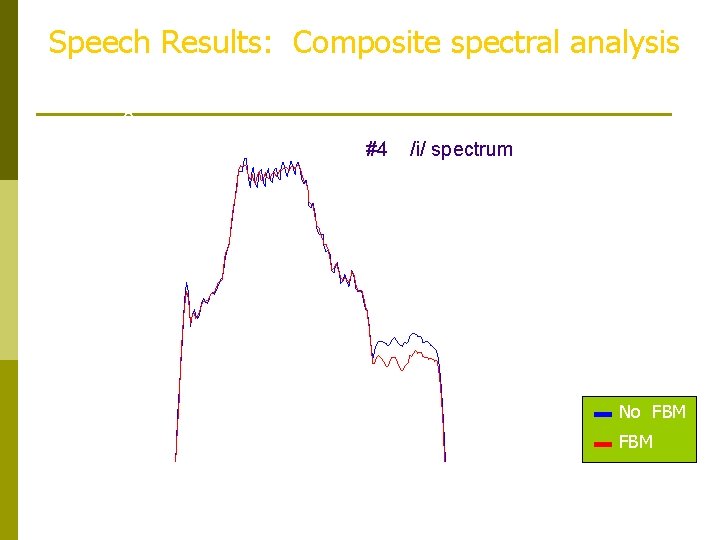
Speech Results: Composite spectral analysis 0 #4 /i/ spectrum -20 d. B -40 -60 -80 -100 No FBM 0 2000 4000 6000 Hz 8000 10000
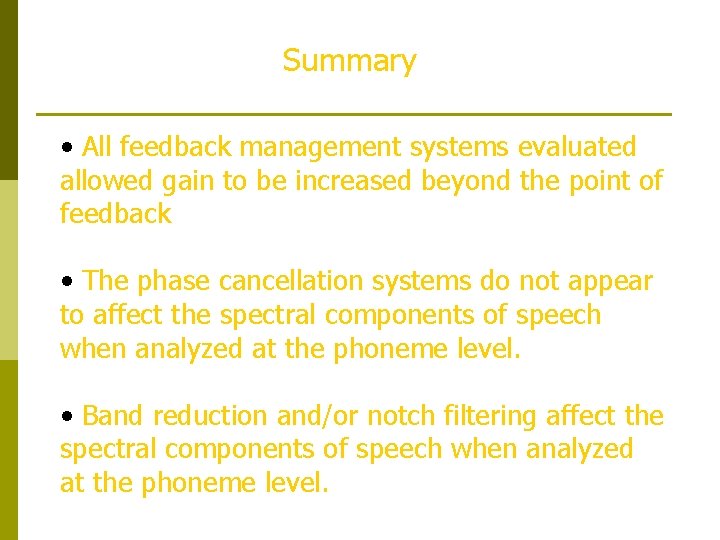
Summary • All feedback management systems evaluated allowed gain to be increased beyond the point of feedback • The phase cancellation systems do not appear to affect the spectral components of speech when analyzed at the phoneme level. • Band reduction and/or notch filtering affect the spectral components of speech when analyzed at the phoneme level.
Freed & Soli (2004 IHCON) p p How effective id the algorithm at preventing oscilliation? How effective is the algorithm at reducing oscillatory peaks? Does the algorithm sacrifice gain in any frequency band? How robust is the algorithm when presented with tonal input signals? n n n Power Concentration Ratio (PCR) Aided Stable Gain (ASG) Extraneous Frequency Ratio (EFR)
Answers Q 1 No, not without consideration of the features Q 2 Maybe, although the issue of training needs further investigation Q 3 Maybe, but only in the sound quality/easy listening domain Q 4 No field data available, but this question may be answered by laboratory findings as well
From Randall Robey (ASHA Leader, 2004): p “Evidence may take many forms, from expert opinions to meta-analysis. Each form should not be equally persuasive that a certain (procedure) should become an aspect of recommended. ” p “…the greater the scientific rigor, the more potent the evidence. ”
From Christine Dollaghan (ASHA Leader, 2004): p “The most common feeling seems to be …anxiety that EBP will turn out to be one more unrealistic demand placed upon already overburdened professionals. ”
From Bentler at al. ( Ear and Hearing, 2003) “Clinician is ethically obligated to accurately represent the potential benefits and advantages of (the) hearing aid. ” p “This obligation can only be met by ongoing and critical review of the evidence supporting effectiveness. ” p “(And) it is incumbent upon researchers to provide clinicians fair and accurate evaluations of new technologies. ” p