
CELLULAR RESPIRATION Harvesting Chemical Energy Living things require

- Slides: 26
CELLULAR RESPIRATION Harvesting Chemical Energy
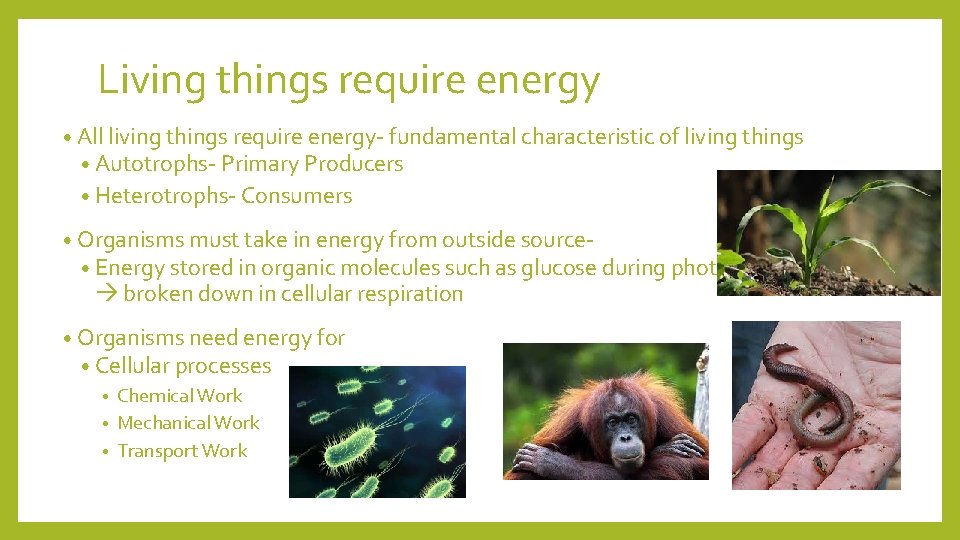
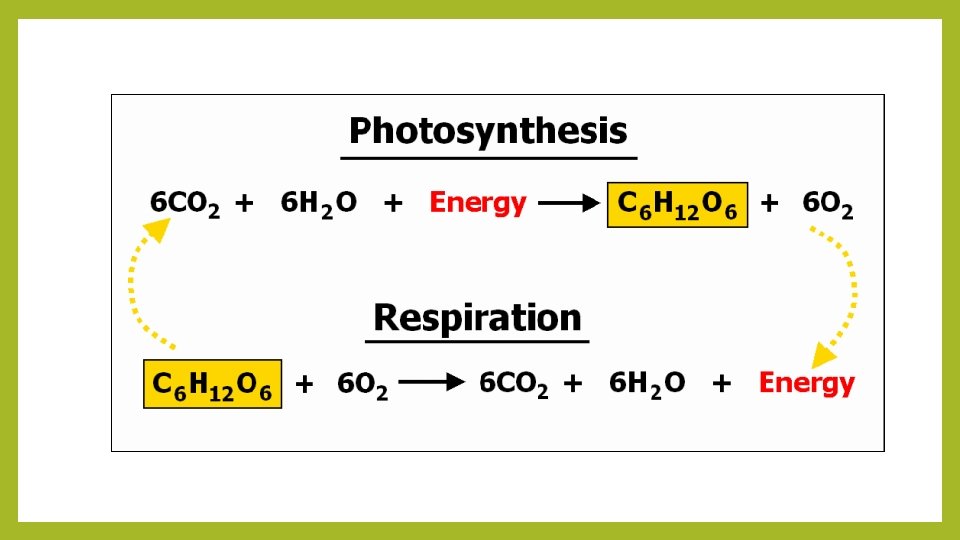
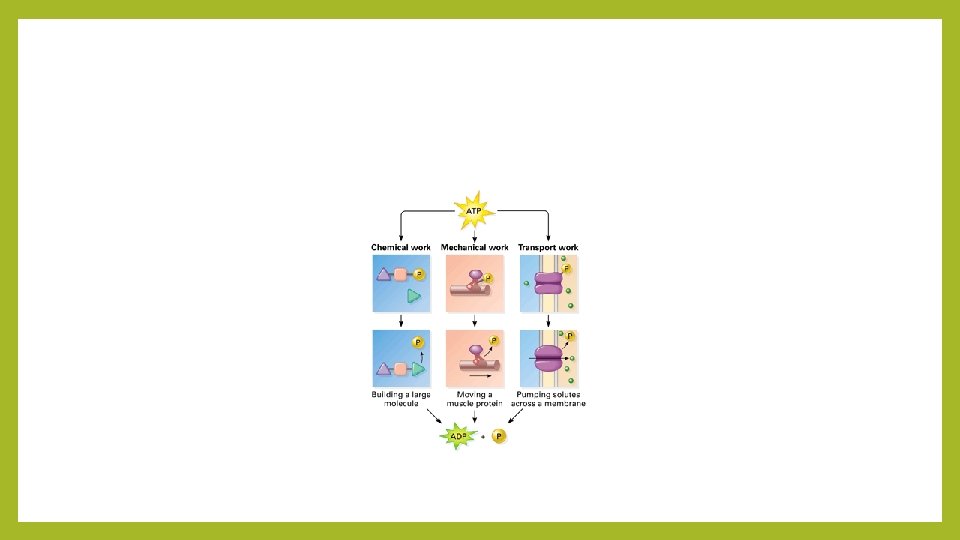
Living things require energy • All living things require energy- fundamental characteristic of living things • Autotrophs- Primary Producers • Heterotrophs- Consumers • Organisms must take in energy from outside source • Energy stored in organic molecules such as glucose during photosynthesis broken down in cellular respiration • Organisms need energy for • Cellular processes • Chemical Work • Mechanical Work • Transport Work
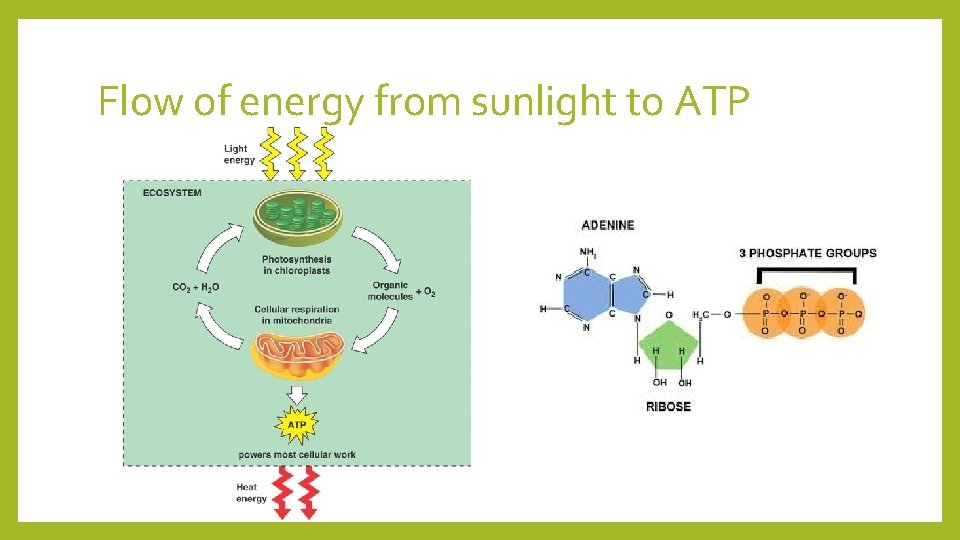
Flow of energy from sunlight to ATP
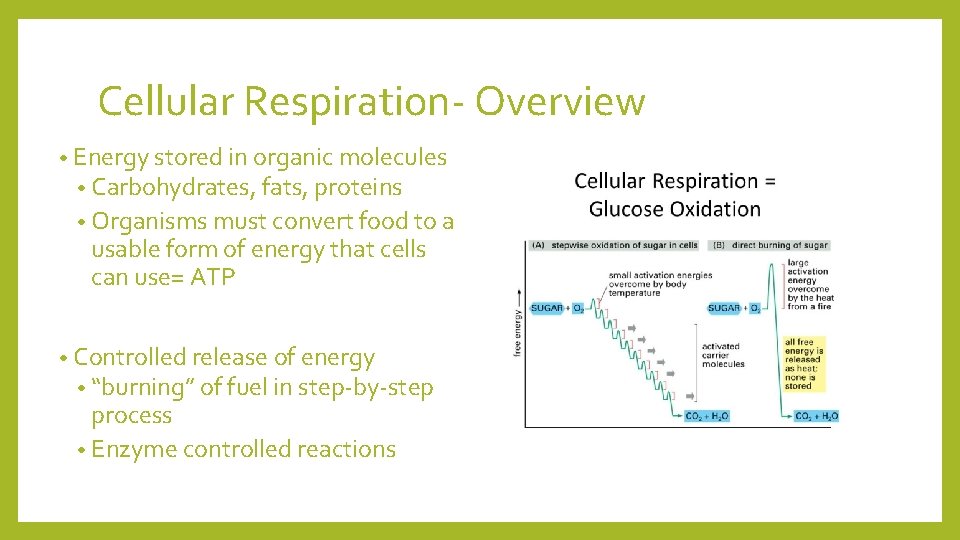
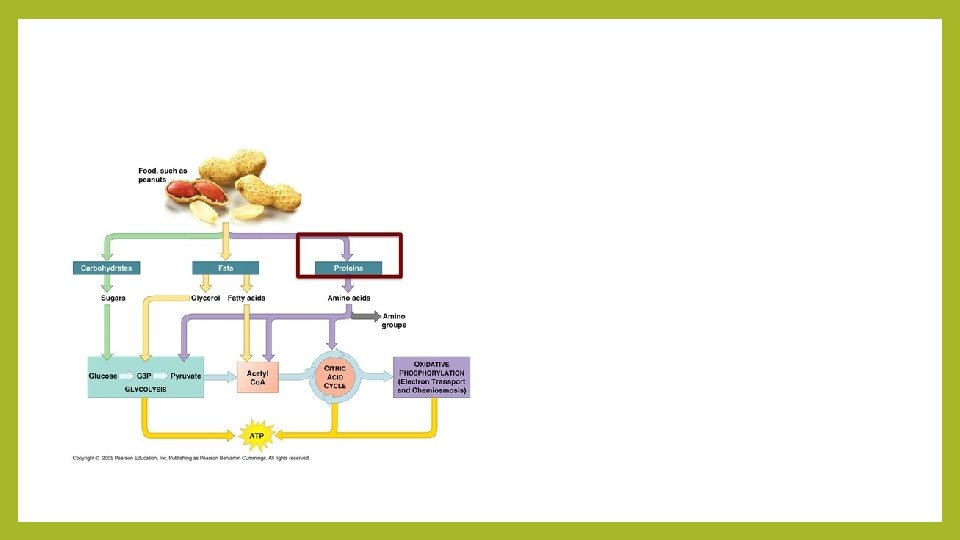
Cellular Respiration- Overview • Energy stored in organic molecules • Carbohydrates, fats, proteins • Organisms must convert food to a usable form of energy that cells can use= ATP • Controlled release of energy • “burning” of fuel in step-by-step process • Enzyme controlled reactions
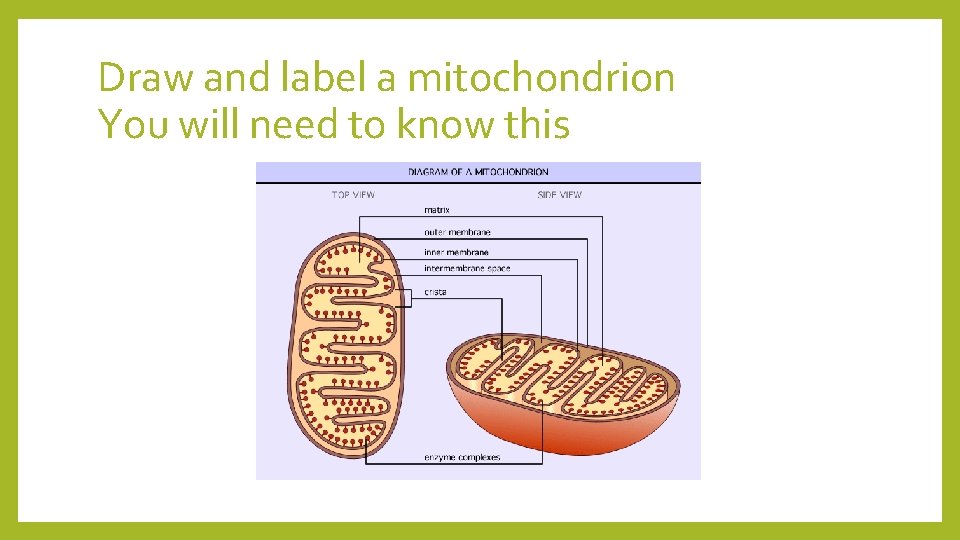
Draw and label a mitochondria You will need to know this
Draw and label a mitochondrion You will need to know this
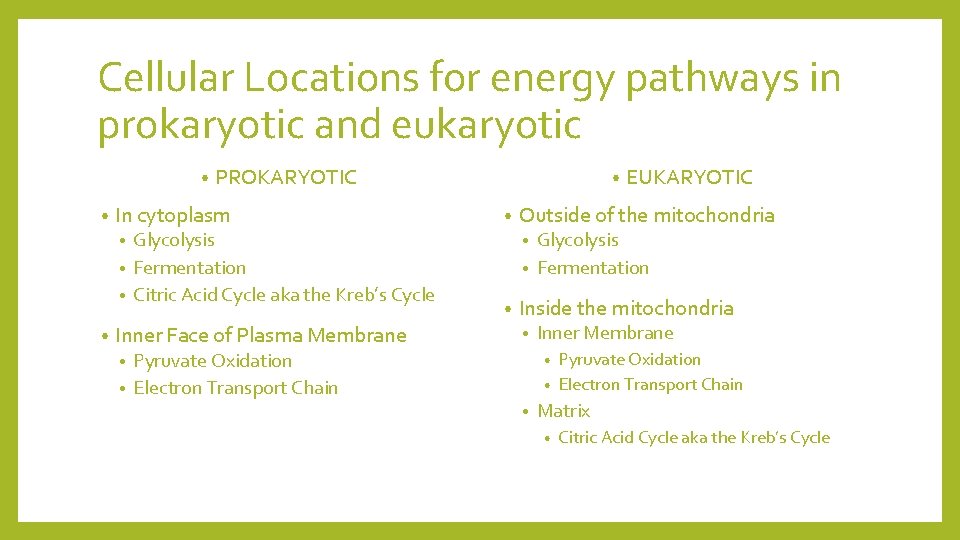
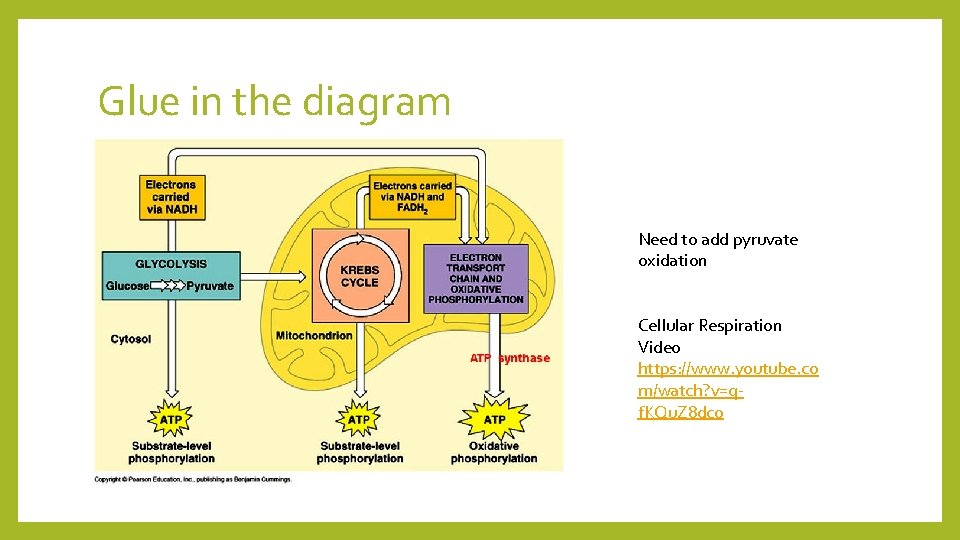
Cellular Locations for energy pathways in prokaryotic and eukaryotic • • PROKARYOTIC In cytoplasm Glycolysis • Fermentation • Citric Acid Cycle aka the Kreb’s Cycle • • Inner Face of Plasma Membrane Outside of the mitochondria Glycolysis • Fermentation • • EUKARYOTIC • • Inside the mitochondria • Pyruvate Oxidation • Electron Transport Chain Inner Membrane Pyruvate Oxidation • Electron Transport Chain • • • Matrix • Citric Acid Cycle aka the Kreb’s Cycle
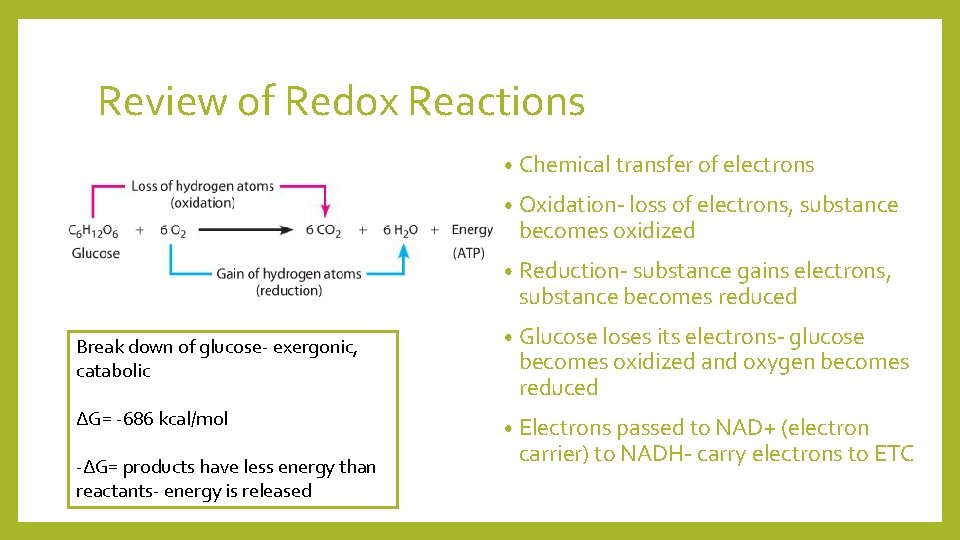
Review of Redox Reactions • Chemical transfer of electrons • Oxidation- loss of electrons, substance becomes oxidized • Reduction- substance gains electrons, substance becomes reduced Break down of glucose- exergonic, catabolic ΔG= -686 kcal/mol -ΔG= products have less energy than reactants- energy is released • Glucose loses its electrons- glucose becomes oxidized and oxygen becomes reduced • Electrons passed to NAD+ (electron carrier) to NADH- carry electrons to ETC
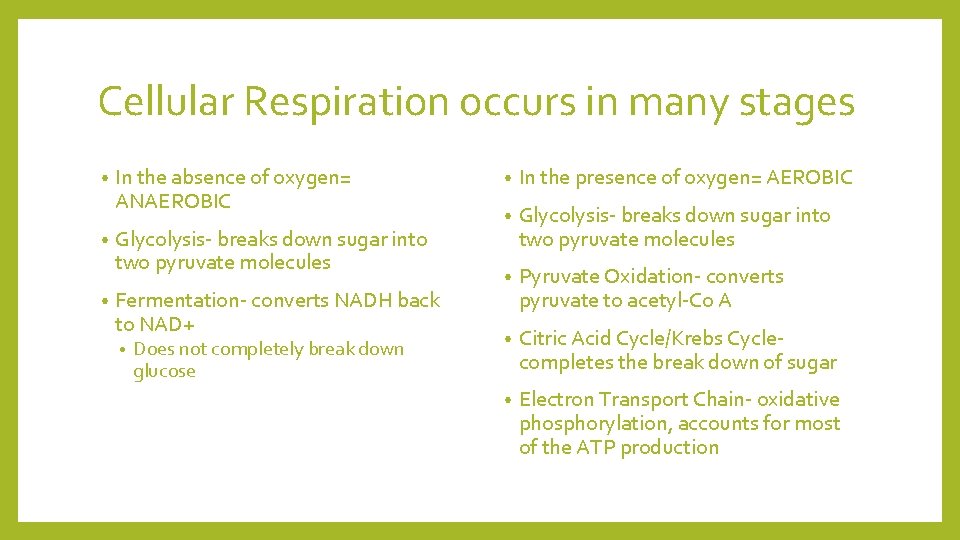
Cellular Respiration occurs in many stages • • • In the absence of oxygen= ANAEROBIC Glycolysis- breaks down sugar into two pyruvate molecules Fermentation- converts NADH back to NAD+ • Does not completely break down glucose • In the presence of oxygen= AEROBIC • Glycolysis- breaks down sugar into two pyruvate molecules • Pyruvate Oxidation- converts pyruvate to acetyl-Co A • Citric Acid Cycle/Krebs Cyclecompletes the break down of sugar • Electron Transport Chain- oxidative phosphorylation, accounts for most of the ATP production
Glue in the diagram Need to add pyruvate oxidation Cellular Respiration Video https: //www. youtube. co m/watch? v=qf. KQu. Z 8 dco
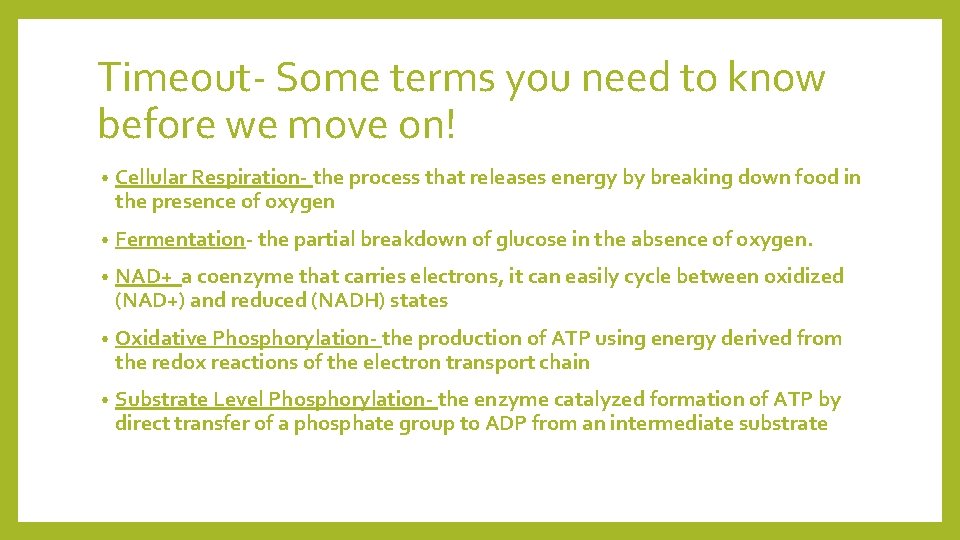
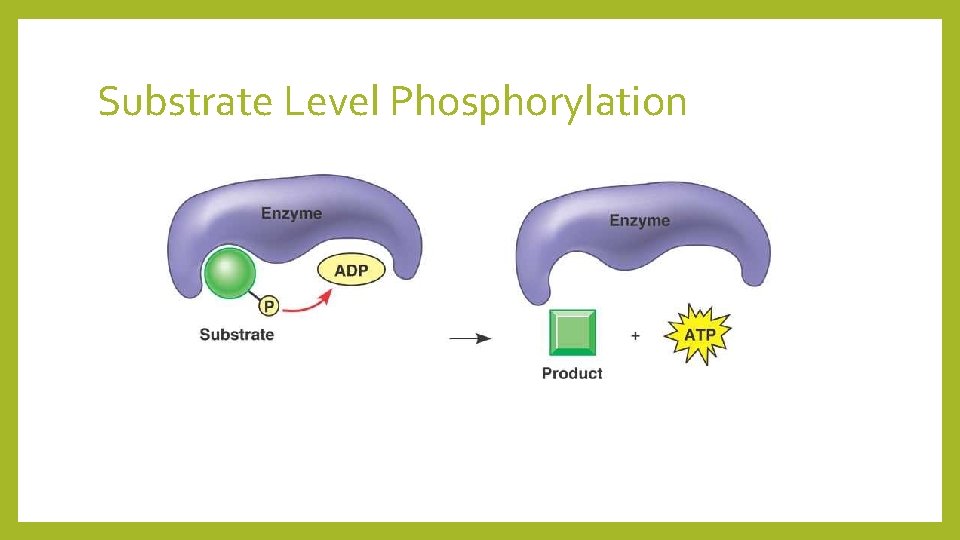
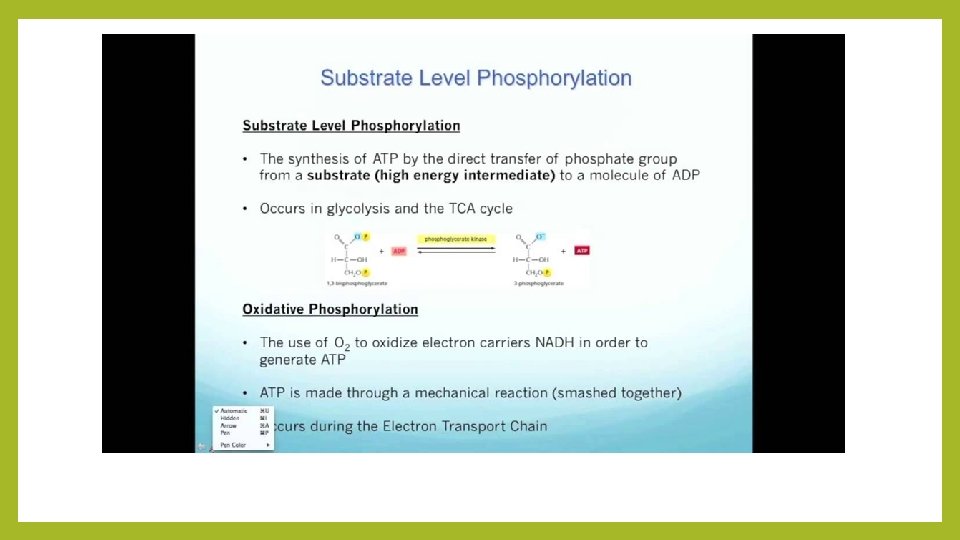
Timeout- Some terms you need to know before we move on! • Cellular Respiration- the process that releases energy by breaking down food in the presence of oxygen • Fermentation- the partial breakdown of glucose in the absence of oxygen. • NAD+ a coenzyme that carries electrons, it can easily cycle between oxidized (NAD+) and reduced (NADH) states • Oxidative Phosphorylation- the production of ATP using energy derived from the redox reactions of the electron transport chain • Substrate Level Phosphorylation- the enzyme catalyzed formation of ATP by direct transfer of a phosphate group to ADP from an intermediate substrate
Substrate Level Phosphorylation
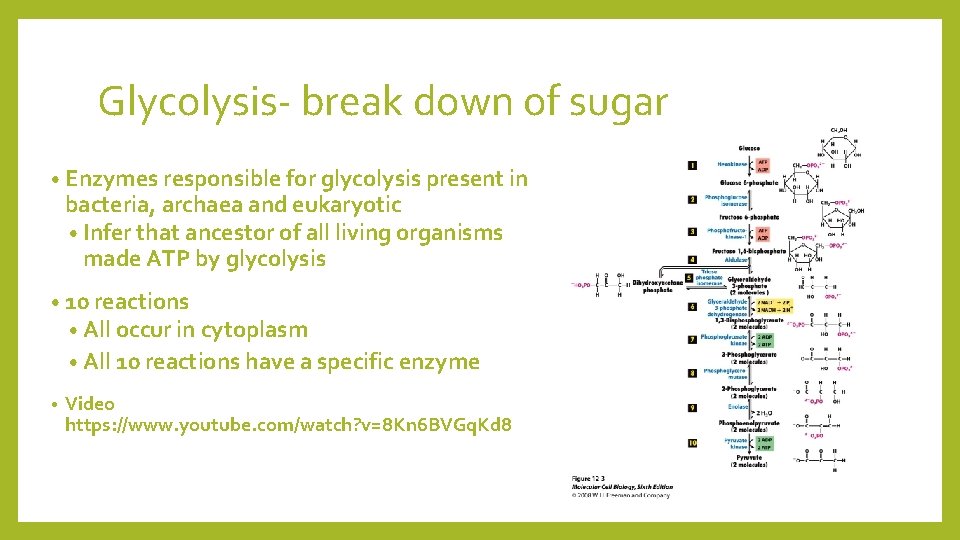
Glycolysis- break down of sugar • Enzymes responsible for glycolysis present in bacteria, archaea and eukaryotic • Infer that ancestor of all living organisms made ATP by glycolysis • 10 reactions • All occur in cytoplasm • All 10 reactions have a specific enzyme • Video https: //www. youtube. com/watch? v=8 Kn 6 BVGq. Kd 8
Glycolysis- 3 key points about reaction 1. Energy Investment • Glycolysis begins by investing an ATP molecule- glucose is phosphorylated • The third reaction adds another phosphate • 2 ATP molecules are used before any ATP is produced 2. Energy Payoff/Harvesting • 6 th reaction results in two NADH (reduction of NAD+) • 7 th reaction produces two ATP (early debt is paid off) • 10 th reaction produces an additional 2 ATP • For each glucose net yield is 2 NADH, 2 ATP, and 2 pyruvate 3. In reactions 7 and 10 ATP produced by substrate level phosphorylation (ATP being produced from a phosphorylated substrate-not a proton gradient as in oxidative phosphorylation/chemiosmosis.
Regulating Glycolysis • High levels of ATP inhibit phosphofructokinase in reaction 3 • Reaction 3 is crucial for the rest of glycolysis • Other enzymes can take the products of first reactions to make glucose for other pathways/reactions • Feedback Inhibition, ATP is the end product of this pathway • Why would this be beneficial to cells? • How does this happen? • Phosphofructokinase has two binding sites, an active site and a regulatory site When ATP levels are low, it only binds to the active- active site has a higher affinity for ATP • When ATP levels are high, ATP binds to both sites, the regulatory site changes the shape dramatically to lower the reaction rate at the active site •
End Results of Glycolysis • Energy Investment= 2 ATP used • • Energy Harvesting= 4 ATP produced https: //www. youtube. com/watch? v=h. Dq 1 r h. Uk. V-g • Net Yields = 2 ATP = 2 NADH = 2 H 2 O = 2 Pyruvate Video with more detail Glycolysis Rap https: //www. youtube. com/watch? v=Ef. Glzn wfu 9 U
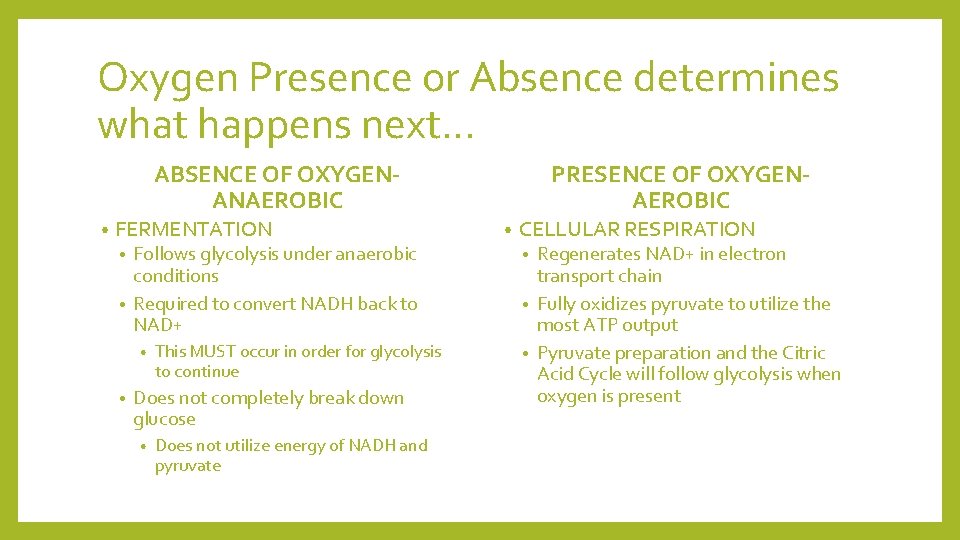
Oxygen Presence or Absence determines what happens next… PRESENCE OF OXYGENAEROBIC ABSENCE OF OXYGENANAEROBIC • FERMENTATION Follows glycolysis under anaerobic conditions • Required to convert NADH back to NAD+ • • • This MUST occur in order for glycolysis to continue Does not completely break down glucose • Does not utilize energy of NADH and pyruvate • CELLULAR RESPIRATION Regenerates NAD+ in electron transport chain • Fully oxidizes pyruvate to utilize the most ATP output • Pyruvate preparation and the Citric Acid Cycle will follow glycolysis when oxygen is present •
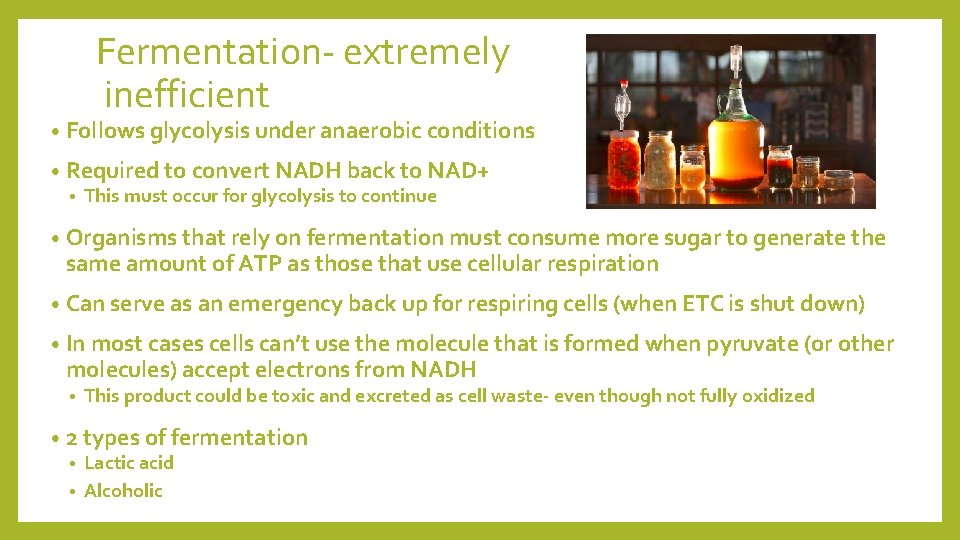
Fermentation- extremely inefficient • Follows glycolysis under anaerobic conditions • Required to convert NADH back to NAD+ • This must occur for glycolysis to continue • Organisms that rely on fermentation must consume more sugar to generate the same amount of ATP as those that use cellular respiration • Can serve as an emergency back up for respiring cells (when ETC is shut down) • In most cases cells can’t use the molecule that is formed when pyruvate (or other molecules) accept electrons from NADH • This product could be toxic and excreted as cell waste- even though not fully oxidized • 2 types of fermentation • Lactic acid • Alcoholic
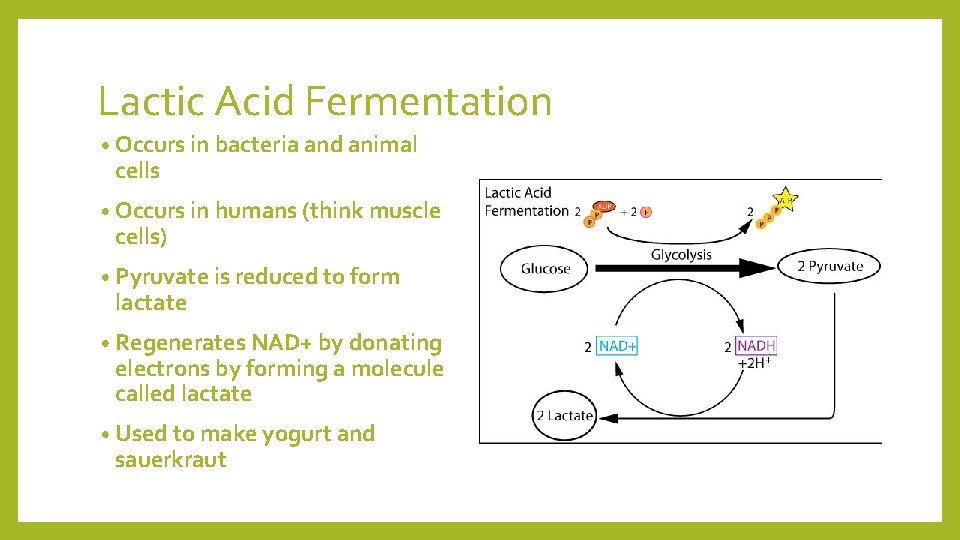
Lactic Acid Fermentation • Occurs in bacteria and animal cells • Occurs in humans (think muscle cells) • Pyruvate is reduced to form lactate • Regenerates NAD+ by donating electrons by forming a molecule called lactate • Used to make yogurt and sauerkraut
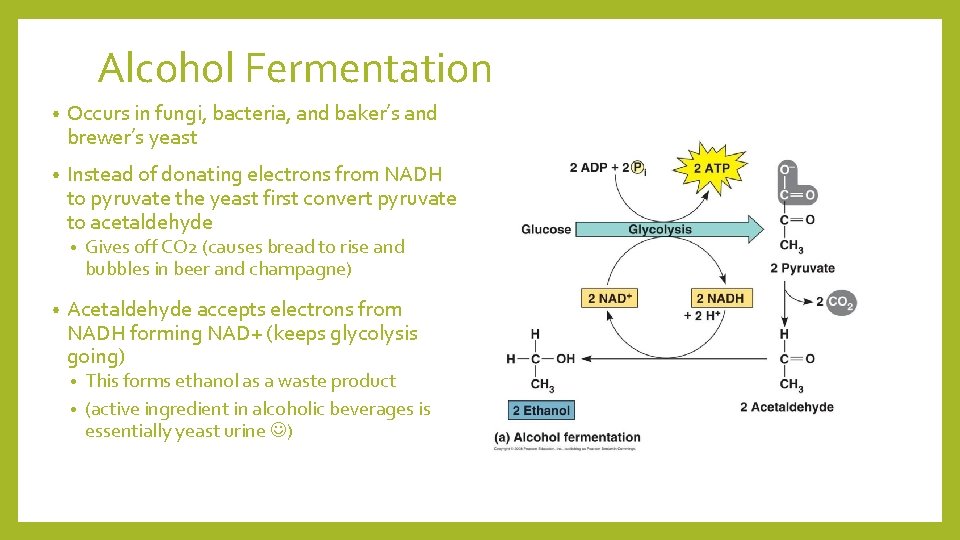
Alcohol Fermentation • Occurs in fungi, bacteria, and baker’s and brewer’s yeast • Instead of donating electrons from NADH to pyruvate the yeast first convert pyruvate to acetaldehyde • • Gives off CO 2 (causes bread to rise and bubbles in beer and champagne) Acetaldehyde accepts electrons from NADH forming NAD+ (keeps glycolysis going) This forms ethanol as a waste product • (active ingredient in alcoholic beverages is essentially yeast urine ) •
Fermentation Videos • Fermentation Video http: //study. com/academy/lesson/an aerobic-respiration-lactic-acidalcoholic-fermentation. html • 5 Minute school- Fermentation https: //www. youtube. com/watch? v= XREALVgx. BEI
• Cellular respiration overview video https: //www. youtube. com/watch? v=d. He. Oy. QBu. H 6 E