Dental Management of Rheumatoid and Osteoarthritic Patients Steven




- Slides: 68
Dental Management of Rheumatoid and Osteoarthritic Patients Steven Karpas, DMD Paula K. Friedman, DDS, MSD, MPH Geriatric Dentistry Fellow Boston University School of Medicine/ Dept. of Geriatrics Boston University Henry M. Goldman School of Dental Medicine Director of Geriatric Dentistry Fellowship Boston University Henry M. Goldman School of Dental Medicine
Disclosure Neither authors have no actual or potential conflict of interest in relation to this presentation discuss today.
Outlines 1. Public Health of Chronic conditions 2. Highlights of Arthritis: a. Rheumatoid Arthritis and b. Osteoarthritis 3. Dental Implications of Rheumatoid Arthritis and Osteoarthritis 4. Summary 5. Recommendations
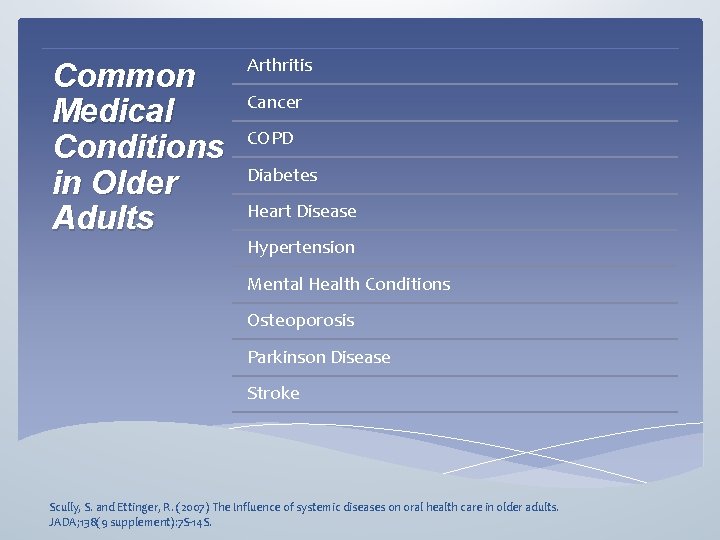
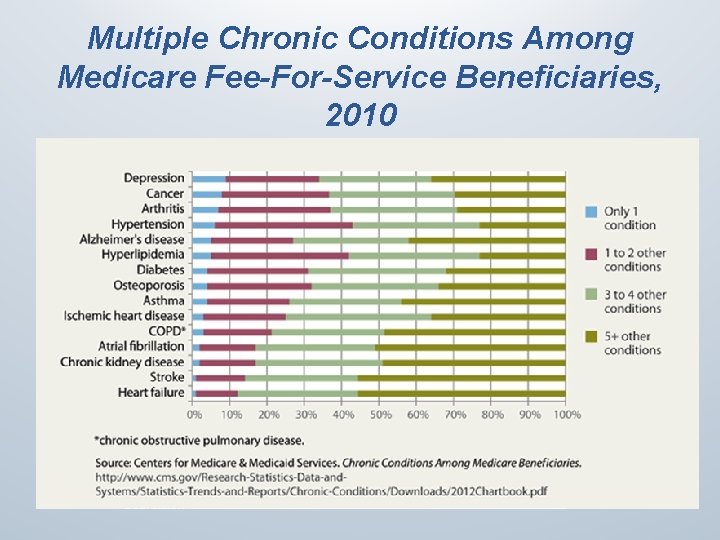
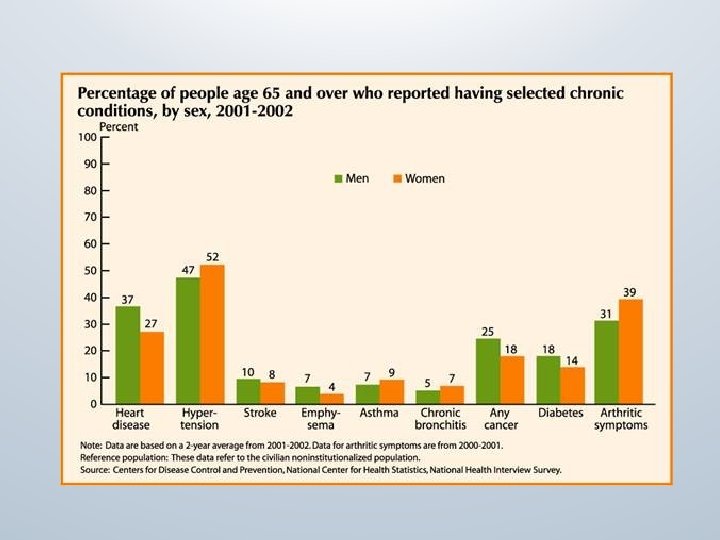
Common Medical Conditions in Older Adults Arthritis Cancer COPD Diabetes Heart Disease Hypertension Mental Health Conditions Osteoporosis Parkinson Disease Stroke Scully, S. and Ettinger, R. (2007) The Influence of systemic diseases on oral health care in older adults. JADA; 138(9 supplement): 7 S-14 S.
Multiple Chronic Conditions Among Medicare Fee-For-Service Beneficiaries, 2010
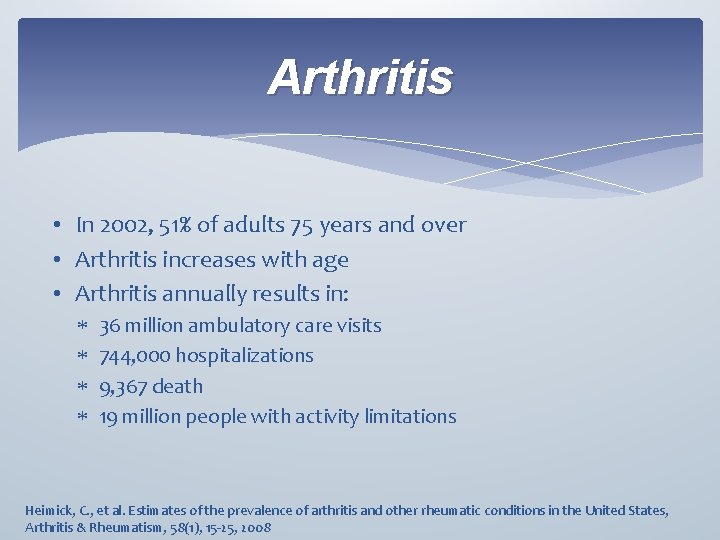
Arthritis • In 2002, 51% of adults 75 years and over • Arthritis increases with age • Arthritis annually results in: 36 million ambulatory care visits 744, 000 hospitalizations 9, 367 death 19 million people with activity limitations Heimick, C. , et al. Estimates of the prevalence of arthritis and other rheumatic conditions in the United States, Arthritis & Rheumatism, 58(1), 15 -25, 2008
• Term used to describe more than 100 different conditions that affect joints as well as other parts of the body Arthritis • Most prevalent chronic health problems and one of the nation’s most common causes of disability in the elderly population • Inflammatory or degenerative process involving joints • Today’s presentation will focus on Rheumatoid Arthritis and Osteoarthritis [CDC. Prevalence of disabilities and associated health conditions among adults – United States, 1999. MMWR 2001; 50: 120 – 5. ]
Arthritis Etiology • The most cause of inflammatory arthritis in older patients Rheumatoid Arthritis • The most common cause of non-inflammatory arthritis in older patients Osteoarthritis (degenerative joint disease--DJD)
Rheumatoid Arthritis Incidence + Prevalence • Prevalence estimates 1%- 2% U. S. population/increasing each decade • Disease onset between 35 -50 years • Females > males 3: 1 • Incidence varies with age • 20 in a 100, 00 for men 40 in a 100, 00 for women • Lifelong disease Predisposing Factors • • Sex hormones Socioeconomic status Education Psychosocial stress
What is RA? • • Systemic autoimmune disease Synovial inflammation /cartilage erosion Pain Swelling Morning stiffness Symmetrical presentation Typically affects the peripheral joints
Rheumatoid Arthritis Lab work • Rheumatoid factor 50% positive in early disease 80% of patients will develop a positive rheumatoid factor during the disease • • Increased sedimentation rate C-reactive protein Anti-CCP (cyclic citrullinated peptide) CBC-thrombocytopenia and anemia
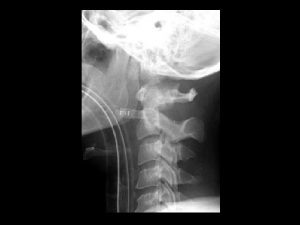
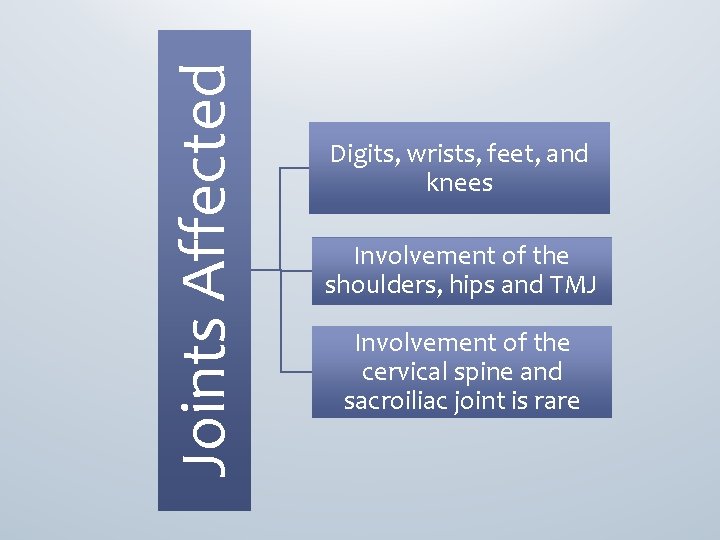
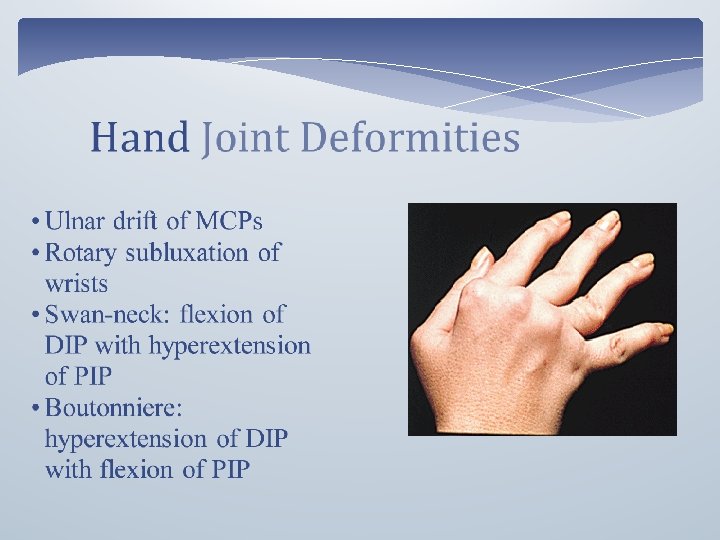
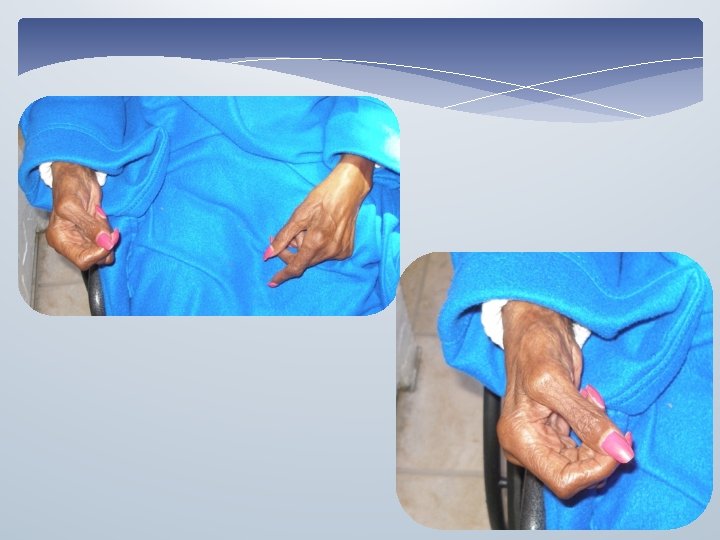
Joints Affected Digits, wrists, feet, and knees Involvement of the shoulders, hips and TMJ Involvement of the cervical spine and sacroiliac joint is rare
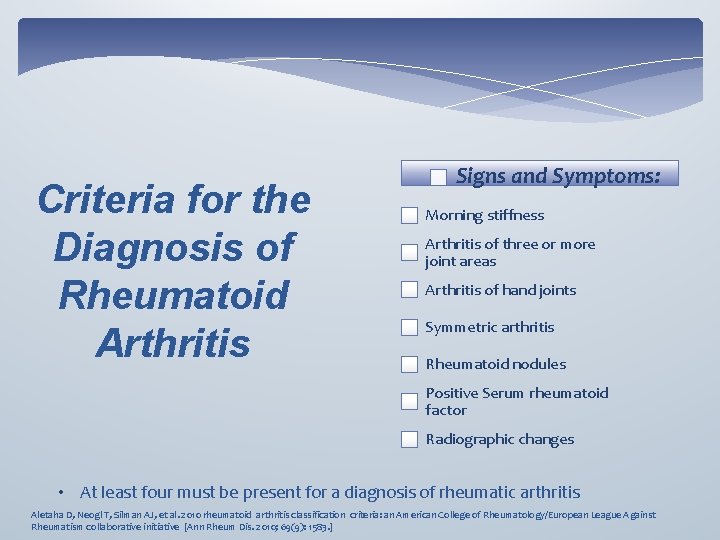
Criteria for the Diagnosis of Rheumatoid Arthritis Signs and Symptoms: Morning stiffness Arthritis of three or more joint areas Arthritis of hand joints Symmetric arthritis Rheumatoid nodules Positive Serum rheumatoid factor Radiographic changes • At least four must be present for a diagnosis of rheumatic arthritis Aletaha D, Neogl T, Silman AJ, et al. 2010 rheumatoid arthritis classification criteria: an American College of Rheumatology/European League Against Rheumatism collaborative initiative [Ann Rheum Dis. 2010; 69(9): 1583. ]
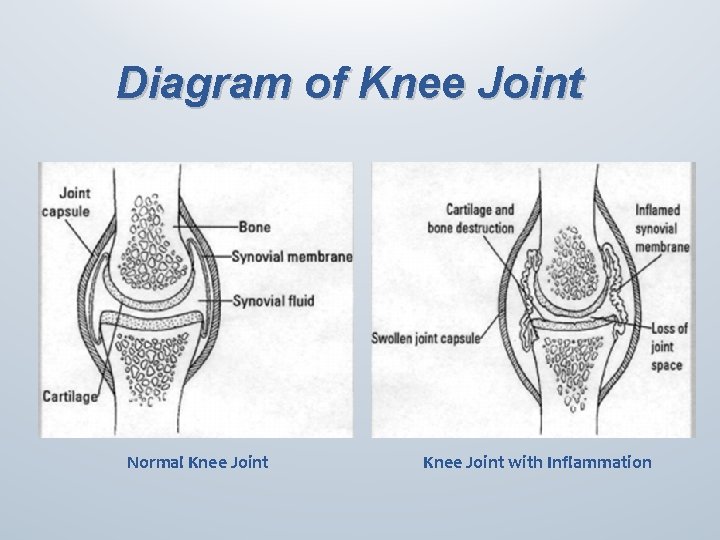
Diagram of Knee Joint Normal Knee Joint with Inflammation
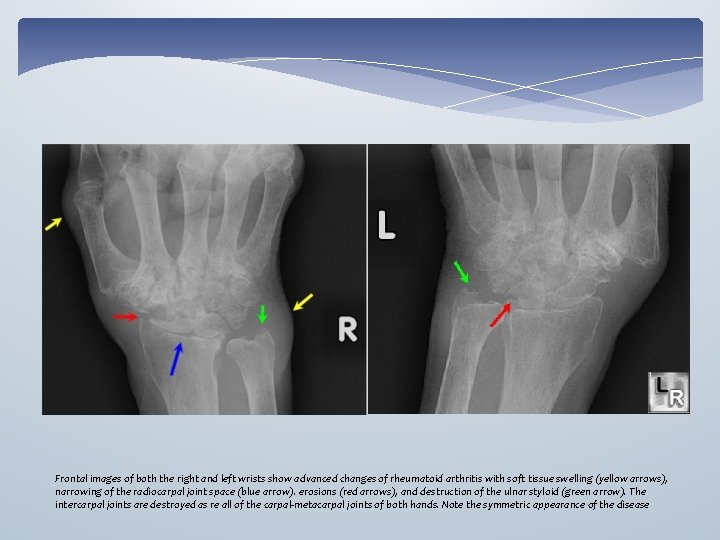
Frontal images of both the right and left wrists show advanced changes of rheumatoid arthritis with soft tissue swelling (yellow arrows), narrowing of the radiocarpal joint space (blue arrow). erosions (red arrows), and destruction of the ulnar styloid (green arrow). The intercarpal joints are destroyed as re all of the carpal-metacarpal joints of both hands. Note the symmetric appearance of the disease
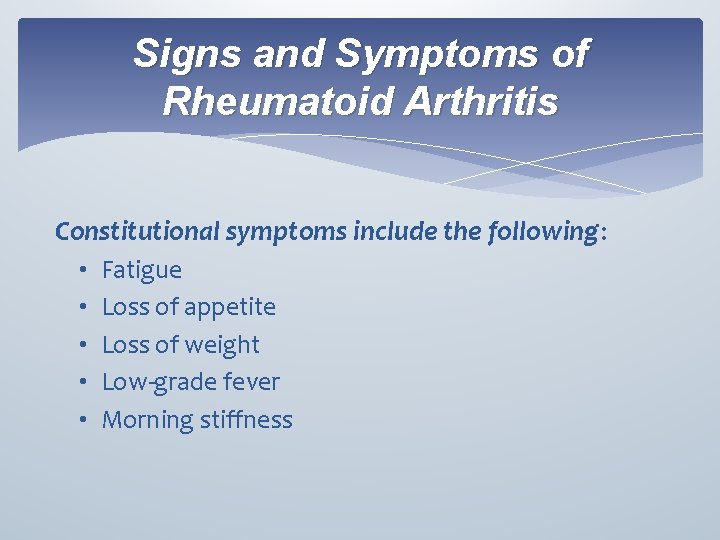
Signs and Symptoms of Rheumatoid Arthritis Constitutional symptoms include the following: • • • Fatigue Loss of appetite Loss of weight Low-grade fever Morning stiffness
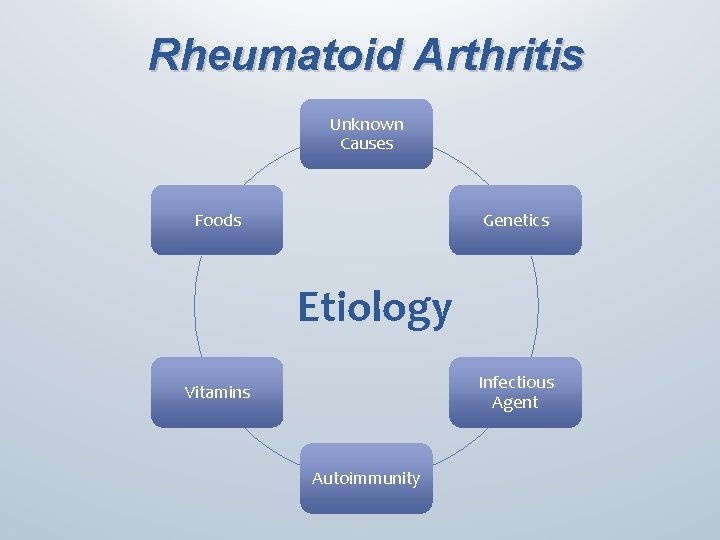
Rheumatoid Arthritis Unknown Causes Foods Genetics Etiology Infectious Agent Vitamins Autoimmunity
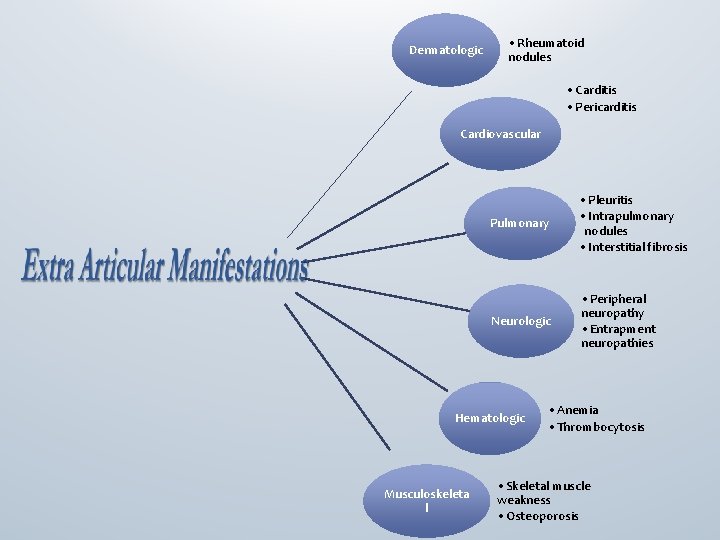
Dermatologic • Rheumatoid nodules • Carditis • Pericarditis Cardiovascular Pulmonary • Pleuritis • Intrapulmonary nodules • Interstitial fibrosis Neurologic • Peripheral neuropathy • Entrapment neuropathies Hematologic Musculoskeleta l • Anemia • Thrombocytosis • Skeletal muscle weakness • Osteoporosis
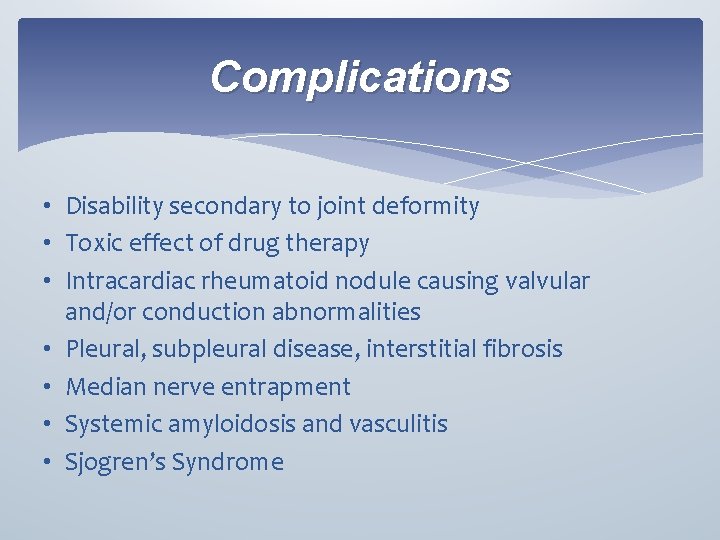
Complications • Disability secondary to joint deformity • Toxic effect of drug therapy • Intracardiac rheumatoid nodule causing valvular and/or conduction abnormalities • Pleural, subpleural disease, interstitial fibrosis • Median nerve entrapment • Systemic amyloidosis and vasculitis • Sjogren’s Syndrome
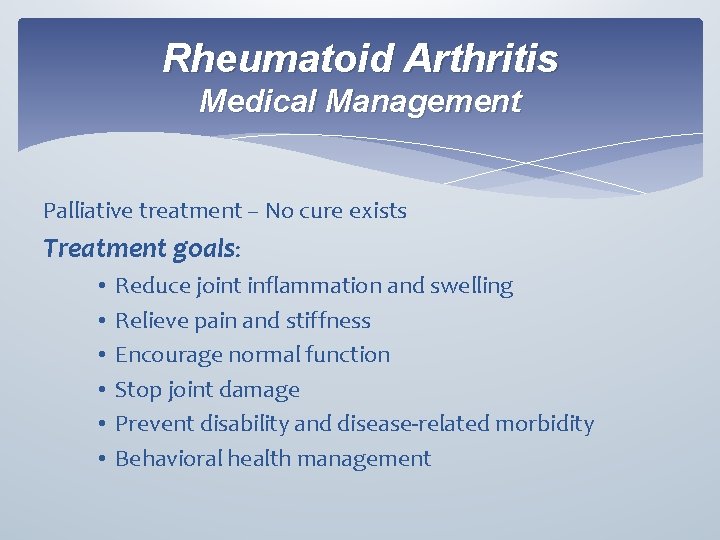
Rheumatoid Arthritis Medical Management Palliative treatment – No cure exists Treatment goals: • • • Reduce joint inflammation and swelling Relieve pain and stiffness Encourage normal function Stop joint damage Prevent disability and disease-related morbidity Behavioral health management
Rheumatoid Arthritis Medical Management A basic early treatment program • Patient education • Rest • Exercise • Physical therapy • Drugs-aspirin or NSAIDS
Non-Pharmacologic Treatment • Early intervention before joint damage • Exercise and mobility emphasis üSwimming ü Avoid joint stress • Patient education • Appropriate diet and avoid excessive body weight
What is role of medication for RA? • Maintain function • Decrease inflammation • Facilitate healing • Pain reduction
What Drugs are used? • Anti-inflammatory Drugs • DMARDS
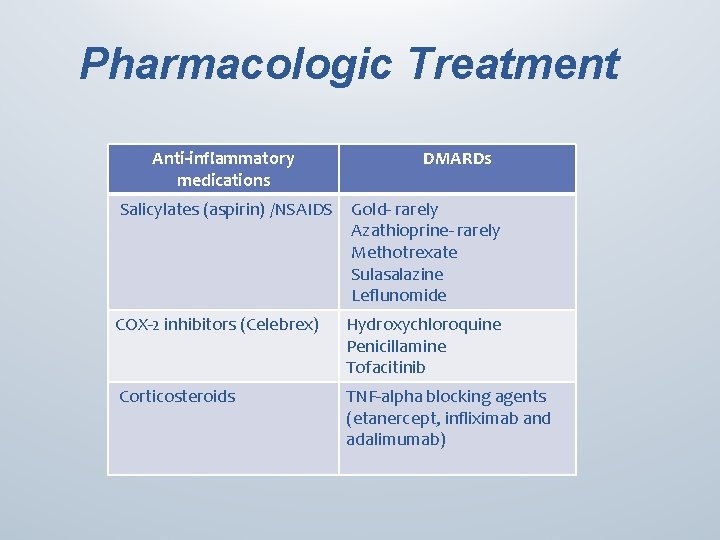
Pharmacologic Treatment Anti-inflammatory medications DMARDs Salicylates (aspirin) /NSAIDS Gold- rarely Azathioprine- rarely Methotrexate Sulasalazine Leflunomide COX-2 inhibitors (Celebrex) Hydroxychloroquine Penicillamine Tofacitinib Corticosteroids TNF-alpha blocking agents (etanercept, infliximab and adalimumab)
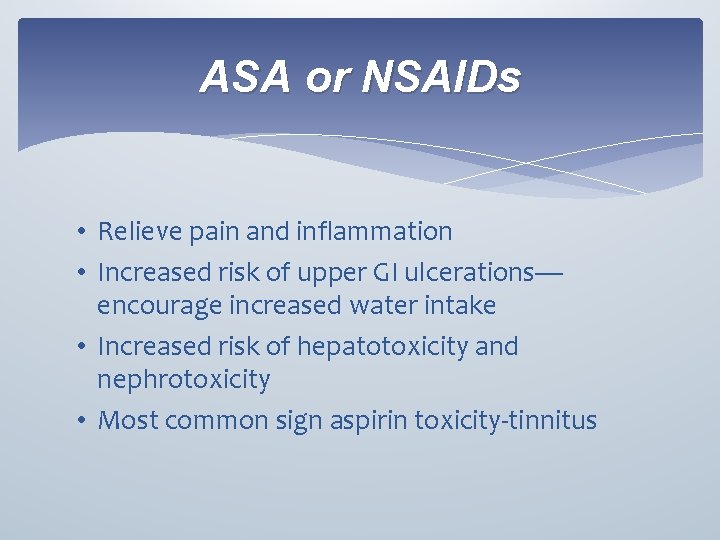
ASA or NSAIDs • Relieve pain and inflammation • Increased risk of upper GI ulcerations— encourage increased water intake • Increased risk of hepatotoxicity and nephrotoxicity • Most common sign aspirin toxicity-tinnitus
Cox 2 Inhibitors (Celebrex) • Have decreased upper GI side effects and nephrotoxicity • Has an increased risk of potentially fatal cardiovascular events
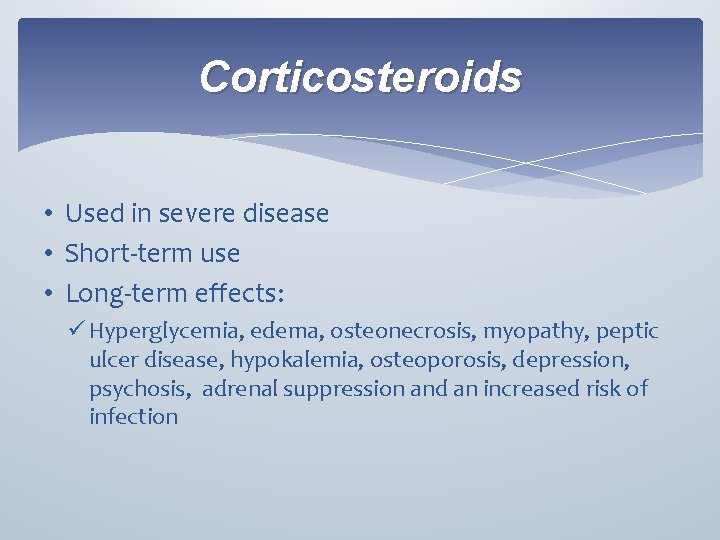
Corticosteroids • Used in severe disease • Short-term use • Long-term effects: ü Hyperglycemia, edema, osteonecrosis, myopathy, peptic ulcer disease, hypokalemia, osteoporosis, depression, psychosis, adrenal suppression and an increased risk of infection
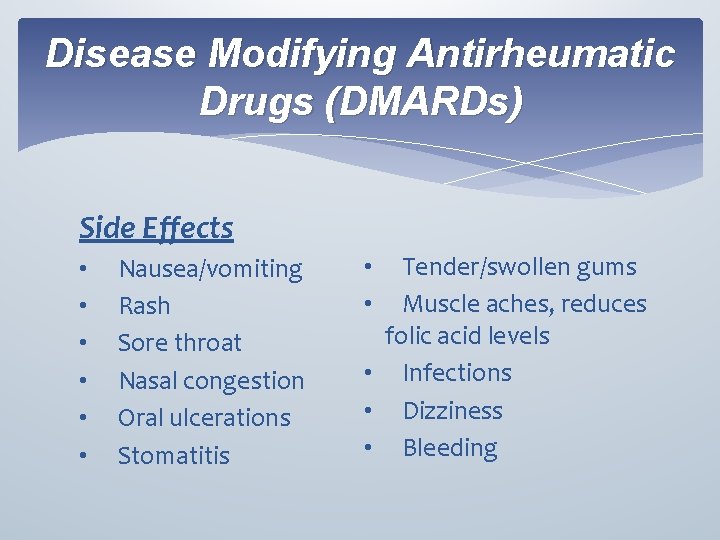
Disease Modifying Antirheumatic Drugs (DMARDs) Side Effects • • • Nausea/vomiting Rash Sore throat Nasal congestion Oral ulcerations Stomatitis • Tender/swollen gums • Muscle aches, reduces folic acid levels • Infections • Dizziness • Bleeding
Rheumatoid Arthritis Medical Management • Rest, controlled exercise, splint • Anti-inflammatory medications, COX-2 inhibitors (Celebrex), salicylates (aspirin), corticosteroids and NSAIDS • Disease-Modifying Anti-Rheumatic Drugs (DMARDS) • Surgery –maximize function, minimize deformity *Removal inflamed joint lining *Joint replacement *Joint fusions
Osteoarthritis
Osteoarthritis Most common type of arthritis Disease onset is gradual Degenerative joint disease--DJD Progressive pathological change of the hyaline cartilage + bony joints • Vertebrae, hips, knees, and distal interphalangeal joints of fingers • •
Osteoarthritis • • Chronic joint failure Degradation of cartilage/bone Minimal inflammation Immobility Pain on rotation Negligible morning stiffness Bony enlargements, specially affecting hands
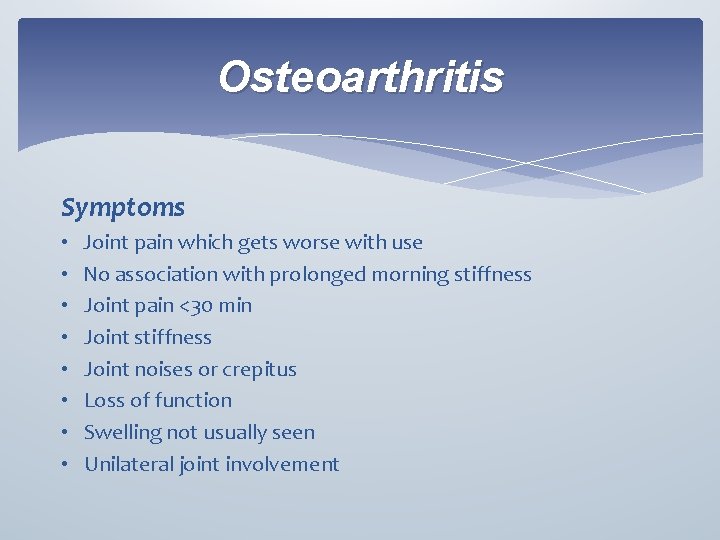
Osteoarthritis Symptoms • • Joint pain which gets worse with use No association with prolonged morning stiffness Joint pain <30 min Joint stiffness Joint noises or crepitus Loss of function Swelling not usually seen Unilateral joint involvement
Chronic Joint Destruction • • Prosthetic Joints Hip Knee Shoulder Elbow Wrist Ankle Guidelines for antibiotic prophylaxis
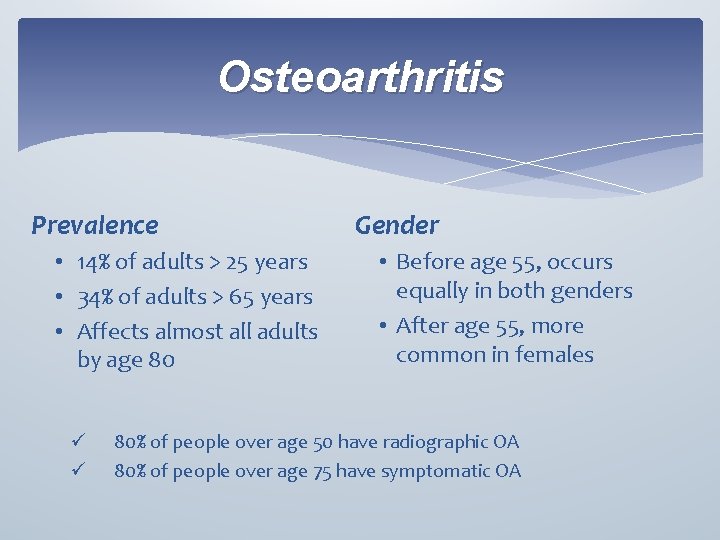
Osteoarthritis Prevalence • 14% of adults > 25 years • 34% of adults > 65 years • Affects almost all adults by age 80 Gender • Before age 55, occurs equally in both genders • After age 55, more common in females ü 80% of people over age 50 have radiographic OA ü 80% of people over age 75 have symptomatic OA
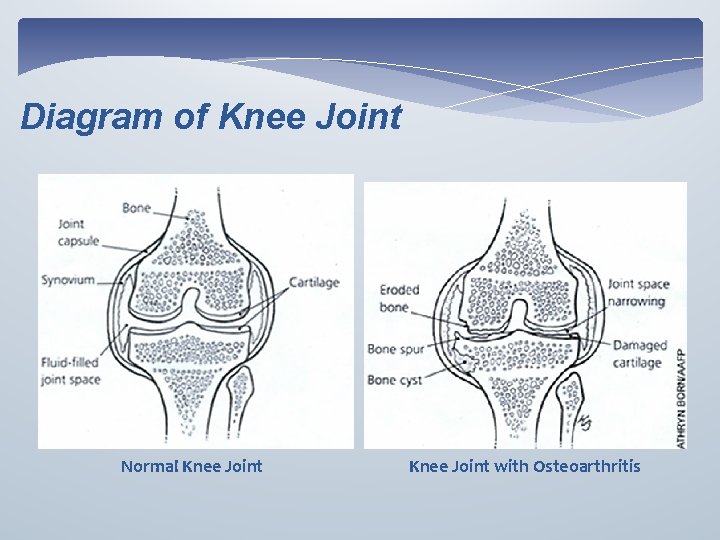
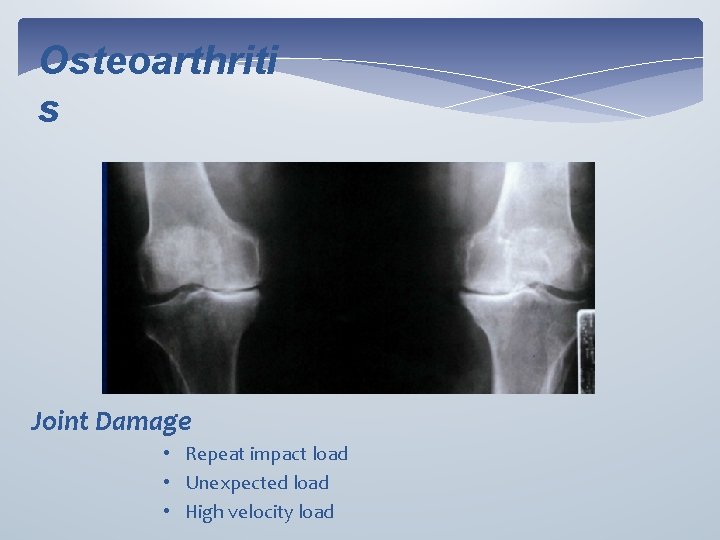
Diagram of Knee Joint Normal Knee Joint with Osteoarthritis
Osteoarthriti s Joint Damage • Repeat impact load • Unexpected load • High velocity load
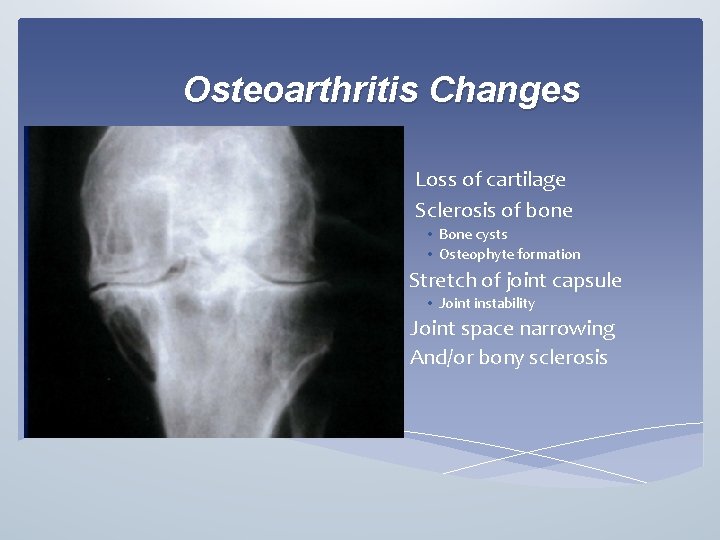
Osteoarthritis Changes • Loss of cartilage • Sclerosis of bone • Bone cysts • Osteophyte formation • Stretch of joint capsule • Joint instability • Joint space narrowing • And/or bony sclerosis
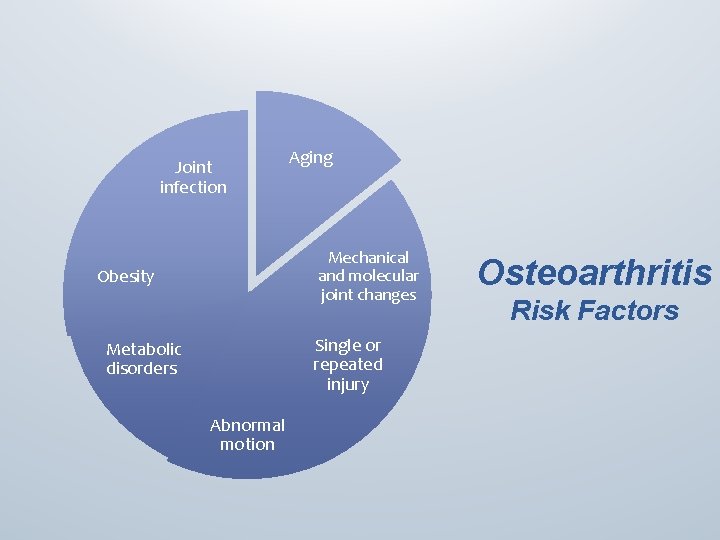
Joint infection Aging Mechanical and molecular joint changes Obesity Single or repeated injury Metabolic disorders Abnormal motion Osteoarthritis Risk Factors
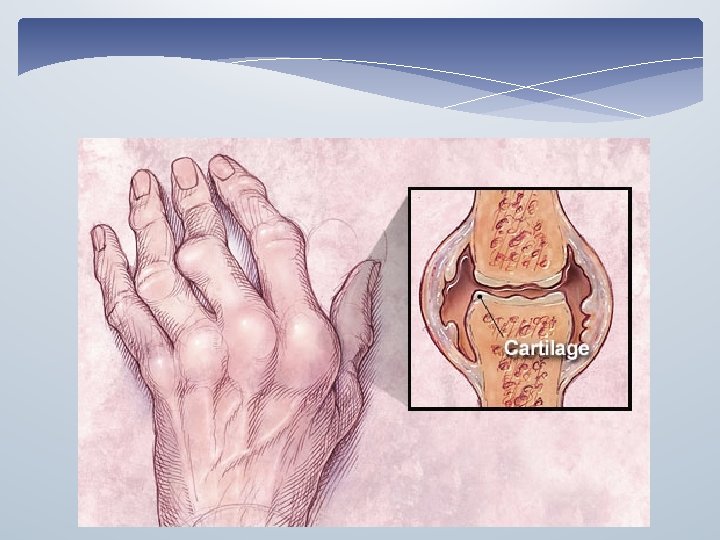
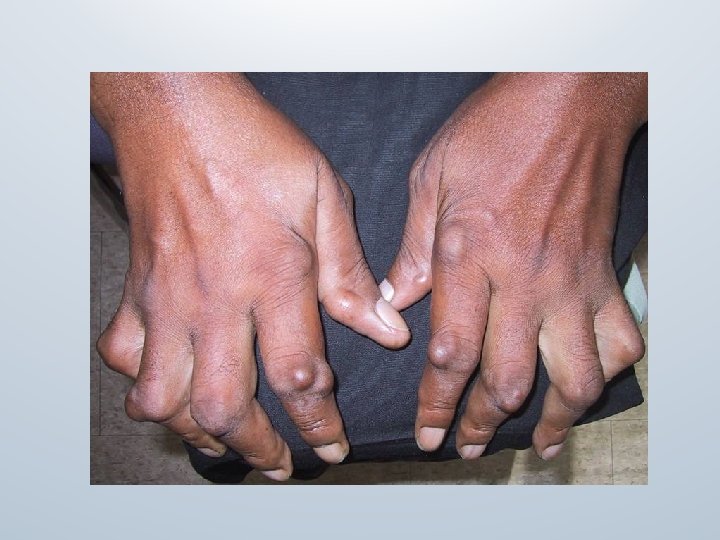
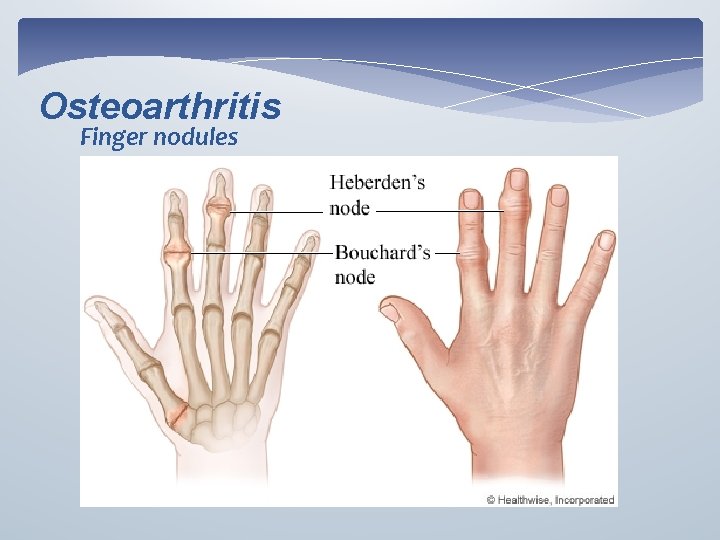
Osteoarthritis Finger nodules
Osteoarthritis Signs • Bony enlargement • Heberden’s nodes • Bouchard’s nodes • With or without non-inflammatory joint effusions • Crepitus with range of motion • Restricted range of motion
Osteoarthritis Medical Management • There is no cure for OA • Management focuses on relieving symptoms and improving function
Osteoarthritis Treatment Goals • • • Patient education Physical therapy Weight control Exercise – can sometimes stop or reverse OA of hip and knee Orthotics Bracing Modify ADLs -bathing, dressing, transferring, toileting, eating Medications (Acetaminophen, Aspirin, NSAIDS) Surgery
Treatment of OA Pharmacologic • Acetaminophen • NSAIDS • Topical Capsaicin • Intra-articular glucocorticoids • Narcotic analgesics Non-Pharmacologic • Bracing • Orthotics • Strength training • Weight loss • Joint replacement
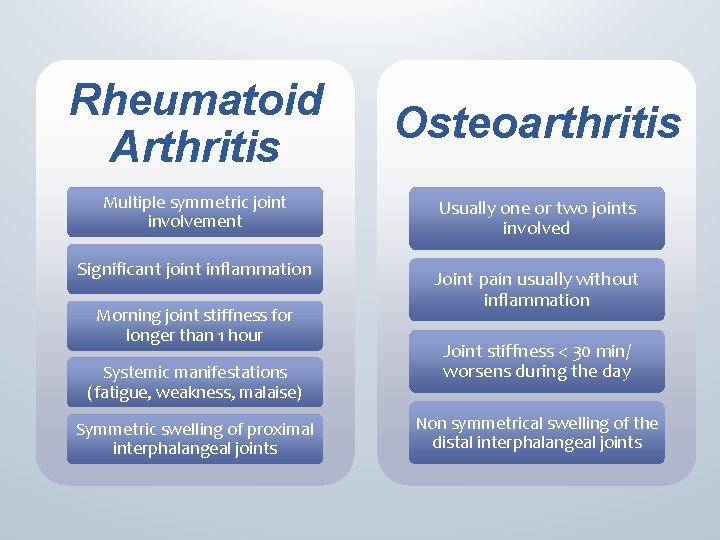
Rheumatoid Arthritis Osteoarthritis Multiple symmetric joint involvement Usually one or two joints involved Significant joint inflammation Morning joint stiffness for longer than 1 hour Systemic manifestations (fatigue, weakness, malaise) Symmetric swelling of proximal interphalangeal joints Joint pain usually without inflammation Joint stiffness < 30 min/ worsens during the day Non symmetrical swelling of the distal interphalangeal joints
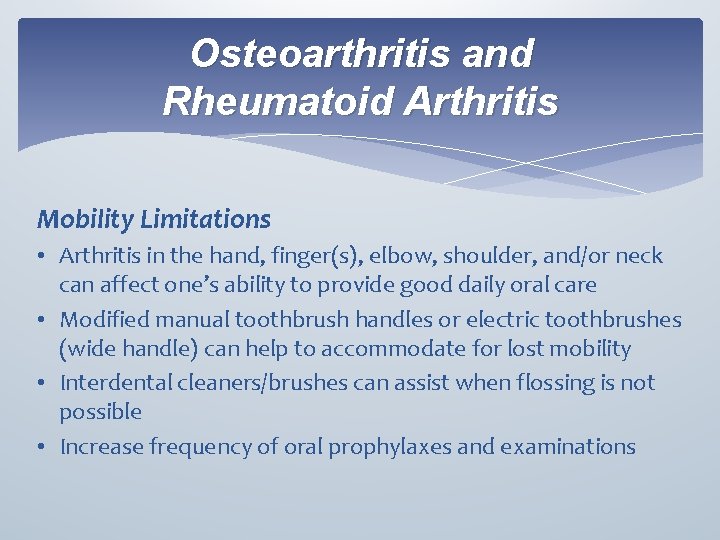
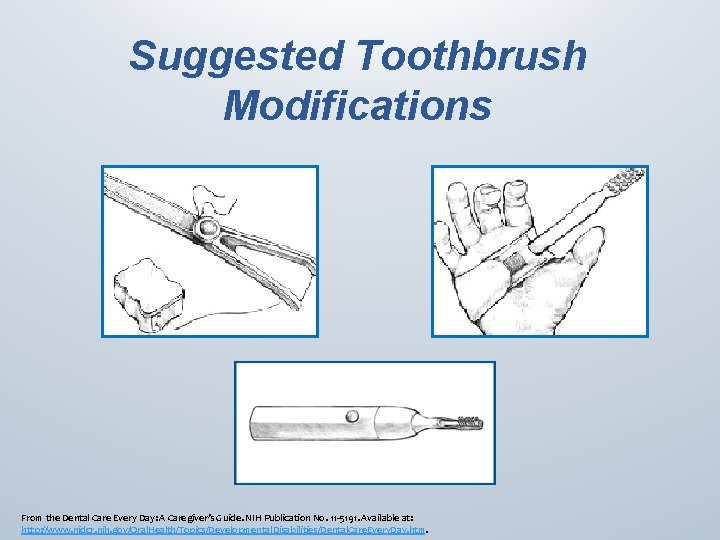
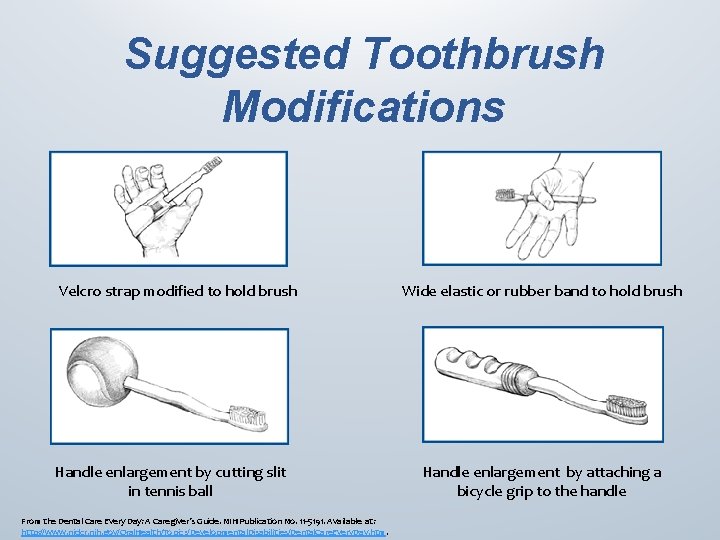
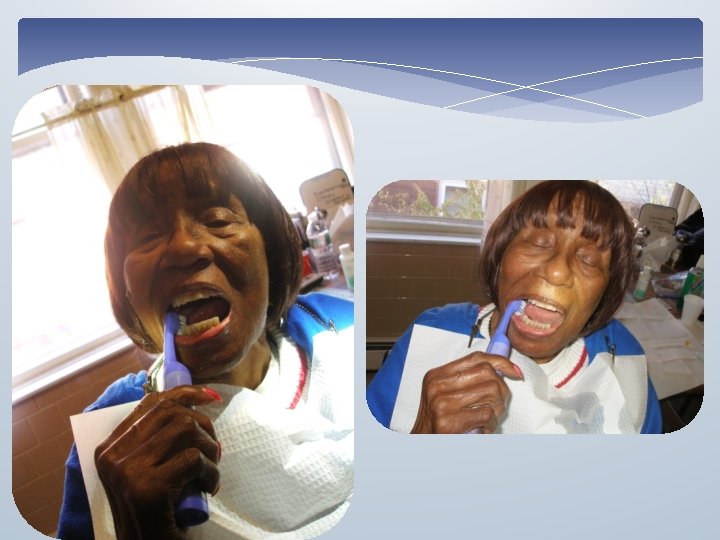
Osteoarthritis and Rheumatoid Arthritis Mobility Limitations • Arthritis in the hand, finger(s), elbow, shoulder, and/or neck can affect one’s ability to provide good daily oral care • Modified manual toothbrush handles or electric toothbrushes (wide handle) can help to accommodate for lost mobility • Interdental cleaners/brushes can assist when flossing is not possible • Increase frequency of oral prophylaxes and examinations
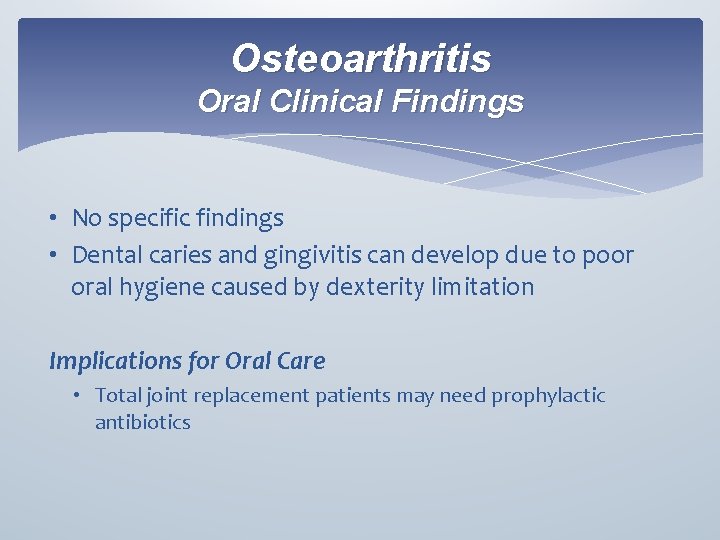
Osteoarthritis Oral Clinical Findings • No specific findings • Dental caries and gingivitis can develop due to poor oral hygiene caused by dexterity limitation Implications for Oral Care • Total joint replacement patients may need prophylactic antibiotics
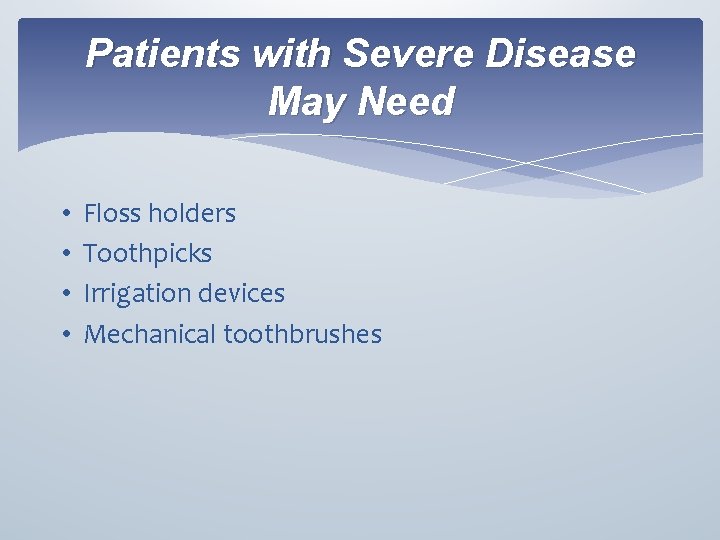
Patients with Severe Disease May Need • • Floss holders Toothpicks Irrigation devices Mechanical toothbrushes
Suggested Toothbrush Modifications From the Dental Care Every Day: A Caregiver’s Guide. NIH Publication No. 11 -5191. Available at: http: //www. nidcr. nih. gov/Oral. Health/Topics/Developmental. Disabilities/Dental. Care. Every. Day. htm.
Suggested Toothbrush Modifications Velcro strap modified to hold brush Handle enlargement by cutting slit in tennis ball From the Dental Care Every Day: A Caregiver’s Guide. NIH Publication No. 11 -5191. Available at: http: //www. nidcr. nih. gov/Oral. Health/Topics/Developmental. Disabilities/Dental. Care. Every. Day. htm. Wide elastic or rubber band to hold brush Handle enlargement by attaching a bicycle grip to the handle
Rheumatoid Arthritis Oral Clinical Findings • Temporo-mandibular joint disease (TMD) may be present • Limitation of mouth opening secondary to TMD • Dental caries and gingivitis can develop • Poor oral hygiene caused by dexterity limitation • Xerostomia (medications)
Dental Significance • Patient at risk for poor oral hygiene • TMJ: Pain, occlusal changes, limited oral intake, decreased nutritional intake, mastication and oral hygiene • Decreased mobility may affect access to care • Anterior open bite, limited intraoral opening, and possible joint ankylosis • Neutropenia, thrombocytopenia due to medications
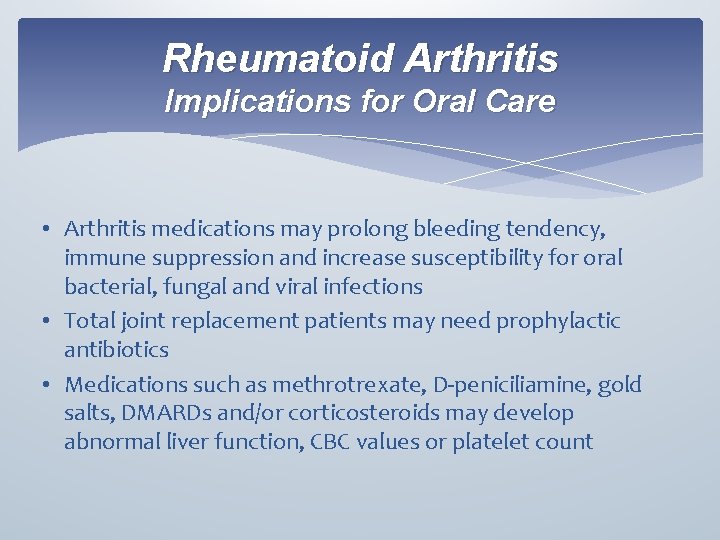
Rheumatoid Arthritis Implications for Oral Care • Arthritis medications may prolong bleeding tendency, immune suppression and increase susceptibility for oral bacterial, fungal and viral infections • Total joint replacement patients may need prophylactic antibiotics • Medications such as methrotrexate, D-peniciliamine, gold salts, DMARDs and/or corticosteroids may develop abnormal liver function, CBC values or platelet count
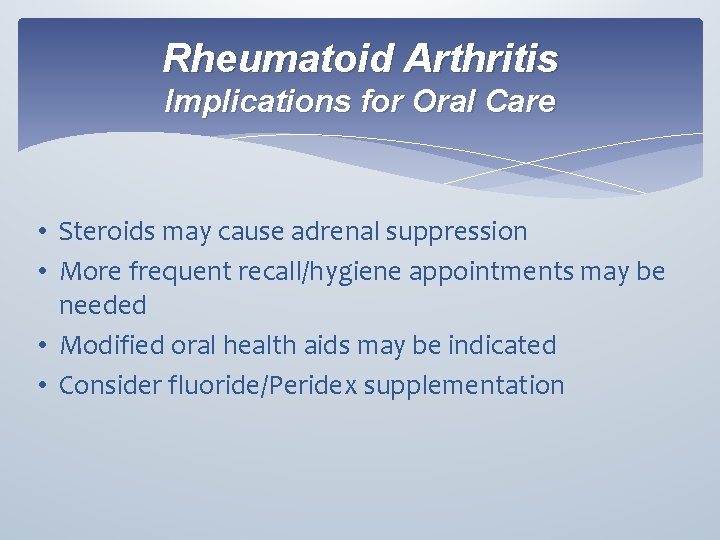
Rheumatoid Arthritis Implications for Oral Care • Steroids may cause adrenal suppression • More frequent recall/hygiene appointments may be needed • Modified oral health aids may be indicated • Consider fluoride/Peridex supplementation
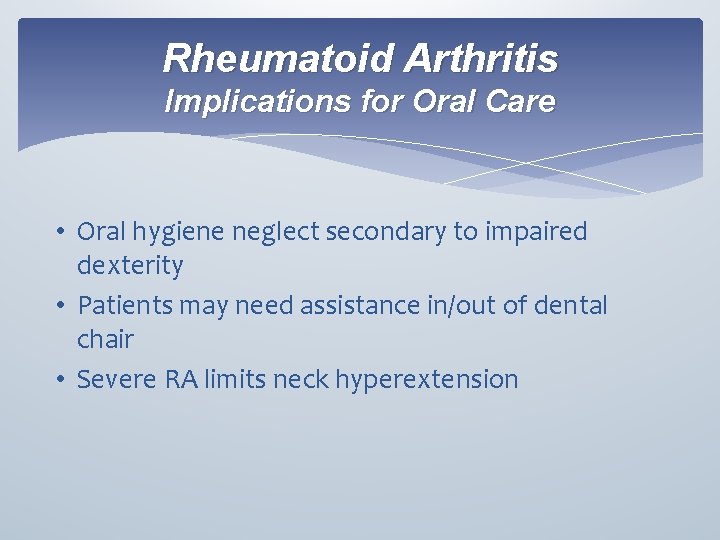
Rheumatoid Arthritis Implications for Oral Care • Oral hygiene neglect secondary to impaired dexterity • Patients may need assistance in/out of dental chair • Severe RA limits neck hyperextension
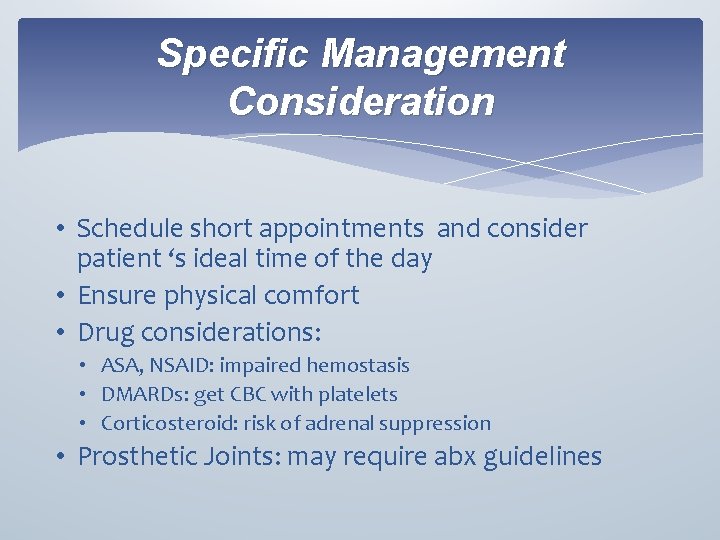
Specific Management Consideration • Schedule short appointments and consider patient ‘s ideal time of the day • Ensure physical comfort • Drug considerations: • ASA, NSAID: impaired hemostasis • DMARDs: get CBC with platelets • Corticosteroid: risk of adrenal suppression • Prosthetic Joints: may require abx guidelines
Where Do We Go From Here? Dentist Physical therapist Physician Dental Hygienist
Arthritis Summary Serious systemic disease Painful Patient Fatigue Leads to significant disability Difficulty with oral care Drugs can affect risk of infection + bleeding Tailor dental treatment plan to the individual, their degree of disability, their comorbid conditions, age, and their drugs • Contact physician for questions • •
Arthritis Summary • • Determine the type of rheumatic disease affecting your patient. Determine spine involvement and mobility status. Provide TMD care if TMJ involvement. Have patient move neck themselves when positional changes needed Do not rotate neck yourself (negatively affects patient, upper extremity nerve pains) Inquire on cervical spine instability Transfer assistance to dental chair Consider short appointments
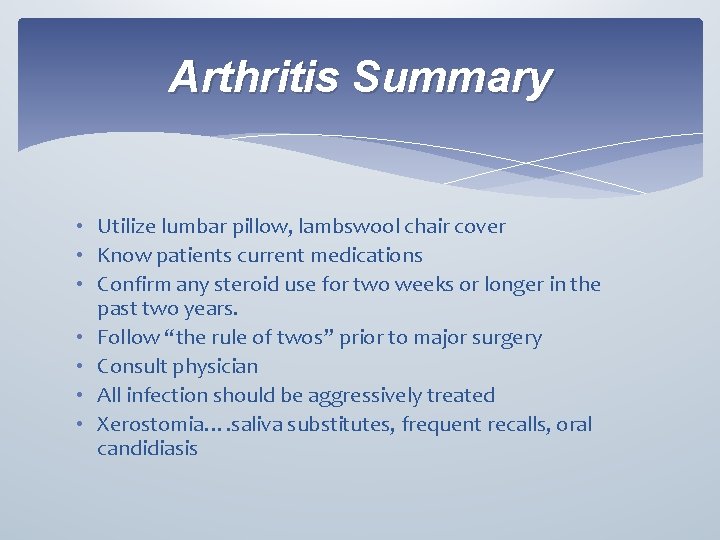
Arthritis Summary • Utilize lumbar pillow, lambswool chair cover • Know patients current medications • Confirm any steroid use for two weeks or longer in the past two years. • Follow “the rule of twos” prior to major surgery • Consult physician • All infection should be aggressively treated • Xerostomia…. saliva substitutes, frequent recalls, oral candidiasis
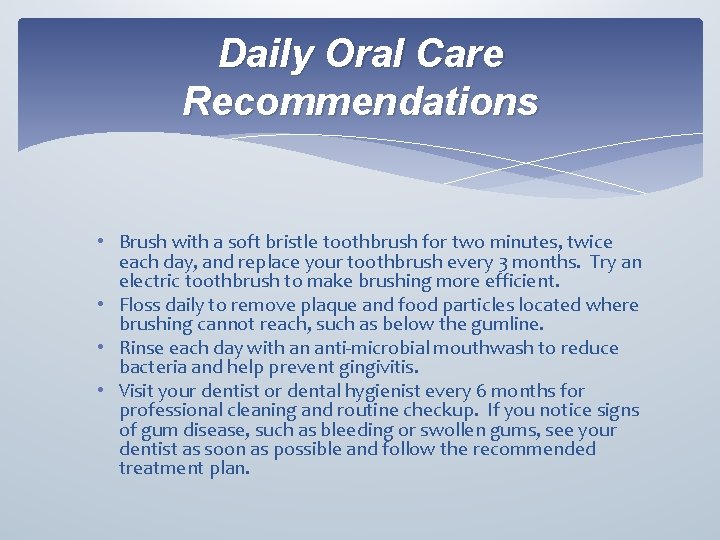
Daily Oral Care Recommendations • Brush with a soft bristle toothbrush for two minutes, twice each day, and replace your toothbrush every 3 months. Try an electric toothbrush to make brushing more efficient. • Floss daily to remove plaque and food particles located where brushing cannot reach, such as below the gumline. • Rinse each day with an anti-microbial mouthwash to reduce bacteria and help prevent gingivitis. • Visit your dentist or dental hygienist every 6 months for professional cleaning and routine checkup. If you notice signs of gum disease, such as bleeding or swollen gums, see your dentist as soon as possible and follow the recommended treatment plan.