
RHEUMATOID ARTHRITIS BY VIVEK BARIK DEFINITION Rheumatoid Arthritis
RHEUMATOID ARTHRITIS BY VIVEK BARIK
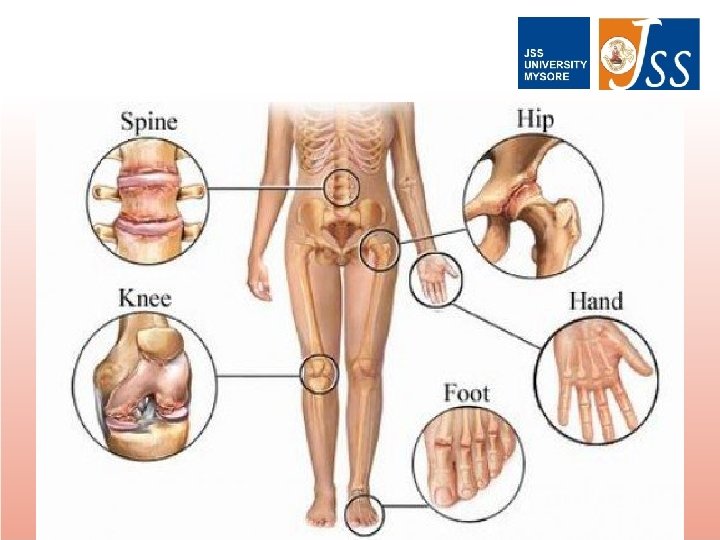
DEFINITION ü Rheumatoid Arthritis is defined as a widespread , chronic and heterogenous group of inflammatory disease which affects the joints and other organ system severely leading the patient to disability or bedridden in most of the cases. [1] ü In Rheumatoid Arthritis , the synovial membrane becomes thickened and inflamed leading to the erosion of the cartilages. The synovial membrane may invade the joint space and the whole joint becomes swollen and painful on movement. [2]
EPIDEMIOLOGY ü The annual incidence of rheumatoid arthritis has been reported to be 40 per 100, 000. ü Common disease having a peak incidence in the 3 rd & 4 th decades of life , with 3 -5 higher preponderance in females than in males. ü The prevalance of RA in India is quiet similar to that reported from the developing countries and is higher about 7 million patients in India. ü Approximately about 2 million Americans are affected by rheumatoid arthritis.
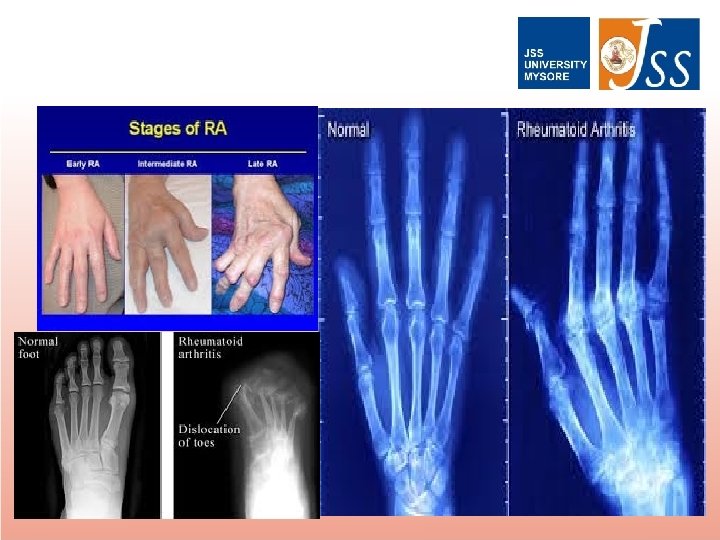
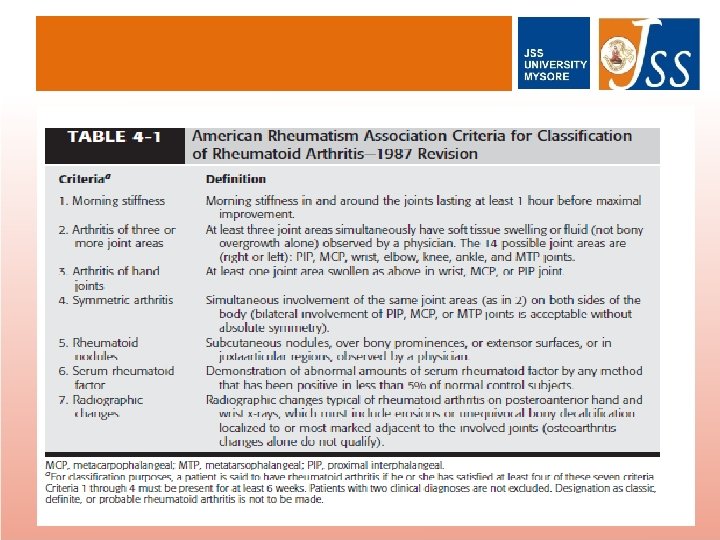
Sign And Symptoms • • Fatigue. Joint pain. Joint tenderness. Joint swelling. Joint redness. Joint warmth. Joint stiffness. Loss of joint range of motion.
PATHOPHYSIOLOGY ü Rheumatoid arthritis develops due to two major reasons -: 1. Immunological dearrangements • These includes : the detection of circulating autoantibody called the Rheumatoid Factor which is the main cause of RA in most of the patients. • The other factors the presence of antigen-antibody complexes (Ig. G-RF) , autoantibodies (ANF) , gamma globulin (Ig. G & Ig. M) , numerous inflammatory cells like CD 4+T-Lymphocytes and some macrophages in the circulation as well as synovial fluid.
2. Triggering Factors • The triggering factors which initiate the destruction of the articular cartilage are the existence of Epstein. Barr virus , cytomegalovirus , mycoplasma virus etc which either locally be in the synovial fluid or due to the systemic infection sometime prior to the attack of RA.

ETIOLOGY ü Autoimmune Condition ü Synovium ü Genetic Suspectability ü Life-style Modification ü Hormonal Imbalance ü If not treated , RA can lead to a condition called Ankylosing Spondylitis or Rheumatoid Spondylitis which affects the spine , particularly sacroiliac joints in young males than in females.
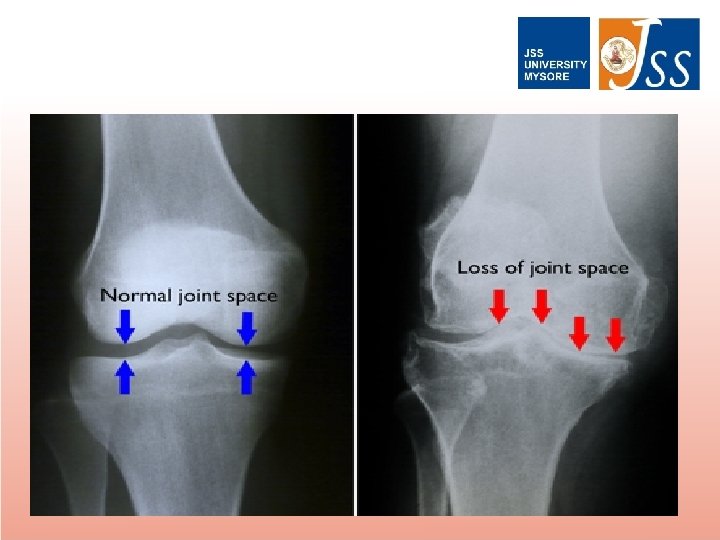
HYPOTHETICAL CASE
SUBJECTIVE v PATIENT NAME : XYZ v SEX : F v AGE : 67 yrs COMPLAINTS : • Generalized athralgia (Joint Pain) • Swollen left knee • Morning stiffness and stomach upset about an hour after taking the medication. • Fatigue experienced every afternoon hours
v SOCIAL HISTORY : No smoking and alcohol consumption. v FAMILY HISTORY : No H/o of Rheumatoid Arthritis. v PAST MEDICAL HISTORY : RA * 6 yrs v ALLERGIES : None
OBJECTIVE v PATIENT : Pleasant , middle-aged woman v TEMP : 37. 1⁰C v BP : 138/80 mm. Hg v HR : 82 bpm v RR : 14/min v WEIGHT : 65. 3 kg v HEIGHT : 5’ 6” v CHEST : CTA (Computed Tomography Angiography) v CVS : RRR (Regular rate & Rhythm) v ABD : Soft , Bowel Sounds (+)
• HANDS : swelling on the 3 rd , 4 th & 5 th PIP joints & pain in the 3 rd & 4 th MCP joints on the left side with ulnar deviation and decreased grip strength • WRISTS : Decreased ROM (Range Of Motion) • ELBOWS : Good ROM , permanent contracture on the right & fixed nodule @ the pressure point. • SHOULDERS : Decreased ROM bilaterally • HIPS : Decreased ROM on the right & atrophy of the quadriceps. • KNEES : Decreased ROM & edema on the left , pain bilaterally.
• FEET : No edema. • HAND X-RAY : Erosion of MCP & PIP joints bilaterally & measurable space narrowing from the X-ray of 6 months ago. • SYNOVIAL FLUID : Turbid in appearance and WBC – 23. 0 * 103/cubic mm. [ MCP – Metacarpophaleangal joints , PIP – Proximal interphaleangal joints ]
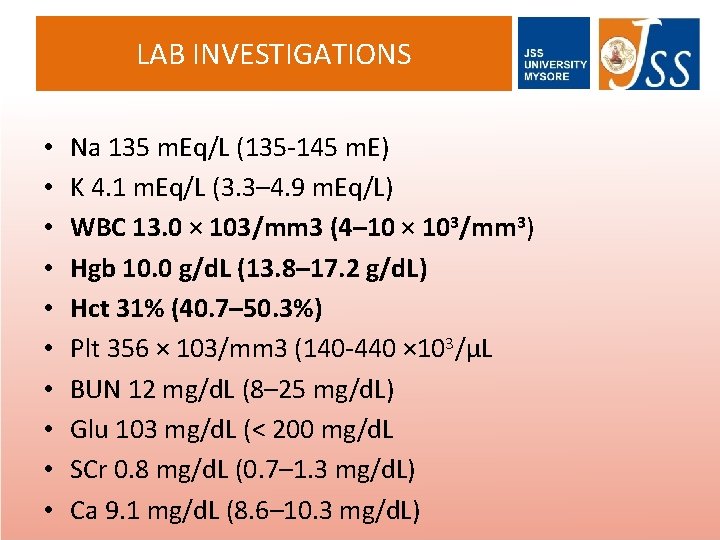
LAB INVESTIGATIONS • • • Na 135 m. Eq/L (135 -145 m. E) K 4. 1 m. Eq/L (3. 3– 4. 9 m. Eq/L) WBC 13. 0 × 103/mm 3 (4– 10 × 103/mm 3) Hgb 10. 0 g/d. L (13. 8– 17. 2 g/d. L) Hct 31% (40. 7– 50. 3%) Plt 356 × 103/mm 3 (140 -440 × 103/μL BUN 12 mg/d. L (8– 25 mg/d. L) Glu 103 mg/d. L (< 200 mg/d. L SCr 0. 8 mg/d. L (0. 7– 1. 3 mg/d. L) Ca 9. 1 mg/d. L (8. 6– 10. 3 mg/d. L)
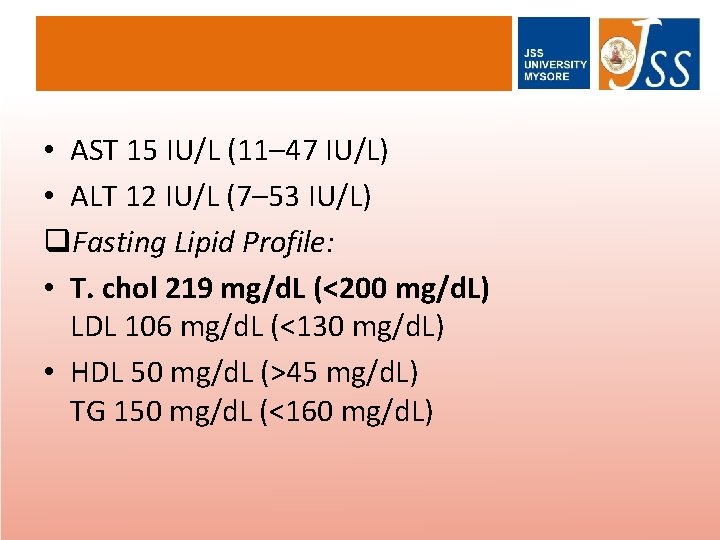
• AST 15 IU/L (11– 47 IU/L) • ALT 12 IU/L (7– 53 IU/L) q. Fasting Lipid Profile: • T. chol 219 mg/d. L (<200 mg/d. L) LDL 106 mg/d. L (<130 mg/d. L) • HDL 50 mg/d. L (>45 mg/d. L) TG 150 mg/d. L (<160 mg/d. L)
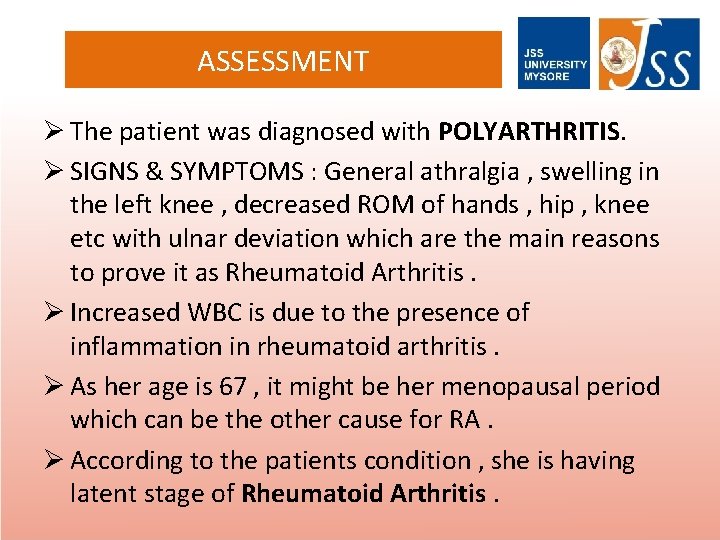
ASSESSMENT Ø The patient was diagnosed with POLYARTHRITIS. Ø SIGNS & SYMPTOMS : General athralgia , swelling in the left knee , decreased ROM of hands , hip , knee etc with ulnar deviation which are the main reasons to prove it as Rheumatoid Arthritis. Ø Increased WBC is due to the presence of inflammation in rheumatoid arthritis. Ø As her age is 67 , it might be her menopausal period which can be the other cause for RA. Ø According to the patients condition , she is having latent stage of Rheumatoid Arthritis.
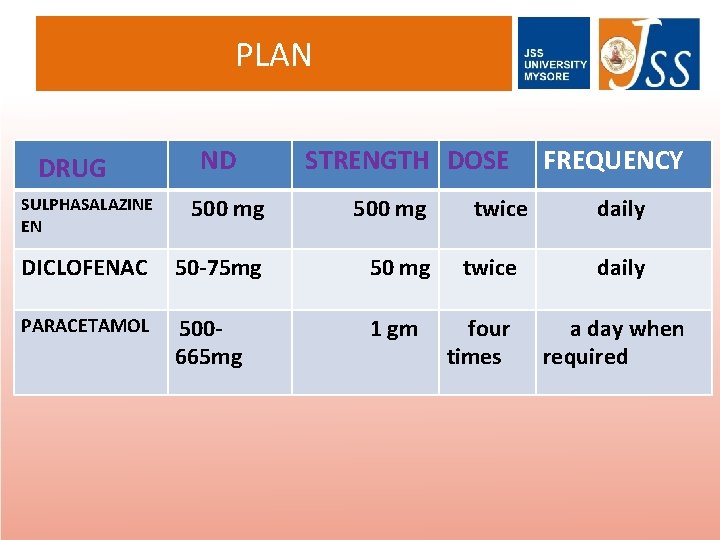
PLAN DRUG ND STRENGTH DOSE SULPHASALAZINE EN 500 mg DICLOFENAC 50 -75 mg 50 mg PARACETAMOL 500665 mg 1 gm twice four times FREQUENCY daily a day when required
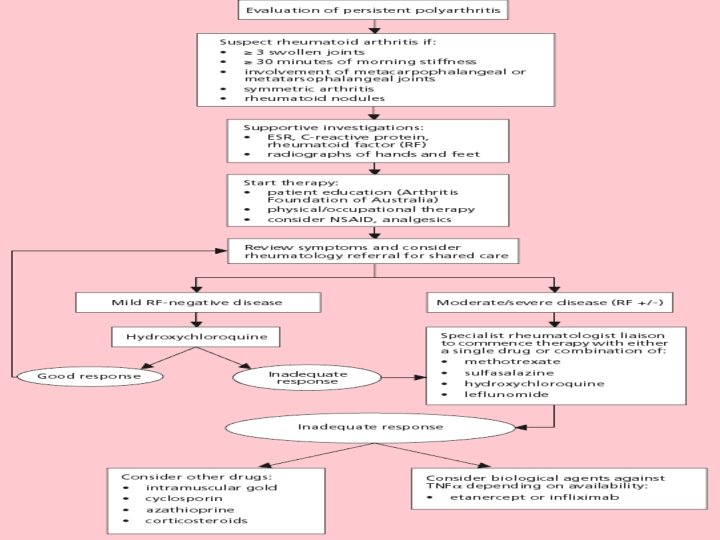
TREATMENT v An early start of DMARDS results in a more favorable outcome and can reduce mortality. v The first-line nonbiological drugs like methotrexate , sulfasalazine , hydroxychloroquine are chosen mainly v Combination therapy with two or more non-biological DMARDS may be effective than monotherapy. v The 2007 and 2012 rheumatoid arthritis studies have proved that triple DMARDs therapy is much more effective than monotherapy. v Biologic agents such as anti-TNF agents like
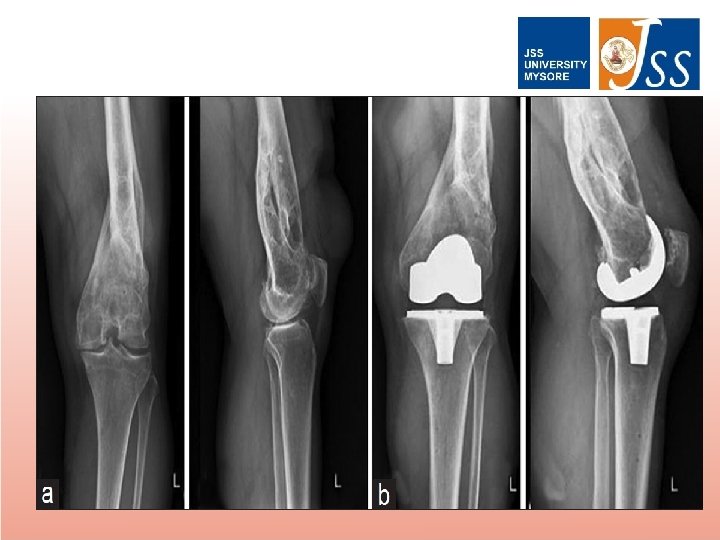
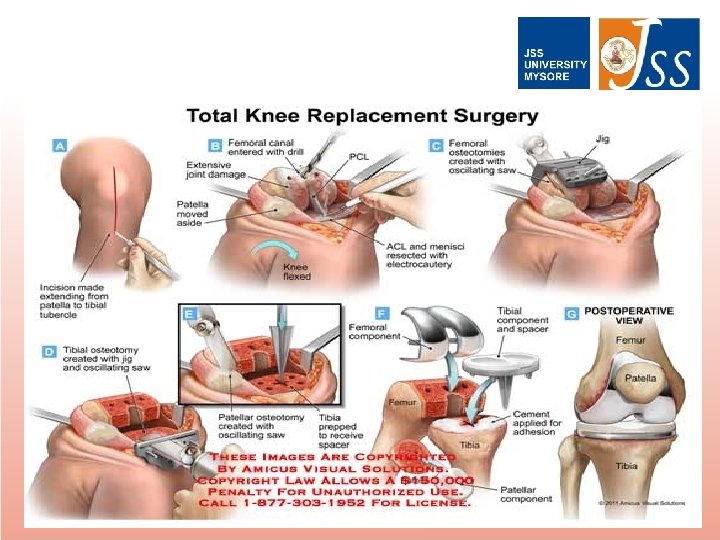
etanercept , infliximab , the IL-6 receptor antagonist – tocilizumab & rituximab can be used if other DMARDS are not effective. v NSAIDS and corticosteroids can be also used but have long term complications ( gastric discomforts , overweight ). v Other drugs like Phenylbutazone , indomethacin , gold salts , chloroquine etc can be also used. v If severe , surgical interventions can be done on the individual joints by removing the thickened synovial fluid (SYNOVECTOMY)
INTERVENTION § The current drugs even if it was not at all effective , she was not prescribed with any other drugs based on the treatment chart. § She could have been given triple therapy instead of monotherapy so that she wont have been in latent stage of RA. § Her age also could have been considered and started with the hormonal replacement therapy. § She was prescribed with two NSAIDs without any proton-pump inhibitor which is the main cause for
her stomach discomfort. § Her fatigue is due to rheumatoid arthritis § She have low haemoglobin & hemocrit value which is due megaloblastic anemia caused by the drug sulfasalazine , this was not taken in to consideration. § Her increase in the total cholestrol level should have been taken into consideration.
EVALUATION • The triple DMARDs therapy along with prednisolone can reduce the patients disease & its symptoms. • Vitamin B suppliments(25 -100 mg) should be started for her megaloblastic anemia. • Hormonal therapy can give her much prognosis from the disease. • Her increased total cholestrol level shows the chances to develop cardiovascular problems. • Her BP should be monitered daily.
REVISION ü There is no specific cure for RA and so the medication should be taken properly and prolonged. ü Triple drug regimen methotrexate , sulfasalazine and hydroxychloroquine can be started. ü But before that the patients pain and inflammation should be considered and steroids should be given. ü The usual dose of prednisone is 5 -10 mg daily. But in this case higher dose of 15 -20 mg daily can be given , attempts should be made to taper the dose to <10 mg. Steroid Injection of 5 -60 mg can be given which will be more effective than tablets.
ü Initial dose of methotrexate 7. 5 mg increasing it up to 17. 5 mg/wk at night. ü Hydroxychloroquine 400 mg/day along with hormonal replacement therapy. ü Vitamin D suppliments & Vit B can be given with the above drugs.
DRP’s • The patient was not given any proton-pump inhibitors along with the NSAID’s , which was the reason for her stomach discomfort. • Sulfasalazine causes megaloblastic anemia which is the reason for her low haemoglobin & hemocrit values.
PATIENT COUNSELLING o Stay active always (exercise). o Take the medications properly at correct time , dose as no miracle cures will happen for RA. o Do regular blood parameter monitoring. o You should avoid food like fried & processed foods , AGE’s (heated, grilled foods) , sugar & refined carbs , dairy products , salt & preservatives , corn-oil etc. o Eat more omega-3 foods (tuna , salmon , sardines ), egg , vitamin-D fortified milk products , organically grown fruits and vegetables & extra-virgin oil.

Foods to be avoided : - Foods to be taken
MEDICATION COUNSELLING • You might experience ADR’s like weight gain , thinning of the skin , moodswings , N/V, rashes , headache , vertigo etc , so don’t be panic. • Reinforce to the patient of the life-long treatment. • If you have any serious side-effects (bone fracture), consult the doctor before making any changes in your dose by yourself.
KEY-POINTS Ø Dual regimen of DMARD’s with prednisone and hormonal therapy are given to the patient. Ø Bone-densitometry and regular monitoring should be done for better management of the disease. Ø Patient adherance is very much essential. Ø Vit. D suppliments were not given with sulfasalazine. Ø NSAID’s was given to the patient without a protonpump inhibitor which was the reason for her stomach discomfort. Ø The foods discussed to be taken , should be followed.

REFERENCES • • Lippincott’s Illustrated Review-4 th edition Textbook of Pathophysiology , Harsh Mohan-6 th edition Pharmacotherapy handbook – 8 th edition Sites referred : - www. webmd. com - www. nhs. uk - www. rheumatology. org -www. medicinenet. com - www. arthritiscare. org. uk - www. drugs. com
• Articles of rheumatoid referred : - www. arthritistoday. org -www. healthline. com -www. medpagetoday. com - www. hopkinsarthritis. org -www. ncbi. nlm. nih. gov

- Slides: 41