Week Four PGCE English John Keenan John keenannewman






- Slides: 125
Week Four PGCE English John Keenan John. keenan@newman. ac. uk
reps
Today: Assessment Theory Thursday: SKE – Grammar and Linguistics Friday: Reading, Spoken English
The Assignment SGP 709 SGP 729
Make sure you follow the given brief SGP 729 Critical incidents 2 subjects – classroom management (learning/behaviour) and assessment Read Plan your work Write in the right style Think about the mark scheme
Follow Instructions
The Mark Scheme
Patch Task Example
VOICE – CRITICAL DIALOGUE – PROBLEMATISATION REFLECTION
Structure
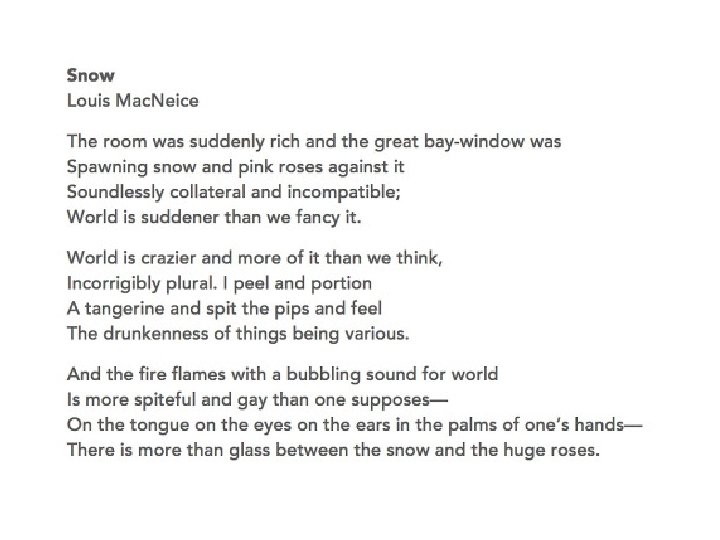
Learn about a tangerine
Kahoot. it
Spidergram or mindmap a tangerine
Paragraph plan for a tangerine essay
Assessment Theory
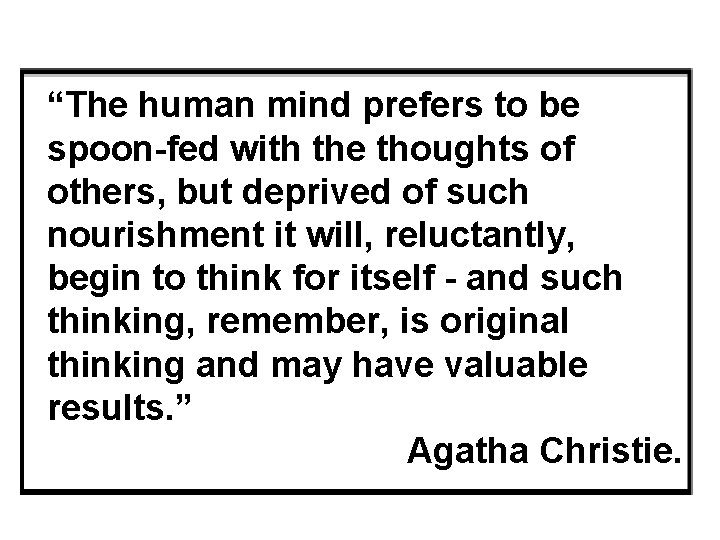
“The human mind prefers to be spoon-fed with the thoughts of others, but deprived of such nourishment it will, reluctantly, begin to think for itself - and such thinking, remember, is original thinking and may have valuable results. ” Agatha Christie.
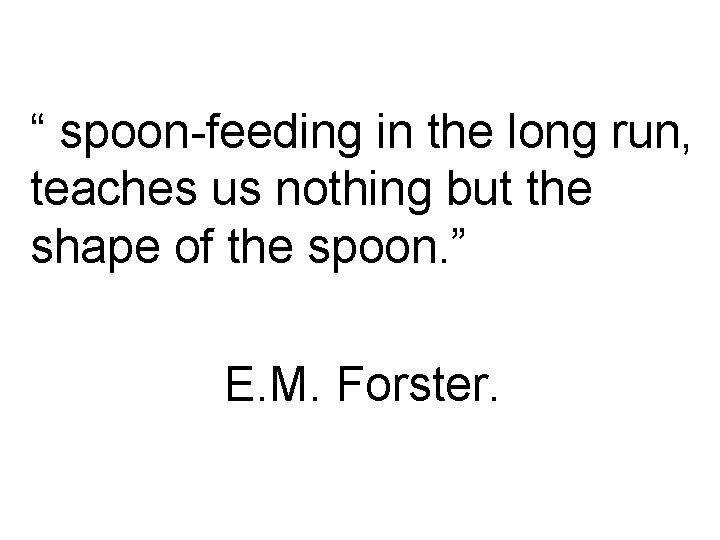
“ spoon feeding in the long run, teaches us nothing but the shape of the spoon. ” E. M. Forster.
Af. L http: //www. youtube. com/watch? v=1 q. QL 5 L 31 1 E
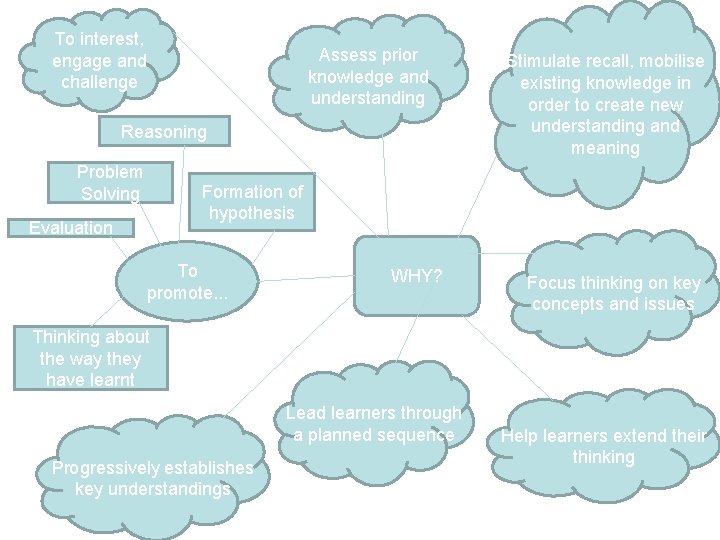
To interest, engage and challenge Assess prior knowledge and understanding Reasoning Problem Solving Evaluation Stimulate recall, mobilise existing knowledge in order to create new understanding and meaning Formation of hypothesis To promote. . . WHY? Focus thinking on key concepts and issues Thinking about the way they have learnt Lead learners through a planned sequence Progressively establishes key understandings Help learners extend their thinking
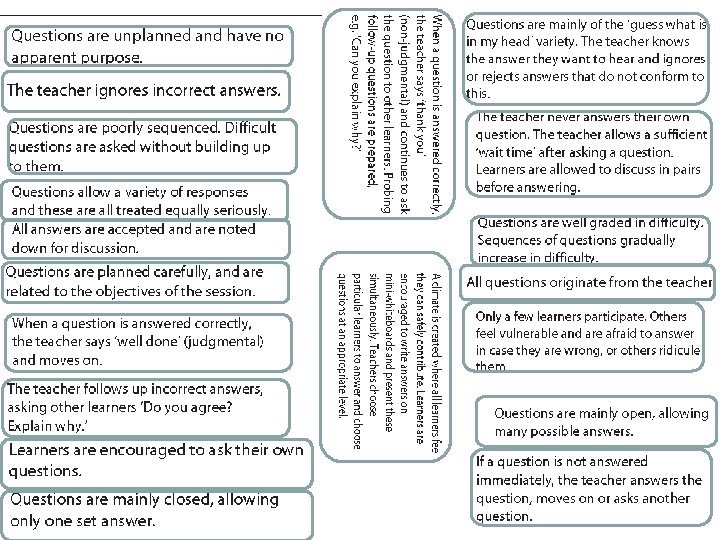
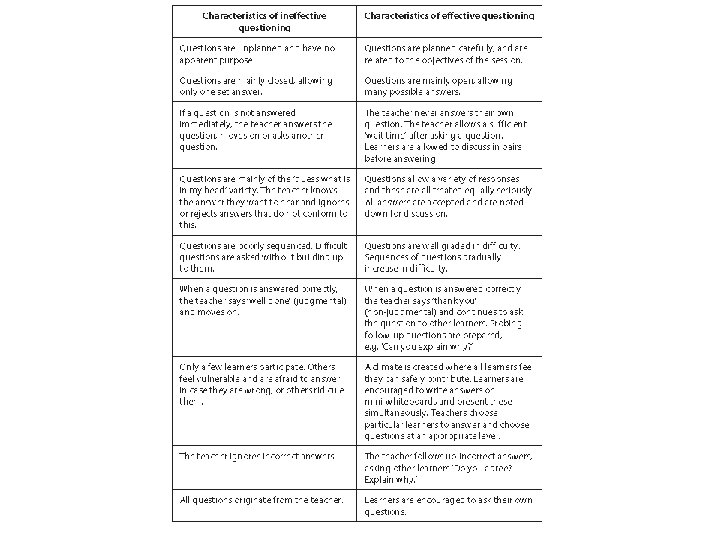
Card sort – good Af. L? Problems? Limitations?
Reinforcement
Have you learnt anything?
Some ‘facts’ on questioning
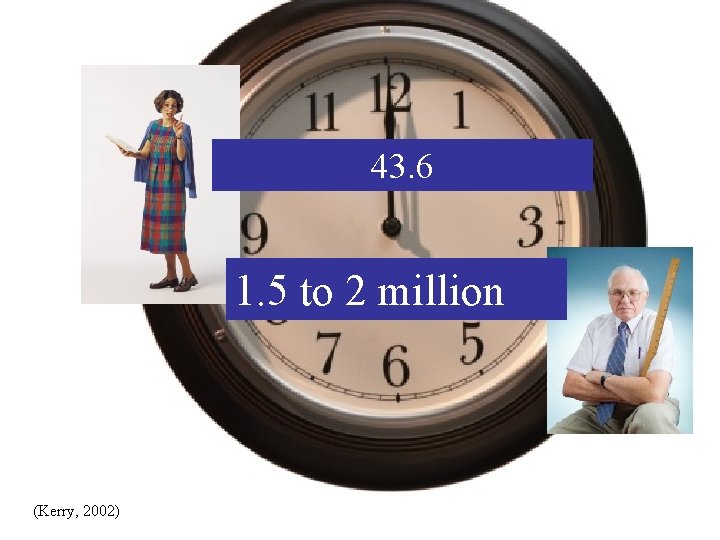
43. 6 1. 5 to 2 million (Kerry, 2002)
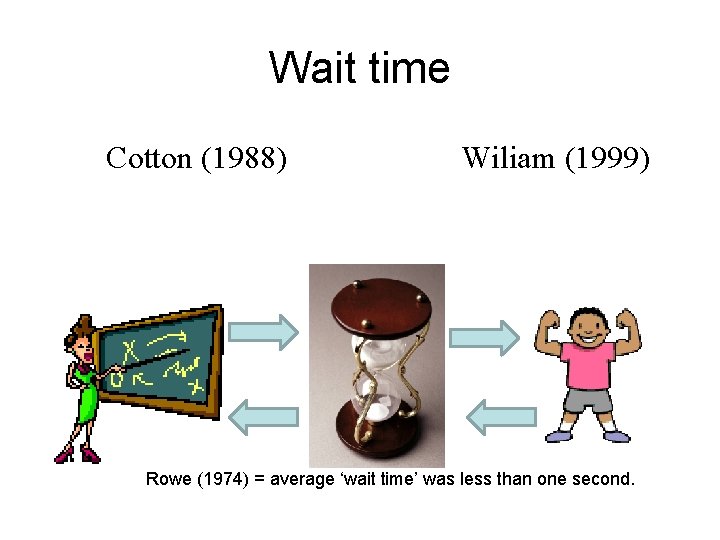
Wait time Cotton (1988) Wiliam (1999) Rowe (1974) = average ‘wait time’ was less than one second.
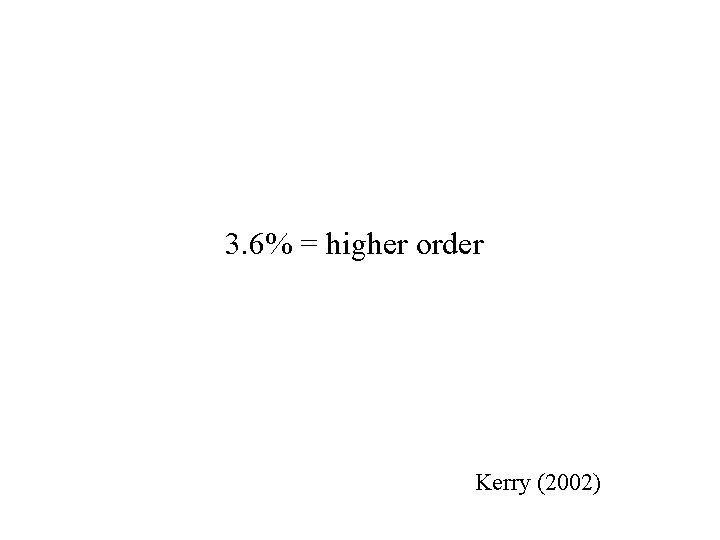
3. 6% = higher order Kerry (2002)
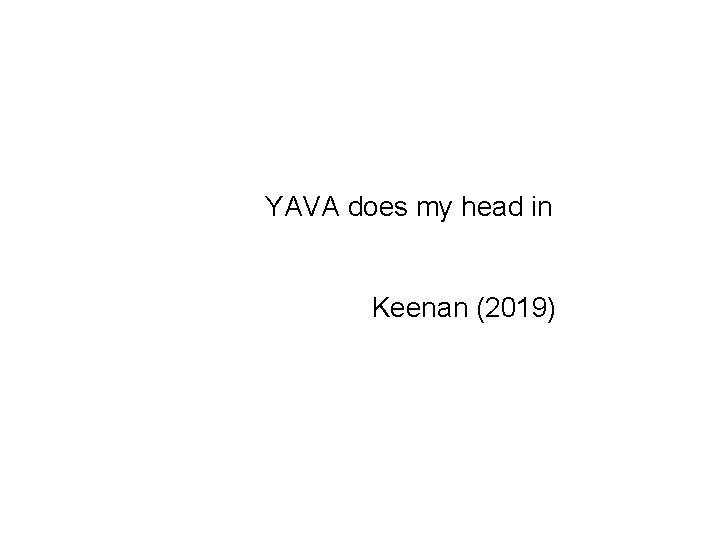
YAVA does my head in Keenan (2019)
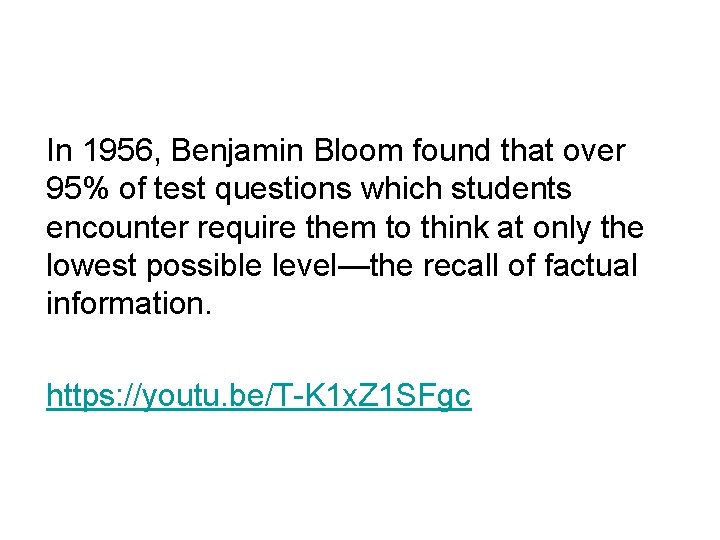
In 1956, Benjamin Bloom found that over 95% of test questions which students encounter require them to think at only the lowest possible level—the recall of factual information. https: //youtu. be/T K 1 x. Z 1 SFgc
Improving questioning
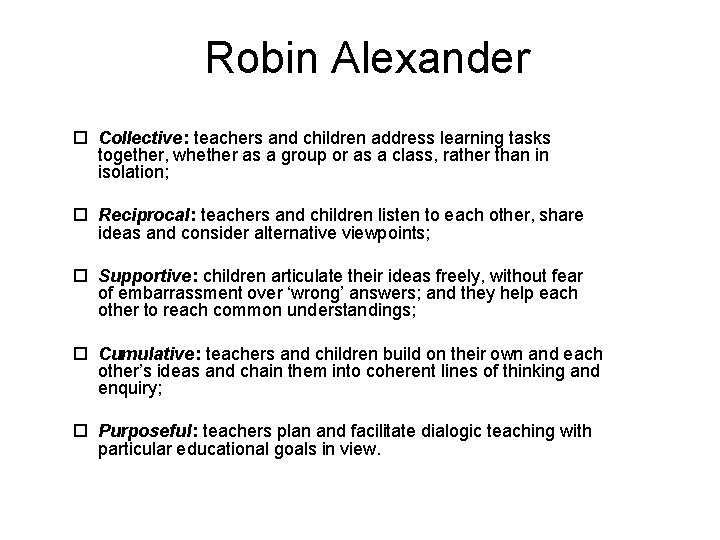
Robin Alexander Collective: teachers and children address learning tasks together, whether as a group or as a class, rather than in isolation; Reciprocal: teachers and children listen to each other, share ideas and consider alternative viewpoints; Supportive: children articulate their ideas freely, without fear of embarrassment over ‘wrong’ answers; and they help each other to reach common understandings; Cumulative: teachers and children build on their own and each other’s ideas and chain them into coherent lines of thinking and enquiry; Purposeful: teachers plan and facilitate dialogic teaching with particular educational goals in view. 32
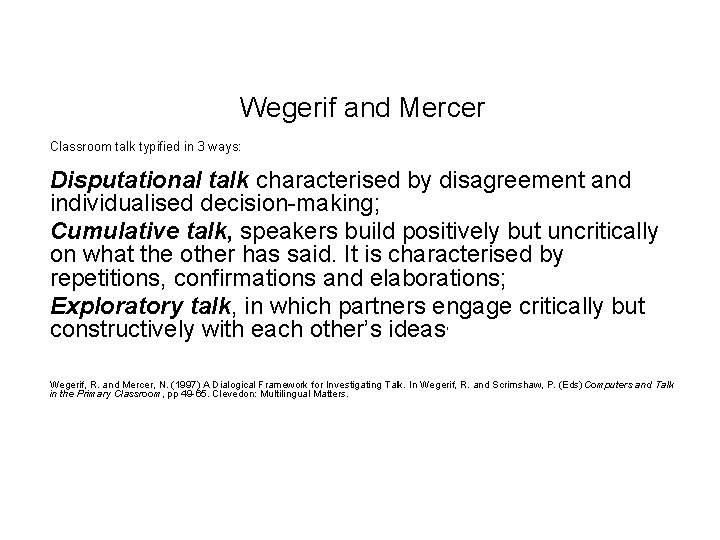
Wegerif and Mercer Classroom talk typified in 3 ways: Disputational talk characterised by disagreement and individualised decision making; Cumulative talk, speakers build positively but uncritically on what the other has said. It is characterised by repetitions, confirmations and elaborations; Exploratory talk, in which partners engage critically but constructively with each other’s ideas’ Wegerif, R. and Mercer, N. (1997) A Dialogical Framework for Investigating Talk. In Wegerif, R. and Scrimshaw, P. (Eds) Computers and Talk in the Primary Classroom, pp 49 65. Clevedon: Multilingual Matters. 33
Who agrees? Synthesise
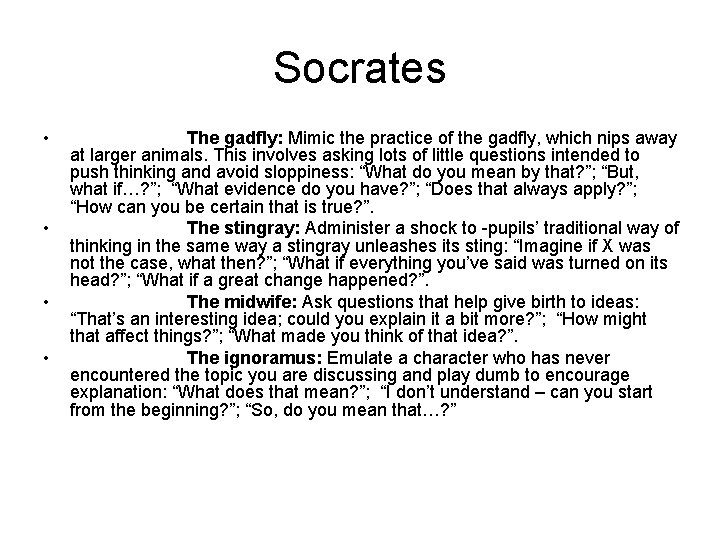
Socrates • • The gadfly: Mimic the practice of the gadfly, which nips away at larger animals. This involves asking lots of little questions intended to push thinking and avoid sloppiness: “What do you mean by that? ”; “But, what if…? ”; “What evidence do you have? ”; “Does that always apply? ”; “How can you be certain that is true? ”. The stingray: Administer a shock to pupils’ traditional way of thinking in the same way a stingray unleashes its sting: “Imagine if X was not the case, what then? ”; “What if everything you’ve said was turned on its head? ”; “What if a great change happened? ”. The midwife: Ask questions that help give birth to ideas: “That’s an interesting idea; could you explain it a bit more? ”; “How might that affect things? ”; “What made you think of that idea? ”. The ignoramus: Emulate a character who has never encountered the topic you are discussing and play dumb to encourage explanation: “What does that mean? ”; “I don’t understand – can you start from the beginning? ”; “So, do you mean that…? ”
Who agrees? Synthesise
What is the point? • Pupils will need to be able to analyse, synthesise and evaluate if they are to attain Grade 4 and above at GCSE (Ofsted, 2017)
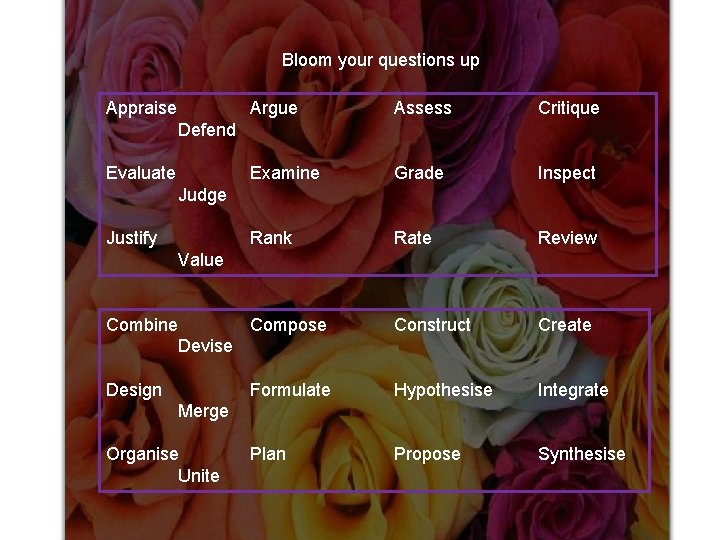
Bloom’s Bloom your questions up Appraise Argue Assess Critique Examine Grade Inspect Rank Rate Review Combine Compose Devise Construct Create Design Formulate Hypothesise Integrate Plan Propose Synthesise Defend Evaluate Judge Justify Value Merge Organise Unite
Task: You have a poem. Choose one aspect of the poem you are to teach: e. g. Comprehension Structure Tone Theme Or use it to teach something NEW about a poetry technique: e. g. Enjambment
Comprehension and Response
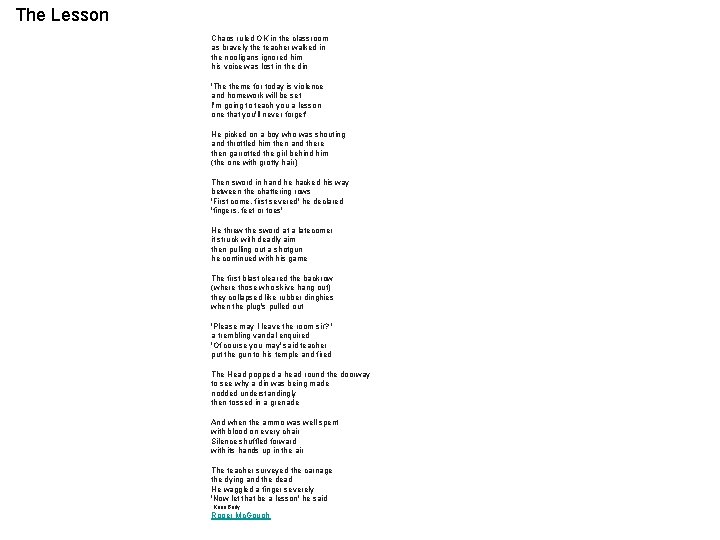
The Lesson Chaos ruled OK in the classroom as bravely the teacher walked in the nooligans ignored him his voice was lost in the din 'The theme for today is violence and homework will be set I'm going to teach you a lesson one that you'll never forget' He picked on a boy who was shouting and throttled him then and there then garrotted the girl behind him (the one with grotty hair) Then sword in hand he hacked his way between the chattering rows 'First come, first severed' he declared 'fingers, feet or toes' He threw the sword at a latecomer it struck with deadly aim then pulling out a shotgun he continued with his game The first blast cleared the backrow (where those who skive hang out) they collapsed like rubber dinghies when the plug's pulled out 'Please may I leave the room sir? ' a trembling vandal enquired 'Of course you may' said teacher put the gun to his temple and fired The Head popped a head round the doorway to see why a din was being made nodded understandingly then tossed in a grenade And when the ammo was well spent with blood on every chair Silence shuffled forward with its hands up in the air The teacher surveyed the carnage the dying and the dead He waggled a finger severely 'Now let that be a lesson' he said . Kona. Body Roger Mc. Gough
Comprehension and Response
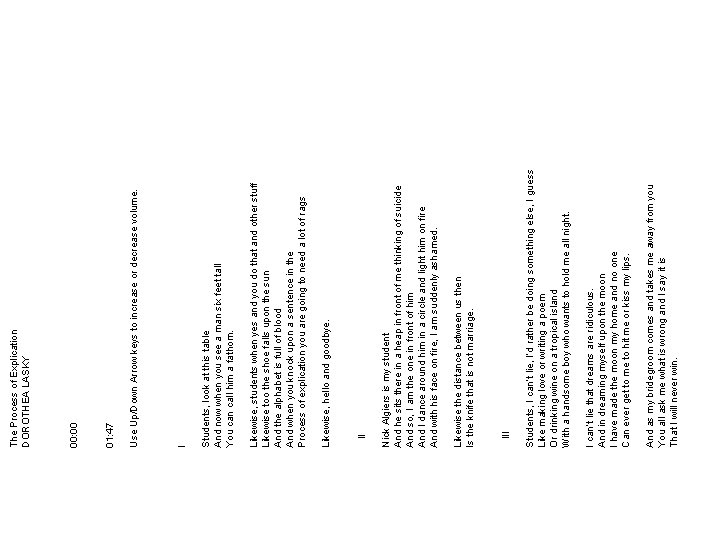
I Students, look at this table And now when you see a man six feet tall You can call him a fathom. Likewise, students when yes and you do that and other stuff Likewise too the shoe falls upon the sun And the alphabet is full of blood And when you knock upon a sentence in the Process of explication you are going to need a lot of rags Likewise, hello and goodbye. II Nick Algiers is my student And he sits there in a heap in front of me thinking of suicide And so, I am the one in front of him And I dance around him in a circle and light him on fire And with his face on fire, I am suddenly ashamed. Likewise the distance between us then Is the knife that is not marriage. III Students, I can’t lie, I’d rather be doing something else, I guess Like making love or writing a poem Or drinking wine on a tropical island With a handsome boy who wants to hold me all night. I can’t lie that dreams are ridiculous. And in dreaming myself upon the moon I have made the moon my home and no one Can ever get to me to hit me or kiss my lips. And as my bridegroom comes and takes me away from you You all ask me what is wrong and I say it is That I will never win. Use Up/Down Arrow keys to increase or decrease volume. 01: 47 00: 00 The Process of Explication DOROTHEA LASKY
Comprehension and Response
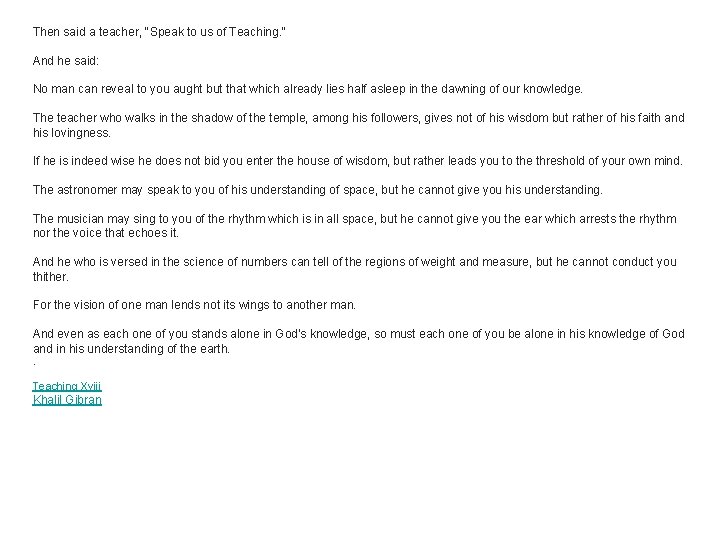
Then said a teacher, "Speak to us of Teaching. " And he said: No man can reveal to you aught but that which already lies half asleep in the dawning of our knowledge. The teacher who walks in the shadow of the temple, among his followers, gives not of his wisdom but rather of his faith and his lovingness. If he is indeed wise he does not bid you enter the house of wisdom, but rather leads you to the threshold of your own mind. The astronomer may speak to you of his understanding of space, but he cannot give you his understanding. The musician may sing to you of the rhythm which is in all space, but he cannot give you the ear which arrests the rhythm nor the voice that echoes it. And he who is versed in the science of numbers can tell of the regions of weight and measure, but he cannot conduct you thither. For the vision of one man lends not its wings to another man. And even as each one of you stands alone in God's knowledge, so must each one of you be alone in his knowledge of God and in his understanding of the earth. . Teaching Xviii Khalil Gibran
Comprehension and Response
Choose one objective Choose one learning outcome
Af. L– whole group teaching No YAVA Deliver an activity to teach your learning outcome then add in questioning to check the learning. Gadfly Ignoramus Stingray Midwife Cumulative Disputational Bloom it up.
Ways to avoid questioning
Choose an Af. L method. Devise an activity to assess learning using the method.
More More … … …
Af. L Growth mindset Mastery Aw. L
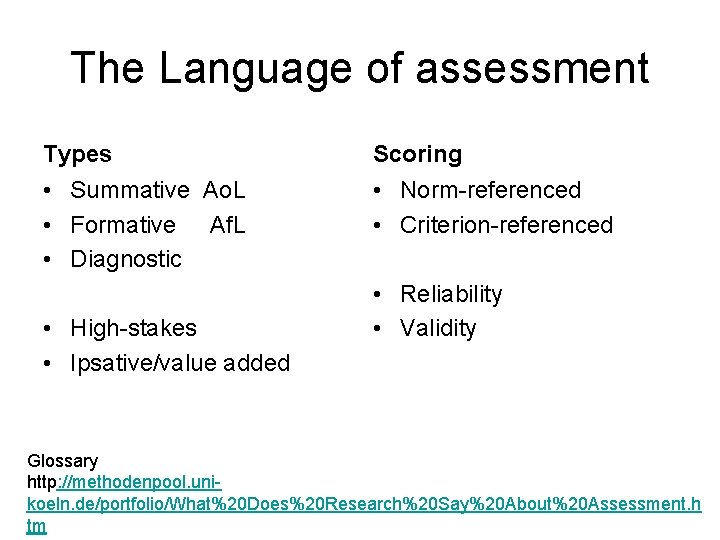
The Language of assessment Types Scoring • Summative Ao. L • Formative Af. L • Diagnostic • Norm referenced • Criterion referenced • High stakes • Ipsative/value added • Reliability • Validity Glossary http: //methodenpool. uni koeln. de/portfolio/What%20 Does%20 Research%20 Say%20 About%20 Assessment. h tm
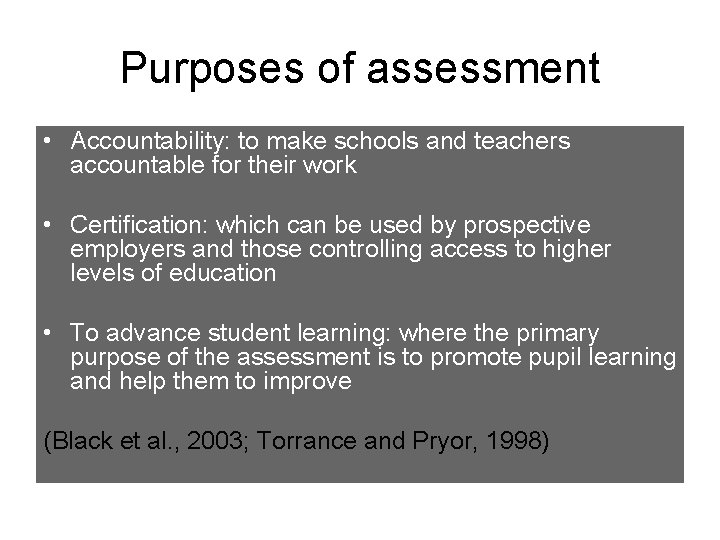
Purposes of assessment • Accountability: to make schools and teachers accountable for their work • Certification: which can be used by prospective employers and those controlling access to higher levels of education • To advance student learning: where the primary purpose of the assessment is to promote pupil learning and help them to improve (Black et al. , 2003; Torrance and Pryor, 1998)
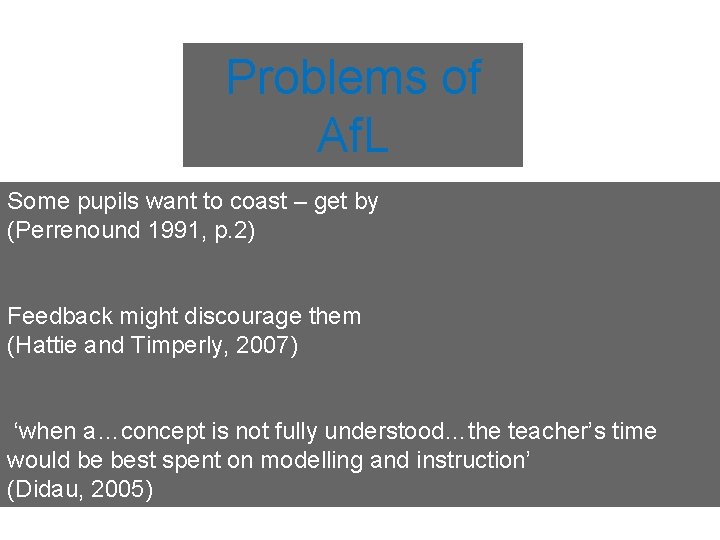
Problems of Af. L Some pupils want to coast – get by (Perrenound 1991, p. 2) Feedback might discourage them (Hattie and Timperly, 2007) ‘when a…concept is not fully understood…the teacher’s time would be best spent on modelling and instruction’ (Didau, 2005)
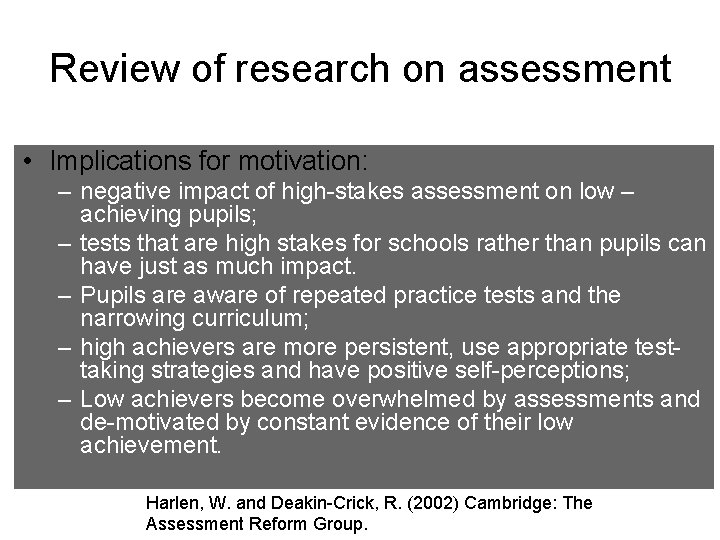
Review of research on assessment • Implications for motivation: – negative impact of high stakes assessment on low – achieving pupils; – tests that are high stakes for schools rather than pupils can have just as much impact. – Pupils are aware of repeated practice tests and the narrowing curriculum; – high achievers are more persistent, use appropriate test taking strategies and have positive self perceptions; – Low achievers become overwhelmed by assessments and de motivated by constant evidence of their low achievement. Harlen, W. and Deakin Crick, R. (2002) Cambridge: The Assessment Reform Group.
John Holt How Children Fail ‘petty and contemptible rewards’
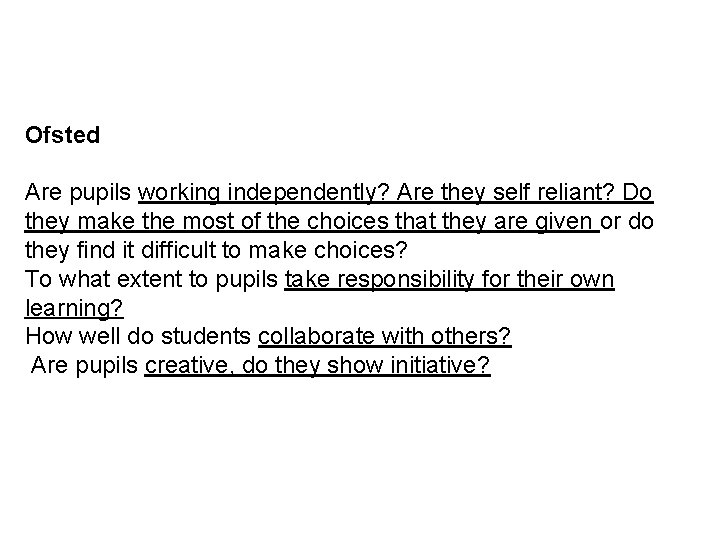
Ofsted Are pupils working independently? Are they self reliant? Do they make the most of the choices that they are given or do they find it difficult to make choices? To what extent to pupils take responsibility for their own learning? How well do students collaborate with others? Are pupils creative, do they show initiative?
Ofsted – teaching to the test mentality.
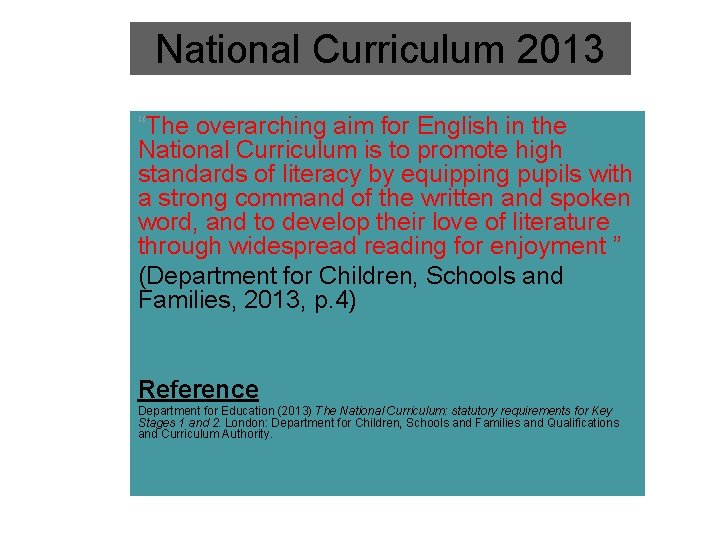
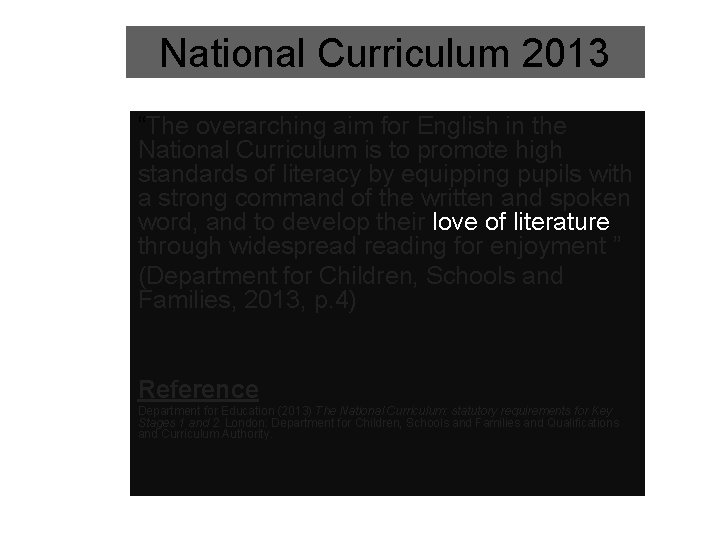
National Curriculum 2013 “The overarching aim for English in the National Curriculum is to promote high standards of literacy by equipping pupils with a strong command of the written and spoken word, and to develop their love of literature through widespreading for enjoyment ” (Department for Children, Schools and Families, 2013, p. 4) Reference Department for Education (2013) The National Curriculum: statutory requirements for Key Stages 1 and 2. London: Department for Children, Schools and Families and Qualifications and Curriculum Authority.
National Curriculum 2013 “The overarching aim for English in the National Curriculum is to promote high standards of literacy by equipping pupils with a strong command of the written and spoken word, and to develop their love of literature through widespreading for enjoyment ” (Department for Children, Schools and Families, 2013, p. 4) Reference Department for Education (2013) The National Curriculum: statutory requirements for Key Stages 1 and 2. London: Department for Children, Schools and Families and Qualifications and Curriculum Authority.
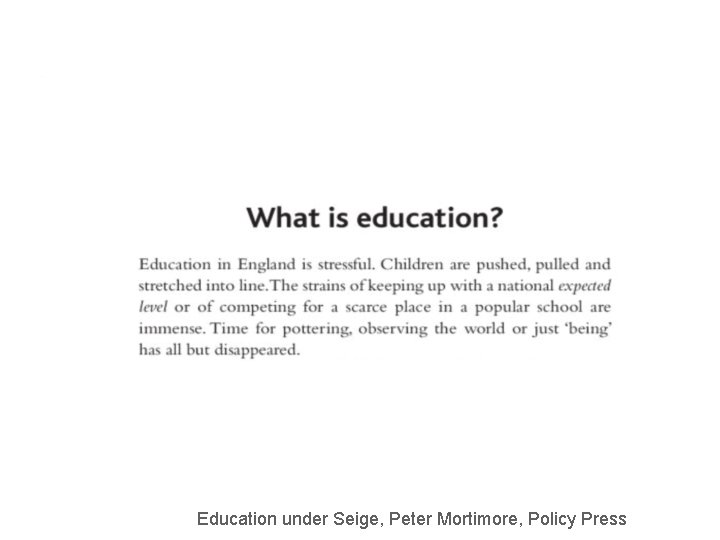
Education under Seige, Peter Mortimore, Policy Press
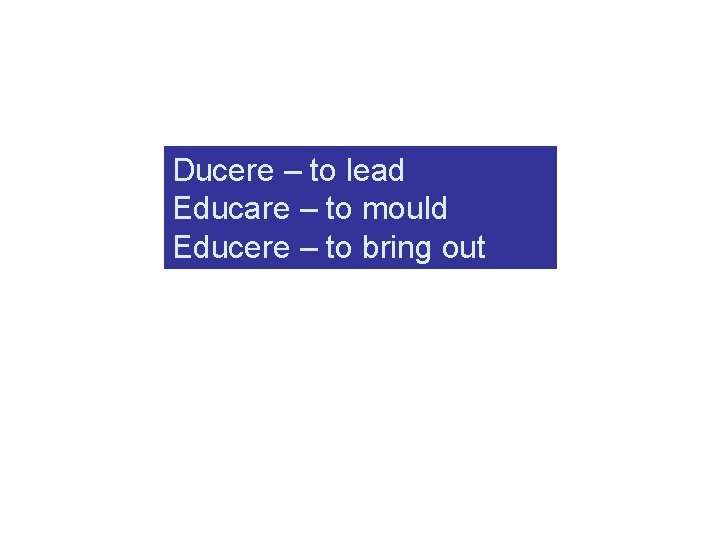
Ducere – to lead Educare – to mould Educere – to bring out
Education under Seige, Peter Mortimore, Policy Press
‘Teaching kids to read and write should be an artistic event. Indeed, many teachers transform these experiences into a technical event, into something without emotions, without creativity – but with repetition. Many teachers work bureaucratically when they should work artistically’ Freire 1985, p. 79 in Dymoke 154 67
Learners are, ‘hustled from one skills based task to another’ Marsh and Millard 2000: 61 68
‘Operating with an education marketplace English teachers have been increasingly seen to deal in knowledge rather than meaning making’ Dymoke referring to Gunther Kress 69
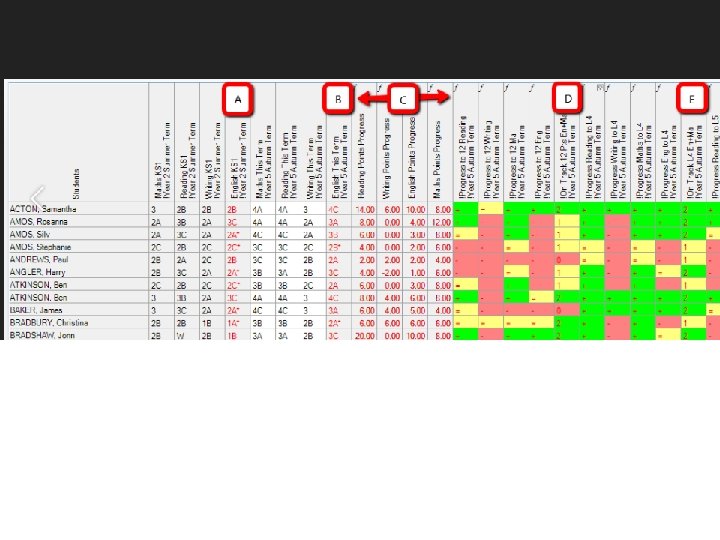
2007 APP ‘A clear cut linear model of progression in English’ (Dymoke, 2009: 15) Dymoke S (2009) Teaching English Texts 11 18, London: Continuum Create a progress chart for reading English from 1 8 What AFs would you choose? Focus on one and try to describe what it would mean from old value 4 8.
APP Reading
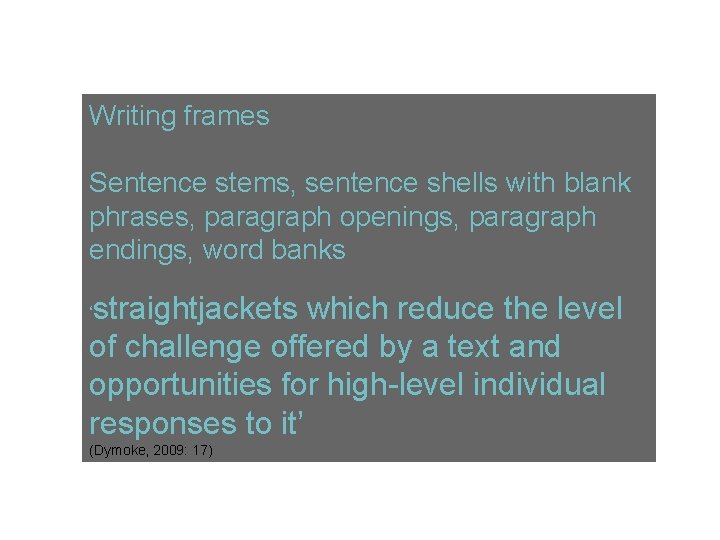
Writing frames Sentence stems, sentence shells with blank phrases, paragraph openings, paragraph endings, word banks straightjackets which reduce the level of challenge offered by a text and opportunities for high level individual responses to it’ ‘ (Dymoke, 2009: 17)
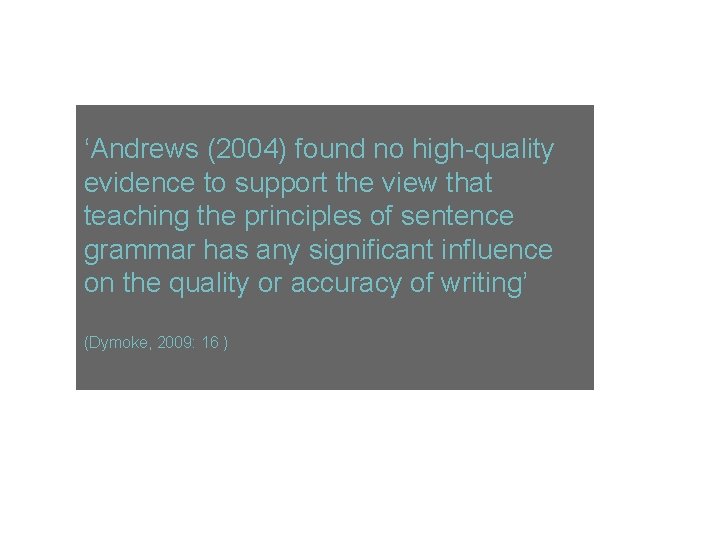
‘Andrews (2004) found no high quality evidence to support the view that teaching the principles of sentence grammar has any significant influence on the quality or accuracy of writing’ (Dymoke, 2009: 16 )
Dangers of APP style assessment Black et al (2003); Swaffiled 2008; Wiliam 2011 Dangers • The temptation to assess (what is easy to assess) – rather than learning experiences • Teaching to the test • Distorting assessment procedures to improve the department/school standing
Assessment without levels
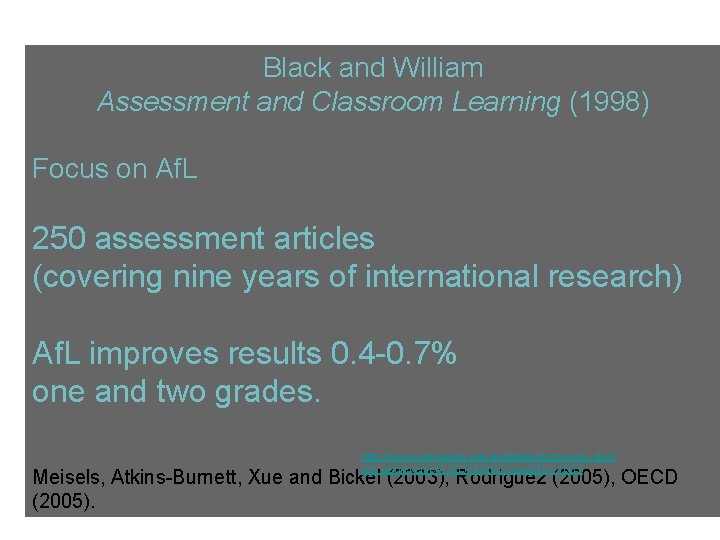
Black and William Assessment and Classroom Learning (1998) Focus on Af. L 250 assessment articles (covering nine years of international research) Af. L improves results 0. 4 0. 7% one and two grades. http: //www. curriculum. edu. au/leader/improving_stud ent_achievement, 25374. html? issue. ID=11603 Meisels, Atkins Burnett, Xue and Bickel (2003), Rodriguez (2005), OECD (2005).
Df. E Rationale • https: //www. gov. uk/government/uploads/s ystem/uploads/attachment_data/file/35807 0/NC_assessment_quals_factsheet_Sept_ update. pdf • Podcast Tim Oakes http: //www. youtube. com/watch? v= q 5 vr. BXFpm 0&feature=youtu. be
Dylan William https: //youtu. be/J 25 d 9 a. C 1 GZA 13 19. 20 35
Dylan Wiliam and Paul Black • Inside the black box Youtube (formative assessment) http: //www. youtube. com/watch? v=hiu j. Y xa. Pg • http: //www. youtube. com/watch? v=n 4 v. A 2 quo. Yio • http: //www. youtube. com/watch? v=jtl. Lp_Zsyv. QYoutube (Schools network 16: 30 25: 00) • http: //www. youtube. com/watch? v=w. KLo 15 A 80 l. I&list=P LXWa. ZHHxb. L 1 NVc. Suxnl. Wh. X 6 p 6 r. ZJP 793 h
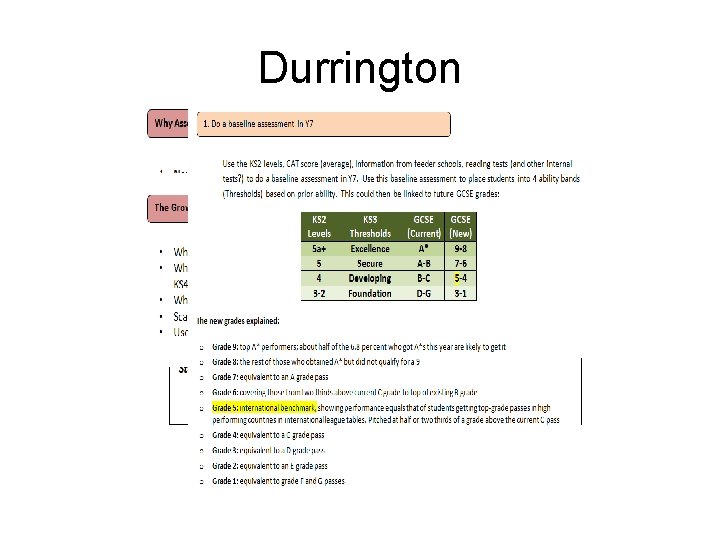
Durrington
SD – how is your school assessing?
Meta learning Royce Sadler (1998) We need to let students into the secret, allowing them to become insiders of the assessment process. We need to make provision for them to become members of the guild of people who can make consistently sound judgments and know why those judgments are justifiable. ’ ‘ http: //www. assessmentforlearni ng. edu. au/professional_learnin g/success_criteria_and_rubrics/ success_research_background.
Meta learning • Reflection a sense of ownership of the material of learning – relating ideas more effectively to our previous knowledge (Rogers, 1969). • Students who achieve well are more often students who are aware of their own learning processes – their weaknesses and strengths (Ertmer and Newby, 1996). • Metacognition is directly associated with employability by Yorke (2004).
Meta learning "no discernible difference between how experienced or novice teachers teach or what their students learn. Being an experienced expert teacher apparently made no difference. " "focused busyness" behavioural routines are not learning Cognition http: //er. educause. edu/articles/2014/11/beyond the mooc model changing educational paradigms
Mastery “The formative assessment process will be far more successful if teachers systematically collect evidence of a student's progress toward mastery of each key building block in a learning progression. ” James Popham http: //er. educause. edu/articles/ 2014/11/beyond the mooc model changing educational paradigms
Mastery "The key attribute of expertise is a detailed and organised understanding of the important facts within a specific domain. “ a domain organises knowledge, optimise individual progress toward mastery John Bransford http: //er. educause. edu/articles/ 2014/11/beyond the mooc model changing educational paradigms
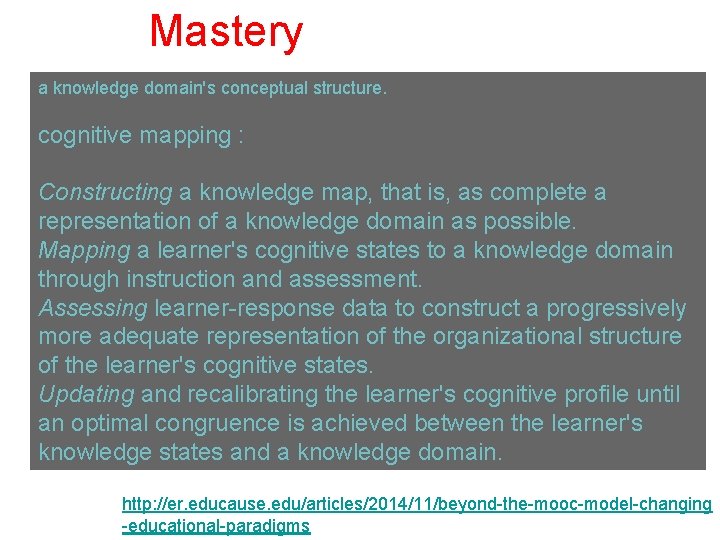
Mastery a knowledge domain's conceptual structure. cognitive mapping : Constructing a knowledge map, that is, as complete a representation of a knowledge domain as possible. Mapping a learner's cognitive states to a knowledge domain through instruction and assessment. Assessing learner response data to construct a progressively more adequate representation of the organizational structure of the learner's cognitive states. Updating and recalibrating the learner's cognitive profile until an optimal congruence is achieved between the learner's knowledge states and a knowledge domain. http: //er. educause. edu/articles/2014/11/beyond the mooc model changing educational paradigms
reps
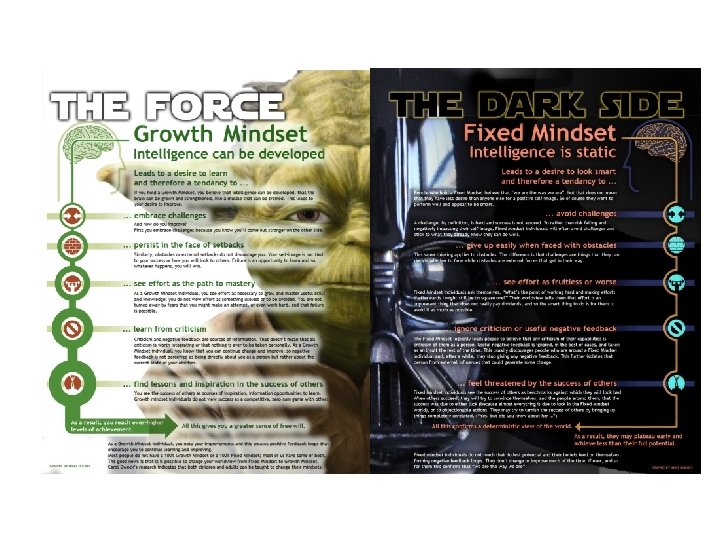
Carol Dweck
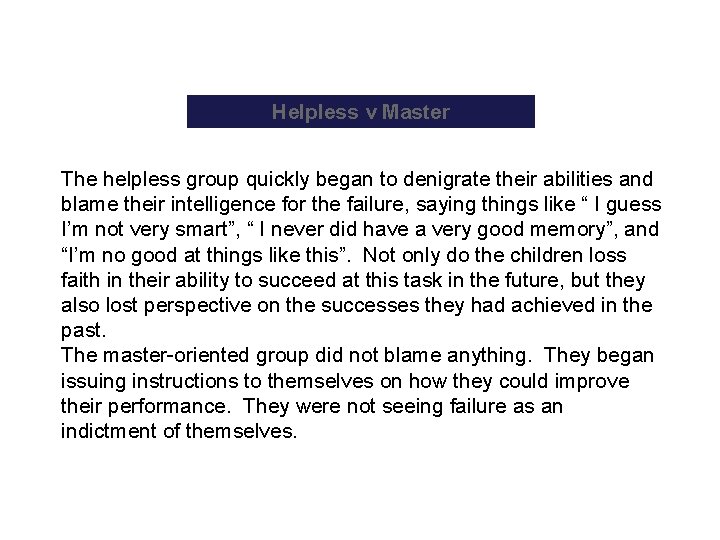
Helpless v Master The helpless group quickly began to denigrate their abilities and blame their intelligence for the failure, saying things like “ I guess I’m not very smart”, “ I never did have a very good memory”, and “I’m no good at things like this”. Not only do the children loss faith in their ability to succeed at this task in the future, but they also lost perspective on the successes they had achieved in the past. The master oriented group did not blame anything. They began issuing instructions to themselves on how they could improve their performance. They were not seeing failure as an indictment of themselves.
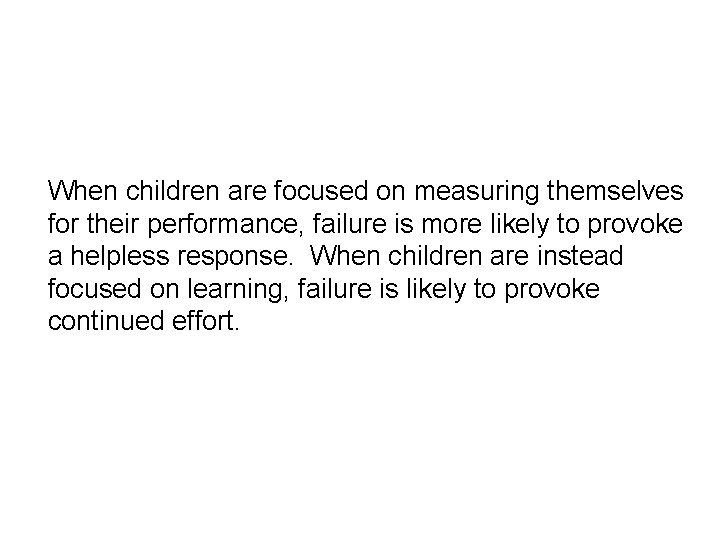
When children are focused on measuring themselves for their performance, failure is more likely to provoke a helpless response. When children are instead focused on learning, failure is likely to provoke continued effort.
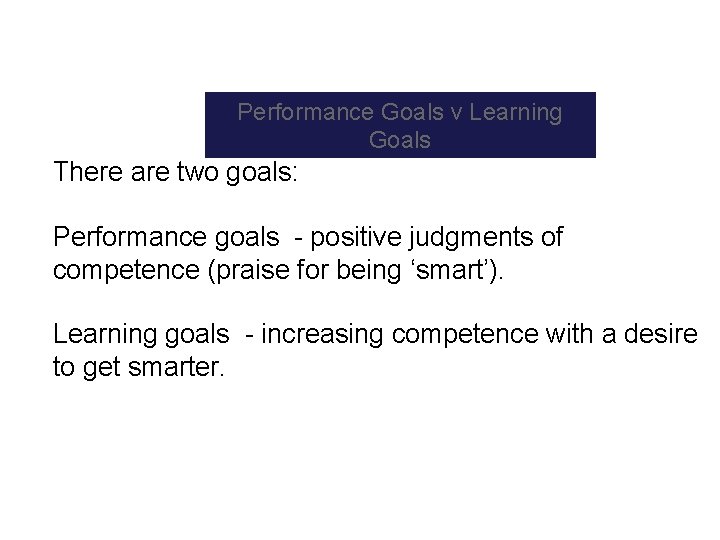
Performance Goals v Learning Goals There are two goals: Performance goals positive judgments of competence (praise for being ‘smart’). Learning goals increasing competence with a desire to get smarter.
Entity Theory v Incremental Theory Entity pursuing a performance goal and eager to show high ability. High effort necessary for success on the task spells low ability
Research found that the more students held an entity theories of intelligence the more likely they were to choose a performance goal, where the more they held an incremental theory, the more likely they were to choose the learning goal.
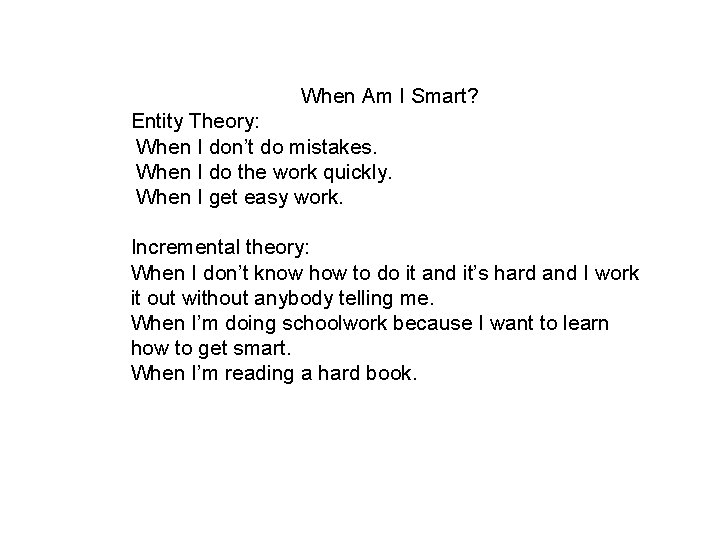
When Am I Smart? Entity Theory: When I don’t do mistakes. When I do the work quickly. When I get easy work. Incremental theory: When I don’t know how to do it and it’s hard and I work it out without anybody telling me. When I’m doing schoolwork because I want to learn how to get smart. When I’m reading a hard book.
It is becoming common practice in much of our society to praise students for their performance on easy tasks, to tell them they are smart when they do something quickly and perfectly. When we do this we are not teaching them to welcome challenge and learn from errors. We are teaching them that easy success means they are intelligent and, by implication, that errors and effort mean they are not. What should we do if students have had an easy success and come to us expecting praise? We can apologise for wasting their time and direct them to something more challenging. In this way, we may begin to teach them that a meaningful success requires effort.
What appears to be important here is not the confidence you bring to a situation, as the ability to maintain a confident and non defensive stance in the face of obstacles. Training that gave students just success experiences did not help them to cope with failure, even though they showed confidence and enthusiasm while that success lasted. They still interpreted failure as an indictment of their ability and showed a clear helpless response.
Voice While I can see the dangers of any evangelical education movement, there is value in a ‘growth mindset’ (Dweck, 2011) approach.
Critical Dialogue This psychological theory is aligned to other ways of viewing how people think including social learning theory (Bandura, 1974) and self concept studies (Rogers, 1956) which help to shape education and its policy. The National Curriculum Review (Df. E, 2011) called ‘growth mindset’ a ‘classic work’ (Df. E, 2011, p. 47) and a desire to see it ‘replicated’ (Df. E, 2011, p. 47) in England. https: //www. gov. uk/government/uploads/system/uploads/attachment_data/file/175439/NCR Expert_Panel_Report. pdf
In so doing, they have put another theory of psychology at the centre of National Curriculum reform and promote ‘mastery’ (see Dweck, 2011; Black and Wiliam, 2010) as a way of improving education.
Creativity Adopting psychological models has its dangers…. Freud
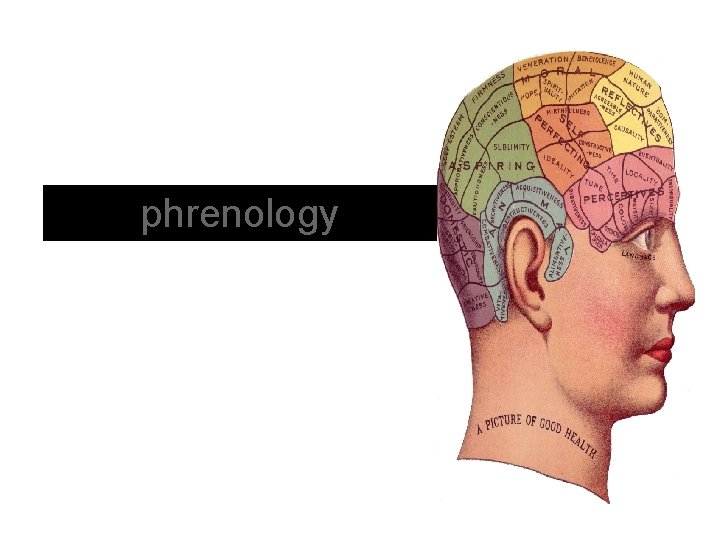
phrenology
IQ Test genetics Eysenck Race
Dweck’s ideas refute earlier psychological theories which were once also enthusiastically adopted by education policy makers including Eysenck’s (1994) work in intelligence quotient, Freud’s (1904) studies of deep human drives and earlier phrenological models of how the brain functions (Fowler, 1887). (Perhaps the maleness of the concept of ‘master’ (why no mistress? ) reveals something of the need for humans to dominate and control, something Fowler (1887), Freud (1904) and Eysenck (1994) would fully understand). Dweck’s ideas also seem to replace the more up to date psychology in the classrooom the Gifted and Talented agenda which has driven policy for over a decade (Gov, 2008).
It may be hard for teachers to make the change from over a decade of teaching the ‘gifted’ (and its implications of genetic ability) and Dweck’s (2011) theory of ‘malleable intelligence’ (p. 3). Instead of a ‘gift, intelligence is viewed as the ability to ‘master’ certain skills in their present states and ‘everyone, with effort and guidance can increase their intellectual abilities’ (Dweck, 2011, p. 23).
Critical Dialogue This psychological theory is aligned to other ways of viewing how people think including social learning theory (Bandura, 1974) and self concept studies (Rogers, 1956) which help to shape education and its policy. The National Curriculum Review (Df. E, 2011) called ‘growth mindset’ a ‘classic work’ (Df. E, 2011, p. 47) and a desire to see it ‘replicated’ (Df. E, 2011, p. 47) in England. • https: //www. gov. uk/government/uploads/system/uploads/attachment_data/file/175439/NCR Expert_Panel_Report. pdf
In so doing, they have put another theory of psychology at the centre of National Curriculum reform and promote ‘mastery’ (see Dweck, 2011; Black and Wiliam, 2010) as a way of improving education.
Dweck’s ideas refute earlier psychological theories which were once also enthusiastically adopted by education policy makers including Eysenck’s (1994) work in intelligence quotient, Freud’s (1904) studies of deep human drives and earlier phrenological models of how the brain functions (Fowler, 1887). (Perhaps the maleness of the concept of ‘master’ (why no mistress? ) reveals something of the need for humans to dominate and control, something Fowler (1887), Freud (1904) and Eysenck (1994) would fully understand). Dweck’s ideas also seem to replace the more up to date psychology in the classrooom the Gifted and Talented agenda which has driven policy for over a decade (Gov, 2008).
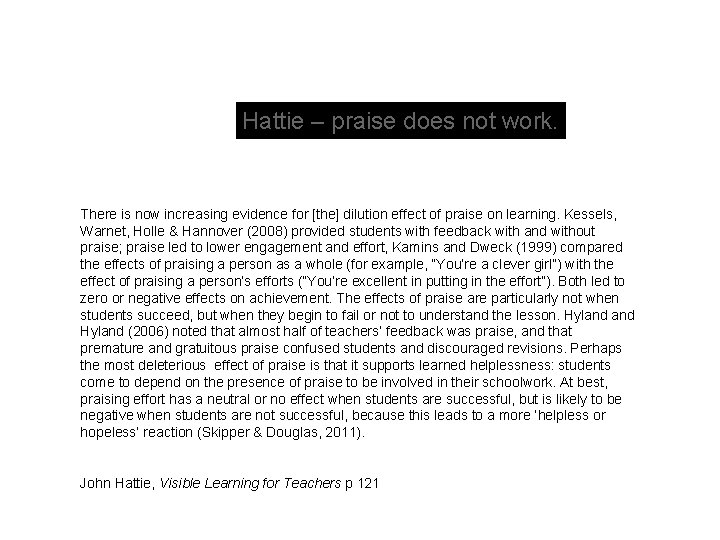
Hattie – praise does not work. There is now increasing evidence for [the] dilution effect of praise on learning. Kessels, Warnet, Holle & Hannover (2008) provided students with feedback with and without praise; praise led to lower engagement and effort, Kamins and Dweck (1999) compared the effects of praising a person as a whole (for example, “You’re a clever girl”) with the effect of praising a person’s efforts (“You’re excellent in putting in the effort”). Both led to zero or negative effects on achievement. The effects of praise are particularly not when students succeed, but when they begin to fail or not to understand the lesson. Hyland (2006) noted that almost half of teachers’ feedback was praise, and that premature and gratuitous praise confused students and discouraged revisions. Perhaps the most deleterious effect of praise is that it supports learned helplessness: students come to depend on the presence of praise to be involved in their schoolwork. At best, praising effort has a neutral or no effect when students are successful, but is likely to be negative when students are not successful, because this leads to a more ‘helpless or hopeless’ reaction (Skipper & Douglas, 2011). John Hattie, Visible Learning for Teachers p 121
Self esteem is nothing new At the same time, it is really about self esteem and self efficacy which have long been considered central to academic success (Humphreys 1996) https: //www. amazon. co. uk/d/Books/Self Esteem Key Your Childs Education/0717124843
Alfie Kohn – change the system https: //www. salon. com/2015/08/16/the_edu cation_fad_thats_hurting_our_kids_what_y ou_need_to_know_about_growth_mindset _theory_and_the_harmful_lessons_it_impa rts/
Alfie Kohn Critique http: //www. progressfocusedapproach. com/ alfie kohns critique on praise which differs from carol dwecks/ http: //www. progressfocused. com/2015/08/ alfie kohns misleading critique on. html
False growth mindset http: //www. edweek. org/ew/article s/2015/09/23/carol dweck revisits the growth mindset. html
Patch Task Write around 500 words towards your essay.
Harvard Referencing 5. 30
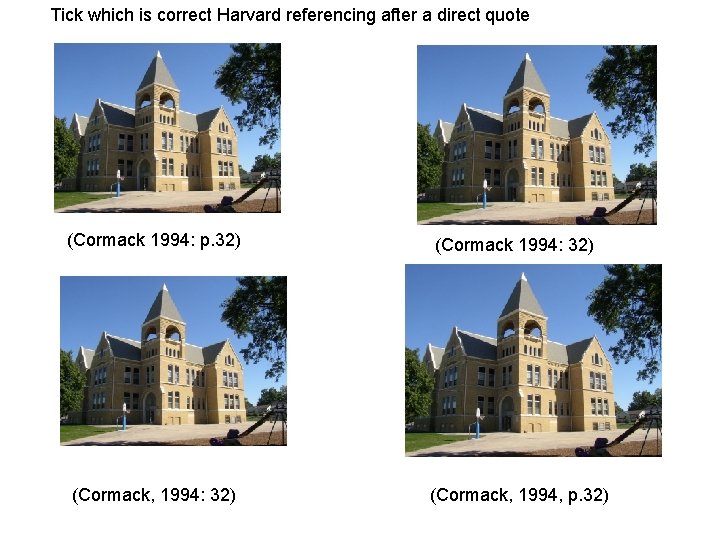
Tick which is correct Harvard referencing after a direct quote (Cormack 1994: p. 32) (Cormack 1994: 32) (Cormack, 1994, p. 32)
http: //www. wo rcester. ac. uk/il s/documents/ Harvard_refer encing. pdf Parenthetical referencing 1881
Which is correct Newman University Harvard referencing? (Cormack 1994: p. 32) (Cormack, 1994: 32) (Cormack, 1994, p. 32) (Cormack, 1994, 32)
Referencing 1. When referring to an author’s work but not quoting you just use Name and Date: As Surname (Date) stated/wrote/argued/considered etc Summary of idea (Surname, Date) E. g. Crystal (2010) has shown that. . . Author agreement (surname date; )
Quotes After the quote in the essay (Surname, Date, Page) E. g. (Thompson, 2009, p. 24)
In the Bibliography Surname, Initial. (Date) Title of Book. Place: Publisher E. g. Cruttenden, T. (1998) An Introduction to the English Language. London: Routledge
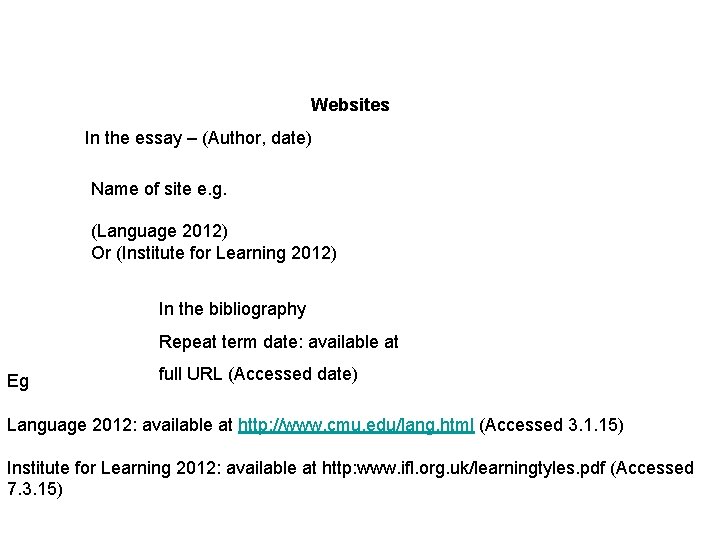
Websites In the essay – (Author, date) Name of site e. g. (Language 2012) Or (Institute for Learning 2012) In the bibliography Repeat term date: available at Eg full URL (Accessed date) Language 2012: available at http: //www. cmu. edu/lang. html (Accessed 3. 1. 15) Institute for Learning 2012: available at http: www. ifl. org. uk/learningtyles. pdf (Accessed 7. 3. 15)
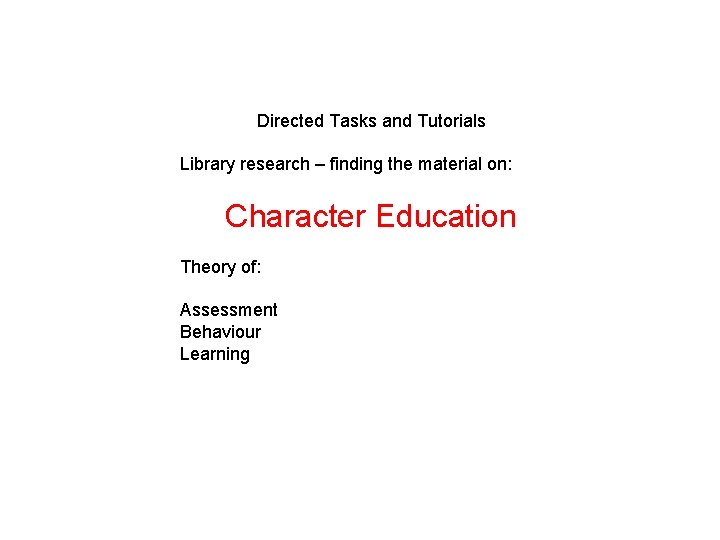
Directed Tasks and Tutorials Library research – finding the material on: Character Education Theory of: Assessment Behaviour Learning