University Research in Indian Country The University of

- Slides: 29
University Research in Indian Country The University of Arizona Claudia E Nelson Director, Native Peoples Technical Assistance Office 520 -626 -9181 cen@email. arizona. edu
University Research in Indian Country A Preliminary Guide for the University of Arizona community wishing to engage in research partnerships with Native Nations
Objectives Introduction to American Indians and Alaska Natives (AI/ANs) History of social and research injustice ABOR Tribal Consultation Policy and University of Arizona Guidelines & Resources
Introduction to American Indians and Alaska Natives (AI/ANs)
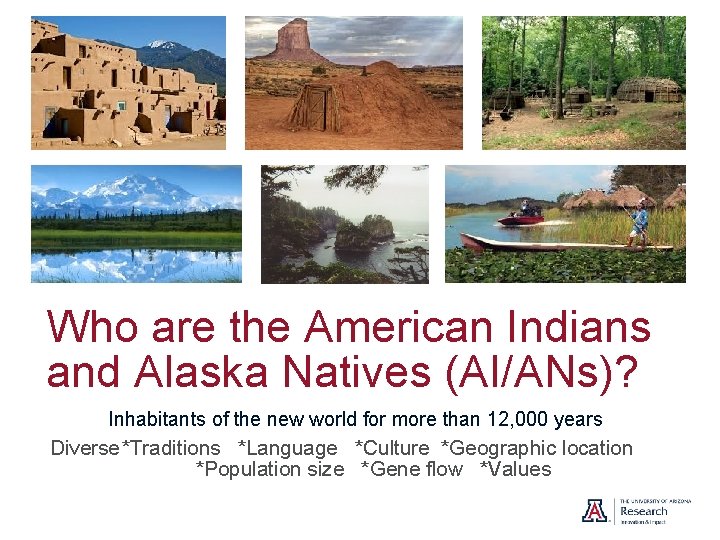
Who are the American Indians and Alaska Natives (AI/ANs)? Inhabitants of the new world for more than 12, 000 years Diverse*Traditions *Language *Culture *Geographic location *Population size *Gene flow *Values
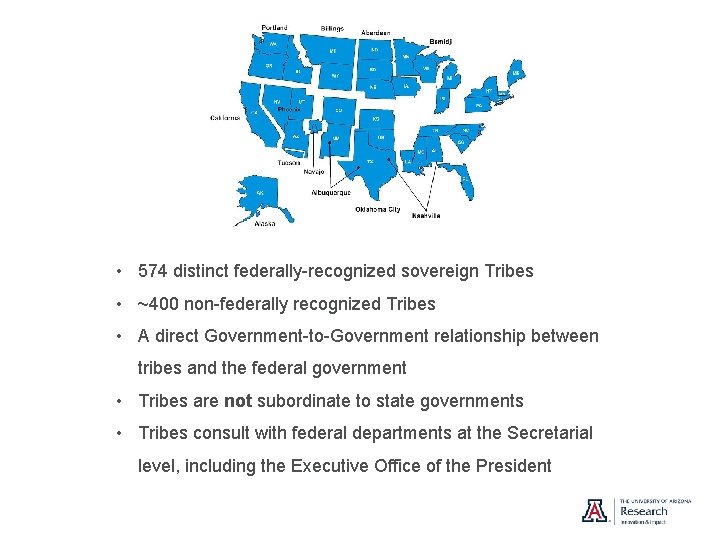
• 574 distinct federally-recognized sovereign Tribes • ~400 non-federally recognized Tribes • A direct Government-to-Government relationship between tribes and the federal government • Tribes are not subordinate to state governments • Tribes consult with federal departments at the Secretarial level, including the Executive Office of the President
ARIZONA • 22 Tribes in Arizona • 5. 3% of Arizona’s population • Total reservation land covers more than a quarter of the state • The University of Arizona resides on the traditional lands of the Tohono O’odham Nation and Pascua Yaqui Tribe
History of Social and Research Injustice
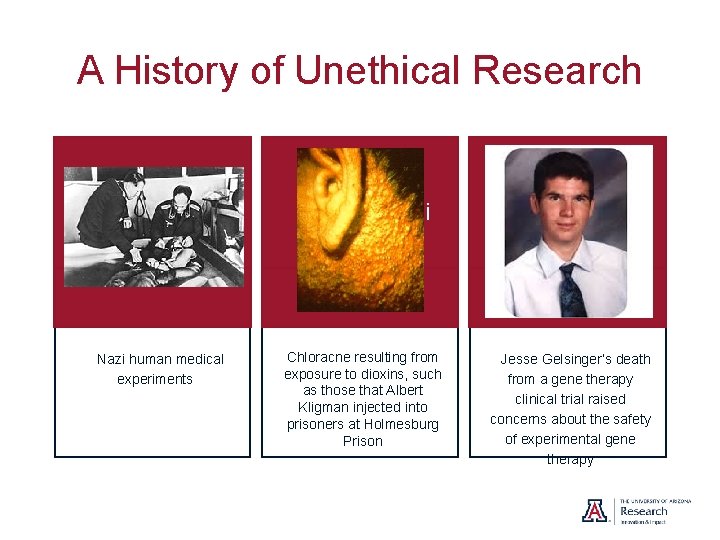
A History of Unethical Research Lorem Ispum Nequi Autium Nazi human medical experiments Lorem Ispum Nequi Autium Chloracne resulting from exposure to dioxins, such as those that Albert Kligman injected into prisoners at Holmesburg Prison Jesse Gelsinger’s death from a gene therapy clinical trial raised concerns about the safety of experimental gene therapy
A Case Study of Research Injustice in Indian Country: The Barrow Alcohol Barrow, Study Alaska (1980): Worried about alcohol use in their community, Native leaders and city officials invite researchers to assess the problem and work with them to devise solutions. The study concludes: Study researchers release a report to the public and the Barrow community simultaneously entitled “The Inupiat, Economics and Alcohol on the Alaskan North Slope. ” The aftermath: The New York Times publishes a front page story “Alcohol Plagues Eskimos” (1/22/80).
A Case Study of Research Injustice in Indian Country: The Barrow Alcohol Study Negative impacts: The article states that the Inupiat Eskimos are “practically committing suicide by mass alcoholism, ” and that violence is becoming the most frequent cause of deaths as a result of “the explosive and self-destructive abuse of alcohol. ” The community: The Native community feels stigmatized and that the researchers violated their trust by failing to share the results with them first and allowing them to respond. The result: Continued distrust of researchers and the research process among Native American communities.
Case Study #2: The Havasupai Tribe Sues Arizona State University 2004 The Havasupai Tribe files a lawsuit upon discovering that their DNA samples, collected for genetic studies on type 2 diabetes, has been used in several other genetic studies without their knowledge or consent.
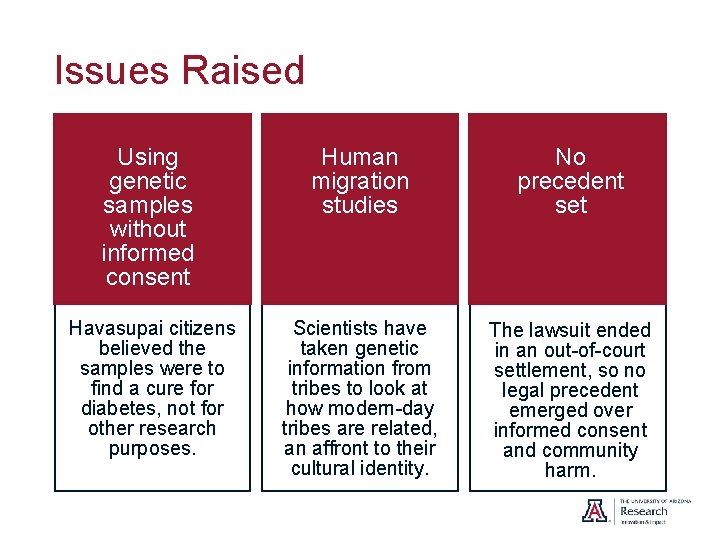
Issues Raised Using genetic samples without informed consent Human migration studies No precedent set Havasupai citizens believed the samples were to find a cure for diabetes, not for other research purposes. Scientists have taken genetic information from tribes to look at how modern-day tribes are related, an affront to their cultural identity. The lawsuit ended in an out-of-court settlement, so no legal precedent emerged over informed consent and community harm.
Please watch the video produced by the New York Times in 2010, reflecting on the research injustice experienced by the Havasupai Tribe. Blood Journey Kassie Bracken & Amy Harton, Blood Journey. New. York. Times. com video collection (2010). https: //www. nytimes. com/video/us/1247467672743/blood-journey. html
ABOR Tribal Consultation Policy and University of Arizona Guidelines & Resources
Arizona Board of Regents (ABOR) Policy 1 -118 (Feb 2016) "The board and the universities value and desire to develop their relationships with sovereign tribes. This policy reflects the board’s commitment to those important government-togovernment relationships by recognizing and affirming fundamental principles of consultation and respect. ”
UArizona Guidelines for Research & Institutional Engagement with Native Nations These guidelines were developed to complement ABOR 1 -118. They outline specific activities where documentation of tribal consultation and approval is required.
Research or Engagement Where Notice and/or Documentation of Approval Are Required The research or institutional engagement takes place in Indian country, and/or on land under the control or jurisdiction of a sovereign tribe, or
Research or Engagement Where Notice and/or Documentation of Approval Are Required Human research is conducted in Indian Health Service (IHS) facilities or involving IHS staff or resources, or
Research or Engagement Where Notice and/or Documentation of Approval Are Required The research or engagement involves participation by members of a sovereign tribe and may foreseeably result in research results with implications specific to a tribe or to individuals as members of the tribe, or
Research or Engagement Where Notice and/or Documentation of Approval Are Required The research or engagement involves human remains, funerary objects, sacred objects, or objects of cultural patrimony that are subject to the Native American Graves Protection and Repatriation Act, or
Research or Engagement Where Notice and/or Documentation of Approval Are Required The research involves human subjects, including genetic testing or testing of blood, tissue, or other biological materials if the individual’s membership in or affiliation with a tribe is identified, and that is intended to or may foreseeably result in conclusions or generalizations about a tribe or individuals as members of the tribe.
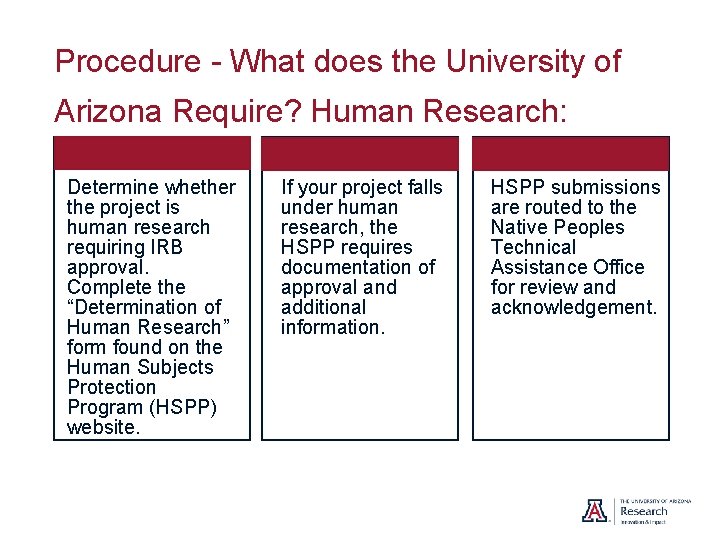
Procedure - What does the University of Arizona Require? Human Research: Determine whether the project is human research requiring IRB approval. Complete the “Determination of Human Research” form found on the Human Subjects Protection Program (HSPP) website. If your. Lorem project falls under human Ispum Nequi research, the Autium HSPP requires documentation of approval and additional information. HSPP submissions are routed to the Native Peoples Technical Assistance Office for review and acknowledgement.
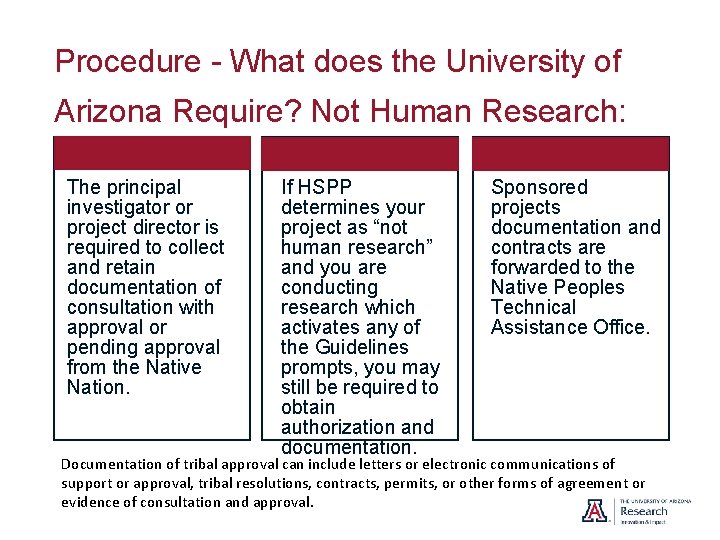
Procedure - What does the University of Arizona Require? Not Human Research: The principal investigator or project director is required to collect and retain documentation of consultation with approval or pending approval from the Native Nation. Lorem If HSPP determines your Ispum Nequi project as “not Autium human research” and you are conducting research which activates any of the Guidelines prompts, you may still be required to obtain authorization and documentation. Sponsored projects documentation and contracts are forwarded to the Native Peoples Technical Assistance Office. Documentation of tribal approval can include letters or electronic communications of support or approval, tribal resolutions, contracts, permits, or other forms of agreement or evidence of consultation and approval.
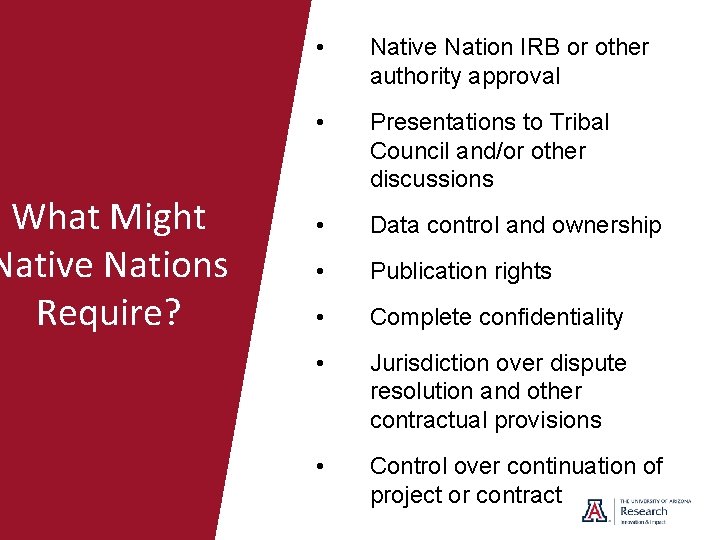
What Might Native Nations Require? • Native Nation IRB or other authority approval • Presentations to Tribal Council and/or other discussions • Data control and ownership • Publication rights • Complete confidentiality • Jurisdiction over dispute resolution and other contractual provisions • Control over continuation of project or contract
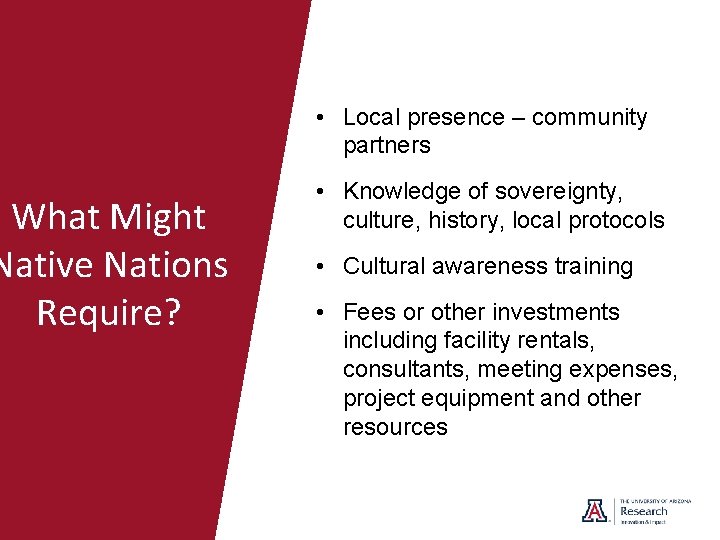
What Might Native Nations Require? • Local presence – community partners • Knowledge of sovereignty, culture, history, local protocols • Cultural awareness training • Fees or other investments including facility rentals, consultants, meeting expenses, project equipment and other resources
Arizona’s Native Nations • All Native Nations govern research on their reservation lands in some way. • The Navajo Nation has an IRB and guidelines available online. • The Navajo Nation, Hualapai Tribe, Hopi Tribe, Pueblo of Zuni, Colorado River Indian Tribes, Salt River Pima Maricopa Tribe, Gila River Indian Community, and the Tohono O’odham Nation all have enacted laws governing research.
RII Best Practices: Recommendations for Research and Engagement • Understand acknowledge tribal SOVEREIGNTY • Engage in early and continuous CONSULTATION • Demonstrate INFORMED CONSENT has been obtained • Recognize COMMUNITY RISK beyond focusing on potential risks to individuals
University of Arizona Resources • RII Native Peoples Technical Assistance Office: https: //nptao. arizona. edu/ • ABOR Tribal Consultation Policy and UArizona Guidelines: https: //nptao. arizona. edu/research-engagement-guidelines • For more information on Arizona tribes and tribal research policies: https: //nptao. arizona. edu/az-tribal-research-policies • Human Subjects Protection Program: https: //rgw. arizona. edu/compliance/human-subjects-protection-program • UArizona Research, Innovation & Impact: https: //research. arizona. edu/