U S History EOCT test Unit 9 Preparation
- Slides: 92
U. S. History EOCT test Unit 9 Preparation
SSUSH 21
SSUSH 21 a Describe the baby boom and the impact as shown by Levittown and the Interstate Highway Act.
GI Bill changes society • Serviceman’s readjustment Act • GI stands for “Government Issue” • Gave returning veterans money to further their education, training, home loans and property and other benefits. • This money resulted in a social revolution because common people could afford homes.
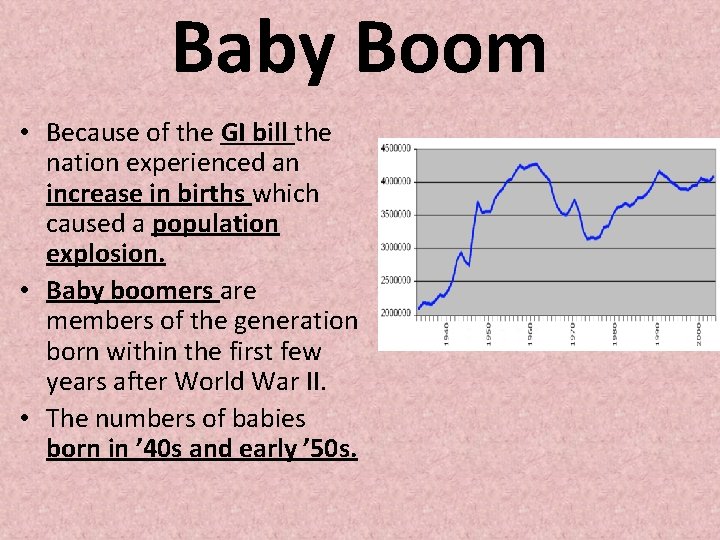
Baby Boom • Because of the GI bill the nation experienced an increase in births which caused a population explosion. • Baby boomers are members of the generation born within the first few years after World War II. • The numbers of babies born in ’ 40 s and early ’ 50 s.
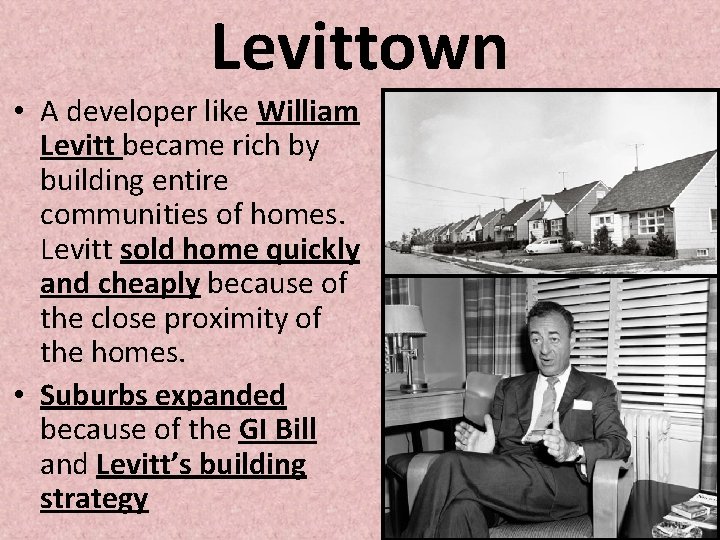
Levittown • A developer like William Levitt became rich by building entire communities of homes. Levitt sold home quickly and cheaply because of the close proximity of the homes. • Suburbs expanded because of the GI Bill and Levitt’s building strategy
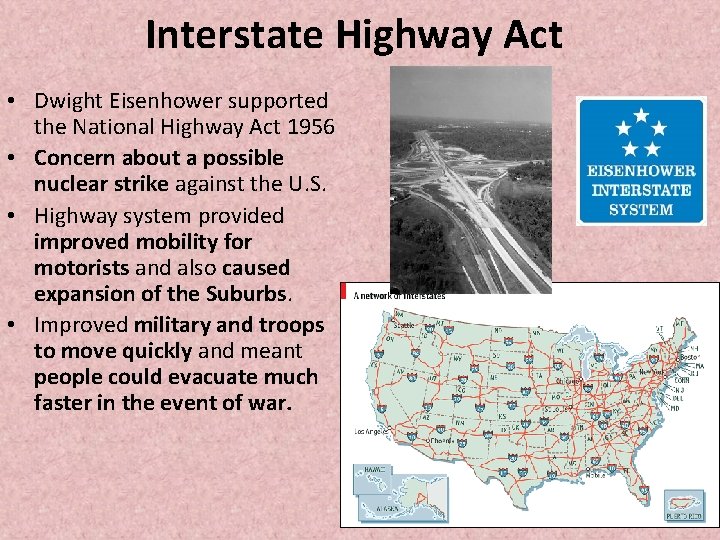
Interstate Highway Act • Dwight Eisenhower supported the National Highway Act 1956 • Concern about a possible nuclear strike against the U. S. • Highway system provided improved mobility for motorists and also caused expansion of the Suburbs. • Improved military and troops to move quickly and meant people could evacuate much faster in the event of war.
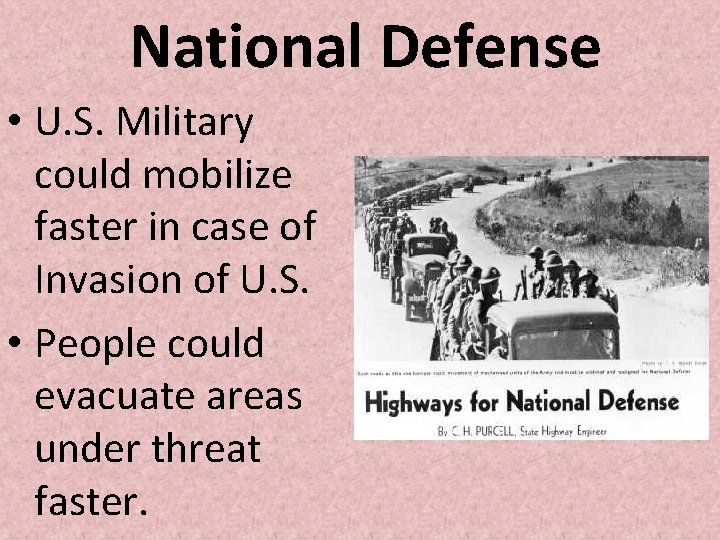
National Defense • U. S. Military could mobilize faster in case of Invasion of U. S. • People could evacuate areas under threat faster.
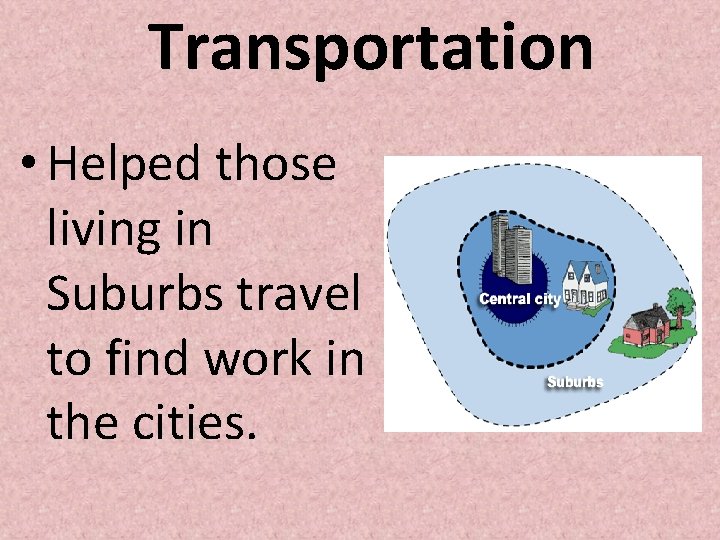
Transportation • Helped those living in Suburbs travel to find work in the cities.
SSUSH 21 b Describe the impact television had on American Culture; including the presidential debates (Kennedy/Nixon, 1960) and news coverage of the Civil Rights Movement.
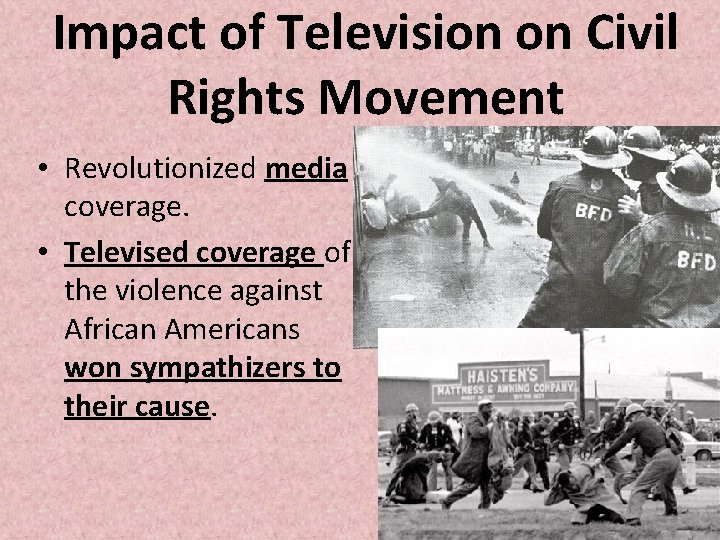
Impact of Television on Civil Rights Movement • Revolutionized media coverage. • Televised coverage of the violence against African Americans won sympathizers to their cause.
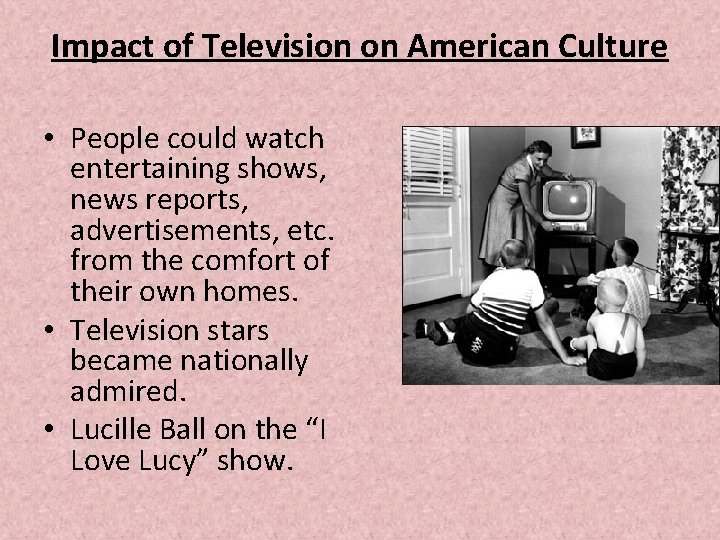
Impact of Television on American Culture • People could watch entertaining shows, news reports, advertisements, etc. from the comfort of their own homes. • Television stars became nationally admired. • Lucille Ball on the “I Love Lucy” show.
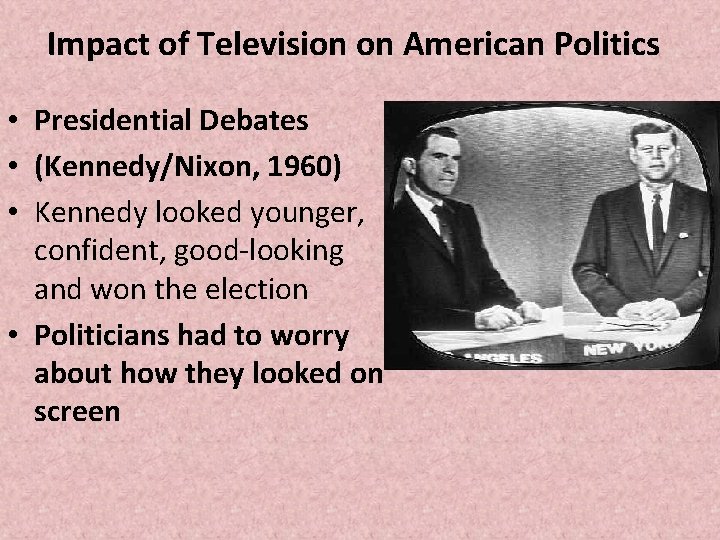
Impact of Television on American Politics • Presidential Debates • (Kennedy/Nixon, 1960) • Kennedy looked younger, confident, good-looking and won the election • Politicians had to worry about how they looked on screen
SSUSH 21 c Analyze the impact of technology on American life, include the development of the personal computer and the cellular telephone and the expanded use of air conditioning.
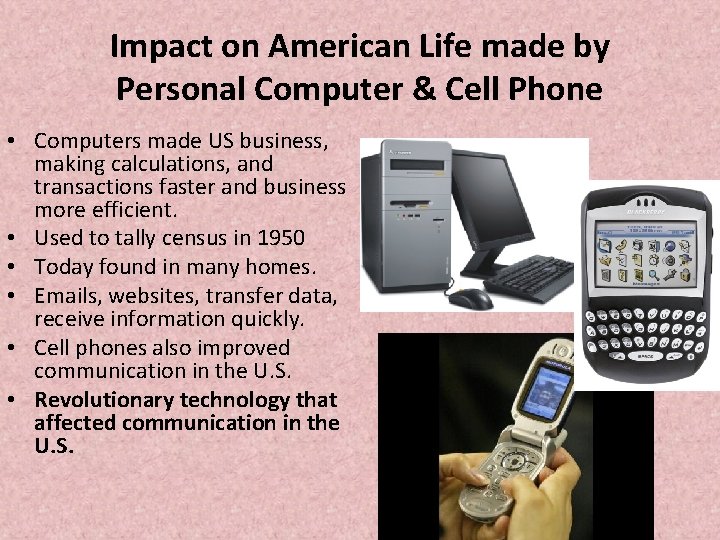
Impact on American Life made by Personal Computer & Cell Phone • Computers made US business, making calculations, and transactions faster and business more efficient. • Used to tally census in 1950 • Today found in many homes. • Emails, websites, transfer data, receive information quickly. • Cell phones also improved communication in the U. S. • Revolutionary technology that affected communication in the U. S.
Eisenhower’s response to Sputnik I • October 4, 1957 the Soviets launched Sputnik 1 during the Cold War. • Signaled a technology gap between the U. S. and the Soviet Union • On July 29, 1958 the National Aeronautics Space Act created the Government Agency NASA • Its goal was to Pioneer the future of space exploration, scientific discovery, and aeronautics research. National Aeronautics and Space Administration (NASA)
SSUSH 22
SSUSH 22 a Explain the importance of President Truman’s order to integrate the U. S. military and the federal government.
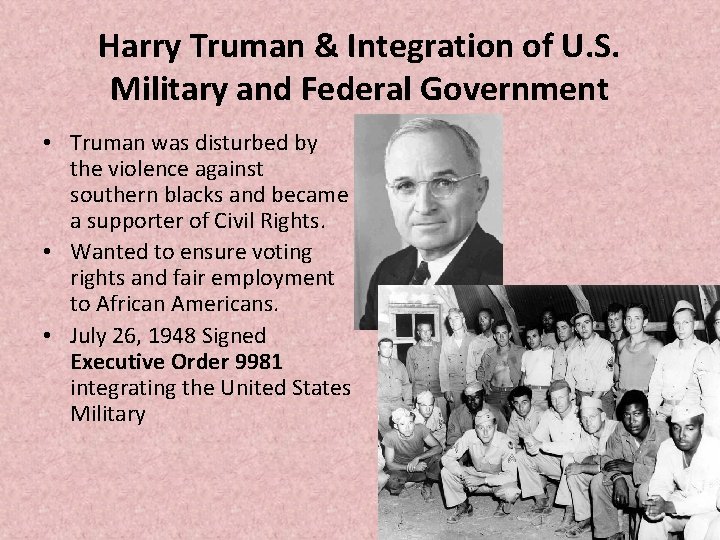
Harry Truman & Integration of U. S. Military and Federal Government • Truman was disturbed by the violence against southern blacks and became a supporter of Civil Rights. • Wanted to ensure voting rights and fair employment to African Americans. • July 26, 1948 Signed Executive Order 9981 integrating the United States Military
Executive Order 9980 & 9981 • EO 9980 – Created the Fair Employment Board to eliminate racial discrimination in federal employment. • EO 9981 - established the President’s Committee on Equality of Treatment and Opportunity in the Armed Services.
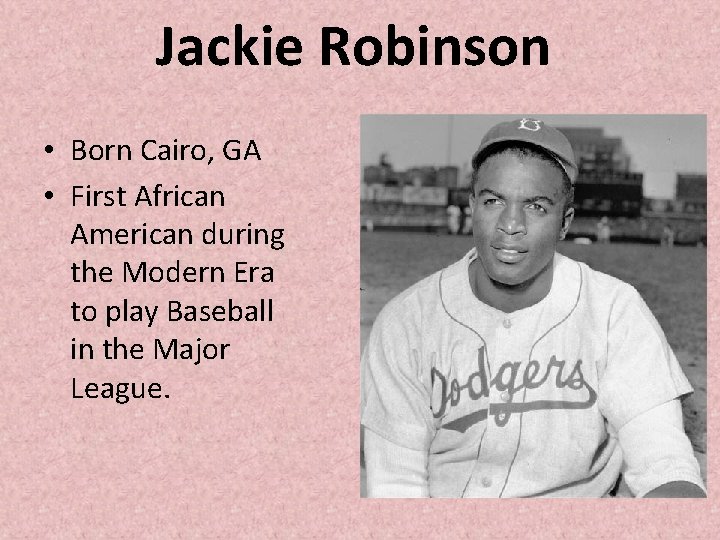
SSUSH 22 b Identify Jackie Robinson and the integration of baseball.
Jackie Robinson • Born Cairo, GA • First African American during the Modern Era to play Baseball in the Major League.
SSUSH 22 c Explain Brown v. Board of Education and efforts to resist the decision.
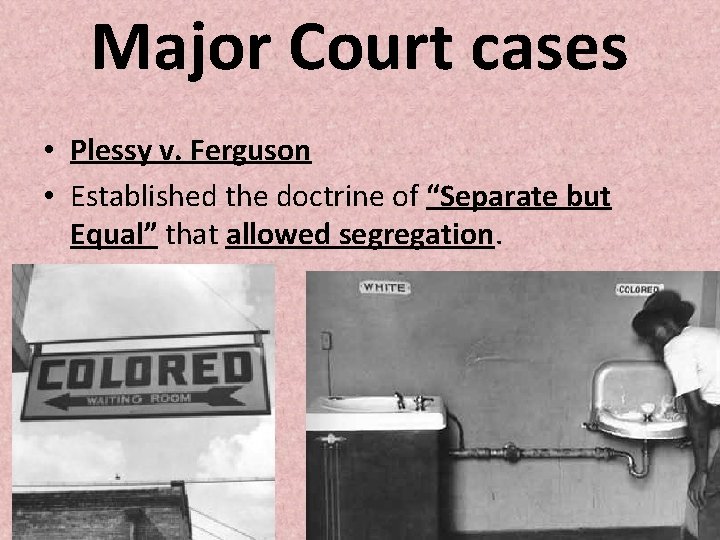
Major Court cases • Plessy v. Ferguson • Established the doctrine of “Separate but Equal” that allowed segregation.
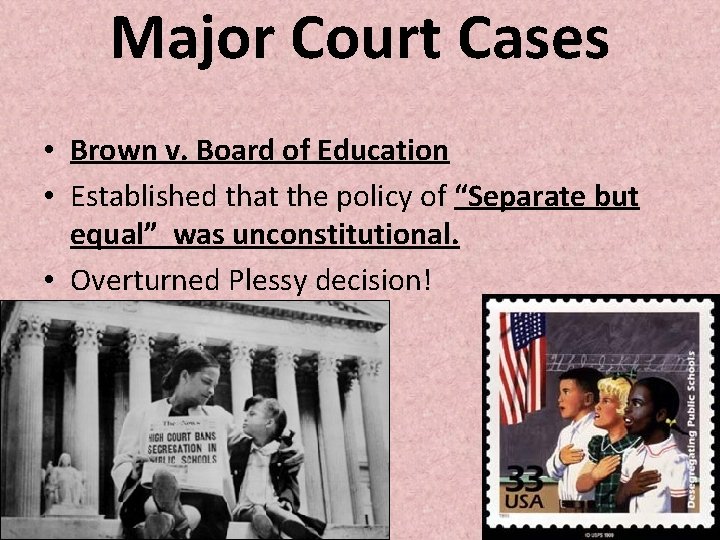
Major Court Cases • Brown v. Board of Education • Established that the policy of “Separate but equal” was unconstitutional. • Overturned Plessy decision!
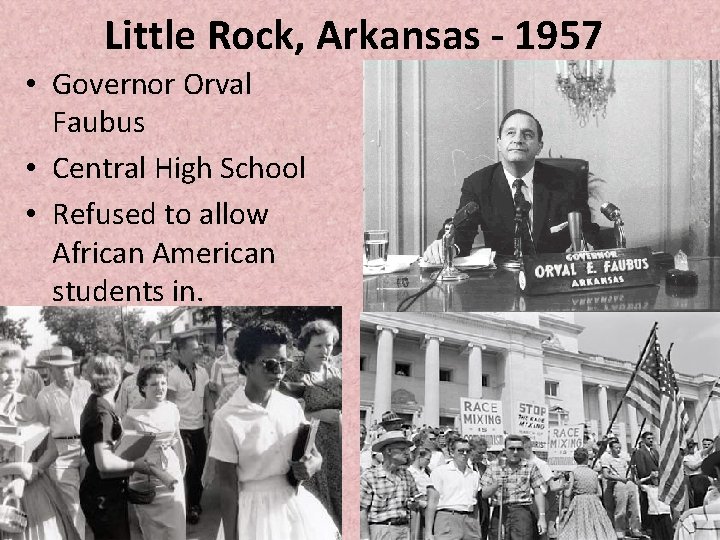
Little Rock, Arkansas - 1957 • Governor Orval Faubus • Central High School • Refused to allow African American students in.
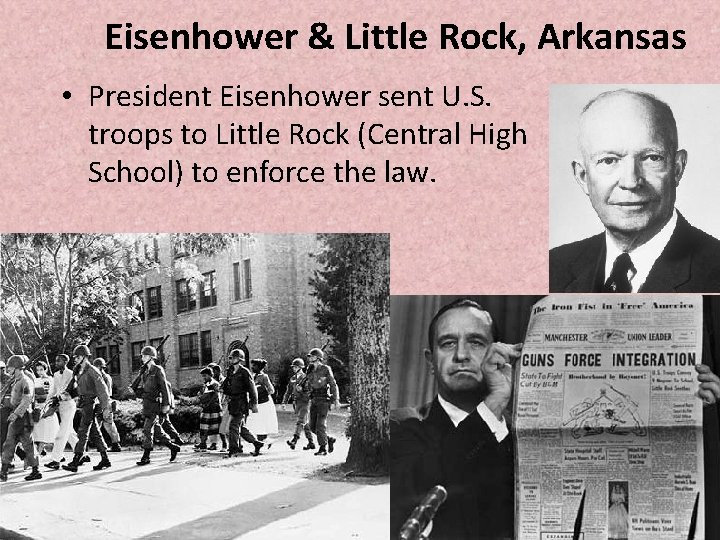
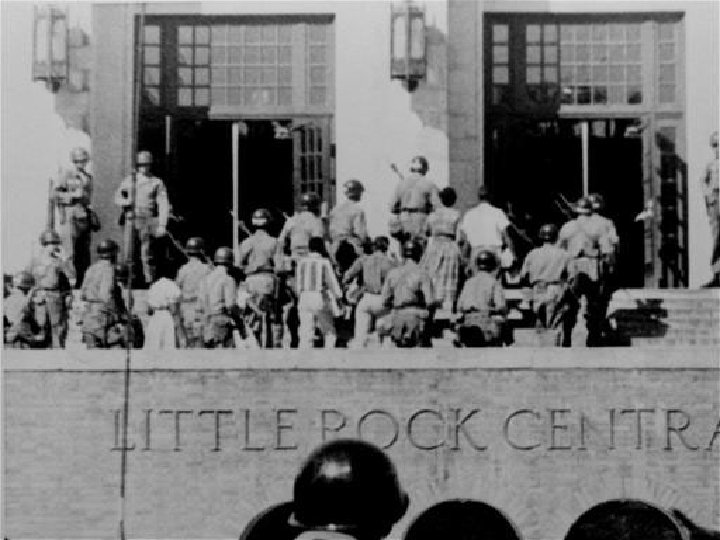
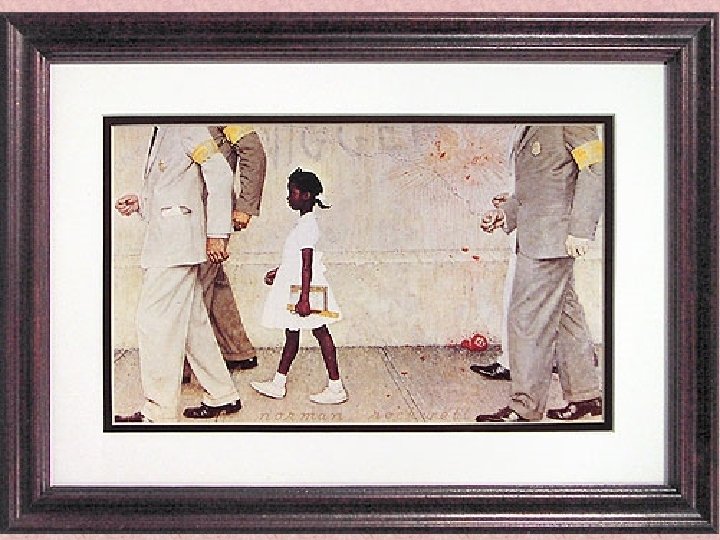
Eisenhower & Little Rock, Arkansas • President Eisenhower sent U. S. troops to Little Rock (Central High School) to enforce the law.
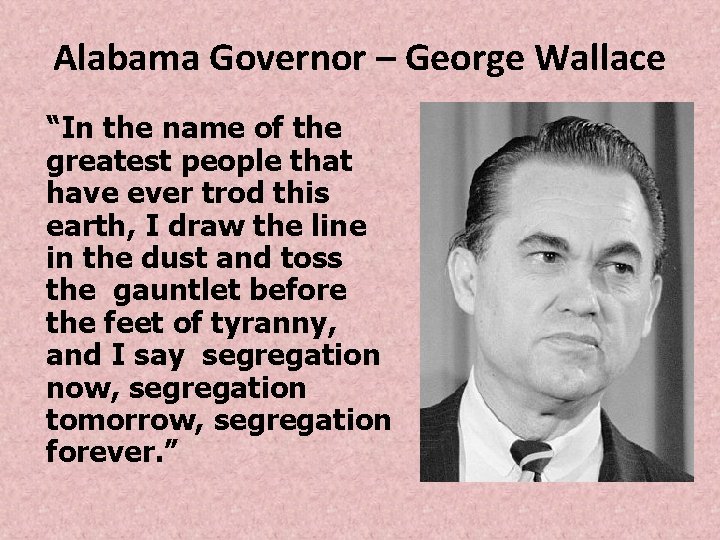
Alabama Governor – George Wallace “In the name of the greatest people that have ever trod this earth, I draw the line in the dust and toss the gauntlet before the feet of tyranny, and I say segregation now, segregation tomorrow, segregation forever. ”
SSUSH 22 d Describe the significance of Martin Luther King, Jr. ’s Letter from Birmingham Jail and his I Have a Dream speech.
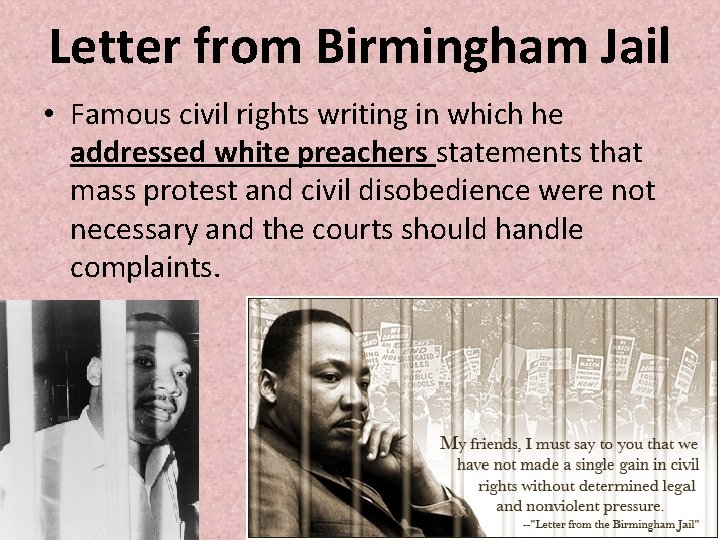
Letter from Birmingham Jail • Famous civil rights writing in which he addressed white preachers statements that mass protest and civil disobedience were not necessary and the courts should handle complaints.
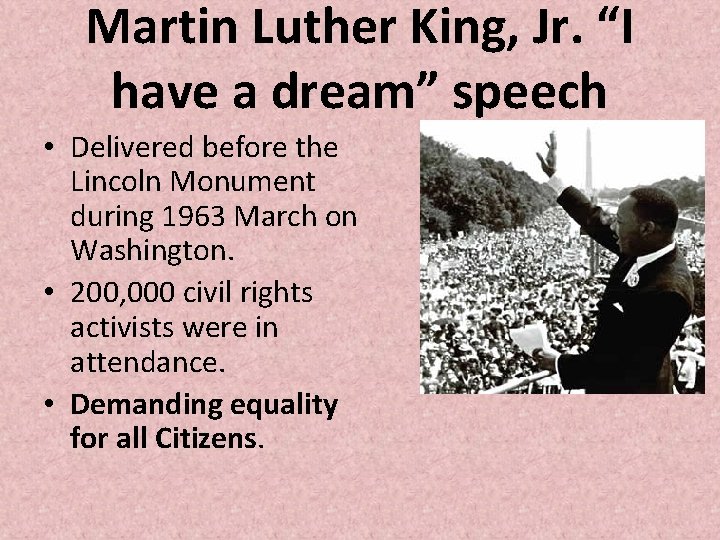
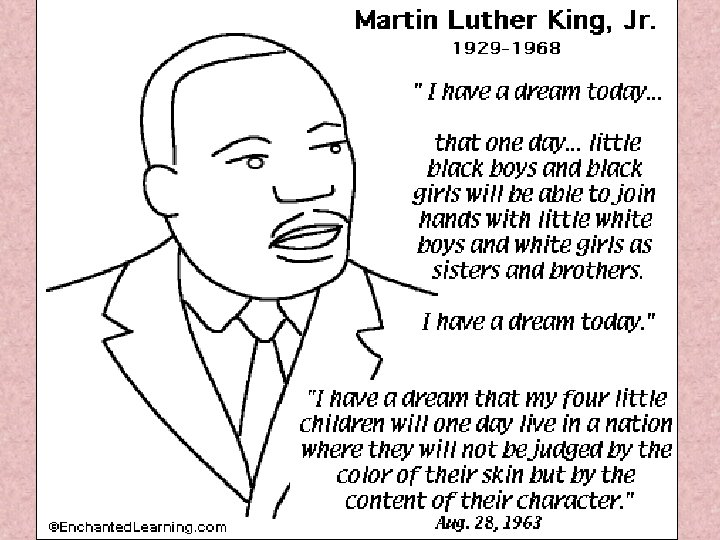
Martin Luther King, Jr. “I have a dream” speech • Delivered before the Lincoln Monument during 1963 March on Washington. • 200, 000 civil rights activists were in attendance. • Demanding equality for all Citizens.
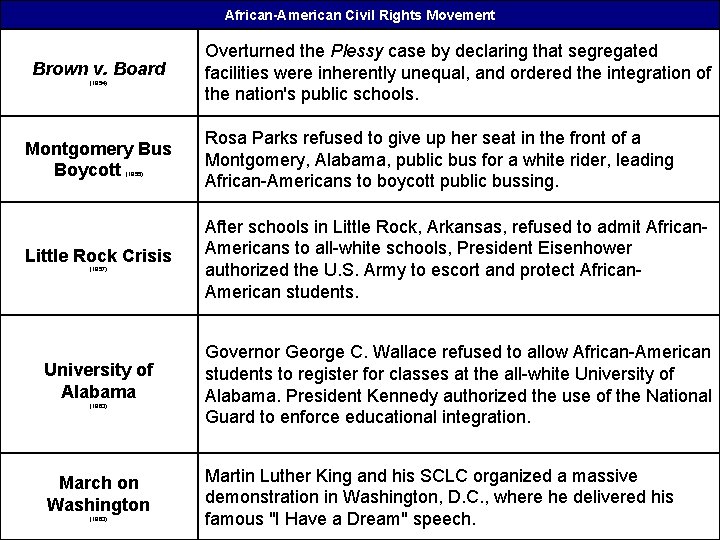
African-American Civil Rights Movement Brown v. Board (1954) Overturned the Plessy case by declaring that segregated facilities were inherently unequal, and ordered the integration of the nation's public schools. Montgomery Bus Boycott Rosa Parks refused to give up her seat in the front of a Montgomery, Alabama, public bus for a white rider, leading African-Americans to boycott public bussing. Little Rock Crisis After schools in Little Rock, Arkansas, refused to admit African. Americans to all-white schools, President Eisenhower authorized the U. S. Army to escort and protect African. American students. (1955) (1957) University of Alabama (1963) March on Washington (1963) Governor George C. Wallace refused to allow African-American students to register for classes at the all-white University of Alabama. President Kennedy authorized the use of the National Guard to enforce educational integration. Martin Luther King and his SCLC organized a massive demonstration in Washington, D. C. , where he delivered his famous "I Have a Dream" speech.
SSUSH 22 e Describe the causes and consequences of the Civil Rights Act of 1964 and the Voting Rights Act of 1965.
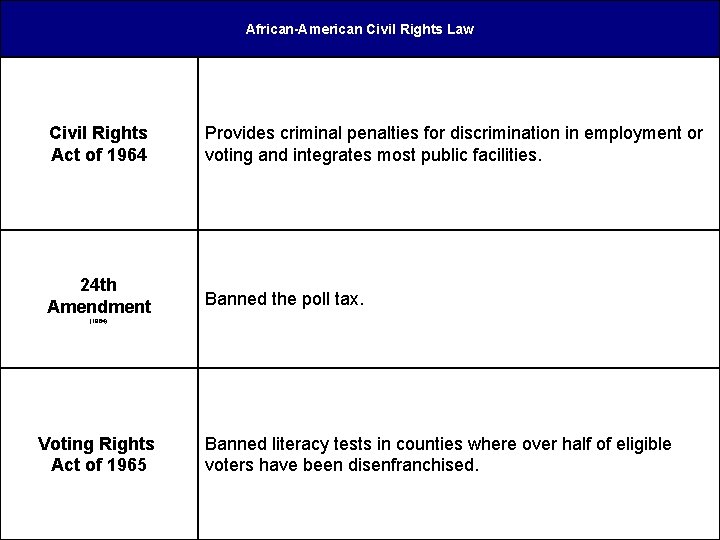
African-American Civil Rights Law Civil Rights Act of 1964 Provides criminal penalties for discrimination in employment or voting and integrates most public facilities. 24 th Amendment Banned the poll tax. (1964) Voting Rights Act of 1965 Banned literacy tests in counties where over half of eligible voters have been disenfranchised.
SSUSH 23
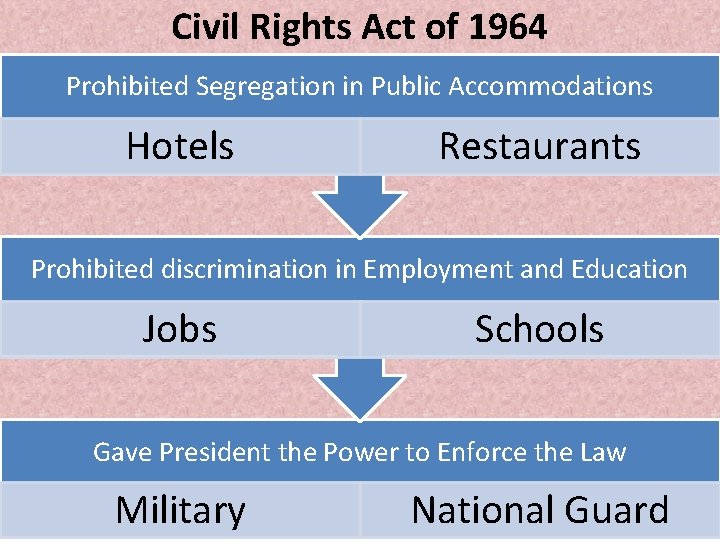
Civil Rights Act of 1964 Prohibited Segregation in Public Accommodations Hotels Restaurants Prohibited discrimination in Employment and Education Jobs Schools Gave President the Power to Enforce the Law Military National Guard
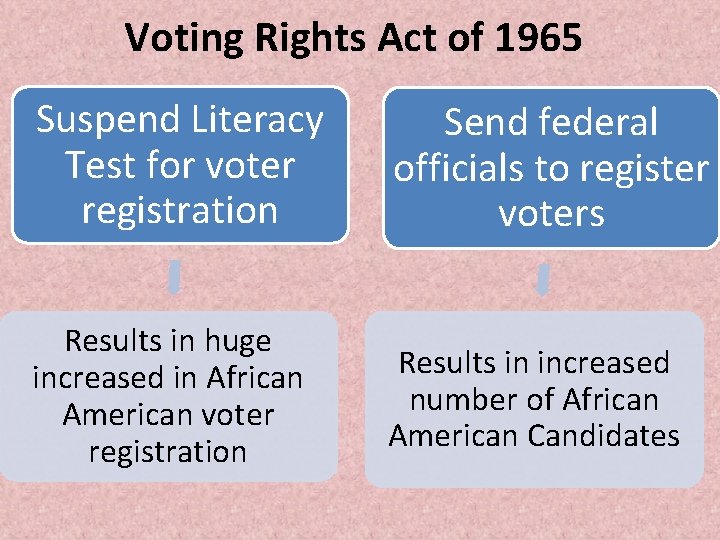
Voting Rights Act of 1965 Suspend Literacy Test for voter registration Send federal officials to register voters Results in huge increased in African American voter registration Results in increased number of African American Candidates
SSUSH 23 a Describe the Warren Court and the expansion of individual rights as seen in the Miranda decision.
Miranda v. Arizona • Earl Warren – Chief Justice • 1966 • Ernesto Miranda arrested and interrogated w/o lawyer present. • Confessed to Kidnapping and Rape • The Court held that Miranda’s 5 th amendment protection against self incrimination and his 6 th amendment right to counsel had been violated. • Police officers must read to people arrested prior to questioning. “You have the right to remain silent…”
Miranda v. Arizona Expanded the Rights of Individuals
SSUSH 23 b Describe the political impact of the assassination of President John F. Kennedy; include the impact on civil rights legislation.
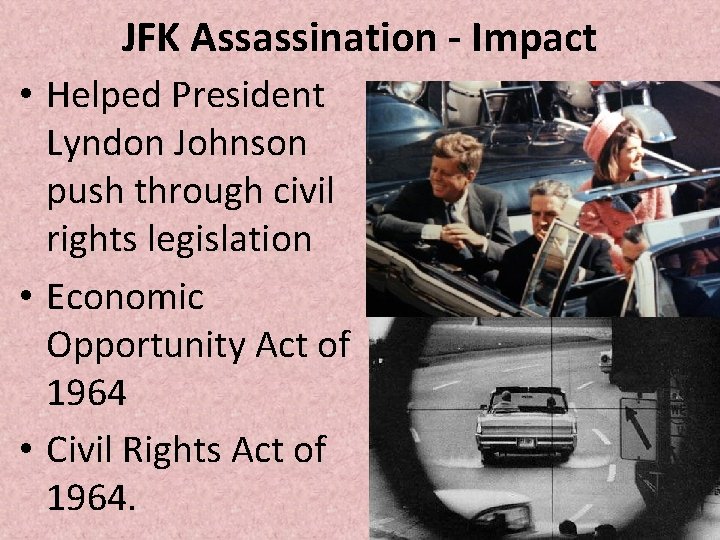
JFK Assassination - Impact • Helped President Lyndon Johnson push through civil rights legislation • Economic Opportunity Act of 1964 • Civil Rights Act of 1964.
SSUSH 23 c Explain Lyndon Johnson’s Great Society; include the establishment of Medicare.
Lyndon Baines Johnson Great Society Program
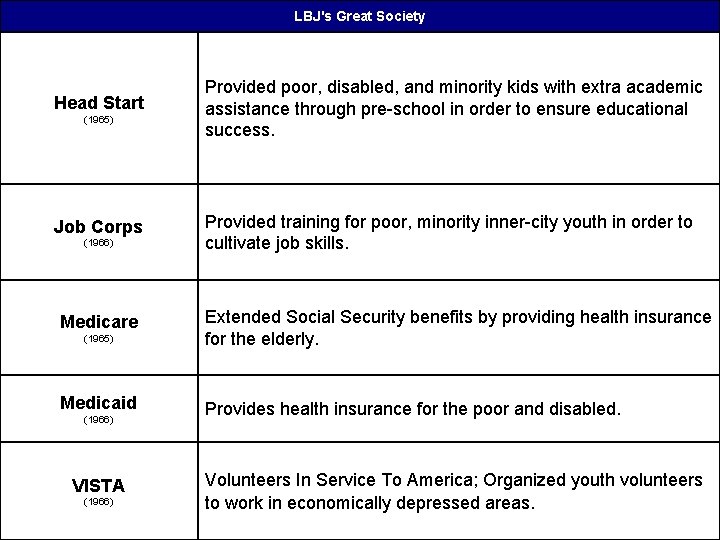
LBJ's Great Society Head Start (1965) Job Corps (1966) Medicare (1965) Medicaid (1966) VISTA (1966) Provided poor, disabled, and minority kids with extra academic assistance through pre-school in order to ensure educational success. Provided training for poor, minority inner-city youth in order to cultivate job skills. Extended Social Security benefits by providing health insurance for the elderly. Provides health insurance for the poor and disabled. Volunteers In Service To America; Organized youth volunteers to work in economically depressed areas.
SSUSH 23 d Describe the social and political turmoil of 1968, include the assassinations of Martin Luther King, Jr. and Robert F. Kennedy, and the events surrounding the Democratic National Convention.
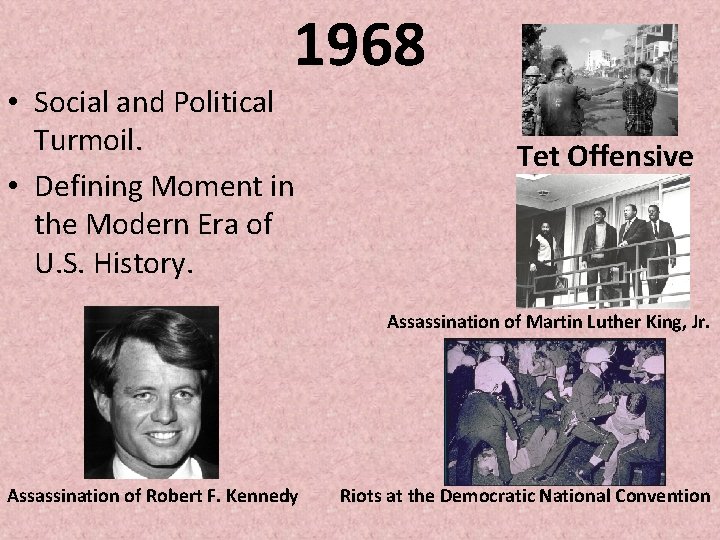
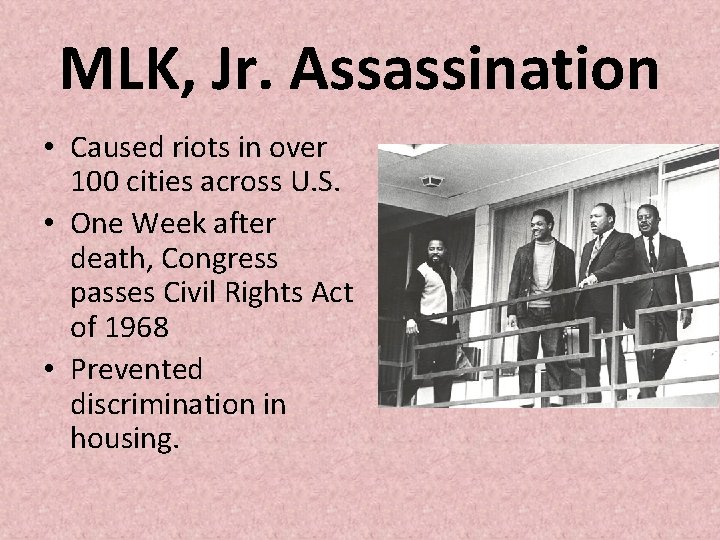
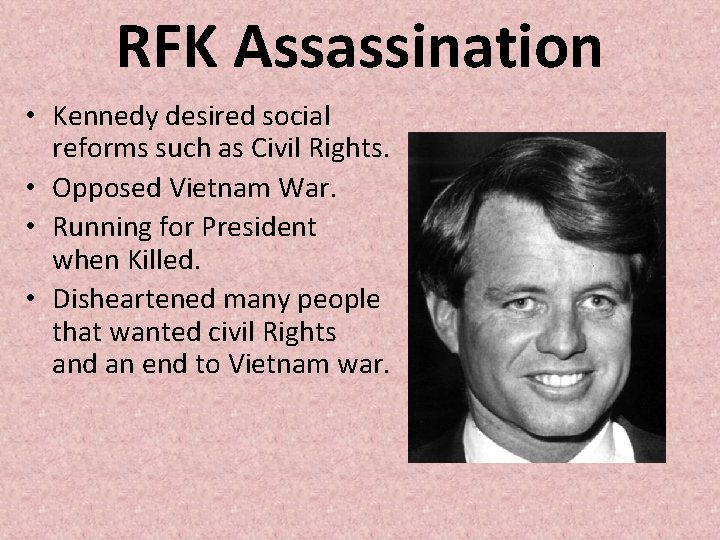
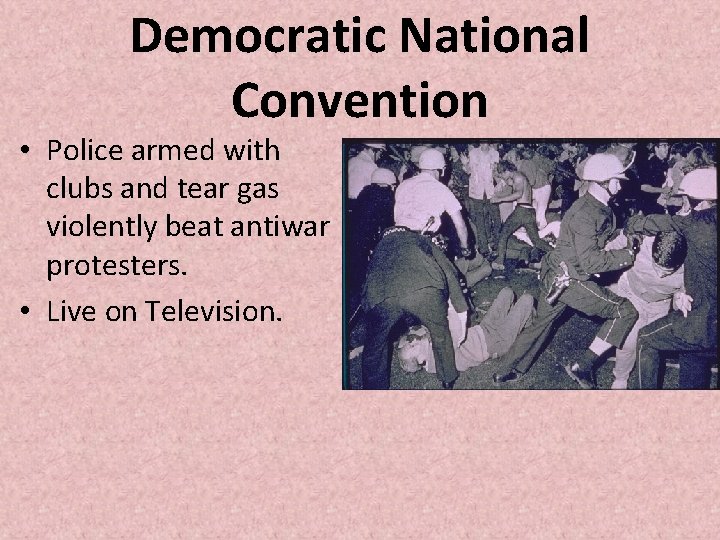
1968 • Social and Political Turmoil. • Defining Moment in the Modern Era of U. S. History. Tet Offensive Assassination of Martin Luther King, Jr. Assassination of Robert F. Kennedy Riots at the Democratic National Convention
MLK, Jr. Assassination • Caused riots in over 100 cities across U. S. • One Week after death, Congress passes Civil Rights Act of 1968 • Prevented discrimination in housing.
RFK Assassination • Kennedy desired social reforms such as Civil Rights. • Opposed Vietnam War. • Running for President when Killed. • Disheartened many people that wanted civil Rights and an end to Vietnam war.
Democratic National Convention • Police armed with clubs and tear gas violently beat antiwar protesters. • Live on Television.
SSUSH 24
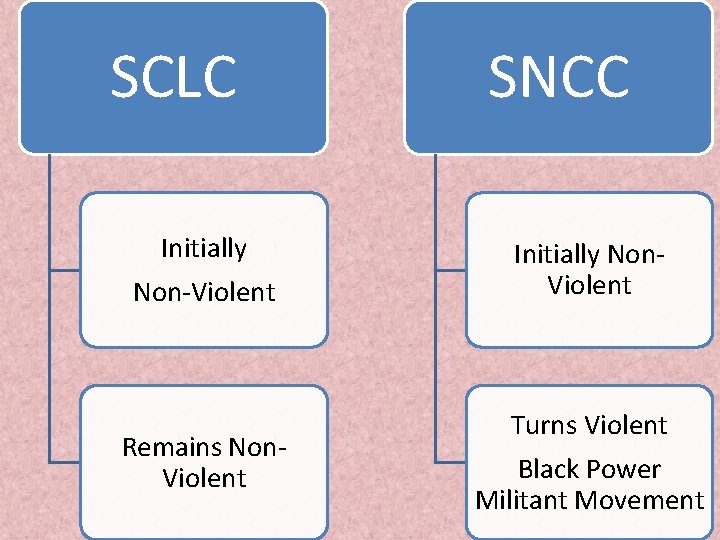
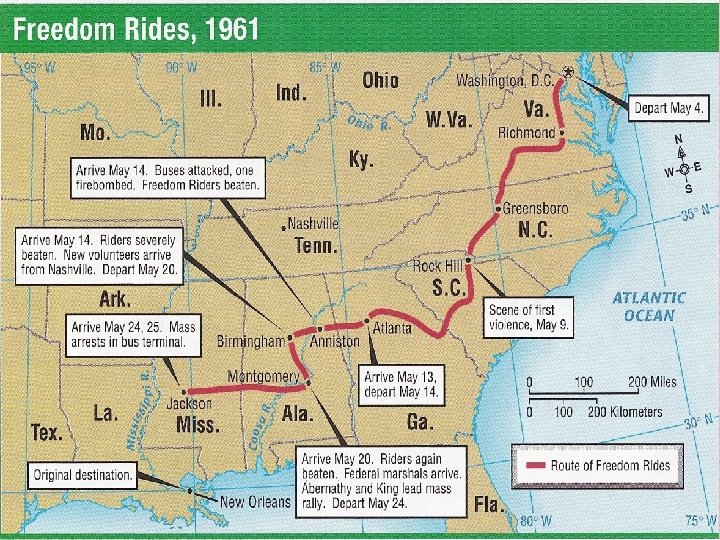
SSUSH 24 a Compare and contrast the Student Non-Violent Coordinating Committee (SNCC) and the Southern Christian Leadership Conference (SCLC) tactics, include sit-ins, freedom rides, and changing composition.
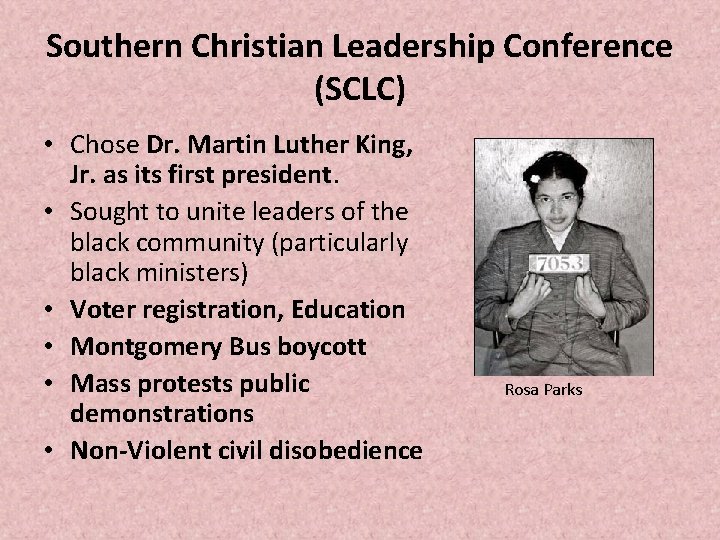
Southern Christian Leadership Conference (SCLC) • Chose Dr. Martin Luther King, Jr. as its first president. • Sought to unite leaders of the black community (particularly black ministers) • Voter registration, Education • Montgomery Bus boycott • Mass protests public demonstrations • Non-Violent civil disobedience Rosa Parks
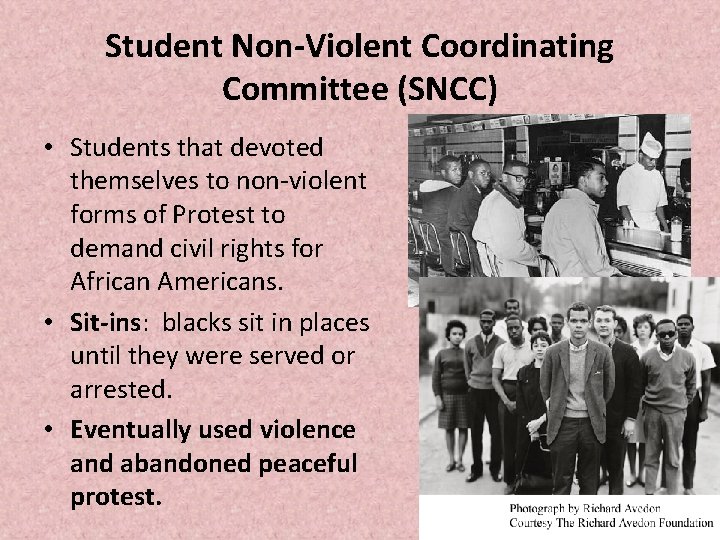
Student Non-Violent Coordinating Committee (SNCC) • Students that devoted themselves to non-violent forms of Protest to demand civil rights for African Americans. • Sit-ins: blacks sit in places until they were served or arrested. • Eventually used violence and abandoned peaceful protest.
SCLC SNCC Initially Non-Violent Initially Non. Violent Remains Non. Violent Turns Violent Black Power Militant Movement
SSUSH 24 b Describe the National Organization of Women (NOW) and the origins and goals of the modern women’s movement.
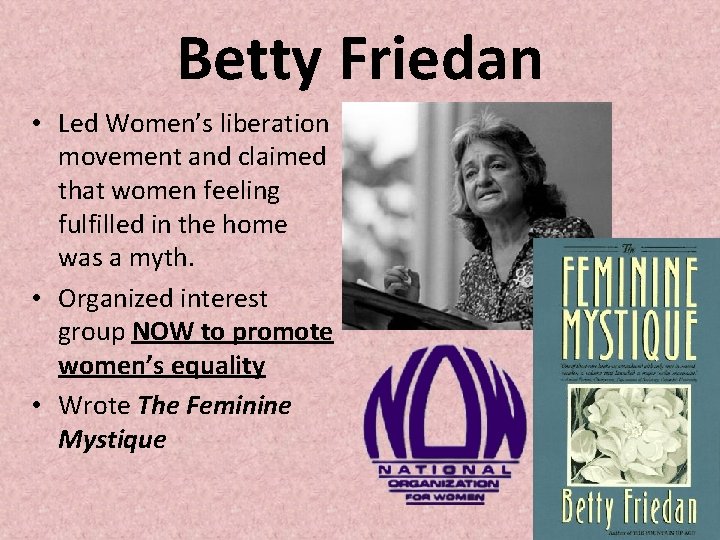
Betty Friedan • Led Women’s liberation movement and claimed that women feeling fulfilled in the home was a myth. • Organized interest group NOW to promote women’s equality • Wrote The Feminine Mystique
SSUSH 24 c Analyze the anti. Vietnam War movement.
SSUSH 24 d Analyze Cesar Chavez and the United Farm Workers’ movement.
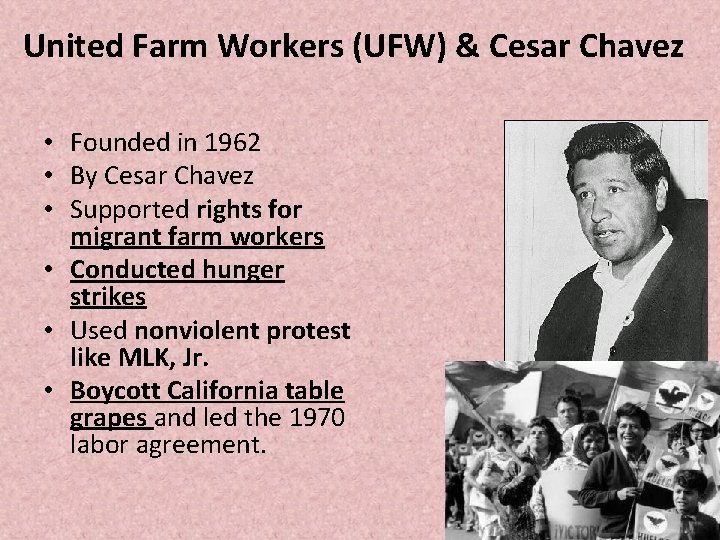
United Farm Workers (UFW) & Cesar Chavez • Founded in 1962 • By Cesar Chavez • Supported rights for migrant farm workers • Conducted hunger strikes • Used nonviolent protest like MLK, Jr. • Boycott California table grapes and led the 1970 labor agreement.
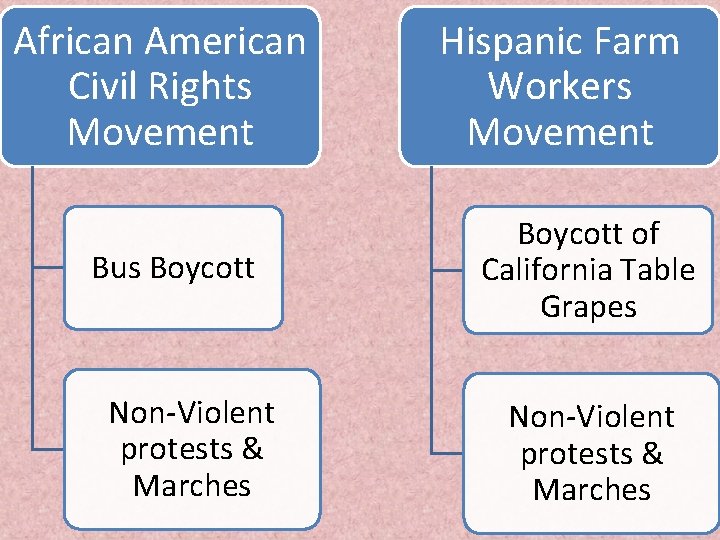
African American Civil Rights Movement Bus Boycott Non-Violent protests & Marches Hispanic Farm Workers Movement Boycott of California Table Grapes Non-Violent protests & Marches
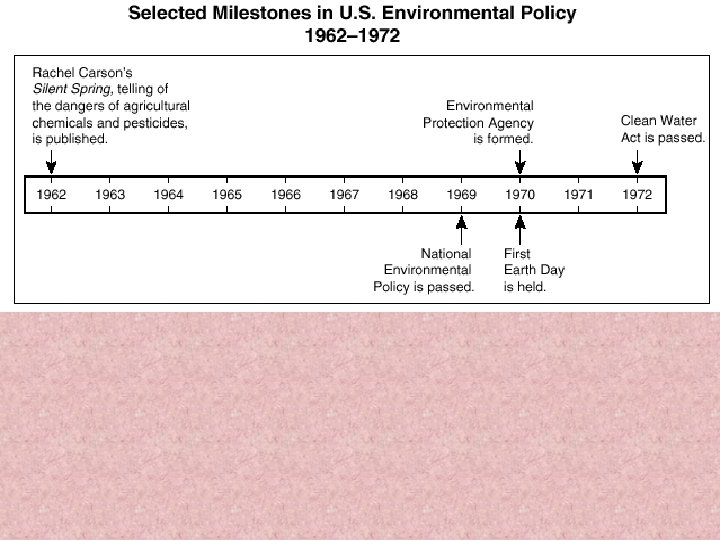
SSUSH 24 e Explain the importance of Rachel Carson’s Silent Spring and the resulting developments; include Earth Day, the creation of the Environmental Protection Agency (EPA), and the modern environmental movement.
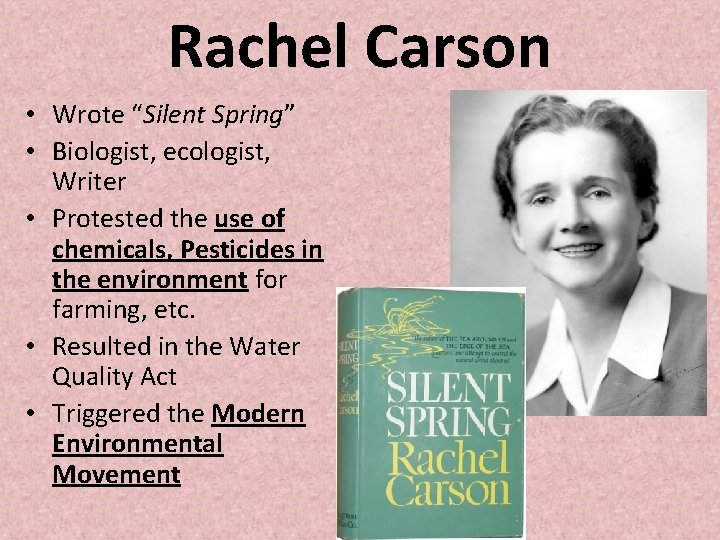
Rachel Carson • Wrote “Silent Spring” • Biologist, ecologist, Writer • Protested the use of chemicals, Pesticides in the environment for farming, etc. • Resulted in the Water Quality Act • Triggered the Modern Environmental Movement
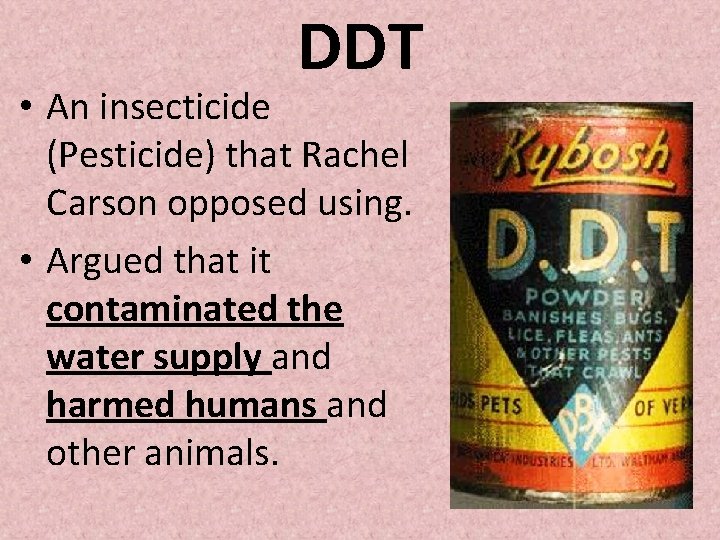
DDT • An insecticide (Pesticide) that Rachel Carson opposed using. • Argued that it contaminated the water supply and harmed humans and other animals.
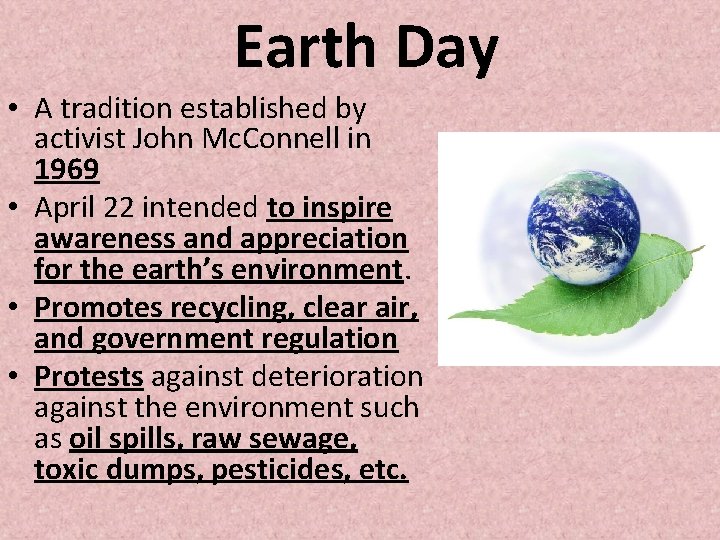
Earth Day • A tradition established by activist John Mc. Connell in 1969 • April 22 intended to inspire awareness and appreciation for the earth’s environment. • Promotes recycling, clear air, and government regulation • Protests against deterioration against the environment such as oil spills, raw sewage, toxic dumps, pesticides, etc.
EPA – Environmental Protection Administration • Established in 1970 by President Richard Nixon • Federal Agency with the purpose of enforcing laws aimed at maintaining a safe and clean environment.
SSUSH 24 d Describe the rise of the conservative movement as seen in the presidential candidacy of Barry Goldwater (1964) and the election of Richard M. Nixon (1968).
Rise of Conservative Movement • Liberals moved to: end segregation, establish stricter regulations, and finance the “Great Society” and increasing the role of government to enforce social activism. • A Conservative movement began to advocate less government action, lower taxes, limit government power, protect personal freedoms, protect property rights, and limit government control over social issues.
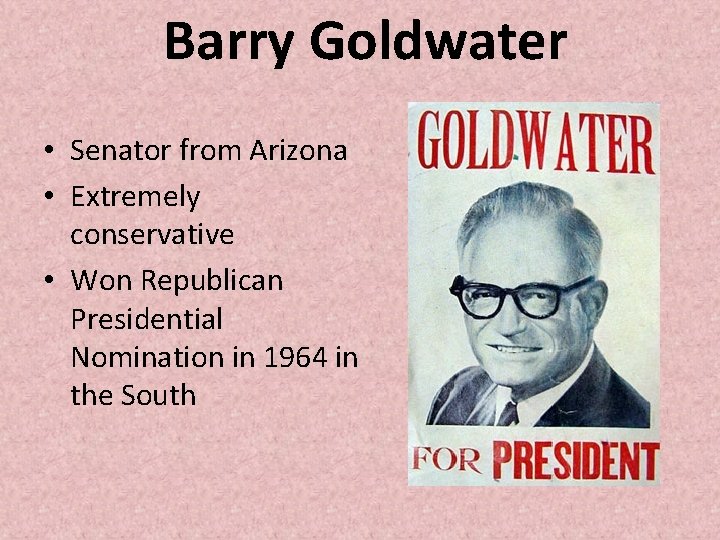
Barry Goldwater • Senator from Arizona • Extremely conservative • Won Republican Presidential Nomination in 1964 in the South
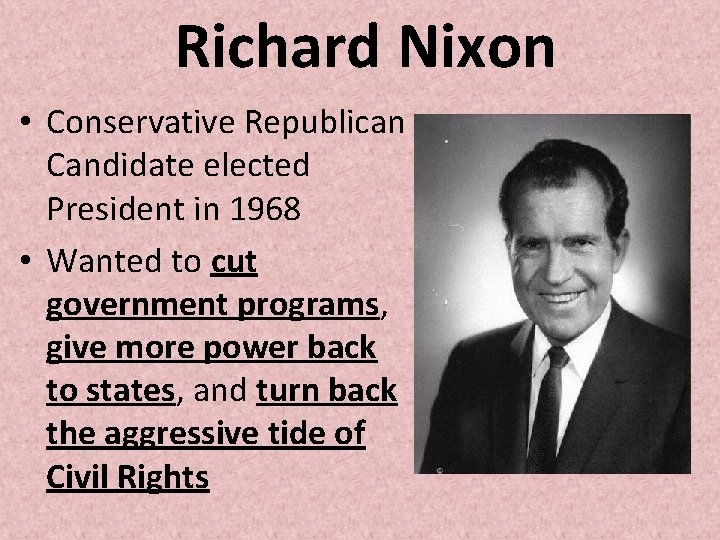
Richard Nixon • Conservative Republican Candidate elected President in 1968 • Wanted to cut government programs, give more power back to states, and turn back the aggressive tide of Civil Rights
25 b Explain the impact of Supreme Court decisions on ideas about civil liberties and civil rights, including such decisions as Roe v. Wade (1973) and the Bakke decision on affirmative action.
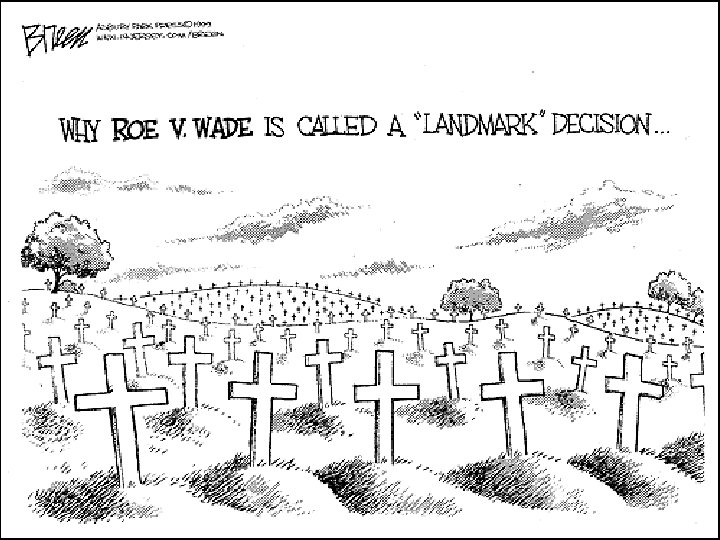
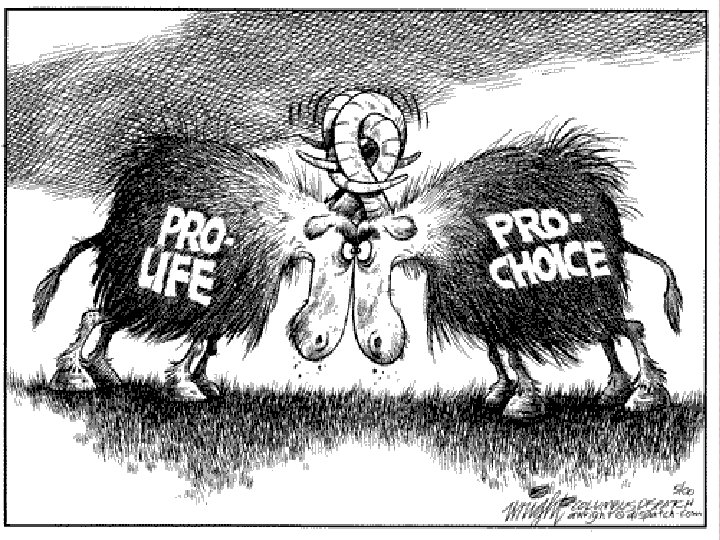
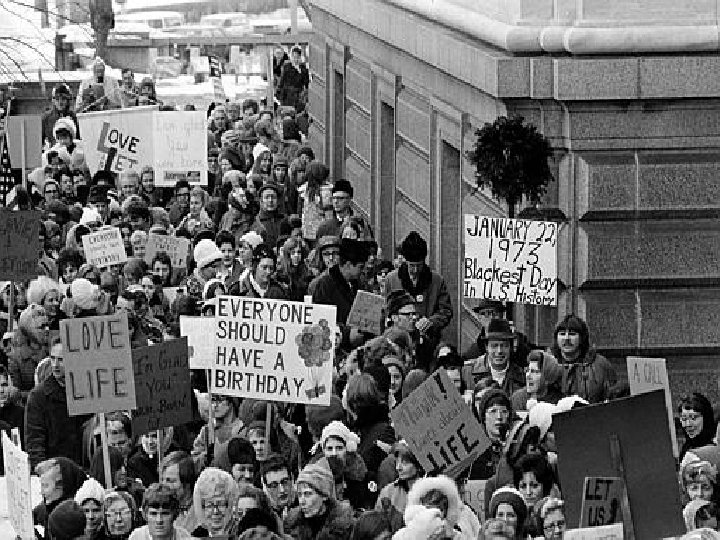
Roe v. Wade (1973) • Supreme Court ruled that a woman had a 4 th amendment Privacy right to her body and could legally receive an abortion with in the first trimester. • Laws forbidding abortion in the first trimester were unconstitutional.
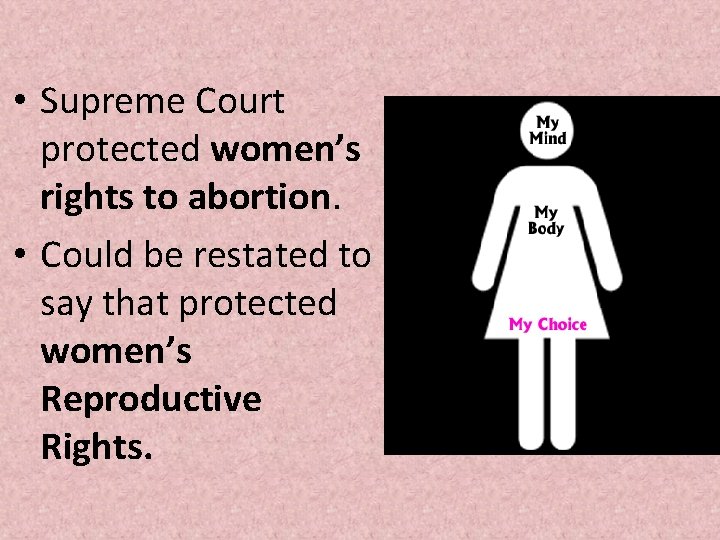
• Supreme Court protected women’s rights to abortion. • Could be restated to say that protected women’s Reproductive Rights.
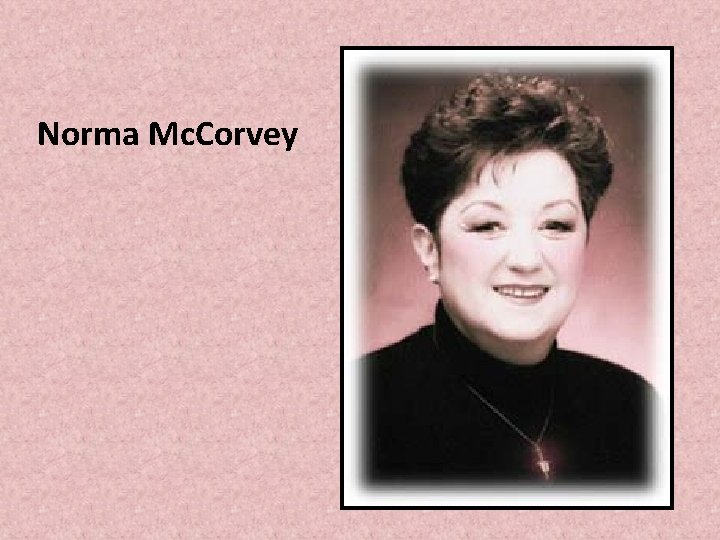
Norma Mc. Corvey
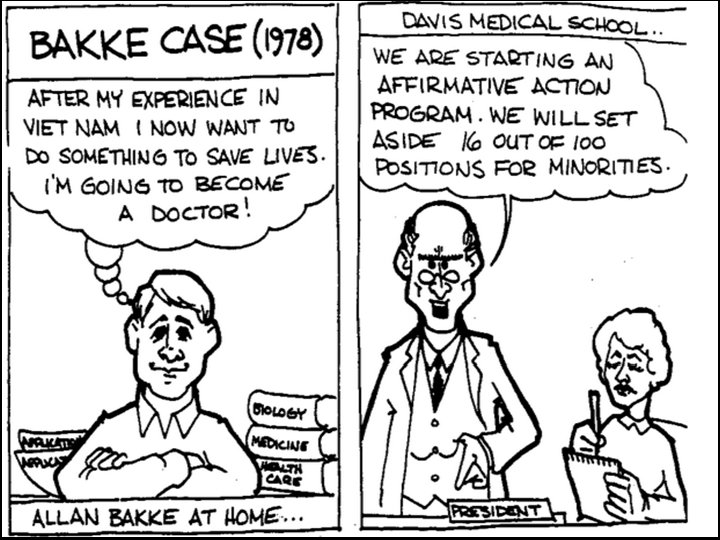
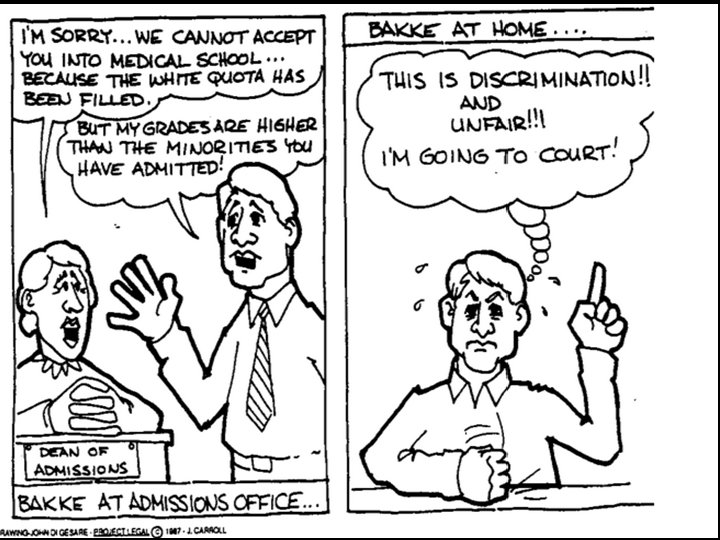
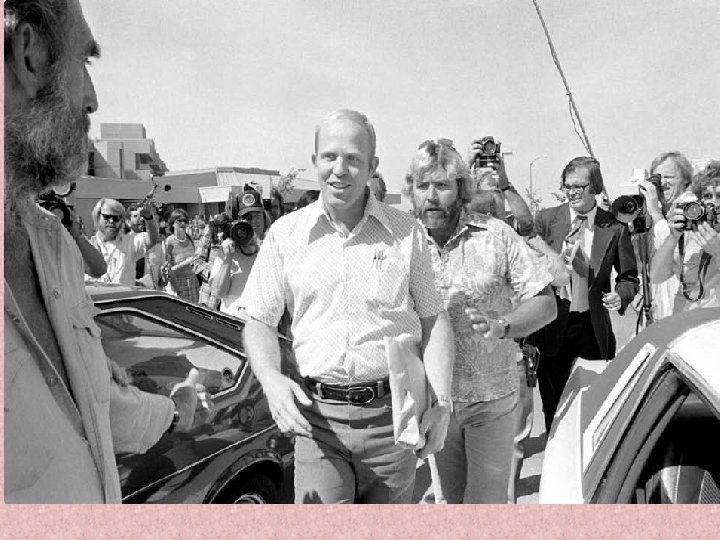
Bakke v. Regents of the University of California
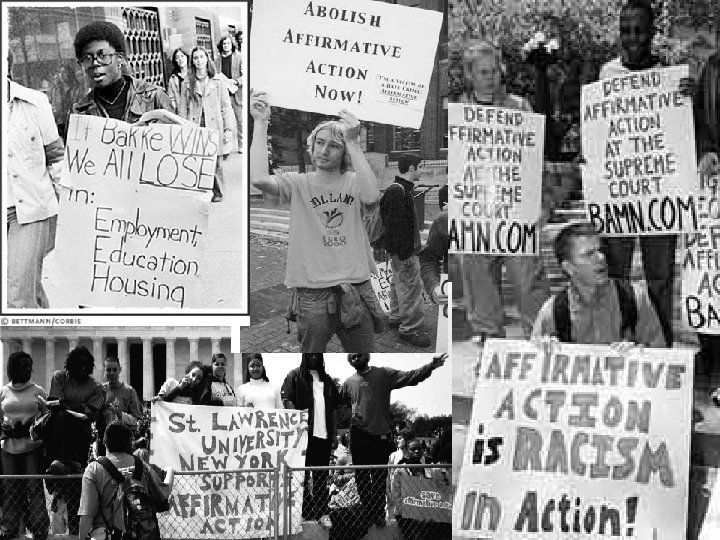
Affirmative Action • Policy aimed at increasing minority representation in the workplace, educational institutions, social settings, etc. by imposing guidelines requiring the hiring or acceptance of minority candidates, or by actively pursuing the recruitment of such candidates.
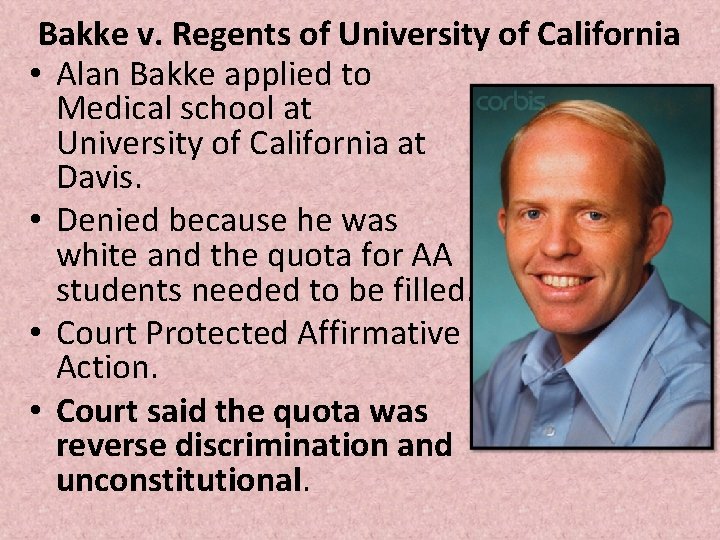
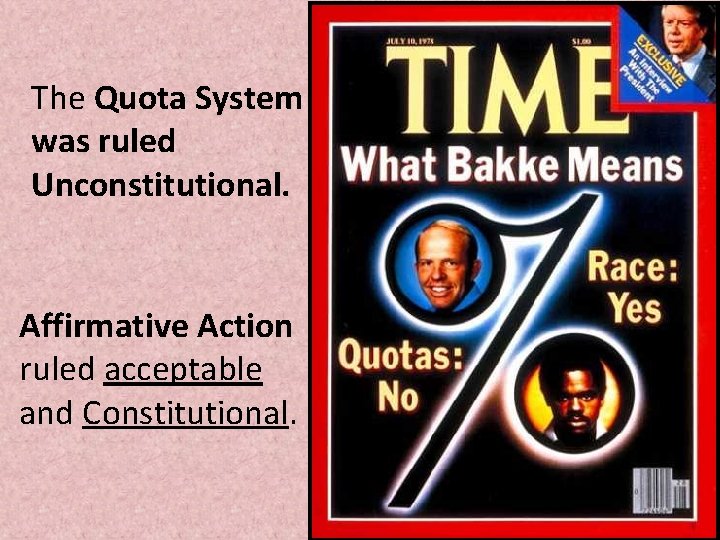
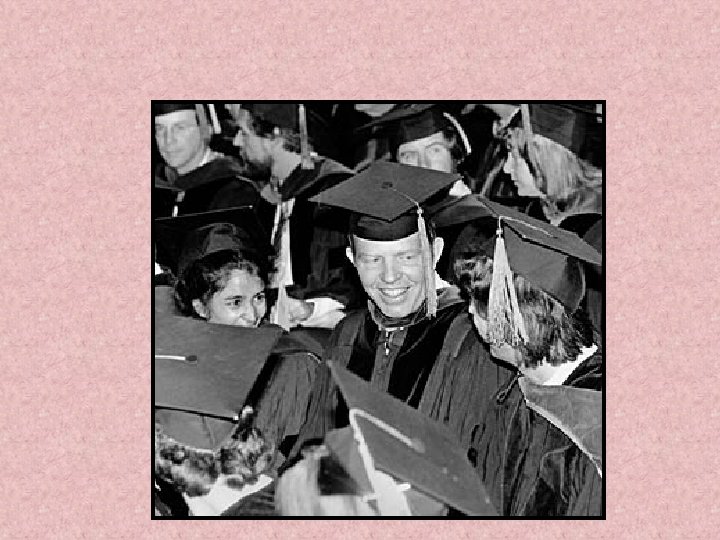
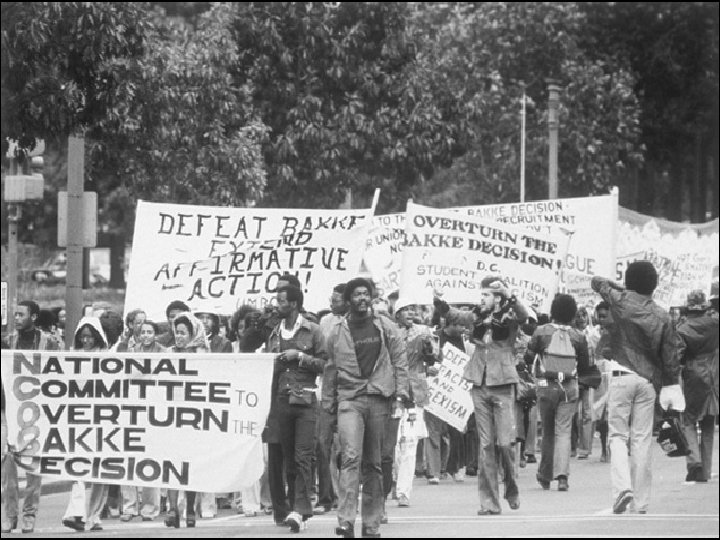
Bakke v. Regents of University of California • Alan Bakke applied to Medical school at University of California at Davis. • Denied because he was white and the quota for AA students needed to be filled. • Court Protected Affirmative Action. • Court said the quota was reverse discrimination and unconstitutional.
The Quota System was ruled Unconstitutional. Affirmative Action ruled acceptable and Constitutional.