
Chapter 1 1 Making Healthy Decisions Mrs Paggi


- Slides: 57
Chapter 1. 1 Making Healthy Decisions Mrs. Paggi Our Lady of Lourdes
Health ● Health- refers to the overall well being of your body, your mind, and your relationship with other people ● Two factors that can be used to evaluate health are life expectancy and quality of life. Life Expectancy-The Quality of Life- the number of years a person overall satisfaction that can expect to live a person gets from life. -better health care -nutrition -sanitation -working conditions
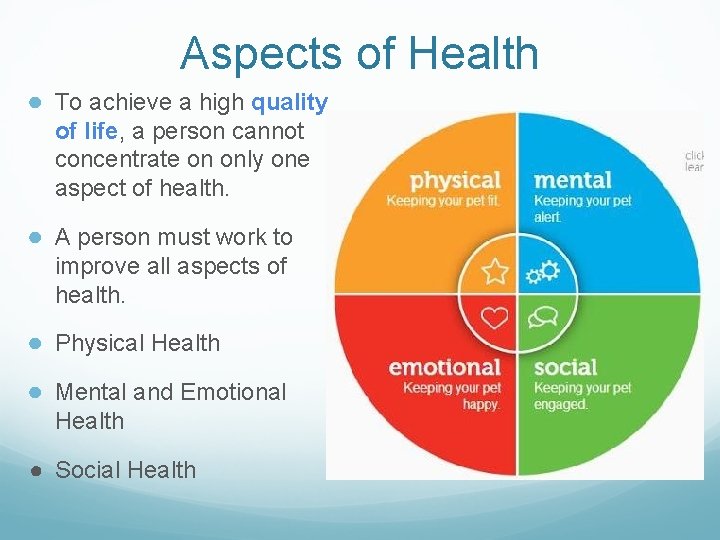
Aspects of Health ● To achieve a high quality of life, a person cannot concentrate on only one aspect of health. ● A person must work to improve all aspects of health. ● Physical Health ● Mental and Emotional Health ● Social Health
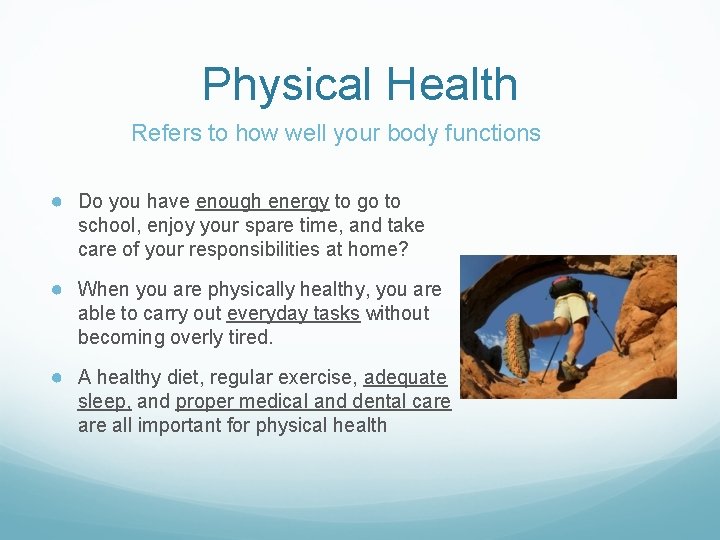
Physical Health Refers to how well your body functions ● Do you have enough energy to go to school, enjoy your spare time, and take care of your responsibilities at home? ● When you are physically healthy, you are able to carry out everyday tasks without becoming overly tired. ● A healthy diet, regular exercise, adequate sleep, and proper medical and dental care all important for physical health
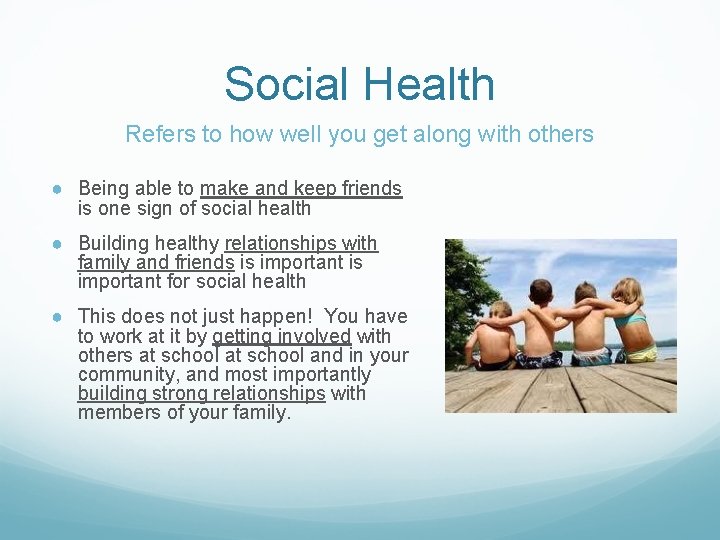
Social Health Refers to how well you get along with others ● Being able to make and keep friends is one sign of social health ● Building healthy relationships with family and friends is important for social health ● This does not just happen! You have to work at it by getting involved with others at school and in your community, and most importantly building strong relationships with members of your family.
Mental and Emotional Health Mental Health ● The state of being comfortable with yourself, with others, and with your surroundings Emotional Health ● Refers to how you react to events in your life ● You are emotionally healthy when the feelings you experience are appropriate responses to ● When you are mentally healthy, events. your mind is alert, you can learn from your mistakes, and you can ● To maintain your emotional health, you need to take the time recognize your achievements. to relax, and you need to share your feelings with others
Spiritual Health ●Your religious faith, values, ●Having compassion, the beliefs, principles, and capacity for love and forgiveness, altruism, joy, and morals define your spirituality fulfillment help you enjoy your spiritual health.
A continuum of Health ● Continuum- is a gradual progression through many stages between one extreme and the other
A Health Continuum ● One end of the continuum represents poor health (illness), the other end represents ideal health (wellness). ● Because the continuum includes the full range of health, each person’s health status would be marked by a point along the continuum. The Health Continuum Wellness Illness Health declines Low energy Level Frequent Aches and Pains Prolonged Illness Negative outlook on life Isolated from others Health increases High Energy Level Enthusiasm for Life Strong Sense of Purpose Feeling of Well-Being Supportive Relationships
Movement Along the Continuum ● Your location on the health continuum is not constant throughout your life. ● Many of the choices you make on a daily basis affect your position on the health continuum. ● You have more control over your health than you think
Journal Entry What are two ways you could improve Your physical health? Your emotional health? Your social Health? ● Evaluation- Cody eats a lot of junk food and doesn’t get much exercise. However, he doesn’t have any obvious signs of illness. Where would you place Cody on the health continuum? Explain.
Chapter 1. 2 Identifying Health Risks
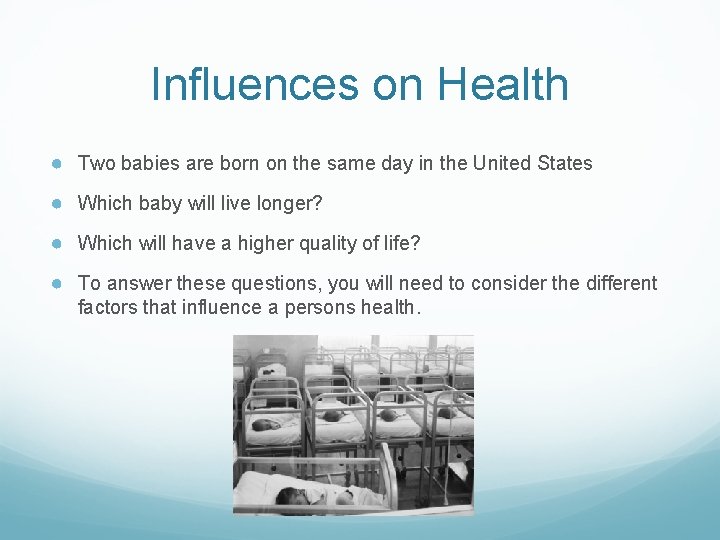
Influences on Health ● Two babies are born on the same day in the United States ● Which baby will live longer? ● Which will have a higher quality of life? ● To answer these questions, you will need to consider the different factors that influence a persons health.
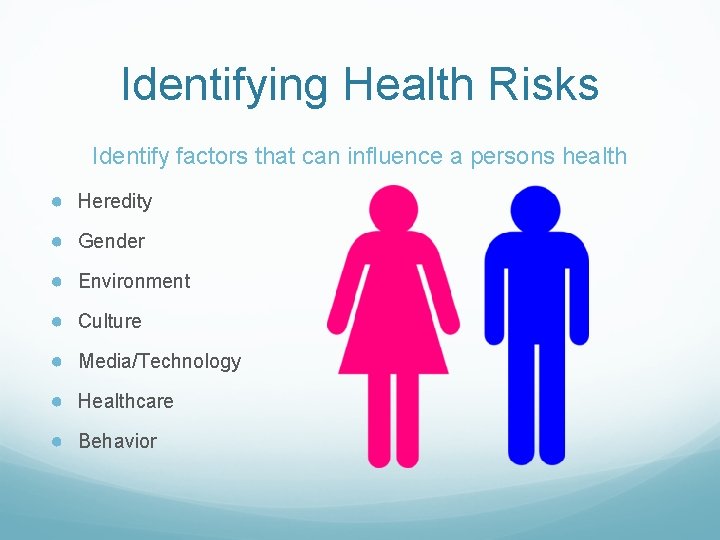
Identifying Health Risks Identify factors that can influence a persons health ● Heredity ● Gender ● Environment ● Culture ● Media/Technology ● Healthcare ● Behavior
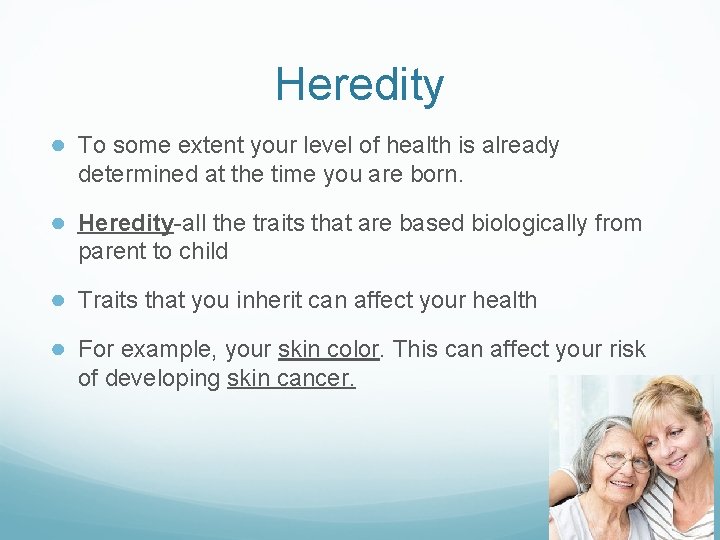
Heredity ● To some extent your level of health is already determined at the time you are born. ● Heredity-all the traits that are based biologically from parent to child ● Traits that you inherit can affect your health ● For example, your skin color. This can affect your risk of developing skin cancer.
Gender ● Another part of your heredity ● Gender can influence your health because risk factors may vary between male and females. ● Even if you inherit a risk factor you can lower your overall risk by avoiding other risk factors. ● For example, women inherit a risk factor for breast cancer and can choose not to smoke because smoking is another risk factor for breast cancer.
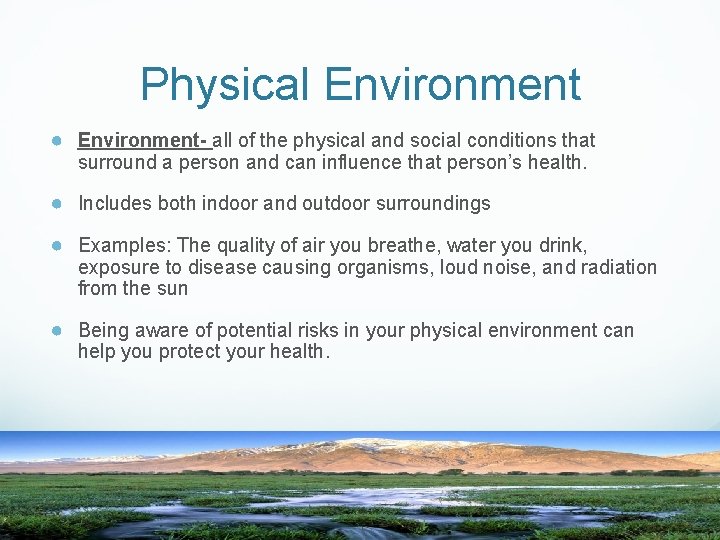
Physical Environment ● Environment- all of the physical and social conditions that surround a person and can influence that person’s health. ● Includes both indoor and outdoor surroundings ● Examples: The quality of air you breathe, water you drink, exposure to disease causing organisms, loud noise, and radiation from the sun ● Being aware of potential risks in your physical environment can help you protect your health.
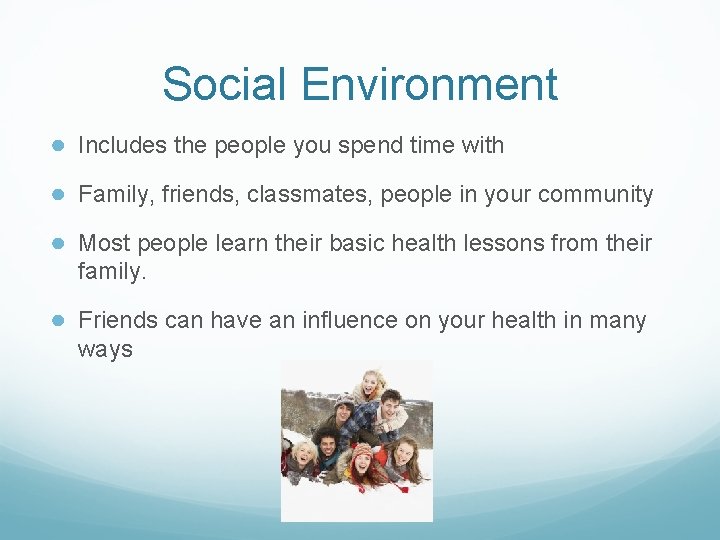
Social Environment ● Includes the people you spend time with ● Family, friends, classmates, people in your community ● Most people learn their basic health lessons from their family. ● Friends can have an influence on your health in many ways
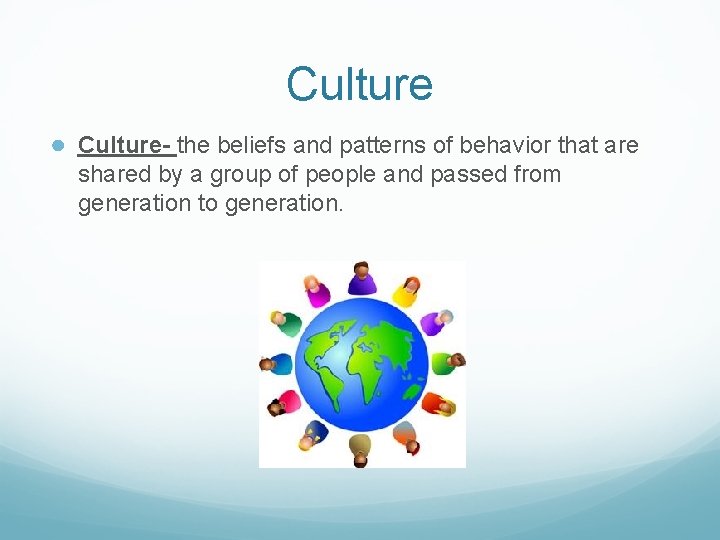
Culture ● Culture- the beliefs and patterns of behavior that are shared by a group of people and passed from generation to generation.
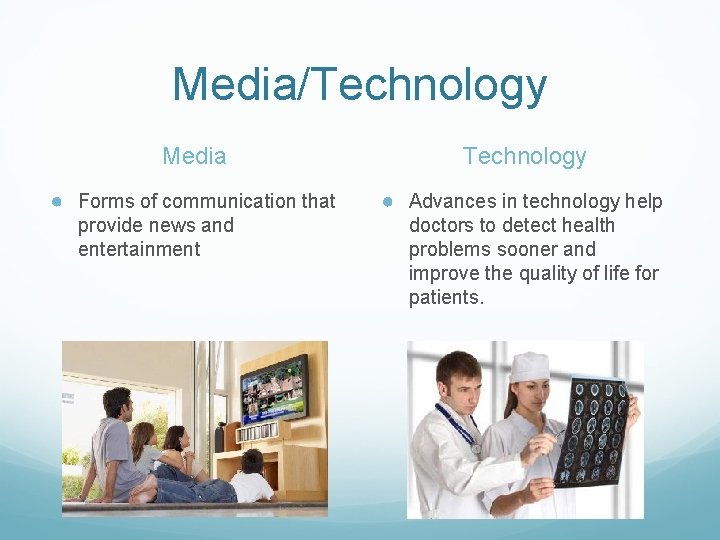
Media/Technology Media Technology ● Forms of communication that ● Advances in technology help provide news and entertainment doctors to detect health problems sooner and improve the quality of life for patients.
Healthcare ● Influenced by the healthcare that is available to you and your family ● Includes services provided by doctors, nurses, dentist, and therapists
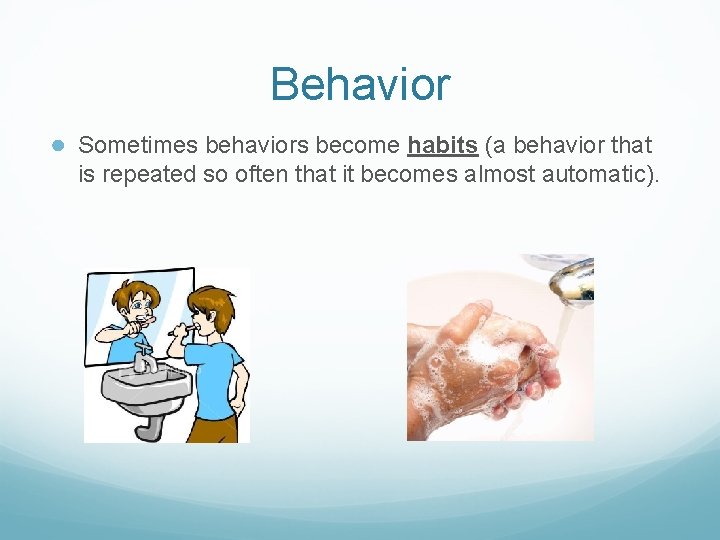
Behavior ● Sometimes behaviors become habits (a behavior that is repeated so often that it becomes almost automatic).
Evaluating Health Risks ● Should you try the latest fad diet? ● How do you decide? ● One way to think about the decision is in terms of its risk factors. ● Risk Factors- is any action or condition that increases the likelihood of injury, disease, or any other negative outcome ● For example, one risk factor of a fad diet is that it may not include all the foods that your body needs
Evaluating Health Risks ● 3 ways to evaluate ● 1 -Consider both short and long term consequences ● 2 -Decide whether you can control the risk factor ● 3 - Analyze the possible benefits and risks of a decision
Short/Long Term Consequences ● Some behaviors have an immediate effect on your health ●Example: you take a shortcut through a yard and you end up with a nasty case of poison ivy ● With some risky behaviors, the consequences are not immediate. ●Example, your diet mainly consists of fast foods which is high in fats, sugars, and salt. ●This diet will increase the risk of developing heart disease and diabetes later in life
So Why Think About Long Term Consequences? ● “So what I eat a lot of fast food now, I feel healthy and energetic!” ● “So why not wait till I get older to change my diet? ” ●It can be very difficult to change habits that have existed for years! ●Even if you do change your habits later in life, you may not be able to repair the damage you have done to your body. ● Journal Entry: What are some of your current habits that could have negative long-term consequences?
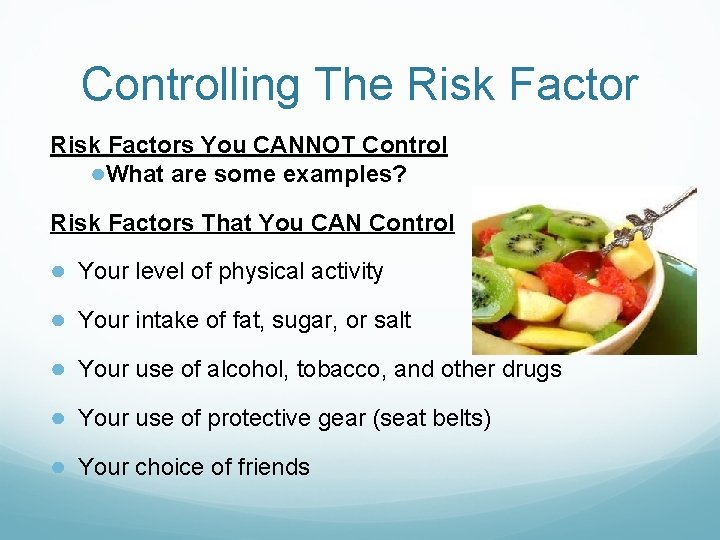
Controlling The Risk Factors You CANNOT Control ●What are some examples? Risk Factors That You CAN Control ● Your level of physical activity ● Your intake of fat, sugar, or salt ● Your use of alcohol, tobacco, and other drugs ● Your use of protective gear (seat belts) ● Your choice of friends
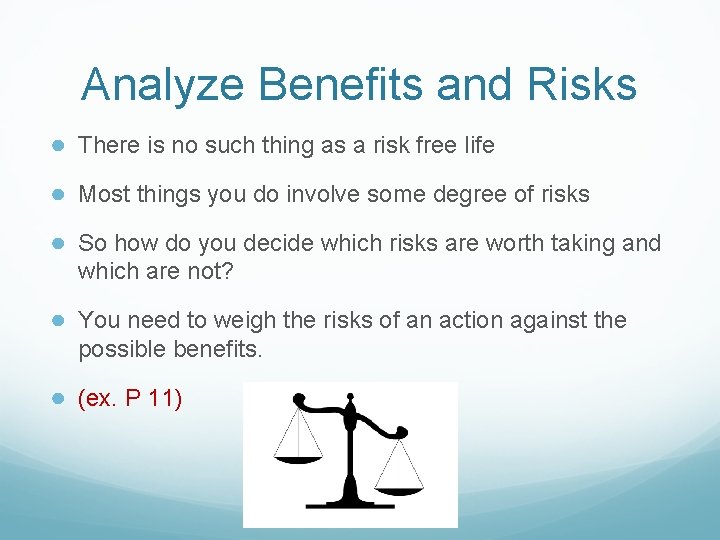
Analyze Benefits and Risks ● There is no such thing as a risk free life ● Most things you do involve some degree of risks ● So how do you decide which risks are worth taking and which are not? ● You need to weigh the risks of an action against the possible benefits. ● (ex. P 11)
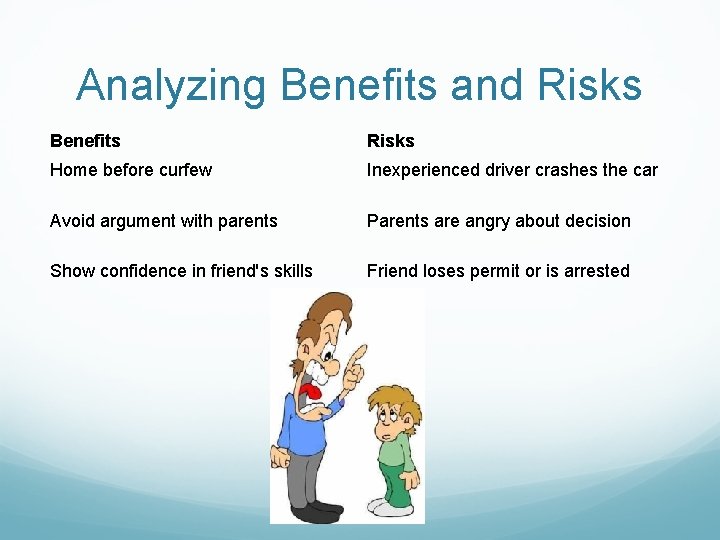
Analyzing Benefits and Risks Benefits Risks Home before curfew Inexperienced driver crashes the car Avoid argument with parents Parents are angry about decision Show confidence in friend's skills Friend loses permit or is arrested
Journal Entry Identify and list three risks factors that affect the health of your family. Think about risks related to heredity, environment, culture and behavior. Then pick one of these risk factors and describe some ways that your family could reduce this health risk.
Cell Phone vs. Drunk Driving ● http: //www. youtube. com/watch? v=3 v. Fc. Ipz. F 7 pc (Part 1) ● http: //www. youtube. com/watch? v=t 8 Lu. M 92 Twm 8 (Part 3)
Journal Entry ● Making Healthy Choices at School ● Think of as many programs that a school could offer to help improve the overall health of students and teachers.
Chapter 1 -3 Taking Responsibility for Your Health
Do Now ● Identify a small but important change that could make your community a healthier place to live. The change could target physical, mental, or social health. ● Write a brief proposal for implementing this change. (you can bullet an action plan with specific steps) ● Identify at least 2 obstacles that you might need to overcome to make the change a reality.
Taking responsibility for your health ● How many of these statements accurately describe your behaviors? ● 1 - I exercise at least 3 times a week ● 2 - I set aside some time each day to relax ● 3 - I get about 8 hours of sleep each night ● 4 - I avoid alcohol, tobacco, and other drugs ● 5 - I always wear a seat belt when riding in a car
Healthy People 2020 ● A nation wants its people to be as healthy as possible ● More production at school, work ● Cost of healthcare decreases (government, families, employers) ● A major focus of this effort is on prevention- taking action to avoid disease, injury, and other negative outcomes
Healthy People 2020 4 Broad Goals ● 1) Increase the quality and years of healthy life ● 2) Eliminate differences in health based on race, ethnic group, or income ● 3) Create social and physical environments that promote good health ● 4) Promote healthy behaviors, health development, and quality of life across all life stages
A Healthy You ● You, too, can set goals to eliminate personal health risk factors. ● 3 steps to take to help you meet your personal health goals ● 1 - Gaining awareness ● 2 - Gaining knowledge ● 3 - Building Skills
Gaining Awareness You must first be able to recognize a health problem before you can do anything about it ● Ex. Ankle twist or a cold =easy to recognize ● Ex. High Blood Pressure= not easy to recognize ● Important to see Dr. for annual checkup
Gaining Knowledge Once you become aware of a health problem, the next step is to learn about the problem ● Causes, warning signs, possible outcomes ● Also need to know how the problem can be prevented or treated ● Most importantly, you need to learn about the risk factors, especially those related to the behavior
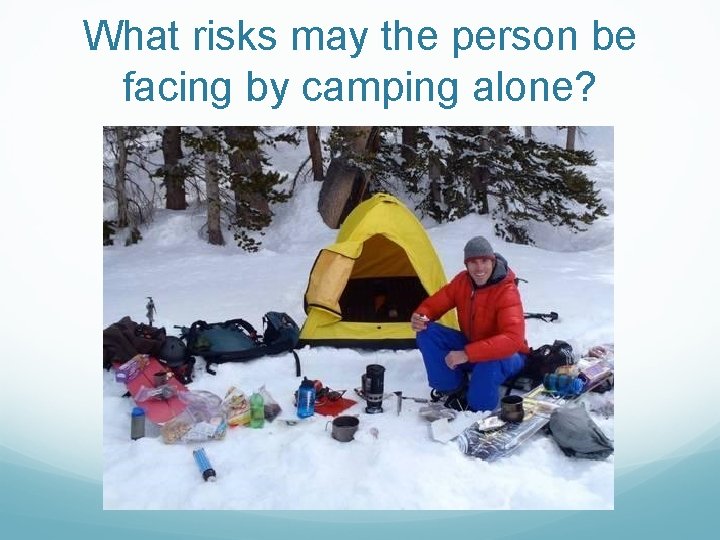
What risks may the person be facing by camping alone?
Building Health Skills Knowledge is not very useful if you do not have the skills to apply it ● Analyze Influences ● Accessing Information ● Communication ● Making Decisions (values) ● Setting Goals (action plan) ● Practicing Healthful Behaviors ● Advocacy –involves using communication to influence and support others in making positive health decisions
Health Literacy ● A person with health literacy has the ability to gather, understand, and use health information to improve his or health
Chapter 1 -4 Being a Wise Health Consumer
Making Healthy Consumer Choices ● Consumer- buys products or services for personal use. ● As a teen you need to know how to evaluate the products, services, and info you are offered. • Products: • Some products are consumable (they need to be purchased again and again) • Some products are durable (they are meant to last a number of years before they wear out) • Factors to consider before purchasing are its safety, cost, warranty, and consumer testing
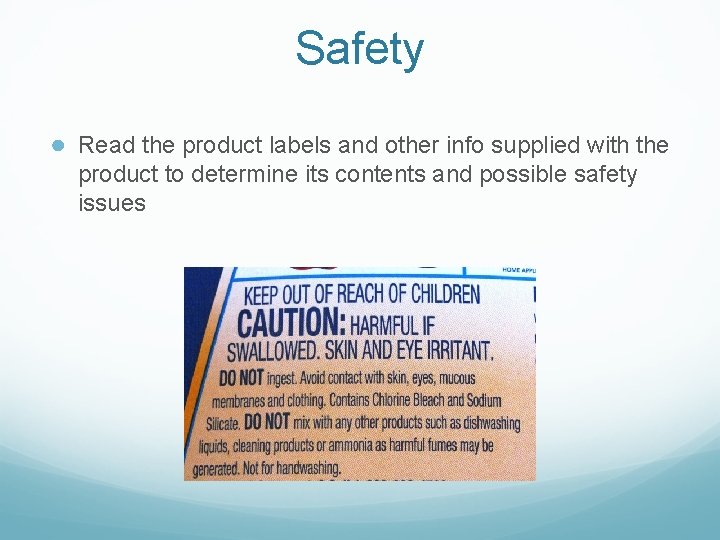
Safety ● Read the product labels and other info supplied with the product to determine its contents and possible safety issues
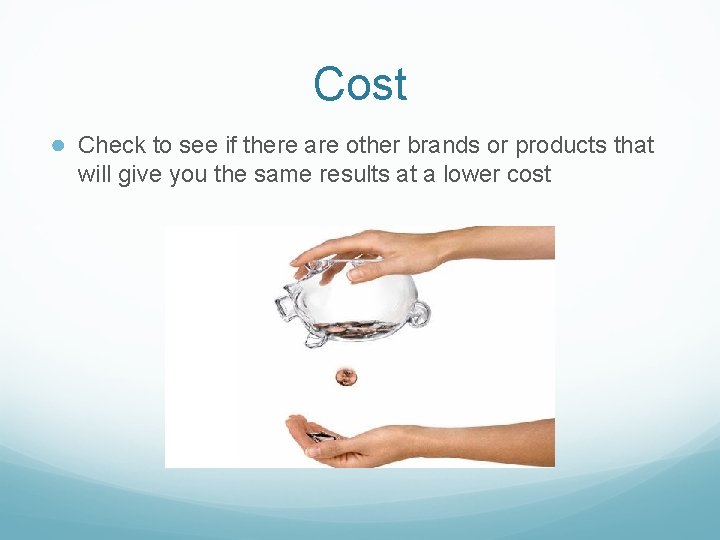
Cost ● Check to see if there are other brands or products that will give you the same results at a lower cost
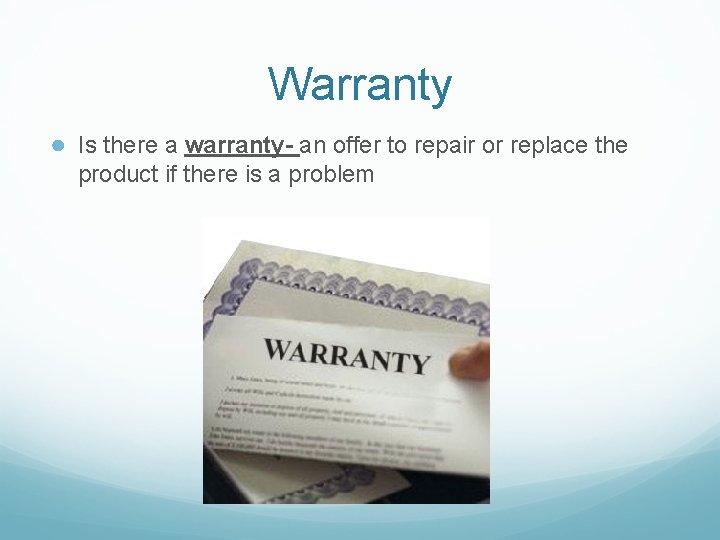
Warranty ● Is there a warranty- an offer to repair or replace the product if there is a problem
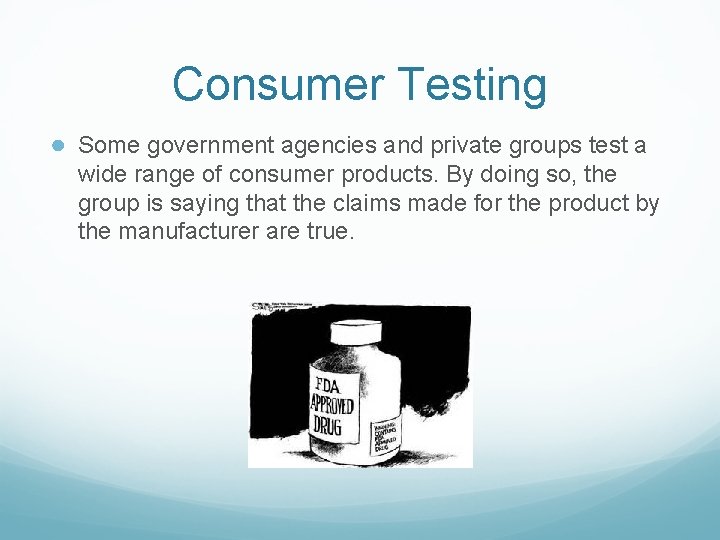
Consumer Testing ● Some government agencies and private groups test a wide range of consumer products. By doing so, the group is saying that the claims made for the product by the manufacturer are true.
Information ● To evaluate health info, you need to evaluate the source of the info. ● Is the source qualified to speak on the topic? ● Does the source bring a bias, or slant, to the topic? For example are they trying to sell you something ● Are there other reliable sources that reach the same conclusion? ● Is the information current and up to date?
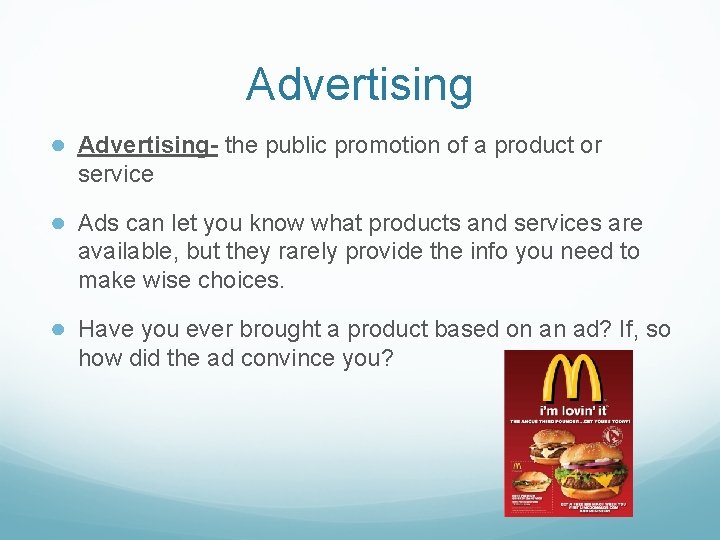
Advertising ● Advertising- the public promotion of a product or service ● Ads can let you know what products and services are available, but they rarely provide the info you need to make wise choices. ● Have you ever brought a product based on an ad? If, so how did the ad convince you?
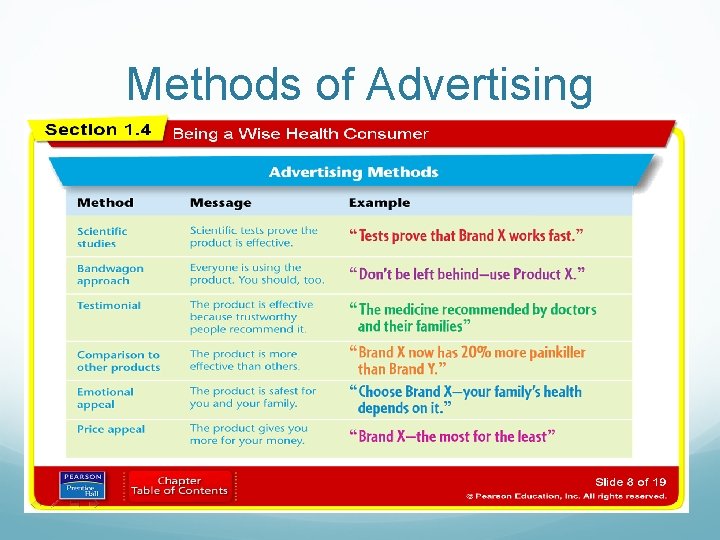
Methods of Advertising
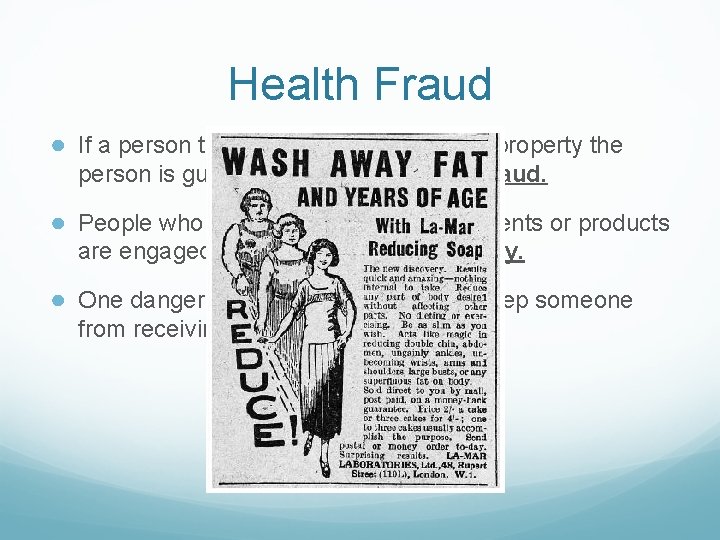
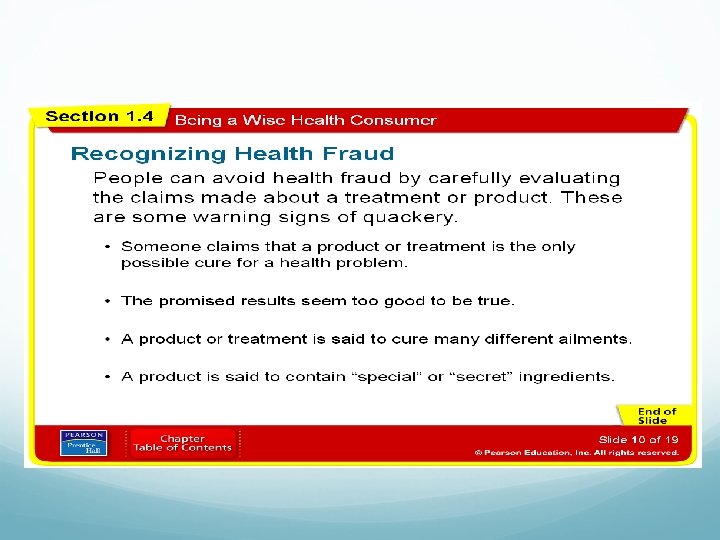
Health Fraud ● If a person tells lies to obtain money or property the person is guilty of an illegal act called fraud. ● People who sell useless medical treatments or products are engaged in health fraud, or quackery. ● One danger of quackery is that it can keep someone from receiving proper medical care.
Services ● You probably don’t get to choose your doctor or dentist, but you do get to choose some services that can affect your health. ● Ex. Nail salon=infection or health club=injury because of poor advice from a trainer ● When you evaluate a service, you need to find out whether the person who will perform the service is qualified.
Rights as a consumer ● As a consumer, you have the right to information, the right to consumer protection by government agencies, and the right to complain.