
Math CC 78 Be Prepared STRETCHING AND SHRINKING
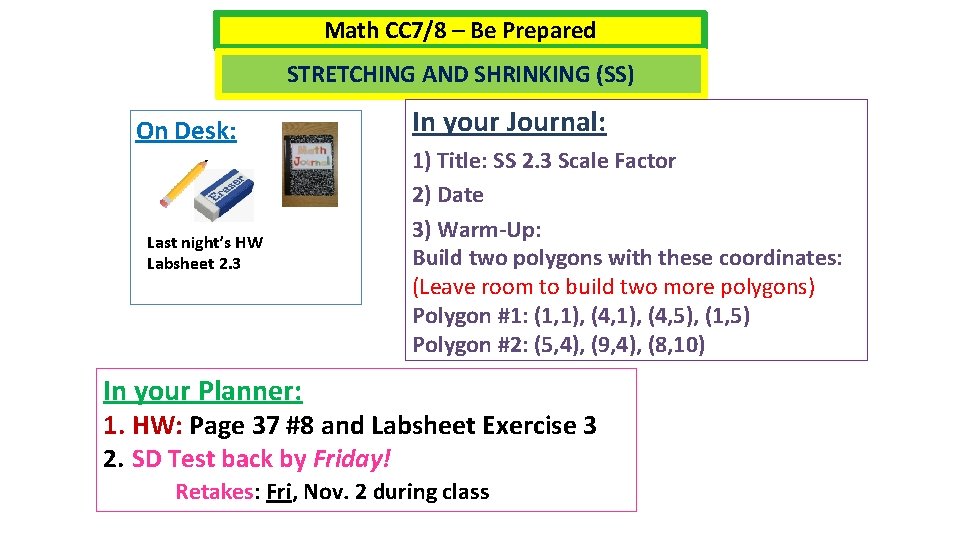
Math CC 7/8 – Be Prepared STRETCHING AND SHRINKING (SS) On Desk: Last night’s HW Labsheet 2. 3 In your Journal: 1) Title: SS 2. 3 Scale Factor 2) Date 3) Warm-Up: Build two polygons with these coordinates: (Leave room to build two more polygons) Polygon #1: (1, 1), (4, 5), (1, 5) Polygon #2: (5, 4), (9, 4), (8, 10) In your Planner: 1. HW: Page 37 #8 and Labsheet Exercise 3 2. SD Test back by Friday! Retakes: Fri, Nov. 2 during class
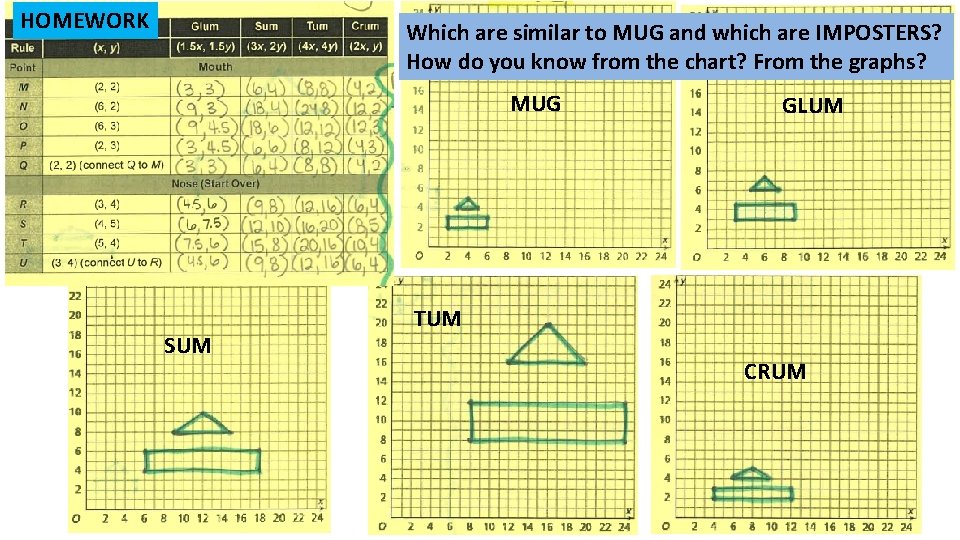
HOMEWORK Which are similar to MUG and which are IMPOSTERS? How do you know from the chart? From the graphs? MUG SUM GLUM TUM CRUM
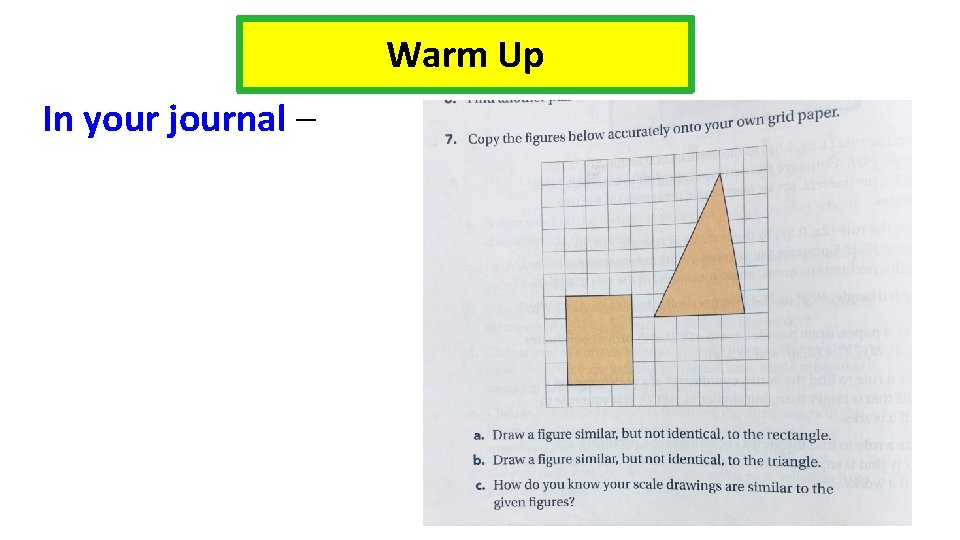
Warm Up In your journal –
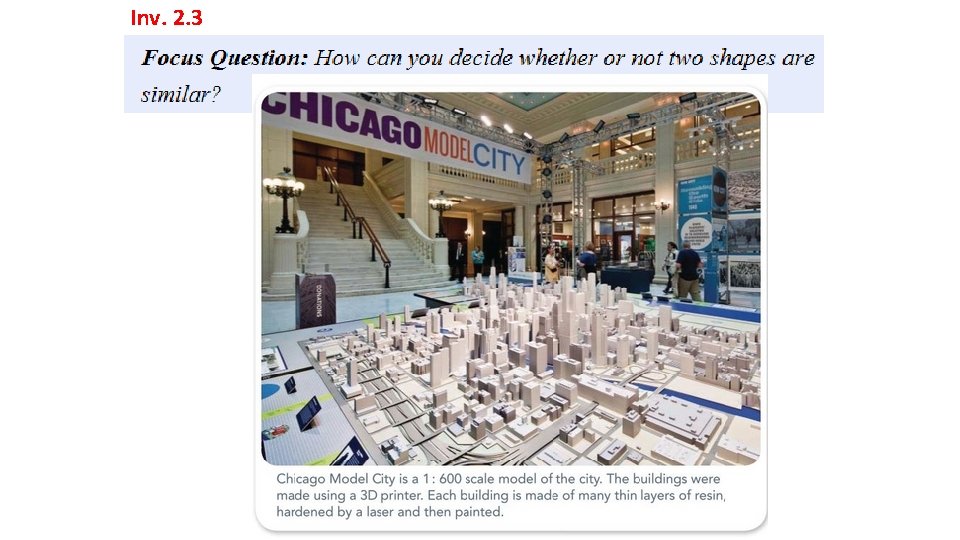
Inv. 2. 3
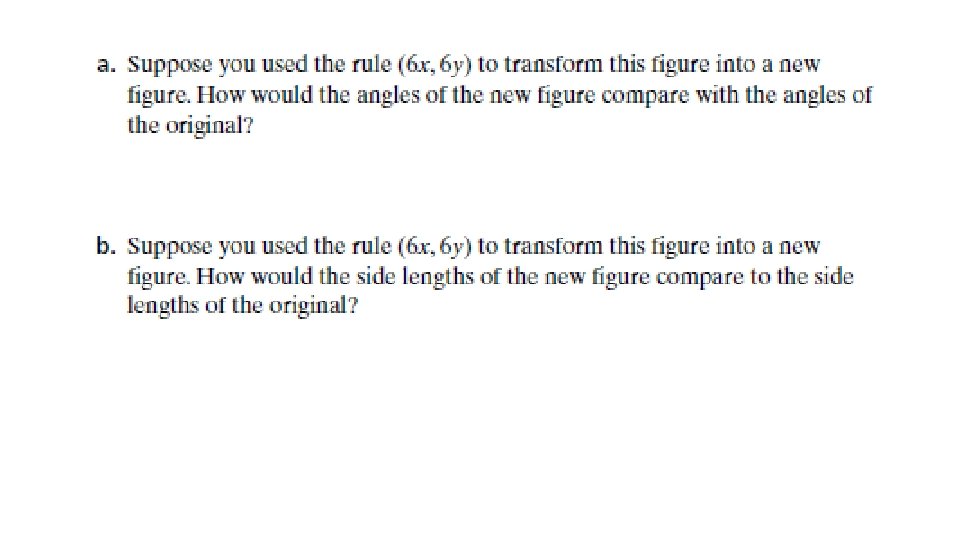
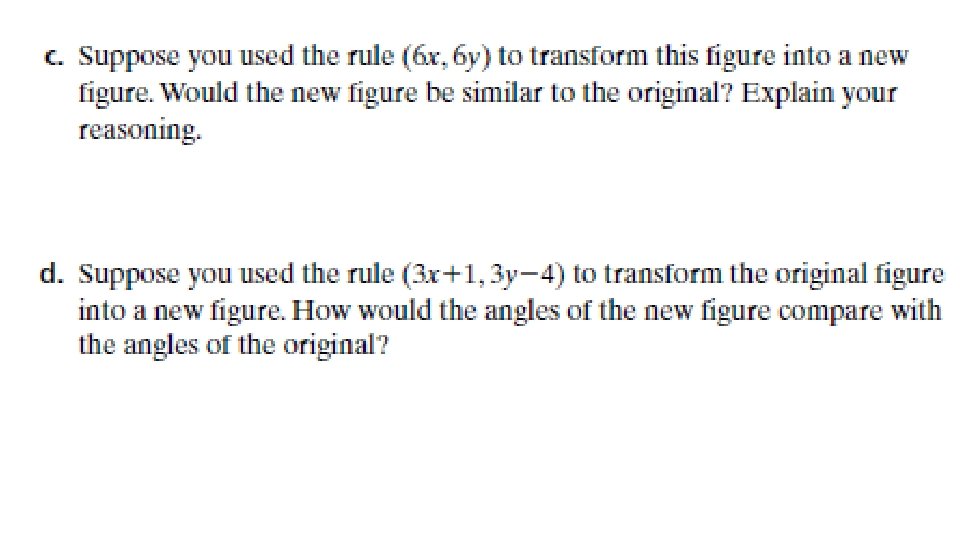
On your Timeline: Investigation 2: To get Similar Figures: The side lengths of one figure are multiplied by the same number to get the corresponding side lengths in the second figure. Coordinate Rules for Similar Figures: The copy (scale) factor is the same for both X and Y. Multiplying increases the size. Adding or Subtracting changes the position. Scale Factor: The number used to multiply side lengths to Stretch or shrink similar figures.
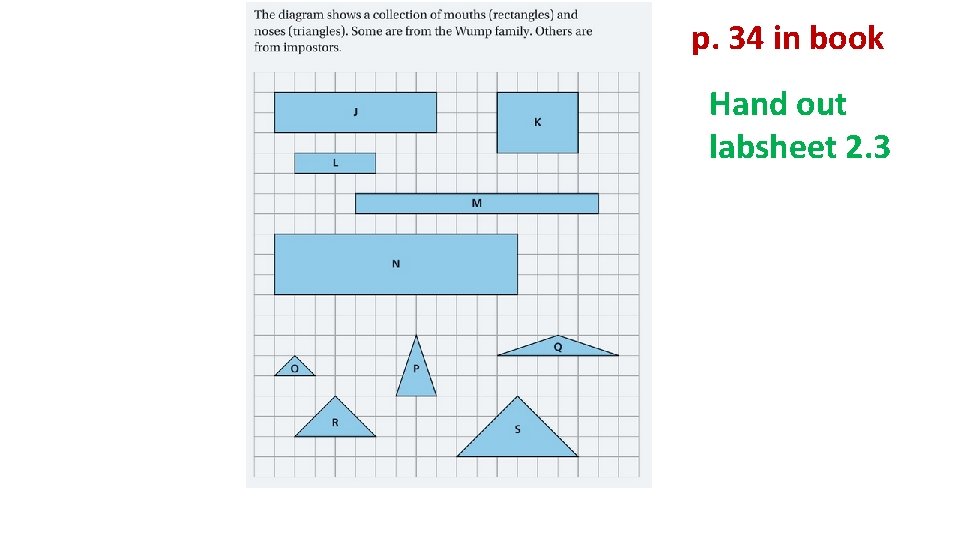
p. 34 in book Hand out labsheet 2. 3
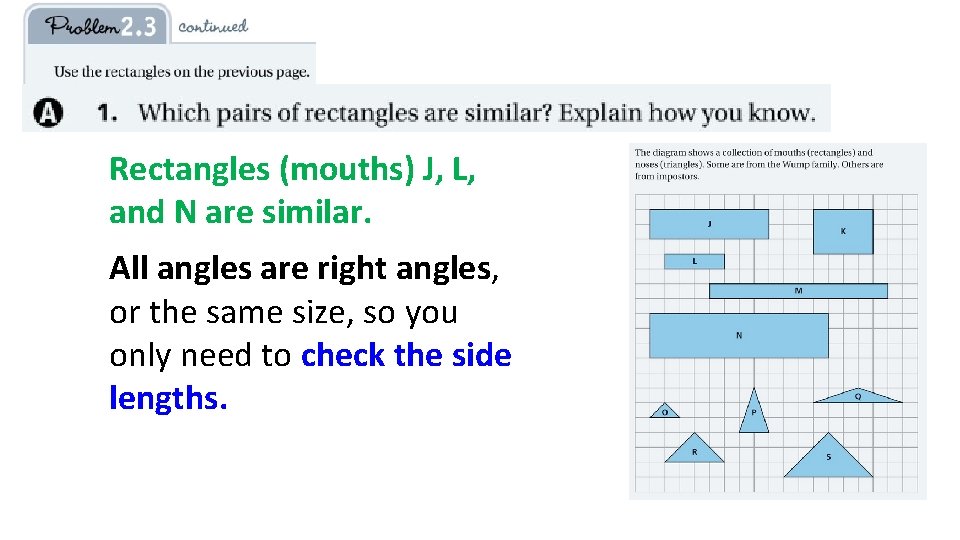
Rectangles (mouths) J, L, and N are similar. All angles are right angles, or the same size, so you only need to check the side lengths.
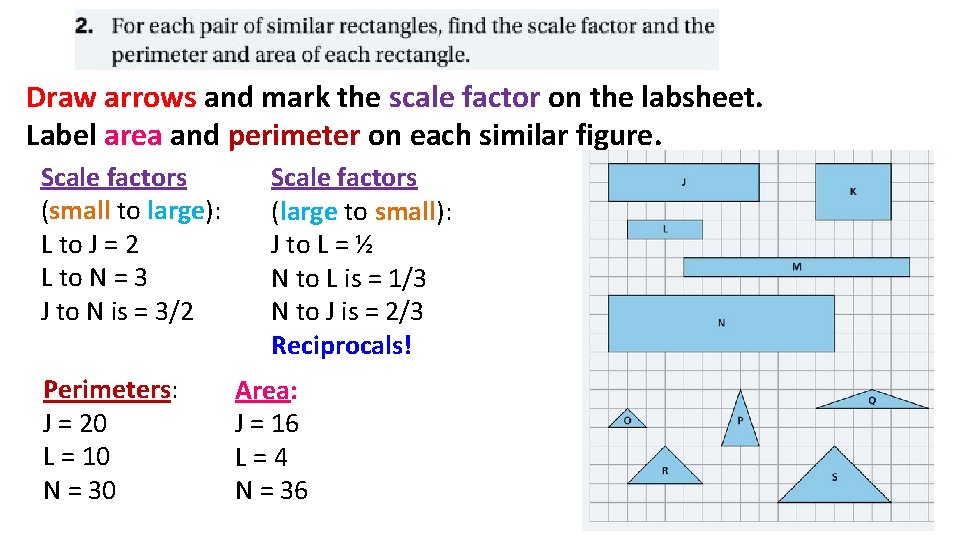
Draw arrows and mark the scale factor on the labsheet. Label area and perimeter on each similar figure. Scale factors (small to large): L to J = 2 L to N = 3 J to N is = 3/2 Perimeters: J = 20 L = 10 N = 30 Scale factors (large to small): J to L = ½ N to L is = 1/3 N to J is = 2/3 Reciprocals! Area: J = 16 L = 4 N = 36
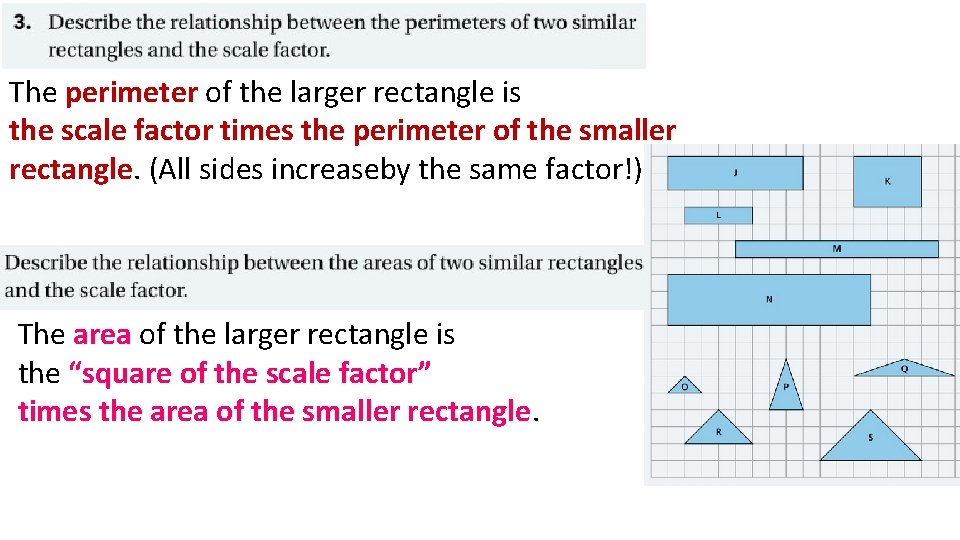
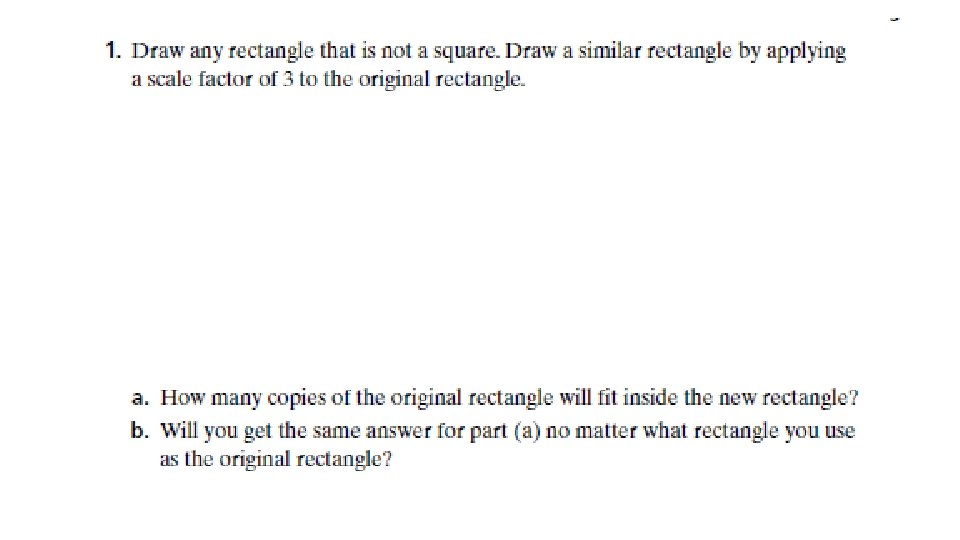
The perimeter of the larger rectangle is the scale factor times the perimeter of the smaller rectangle. (All sides increaseby the same factor!) The area of the larger rectangle is the “square of the scale factor” times the area of the smaller rectangle.
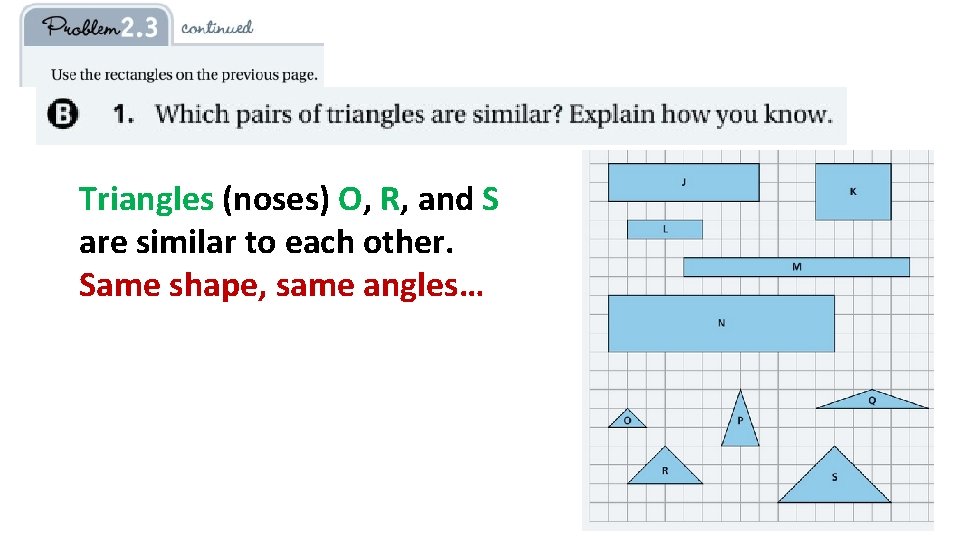
Triangles (noses) O, R, and S are similar to each other. Same shape, same angles…
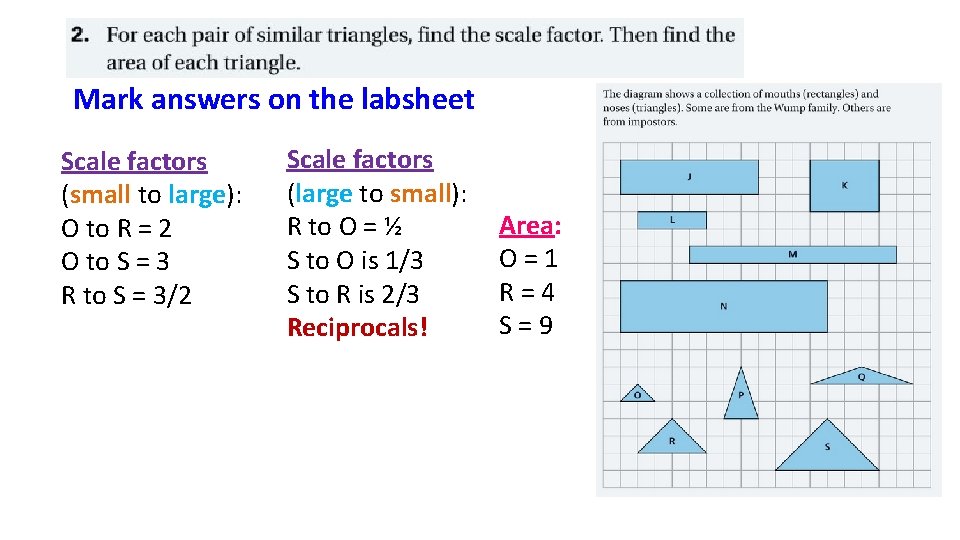
Mark answers on the labsheet Scale factors (small to large): O to R = 2 O to S = 3 R to S = 3/2 Scale factors (large to small): R to O = ½ S to O is 1/3 S to R is 2/3 Reciprocals! Area: O = 1 R = 4 S = 9
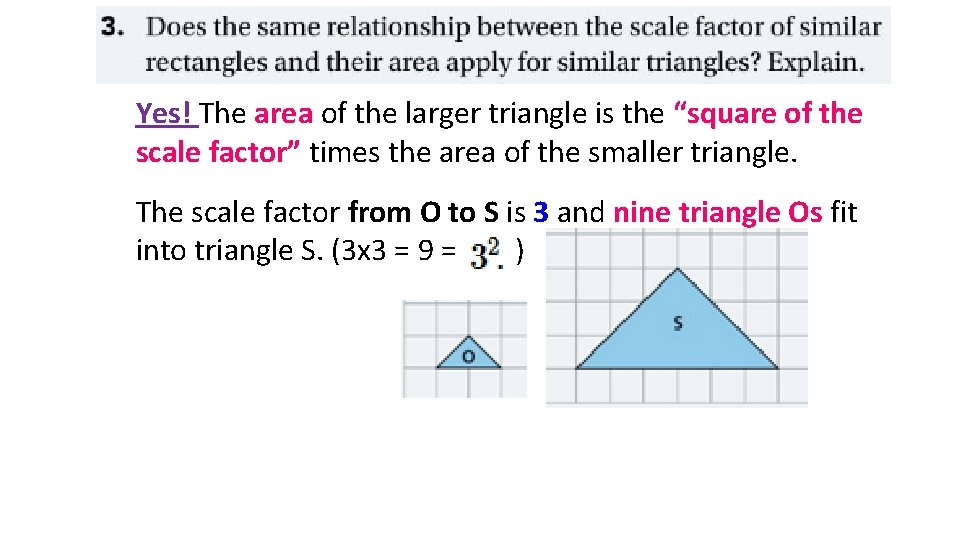
Yes! The area of the larger triangle is the “square of the scale factor” times the area of the smaller triangle. The scale factor from O to S is 3 and nine triangle Os fit into triangle S. (3 x 3 = 9 = )
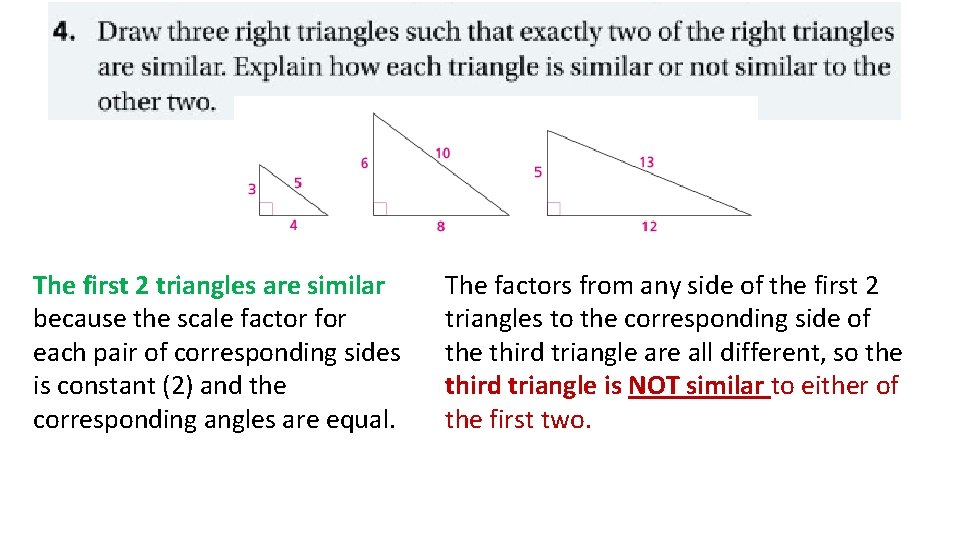
The first 2 triangles are similar because the scale factor for each pair of corresponding sides is constant (2) and the corresponding angles are equal. The factors from any side of the first 2 triangles to the corresponding side of the third triangle are all different, so the third triangle is NOT similar to either of the first two.
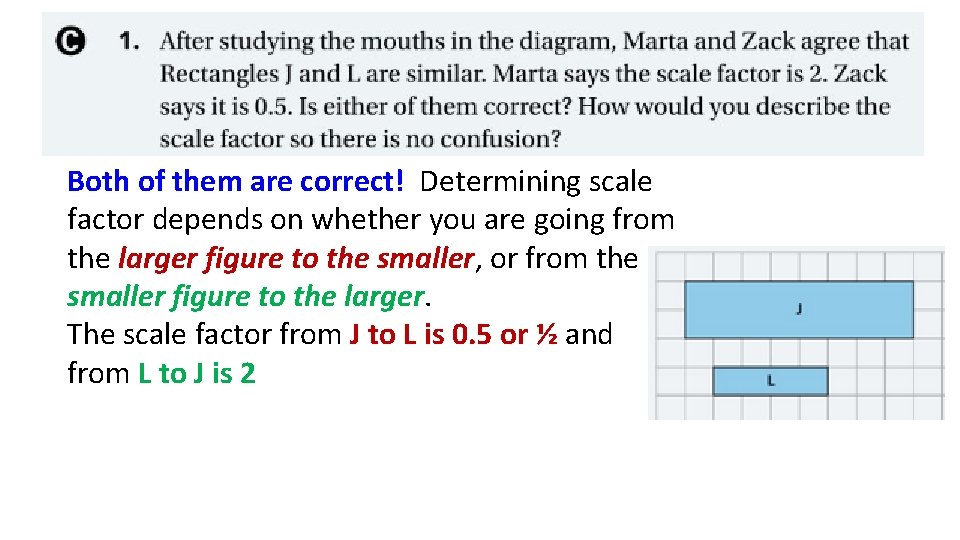
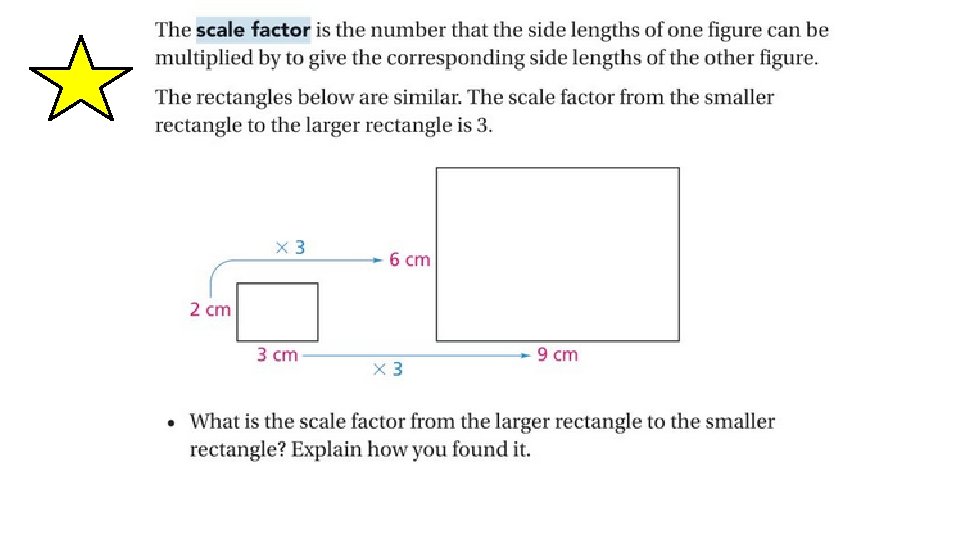
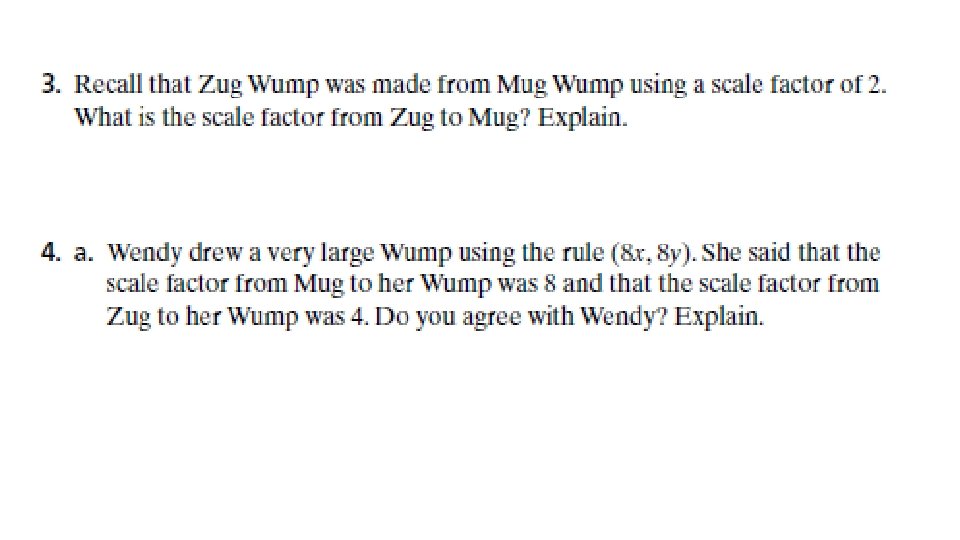
Both of them are correct! Determining scale factor depends on whether you are going from the larger figure to the smaller, or from the smaller figure to the larger. The scale factor from J to L is 0. 5 or ½ and from L to J is 2
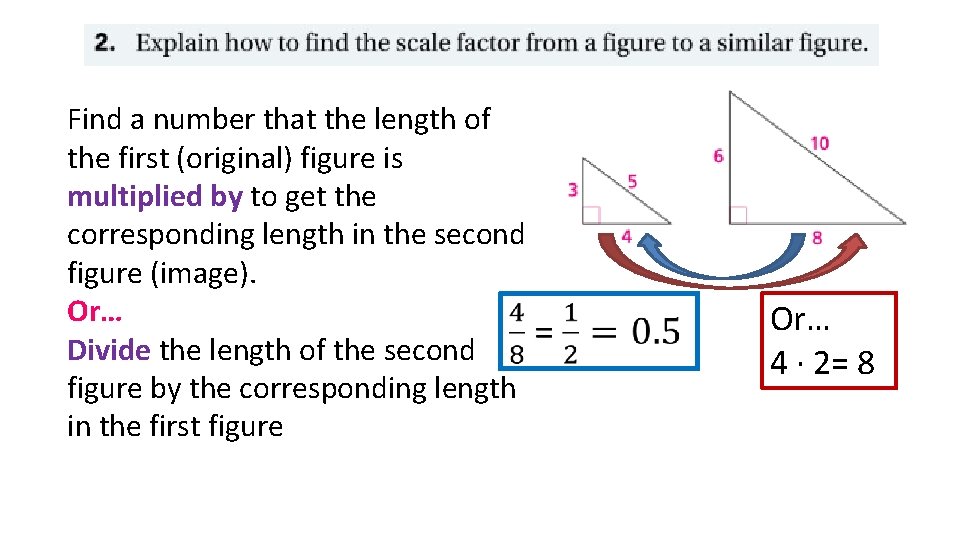
Find a number that the length of the first (original) figure is multiplied by to get the corresponding length in the second figure (image). Or… Divide the length of the second figure by the corresponding length in the first figure Or… 4 · 2= 8
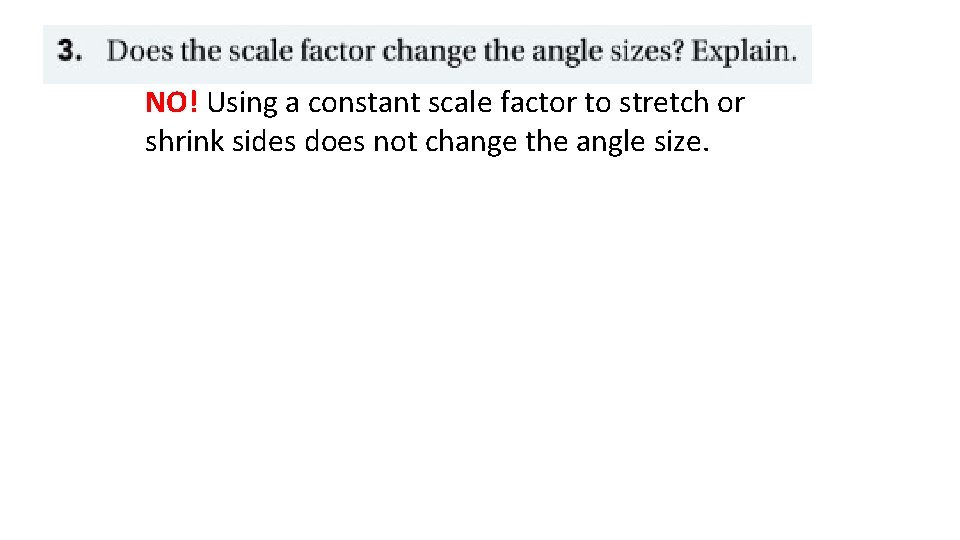
NO! Using a constant scale factor to stretch or shrink sides does not change the angle size.
- Slides: 21