The Role of the Speech Language Pathologist in
- Slides: 44
The Role of the Speech. Language Pathologist in the Assessment & Treatment of TBI Cassaundra N. Miller, MS, CCC/SLP West Virginia University Center for Excellence in Disabilities
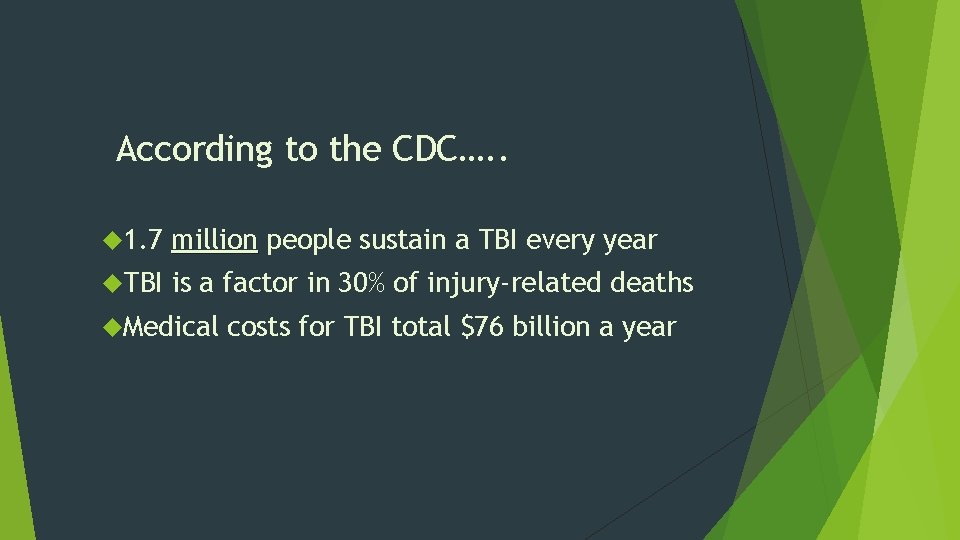
According to the CDC…. . 1. 7 million people sustain a TBI every year TBI is a factor in 30% of injury-related deaths Medical costs for TBI total $76 billion a year
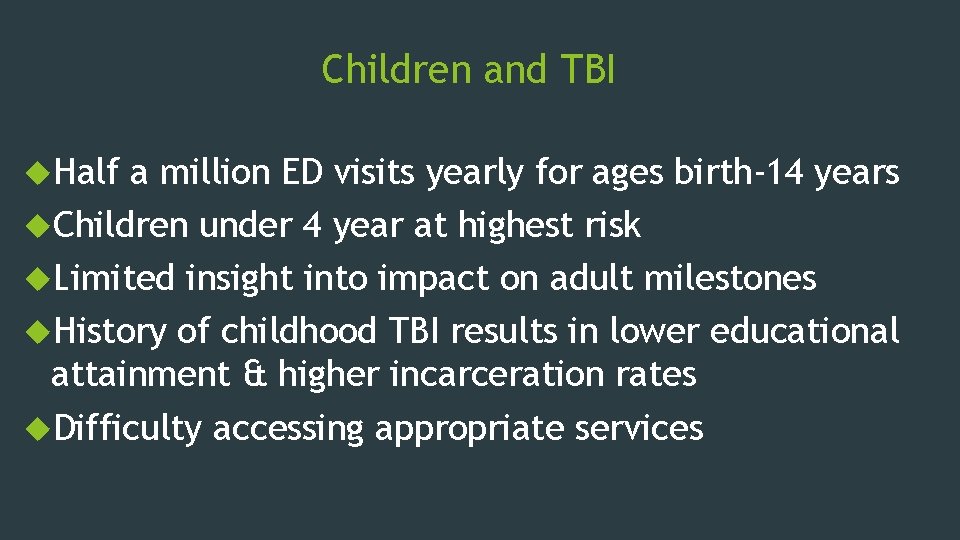
Children and TBI Half a million ED visits yearly for ages birth-14 years Children under 4 year at highest risk Limited insight into impact on adult milestones History of childhood TBI results in lower educational attainment & higher incarceration rates Difficulty accessing appropriate services
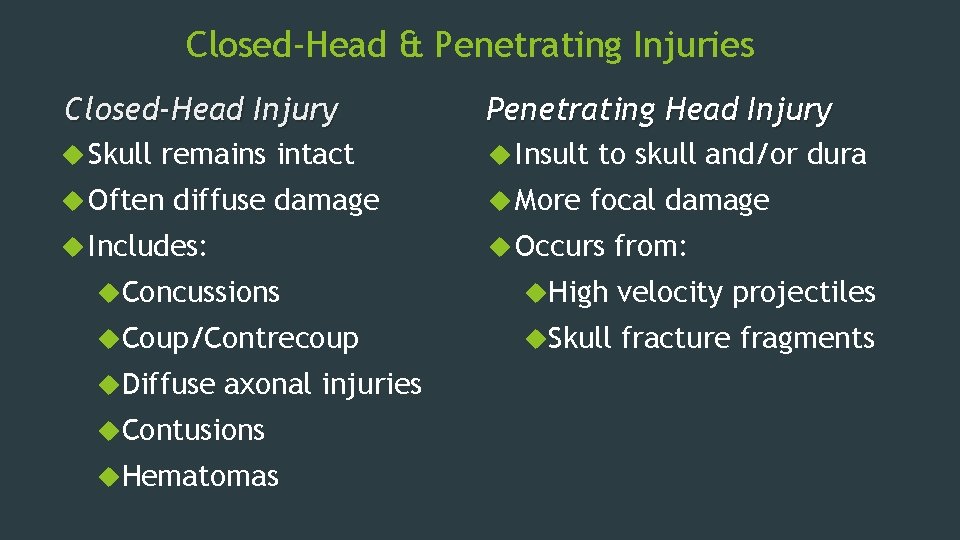
Closed-Head & Penetrating Injuries Closed-Head Injury Penetrating Head Injury Skull Insult remains intact Often diffuse damage Includes: More to skull and/or dura focal damage Occurs from: Concussions High velocity projectiles Coup/Contrecoup Skull fracture fragments Diffuse axonal injuries Contusions Hematomas
According to The American Speech Language Hearing Association’s (ASHA) Evidence Map for Pediatric Brain Injury… “SLPs and medical specialists are essential for the management of speech, language, and swallowing disorders, and should be referred during the acute stage. ”
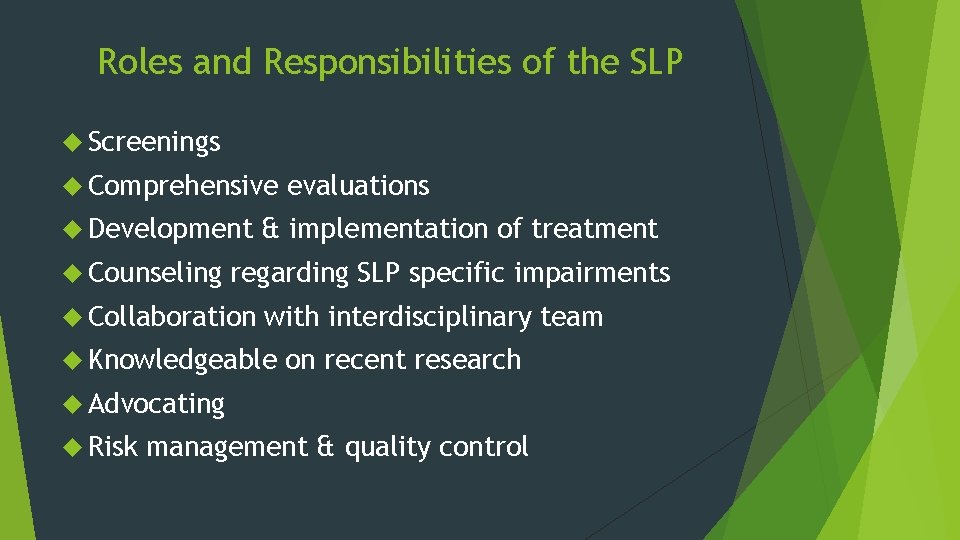
Roles and Responsibilities of the SLP Screenings Comprehensive Development Counseling evaluations & implementation of treatment regarding SLP specific impairments Collaboration with interdisciplinary team Knowledgeable on recent research Advocating Risk management & quality control
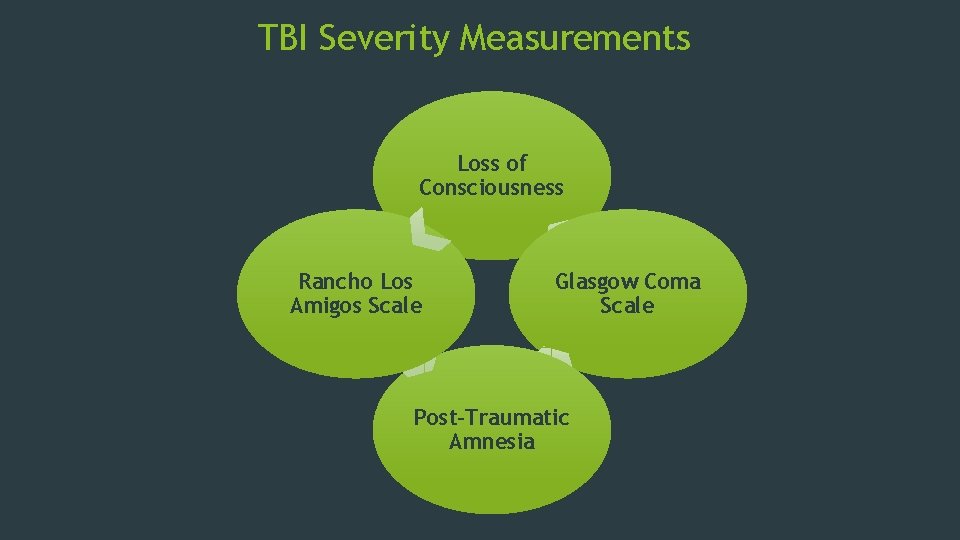
TBI Severity Measurements Loss of Consciousness Rancho Los Amigos Scale Glasgow Coma Scale Post-Traumatic Amnesia
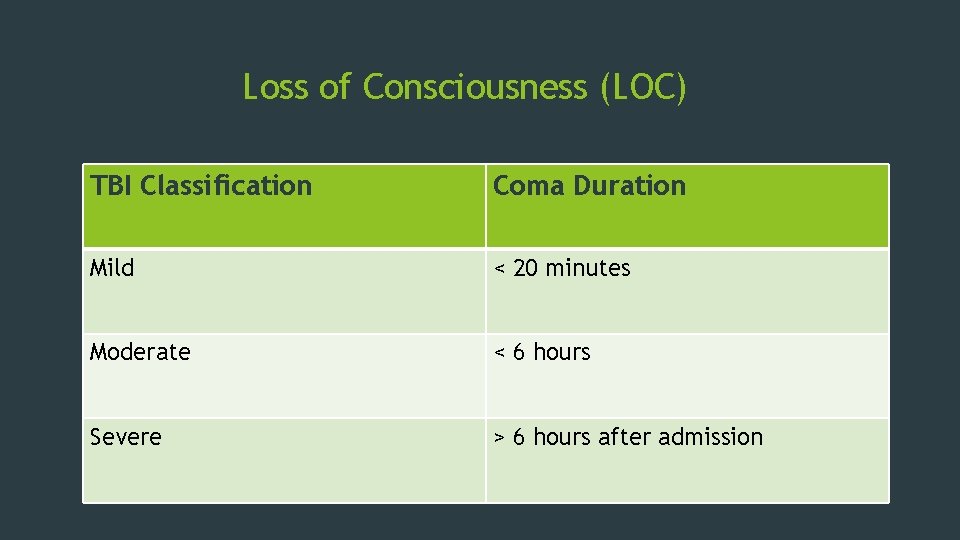
Loss of Consciousness (LOC) TBI Classification Coma Duration Mild < 20 minutes Moderate < 6 hours Severe > 6 hours after admission
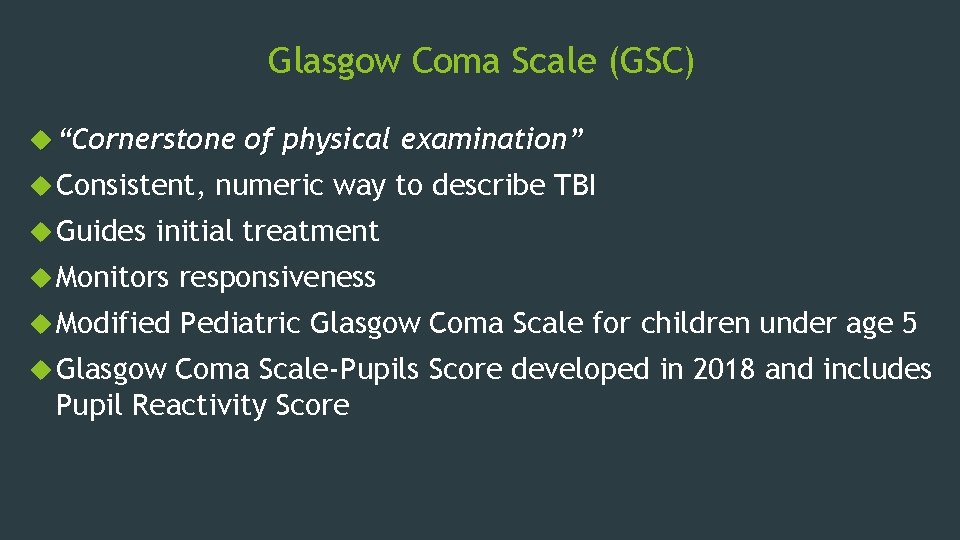
Glasgow Coma Scale (GSC) “Cornerstone of physical examination” Consistent, numeric way to describe TBI Guides initial treatment Monitors responsiveness Modified Pediatric Glasgow Coma Scale for children under age 5 Glasgow Coma Scale-Pupils Score developed in 2018 and includes Pupil Reactivity Score
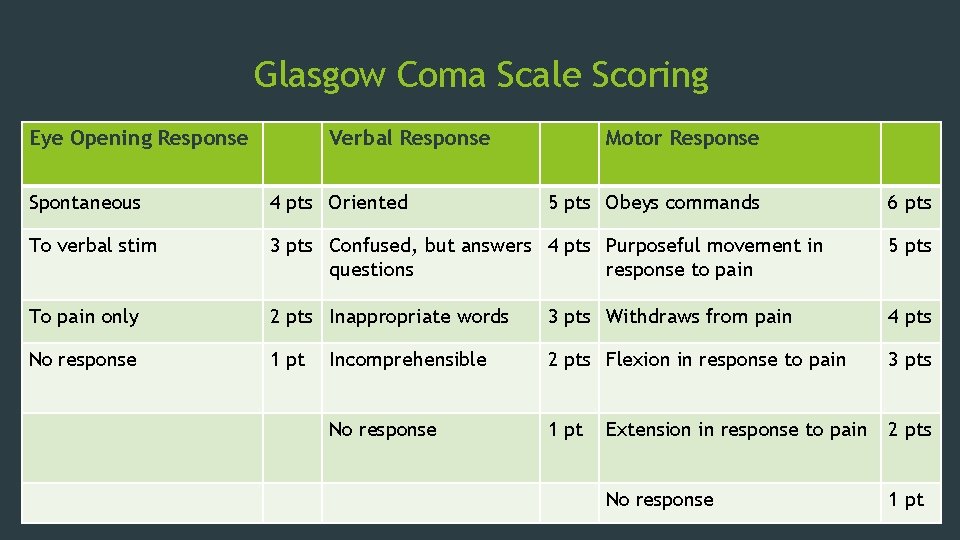
Glasgow Coma Scale Scoring Eye Opening Response Verbal Response Motor Response Spontaneous 4 pts Oriented 5 pts Obeys commands 6 pts To verbal stim 3 pts Confused, but answers 4 pts Purposeful movement in questions response to pain 5 pts To pain only 2 pts Inappropriate words 3 pts Withdraws from pain 4 pts No response 1 pt Incomprehensible 2 pts Flexion in response to pain 3 pts No response 1 pt Extension in response to pain 2 pts No response 1 pt
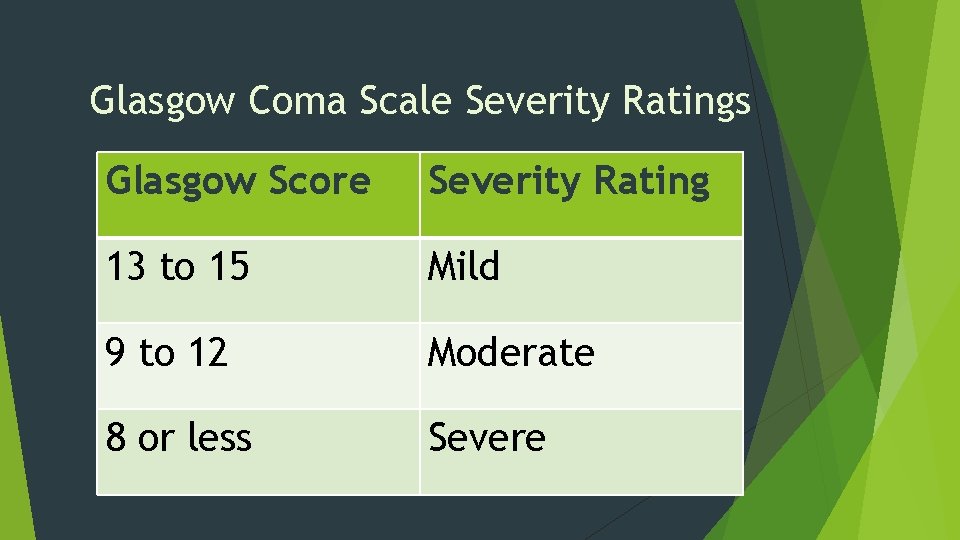
Glasgow Coma Scale Severity Ratings Glasgow Score Severity Rating 13 to 15 Mild 9 to 12 Moderate 8 or less Severe
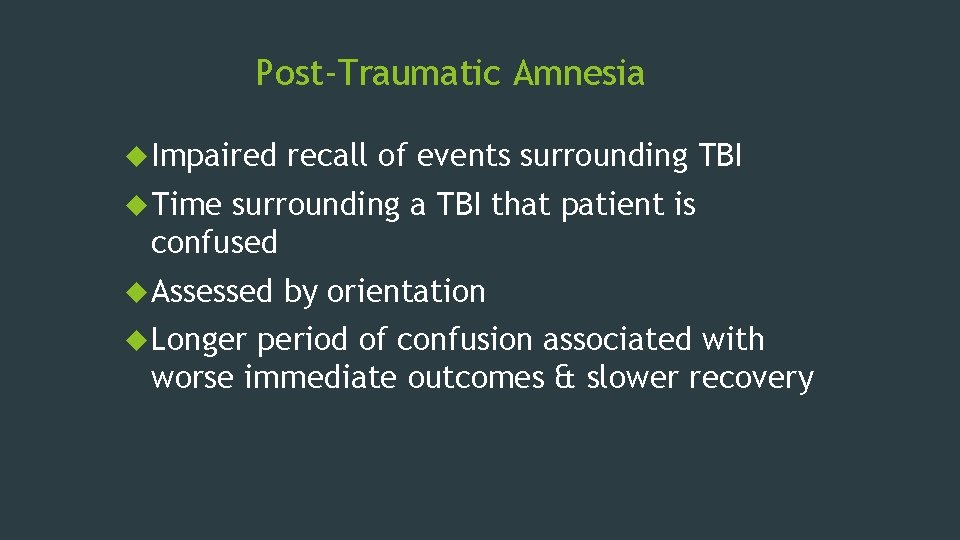
Post-Traumatic Amnesia Impaired recall of events surrounding TBI Time surrounding a TBI that patient is confused Assessed Longer by orientation period of confusion associated with worse immediate outcomes & slower recovery
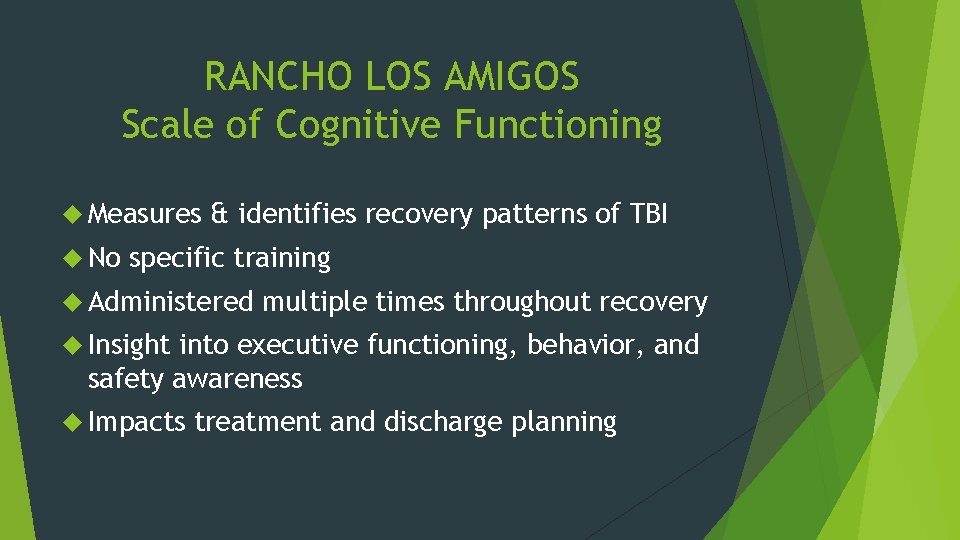
RANCHO LOS AMIGOS Scale of Cognitive Functioning Measures No & identifies recovery patterns of TBI specific training Administered multiple times throughout recovery Insight into executive functioning, behavior, and safety awareness Impacts treatment and discharge planning
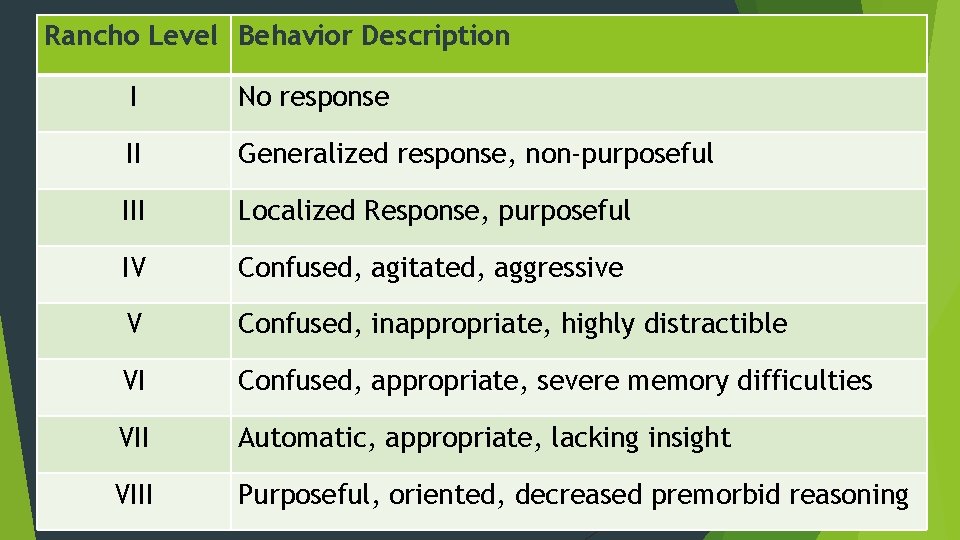
Rancho Level Behavior Description I No response II Generalized response, non-purposeful III Localized Response, purposeful IV Confused, agitated, aggressive V Confused, inappropriate, highly distractible VI Confused, appropriate, severe memory difficulties VII Automatic, appropriate, lacking insight VIII Purposeful, oriented, decreased premorbid reasoning
Dysphagia & TBI
Dysphagia & TBI Dysphagia occurs in 33% of patients with TBI 60% of patients with severe TBI have dysphagia Relationship between… Length of coma Tracheostomy ventilator Severity of dysphagia tube/
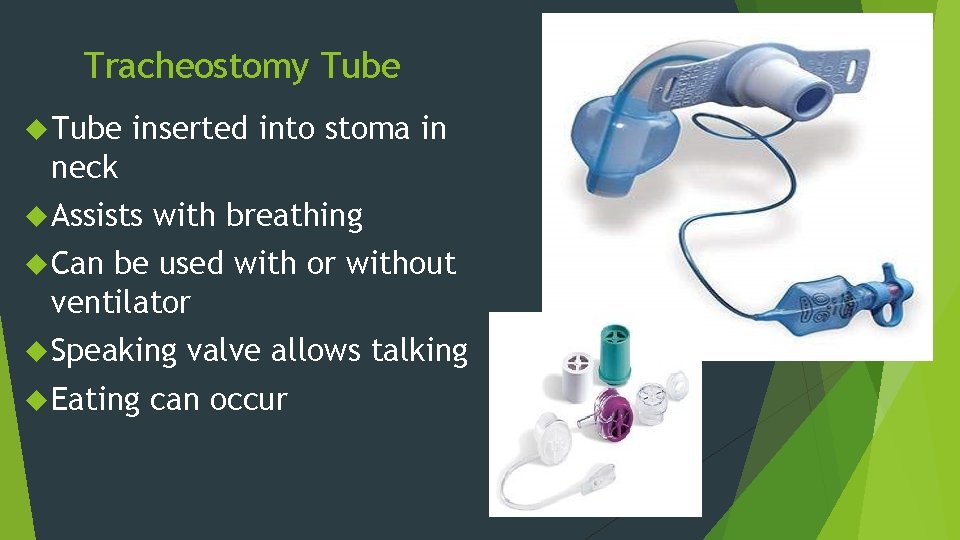
Tracheostomy Tube inserted into stoma in neck Assists with breathing Can be used with or without ventilator Speaking Eating valve allows talking can occur
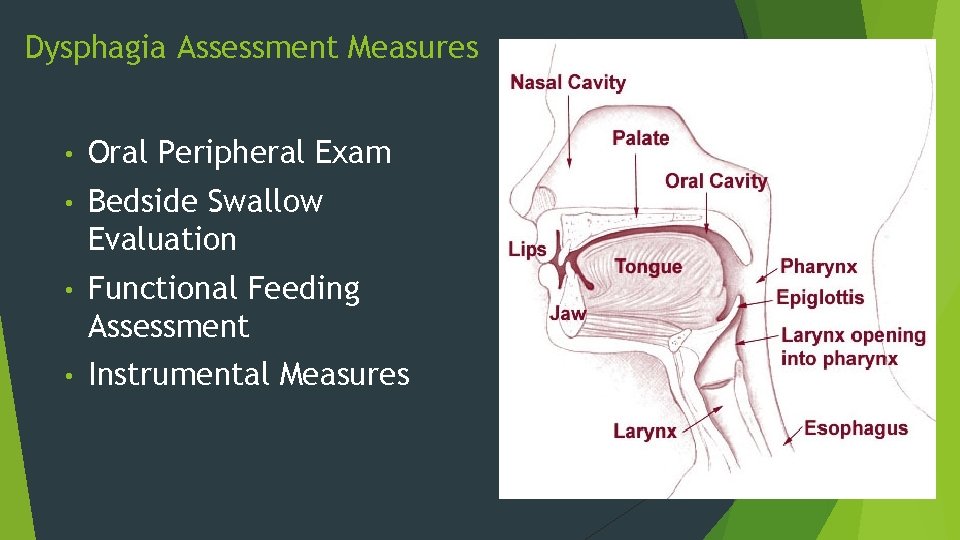
Dysphagia Assessment Measures • Oral Peripheral Exam • Bedside Swallow Evaluation • Functional Feeding Assessment • Instrumental Measures
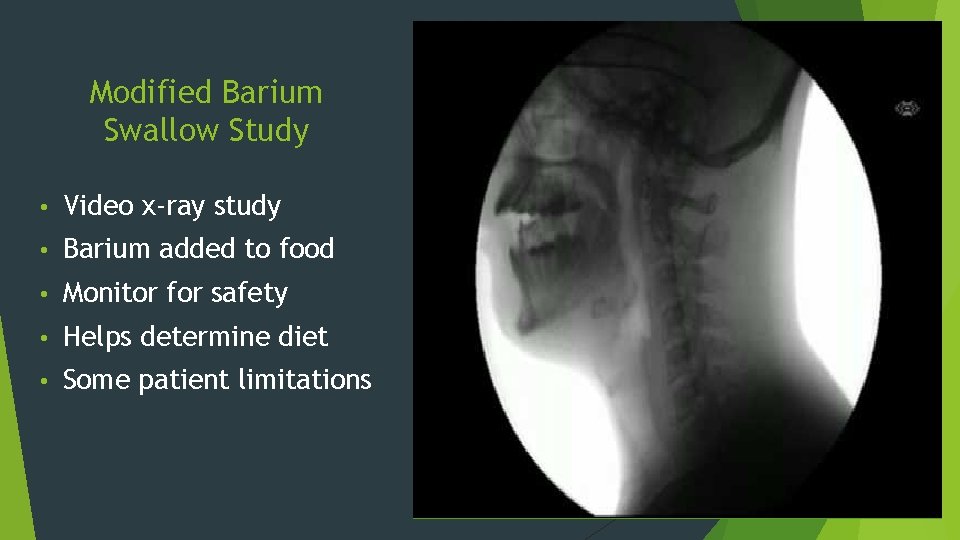
Modified Barium Swallow Study • Video x-ray study • Barium added to food • Monitor for safety • Helps determine diet • Some patient limitations
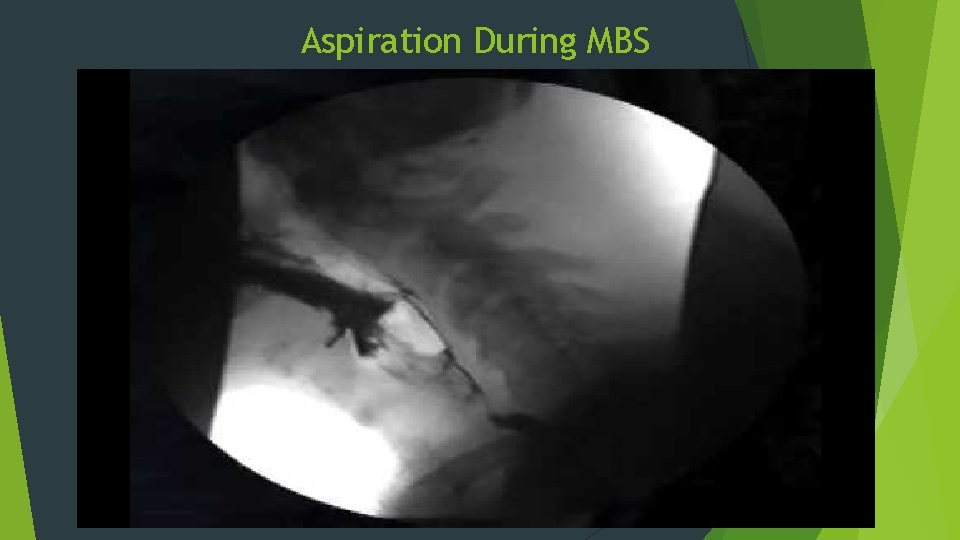
Aspiration During MBS
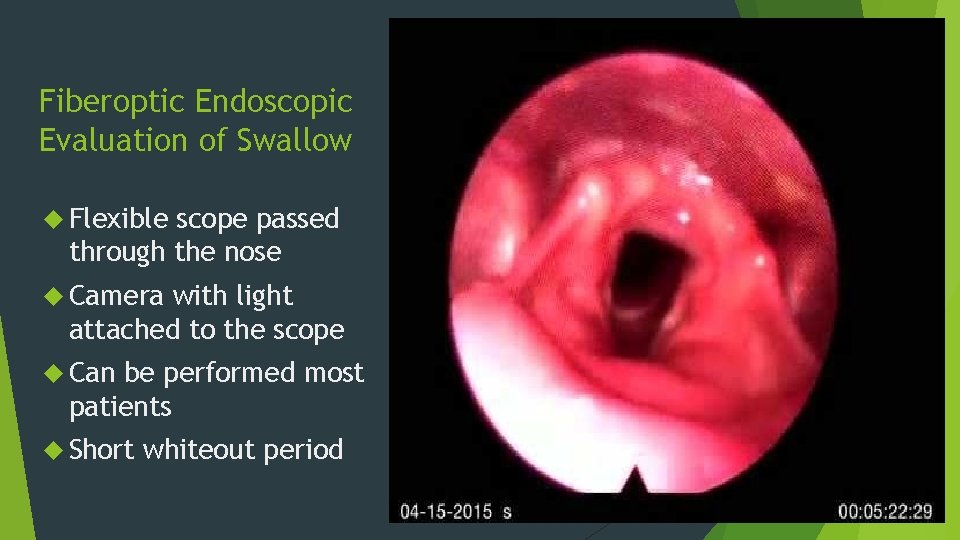
Fiberoptic Endoscopic Evaluation of Swallow Flexible scope passed through the nose Camera with light attached to the scope Can be performed most patients Short whiteout period
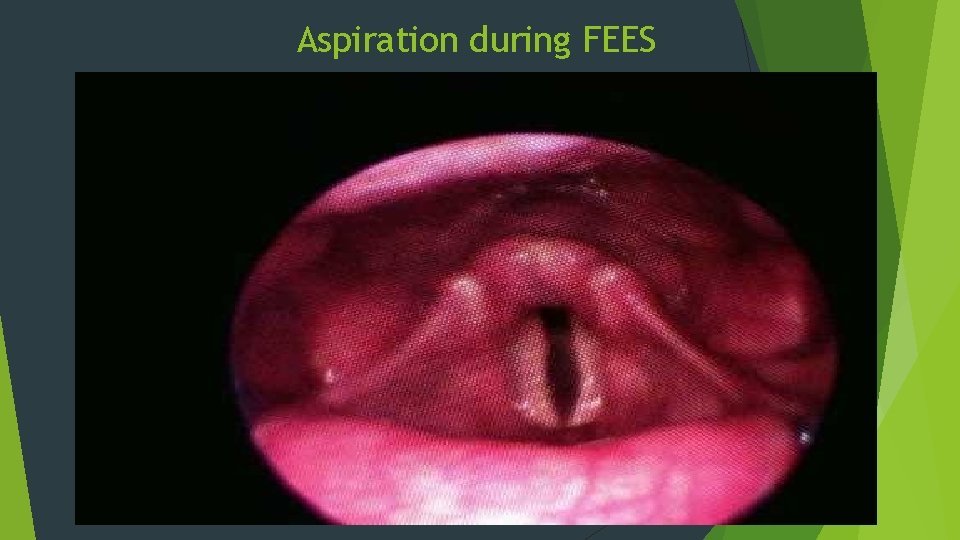
Aspiration during FEES
Dysphagia Treatment Modalities Compensatory Strategies Therapeutic Feeds Positioning Equipment Electrical stimulation
Diet Modifications Solids and liquids are modified for safety Helps to decrease fatigue Reduces aspiration risk Previously based on National Dysphagia Diet Moving towards IDDSI
Alternative Nutrition Not all patients can tolerate food by mouth Very impaired swallow Decreased arousal level On ventilator Alternative Nutrition Methods TPN NG G tube Mixed
Assessment Procedures for Cognition & Communication After TBI
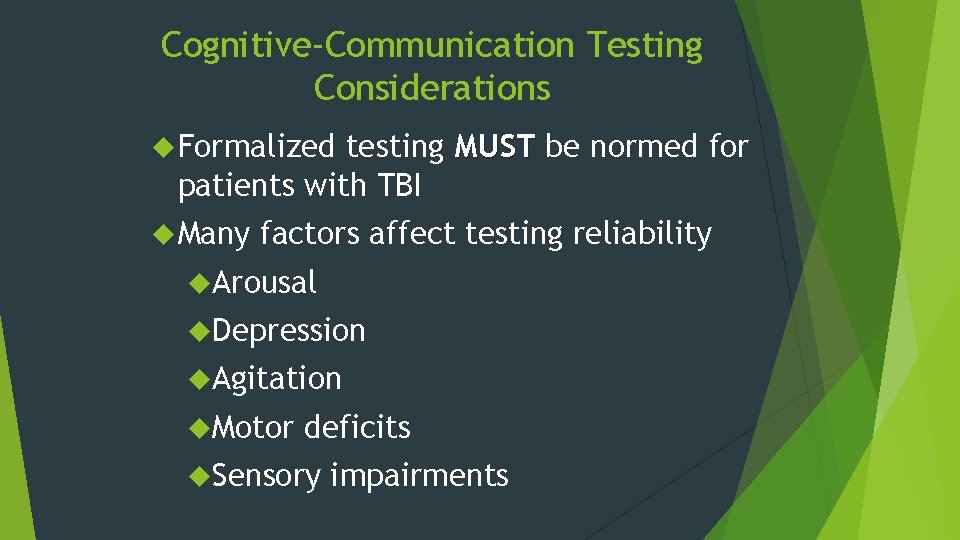
Cognitive-Communication Testing Considerations Formalized testing MUST be normed for patients with TBI Many factors affect testing reliability Arousal Depression Agitation Motor deficits Sensory impairments
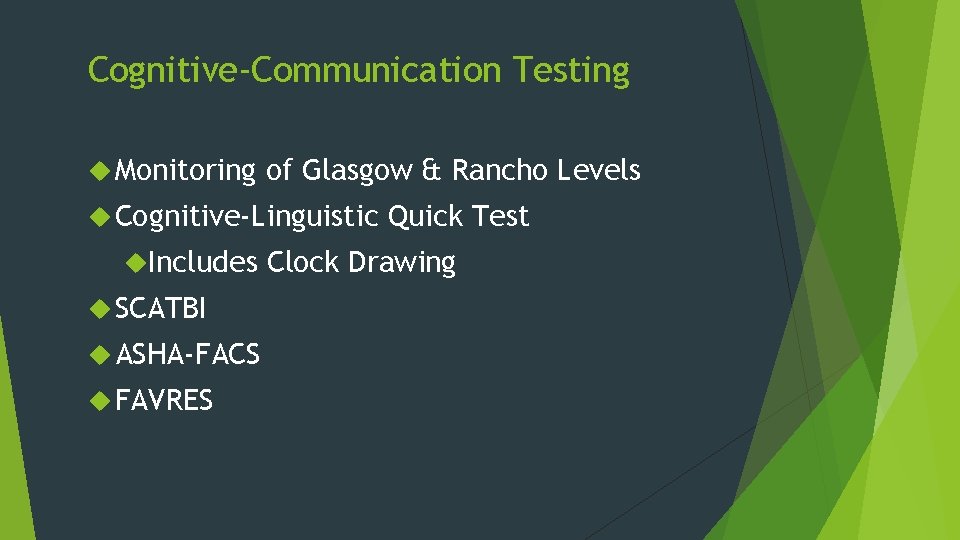
Cognitive-Communication Testing Monitoring of Glasgow & Rancho Levels Cognitive-Linguistic Includes SCATBI ASHA-FACS FAVRES Quick Test Clock Drawing
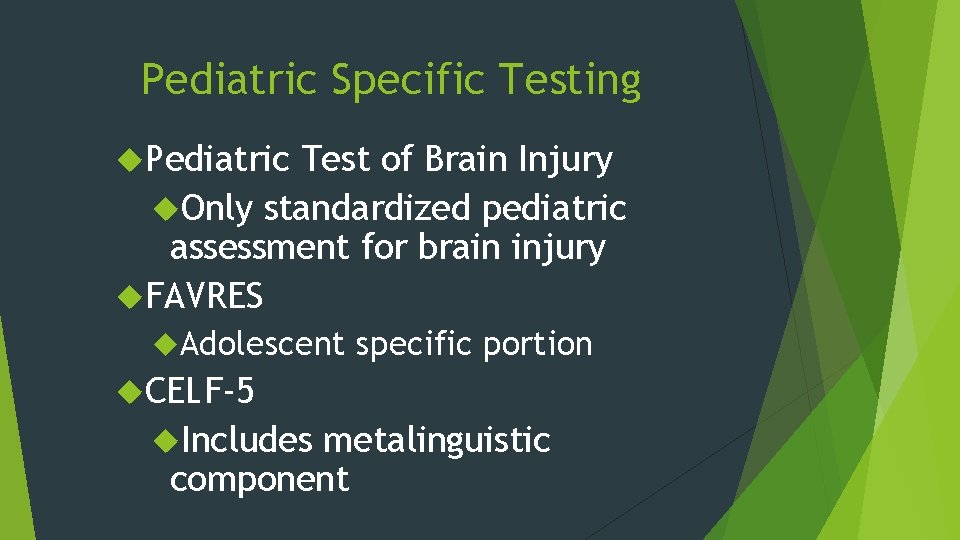
Pediatric Specific Testing Pediatric Test of Brain Injury Only standardized pediatric assessment for brain injury FAVRES Adolescent specific portion CELF-5 Includes metalinguistic component
Cognitive. Communication Impairments in TBI
Speech & Language Deficits in Patients with TBI Expressive Language Receptive Language Reading & Writing Pragmatics/Social Language
Discourse Analysis & Conversational Speech Discourse deficits are a hallmark of TBI Socially isolating Discourse analysis best evidence based practice Intervention should be based on cognitive deficits
Cognitive Deficits in Patients with TBI Memory Attention Executive Insight functioning
Treatment for Cognitive-Communication Deficits Functional patient-centered goals Collaborative team approach High therapy frequency Group & individual intervention Evidence Based Practice
Compensatory Strategies Support success and independence by utilizing intact skills to overcome challenges
Errorless Learning Correct Practice Patient feels successful Small steps Provide multiple models Fade out prompts
Metacognitive Skill Training Patients “think” about “thinking” Increases Tasks problem-solving skills are broken down into small steps 1. Setting Goals 2. Self-monitoring 3. Evaluation of performance
Augmentative & Alternative Communication Supplements communication Changes throughout treatment No-tech, low-tech or high-tech Decreases agitation or frustration Increases independence Can support speech development
Motor Speech Intervention Increase speech & speech intelligibility Targets apraxia & dysarthria Tactile, visual, auditory cues Modalities such as massage
Caregiver Stressors Time off work Decreased Caregiver Concern burden for loved one Increased Parental income anxiety & depression distress increases child behaviors
Questions? Thank you!
References ASHA www. asha. org - AAC Practice Portal - Pediatric Brain Injury Evidence Map - Pediatric Brain Injury Practice Portal - Adult Traumatic Brain Injury Practice Portal • Centers for Disease Control www. cdc. gov - Traumatic Brain Injury & Concussion - Report to Congress. The Management of Traumatic Brain Injury in Children: Opportunities for Action - Mass Trauma Resources Glasgow Coma Scale •
References • Glasgow Structured Approach to Assessment of the Glasgow Coma Scale www. glasgowcomascale. org • Narad, M. ; Yeates, K. ; Taylor, H. ; Stancin, T. ; Wade, S. (2016) “Maternal and Paternal Distress and Coping Over Time Following Pediatric Traumatic Brain Injury” • Le, K. ; Mozeiko, J. ; Coelho, C. (2011). “Discourse Analyses: Characterizing Cognitive-Communication Disorders following TBI” • Ness, B. & Sohlberg, M. (2009). “Implementing Metacognitive Strategies Targeting Self-Regulation for Adolescents in Resource Settings” • Patterson, F. ; Fleming, J. ; Doig, E. (2016) “Group-based Delivery of Interventions in Traumatic Brain Injury Rehabilitation: A Scoping Review”
References • • You. Tube • “My X Ray Swallows” • “Intra Swallow Aspiration” • “Fiberoptic Endoscopic Evaluation of Swallowing” • “Aspiration Before the Swallow with Thin Liquids by Cup” • “IDDSI Flow Test” Zollman, Felise S. (2011). Manual of Traumatic Brain Injury Management