The Renaissance outside Italy The Northern Renaissance Section






- Slides: 66
The Renaissance outside Italy The Northern Renaissance Section 2. 7
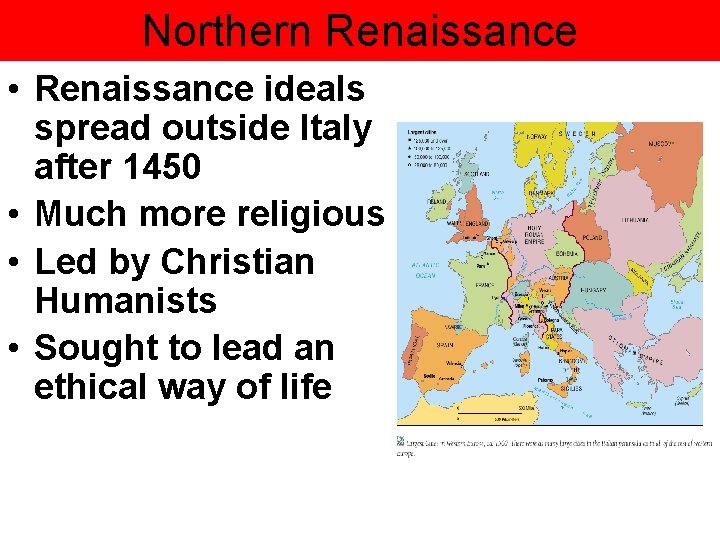
Northern Renaissance • Renaissance ideals spread outside Italy after 1450 • Much more religious • Led by Christian Humanists • Sought to lead an ethical way of life
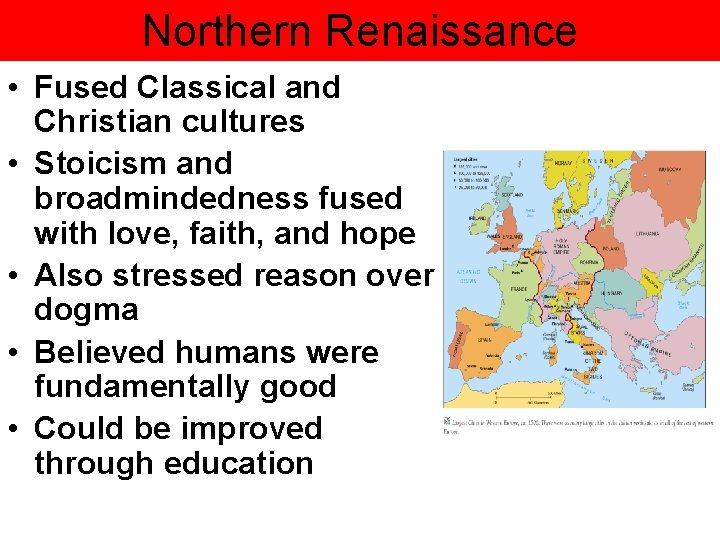
Northern Renaissance • Fused Classical and Christian cultures • Stoicism and broadmindedness fused with love, faith, and hope • Also stressed reason over dogma • Believed humans were fundamentally good • Could be improved through education
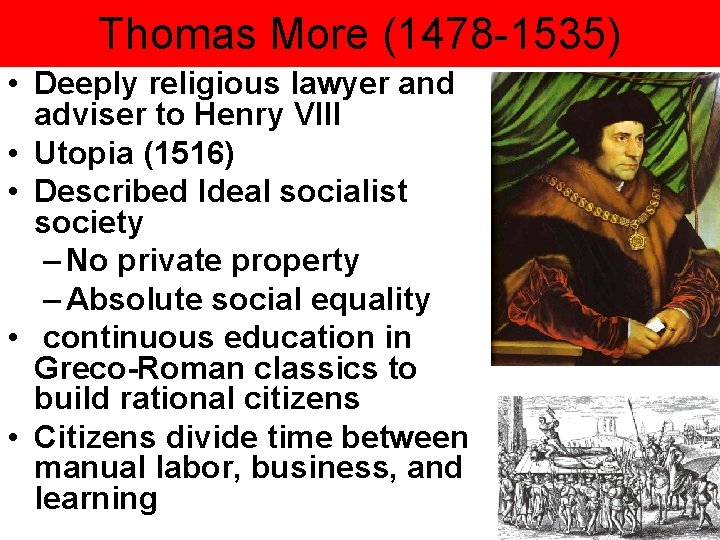
Thomas More (1478 -1535) • Deeply religious lawyer and adviser to Henry VIII • Utopia (1516) • Described Ideal socialist society – No private property – Absolute social equality • continuous education in Greco-Roman classics to build rational citizens • Citizens divide time between manual labor, business, and learning
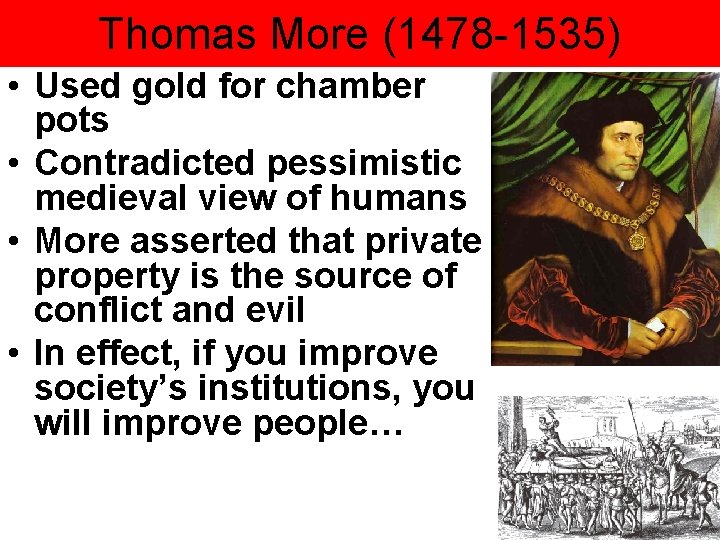
Thomas More (1478 -1535) • Used gold for chamber pots • Contradicted pessimistic medieval view of humans • More asserted that private property is the source of conflict and evil • In effect, if you improve society’s institutions, you will improve people…
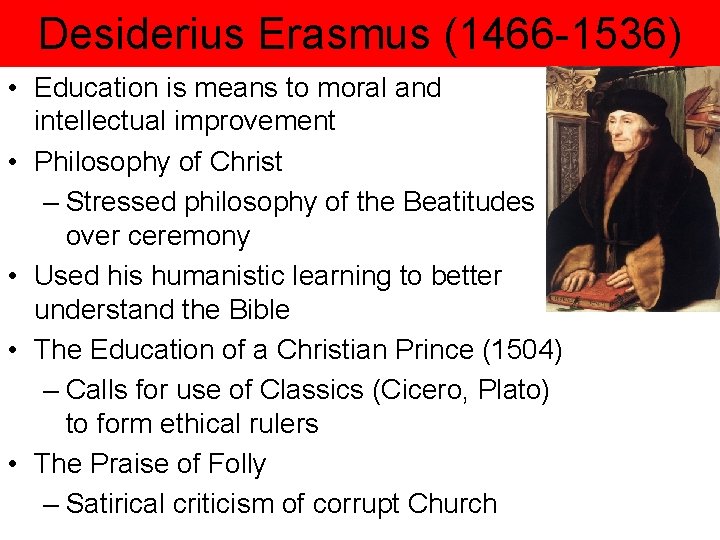
Desiderius Erasmus (1466 -1536) • Education is means to moral and intellectual improvement • Philosophy of Christ – Stressed philosophy of the Beatitudes over ceremony • Used his humanistic learning to better understand the Bible • The Education of a Christian Prince (1504) – Calls for use of Classics (Cicero, Plato) to form ethical rulers • The Praise of Folly – Satirical criticism of corrupt Church
Renaissance Art in Northern Europe • Should not be considered an appendage to Italian art • But, Italian influence was strong: – Painting in OIL developed in Flanders – The differences between the two cultures – Italy change was inspired by humanism with its emphasis on the revival of the values of classical antiquity – Northern Europe change was driven by religious reform, the return to Christian values, and the revolt against the authority of the Church • More princes & kings were patrons of artists in the North.
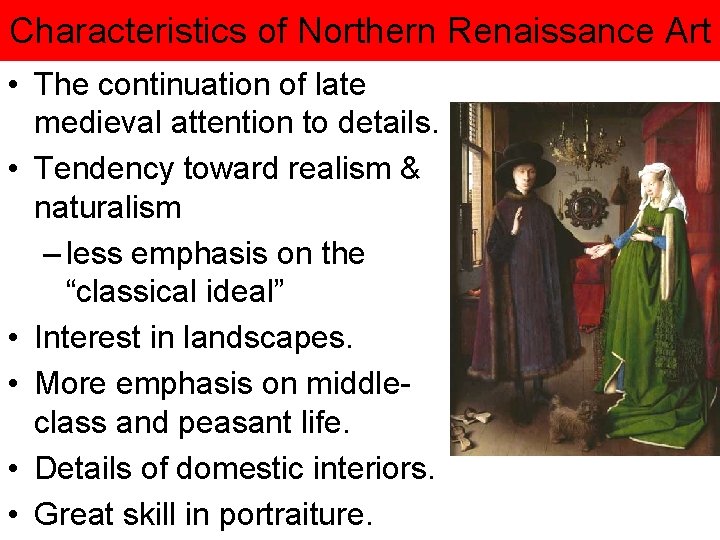
Characteristics of Northern Renaissance Art • The continuation of late medieval attention to details. • Tendency toward realism & naturalism – less emphasis on the “classical ideal” • Interest in landscapes. • More emphasis on middleclass and peasant life. • Details of domestic interiors. • Great skill in portraiture.
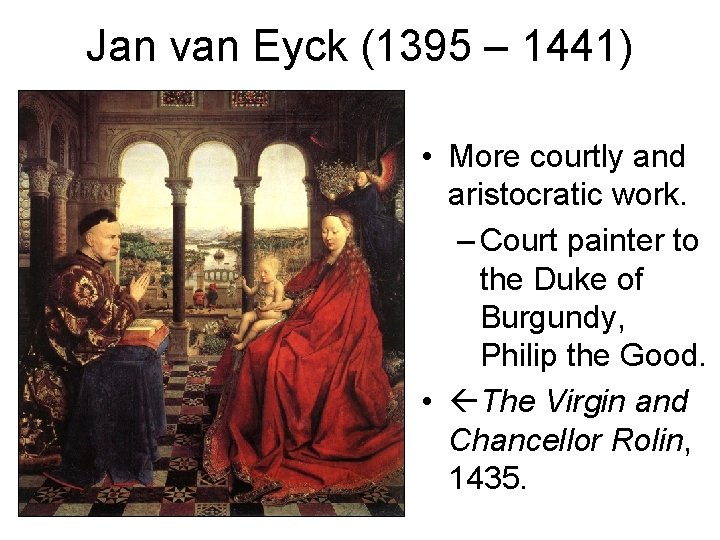
Jan van Eyck (1395 – 1441) • More courtly and aristocratic work. – Court painter to the Duke of Burgundy, Philip the Good. • The Virgin and Chancellor Rolin, 1435.
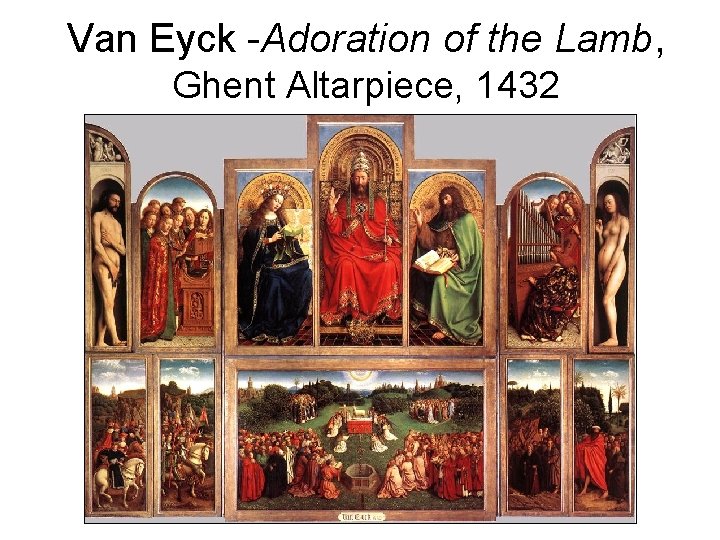
Van Eyck -Adoration of the Lamb, Ghent Altarpiece, 1432
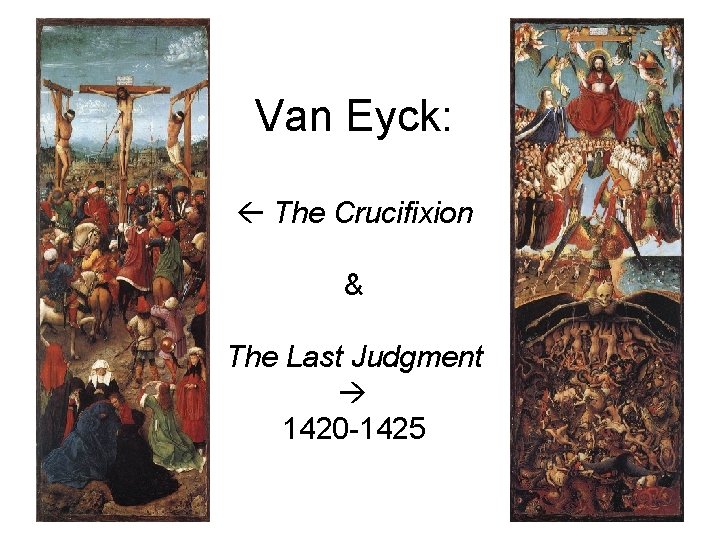
Van Eyck: The Crucifixion & The Last Judgment 1420 -1425
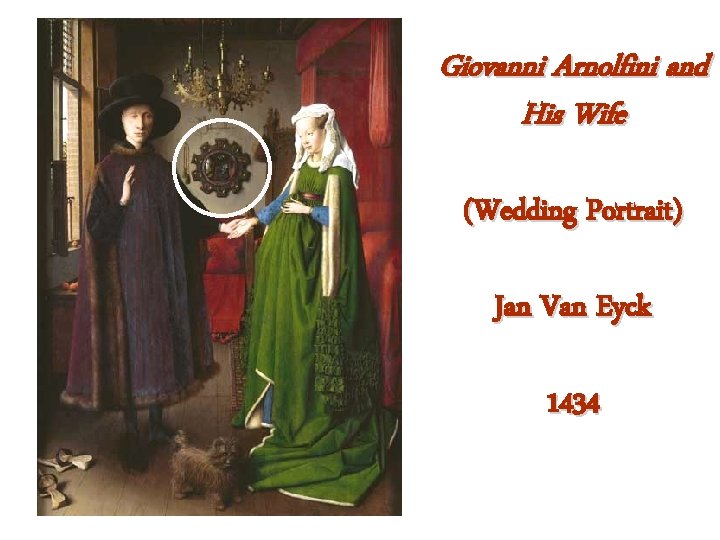
Giovanni Arnolfini and His Wife (Wedding Portrait) Jan Van Eyck 1434
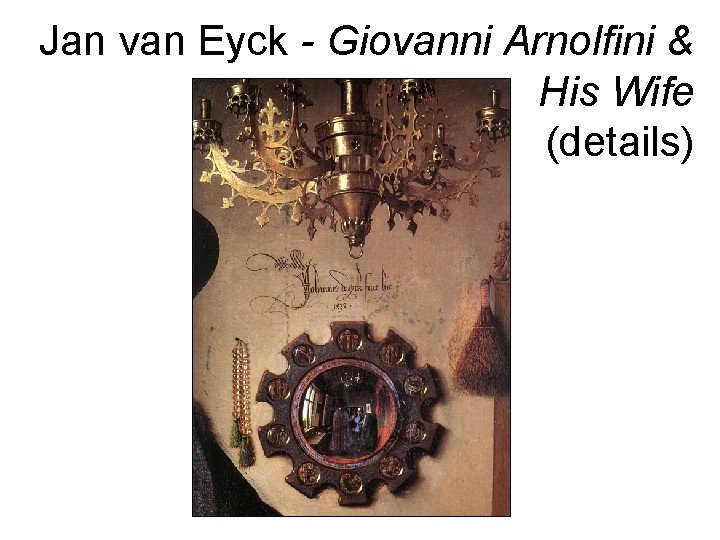
Jan van Eyck - Giovanni Arnolfini & His Wife (details)
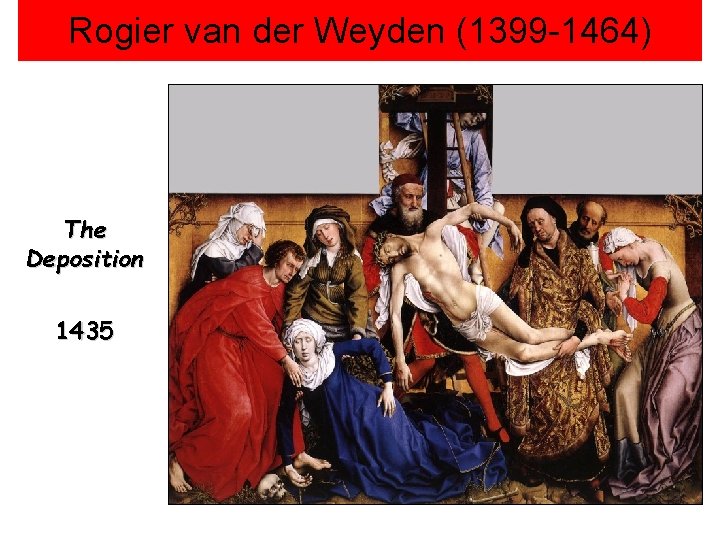
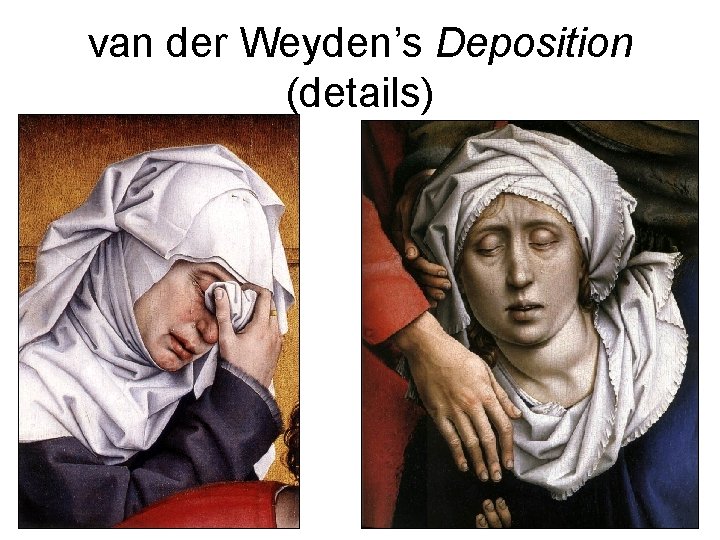
Rogier van der Weyden (1399 -1464) The Deposition 1435
van der Weyden’s Deposition (details)
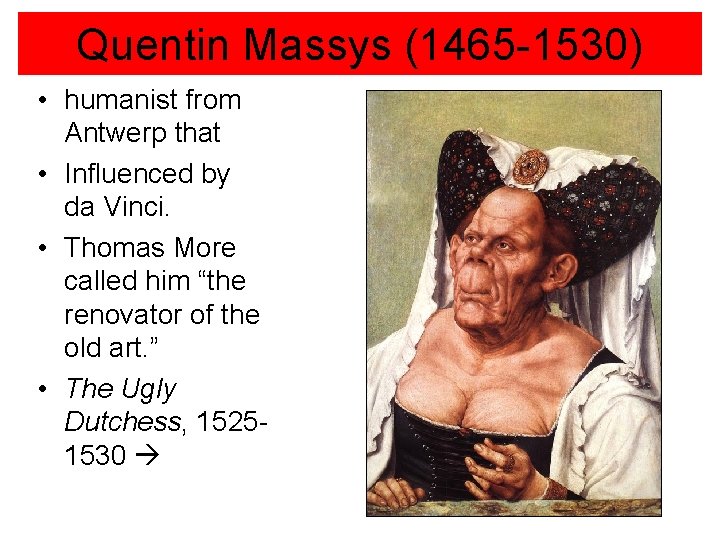
Quentin Massys (1465 -1530) • humanist from Antwerp that • Influenced by da Vinci. • Thomas More called him “the renovator of the old art. ” • The Ugly Dutchess, 15251530
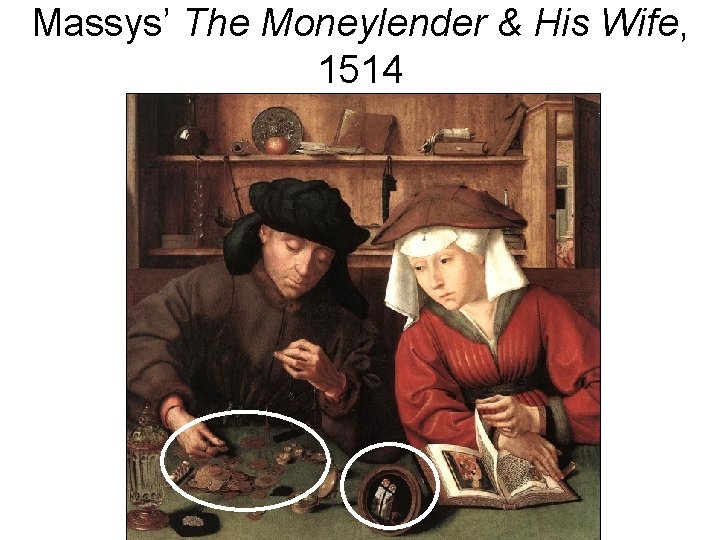
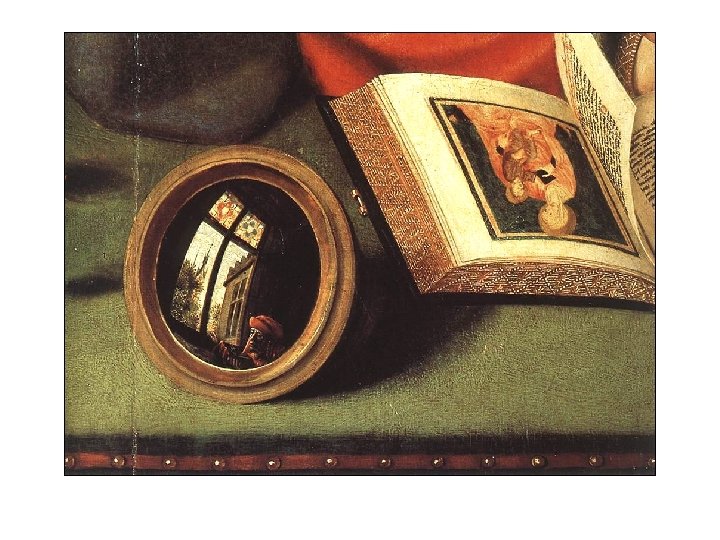
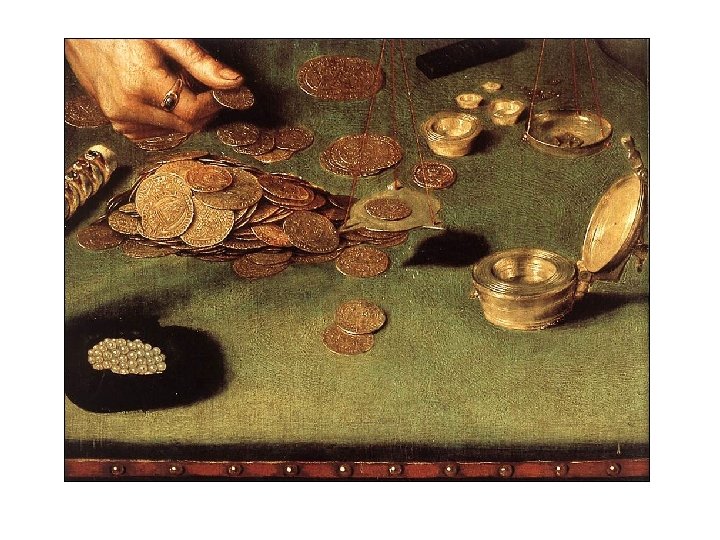
Massys’ The Moneylender & His Wife, 1514
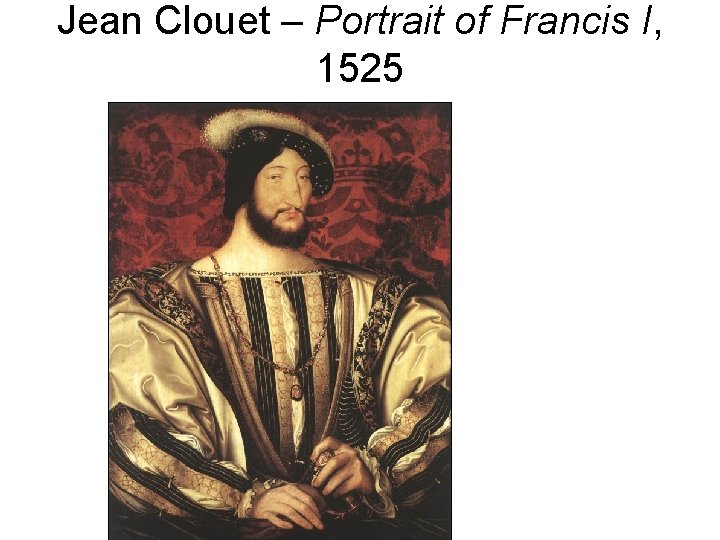
Renaissance Art in France • A new phase of Italian influence in France began with the French invasions of the Italian peninsula that began in 1494. • The most important royal patron was Francis I. – Actively encouraged humanistic learning – Invited da Vinci and Andrea del Sarto to France – Collected paintings by the great Italian masters like Titian, Raphael, and Michelangelo
Jean Clouet – Portrait of Francis I, 1525
The School of Fontainebleau • It revolved around the artists at Francis I’s Palace at Fontainebleau. • A group of artists that decorated the Royal Palace between the 1530 s and the 1560 s. • It was an offshoot of the Mannerist School of Art begun in Italy at the end of the High Renaissance.
The School of Fontainebleau • It was an offshoot of the Mannerist School of Art begun in Italy at the end of the High Renaissance. – characterized by a refined elegance, with crowded figural compositions in which painting and elaborate stucco work were closely integrated. – Their work incorporated allegory in accordance with the courtly liking for symbolism.
The School of Fontainebleau • Gallery [right] by Rosso Fiorentino & Francesco Primaticcio • 1528 -1537
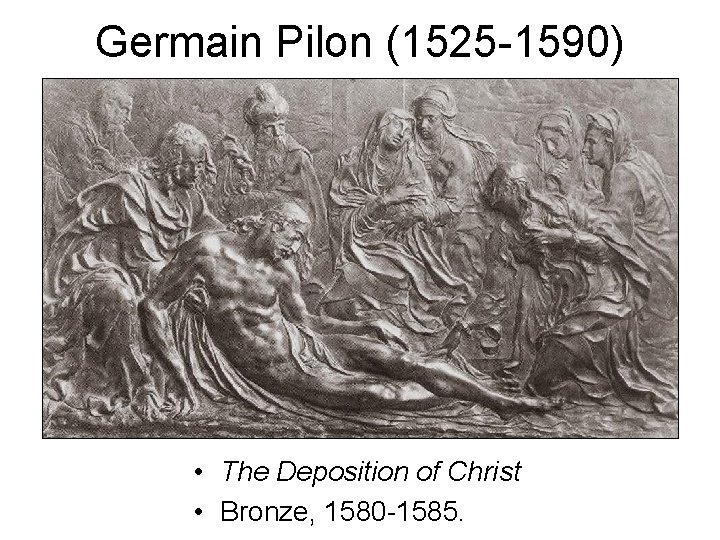
Germain Pilon (1525 -1590) • The Deposition of Christ • Bronze, 1580 -1585.
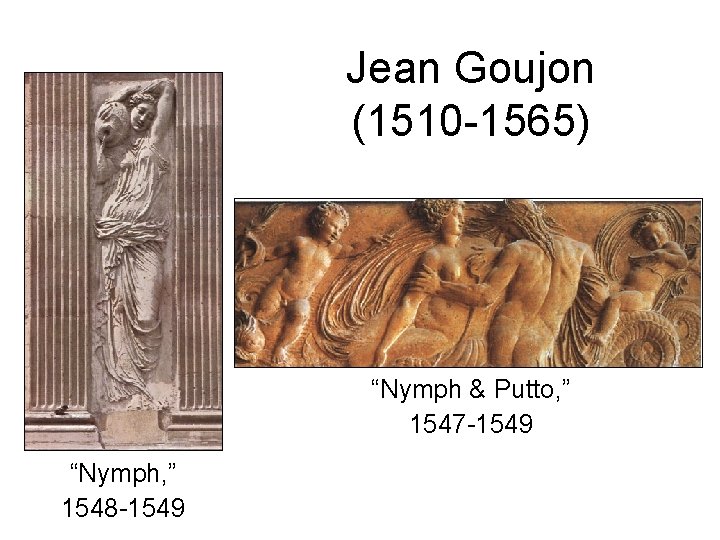
Jean Goujon (1510 -1565) “Nymph & Putto, ” 1547 -1549 “Nymph, ” 1548 -1549
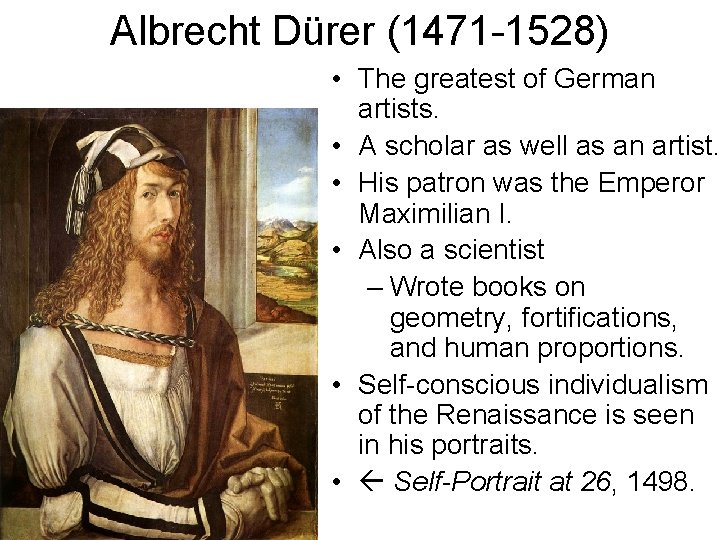
Albrecht Dürer (1471 -1528) • The greatest of German artists. • A scholar as well as an artist. • His patron was the Emperor Maximilian I. • Also a scientist – Wrote books on geometry, fortifications, and human proportions. • Self-conscious individualism of the Renaissance is seen in his portraits. • Self-Portrait at 26, 1498.
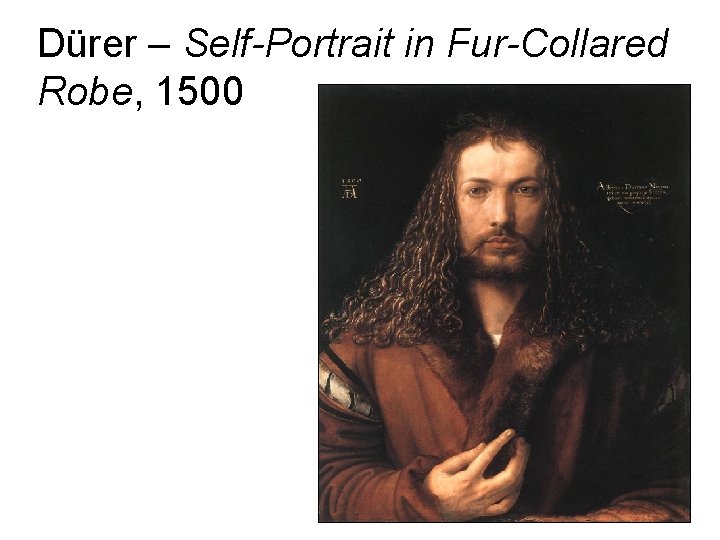
Dürer – Self-Portrait in Fur-Collared Robe, 1500
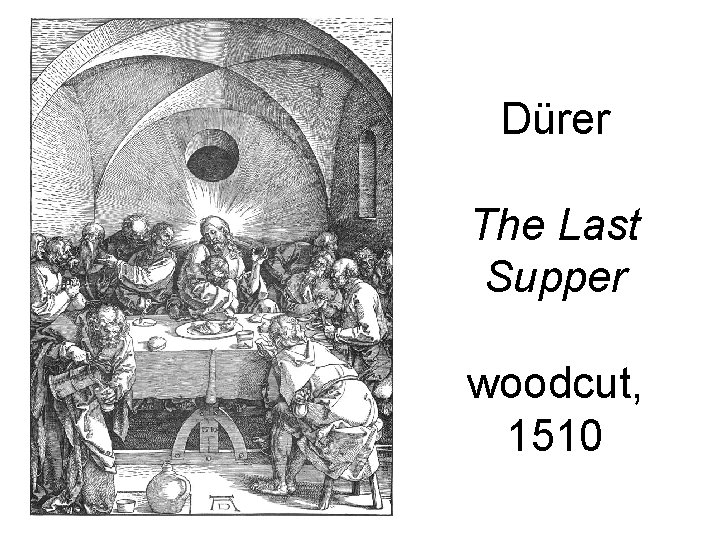
Dürer The Last Supper woodcut, 1510
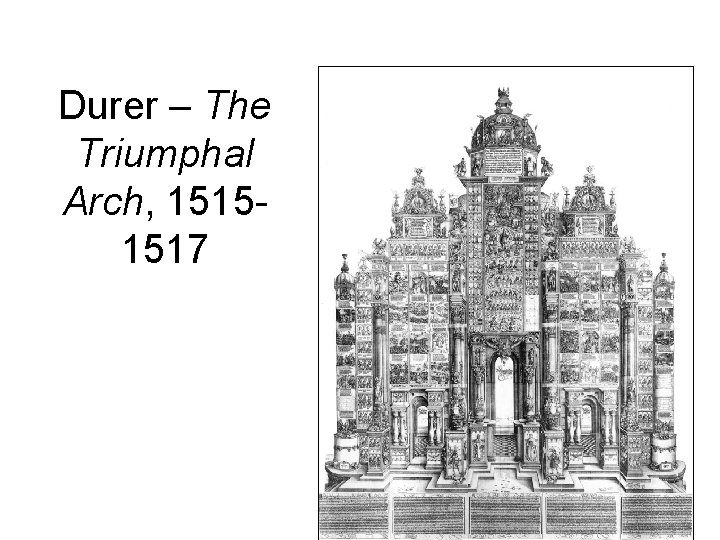
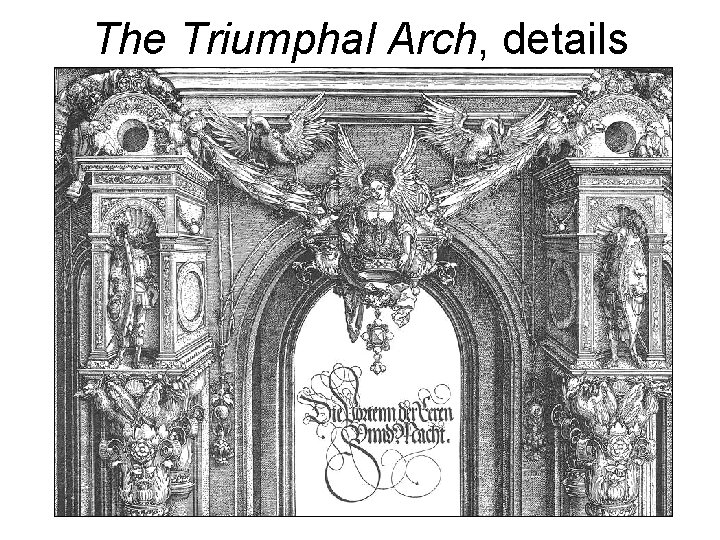
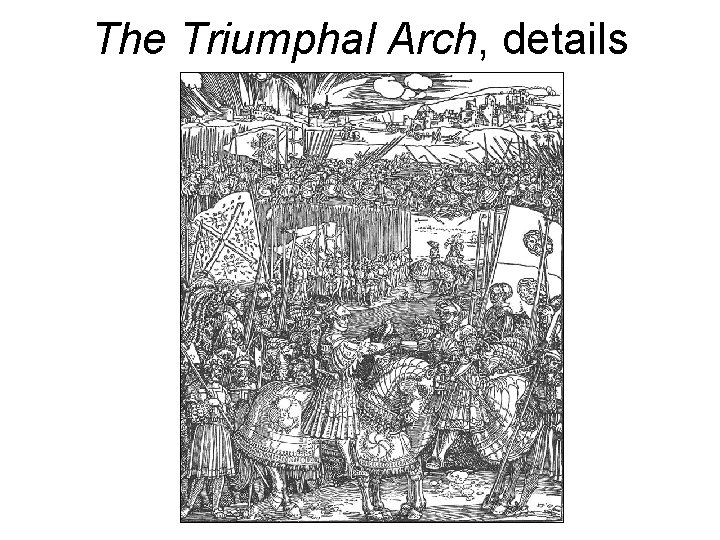
Durer – The Triumphal Arch, 15151517
The Triumphal Arch, details
The Triumphal Arch, details
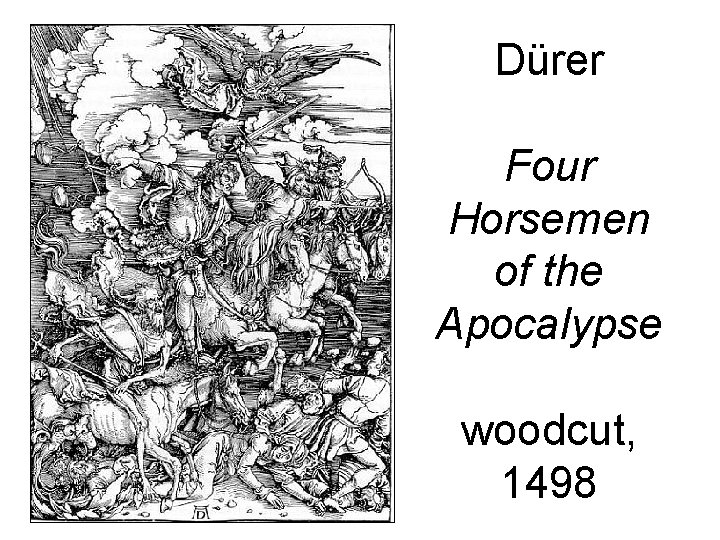
Dürer Four Horsemen of the Apocalypse woodcut, 1498
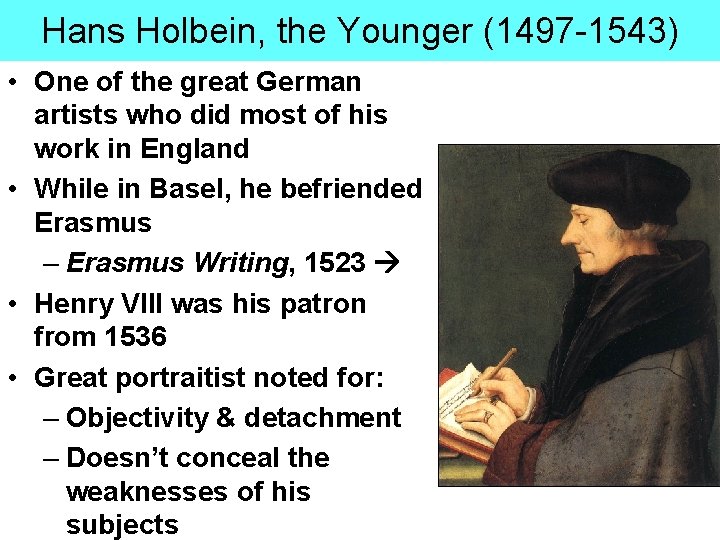
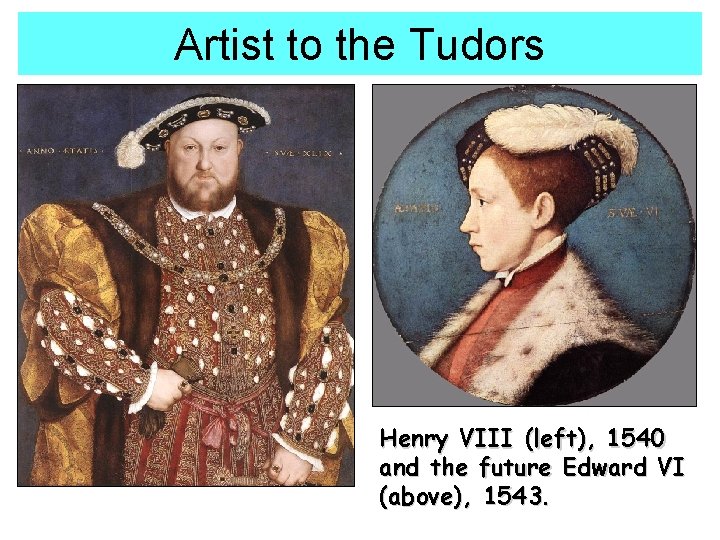
Hans Holbein, the Younger (1497 -1543) • One of the great German artists who did most of his work in England • While in Basel, he befriended Erasmus – Erasmus Writing, 1523 • Henry VIII was his patron from 1536 • Great portraitist noted for: – Objectivity & detachment – Doesn’t conceal the weaknesses of his subjects
Artist to the Tudors Henry VIII (left), 1540 and the future Edward VI (above), 1543.
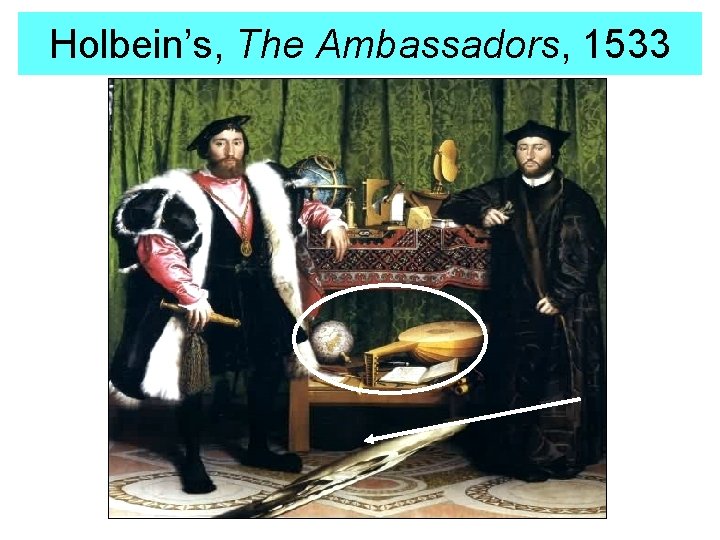
Holbein’s, The Ambassadors, 1533
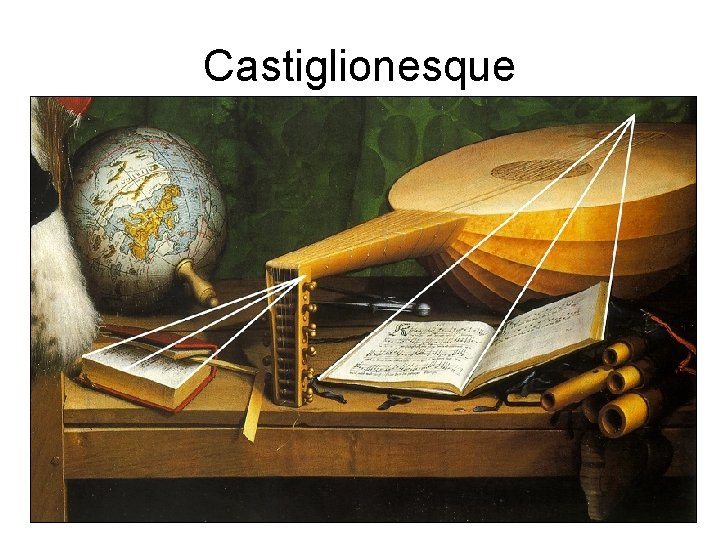
Castiglionesque
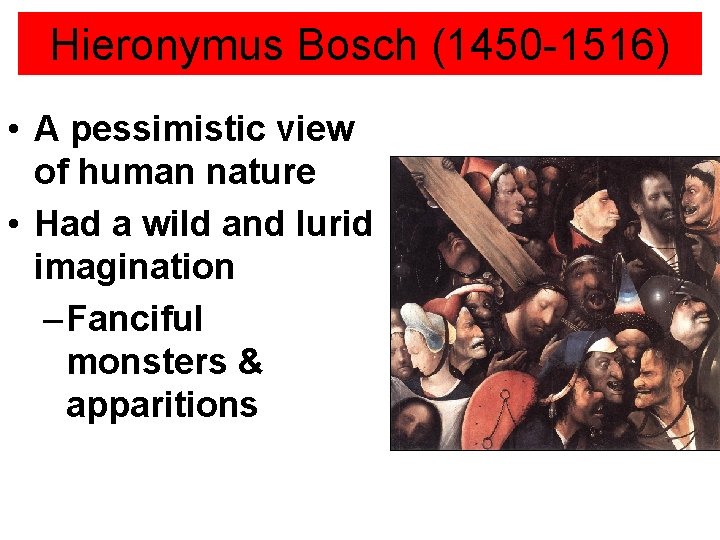
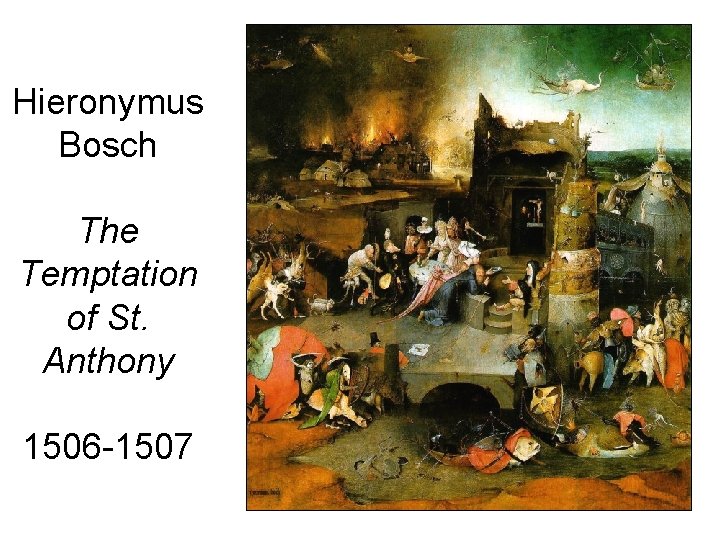
Hieronymus Bosch (1450 -1516) • A pessimistic view of human nature • Had a wild and lurid imagination – Fanciful monsters & apparitions
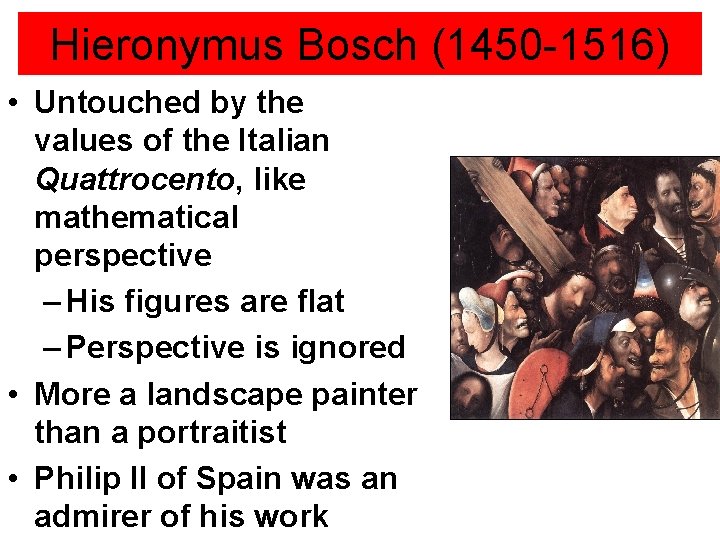
Hieronymus Bosch (1450 -1516) • Untouched by the values of the Italian Quattrocento, like mathematical perspective – His figures are flat – Perspective is ignored • More a landscape painter than a portraitist • Philip II of Spain was an admirer of his work
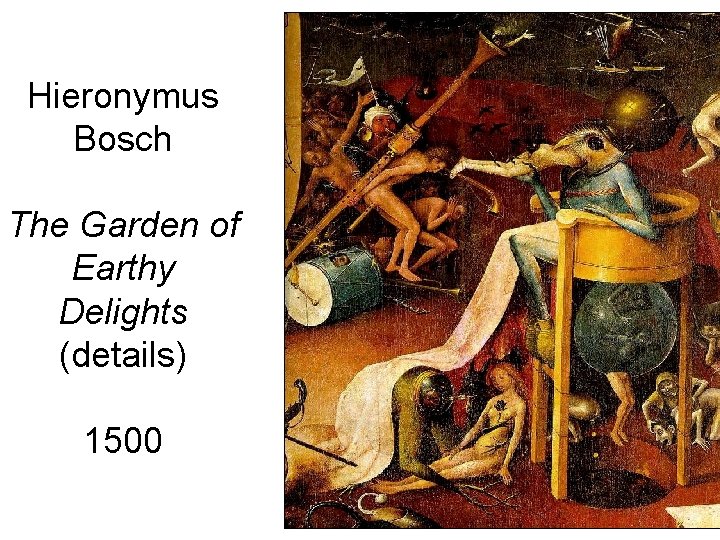
Hieronymus Bosch The Garden of Earthy Delights (details) 1500
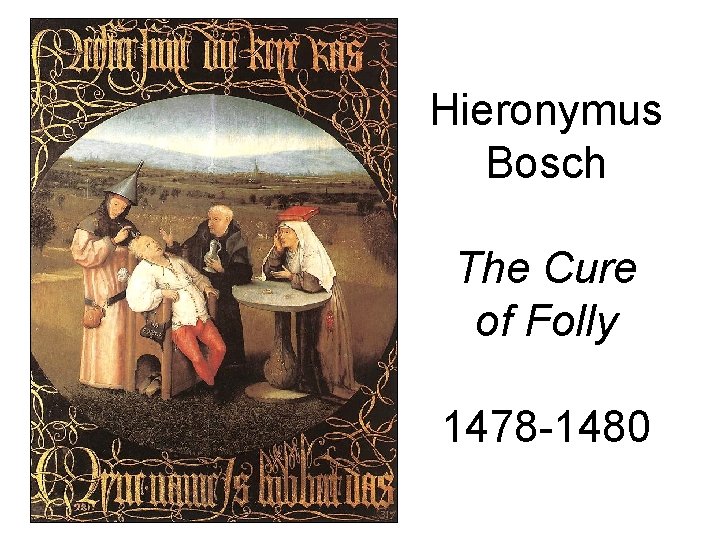
Hieronymus Bosch The Cure of Folly 1478 -1480
Hieronymus Bosch The Temptation of St. Anthony 1506 -1507
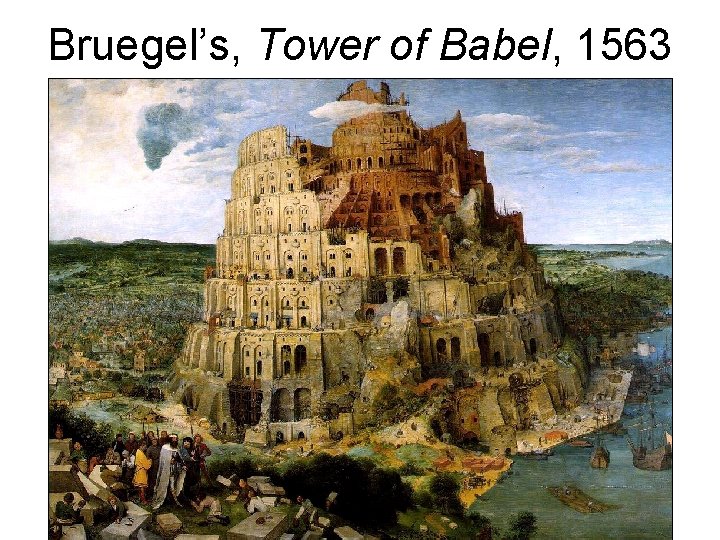
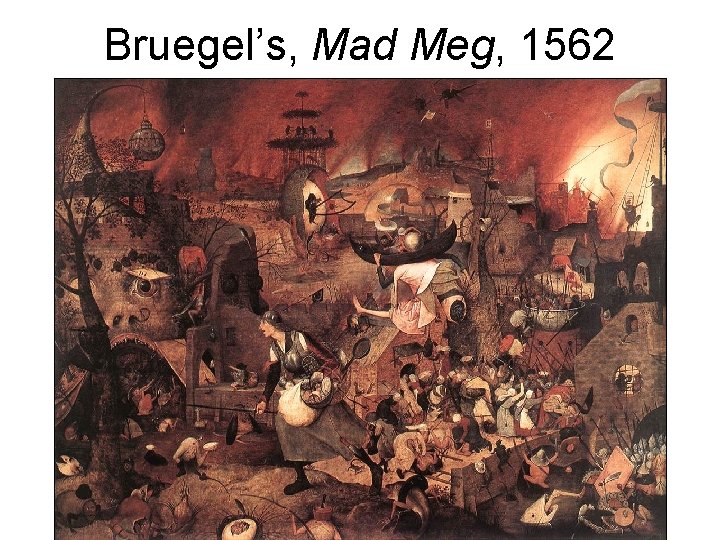
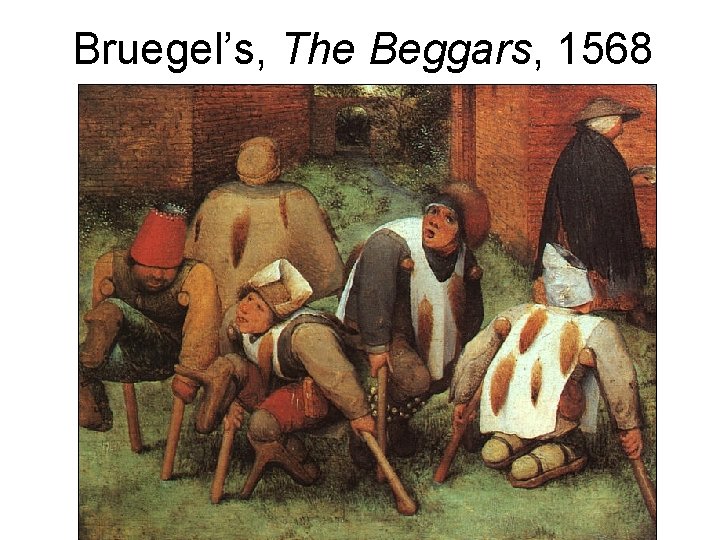
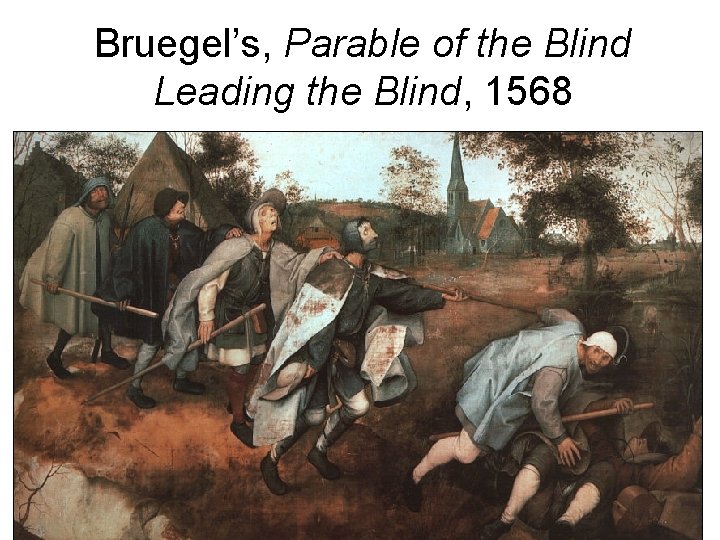
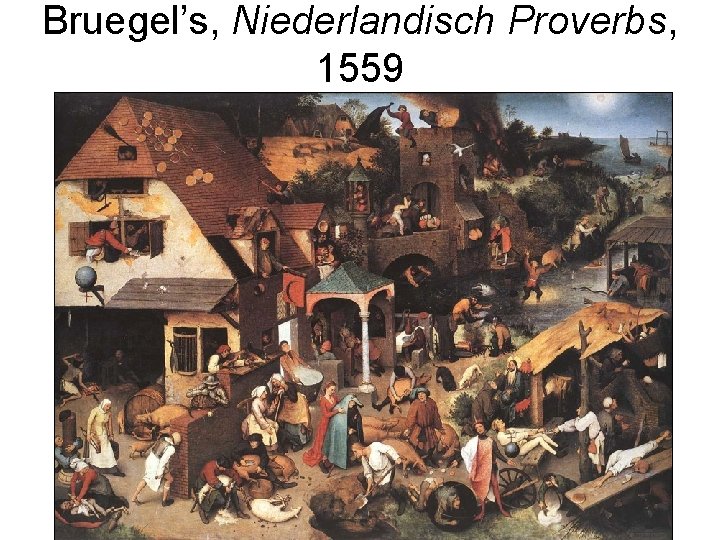
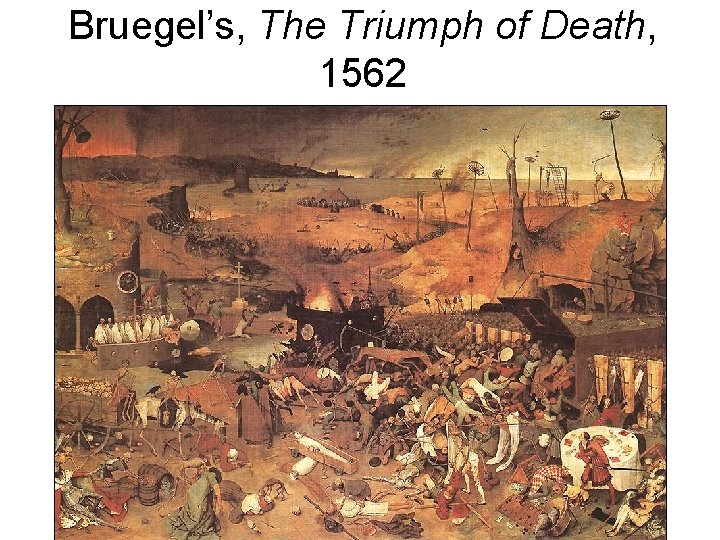
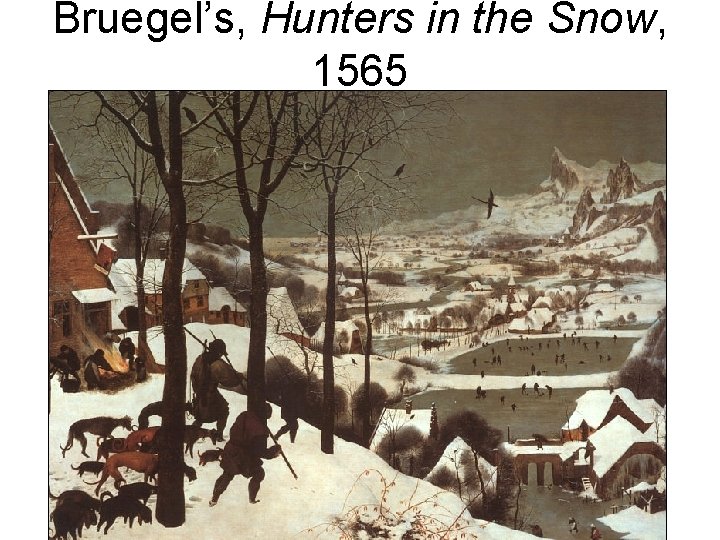
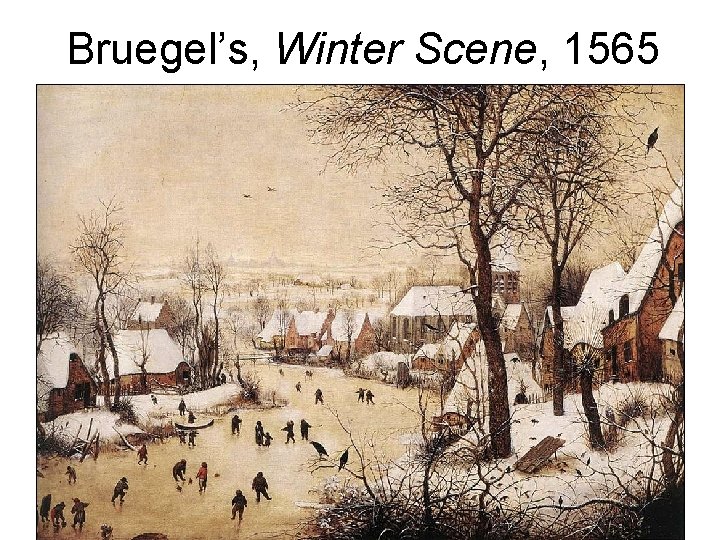
Pieter Bruegel the Elder (1525 -1569) • • • One of the greatest artistic geniuses of his age. Worked in Antwerp and then moved to Brussels. In touch with a circle of Erasmian humanists. Was deeply concerned with human vice and follies. A master of landscapes; not a portraitist. – People in his works often have round, blank, heavy faces. – They are expressionless, mindless, and sometimes malicious. – They are types, rather than individuals. – Their purpose is to convey a message.
Bruegel’s, Tower of Babel, 1563
Bruegel’s, Mad Meg, 1562
Bruegel’s, The Beggars, 1568
Bruegel’s, Parable of the Blind Leading the Blind, 1568
Bruegel’s, Niederlandisch Proverbs, 1559
Bruegel’s, The Triumph of Death, 1562
Bruegel’s, Hunters in the Snow, 1565
Bruegel’s, Winter Scene, 1565
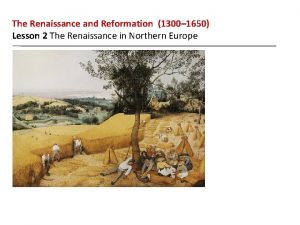
Bruegel’s The Harvesters, 1565
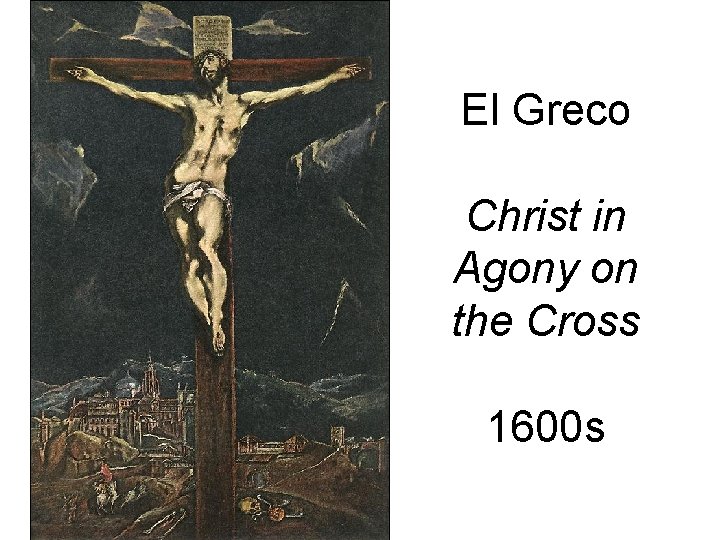
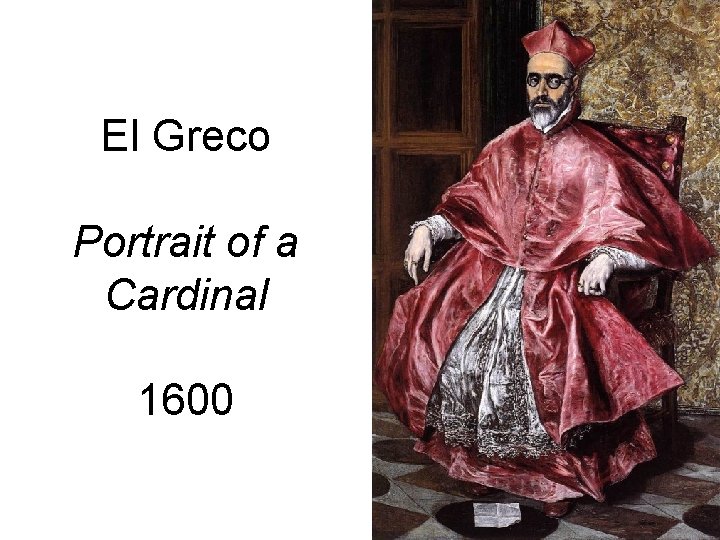
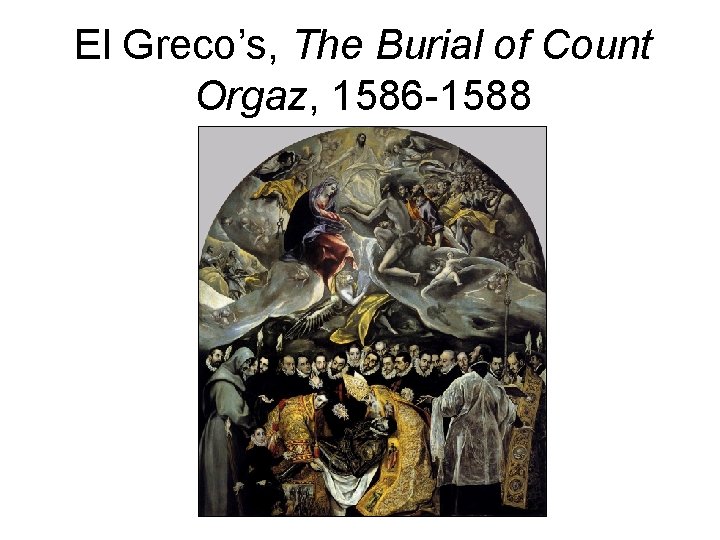
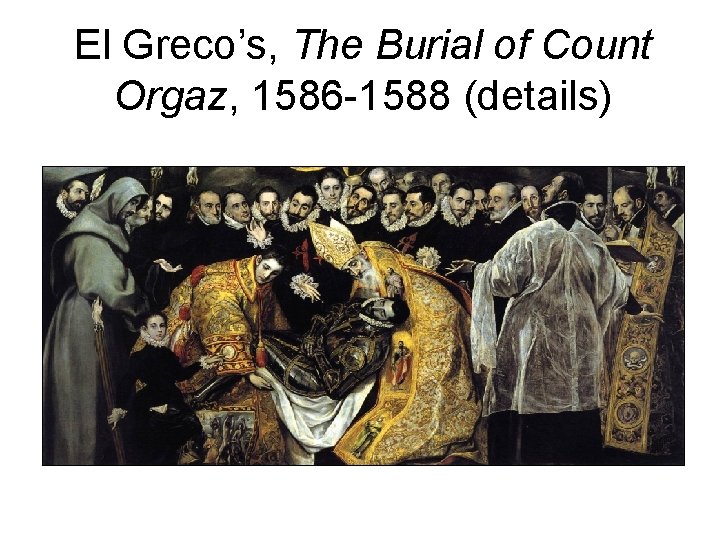
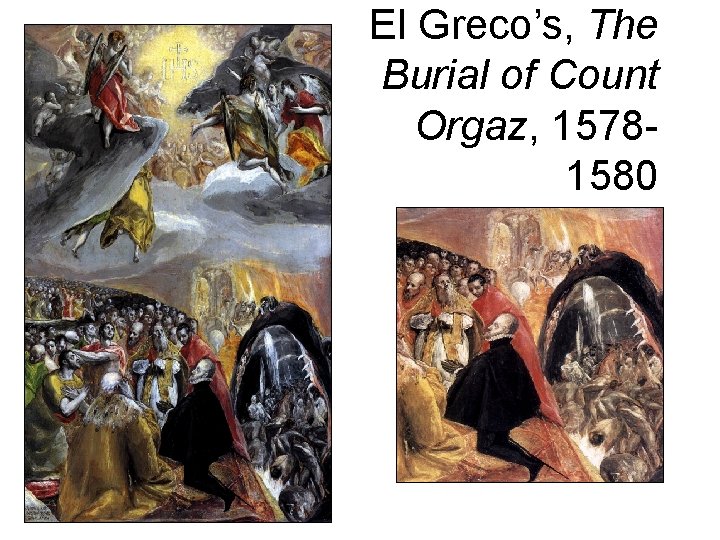
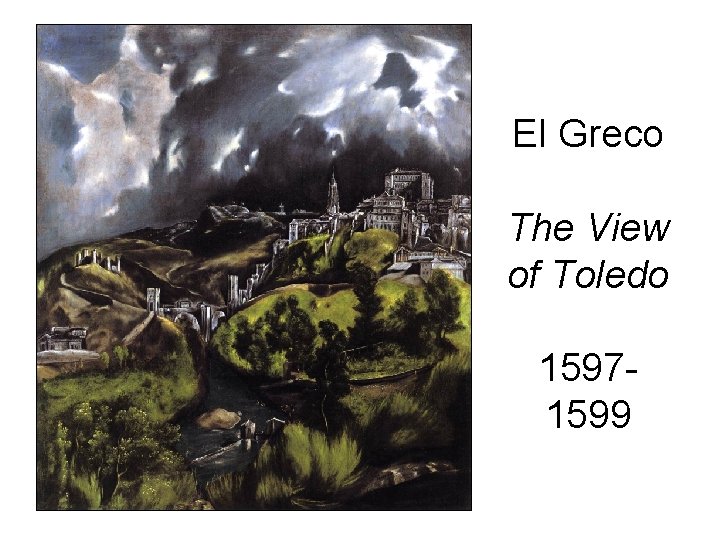
Domenikos Theotokopoulos (El Greco) • The most important Spanish artist of this period was Greek. • El Greco lived from 1541 – 1614 • He deliberately distorts & elongates his figures, and seats them in a lurid, unearthly atmosphere. • He uses an agitated, flickering light. • El Greco ignores the rules of perspective, and heightens the effect by areas of brilliant color. • He’s a fitting expression of the Spanish Counter -Reformation.
El Greco Christ in Agony on the Cross 1600 s
El Greco Portrait of a Cardinal 1600
El Greco’s, The Burial of Count Orgaz, 1586 -1588
El Greco’s, The Burial of Count Orgaz, 1586 -1588 (details)
El Greco’s, The Burial of Count Orgaz, 15781580
El Greco The View of Toledo 15971599
Conclusions • The artistic production of Northern Europe in the 16 c was vast, rich, and complex. • The Northern Renaissance ended with a Mannerist phase, which lasted a generation longer in the North than it did in Italy, where it was outmoded by 1600.