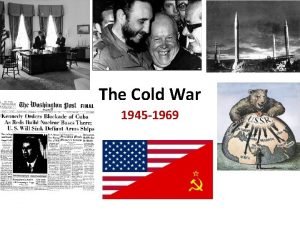
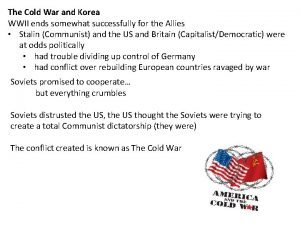
THE COLD WAR 1945 TO 1991 VS Enduring



- Slides: 62
THE COLD WAR 1945 TO 1991 VS.
Enduring Issue Define Specific Concept Historical Examples Impact of Technology Improvements and advancements in machines, communications, equipment, transportation Advancement in weaponry/ changes, shifts in warfare/ shifts in balance of power/ improvements in communications/ shifts in standard of living Industrial Revolution Imperialism- Europeans WWI- weaponry WWII- Atomic Bomb/ Age Conflict Fight or disagreement between two opposing sides Alliances/ power struggles/ warfare/ ideologies struggle/ social class struggles/ ethnic disputes/ religious disputes/ racial disputes/ modernization vs traditional society French and Latin American Rev’s Imperialism Opium Wars/ Berlin Conference Russian Revolution Russo and Sino Japanese War WWII Impact of Belief Systems Values that shape society and policies Economic systems, differences/ differences in political systems/ religious beliefs French and Latin American Rev’s (Enlightenment vs absolute monarchy) Russian Revolution (communism vs. absolute monarchy) Industrial Revolution (laissez faire capitalism vs. mercantilism) Cold War (democracy vs totalitarianism and capitalism vs communism) Germany/ Italy 1930’s- Fascism ENDURING ISSUES RELATED TO THE COLD WAR
THE COLD WAR 19451991
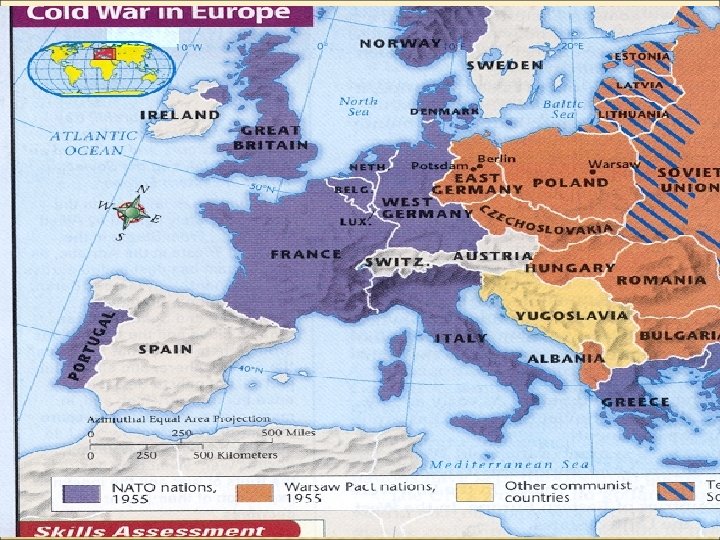
EFFECTS OF WORLD WAR II/ HISTORICAL BACKGROUND WWII Nuremberg Trials / Tokyo Trials Rise of two Superpowers / Bipolar World End to European Dominance of the World Third World (Non Aligned Nations) United Nations formed Soviet Union takes over countries in Eastern Europe (Satellite Nations)
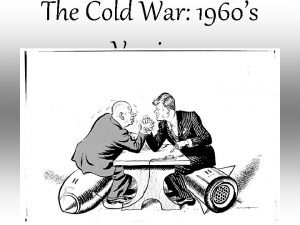
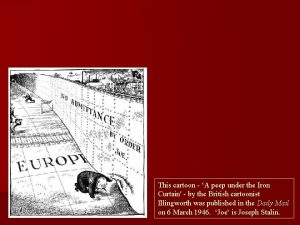
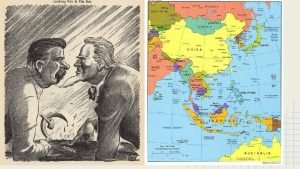
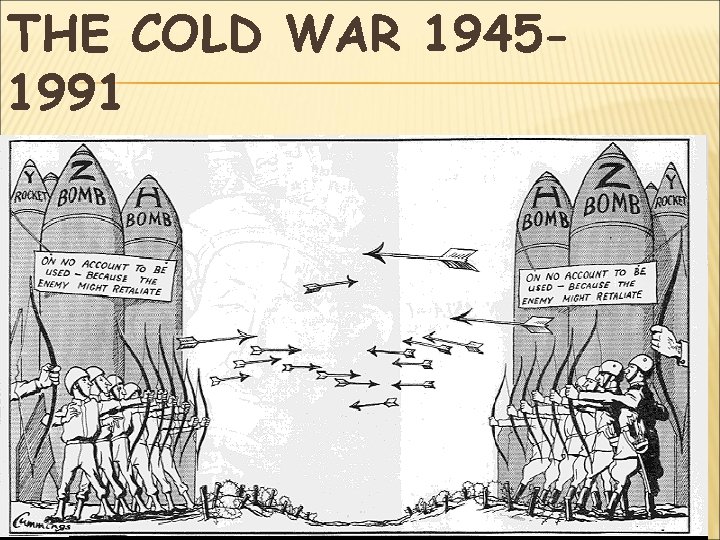
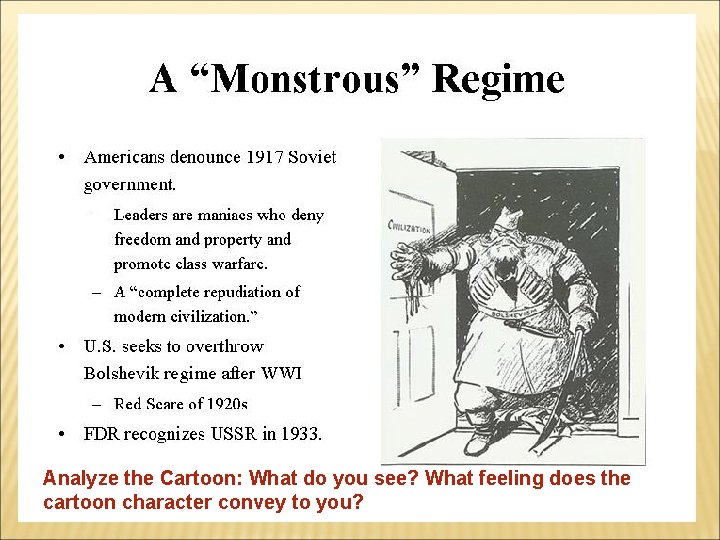
Analyze the Cartoon: What do you see? What feeling does the cartoon character convey to you?
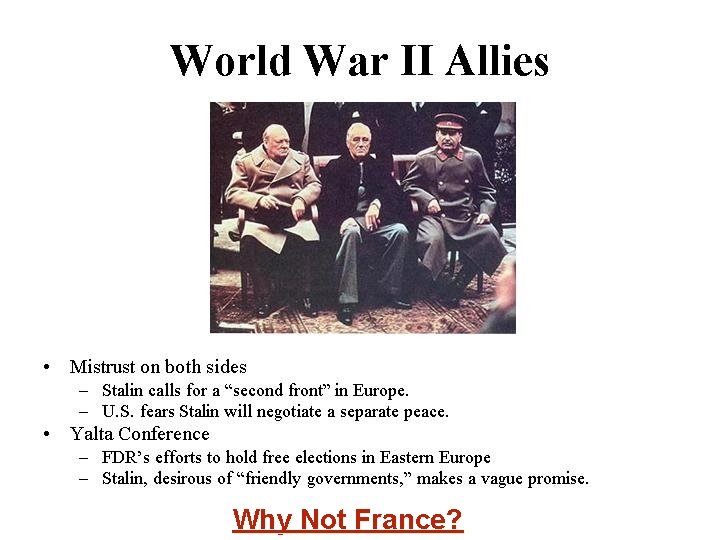
Why Not France?
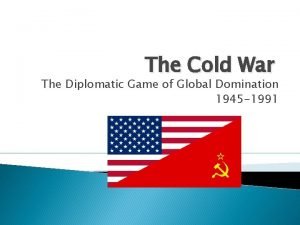
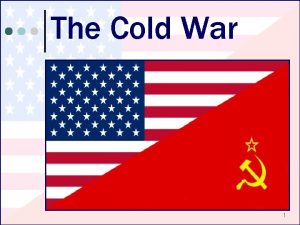
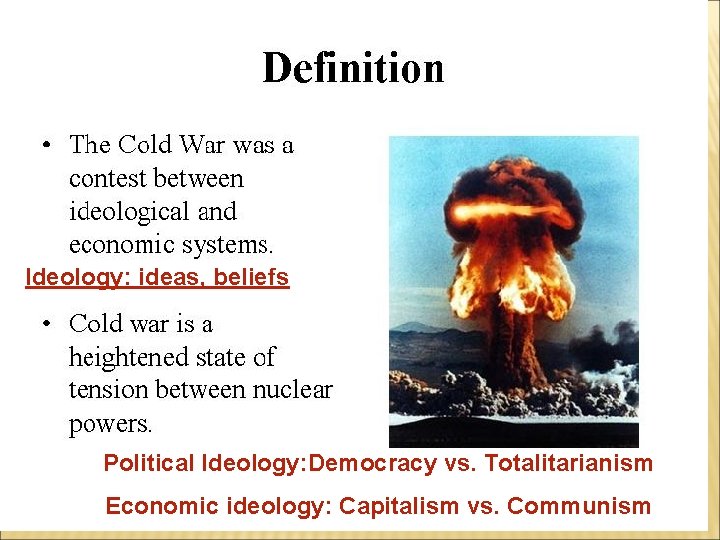
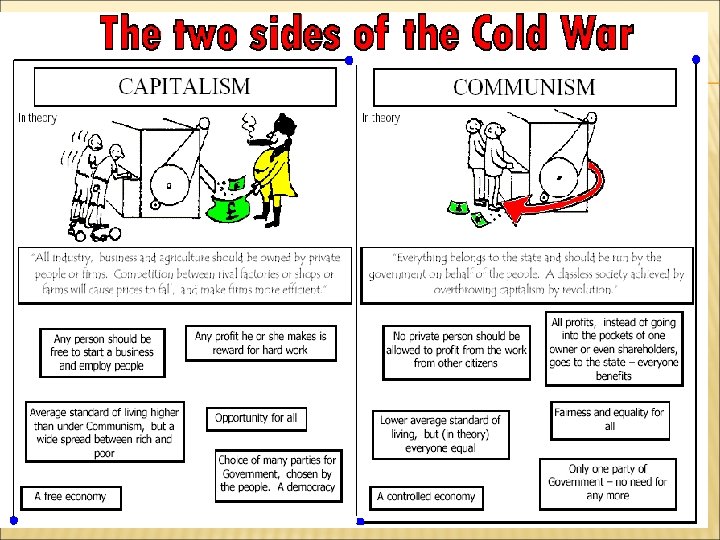
Ideology: ideas, beliefs Political Ideology: Democracy vs. Totalitarianism Economic ideology: Capitalism vs. Communism
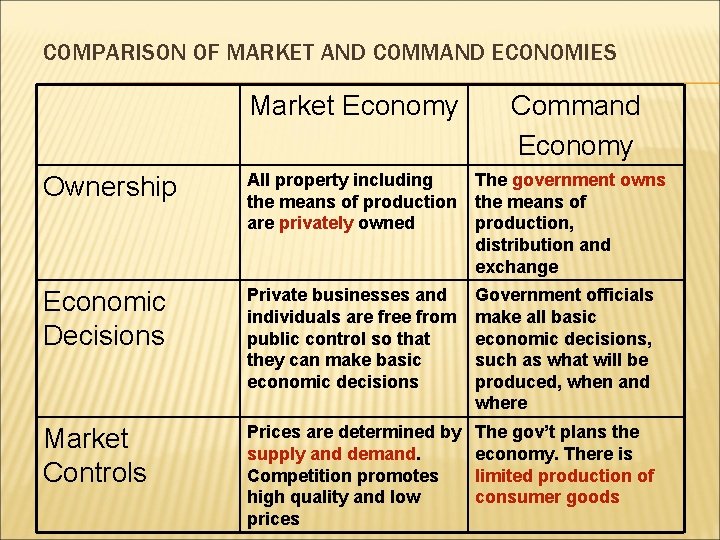
COMPARISON OF MARKET AND COMMAND ECONOMIES Market Economy Command Economy Ownership All property including the means of production are privately owned The government owns the means of production, distribution and exchange Economic Decisions Private businesses and individuals are free from public control so that they can make basic economic decisions Government officials make all basic economic decisions, such as what will be produced, when and where Market Controls Prices are determined by supply and demand. Competition promotes high quality and low prices The gov’t plans the economy. There is limited production of consumer goods
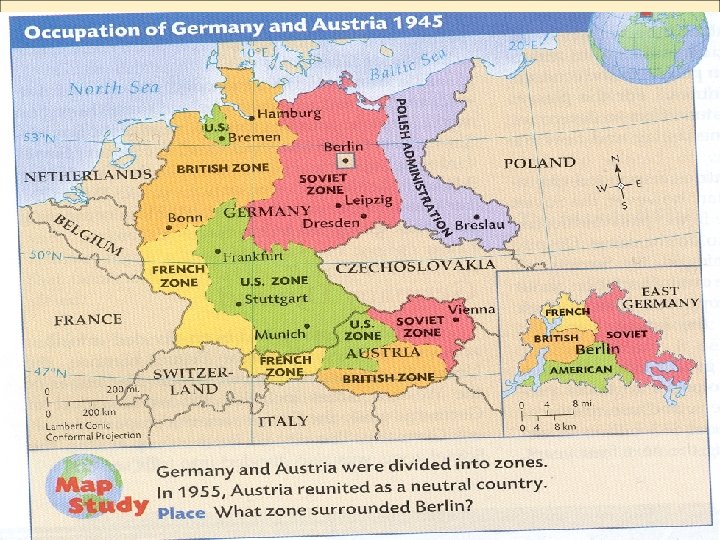
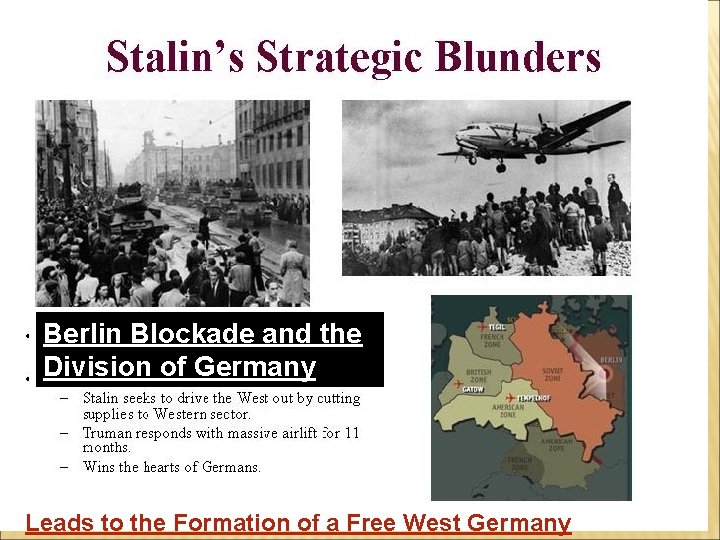
Berlin Blockade and the Division of Germany Leads to the Formation of a Free West Germany
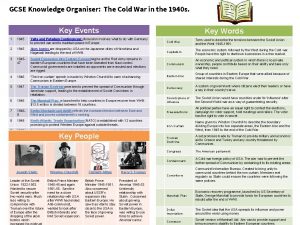
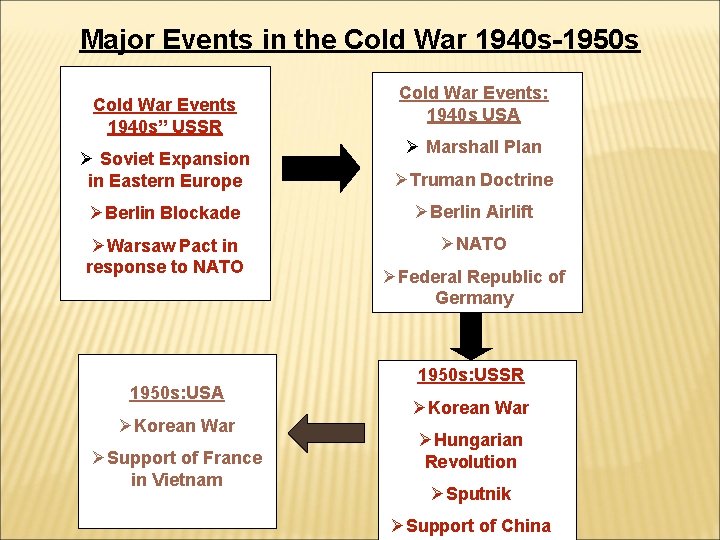
Major Events in the Cold War 1940 s-1950 s Cold War Events 1940 s” USSR Cold War Events: 1940 s USA Ø Marshall Plan Ø Soviet Expansion in Eastern Europe ØTruman Doctrine ØBerlin Blockade ØBerlin Airlift ØWarsaw Pact in response to NATO ØNATO 1950 s: USA ØKorean War ØSupport of France in Vietnam ØFederal Republic of Germany 1950 s: USSR ØKorean War ØHungarian Revolution ØSputnik ØSupport of China
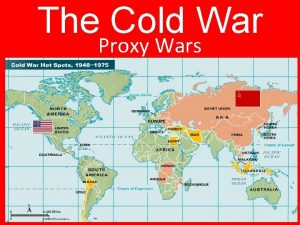
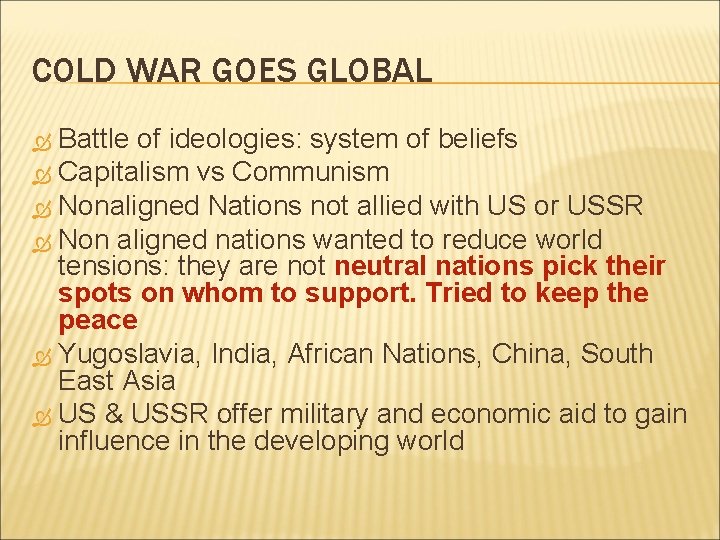
COLD WAR GOES GLOBAL Battle of ideologies: system of beliefs Capitalism vs Communism Nonaligned Nations not allied with US or USSR Non aligned nations wanted to reduce world tensions: they are not neutral nations pick their spots on whom to support. Tried to keep the peace Yugoslavia, India, African Nations, China, South East Asia US & USSR offer military and economic aid to gain influence in the developing world
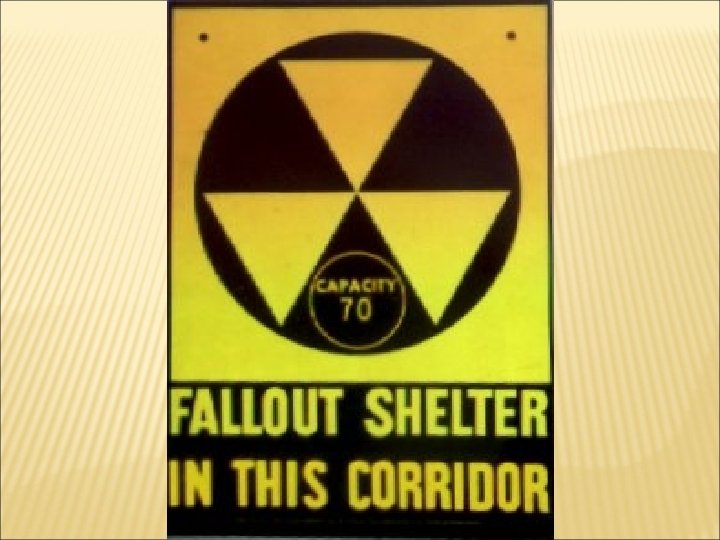
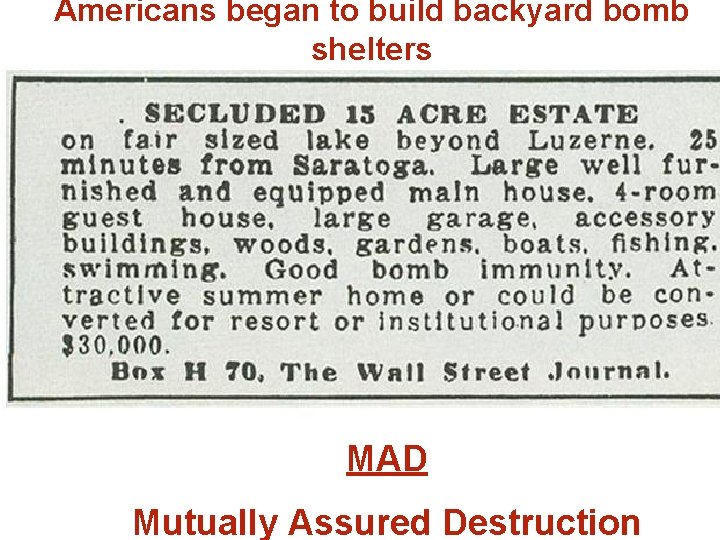
Americans began to build backyard bomb shelters MAD Mutually Assured Destruction
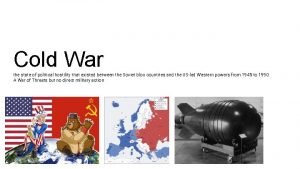
THE ARMS RACE BEGINS…. • Both countries began developing their weapons so as to be able to ‘outgun’ their opponents. This meant: • developing more powerful weapons • Having more of one weapon than the other side • WHY NUCLEAR WEAPONS? • Cheaper than having a large army • They were a deterrent. The idea was to have so many missiles that they could not all be destroyed. If one side attacked then it knew that the other could retaliate. This was known as MAD – MUTUAL ASSURED DESTRUCTION. • For some the Arms Race was a test of the strengths of Capitalism v communism
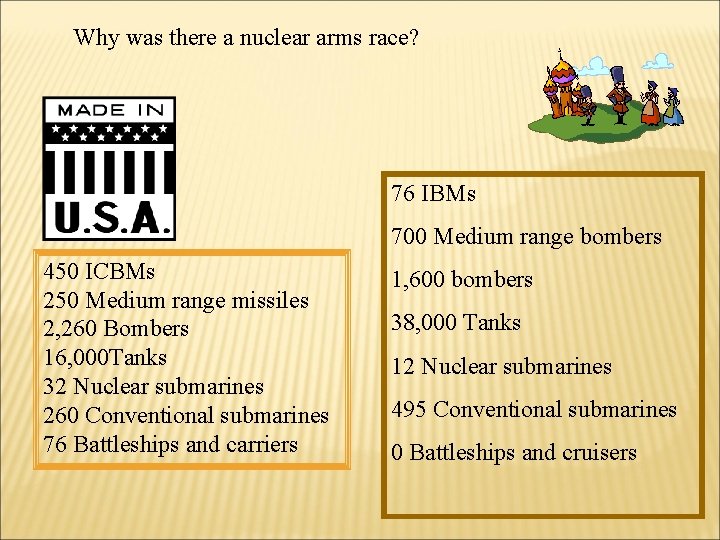
Why was there a nuclear arms race? 76 IBMs 700 Medium range bombers 450 ICBMs 250 Medium range missiles 2, 260 Bombers 16, 000 Tanks 32 Nuclear submarines 260 Conventional submarines 76 Battleships and carriers 1, 600 bombers 38, 000 Tanks 12 Nuclear submarines 495 Conventional submarines 0 Battleships and cruisers
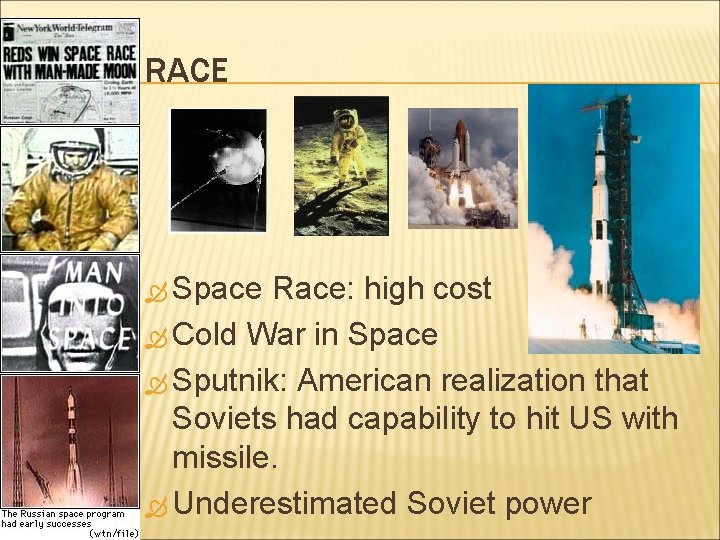
SPACE RACE Space Race: high cost Cold War in Space Sputnik: American realization that Soviets had capability to hit US with missile. Underestimated Soviet power
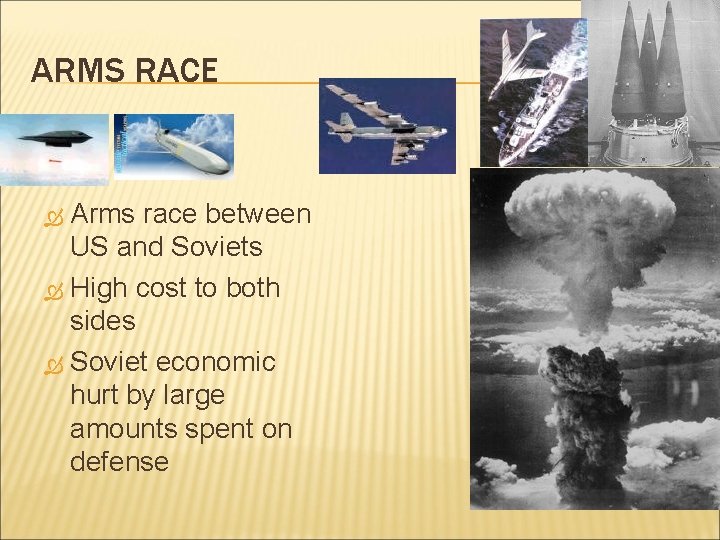
ARMS RACE Arms race between US and Soviets High cost to both sides Soviet economic hurt by large amounts spent on defense
10 MOST IMPORTANT FACTS Definition Truman Doctrine Marshall plan Capital v Communism Berlin Airlift Arms race Non alignment Iron curtain MAD Hungarian Revolution Space race
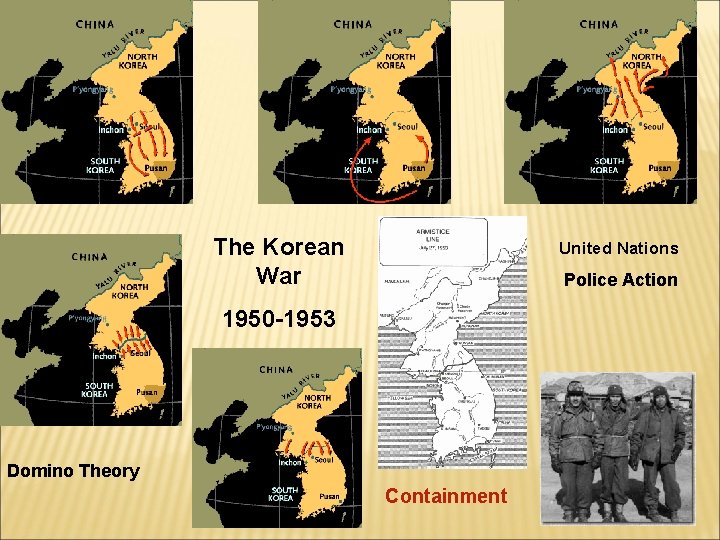
The Korean War United Nations Police Action 1950 -1953 Domino Theory Containment
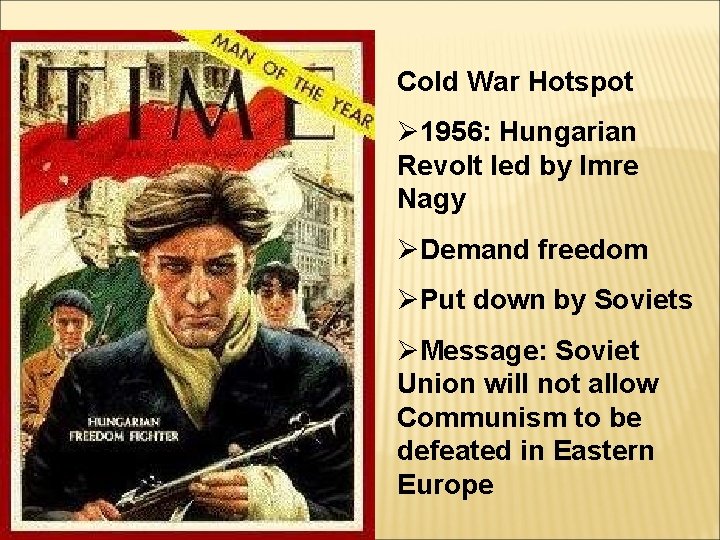
Cold War Hotspot Ø 1956: Hungarian Revolt led by Imre Nagy ØDemand freedom ØPut down by Soviets ØMessage: Soviet Union will not allow Communism to be defeated in Eastern Europe
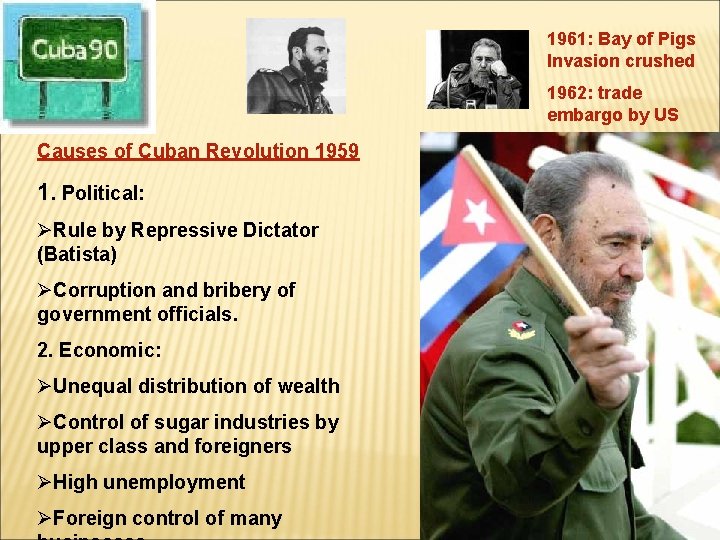
1961: Bay of Pigs Invasion crushed 1962: trade embargo by US Causes of Cuban Revolution 1959 1. Political: ØRule by Repressive Dictator (Batista) ØCorruption and bribery of government officials. 2. Economic: ØUnequal distribution of wealth ØControl of sugar industries by upper class and foreigners ØHigh unemployment ØForeign control of many
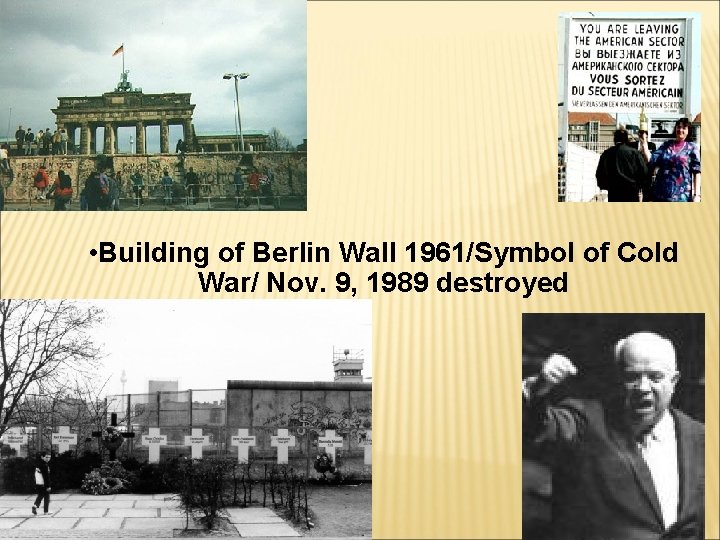
• Building of Berlin Wall 1961/Symbol of Cold War/ Nov. 9, 1989 destroyed
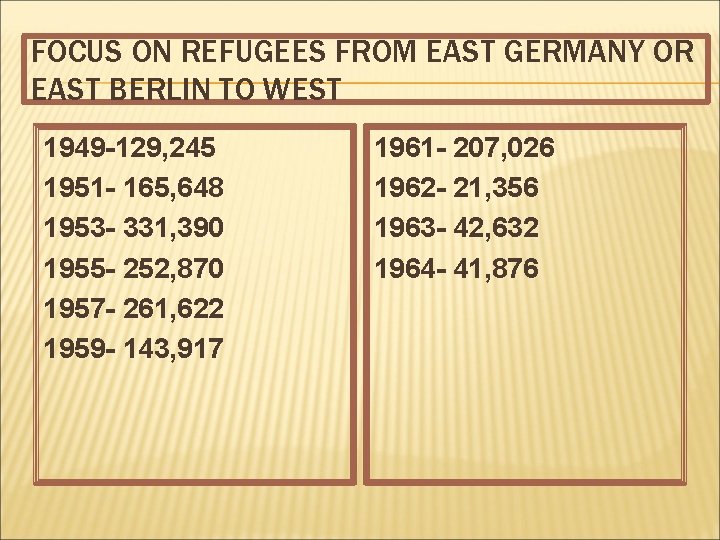
FOCUS ON REFUGEES FROM EAST GERMANY OR EAST BERLIN TO WEST 1949 -129, 245 1951 - 165, 648 1953 - 331, 390 1955 - 252, 870 1957 - 261, 622 1959 - 143, 917 1961 - 207, 026 1962 - 21, 356 1963 - 42, 632 1964 - 41, 876
COLD WAR HOTSPOTS 1968 Czechoslovakia Alexander Dubcek; crushed Message: Soviet Union will not allow Communism to be defeated in Eastern Europe Castro/Cuba Building of Berlin Wall 1961/Symbol of Cold War/ 1989 destroyed
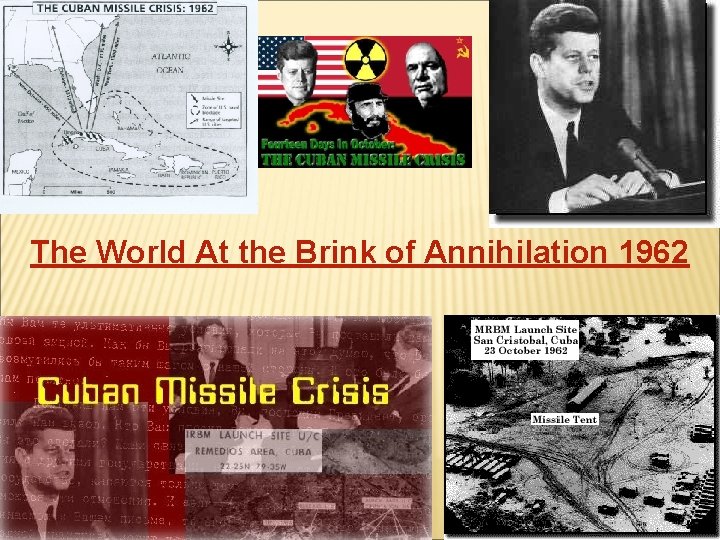
The World At the Brink of Annihilation 1962
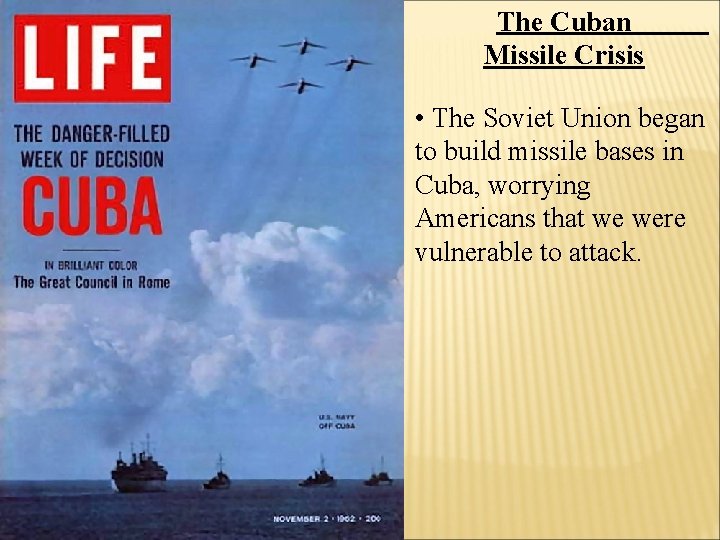
The Cuban Missile Crisis • The Soviet Union began to build missile bases in Cuba, worrying Americans that we were vulnerable to attack.
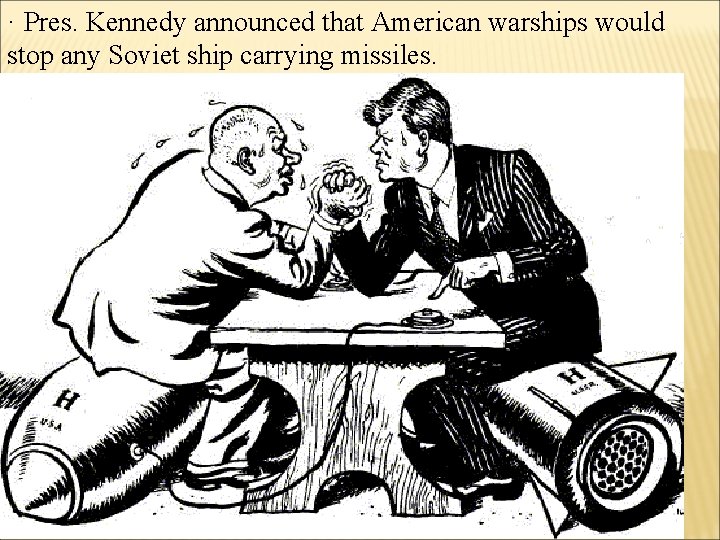
· Pres. Kennedy announced that American warships would stop any Soviet ship carrying missiles.
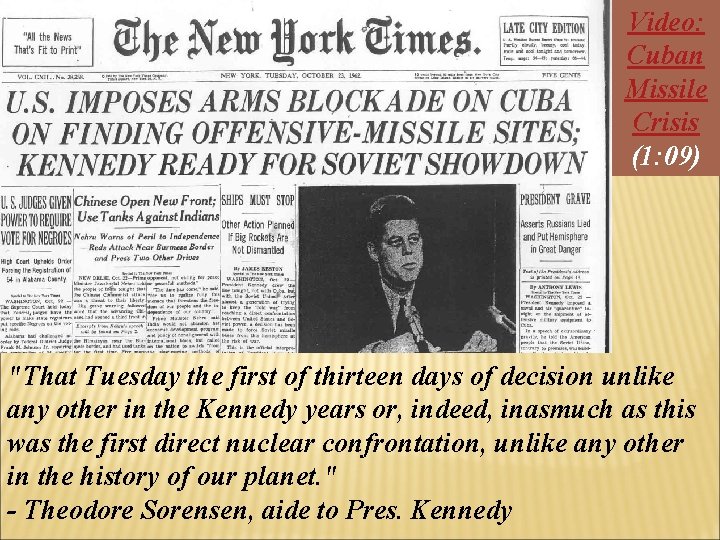
Video: Cuban Missile Crisis (1: 09) "That Tuesday the first of thirteen days of decision unlike any other in the Kennedy years or, indeed, inasmuch as this was the first direct nuclear confrontation, unlike any other in the history of our planet. " - Theodore Sorensen, aide to Pres. Kennedy
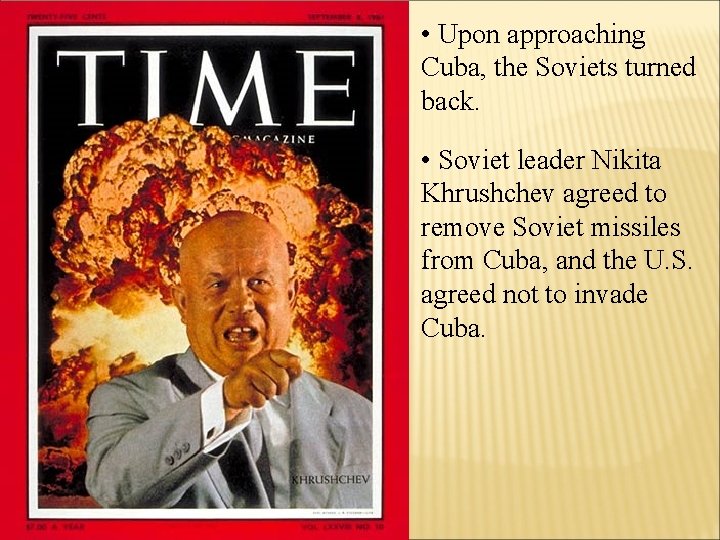
• Upon approaching Cuba, the Soviets turned back. • Soviet leader Nikita Khrushchev agreed to remove Soviet missiles from Cuba, and the U. S. agreed not to invade Cuba.
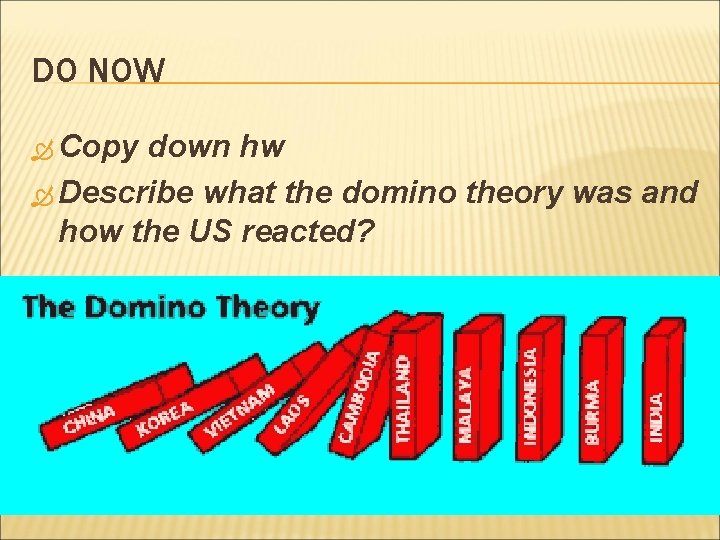
DO NOW Copy down hw Describe what the domino theory was and how the US reacted?
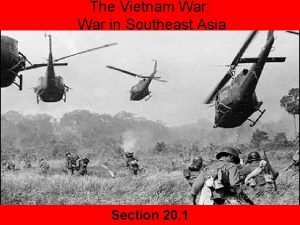
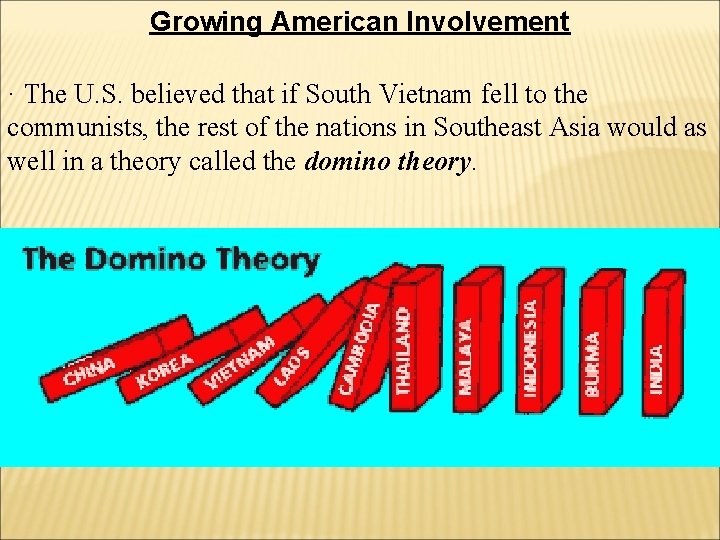
Growing American Involvement · The U. S. believed that if South Vietnam fell to the communists, the rest of the nations in Southeast Asia would as well in a theory called the domino theory.
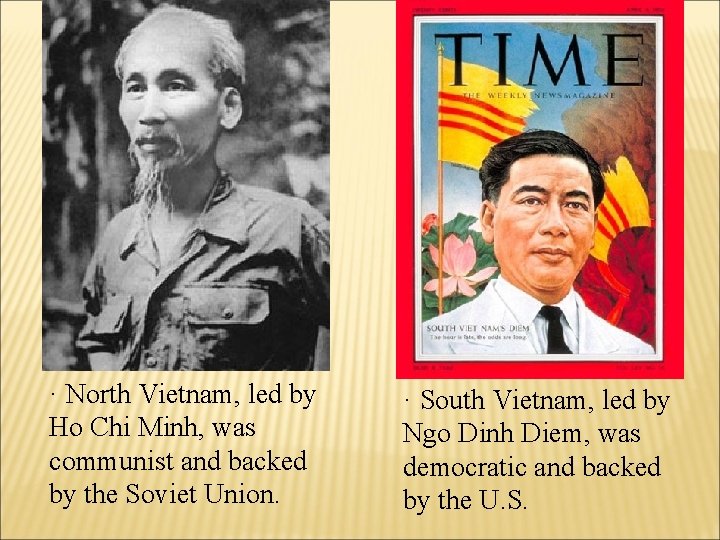
· North Vietnam, led by Ho Chi Minh, was communist and backed by the Soviet Union. · South Vietnam, led by Ngo Dinh Diem, was democratic and backed by the U. S.
VIETNAM WAR French Colony 1 st the Vietnamese fight a war against the imperialistic French. The US supports the French Next the US fights against the North to contain communism US Loses Vietnam Communist
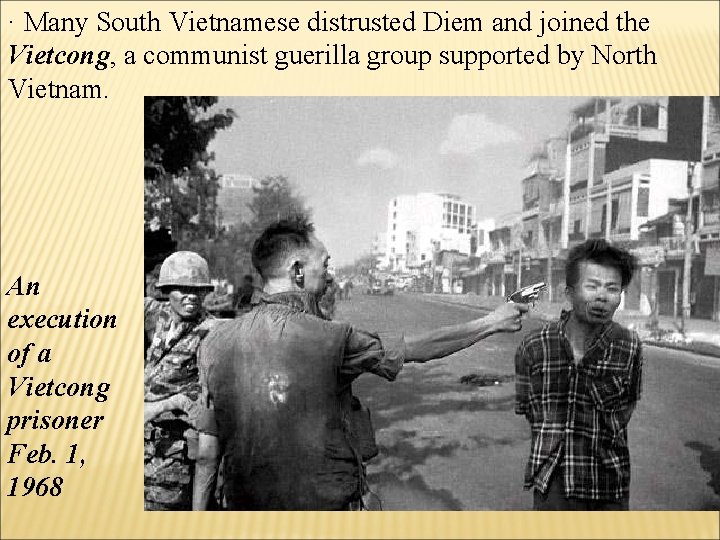
· Many South Vietnamese distrusted Diem and joined the Vietcong, a communist guerilla group supported by North Vietnam. An execution of a Vietcong prisoner Feb. 1, 1968
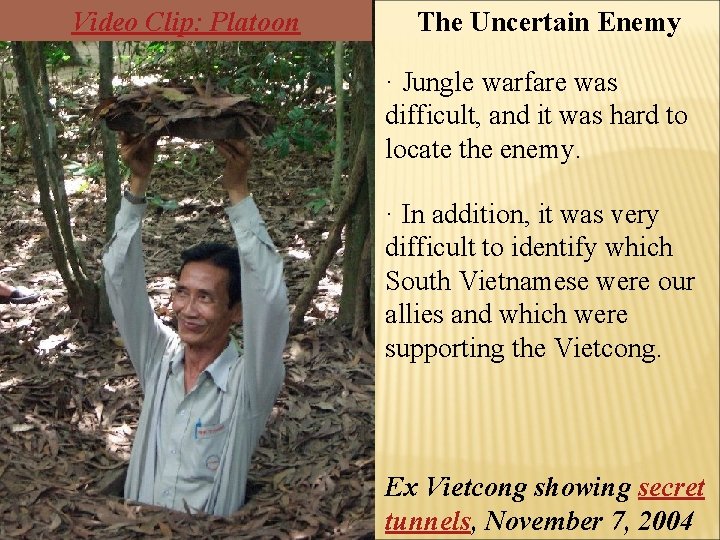
Video Clip: Platoon The Uncertain Enemy · Jungle warfare was difficult, and it was hard to locate the enemy. · In addition, it was very difficult to identify which South Vietnamese were our allies and which were supporting the Vietcong. Ex Vietcong showing secret tunnels, November 7, 2004
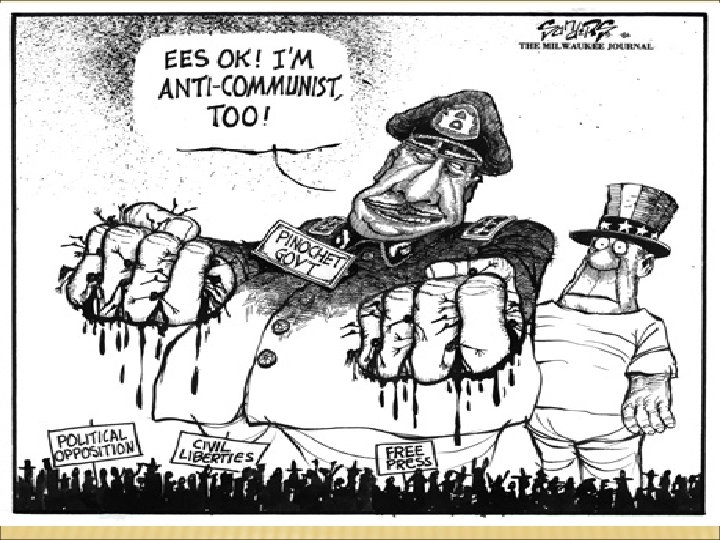
COLD WAR HOTSPOTS Civil War in Nicaragua/ Soviets Support Daniel Ortega Communist Rebels the Sandinistas overthrow the Somoza Dictatorship. US supports Contra rebels trying to overthrow Ortega War in Afghanistan Soviets overthrow gov’t/US supports rebels against Soviets Chile: United States helps Gen. Augusto Pinochet gain power throwing out the democratic government. He killed and tortured thousands
COLD WAR HOTSPOTS Nicaragua Chile Afghanistan Answer questions from the white board.
COLD WAR POLICIES US: Containment Soviet Union: spread of Communism CIA vs. KGB Brezhnev Doctrine: Would not allow Communism to be overthrown in Eastern Europe/used violence Détente: warming of the relations between the US and Soviet Union/grain sales and joint space mission/ends with the invasion of Afghanistan Soviet split with China: Both Communist/ Nixon visits China/warming of relations between US and China SALT Treaty: Strategic Arms Limitations Treaty I and II
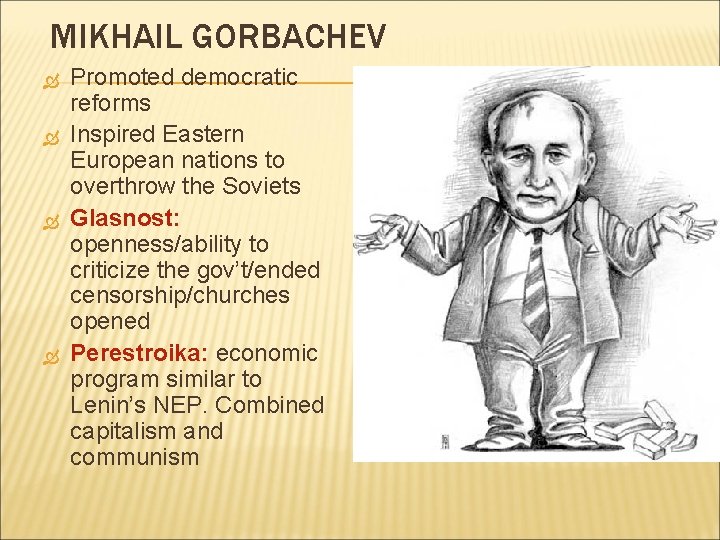
MIKHAIL GORBACHEV Promoted democratic reforms Inspired Eastern European nations to overthrow the Soviets Glasnost: openness/ability to criticize the gov’t/ended censorship/churches opened Perestroika: economic program similar to Lenin’s NEP. Combined capitalism and communism
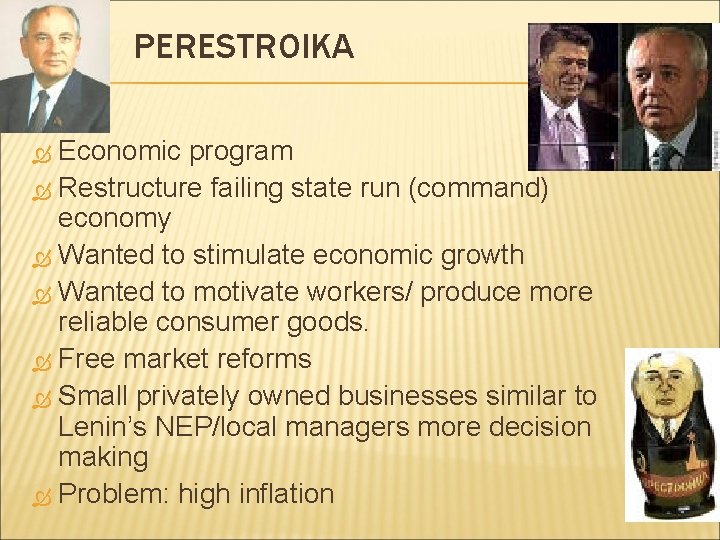
PERESTROIKA Economic program Restructure failing state run (command) economy Wanted to stimulate economic growth Wanted to motivate workers/ produce more reliable consumer goods. Free market reforms Small privately owned businesses similar to Lenin’s NEP/local managers more decision making Problem: high inflation
SOVIET PROBLEMS Economic problems lead to political problems Communism failed as an economic system Underproduction/poor quality/ unable to motivate workers
THE FALL OF THE SOVIET UNION Causes Glasnost Perestroika Economic problems Freedom movement in Eastern Europe 92 nationalities and 112 languages spoken Ethnic conflicts
IMPORTANT LEADERS OF THE SOVIET UNION Lenin Stalin: five year plans/collectivization/ purges/genocide of kulaks Khrushchev: Berlin Wall/Cuban Missile Crisis Brezhnev: Czechoslovakian Revolt/ Detente Gorbachev: Glasnost and perestroika
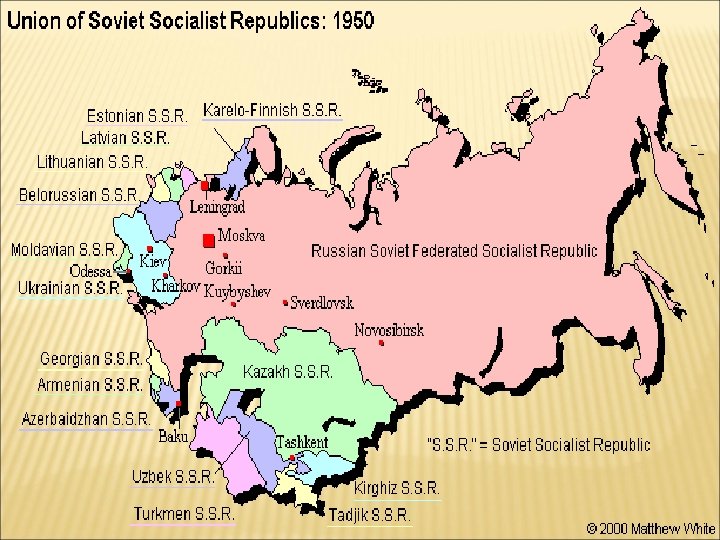
FALL OF THE SOVIET UNION 1991 Effects Formation of the Commonwealth of Independent Nations End of the Cold War Economic Hardships Minority revolts/civil conflicts Conflicts between pro-communist and pro democratic groups Rise of Boris Yeltsin
DECEMBER 1991 COLLAPSE OF SOVIET UNION 15 Republics are formed Commonwealth of Independent States (CIS) Boris Yeltsin Becomes President of Russia ‘Shock Therapy’ sharp switch from a command to a market economy
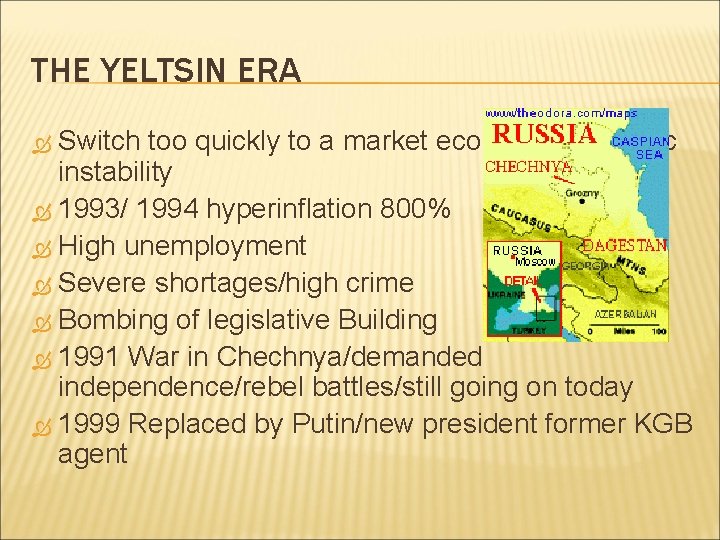
THE YELTSIN ERA Switch too quickly to a market economy/economic instability 1993/ 1994 hyperinflation 800% High unemployment Severe shortages/high crime Bombing of legislative Building 1991 War in Chechnya/demanded independence/rebel battles/still going on today 1999 Replaced by Putin/new president former KGB agent
PUTIN Economic reforms Continuation of the war in Chechnya/Grozny capital destroyed Ethnic conflicts throughout Russians become a major oil producer and exporter. Relations become tense between the Russians and the Americans
POST SOVIET REPUBLICS 1989 Berlin Wall torn down. 1990 free elections in East and West Germany Unification of Germany in 1990 Effects Of Reunification of Germany Leader Helmut Kohl taxed the Germans to modernize East Germany West German Economy hurt by reunification Many West Germans resented East Germans Major recession Rise of Neo Nazis: 1970 s 1980 s guest workers/”Germany for Germans” Gerhard Schroder elected Chancellor
EASTERN EUROPE Czech Republic and Slovakia 1918 united Czech and Slovak lands into Czechoslovakia 1989 freed from Soviet control President Vaclav Havel 1993 divided into Czech Republic and Slovakia
EASTERN EUROPE Poland Solidarity: trade union that demanded freedoms Led by Lech Walesa/arrested 1989 free elections 1990 Lech Walesa elected president Economic problems similar to Russia Shock therapy/communists gained seats in parliament Walesa loses presidency to Aleksander Kwasniekski
EASTERN EUROPE Between 1989 to 1991 Hungary, Czechoslovakia, Albania, and Bulgaria held free elections. Romania overthrew and executed their brutal president Nicolae Ceausescu who refused to have free elections. In 1991 the Czech Republic, Hungary and Poland joined NATO. The former Soviet Republics of Ukraine, Belarus, and Kazakhstan destroyed their nuclear weapons. Paid by US. Chernobyl nuclear accident All eastern European nations as well as the Soviet Republics had great difficulty switching from communism to capitalism: high inflation and high unemployment.