
Language of War What questions does the first
- Slides: 5
Language of War
What questions does the first text provoke? • Who are ‘Bob’ and ‘Johnson’? • How frequently are they calling each other?
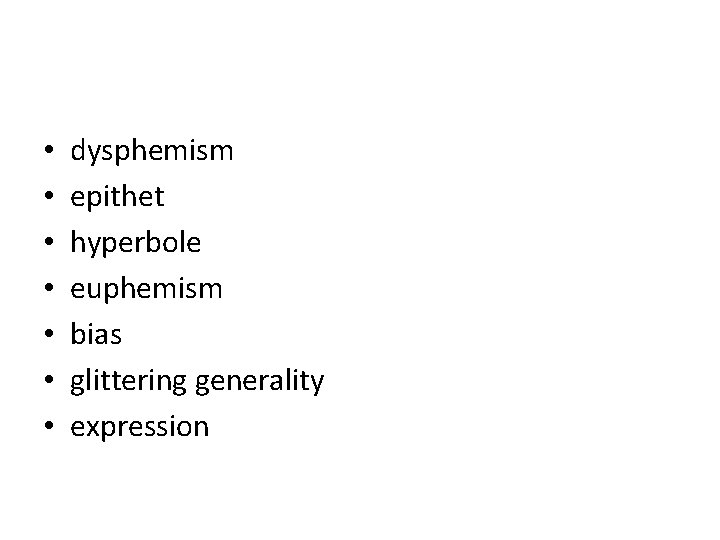
• • dysphemism epithet hyperbole euphemism bias glittering generality expression
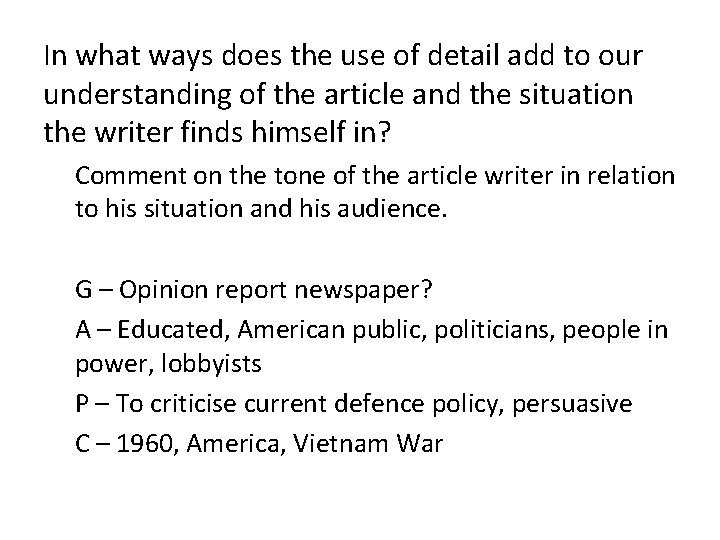
In what ways does the use of detail add to our understanding of the article and the situation the writer finds himself in? Comment on the tone of the article writer in relation to his situation and his audience. G – Opinion report newspaper? A – Educated, American public, politicians, people in power, lobbyists P – To criticise current defence policy, persuasive C – 1960, America, Vietnam War
Cronkite is cautious in his critique of defence policy reflecting the fragility of the international situation at the time. He employs euphemism at the beginning of the text: “the optimism of the American leaders” and “the silver linings they find in the darkest clouds” thus avoiding direct criticism of specific policy but allowing the reader to decide for themselves what this “optimism” might refer to. Perhaps he avoids identifying specific acts of optimism as it can be seen as traitorous to criticise a Government’s defence policy during war time. In fact he is only accusing “American leaders” (in itself a nonspecific collective noun) of “optimism” which is usually a positive attribute. Later in the article he refers to more specific events…