
Eisenhowers Cold War Policies Chapter 13 Section 4

- Slides: 16
Eisenhower's Cold War Policies Chapter 13 - Section 4
Overview Ch. 13 - Sec. 4 • President Truman felt the need to step down from the presidency and not run for re-election. This paved the way for Eisenhower (Ike). Upon taking office, Eisenhower focused on strengthening the nations economy, cutting military expenses and developed a new defense policy called “Massive Retaliation” which threatened the use of nuclear weapons to fight communism. In addition, the Soviets launched a new space satellite and sent the U. S. government scrambling to create an organization to compete in the space race. Finally, Eisenhower put his new foreign policy of “Brinksmanship” into action to end the war in Korea and to deal with other crisis in Taiwan and the Suez canal
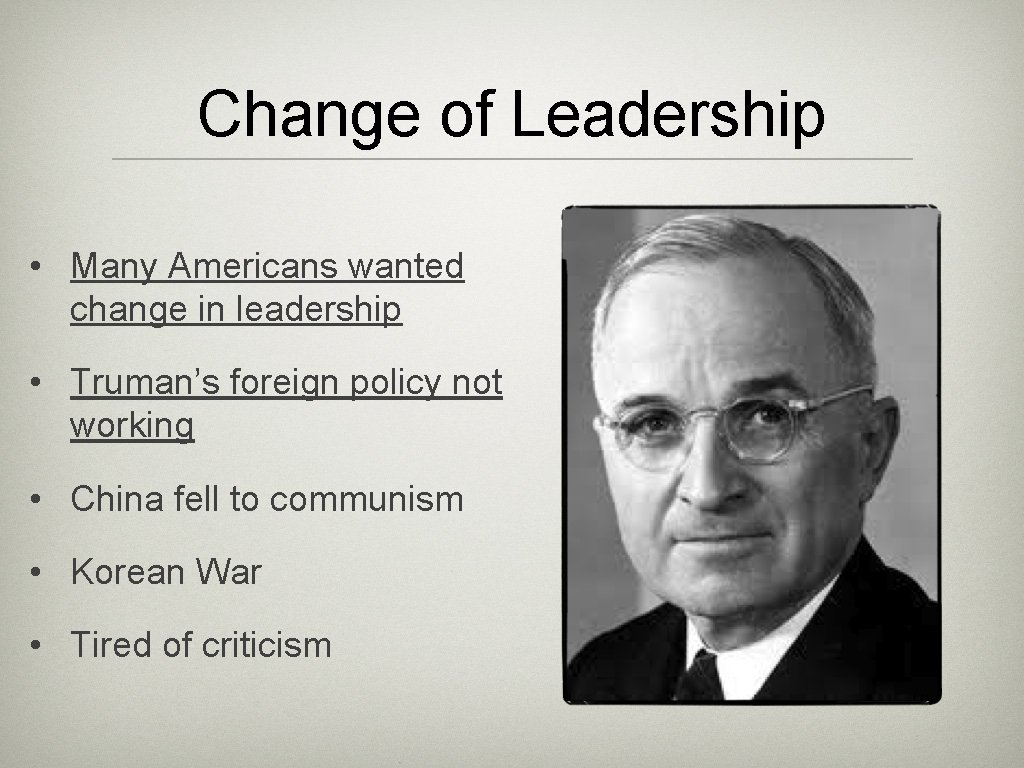
Change of Leadership • Many Americans wanted change in leadership • Truman’s foreign policy not working • China fell to communism • Korean War • Tired of criticism
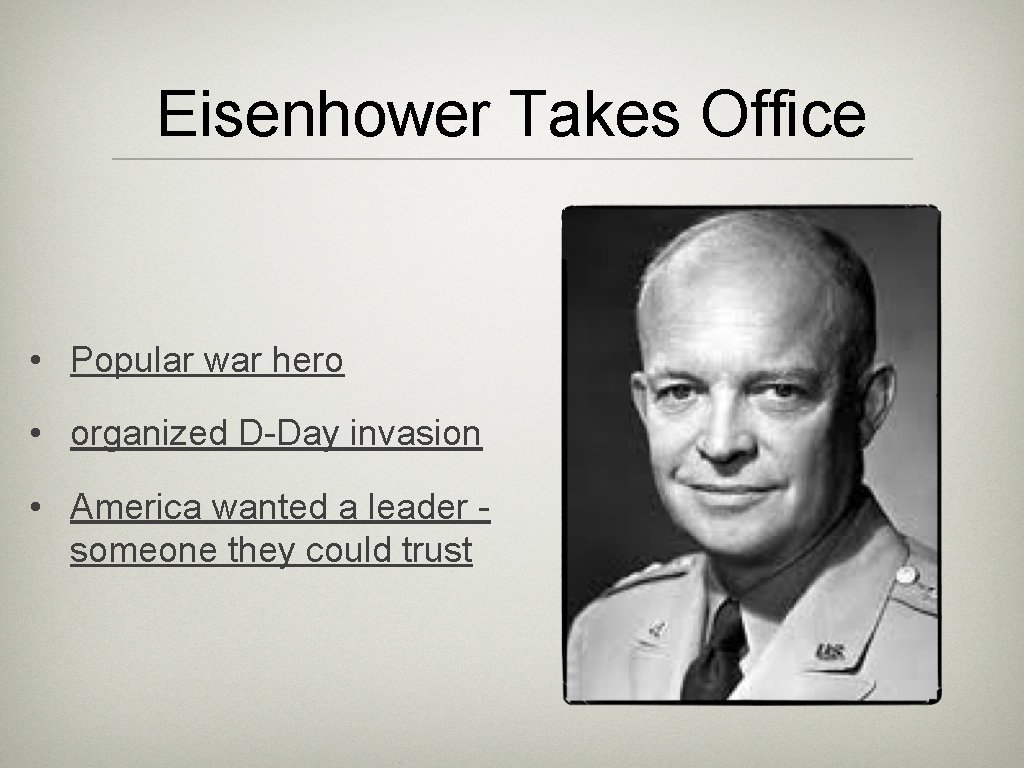
Eisenhower Takes Office • Popular war hero • organized D-Day invasion • America wanted a leader someone they could trust
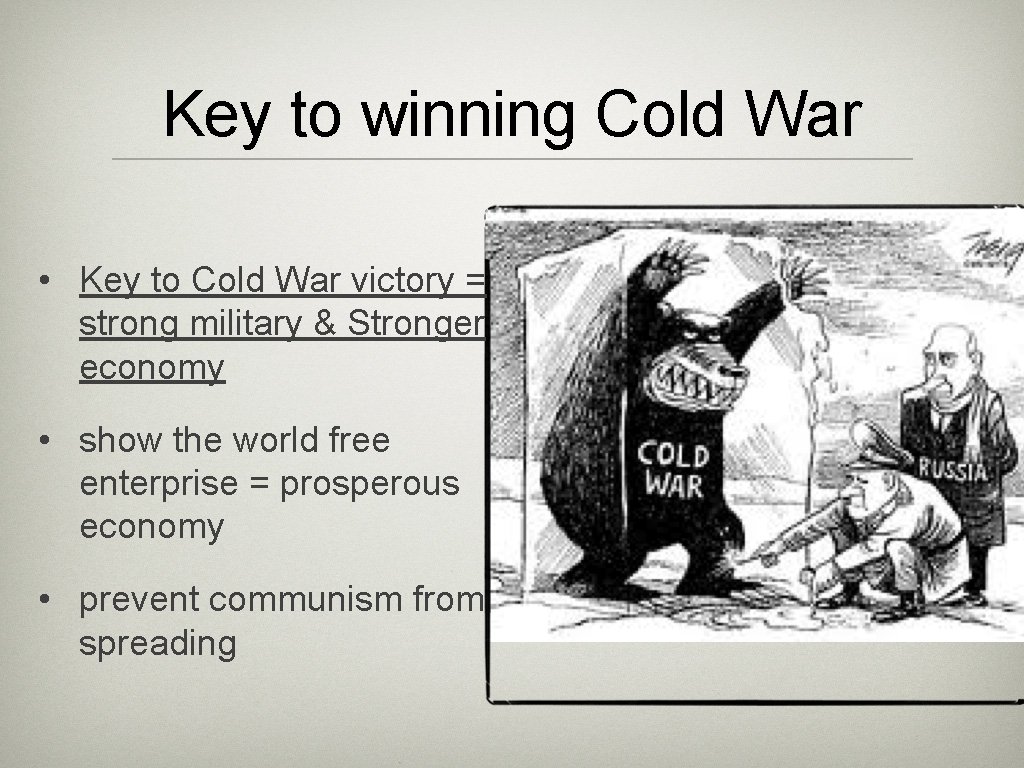
Key to winning Cold War • Key to Cold War victory = strong military & Stronger economy • show the world free enterprise = prosperous economy • prevent communism from spreading
Necessary Changes • From experience, he knew War was costly • “We cannot defend the nation in a way which will exhaust our economy” • made sure war would not exhaust economy • declared a “New Look” in defense policy
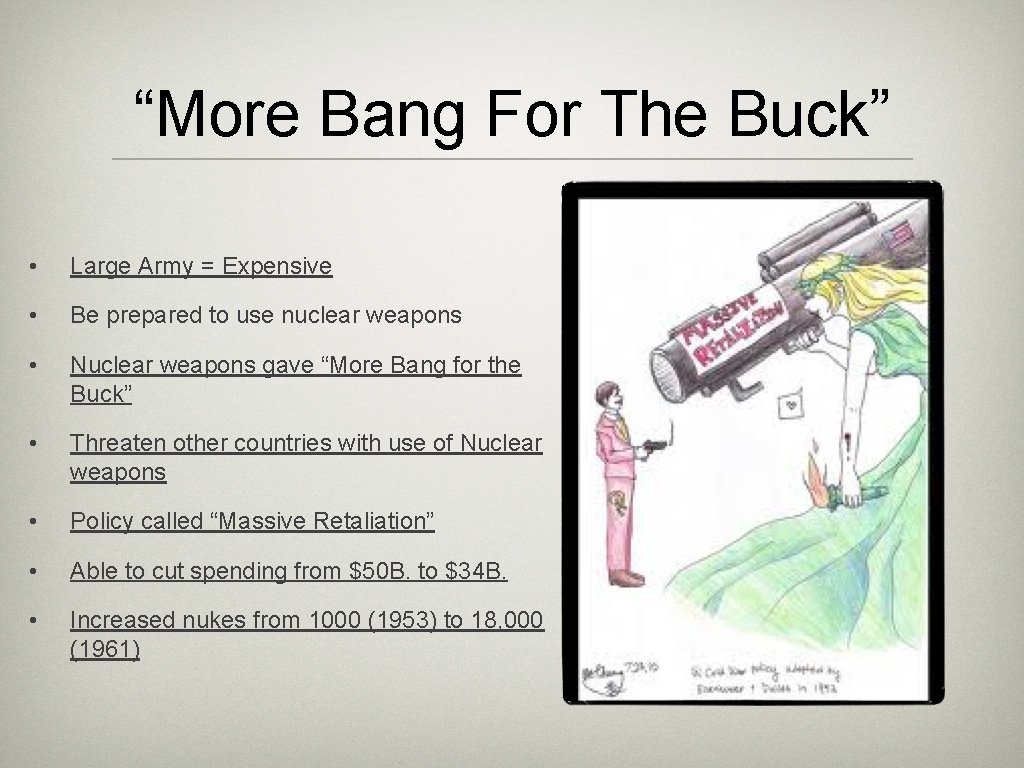
“More Bang For The Buck” • Large Army = Expensive • Be prepared to use nuclear weapons • Nuclear weapons gave “More Bang for the Buck” • Threaten other countries with use of Nuclear weapons • Policy called “Massive Retaliation” • Able to cut spending from $50 B. to $34 B. • Increased nukes from 1000 (1953) to 18, 000 (1961)
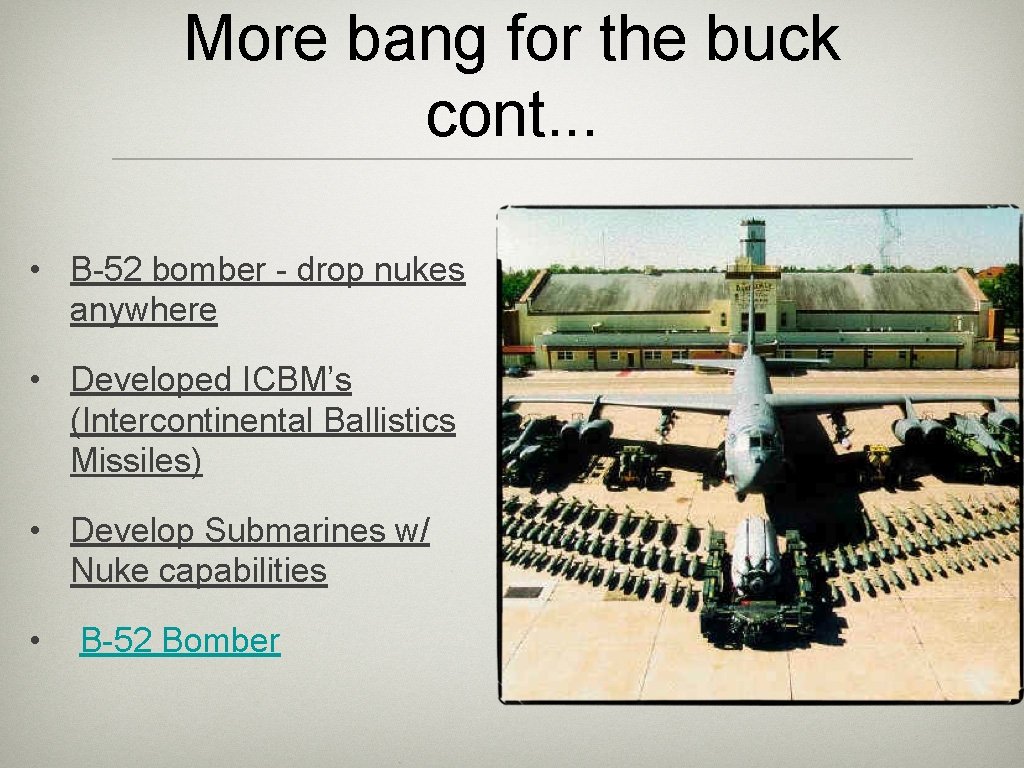
More bang for the buck cont. . . • B-52 bomber - drop nukes anywhere • Developed ICBM’s (Intercontinental Ballistics Missiles) • Develop Submarines w/ Nuke capabilities • B-52 Bomber
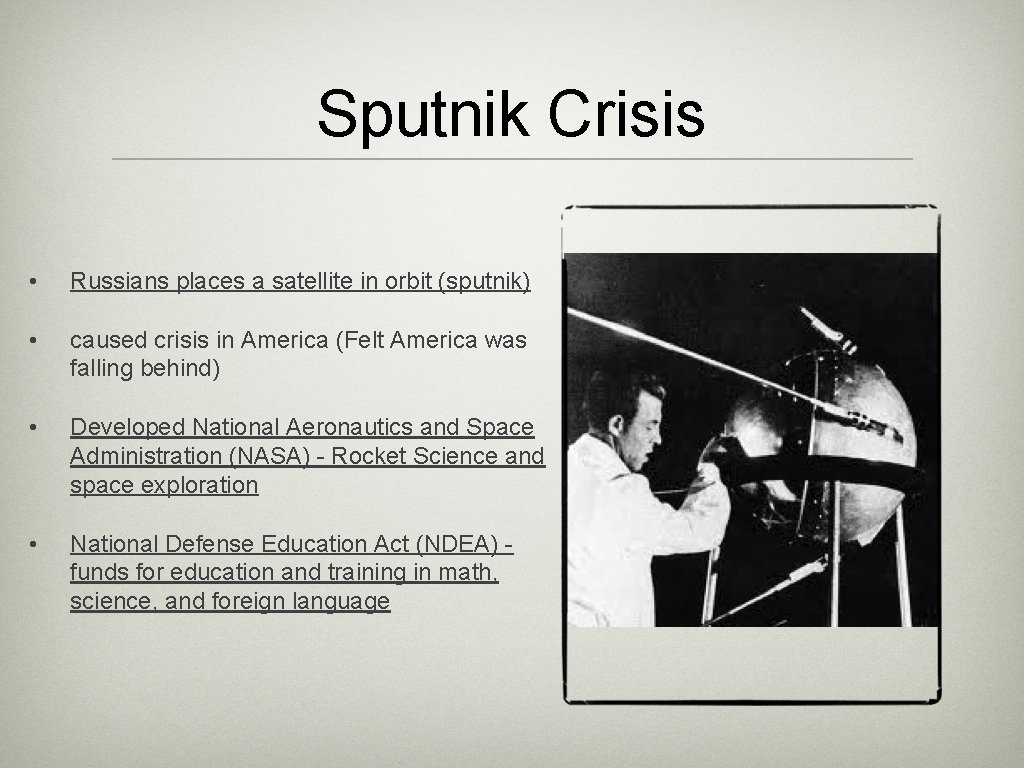
Sputnik Crisis • Russians places a satellite in orbit (sputnik) • caused crisis in America (Felt America was falling behind) • Developed National Aeronautics and Space Administration (NASA) - Rocket Science and space exploration • National Defense Education Act (NDEA) funds for education and training in math, science, and foreign language
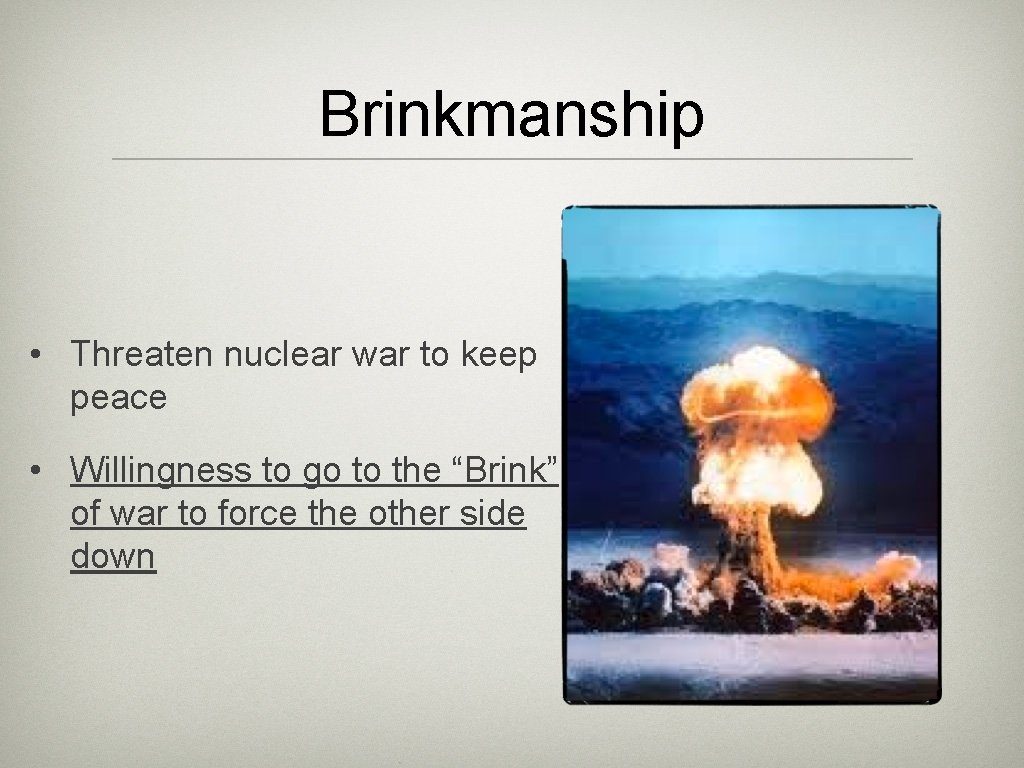
Brinkmanship • Threaten nuclear war to keep peace • Willingness to go to the “Brink” of war to force the other side down
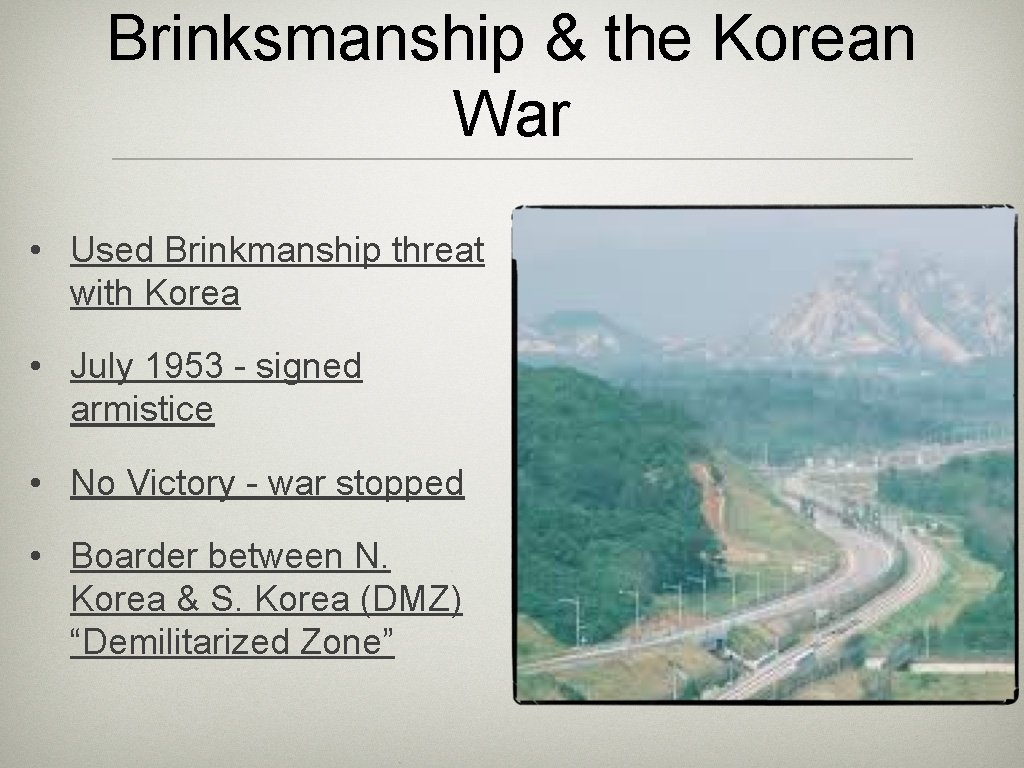
Brinksmanship & the Korean War • Used Brinkmanship threat with Korea • July 1953 - signed armistice • No Victory - war stopped • Boarder between N. Korea & S. Korea (DMZ) “Demilitarized Zone”
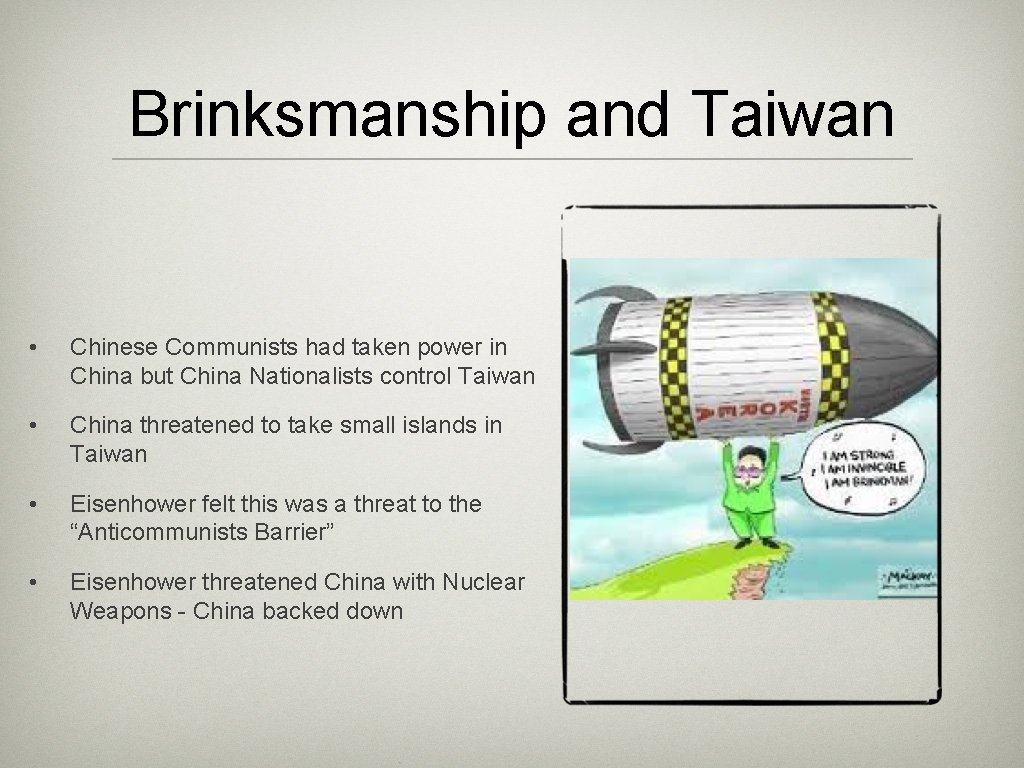
Brinksmanship and Taiwan • Chinese Communists had taken power in China but China Nationalists control Taiwan • China threatened to take small islands in Taiwan • Eisenhower felt this was a threat to the “Anticommunists Barrier” • Eisenhower threatened China with Nuclear Weapons - China backed down
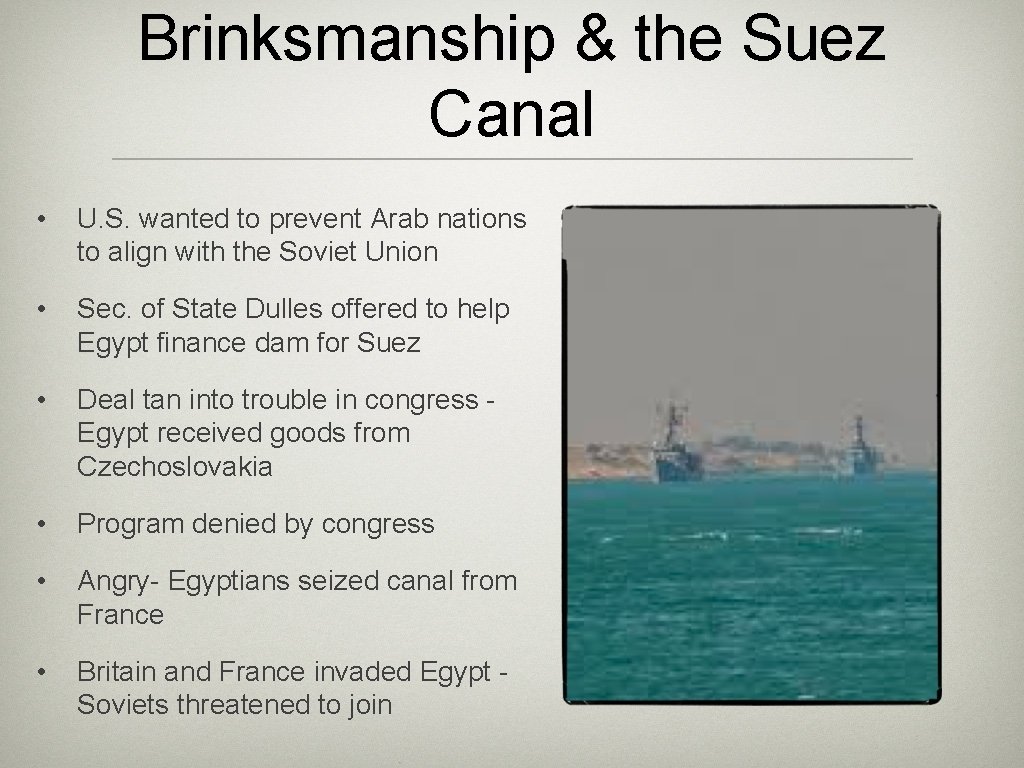
Brinksmanship & the Suez Canal • U. S. wanted to prevent Arab nations to align with the Soviet Union • Sec. of State Dulles offered to help Egypt finance dam for Suez • Deal tan into trouble in congress Egypt received goods from Czechoslovakia • Program denied by congress • Angry- Egyptians seized canal from France • Britain and France invaded Egypt Soviets threatened to join
Eisenhower responds: • Eisenhower put nuclear forces on alert • “If those fellows start something, we may have to hit them, and if necessary, with everything in the bucket” - Eisenhower • British and French troops withdrew from invasion • Soon after - Arab nations began accepting financial aide from the Soviet Union
Review • Critics called Eisenhower’s threat of war to force the other side to back down is called: • Brinkmanship • The satellite launched by the soviets was called : • Sputnik • The threat of using nuclear weapons against communists trying to seize territory by force is called: • Massive Retaliation
Questions? ?