
The Cold War 1945 1991 Life After WW
- Slides: 76
The Cold War: 1945 -1991
Life After WW 2 ends Aug. 14, 1945 after Japan surrenders n Over 60 million casualties n 20 million soldiers n Over 40 million civilians n Europe in ruins after war n U. S. & Soviets emerge as superpowers n
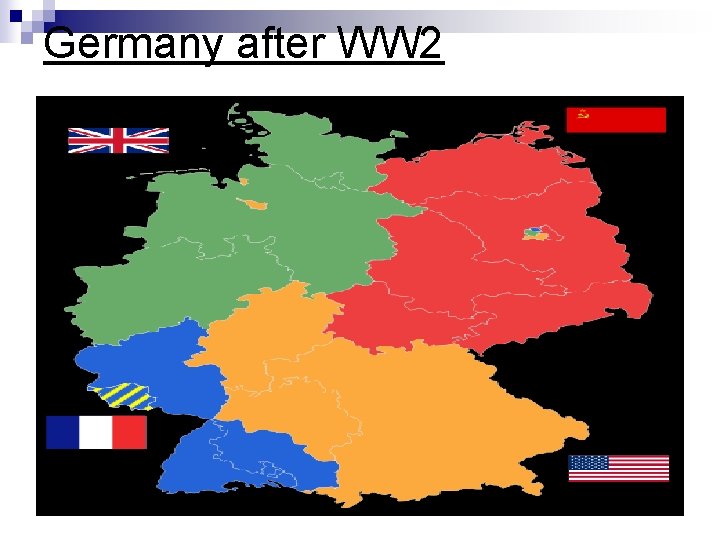
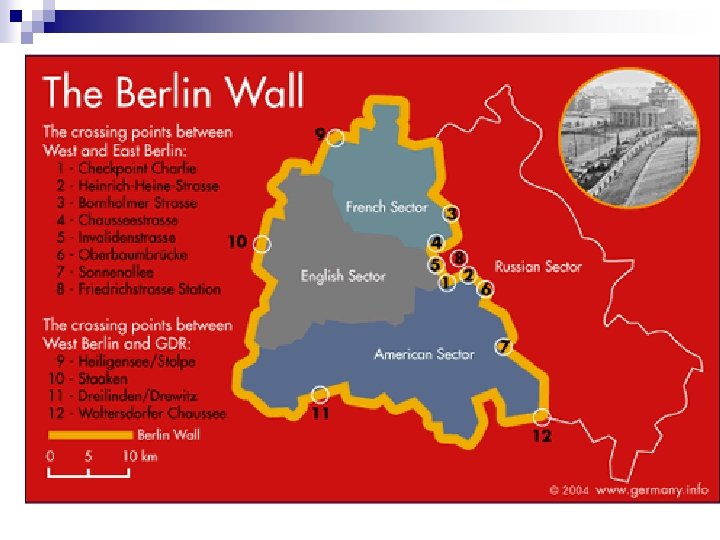
Cold War Background Germany split into East & West (3 countries combine to from West) n Berlin, Germany split into 4 zones: Great Britain, France, Soviet Union & U. S. n Big 3 meet/agree at Yalta Conference n Meeting to discuss how to keep peace n
Germany after WW 2
United Nations Big 3 agree peace keeping group needed n United Nations: formed in 1945 to replace League of Nations n Goal: prevent future war & advocate world peace n Every member nation was given a seat n
What is Communism? n Communism is a type of government and philosophy. Its goal is to form a society where everything is shared equally. All people are treated equally and there is little private ownership. In a communist government, the government owns and controls most everything including property, means of production, education, transportation, and agriculture Marx described ten important aspects of a communist government: No private property n A single central bank n High income tax that would rise significantly as you made more n All property rights would be confiscated n No inheritance rights n The government would own and control all communication and transportation n The government would own and control all education n The government would own and control factories and agriculture n Farming and regional planning would be run by the government n The government would tightly control labor
Fear of Communism n n n U. S. wanted to spread democracy, S. U. wanted to spread communism Countries U. S. freed could choose own government Countries Soviet Union freed forced to be under communist control S. U. had satellite countries watched by secret police Citizens not allowed to speak against government or leave country
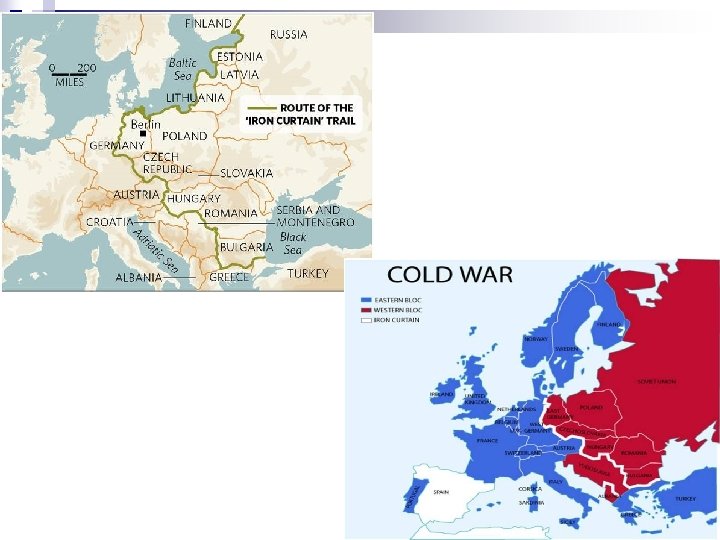
Cold War Begins n S. U. building an “Iron Curtain” n Iron curtain: imaginary wall or line that separated Soviet nations from the rest of Europe n S. U. determined to surround itself with counties that were not a threat n S. U. did not trust U. S. as U. S. had atomic bomb & less damage from WW 2
Review… n n n n 1) Which 2 countries emerges as superpowers following WW 2? 2) What country was split into 2 after WW 2? 3) What was formed in 1945 to replace the League of Nations? 4) What was its purpose? 5) What type of government was the U. S. hoping to spread? The Soviets? 6) It was said that the Soviets were building what? 7) Why did the Soviets not trust the U. S. after WW 2?
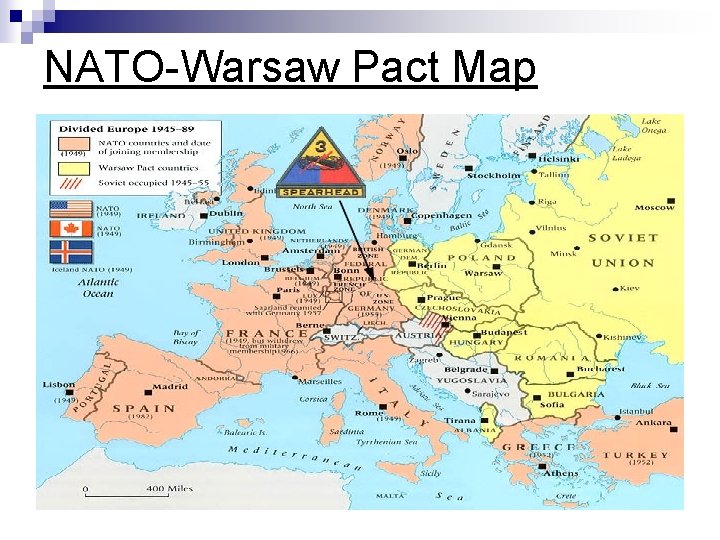
Cold War Begins n Cold War was an indirect war for global power & domination n U. S. used policy of Containment to prevent Soviet Union influence around the world n Western Europe: U. S. & its allies n Eastern Europe: Soviet Union & its satellites
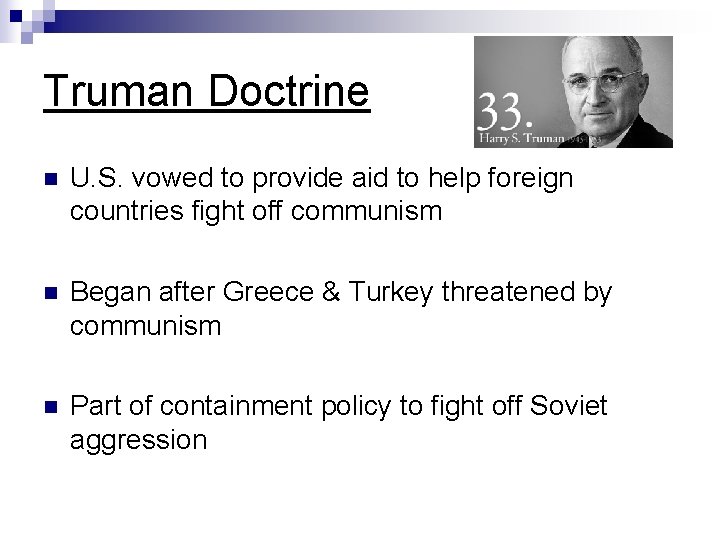
Truman Doctrine n U. S. vowed to provide aid to help foreign countries fight off communism n Began after Greece & Turkey threatened by communism n Part of containment policy to fight off Soviet aggression
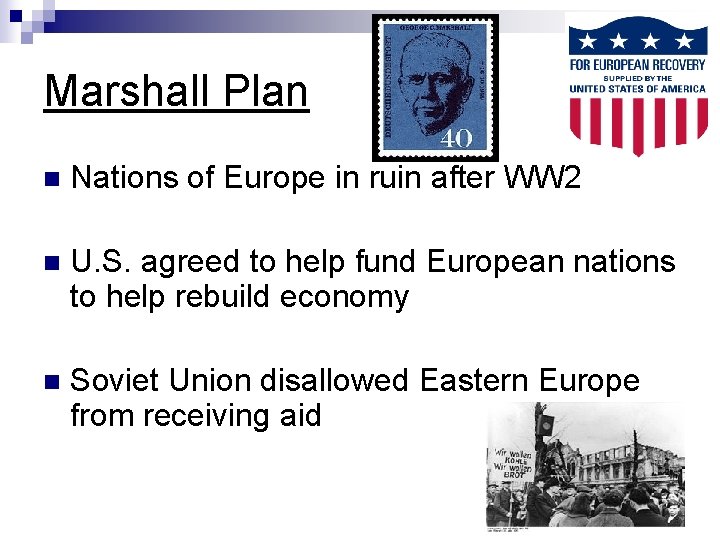
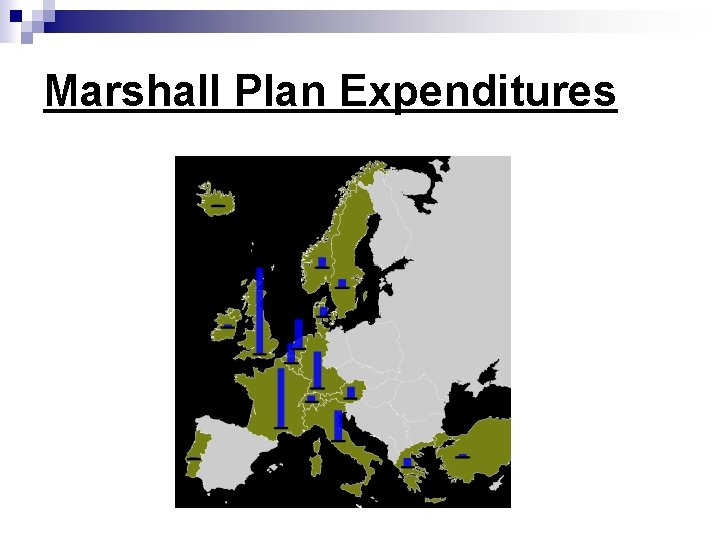
Marshall Plan n Nations of Europe in ruin after WW 2 n U. S. agreed to help fund European nations to help rebuild economy n Soviet Union disallowed Eastern Europe from receiving aid
Marshall Plan Expenditures
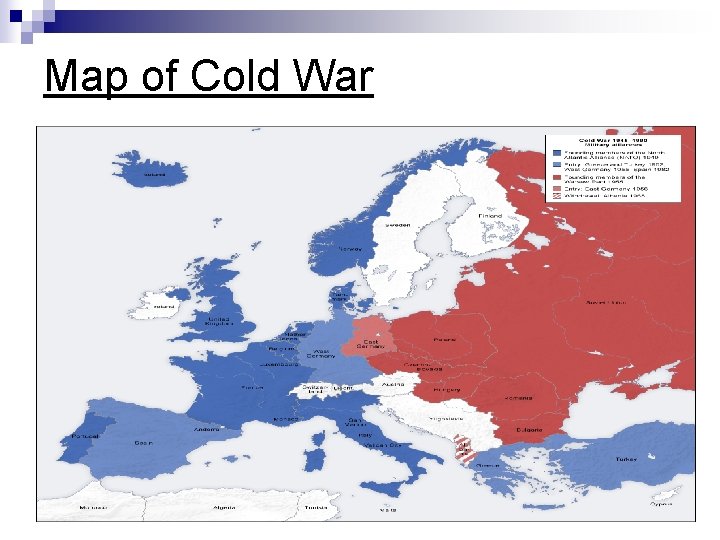
Map of Cold War
NATO n NATO: U. S. joined 9 Western European nations in 1949 n North Atlantic Treaty Organization n Members promised to defend each other if attacked
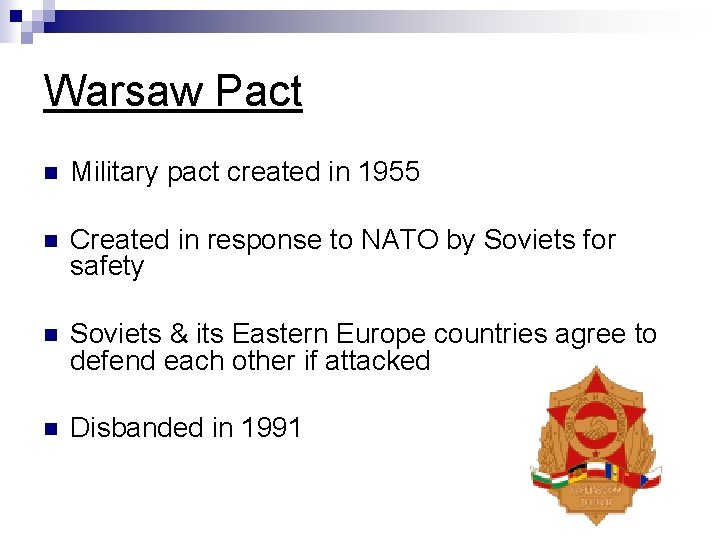
Warsaw Pact n Military pact created in 1955 n Created in response to NATO by Soviets for safety n Soviets & its Eastern Europe countries agree to defend each other if attacked n Disbanded in 1991
NATO-Warsaw Pact Map
Review… n n n n n 1) What was the name of the indirect war for global domination? 2) What was the name of the imaginary wall the Soviets were building to separate them from the rest of Europe? 3) The S. U. & its satellites was what part of Europe? 4) The U. S. & its allies was what part of Europe? 5) The U. S. adopted a policy of what to prevent Soviet influence around the world? 6) The U. S. vowed to provide aid to foreign countries threatened by communism (Greece and Turkey) This was called what? 7) The U. S. helping European countries rebuild their economy after WW 2 was called what? 8) What was the name of the defense pact the U. S. & its allies signed? 9) What was the name of the defense pact the S. U. &its satellites signed?
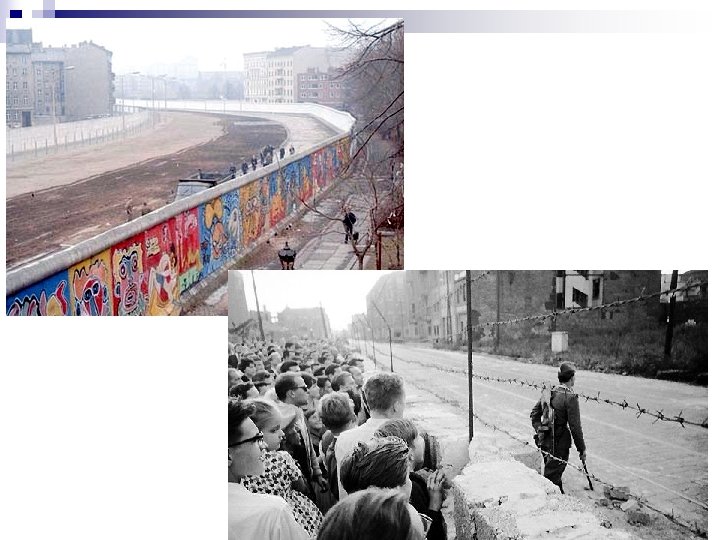
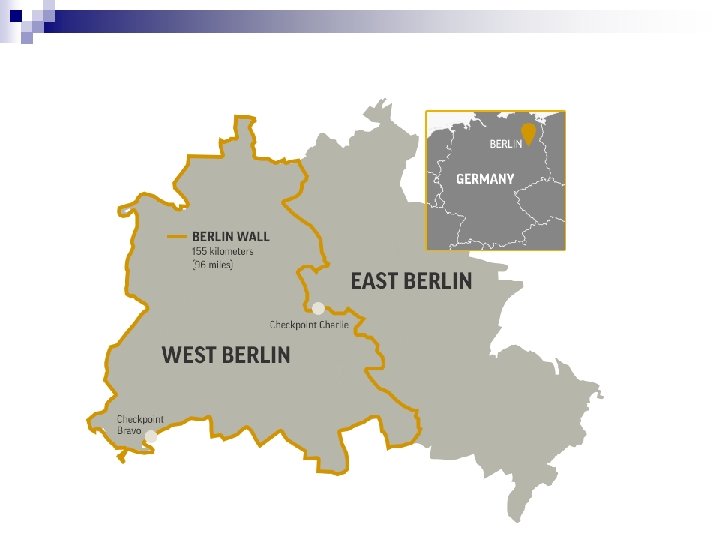
Berlin Airlift First major crisis of Cold War n France, Great Britain & U. S. decided to combine their German occupation zones to unite West Germany n Berlin was in S. U. zone; but was divided east & west n Soviet Union feared Allies were gaining upper hand & set up a blockade in Berlin n
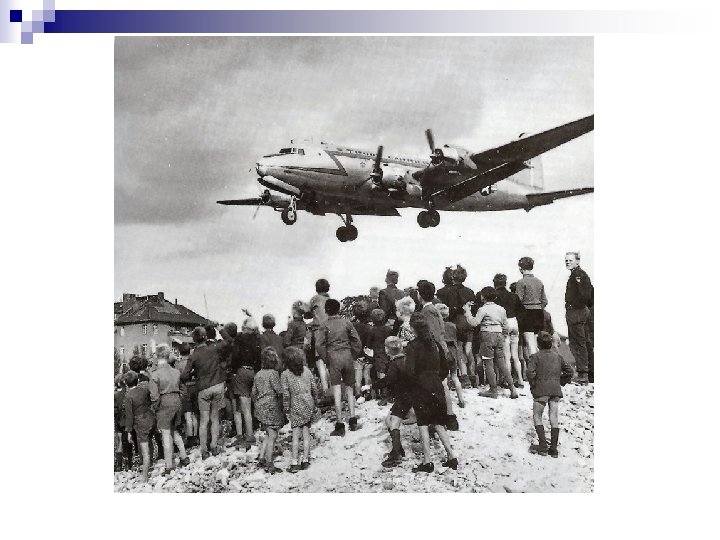
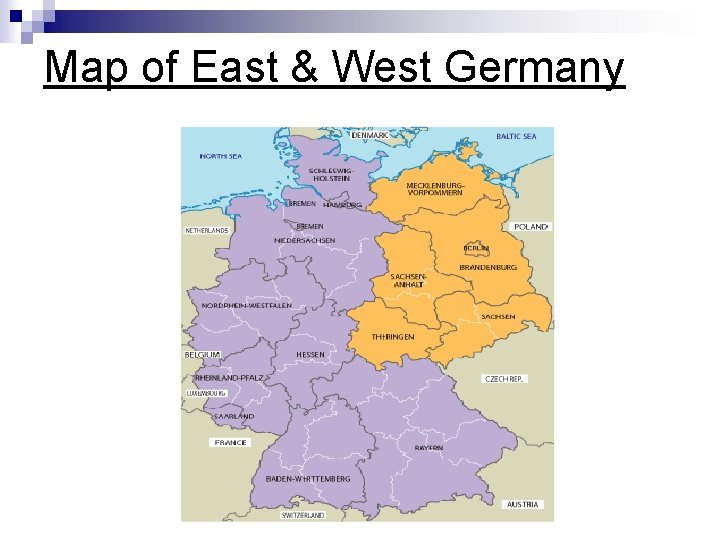
Berlin Airlift n n n U. S. & British began airlifting supplies to West Berlin in response to Soviet blockade U. S. delivered over 2. 3 million tons of food, fuel & machinery to West Germany Soviet lifts blockade & Germany split into 2 countries East Germany: communist under S. U. control West Germany: democracy under U. S. control
Map of East & West Germany
Ronald Reagan n https: //www. youtube. com/watch? v=Ko 3 No HCREJI
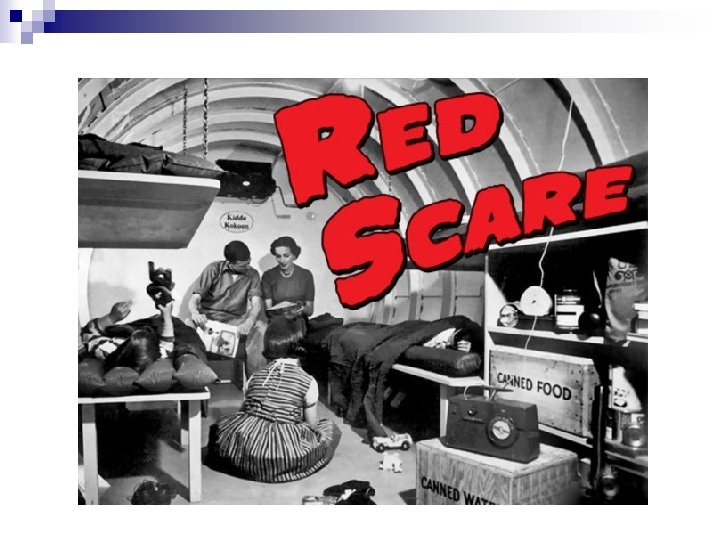
Mc. Carthyism Fear of communism increased due to: n China taken over by communism n Korean War n Successful creation & testing of atomic bomb by Soviets n Known as “Red Scare” n
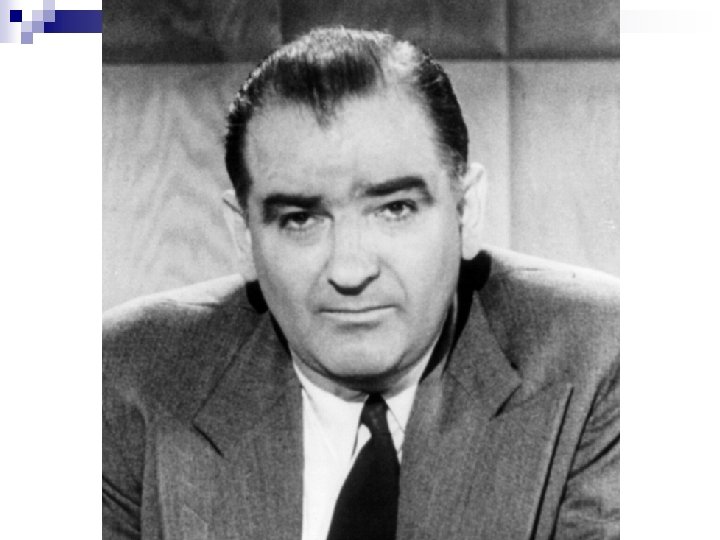
Mc. Carthyism n n Mc. Carthyism: accusing people of being communists 1950 s fear that communist spies were working in the U. S. Named after U. S. Senator Joseph Mc. Carthy Claimed to have a “list” of over 200 communists working for the government
Mc. Carthyism n Americans believed that Mc. Carthy was trying to save U. S. from communist takeover n Others saw Mc. Carthy as a danger to U. S. n Never had any proof of his accusations n After falsely accusing U. S. Army of having communists, he was censored by the Senate
Mc. Carthyism, Rosenburgs, 1950’s America https: //www. youtube. com/watch? v=RGsno lp. Hr 0 A n https: //www. youtube. com/watch? v=9_h. T 3 2 LAZvg n https: //www. youtube. com/watch? v=THd. Jv WJ 4 l. Yc n https: //www. youtube. com/watch? v=Gmka 2 myds. D 0 n
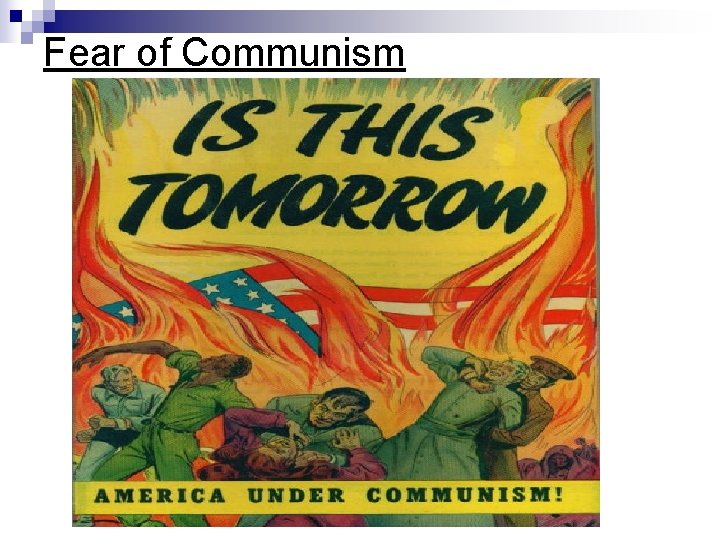
Fear of Communism
Communism in Asia Japan controlled Korea prior to WWII n After WWII, Korea divided into communist North & democratic South n n Soviets occupied North, U. S. occupied South
Korean War n Civil War began in China in 1946 Communist Party vs. American supported Nationalists Party n After Chinese Civil War, China fell to communism in 1949 n Leader of China: Mao Tse-Tung n n Domino theory: if one country in Asia fell to communism, others would
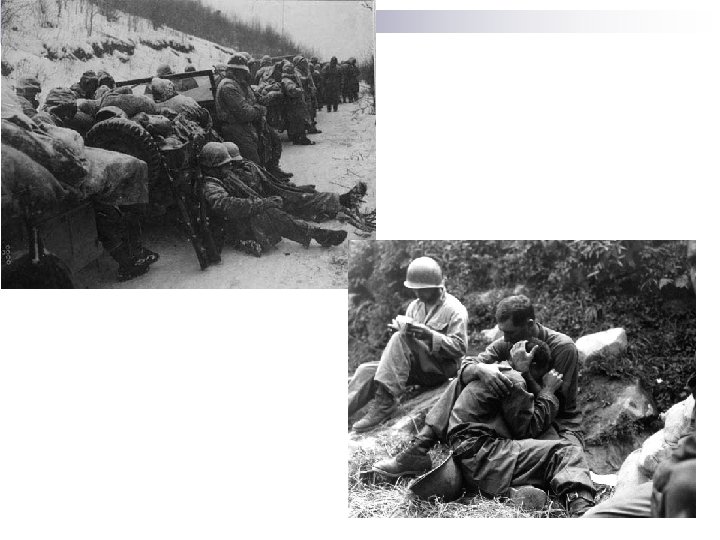
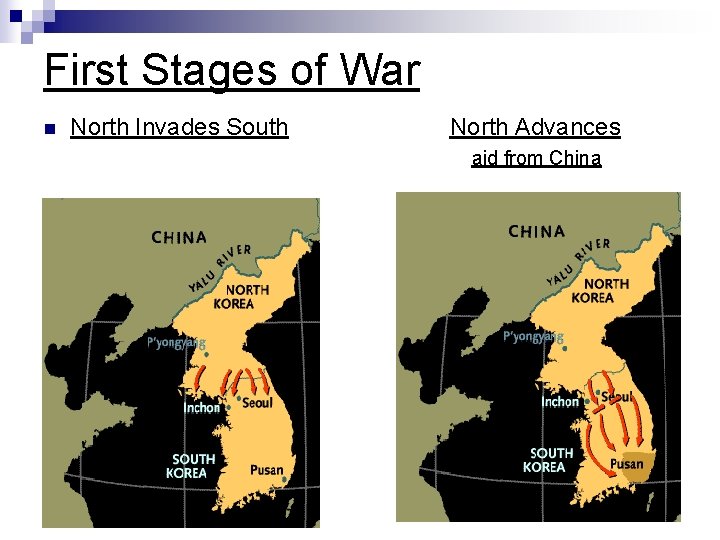
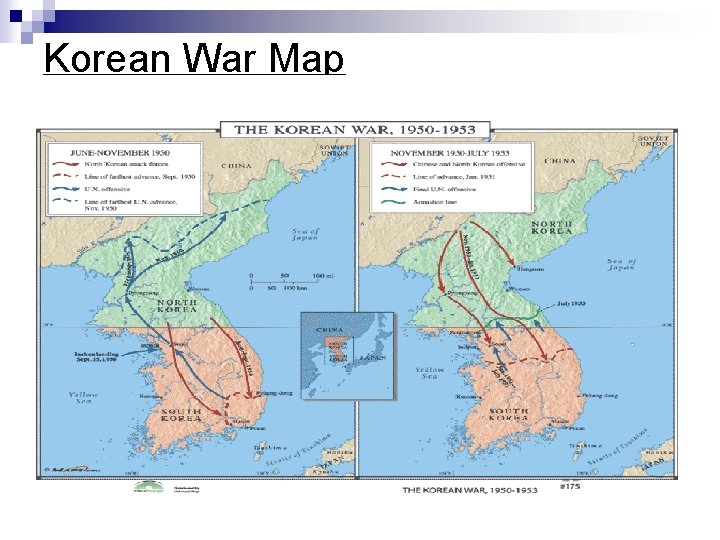
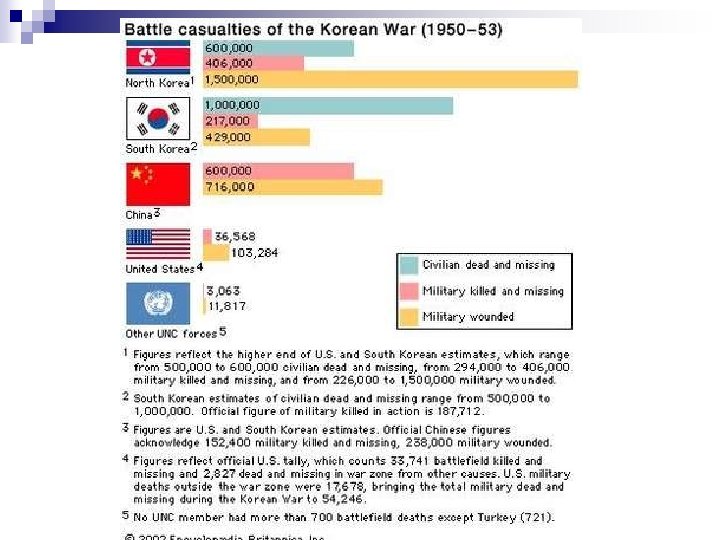
Korean War n U. S. & Soviet could not agree on plan to unite Korea n On June 25 th, 1950, North’s Soviet trained army invades South n Truman condemned North’s attack & sent UN forces to fight n 90% of UN troops were American
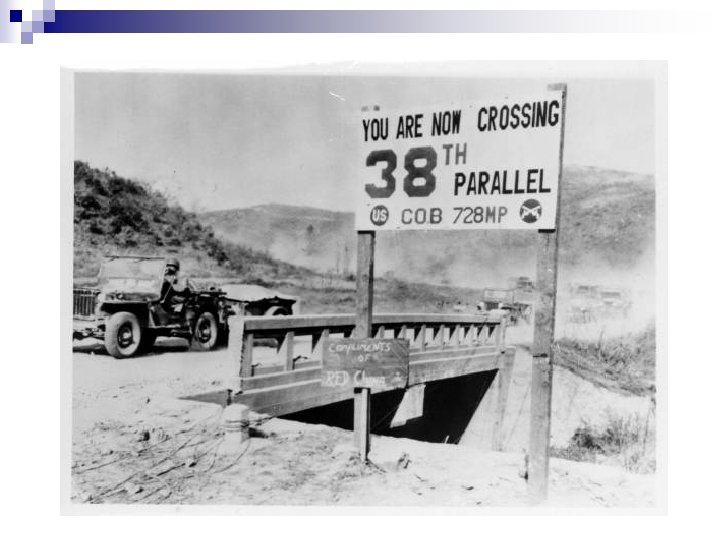
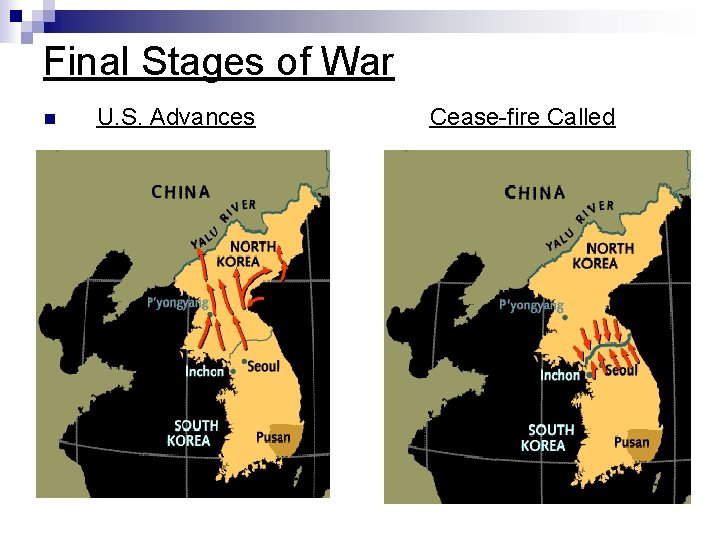
Korean War n North receives aid from communist China n Mac. Arthur calls for invasion of China n Neither side able to make progress as cease-fire called for on July 27 th, 1953 n Korea still remained divided along 38 th parallel
First Stages of War n North Invades South North Advances aid from China
Final Stages of War n U. S. Advances Cease-fire Called
Korean War Map
Review… n n n n 1) If one country in Asia fell to communism, others would as well. What was this theory called? 2) The Soviets controlled which part of Korea? 3) Which part of Korea did the U. S. control? 4) The Korean war began after which side invaded which? 5) Gen. Mac. Arthur was fired after he called for the invasion of which country? 6) The Korean War ended after what was called for? 7) Where does Korea remain divided at?
Cuban Missile Crisis n Cuba fell to communism in 1959 after Cuban Revolution n Cuban Revolution led by Fidel Castro n Communist overthrew dictatorship government n U. S. saw this as a threat as Cuba only 90 miles from Florida
Cuban Missile Crisis n Cuba refused U. S. intervention after falling to communism in 1959 n U. S. imposed an embargo on Cuba began receiving aid from Soviets n Cuban exiles began fleeing to U. S. to get away from harsh government
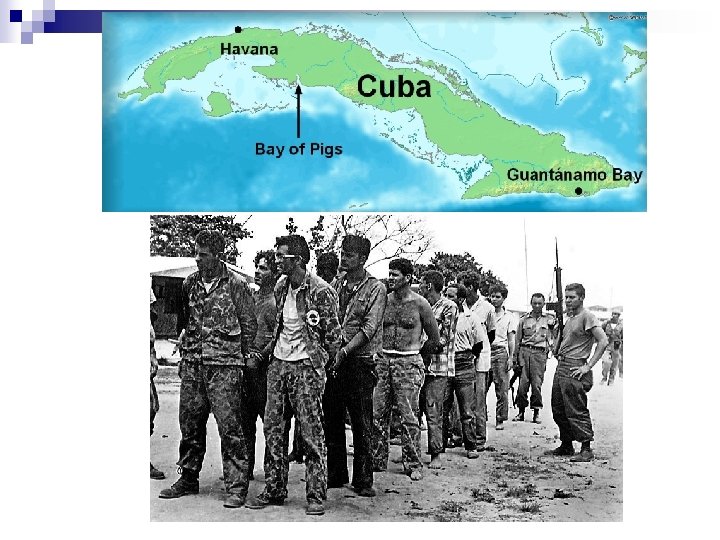
Bay of Pigs Invasion JFK trained Cuban exiles for invasion of Cuba n Exiles were to be supported by local population of Cuba n Support never came & exiles captured by Cuba n Huge mistake & defeat for U. S. n U. S. forced to pay ransom for release of soldiers n
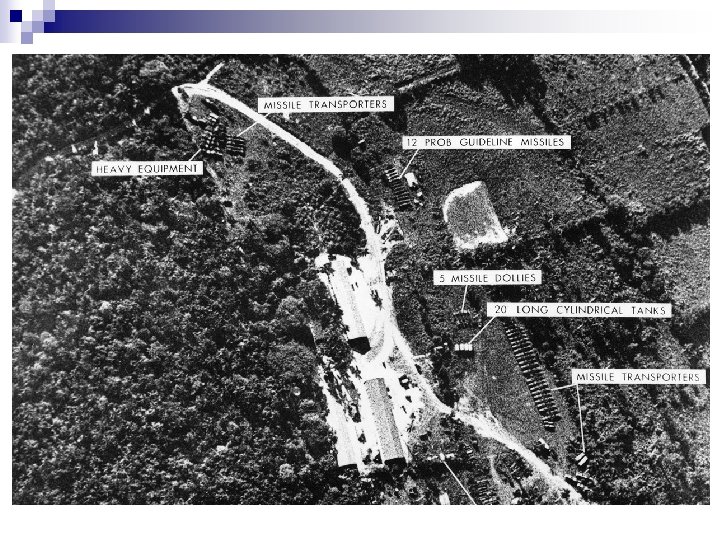
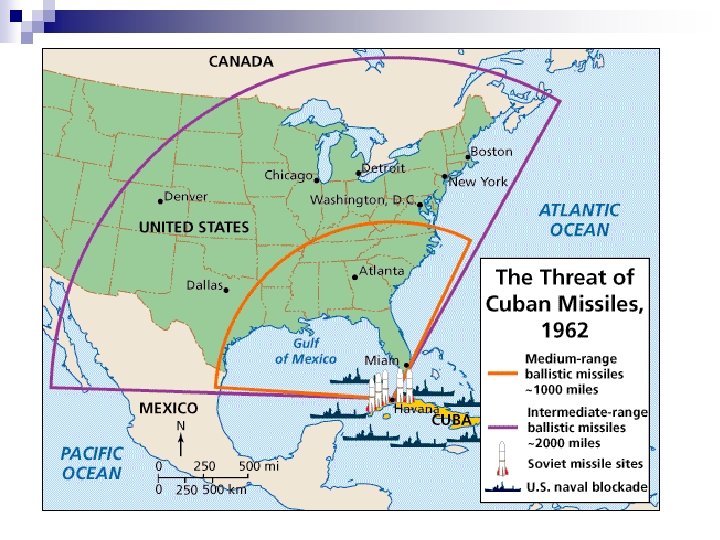
Cuban Missile Crisis n Cuba feared another U. S. invasion & turned to Soviets for help n Soviets began installing nuclear missiles in Cuba in 1962 n Missiles could reach all the way to CA
Cuban Missile Crisis n JFK risked nuclear war by attacking Soviets but could not ignore missiles n U. S. installed blockade of Cuba n Soviets agreed to remove missiles if U. S. would not invade Cuba n Crisis was closest U. S. & Soviets came to nuclear war
n CMC: http: //www. history. com/topics/coldwar/cuban-missile-crisis/videos/cubanmissile-crisis n Castro: https: //www. youtube. com/results? search_ query=castro+assassination+attempt
Music Video While watching this video, look for the following: n Who is the enemy? What are they wearing? n What kind of environment are they in? n What do their buildings look like? n What does the climate look like? https: //www. youtube. com/watch? v=q. V 4 QRSQCq 0
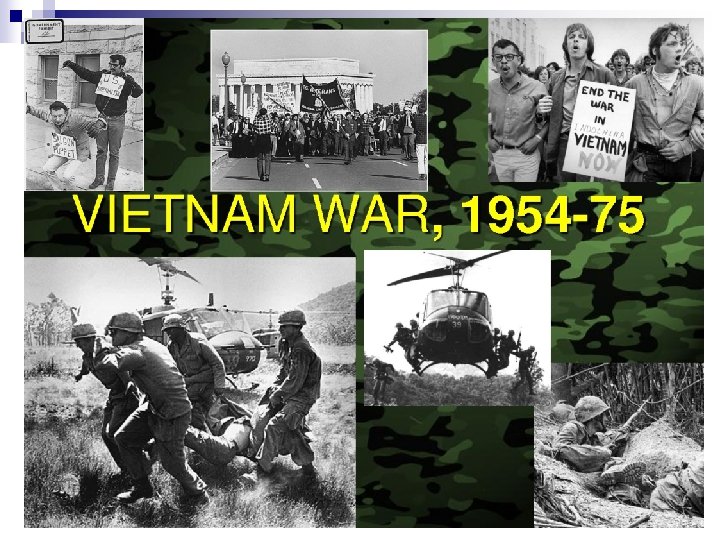
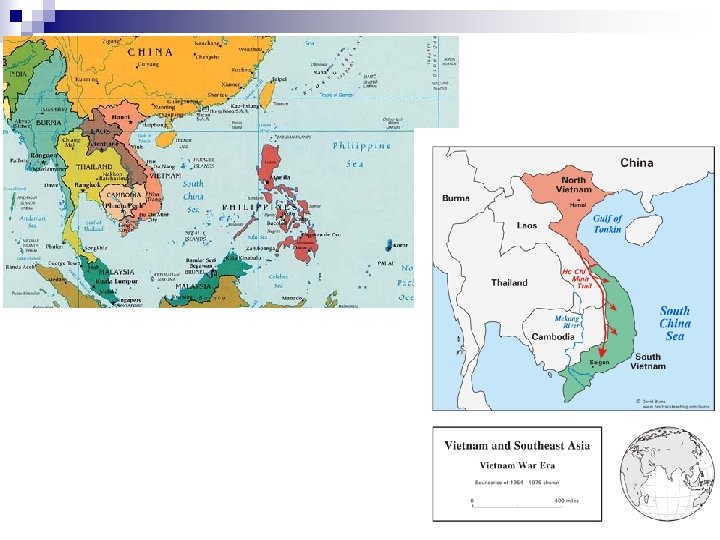
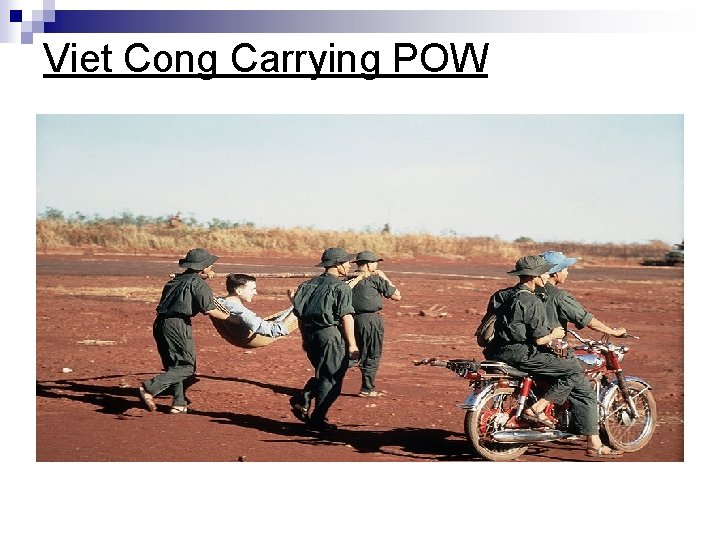
Vietnam War n Vietnam won its independence from France in 1954 n Divided into communist North & U. S. supported South n Communist group in South formed called Viet Cong
Leaders and Parties n North Vietnam: Ho Chi Minh n South Vietnam: Ngo Dinh Diem n Communist Party in North: Viet Minh n Communist Party in South: Viet Cong
Vietnam War North supplied weapons to Viet Cong n Goal was to re-unite Vietnam under communist rule n After U. S. ships bombed in Vietnam waters, Gulf of Tonkin Resolution passed (1964) n Allowed president to use military force in Vietnam: 1965, 1 st US combat troops land. n U. S. troops in Vietnam escalated in attempt to contain communism n
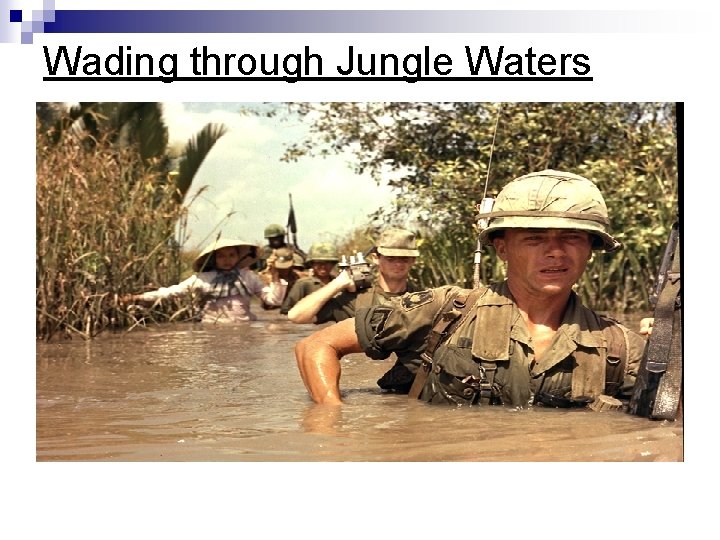
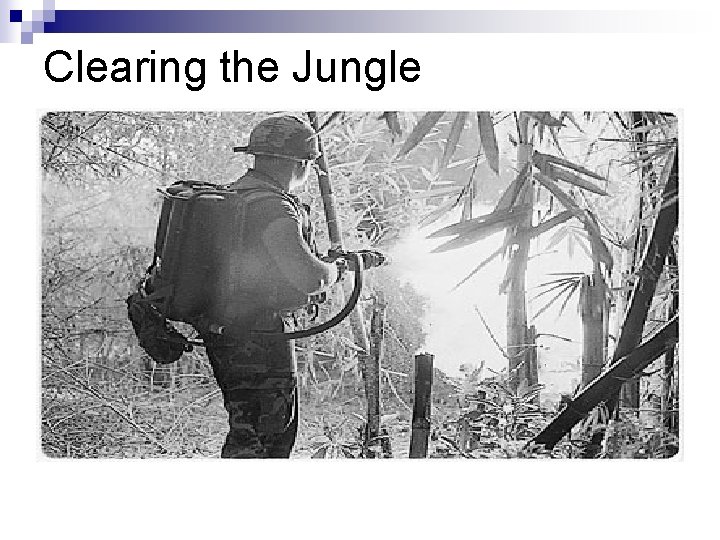
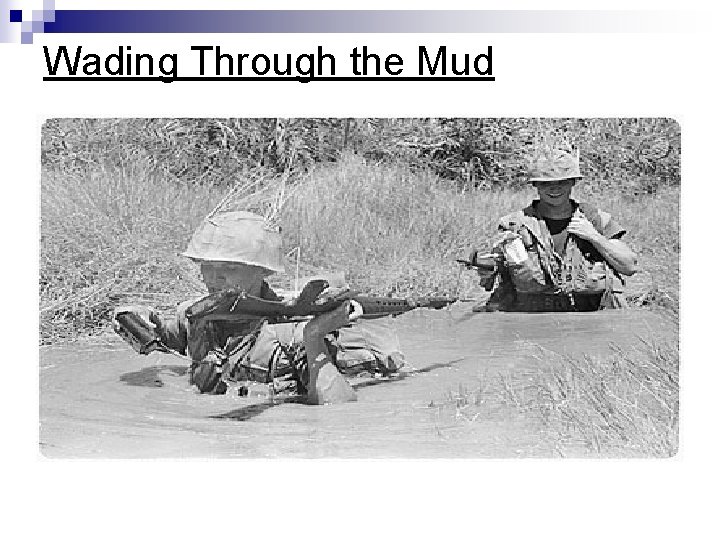
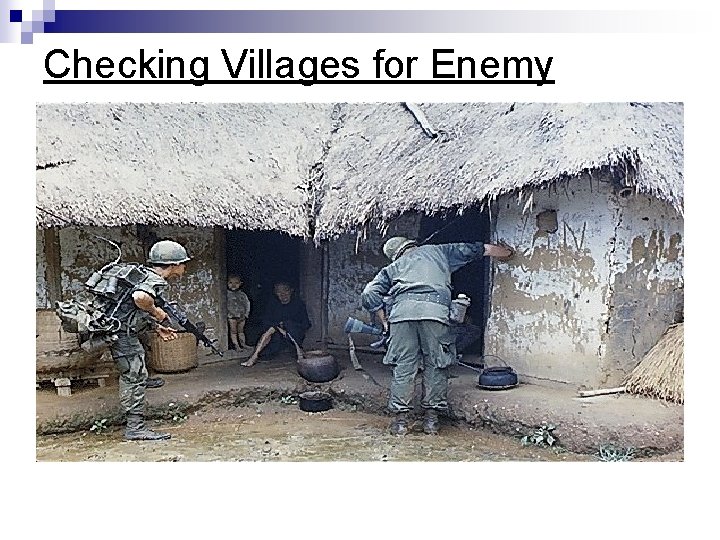
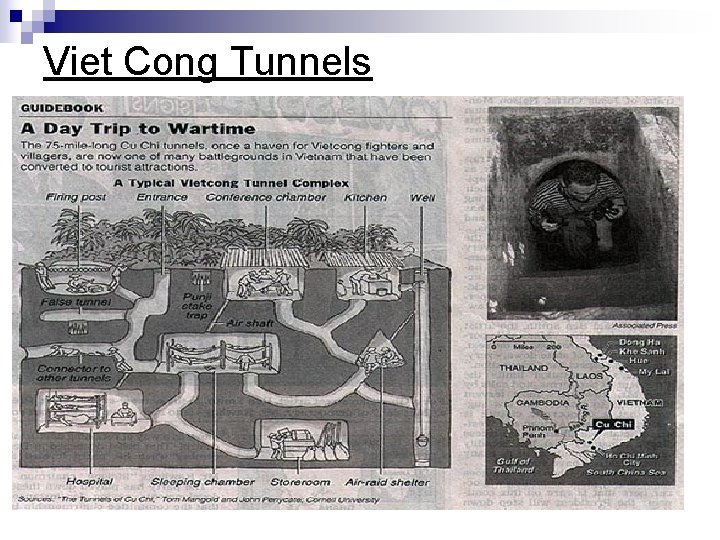
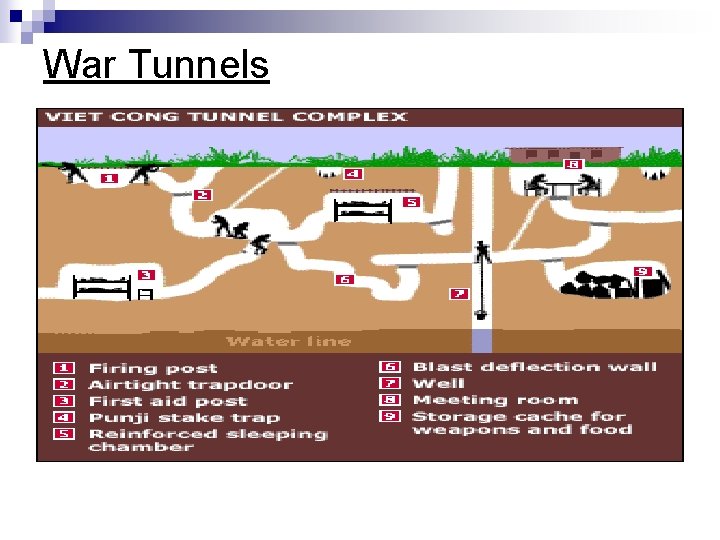
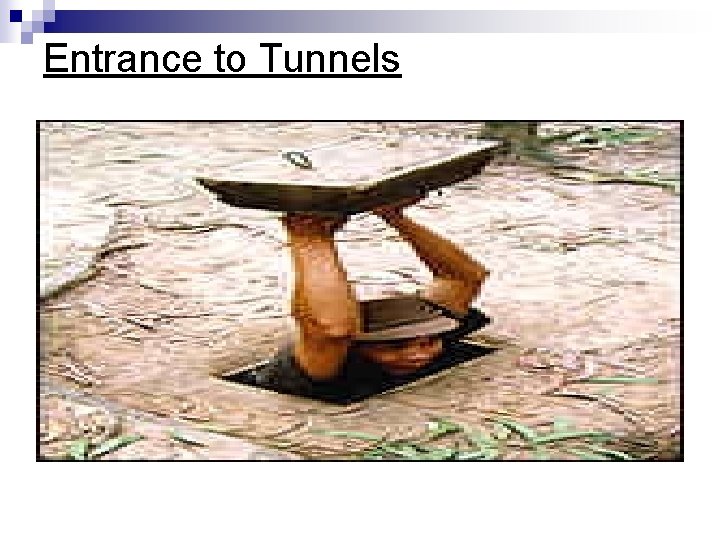
Vietnam War U. S. Disadvantages: n 1) Unable to decipher enemy from civilian n 2) Inexperienced soldiers n 3) Jungle terrain & weather n 4) Guerilla Warfare n Ex: Grenades hidden in bushes, jungle filled with landmines & booby traps, underground tunnels used for fighting n
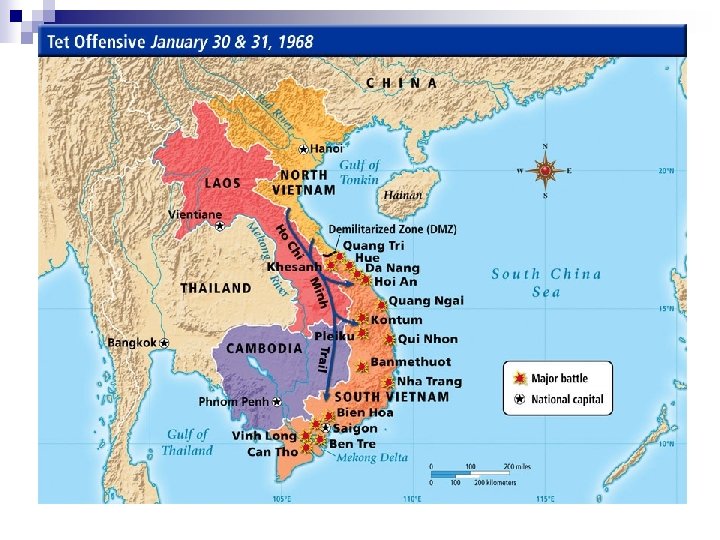
Vietnam War Tet Offensive: surprise attack on U. S. military bases in S. Vietnam n Viet Cong destroyed military bases & villages n Surprise attack proved end of war nowhere near n Anti-war sentiment escalated in U. S. n
Vietnam War U. S. homefront disagreed with war n Felt we should not be fighting Vietnam’s civil war n Protests held on college campuses n Men burned draft card &/or fled to Canada n Poor men drafted as they could not afford to pay college & defer n
Vietnam War n Neither side able to make progress as cease-fire called in 1973 n Last of U. S. troops withdrew by March n In 1975 North launched surprise attack on South defeated & Vietnam united as communist
Wading through Jungle Waters
Clearing the Jungle
Wading Through the Mud
Viet Cong Carrying POW
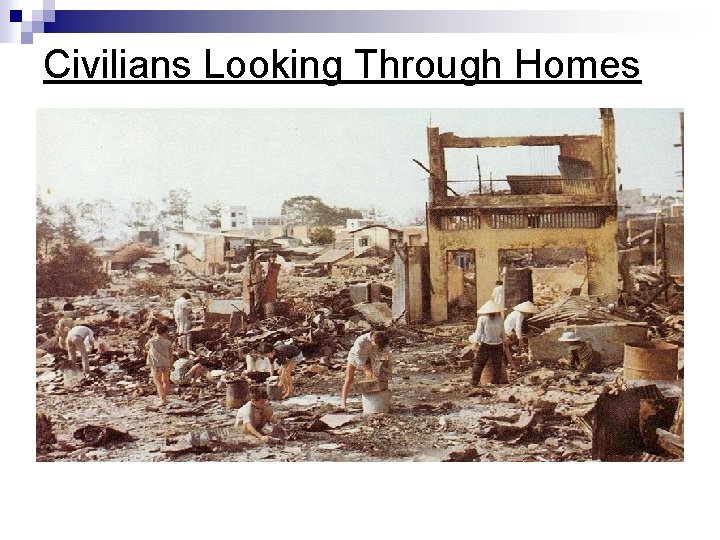
Checking Villages for Enemy
Viet Cong Tunnels
War Tunnels
Entrance to Tunnels
Civilians Looking Through Homes
Review n n n n 1) The communist group formed in the South was called what? 2) What resolution gave the president the power to use military force in Vietnam? 3) What was the goal of the Vietnam War? 4) What were 2 disadvantages for the US? 5) What was the name of the surprise attack on the US military base in the South? 6) Why did Americans disagree with the Vietnam War? 7) What is one way people protested the war? 8) What was the final result of the war?