
TELNET 1 TELNET 2 SSH TELNET TELNET is
- Slides: 34
TELNET 1. TELNET 2. SSH
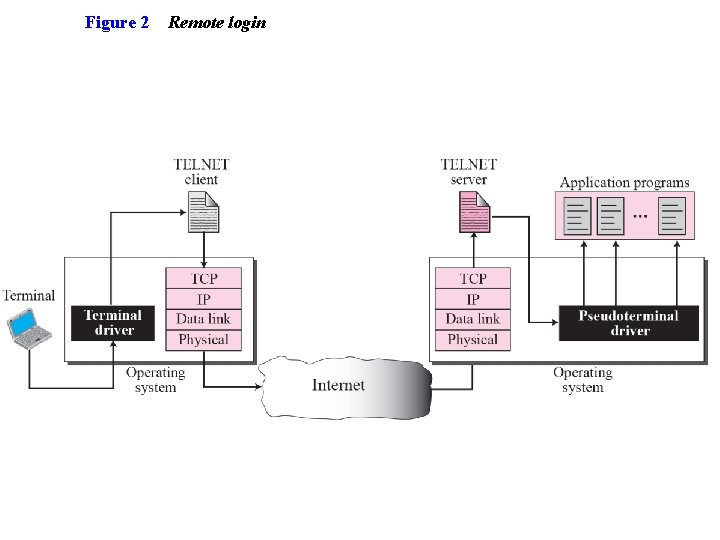
TELNET Ø TELNET is an abbreviation for TErmina. L NETwork. Ø It is the standard TCP/IP protocol for virtual terminal service as proposed by ISO. Ø TELNET enables the establishment of a connection to a remote system in such a way that the local terminal appears to be a terminal at the remote system.
Topics to be Discussed ü Concepts ü Time-Sharing Environment ü Network Virtual Terminal (NVT) ü Embedding ü Options and Suboption Negotiation ü Controlling the Server ü Out-of-Band Signaling ü Escape Character ü Modes of Operation ü User Interface ü Security Issue
TELNET is a general-purpose client-server application program.
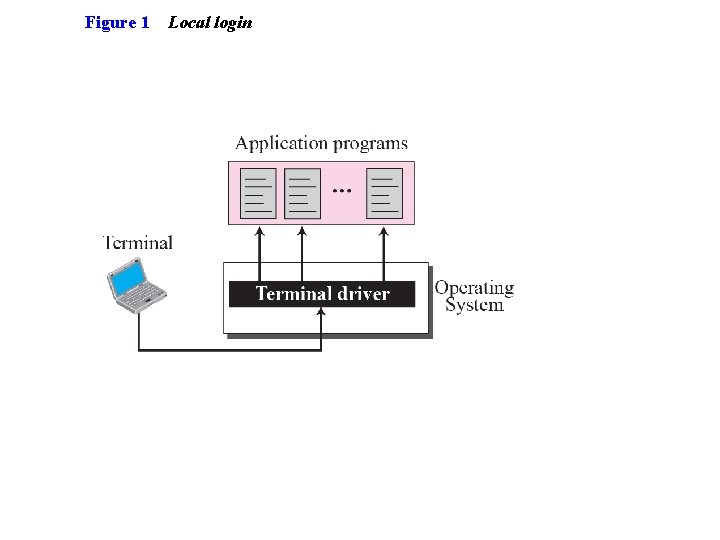
Figure 1 Local login
Figure 2 Remote login
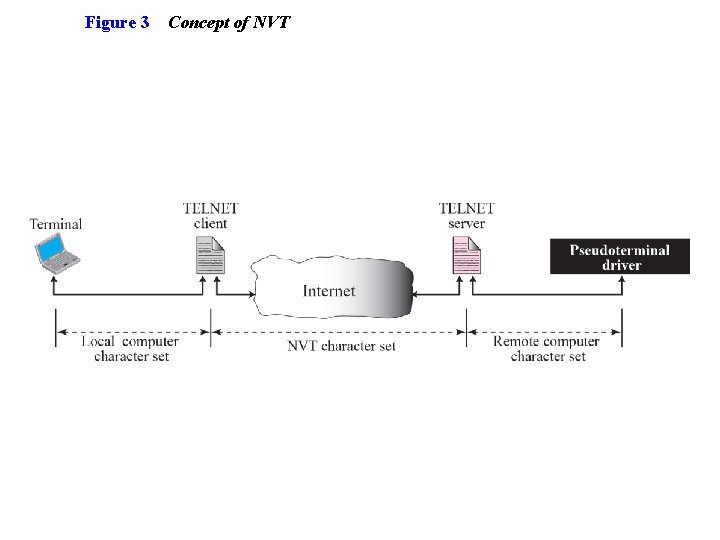
Figure 3 Concept of NVT
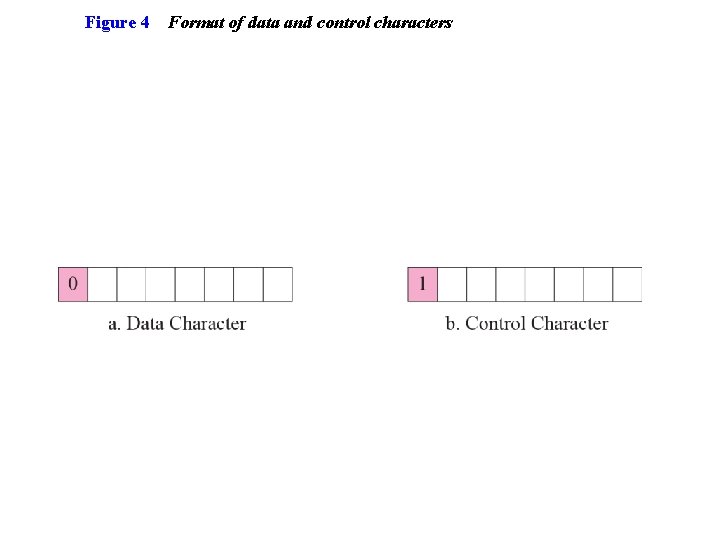
Figure 4 Format of data and control characters
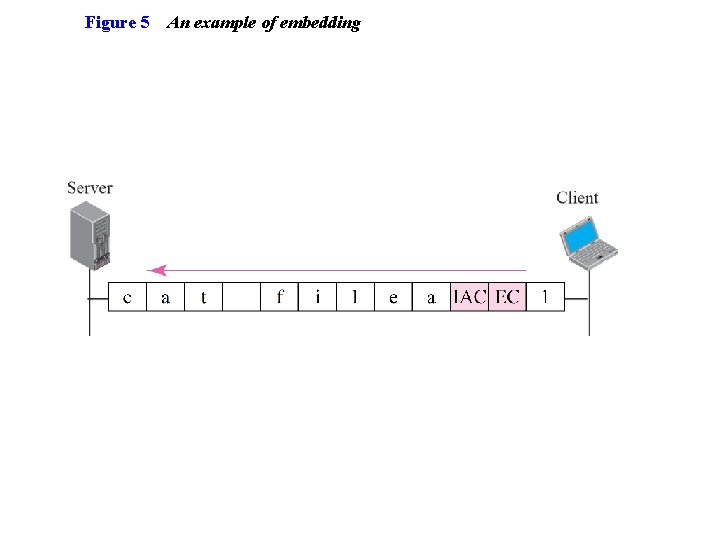
Figure 5 An example of embedding
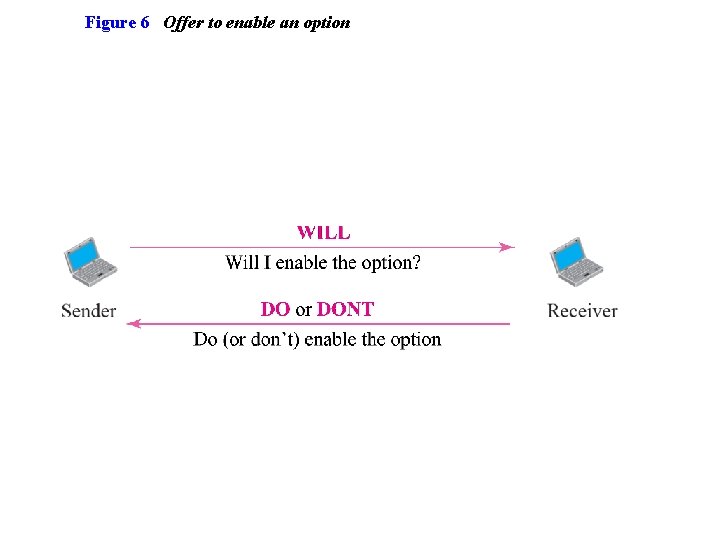
Figure 6 Offer to enable an option
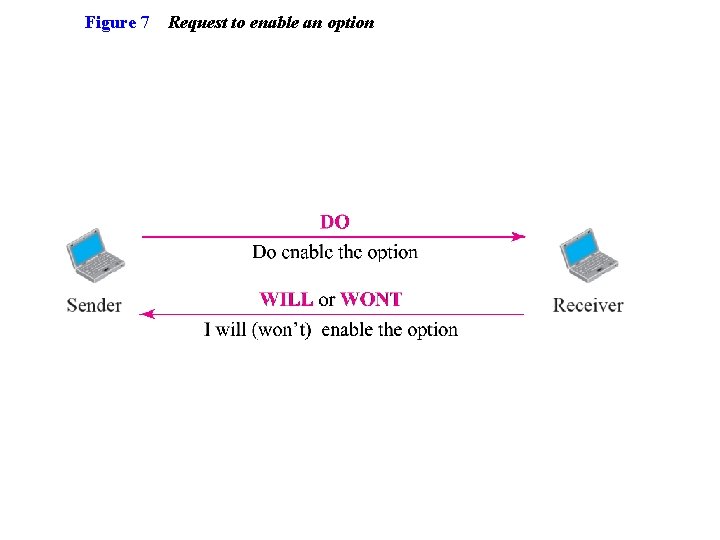
Figure 7 Request to enable an option
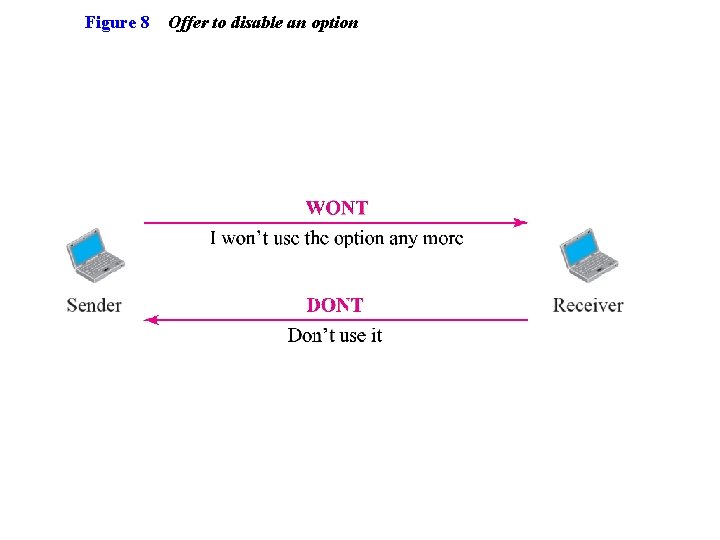
Figure 8 Offer to disable an option
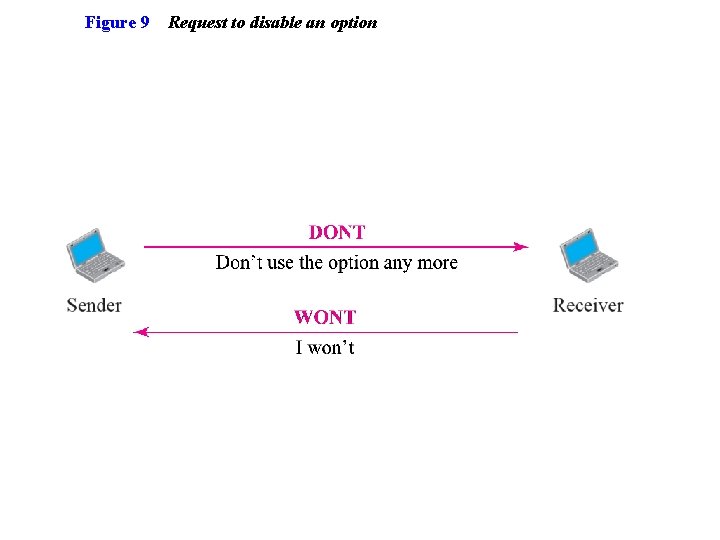
Figure 9 Request to disable an option
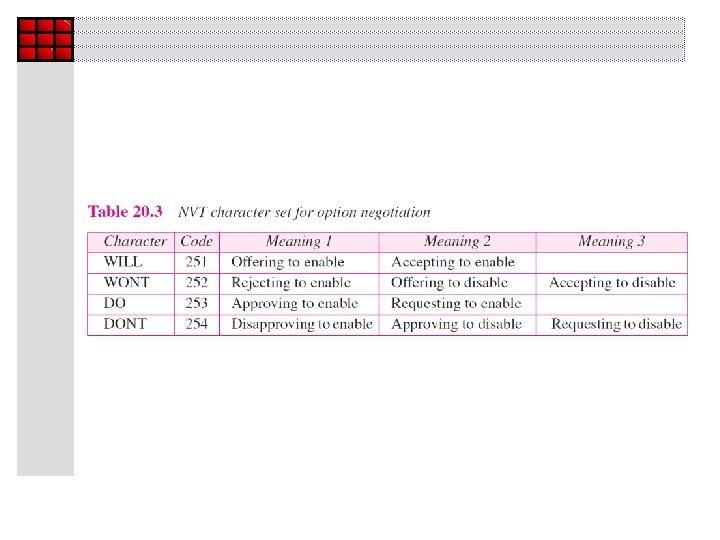
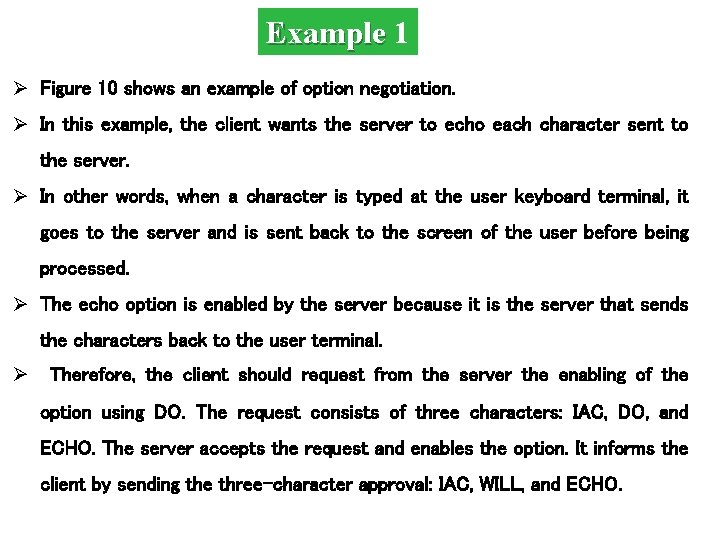
Example 1 Ø Figure 10 shows an example of option negotiation. Ø In this example, the client wants the server to echo each character sent to the server. Ø In other words, when a character is typed at the user keyboard terminal, it goes to the server and is sent back to the screen of the user before being processed. Ø The echo option is enabled by the server because it is the server that sends the characters back to the user terminal. Ø Therefore, the client should request from the server the enabling of the option using DO. The request consists of three characters: IAC, DO, and ECHO. The server accepts the request and enables the option. It informs the client by sending the three-character approval: IAC, WILL, and ECHO.
Figure 10 Example 1: Echo option
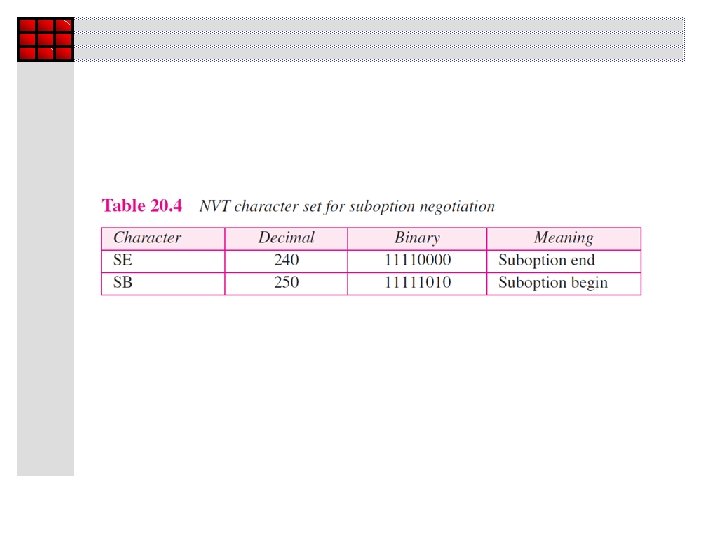
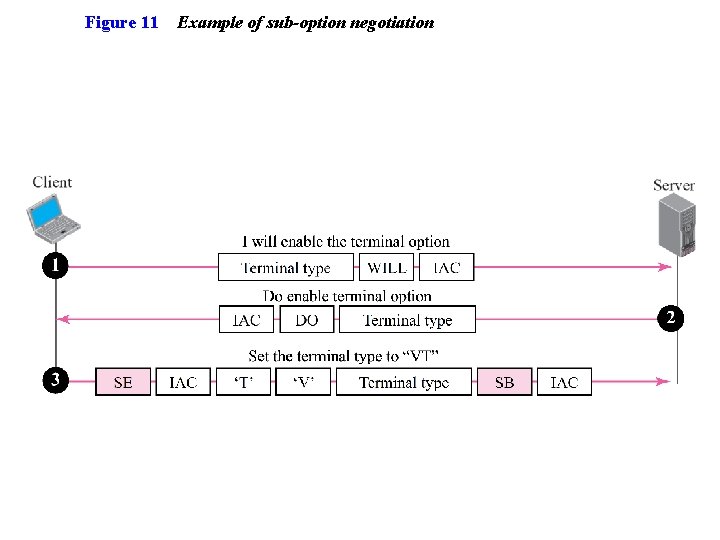
Figure 11 Example of sub-option negotiation
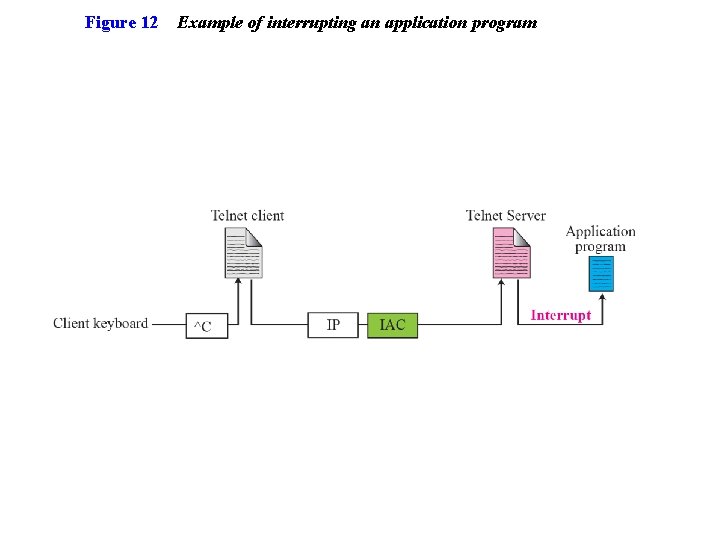
Figure 12 Example of interrupting an application program
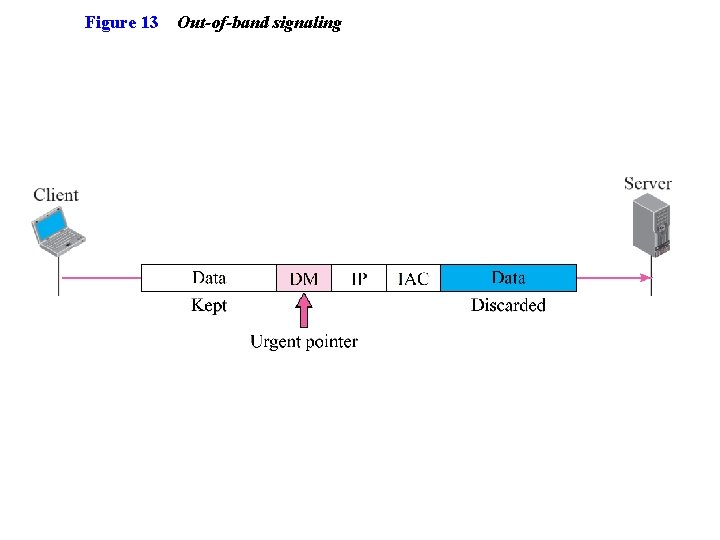
Figure 13 Out-of-band signaling
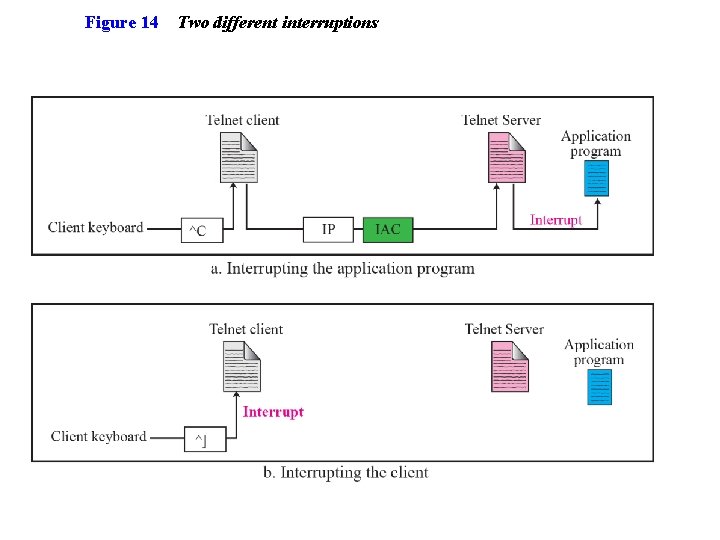
Figure 14 Two different interruptions
Example 2 Ø In this example, we use the default mode to show the concept and its deficiencies even though it is almost obsolete today. Ø The client and the server negotiate the terminal type and terminal speed and then the server checks the login and password of the user (see Figuren 15).
Figure 15 Example 2
Example 20. 3 Ø In this example, we show the client switches to the character mode. Ø This requires that the client request the server to enable the SUPPRESS GO AHEAD and ECHO options (see Figure 16).
Figure 16 Example 3
2 SECURE SHELL (SSH) Ø Another popular remote login application program is Secure Shell (SSH). SSH, like TELNET, uses TCP as the underlying transport protocol. Ø SSH is more secure and provides more services than TELNET.
Topics to be Discussed ü Versions ü Components ü Port Forwarding ü Format of the SSH Packet
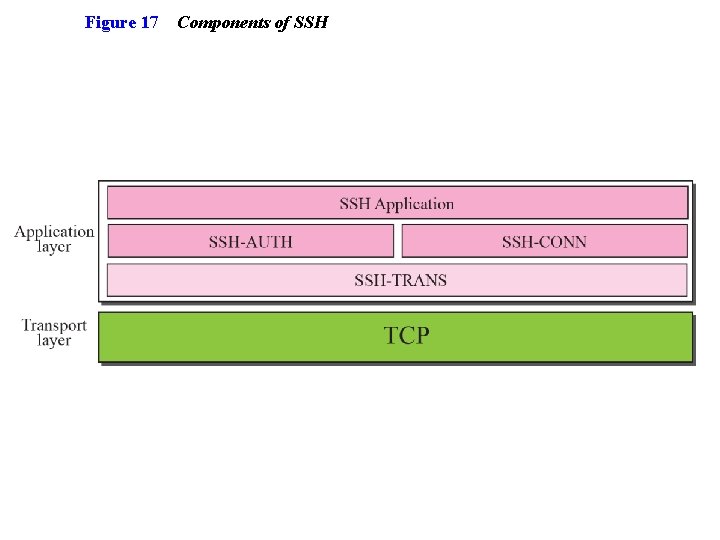
Figure 17 Components of SSH
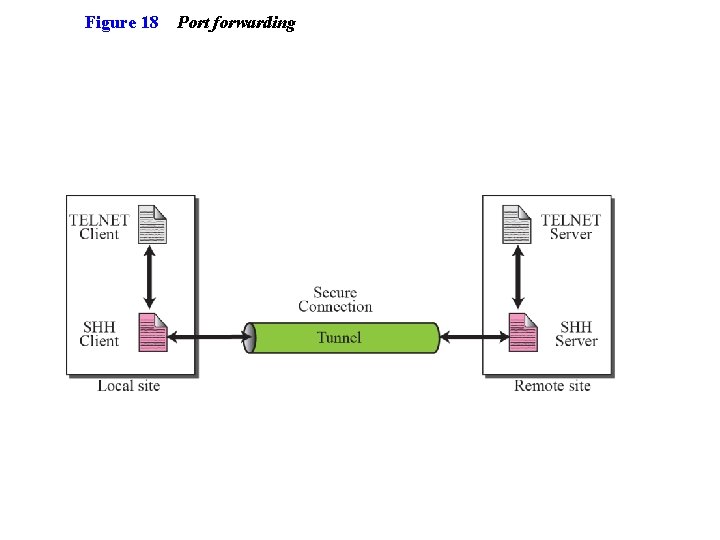
Figure 18 Port forwarding
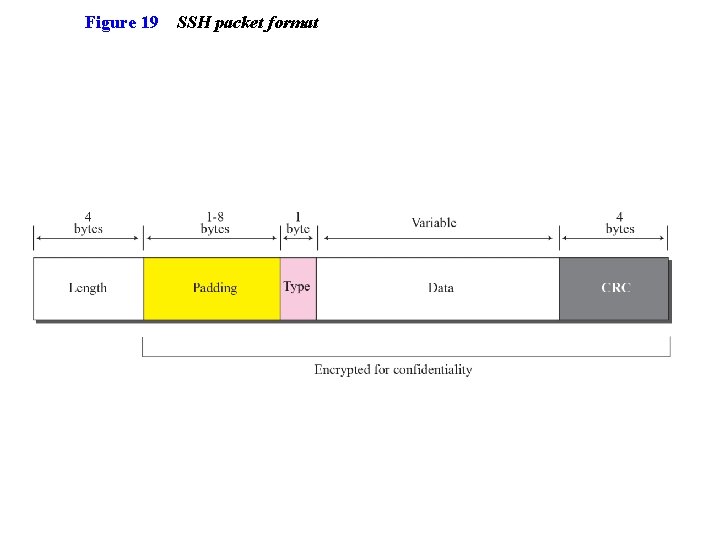
Figure 19 SSH packet format