Cryptography and Network Security Chapter 16 Fifth Edition


- Slides: 25
Cryptography and Network Security Chapter 16 Fifth Edition by William Stallings Lecture slides by Lawrie Brown
Chapter 16 – Transport-Level Security Use your mentality Wake up to reality —From the song, "I've Got You under My Skin“ by Cole Porter
Web Security Ø Web now widely used by business, government, individuals Ø but Internet & Web are vulnerable Ø have a variety of threats l l integrity confidentiality denial of service authentication Ø need added security mechanisms
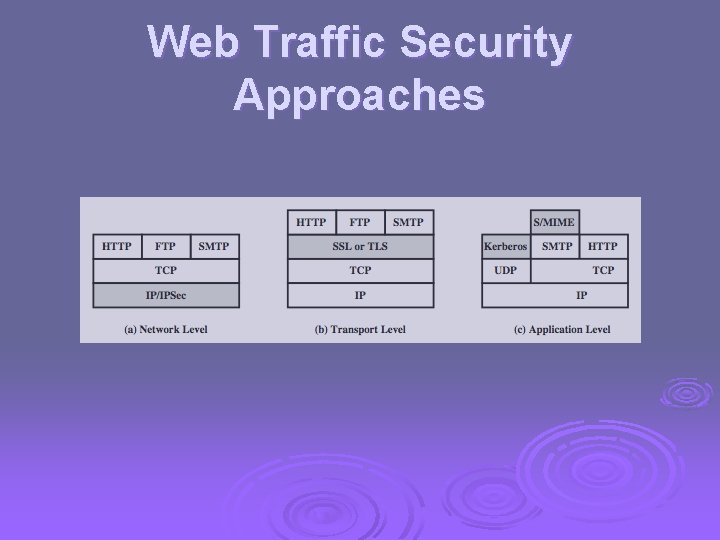
Web Traffic Security Approaches
SSL (Secure Socket Layer) Ø transport layer security service Ø originally developed by Netscape Ø version 3 designed with public input Ø subsequently became Internet standard known as TLS (Transport Layer Security) Ø uses TCP to provide a reliable end-to-end service Ø SSL has two layers of protocols
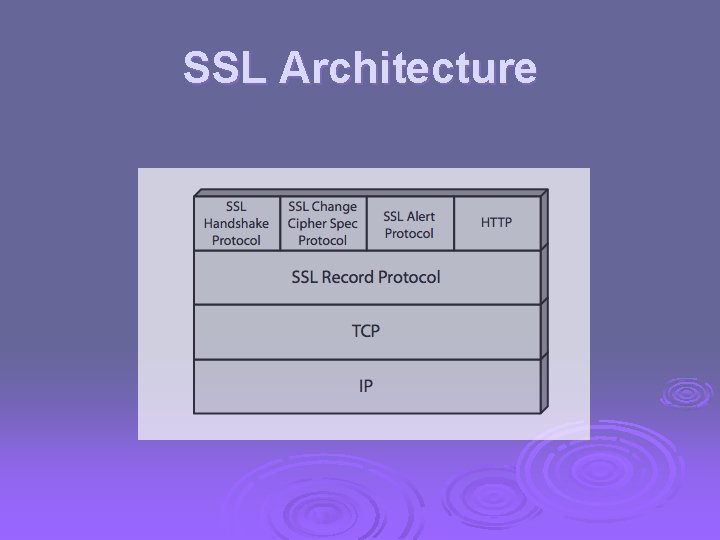
SSL Architecture
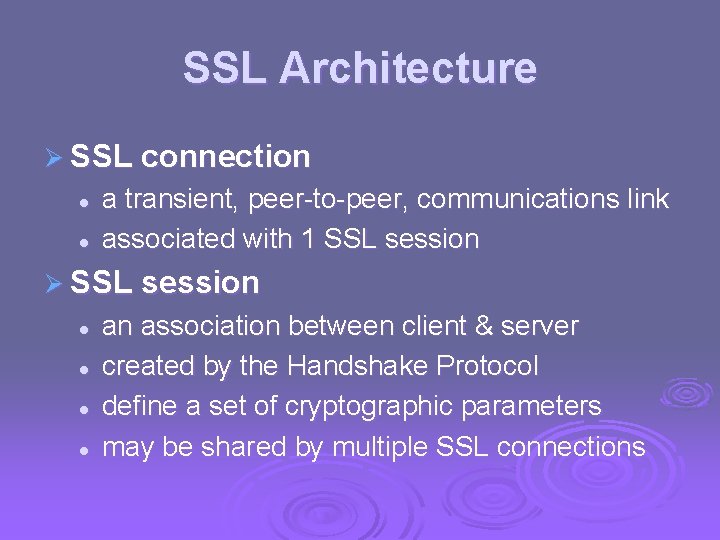
SSL Architecture Ø SSL connection l l a transient, peer-to-peer, communications link associated with 1 SSL session Ø SSL session l l an association between client & server created by the Handshake Protocol define a set of cryptographic parameters may be shared by multiple SSL connections
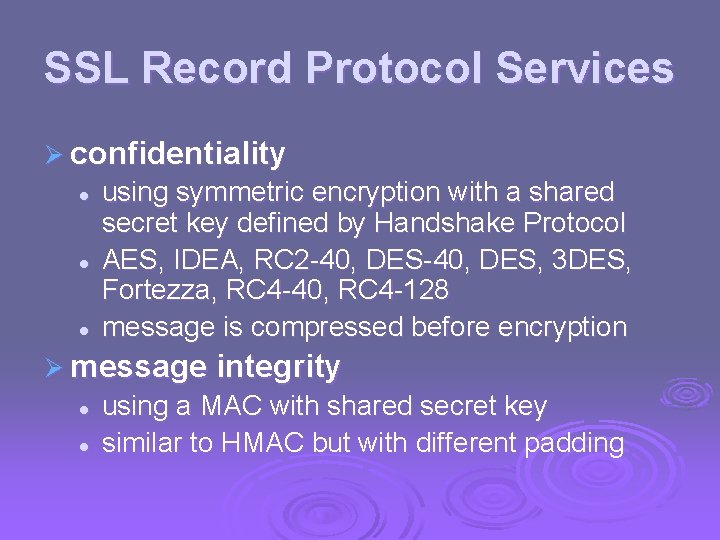
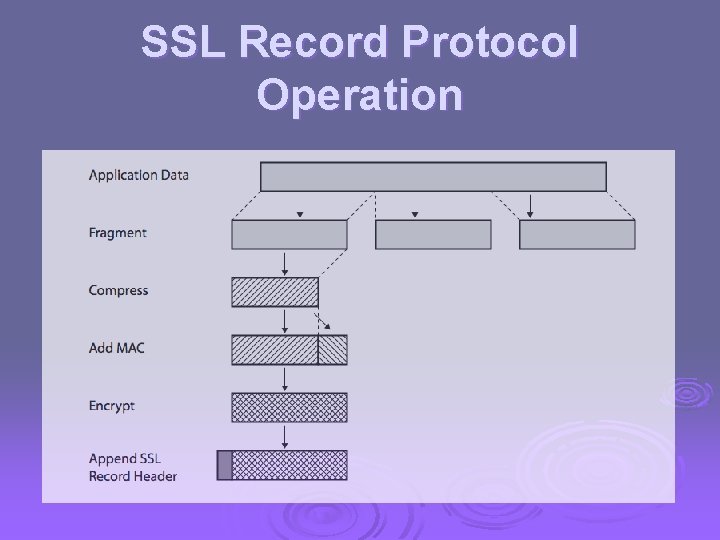
SSL Record Protocol Services Ø confidentiality l l l using symmetric encryption with a shared secret key defined by Handshake Protocol AES, IDEA, RC 2 -40, DES, 3 DES, Fortezza, RC 4 -40, RC 4 -128 message is compressed before encryption Ø message integrity l l using a MAC with shared secret key similar to HMAC but with different padding
SSL Record Protocol Operation
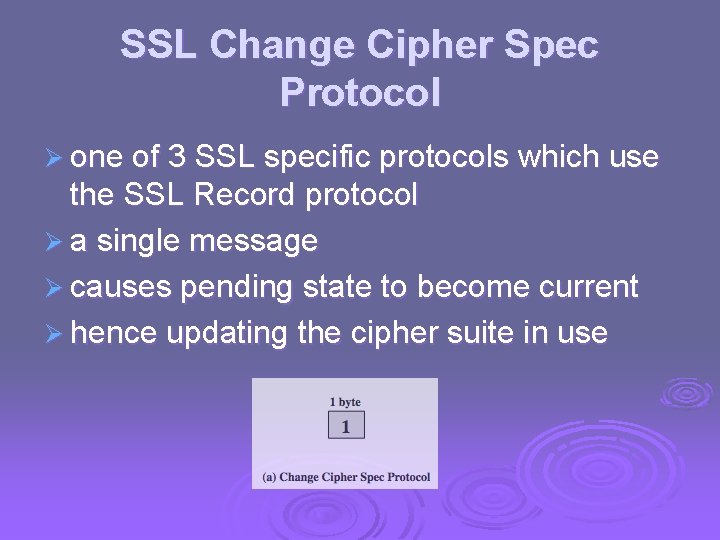
SSL Change Cipher Spec Protocol Ø one of 3 SSL specific protocols which use the SSL Record protocol Ø a single message Ø causes pending state to become current Ø hence updating the cipher suite in use
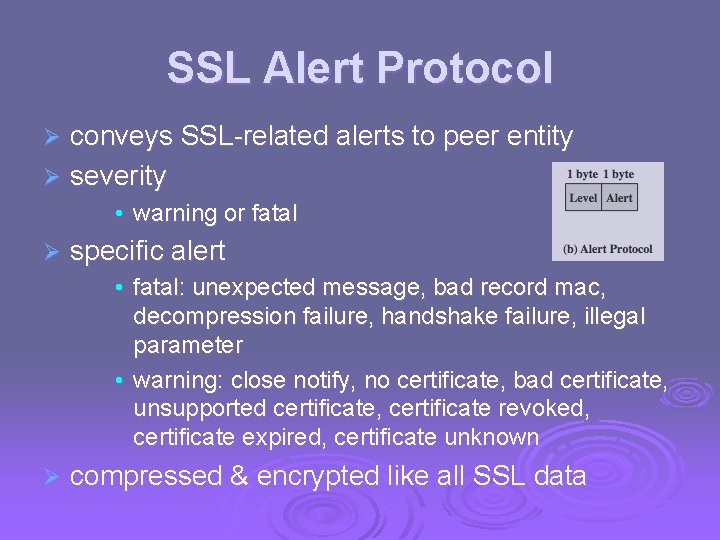
SSL Alert Protocol conveys SSL-related alerts to peer entity Ø severity Ø • warning or fatal Ø specific alert • fatal: unexpected message, bad record mac, decompression failure, handshake failure, illegal parameter • warning: close notify, no certificate, bad certificate, unsupported certificate, certificate revoked, certificate expired, certificate unknown Ø compressed & encrypted like all SSL data
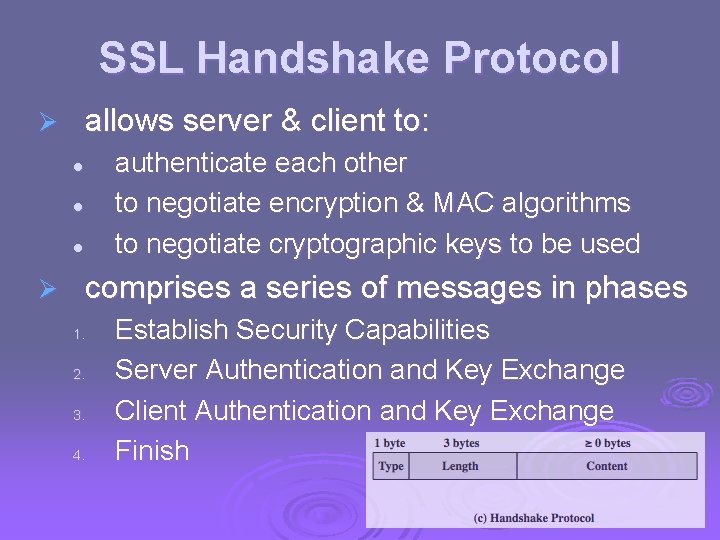
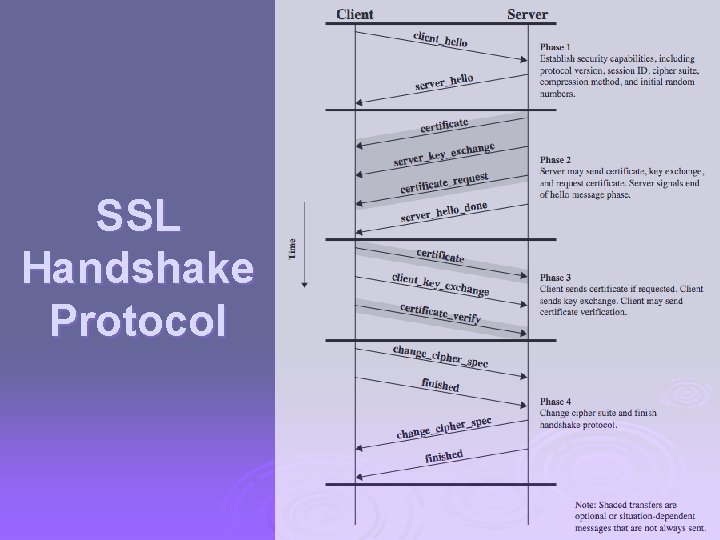
SSL Handshake Protocol allows server & client to: Ø authenticate each other to negotiate encryption & MAC algorithms to negotiate cryptographic keys to be used l l l Ø comprises a series of messages in phases 1. 2. 3. 4. Establish Security Capabilities Server Authentication and Key Exchange Client Authentication and Key Exchange Finish
SSL Handshake Protocol
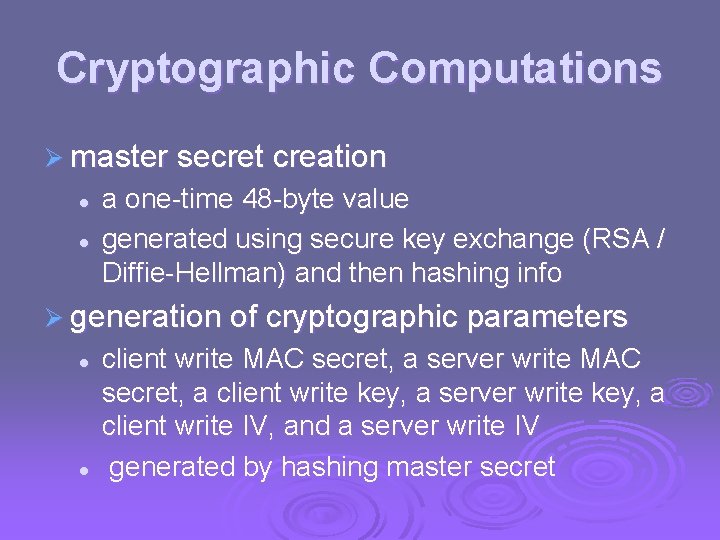
Cryptographic Computations Ø master secret creation l l a one-time 48 -byte value generated using secure key exchange (RSA / Diffie-Hellman) and then hashing info Ø generation of cryptographic parameters l l client write MAC secret, a server write MAC secret, a client write key, a server write key, a client write IV, and a server write IV generated by hashing master secret
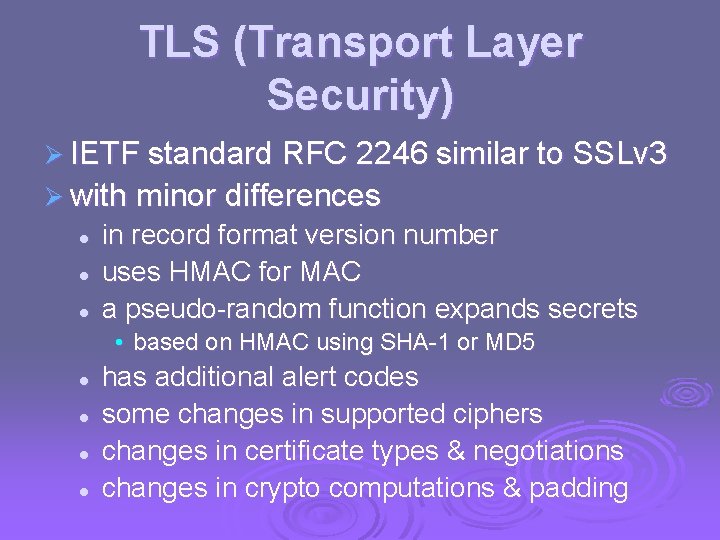
TLS (Transport Layer Security) Ø IETF standard RFC 2246 similar to SSLv 3 Ø with minor differences l l l in record format version number uses HMAC for MAC a pseudo-random function expands secrets • based on HMAC using SHA-1 or MD 5 l l has additional alert codes some changes in supported ciphers changes in certificate types & negotiations changes in crypto computations & padding
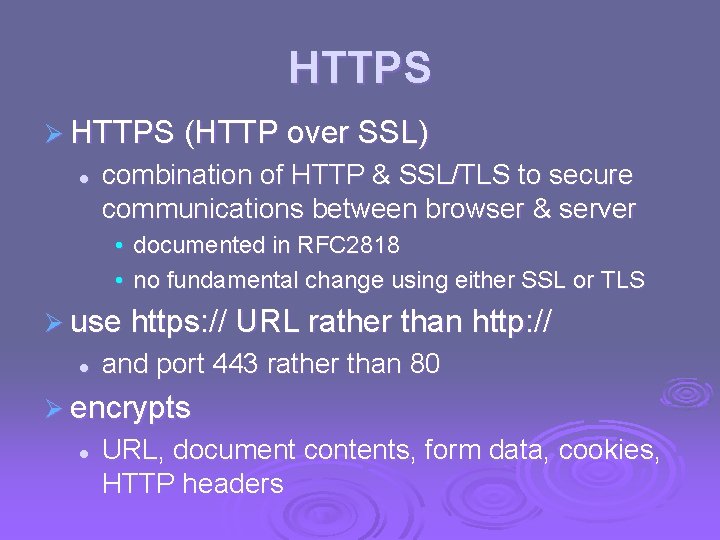
HTTPS Ø HTTPS (HTTP over SSL) l combination of HTTP & SSL/TLS to secure communications between browser & server • documented in RFC 2818 • no fundamental change using either SSL or TLS Ø use https: // URL rather than http: // l and port 443 rather than 80 Ø encrypts l URL, document contents, form data, cookies, HTTP headers
HTTPS Use Ø connection initiation l TLS handshake then HTTP request(s) Ø connection closure l l have “Connection: close” in HTTP record TLS level exchange close_notify alerts can then close TCP connection must handle TCP close before alert exchange sent or completed
Secure Shell (SSH) Ø protocol for secure network communications l designed to be simple & inexpensive Ø SSH 1 provided secure remote logon facility l l replace TELNET & other insecure schemes also has more general client/server capability Ø SSH 2 fixes a number of security flaws Ø documented in RFCs 4250 through 4254 Ø SSH clients & servers are widely available Ø method of choice for remote login/ X tunnels
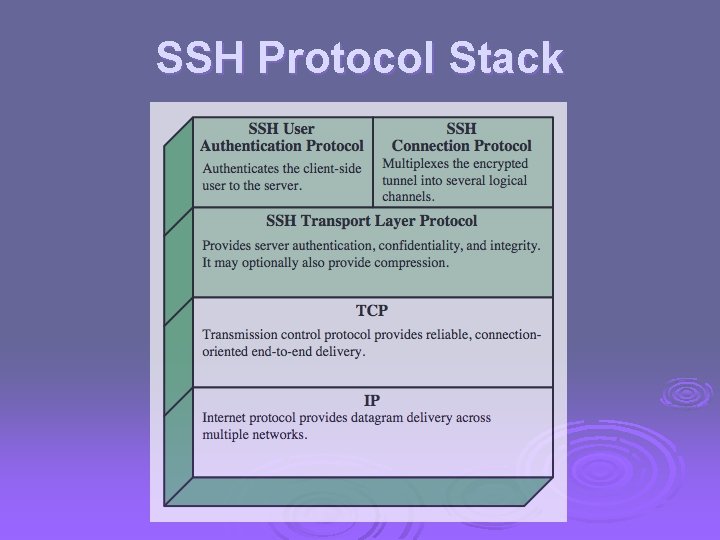
SSH Protocol Stack
SSH Transport Layer Protocol Ø server authentication occurs at transport layer, based on server/host key pair(s) l Ø server authentication requires clients to know host keys in advance packet exchange l l establish TCP connection can then exchange data • identification string exchange, algorithm negotiation, key exchange, end of key exchange, service request l using specified packet format
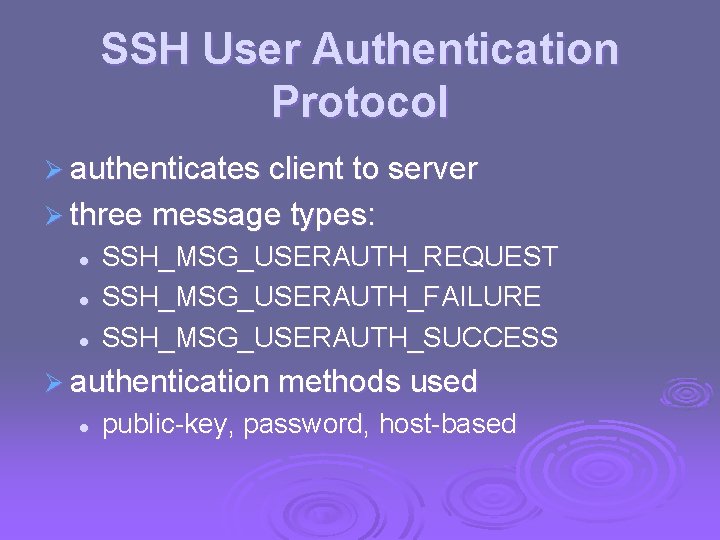
SSH User Authentication Protocol Ø authenticates client to server Ø three message types: l l l SSH_MSG_USERAUTH_REQUEST SSH_MSG_USERAUTH_FAILURE SSH_MSG_USERAUTH_SUCCESS Ø authentication methods used l public-key, password, host-based
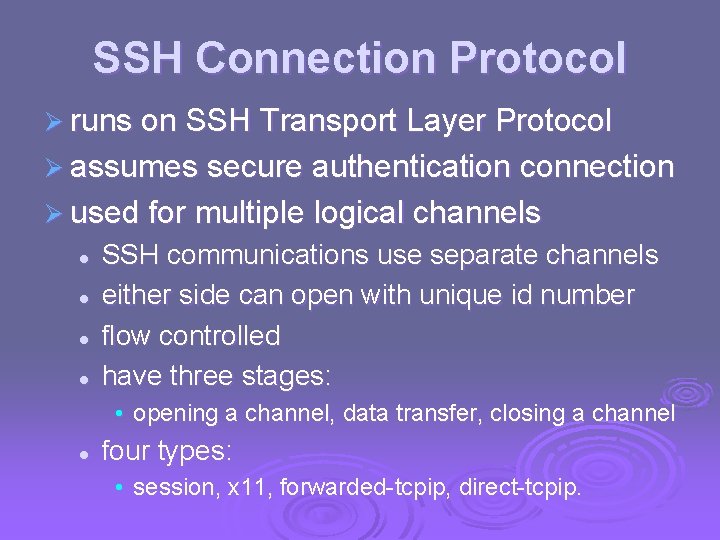
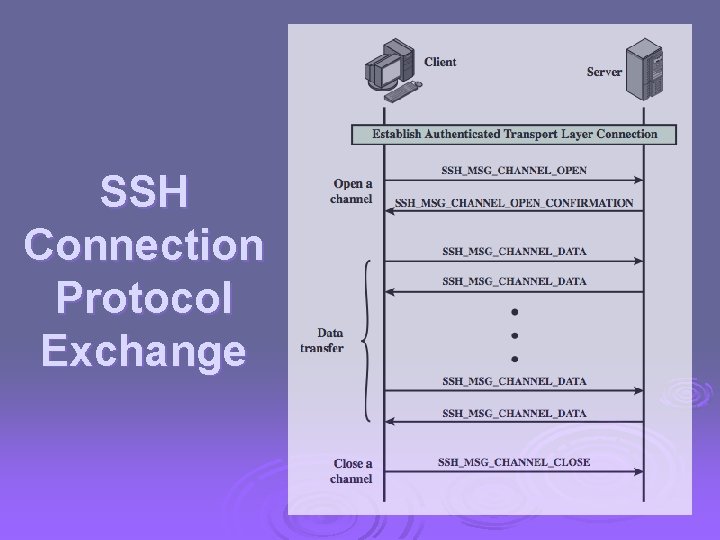
SSH Connection Protocol Ø runs on SSH Transport Layer Protocol Ø assumes secure authentication connection Ø used for multiple logical channels l l SSH communications use separate channels either side can open with unique id number flow controlled have three stages: • opening a channel, data transfer, closing a channel l four types: • session, x 11, forwarded-tcpip, direct-tcpip.
SSH Connection Protocol Exchange
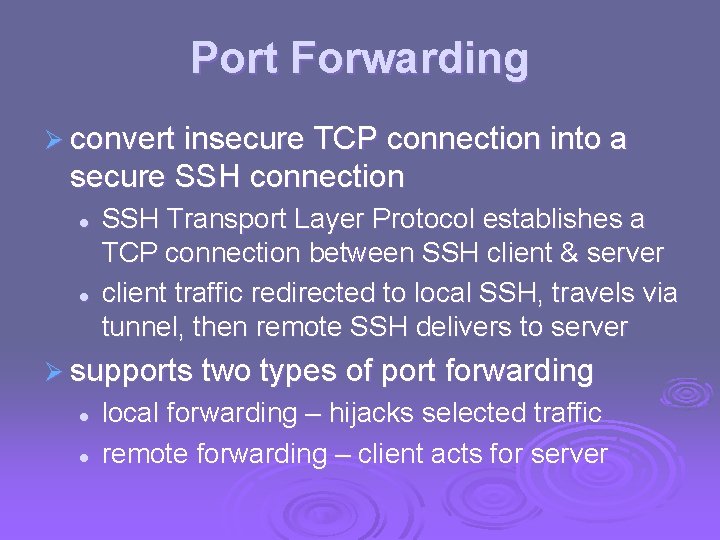
Port Forwarding Ø convert insecure TCP connection into a secure SSH connection l l SSH Transport Layer Protocol establishes a TCP connection between SSH client & server client traffic redirected to local SSH, travels via tunnel, then remote SSH delivers to server Ø supports two types of port forwarding l l local forwarding – hijacks selected traffic remote forwarding – client acts for server
Summary Ø have considered: l l need for web security SSL/TLS transport layer security protocols HTTPS secure shell (SSH)