Strategies for Conducting Curriculum Review Patti Dyjur Ph
- Slides: 34
Strategies for Conducting Curriculum Review Patti Dyjur , Ph. D Jennifer Lock, Ph. D University of Calgary OEB 2015 December 3, 2015
Goals of the Session § Examine three different strategies for conducting a collaborative curriculum mapping process online § Discuss strategies and techniques to conduct the process and engage instructors in collaborative mapping activities § Identify recommendations to help guide the process
Agenda § Curriculum mapping essentials — Example #1: Online survey tool demo, trial and discussion — Example #2: Word template demo, trial and discussion — Example #3: Online curriculum mapping tool demo and discussion § Strategies for success: Brainstorming and presentation
What is a Curriculum Review? § “academic staff-led critical examination of each undergraduate and course-based master’s program for the purpose of optimizing the learning outcomes of that program. Curriculum reviews are a formative component of the overall quality assurance strategy and are focused on the continuing development of students’ learning experiences” (University of Calgary, 2013, p. 2).
Focus of a Curriculum Review § There are two foci for a curriculum review: 1) Enhancing the student learning experience 2) Addressing quality assurance concerns
Curriculum Development Goals Program features: Thoughtful, intentional emphasis Focus on what is important Current and relevant to students 6
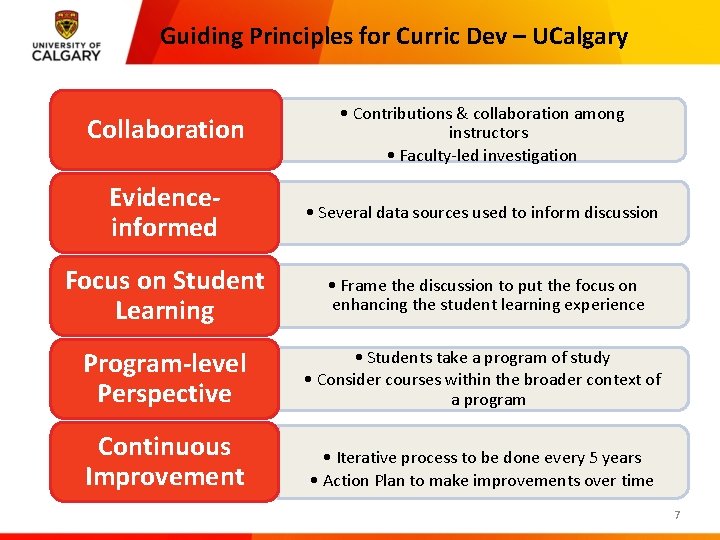
Guiding Principles for Curric Dev – UCalgary Collaboration • Contributions & collaboration among instructors • Faculty-led investigation Evidenceinformed • Several data sources used to inform discussion Focus on Student Learning • Frame the discussion to put the focus on enhancing the student learning experience Program-level Perspective • Students take a program of study • Consider courses within the broader context of a program Continuous Improvement • Iterative process to be done every 5 years • Action Plan to make improvements over time 7
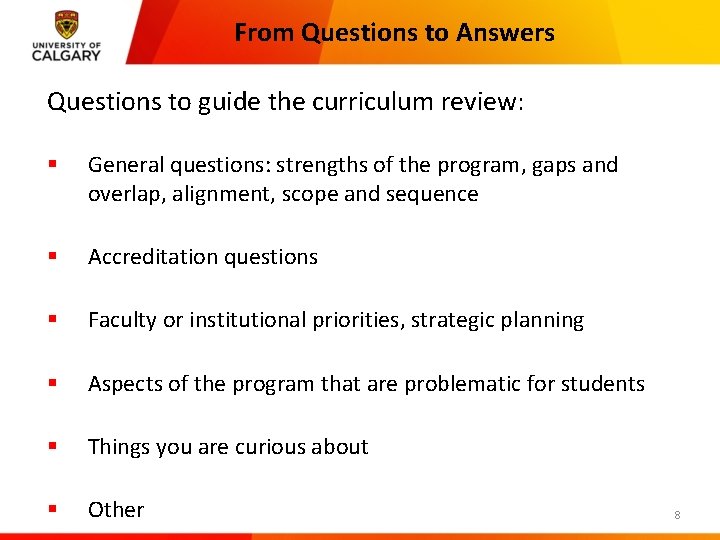
From Questions to Answers Questions to guide the curriculum review: § General questions: strengths of the program, gaps and overlap, alignment, scope and sequence § Accreditation questions § Faculty or institutional priorities, strategic planning § Aspects of the program that are problematic for students § Things you are curious about § Other 8
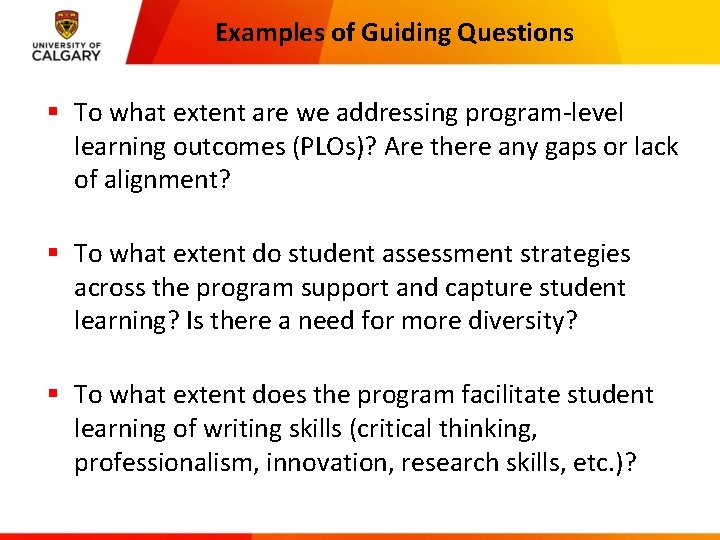
Examples of Guiding Questions § To what extent are we addressing program-level learning outcomes (PLOs)? Are there any gaps or lack of alignment? § To what extent do student assessment strategies across the program support and capture student learning? Is there a need for more diversity? § To what extent does the program facilitate student learning of writing skills (critical thinking, professionalism, innovation, research skills, etc. )?
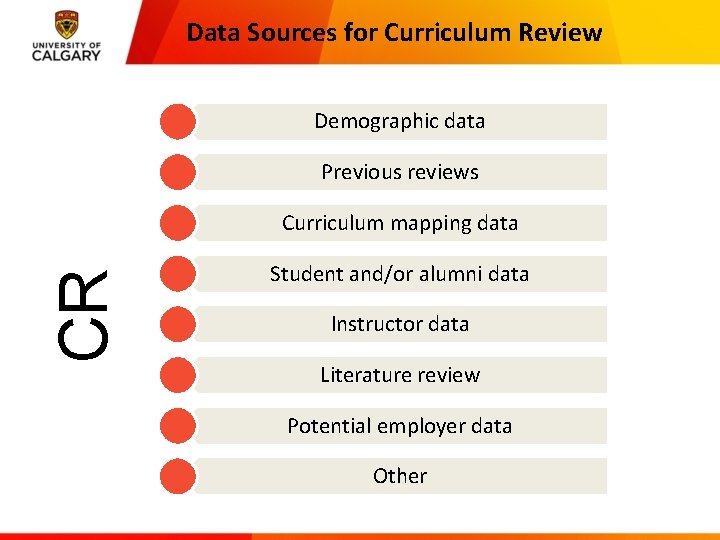
Data Sources for Curriculum Review Demographic data Previous reviews CR Curriculum mapping data Student and/or alumni data Instructor data Literature review Potential employer data Other
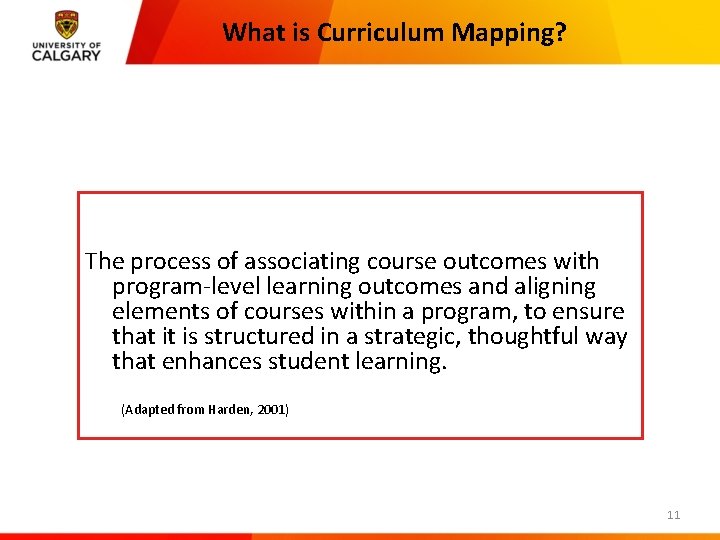
What is Curriculum Mapping? The process of associating course outcomes with program-level learning outcomes and aligning elements of courses within a program, to ensure that it is structured in a strategic, thoughtful way that enhances student learning. (Adapted from Harden, 2001) 11
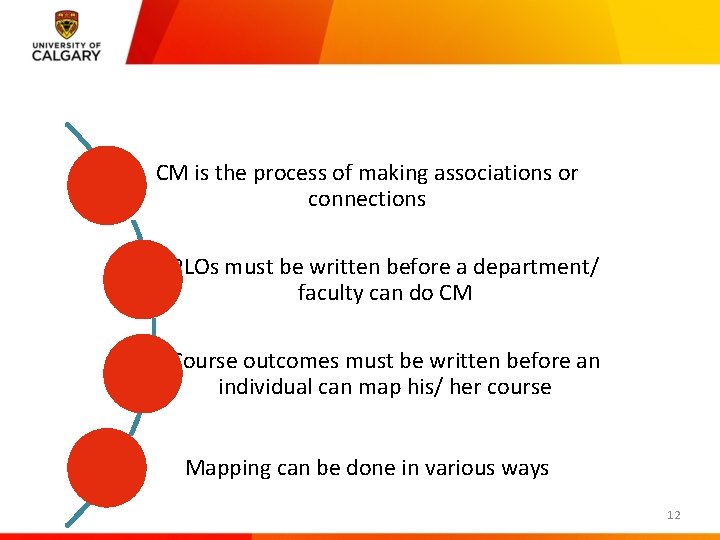
CM is the process of making associations or connections PLOs must be written before a department/ faculty can do CM Course outcomes must be written before an individual can map his/ her course Mapping can be done in various ways 12
Learning Outcomes § “An intended effect of the educational experience that has been stated in terms of specific, observable, and measurable student performance” (Veltri, Webb, Matveev & Zapatero, 2011) § The knowledge, skills, and attitudes that students should be able to attain by the end of a unit of study
Examples of Learning Outcomes § Program-level learning outcome: Students will be able to use research within the field to make evidence-based decisions in different contexts. § Course Outcomes: Students should be able to critique the findings of a peer-reviewed academic article. § Lesson Objective: Students should be able to state what information can be found within the sections of a peerreviewed academic article.
What are Program-level Learning Outcomes? § Program-level learning outcome (PLO): The knowledge, skills, and attitudes that students should be able to attain by the end of a program of study, often stated more broadly than a course outcome. 15
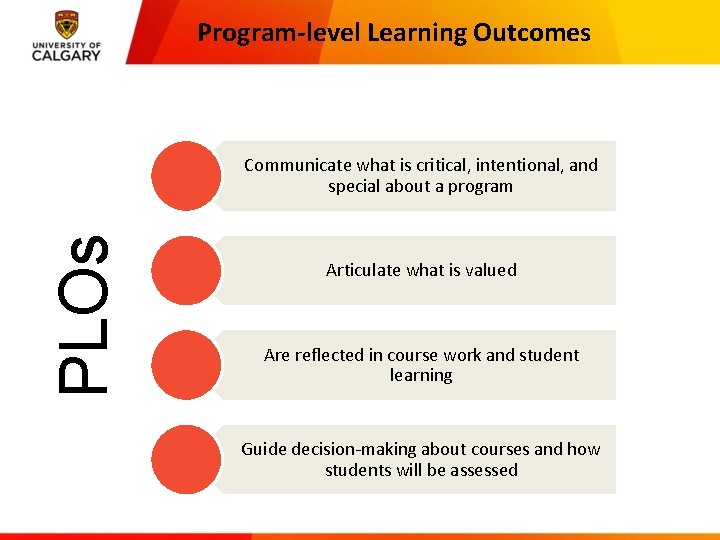
Program-level Learning Outcomes PLOs Communicate what is critical, intentional, and special about a program Articulate what is valued Are reflected in course work and student learning Guide decision-making about courses and how students will be assessed
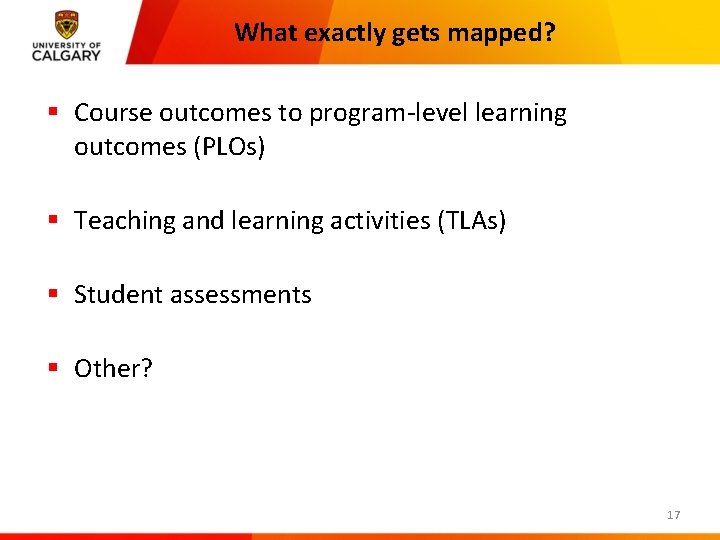
What exactly gets mapped? § Course outcomes to program-level learning outcomes (PLOs) § Teaching and learning activities (TLAs) § Student assessments § Other? 17
Example #1: Word or Excel Template http: //curriculummapping. weebly. com/templates. html
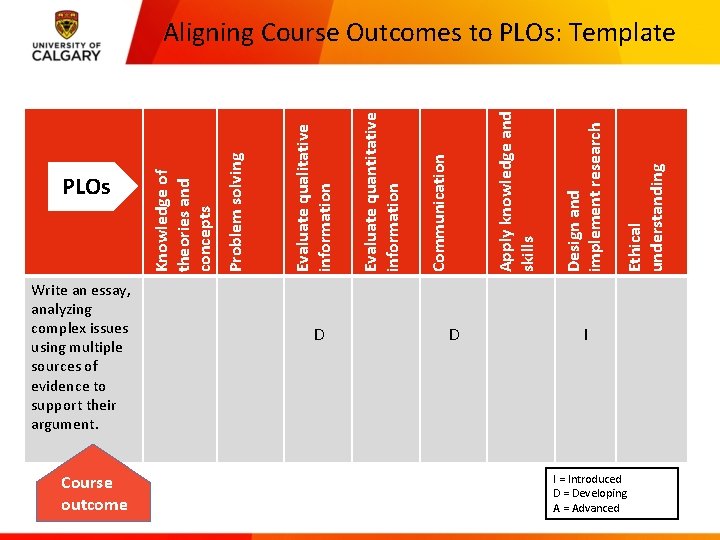
Write an essay, analyzing complex issues using multiple sources of evidence to support their argument. Course outcome D D Ethical understanding Design and implement research Apply knowledge and skills Communication Evaluate quantitative information Evaluate qualitative information Problem solving PLOs Knowledge of theories and concepts Aligning Course Outcomes to PLOs: Template I I = Introduced D = Developing A = Advanced
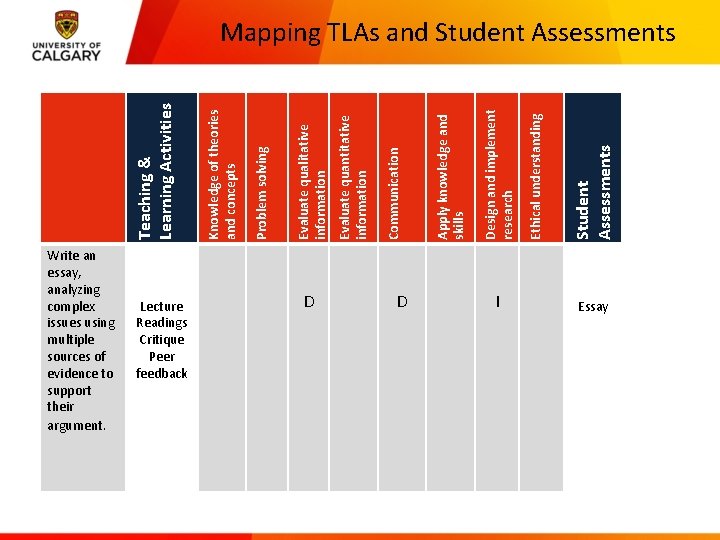
Write an essay, analyzing complex issues using multiple sources of evidence to support their argument. Lecture Readings Critique Peer feedback D D I Student Assessments Ethical understanding Design and implement research Apply knowledge and skills Communication Evaluate quantitative information Evaluate qualitative information Problem solving Knowledge of theories and concepts Teaching & Learning Activities Mapping TLAs and Student Assessments Essay
Try it! § Using your own course outline or one of the samples, map a course to the PLOs listed on the template. § Template can be found at: http: //curriculummapping. weebly. com/templates. html § Small table discussion: — As you work through the process, what questions do you have? — What would make the mapping process easier for you? — What recommendations do you have for doing the mapping online? Please write on sticky notes
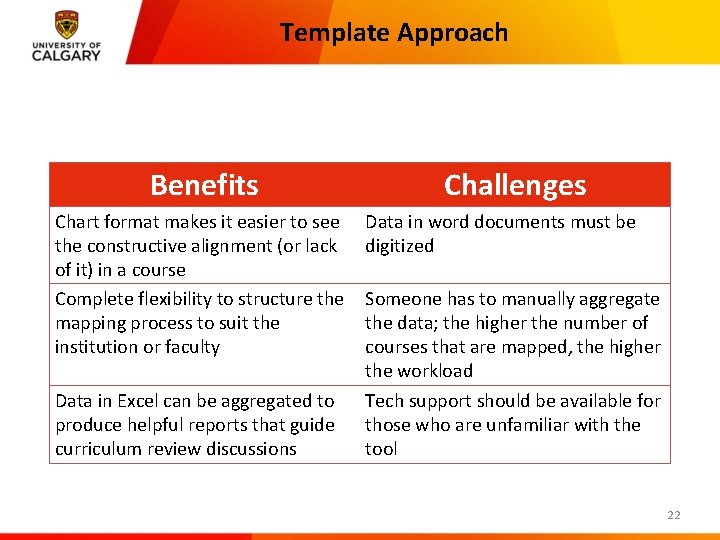
Template Approach Benefits Chart format makes it easier to see the constructive alignment (or lack of it) in a course Complete flexibility to structure the mapping process to suit the institution or faculty Data in Excel can be aggregated to produce helpful reports that guide curriculum review discussions Challenges Data in word documents must be digitized Someone has to manually aggregate the data; the higher the number of courses that are mapped, the higher the workload Tech support should be available for those who are unfamiliar with the tool 22
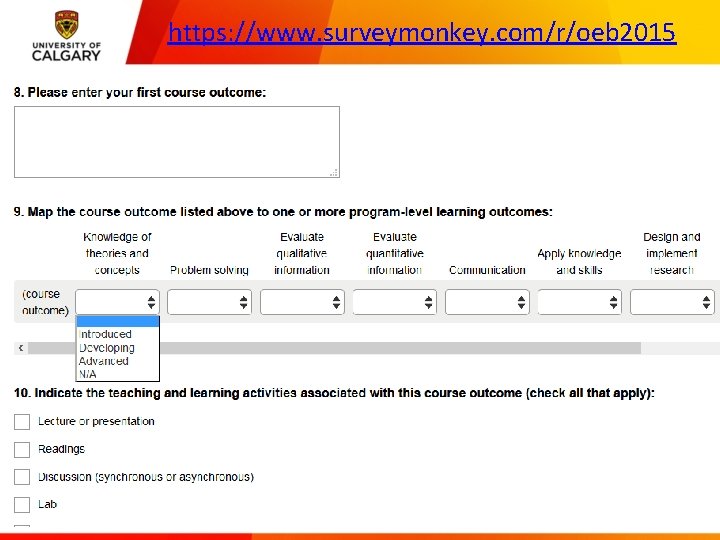
Example #2: Online Survey https: //www. surveymonkey. com/r/oeb 2015
https: //www. surveymonkey. com/r/oeb 2015
Try it! § Using your own course outline or one of the samples, map a course using the online survey at: https: //www. surveymonkey. com/r/oeb 2015 § Small table discussion: — What questions do you have as you map your course? — What benefits and disadvantages do you see using this method over the previous one? — What recommendations do you have for doing the mapping online? Please write on sticky notes
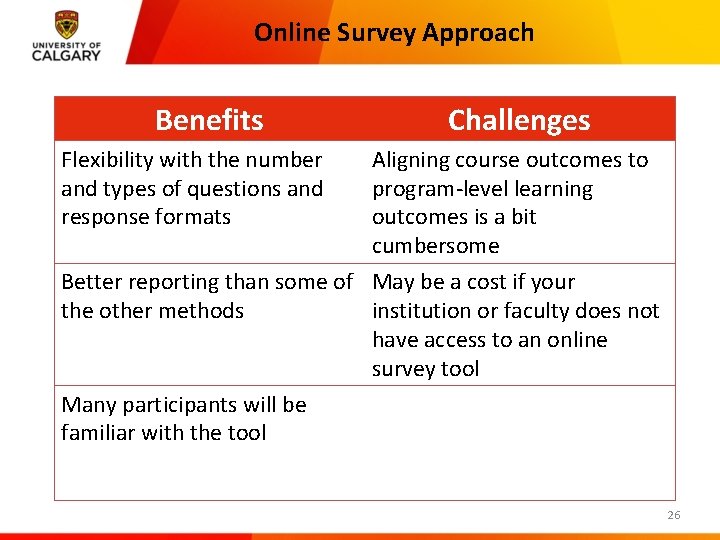
Online Survey Approach Benefits Challenges Flexibility with the number and types of questions and response formats Aligning course outcomes to program-level learning outcomes is a bit cumbersome Better reporting than some of May be a cost if your the other methods institution or faculty does not have access to an online survey tool Many participants will be familiar with the tool 26
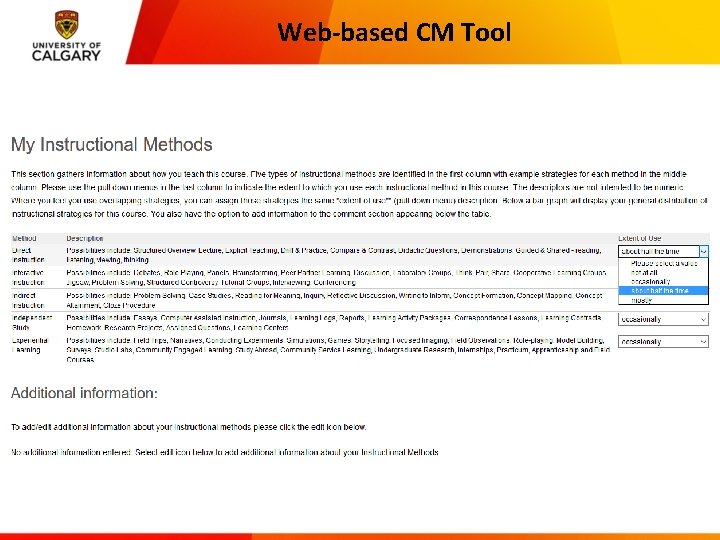
Example #3: Web-based Curriculum Mapping Tool curriculum. ucalgary. ca
Web-based CM Tool
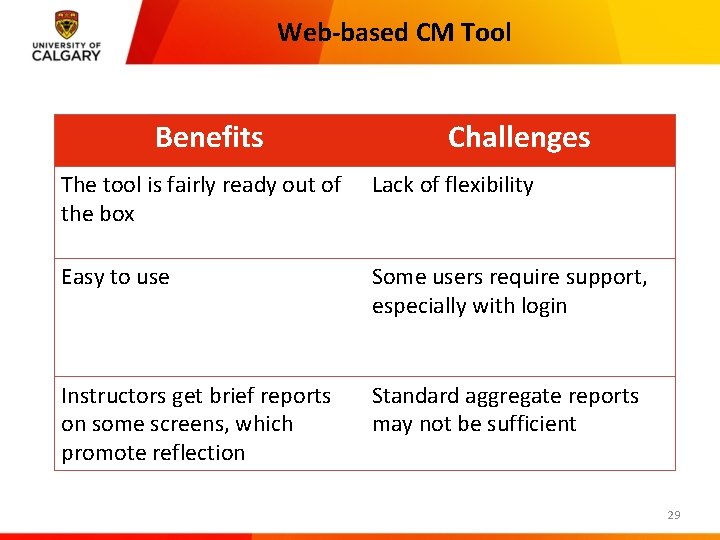
Web-based CM Tool Benefits Challenges The tool is fairly ready out of the box Lack of flexibility Easy to use Some users require support, especially with login Instructors get brief reports on some screens, which promote reflection Standard aggregate reports may not be sufficient 29
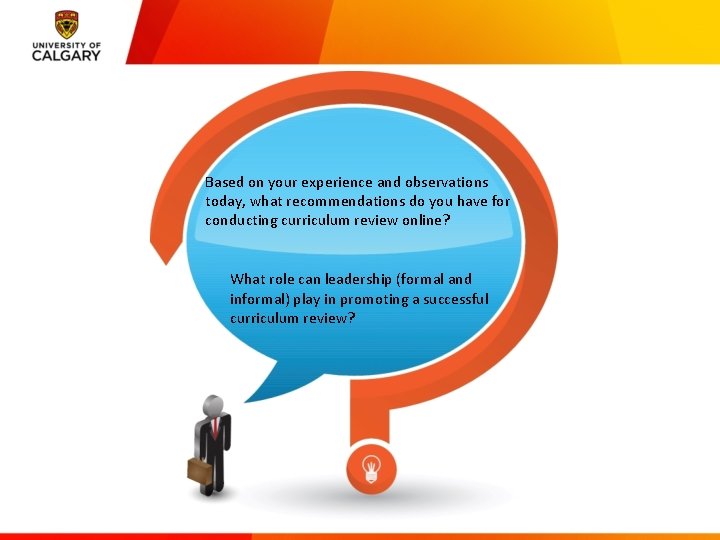
Based on your experience and observations today, what recommendations do you have for conducting curriculum review online? What role can leadership (formal and informal) play in promoting a successful curriculum review?
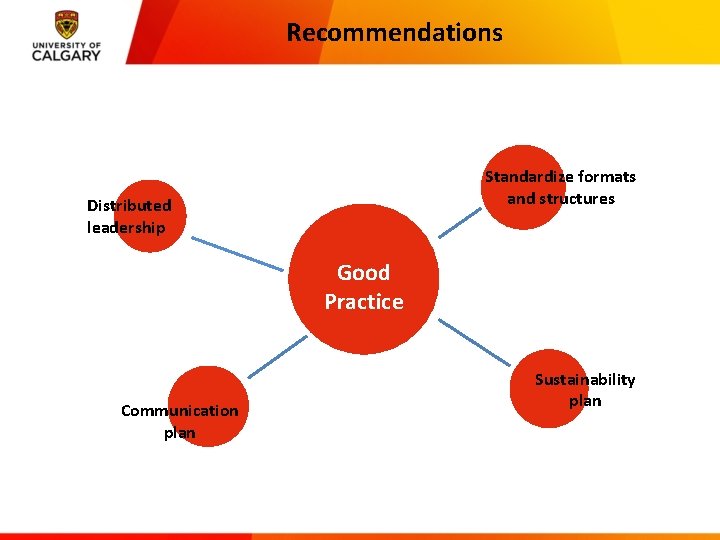
Recommendations Standardize formats and structures Distributed leadership Good Practice Communication plan Sustainability plan
Questions/Comments and Evaluations 32
Strategies for Conducting Curriculum Review Patti Dyjur , Ph. D - pdyjur@ucalgary. ca Jennifer Lock, Ph. D- jvlock@ucalgary. ca University of Calgary OEB 2015 December 3, 2015
References Council of Ministers of Education. (2007). Ministerial statement on quality assurance of degree education in Canada. Retrieved from http: //www. cmec. ca/Publications/Lists/Publications/Attachments/95/QA-Statement 2007. en. pdf Harden, R. M. (2001). AMEE guide no. 21: Curriculum mapping: A tool for transparent and authentic teaching and learning. Medical Teacher, 23(2), 123 -137. University of Calgary. (2013). Academic quality assurance handbook curriculum reviews.