State of the States in Gifted Education DATA
- Slides: 67
“State” of the States in Gifted Education DATA TO INFORM GIFTED ADVOCACY 2016 NAGC AFFILIATE EDUCATION CONFERENCE SUSAN DULONG LANGLEY RESEARCH ASSISTANT, UNIVERSITY OF CONNECTICUT 1
2
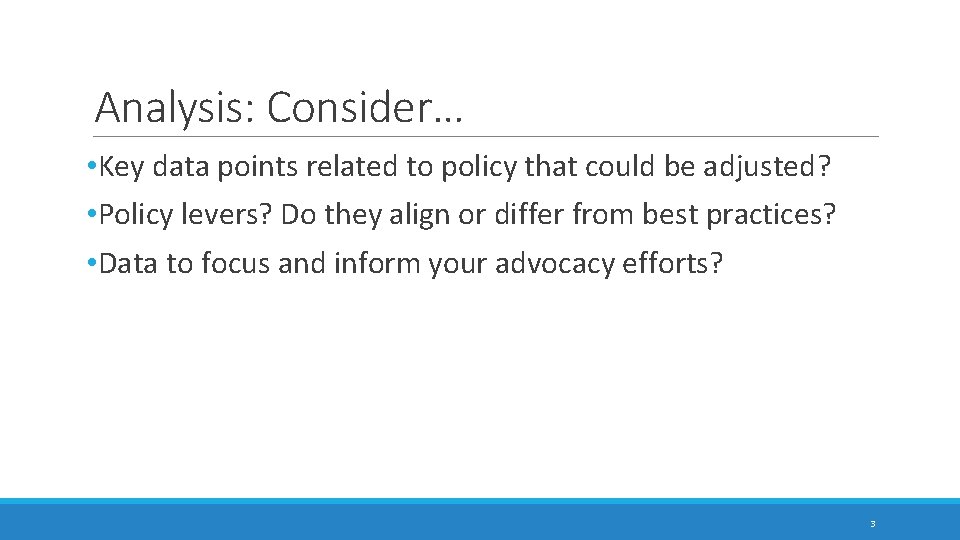
Analysis: Consider… • Key data points related to policy that could be adjusted? • Policy levers? Do they align or differ from best practices? • Data to focus and inform your advocacy efforts? 3
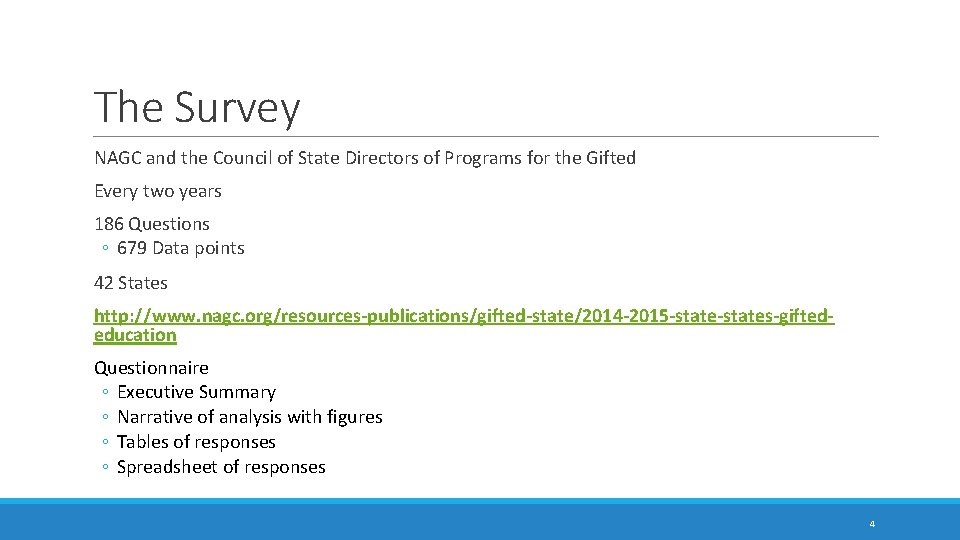
The Survey NAGC and the Council of State Directors of Programs for the Gifted Every two years 186 Questions ◦ 679 Data points 42 States http: //www. nagc. org/resources-publications/gifted-state/2014 -2015 -states-giftededucation Questionnaire ◦ Executive Summary ◦ Narrative of analysis with figures ◦ Tables of responses ◦ Spreadsheet of responses 4
Questionnaire on GT ◦ State Education Agencies ◦ Funding ◦ Mandates to Identify and Serve ◦ Accountability ◦ Definition ◦ Identification ◦ Programs and Services ◦ Staffing & Personnel Preparation ◦ Related Policies and Practices ◦ New Developments, Concerns, and Future Directions 5
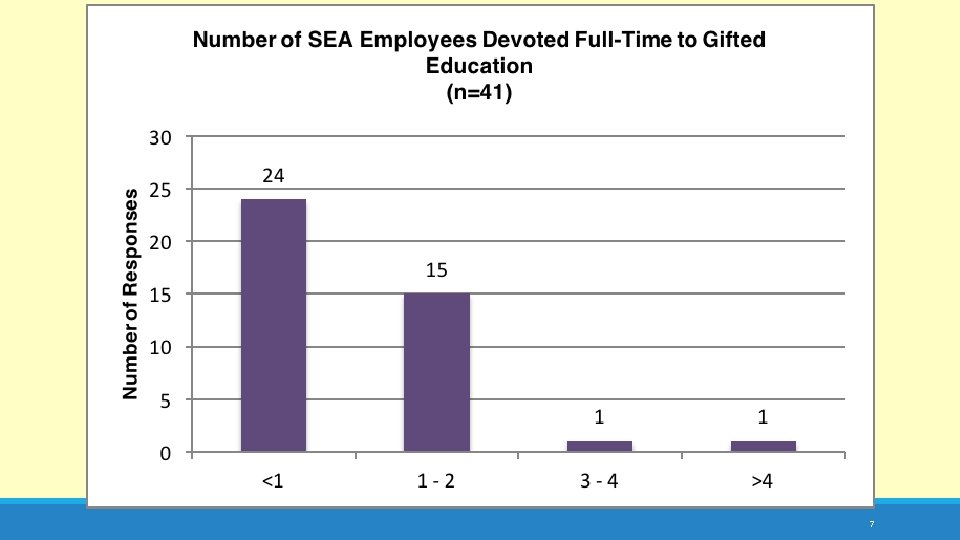
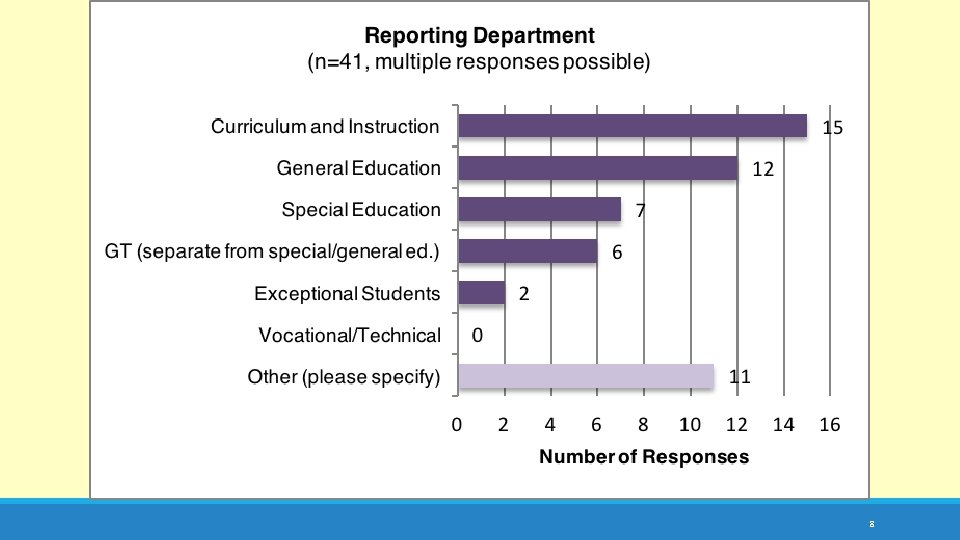
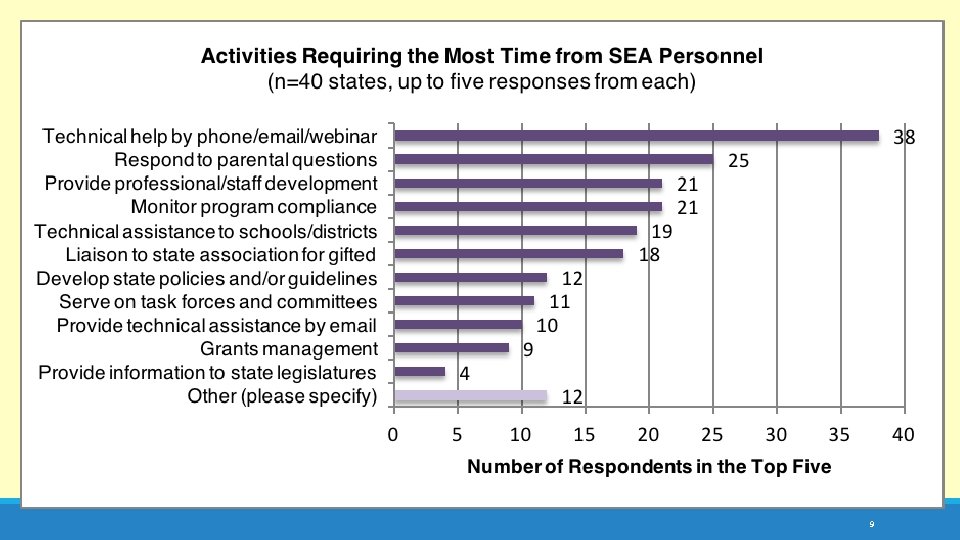
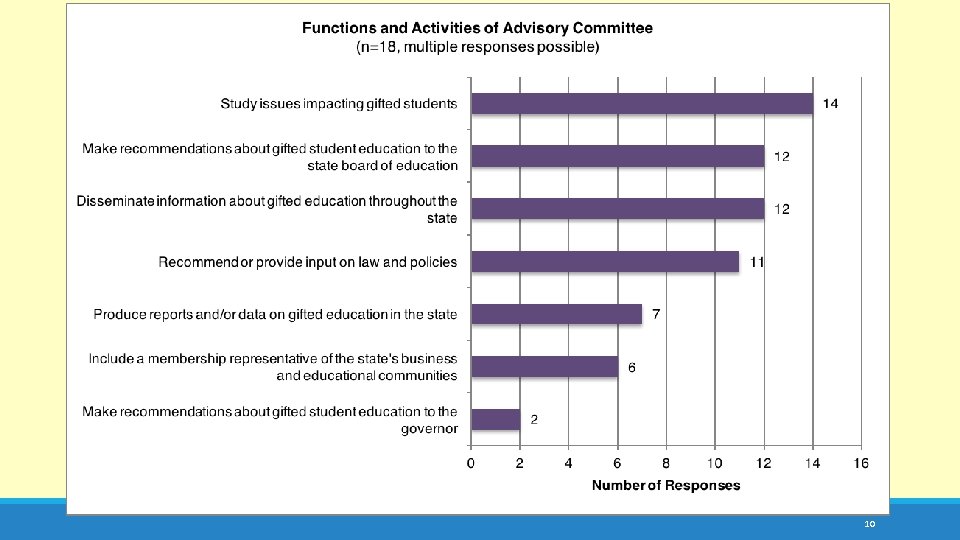
State Education Agencies • State Staff • State Departments • Activities • Advisory Committees 6
7
8
9
10
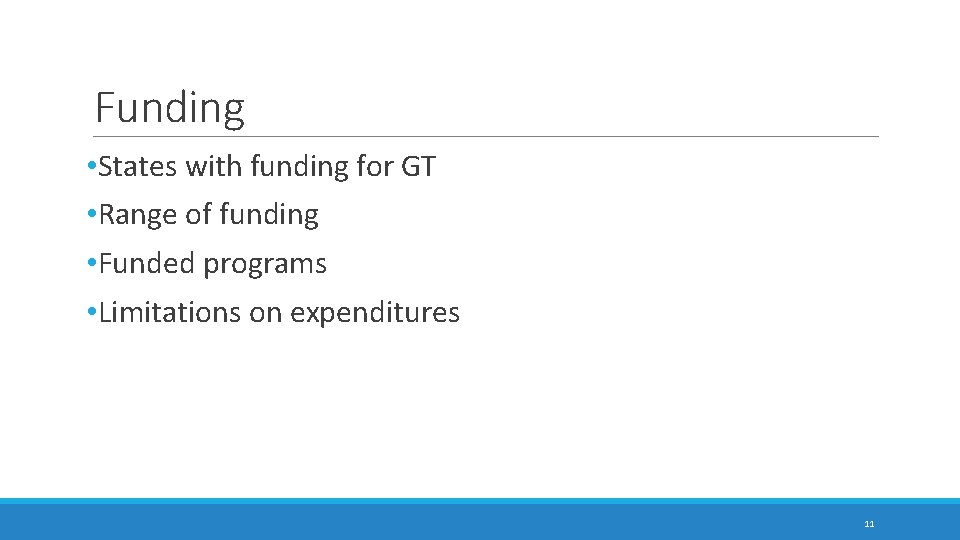
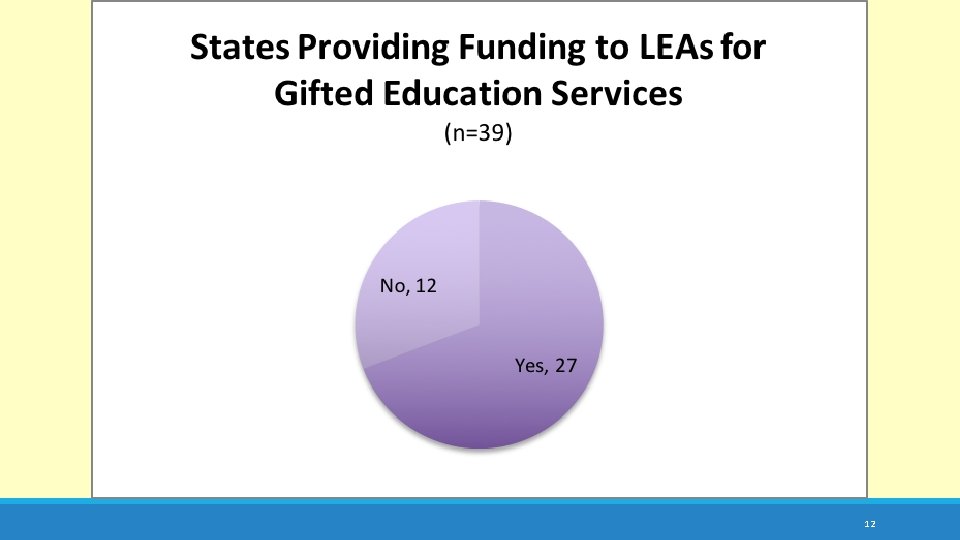
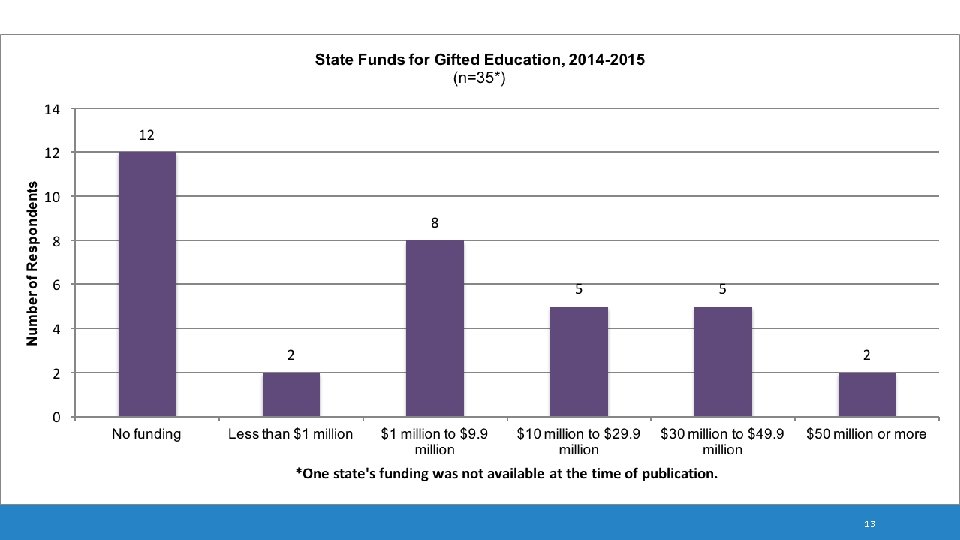
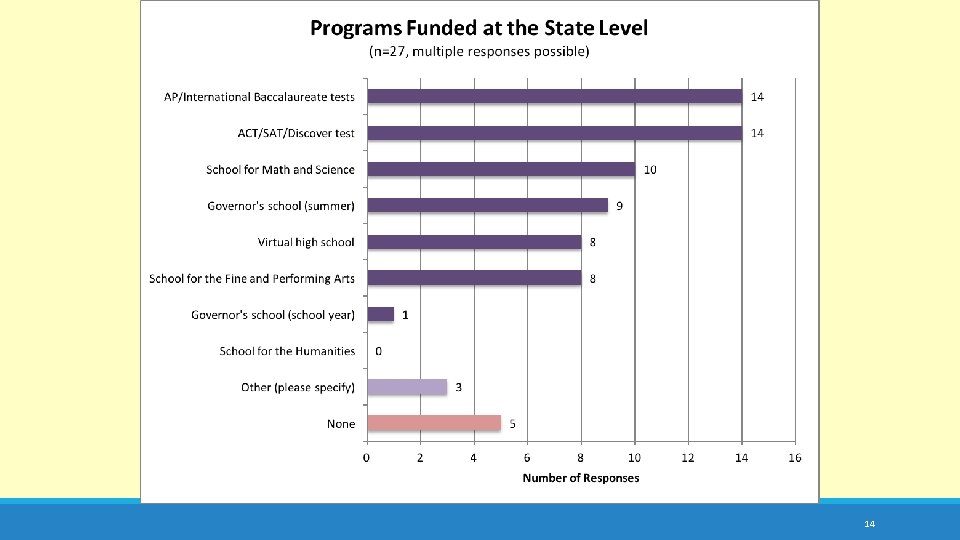
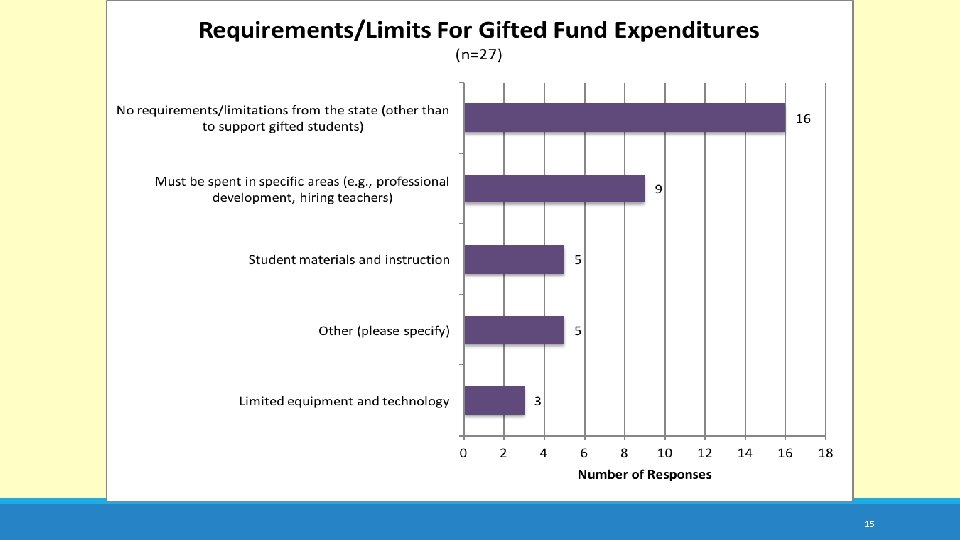
Funding • States with funding for GT • Range of funding • Funded programs • Limitations on expenditures 11
12
13
14
15
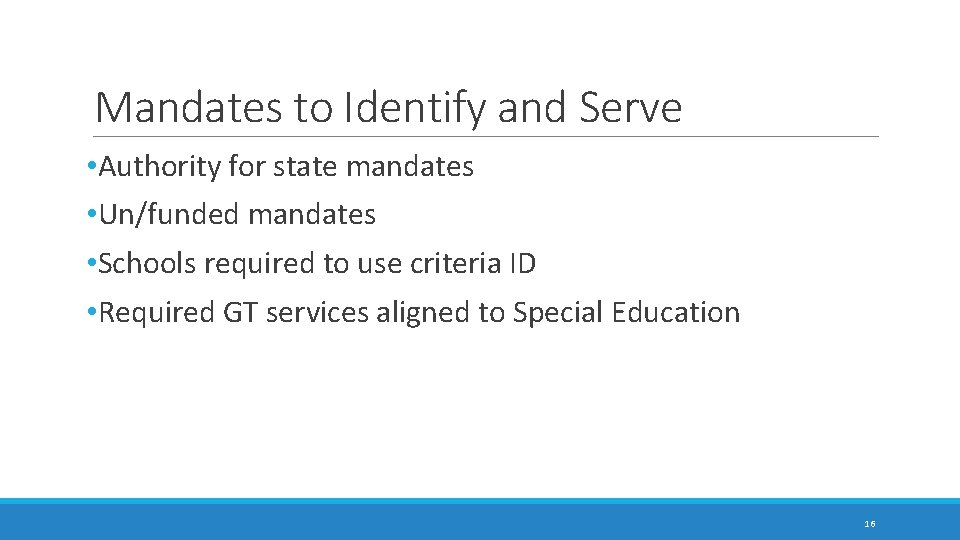
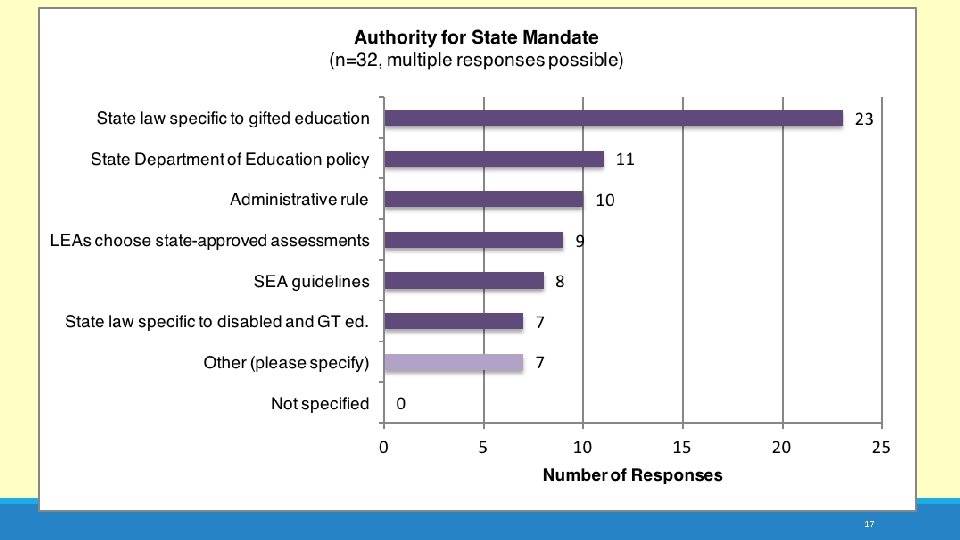
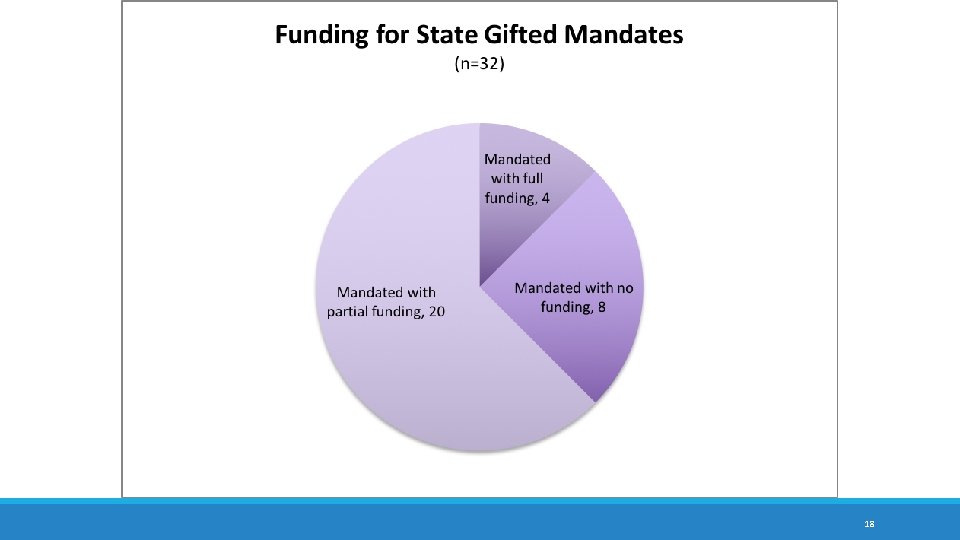
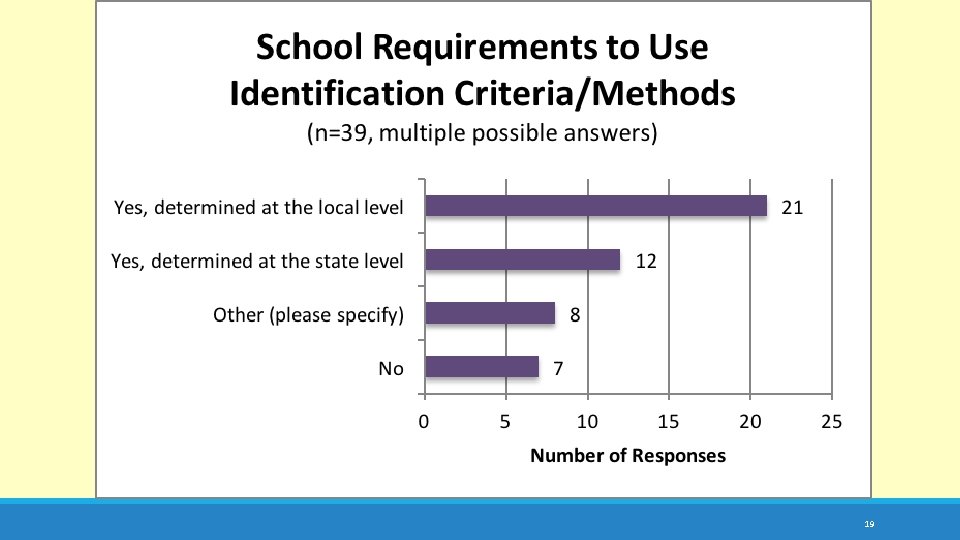
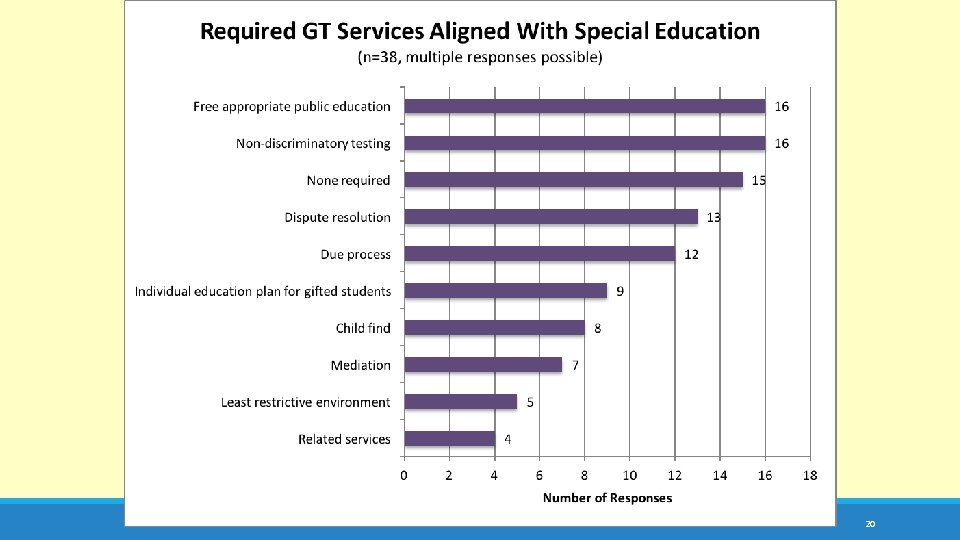
Mandates to Identify and Serve • Authority for state mandates • Un/funded mandates • Schools required to use criteria ID • Required GT services aligned to Special Education 16
17
18
19
20
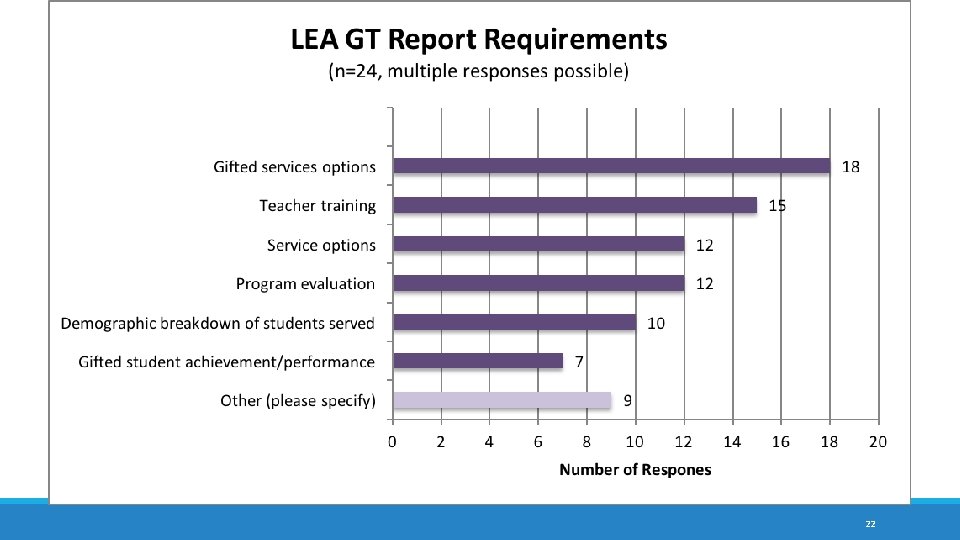
Accountability • LEA GT report requirements • LEA GT components requiring SEA approval 21
22
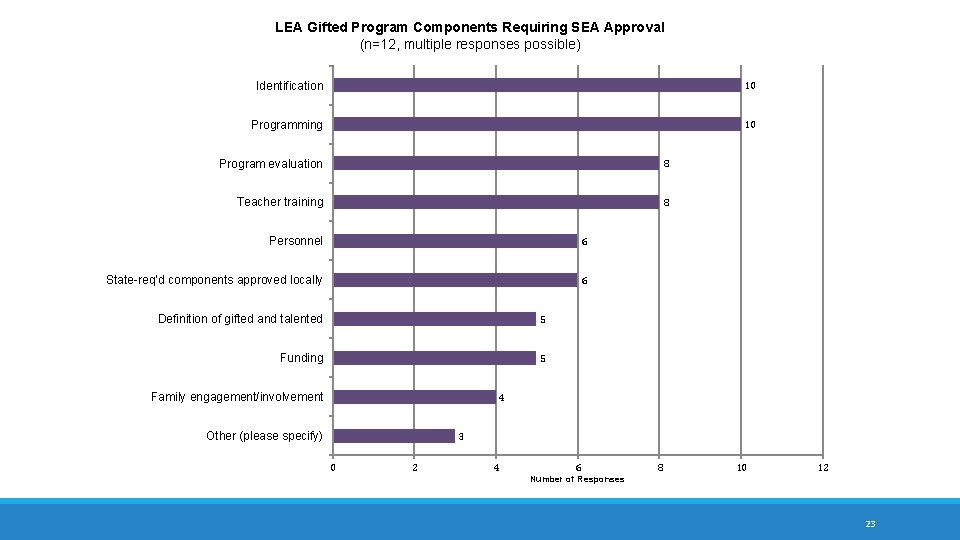
LEA Gifted Program Components Requiring SEA Approval (n=12, multiple responses possible) Identification 10 Programming 10 Program evaluation 8 Teacher training 8 Personnel 6 State-req’d components approved locally 6 Definition of gifted and talented 5 Funding 5 Family engagement/involvement 4 Other (please specify) 3 0 2 4 6 8 10 12 Number of Responses 23
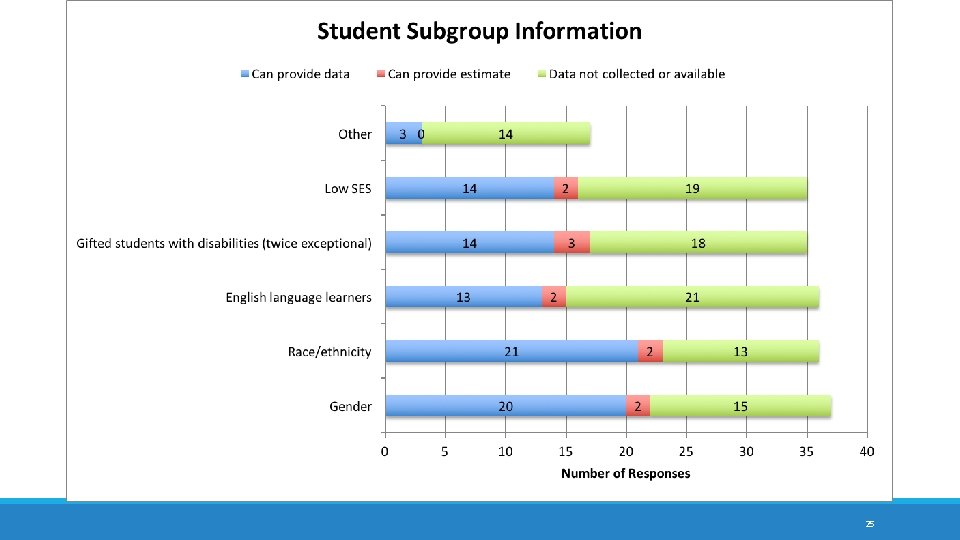
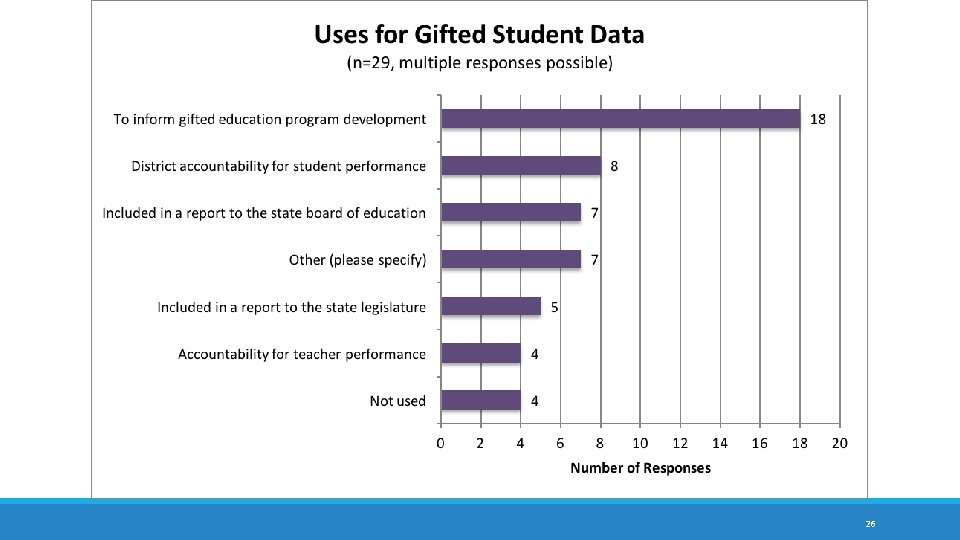
EQUITY FOR UNDERREPRESENTED POPULATIONS • Data collected • How data is used 24
25
26
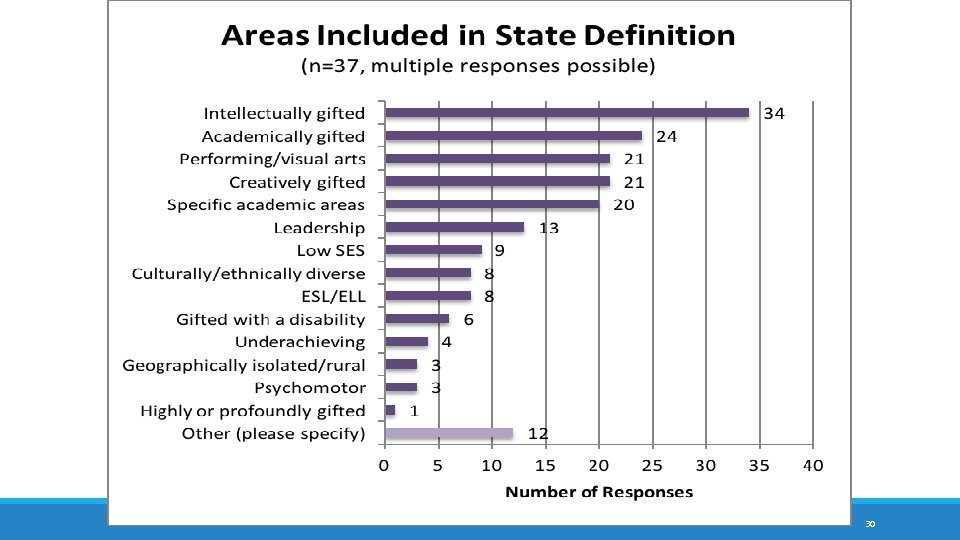
Definition • SEA Definition • LEA Required to use • Areas in definition 27
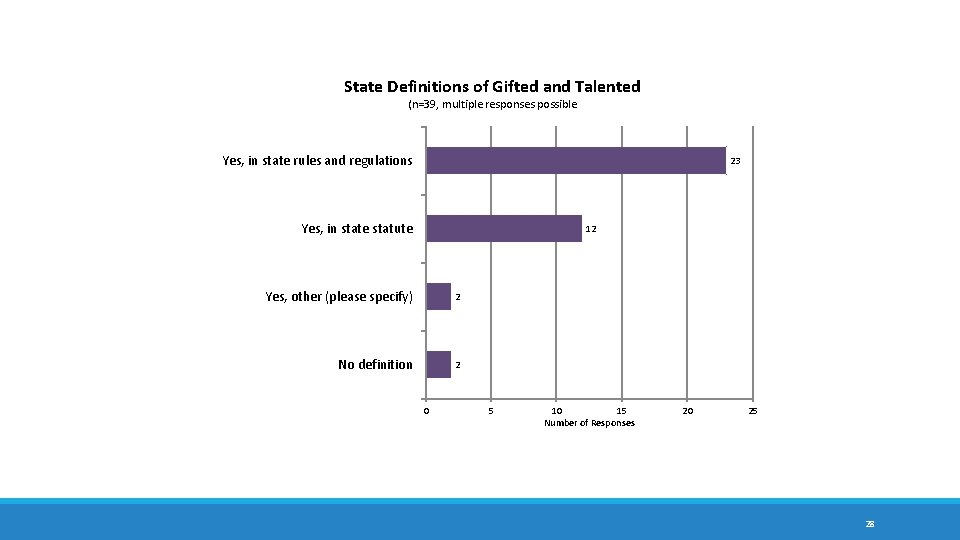
State Definitions of Gifted and Talented (n=39, multiple responses possible Yes, in state rules and regulations 23 Yes, in state statute 12 Yes, other (please specify) 2 No definition 2 0 5 10 15 Number of Responses 20 25 28
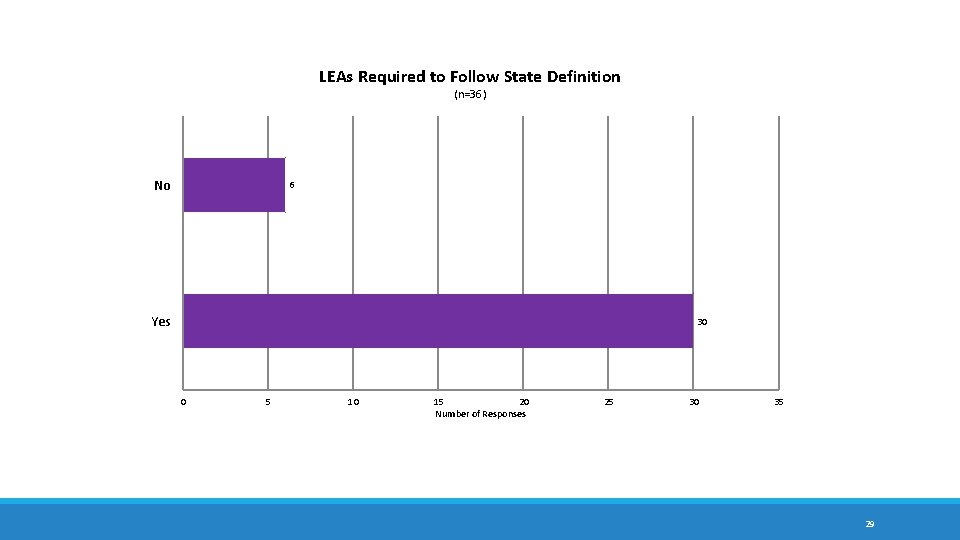
LEAs Required to Follow State Definition (n=36) No 6 Yes 30 0 5 10 15 20 Number of Responses 25 30 35 29
30
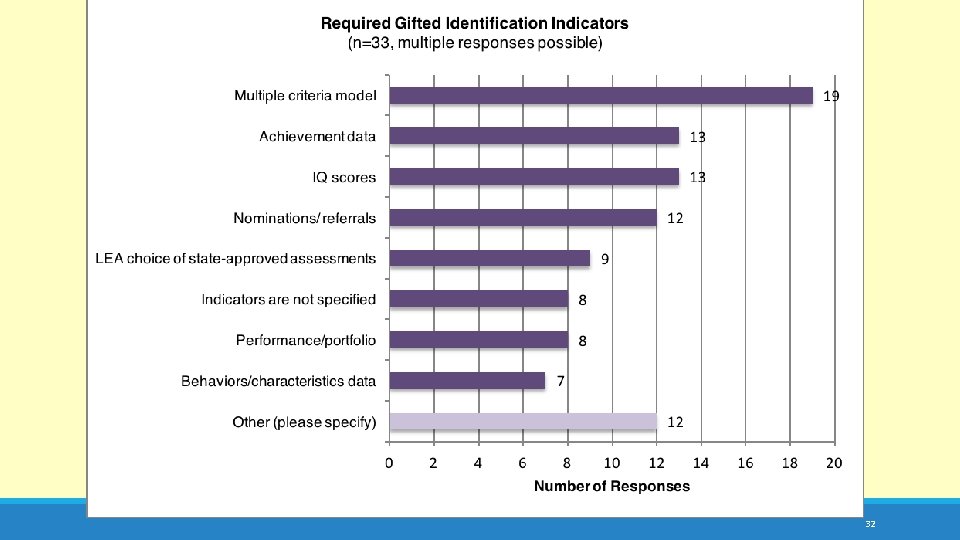
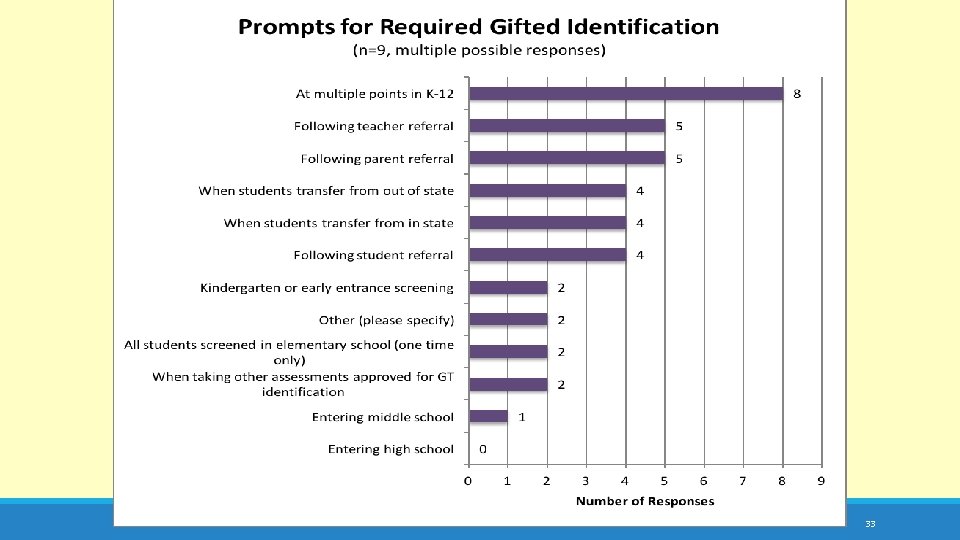
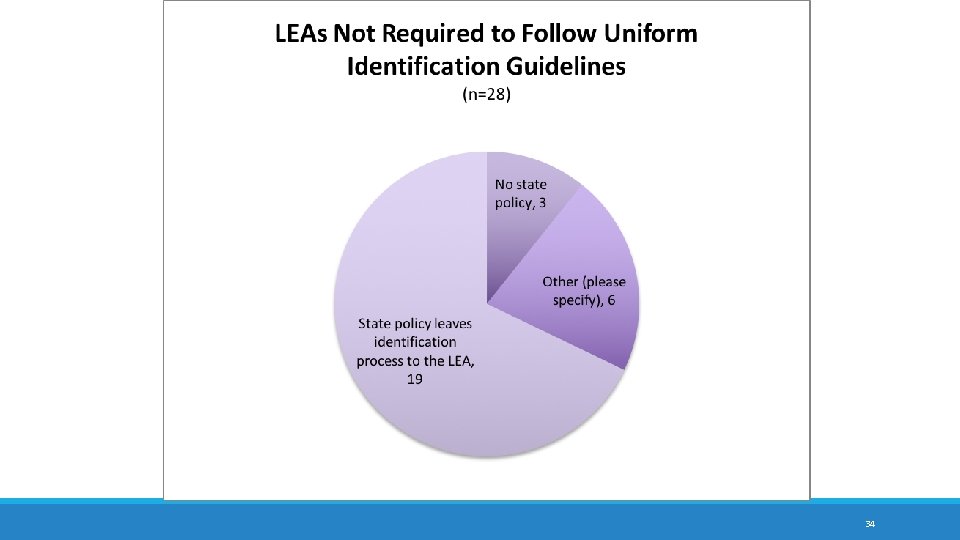
Identification • LEAs to required to SEA guidelines • Required GT indicators • Prompts that initiate ID 31
32
33
34
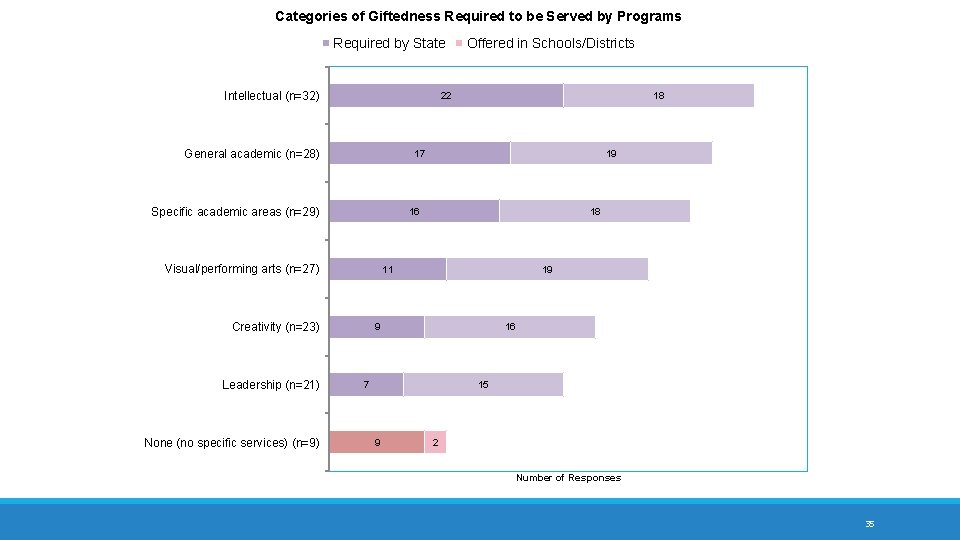
Categories of Giftedness Required to be Served by Programs Required by State Intellectual (n=32) 22 General academic (n=28) 19 16 Visual/performing arts (n=27) 18 11 Creativity (n=23) None (no specific services) (n=9) 18 17 Specific academic areas (n=29) Leadership (n=21) Offered in Schools/Districts 19 9 16 7 15 9 2 Number of Responses 35
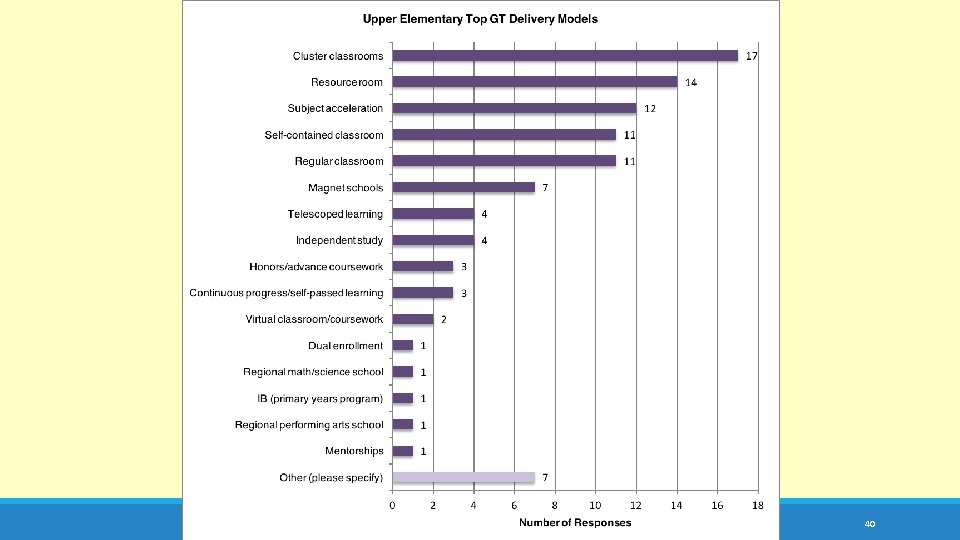
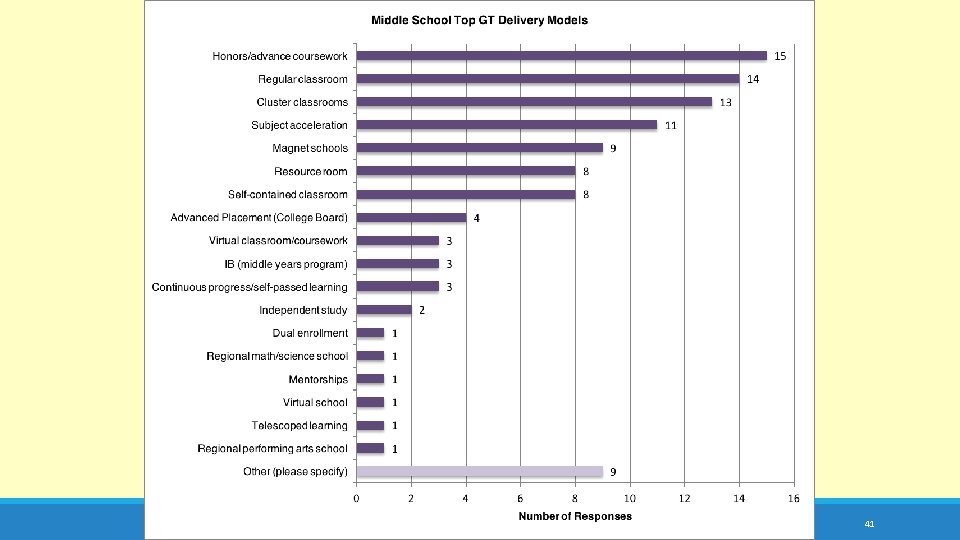
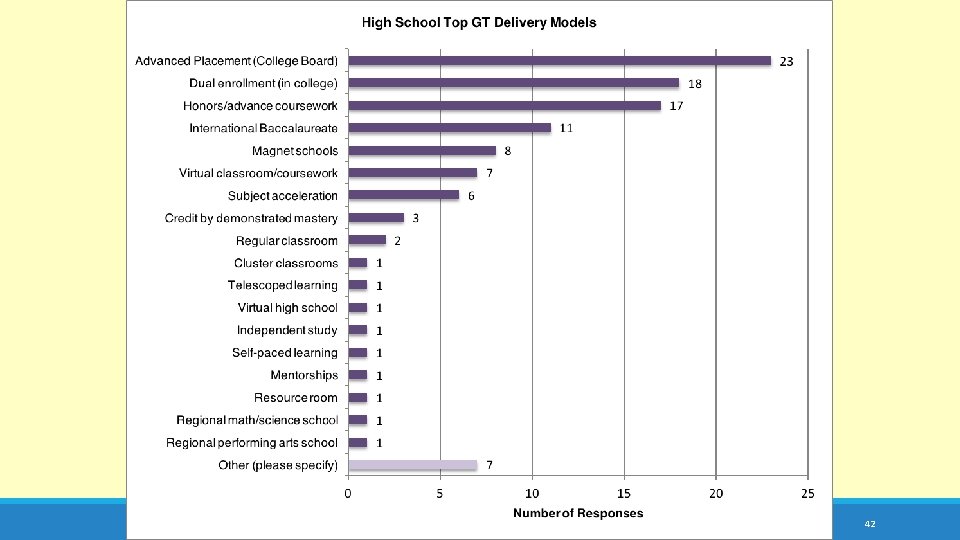
Programs and Services • Components and requirements • Themes across grade levels 36
37
38
39
40
41
42
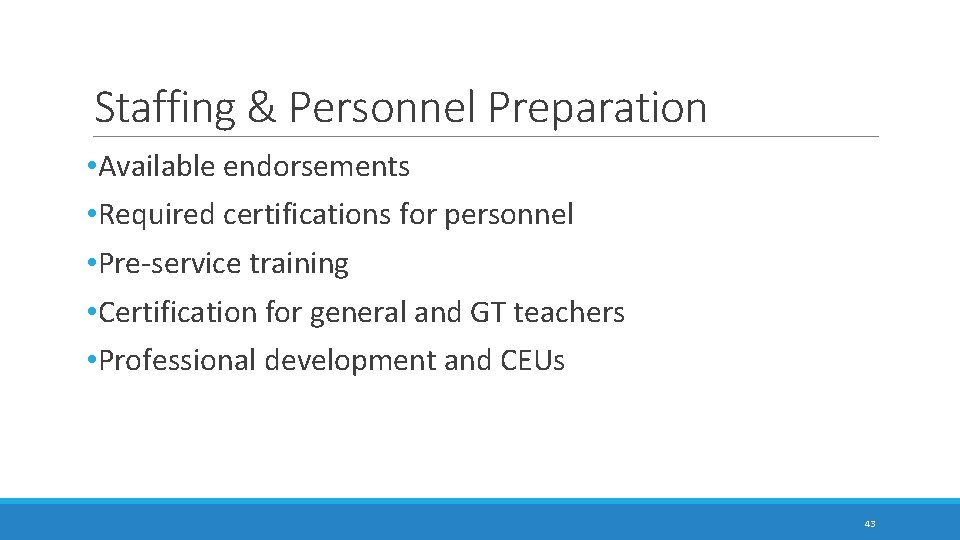
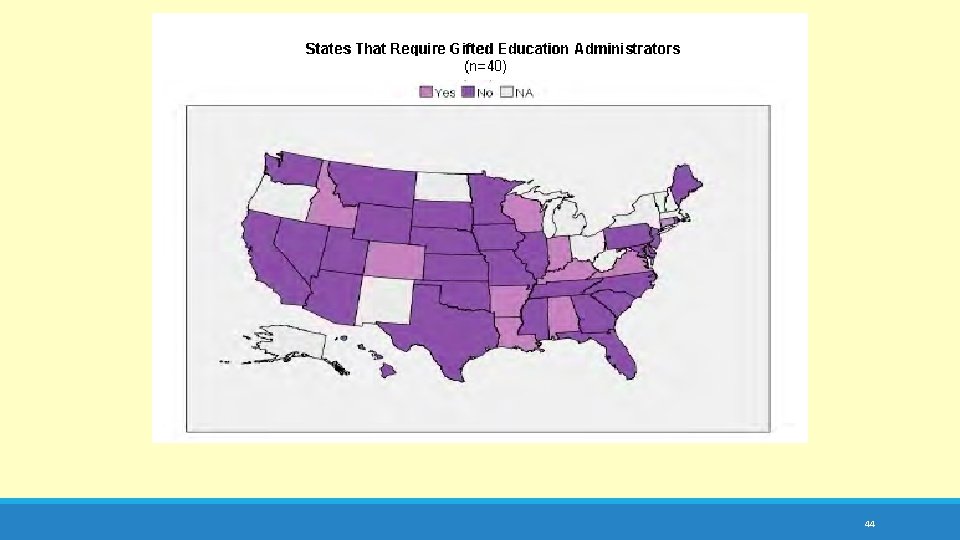
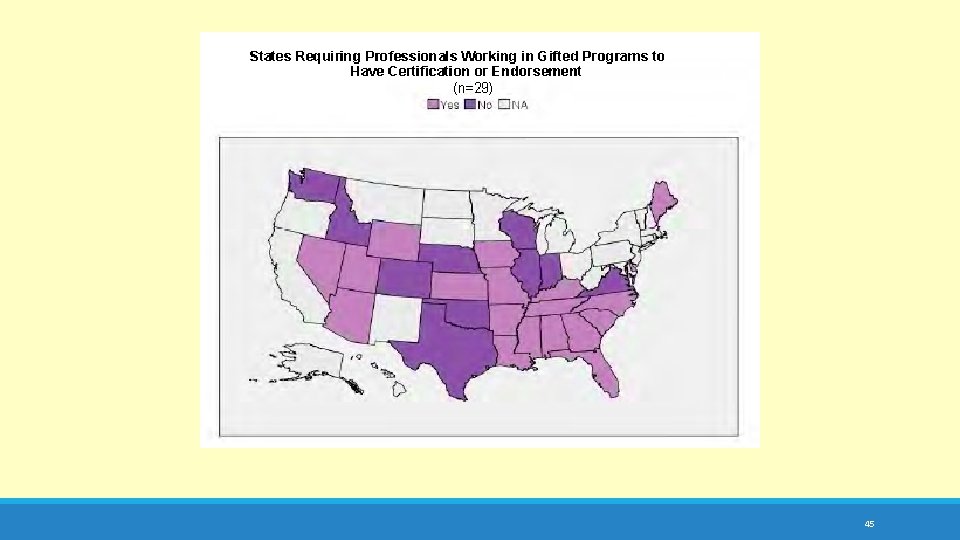
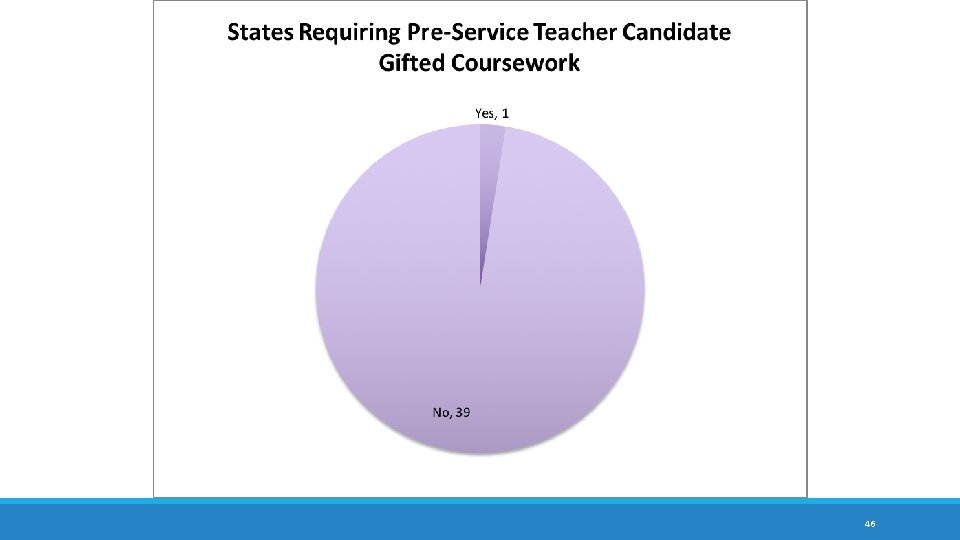
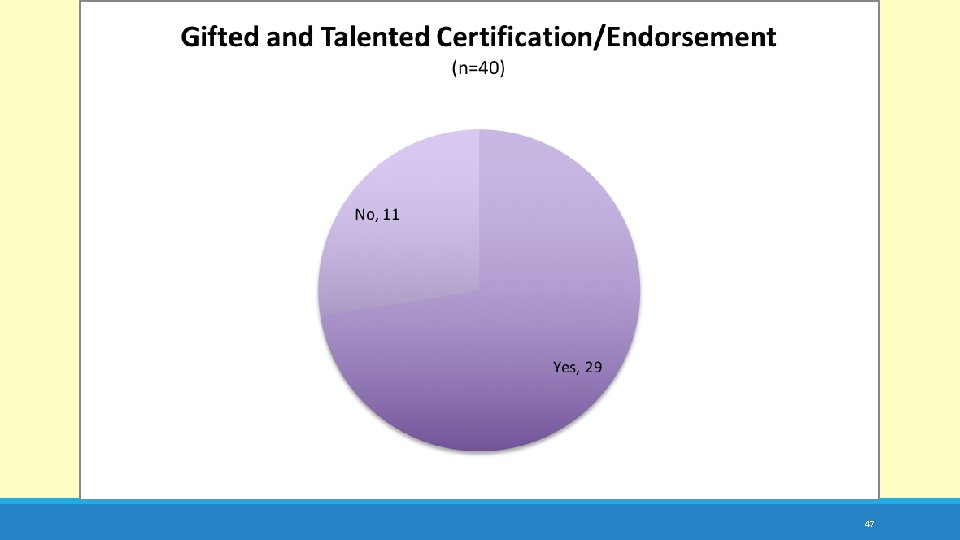
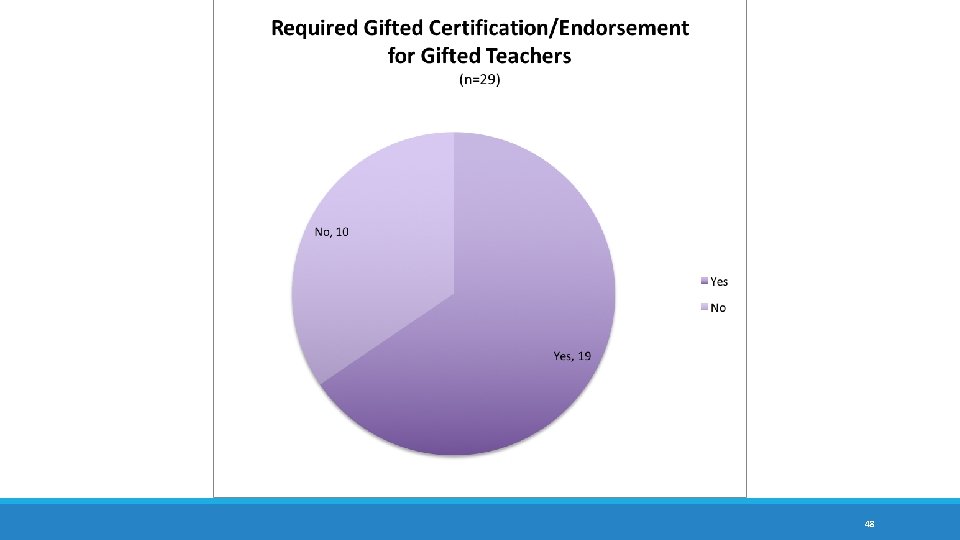
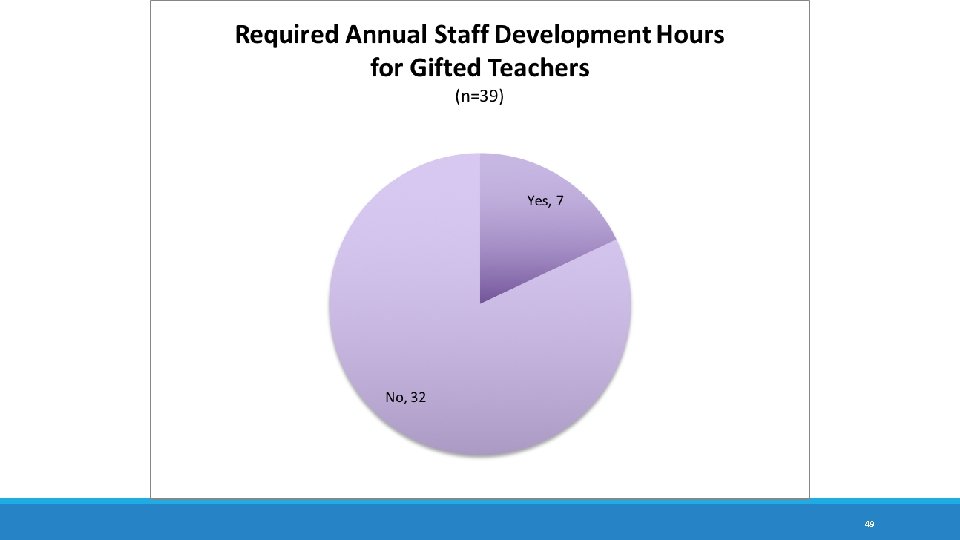
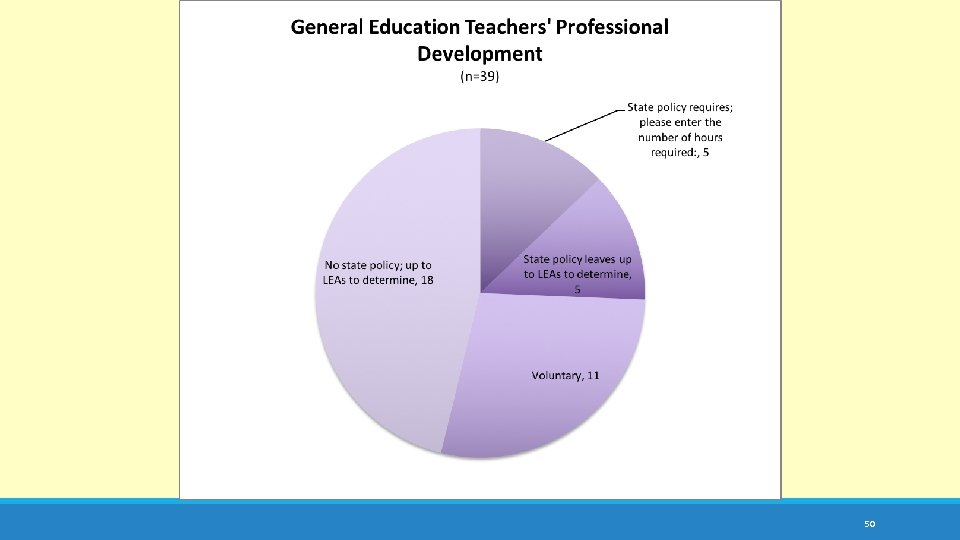
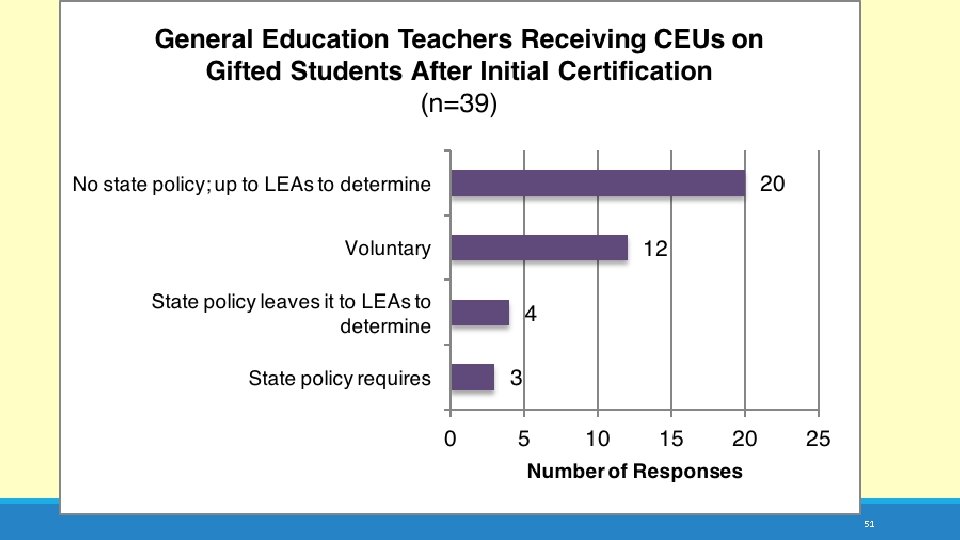
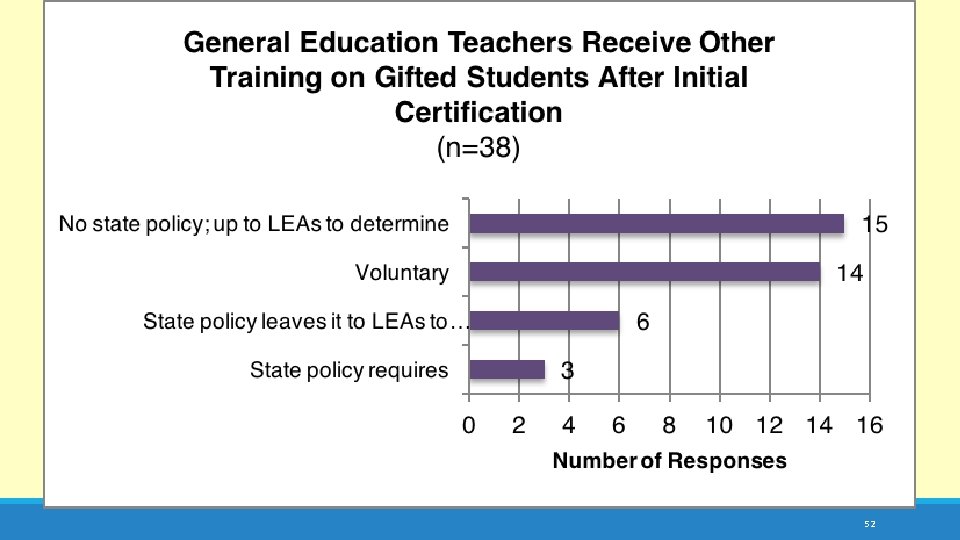
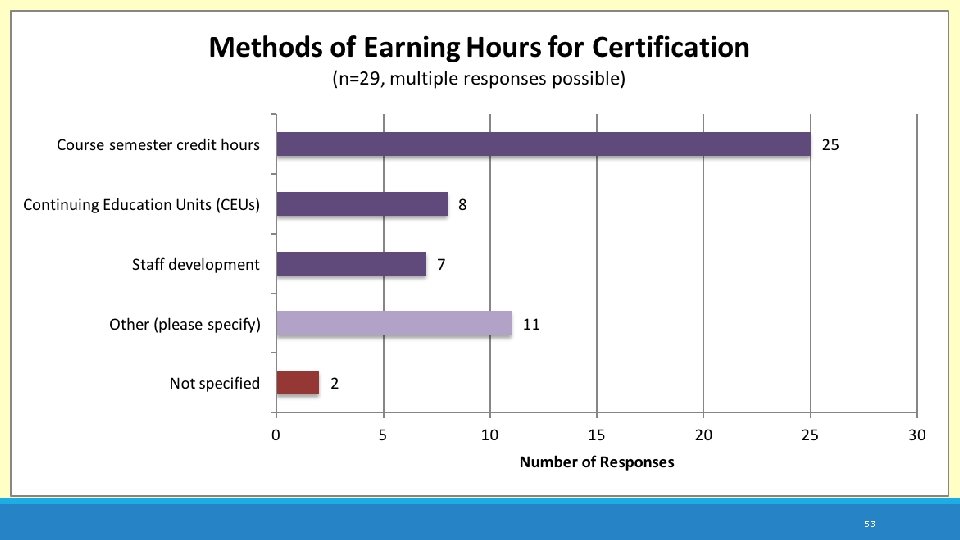
Staffing & Personnel Preparation • Available endorsements • Required certifications for personnel • Pre-service training • Certification for general and GT teachers • Professional development and CEUs 43
44
45
46
47
48
49
50
51
52
53
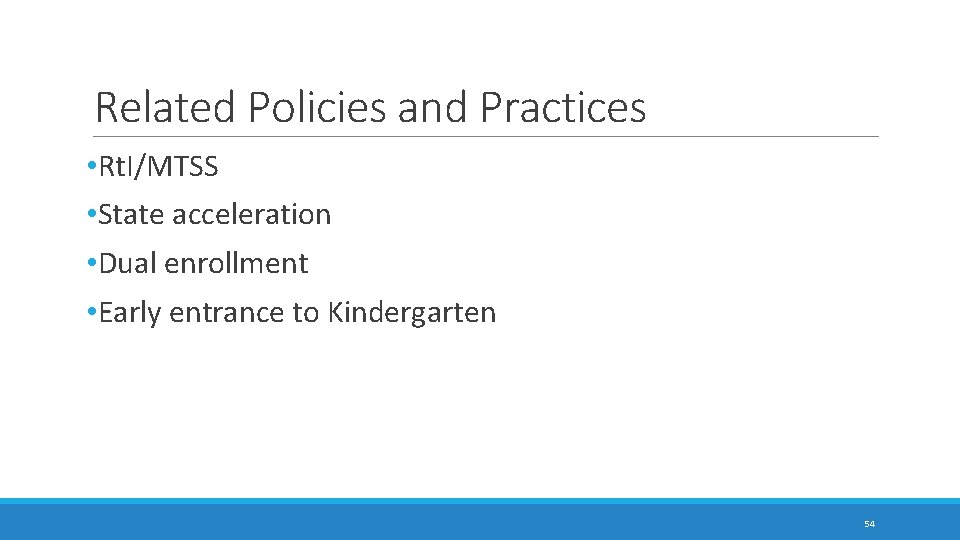
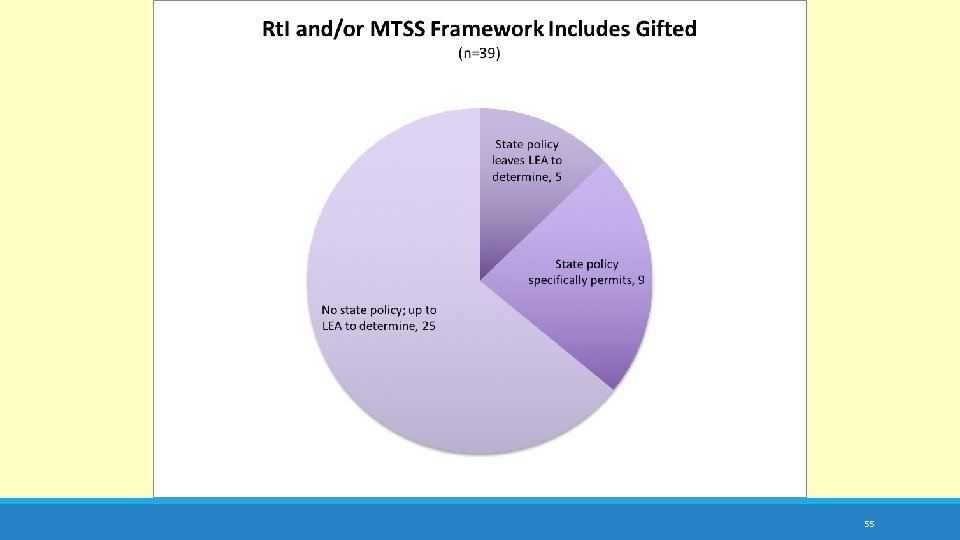
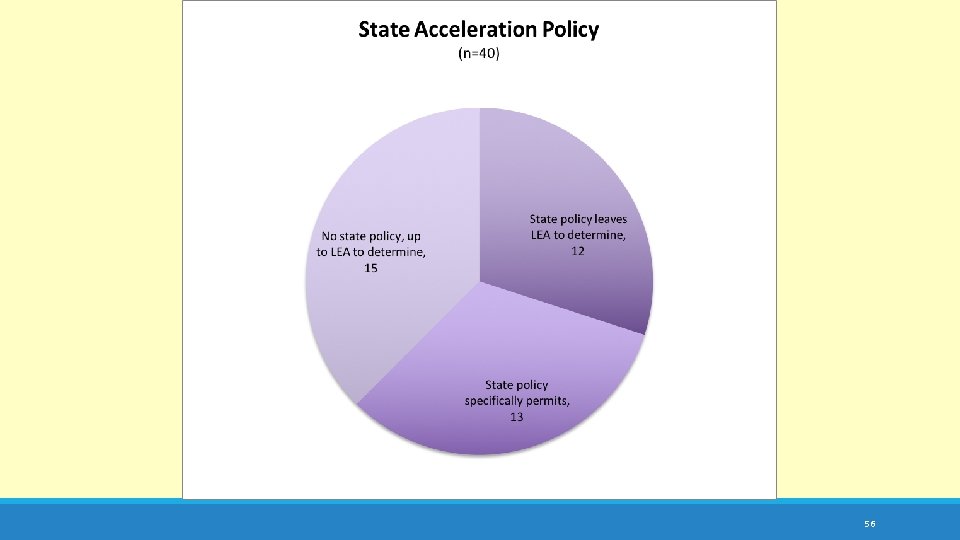
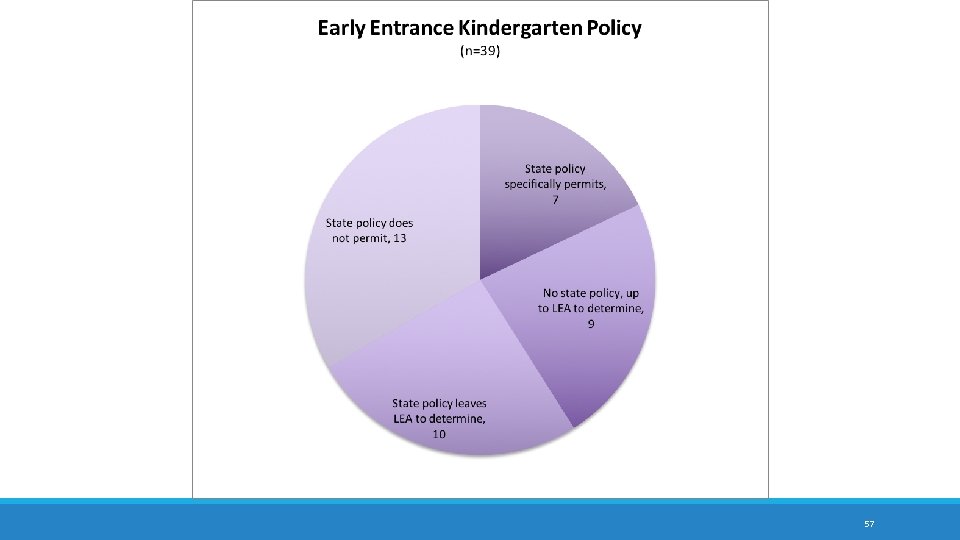
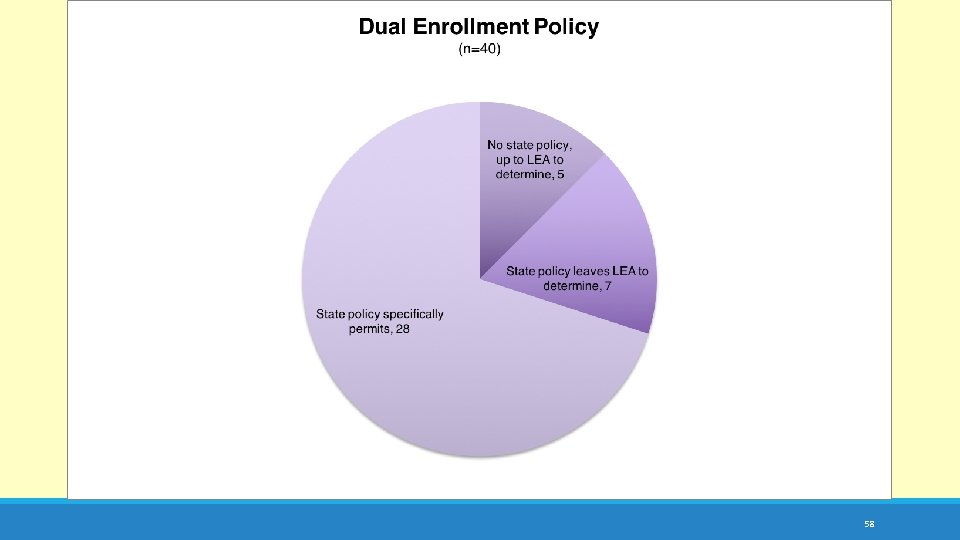
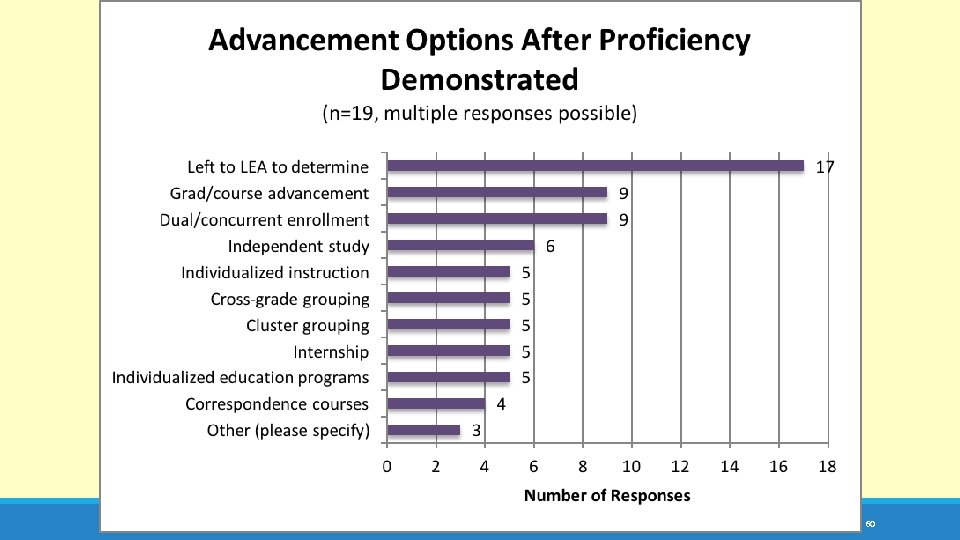
Related Policies and Practices • Rt. I/MTSS • State acceleration • Dual enrollment • Early entrance to Kindergarten 54
55
56
57
58
59
60
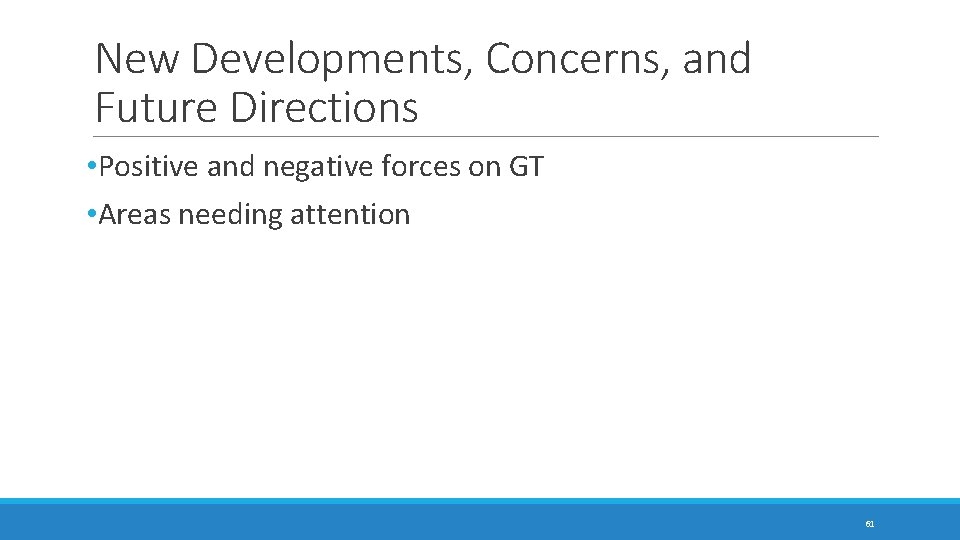
New Developments, Concerns, and Future Directions • Positive and negative forces on GT • Areas needing attention 61
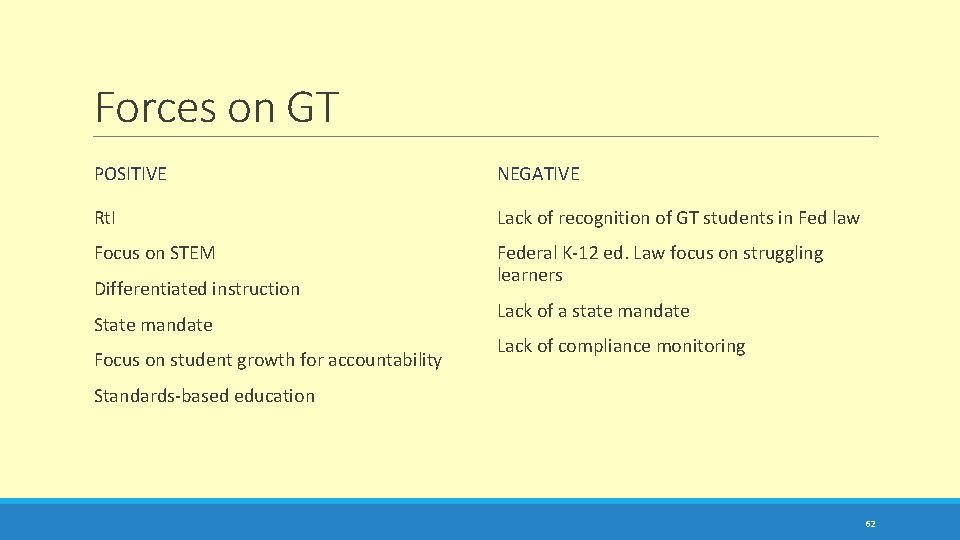
Forces on GT POSITIVE NEGATIVE Rt. I Lack of recognition of GT students in Fed law Focus on STEM Federal K-12 ed. Law focus on struggling learners Differentiated instruction State mandate Focus on student growth for accountability Lack of a state mandate Lack of compliance monitoring Standards-based education 62
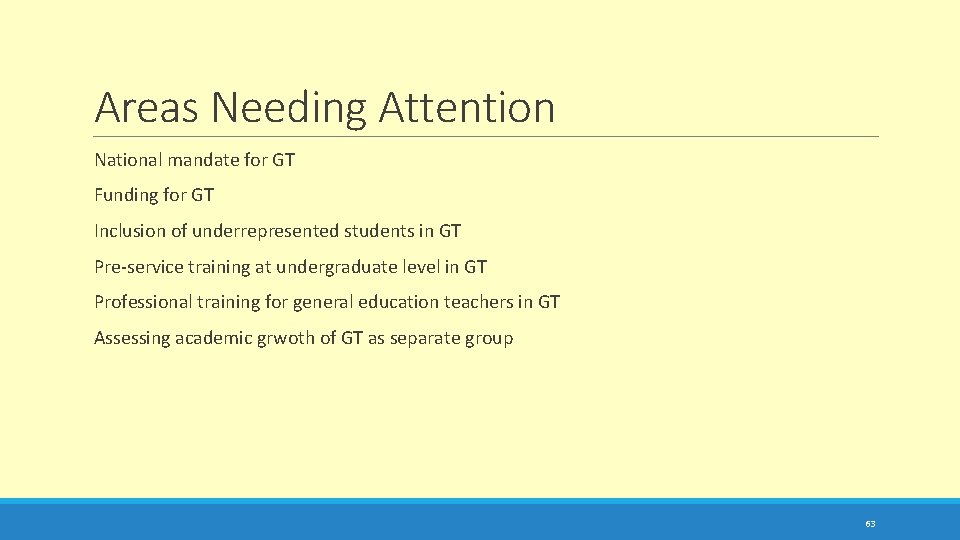
Areas Needing Attention National mandate for GT Funding for GT Inclusion of underrepresented students in GT Pre-service training at undergraduate level in GT Professional training for general education teachers in GT Assessing academic grwoth of GT as separate group 63
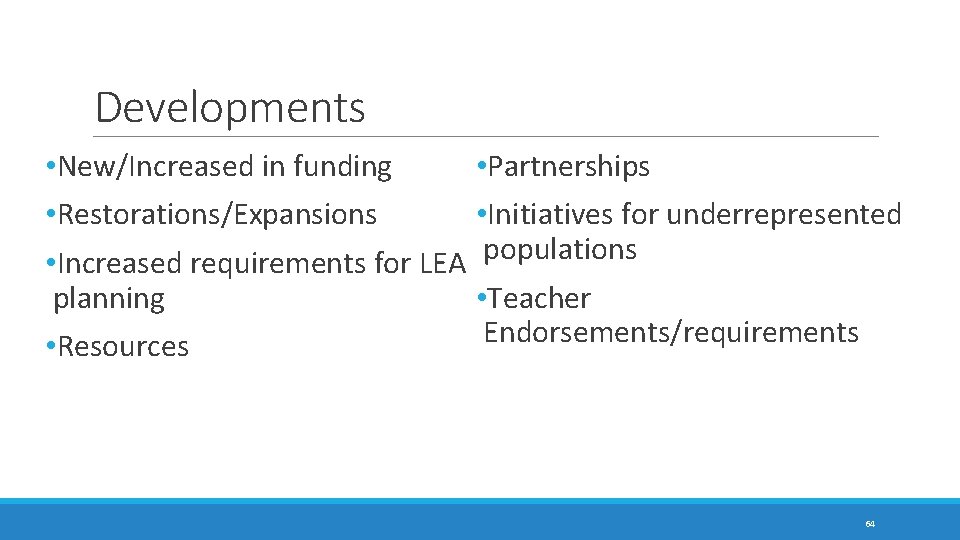
Developments • New/Increased in funding • Restorations/Expansions • Increased requirements for LEA planning • Resources • Partnerships • Initiatives for underrepresented populations • Teacher Endorsements/requirements 64
Debrief What are the ways these data can inform GT advocacy for your state? 65
Moving forward • Access the State of the States report • Encourage participation in the next report • Make issues and results visible • That which is assessed is what gets done 66
67