Simulation for Disaster Response J Peter Kincaid Ph

- Slides: 28
Simulation for Disaster Response J. Peter Kincaid, Ph. D. Institute for Simulation and Training University of Central Florida pkincaid@ist. ucf. edu
What-if Scenario Training using VR • Rehearse response to pre-scripted disaster scenarios • Practice command & control decisionmaking • Practice information flow and review during an incident • Test effectiveness of Command & Control organization
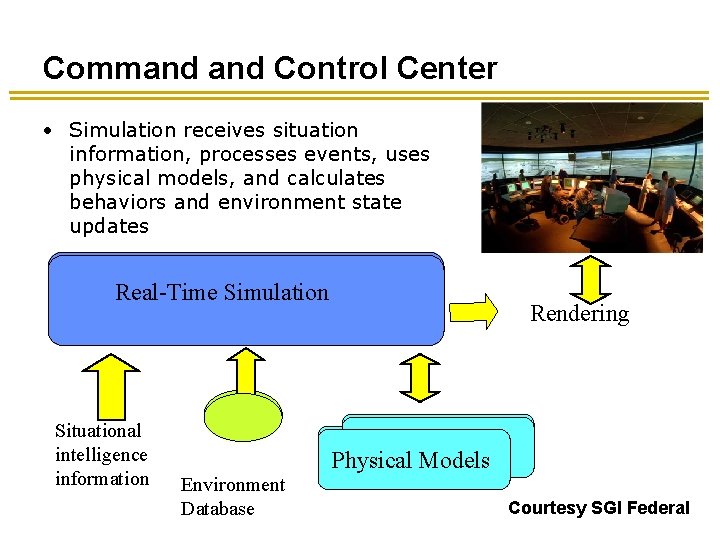
Command Control Center • Simulation receives situation information, processes events, uses physical models, and calculates behaviors and environment state updates Real-Time Simulation Situational intelligence information Environment Database Rendering Physical Models Courtesy SGI Federal
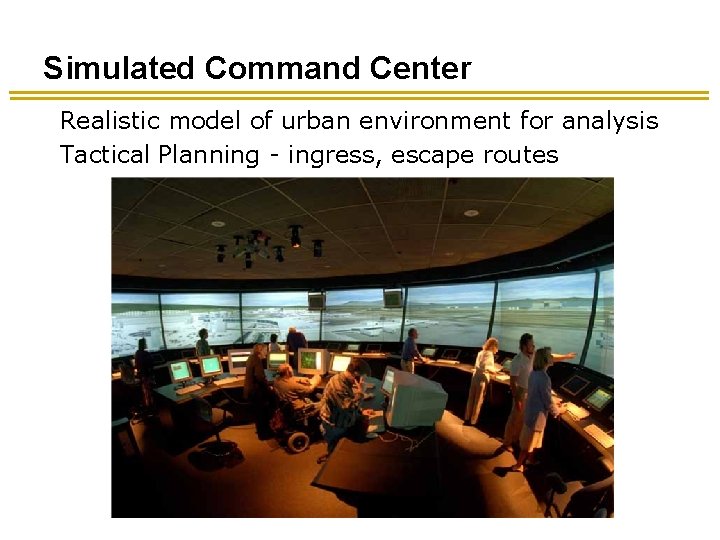
Simulated Command Center Realistic model of urban environment for analysis Tactical Planning - ingress, escape routes
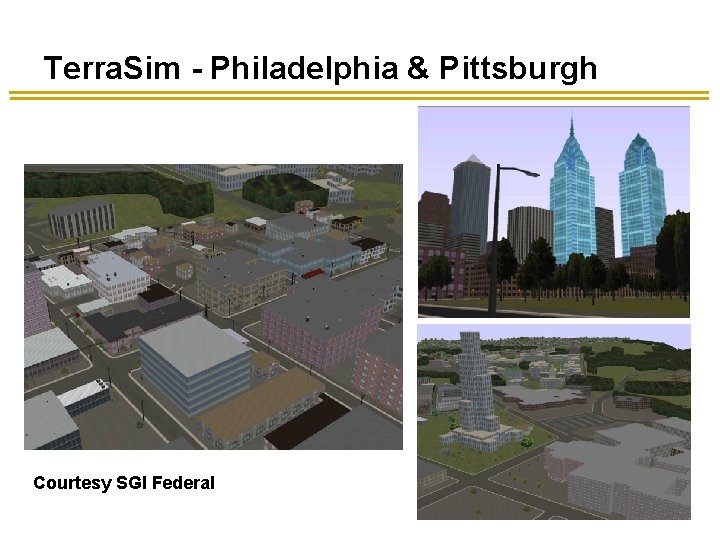
Terra. Sim - Philadelphia & Pittsburgh Courtesy SGI Federal
Live Simulation for Disaster Exercises • Large scale disaster exercises are less developed and a newer phenomenon than similar military exercises. • Multiple agencies have much to learn about interagency command control and coordination. • 9/11 has alerted the American public and civic and military leaders of the importance of counter-terrorism preparedness. • Team training results in better team performance.
Live Emergency Response Exercises • Topics covered – Importance of Exercises for Disaster Preparedness – Exercise Setting and Purpose – Comments and Lessons Learned • Two live exercises – WMD – Haz. Mat (chlorine gas leak)
Importance of Exercises • Large scale disaster exercises are less developed and a newer phenomenon than similar military exercises. • Multiple agencies have much to learn about interagency command control and coordination. • 9/11 has alerted the American public and civic and military leaders of the importance of counter-terrorism preparedness. • Team / collective training results in improved team performance.
“UCF 2001” : The Setting and Goals • Elaborate WMD scenario with both chemical and biological weapons • >100 military and local public safety responders • Held on the University of Central Florida campus • Goals – Provide field training for participants from multiple agencies – Test preparedness – Better understand issues related to reuse of data and team performance – Publicize need for WMD preparedness
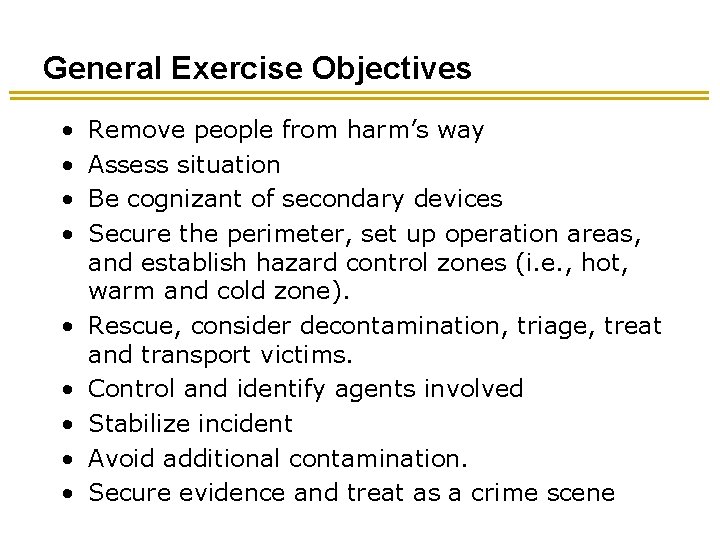
General Exercise Objectives • • • Remove people from harm’s way Assess situation Be cognizant of secondary devices Secure the perimeter, set up operation areas, and establish hazard control zones (i. e. , hot, warm and cold zone). Rescue, consider decontamination, triage, treat and transport victims. Control and identify agents involved Stabilize incident Avoid additional contamination. Secure evidence and treat as a crime scene
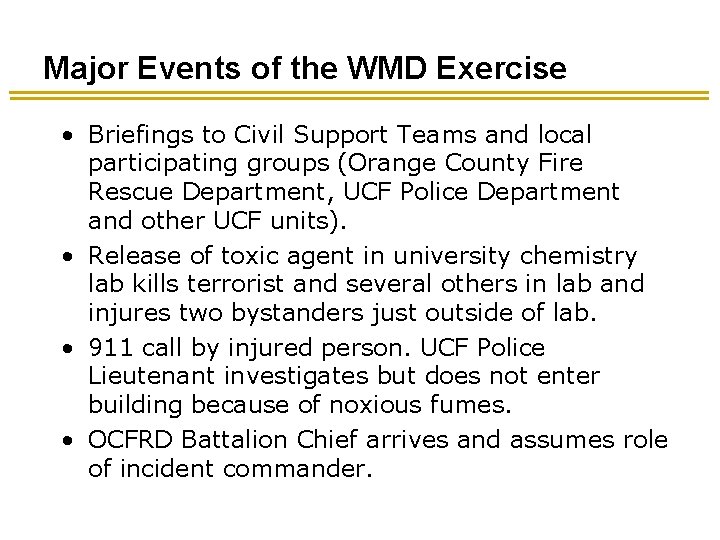
Major Events of the WMD Exercise • Briefings to Civil Support Teams and local participating groups (Orange County Fire Rescue Department, UCF Police Department and other UCF units). • Release of toxic agent in university chemistry lab kills terrorist and several others in lab and injures two bystanders just outside of lab. • 911 call by injured person. UCF Police Lieutenant investigates but does not enter building because of noxious fumes. • OCFRD Battalion Chief arrives and assumes role of incident commander.
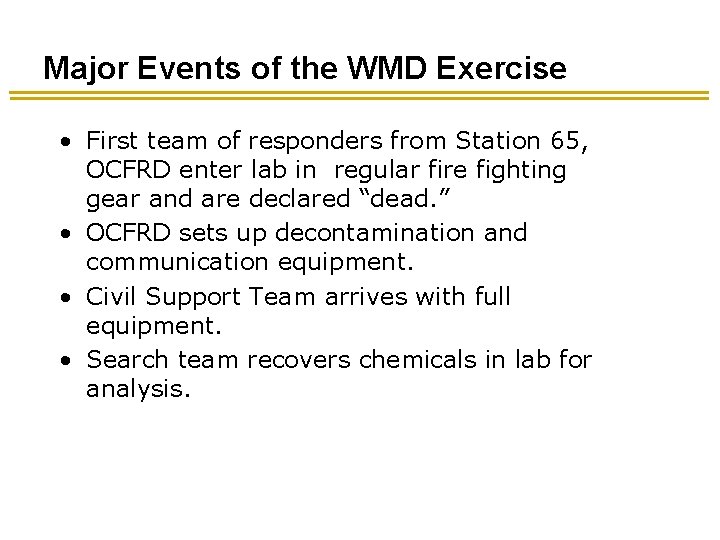
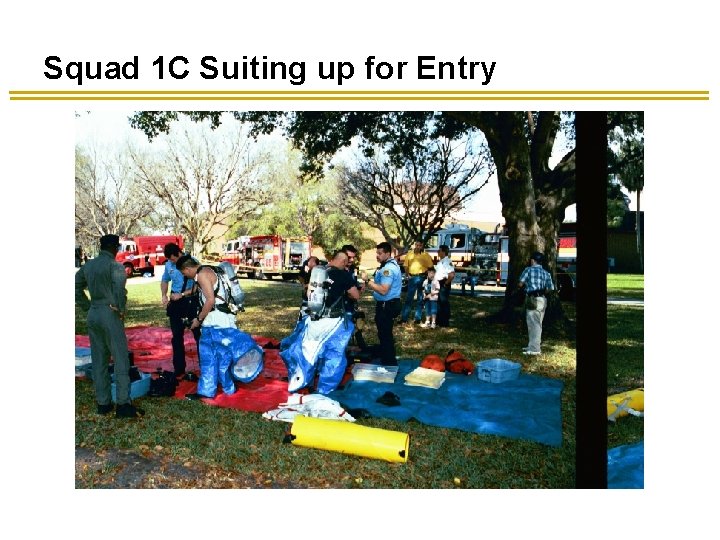
Major Events of the WMD Exercise • First team of responders from Station 65, OCFRD enter lab in regular fire fighting gear and are declared “dead. ” • OCFRD sets up decontamination and communication equipment. • Civil Support Team arrives with full equipment. • Search team recovers chemicals in lab for analysis.
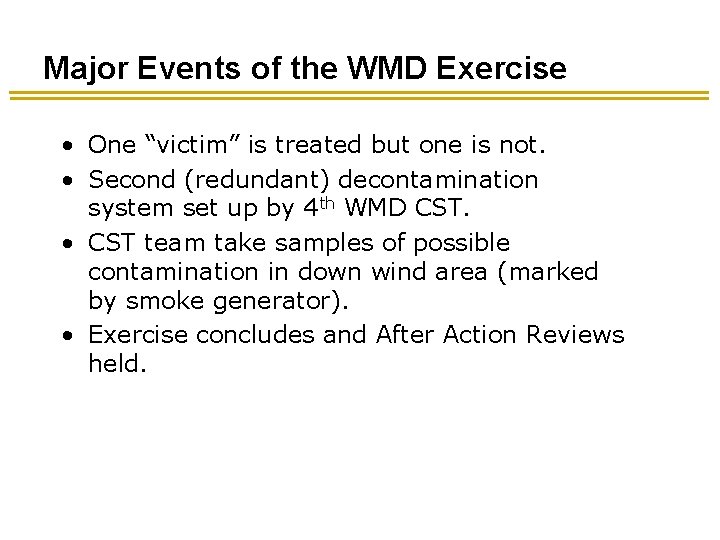
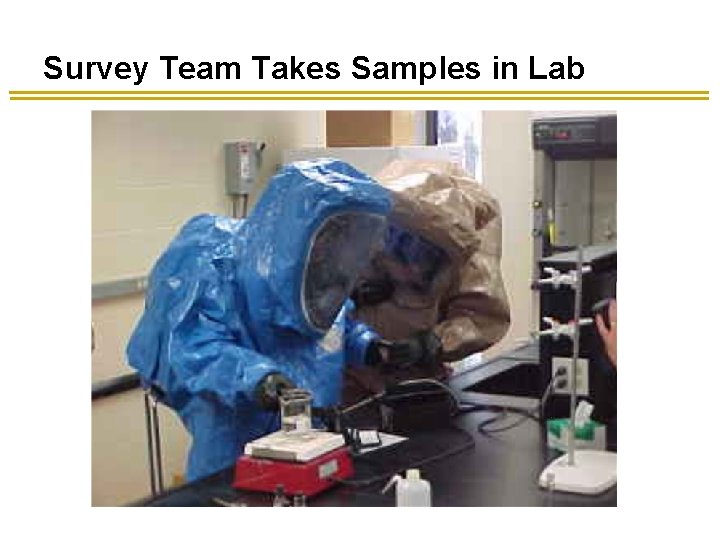
Major Events of the WMD Exercise • One “victim” is treated but one is not. • Second (redundant) decontamination system set up by 4 th WMD CST. • CST team take samples of possible contamination in down wind area (marked by smoke generator). • Exercise concludes and After Action Reviews held.
Letter Left by Terrorist Last week, I got a letter from the head of the department stating that I have to quit this job. Today, I’ll not only kill myself but also my fellow students and I want this department to feel the tremors for the following years to come. This chemical is just a sample. In about 24 -48 hours from now students and faculty members, in and around this building shall fall ill.
Squad 1 C Suiting up for Entry
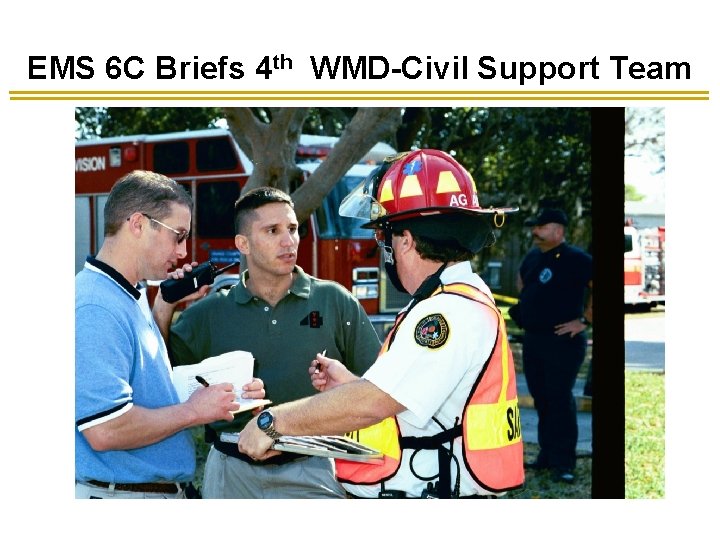
EMS 6 C Briefs 4 th WMD-Civil Support Team
Survey Team Takes Samples in Lab
Comments and Lessons Learned • Overall comments – The shortfalls discovered during today’s exercise can help you to focus on unmet objectives. – This was a very ambitious drill. The 4 th proved to be a tremendous asset. Most objectives were addressed. • Interagency Coordination – Maybe there can be a standard developed between agencies. More pre‑planning necessary, especially role definition, task assignments for team members. – Decon was redundant.
Comments and Lessons Learned • Communication – More thorough commo, commo! – Very little information flow between agencies. • Scenario – This scenario would tax most communities. – An outstanding opportunity. – Scenarios were very realistic and well developed. • Time Schedule – Due to tight schedule, the following items were neglected: briefing, downwind hazard, safety briefing, medical briefing.
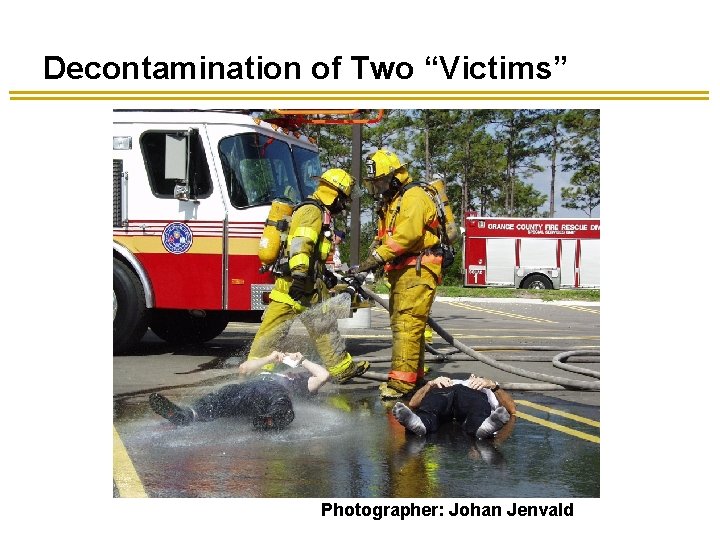
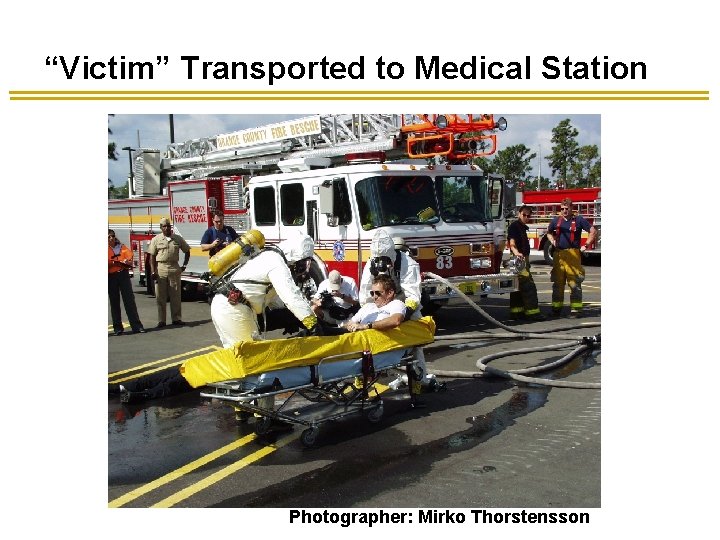
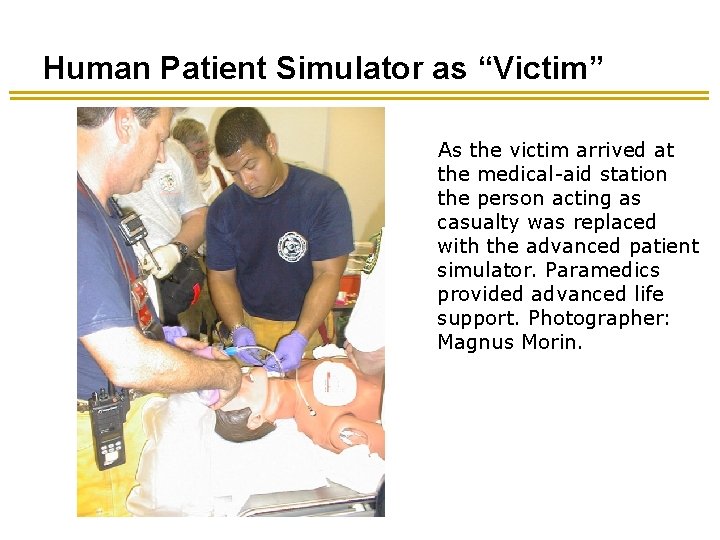
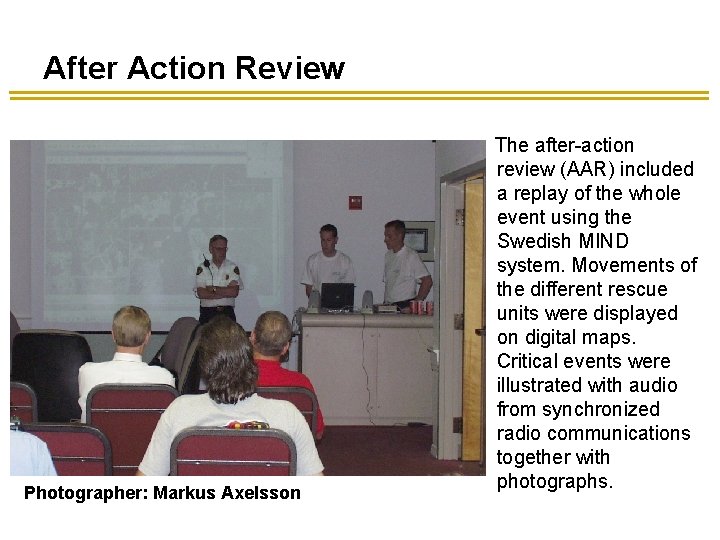
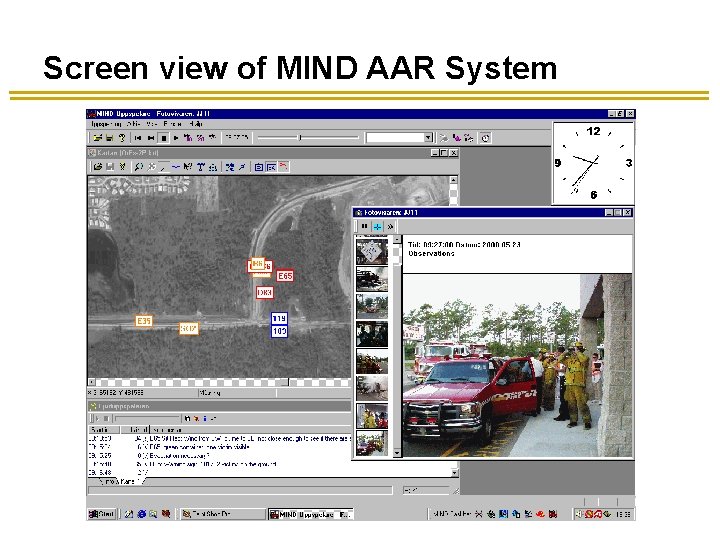
Live Exercise in 2002 with Swedish Team • Participants – Orange and Seminole County Fire Rescue Services and Sheriffs’ departments, the University of Central Florida Police Department and the Institute for Simulation and Training • Emergency situation was a chlorine gas leak. • Paramedics treated the victim via a Human Patient Simulator • MIND After Action review System – Swedish team gathered the data collected via the Global Positioning System (GPS) from locators on all vehicles, digital photographs, observer reports and digitally recorded radio.
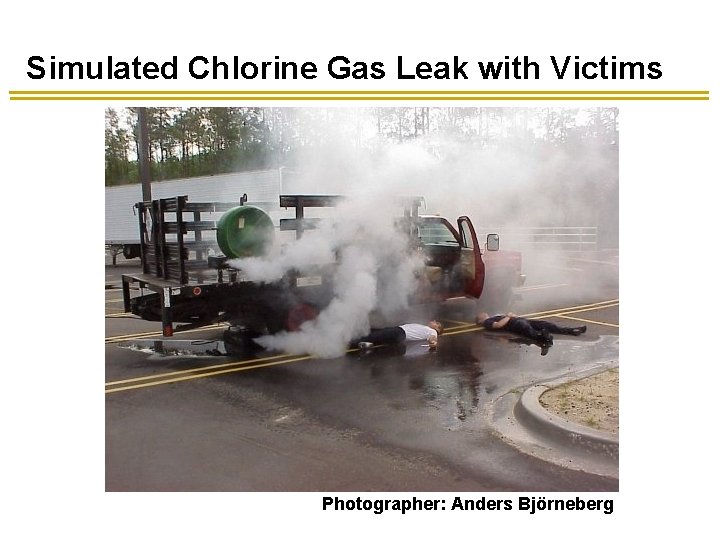
Simulated Chlorine Gas Leak with Victims Photographer: Anders Björneberg
Decontamination of Two “Victims” Photographer: Johan Jenvald
“Victim” Transported to Medical Station Photographer: Mirko Thorstensson
Human Patient Simulator as “Victim” As the victim arrived at the medical-aid station the person acting as casualty was replaced with the advanced patient simulator. Paramedics provided advanced life support. Photographer: Magnus Morin.
After Action Review Photographer: Markus Axelsson The after-action review (AAR) included a replay of the whole event using the Swedish MIND system. Movements of the different rescue units were displayed on digital maps. Critical events were illustrated with audio from synchronized radio communications together with photographs.
Screen view of MIND AAR System
Real Chlorine Spill the Next Day Real chlorine spill unfolds the next day. What was simulation yesterday became reality today. Photographer: Bo Tingland
Simulation for Disaster Response J. Peter Kincaid, Ph. D. Institute for Simulation and Training University of Central Florida pkincaid@ist. ucf. edu