
Public Health Nursing in Disaster and Emergency Response
Public Health Nursing in Disaster and Emergency Response Name Institution
Introduction Disaster is a sudden event that causes excessive damage. Examples include fire, floods, earthquakes, etc. Wildfires are very common in California during summer seasons. Fires swept away forests, grasslands, and buildings, and people. Specifically, Tubbs fires killed many people in Napa and Sonoma Counties. EPA provided immediate response through recovery mechanisms. Public health nurses also showed efforts throughout the phases of the disaster.
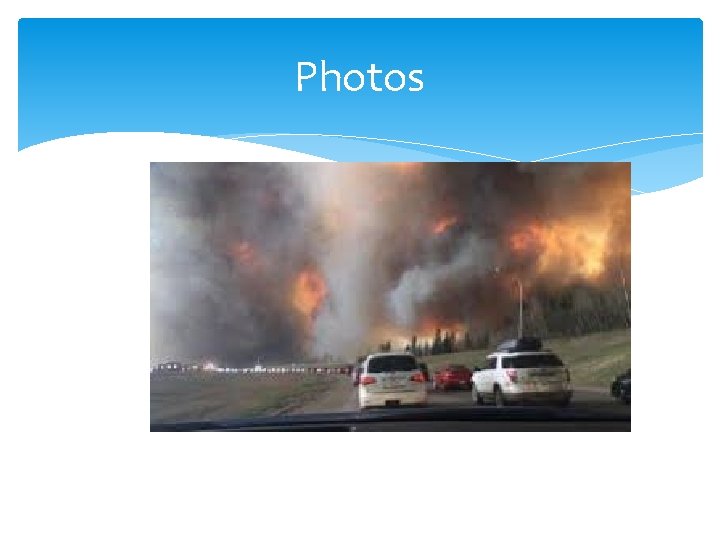
Disaster The Issue Wildfires destroyed 200, 000 acres of Napa and Sonoma, California. Fires sparked Napa valley but the source remained under investigation. Powerful winds pulled flames across the fields through Sonoma. The hot, dry conditions might have resulted in the firestorm. The fire occurred in California’s peak summer season. The incident inflicted great loses in Santa Rosa City.
Photos
Population Affected The populations of Napa and Sonoma were the most affected by the fires. Specifically Sonoma County lost 3, 300 residents in October 2017. The population declined became dramatic because people left the region. About 2, 207 residents further migrated to other regions. The fires swept away about 3100 homes in Santa Rosa. The fires led to housing crises in the counties.
Other vulnerable populations Large fires have always scorched Camp Fire in California. North of Sacramento’s population is also vulnerable to wildfires. The vulnerability extends further to Northwest of Los Angeles. Generally, California’s population lives in proximity to highrisk fire regions. Santa Rosa is not an exemption owing to the increased urbanization. The entire Northern California region is prone to wildfires.
Response US EPA removed asbestos in 131 destroyed properties in Sonoma. The asbestos removal activity extended to Napa, Lake, and Mendocino by December 2017. EPA removed hazardous wastes in 6, 551 properties in Sonoma and Napa. For example, household catch fires, reactors, and explosives were removed. Herbicides, oil, and batteries were safely disposed. EPA launched a new tool for tracking disaster recovery progress.
Response EPA collects household hazardous waste containers. Chemical drums are disposed at hazardous waste facilities. EPA also collects HHPA in Sonoma and Coffey Park area and its neighborhoods. Operations in Sonoma county extended to Mark West, and Fountaingrove. Commercial and industrial parcels are also under recovery. Organizing community meetings for sensitization in Sonoma and Napa counties.
Roles and Responsibilities of Public Health Nurse Disaster mitigation phase Public Health Nurse puts in place, measures to prevent disaster occurrence. The nurse also averts the adverse effects of the disaster. The nurse educates the public on disaster prevention techniques. Creates awareness on activities that reduce or eliminate disasters. Initiating immunization and public education programs.
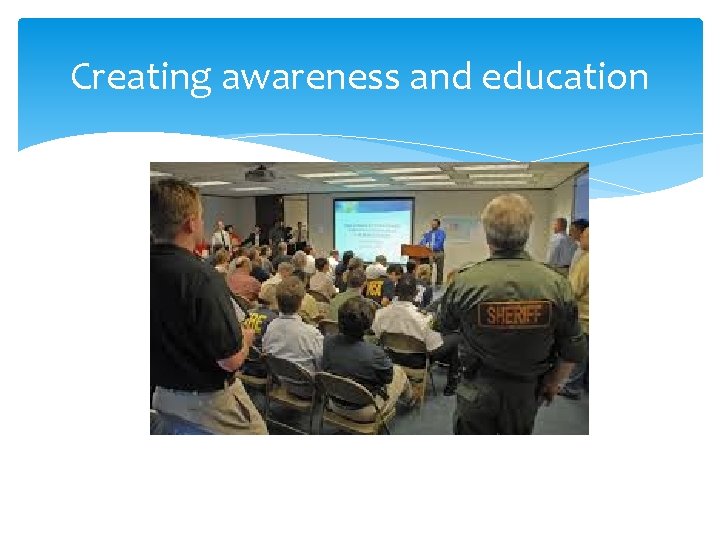
Creating awareness and education
Roles and Responsibilities of Public Health Nurse Disaster Prevention nurses undertake all-hazards mitigation practices. The prevention measures are both structural and nonstructural. They deter potential threats associated with the disaster. They take action to eliminate threats. The nurses take part in developing, adopting, and implementing building codes and standards.
Preparedness Phase PHNs plan to respond to disasters based on command control. Nurses outline functional roles in both internal and external departments. They also establish effective communication systems for addressing probable system failure. Developing a legal basis to ensure that response includes isolation strategies. A plan to prevent the spread of outbreak diseases. Creating public education and awareness.
Disaster Response Phase PHNs act as the first responders during triage. They conduct epidemiology surveillance for the good of the public. They also conduct rapid needs assessments and offer assistance to populations. PHNs communicate risks following a comprehensive surveillance. They also help with medical surge capacity. Offering first aid and related medical assistance.
Disaster Recovery Phase PHNs conduct community assessment They provide psychological support to the affected populations. The PHN acts as a community and patient advocate following a disaster. They empower staff and the community for further disaster management. Providing continuum care and helping the victims. Modifying disaster response plans to meet community needs.
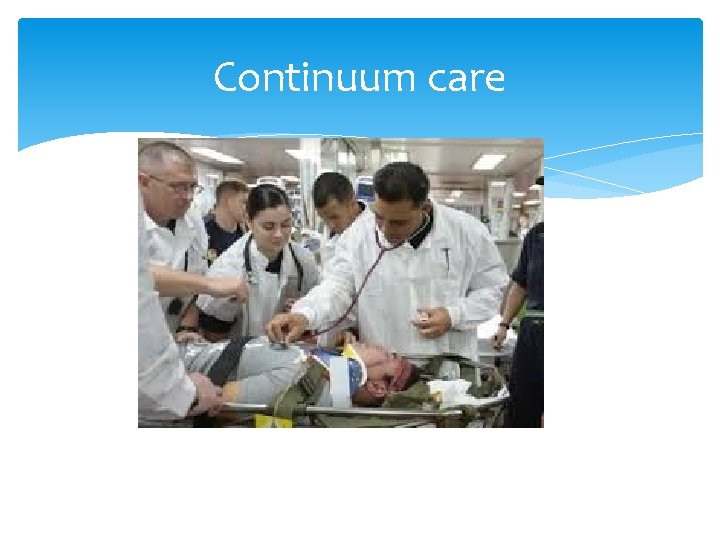
Continuum care
Resilience Empowering a community to resist hazards or accommodate their impacts. Retaining the basic functioning of the community functioning. Absorbing disturbances despite changes. Managing disaster change by transforming living standards amidst stressors. Empowering communities before the disaster becomes worse.
Proposed Interventions Building resilience among communities before the disaster worsens. Encouraging conversations about disaster risk reduction. Promoting efforts that are ahead of the curve Promoting holistic support approaches to support sustainability strategies. Increasing collaboration with organizations that build up resilience capacity. Strengthening nurse leadership to support advocacy.
Interventions PHNs should be involved in all policy-making at both federal and international levels. Nurses should be advocates for risk aversion strategies. Disaster risk aversion strategies must include resiliencebuilding. promoting social justice and equity in accessing disaster aid. Aligning national policies with the needs of disaster risk reduction. Society-engagement and partnerships during disaster risk reduction.
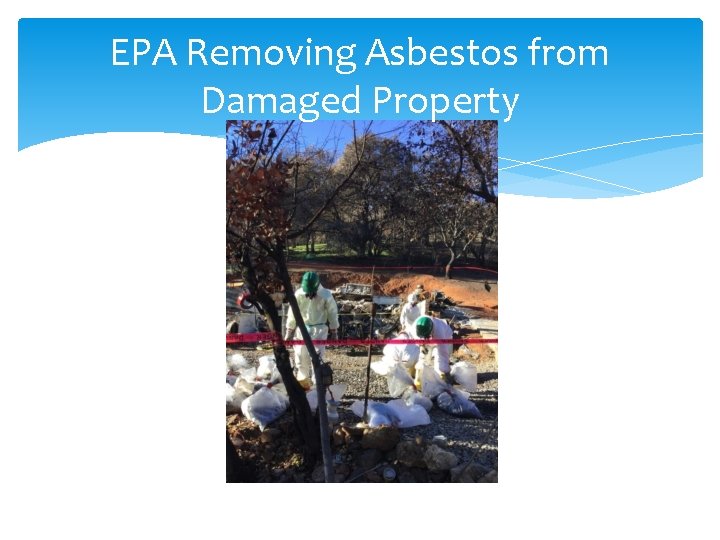
EPA Removing Asbestos from Damaged Property
Conclusion Indeed, Public Health Professionals play vital roles in supporting disaster victims. They develop measures to prevent disaster occurrence. They create awareness through education to prevent disasters. They conduct community assessment and act as patient advocates. Provide continuum care and communicate risks to avoid disasters. They collaborate with community-based organizations to help them build resilience.
References "Building a Culture of Health, " from Robert Wood Johnson Foundation (n. d. ). https: //www. rwjf. org/en/how-we-work/building-a-culture-of-health. html Cunningham, M. & Ali. (2013). Bending the Cost Curve and Improving Quality of Care in America’s Poorest City, " Population Health Management. https: //lopes. idm. oclc. org/login? url=http: //search. ebscohost. com/login. a spx? direct=true&db=ccm&AN=104229978&site=ehost-live&scope=site "Global Public Health, " from Johnson and Johnson (2018). https: //www. jnj. com/globalpublic-health Harris, Y. (2017). Leadership and Influencing Change In Nursing. Chapter 13: Emergency Preparedness and Response. Press Books. https: //leadershipandinfluencingchangeinnursing. pressbooks. com/chapter-13 emergency-preparedness-and-response/
References Krishnakumar, P. , Fox, J. , & Keller, C. (OCT. 23, 2017). Los Angeles Times. Northern California Fires Structures. [UPDATED OCT. 25, 2017]. https: //www. latimes. com/projects/la-me-northern-california-fires-structures/ Putra, A. , Kep, S. , Petpichetchian, W. , & Maneewat, K. (2011). Review: Public Health Nurses’ Roles and Competencies in Disaster Management. Nurse Media Journal of Nursing, 1, 1, 1 – 14. https: //pdfs. semanticscholar. org/2 dd 3/91410695840 a 5186703905894 acbe 07 a 8 2 eb. pdf Robinson, M. (Oct 16, 2017). Business Insider. 3 key reasons explain how the massive firestorm in California became one of the worst in state history. https: //www. businessinsider. com/why-were-the-napa-sonoma-fires-so-bad-2017 -10? IR=T
- Slides: 22