QI 101 I Am New to Clinical Quality


- Slides: 81
QI 101: I Am New to Clinical Quality Management – Where Do I Start? Pitfalls and Challenges to Your Improvement Efforts Clemens Steinbock HRSA Ryan White HIV/AIDS Program Center for Quality Improvement & Innovation (CQII) This project is supported by the Health Resources and Services Administration (HRSA) of the U. S. Department of Health and Human Services (HHS) under grant number U 28 HA 30791 and the HRSA Ryan White HIV/AIDS Program Implementation Center for HIV Quality Improvement and Innovation for $1. 5 M. This information or content and conclusions are those of the author and should not be construed as the official position or policy of, nor should any endorsements be inferred by HRSA, HHS or the U. S. Government.
Opening Remarks
Setting the Stage • • CQII Overview Learning Objectives Agenda Review Introductions
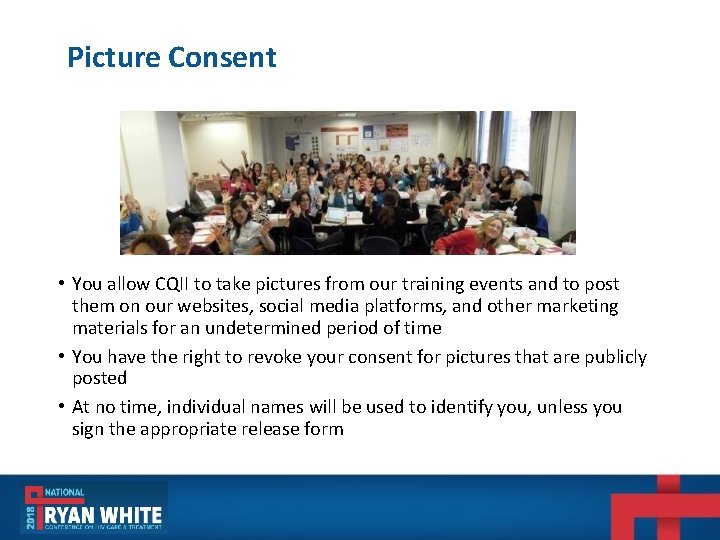
Picture Consent • You allow CQII to take pictures from our training events and to post them on our websites, social media platforms, and other marketing materials for an undetermined period of time • You have the right to revoke your consent for pictures that are publicly posted • At no time, individual names will be used to identify you, unless you sign the appropriate release form
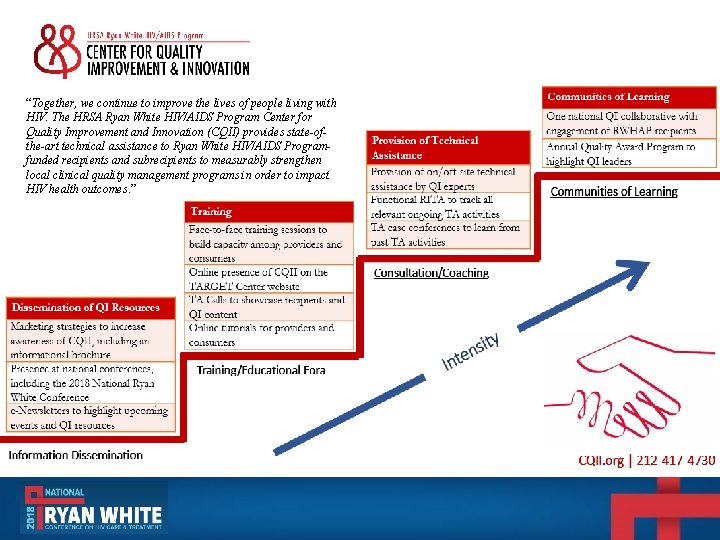
“Together, we continue to improve the lives of people living with HIV. The HRSA Ryan White HIV/AIDS Program Center for Quality Improvement and Innovation (CQII) provides state-ofthe-art technical assistance to Ryan White HIV/AIDS Programfunded recipients and subrecipients to measurably strengthen local clinical quality management programs in order to impact HIV health outcomes. ”
Learning Objectives • Explain key quality improvement principles applicable to HIV care • Explain the relationship between quality monitoring, quality improvement, and data collection • Provide real world examples of how RWHAP recipients have applied quality improvement methodologies to strengthen their clinical quality management programs • List available quality improvement resources to increase the participant’s capacity for clinical quality management beyond the workshop
Agenda • Setting the Stage – 15 min • Expectations for Clinical Quality Management and Quality Improvement Principles – 15 min • QI Exercise: Tennis Ball Game – 20 min • PDSA Cycle – 10 min • Panel Presentations – 20 min • QI Resources – 5 min • CQII at the RW Conference – 5 min
Introductions
Quality Improvement 101
Questions • What do you rate your own quality improvement competency? • • Novice/Beginner Proficient Advanced Expert • What do you rate your agency’s quality improvement competency? • • Novice/Beginner Proficient Advanced Expert
PCN #15 -02 https: //hab. hrsa. gov/sites/default/files/hab/clinical-quality-management/clinicalqualitymanagementpcn. pdf
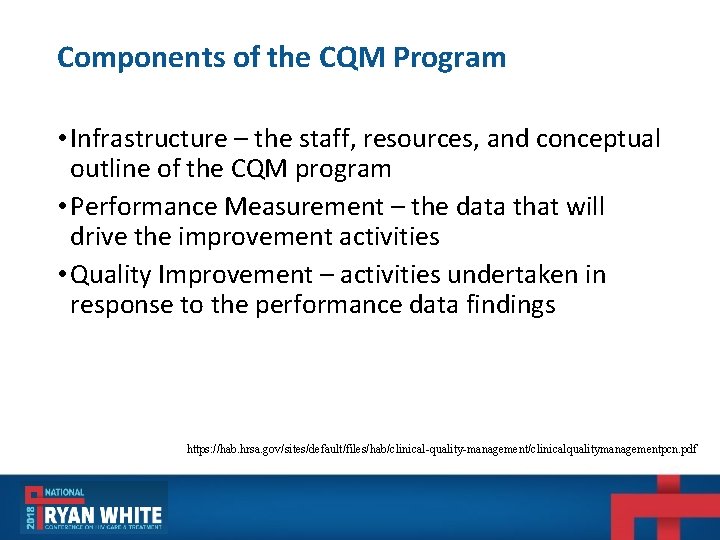
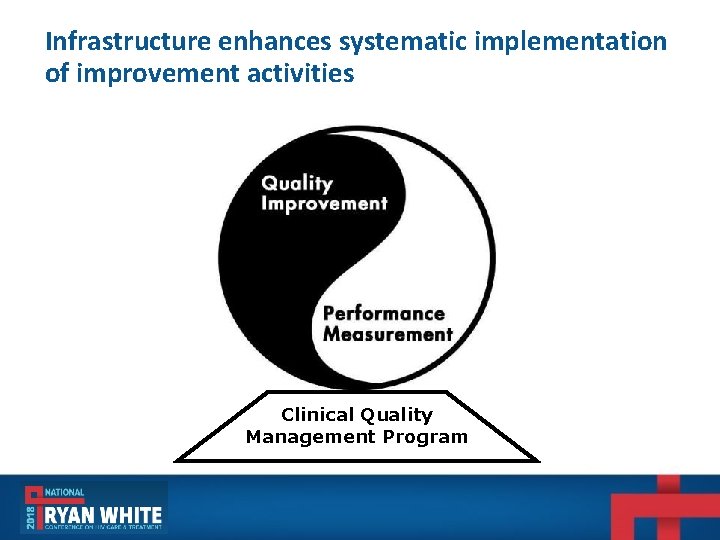
Components of the CQM Program • Infrastructure – the staff, resources, and conceptual outline of the CQM program • Performance Measurement – the data that will drive the improvement activities • Quality Improvement – activities undertaken in response to the performance data findings https: //hab. hrsa. gov/sites/default/files/hab/clinical-quality-management/clinicalqualitymanagementpcn. pdf
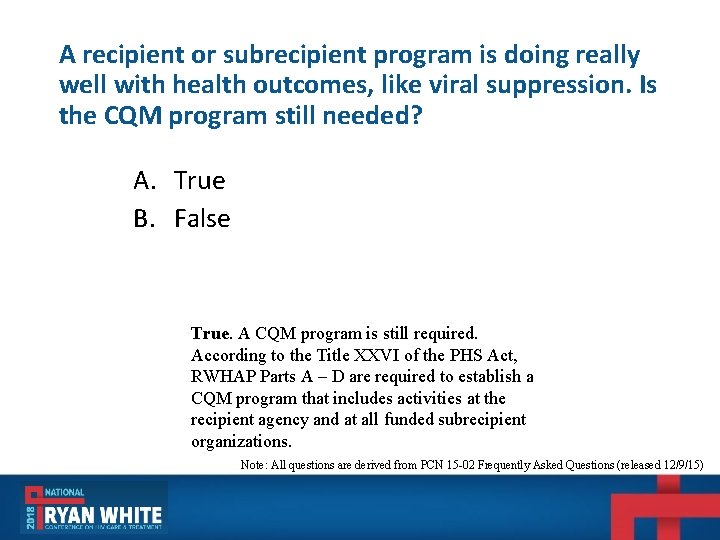
A recipient or subrecipient program is doing really well with health outcomes, like viral suppression. Is the CQM program still needed? A. True B. False True. A CQM program is still required. According to the Title XXVI of the PHS Act, RWHAP Parts A – D are required to establish a CQM program that includes activities at the recipient agency and at all funded subrecipient organizations. Note: All questions are derived from PCN 15 -02 Frequently Asked Questions (released 12/9/15)
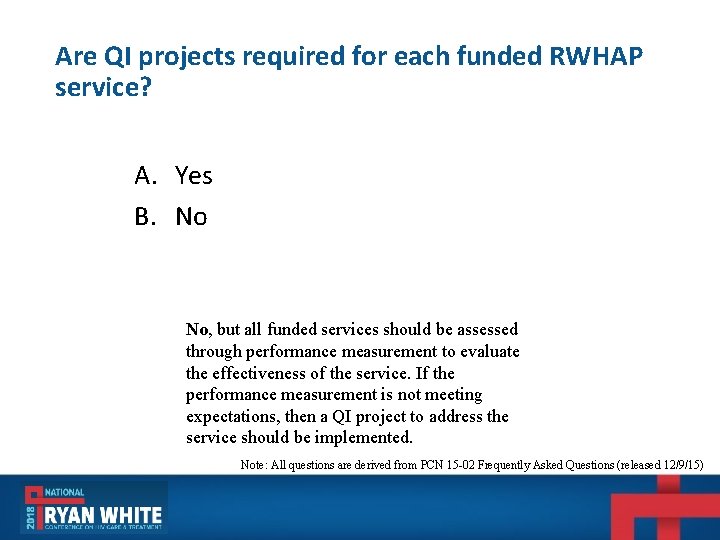
Are QI projects required for each funded RWHAP service? A. Yes B. No No, but all funded services should be assessed through performance measurement to evaluate the effectiveness of the service. If the performance measurement is not meeting expectations, then a QI project to address the service should be implemented. Note: All questions are derived from PCN 15 -02 Frequently Asked Questions (released 12/9/15)
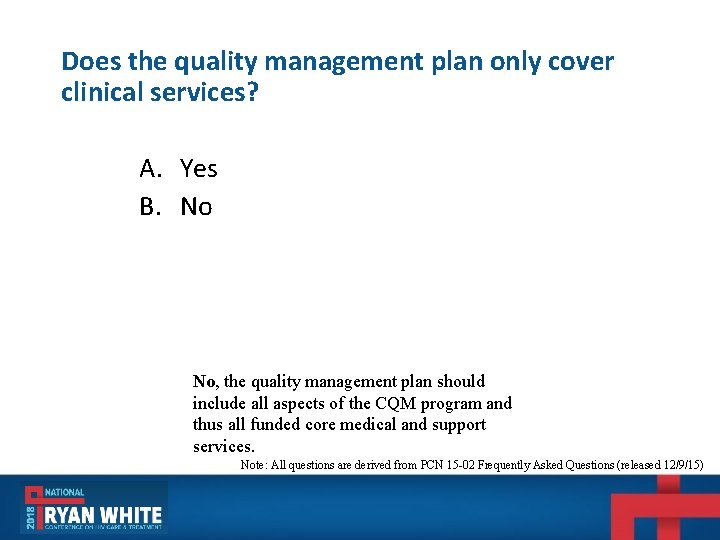
Does the quality management plan only cover clinical services? A. Yes B. No No, the quality management plan should include all aspects of the CQM program and thus all funded core medical and support services. Note: All questions are derived from PCN 15 -02 Frequently Asked Questions (released 12/9/15)
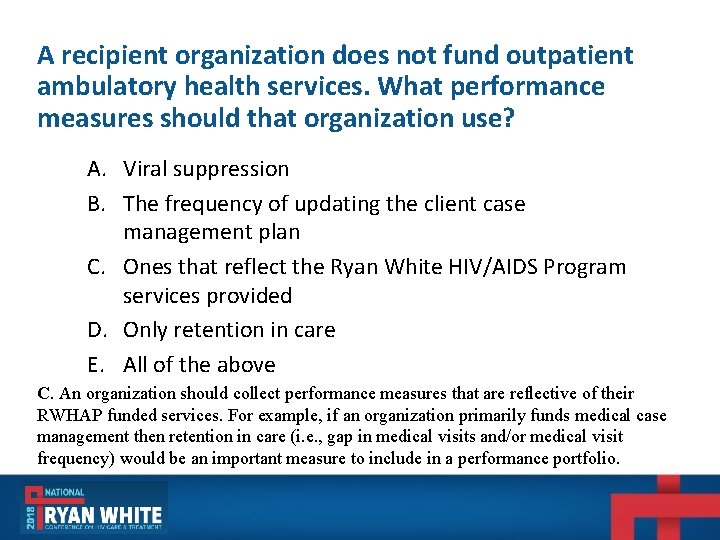
A recipient organization does not fund outpatient ambulatory health services. What performance measures should that organization use? A. Viral suppression B. The frequency of updating the client case management plan C. Ones that reflect the Ryan White HIV/AIDS Program services provided D. Only retention in care E. All of the above C. An organization should collect performance measures that are reflective of their RWHAP funded services. For example, if an organization primarily funds medical case management then retention in care (i. e. , gap in medical visits and/or medical visit frequency) would be an important measure to include in a performance portfolio.
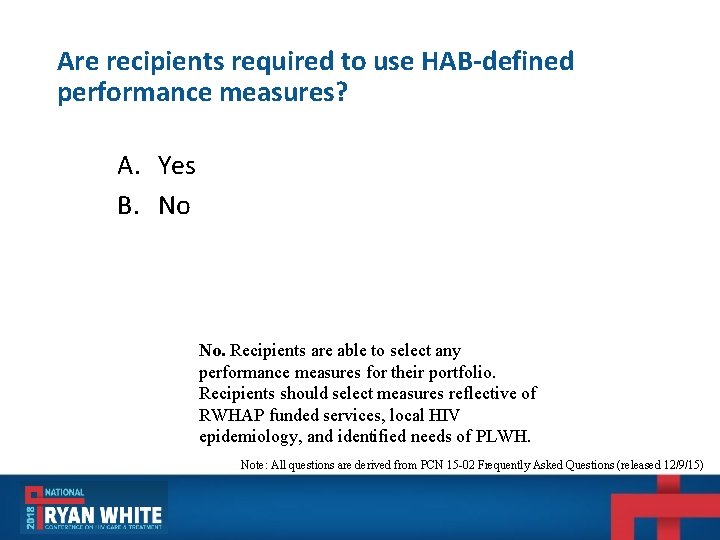
Are recipients required to use HAB-defined performance measures? A. Yes B. No No. Recipients are able to select any performance measures for their portfolio. Recipients should select measures reflective of RWHAP funded services, local HIV epidemiology, and identified needs of PLWH. Note: All questions are derived from PCN 15 -02 Frequently Asked Questions (released 12/9/15)
Principles for Quality Improvement
Success is achieved through meeting the needs of those we serve – is your organization ready?
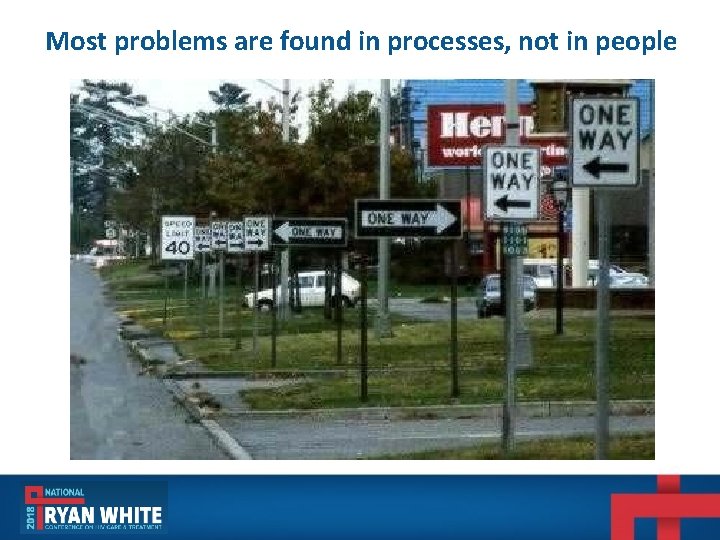
Most problems are found in processes, not in people
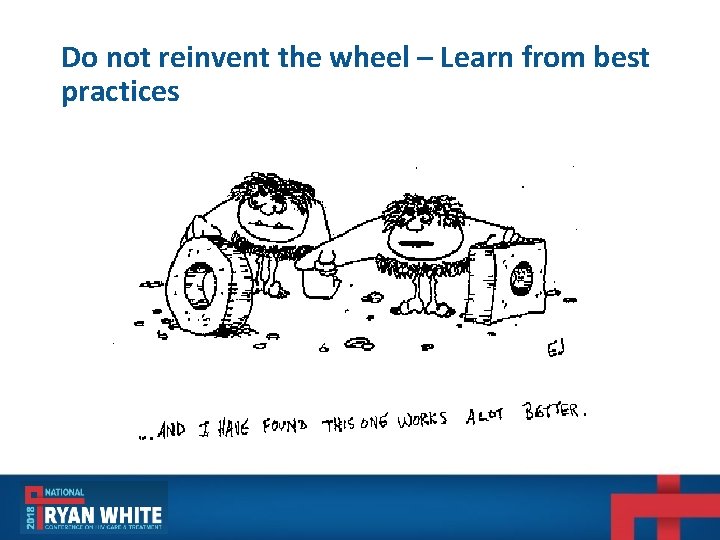
Do not reinvent the wheel – Learn from best practices
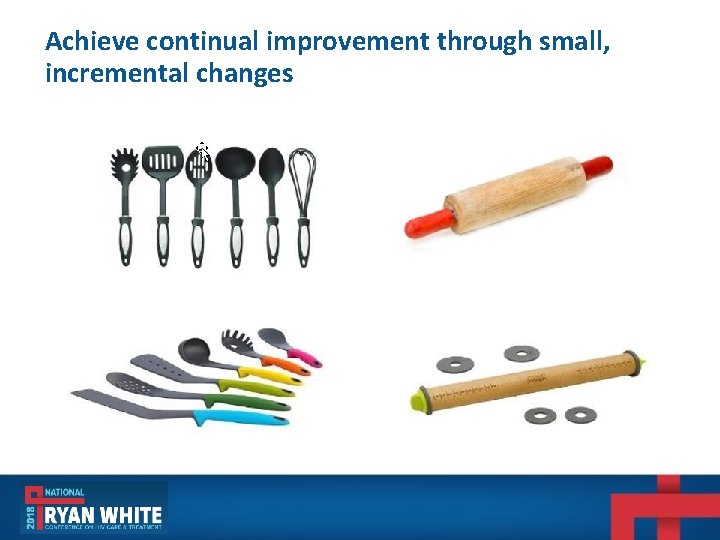
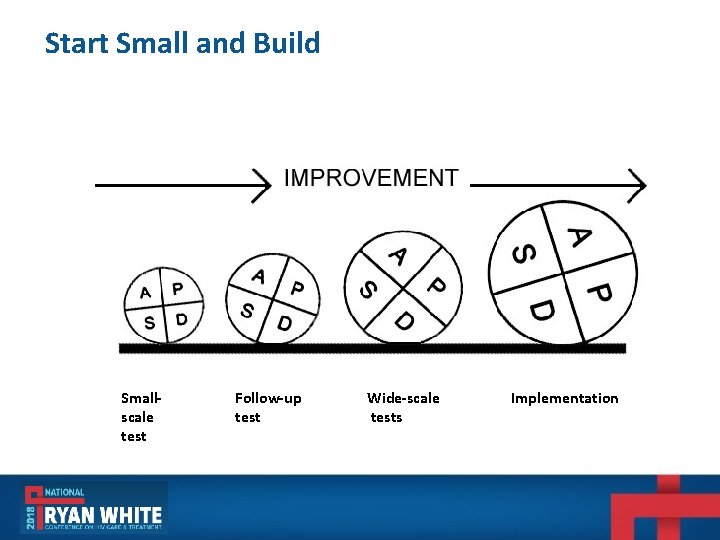
Achieve continual improvement through small, incremental changes
Actions are based upon accurate and measured data
Infrastructure enhances systematic implementation of improvement activities Clinical Quality Management Program
Set priorities and communicate clearly
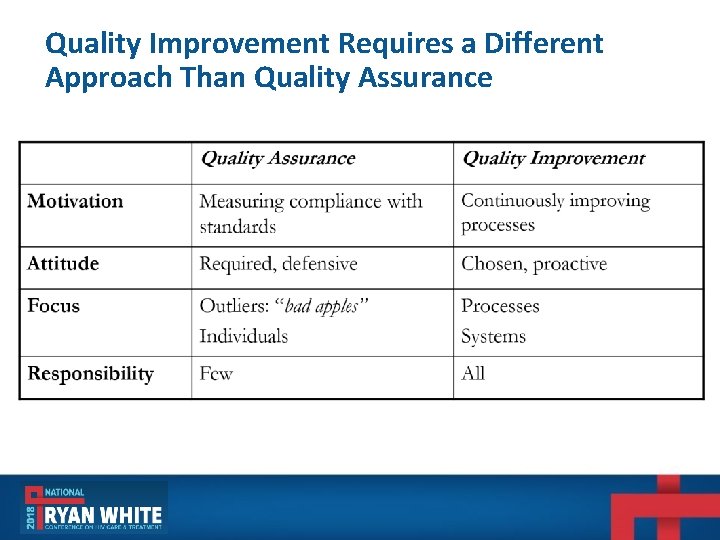
Quality Improvement Requires a Different Approach Than Quality Assurance
Tennis Ball Game
Tennis Ball Game • Form a circle of 6 -8 individuals with one external person to be the timekeeper • The first person throws the ball to the person across from him/her in the circle • Remember to whom you threw it • The receiver throws it to another person who has not touched the ball yet, and so on till each in the group touched the ball • The last person passes it to the start person
Tennis Ball Game Objective of the Game: • Reduce the cycle time of your team using the rules below. Rules: • Start and stop with same person • Maintain the same sequence • Don’t drop the ball
Let’s Play
Tennis Ball Debrief • What contributed to the improved cycle times? • Was every change you tried an improvement? Why not? • How important was the ‘trial and error’ approach to reduce the cycle time? • How important was the measurement of cycle times to know whether new ideas yielded an improvement? • How important were the contributions of team members?
PDSA Cycles
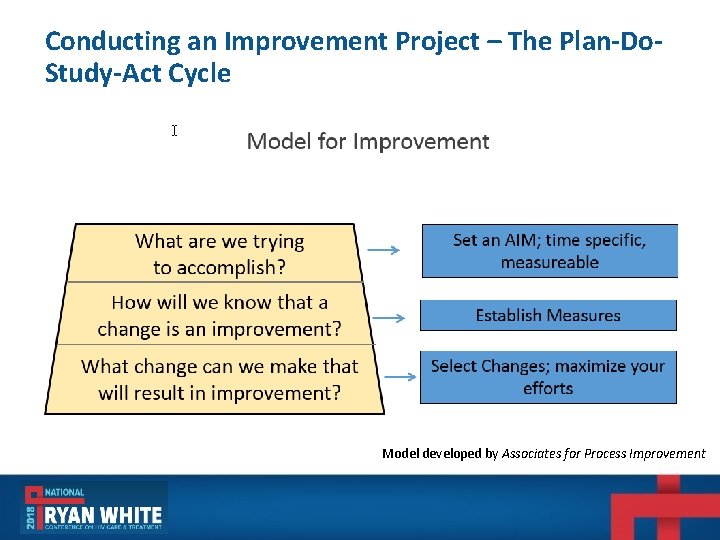
Conducting an Improvement Project – The Plan-Do. Study-Act Cycle Model developed by Associates for Process Improvement
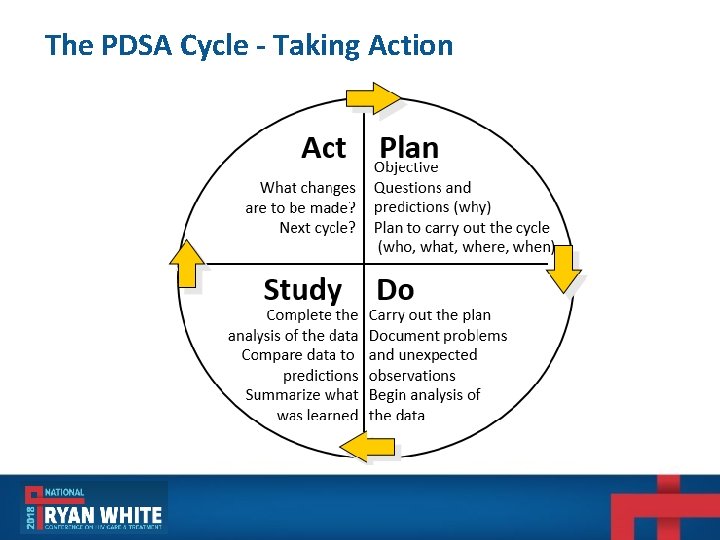
The PDSA Cycle - Taking Action
Why Test? • Increase your confidence that the change will result in improvement in your organization • Learn how to adapt the change to conditions in the local environment • Minimize resistance when you move to implementation
How Do Tests Lead to Improvements? • You learn something from each test • That knowledge gets incorporated into the next test • Over time, as you build knowledge and expertise, you design a change that will result in improvement
Start Small and Build Smallscale test Follow-up test Wide-scale tests Implementation
Tips for PDSA Cycles • “What change could you implement by next Tuesday? ” • Use the “Rule of 1”: • • 1 facility 1 office 1 provider 1 patient Volunteers at first Data, data Learn from others – successes and failures teach us something Just get started!
QI in the Real World I
QI In The Real World: Quality Improvement at the Ryan White Wellness Center Charleston, SC
Who We Are, What We Do • • Ryan White Part C Recipient, Part D Subrecipient 7 Counties surrounding Charleston, SC Rural, coastal South Carolina Serve 800 – 900 patients annually • • HIV & Primary Care Pr. EP Mental Health Medical Case Management Housing Peer Navigation Transportation Contracted specialty and supplemental services
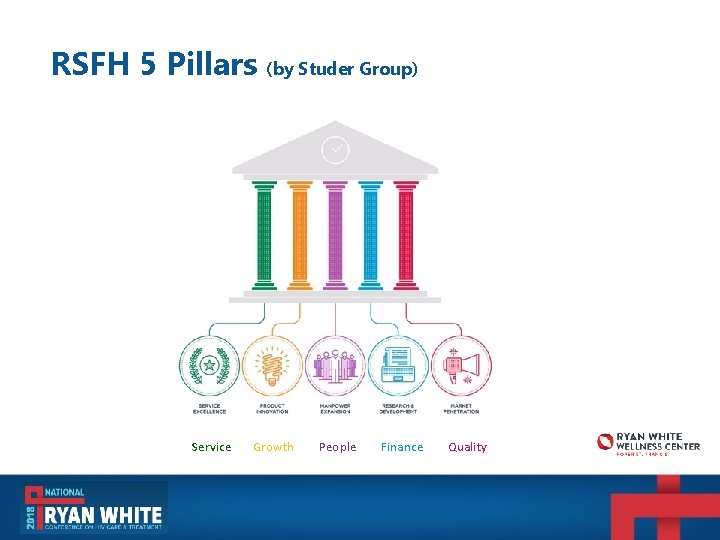
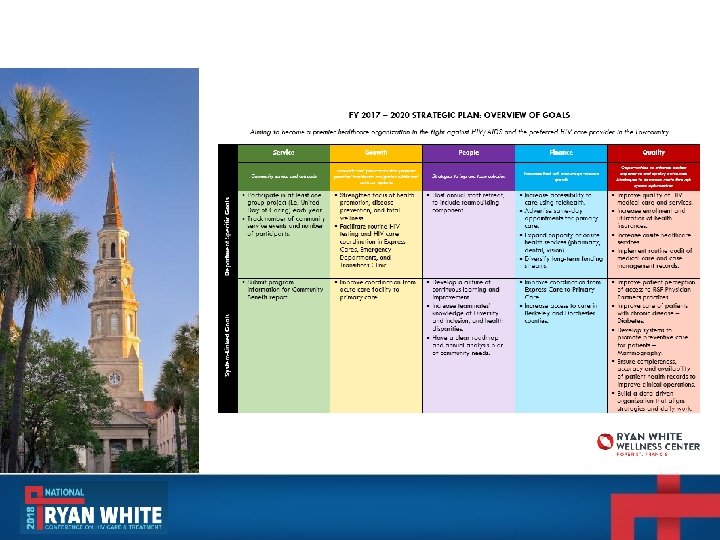
RSFH 5 Pillars (by Studer Group) Service Growth People Finance Quality
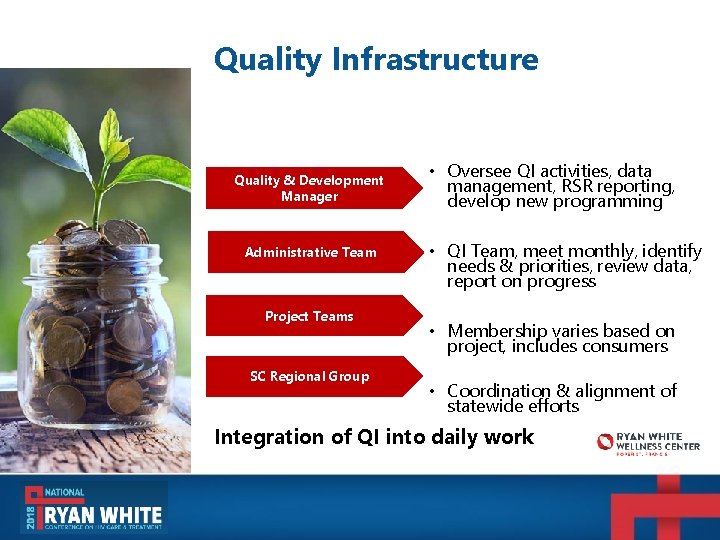
Quality Infrastructure Quality & Development Manager Administrative Team Project Teams SC Regional Group • Oversee QI activities, data management, RSR reporting, develop new programming • QI Team, meet monthly, identify needs & priorities, review data, report on progress • Membership varies based on project, includes consumers • Coordination & alignment of statewide efforts Integration of QI into daily work
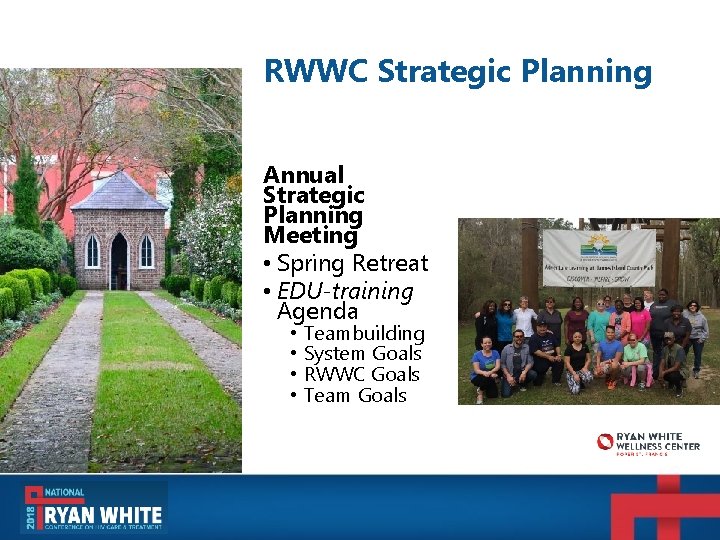
RWWC Strategic Planning Annual Strategic Planning Meeting • Spring Retreat • EDU-training Agenda • • Teambuilding System Goals RWWC Goals Team Goals
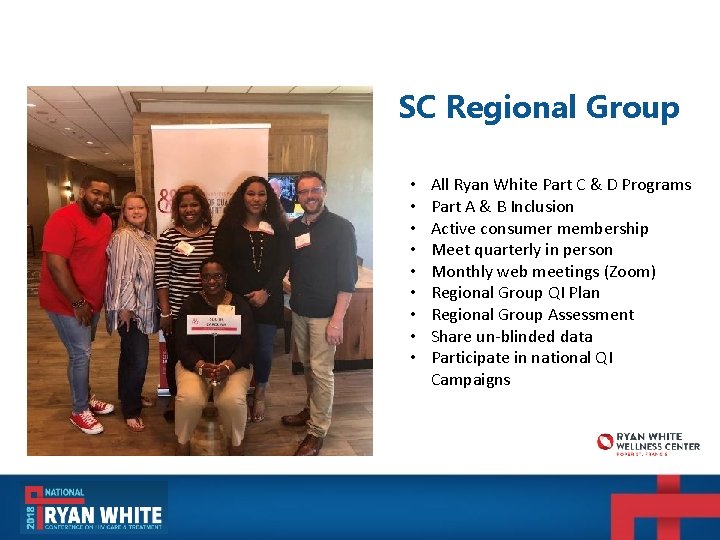
SC Regional Group • • • All Ryan White Part C & D Programs Part A & B Inclusion Active consumer membership Meet quarterly in person Monthly web meetings (Zoom) Regional Group QI Plan Regional Group Assessment Share un-blinded data Participate in national QI Campaigns
Highlights & Hurdles High Quality, High Engagement • 92% Optimally Retained • 91% Virally Suppressed • 99% Newly Diagnosed Patients Receive ARV on Their First Visit Barriers & Stressors • Busy Schedules/Competing Priorities • Engage Your Staff • Documentation • Consumer Involvement • Share What You’ve Accomplished!
Call. Email. Tweet. Like. Aaron O’Brien, MPH Quality & Development Manager Aaron. Obrien@rsfh. com // 843. 402. 1084 1481 Tobias Gadson Blvd Charleston, SC 29407 Instagram, Facebook Ryan White Wellness Center Twitter @ryanwhitersfh
QI in the Real World II
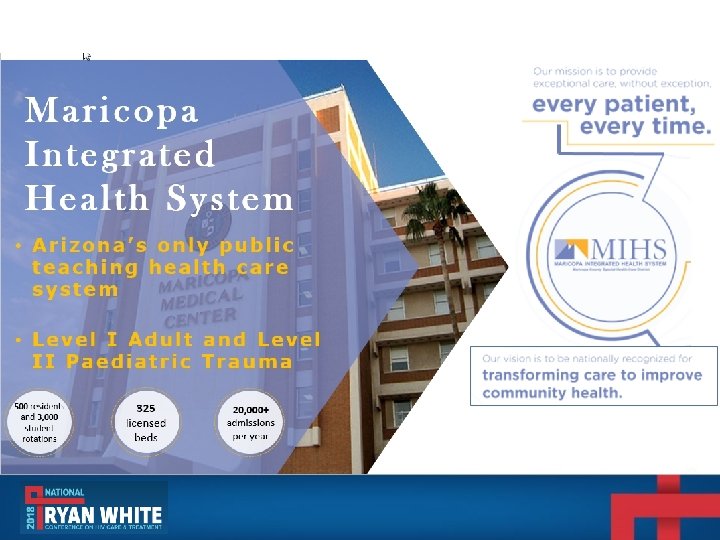
Quality Improvement 101 The MIHS Experience Taylor Kirkman, LMSW HIV Care Continuum Manager Maricopa Integrated Health System
Acknowledgements Funded in whole or in part by the United States Department of Health and Human Services, Health Resources and Services Administration, the Ryan White HIV/AIDS Treatment Extension Act of 2011, the Maricopa County Ryan White Part A Program, and the Maricopa Integrated Health System. Additional funding is provided by the Arizona Department of Health Services, Disease Integration and Services, HIV Care and Services Program through AIDS Drug Assistance Program pharmaceutical rebate funds.
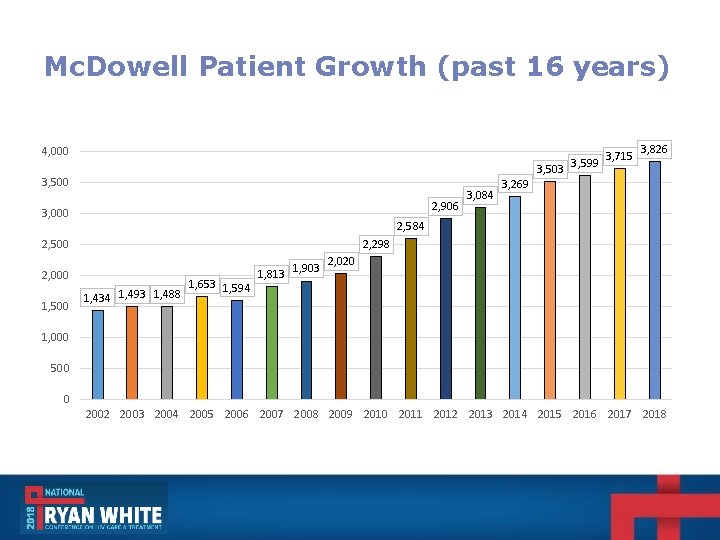
Mc. Dowell Patient Growth (past 16 years) 4, 000 3, 500 2, 906 3, 000 3, 269 3, 715 3, 826 2, 584 2, 298 2, 500 2, 000 1, 500 3, 084 3, 503 3, 599 1, 434 1, 493 1, 488 1, 653 1, 594 1, 813 1, 903 2, 020 1, 000 500 0 2002 2003 2004 2005 2006 2007 2008 2009 2010 2011 2012 2013 2014 2015 2016 2017 2018
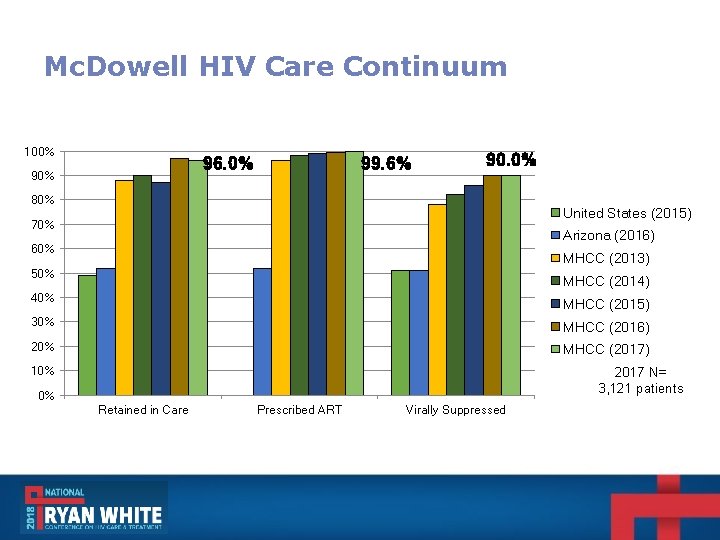
Mc. Dowell HIV Care Continuum 100% 96. 0% 99. 6% 90. 0% 80% United States (2015) 70% Arizona (2016) 60% MHCC (2013) 50% MHCC (2014) 40% MHCC (2015) 30% MHCC (2016) 20% MHCC (2017) 10% 2017 N= 3, 121 patients 0% Retained in Care Prescribed ART Virally Suppressed
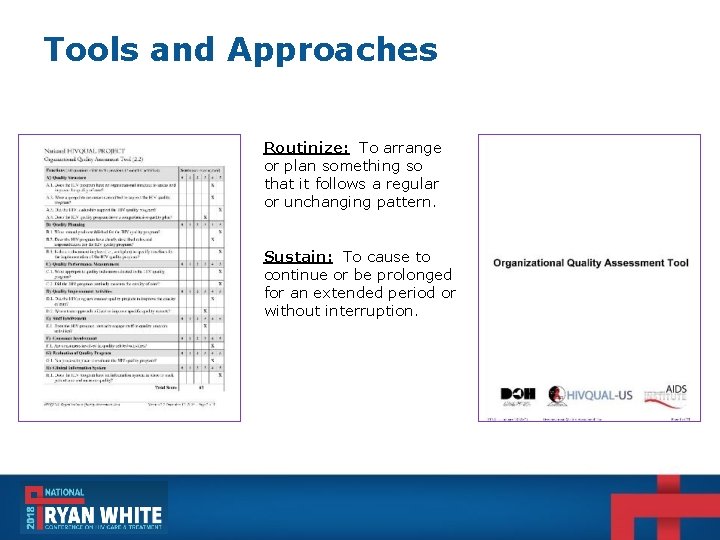
Tools and Approaches Routinize: To arrange or plan something so that it follows a regular or unchanging pattern. Sustain: To cause to continue or be prolonged for an extended period or without interruption.
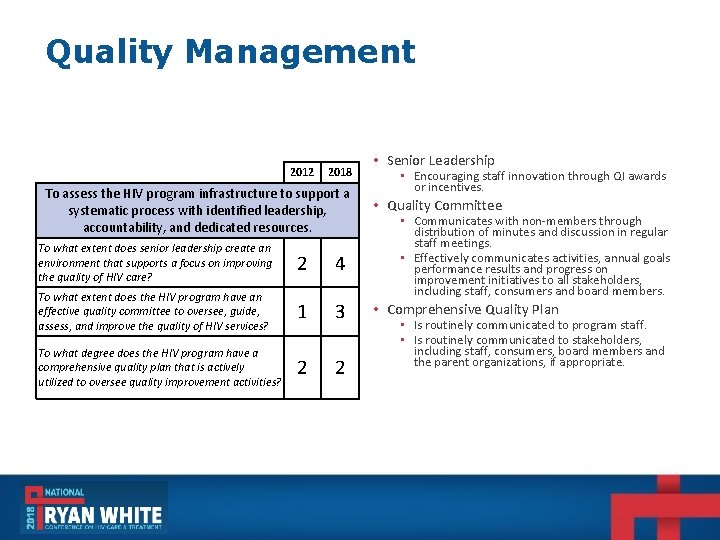
Quality Management 2012 2018 To assess the HIV program infrastructure to support a systematic process with identified leadership, accountability, and dedicated resources. To what extent does senior leadership create an environment that supports a focus on improving the quality of HIV care? 2 4 To what extent does the HIV program have an effective quality committee to oversee, guide, assess, and improve the quality of HIV services? 1 3 To what degree does the HIV program have a comprehensive quality plan that is actively utilized to oversee quality improvement activities? 2 2 • Senior Leadership • Encouraging staff innovation through QI awards or incentives. • Quality Committee • Communicates with non-members through distribution of minutes and discussion in regular staff meetings. • Effectively communicates activities, annual goals performance results and progress on improvement initiatives to all stakeholders, including staff, consumers and board members. • Comprehensive Quality Plan • Is routinely communicated to program staff. • Is routinely communicated to stakeholders, including staff, consumers, board members and the parent organizations, if appropriate.
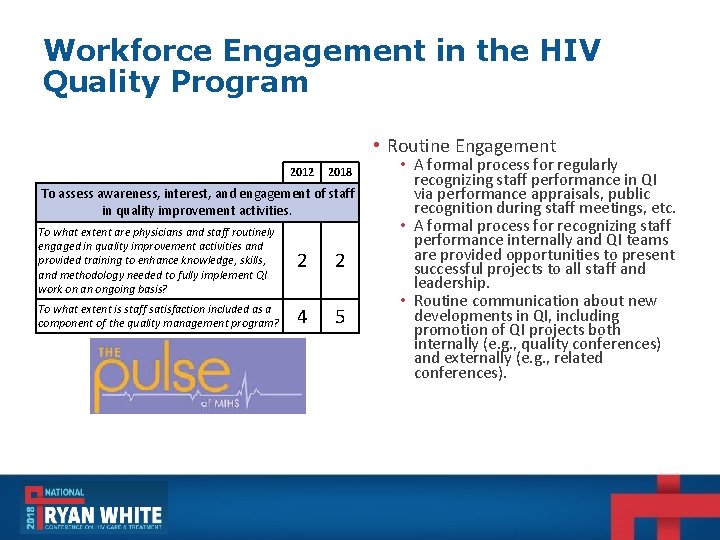
Workforce Engagement in the HIV Quality Program • Routine Engagement 2012 2018 To assess awareness, interest, and engagement of staff in quality improvement activities. To what extent are physicians and staff routinely engaged in quality improvement activities and provided training to enhance knowledge, skills, and methodology needed to fully implement QI work on an ongoing basis? 2 2 To what extent is staff satisfaction included as a component of the quality management program? 4 5 • A formal process for regularly recognizing staff performance in QI via performance appraisals, public recognition during staff meetings, etc. • A formal process for recognizing staff performance internally and QI teams are provided opportunities to present successful projects to all staff and leadership. • Routine communication about new developments in QI, including promotion of QI projects both internally (e. g. , quality conferences) and externally (e. g. , related conferences).
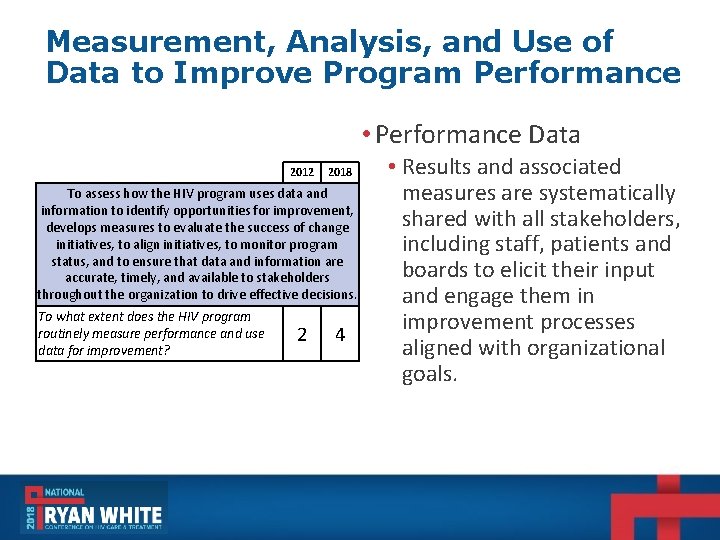
Measurement, Analysis, and Use of Data to Improve Program Performance • Performance Data 2012 2018 To assess how the HIV program uses data and information to identify opportunities for improvement, develops measures to evaluate the success of change initiatives, to align initiatives, to monitor program status, and to ensure that data and information are accurate, timely, and available to stakeholders throughout the organization to drive effective decisions. To what extent does the HIV program routinely measure performance and use data for improvement? 2 4 • Results and associated measures are systematically shared with all stakeholders, including staff, patients and boards to elicit their input and engage them in improvement processes aligned with organizational goals.
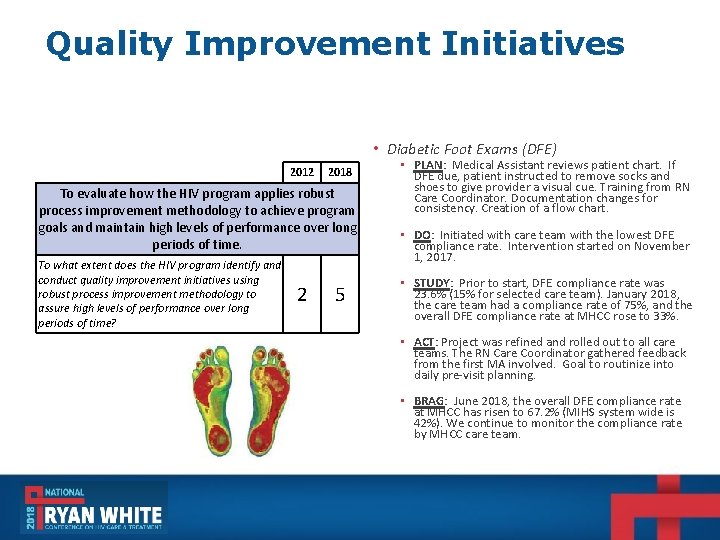
Quality Improvement Initiatives • Diabetic Foot Exams (DFE) 2012 2018 To evaluate how the HIV program applies robust process improvement methodology to achieve program goals and maintain high levels of performance over long periods of time. To what extent does the HIV program identify and conduct quality improvement initiatives using robust process improvement methodology to assure high levels of performance over long periods of time? 2 5 • PLAN: Medical Assistant reviews patient chart. If DFE due, patient instructed to remove socks and shoes to give provider a visual cue. Training from RN Care Coordinator. Documentation changes for consistency. Creation of a flow chart. • DO: Initiated with care team with the lowest DFE compliance rate. Intervention started on November 1, 2017. • STUDY: Prior to start, DFE compliance rate was 23. 6% (15% for selected care team). January 2018, the care team had a compliance rate of 75%, and the overall DFE compliance rate at MHCC rose to 33%. • ACT: Project was refined and rolled out to all care teams. The RN Care Coordinator gathered feedback from the first MA involved. Goal to routinize into daily pre-visit planning. • BRAG: June 2018, the overall DFE compliance rate at MHCC has risen to 67. 2% (MIHS system wide is 42%). We continue to monitor the compliance rate by MHCC care team.
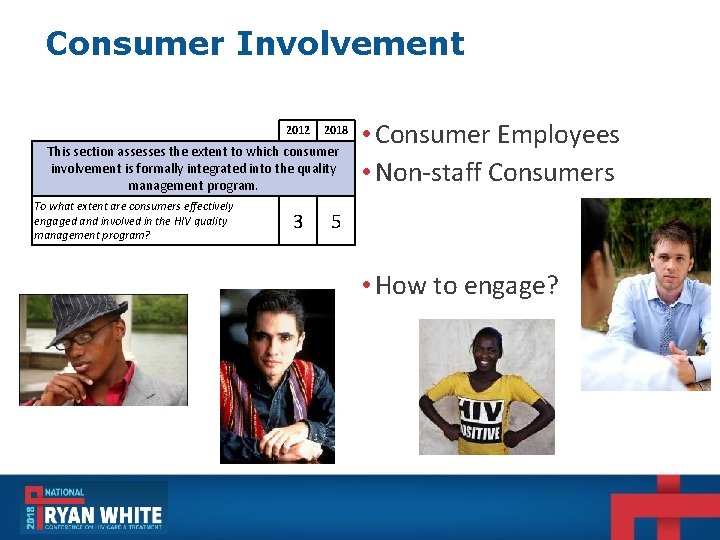
Consumer Involvement 2012 2018 This section assesses the extent to which consumer involvement is formally integrated into the quality management program. To what extent are consumers effectively engaged and involved in the HIV quality management program? 3 • Consumer Employees • Non-staff Consumers 5 • How to engage?
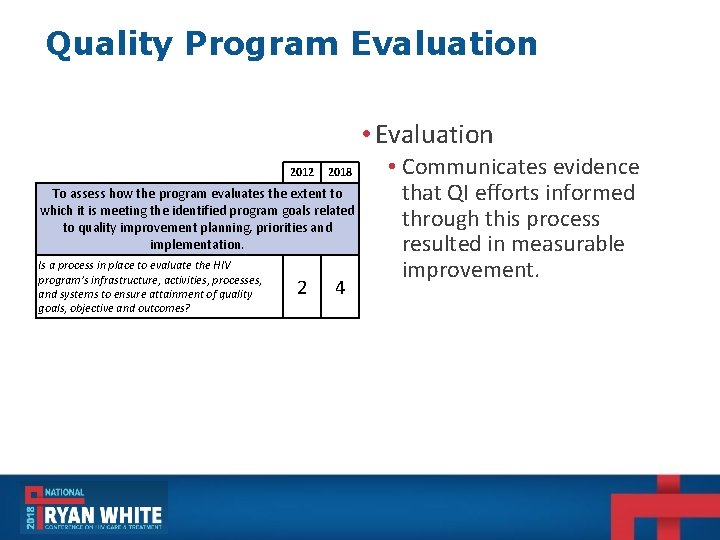
Quality Program Evaluation • Evaluation 2012 2018 To assess how the program evaluates the extent to which it is meeting the identified program goals related to quality improvement planning, priorities and implementation. Is a process in place to evaluate the HIV program’s infrastructure, activities, processes, and systems to ensure attainment of quality goals, objective and outcomes? 2 4 • Communicates evidence that QI efforts informed through this process resulted in measurable improvement.
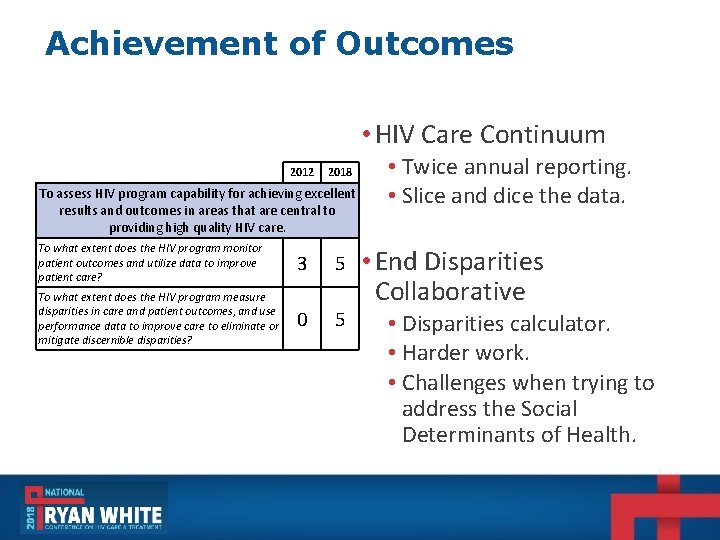
Achievement of Outcomes • HIV Care Continuum 2012 2018 To assess HIV program capability for achieving excellent results and outcomes in areas that are central to providing high quality HIV care. To what extent does the HIV program monitor patient outcomes and utilize data to improve patient care? 3 5 To what extent does the HIV program measure disparities in care and patient outcomes, and use performance data to improve care to eliminate or mitigate discernible disparities? 0 5 • Twice annual reporting. • Slice and dice the data. • End Disparities Collaborative • Disparities calculator. • Harder work. • Challenges when trying to address the Social Determinants of Health.
Don’t make it more complicated than necessary!
You Got This! CONTACT: Taylor Kirkman, LMSW HIV Care Continuum Manager Maricopa Integrated Health System 2601 E. Roosevelt Phoenix, AZ 85008 P 480 -344 -2460 F 480 -344 -2433 taylor. kirkman@mihs. org
Q&A
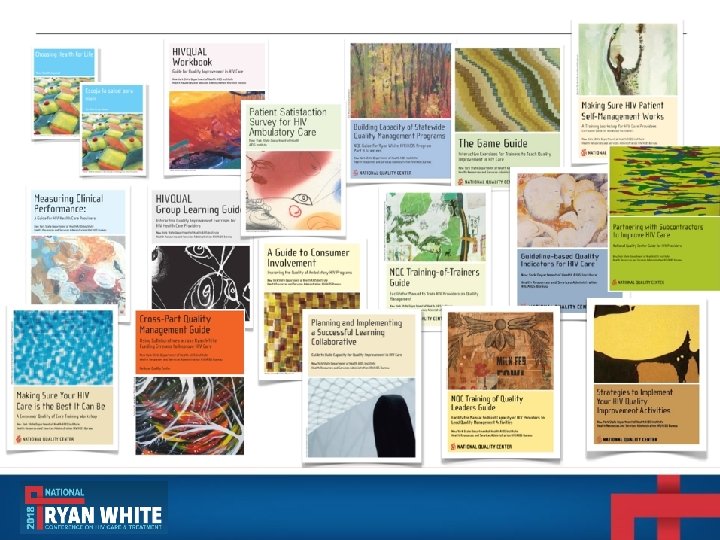
QI Resources
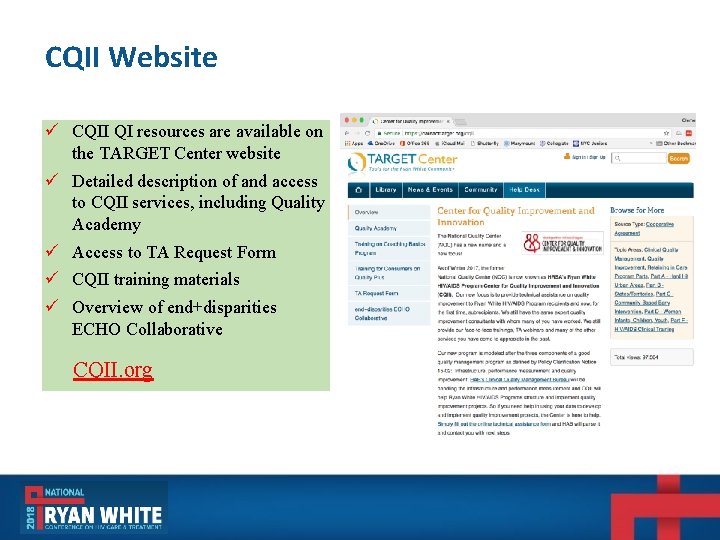
CQII Website ü CQII QI resources are available on the TARGET Center website ü Detailed description of and access to CQII services, including Quality Academy ü Access to TA Request Form ü CQII training materials ü Overview of end+disparities ECHO Collaborative CQII. org
Quality Academy üIn January 2007, online training course on quality improvement was launched üExpansion of Quality Academy in 2009 (English and Spanish) üConsists of 32 interactive tutorials, offering more than 800 training minutes and all presentation slides and notes are available for download üMost designed to last 15 -20 mins üOver 35, 000 tutorials have been taken üDeveloped a Consumers in Quality section of the Academy with consumer tutorials CAREAct. Target. org/library/qualityacademy
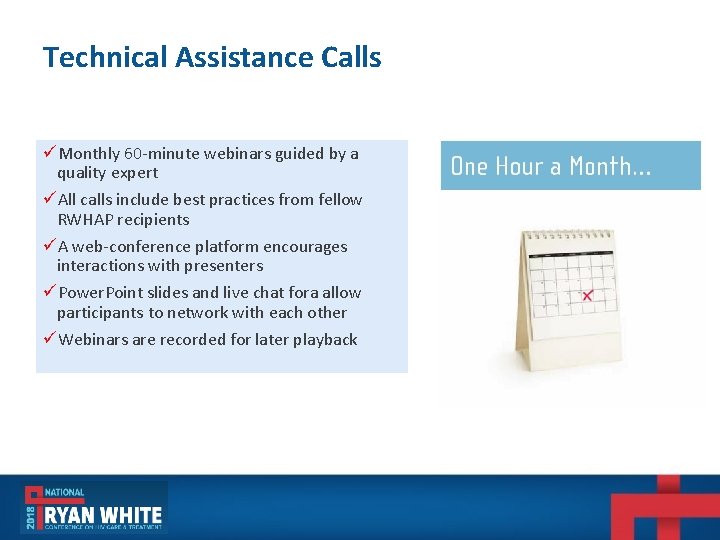
Technical Assistance Calls üMonthly 60 -minute webinars guided by a quality expert üAll calls include best practices from fellow RWHAP recipients üA web-conference platform encourages interactions with presenters üPower. Point slides and live chat fora allow participants to network with each other üWebinars are recorded for later playback
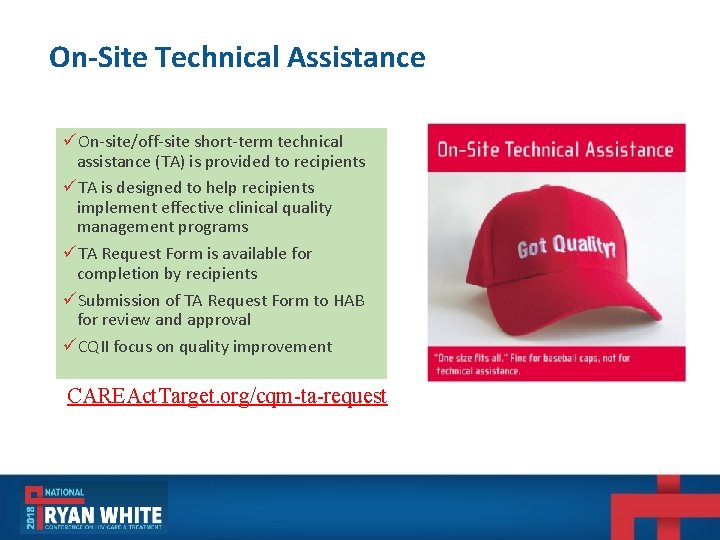
On-Site Technical Assistance üOn-site/off-site short-term technical assistance (TA) is provided to recipients üTA is designed to help recipients implement effective clinical quality management programs üTA Request Form is available for completion by recipients üSubmission of TA Request Form to HAB for review and approval üCQII focus on quality improvement CAREAct. Target. org/cqm-ta-request
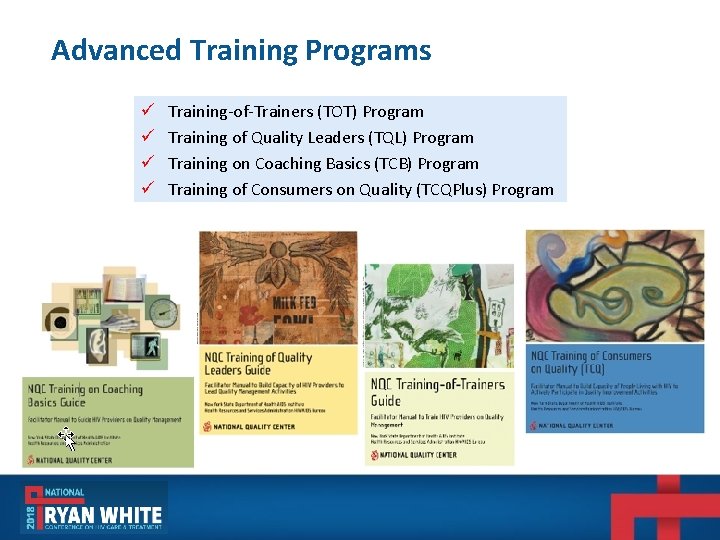
Advanced Training Programs ü ü Training-of-Trainers (TOT) Program Training of Quality Leaders (TQL) Program Training on Coaching Basics (TCB) Program Training of Consumers on Quality (TCQPlus) Program
Aha! Moments
Highlights & Aha! Moments • What have been some of your personal highlights or Aha! Moments from today’s session?
CQII at the RW Conference
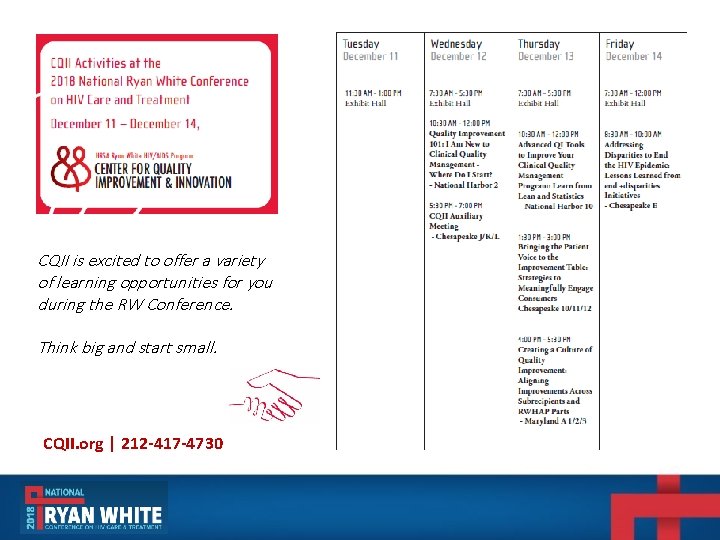
CQII is excited to offer a variety of learning opportunities for you during the RW Conference. Think big and start small. CQII. org | 212 -417 -4730
Clemens Steinbock, CQII Director Info@CQII. org 212 -417 -4730