Pressure on Fluids Write all things typed in
- Slides: 53
Pressure on Fluids Write all things typed in BLACK and examples that help you study
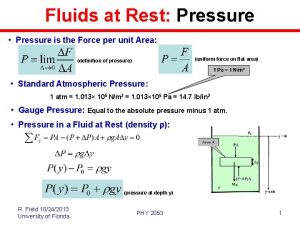
What is pressure? • Pressure is the force per unit area that is applied on the surface of an object • Pressure occurs at the points of contact between the two objects • The amount of pressure depends upon the strength of the force and on the size of the surface area over which the force acts
Area and Pressure • Area and pressure have an inverse relationship (indirect relationship) • This means these 2 variables change opposite to each other (one goes up, the other goes down, and vice versa)!
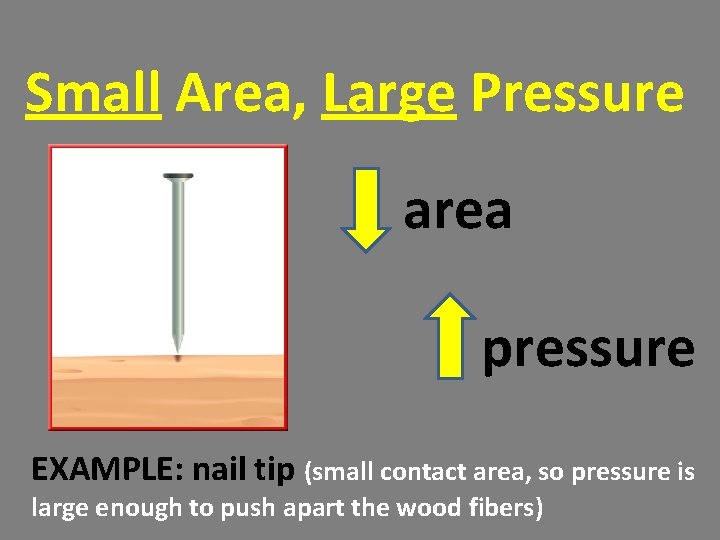
Small Area, Large Pressure area pressure EXAMPLE: nail tip (small contact area, so pressure is large enough to push apart the wood fibers)
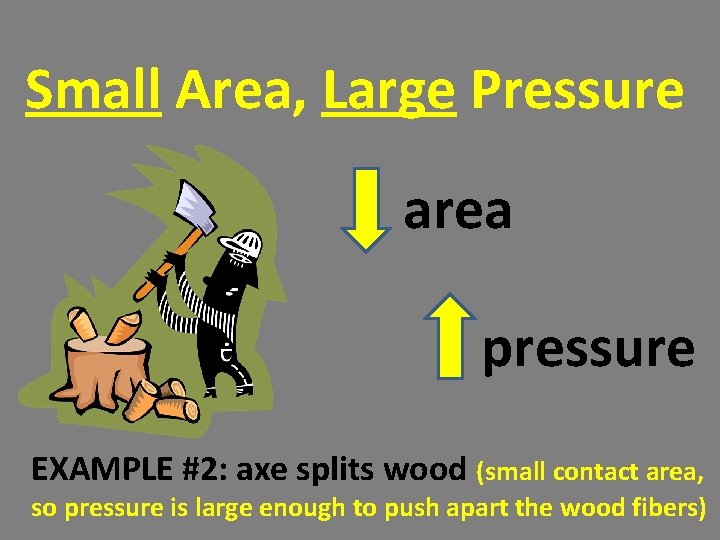
Small Area, Large Pressure area pressure EXAMPLE #2: axe splits wood (small contact area, so pressure is large enough to push apart the wood fibers)
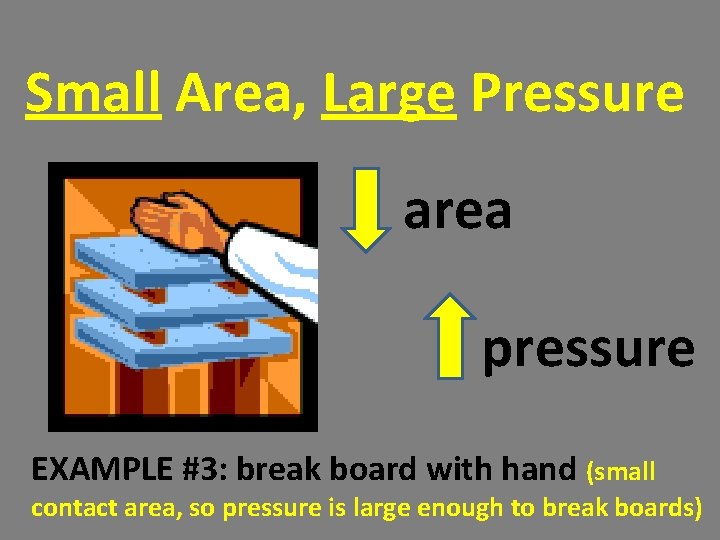
Small Area, Large Pressure area pressure EXAMPLE #3: break board with hand (small contact area, so pressure is large enough to break boards)
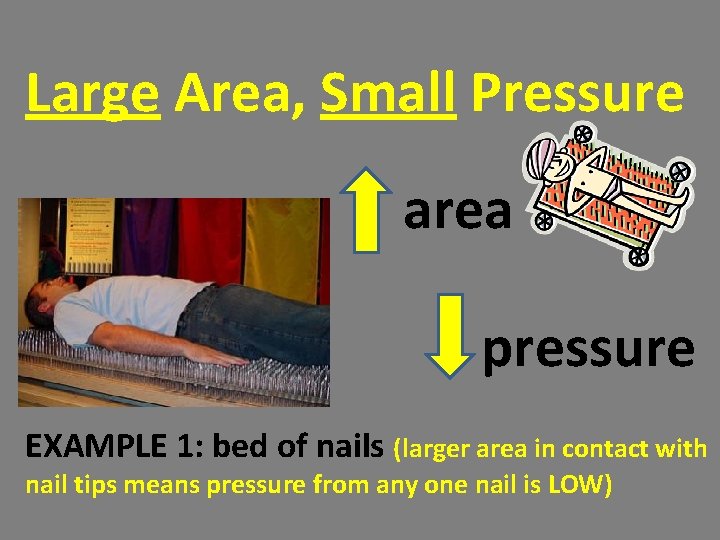
Large Area, Small Pressure area pressure EXAMPLE 1: bed of nails (larger area in contact with nail tips means pressure from any one nail is LOW)
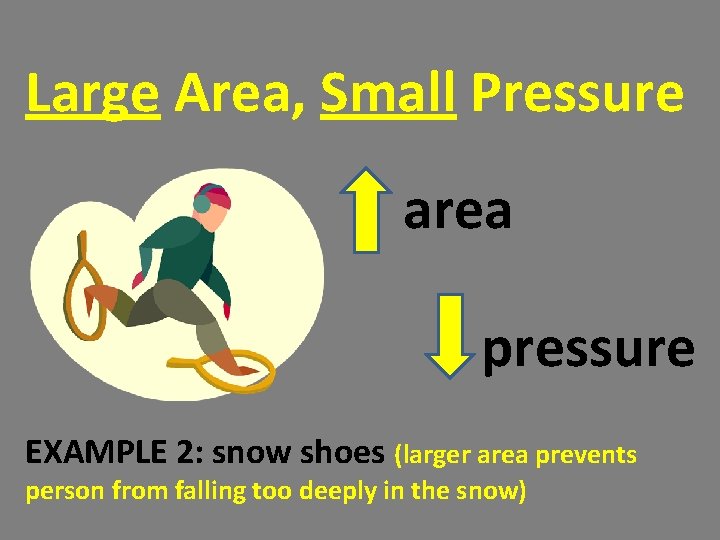
Large Area, Small Pressure area pressure EXAMPLE 2: snow shoes (larger area prevents person from falling too deeply in the snow)
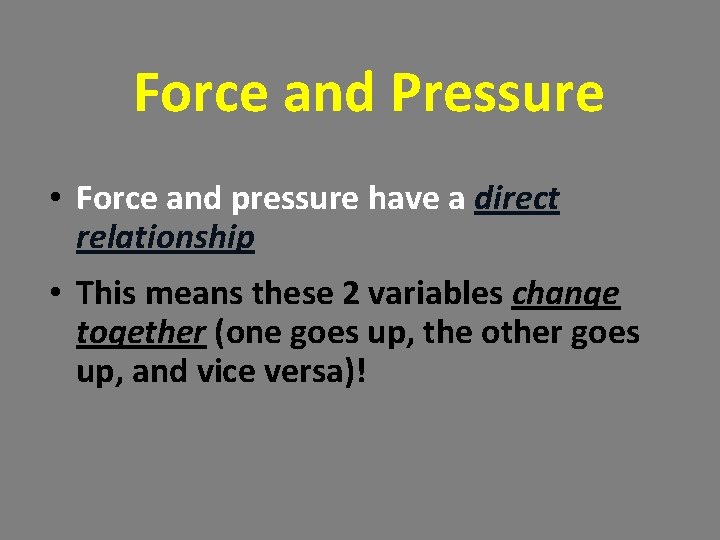
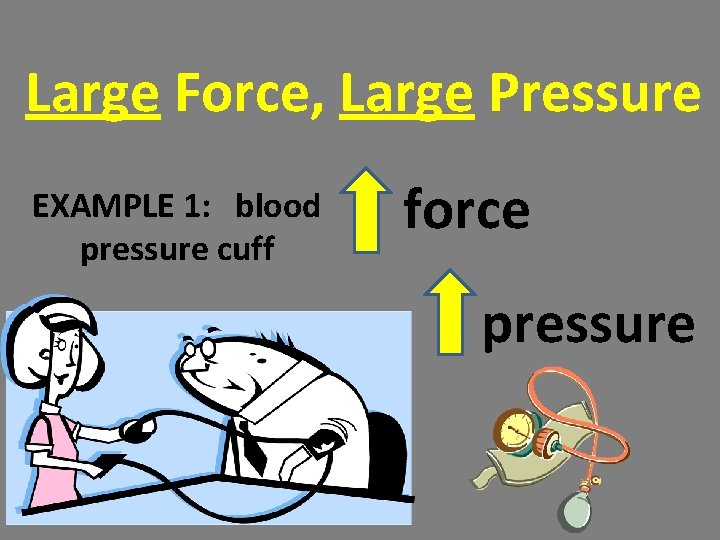
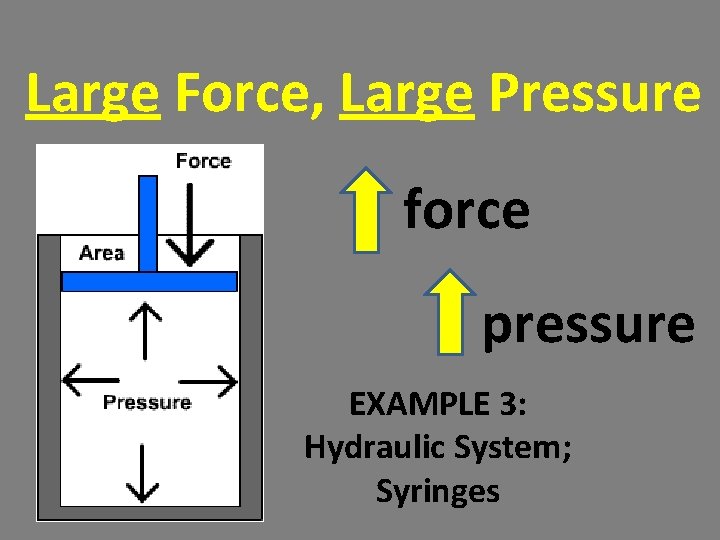
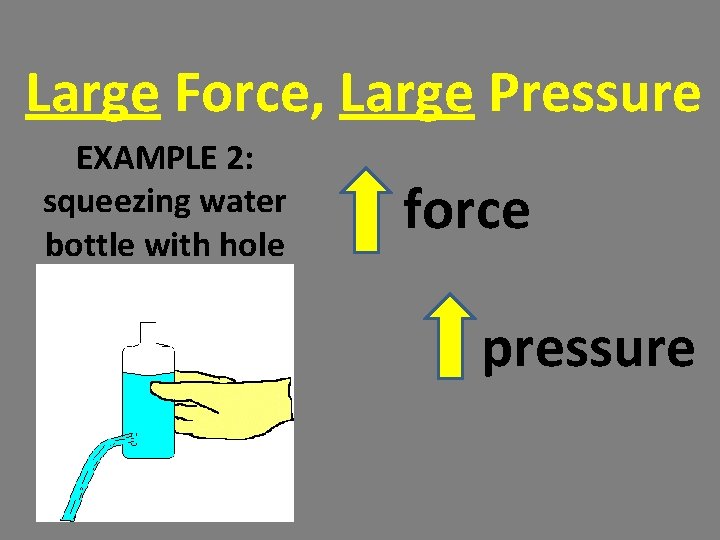
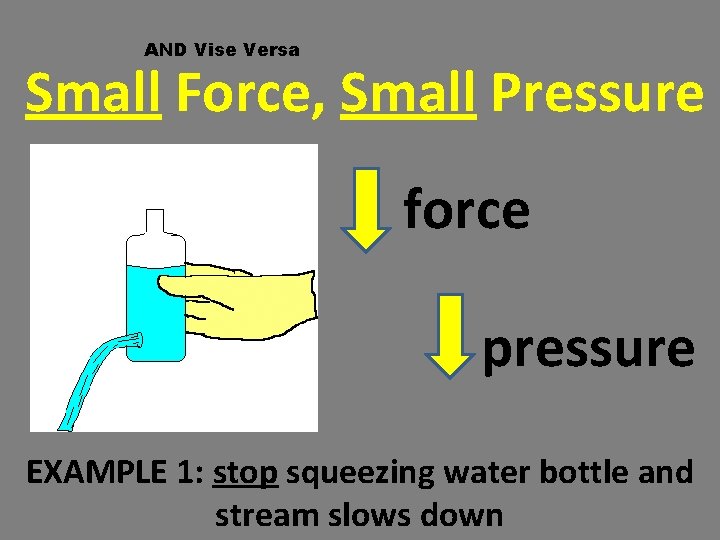
Force and Pressure • Force and pressure have a direct relationship • This means these 2 variables change together (one goes up, the other goes up, and vice versa)!
Large Force, Large Pressure EXAMPLE 1: blood pressure cuff force pressure
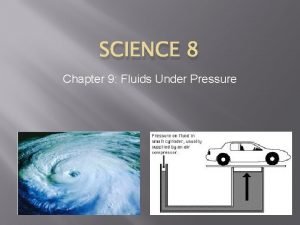
Large Force, Large Pressure force pressure EXAMPLE 3: Hydraulic System; Syringes
Large Force, Large Pressure EXAMPLE 2: squeezing water bottle with hole force pressure
AND Vise Versa Small Force, Small Pressure force pressure EXAMPLE 1: stop squeezing water bottle and stream slows down
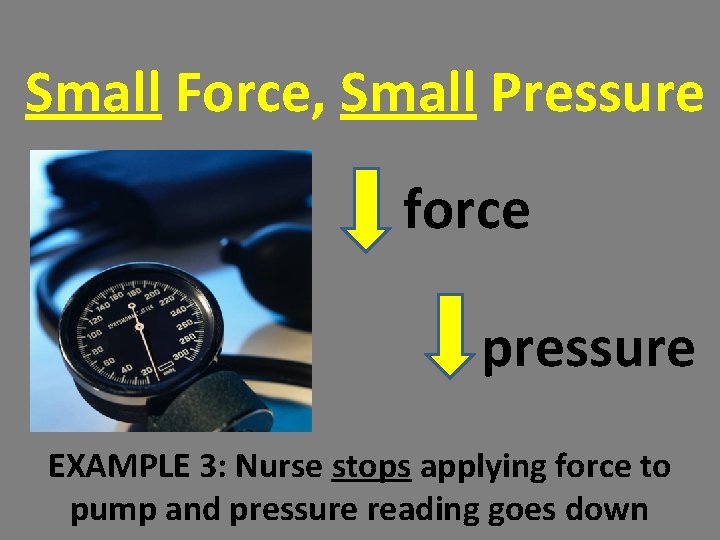
Small Force, Small Pressure force pressure EXAMPLE 3: Nurse stops applying force to pump and pressure reading goes down
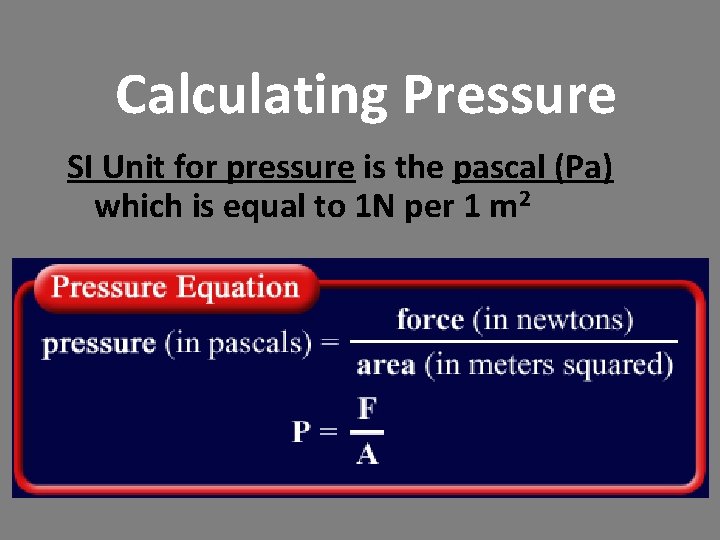
Calculating Pressure SI Unit for pressure is the pascal (Pa) which is equal to 1 N per 1 m 2
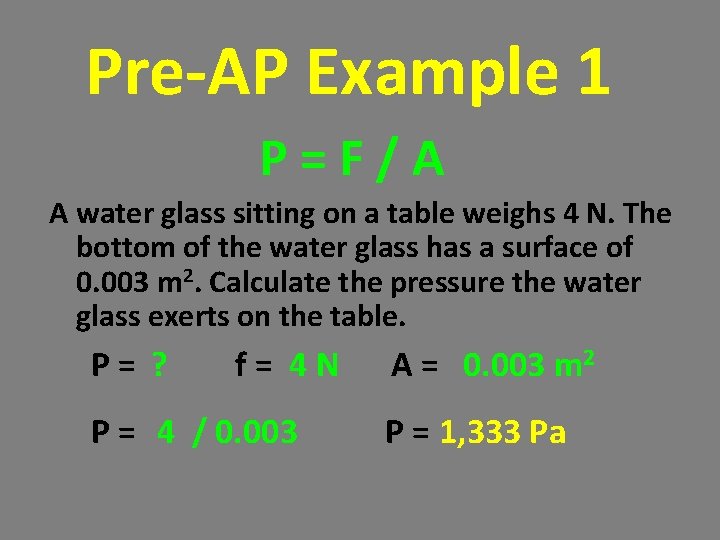
Pre-AP Example 1 P=F/A A water glass sitting on a table weighs 4 N. The bottom of the water glass has a surface of 0. 003 m 2. Calculate the pressure the water glass exerts on the table. P= ? f= 4 N P = 4 / 0. 003 A = 0. 003 m 2 P = 1, 333 Pa
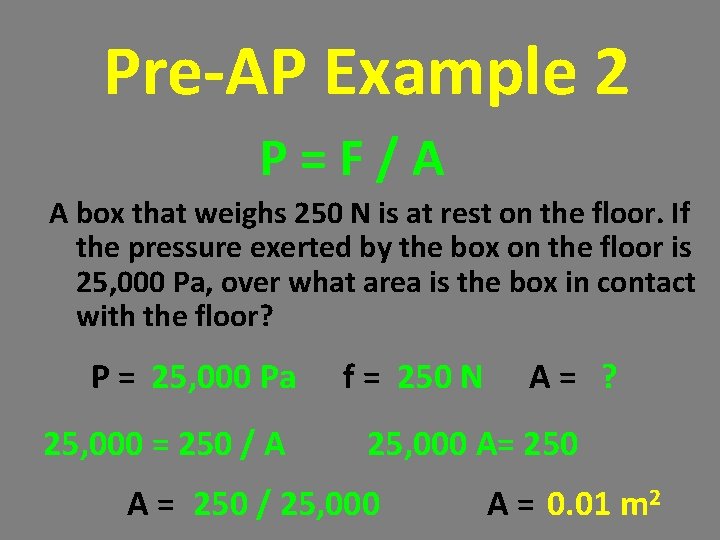
Pre-AP Example 2 P=F/A A box that weighs 250 N is at rest on the floor. If the pressure exerted by the box on the floor is 25, 000 Pa, over what area is the box in contact with the floor? P = 25, 000 Pa 25, 000 = 250 / A f = 250 N A= ? 25, 000 A= 250 A = 250 / 25, 000 A = 0. 01 m 2
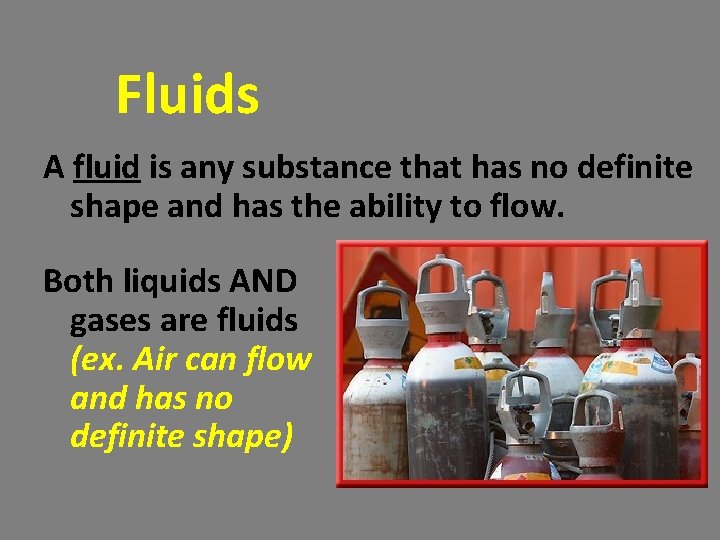
Fluids A fluid is any substance that has no definite shape and has the ability to flow. Both liquids AND gases are fluids (ex. Air can flow and has no definite shape)
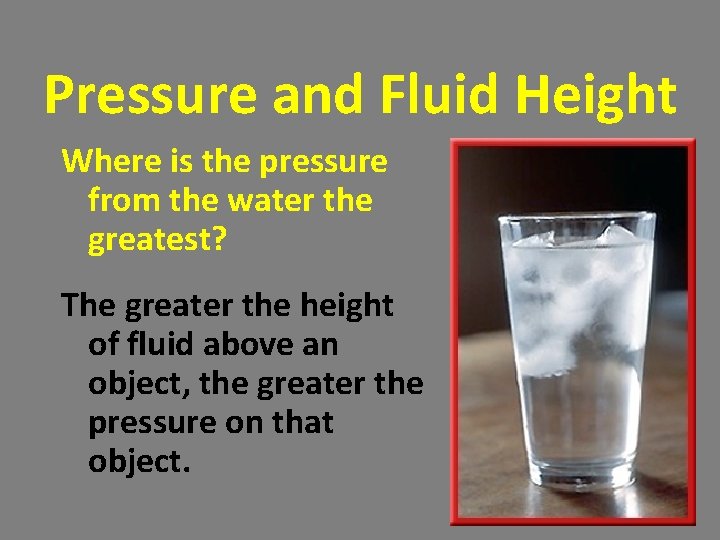
Pressure and Fluid Height Where is the pressure from the water the greatest? The greater the height of fluid above an object, the greater the pressure on that object.
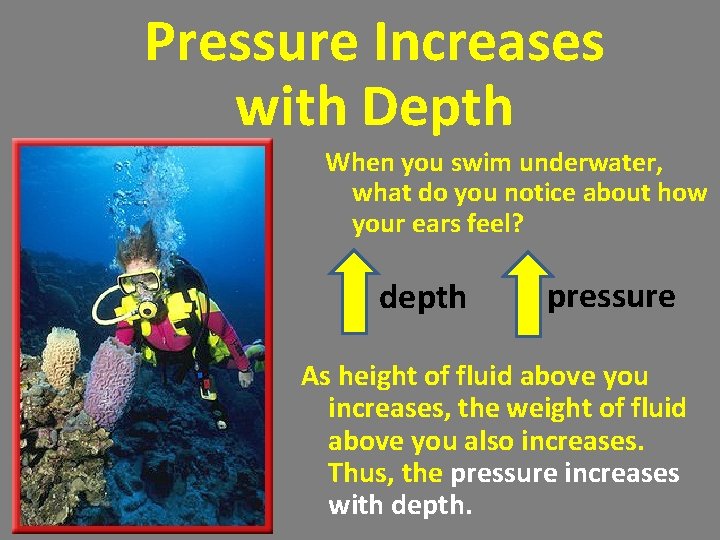
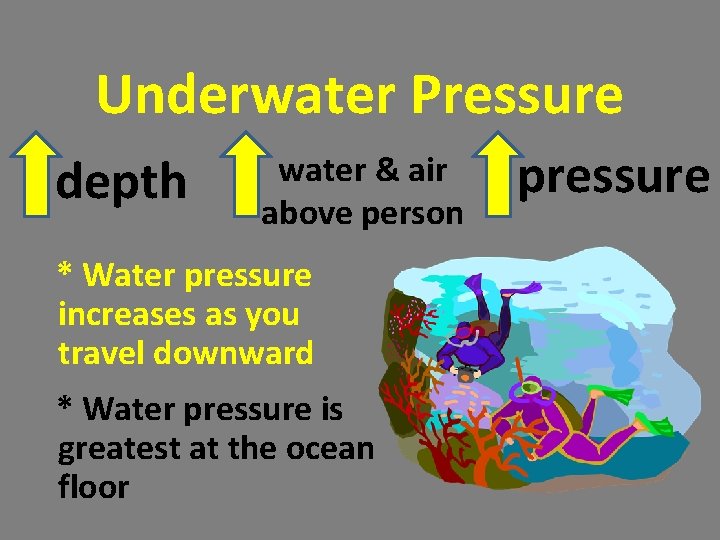
Pressure Increases with Depth When you swim underwater, what do you notice about how your ears feel? depth pressure As height of fluid above you increases, the weight of fluid above you also increases. Thus, the pressure increases with depth.
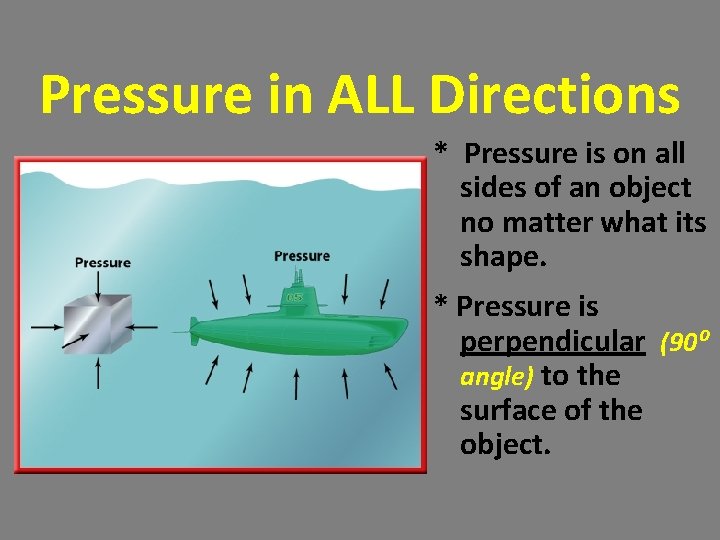
Pressure in ALL Directions * Pressure is on all sides of an object no matter what its shape. * Pressure is perpendicular (90⁰ angle) to the surface of the object.
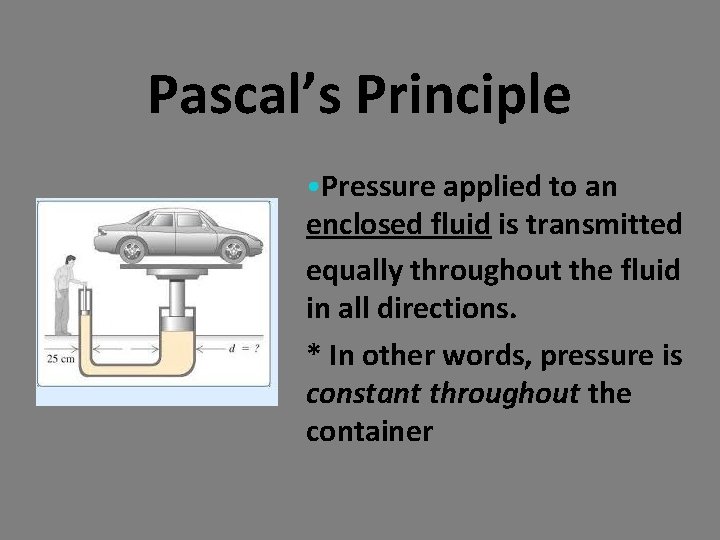
Pascal’s Principle • Pressure applied to an enclosed fluid is transmitted equally throughout the fluid in all directions. * In other words, pressure is constant throughout the container
Other examples of Pascal’s Principle • Example 1: You squeeze a tube of toothpaste. The pressure of the toothpaste does not just go up at the place where you are squeezing it. It goes up by the same amount everywhere in the tube. • Example 2: If someone is choking and you do the Heimlich maneuver, you apply a force to his abdomen. The increase in pressure is transmitted to his throat and dislodges the food on which he was choking.
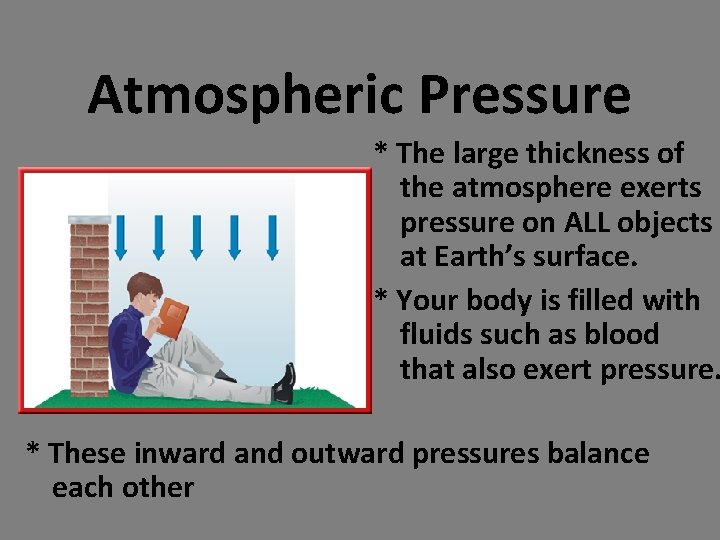
Atmospheric Pressure * The large thickness of the atmosphere exerts pressure on ALL objects at Earth’s surface. * Your body is filled with fluids such as blood that also exert pressure. * These inward and outward pressures balance each other
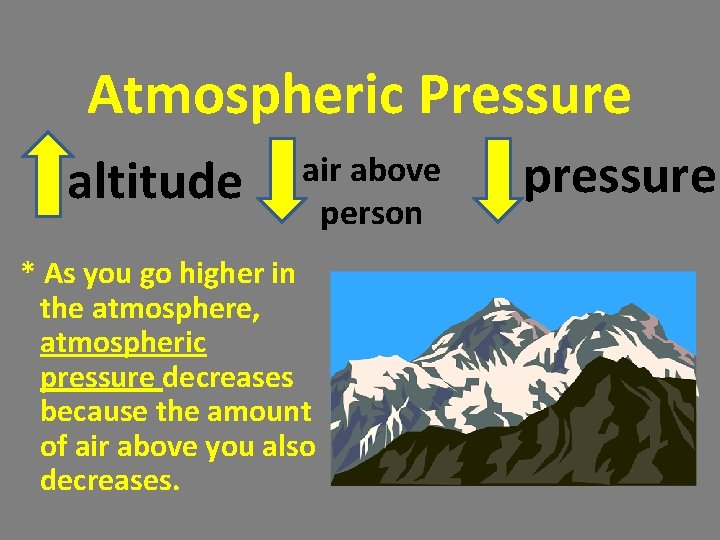
Atmospheric Pressure altitude air above person * As you go higher in the atmosphere, atmospheric pressure decreases because the amount of air above you also decreases. pressure
Underwater Pressure depth water & air above person * Water pressure increases as you travel downward * Water pressure is greatest at the ocean floor pressure
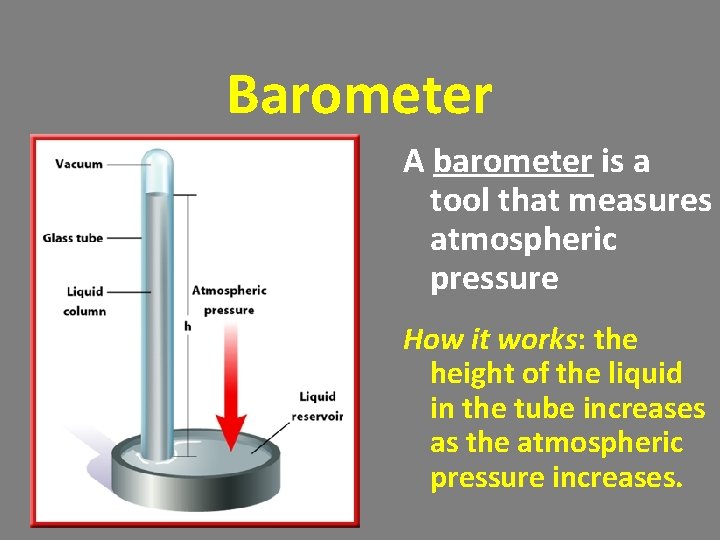
Barometer A barometer is a tool that measures atmospheric pressure How it works: the height of the liquid in the tube increases as the atmospheric pressure increases.
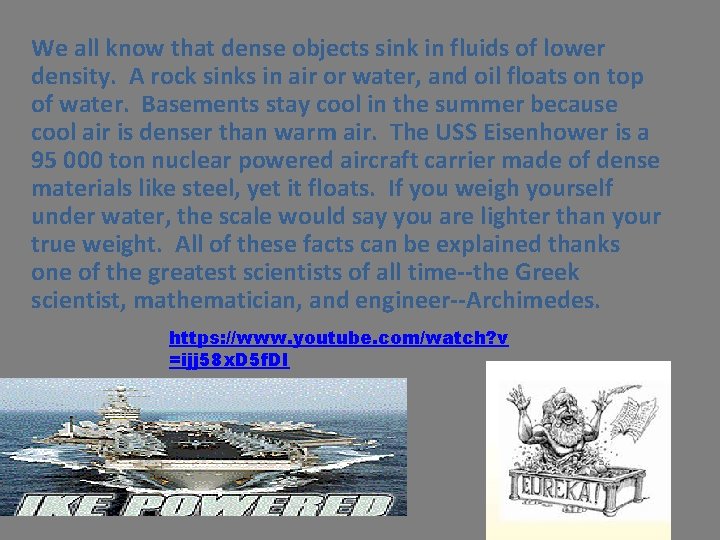
We all know that dense objects sink in fluids of lower density. A rock sinks in air or water, and oil floats on top of water. Basements stay cool in the summer because cool air is denser than warm air. The USS Eisenhower is a 95 000 ton nuclear powered aircraft carrier made of dense materials like steel, yet it floats. If you weigh yourself under water, the scale would say you are lighter than your true weight. All of these facts can be explained thanks one of the greatest scientists of all time--the Greek scientist, mathematician, and engineer--Archimedes. https: //www. youtube. com/watch? v =ijj 58 x. D 5 f. DI
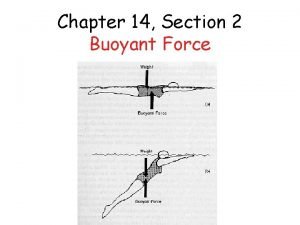
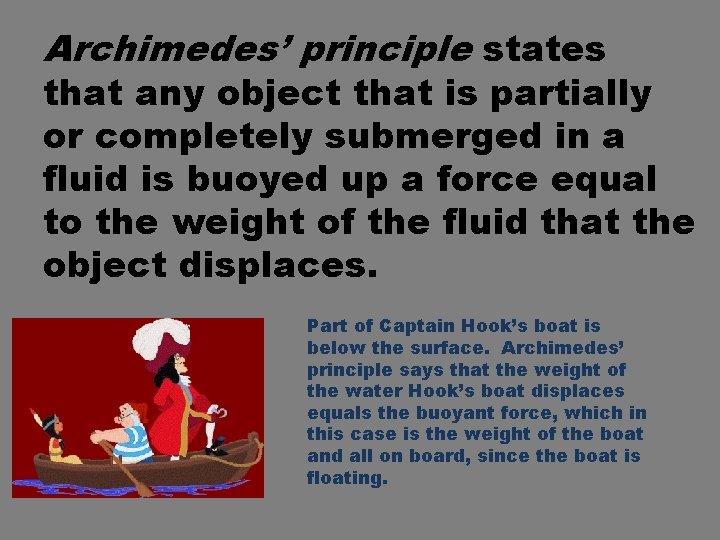
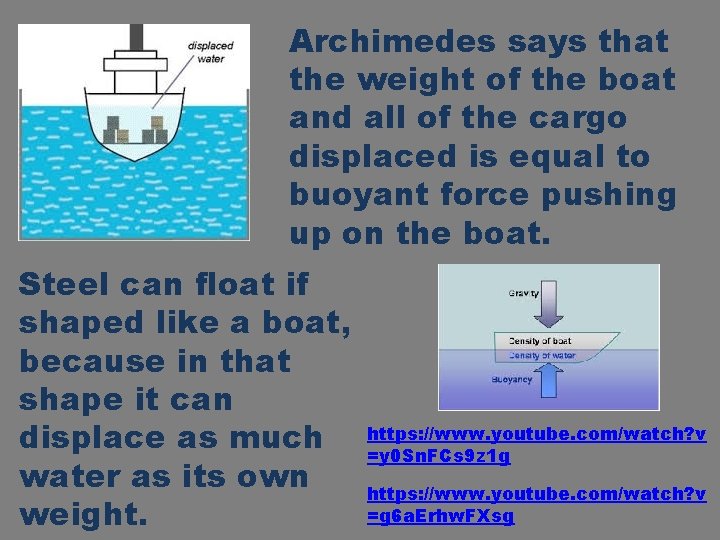
Archimedes’ principle states that any object that is partially or completely submerged in a fluid is buoyed up a force equal to the weight of the fluid that the object displaces. Part of Captain Hook’s boat is below the surface. Archimedes’ principle says that the weight of the water Hook’s boat displaces equals the buoyant force, which in this case is the weight of the boat and all on board, since the boat is floating.
Archimedes says that the weight of the boat and all of the cargo displaced is equal to buoyant force pushing up on the boat. Steel can float if shaped like a boat, because in that shape it can displace as much water as its own weight. https: //www. youtube. com/watch? v =y 0 Sn. FCs 9 z 1 g https: //www. youtube. com/watch? v =g 6 a. Erhw. FXsg
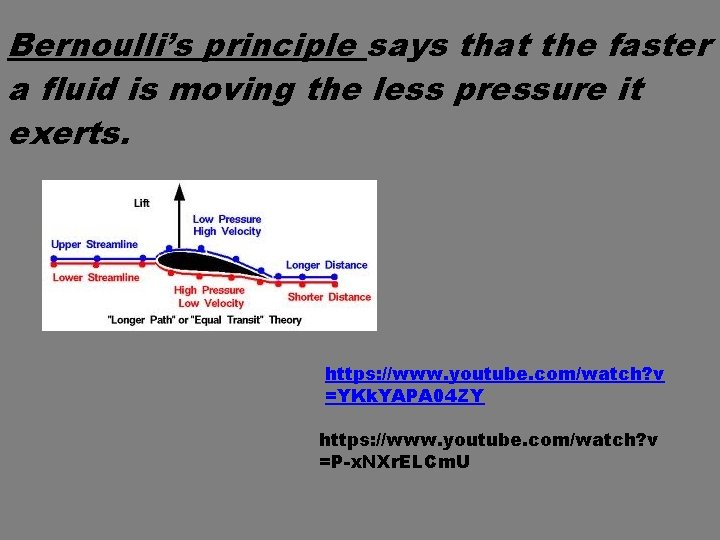
Bernoulli’s principle says that the faster a fluid is moving the less pressure it exerts. https: //www. youtube. com/watch? v =YKk. YAPA 04 ZY https: //www. youtube. com/watch? v =P-x. NXr. ELCm. U
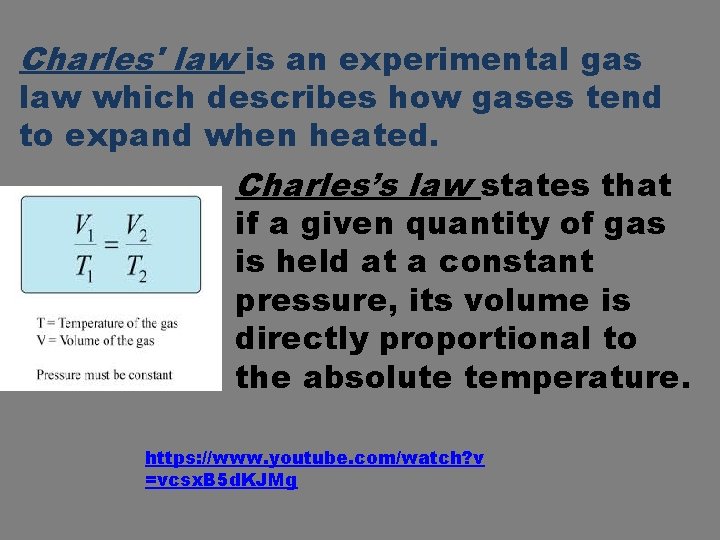
Charles' law is an experimental gas law which describes how gases tend to expand when heated. Charles’s law states that if a given quantity of gas is held at a constant pressure, its volume is directly proportional to the absolute temperature. https: //www. youtube. com/watch? v =vcsx. B 5 d. KJMg
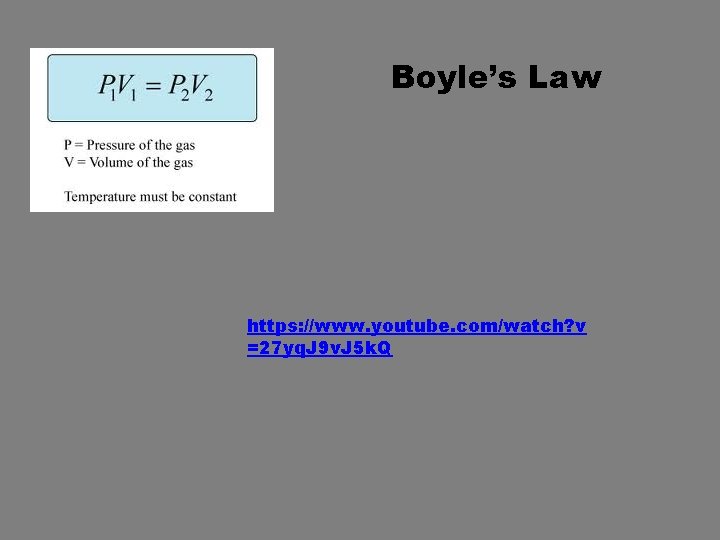
Boyle's Law, a principle that describes the relationship between the pressure and volume of a gas. According to this law, the pressure exerted by a gas held at a constant temperature varies inversely with the volume of the gas. For example, if the volume is halved, the pressure is doubled; and if the volume is doubled, the pressure is halved. The reason for this effect is that a gas is made up of loosely spaced molecules moving at random. If a gas is compressed in a container, these molecules are pushed together; thus, the gas occupies less volume. The molecules, having less space in which to move, hit the walls of the container more frequently and thus exert an increased pressure.
Boyle’s Law https: //www. youtube. com/watch? v =27 yq. J 9 v. J 5 k. Q
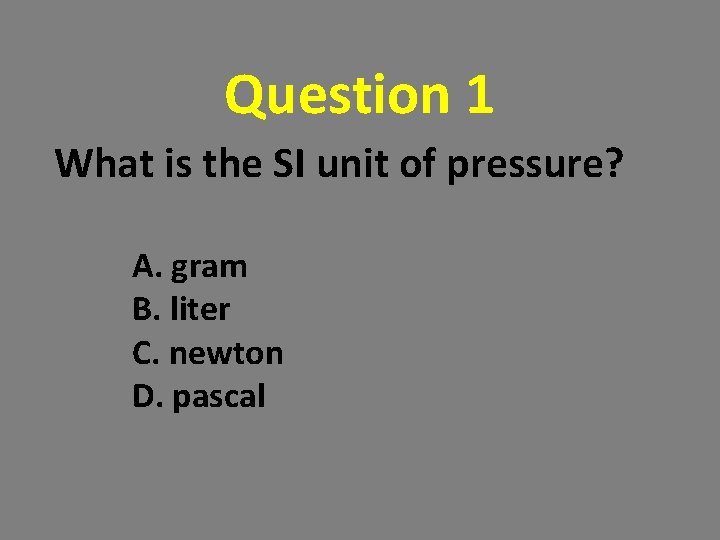
Question 1 What is the SI unit of pressure? A. gram B. liter C. newton D. pascal
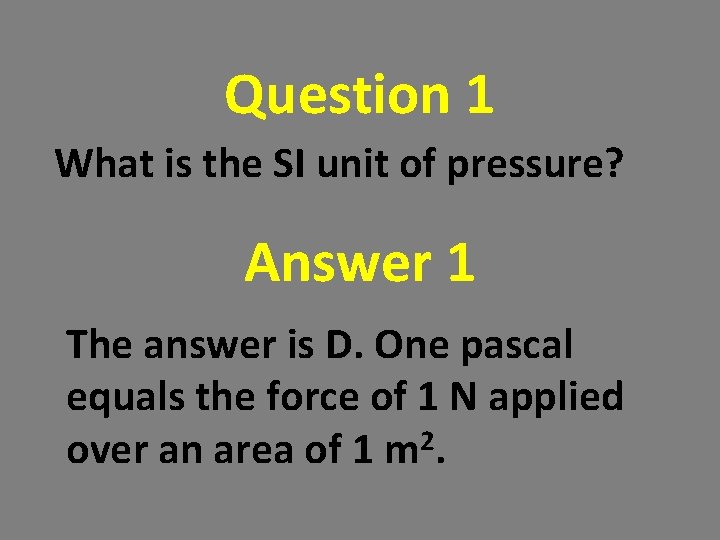
Question 1 What is the SI unit of pressure? Answer 1 The answer is D. One pascal equals the force of 1 N applied over an area of 1 m 2.
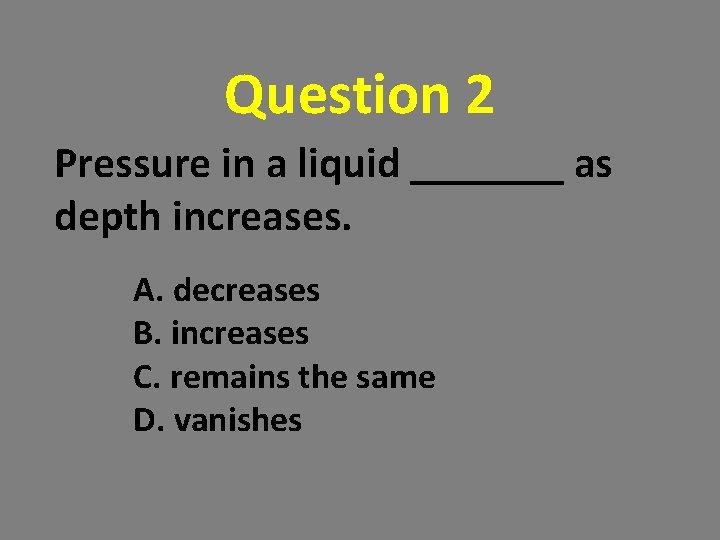
Question 2 Pressure in a liquid _______ as depth increases. A. decreases B. increases C. remains the same D. vanishes
Question 2 Pressure in a liquid _______ with depth. Answer 2 The answer is B. You may have experienced this in a swimming pool. The deeper you dive, the more pressure you feel.
Question 3 Pressure in a liquid _______ with increased height above sea level. A. decreases B. increases C. remains the same D. vanishes
Question 3 Pressure in a liquid _______ with increased height above sea level. Answer 3 The answer is A. The higher a persons elevation (like on a mountain top), the less pressure they experience because less air is pushing down on them.
Question 4 A substance without a definite shape, and with the ability to flow, is known as a _______. A. fluid B. liquid C. plasma D. water
Question 4 A substance without a definite shape, and with the ability to flow, is known as a _______. Answer 4 The answer is A. Don’t confuse this with a liquid. Gases, such as the air you are breathing now, are fluids but not liquids.
Question 5 Is air a fluid? Why or why not? Answer 5 Air IS a fluid because it fits the definition; air has no definite shape and has the ability to flow.
Question 6 Describe the relationship between pressure and area and provide a specific example. Answer 6 There is an inverse relationship between pressure and area. In other words, as the area decreases, the pressure increases and vice versa. The tip of a nail is an example of this.
Question 7 Describe the relationship between pressure and force and provide a specific example. Answer 7 These two variables have a direct relationship. If one goes down, so does the other and if one goes up, the other goes up also. For example, when you squeeze on a “holey” water bottle, the pressure causing the water to spew out the hole is greater when the bottle is being squeezed with a greater force.
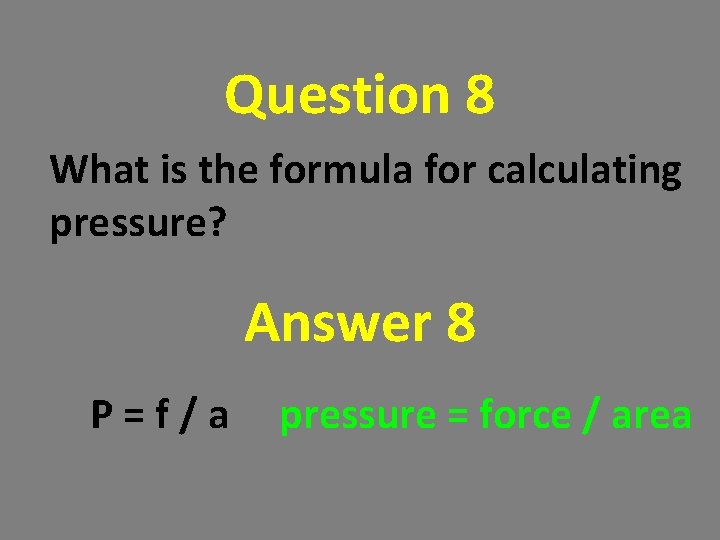
Question 8 What is the formula for calculating pressure? Answer 8 P=f/a pressure = force / area
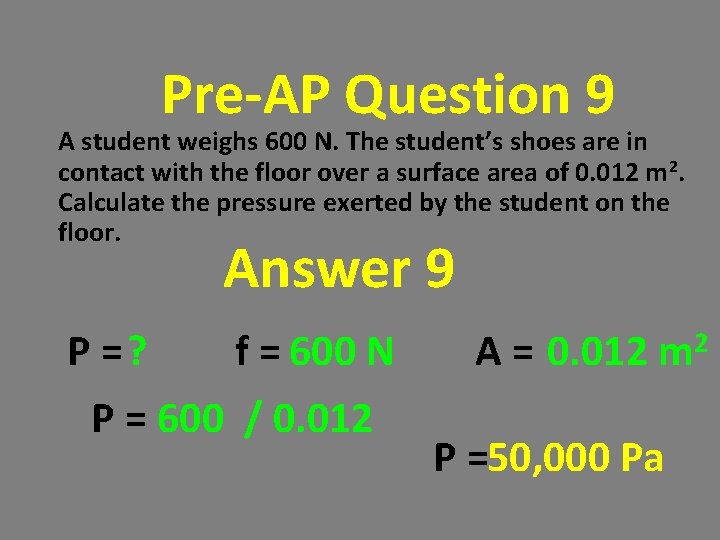
Pre-AP Question 9 A student weighs 600 N. The student’s shoes are in contact with the floor over a surface area of 0. 012 m 2. Calculate the pressure exerted by the student on the floor. Answer 9 P =? f = 600 N P = 600 / 0. 012 A = 0. 012 2 m P =50, 000 Pa
Question 10 What tool is used to measure atmospheric pressure? Answer 10 Barometer
Question 11 Who’s principle describes why boats float? a. Archimedes b. Charles c. Pascal d. Bernoulli Answer 11 a. Archimedes
Question 12 Who’s Law states that the pressure exerted by a gas held at a constant temperature varies inversely with the volume of the gas? a. Bernoulli b. Charles c. Boyles Answer 12 Boyles d. Pascal
Question 13 Who’s law tells us why an airplane has lift? a. Archimedes b. Boyles c. Pascal d. Bernoulli Answer 13 d. Bernoulli
Question 14 Who’s law is demonstrated with the use of a hydraulic lift? a. Archimedes b. Boyles c. Pascal d. Bernoulli Answer 14 c. Pascal
Question 15 Who’s law is an experimental gas law which describes how gases tend to expand when heated? a. Bernoulli b. Charles c. Boyles Answer 15 b. Charles d. Pascal