
Periodic Trends Review n The elements of the
- Slides: 15
Periodic Trends
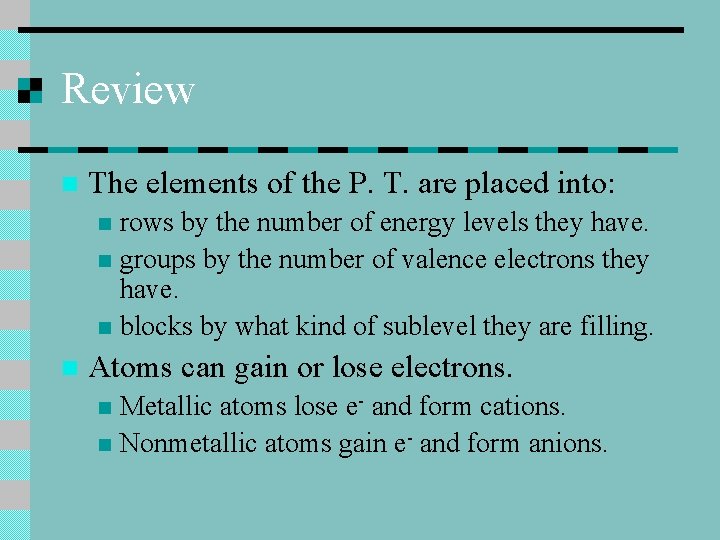
Review n The elements of the P. T. are placed into: rows by the number of energy levels they have. n groups by the number of valence electrons they have. n blocks by what kind of sublevel they are filling. n n Atoms can gain or lose electrons. Metallic atoms lose e- and form cations. n Nonmetallic atoms gain e- and form anions. n
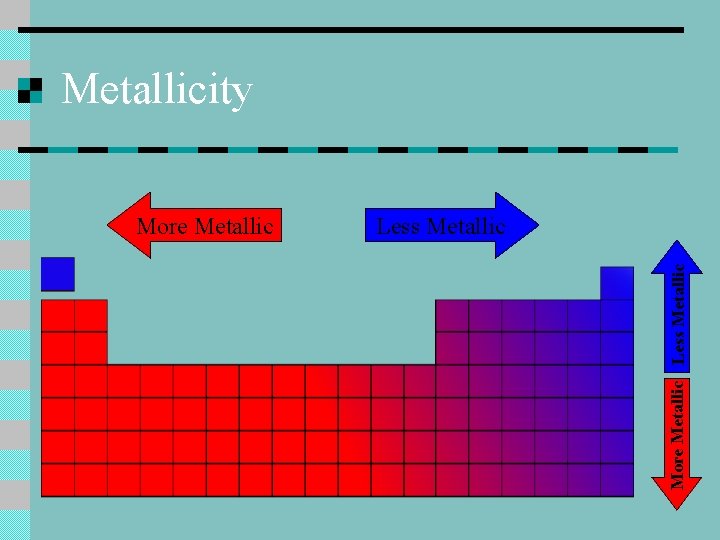
Metallicity Less Metallic More Metallic
The Big Questions n What is atomic radius? How is ionic radius related to atomic radius? n What is the trend concerning atomic radius? n What is ionization energy, and what trend is associated with it? n What is electronegativity, and what trend is associated with it? n
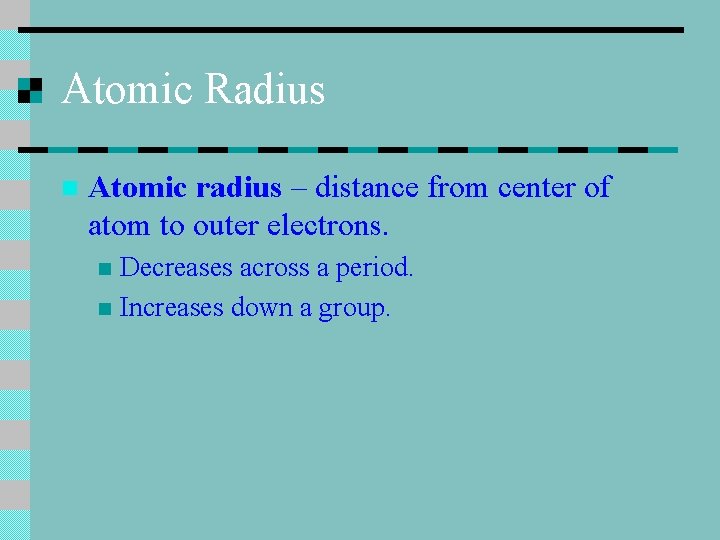
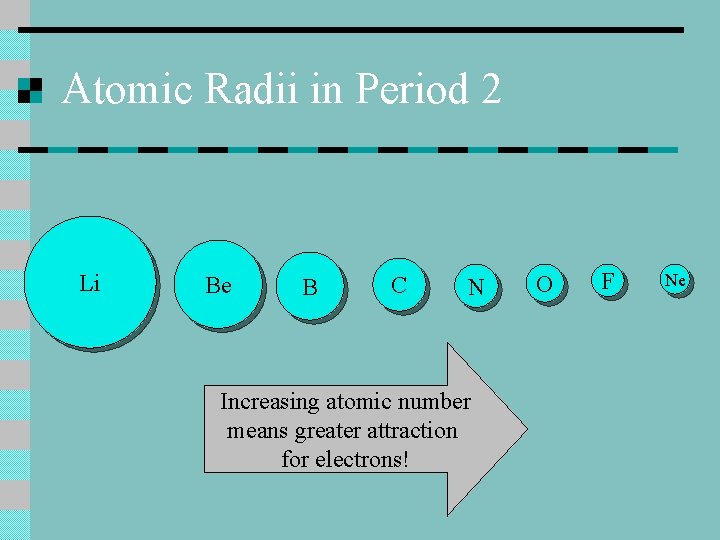
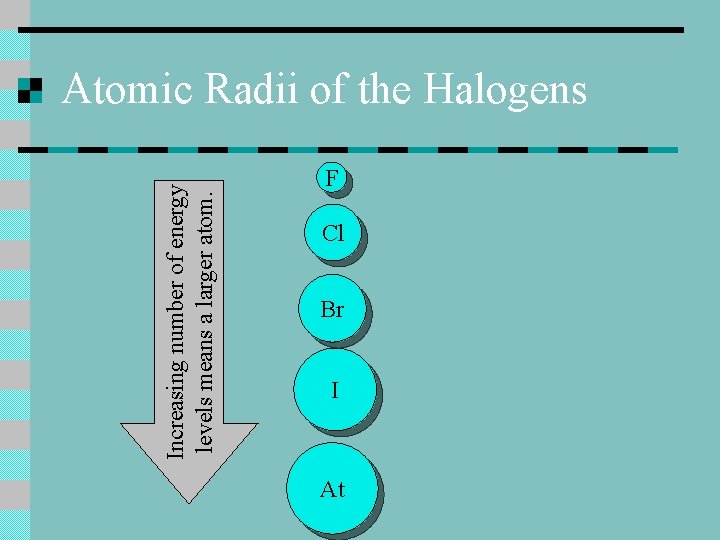
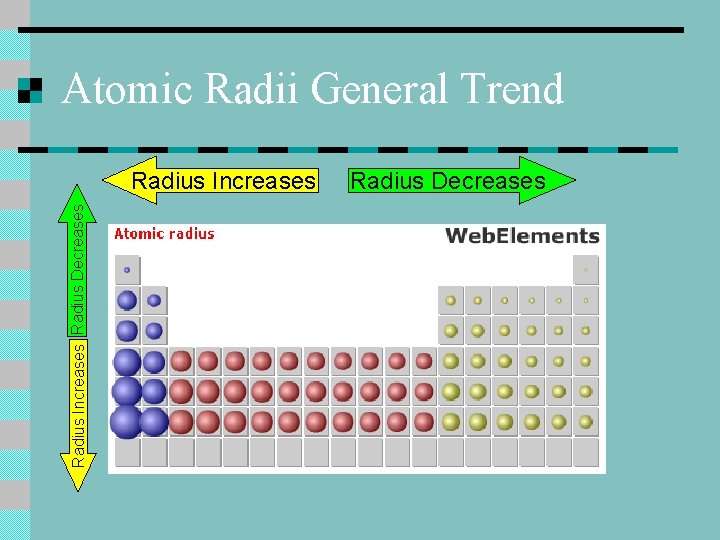
Atomic Radius n Atomic radius – distance from center of atom to outer electrons. Decreases across a period. n Increases down a group. n
Atomic Radii in Period 2 Li Be B C N Increasing atomic number means greater attraction for electrons! O F Ne
Increasing number of energy levels means a larger atom. Atomic Radii of the Halogens F Cl Br I At
Atomic Radii General Trend Radius Increases Radius Decreases
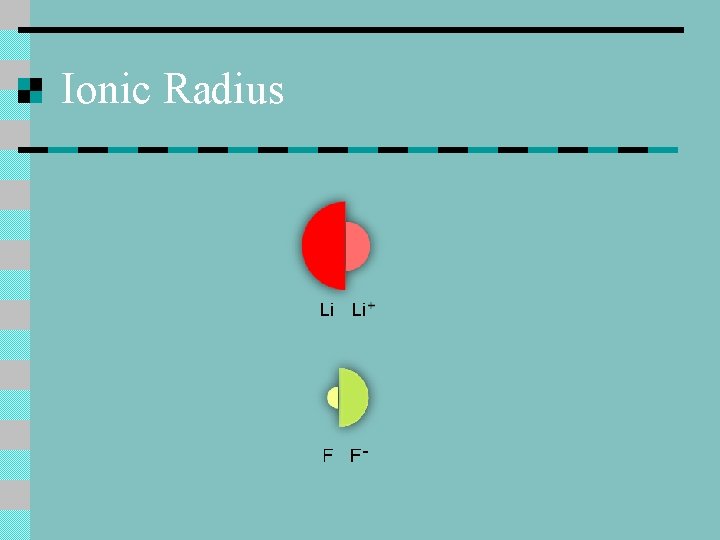
Ionic Radius Cations are smaller than their atoms. n Anions are larger than their atoms. n
Ionic Radius
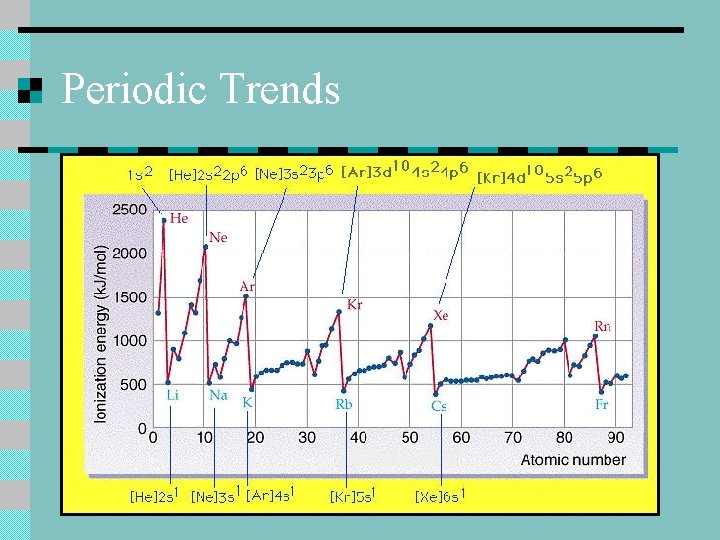
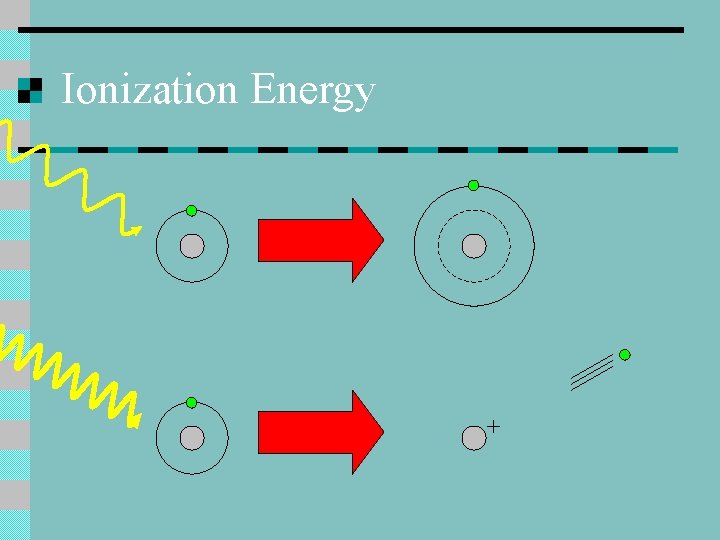
Ionization Energy n Ionization Energy – energy required to remove 1 electron from an atom.
Ionization Energy +
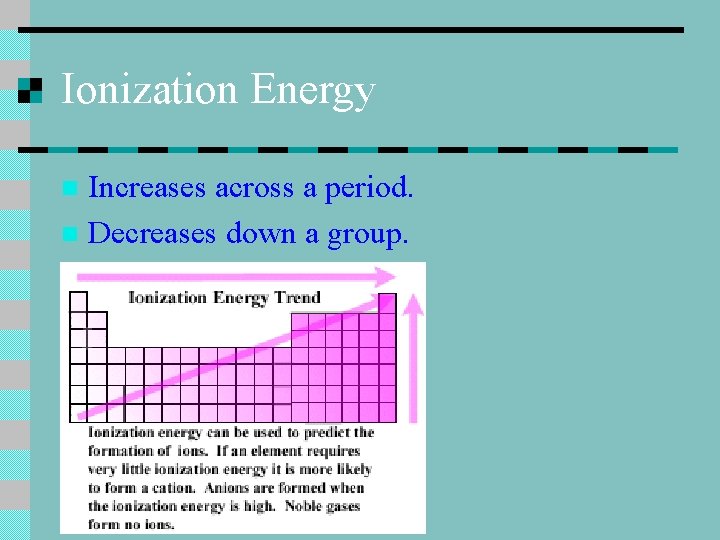
Ionization Energy Increases across a period. n Decreases down a group. n
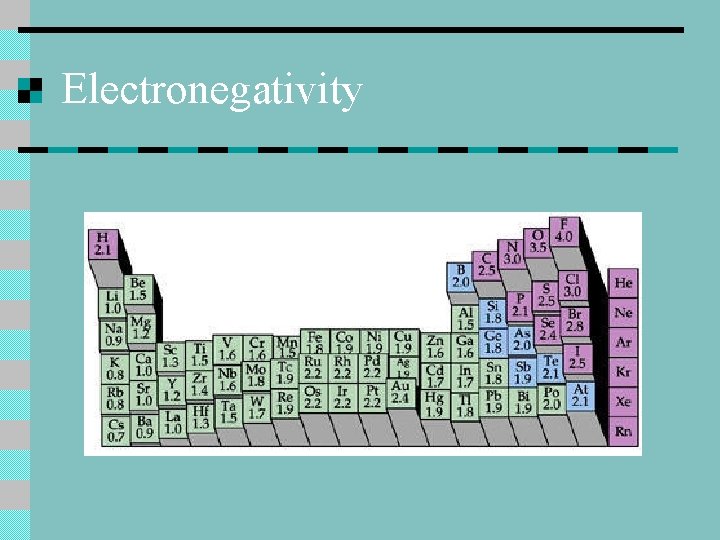
Electronegativity n Electronegativity (EN) - Tendency of an atom to attract electrons in a chemical bond. Increases across a period. n Decreases down a group. n Excludes noble gases. n
Electronegativity