Myeloproliferative Disorders Neoplasms Intro for the Internist Satish




- Slides: 37
Myeloproliferative Disorders / Neoplasms Intro for the Internist Satish Shanbhag MBBS, MPH Assistant Professor of Medicine and Oncology Johns Hopkins University School of Medicine
Objectives Internist focused review of the presentation, diagnostic workup, treatment and prognosis of the common myeloproliferative neoplasms
Disclosures • None
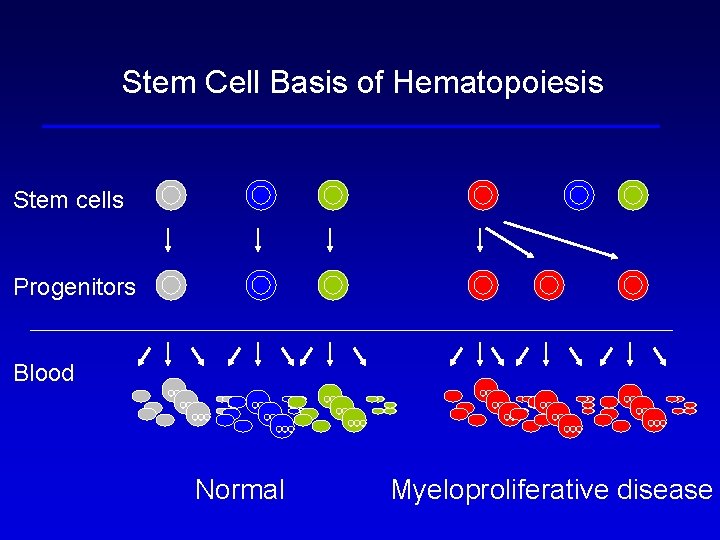
Stem Cell Basis of Hematopoiesis Stem cells Progenitors Blood Normal Myeloproliferative disease
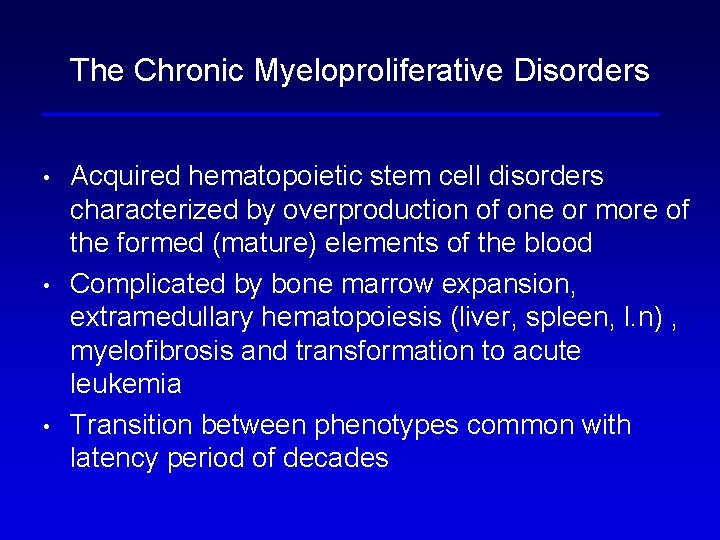
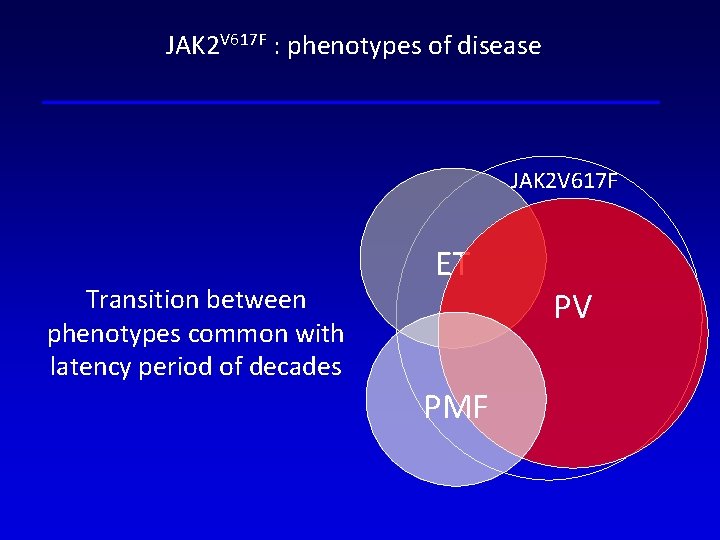
The Chronic Myeloproliferative Disorders • • • Acquired hematopoietic stem cell disorders characterized by overproduction of one or more of the formed (mature) elements of the blood Complicated by bone marrow expansion, extramedullary hematopoiesis (liver, spleen, l. n) , myelofibrosis and transformation to acute leukemia Transition between phenotypes common with latency period of decades
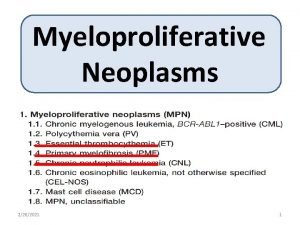
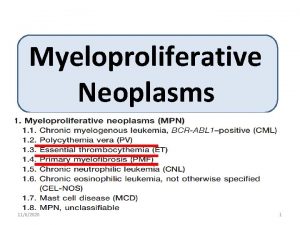
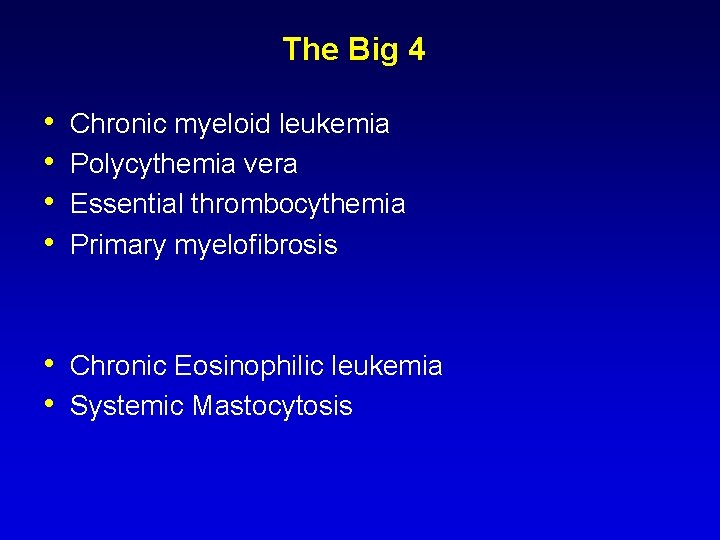
The Big 4 • • Chronic myeloid leukemia Polycythemia vera Essential thrombocythemia Primary myelofibrosis • Chronic Eosinophilic leukemia • Systemic Mastocytosis
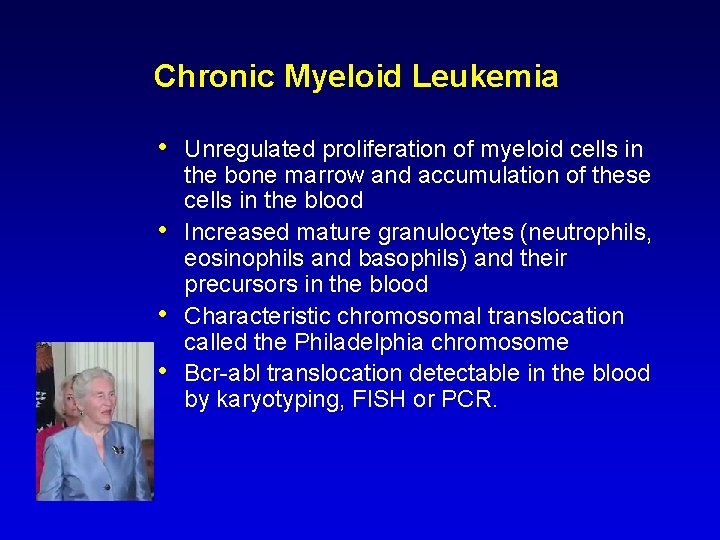
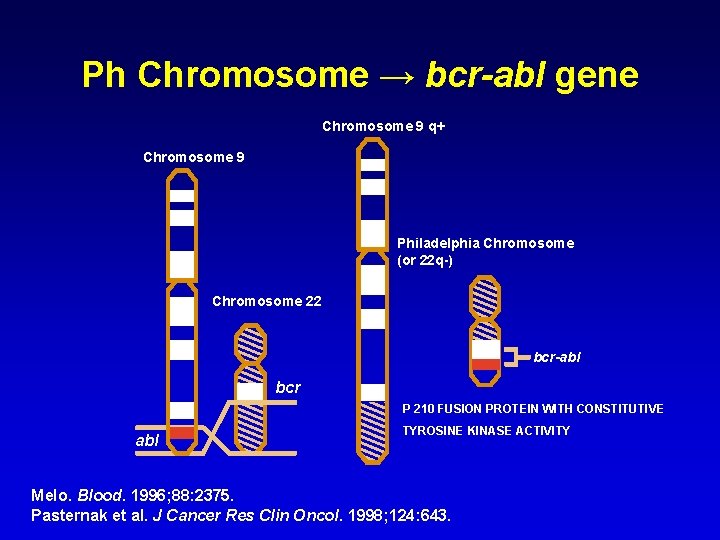
Chronic Myeloid Leukemia • Unregulated proliferation of myeloid cells in • • • the bone marrow and accumulation of these cells in the blood Increased mature granulocytes (neutrophils, eosinophils and basophils) and their precursors in the blood Characteristic chromosomal translocation called the Philadelphia chromosome Bcr-abl translocation detectable in the blood by karyotyping, FISH or PCR.
Ph Chromosome → bcr-abl gene Chromosome 9 q+ Chromosome 9 Philadelphia Chromosome (or 22 q-) Chromosome 22 bcr-abl bcr P 210 FUSION PROTEIN WITH CONSTITUTIVE abl TYROSINE KINASE ACTIVITY Melo. Blood. 1996; 88: 2375. Pasternak et al. J Cancer Res Clin Oncol. 1998; 124: 643.
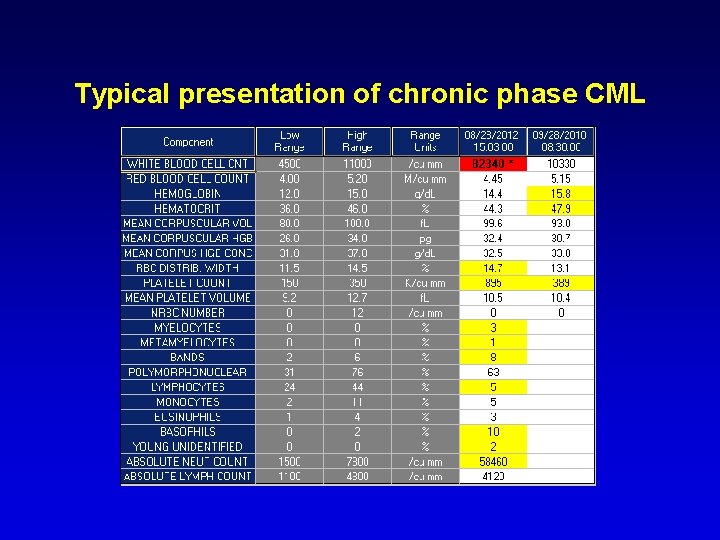
Typical presentation of chronic phase CML
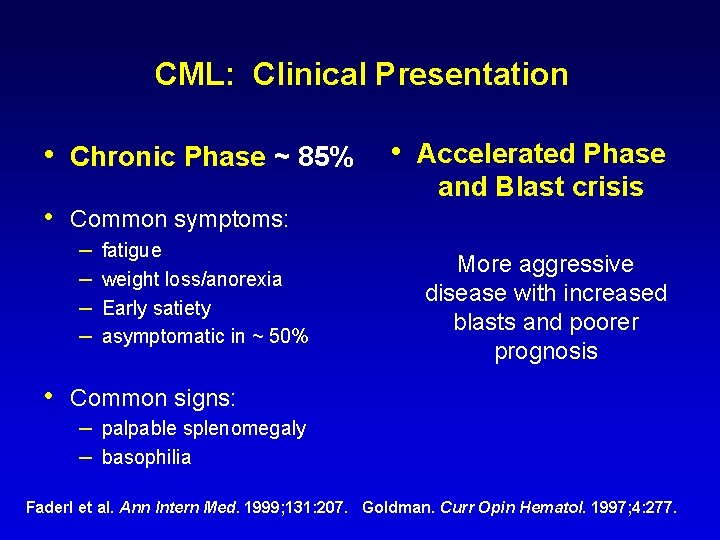
CML: Clinical Presentation • Chronic Phase ~ 85% • Common symptoms: – – fatigue weight loss/anorexia Early satiety asymptomatic in ~ 50% • Accelerated Phase and Blast crisis More aggressive disease with increased blasts and poorer prognosis • Common signs: – palpable splenomegaly – basophilia Faderl et al. Ann Intern Med. 1999; 131: 207. Goldman. Curr Opin Hematol. 1997; 4: 277.
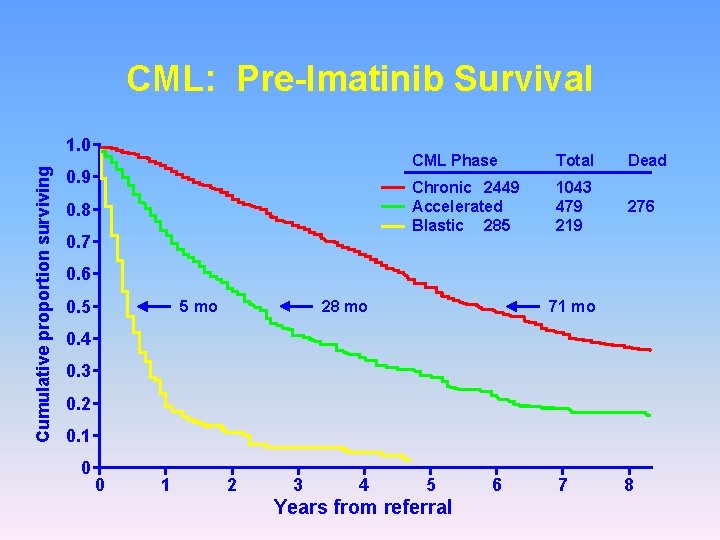
CML: Pre-Imatinib Survival Cumulative proportion surviving 1. 0 0. 9 0. 8 0. 7 CML Phase Total Dead Chronic 2449 Accelerated Blastic 285 1043 479 219 276 0. 5 5 mo 28 mo 71 mo 0. 4 0. 3 0. 2 0. 1 0 0 1 2 3 4 5 Years from referral 6 7 8
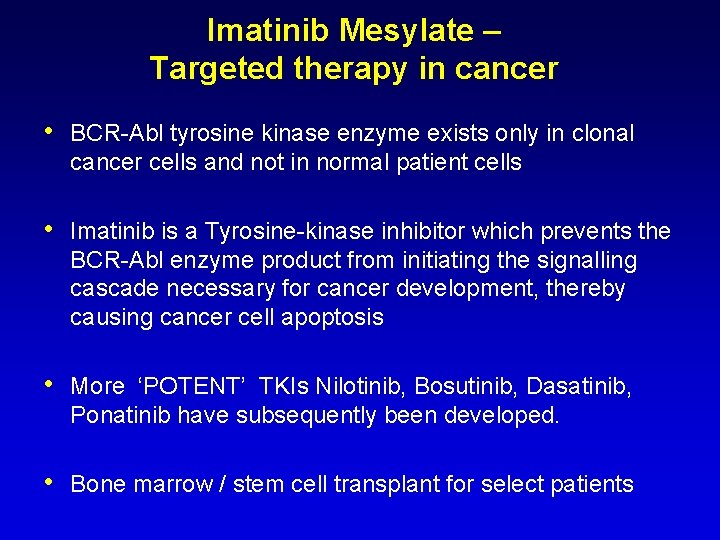
Imatinib Mesylate – Targeted therapy in cancer • BCR-Abl tyrosine kinase enzyme exists only in clonal cancer cells and not in normal patient cells • Imatinib is a Tyrosine-kinase inhibitor which prevents the BCR-Abl enzyme product from initiating the signalling cascade necessary for cancer development, thereby causing cancer cell apoptosis • More ‘POTENT’ TKIs Nilotinib, Bosutinib, Dasatinib, Ponatinib have subsequently been developed. • Bone marrow / stem cell transplant for select patients
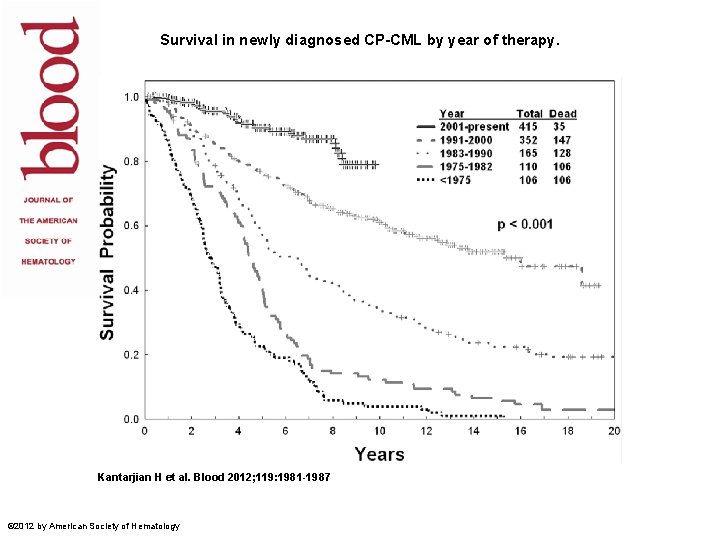
Survival in newly diagnosed CP-CML by year of therapy. Kantarjian H et al. Blood 2012; 119: 1981 -1987 © 2012 by American Society of Hematology
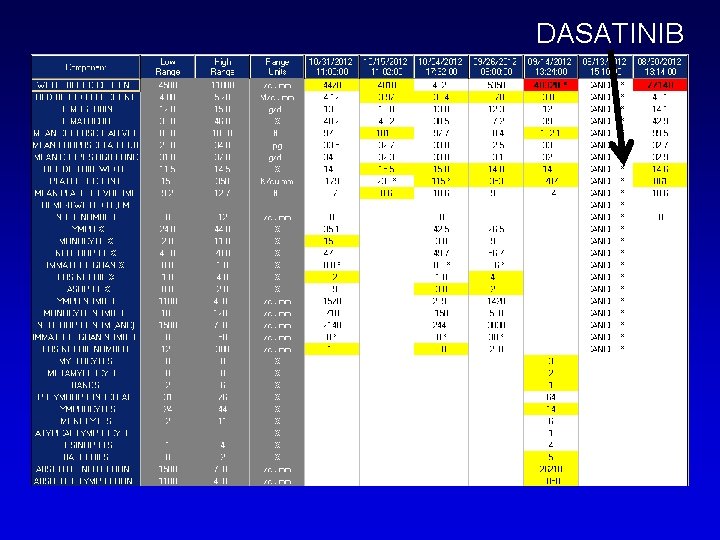
DASATINIB
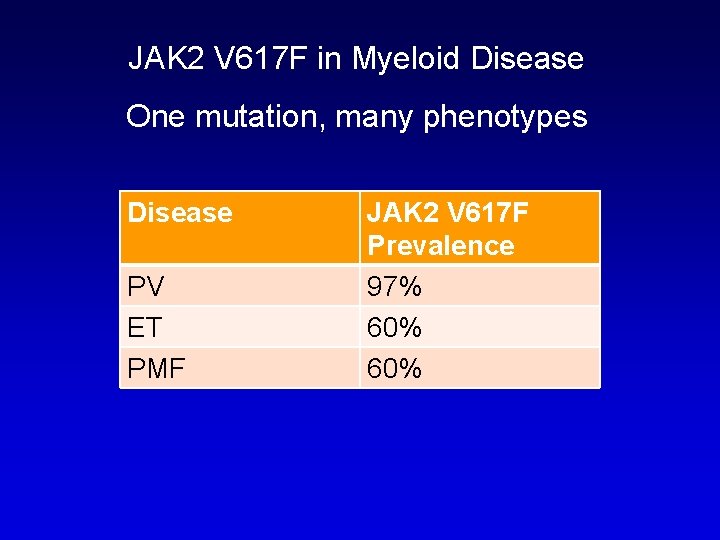
JAK 2 V 617 F in Myeloid Disease One mutation, many phenotypes Disease PV ET PMF JAK 2 V 617 F Prevalence 97% 60%
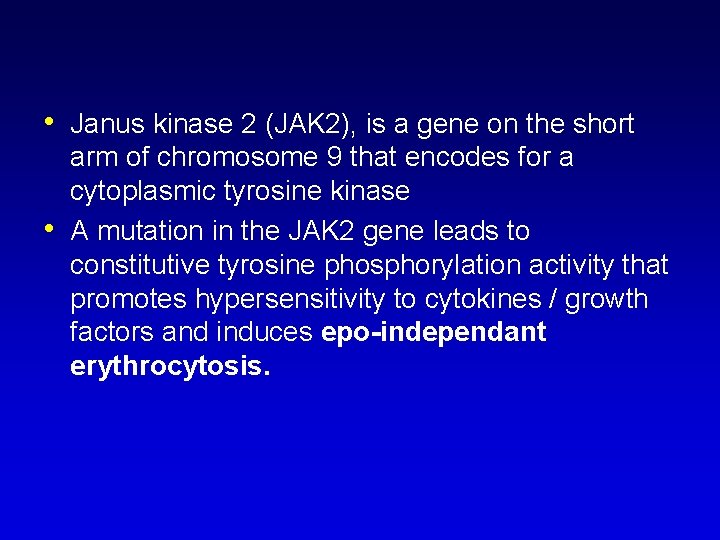
• Janus kinase 2 (JAK 2), is a gene on the short • arm of chromosome 9 that encodes for a cytoplasmic tyrosine kinase A mutation in the JAK 2 gene leads to constitutive tyrosine phosphorylation activity that promotes hypersensitivity to cytokines / growth factors and induces epo-independant erythrocytosis.
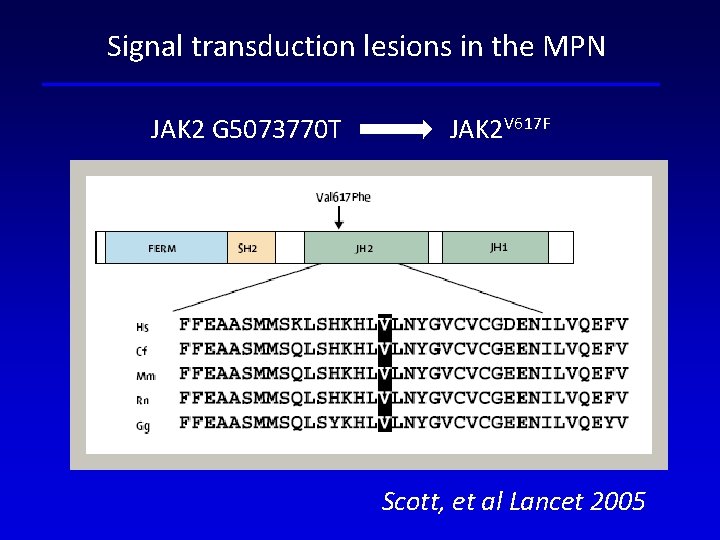
Signal transduction lesions in the MPN JAK 2 G 5073770 T JAK 2 V 617 F Scott, et al Lancet 2005
JAK 2 V 617 F : phenotypes of disease JAK 2 V 617 F Transition between phenotypes common with latency period of decades ET PMF PV
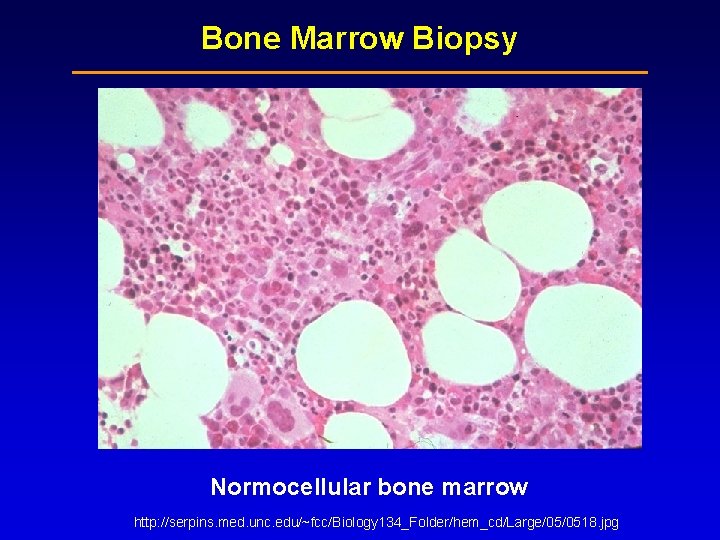
Bone Marrow Biopsy Normocellular bone marrow http: //serpins. med. unc. edu/~fcc/Biology 134_Folder/hem_cd/Large/05/0518. jpg
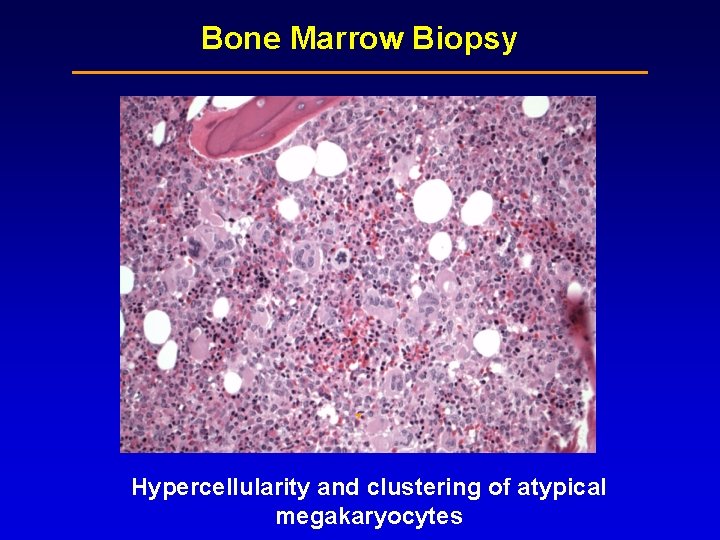
Bone Marrow Biopsy Hypercellularity and clustering of atypical megakaryocytes
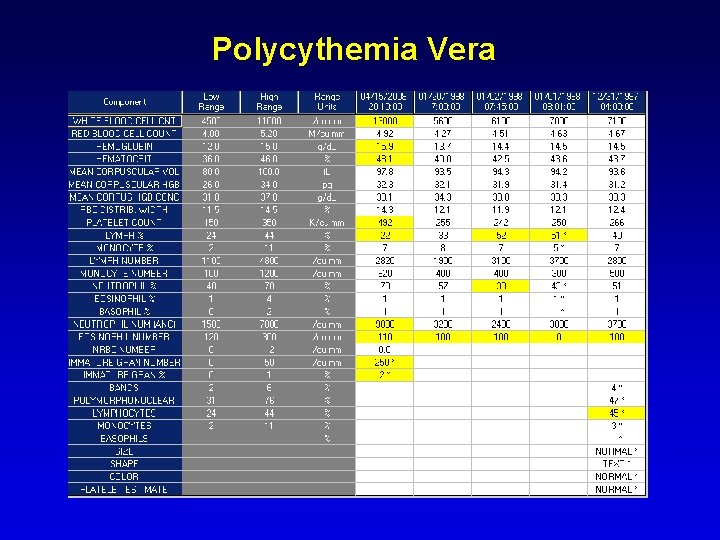
Polycythemia Vera
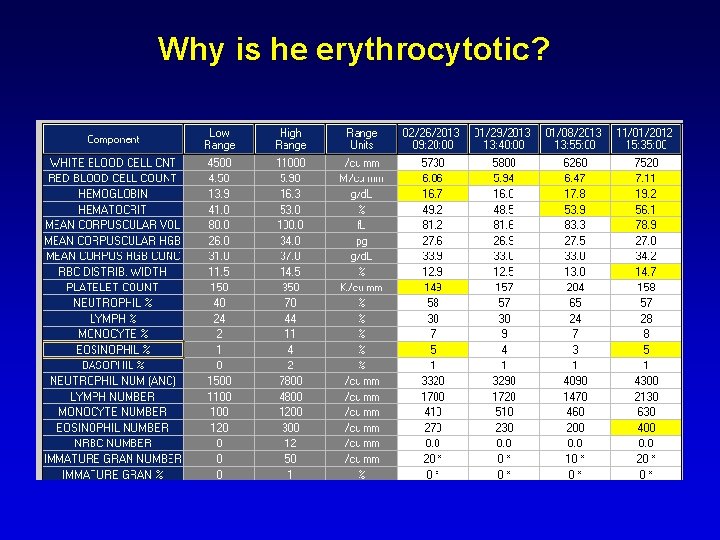
Why is he erythrocytotic?
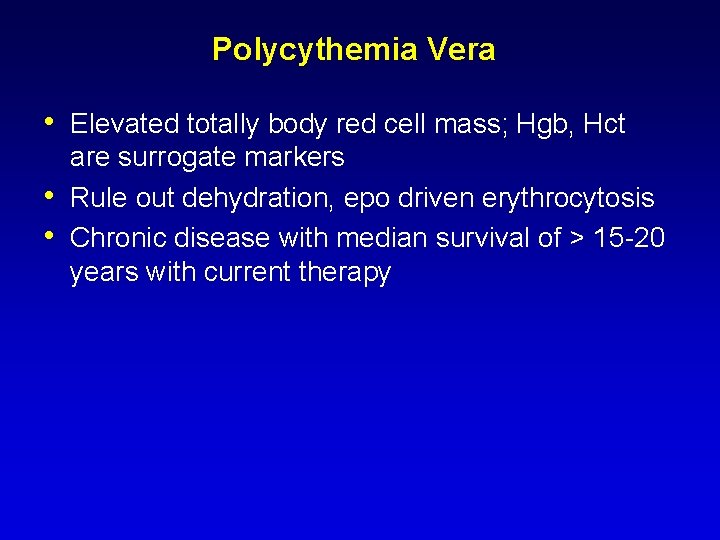
Polycythemia Vera • Elevated totally body red cell mass; Hgb, Hct • • are surrogate markers Rule out dehydration, epo driven erythrocytosis Chronic disease with median survival of > 15 -20 years with current therapy
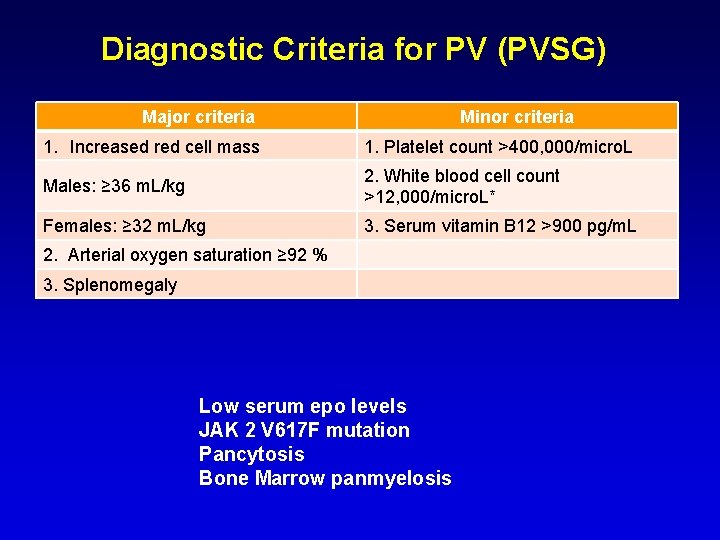
Diagnostic Criteria for PV (PVSG) Major criteria Minor criteria 1. Increased red cell mass 1. Platelet count >400, 000/micro. L Males: ≥ 36 m. L/kg 2. White blood cell count >12, 000/micro. L* Females: ≥ 32 m. L/kg 3. Serum vitamin B 12 >900 pg/m. L 2. Arterial oxygen saturation ≥ 92 % 3. Splenomegaly Low serum epo levels JAK 2 V 617 F mutation Pancytosis Bone Marrow panmyelosis
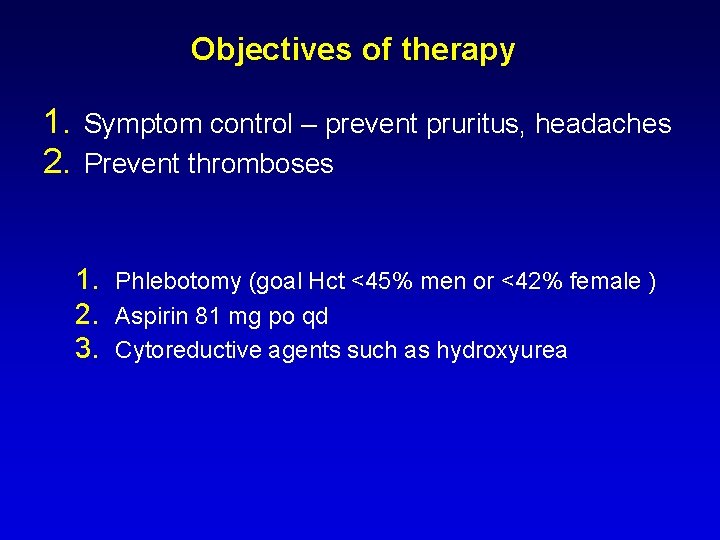
Objectives of therapy 1. Symptom control – prevent pruritus, headaches 2. Prevent thromboses 1. Phlebotomy (goal Hct <45% men or <42% female ) 2. Aspirin 81 mg po qd 3. Cytoreductive agents such as hydroxyurea
Essential Thrombocythemia
ET secondary myelofibrosis
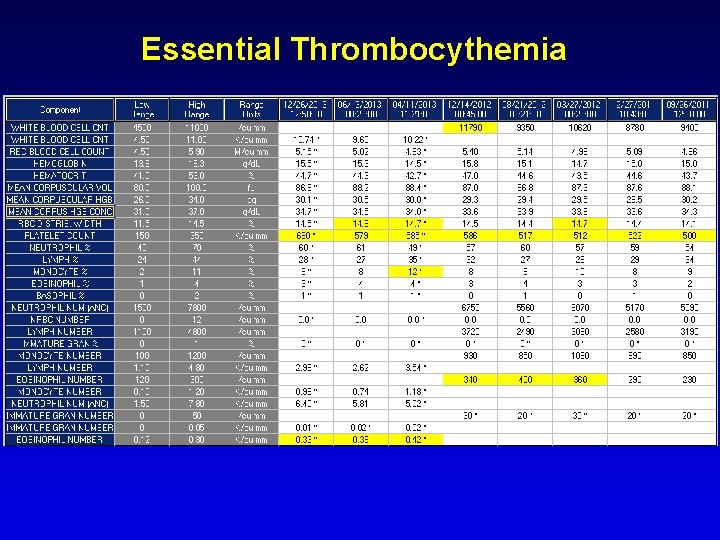
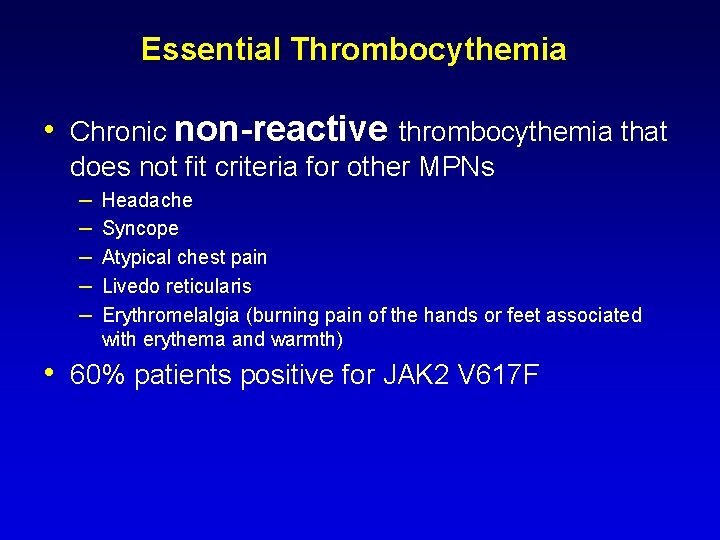
Essential Thrombocythemia • Chronic non-reactive thrombocythemia that does not fit criteria for other MPNs – – – Headache Syncope Atypical chest pain Livedo reticularis Erythromelalgia (burning pain of the hands or feet associated with erythema and warmth) • 60% patients positive for JAK 2 V 617 F
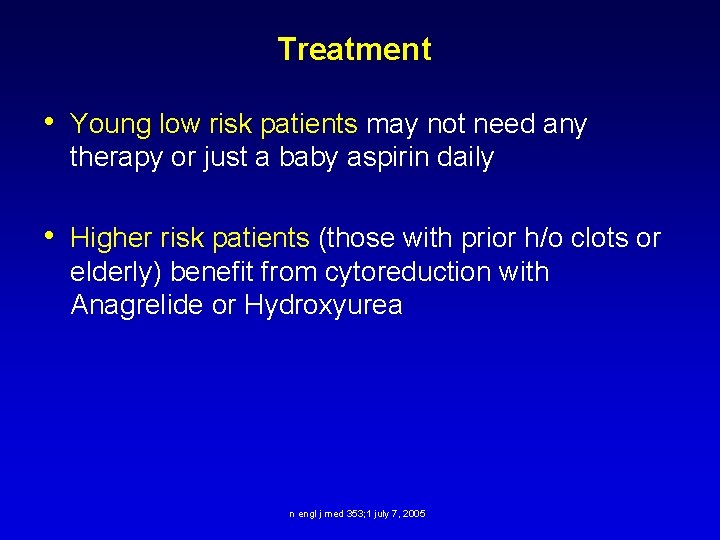
Treatment • Young low risk patients may not need any therapy or just a baby aspirin daily • Higher risk patients (those with prior h/o clots or elderly) benefit from cytoreduction with Anagrelide or Hydroxyurea n engl j med 353; 1 july 7, 2005
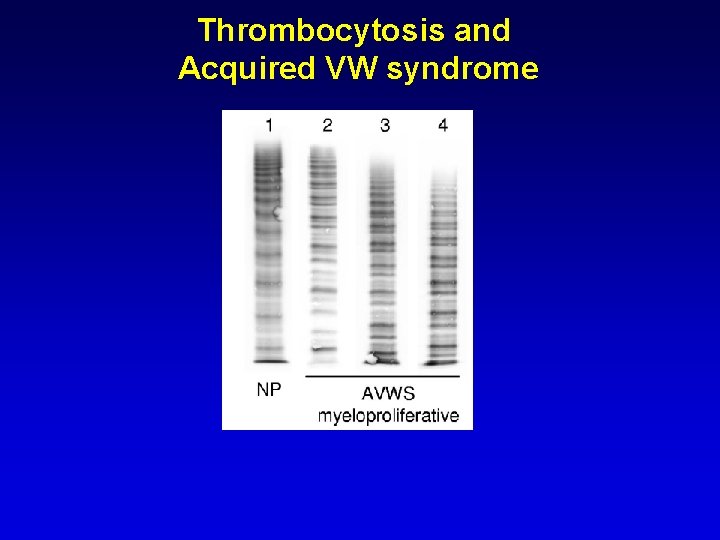
Thrombocytosis and Acquired VW syndrome
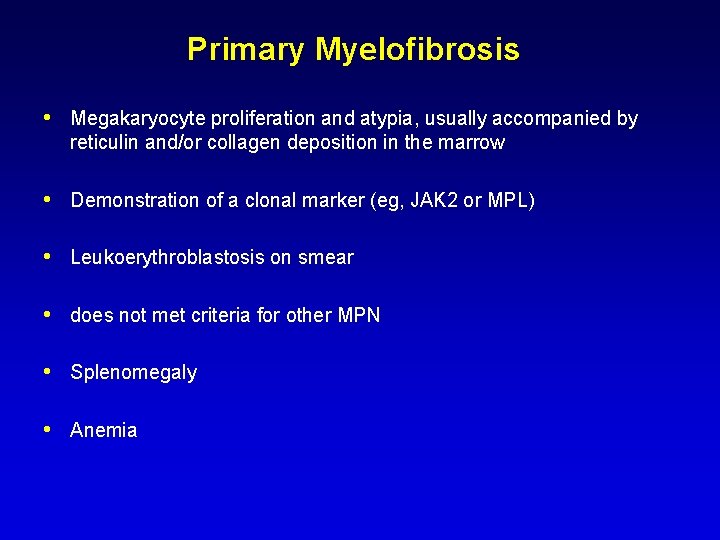
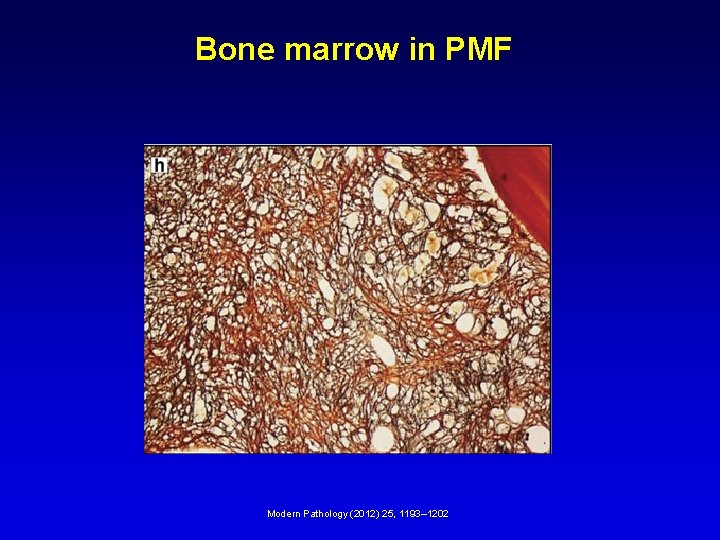
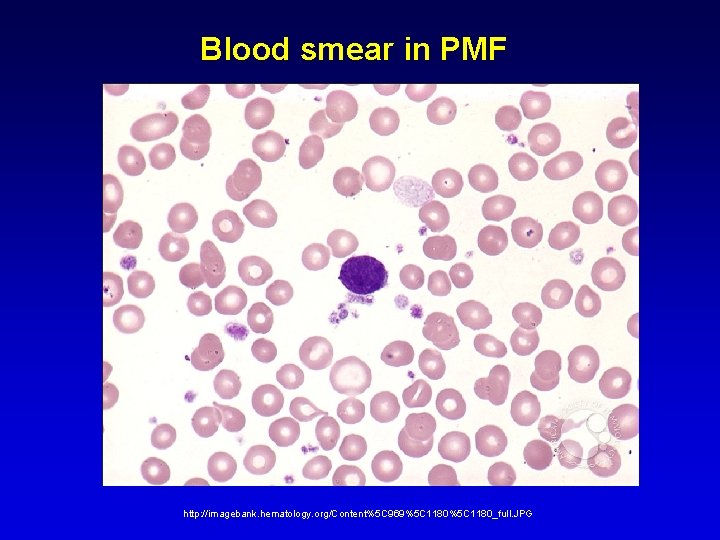
Primary Myelofibrosis • Megakaryocyte proliferation and atypia, usually accompanied by reticulin and/or collagen deposition in the marrow • Demonstration of a clonal marker (eg, JAK 2 or MPL) • Leukoerythroblastosis on smear • does not met criteria for other MPN • Splenomegaly • Anemia
Bone marrow in PMF Modern Pathology (2012) 25, 1193– 1202
Blood smear in PMF http: //imagebank. hematology. org/Content%5 C 969%5 C 1180_full. JPG
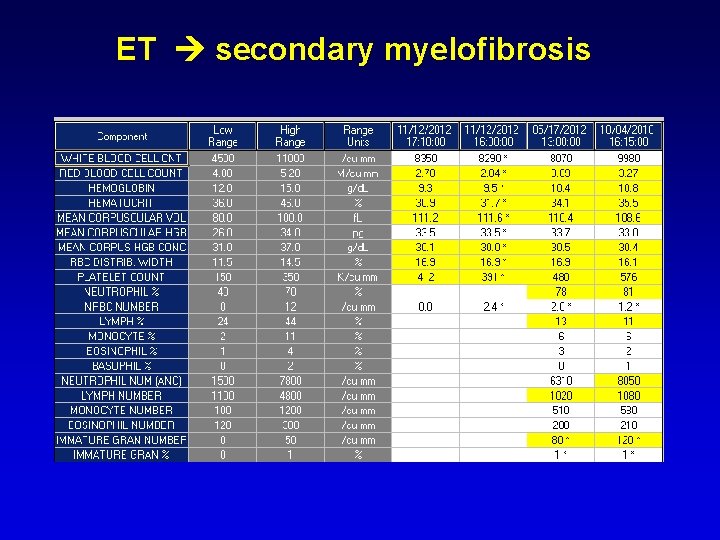
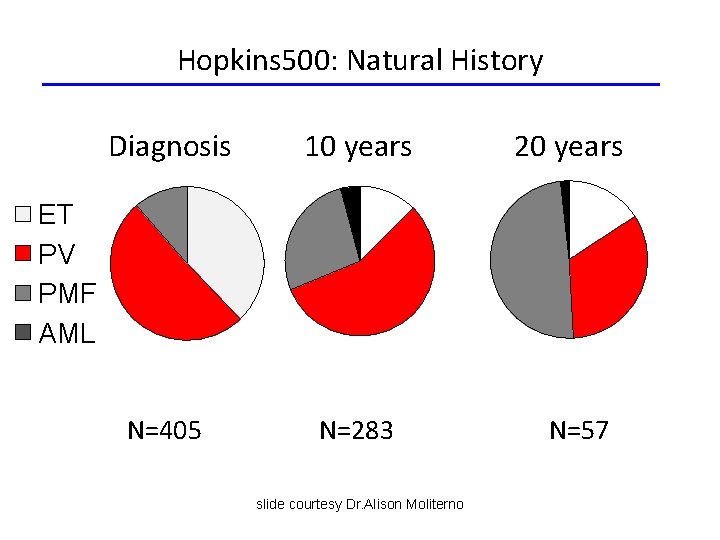
PMF / secondary myelofibrosis • PMF carries the worst prognosis among the • MPNs, although survival is still measured in years PV and ET can show gradual progression to secondary myelofibrosis over decades
Therapies for PMF • Bone marrow transplant is the only cure • Ruxolitinib (JAK inhibitor) is a recently approved • drug for treating symptomatic PMF that also reduces splenomegaly Hydroxyurea, Thalidomide and its derivatives have also been studied but not FDA approved
Hopkins 500: Natural History Diagnosis 10 years N=405 N=283 20 years ET PV PMF AML slide courtesy Dr. Alison Moliterno N=57
Thanks • Dr. Doug Smith and Dr. Alison Moliterno for sharing slides and images