MATH 685 CSI 700 OR 682 Lecture Notes

- Slides: 60
MATH 685/ CSI 700/ OR 682 Lecture Notes Lecture 4. Least squares
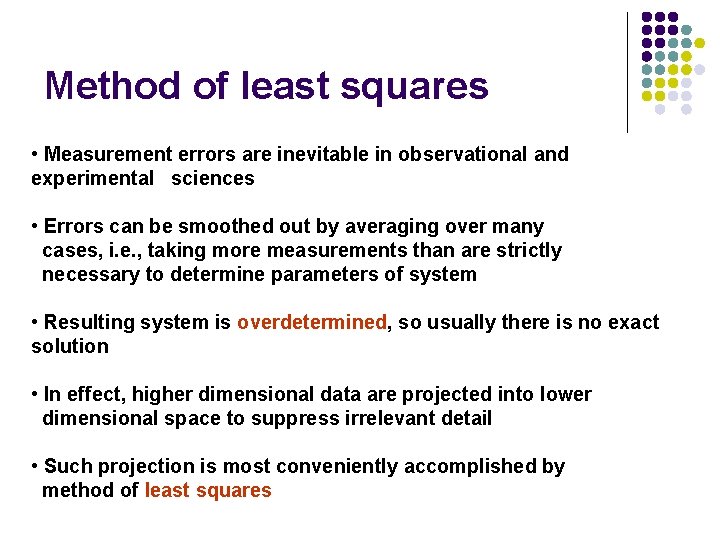
Method of least squares • Measurement errors are inevitable in observational and experimental sciences • Errors can be smoothed out by averaging over many cases, i. e. , taking more measurements than are strictly necessary to determine parameters of system • Resulting system is overdetermined, so usually there is no exact solution • In effect, higher dimensional data are projected into lower dimensional space to suppress irrelevant detail • Such projection is most conveniently accomplished by method of least squares
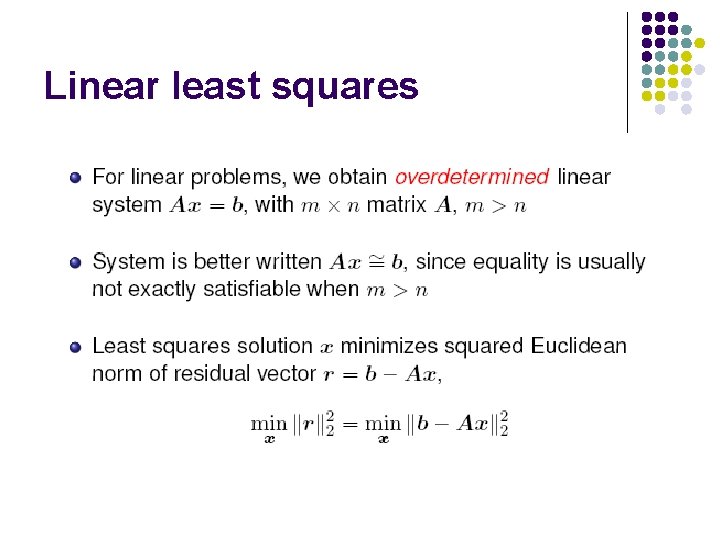
Linear least squares
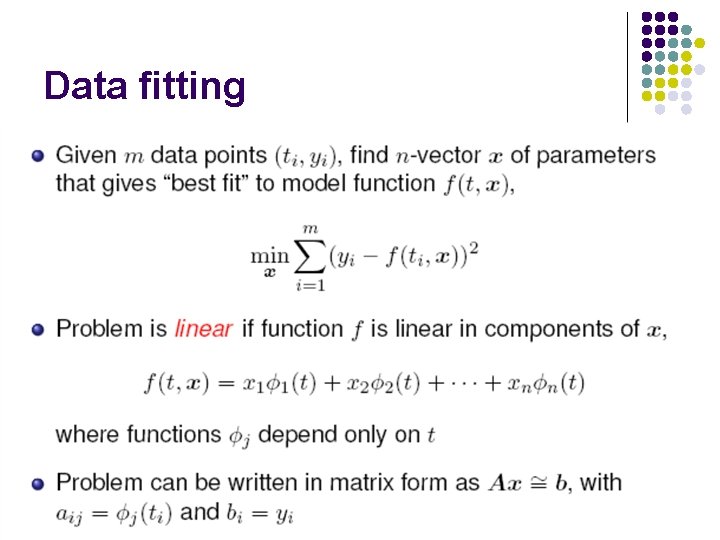
Data fitting
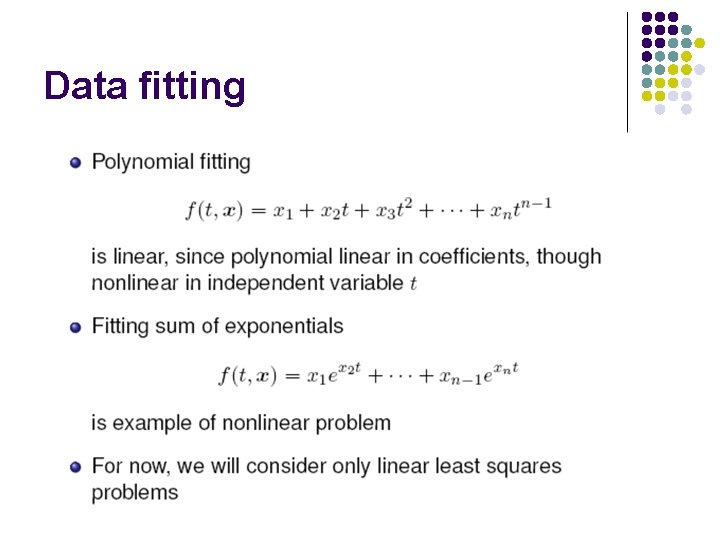
Data fitting
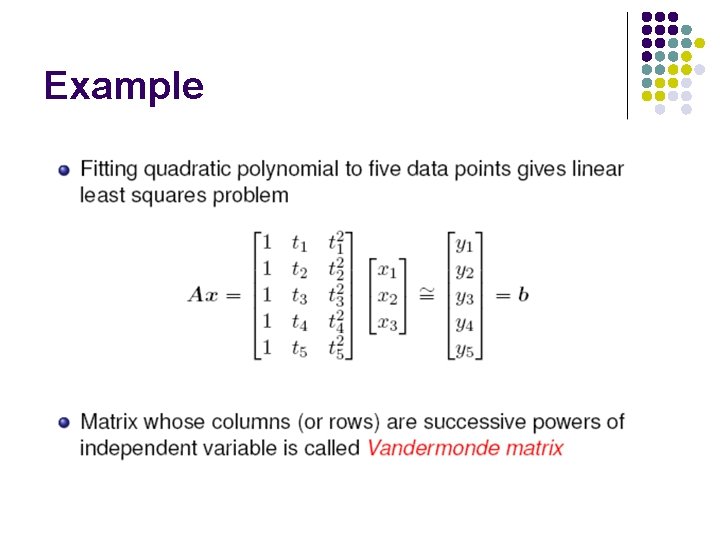
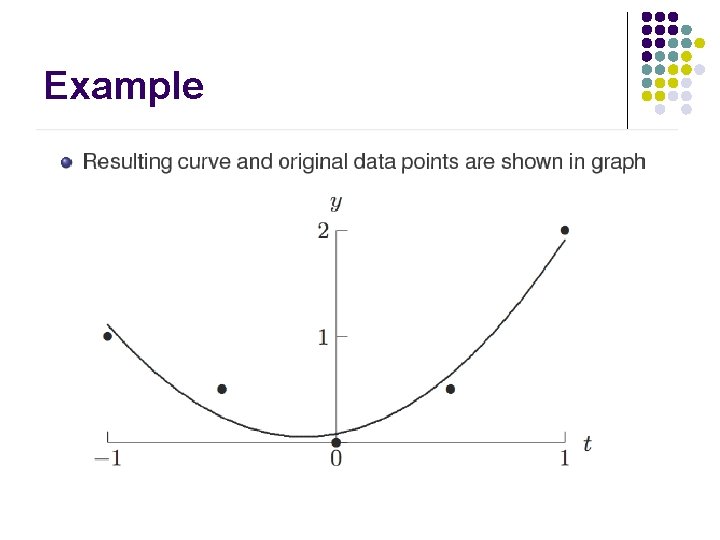
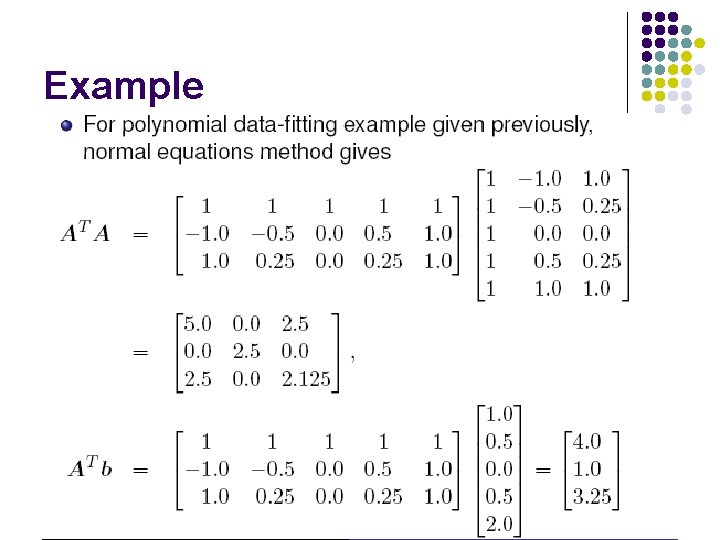
Example
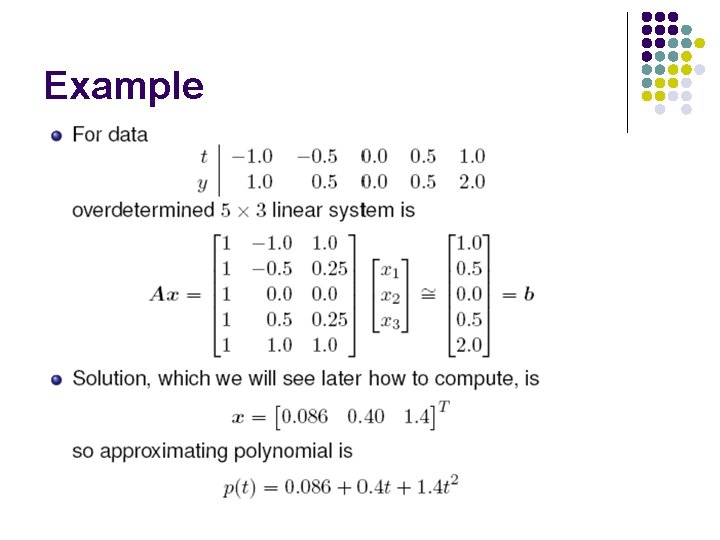
Example
Example
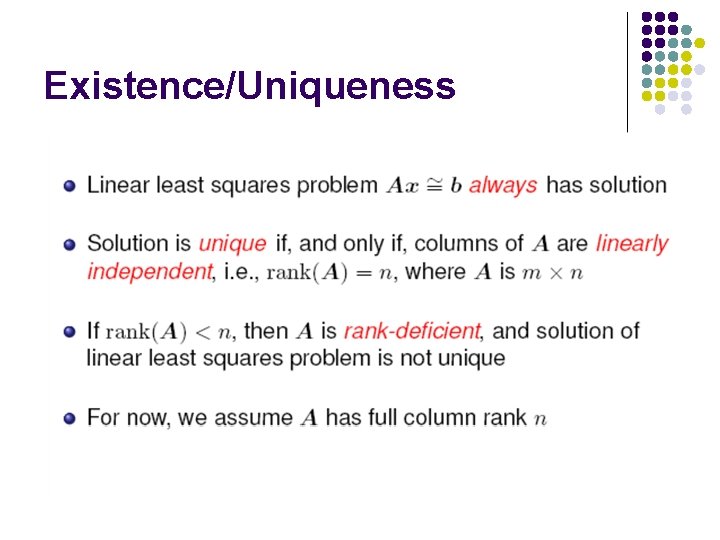
Existence/Uniqueness
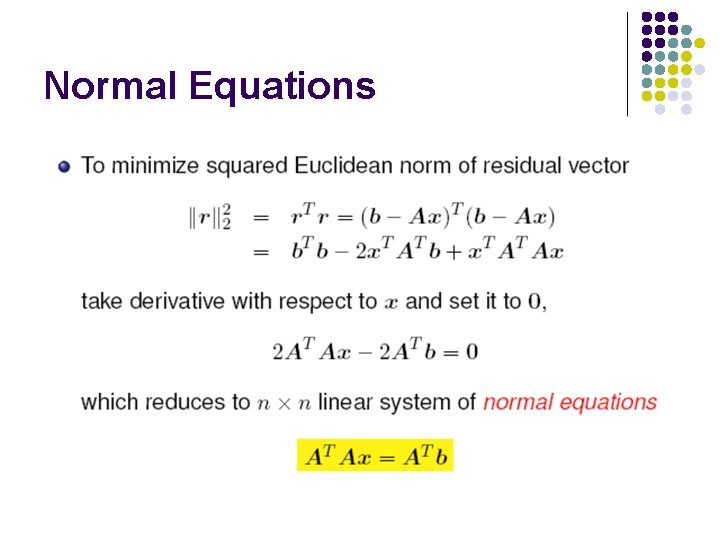
Normal Equations
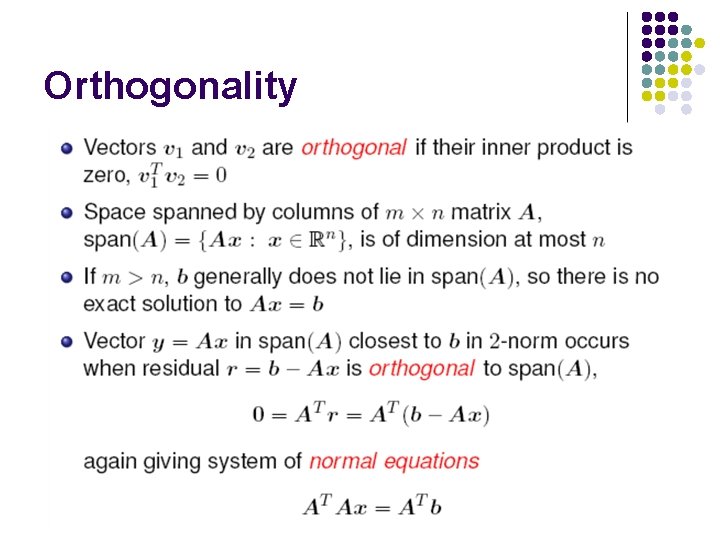
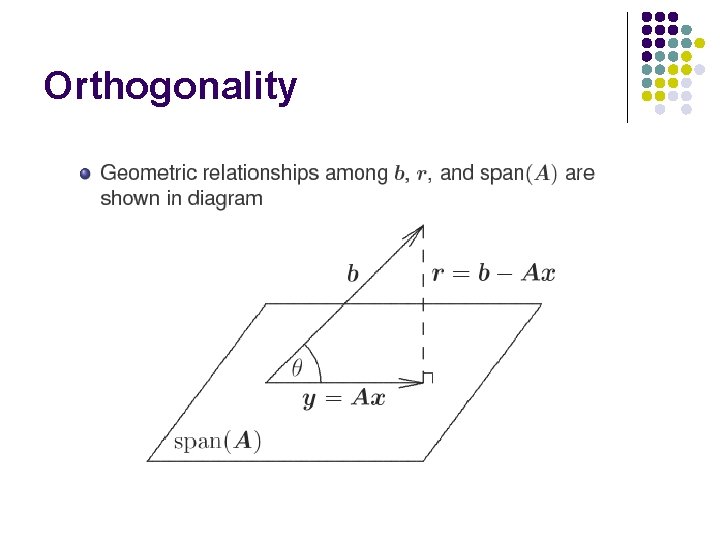
Orthogonality
Orthogonality
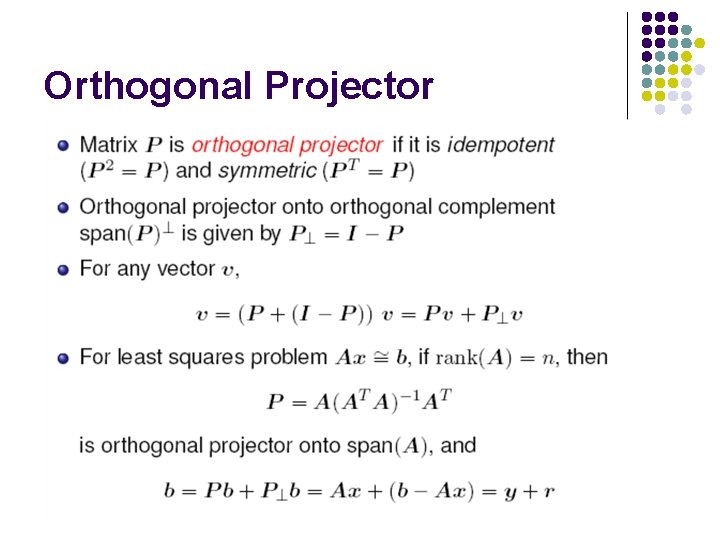
Orthogonal Projector
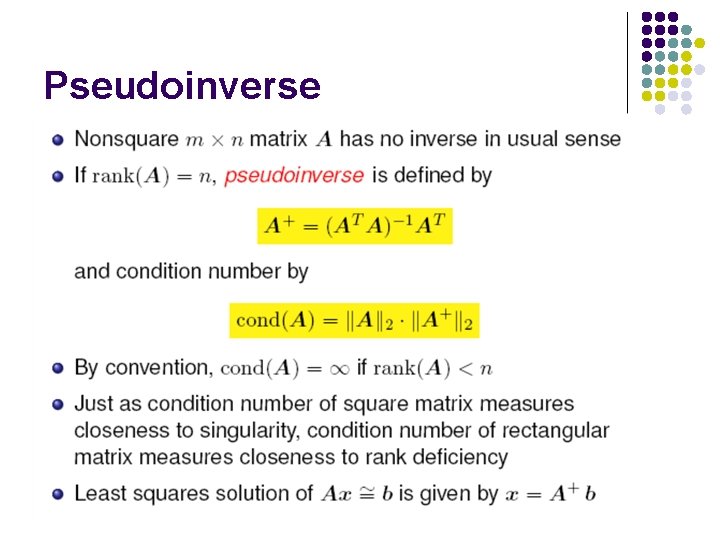
Pseudoinverse
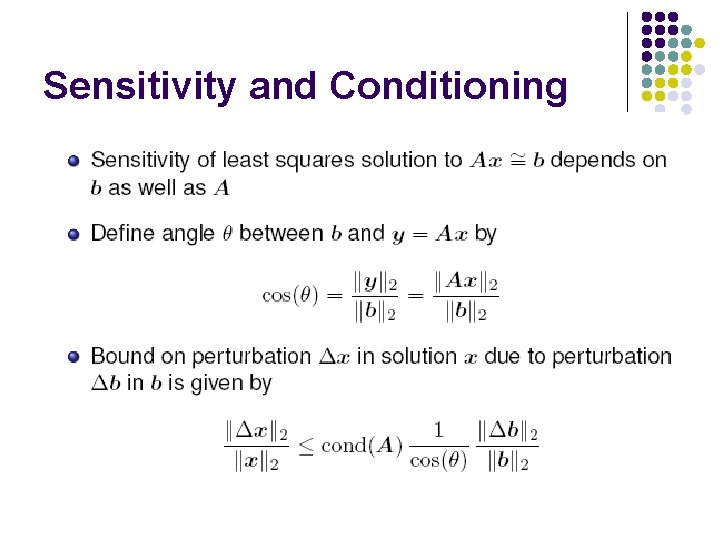
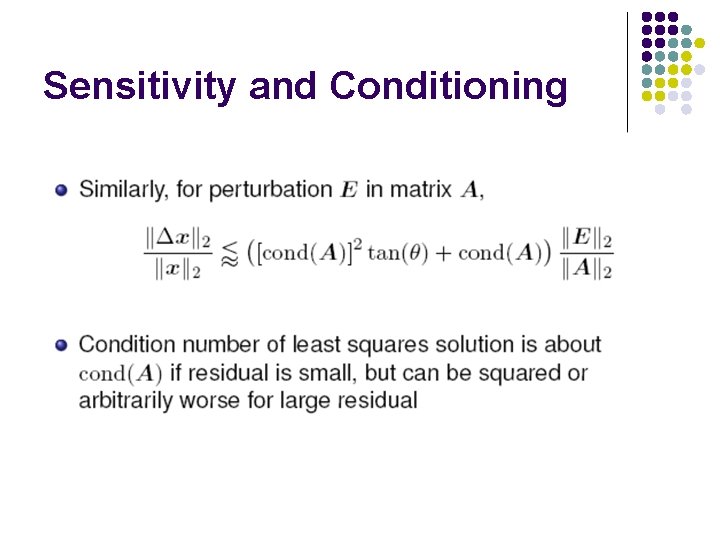
Sensitivity and Conditioning
Sensitivity and Conditioning
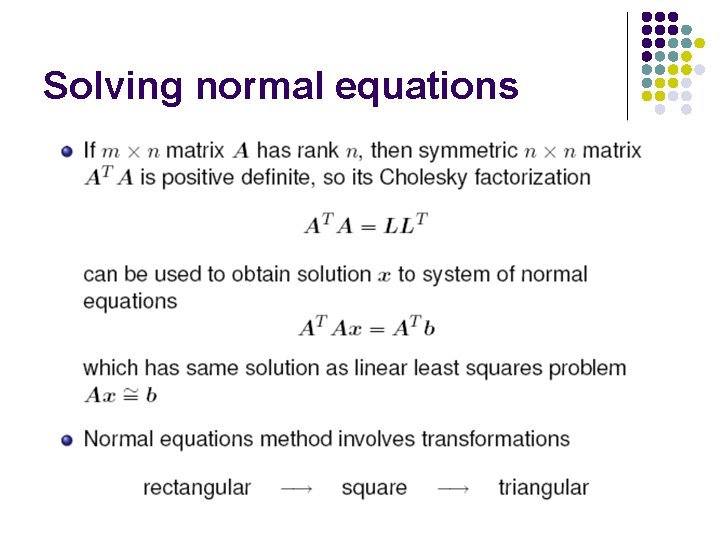
Solving normal equations
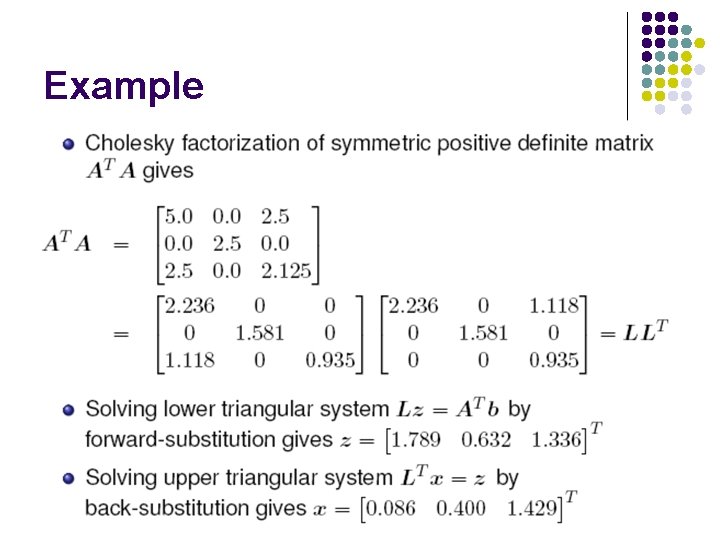
Example
Example
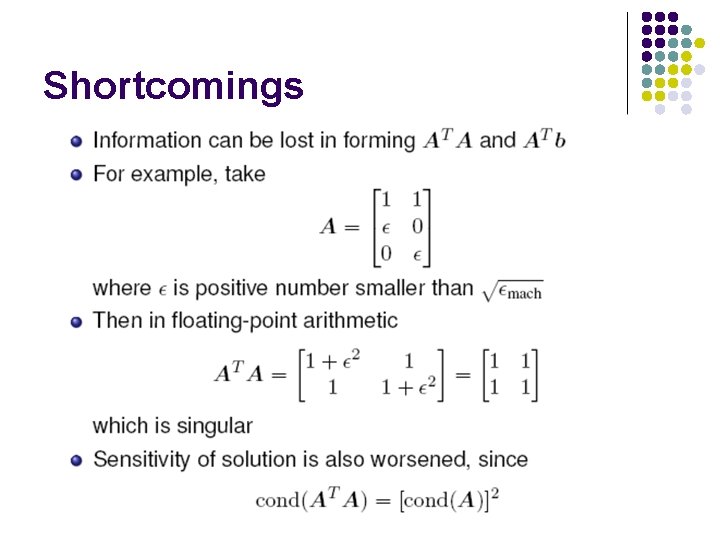
Shortcomings
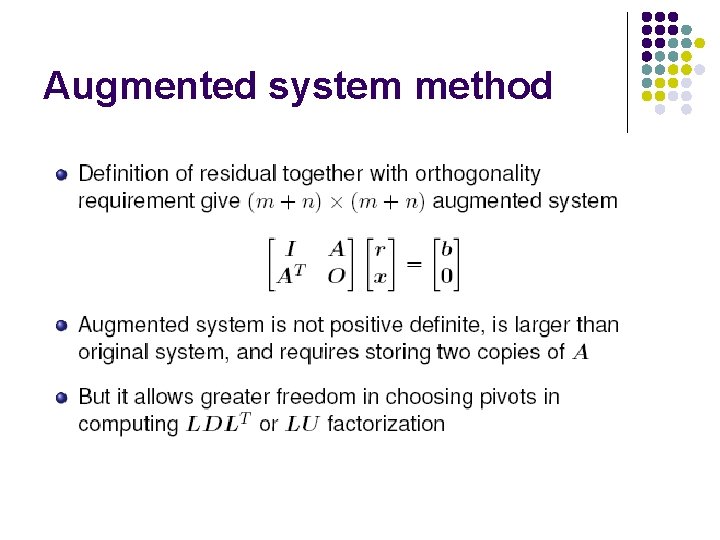
Augmented system method
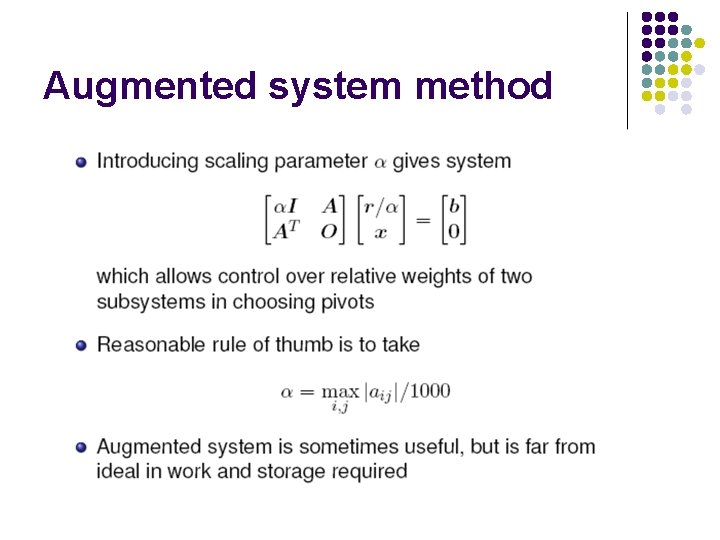
Augmented system method
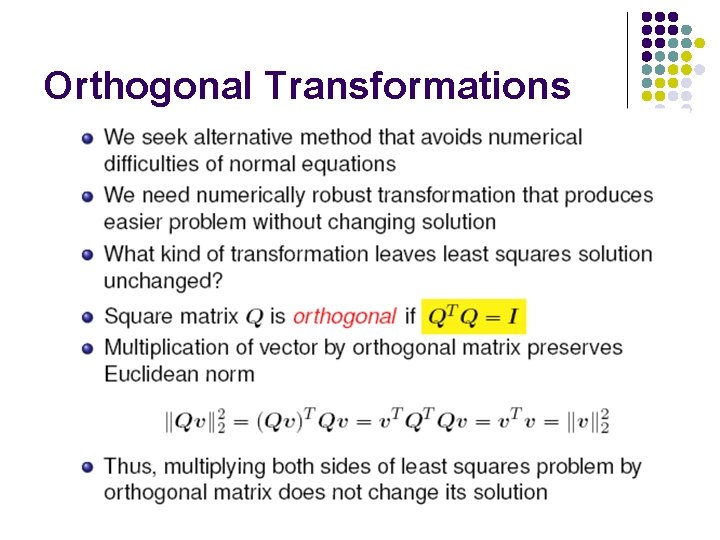
Orthogonal Transformations
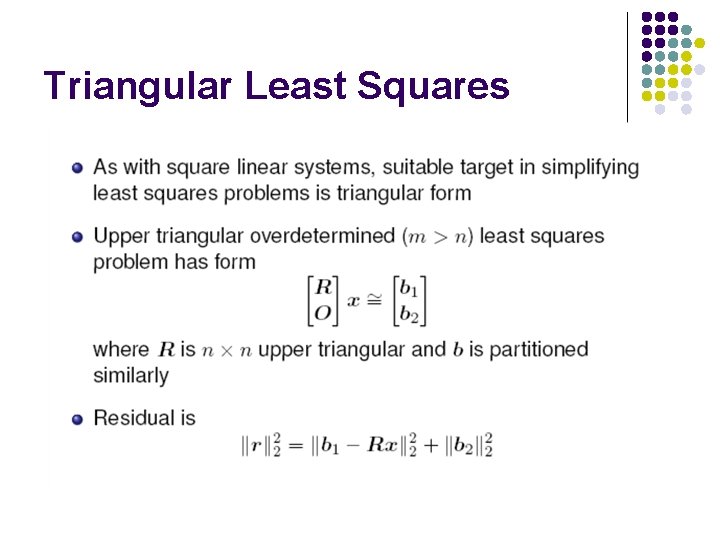
Triangular Least Squares
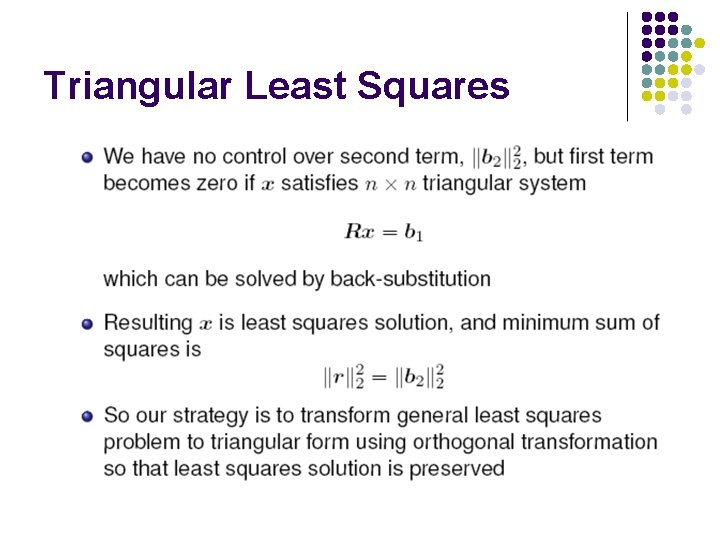
Triangular Least Squares
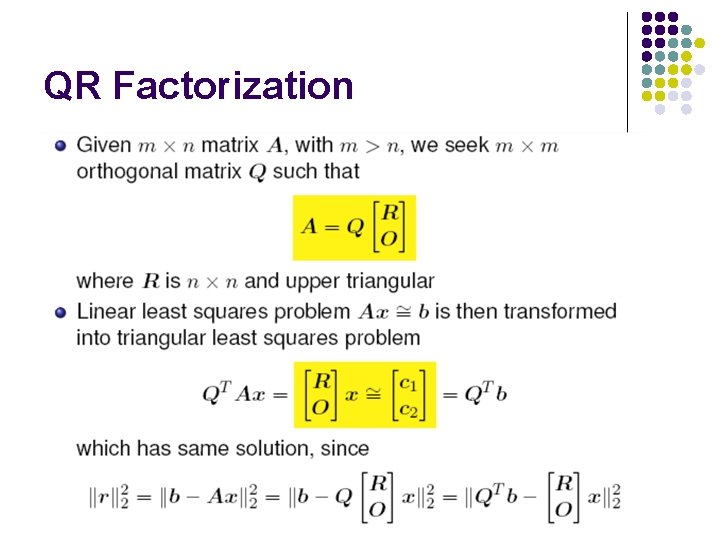
QR Factorization
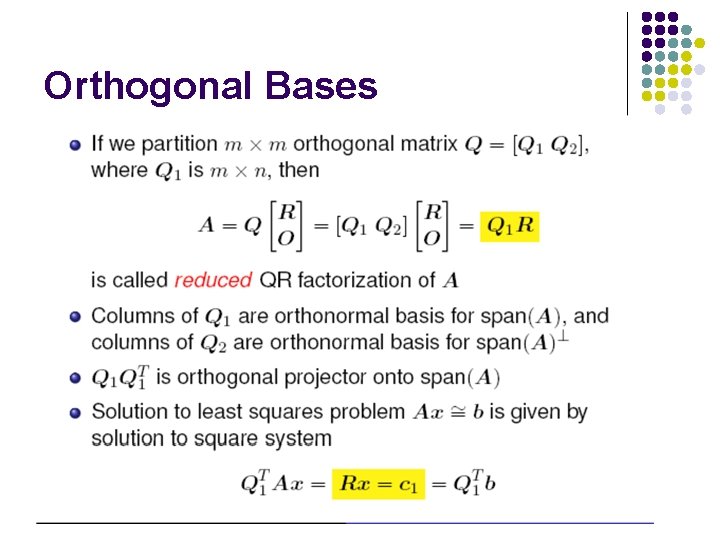
Orthogonal Bases
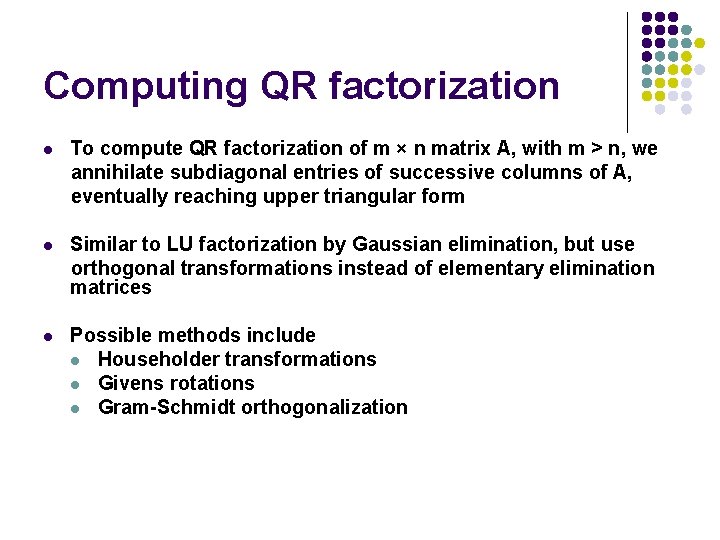
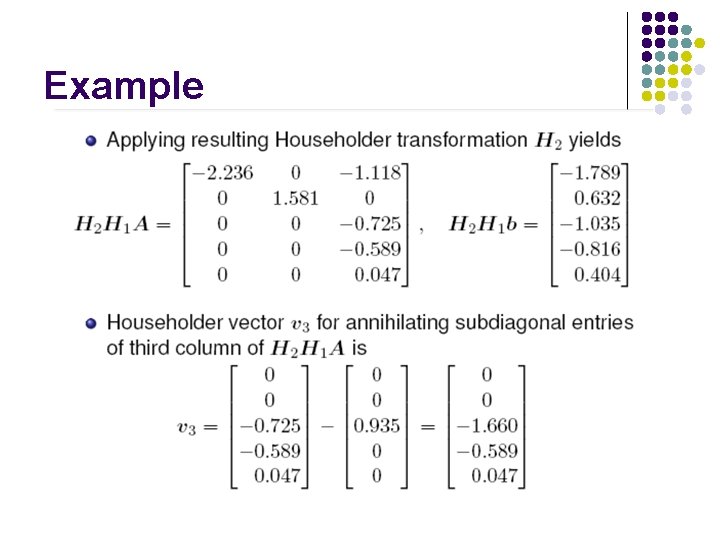
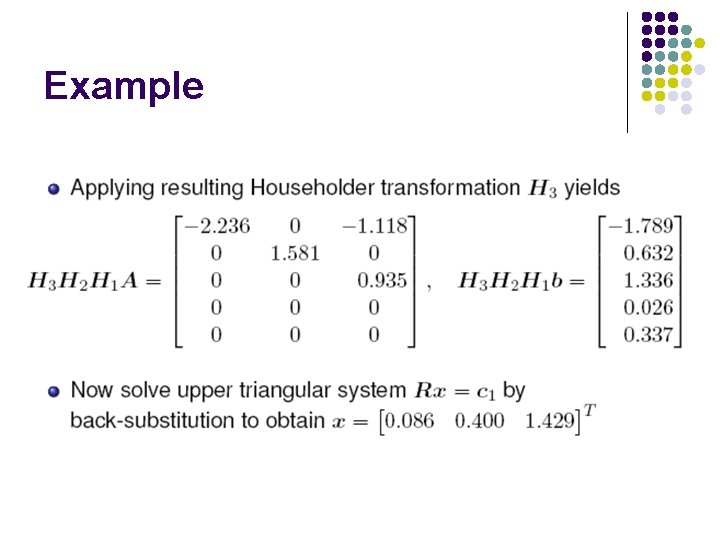
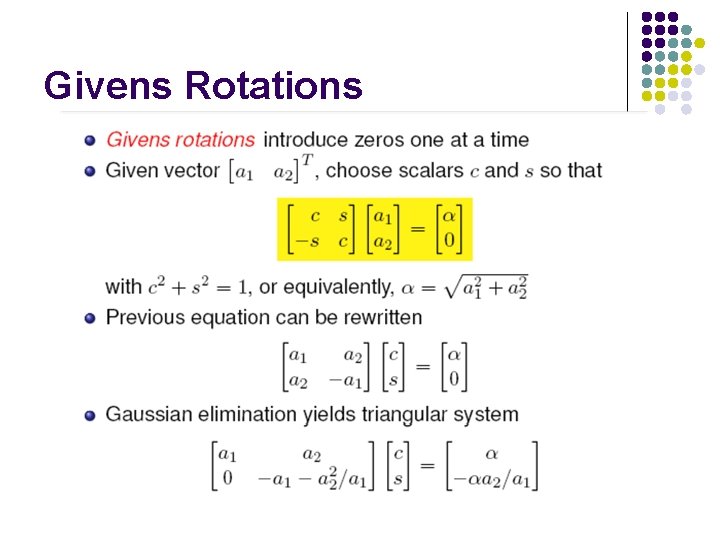
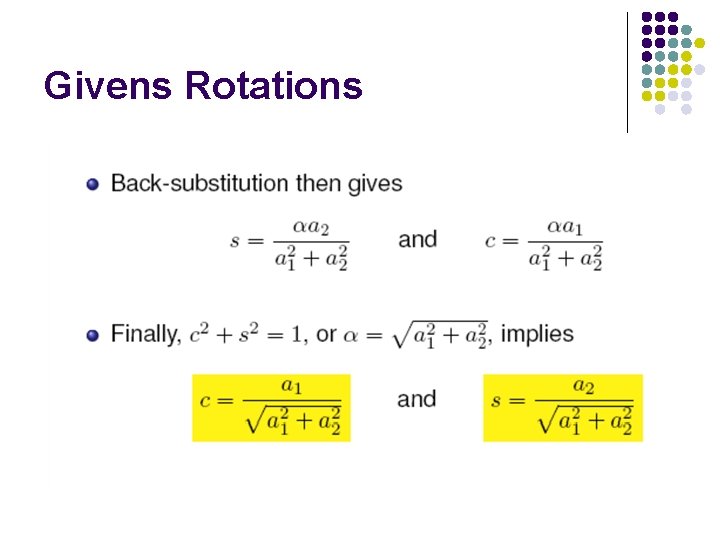
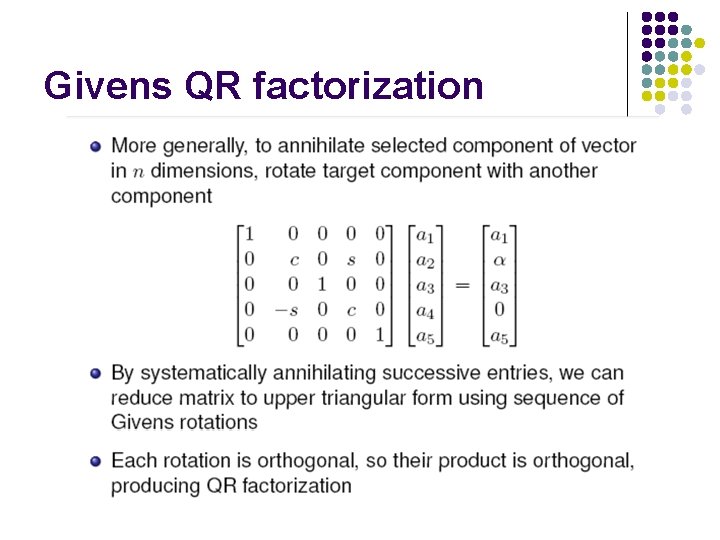
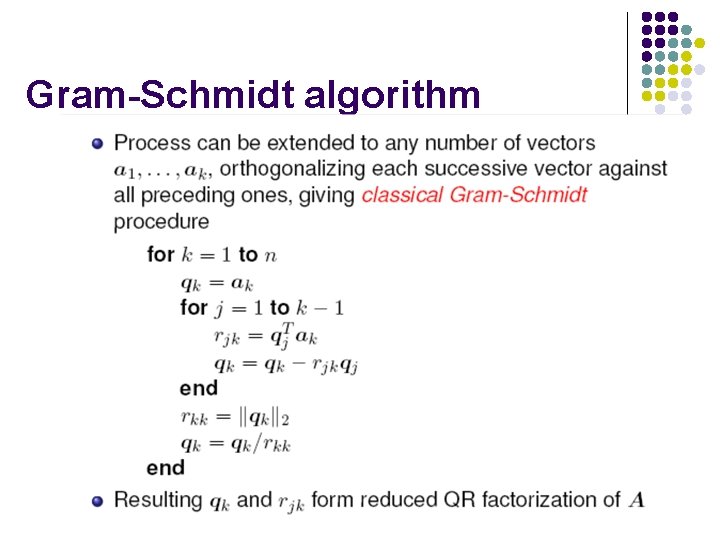
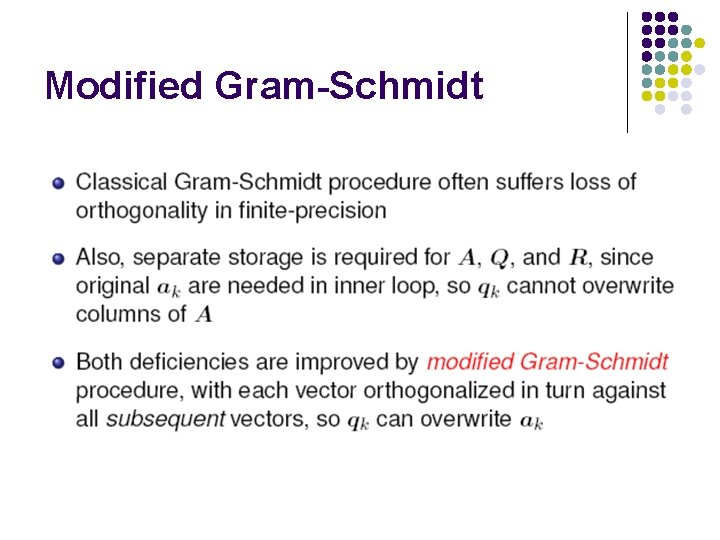
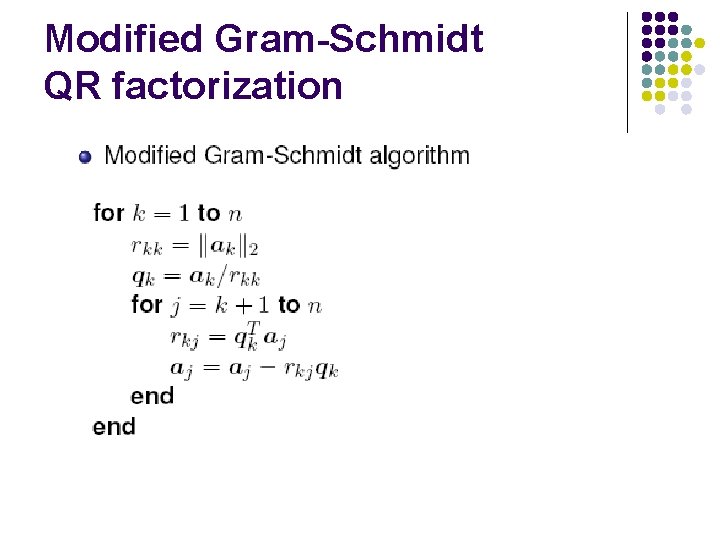
Computing QR factorization l To compute QR factorization of m × n matrix A, with m > n, we annihilate subdiagonal entries of successive columns of A, eventually reaching upper triangular form l Similar to LU factorization by Gaussian elimination, but use orthogonal transformations instead of elementary elimination matrices l Possible methods include l Householder transformations l Givens rotations l Gram-Schmidt orthogonalization
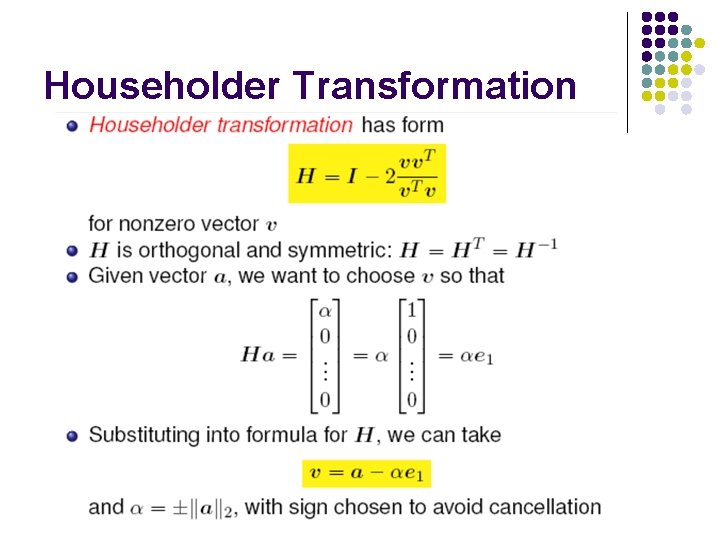
Householder Transformation
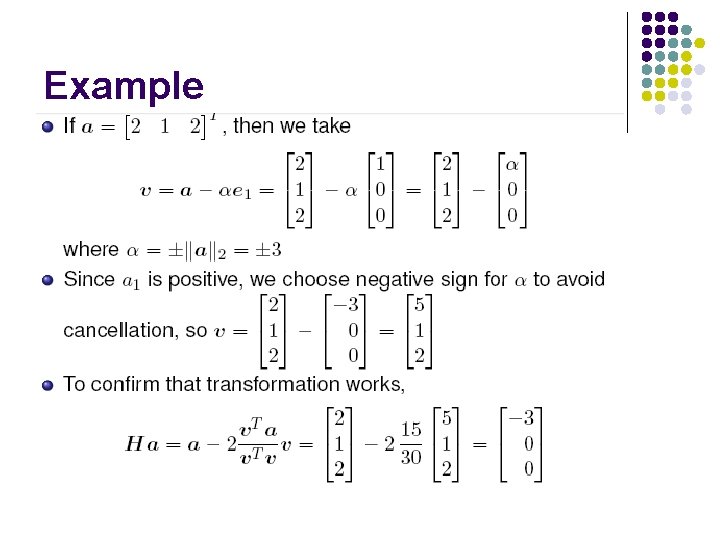
Example
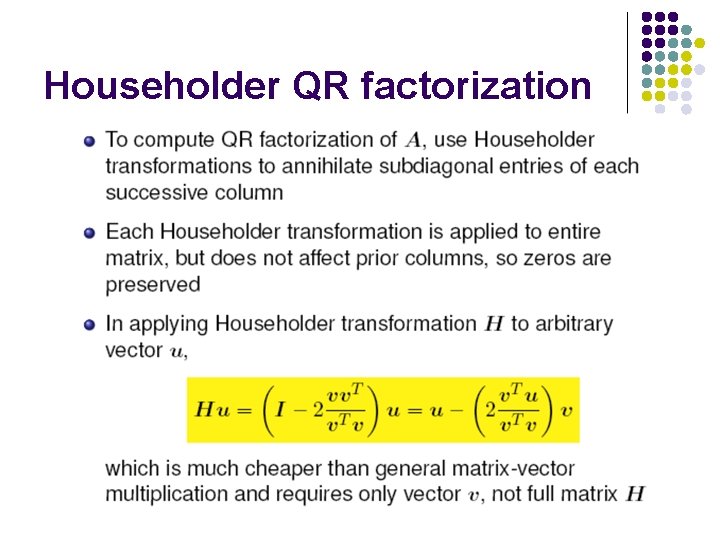
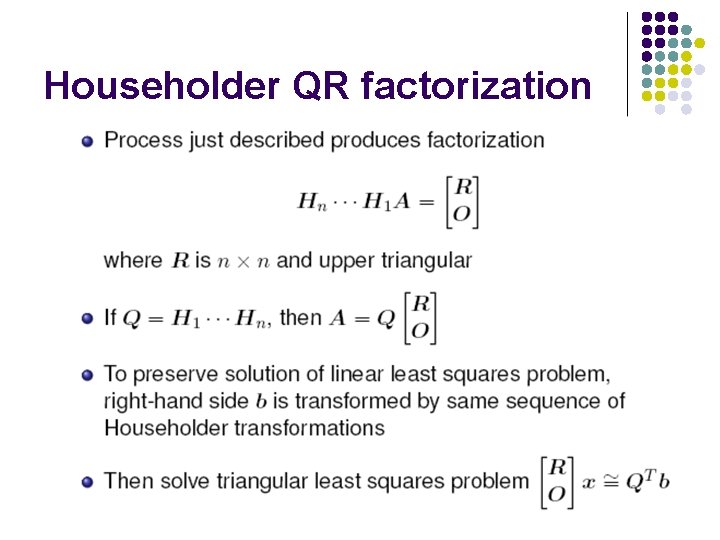
Householder QR factorization
Householder QR factorization
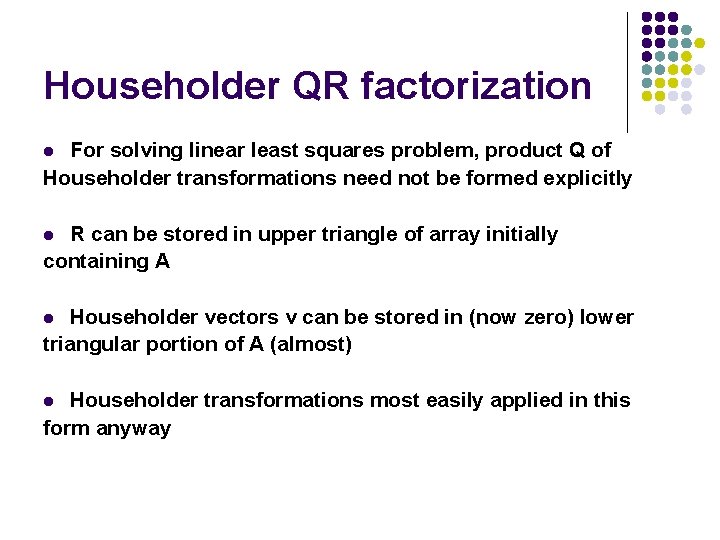
Householder QR factorization For solving linear least squares problem, product Q of Householder transformations need not be formed explicitly l R can be stored in upper triangle of array initially containing A l Householder vectors v can be stored in (now zero) lower triangular portion of A (almost) l Householder transformations most easily applied in this form anyway l
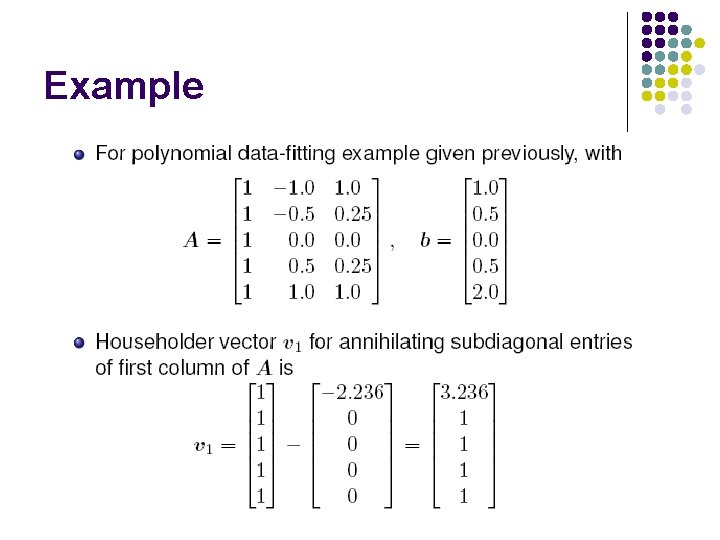
Example
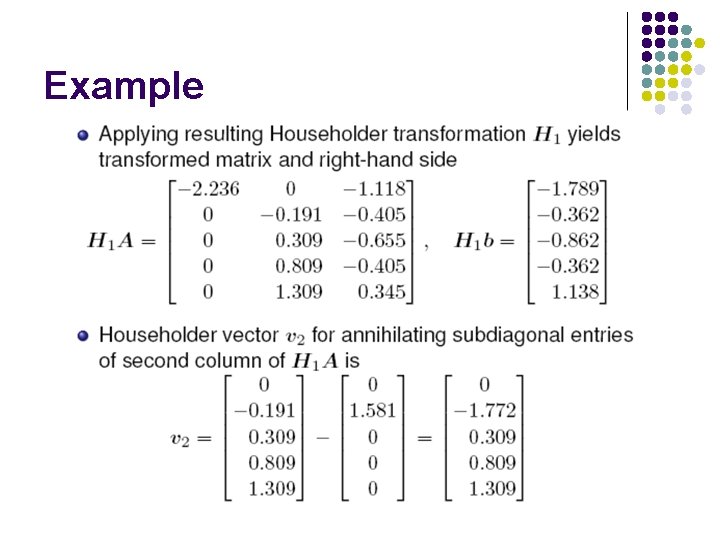
Example
Example
Example
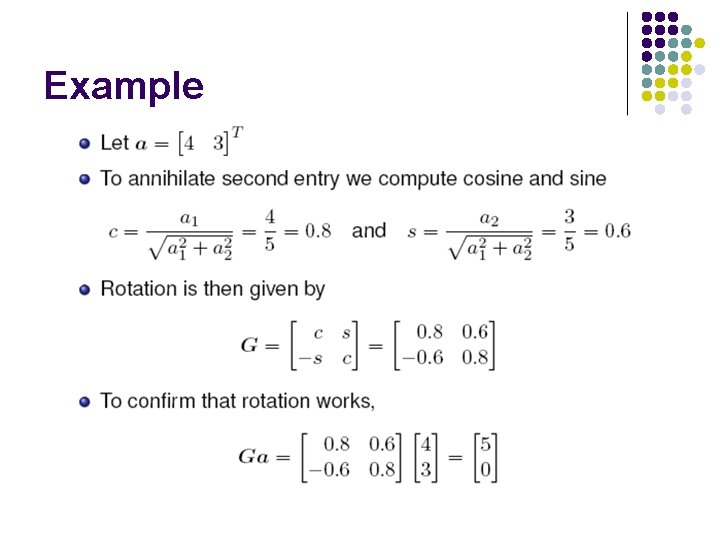
Givens Rotations
Givens Rotations
Example
Givens QR factorization
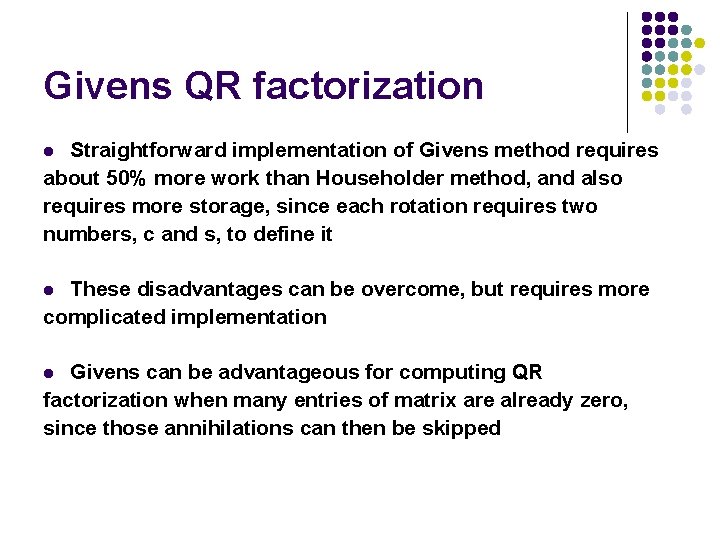
Givens QR factorization Straightforward implementation of Givens method requires about 50% more work than Householder method, and also requires more storage, since each rotation requires two numbers, c and s, to define it l These disadvantages can be overcome, but requires more complicated implementation l Givens can be advantageous for computing QR factorization when many entries of matrix are already zero, since those annihilations can then be skipped l
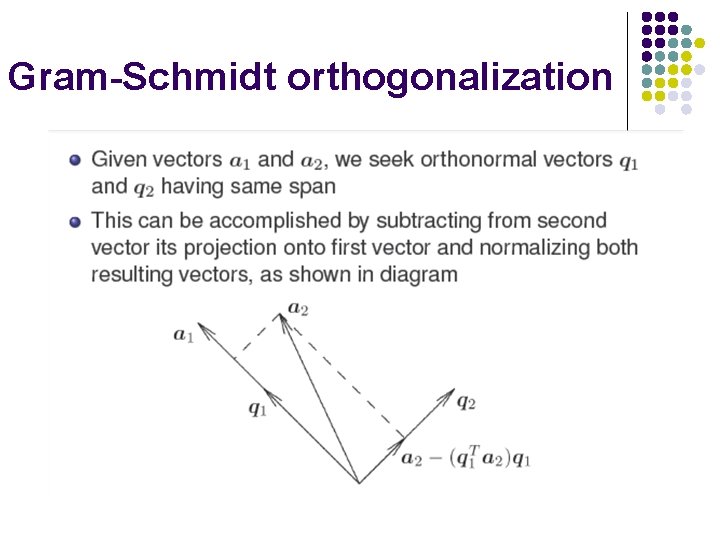
Gram-Schmidt orthogonalization
Gram-Schmidt algorithm
Modified Gram-Schmidt
Modified Gram-Schmidt QR factorization
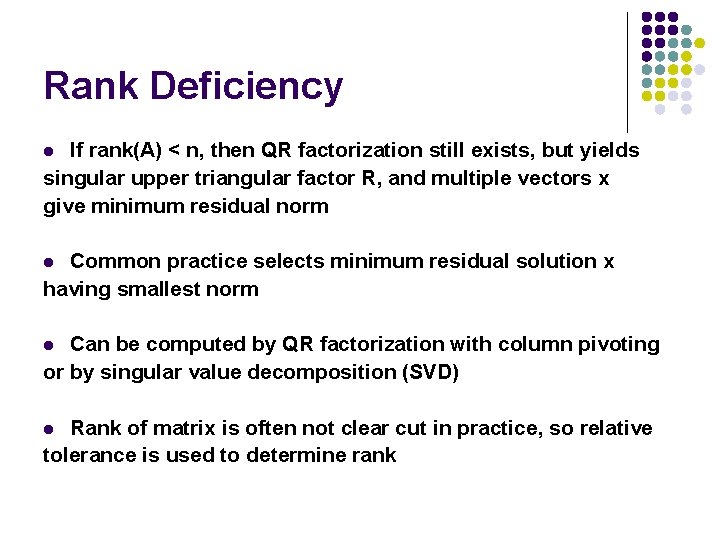
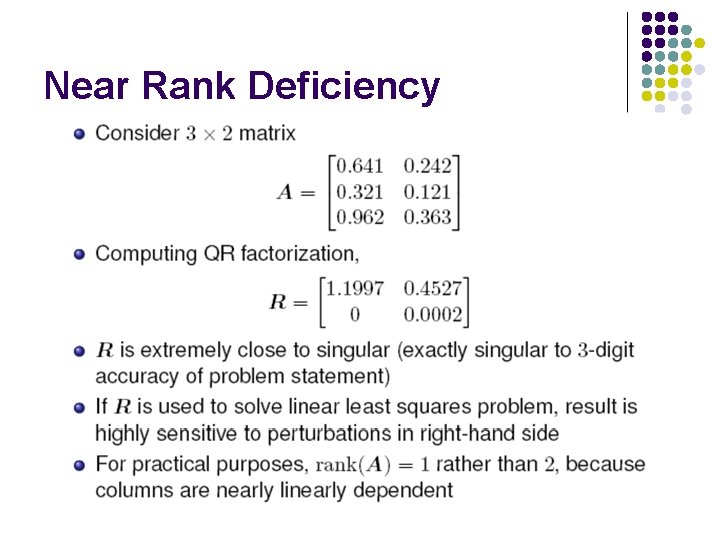
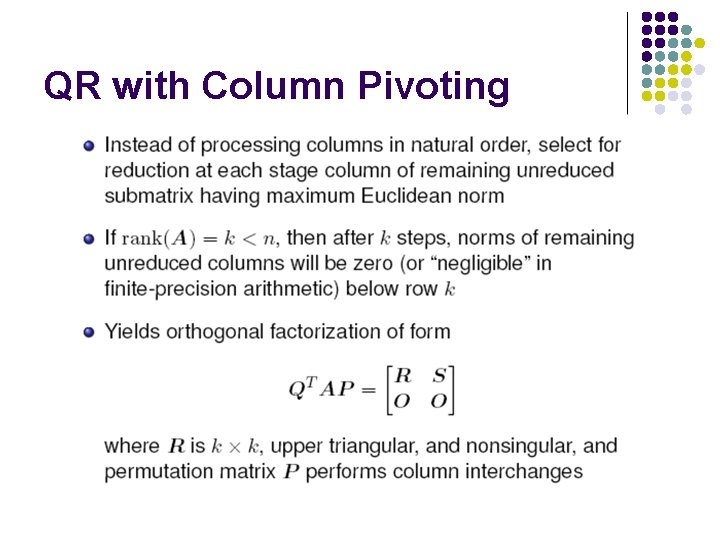
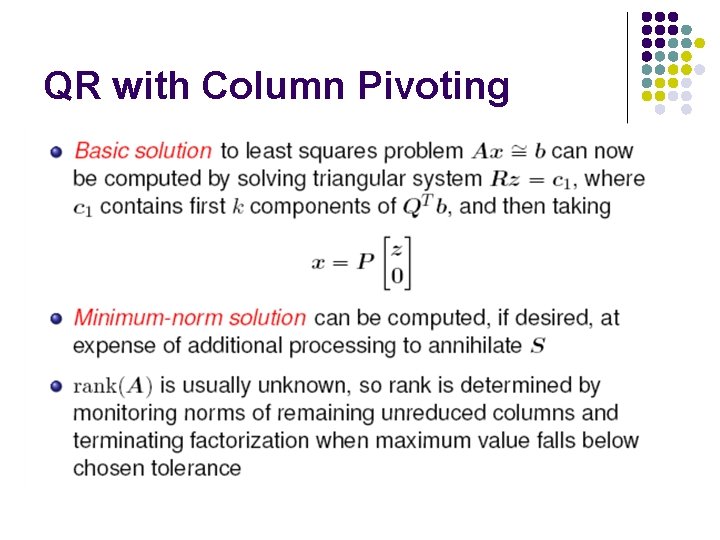
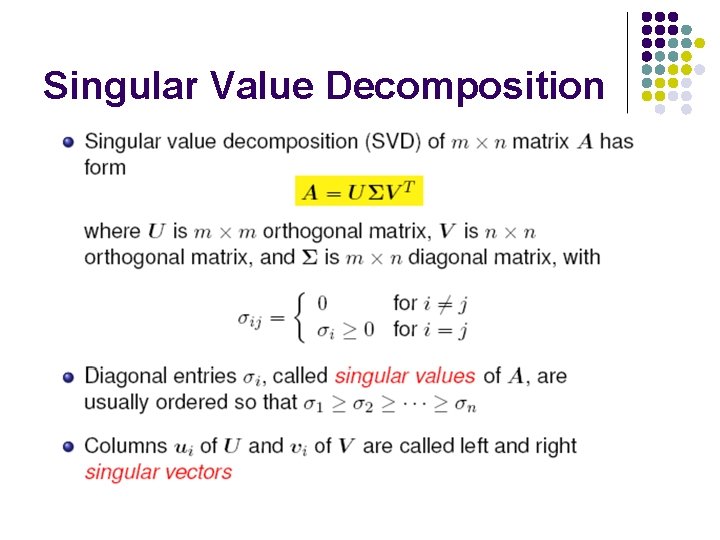
Rank Deficiency If rank(A) < n, then QR factorization still exists, but yields singular upper triangular factor R, and multiple vectors x give minimum residual norm l Common practice selects minimum residual solution x having smallest norm l Can be computed by QR factorization with column pivoting or by singular value decomposition (SVD) l Rank of matrix is often not clear cut in practice, so relative tolerance is used to determine rank l
Near Rank Deficiency
QR with Column Pivoting
QR with Column Pivoting
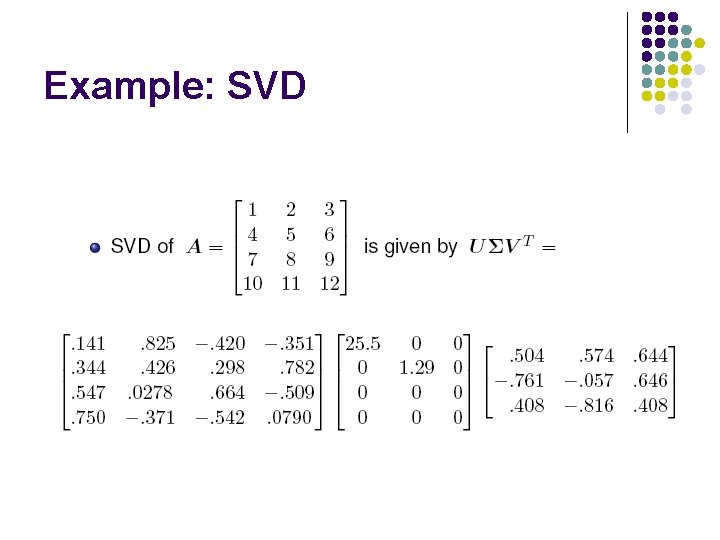
Singular Value Decomposition
Example: SVD
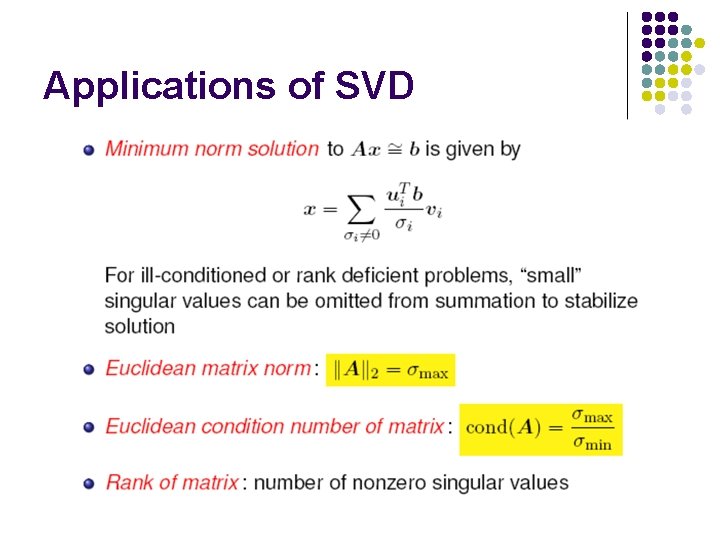
Applications of SVD
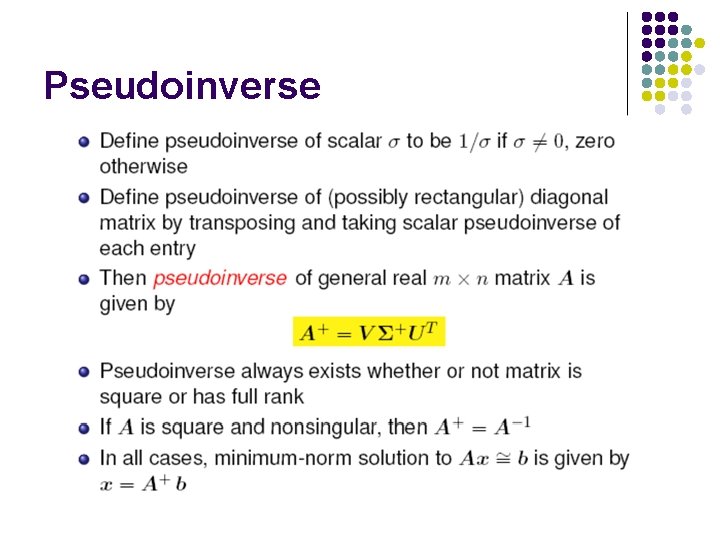
Pseudoinverse
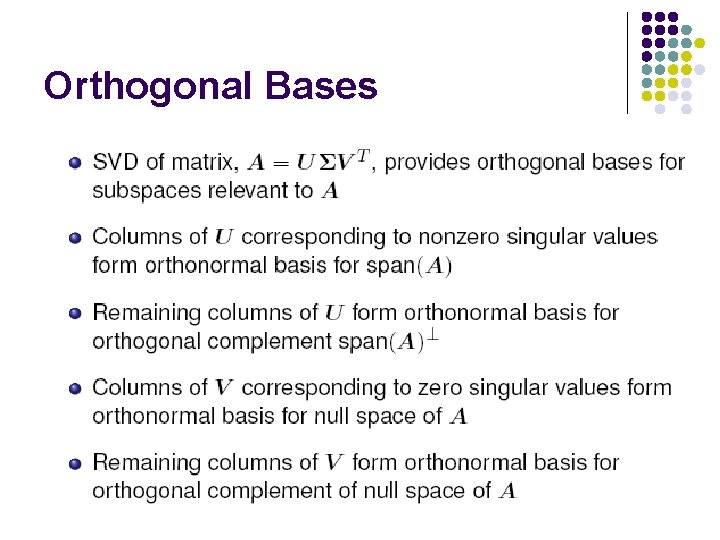
Orthogonal Bases
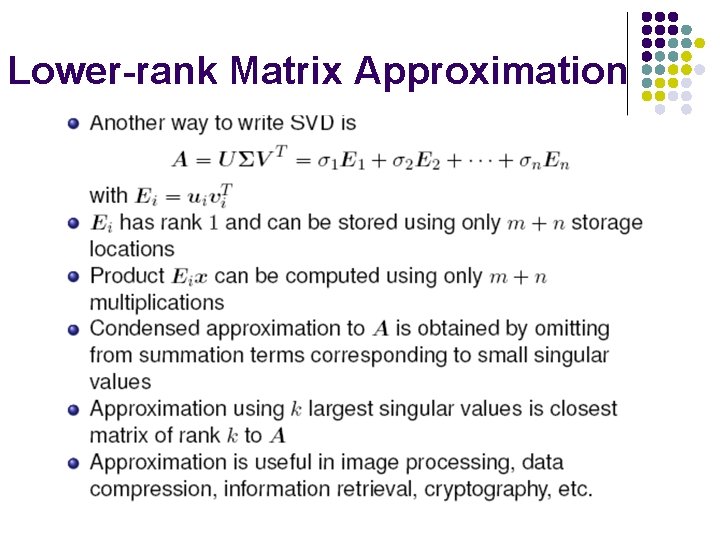
Lower-rank Matrix Approximation
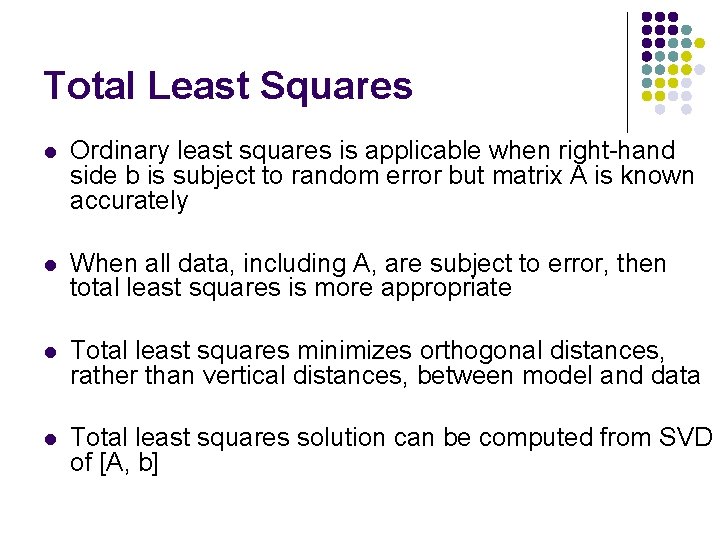
Total Least Squares l Ordinary least squares is applicable when right-hand side b is subject to random error but matrix A is known accurately l When all data, including A, are subject to error, then total least squares is more appropriate l Total least squares minimizes orthogonal distances, rather than vertical distances, between model and data l Total least squares solution can be computed from SVD of [A, b]
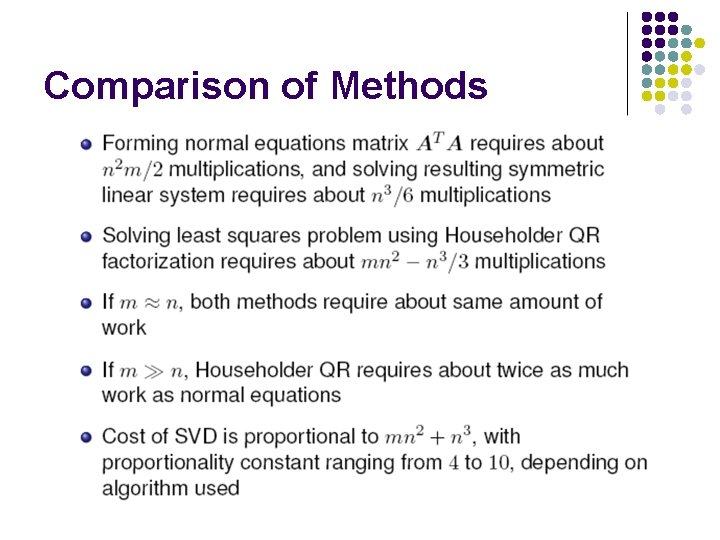
Comparison of Methods
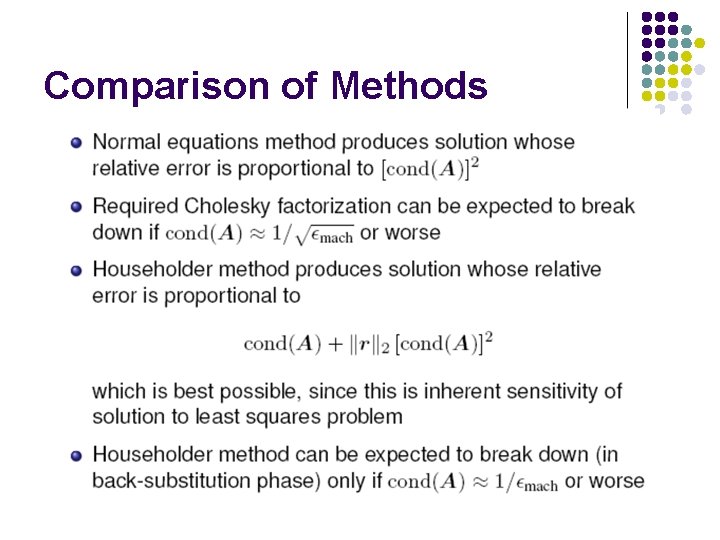
Comparison of Methods
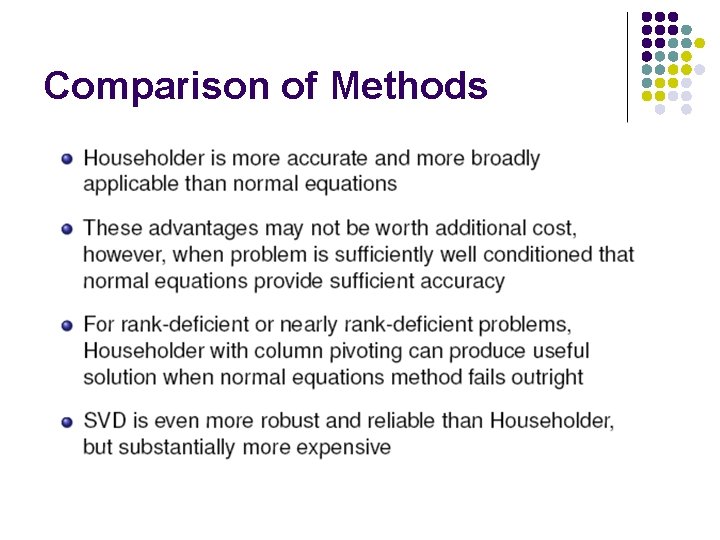
Comparison of Methods