Industrial sociology Industrial sociology also known as sociology














- Slides: 73
Industrial sociology • Industrial sociology (also known as "sociology of industrial relations" or sociology of work) is both a study of the interaction of people within industry (e. g. boss-subordinate, inter-departmental, and management-union relations) and, on a macrosociological scale, the study of the impact of industrialization on whole societies. http: //www. search. com/reference/Industrial_sociology#Labor_Process_Theory
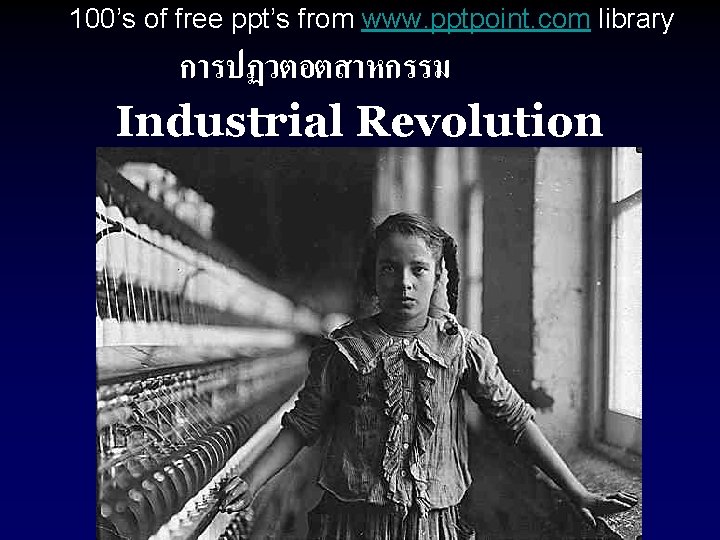
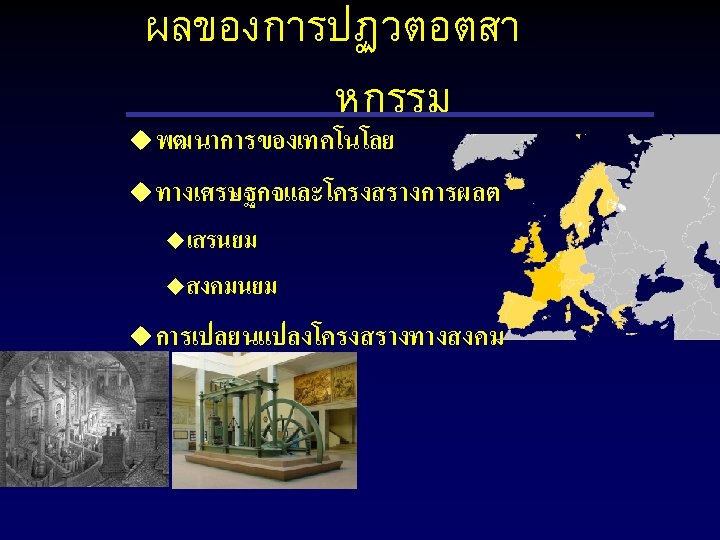
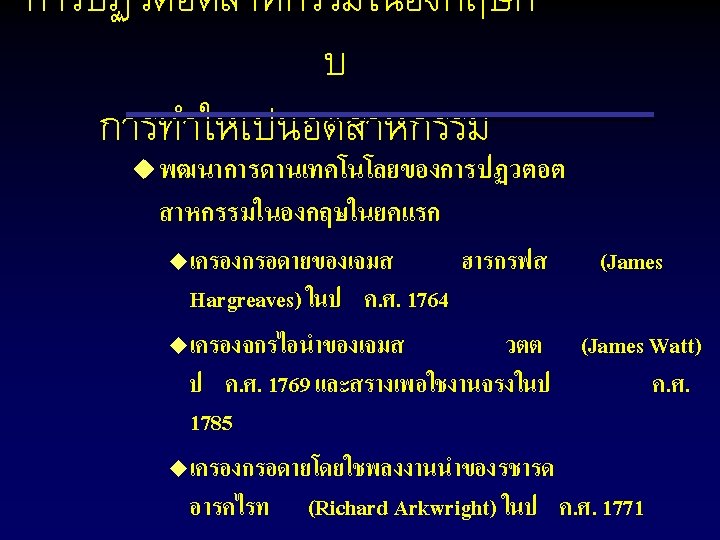
100’s of free ppt’s from www. pptpoint. com library การปฏวตอตสาหกรรม Industrial Revolution
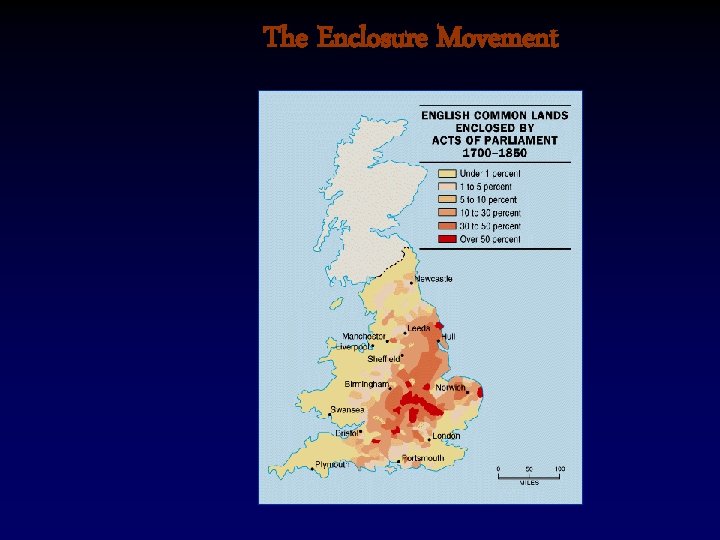
The Enclosure Movement
“Enclosed” Lands Today
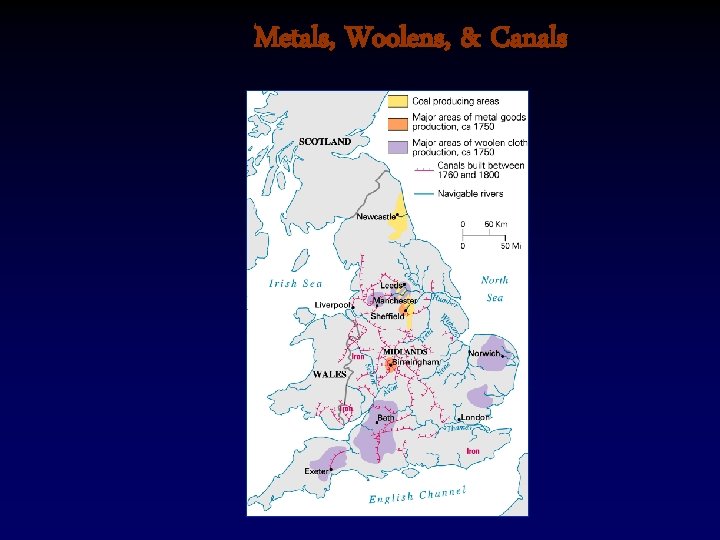
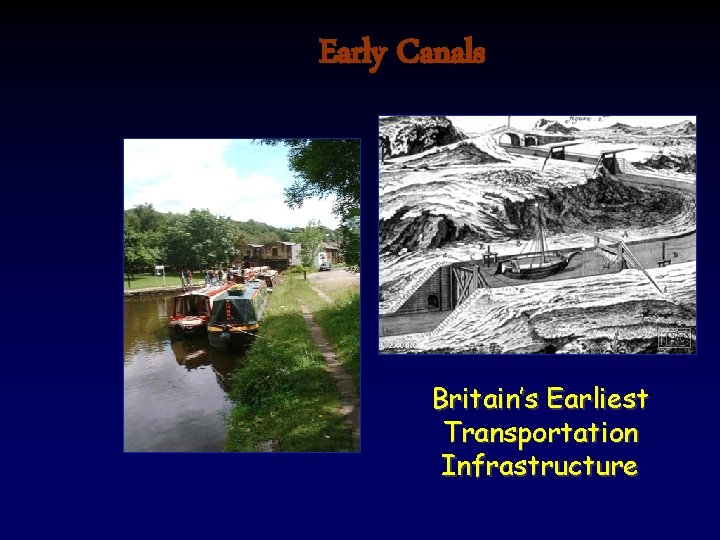
Metals, Woolens, & Canals
Early Canals Britain’s Earliest Transportation Infrastructure
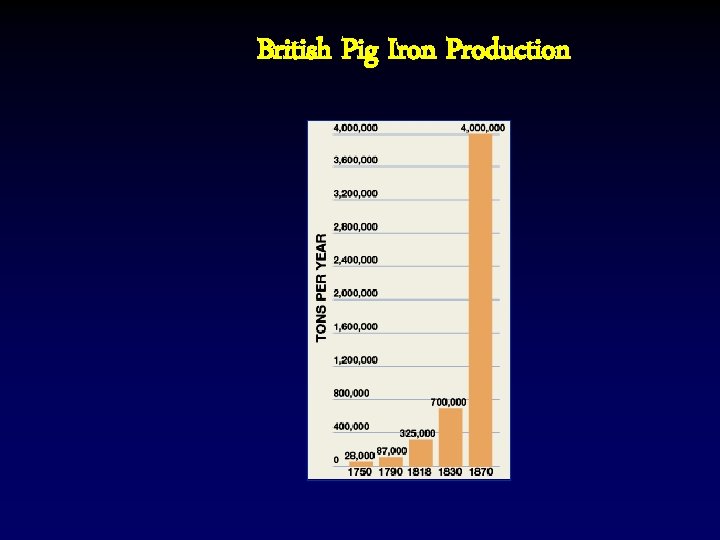
Mine & Forge [1840 -1880] v More powerful than water is coal. v More powerful than wood is iron. v Innovations make steel feasible. v“Puddling” [1820] – “pig iron. ” v“Hot blast” [1829] – cheaper, purer steel. v. Bessemer process [1856] – strong, flexible steel.
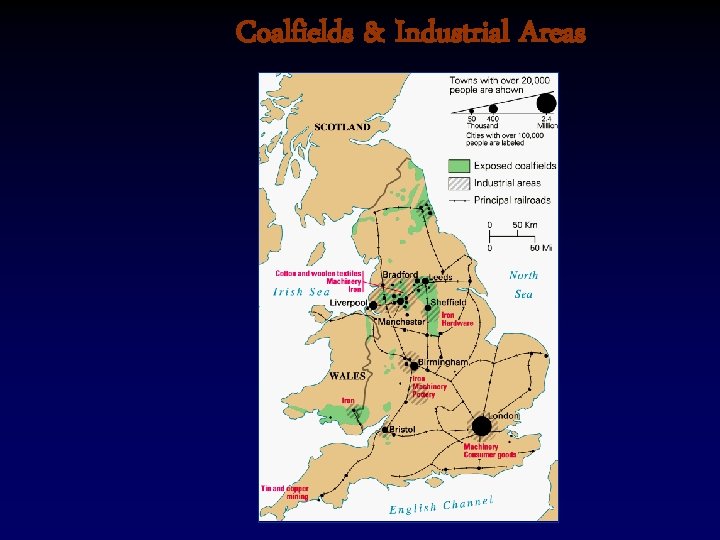
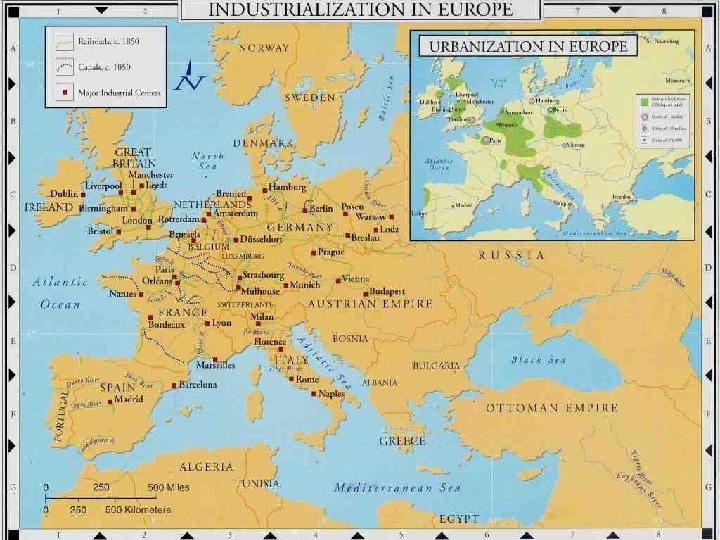
Coalfields & Industrial Areas
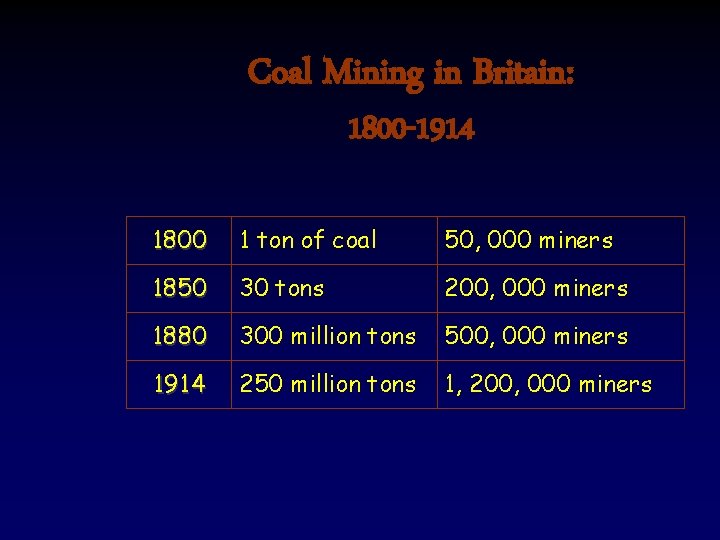
Coal Mining in Britain: 1800 -1914 1800 1 ton of coal 50, 000 miners 1850 30 tons 200, 000 miners 1880 300 million tons 500, 000 miners 1914 250 million tons 1, 200, 000 miners
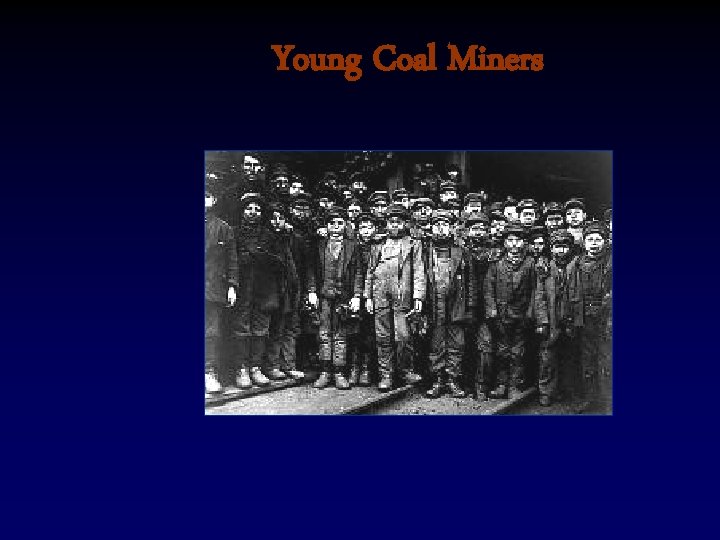
Young Coal Miners
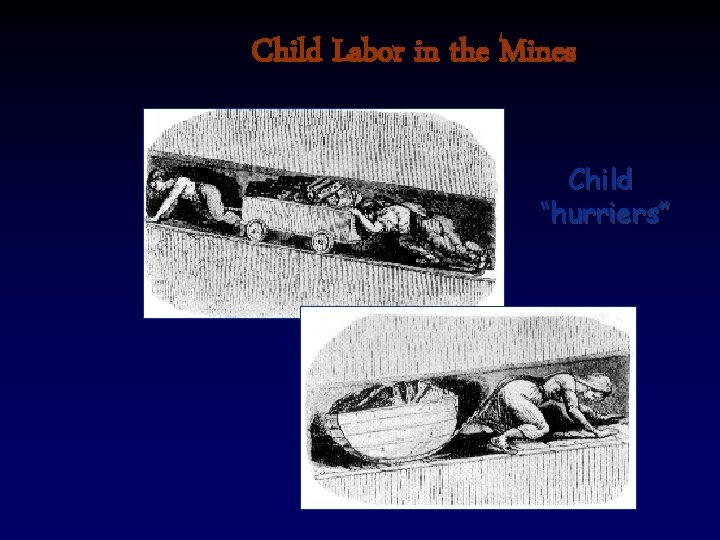
Child Labor in the Mines Child “hurriers”
British Pig Iron Production
"What were the factors that already marked Britain, rather than any other European country, as the destined first home of the industrial revolution? The answer lies partly in things remote from technology, such as the religious freedom which brought in the Huguenots and other refugees with their numerous arts and encouraged the native Puritan capitalist. There was the confident attitude natural to an island people that had ceased. . . to reckon seriously with the prospect of invasion. The island possessed a valuable stimulus to trade in its long coastline and frequent navigable rivers. . . Moreover, the Act of Union in 1707 had made Britain into a single economic unit long before any other area of comparable wealth and resources had ceased to be divided by numerous customs barriers. But even with the addition of the Scots, the smallness of the population as compared with the French gave at the same time an important incentive to the use of laborsaving devices. Lastly, there was the plentifulness and accessibility of coal in the island. " – T. K. Derry and T. I. Williams, A Short History of Technology
"In most of Europe, then, craft guilds eventually became responsible for a level of regulation that stifled competition and innovation. They did this by laying down meticulous rules about three elements of production that we might term 'the three p's': prices, procedures, and participation. " – Mokyr, Joel, The Gifts of Athena, Princeton University Press, 2002, p. 259.
"The weak position of the guilds in Britain in the eighteenth century can go some way in explaining the series of technological successes we usually refer to as the British Industrial Revolution and why it occurred in Britain rather than on the European continent, although clearly this was only one of many variables at work. " – Mokyr, Joel, The Gifts of Athena, Princeton University Press, 2002, p. 260.
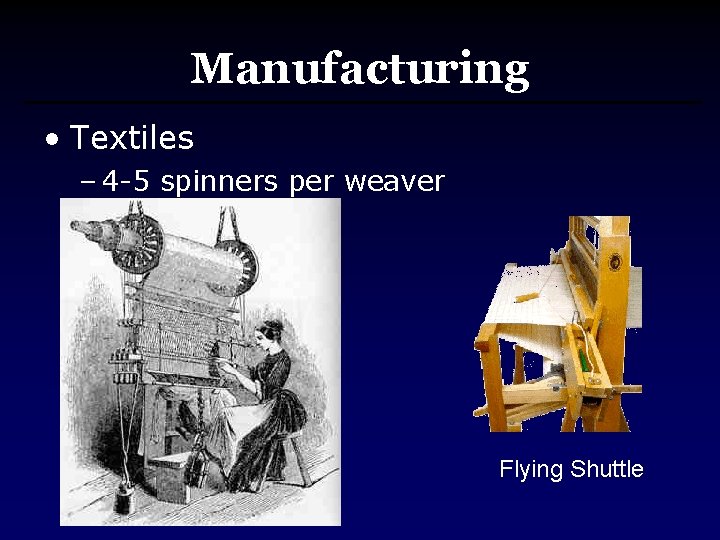
Manufacturing • Textiles – 4 -5 spinners per weaver Flying Shuttle
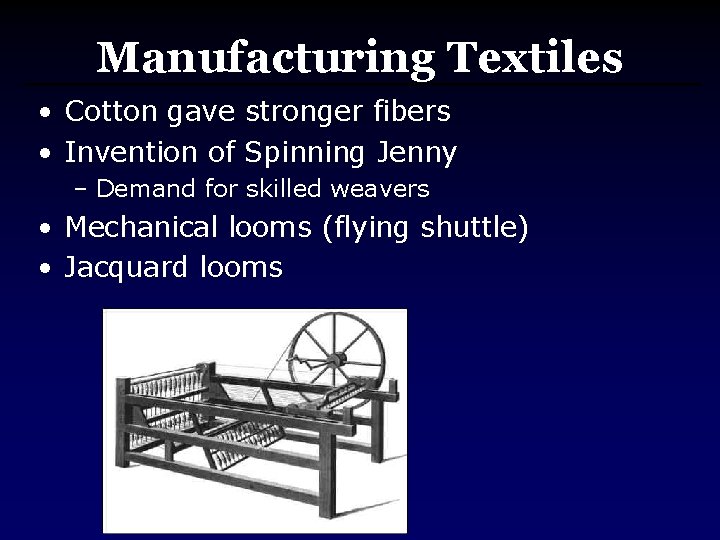
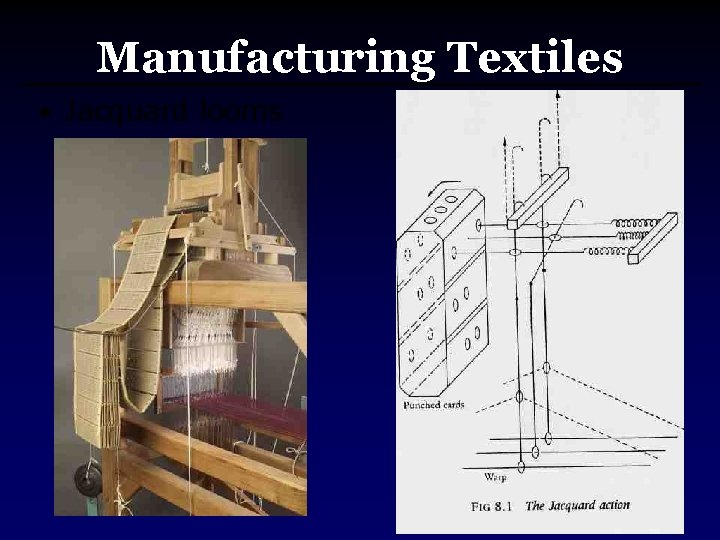
Manufacturing Textiles • Cotton gave stronger fibers • Invention of Spinning Jenny – Demand for skilled weavers • Mechanical looms (flying shuttle) • Jacquard looms
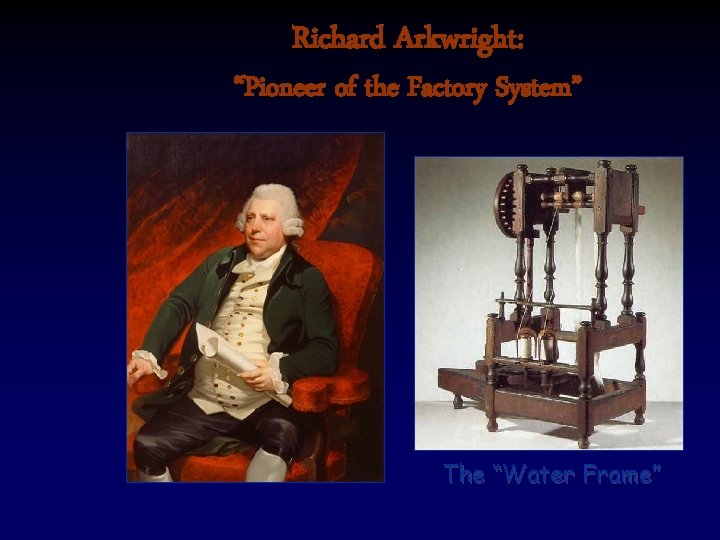
Richard Arkwright: “Pioneer of the Factory System” The “Water Frame”
Richard Arkwright – 1771 • Invents the spinning water frame • Constructs the first spinning factory – Realized that several machines could be linked to create a factory – Needed water power to turn the machines (water wheel expert) – Needed gears (watchmaker) The creation of the first spinning factory was the beginning of the Industrial Revolution
Edmund Cartwright– 1787 • Power loom factory
Manufacturing Textiles • Jacquard looms
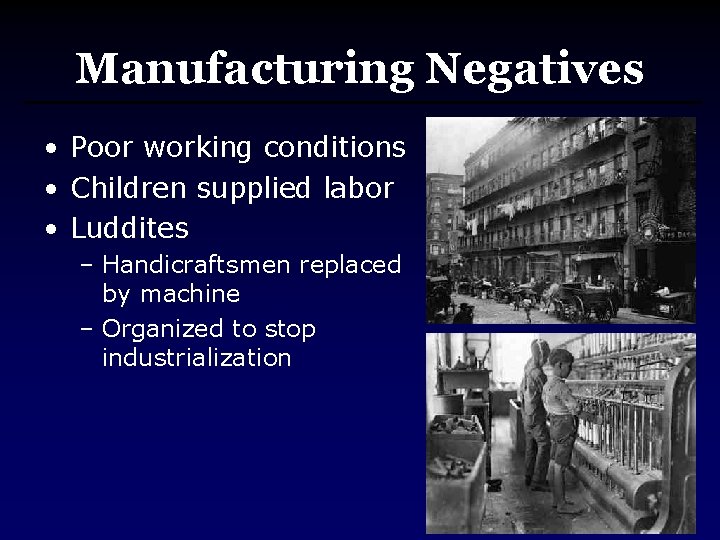
Manufacturing Negatives • Poor working conditions • Children supplied labor • Luddites – Handicraftsmen replaced by machine – Organized to stop industrialization
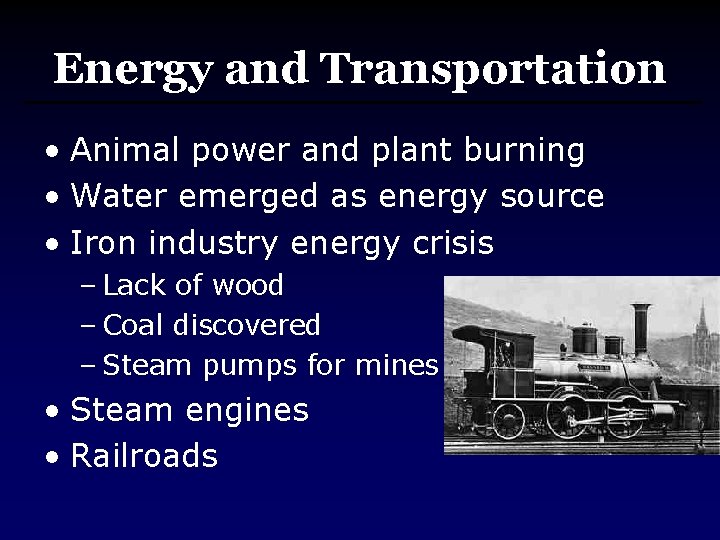
Energy and Transportation • Animal power and plant burning • Water emerged as energy source • Iron industry energy crisis – Lack of wood – Coal discovered – Steam pumps for mines • Steam engines • Railroads
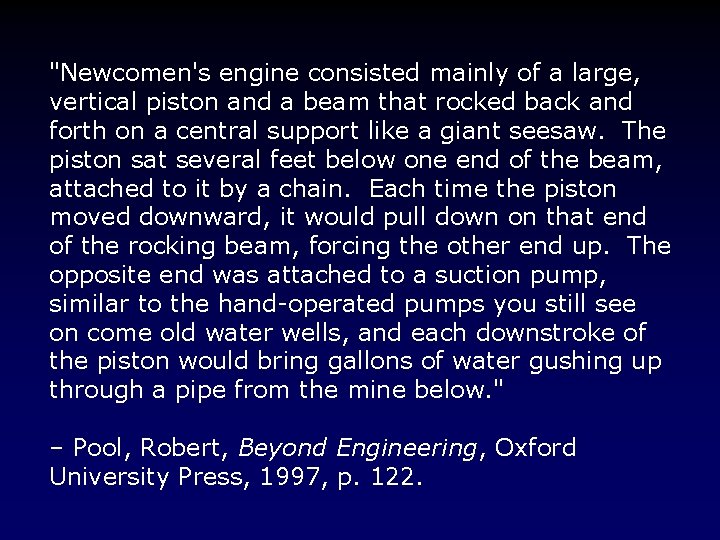
"Newcomen's engine consisted mainly of a large, vertical piston and a beam that rocked back and forth on a central support like a giant seesaw. The piston sat several feet below one end of the beam, attached to it by a chain. Each time the piston moved downward, it would pull down on that end of the rocking beam, forcing the other end up. The opposite end was attached to a suction pump, similar to the hand-operated pumps you still see on come old water wells, and each downstroke of the piston would bring gallons of water gushing up through a pipe from the mine below. " – Pool, Robert, Beyond Engineering, Oxford University Press, 1997, p. 122.
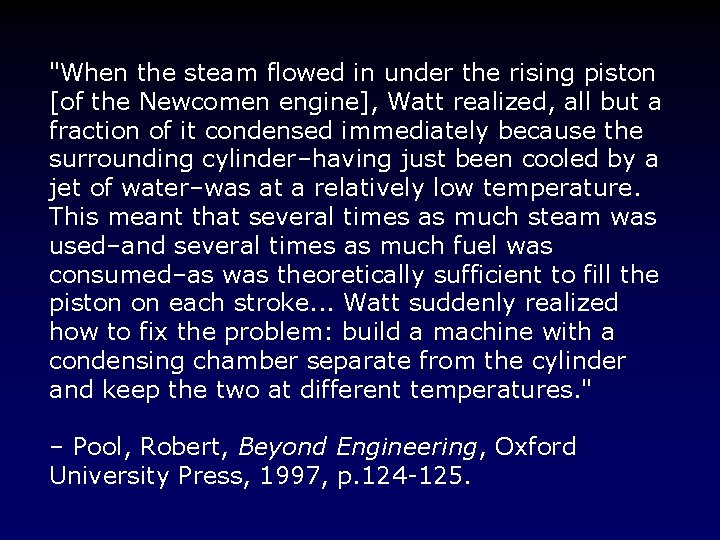
"When the steam flowed in under the rising piston [of the Newcomen engine], Watt realized, all but a fraction of it condensed immediately because the surrounding cylinder–having just been cooled by a jet of water–was at a relatively low temperature. This meant that several times as much steam was used–and several times as much fuel was consumed–as was theoretically sufficient to fill the piston on each stroke. . . Watt suddenly realized how to fix the problem: build a machine with a condensing chamber separate from the cylinder and keep the two at different temperatures. " – Pool, Robert, Beyond Engineering, Oxford University Press, 1997, p. 124 -125.
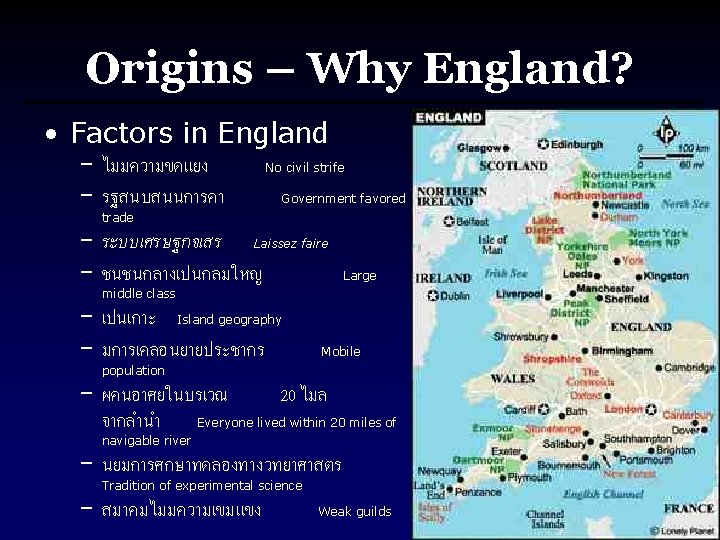
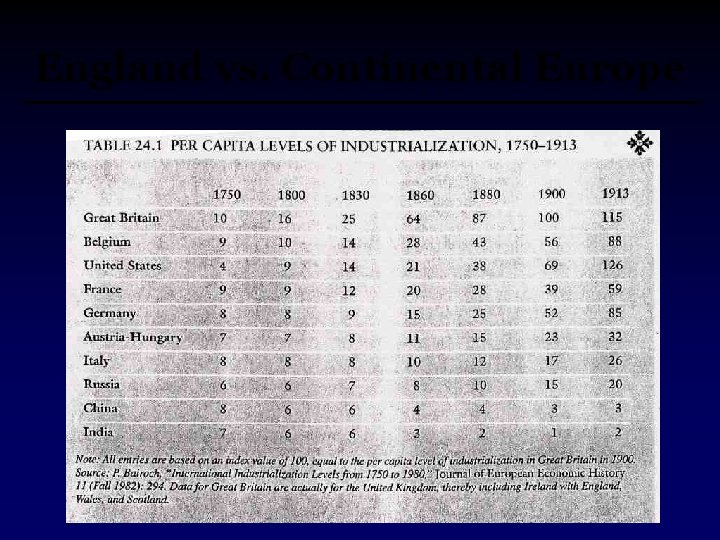
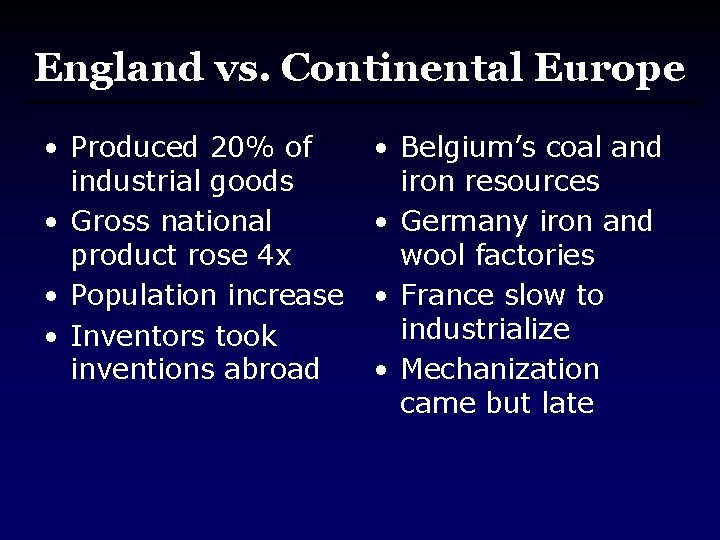
England vs. Continental Europe
England vs. Continental Europe • Produced 20% of industrial goods • Gross national product rose 4 x • Population increase • Inventors took inventions abroad • Belgium’s coal and iron resources • Germany iron and wool factories • France slow to industrialize • Mechanization came but late
Technology • The Industrial Revolution was built on rapid advances in technology
"Technology comprises all that bewilderingly varied body of knowledge and devices by which man progressively masters his natural environment. . . " - T. K. Derry and T. I. Williams, A Short History of Technology, 3
Technology • Is technology good?
Technology: short, medium and long-term consequences Short-term: Benefits are helpful and desirable (this is why we use it). If proven to be a dud, it is discarded quickly. Medium-term: Negative consequences are noted and strong resistance often arises. Sometimes the short term causes disruptions (loss of jobs, etc. ) and attempts are made in the medium term to stop technology (Luddites, etc. ); but these are rarely successful (except current efforts by environmental groups who have the backing of politicians, courts, and many people). This resistance is outside market forces. Long-term: May require changes/evolution in the technology but we rarely abandon the technology all together because the benefits are great and the negatives are worked around. – Mokyr, Joel, The Gifts of Athena,
Technology • Is complexity good?
"Complexity creates unpredictability. The more complex a system, the more difficult it is to understand all the different ways the system may behave–and, in particular, to anticipate all the different ways it may fail. Interdependence among parts creates entirely new ways that things can go wrong, ways that engineers often overlook or ignore. Thus many technological failures chalked up to mechanical breakdown or design flaws are more accurately described as the children of complexity. " – Pool, Robert, Beyond Engineering, Oxford University Press, 1997, p. 131.
Technology • How do we control technology without stifling creativity?
Factory Production ) Concentrates production in one place [materials, labor]. ) Located near sources of power [rather than labor or markets]. ) Requires a lot of capital investment [factory, machines, etc. ] more than skilled labor. ) Only 10% of English industry in 1850.
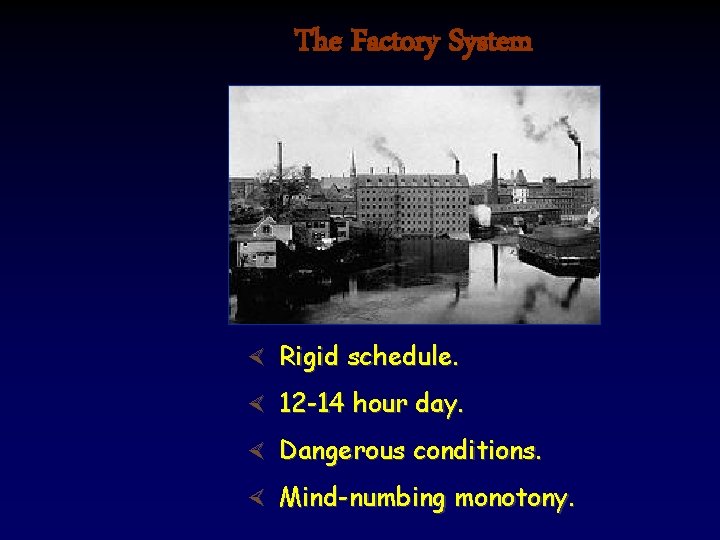
The Factory System × Rigid schedule. × 12 -14 hour day. × Dangerous conditions. × Mind-numbing monotony.
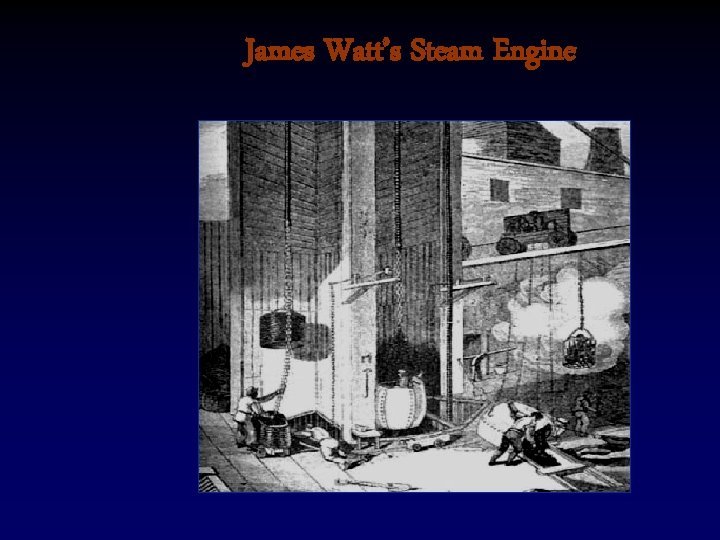
James Watt’s Steam Engine
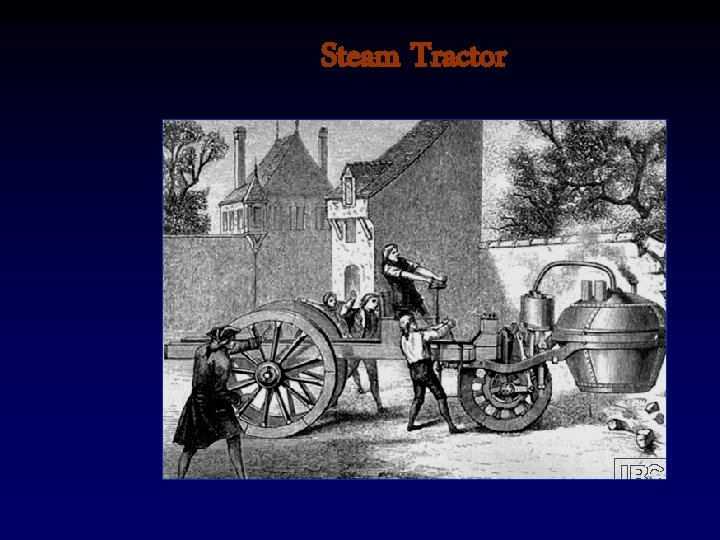
Steam Tractor
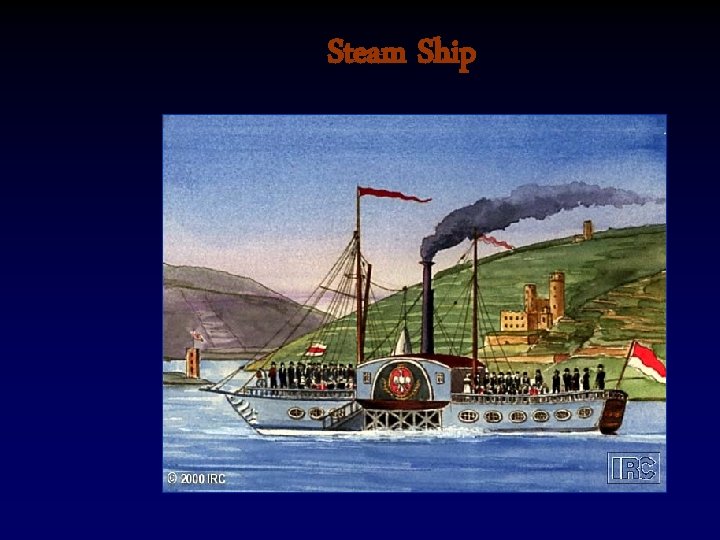
Steam Ship
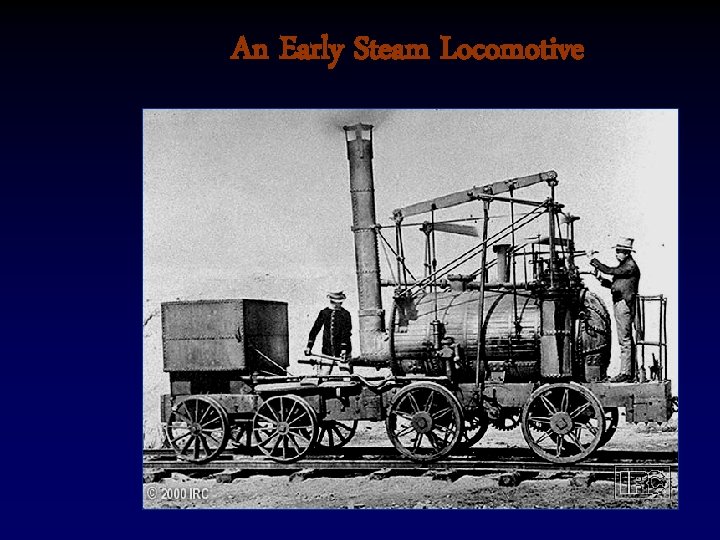
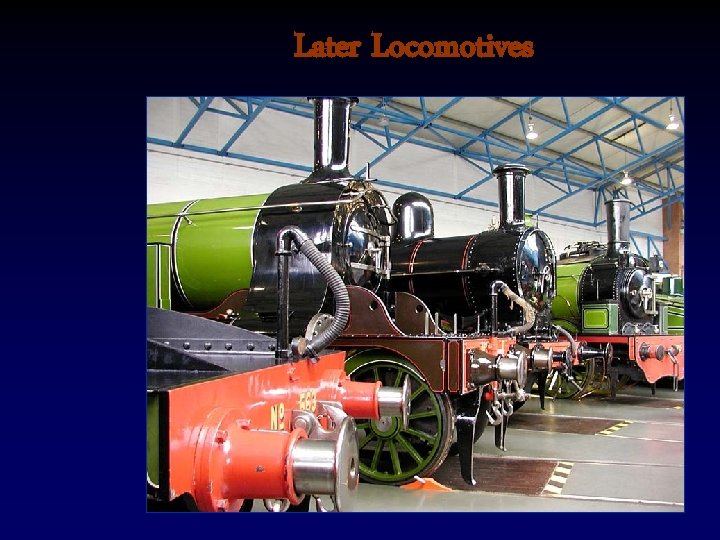
An Early Steam Locomotive
Later Locomotives
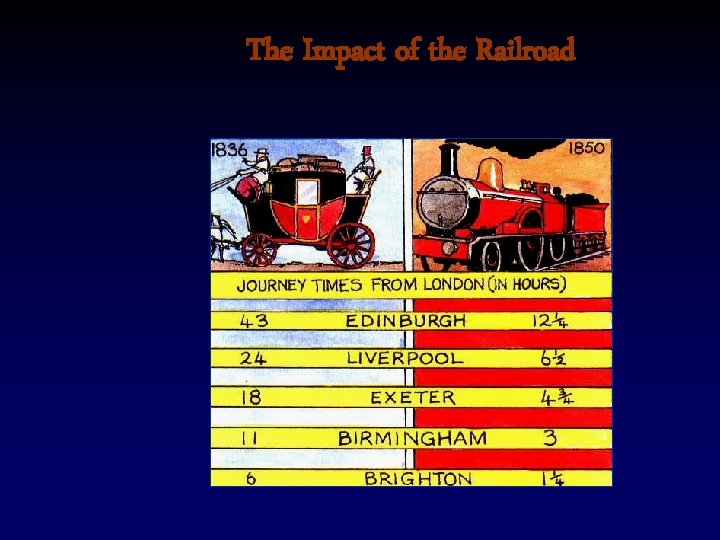
The Impact of the Railroad
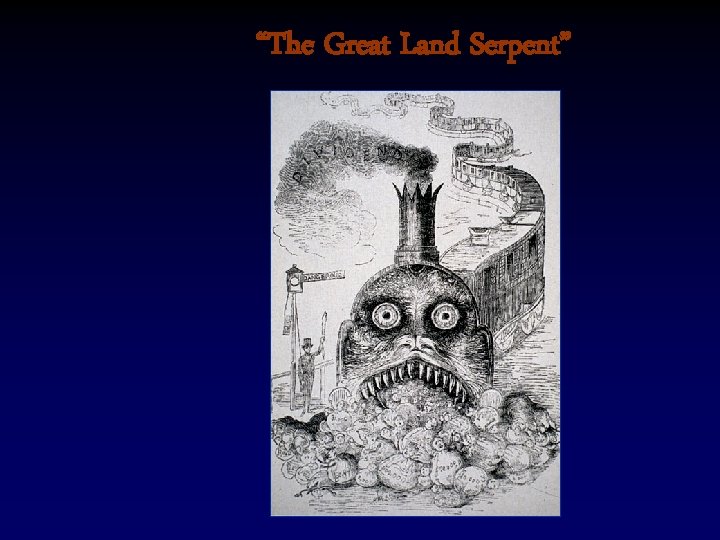
“The Great Land Serpent”
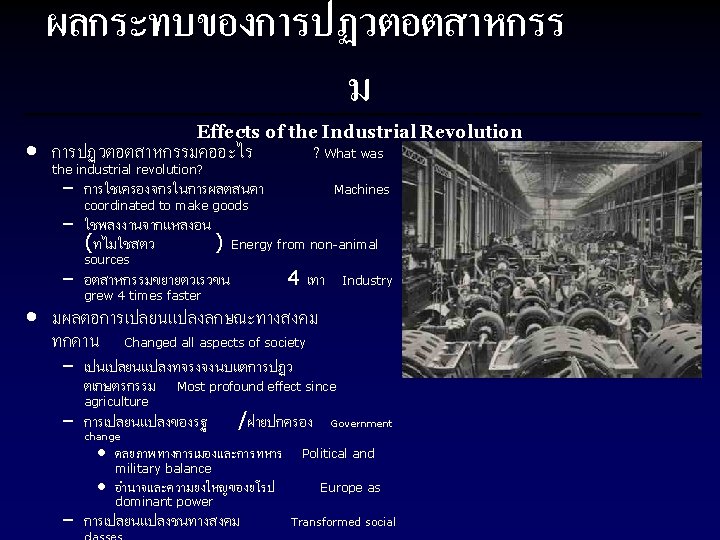
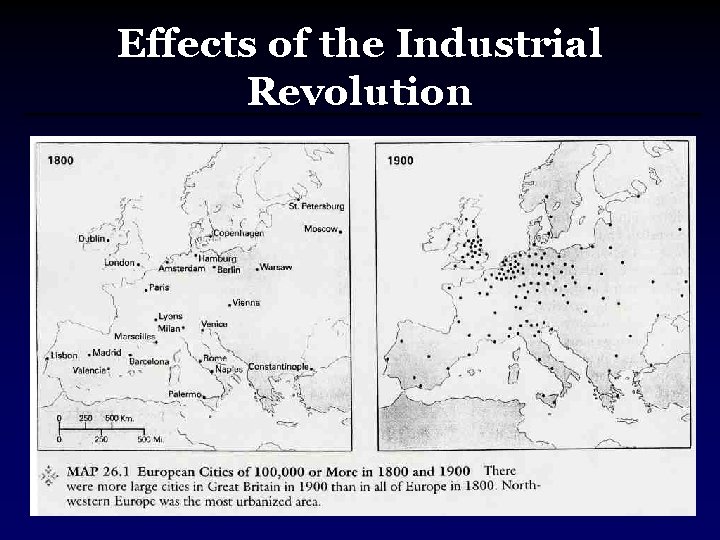
Effects of the Industrial Revolution
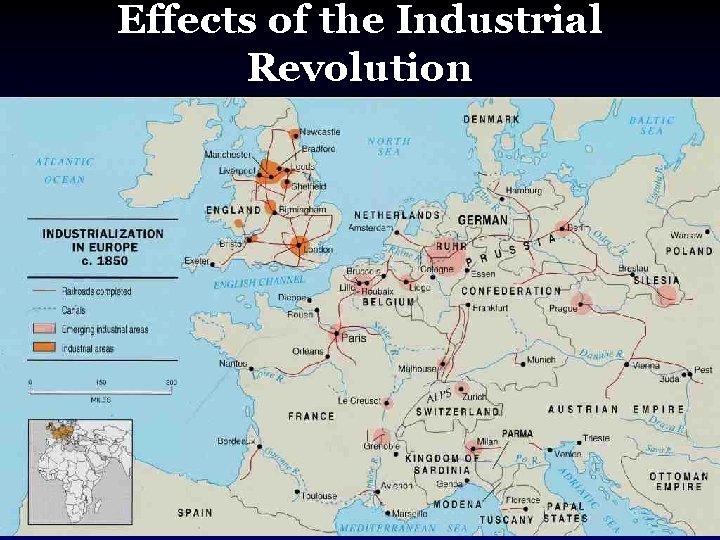
Effects of the Industrial Revolution