How do these headlines differ Consider the wording
- Slides: 23
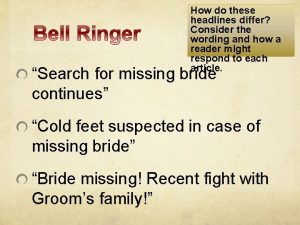
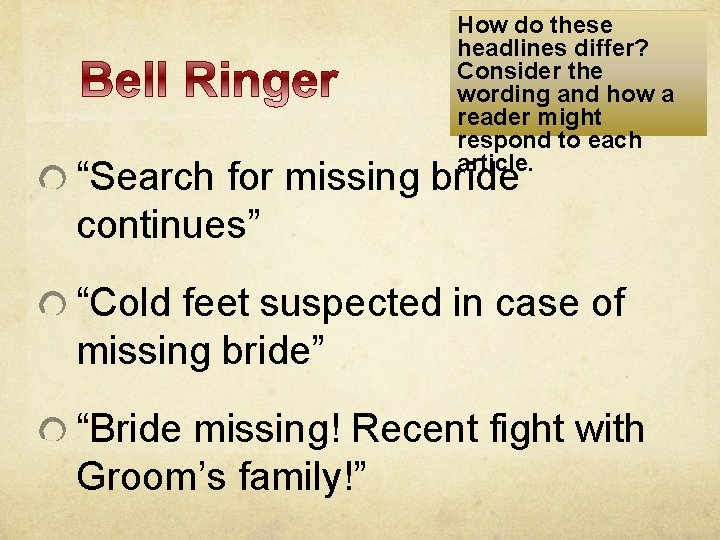
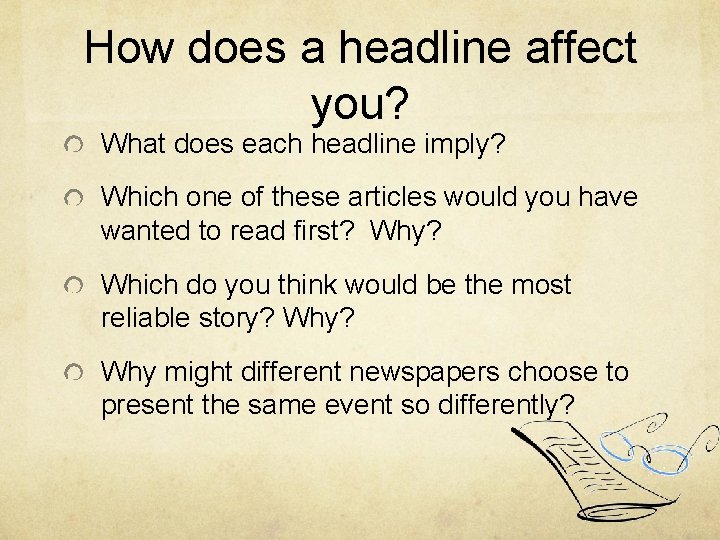
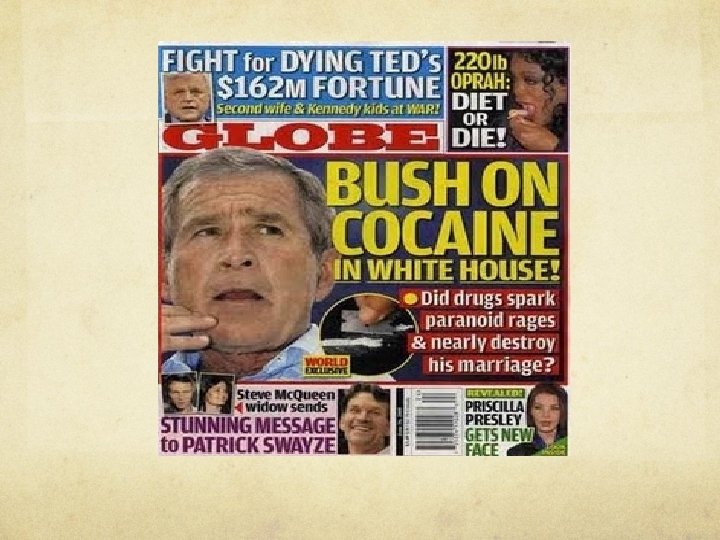
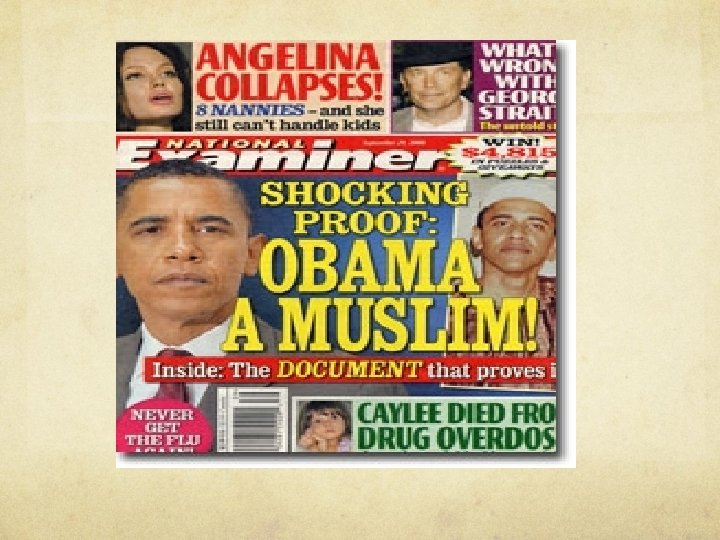
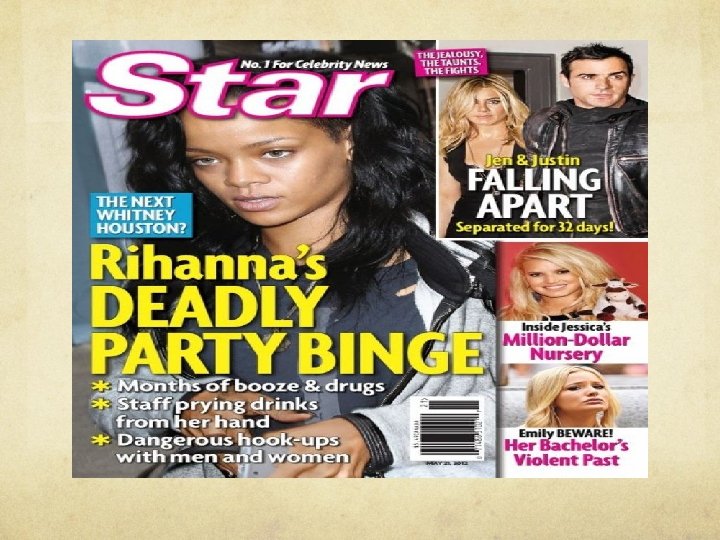
How do these headlines differ? Consider the wording and how a reader might respond to each article. “Search for missing bride continues” “Cold feet suspected in case of missing bride” “Bride missing! Recent fight with Groom’s family!”
How does a headline affect you? What does each headline imply? Which one of these articles would you have wanted to read first? Why? Which do you think would be the most reliable story? Why might different newspapers choose to present the same event so differently?
In June 1898, the U. S. sent troops into Cuba. Today, we are going to investigate why. We will begin by watching a short documentary clip that will explain the events that led up to America’s involvement in Cuba. Begin formulating a hypothesis to answer the following question: WHY DID THE U. S. INVADE CUBA? "
History Detectives! Directions: Step 1: You will need to read the information in: Document “A” The Journal and Document “B” The Times Step 2: Then you will need to complete the Warm- Up Document Analysis Chart Step 3: Finally, you will need to answer the question at bottom of that Warm-Up Document
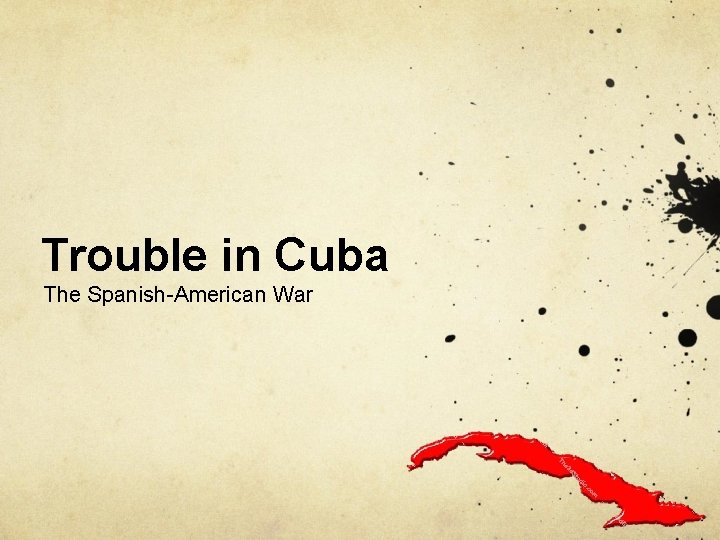
Trouble in Cuba The Spanish-American War
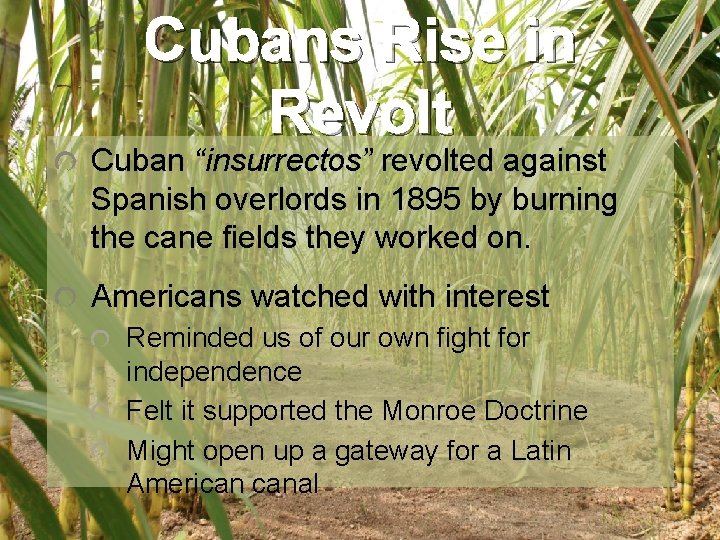
Cubans Rise in Revolt Cuban “insurrectos” revolted against Spanish overlords in 1895 by burning the cane fields they worked on. Americans watched with interest Reminded us of our own fight for independence Felt it supported the Monroe Doctrine Might open up a gateway for a Latin American canal
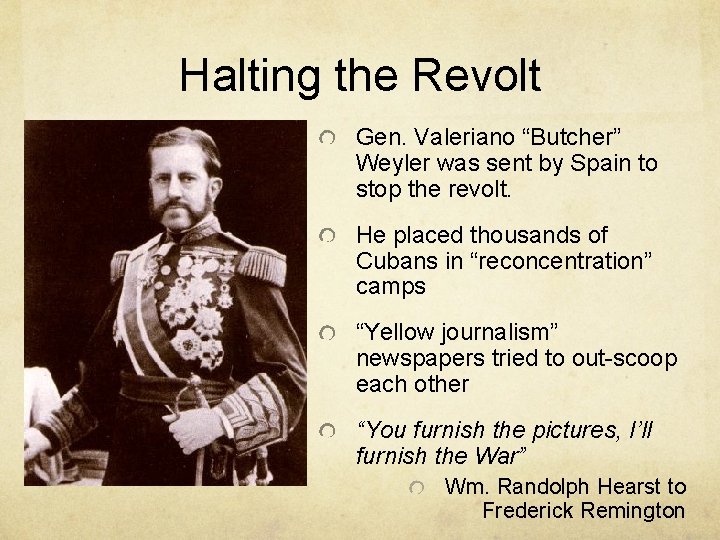
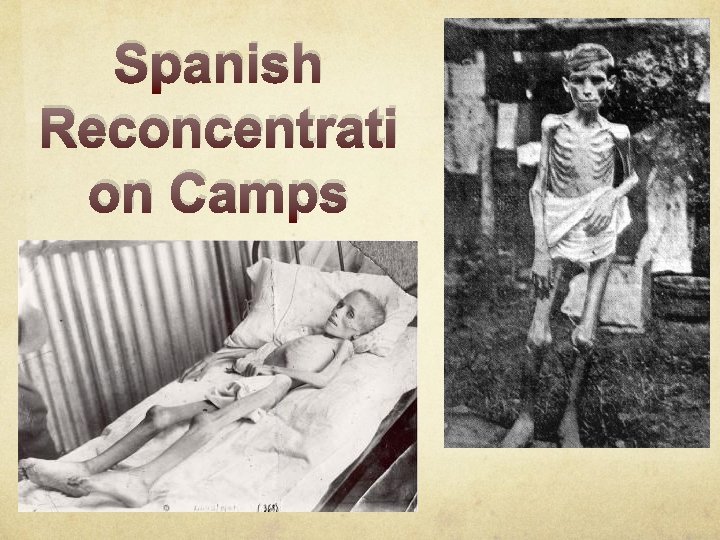
Halting the Revolt Gen. Valeriano “Butcher” Weyler was sent by Spain to stop the revolt. He placed thousands of Cubans in “reconcentration” camps “Yellow journalism” newspapers tried to out-scoop each other “You furnish the pictures, I’ll furnish the War” Wm. Randolph Hearst to Frederick Remington
Spanish Reconcentrati on Camps
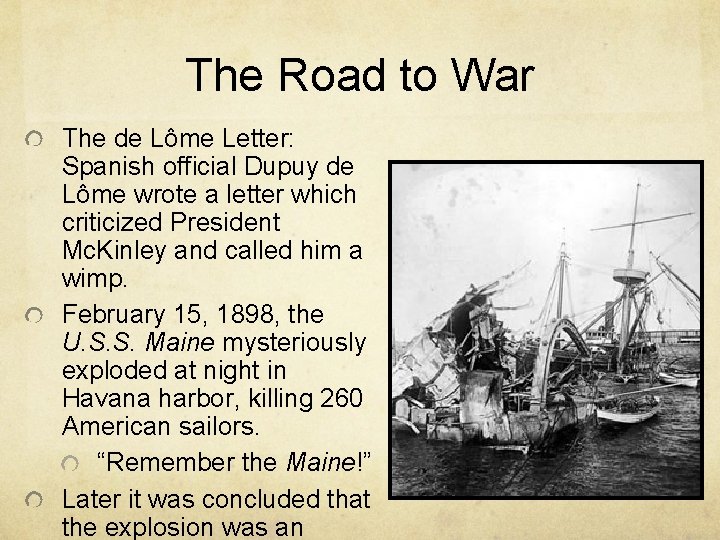
The Road to War The de Lôme Letter: Spanish official Dupuy de Lôme wrote a letter which criticized President Mc. Kinley and called him a wimp. February 15, 1898, the U. S. S. Maine mysteriously exploded at night in Havana harbor, killing 260 American sailors. “Remember the Maine!” Later it was concluded that the explosion was an
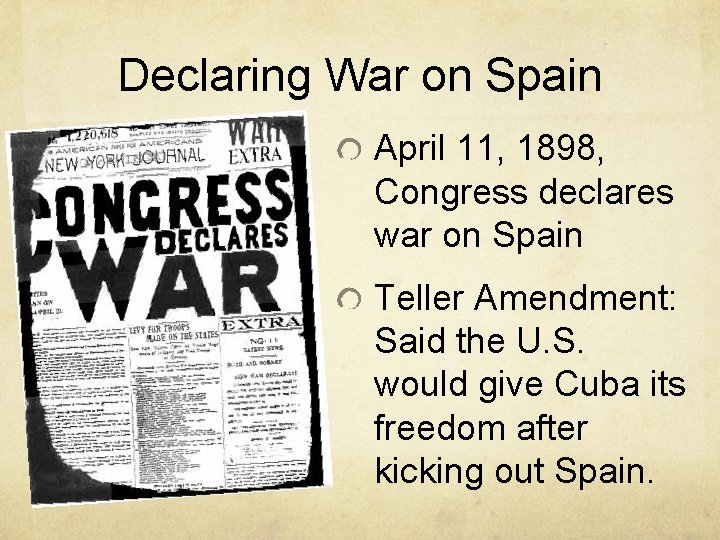
Declaring War on Spain April 11, 1898, Congress declares war on Spain Teller Amendment: Said the U. S. would give Cuba its freedom after kicking out Spain.
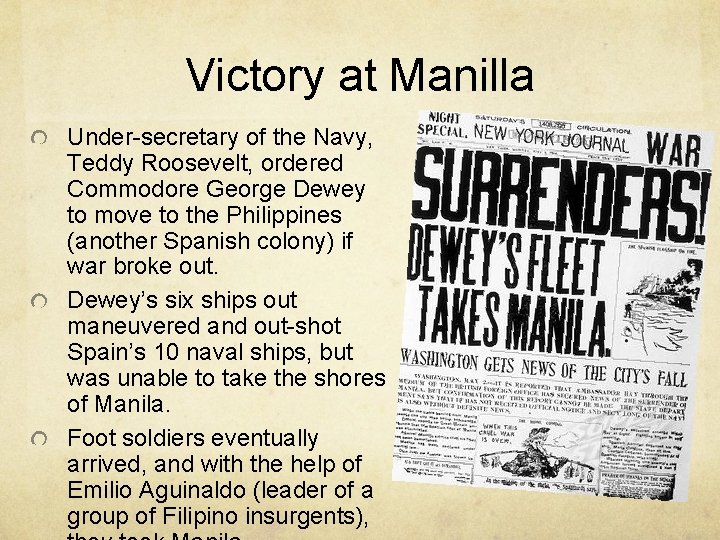
Victory at Manilla Under-secretary of the Navy, Teddy Roosevelt, ordered Commodore George Dewey to move to the Philippines (another Spanish colony) if war broke out. Dewey’s six ships out maneuvered and out-shot Spain’s 10 naval ships, but was unable to take the shores of Manila. Foot soldiers eventually arrived, and with the help of Emilio Aguinaldo (leader of a group of Filipino insurgents),
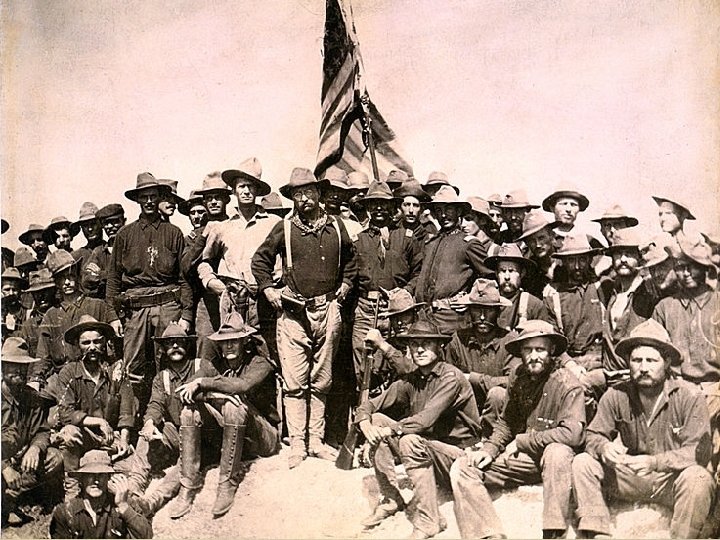
The Confused Invasion of Cuba The U. S. Army was vastly underprepared for war (had not been in conflict since the Civil War) More men would die from disease than bullets Teddy Roosevelt organized a cavalry group known as the Rough Riders They gathered a diverse bunch of men who were skilled riders and gunmen. Famous for the attack on San Juan Hill (not on horseback), which forced Spain to rely on it’s naval fleet, which the Americans had already bottled in at Havana Harbor. The Spanish decided to run the gauntlet, and the U. S. mowed down the Spanish ships. The two countries signed an armistice on August 12, 1898.
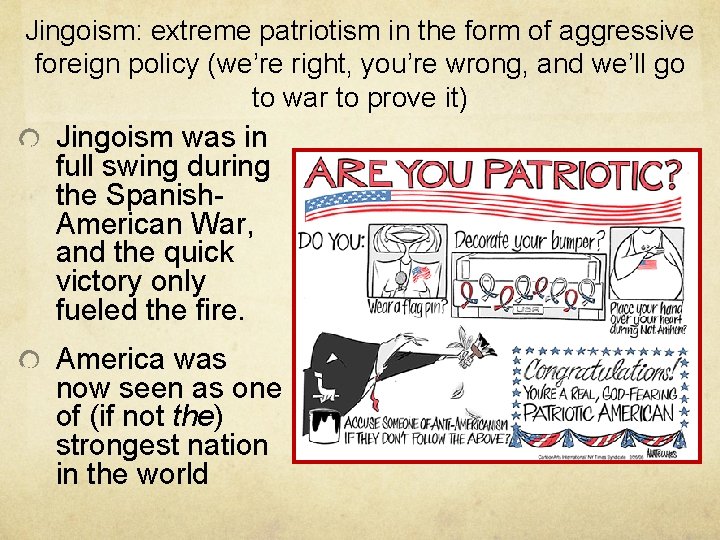
Jingoism: extreme patriotism in the form of aggressive foreign policy (we’re right, you’re wrong, and we’ll go to war to prove it) Jingoism was in full swing during the Spanish. American War, and the quick victory only fueled the fire. America was now seen as one of (if not the) strongest nation in the world
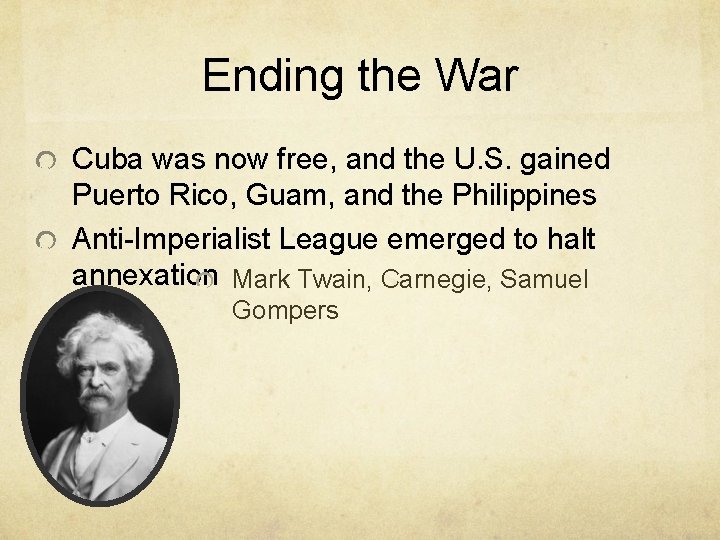
Ending the War Cuba was now free, and the U. S. gained Puerto Rico, Guam, and the Philippines Anti-Imperialist League emerged to halt annexation Mark Twain, Carnegie, Samuel Gompers
Issues Stemming From War
Synthesis Question: Which of the following do you think was the most important factor in the U. S. entering a war against Spain in 1898? Why? • Yellow Journalism • American sympathy over reconcentration camps • American sympathy towards Cubans fighting for • • • independence The de Lome Letter Economics/trade Racial beliefs (e. g. Social Darwinism and Anglo. Saxonism) The hope for increased military power President Mc. Kinley’s desire to appear powerful as a leader
What to do with our “Little Brown Brothers? ” � The Insular Cases: Several Supreme Court cases concerning the status of territories acquired after the Spanish American War. � QUESTION: Do American laws and rights apply to foreign lands and peoples? � DECISION: Supreme Court said NO. � This would mean that the people of imperialized nations could legally be treated less than American citizens, and Americans living in those countries did not have the same protections they would at home.
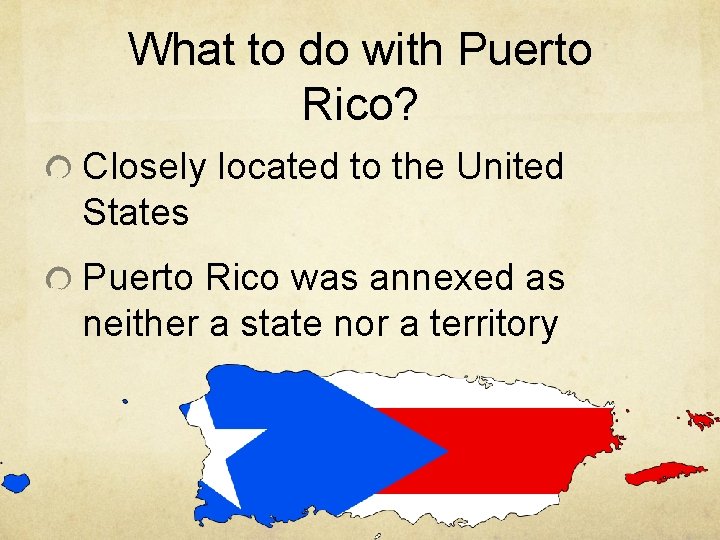
What to do with Puerto Rico? Closely located to the United States Puerto Rico was annexed as neither a state nor a territory
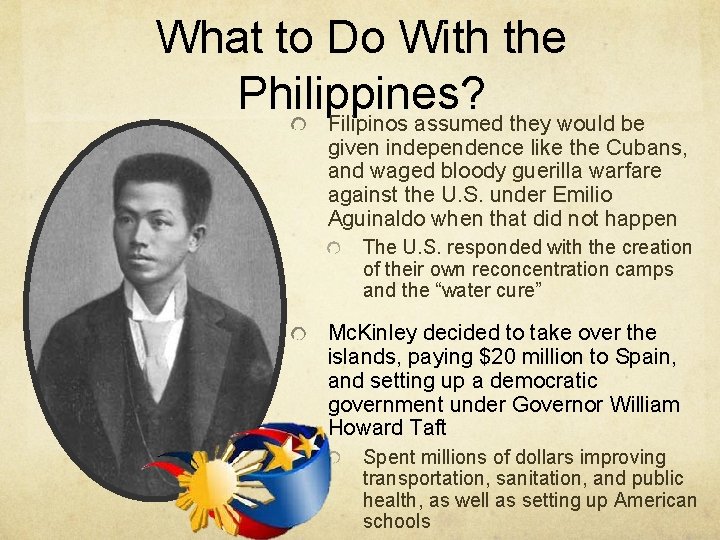
What to Do With the Philippines? Filipinos assumed they would be given independence like the Cubans, and waged bloody guerilla warfare against the U. S. under Emilio Aguinaldo when that did not happen The U. S. responded with the creation of their own reconcentration camps and the “water cure” Mc. Kinley decided to take over the islands, paying $20 million to Spain, and setting up a democratic government under Governor William Howard Taft Spent millions of dollars improving transportation, sanitation, and public health, as well as setting up American schools
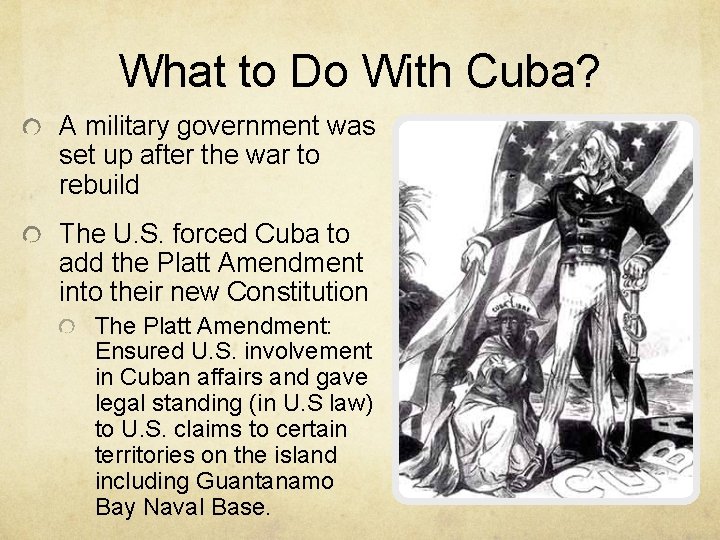
What to Do With Cuba? A military government was set up after the war to rebuild The U. S. forced Cuba to add the Platt Amendment into their new Constitution The Platt Amendment: Ensured U. S. involvement in Cuban affairs and gave legal standing (in U. S law) to U. S. claims to certain territories on the island including Guantanamo Bay Naval Base.