
Fertilization Fertilization activates the egg Activation of the
- Slides: 70
Fertilization • Fertilization activates the egg • Activation of the egg triggers embryonic development
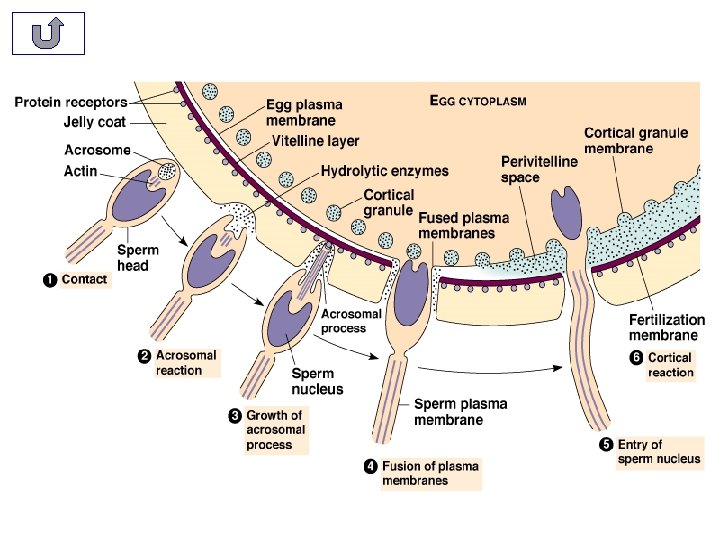
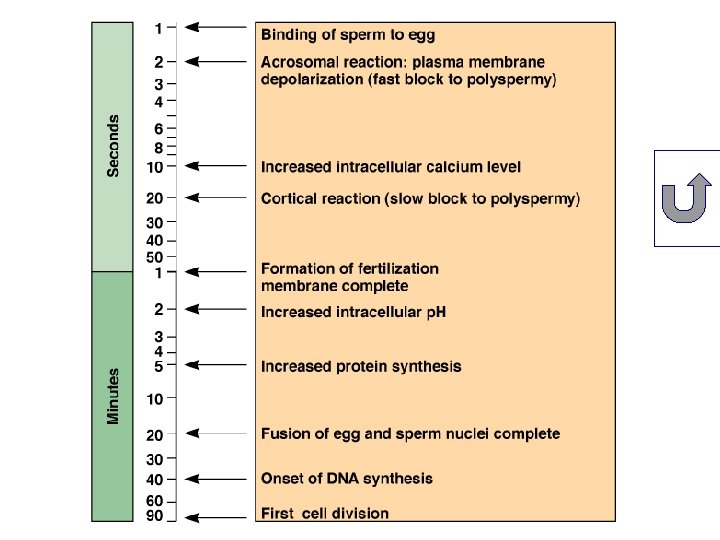
Acrosomal Reaction • The acrosomal reaction occurs in echinoderms such as sea urchins • How is the acrosomal reaction species specific? • Receptors on the vitelline egg layer are specific • The reaction is the fast block to polyspermy • A depolarization of the membrane stops other sperm from penetrating
Cortical Reaction • Slow block to polyspermy • Signal transduction pathway is triggered by fusion of sperm and egg • G protein releases calcium from ER of egg • Increase in calcium ions causes cortical granules to fuse with plasma membrane • Cortical granules release enzymes that lead to fertilization membrane
Activation of The Egg • Increase in calcium also triggers increase in metabolic reaction in the egg • Artificial activation of egg can occur by injecting calcium ions
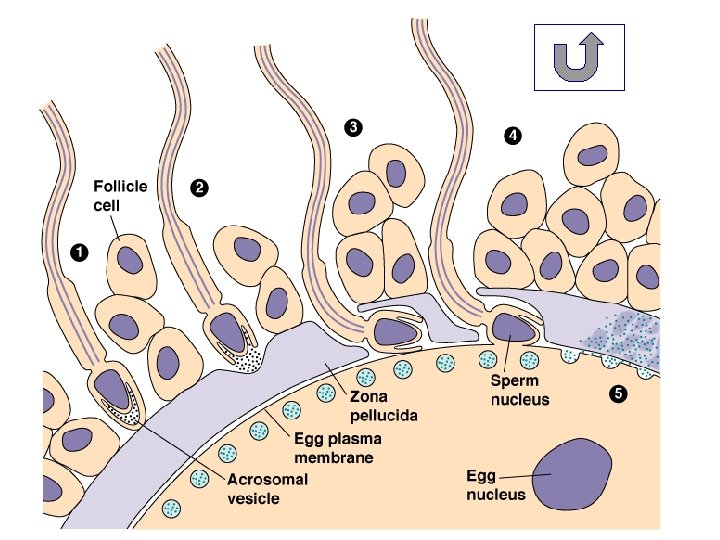
Mammalian Fertilization • Most mammals show internal fertilization • Capacitation of sperm occurs within the female • Sperm has to reach zona pellucida by penetrating follicle cells • An acrosomal reaction occurs and sperm cell enters egg • Zona pelucida hardens which blocks polyspermy • Centrosomes originate from sperm cell • Chromosomes share a common spindle during first mitotic division
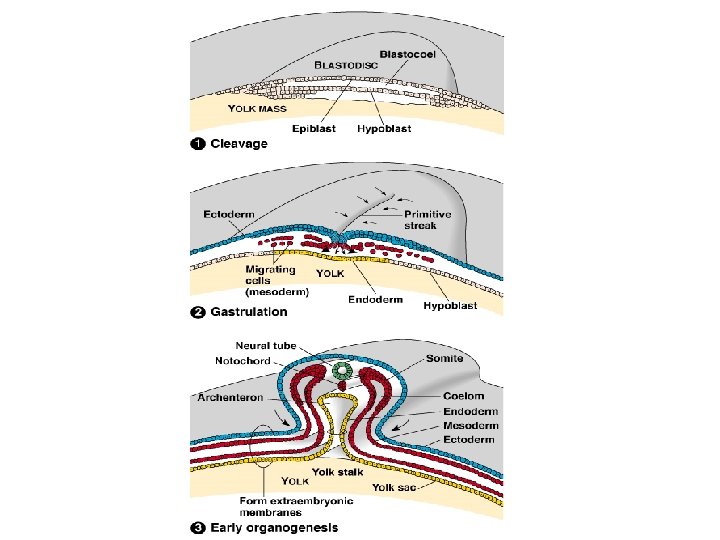
Stages of Early Development • Cleavage leads to multicellular blastula • Gastrulation leads to three tissue layered gastrula • Organogenesis generates rudimentary organs
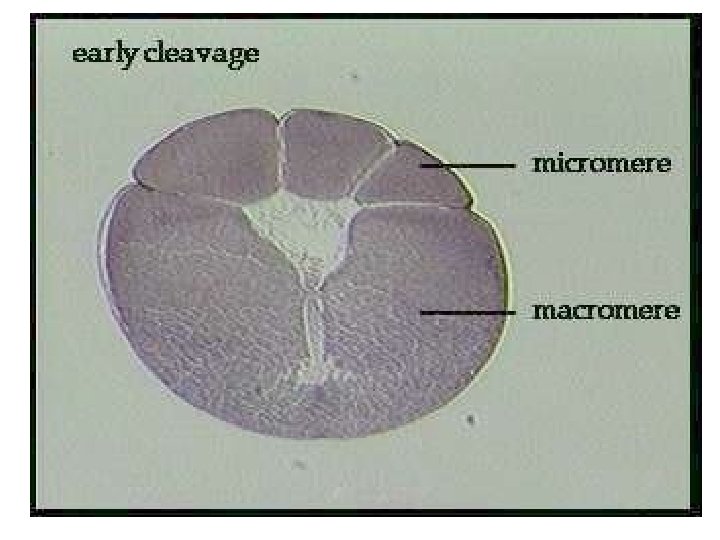
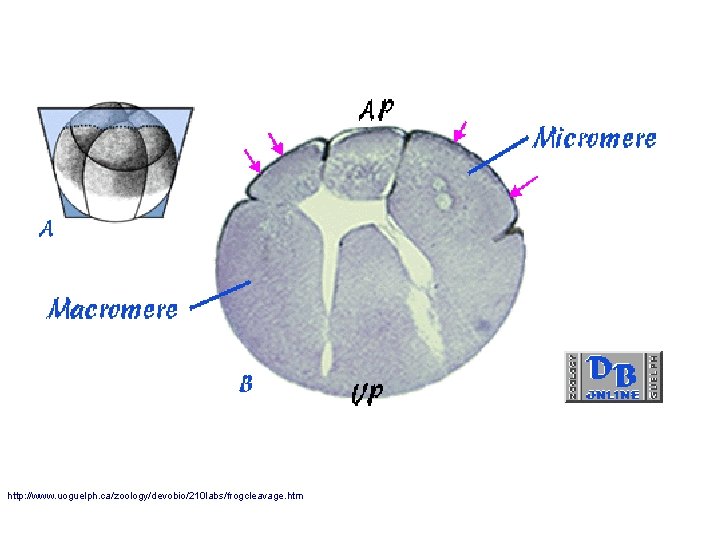
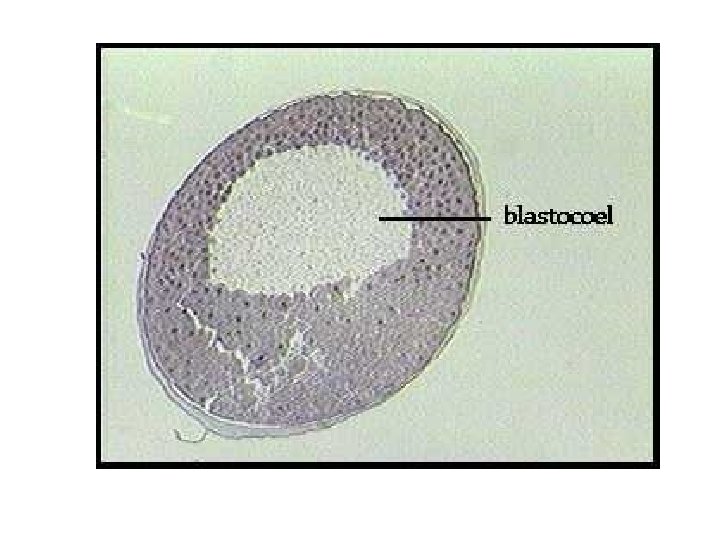
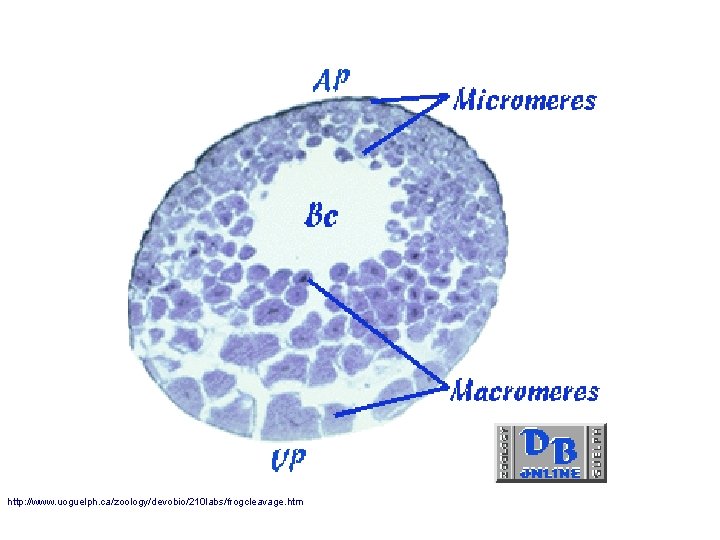
Cleavage • Fast mitotic divisions without G 1 and G 2 phases • Results in smaller blastomeres • Polar planes of division occur with animal and vegetal poles • Holoblastic cleavage is complete division of eggs with little yolk • Meroblastic = incomplete division
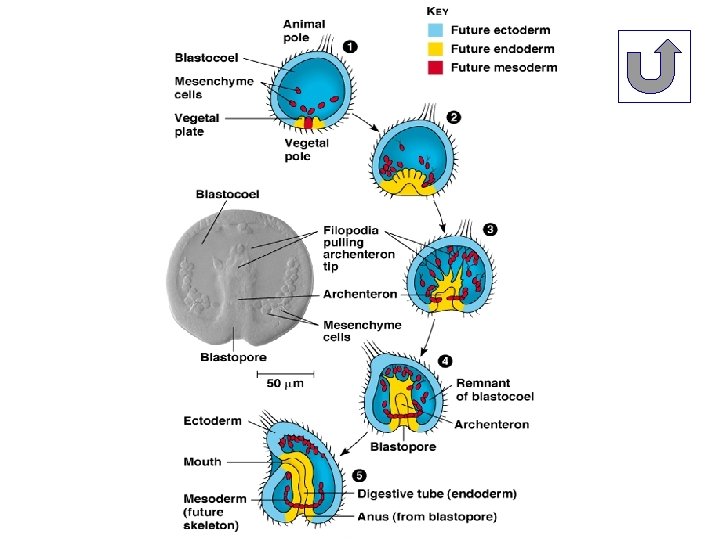
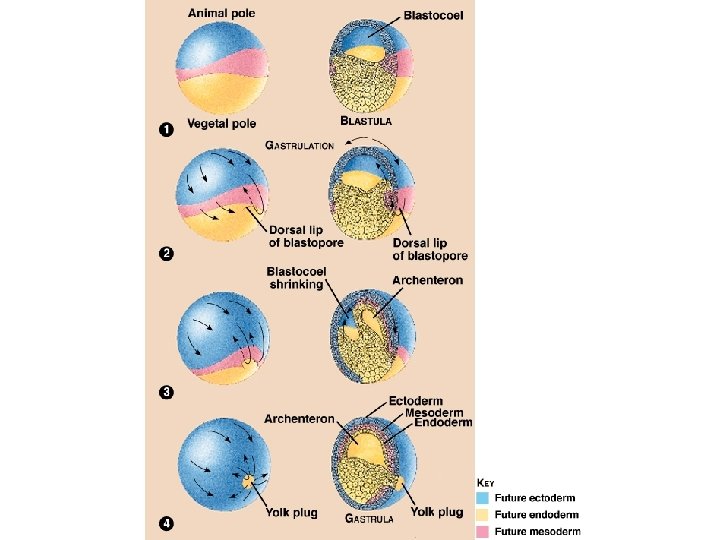
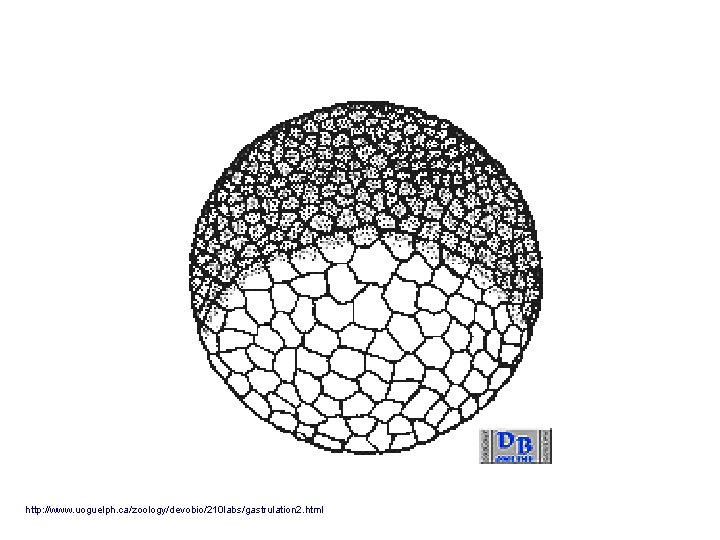
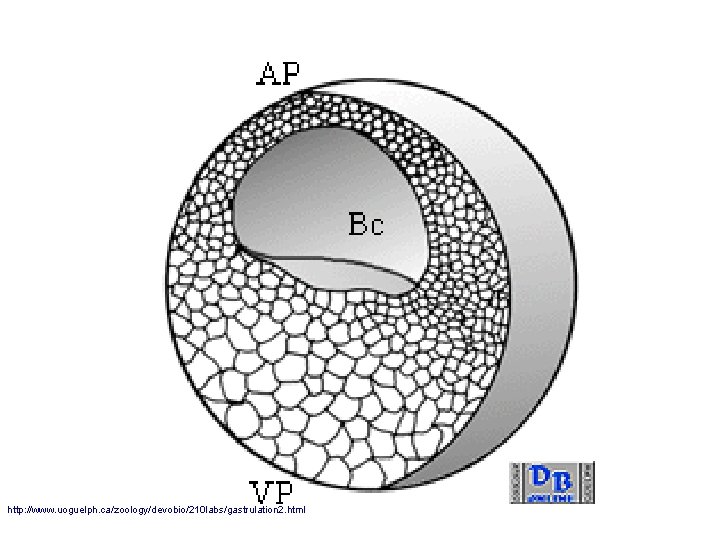
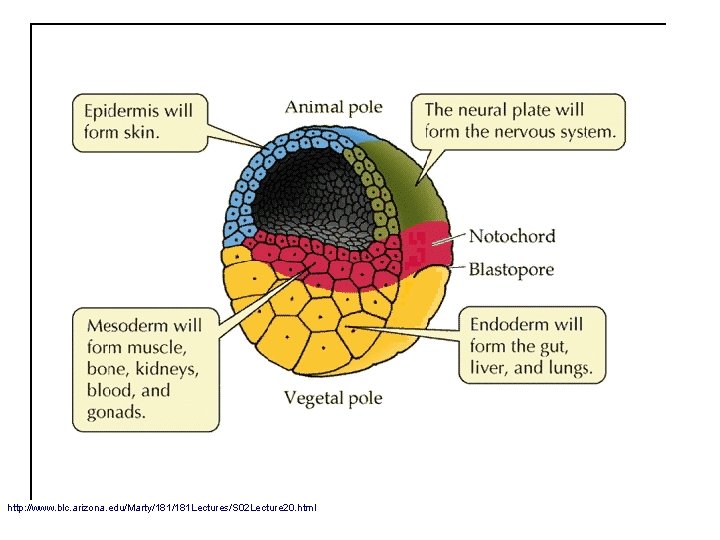
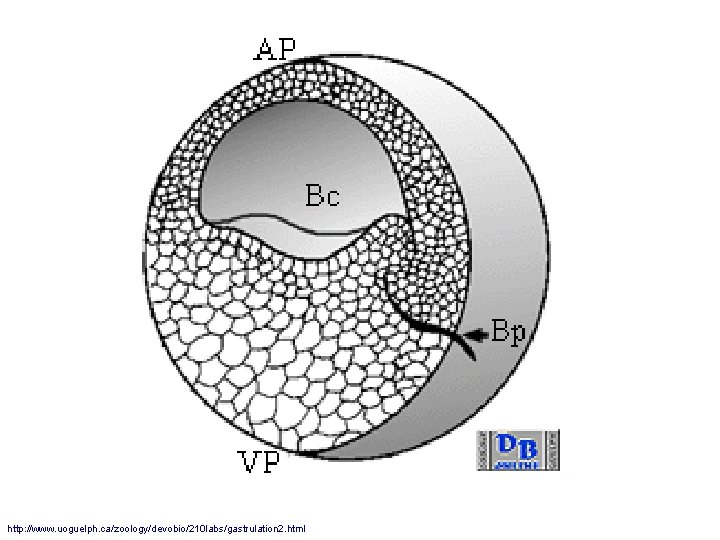
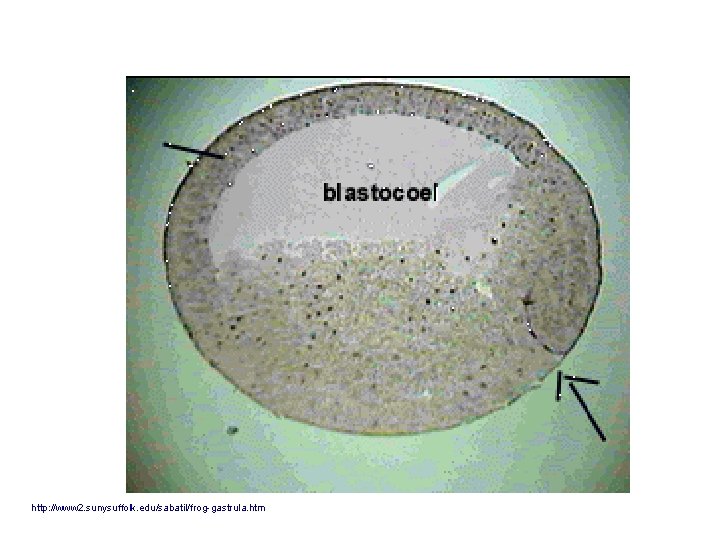
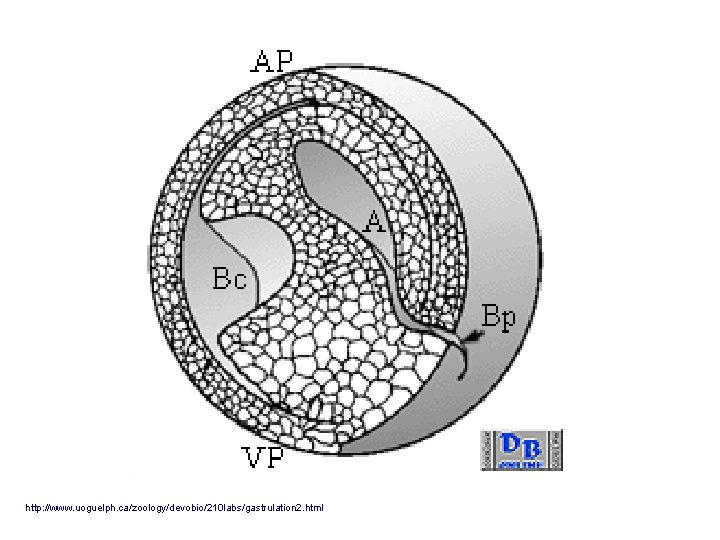
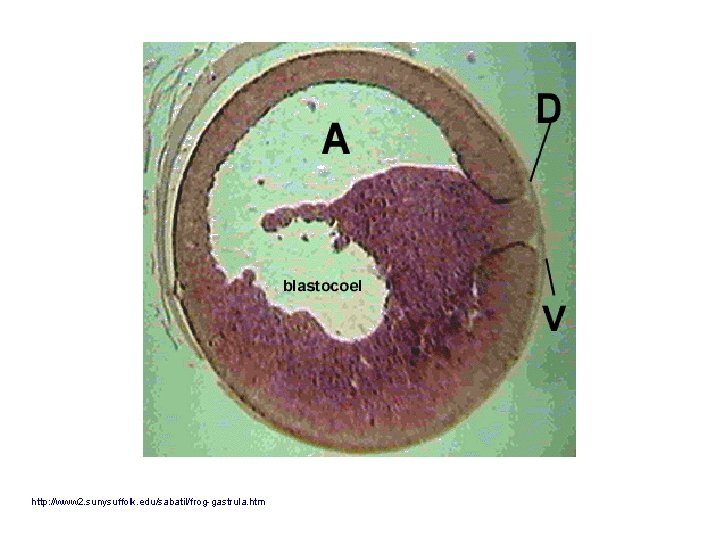
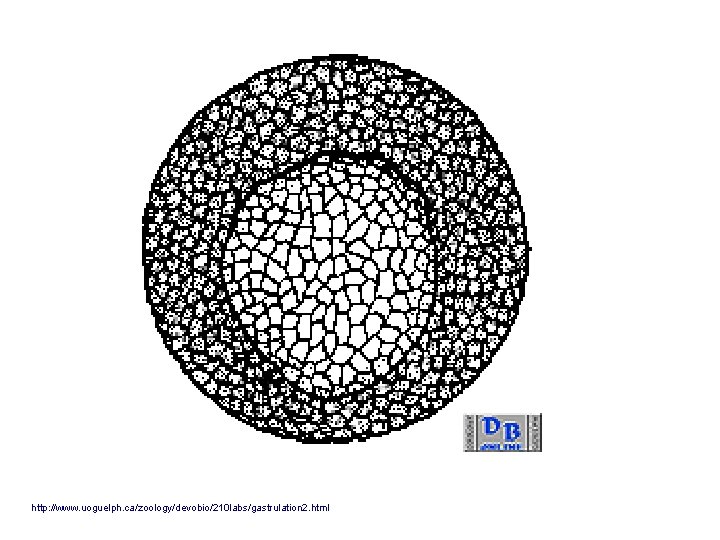
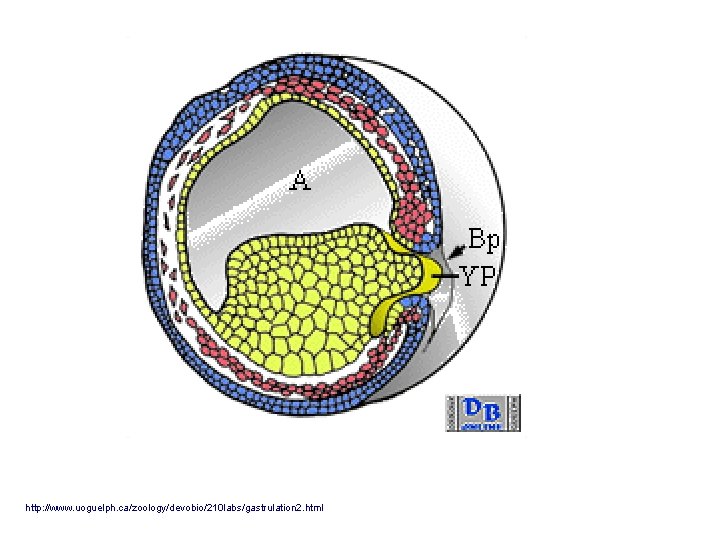
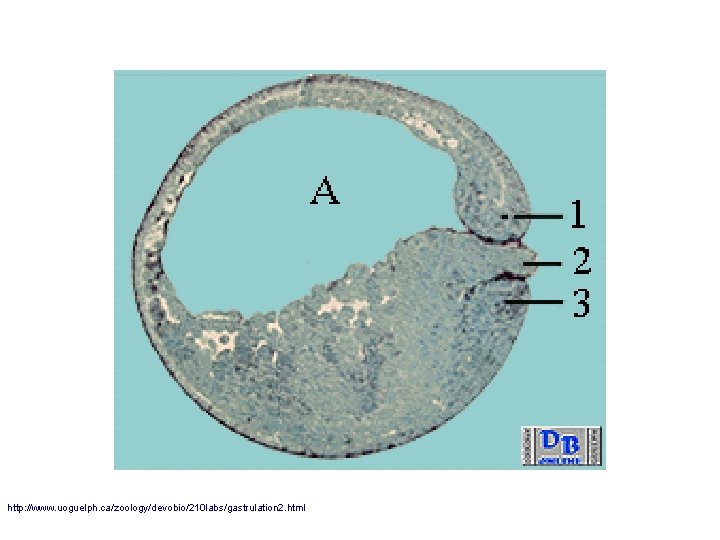
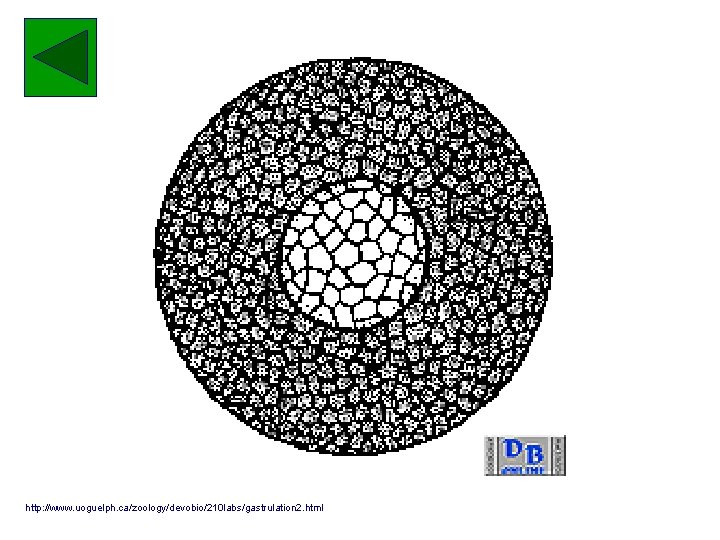
Gastrulation • Sea urchins • Frogs • Rearrangement of cells leads to 3 germ layers • Ectoderm – Nervous system – Outer skin layer – Eyes
• Endoderm: – – – Lines archenteron Liver Pancreas Lining of urethra Reproductive system • Mesoderm: – – – Kidneys Muscles Heart and circulatory system Excretory system Notochord and skeletal system
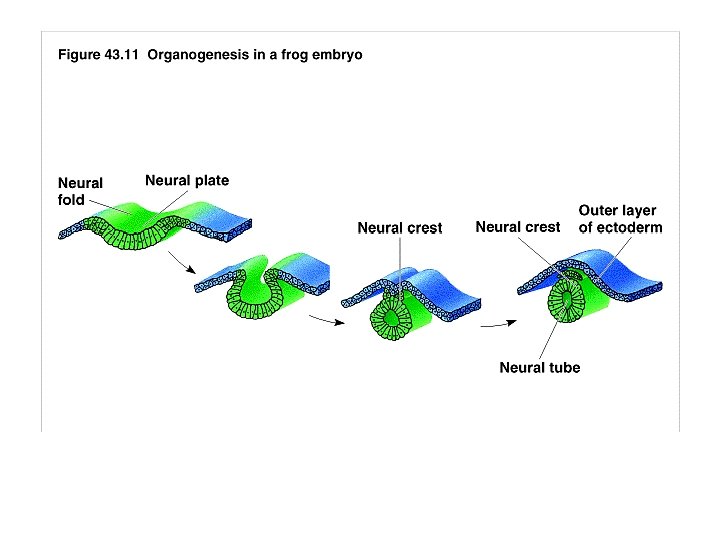
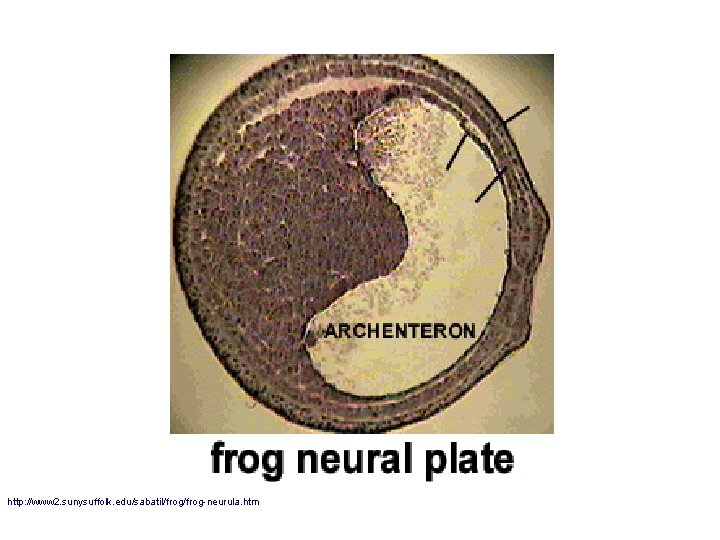
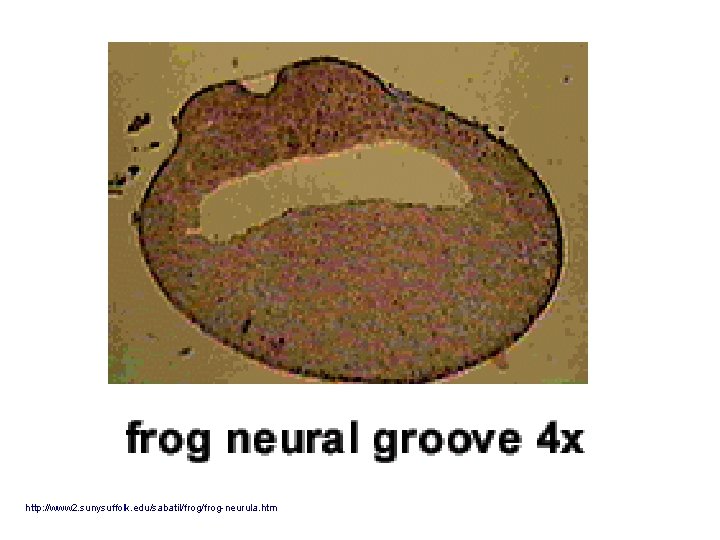
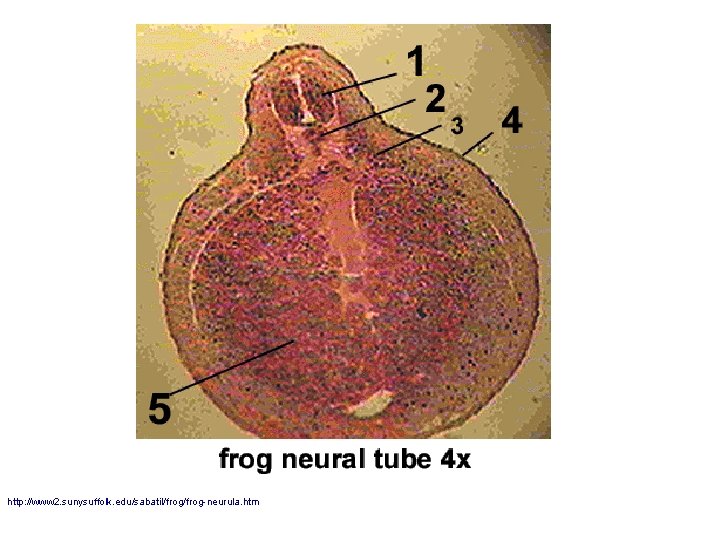
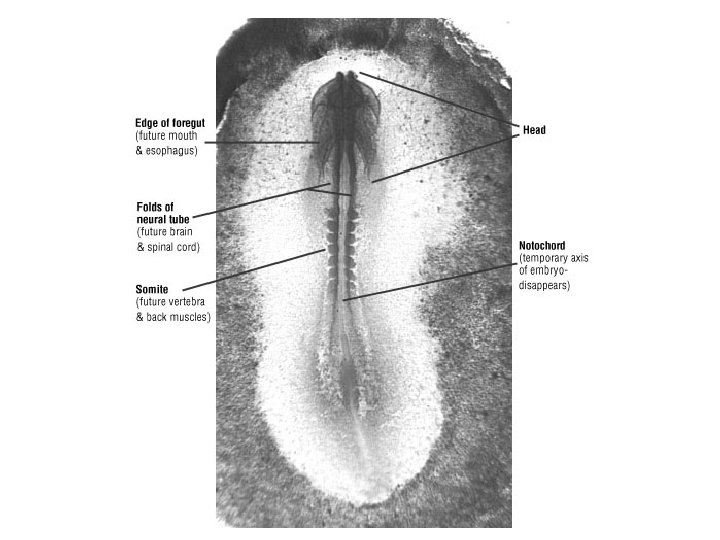
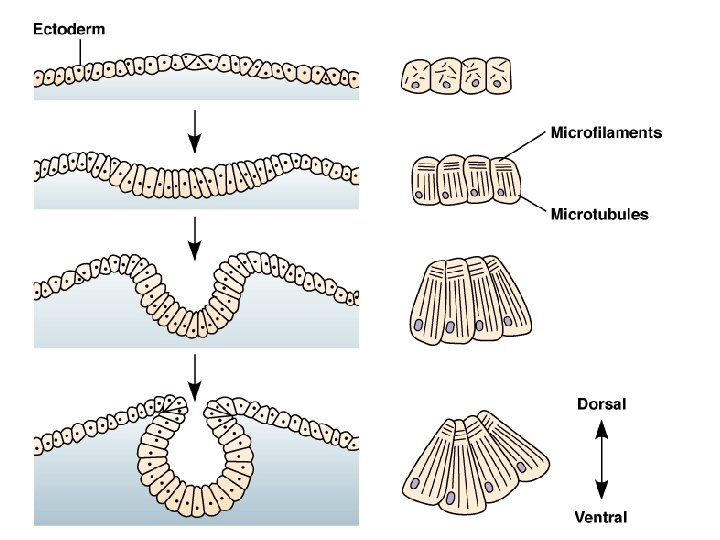
Organogenesis • Folding, splitting and clustering of cells begins organogenesis • Ectoderm rolls into neural tube • Mesodermal blocks form somites along axis of notochord: – Gives rise to vertebrae and muscles of backbone • Neural plate folds into the neural tube and becomes central nervous system
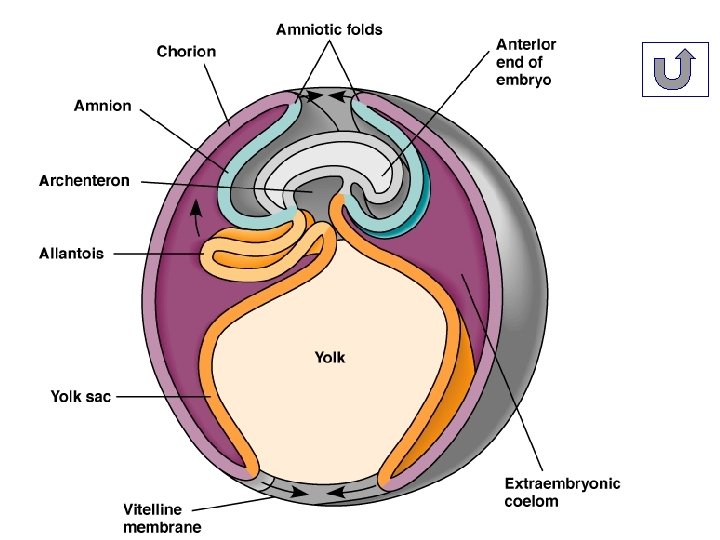
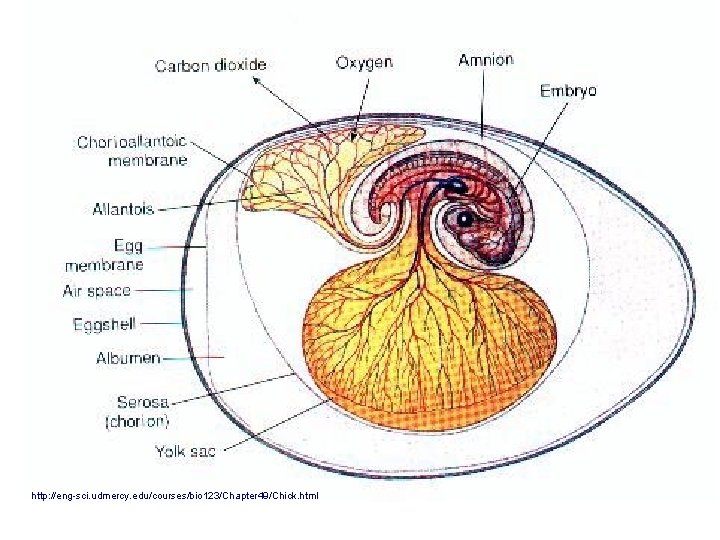
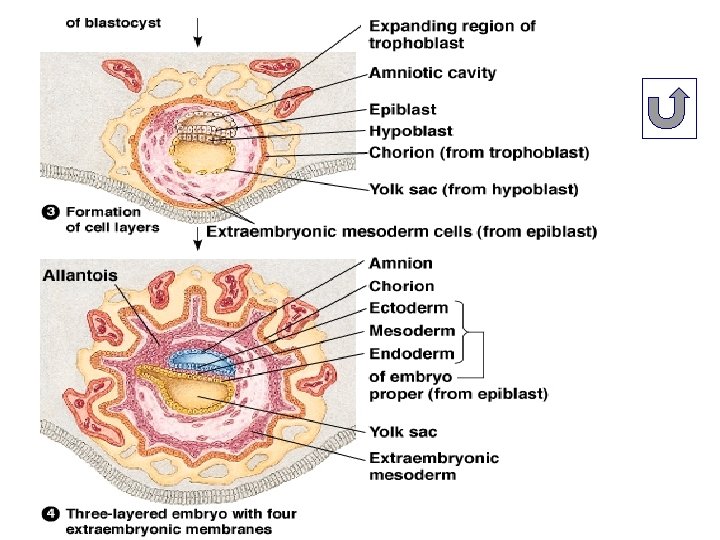
Amniote Embryo Development • Vertebrates need watery environment for development • Terrestrial animals: evolved shelled egg or uterus for embryonic development • Chick development – Meroblastic cleavage – Primitive streak invaginates during gastrulation
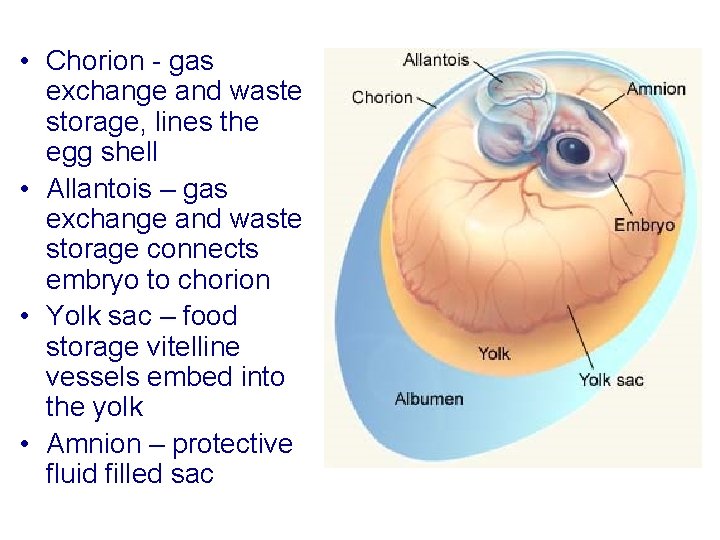
• Chorion - gas exchange and waste storage, lines the egg shell • Allantois – gas exchange and waste storage connects embryo to chorion • Yolk sac – food storage vitelline vessels embed into the yolk • Amnion – protective fluid filled sac
http: //eng-sci. udmercy. edu/courses/bio 123/Chapter 49/Chick. html
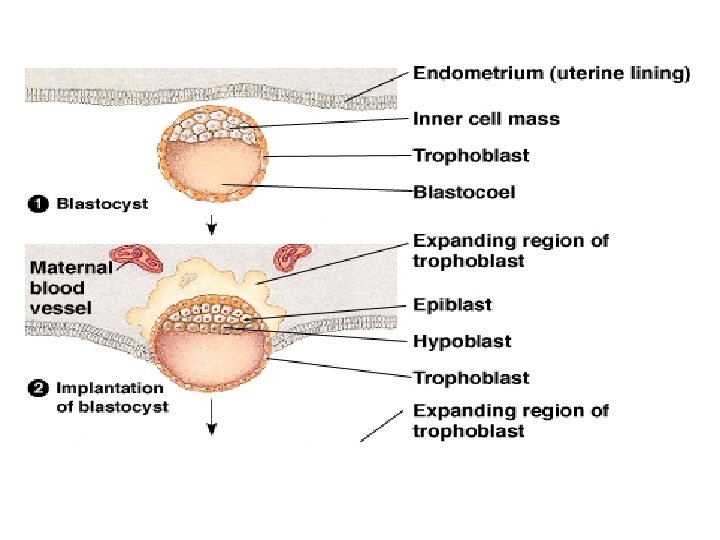
Mammalian Development • Holoblastic cleavage • Inner cell mass becomes embryo
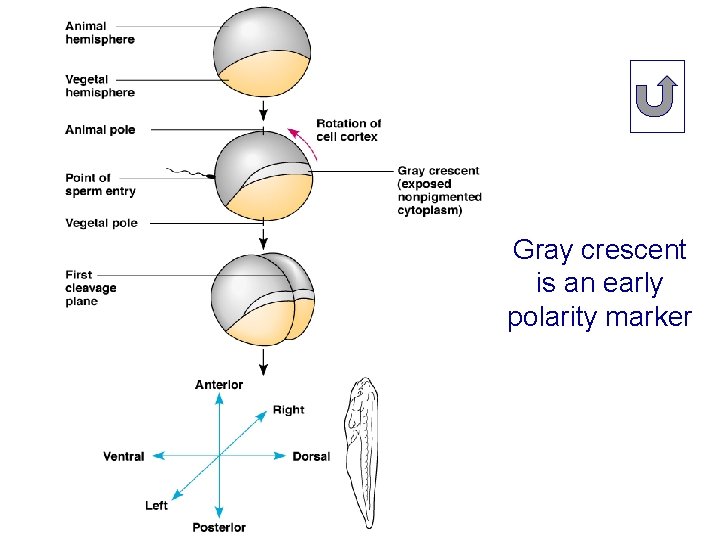
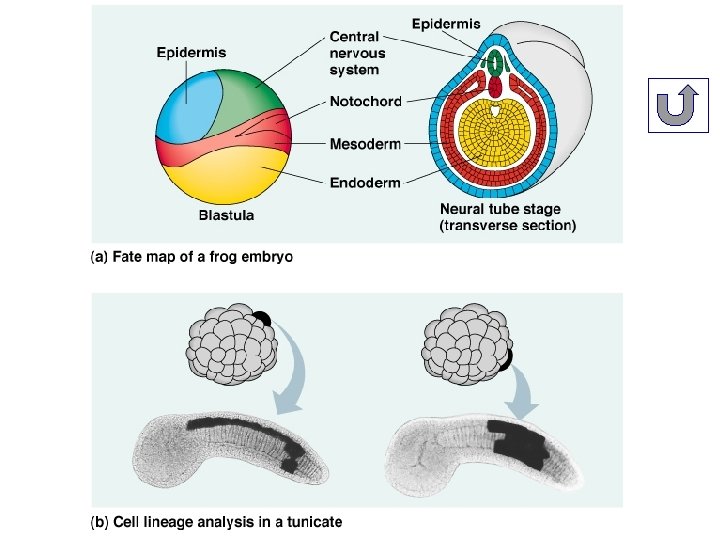
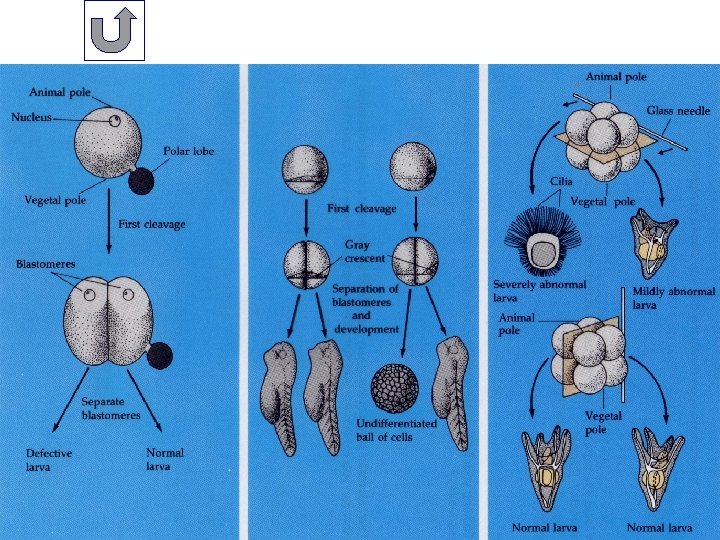
Organogenesis • Polarity: – Anterior posterior axis, left right sides – After late cleavage polarities form in humans • Fate maps: – Vital dyes revealed location of blastula cells in embryo • Determination – Protostomes only zygote is totipotent – Deuterostomes potency restriction is progressive – Determined cell fate does not change – Involves cytoplasmic control of genome
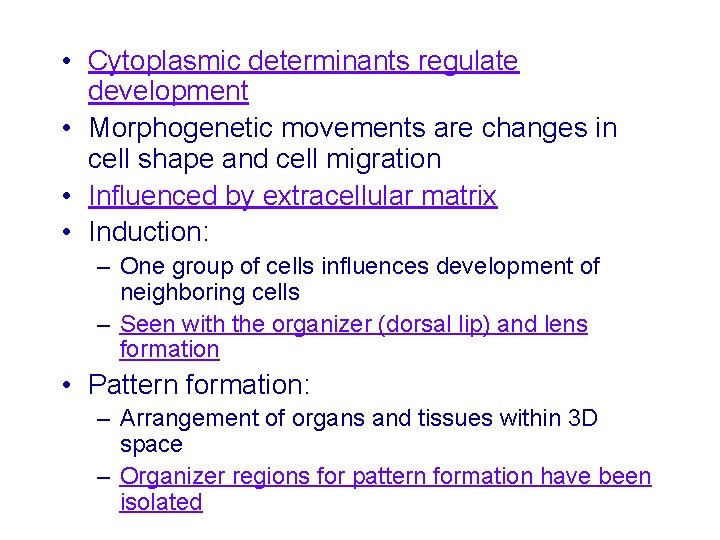
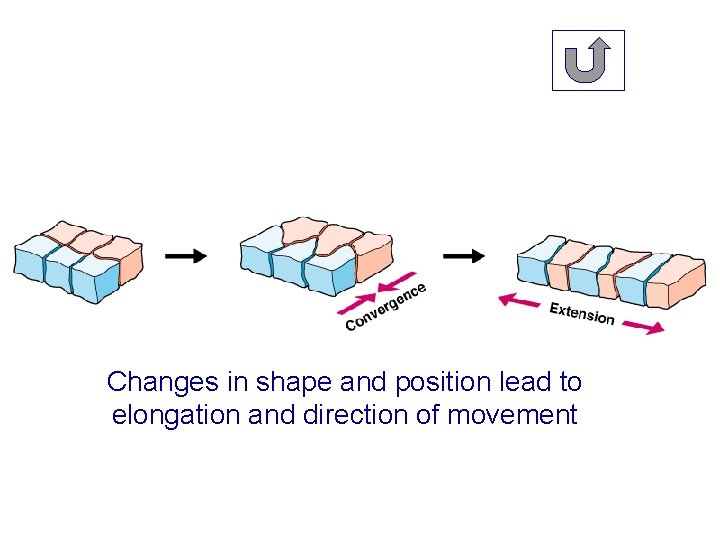
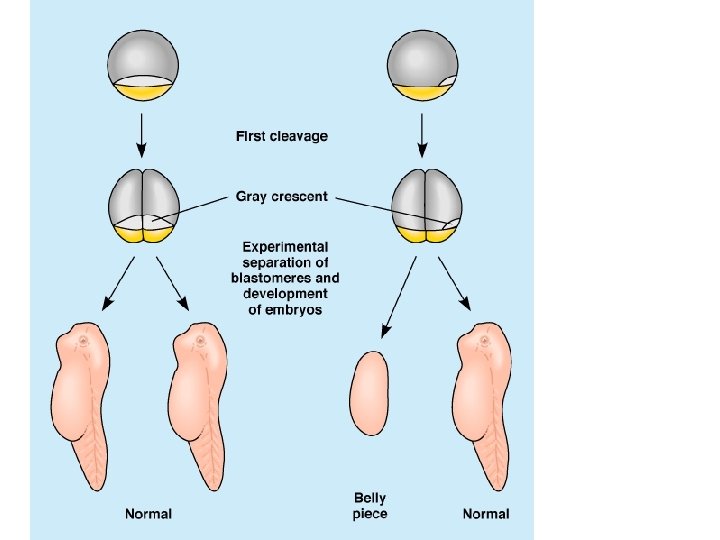
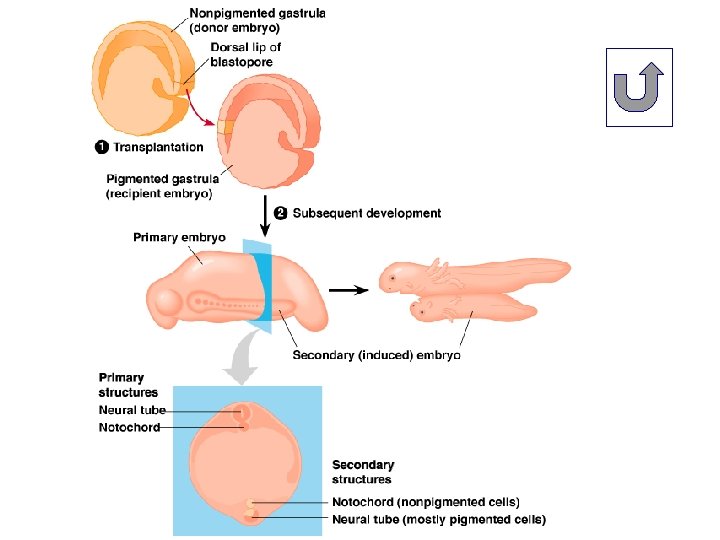
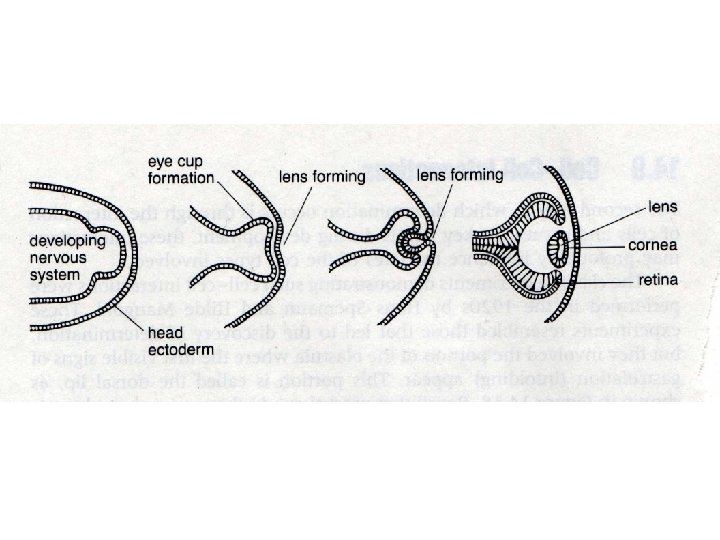
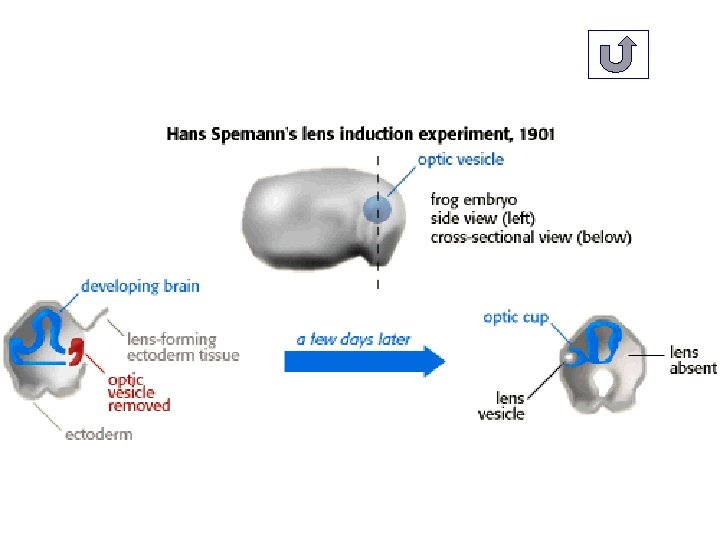
• Cytoplasmic determinants regulate development • Morphogenetic movements are changes in cell shape and cell migration • Influenced by extracellular matrix • Induction: – One group of cells influences development of neighboring cells – Seen with the organizer (dorsal lip) and lens formation • Pattern formation: – Arrangement of organs and tissues within 3 D space – Organizer regions for pattern formation have been isolated
Gray crescent is an early polarity marker
http: //www. uoguelph. ca/zoology/devobio/210 labs/frogcleavage. htm
http: //www. uoguelph. ca/zoology/devobio/210 labs/frogcleavage. htm
http: //www. uoguelph. ca/zoology/devobio/210 labs/gastrulation 2. html
http: //www. uoguelph. ca/zoology/devobio/210 labs/gastrulation 2. html
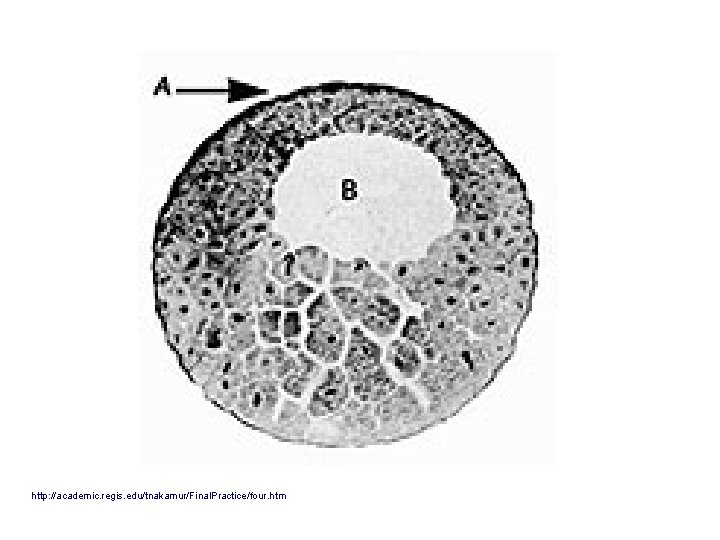
http: //academic. regis. edu/tnakamur/Final. Practice/four. htm
http: //www. blc. arizona. edu/Marty/181 Lectures/S 02 Lecture 20. html
http: //www. uoguelph. ca/zoology/devobio/210 labs/gastrulation 2. html
http: //www 2. sunysuffolk. edu/sabatil/frog-gastrula. htm
http: //www. uoguelph. ca/zoology/devobio/210 labs/gastrulation 2. html
http: //www 2. sunysuffolk. edu/sabatil/frog-gastrula. htm
http: //www. uoguelph. ca/zoology/devobio/210 labs/gastrulation 2. html
http: //www. uoguelph. ca/zoology/devobio/210 labs/gastrulation 2. html
http: //www. uoguelph. ca/zoology/devobio/210 labs/gastrulation 2. html
http: //www. uoguelph. ca/zoology/devobio/210 labs/gastrulation 2. html
http: //www 2. sunysuffolk. edu/sabatil/frog-neurula. htm
http: //www 2. sunysuffolk. edu/sabatil/frog-neurula. htm
http: //www 2. sunysuffolk. edu/sabatil/frog-neurula. htm
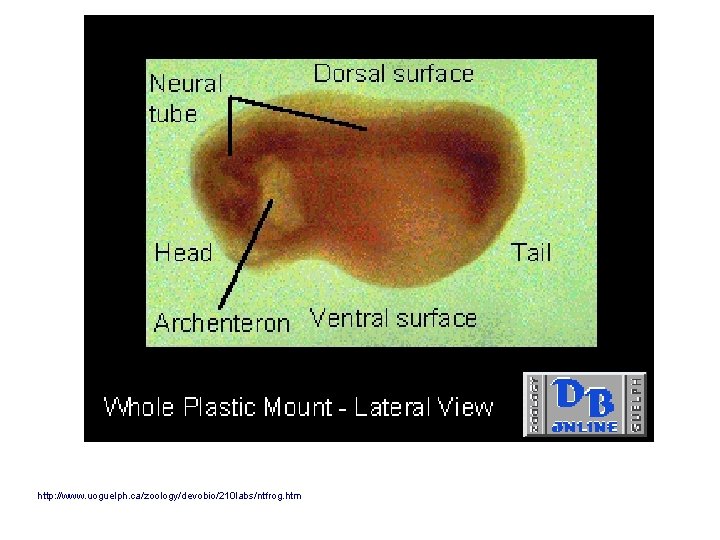
http: //www. uoguelph. ca/zoology/devobio/210 labs/ntfrog. htm
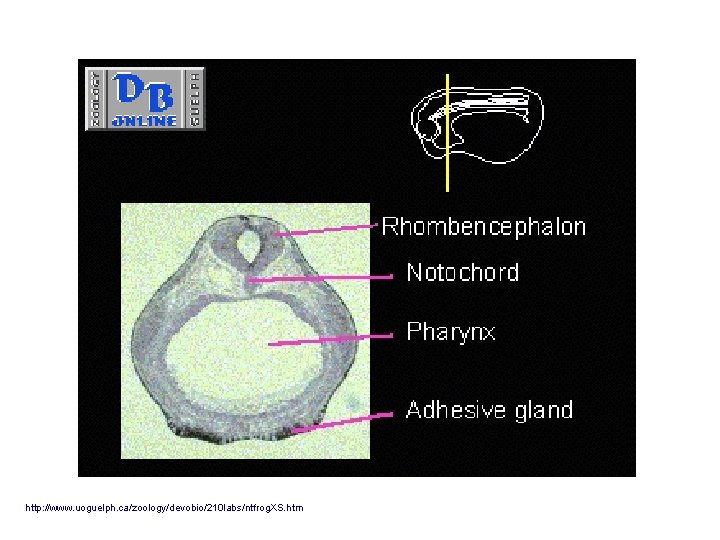
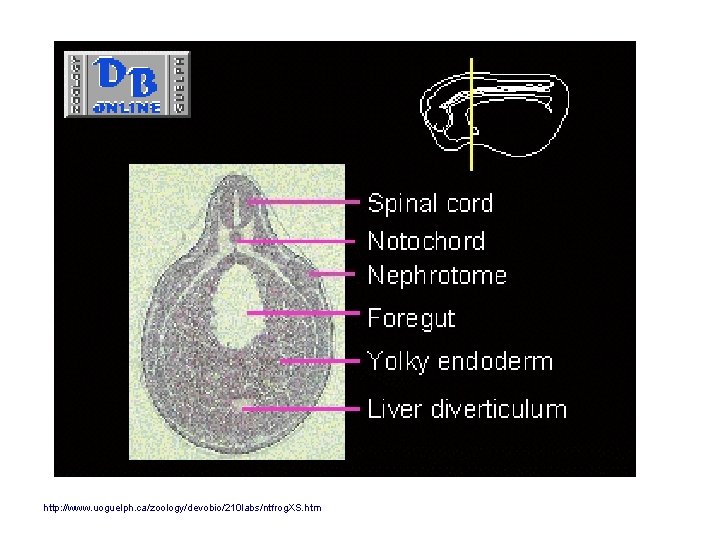
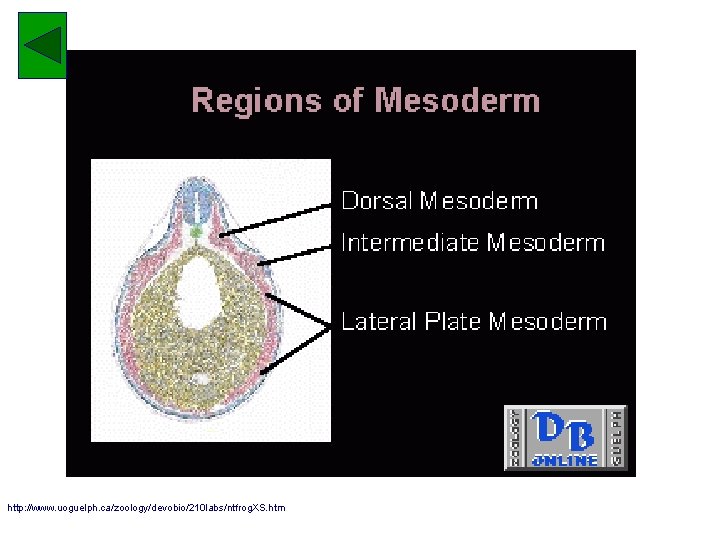
http: //www. uoguelph. ca/zoology/devobio/210 labs/ntfrog. XS. htm
http: //www. uoguelph. ca/zoology/devobio/210 labs/ntfrog. XS. htm
http: //www. uoguelph. ca/zoology/devobio/210 labs/ntfrog. XS. htm
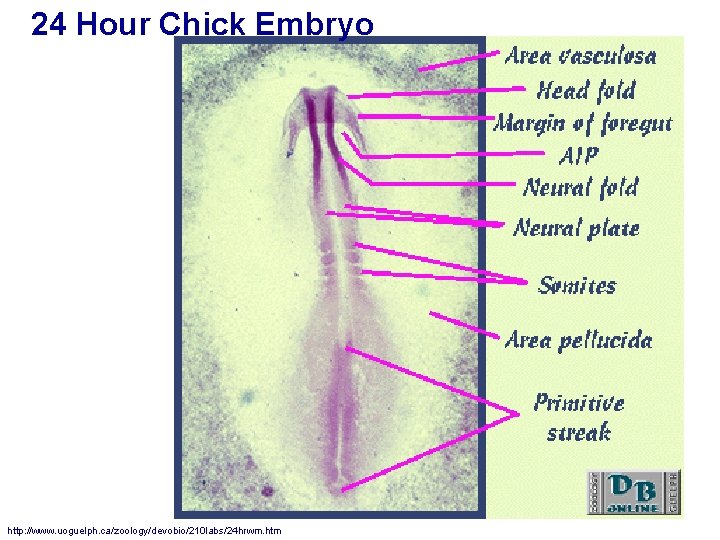
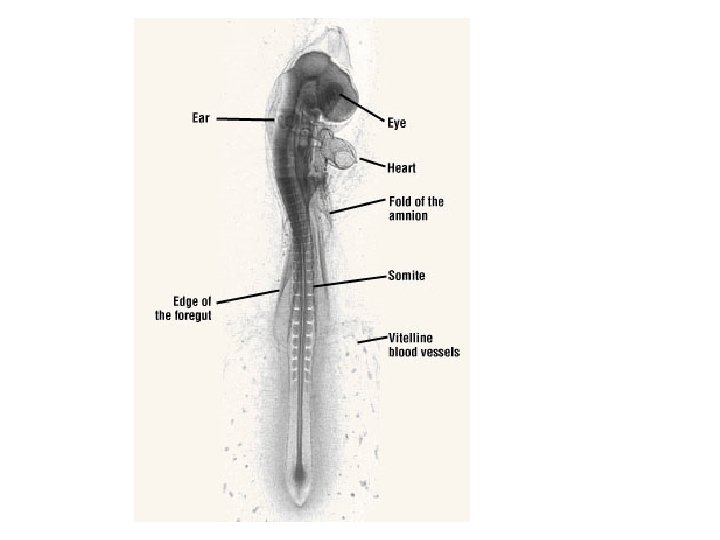
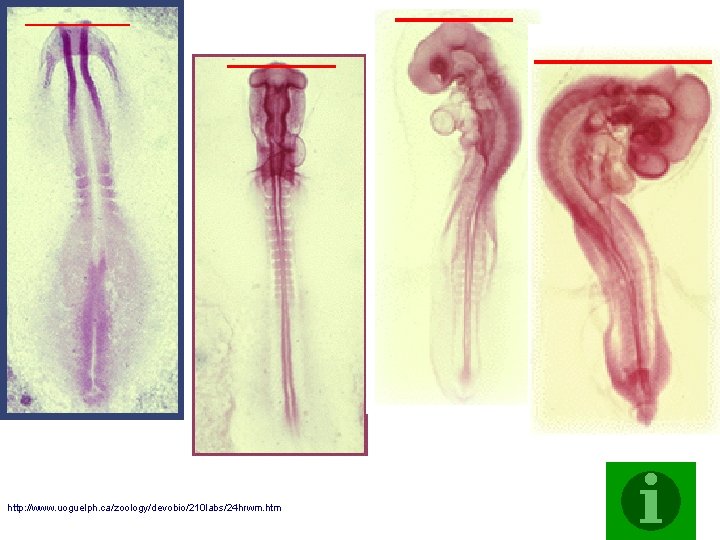
24 Hour Chick Embryo http: //www. uoguelph. ca/zoology/devobio/210 labs/24 hrwm. htm
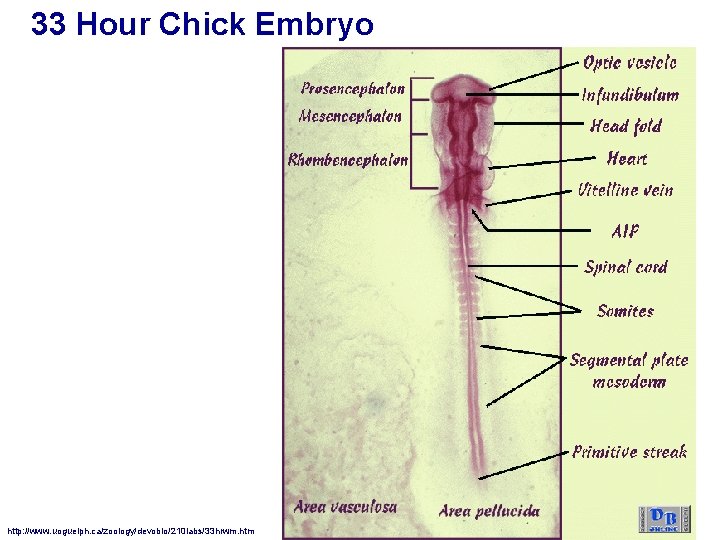
33 Hour Chick Embryo http: //www. uoguelph. ca/zoology/devobio/210 labs/33 hrwm. htm
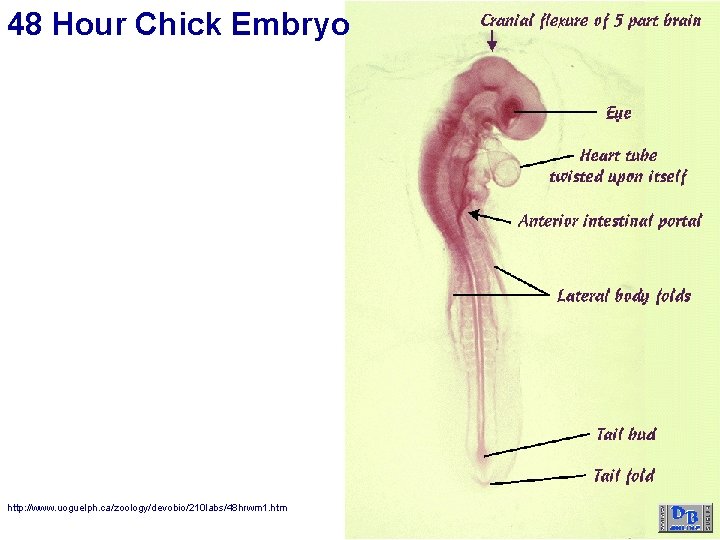
48 Hour Chick Embryo http: //www. uoguelph. ca/zoology/devobio/210 labs/48 hrwm 1. htm
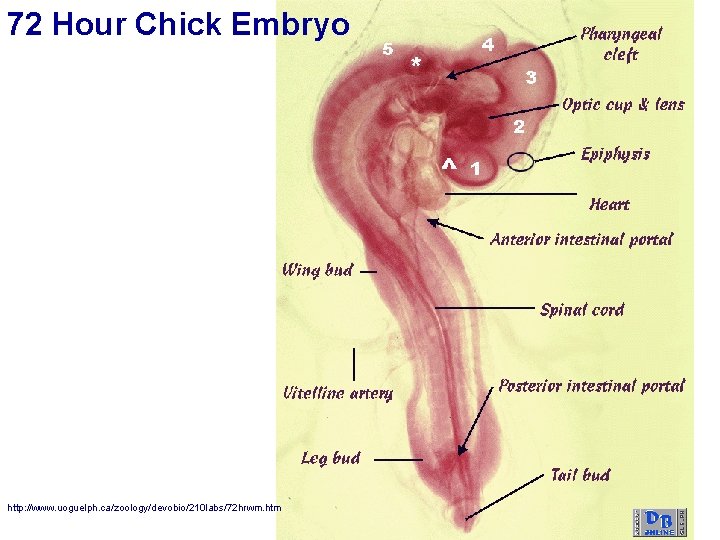
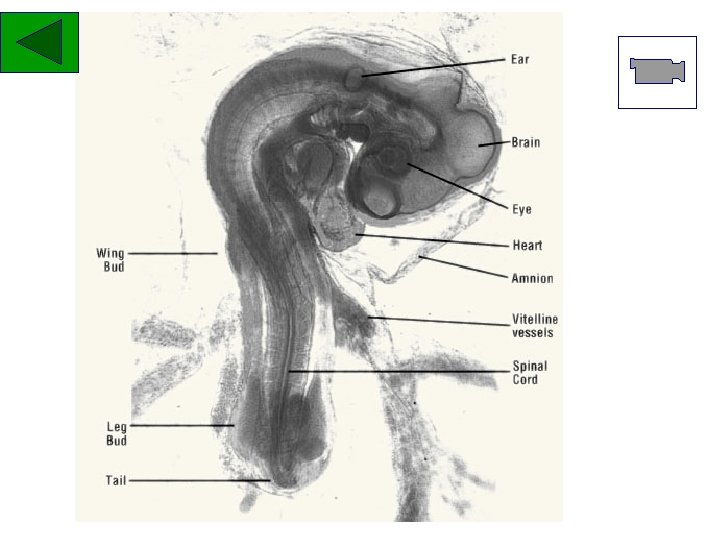
72 Hour Chick Embryo http: //www. uoguelph. ca/zoology/devobio/210 labs/72 hrwm. htm
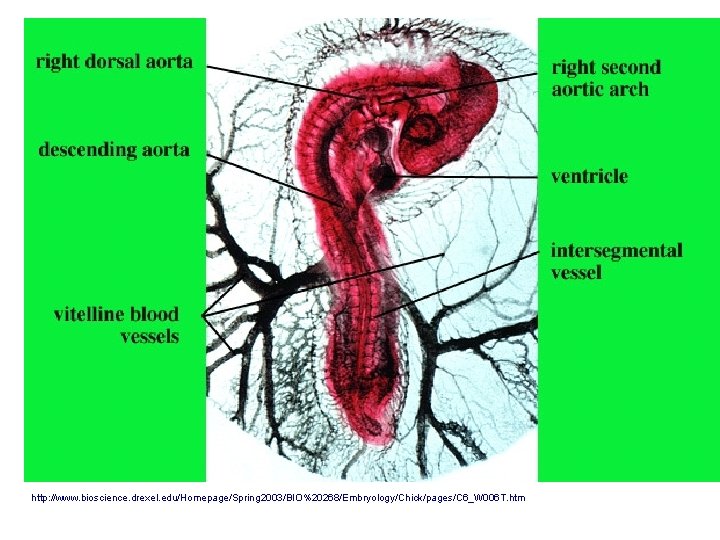
http: //www. bioscience. drexel. edu/Homepage/Spring 2003/BIO%20268/Embryology/Chick/pages/C 6_W 006 T. htm
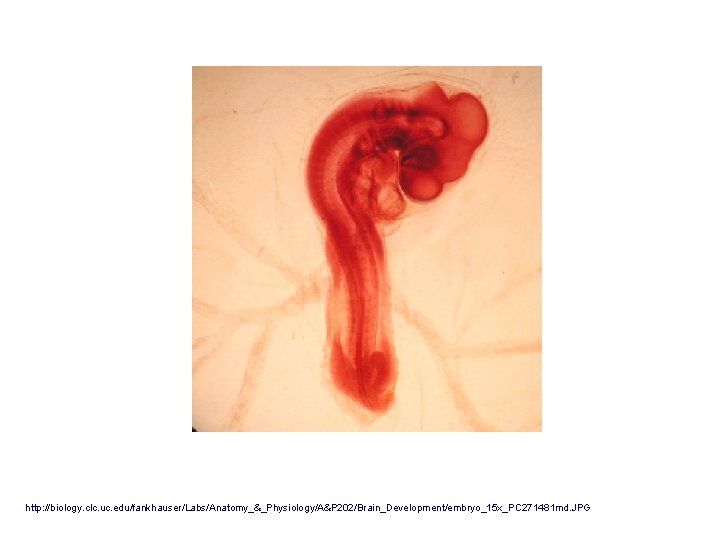
http: //biology. clc. uc. edu/fankhauser/Labs/Anatomy_&_Physiology/A&P 202/Brain_Development/embryo_15 x_PC 271481 md. JPG
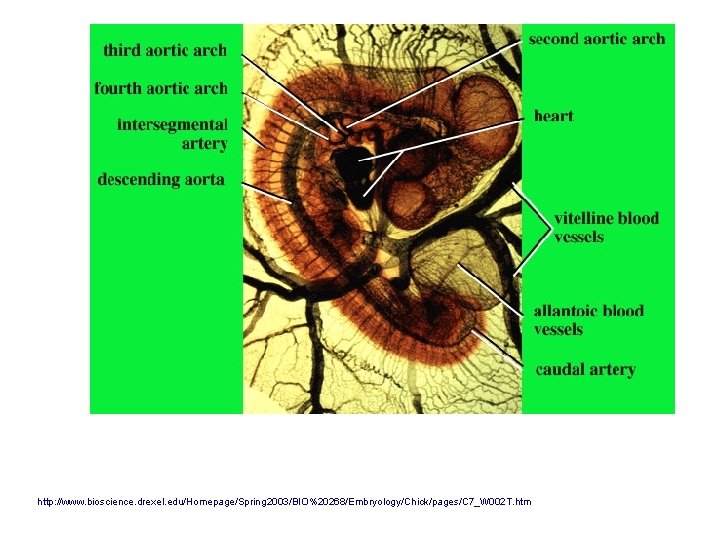
http: //www. bioscience. drexel. edu/Homepage/Spring 2003/BIO%20268/Embryology/Chick/pages/C 7_W 002 T. htm
http: //www. uoguelph. ca/zoology/devobio/210 labs/24 hrwm. htm
Changes in shape and position lead to elongation and direction of movement