
CONCEPTION Egg Sperm Cells Egg Cell Same as


- Slides: 26
CONCEPTION
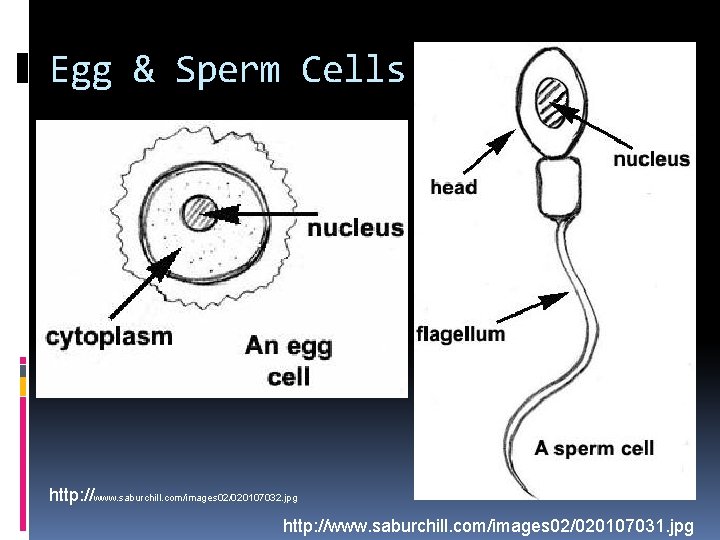
Egg & Sperm Cells Egg Cell: Same as “ovum”… the cell from a girl or woman that can start pregnancy. Sperm Cell: The cell from a boy or man that can start pregnancy when joined with an ovum. Each cell has 23 chromosomes.
Ovulation
Egg & Sperm Cells http: //www. saburchill. com/images 02/020107032. jpg http: //www. saburchill. com/images 02/020107031. jpg
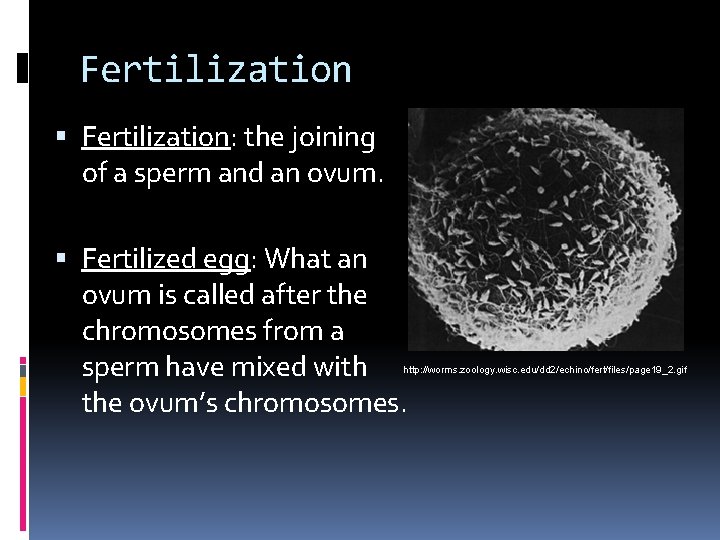
Fertilization Fertilization: the joining of a sperm and an ovum. Fertilized egg: What an ovum is called after the chromosomes from a sperm have mixed with the ovum’s chromosomes. http: //worms. zoology. wisc. edu/dd 2/echino/fert/files/page 19_2. gif
The Voyage of Sperm
The Growing baby…
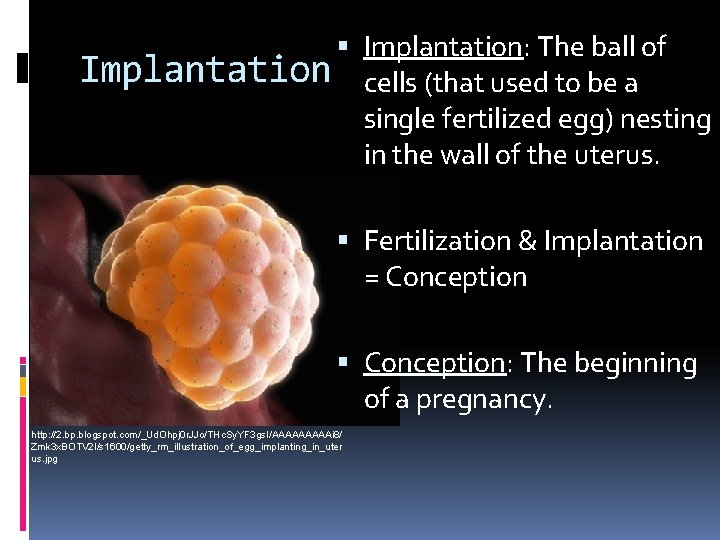
Implantation: The ball of Implantation cells (that used to be a single fertilized egg) nesting in the wall of the uterus. Fertilization & Implantation = Conception: The beginning of a pregnancy. http: //2. bp. blogspot. com/_Ud. Ohpj 0 r. JJo/THc. Sy. YF 3 gs. I/AAAAAi 8/ Zmk 3 x. BOTV 2 I/s 1600/getty_rm_illustration_of_egg_implanting_in_uter us. jpg
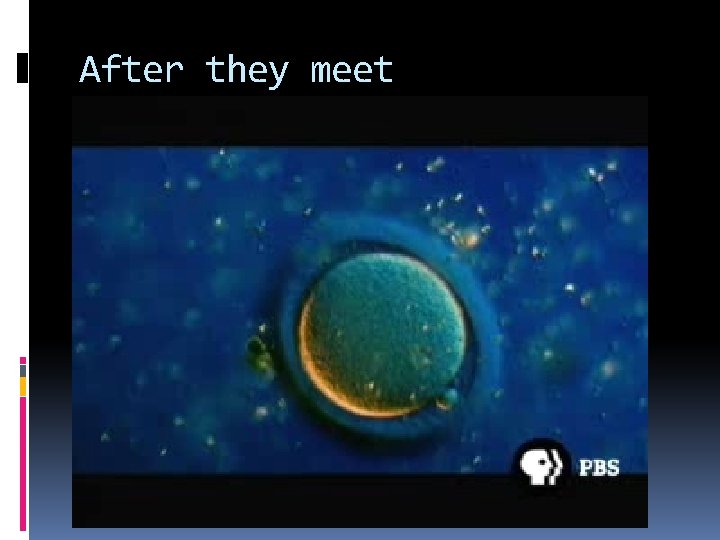
After they meet
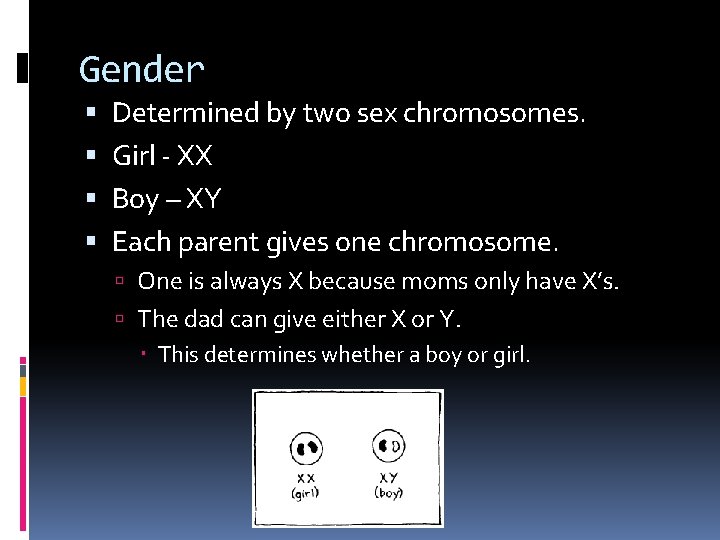
Gender Determined by two sex chromosomes. Girl - XX Boy – XY Each parent gives one chromosome. One is always X because moms only have X’s. The dad can give either X or Y. This determines whether a boy or girl.
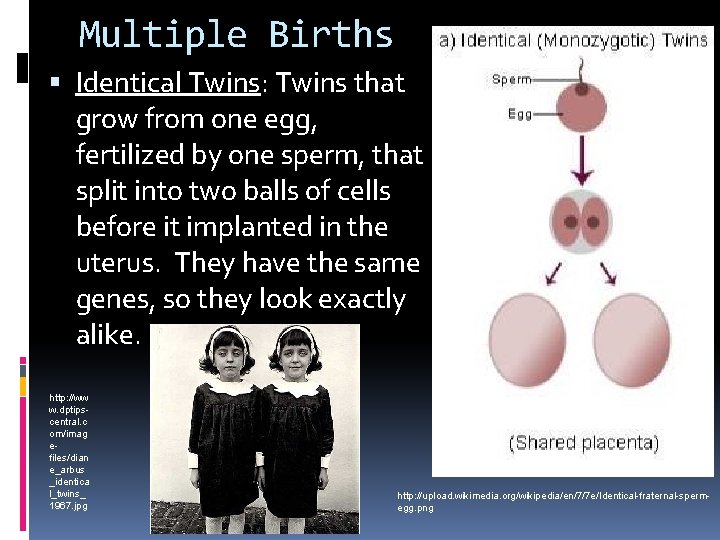
Multiple Births Identical Twins: Twins that grow from one egg, fertilized by one sperm, that split into two balls of cells before it implanted in the uterus. They have the same genes, so they look exactly alike. http: //ww w. dptipscentral. c om/imag efiles/dian e_arbus _identica l_twins_ 1967. jpg http: //upload. wikimedia. org/wikipedia/en/7/7 e/Identical-fraternal-spermegg. png
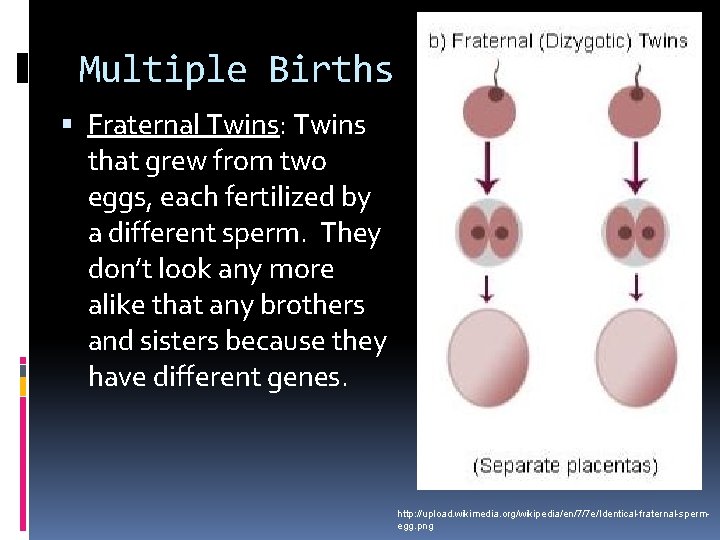
Multiple Births Fraternal Twins: Twins that grew from two eggs, each fertilized by a different sperm. They don’t look any more alike that any brothers and sisters because they have different genes. http: //upload. wikimedia. org/wikipedia/en/7/7 e/Identical-fraternal-spermegg. png
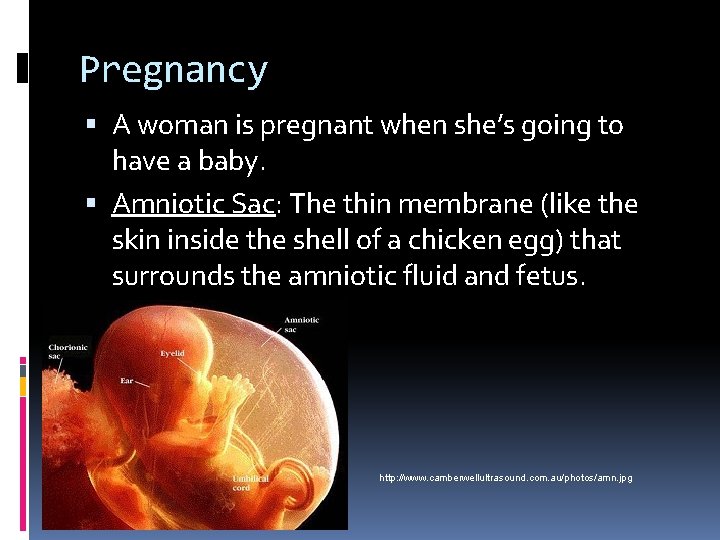
Pregnancy A woman is pregnant when she’s going to have a baby. Amniotic Sac: The thin membrane (like the skin inside the shell of a chicken egg) that surrounds the amniotic fluid and fetus. http: //www. camberwellultrasound. com. au/photos/amn. jpg
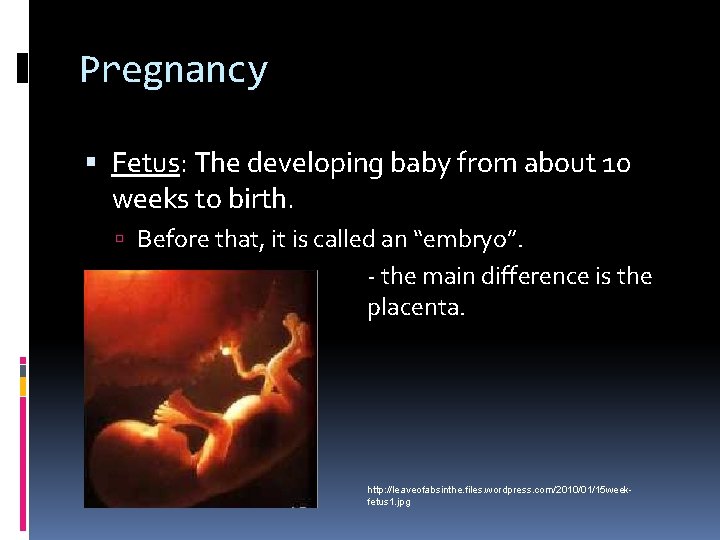
Pregnancy Fetus: The developing baby from about 10 weeks to birth. Before that, it is called an “embryo”. - the main difference is the placenta. http: //leaveofabsinthe. files. wordpress. com/2010/01/15 weekfetus 1. jpg
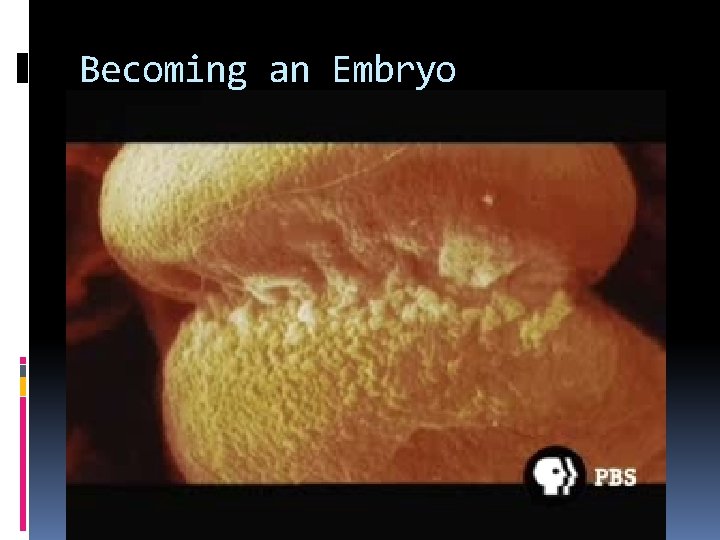
Becoming an Embryo
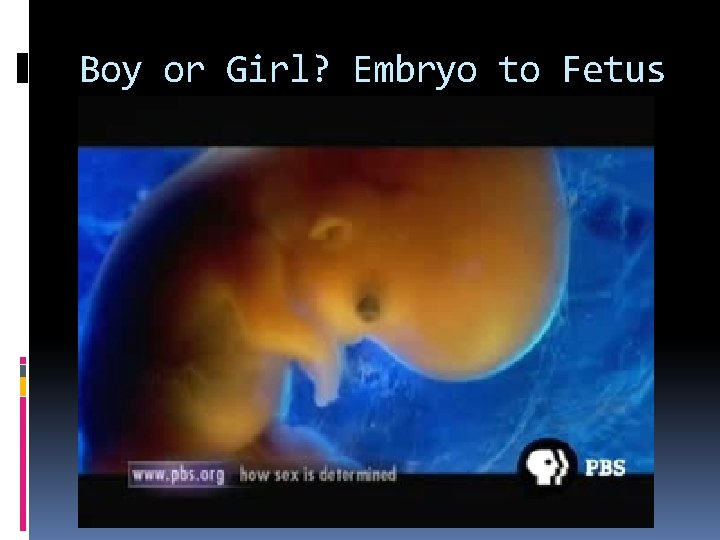
Boy or Girl? Embryo to Fetus
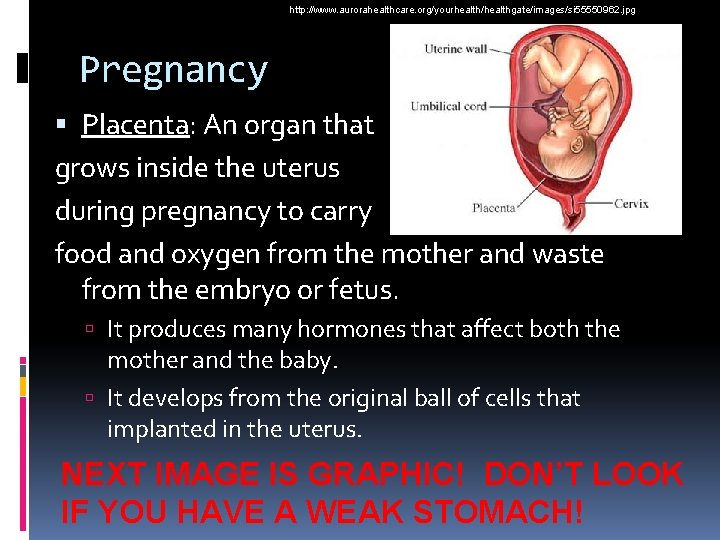
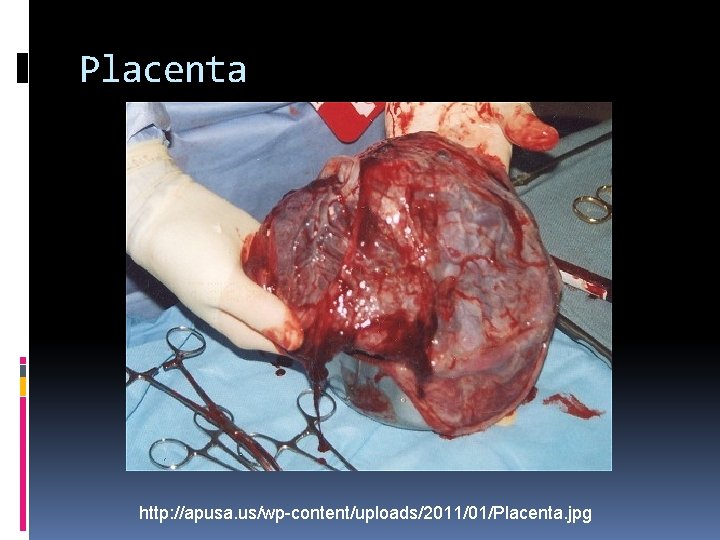
http: //www. aurorahealthcare. org/yourhealth/healthgate/images/si 55550962. jpg Pregnancy Placenta: An organ that grows inside the uterus during pregnancy to carry food and oxygen from the mother and waste from the embryo or fetus. It produces many hormones that affect both the mother and the baby. It develops from the original ball of cells that implanted in the uterus. NEXT IMAGE IS GRAPHIC! DON’T LOOK IF YOU HAVE A WEAK STOMACH!
Placenta http: //apusa. us/wp-content/uploads/2011/01/Placenta. jpg
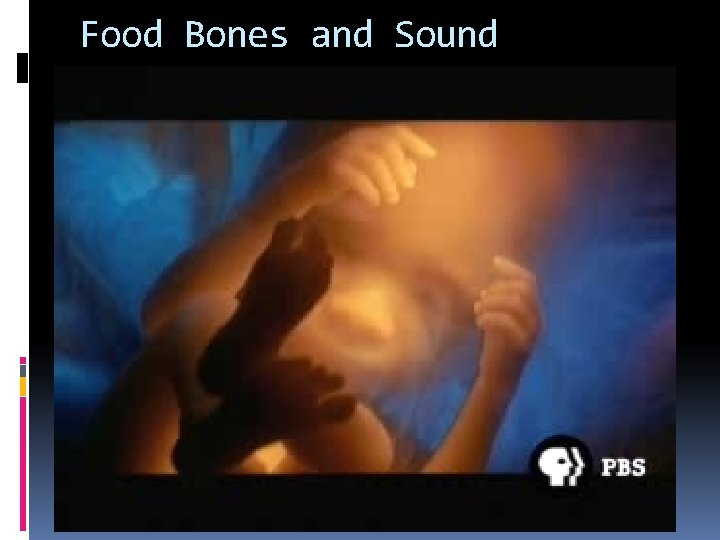
Food Bones and Sound
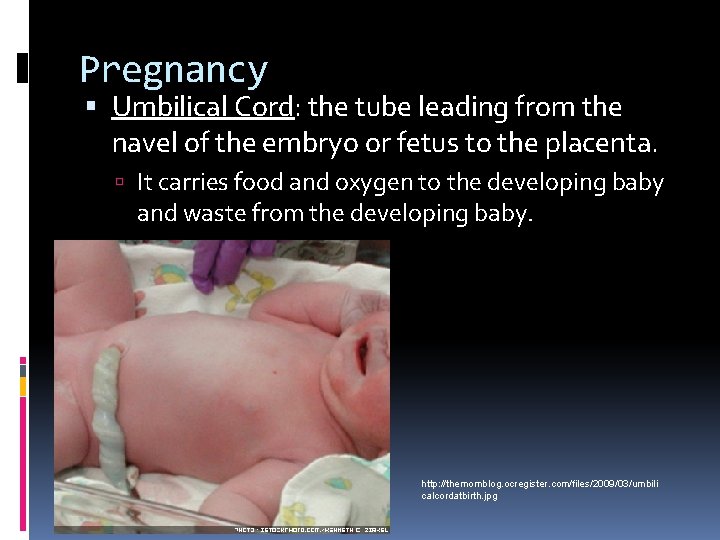
Pregnancy Umbilical Cord: the tube leading from the navel of the embryo or fetus to the placenta. It carries food and oxygen to the developing baby and waste from the developing baby. http: //themomblog. ocregister. com/files/2009/03/umbili calcordatbirth. jpg
Prenatal Prenatal: before birth. Prenatal care means getting special check-ups at least once a month from a doctor starting as early in a pregnancy as possible. Good early care can greatly reduce the risks of birth defects, low birth weight, or prematurity. It also helps keep the mother healthy.
Problems Birth Defects: Anything wrong with a newborn baby. Cleft pallet, heart problems, blindness, cerebral palsy, etc. Miscarriage: A pregnancy ending much too soon, before the embryo or fetus is able to live outside the uterus.
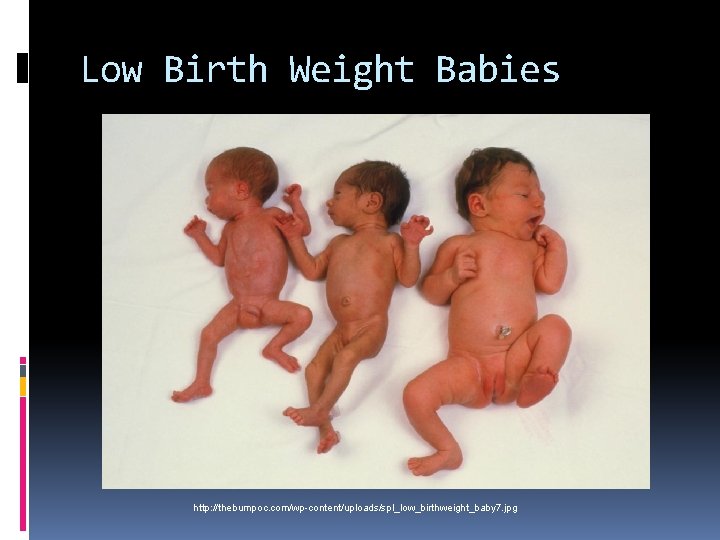
Problems Low Birth Weight: a baby that is “too” small. Weighs less than 5. 5 lbs at birth. A LBW baby is more likely to be sick or have birth defects. It is also likely to develop more slowly and to have more difficulty in school. It also may turn out healthy and do just fine.
Low Birth Weight Babies http: //thebumpoc. com/wp-content/uploads/spl_low_birthweight_baby 7. jpg
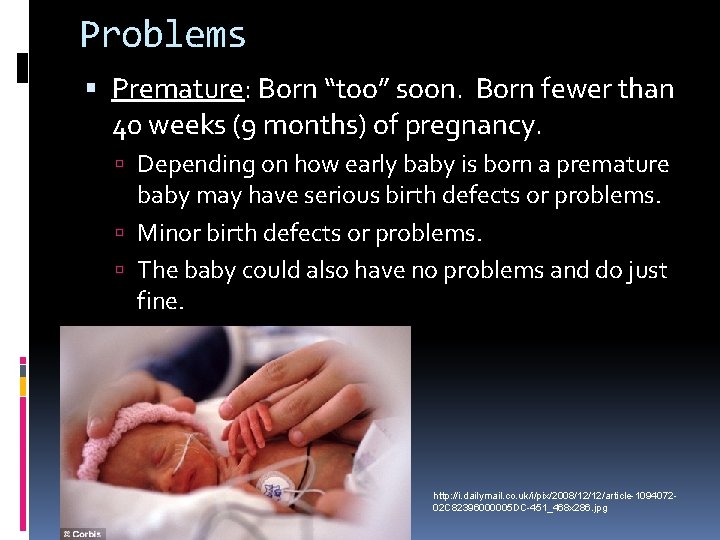
Problems Premature: Born “too” soon. Born fewer than 40 weeks (9 months) of pregnancy. Depending on how early baby is born a premature baby may have serious birth defects or problems. Minor birth defects or problems. The baby could also have no problems and do just fine. http: //i. dailymail. co. uk/i/pix/2008/12/12/article-109407202 C 82396000005 DC-451_468 x 286. jpg
Problems Pre-Eclampsia & Eclampsia: - High blood pressure and high protein in the urine. - Also marked by swelling of the feet, legs and hands. If left undiagnosed can lead to Eclampsia which puts both mother and baby at risk, and in rare cases death.