
Sleep Dreams Sleep Research Unconscious state so how
- Slides: 60
Sleep &Dreams
Sleep Research Unconscious state. so how study? n EEG (1890 s; 1924 first human EEG) wave height (amplitude) wave length (frequency per second) wave regularity (smooth vs bursts) = regular changes over time stages = discovered by EEG analyses 1952 U. Chicago Kleitman, Aserinsky, Dement
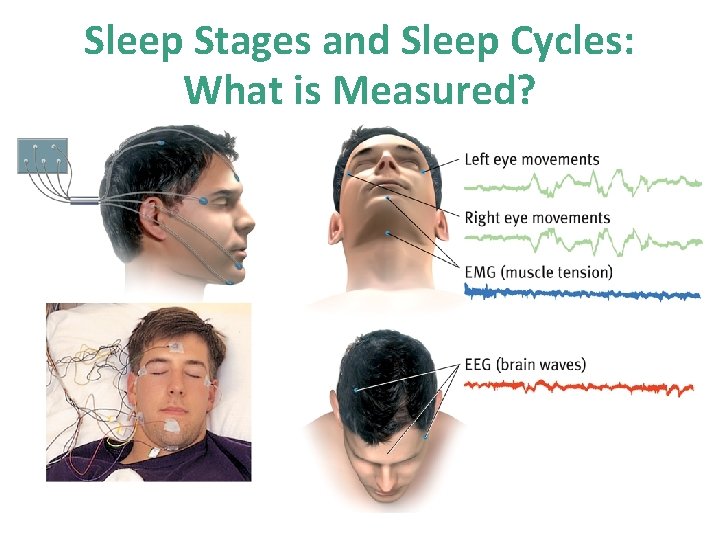
Sleep/Waking Research Poly – somno – graphy physiological recordings across sleep Electroencephalograph (EEG) brain Electromyograph (EMG) muscles Electrooculograph (EOG) eyes Electrocardiograph (ECG)
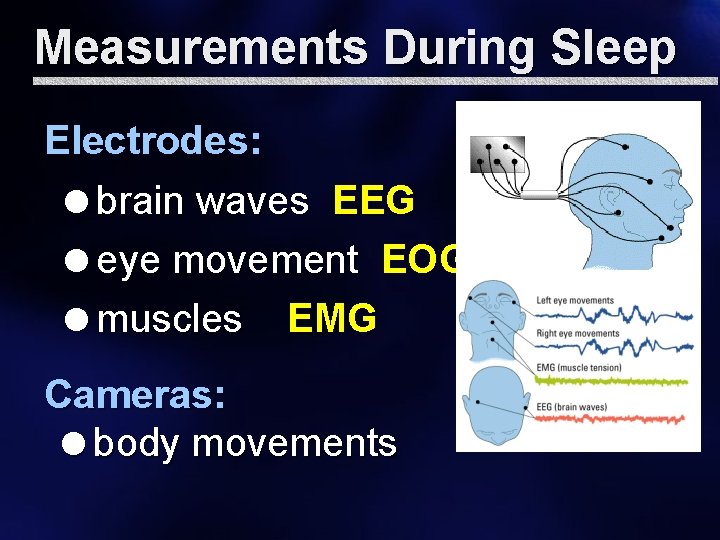
Measurements During Sleep Electrodes: =brain waves EEG =eye movement EOG =muscles EMG Cameras: =body movements
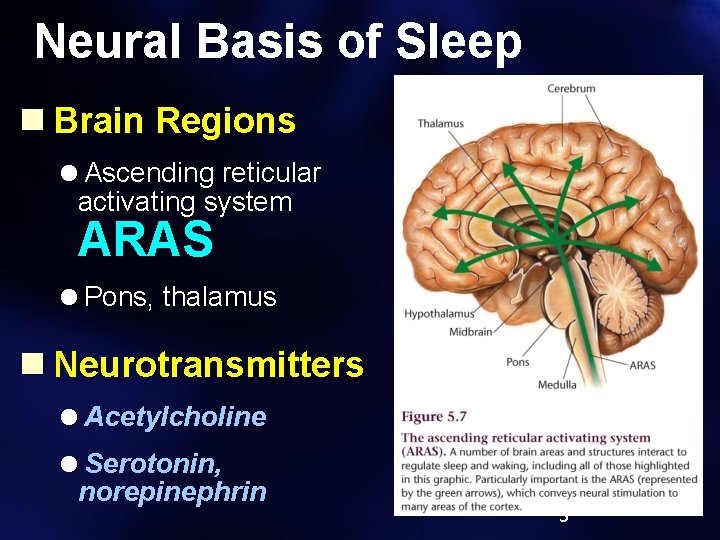
Neural Basis of Sleep n Brain Regions =Ascending reticular activating system ARAS =Pons, thalamus n Neurotransmitters =Acetylcholine =Serotonin, norepinephrin 5
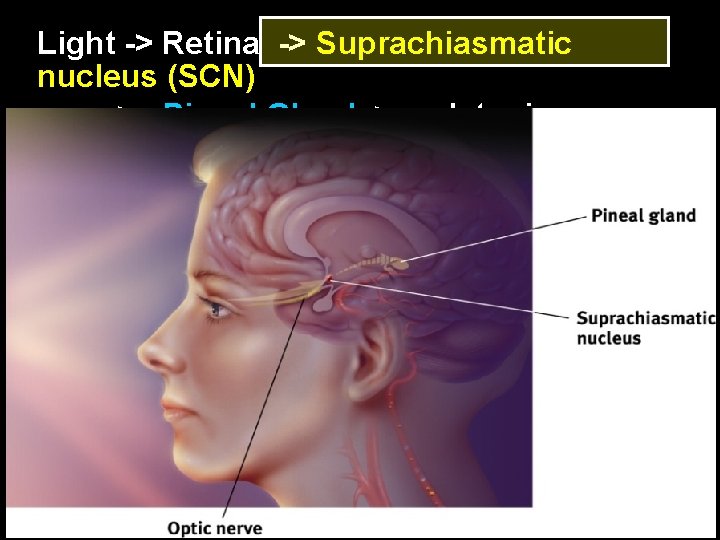
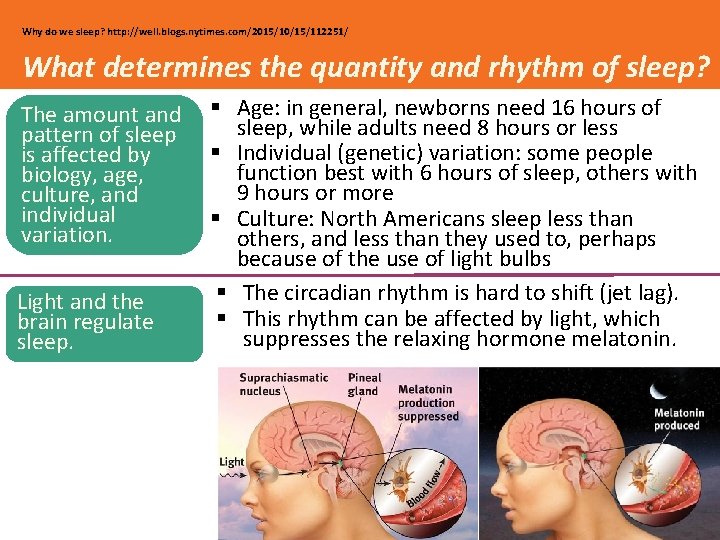
Light -> Retina -> Suprachiasmatic nucleus (SCN) > Pineal Gland > melatonin 6
Sleep Stages and Sleep Cycles: What is Measured?
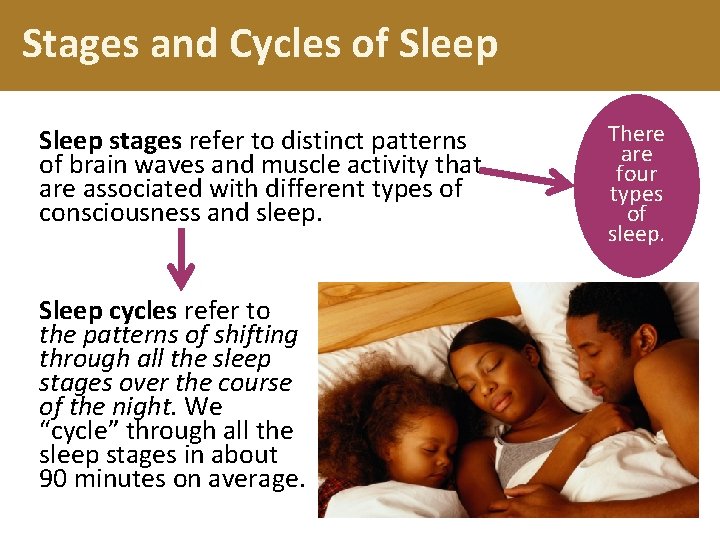
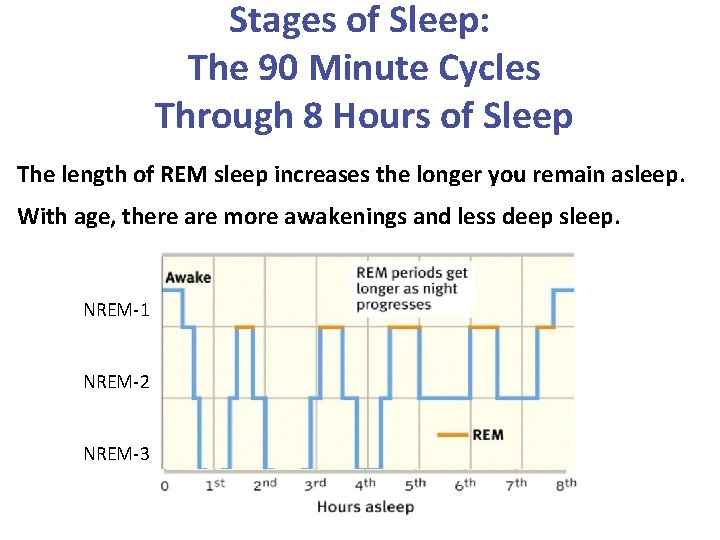
Stages and Cycles of Sleep stages refer to distinct patterns of brain waves and muscle activity that are associated with different types of consciousness and sleep. Sleep cycles refer to the patterns of shifting through all the sleep stages over the course of the night. We “cycle” through all the sleep stages in about 90 minutes on average. There are four types of sleep.
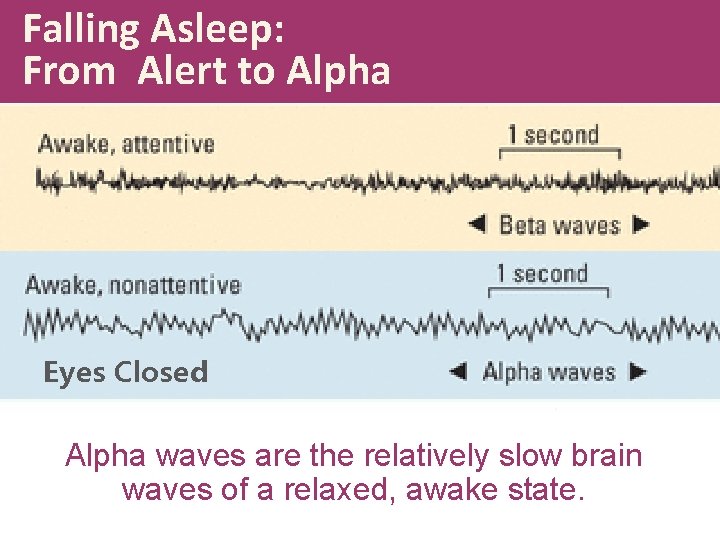
Falling Asleep: From Alert to Alpha Eyes Closed Alpha waves are the relatively slow brain waves of a relaxed, awake state.
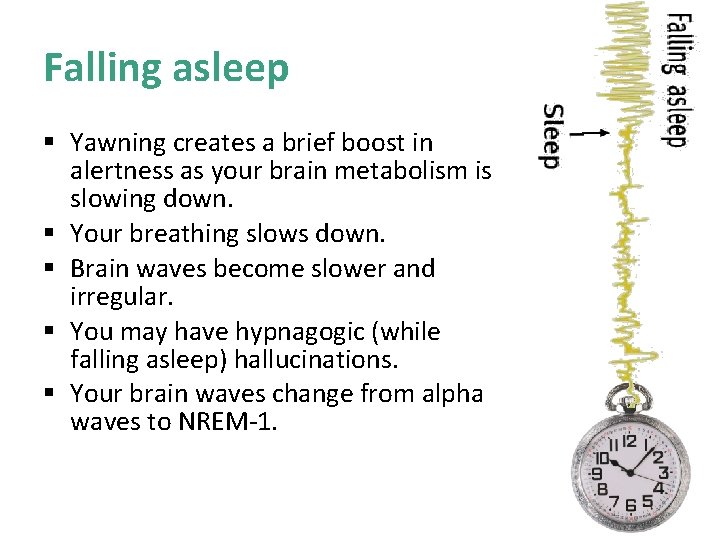
Falling asleep § Yawning creates a brief boost in alertness as your brain metabolism is slowing down. § Your breathing slows down. § Brain waves become slower and irregular. § You may have hypnagogic (while falling asleep) hallucinations. § Your brain waves change from alpha waves to NREM-1.
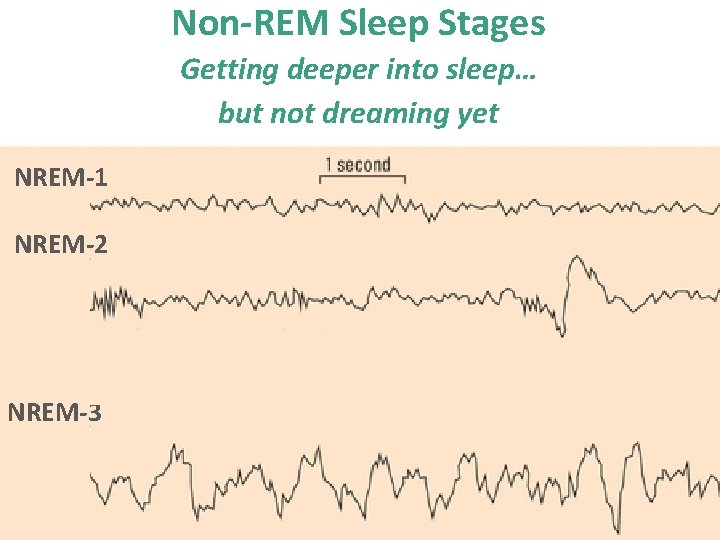
Non-REM Sleep Stages Getting deeper into sleep… but not dreaming yet NREM-1 NREM-2 NREM-3
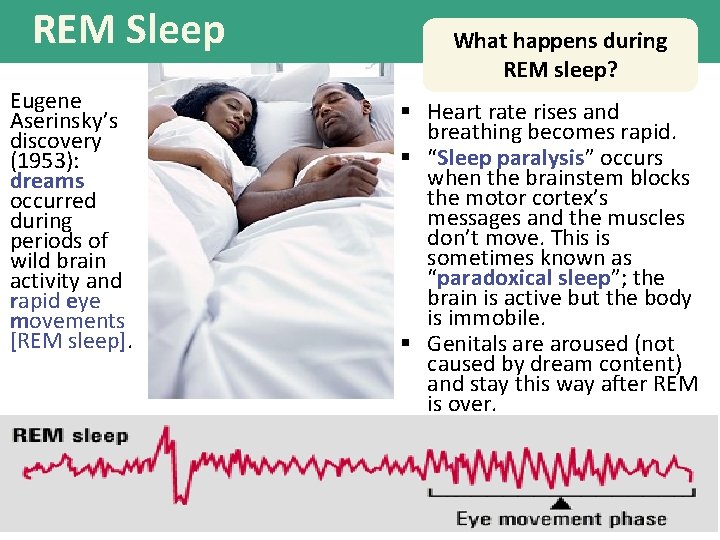
REM Sleep Eugene Aserinsky’s discovery (1953): dreams occurred during periods of wild brain activity and rapid eye movements [REM sleep]. What happens during REM sleep? § Heart rate rises and breathing becomes rapid. § “Sleep paralysis” occurs when the brainstem blocks the motor cortex’s messages and the muscles don’t move. This is sometimes known as “paradoxical sleep”; the brain is active but the body is immobile. § Genitals are aroused (not caused by dream content) and stay this way after REM is over.
Stages of Sleep: The 90 Minute Cycles Through 8 Hours of Sleep The length of REM sleep increases the longer you remain asleep. With age, there are more awakenings and less deep sleep. NREM-1 NREM-2 NREM-3
Why do we sleep? http: //well. blogs. nytimes. com/2015/10/15/112251/ What determines the quantity and rhythm of sleep? The amount and pattern of sleep is affected by biology, age, culture, and individual variation. Light and the brain regulate sleep. § Age: in general, newborns need 16 hours of sleep, while adults need 8 hours or less § Individual (genetic) variation: some people function best with 6 hours of sleep, others with 9 hours or more § Culture: North Americans sleep less than others, and less than they used to, perhaps because of the use of light bulbs § The circadian rhythm is hard to shift (jet lag). § This rhythm can be affected by light, which suppresses the relaxing hormone melatonin.
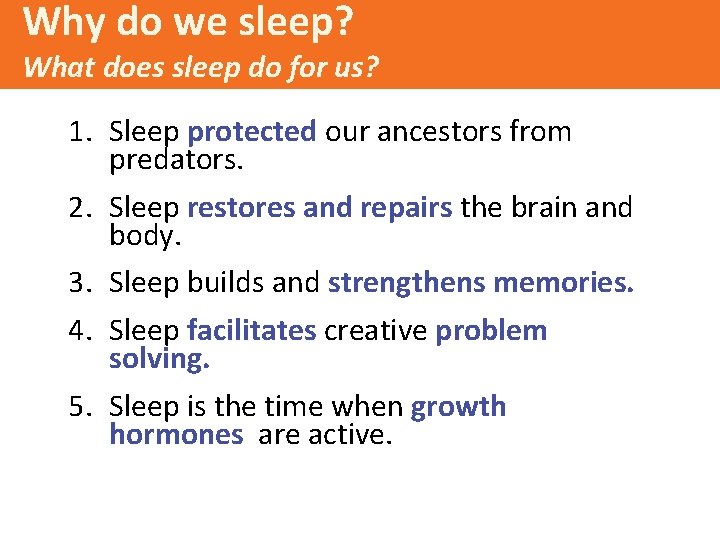
Why do we sleep? What does sleep do for us? 1. Sleep protected our ancestors from predators.
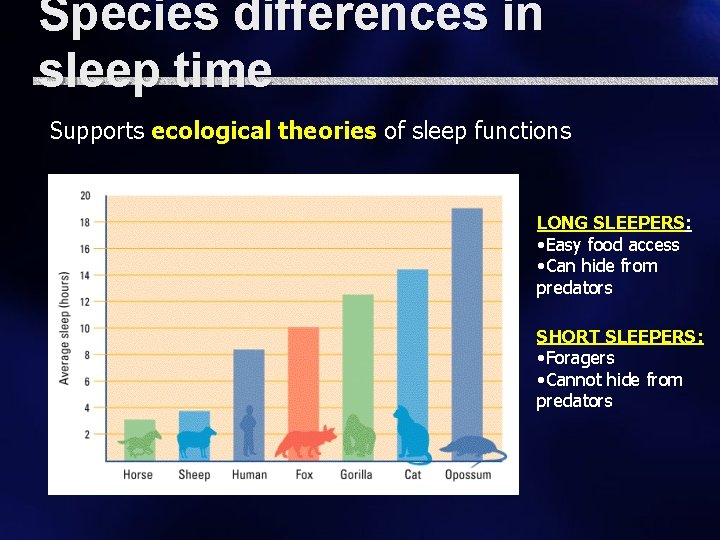
Species differences in sleep time Supports ecological theories of sleep functions LONG SLEEPERS: • Easy food access • Can hide from predators SHORT SLEEPERS: • Foragers • Cannot hide from predators
Why do we sleep? What does sleep do for us? 1. Sleep protected our ancestors from predators. 2. Sleep restores and repairs the brain and body. 3. Sleep builds and strengthens memories. 4. Sleep facilitates creative problem solving. 5. Sleep is the time when growth hormones are active.
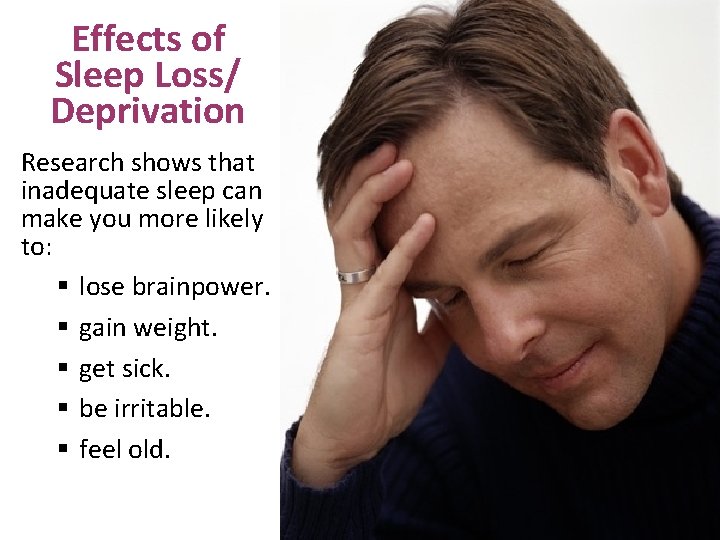
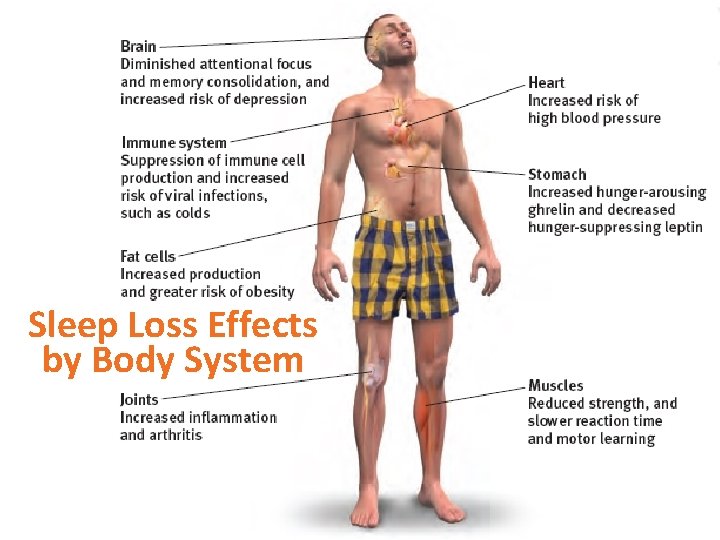
Effects of Sleep Loss/ Deprivation Research shows that inadequate sleep can make you more likely to: § lose brainpower. § gain weight. § get sick. § be irritable. § feel old.
Sleep Loss Effects by Body System
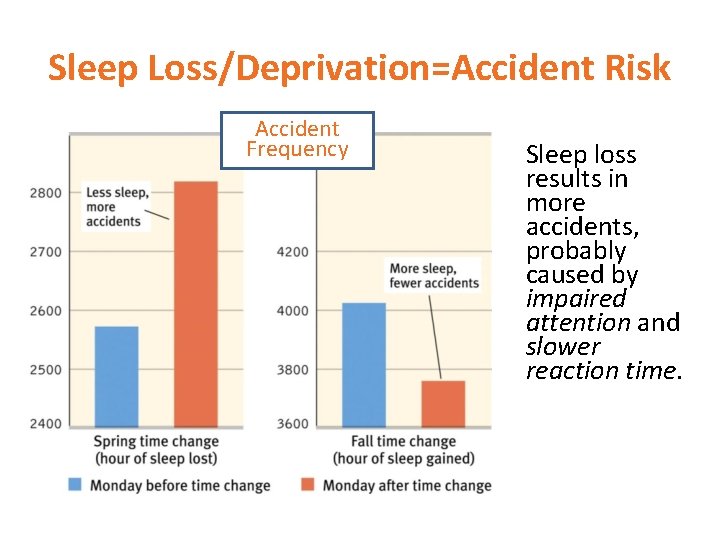
Sleep Loss/Deprivation=Accident Risk Accident Frequency Sleep loss results in more accidents, probably caused by impaired attention and slower reaction time.
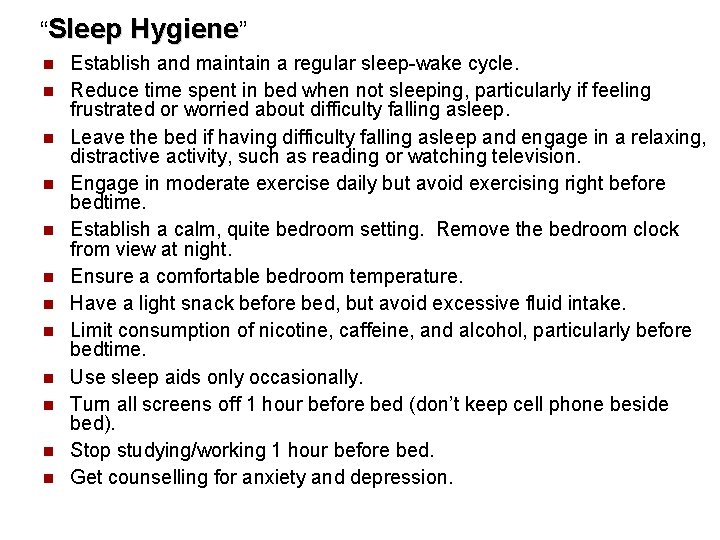
“Sleep Hygiene” n n n Establish and maintain a regular sleep-wake cycle. Reduce time spent in bed when not sleeping, particularly if feeling frustrated or worried about difficulty falling asleep. Leave the bed if having difficulty falling asleep and engage in a relaxing, distractive activity, such as reading or watching television. Engage in moderate exercise daily but avoid exercising right before bedtime. Establish a calm, quite bedroom setting. Remove the bedroom clock from view at night. Ensure a comfortable bedroom temperature. Have a light snack before bed, but avoid excessive fluid intake. Limit consumption of nicotine, caffeine, and alcohol, particularly before bedtime. Use sleep aids only occasionally. Turn all screens off 1 hour before bed (don’t keep cell phone beside bed). Stop studying/working 1 hour before bed. Get counselling for anxiety and depression.
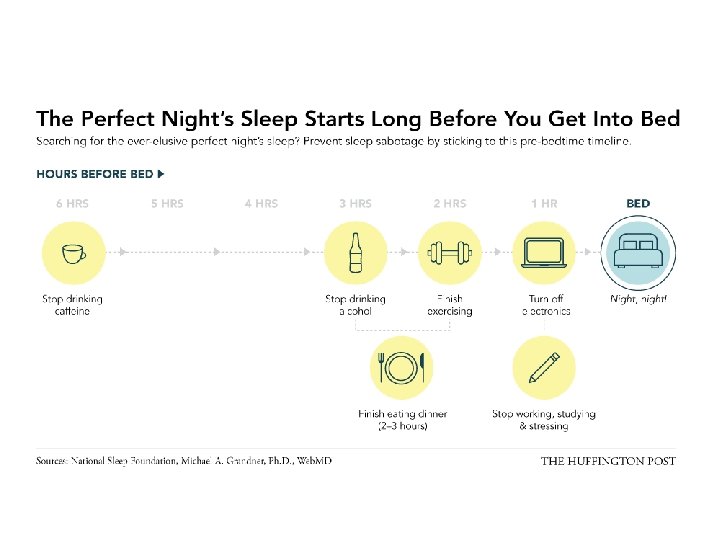
• http: //big. assets. huffingtonpost. com/2014_B efore. Bed 1. png
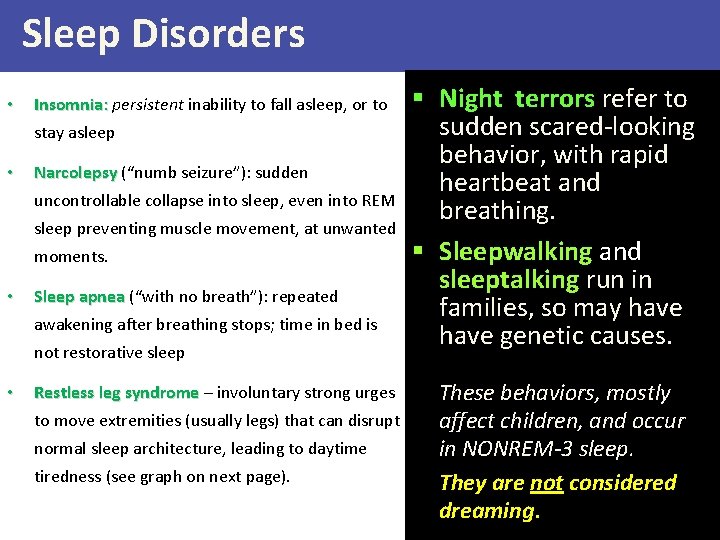
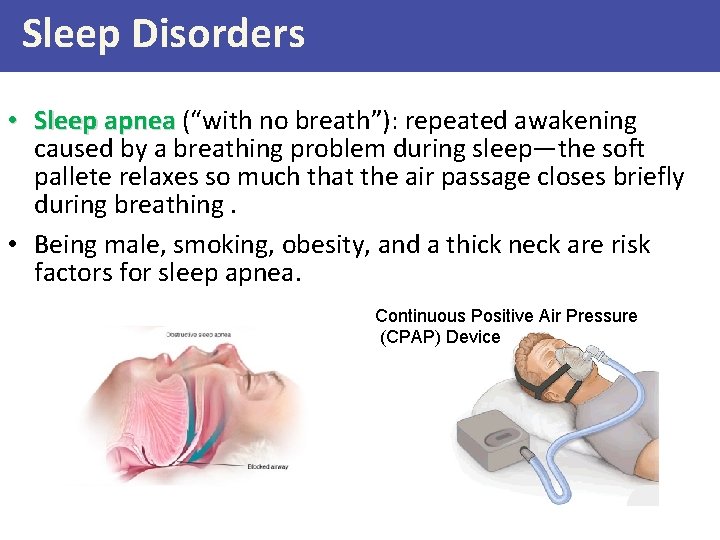
Sleep Disorders • Insomnia: persistent inability to fall asleep, or to stay asleep • Narcolepsy (“numb seizure”): sudden uncontrollable collapse into sleep, even into REM sleep preventing muscle movement, at unwanted moments. • Sleep apnea (“with no breath”): repeated awakening after breathing stops; time in bed is not restorative sleep • Restless leg syndrome – involuntary strong urges to move extremities (usually legs) that can disrupt normal sleep architecture, leading to daytime tiredness (see graph on next page). § Night terrors refer to sudden scared-looking behavior, with rapid heartbeat and breathing. § Sleepwalking and sleeptalking run in families, so may have genetic causes. These behaviors, mostly affect children, and occur in NONREM-3 sleep. They are not considered dreaming.
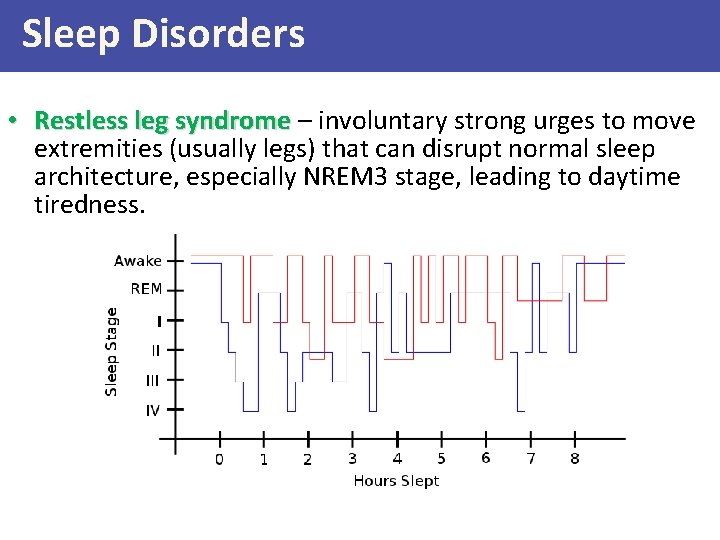
Sleep Disorders • Restless leg syndrome – involuntary strong urges to move extremities (usually legs) that can disrupt normal sleep architecture, especially NREM 3 stage, leading to daytime tiredness.
Sleep Disorders • Sleep apnea (“with no breath”): repeated awakening caused by a breathing problem during sleep—the soft pallete relaxes so much that the air passage closes briefly during breathing. • Being male, smoking, obesity, and a thick neck are risk factors for sleep apnea. Continuous Positive Air Pressure (CPAP) Device
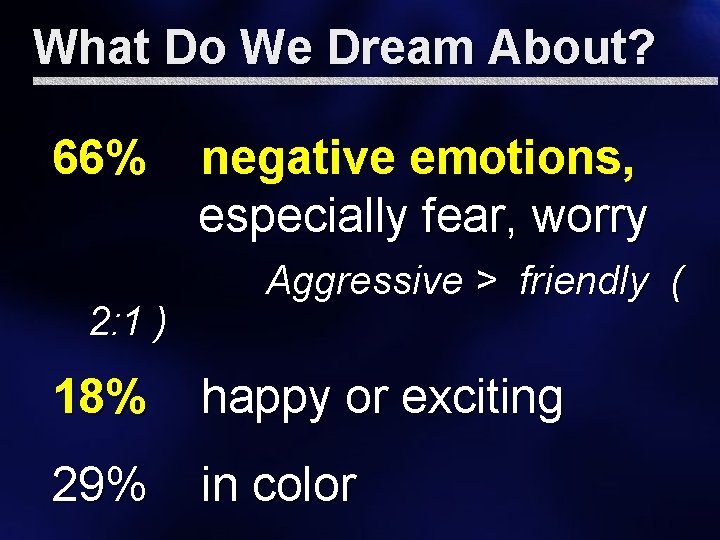
What Do We Dream About? 66% 2: 1 ) negative emotions, especially fear, worry Aggressive > friendly ( 18% happy or exciting 29% in color
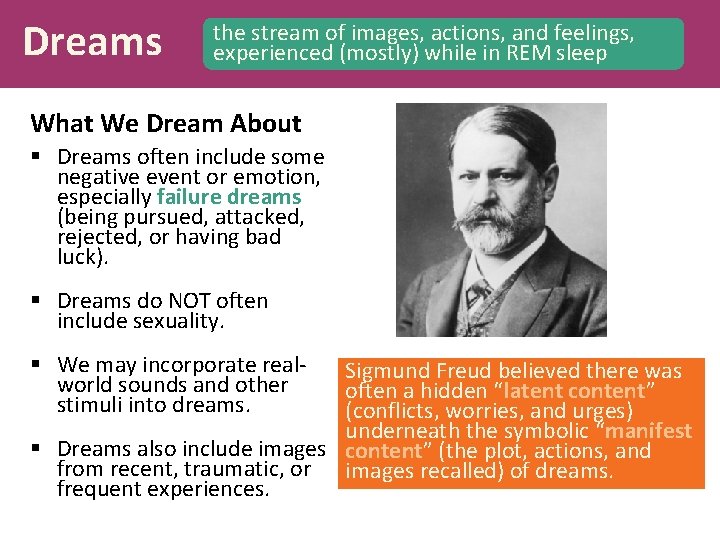
Dreams the stream of images, actions, and feelings, experienced (mostly) while in REM sleep What We Dream About § Dreams often include some negative event or emotion, especially failure dreams (being pursued, attacked, rejected, or having bad luck). § Dreams do NOT often include sexuality. § We may incorporate realworld sounds and other stimuli into dreams. Sigmund Freud believed there was often a hidden “latent content” (conflicts, worries, and urges) underneath the symbolic “manifest § Dreams also include images content” (the plot, actions, and from recent, traumatic, or images recalled) of dreams. frequent experiences.
Theories of Dreaming 1) Freud: "wish fulfillment" =Secret wishes wrapped in a disguise Boy, 14 dreams… Father dies at controls of the plane Plane dives toward earth 14 -yr old tries to take controls of plane Manifest Content Surface meaning Latent Content Unconscious (“real”) meaning
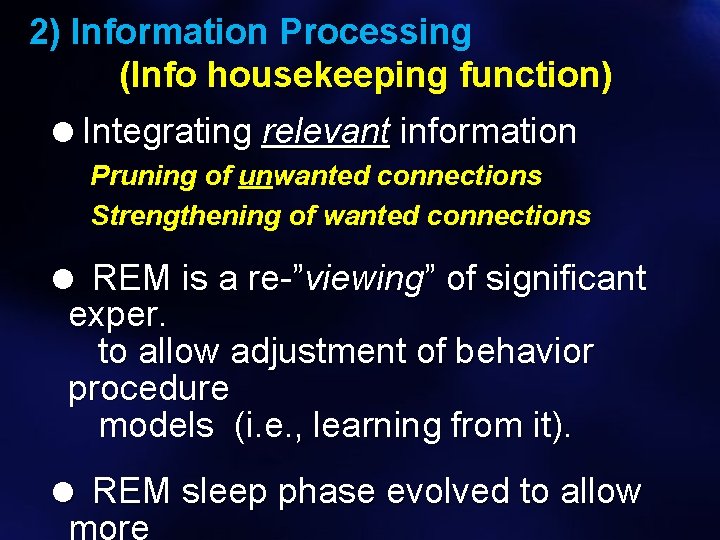
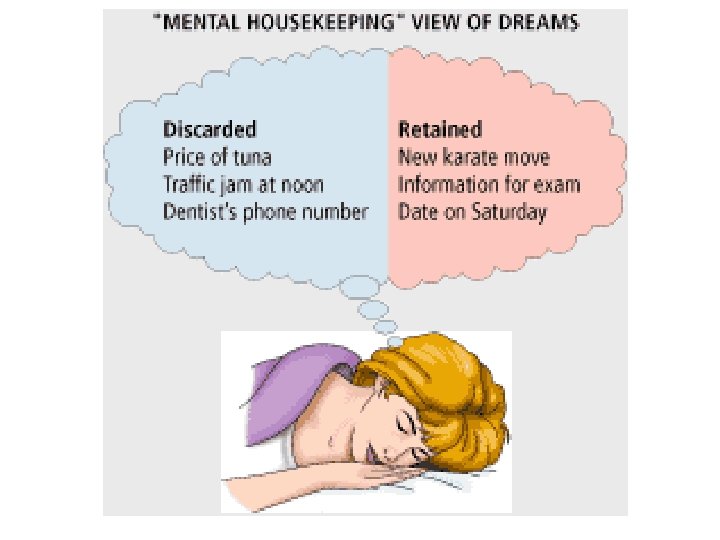
2) Information Processing (Info housekeeping function) =Integrating relevant information Pruning of unwanted connections Strengthening of wanted connections = REM is a re-”viewing” of significant exper. to allow adjustment of behavior procedure models (i. e. , learning from it). = REM sleep phase evolved to allow
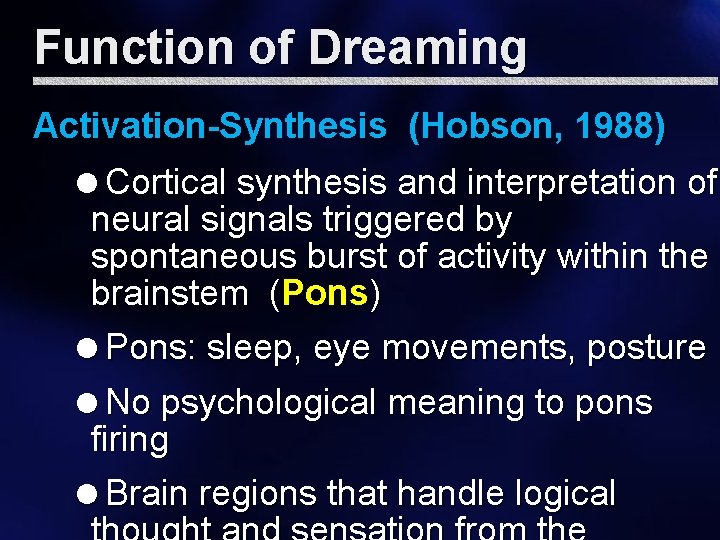
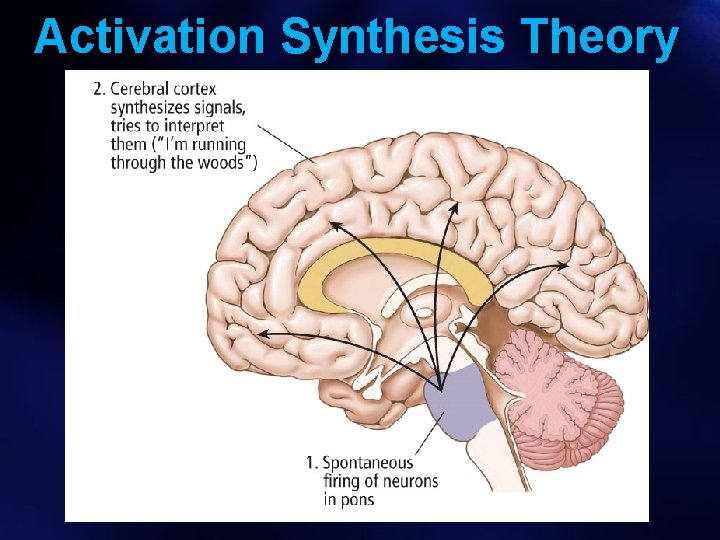
Function of Dreaming Activation-Synthesis (Hobson, 1988) =Cortical synthesis and interpretation of neural signals triggered by spontaneous burst of activity within the brainstem (Pons) =Pons: sleep, eye movements, posture =No psychological meaning to pons firing =Brain regions that handle logical
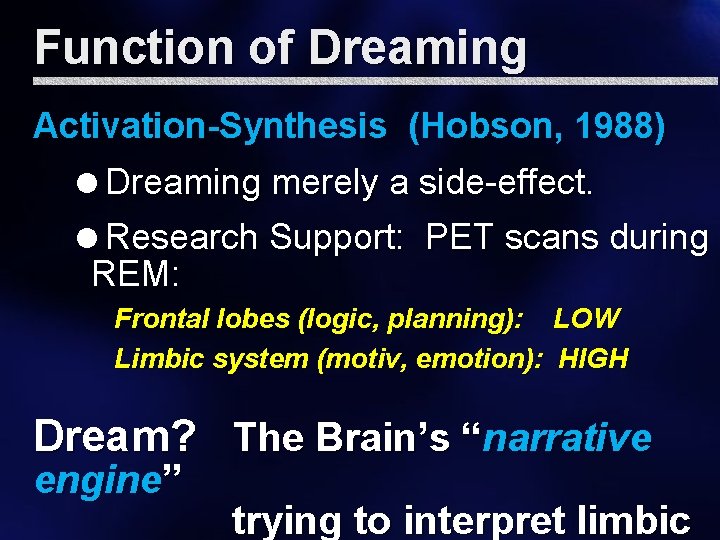
Function of Dreaming Activation-Synthesis (Hobson, 1988) =Dreaming merely a side-effect. =Research Support: PET scans during REM: Frontal lobes (logic, planning): Limbic system (motiv, emotion): LOW HIGH Dream? The Brain’s “narrative engine” trying to interpret limbic
Activation Synthesis Theory
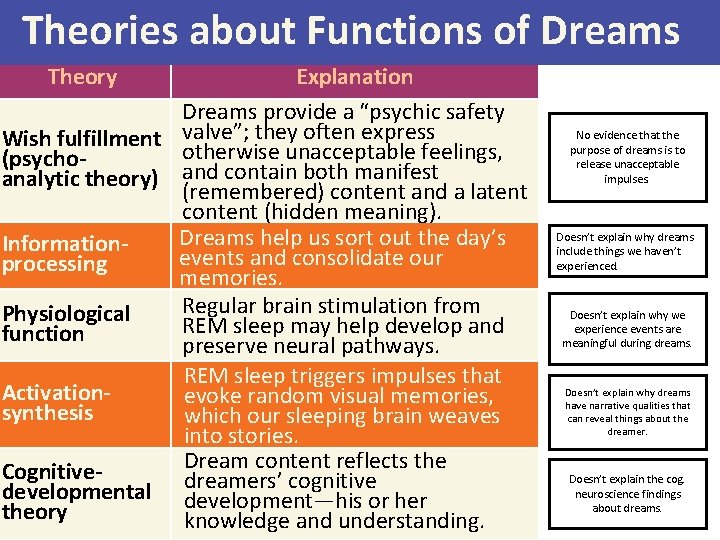
Theories about Functions of Dreams Theory Explanation Dreams provide a “psychic safety Wish fulfillment valve”; they often express otherwise unacceptable feelings, (psychoanalytic theory) and contain both manifest (remembered) content and a latent content (hidden meaning). Dreams help us sort out the day’s Informationevents and consolidate our processing memories. Regular brain stimulation from Physiological REM sleep may help develop and function preserve neural pathways. REM sleep triggers impulses that Activationevoke random visual memories, synthesis which our sleeping brain weaves into stories. Dream content reflects the Cognitivecognitive developmental dreamers’ development—his or her theory knowledge and understanding. No evidence that the purpose of dreams is to release unacceptable impulses. Doesn’t explain why dreams include things we haven’t experienced. Doesn’t explain why we experience events are meaningful during dreams. Doesn’t explain why dreams have narrative qualities that can reveal things about the dreamer. Doesn’t explain the cog. neuroscience findings about dreams.
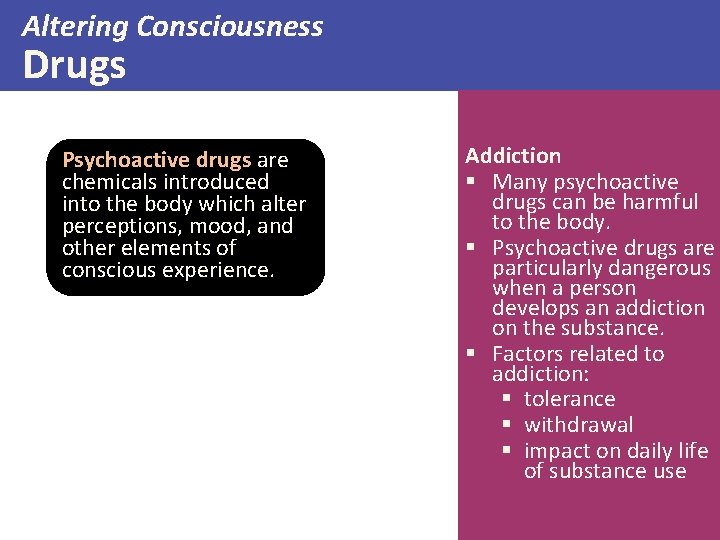
Altering Consciousness Drugs Psychoactive drugs are chemicals introduced into the body which alter perceptions, mood, and other elements of conscious experience. Addiction § Many psychoactive drugs can be harmful to the body. § Psychoactive drugs are particularly dangerous when a person develops an addiction on the substance. § Factors related to addiction: § tolerance § withdrawal § impact on daily life of substance use
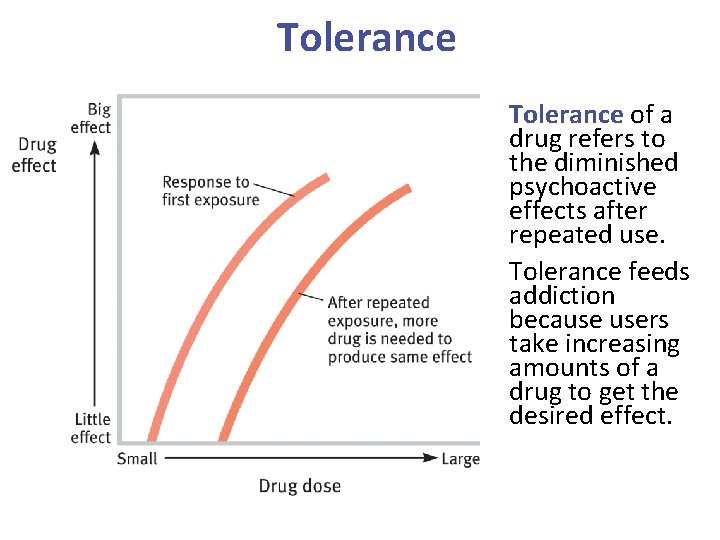
Tolerance of a drug refers to the diminished psychoactive effects after repeated use. Tolerance feeds addiction because users take increasing amounts of a drug to get the desired effect.
Withdrawal § After the benefits of a substance wear off, especially after tolerance has developed, drug users may experience withdrawal (painful symptoms of the body readjusting to the absence of the drug). § Withdrawal worsens addiction because users want to resume taking the drug to end withdrawal symptoms.
When does substance use become a disorder? § Tolerance: the need to use more to receive the desired effect § Withdrawal: the distress experienced when the “high” subsides § Using more than intended § Persistent, failed attempts to regulate use § Much time spent preoccupied with the substance, obtaining it, and recovering § Important activities reduced because of use § Continued use despite aversive consequences
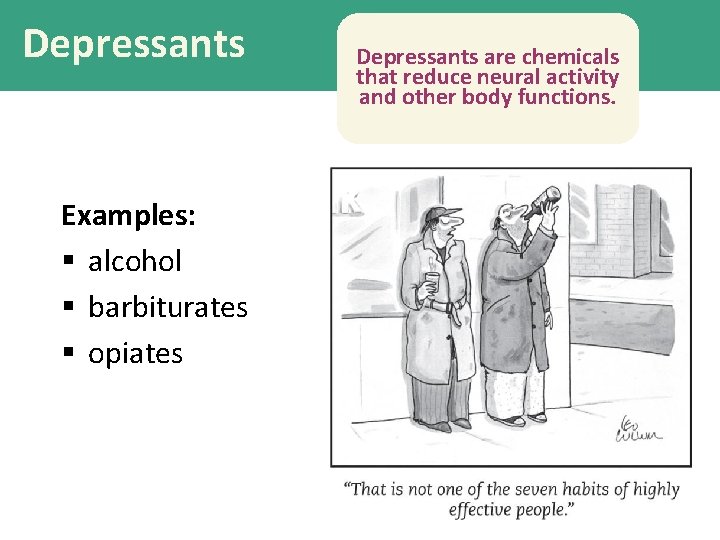
Depressants Examples: § alcohol § barbiturates § opiates Depressants are chemicals that reduce neural activity and other body functions.
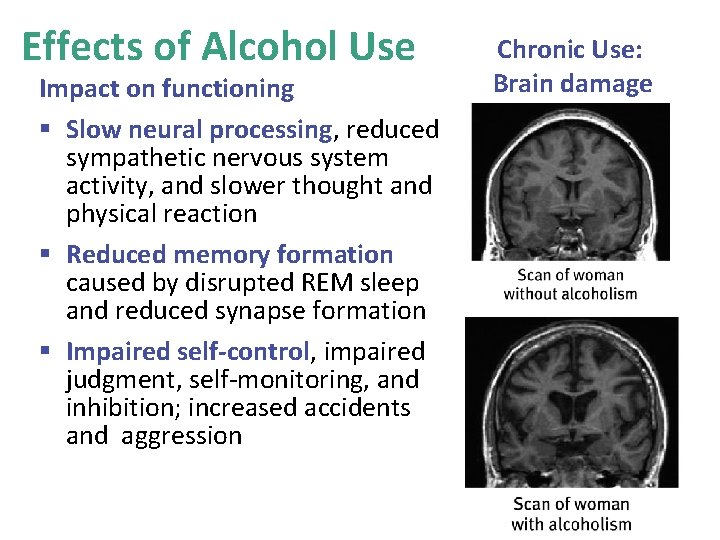
Effects of Alcohol Use Impact on functioning § Slow neural processing, reduced sympathetic nervous system activity, and slower thought and physical reaction § Reduced memory formation caused by disrupted REM sleep and reduced synapse formation § Impaired self-control, impaired judgment, self-monitoring, and inhibition; increased accidents and aggression Chronic Use: Brain damage
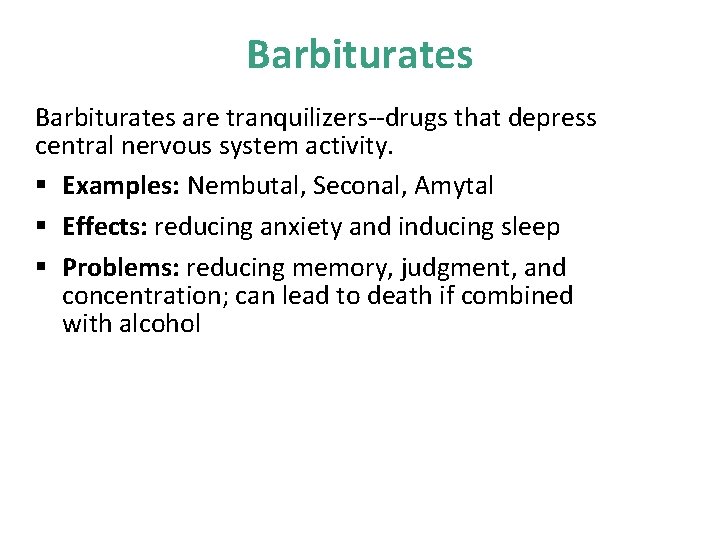
Barbiturates are tranquilizers--drugs that depress central nervous system activity. § Examples: Nembutal, Seconal, Amytal § Effects: reducing anxiety and inducing sleep § Problems: reducing memory, judgment, and concentration; can lead to death if combined with alcohol
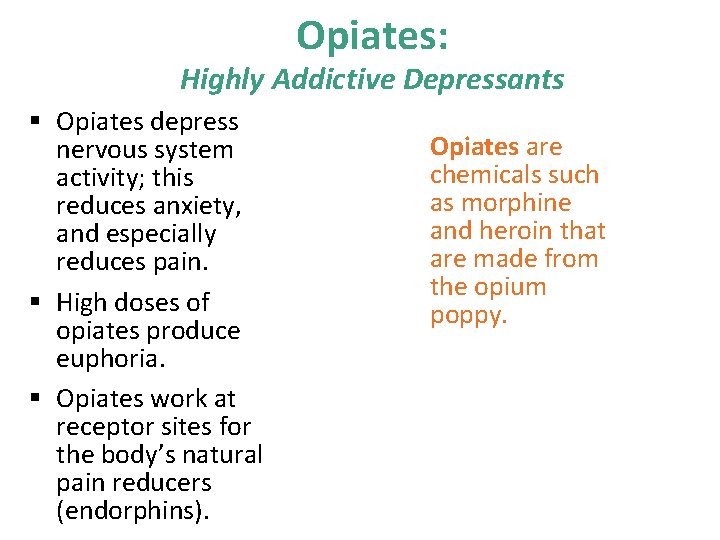
Opiates: Highly Addictive Depressants § Opiates depress nervous system activity; this reduces anxiety, and especially reduces pain. § High doses of opiates produce euphoria. § Opiates work at receptor sites for the body’s natural pain reducers (endorphins). Opiates are chemicals such as morphine and heroin that are made from the opium poppy.
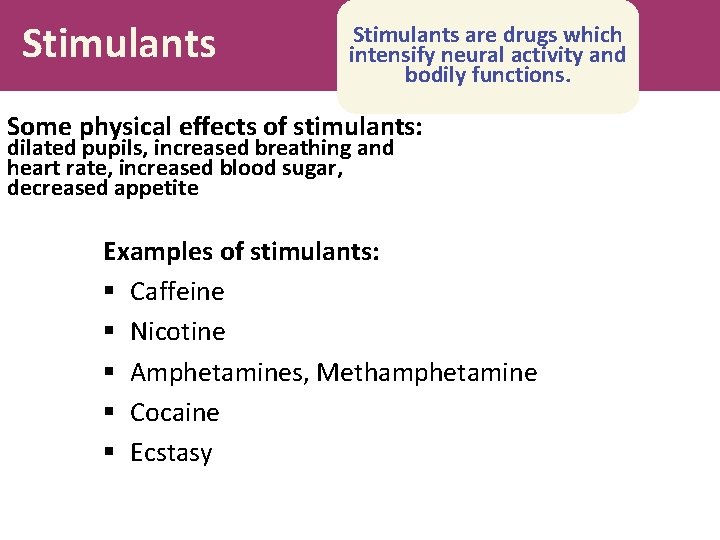
Stimulants are drugs which intensify neural activity and bodily functions. Some physical effects of stimulants: dilated pupils, increased breathing and heart rate, increased blood sugar, decreased appetite Examples of stimulants: § Caffeine § Nicotine § Amphetamines, Methamphetamine § Cocaine § Ecstasy
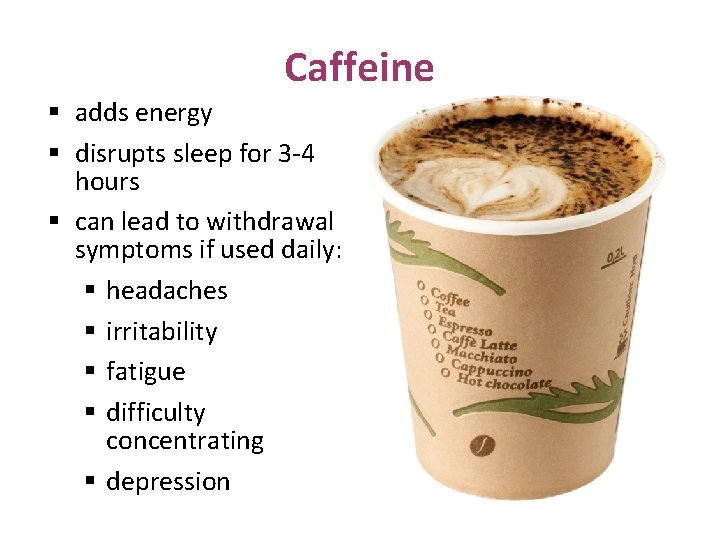
Caffeine § adds energy § disrupts sleep for 3 -4 hours § can lead to withdrawal symptoms if used daily: § headaches § irritability § fatigue § difficulty concentrating § depression
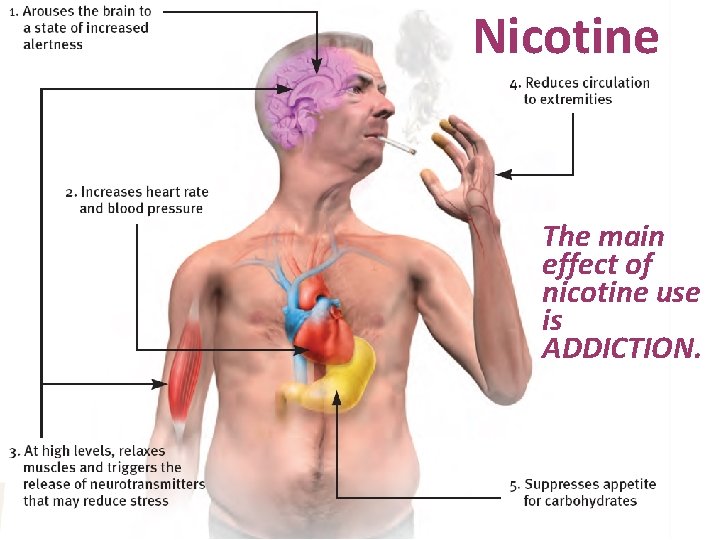
Nicotine The main effect of nicotine use is ADDICTION.
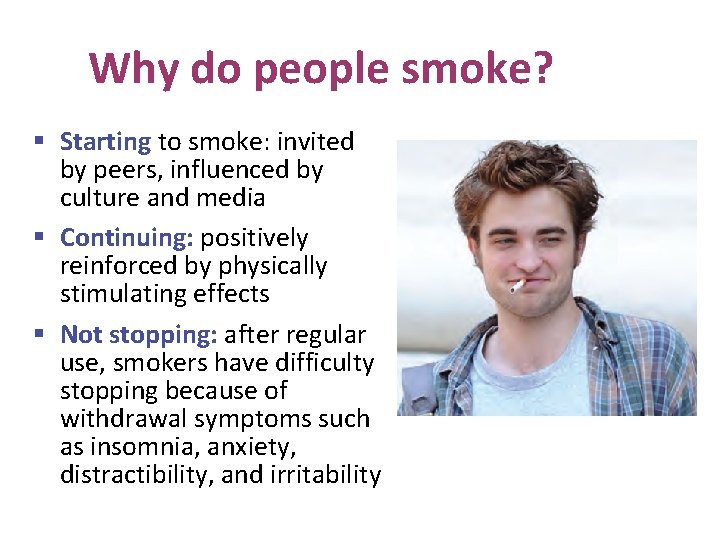
Why do people smoke? § Starting to smoke: invited by peers, influenced by culture and media § Continuing: positively reinforced by physically stimulating effects § Not stopping: after regular use, smokers have difficulty stopping because of withdrawal symptoms such as insomnia, anxiety, distractibility, and irritability
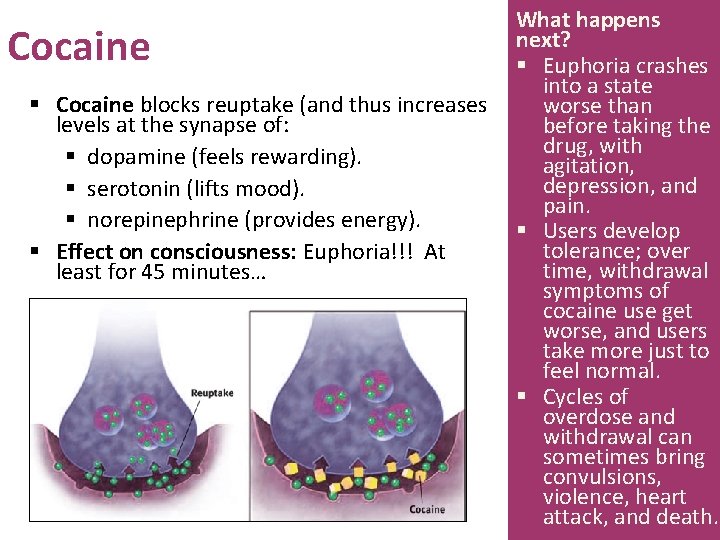
Cocaine § Cocaine blocks reuptake (and thus increases levels at the synapse of: § dopamine (feels rewarding). § serotonin (lifts mood). § norepinephrine (provides energy). § Effect on consciousness: Euphoria!!! At least for 45 minutes… What happens next? § Euphoria crashes into a state worse than before taking the drug, with agitation, depression, and pain. § Users develop tolerance; over time, withdrawal symptoms of cocaine use get worse, and users take more just to feel normal. § Cycles of overdose and withdrawal can sometimes bring convulsions, violence, heart attack, and death.
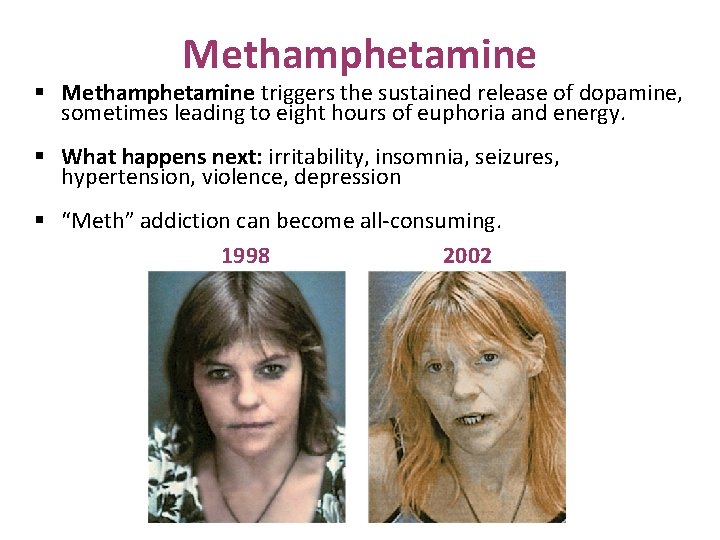
Methamphetamine § Methamphetamine triggers the sustained release of dopamine, sometimes leading to eight hours of euphoria and energy. § What happens next: irritability, insomnia, seizures, hypertension, violence, depression § “Meth” addiction can become all-consuming. 1998 2002
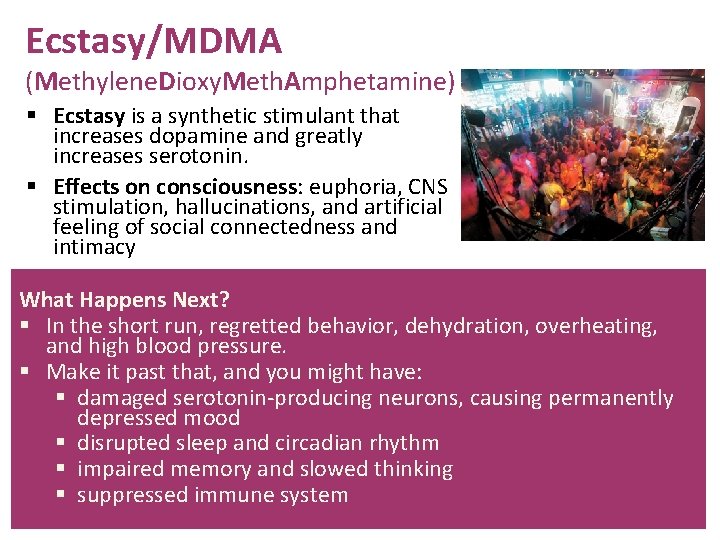
Ecstasy/MDMA (Methylene. Dioxy. Meth. Amphetamine) § Ecstasy is a synthetic stimulant that increases dopamine and greatly increases serotonin. § Effects on consciousness: euphoria, CNS stimulation, hallucinations, and artificial feeling of social connectedness and intimacy What Happens Next? § In the short run, regretted behavior, dehydration, overheating, and high blood pressure. § Make it past that, and you might have: § damaged serotonin-producing neurons, causing permanently depressed mood § disrupted sleep and circadian rhythm § impaired memory and slowed thinking § suppressed immune system
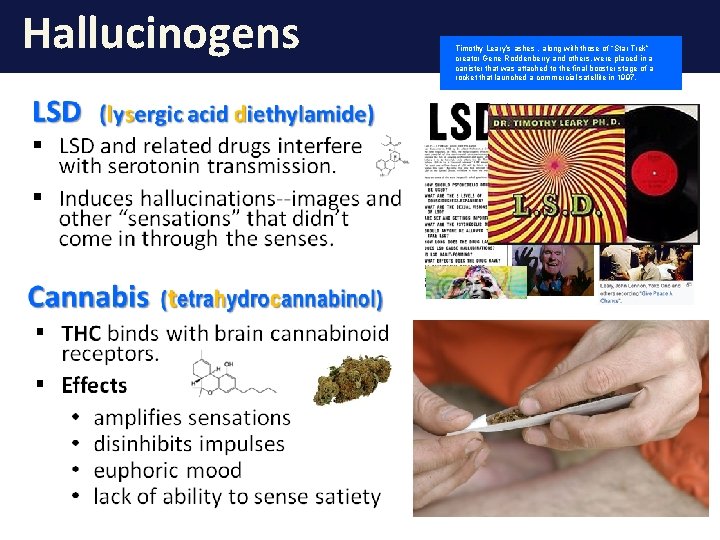
Hallucinogens Timothy Leary’s ashes , along with those of “Star Trek” creator Gene Roddenberry and others, were placed in a canister that was attached to the final booster stage of a rocket that launched a commercial satellite in 1997.
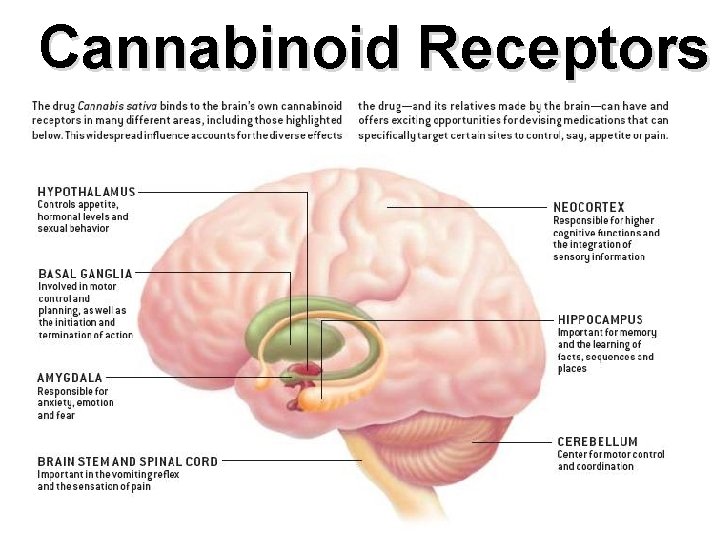
Cannabinoid Receptors
Cannabis and Psychosis Link • Does cannabis use trigger the onset of psychosis in vulnerable individuals? • Or are people with a genetic predisposition to develop psychosis more likely to use cannabis than the population at large (possibly as a coping mechanism)?
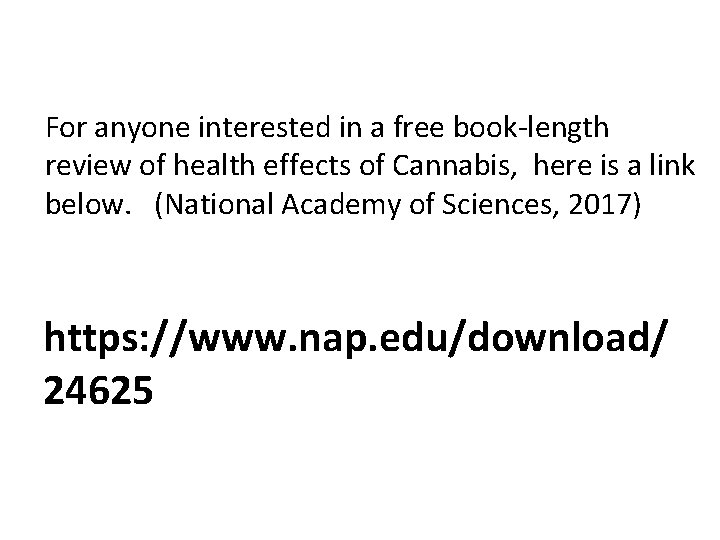
For anyone interested in a free book-length review of health effects of Cannabis, here is a link below. (National Academy of Sciences, 2017) https: //www. nap. edu/download/ 24625
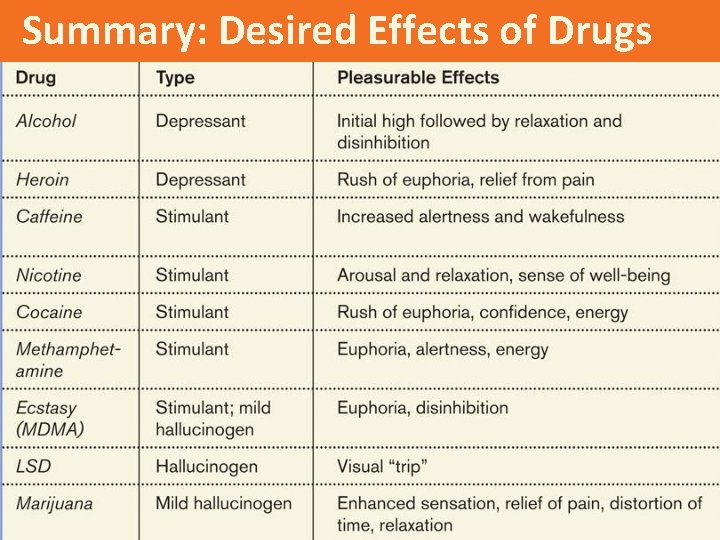
Summary: Desired Effects of Drugs
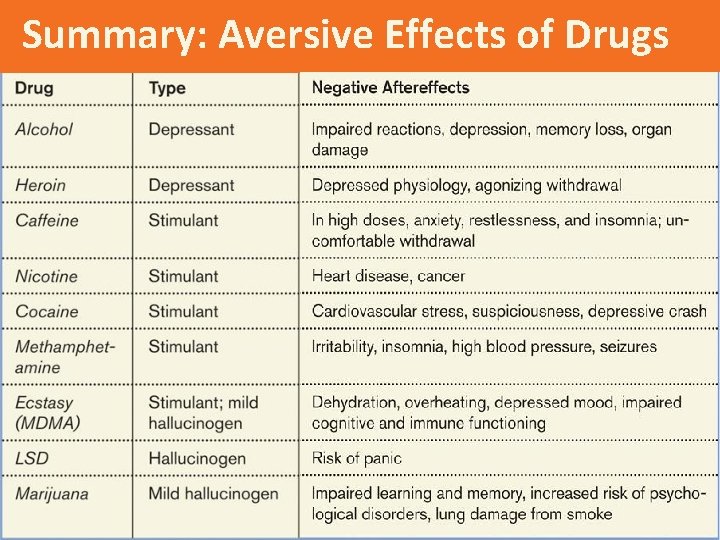
Summary: Aversive Effects of Drugs
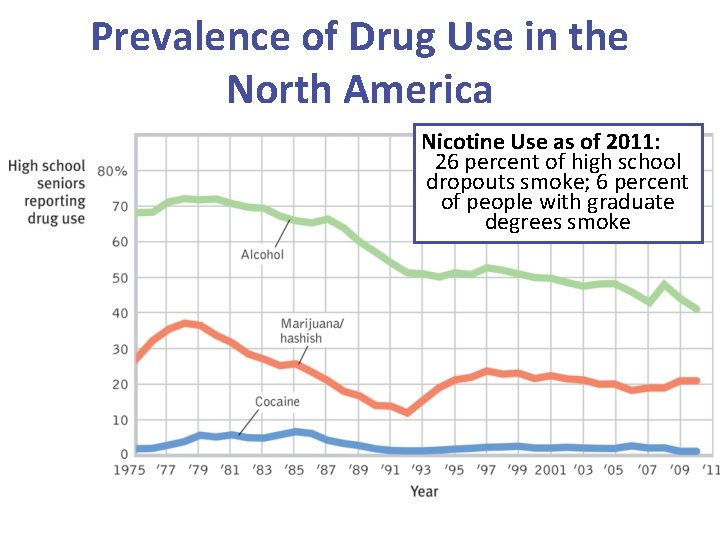
Prevalence of Drug Use in the North America Nicotine Use as of 2011: 26 percent of high school dropouts smoke; 6 percent of people with graduate degrees smoke
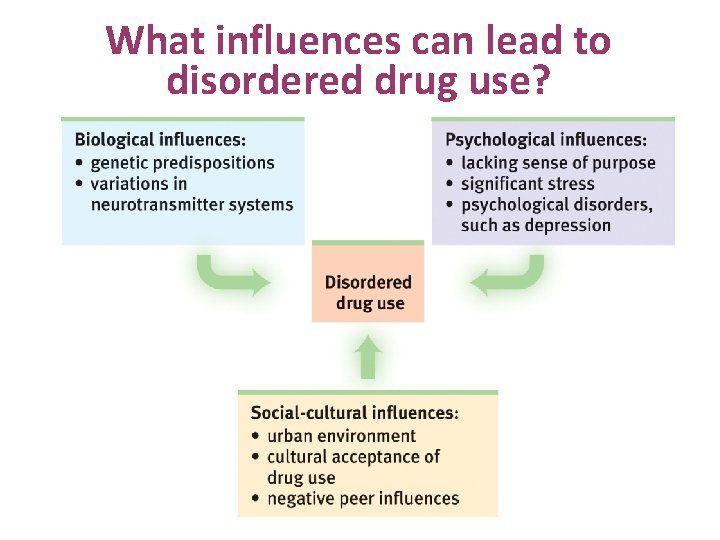
What influences can lead to disordered drug use?
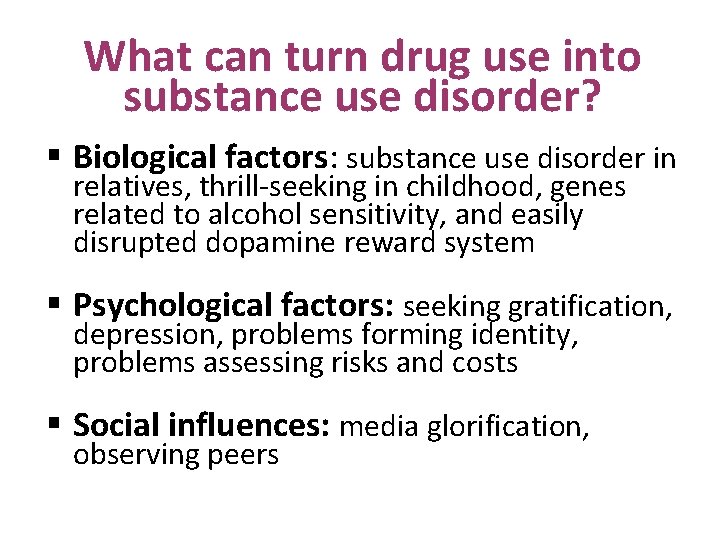
What can turn drug use into substance use disorder? § Biological factors: substance use disorder in relatives, thrill-seeking in childhood, genes related to alcohol sensitivity, and easily disrupted dopamine reward system § Psychological factors: seeking gratification, depression, problems forming identity, problems assessing risks and costs § Social influences: media glorification, observing peers
A short documentary on recent research interest in LSD that includes early cultural history of LSD as a street drug. National Geographic Documentary: LSD: Trip into Hell? https: //www. youtube. com/watch? v=Vz 5 j. YJe. M_q. M We viewed this brief documentary in class. You do not need to take any notes on the video. There will be one very easy question about the video on Test 2 but if you have watched the video, you will easily be able to answer that question.
A short documentary on teenage marijuana consumption and elevated risk of psychotic disorders in some persons. CBC Television, The Nature of Things: The Downside of High https: //www. youtube. com/watch? v=x. Ozd. CKSls. J 0 Note: The You. Tube link above is provided for personal interest only, as we did NOT view this video in class. The video we screened in class this time was: LSD: Trip to Hell?