Feeding For Health Dr Kris Hiney Equine Extension

- Slides: 60
Feeding For Health Dr. Kris Hiney Equine Extension Specialist
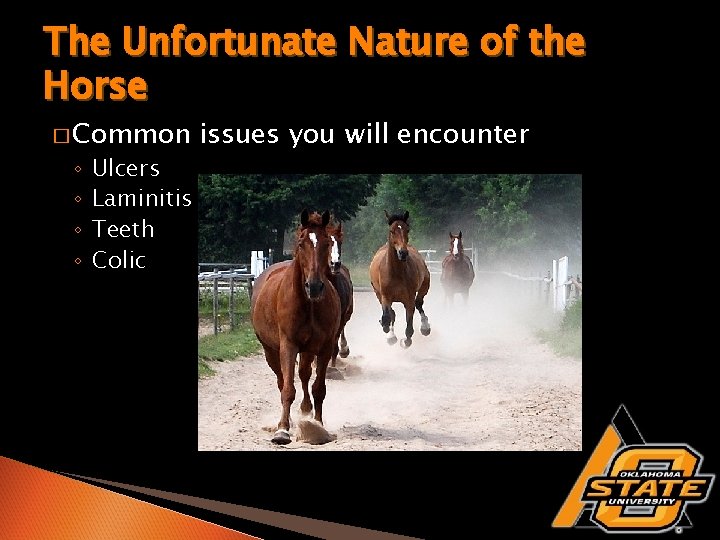
The Unfortunate Nature of the Horse � Common ◦ ◦ Ulcers Laminitis Teeth Colic issues you will encounter
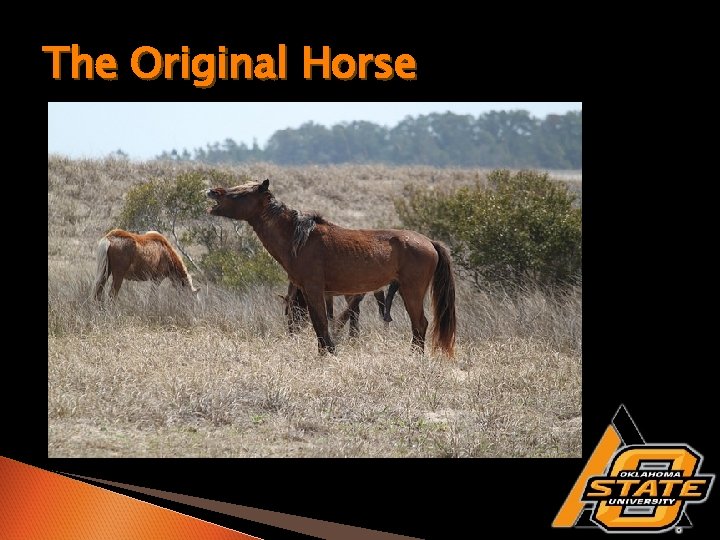
The Original Horse
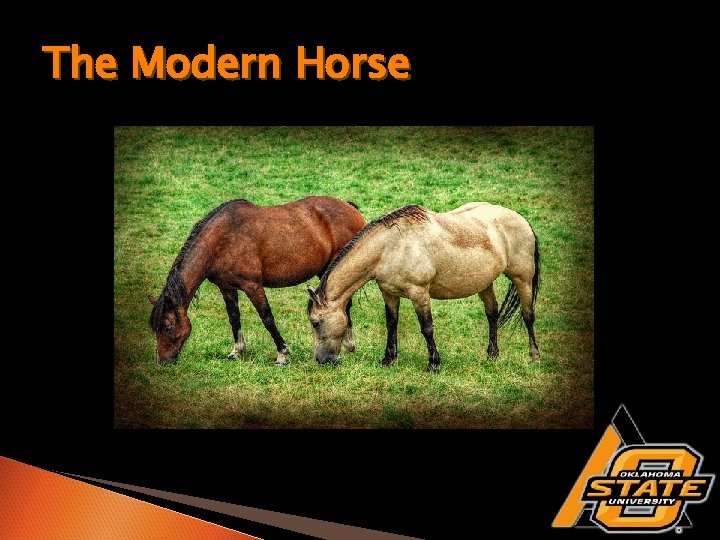
The Modern Horse
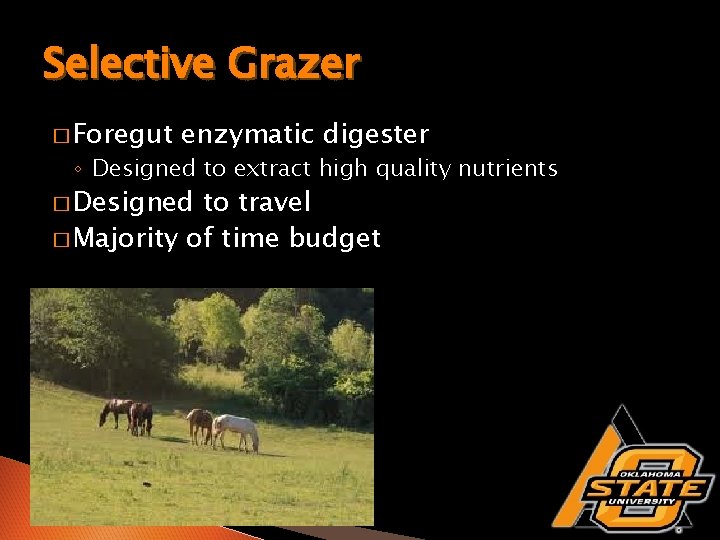
Selective Grazer � Foregut enzymatic digester ◦ Designed to extract high quality nutrients � Designed to travel � Majority of time budget
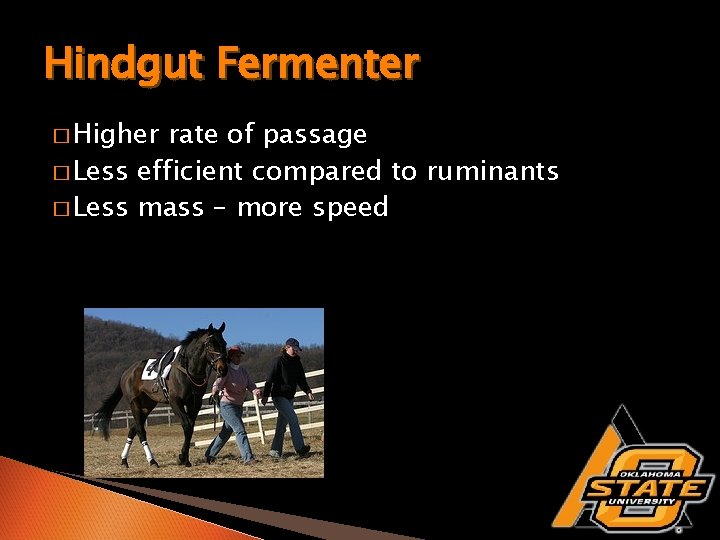
Hindgut Fermenter � Higher rate of passage � Less efficient compared to ruminants � Less mass – more speed
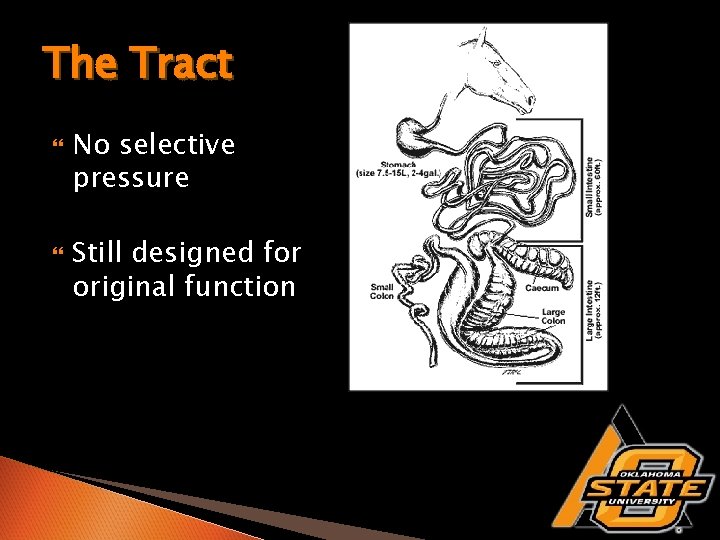
The Tract No selective pressure Still designed for original function
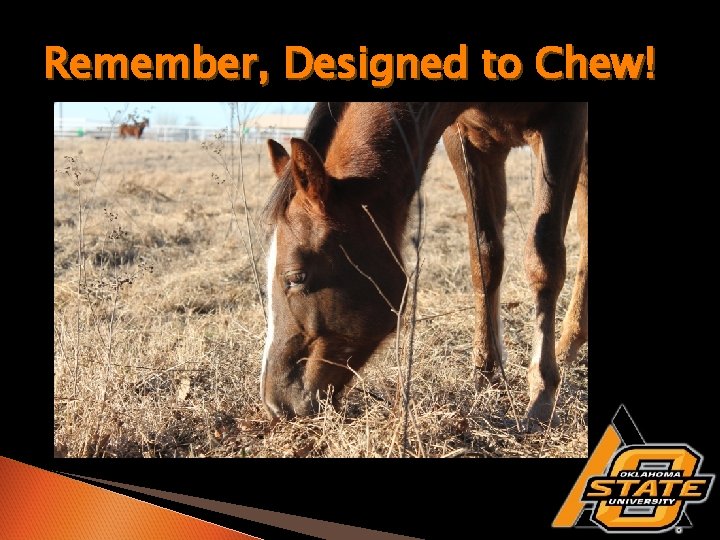
Remember, Designed to Chew!
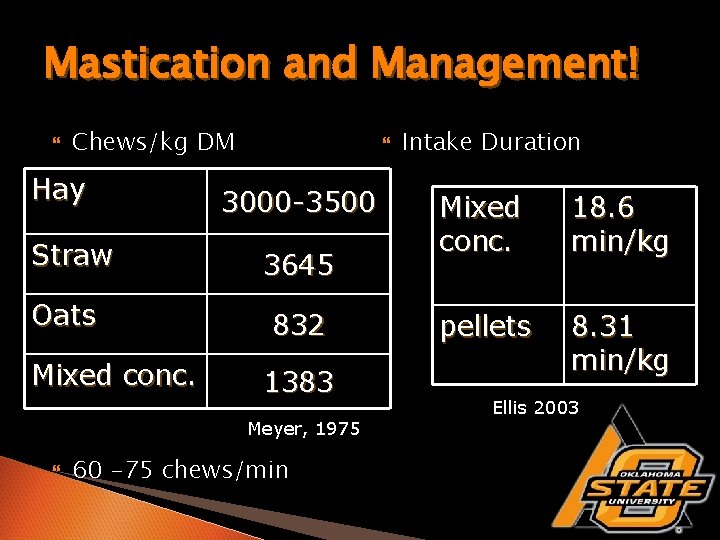
Mastication and Management! Chews/kg DM Hay Straw Oats Mixed conc. 3000 -3500 3645 832 1383 Meyer, 1975 60 -75 chews/min Intake Duration Mixed conc. 18. 6 min/kg pellets 8. 31 min/kg Ellis 2003
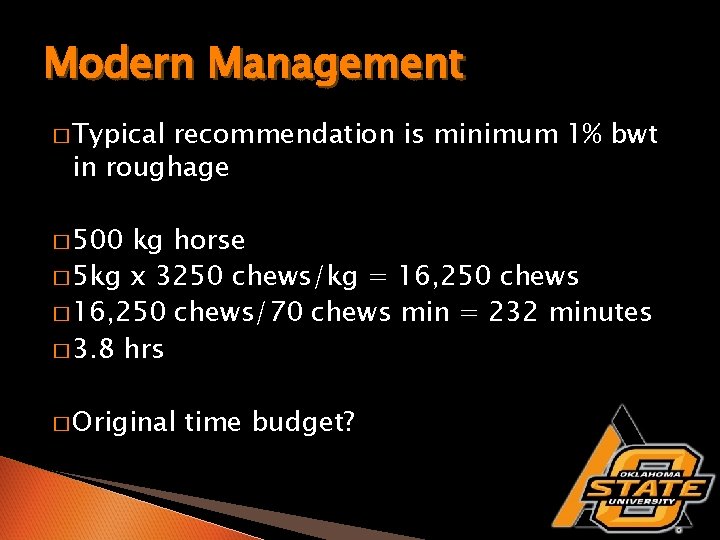
Modern Management � Typical recommendation is minimum 1% bwt in roughage � 500 kg horse � 5 kg x 3250 chews/kg = 16, 250 chews � 16, 250 chews/70 chews min = 232 minutes � 3. 8 hrs � Original time budget?
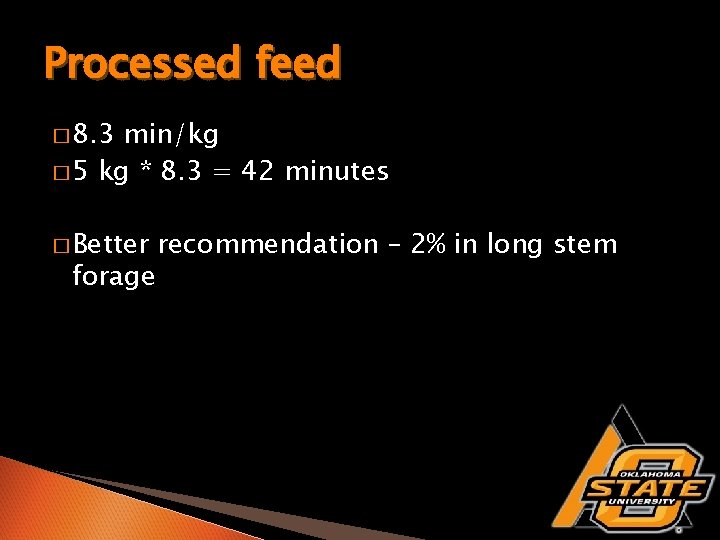
Processed feed � 8. 3 min/kg � 5 kg * 8. 3 = 42 minutes � Better forage recommendation – 2% in long stem
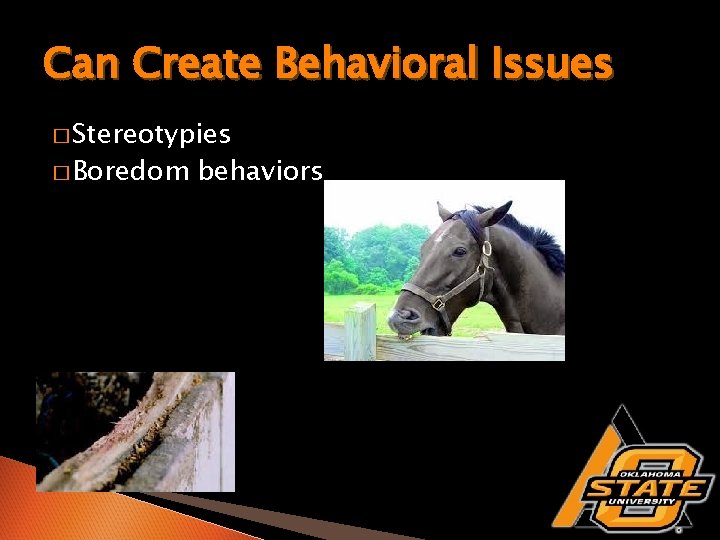
Can Create Behavioral Issues � Stereotypies � Boredom behaviors
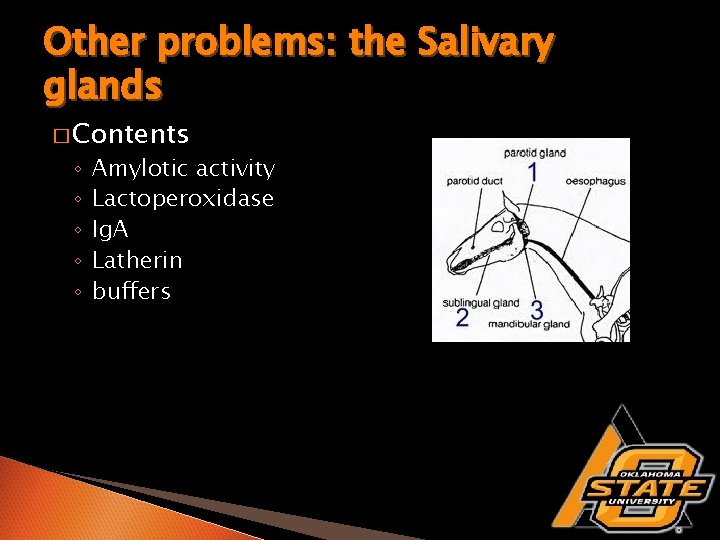
Other problems: the Salivary glands � Contents ◦ ◦ ◦ Amylotic activity Lactoperoxidase Ig. A Latherin buffers
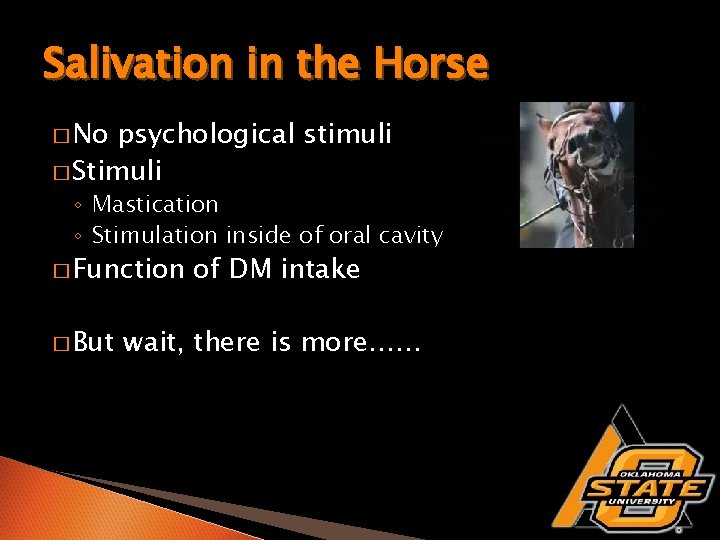
Salivation in the Horse � No psychological stimuli � Stimuli ◦ Mastication ◦ Stimulation inside of oral cavity � Function � But of DM intake wait, there is more……
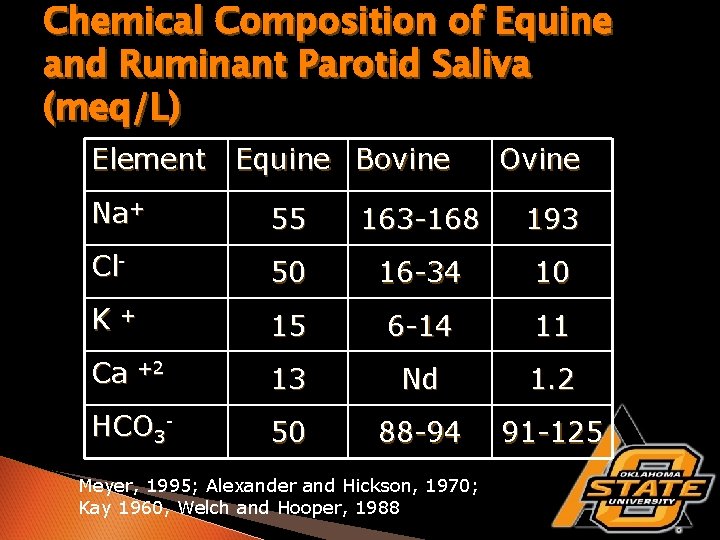
Chemical Composition of Equine and Ruminant Parotid Saliva (meq/L) Element Equine Bovine Ovine Na+ 55 163 -168 193 Cl- 50 16 -34 10 K 15 6 -14 11 13 Nd 1. 2 50 88 -94 91 -125 + Ca +2 HCO 3 - Meyer, 1995; Alexander and Hickson, 1970; Kay 1960, Welch and Hooper, 1988
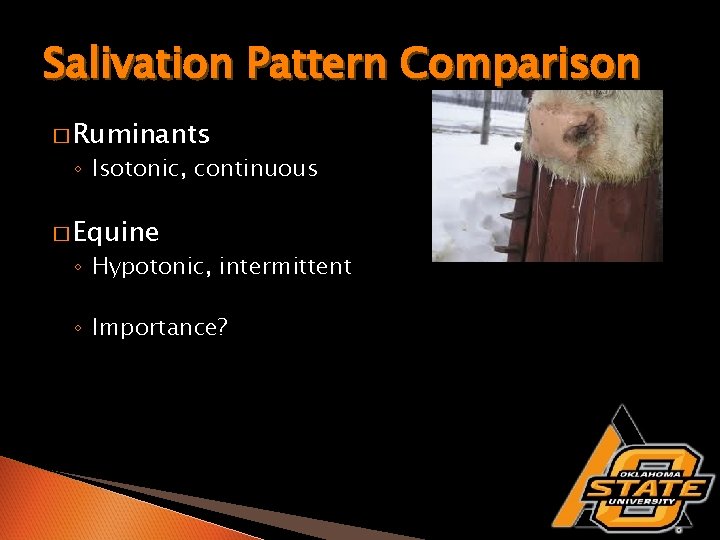
Salivation Pattern Comparison � Ruminants ◦ Isotonic, continuous � Equine ◦ Hypotonic, intermittent ◦ Importance?
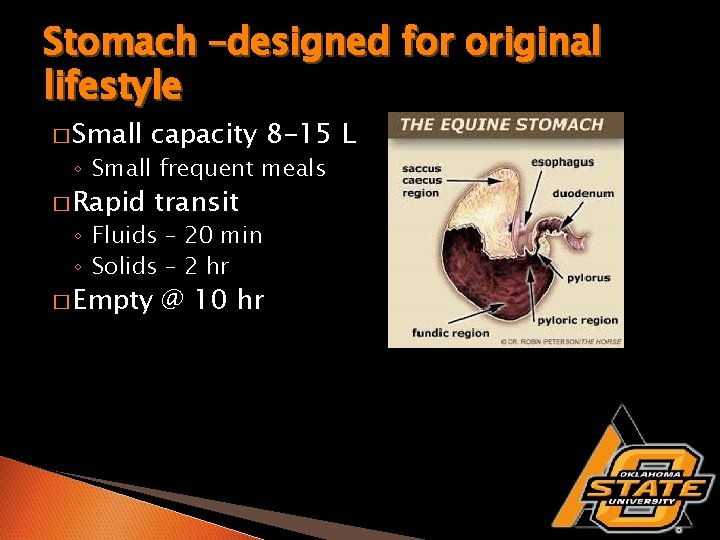
Stomach –designed for original lifestyle � Small capacity 8 -15 L � Rapid transit ◦ Small frequent meals ◦ Fluids – 20 min ◦ Solids – 2 hr � Empty @ 10 hr
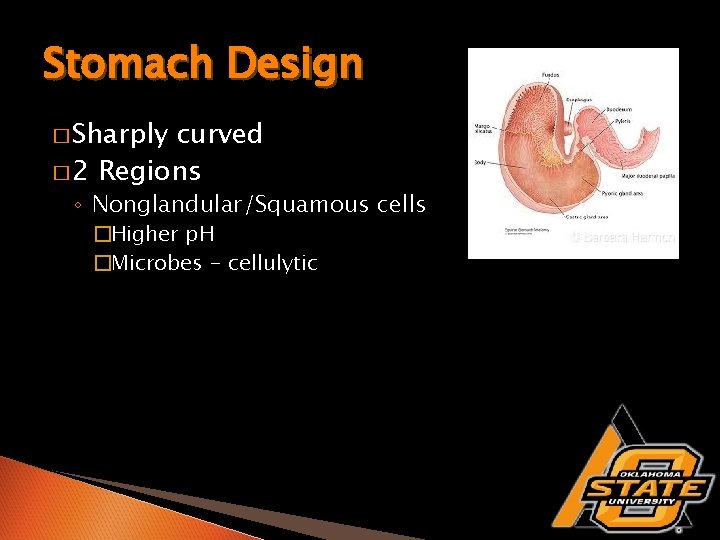
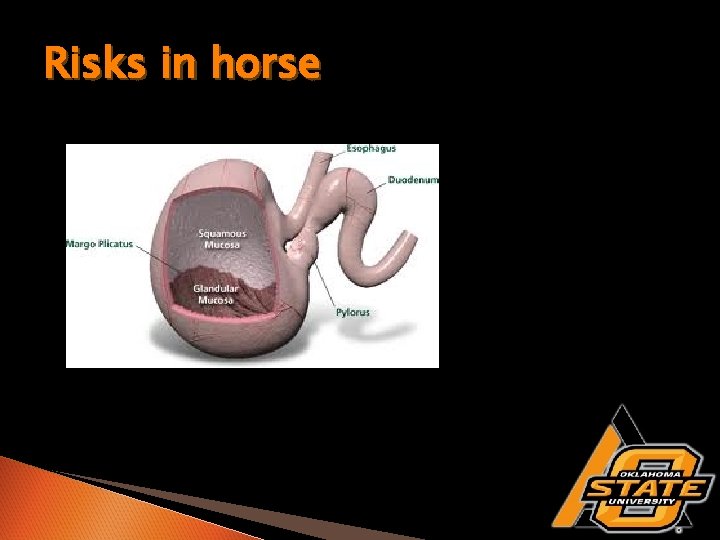
Stomach Design � Sharply curved � 2 Regions ◦ Nonglandular/Squamous cells �Higher p. H �Microbes - cellulytic
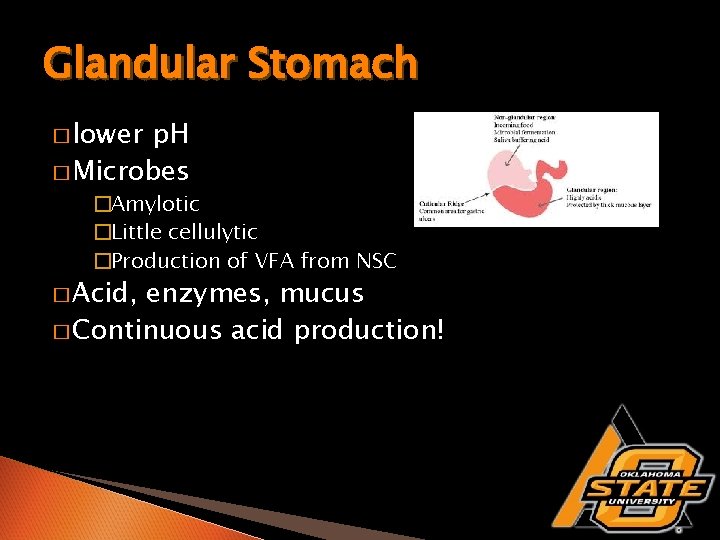
Glandular Stomach � lower p. H � Microbes �Amylotic �Little cellulytic �Production of VFA from NSC � Acid, enzymes, mucus � Continuous acid production!
Risks in horse
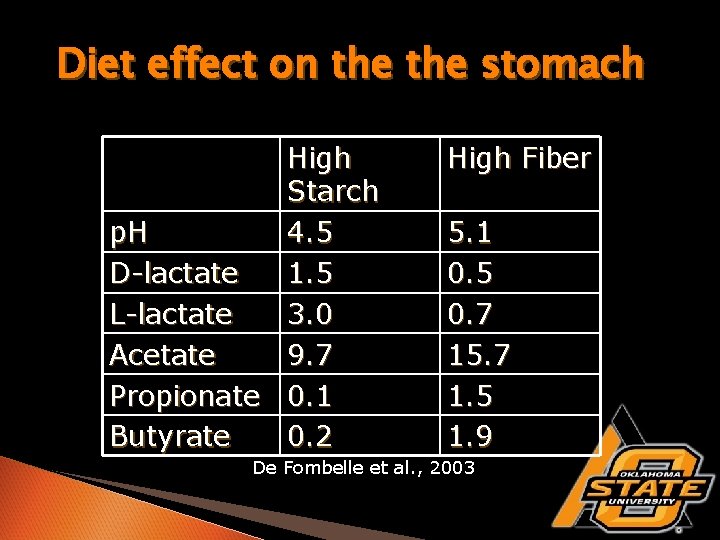
Diet effect on the stomach High Starch p. H 4. 5 D-lactate 1. 5 L-lactate 3. 0 Acetate 9. 7 Propionate 0. 1 Butyrate 0. 2 High Fiber 5. 1 0. 5 0. 7 15. 7 1. 5 1. 9 De Fombelle et al. , 2003
Management Considerations? � How do you keep a healthy stomach?
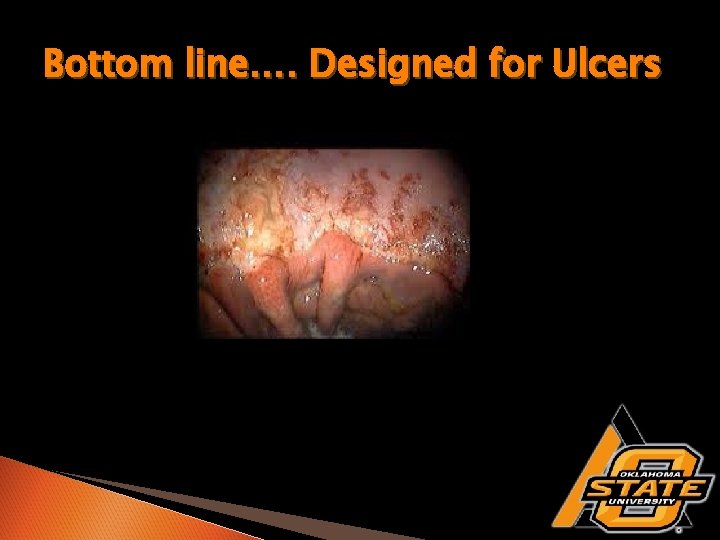
Bottom line…. Designed for Ulcers
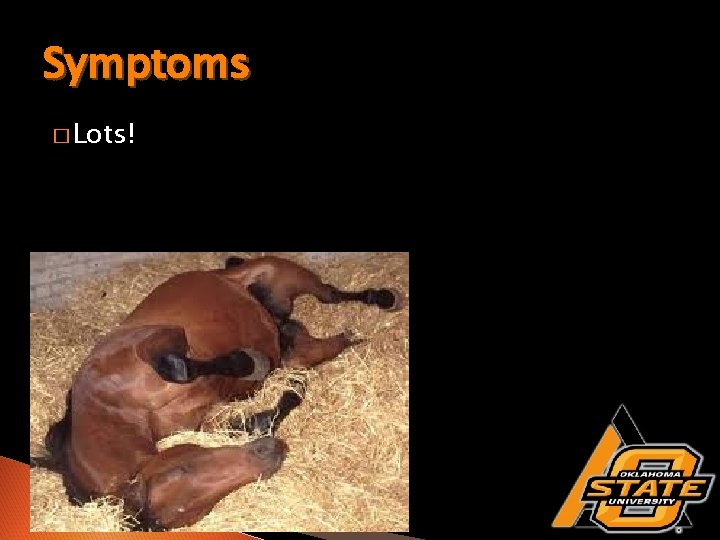
Symptoms � Lots!
Symptoms � Behavior changes � Loss of weight � Hair growth � Poor performance � Foals – Big issue with illness ◦ Grinding teeth ◦ Laying upside down ◦ Loss of appetite
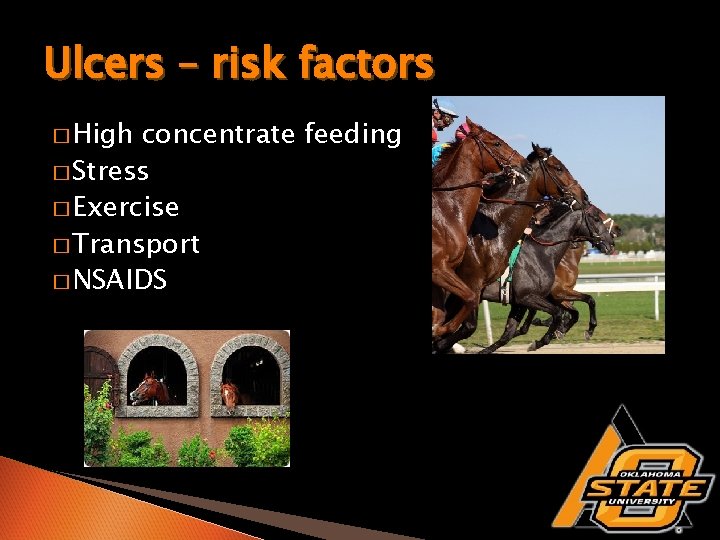
Ulcers – risk factors � High concentrate feeding � Stress � Exercise � Transport � NSAIDS
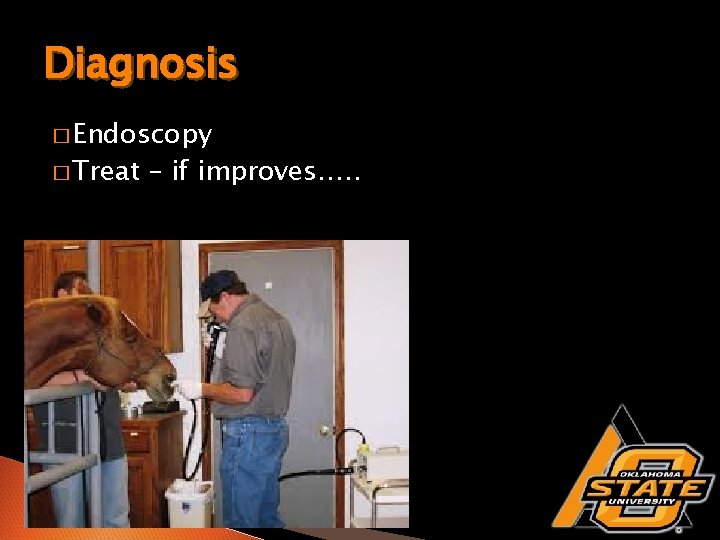
Diagnosis � Endoscopy � Treat – if improves…. .
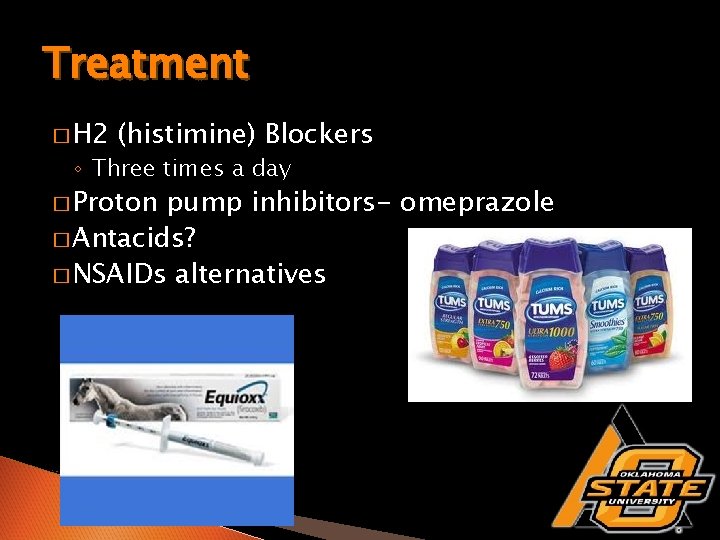
Treatment � H 2 (histimine) Blockers ◦ Three times a day � Proton pump inhibitors- omeprazole � Antacids? � NSAIDs alternatives
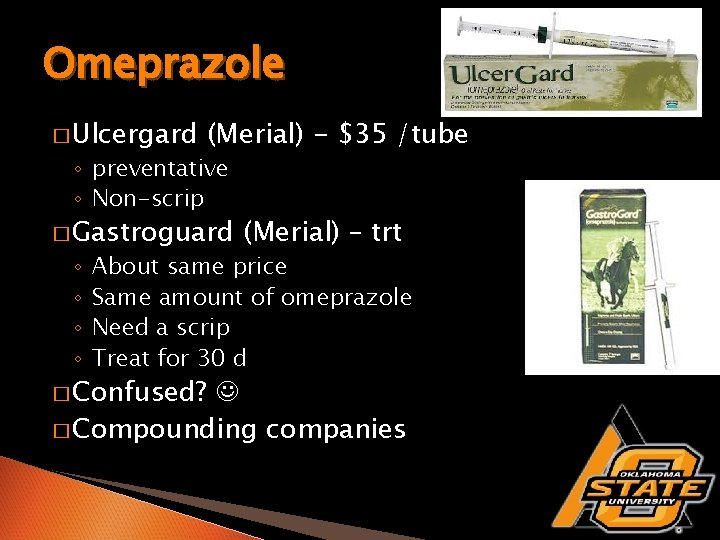
Omeprazole � Ulcergard (Merial) - $35 /tube ◦ preventative ◦ Non-scrip � Gastroguard ◦ ◦ (Merial) – trt About same price Same amount of omeprazole Need a scrip Treat for 30 d � Confused? � Compounding companies
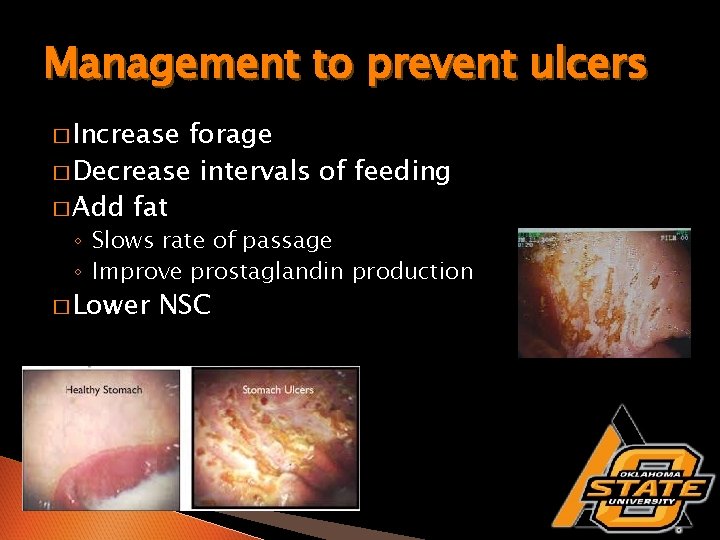
Management to prevent ulcers � Increase forage � Decrease intervals of feeding � Add fat ◦ Slows rate of passage ◦ Improve prostaglandin production � Lower NSC
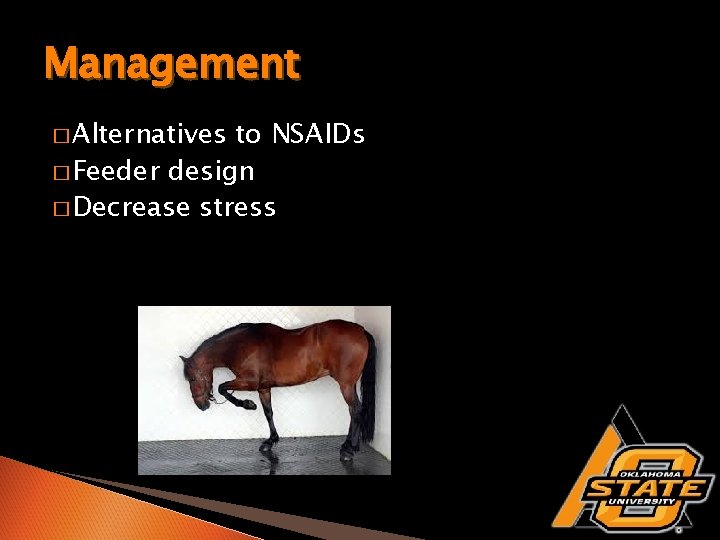
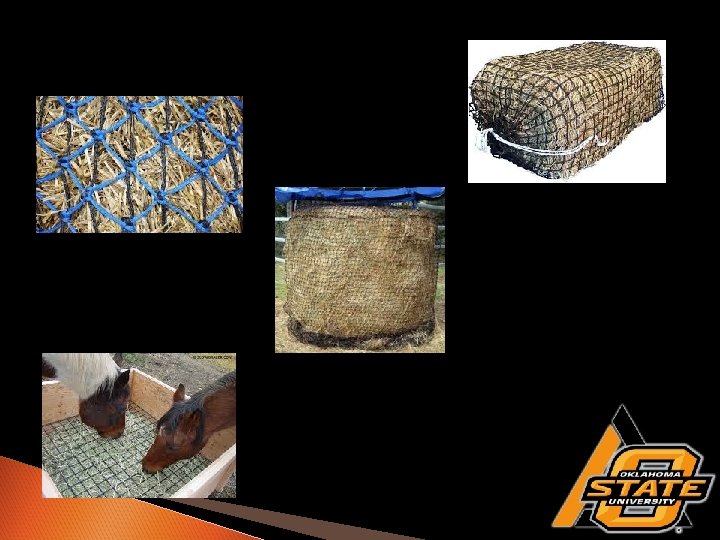
Management � Alternatives to NSAIDs � Feeder design � Decrease stress
� http: //www. stablegrazer. com/products/kit- feeder/photo-gallery/105 -stable-grazervideo � https: //www. google. com/search? q=automati c+horse+hay+feeder&tbm=isch&tbo=u&sour ce=univ&sa=X&ei=3 czz. Uvb 5 O 6 K 6 y. QG 1 z 4 Dg DA&ved=0 CFEQs. AQ&biw=1370&bih=607
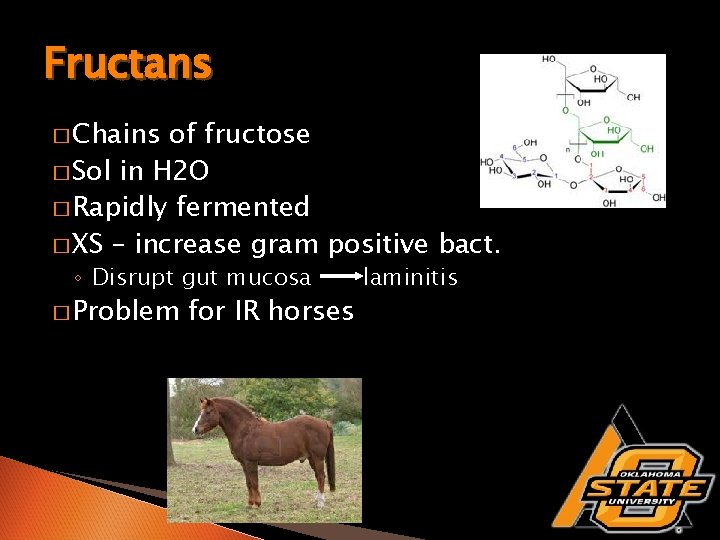
Fructans � Chains of fructose � Sol in H 2 O � Rapidly fermented � XS – increase gram positive bact. ◦ Disrupt gut mucosa � Problem for IR horses laminitis
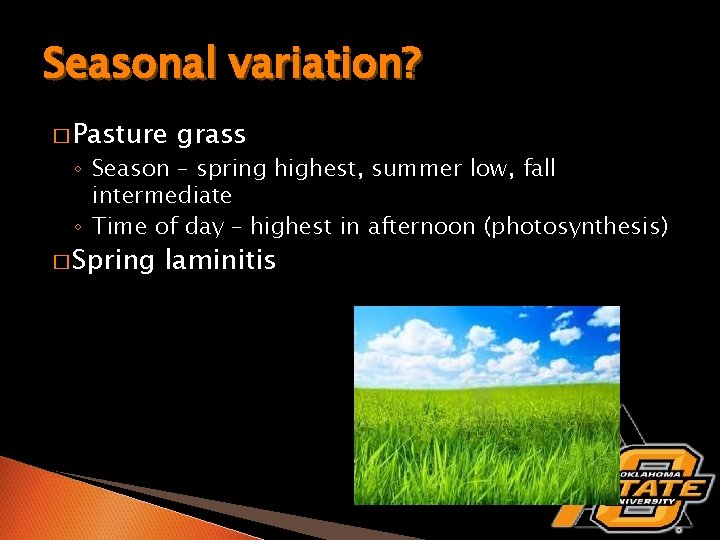
Seasonal variation? � Pasture grass ◦ Season – spring highest, summer low, fall intermediate ◦ Time of day – highest in afternoon (photosynthesis) � Spring laminitis
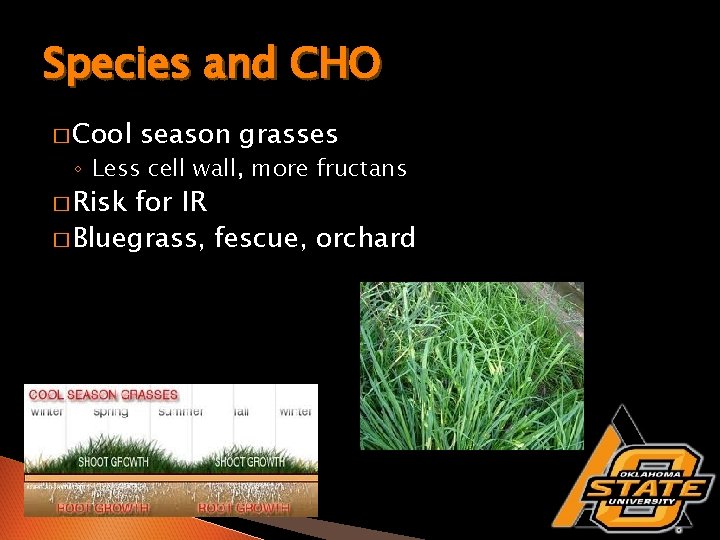
Species and CHO � Cool season grasses ◦ Less cell wall, more fructans � Risk for IR � Bluegrass, fescue, orchard
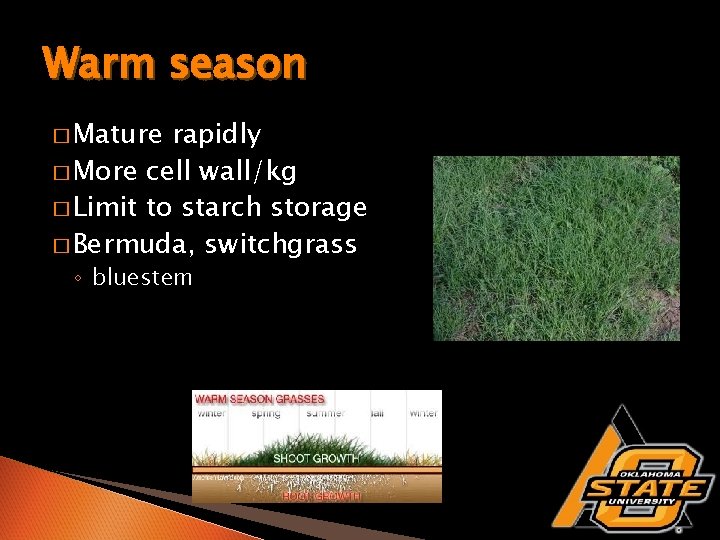
Warm season � Mature rapidly � More cell wall/kg � Limit to starch storage � Bermuda, switchgrass ◦ bluestem
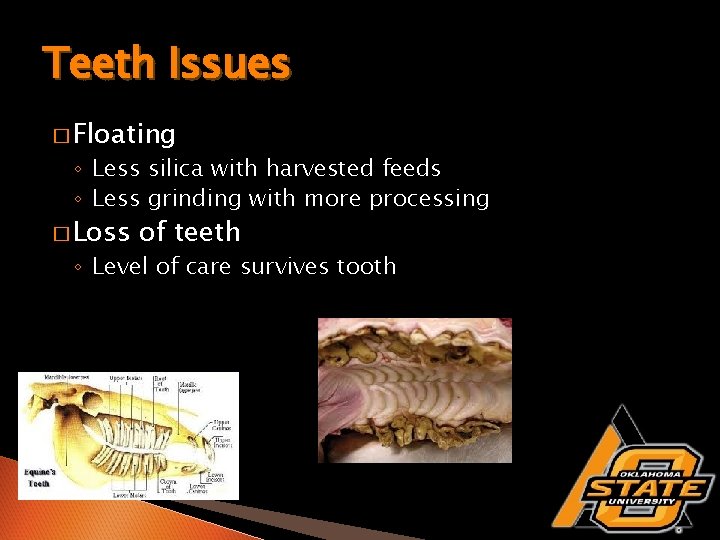
Teeth Issues � Floating ◦ Less silica with harvested feeds ◦ Less grinding with more processing � Loss of teeth ◦ Level of care survives tooth
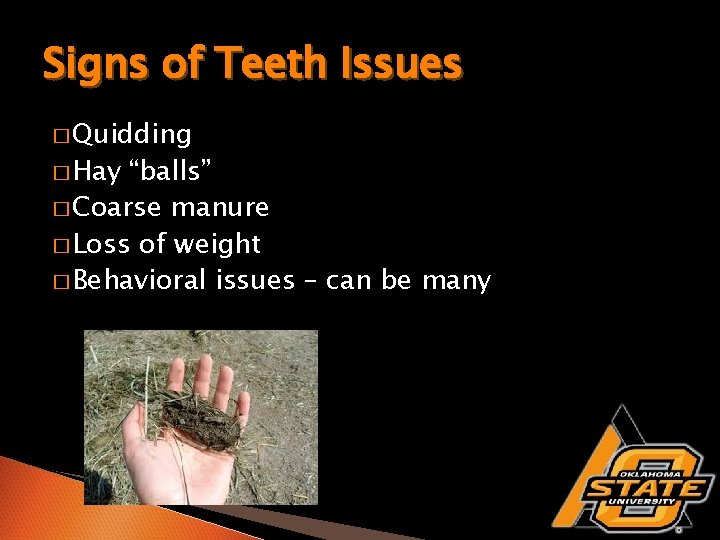
Signs of Teeth Issues � Quidding � Hay “balls” � Coarse manure � Loss of weight � Behavioral issues – can be many
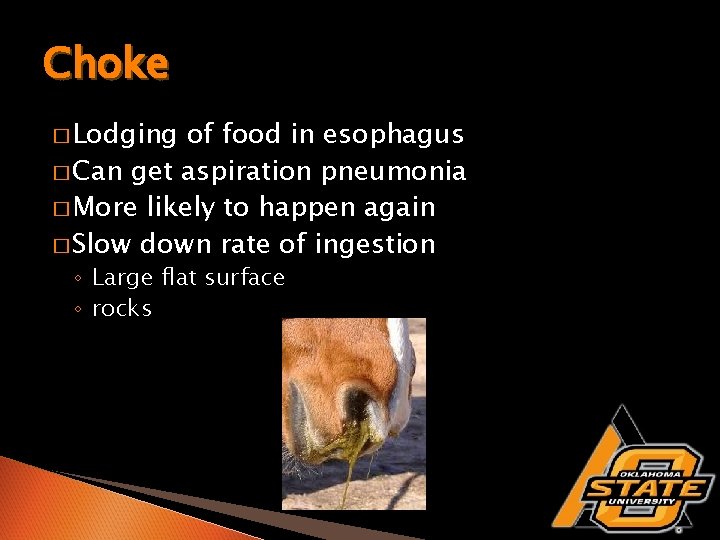
Choke � Lodging of food in esophagus � Can get aspiration pneumonia � More likely to happen again � Slow down rate of ingestion ◦ Large flat surface ◦ rocks
Colic
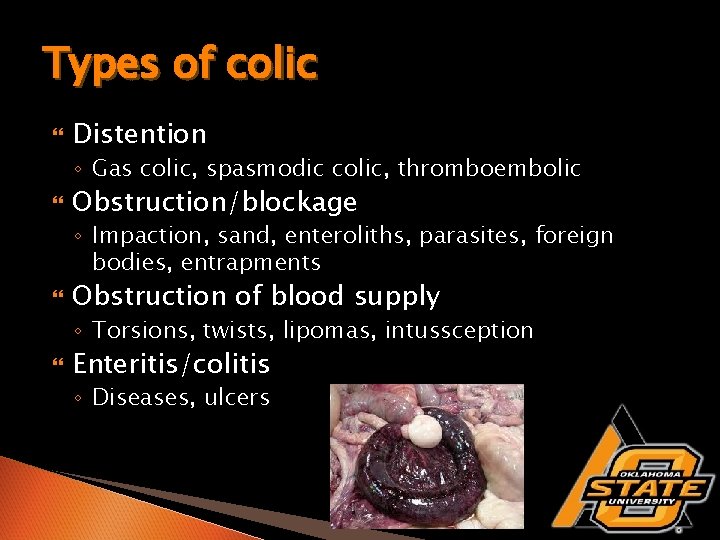
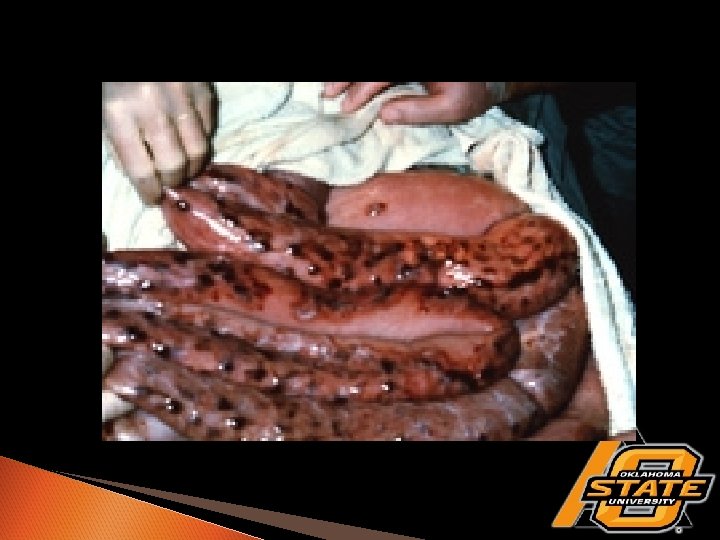
Types of colic Distention ◦ Gas colic, spasmodic colic, thromboembolic Obstruction/blockage ◦ Impaction, sand, enteroliths, parasites, foreign bodies, entrapments Obstruction of blood supply ◦ Torsions, twists, lipomas, intussception Enteritis/colitis ◦ Diseases, ulcers
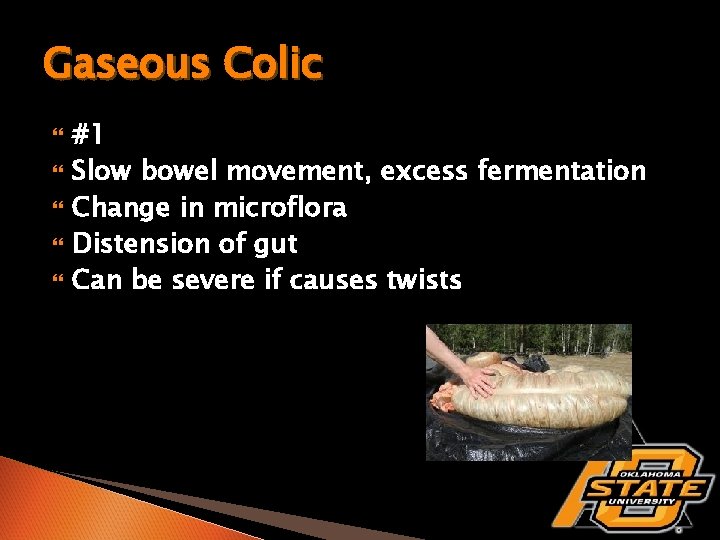
Gaseous Colic #1 Slow bowel movement, excess fermentation Change in microflora Distension of gut Can be severe if causes twists
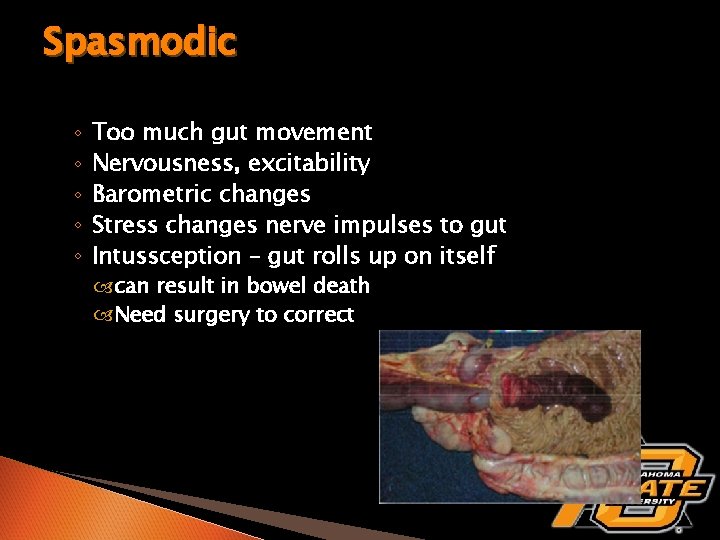
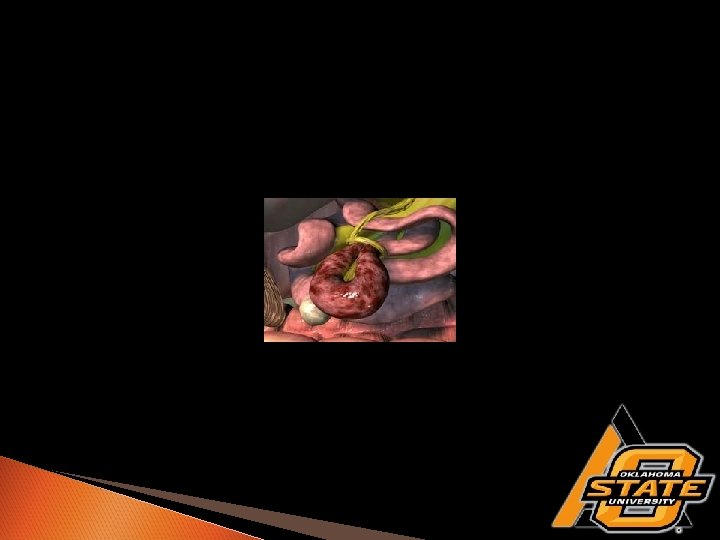
Spasmodic ◦ ◦ ◦ Too much gut movement Nervousness, excitability Barometric changes Stress changes nerve impulses to gut Intussception – gut rolls up on itself can result in bowel death Need surgery to correct
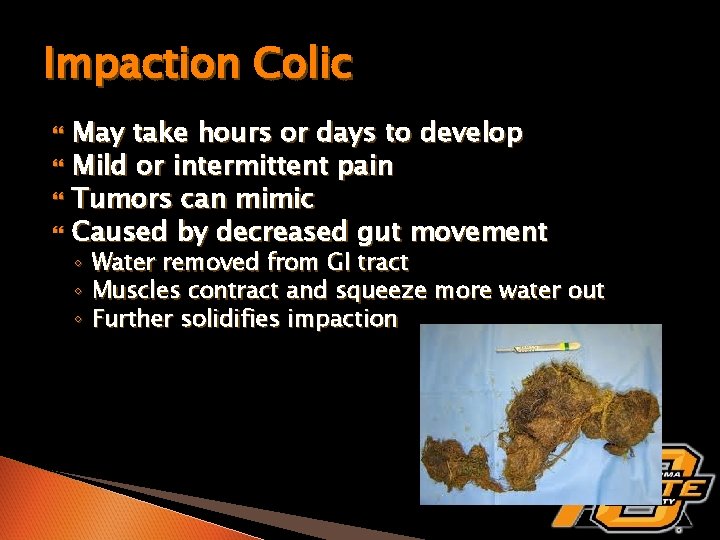
Impaction Colic May take hours or days to develop Mild or intermittent pain Tumors can mimic Caused by decreased gut movement ◦ Water removed from GI tract ◦ Muscles contract and squeeze more water out ◦ Further solidifies impaction
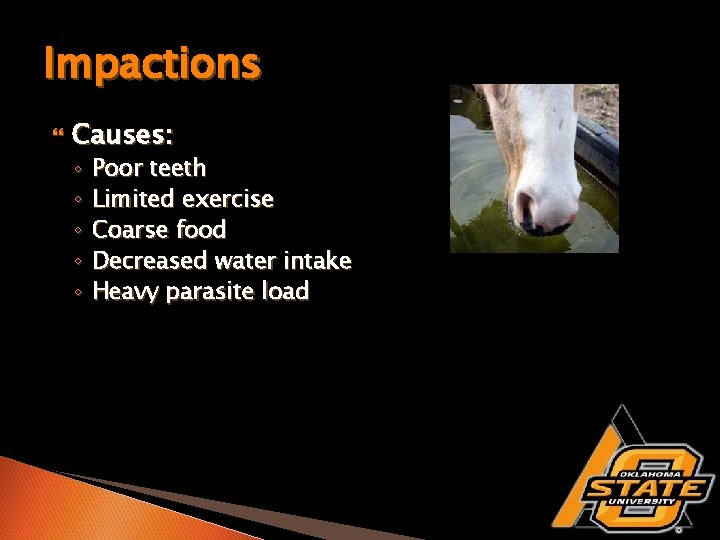
Impactions Causes: ◦ ◦ ◦ Poor teeth Limited exercise Coarse food Decreased water intake Heavy parasite load
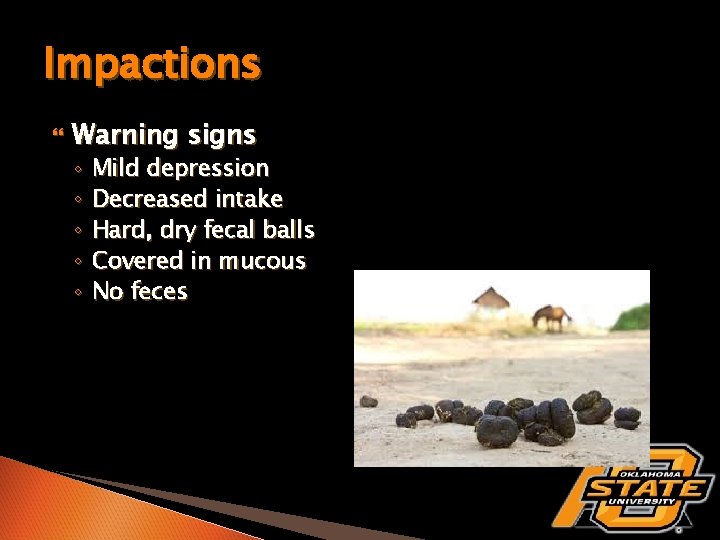
Impactions Warning signs ◦ ◦ ◦ Mild depression Decreased intake Hard, dry fecal balls Covered in mucous No feces
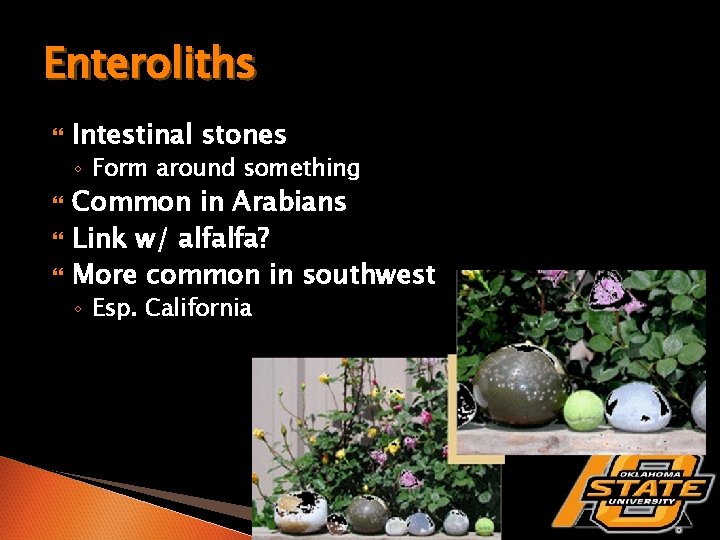
Enteroliths Intestinal stones ◦ Form around something Common in Arabians Link w/ alfalfa? More common in southwest ◦ Esp. California
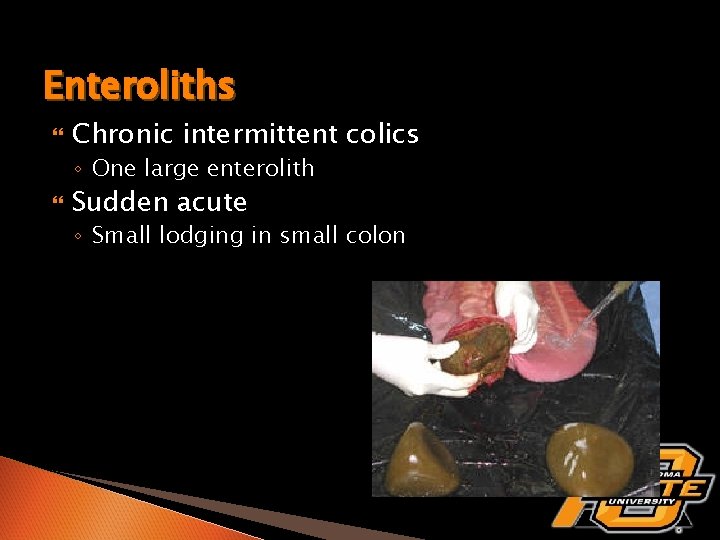
Enteroliths Chronic intermittent colics ◦ One large enterolith Sudden acute ◦ Small lodging in small colon
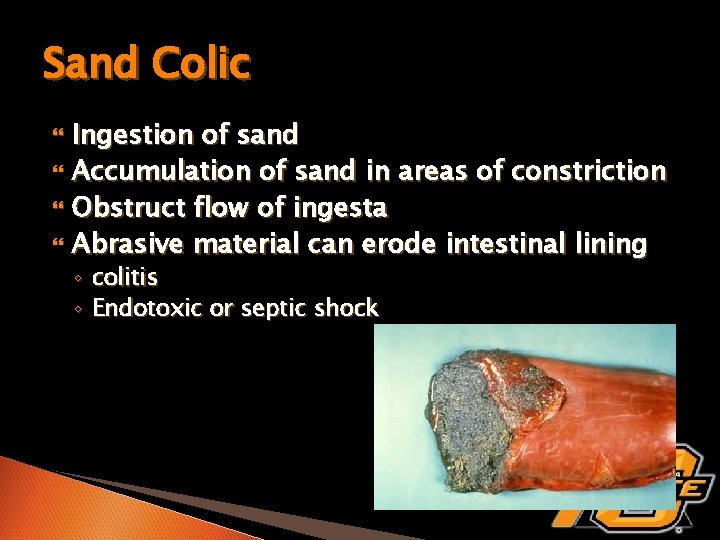
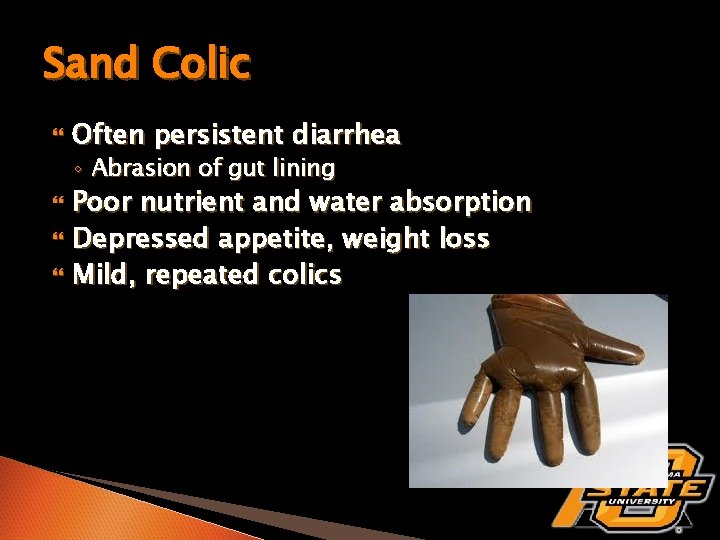
Sand Colic Ingestion of sand Accumulation of sand in areas of constriction Obstruct flow of ingesta Abrasive material can erode intestinal lining ◦ colitis ◦ Endotoxic or septic shock
Sand Colic Often persistent diarrhea ◦ Abrasion of gut lining Poor nutrient and water absorption Depressed appetite, weight loss Mild, repeated colics
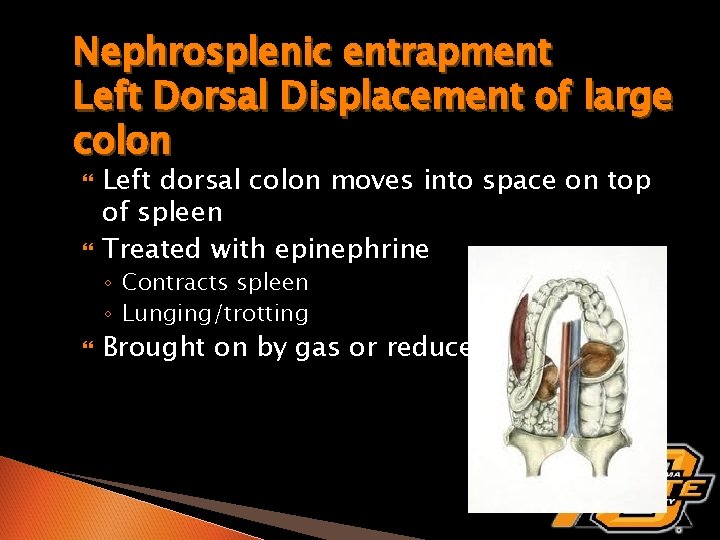
Nephrosplenic entrapment Left Dorsal Displacement of large colon Left dorsal colon moves into space on top of spleen Treated with epinephrine ◦ Contracts spleen ◦ Lunging/trotting Brought on by gas or reduced motility
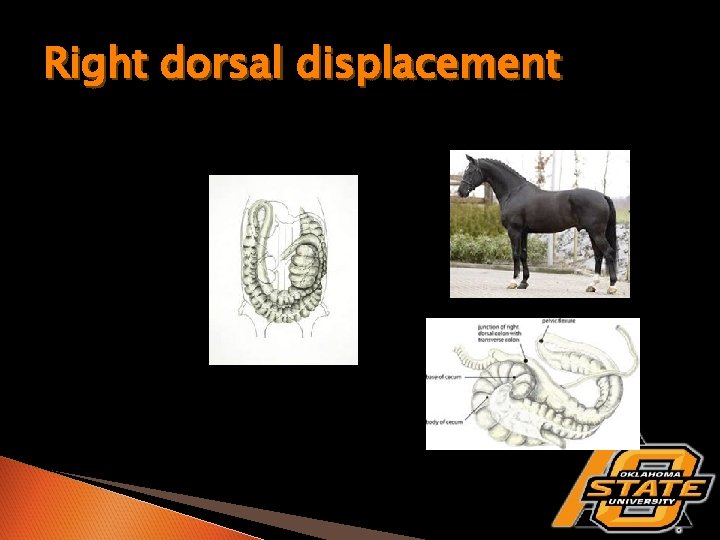
Right dorsal displacement
Colic Treatment Medical or surgical Mild – medical ◦ ◦ remove feed Banamine- analgesic Prevent rolling Exercise - gas
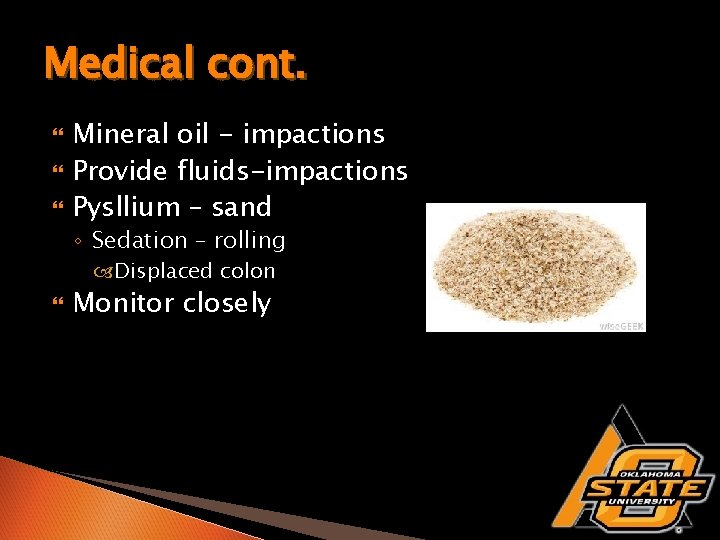
Medical cont. Mineral oil - impactions Provide fluids-impactions Pysllium – sand ◦ Sedation – rolling Displaced colon Monitor closely
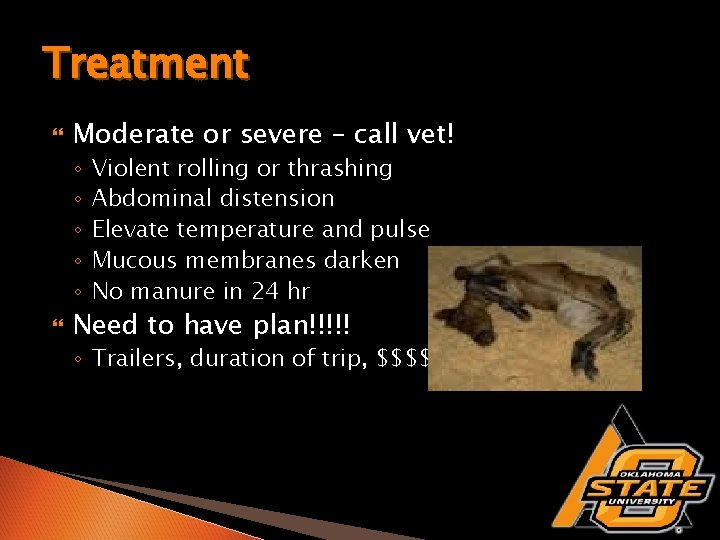
Treatment Moderate or severe – call vet! ◦ ◦ ◦ Violent rolling or thrashing Abdominal distension Elevate temperature and pulse Mucous membranes darken No manure in 24 hr Need to have plan!!!!! ◦ Trailers, duration of trip, $$$$$
Surgery Required to alleviate twists, severe impactions Enteroliths Gut resection ◦ Remove dead bowel ◦ Prevents septic shock
Prevention