
TECHNICAL WRITING WORKSHOP John Morris KRIS KMITL Theme





- Slides: 66
TECHNICAL WRITING WORKSHOP John Morris KRIS, KMITL Theme KISS … Keep It Simple: . . and get accepted! previously Engineering, Mahasarakham University Electrical and Computer Engineering, The University of Auckland Iolanthe II leaves the Hauraki Gulf under full sail – Auckland-Tauranga Race, 2007
Keep It Simple – Rule 1 DIRECT ACTIVE WRITING
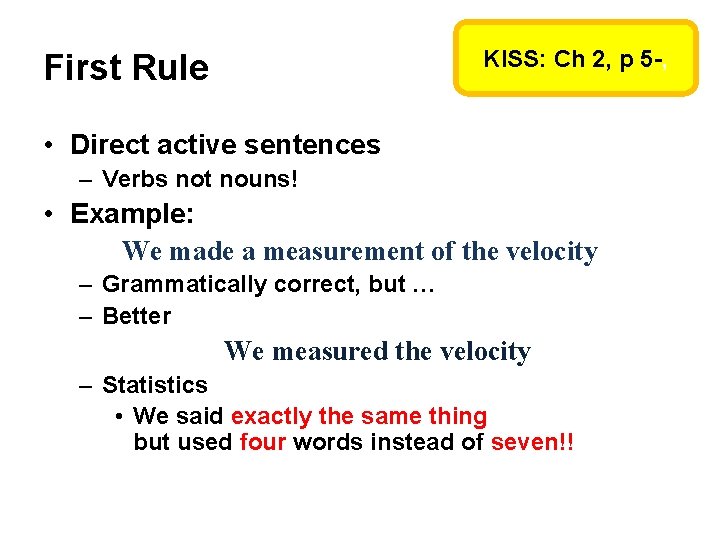
KISS: Ch 2, p 5 -, First Rule • Direct active sentences – Verbs not nouns! • Example: We made a measurement of the velocity – Grammatically correct, but … – Better We measured the velocity – Statistics • We said exactly the same thing but used four words instead of seven!!
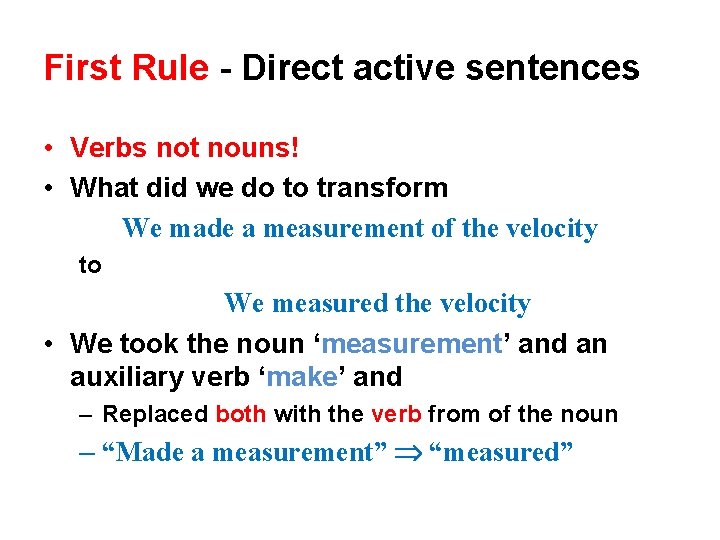
First Rule - Direct active sentences • Verbs not nouns! • What did we do to transform We made a measurement of the velocity to We measured the velocity • We took the noun ‘measurement’ and an auxiliary verb ‘make’ and – Replaced both with the verb from of the noun – “Made a measurement” “measured”
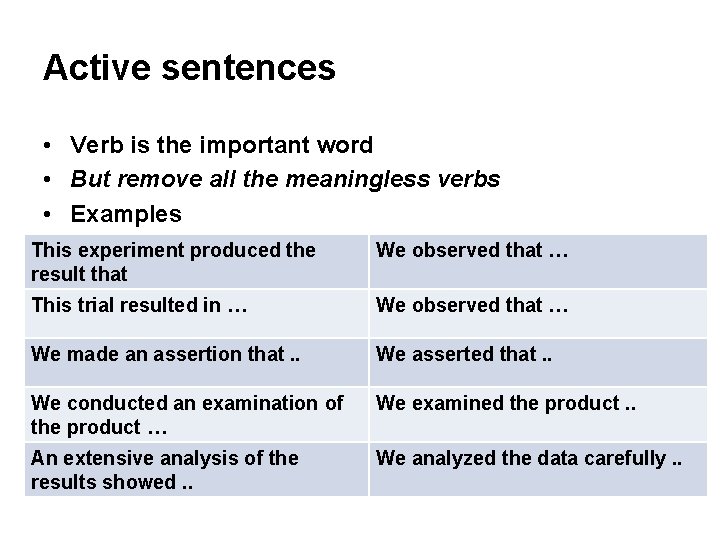
Active sentences • Verb is the important word • But remove all the meaningless verbs • Examples This experiment produced the result that We observed that … This trial resulted in … We observed that … We made an assertion that. . We asserted that. . We conducted an examination of the product … We examined the product. . An extensive analysis of the results showed. . We analyzed the data carefully. .
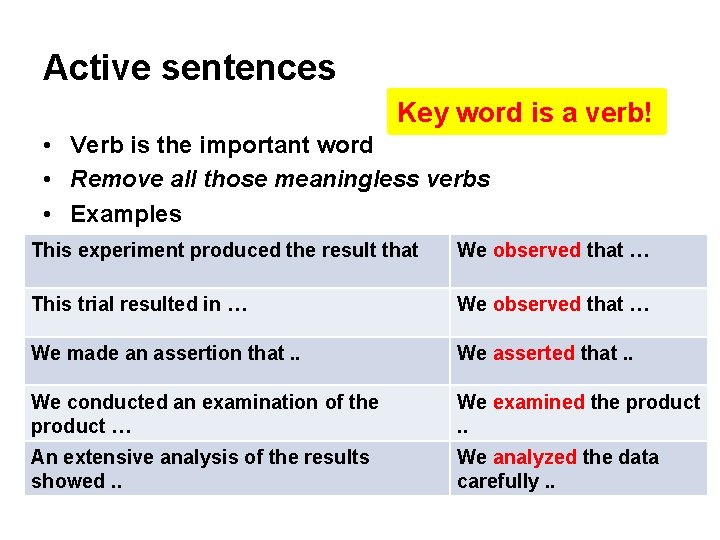
Active sentences Key word is a verb! • Verb is the important word • Remove all those meaningless verbs • Examples This experiment produced the result that We observed that … This trial resulted in … We observed that … We made an assertion that. . We asserted that. . We conducted an examination of the product … We examined the product. . An extensive analysis of the results showed. . We analyzed the data carefully. .
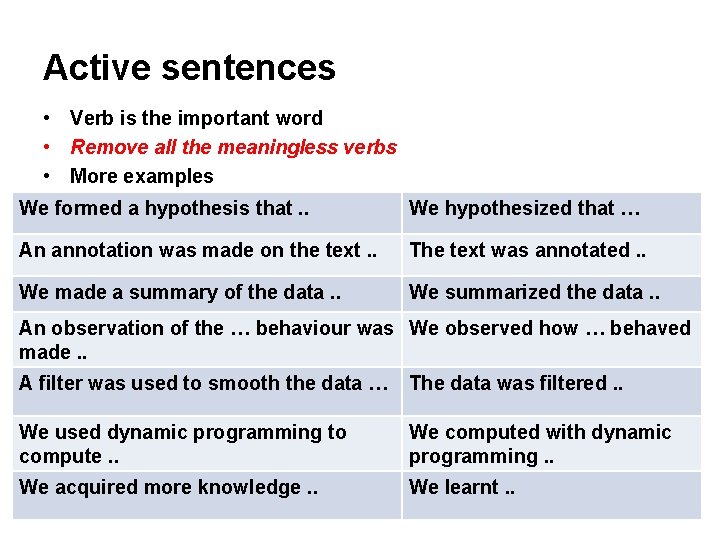
Active sentences • Verb is the important word • Remove all the meaningless verbs • More examples We formed a hypothesis that. . We hypothesized that … An annotation was made on the text. . The text was annotated. . We made a summary of the data. . We summarized the data. . An observation of the … behaviour was We observed how … behaved made. . A filter was used to smooth the data … The data was filtered. . We used dynamic programming to compute. . We computed with dynamic programming. . We acquired more knowledge. . We learnt. .
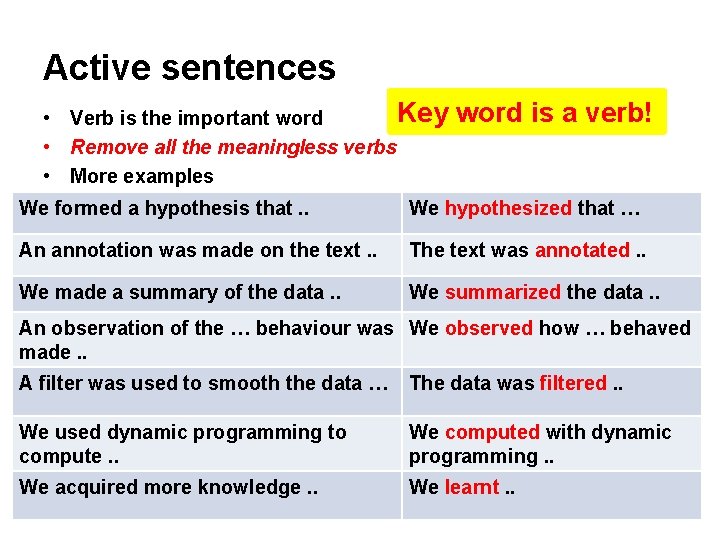
Active sentences Key • Verb is the important word • Remove all the meaningless verbs • More examples word is a verb! We formed a hypothesis that. . We hypothesized that … An annotation was made on the text. . The text was annotated. . We made a summary of the data. . We summarized the data. . An observation of the … behaviour was We observed how … behaved made. . A filter was used to smooth the data … The data was filtered. . We used dynamic programming to compute. . We computed with dynamic programming. . We acquired more knowledge. . We learnt. .
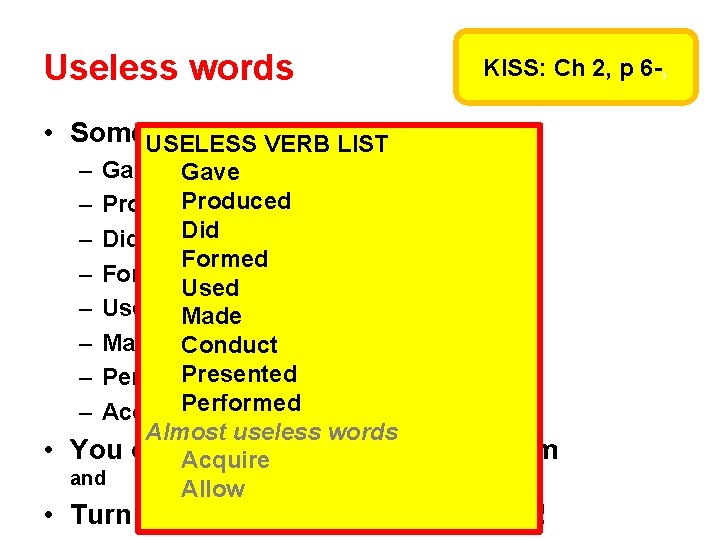
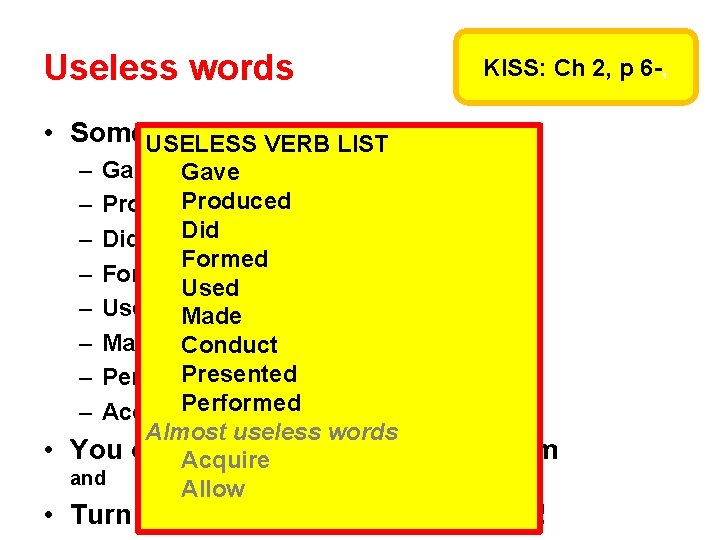
Useless words KISS: Ch 2, p 6 -, • Some. USELESS words you can. LIST do without …. VERB – – – – Gave Produced Did Formed Used Made Conduct Presented Performed Acquire. Performed Almost useless words • You can Acquire almost always remove them and Allow • Turn the following noun into a verb!
Grammar? KEEPING IT SIMPLE
ENGLISH TENSES
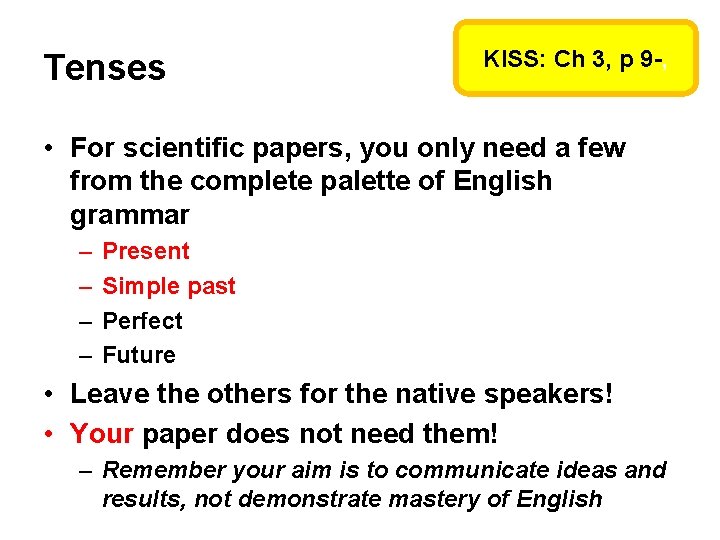
Tenses KISS: Ch 3, p 9 -, • For scientific papers, you only need a few from the complete palette of English grammar – – Present Simple past Perfect Future • Leave the others for the native speakers! • Your paper does not need them! – Remember your aim is to communicate ideas and results, not demonstrate mastery of English
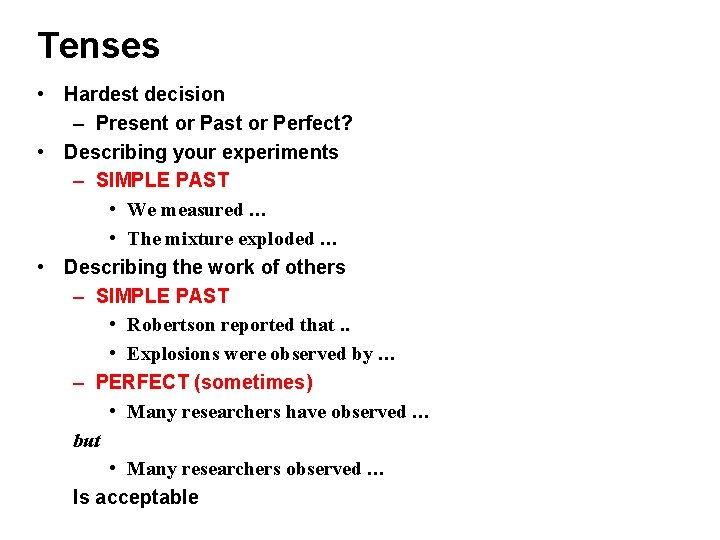
Tenses • Hardest decision – Present or Past or Perfect? • Describing your experiments – SIMPLE PAST • We measured … • The mixture exploded … • Describing the work of others – SIMPLE PAST • Robertson reported that. . • Explosions were observed by … – PERFECT (sometimes) • Many researchers have observed … but • Many researchers observed … Is acceptable
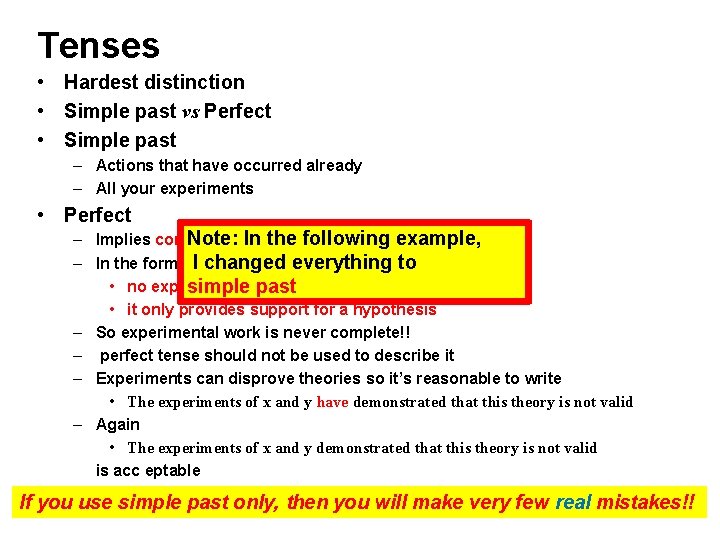
Tenses • Hardest distinction • Simple past vs Perfect • Simple past – Actions that have occurred already – All your experiments • Perfect Note: In the following example, – Implies completeness – In the formal Iscientific theory, changed everything to • no experiment simpleproves past anything. . • it only provides support for a hypothesis – So experimental work is never complete!! – perfect tense should not be used to describe it – Experiments can disprove theories so it’s reasonable to write • The experiments of x and y have demonstrated that this theory is not valid – Again • The experiments of x and y demonstrated that this theory is not valid is acc eptable If you use simple past only, then you will make very few real mistakes!!
Of? With? By? From? NOUN PHRASES
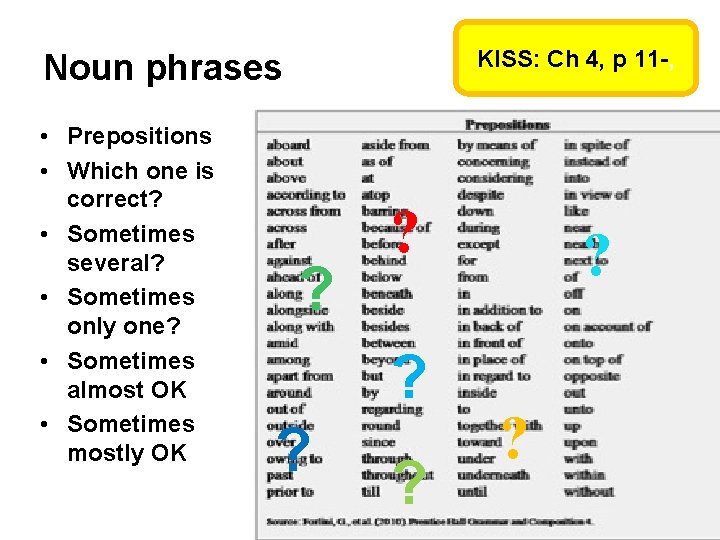
KISS: Ch 4, p 11 -, Noun phrases • Prepositions • Which one is correct? • Sometimes several? • Sometimes only one? • Sometimes almost OK • Sometimes mostly OK ? ? ?
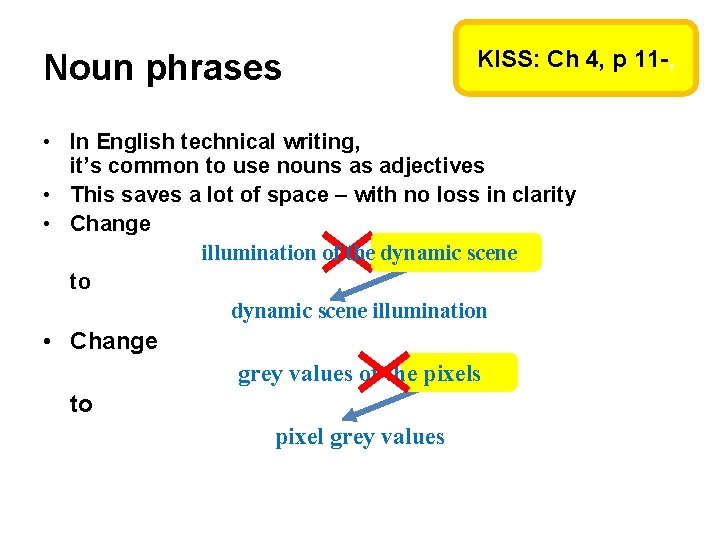
Noun phrases KISS: Ch 4, p 11 -, • In English technical writing, it’s common to use nouns as adjectives • This saves a lot of space – with no loss in clarity • Change illumination of the dynamic scene to dynamic scene illumination • Change grey values of the pixels to pixel grey values
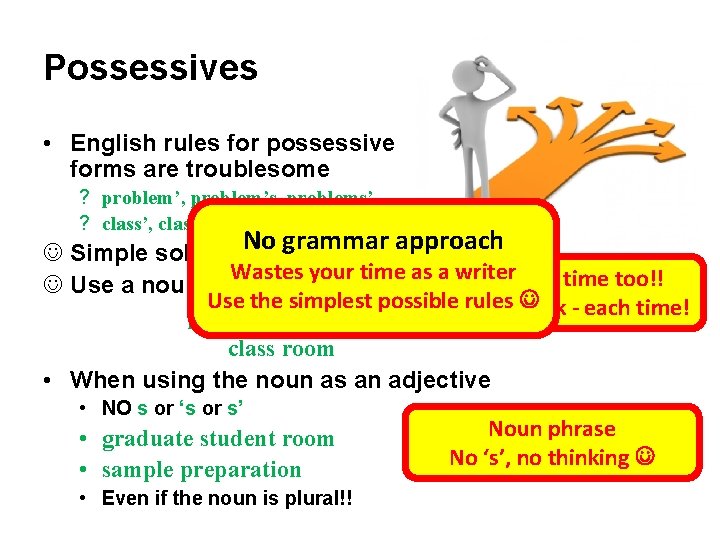
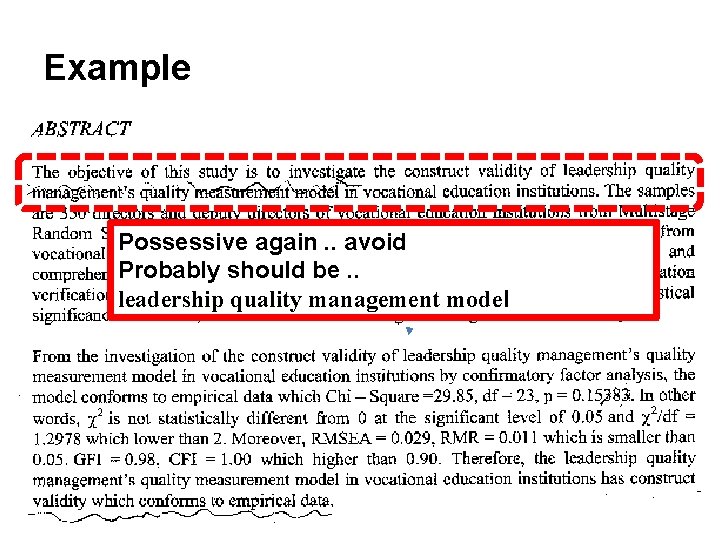
Possessives • English rules for possessive forms are troublesome ? problem’, problem’s, problems’ ? class’, class’s, classes’ Simple solution. No grammar approach Wastes your time as a. Wastes writer my time too!! Use a noun phrase Use the simplest possible rules - each time! I have to think problem approach class room • When using the noun as an adjective • NO s or ‘s or s’ • graduate student room • sample preparation • Even if the noun is plural!! Noun phrase No ‘s’, no thinking
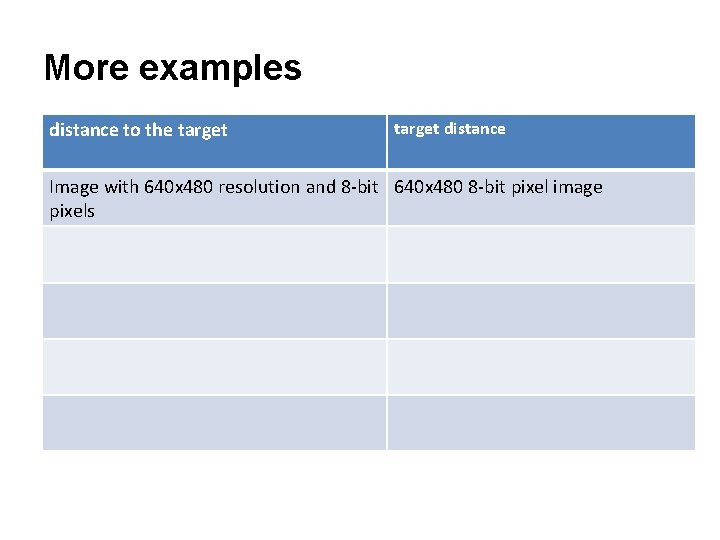
More examples distance to the target distance Image with 640 x 480 resolution and 8 -bit 640 x 480 8 -bit pixel image pixels
Once Twice Three Times Four Times REDUNDANCY KISS: Ch 6, p 17 -,
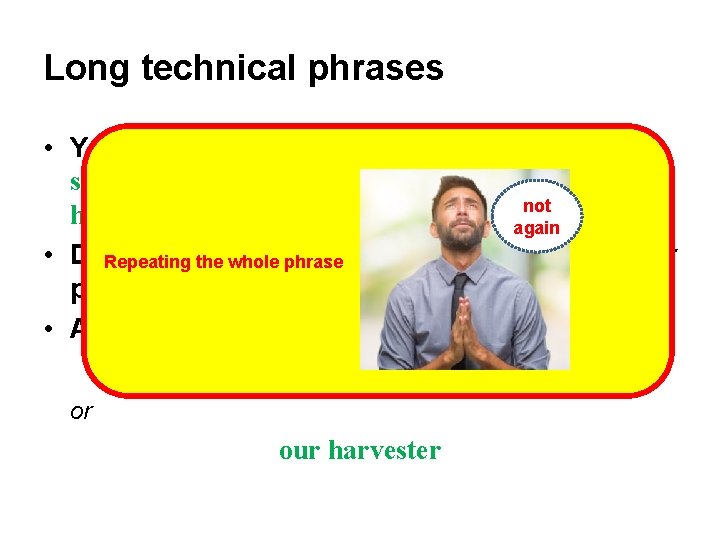
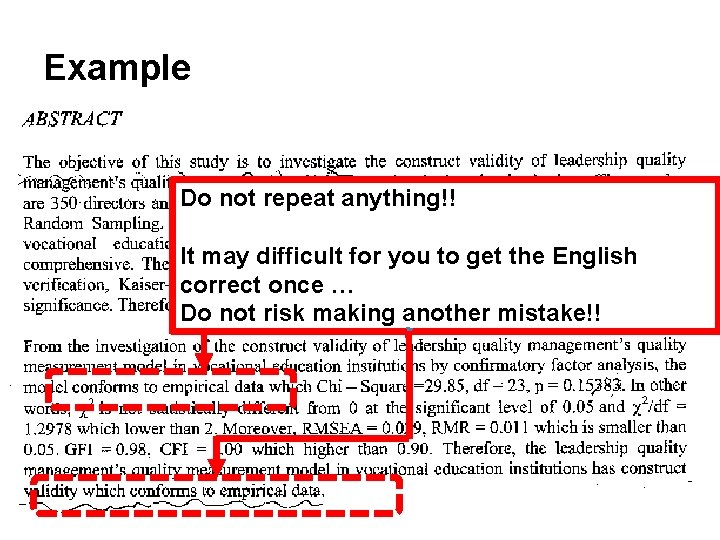
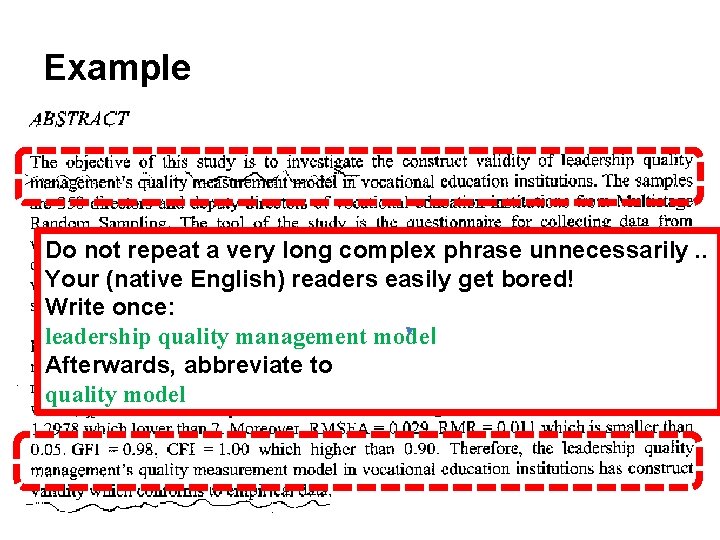
Repetition • Makes your reader sleepy • Do not repeat anything!! • Do not use words that have the same sense twice! • Do not repeat long technical terms – Use once – Define carefully – Then use a short form
Long technical phrases • You just designed a small hydraulic diesel engine powered sugarcane not harvester again • Describe Repeating it thecarefully whole phrase ONCE at the start of your paper • Afterwards, use some simple short phrase the harvester or our harvester
Stating the obvious • Papers are littered with phrases like this. . – – – In this paper … We aimed to study … Results from our experimented showed. . As a result of our investigation … Our analysis showed that … • Omit these phrases, start directly with aim or your result
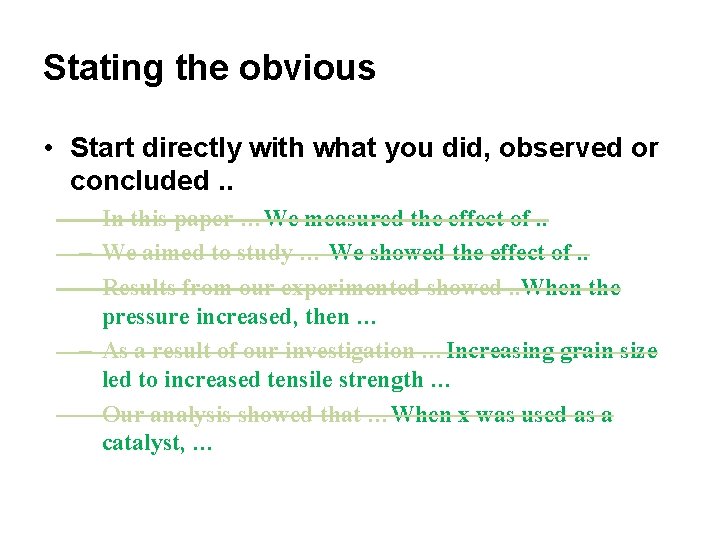
Stating the obvious • Start directly with what you did, observed or concluded. . – In this paper …We measured the effect of. . – We aimed to study … We showed the effect of. . – Results from our experimented showed. . When the pressure increased, then … – As a result of our investigation …Increasing grain size led to increased tensile strength … – Our analysis showed that …When x was used as a catalyst, …
Stating the obvious • Captions of figures or tables Fig 6. Graph showing comparison of X vs Y • Obviously, it is a graph comparing … • Caption should be Fig 6. X vs Y • ‘Compare’ or ‘Graph’ are rarely needed in a figure caption • Tables are the same • ‘Compare’ or ‘Table’ are rarely needed in a table caption
EXAMPLE
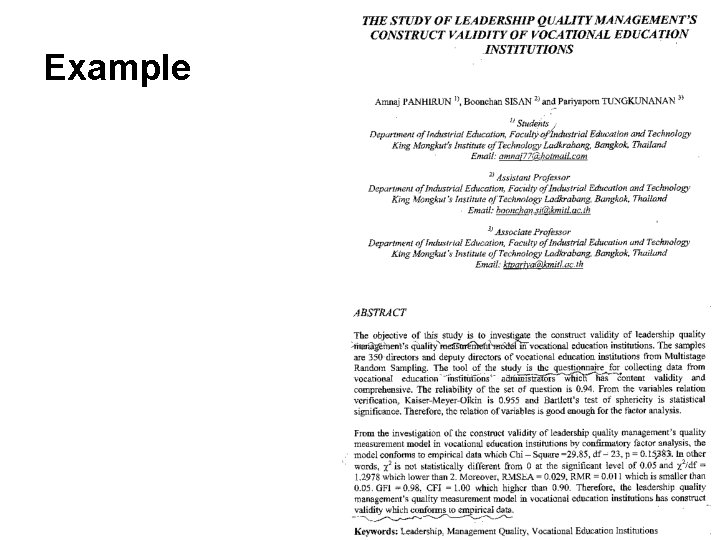
Example
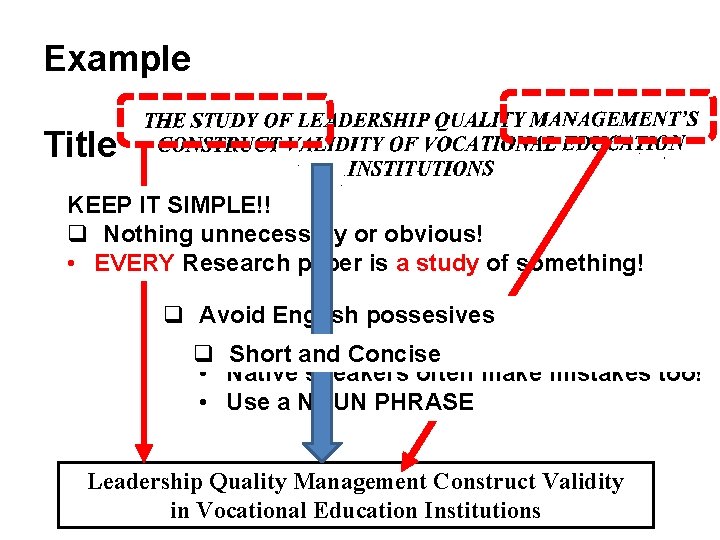
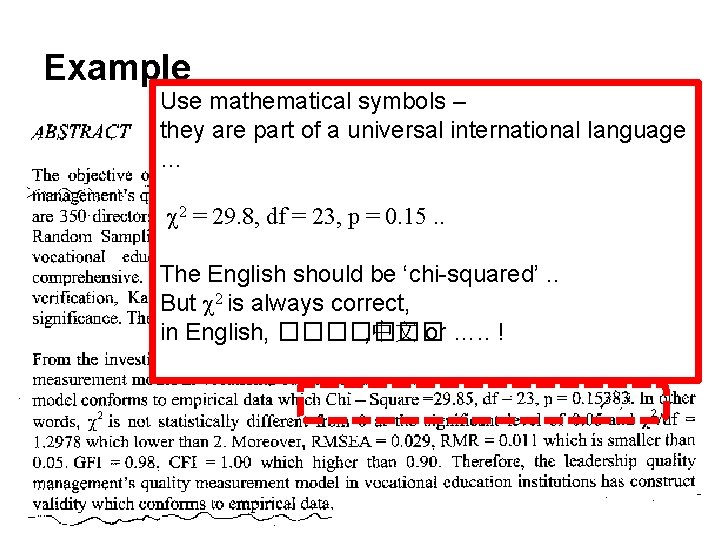
Example Title KEEP IT SIMPLE!! q Nothing unnecessary or obvious! • EVERY Research paper is a study of something! q Avoid English possesives • Rules q Short are andcomplex Concise and confusing • Native speakers often make mistakes too! • Use a NOUN PHRASE Leadership Quality Management Construct Validity in Vocational Education Institutions
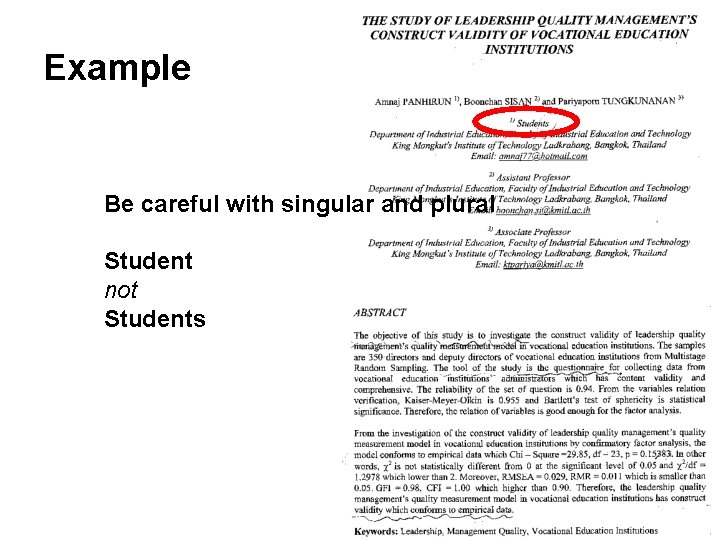
Example Be careful with singular and plural Student not Students
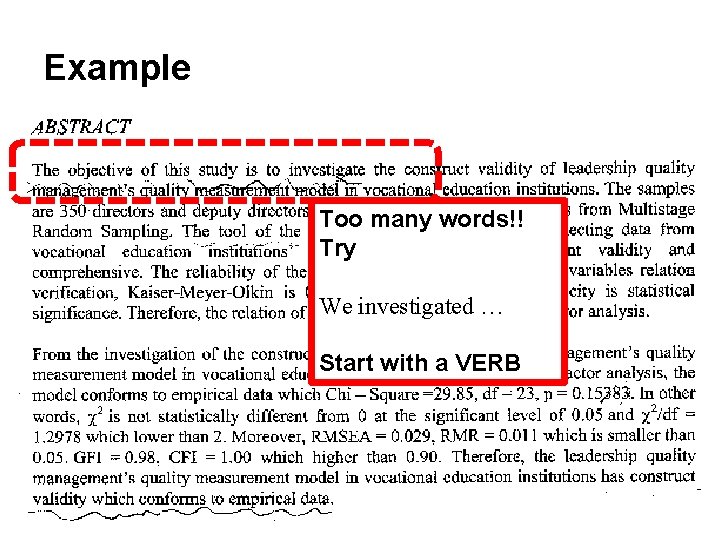
Example Too many words!! Try We investigated … Start with a VERB
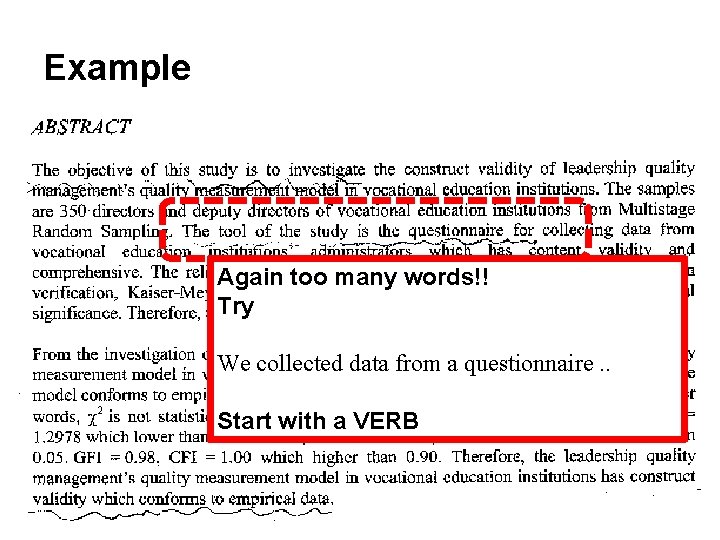
Example Again too many words!! Try We collected data from a questionnaire. . Start with a VERB
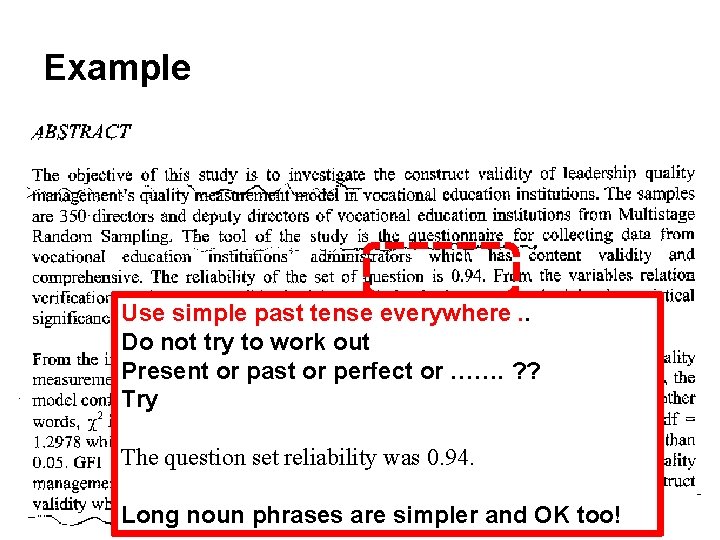
Example Use simple past tense everywhere. . Do not try to work out Present or past or perfect or ……. ? ? Try The question set reliability was 0. 94. Long noun phrases are simpler and OK too!
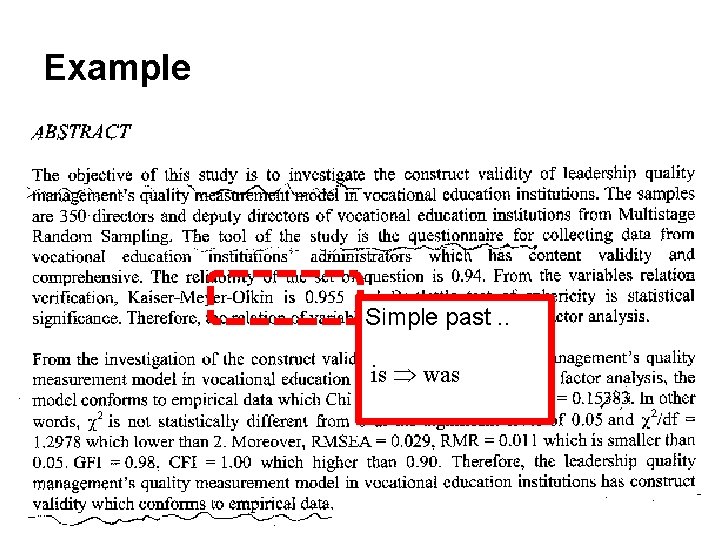
Example Simple past. . is was
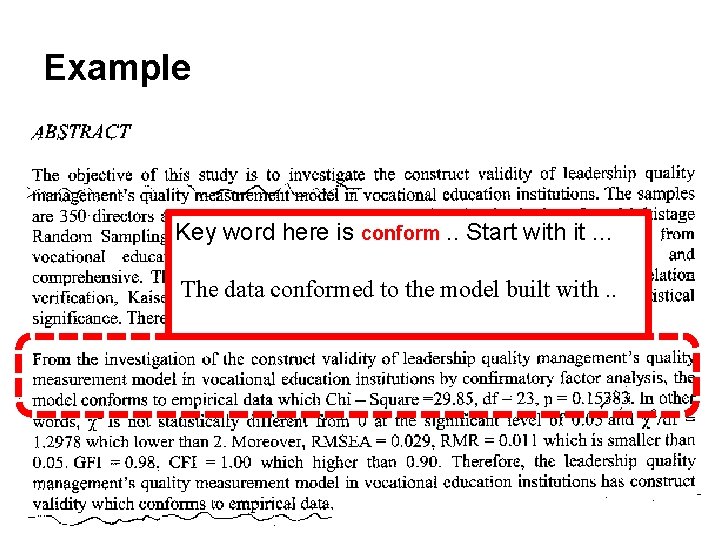
Example Key word here is conform. . Start with it … The data conformed to the model built with. .
Example Use mathematical symbols – they are part of a universal international language … 2 = 29. 8, df = 23, p = 0. 15. . The English should be ‘chi-squared’. . But 2 is always correct, in English, ������� , 中文 or …. . !
Example Do not repeat anything!! It may difficult for you to get the English correct once … Do not risk making another mistake!!
Example Possessive again. . avoid Probably should be. . leadership quality management model
Example Do not repeat a very long complex phrase unnecessarily. . Your (native English) readers easily get bored! Write once: leadership quality management model Afterwards, abbreviate to quality model
Would Aj John accept this in your paper? QUICK EXERCISE
Useless words KISS: Ch 2, p 6 -, • Some. USELESS words you can. LIST do without …. VERB – – – – Gave Produced Did Formed Used Made Conduct Presented Performed Acquire. Performed Almost useless words • You can Acquire almost always remove them and Allow • Turn the following noun into a verb!
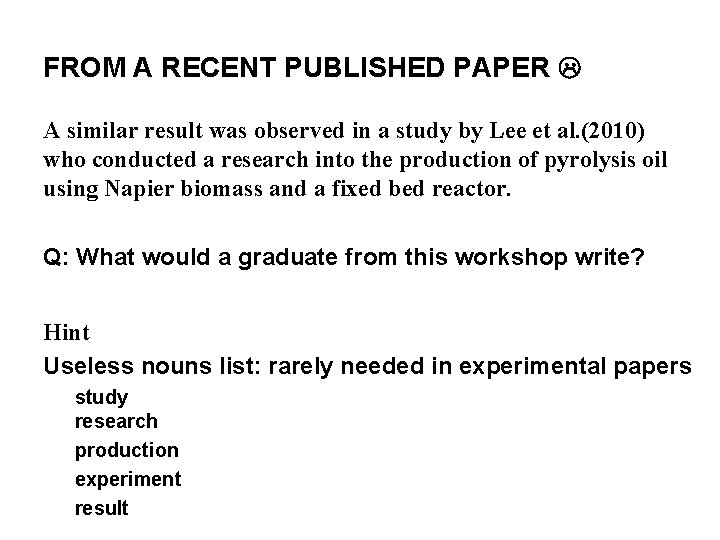
FROM A RECENT PUBLISHED PAPER A similar result was observed in a study by Lee et al. (2010) who conducted a research into the production of pyrolysis oil using Napier biomass and a fixed bed reactor. Q: What would a graduate from this workshop write? Hint Useless nouns list: rarely needed in experimental papers study research production experiment result
KISS: Ch 8, p 23 -, Things you may believe MYTHS
KISS: Ch 8, p 23 Myth 1 PERSONAL PRONOUNS
Avoiding personal pronouns. . • You should use expressions like ‘the author(s)’ to avoid ‘we’ or ‘I’ • A total myth!! • It sounds pompous and • ‘We’ or ‘I’ is so much simpler!
Personal pronouns are forbidden • Single authors who use ‘we’ • Ideally, technical articles should be – Impersonal and unbiased • There is a myth that ‘we’ somehow makes it less personal that ‘I’ • But ‘we’ is a personal pronoun too!! • How do you argue that’s it less personal because it’s plural? ? • If you’re a single author, ‘we’ is technically incorrect (or just wrong!)
Personal pronouns are forbidden • Convention: Avoid personal pronouns by using passive tense The velocity was measured … • Rather than We measured the velocity. . • However, sometimes the passive form is more complex and clumsy • So Write ‘we’ or ‘I’ • It’s your analysis that makes your work unbiased, not the words you use to talk about it!! • Overriding principle: Simplicity and clarity is more important
KISS: Ch 8, p 25 Myth 2 FILLING THE SPACE
Filling the space • • • Myth If the conference limit is SIX pages You must write SIX pages Reality Everybody a short Editors, reviewers and likes readers arepaper very with good results happy to read less!! • If your paper seems short, – Add data, results, references, …. – Do not add words!
KISS: Ch 8, p 24 Myth 3 USE COMPLICATED WORDS
Use complicated words KISS: Ch 8, p 24 • Myth – Editors EXPECT or REQUIRE you to write complicated words • Reality – If you use simple, but correct, words – Editors, reviewers and your readers WILL NOTICE!
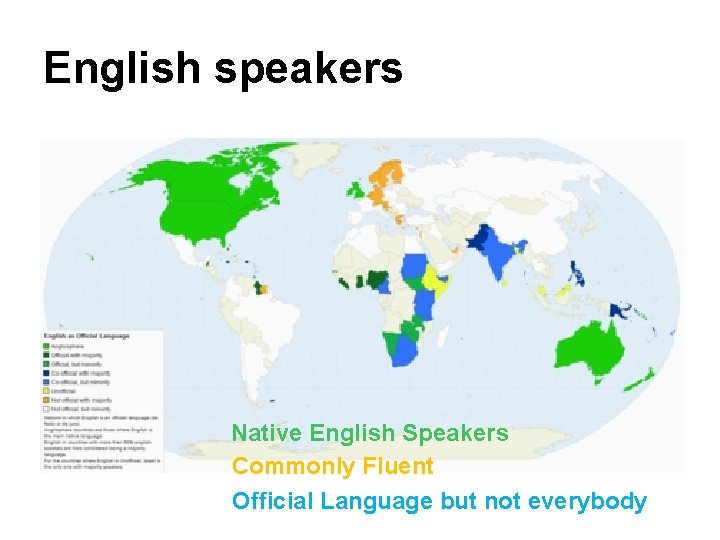
English speakers Native English Speakers Commonly Fluent Official Language but not everybody
Here are your readers! Don’t make them need their dictionaries to read your paper! or Rely on Google
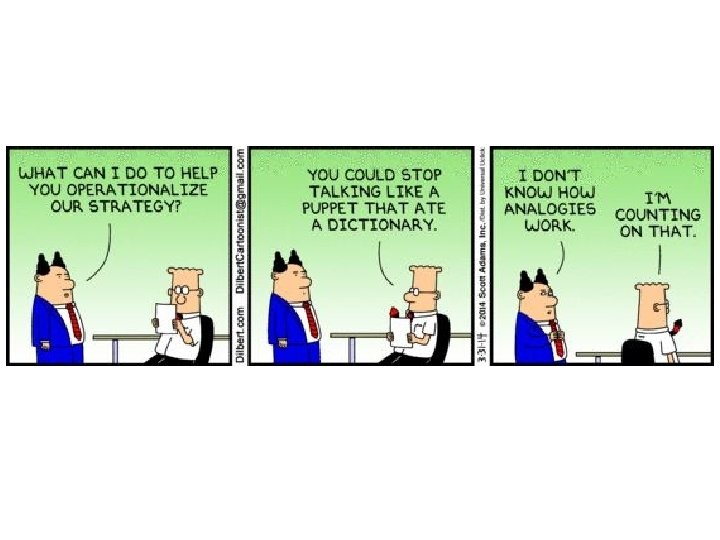
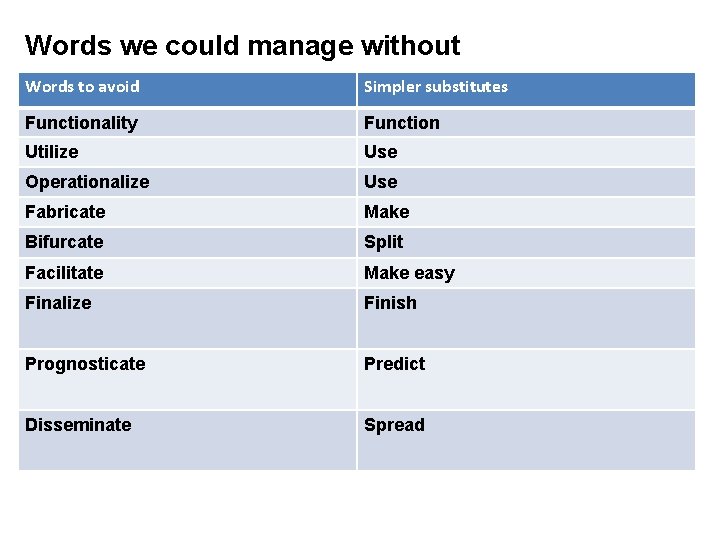
Words we could manage without Words to avoid Simpler substitutes Functionality Function Utilize Use Operationalize Use Fabricate Make Bifurcate Split Facilitate Make easy Finalize Finish Prognosticate Predict Disseminate Spread
BAD HABITS
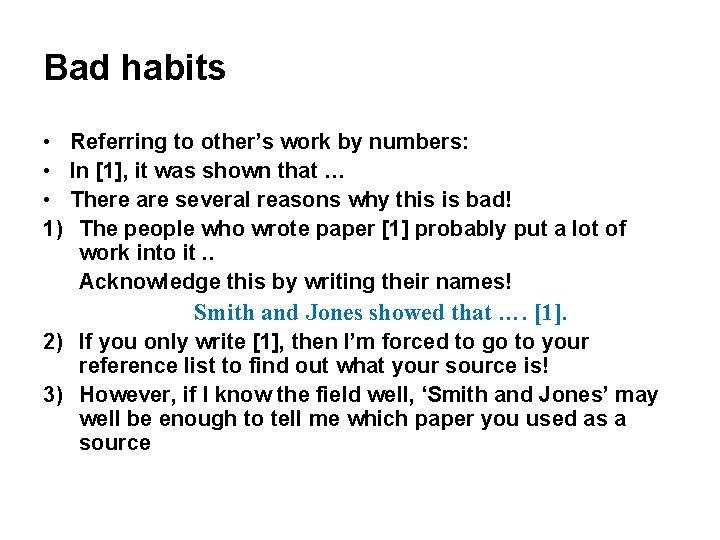
Bad habits • • • 1) Referring to other’s work by numbers: In [1], it was shown that … There are several reasons why this is bad! The people who wrote paper [1] probably put a lot of work into it. . Acknowledge this by writing their names! Smith and Jones showed that …. [1]. 2) If you only write [1], then I’m forced to go to your reference list to find out what your source is! 3) However, if I know the field well, ‘Smith and Jones’ may well be enough to tell me which paper you used as a source
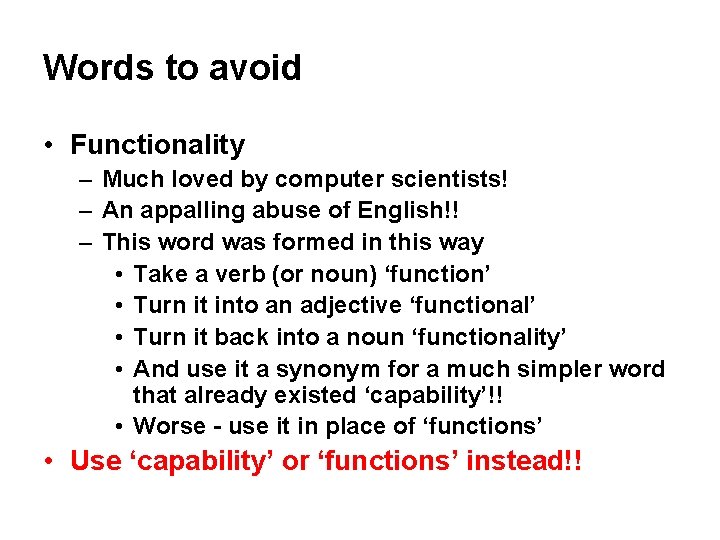
Words to avoid • Functionality – Much loved by computer scientists! – An appalling abuse of English!! – This word was formed in this way • Take a verb (or noun) ‘function’ • Turn it into an adjective ‘functional’ • Turn it back into a noun ‘functionality’ • And use it a synonym for a much simpler word that already existed ‘capability’!! • Worse - use it in place of ‘functions’ • Use ‘capability’ or ‘functions’ instead!!
Too many!! ACRONYMS
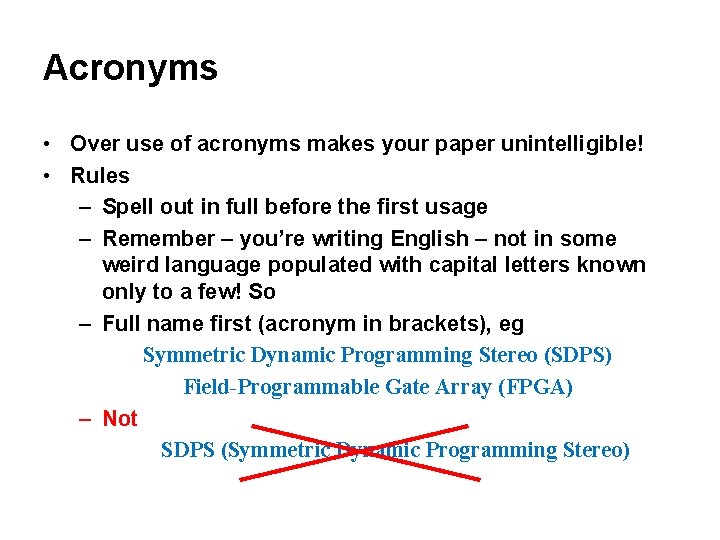
Acronyms • Over use of acronyms makes your paper unintelligible! • Rules – Spell out in full before the first usage – Remember – you’re writing English – not in some weird language populated with capital letters known only to a few! So – Full name first (acronym in brackets), eg Symmetric Dynamic Programming Stereo (SDPS) Field-Programmable Gate Array (FPGA) – Not SDPS (Symmetric Dynamic Programming Stereo)
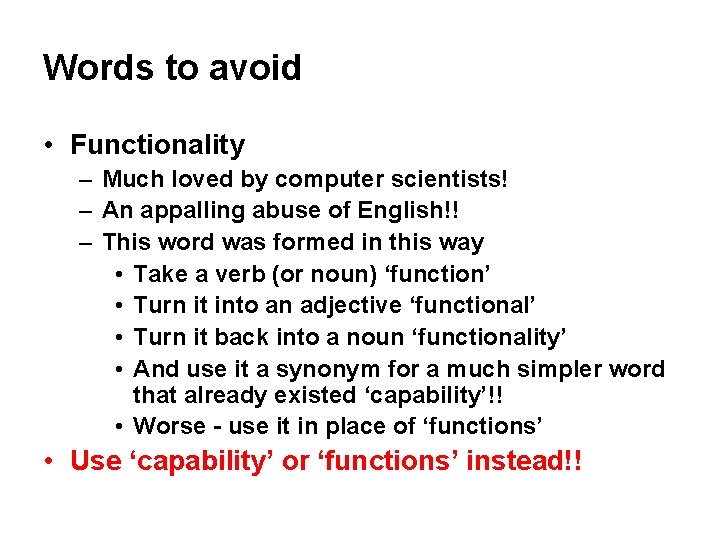
Words to avoid • Functionality – Much loved by computer scientists! – An appalling abuse of English!! – This word was formed in this way • Take a verb (or noun) ‘function’ • Turn it into an adjective ‘functional’ • Turn it back into a noun ‘functionality’ • And use it a synonym for a much simpler word that already existed ‘capability’!! • Worse - use it in place of ‘functions’ • Use ‘capability’ or ‘functions’ instead!!
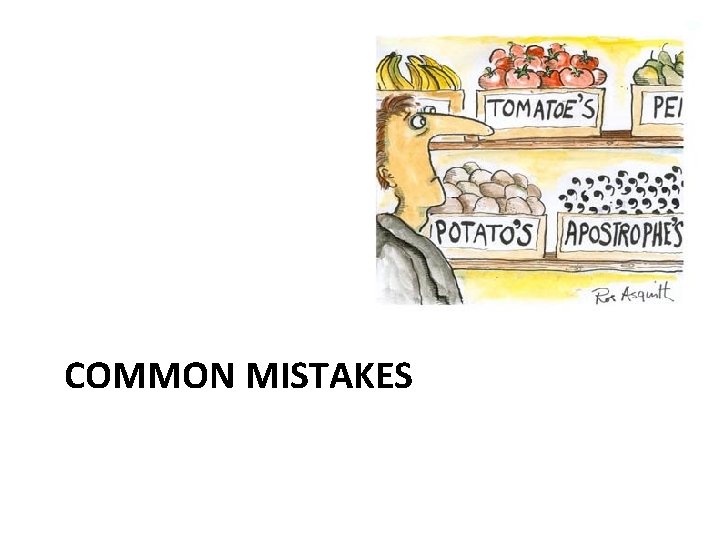
COMMON MISTAKES
Capitalization • Starting all ‘important’ words with capitals seems to be popular now! • English rule is simple: – First word of a sentence – Proper names • Names of people, companies, places, pets, … – Acronyms • Everything else – lower case
Important ABSTRACTS
Abstracts • GOOD • A good abstract summarizes the results of the paper – It should have some numbers in it! • You can get the key results from the abstract • BAD • A bad abstract summarizes the contents ie it just tells you that you may find something useful if you read the paper !
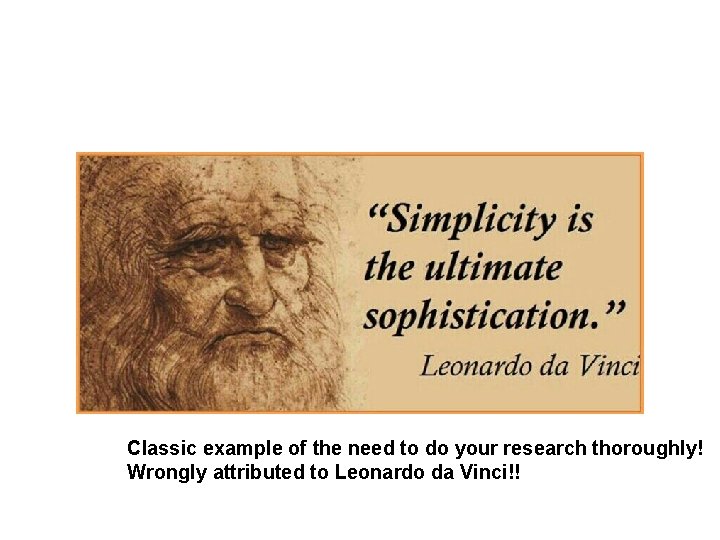
Classic example of the need to do your research thoroughly! Wrongly attributed to Leonardo da Vinci!!