ESEA REAUTHORIZATION AT THE OFFICE OF SAFE AND
- Slides: 23
ESEA REAUTHORIZATION AT THE OFFICE OF SAFE AND DRUG-FREE SCHOOLS Kevin Jennings, Assistant Deputy Secretary
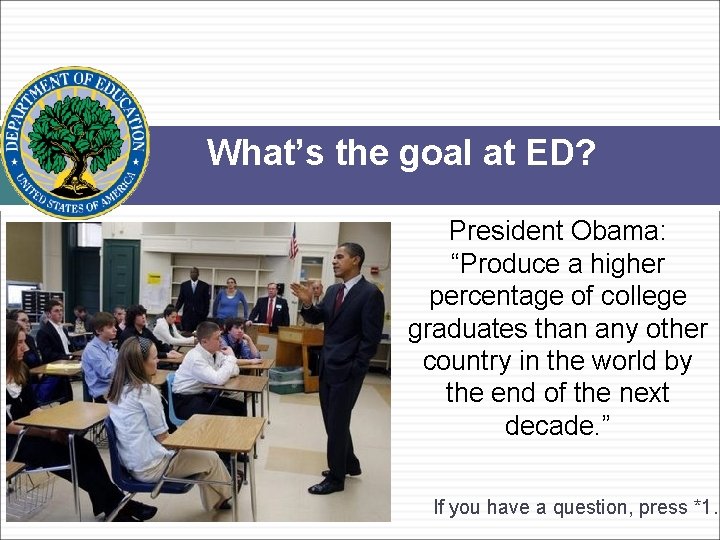
What’s the goal at ED? President Obama: “Produce a higher percentage of college graduates than any other country in the world by the end of the next decade. ” If you have a question, press *1.
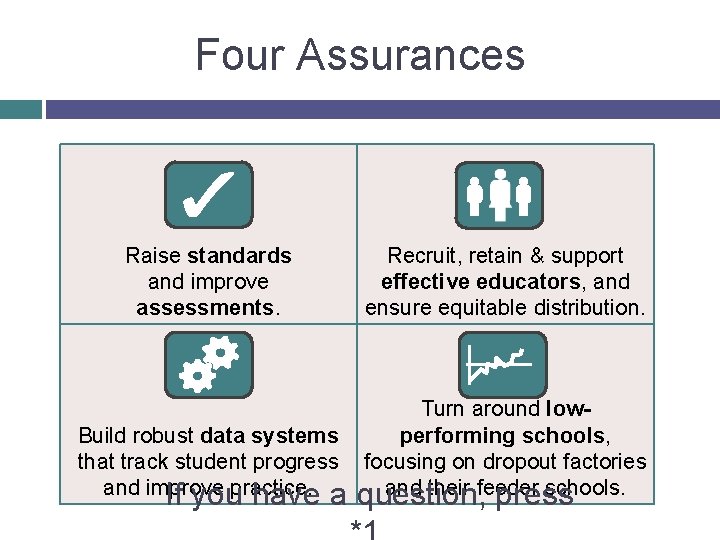
Four Assurances Raise standards and improve assessments. Recruit, retain & support effective educators, and ensure equitable distribution. Turn around low. Build robust data systems performing schools, that track student progress focusing on dropout factories and improve practice. and their feeder schools. If you have a question, press
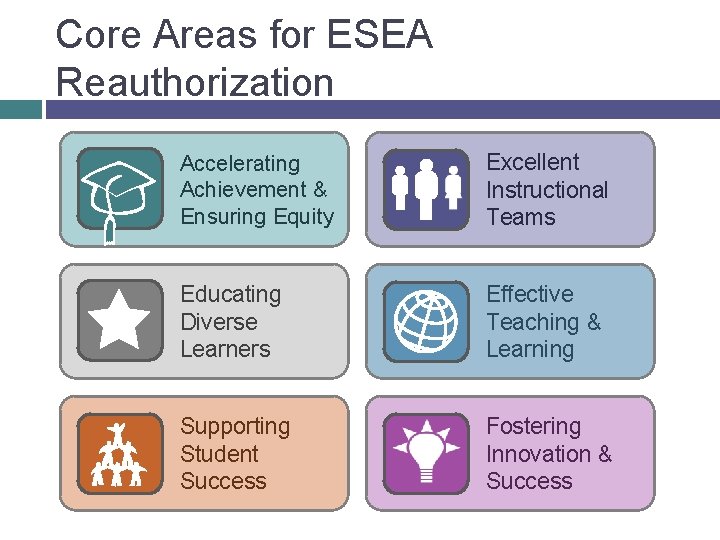
Core Areas for ESEA Reauthorization Accelerating Achievement & Ensuring Equity Excellent Instructional Teams Educating Diverse Learners Effective Teaching & Learning Supporting Student Success Fostering Innovation & Success
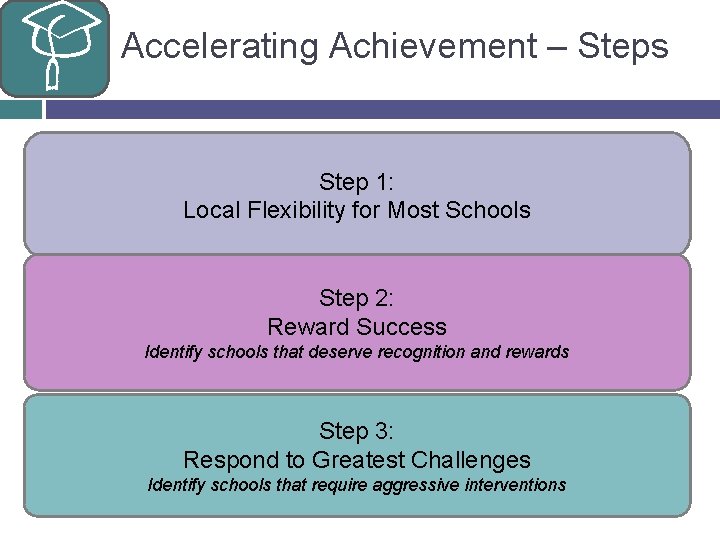
Accelerating Achievement – Steps Step 1: Local Flexibility for Most Schools Step 2: Reward Success Identify schools that deserve recognition and rewards Step 3: Respond to Greatest Challenges Identify schools that require aggressive interventions
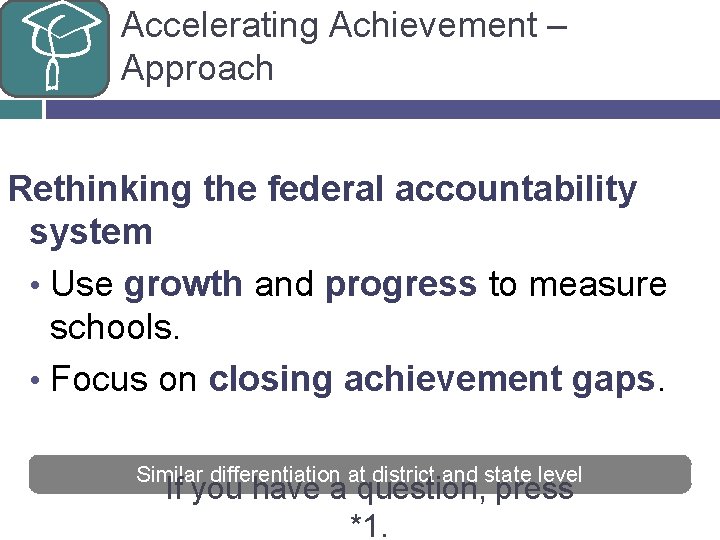
Accelerating Achievement – Approach Rethinking the federal accountability system • Use growth and progress to measure schools. • Focus on closing achievement gaps. Similar differentiation at district and state level If you have a question, press *1.
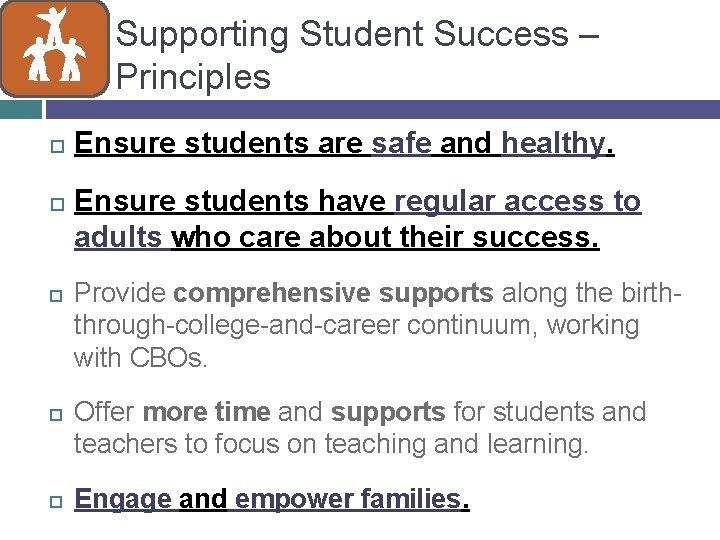
Supporting Student Success – Principles Ensure students are safe and healthy. Ensure students have regular access to adults who care about their success. Provide comprehensive supports along the birththrough-college-and-career continuum, working with CBOs. Offer more time and supports for students and teachers to focus on teaching and learning. Engage and empower families.
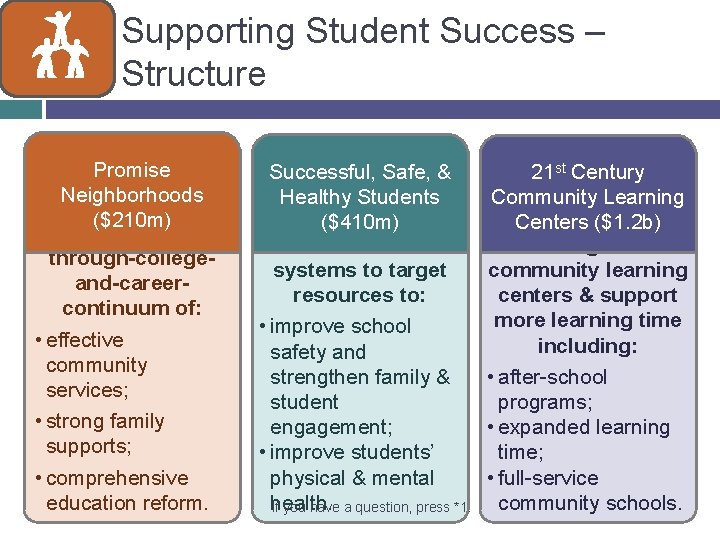
Supporting Student Success – Structure Promise Neighborhoods ($210 m) Create birththrough-collegeand-careercontinuum of: • effective community services; • strong family supports; • comprehensive education reform. Successful, Safe, & Healthy Students Implement climate ($410 m) measurement systems to target resources to: • improve school safety and strengthen family & student engagement; • improve students’ physical & mental health. If you have a question, press *1. 21 st Century Community Learning Centers ($1. 2 b) Strengthen community learning centers & support more learning time including: • after-school programs; • expanded learning time; • full-service community schools.
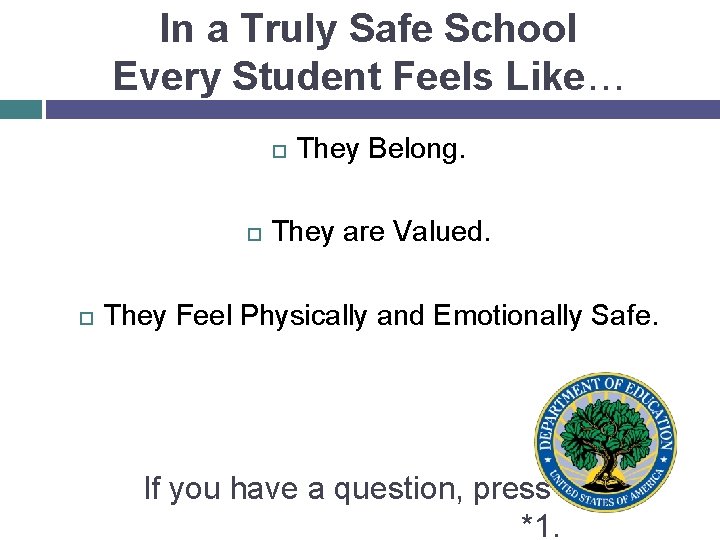
In a Truly Safe School Every Student Feels Like… They Belong. They are Valued. They Feel Physically and Emotionally Safe. If you have a question, press *1.
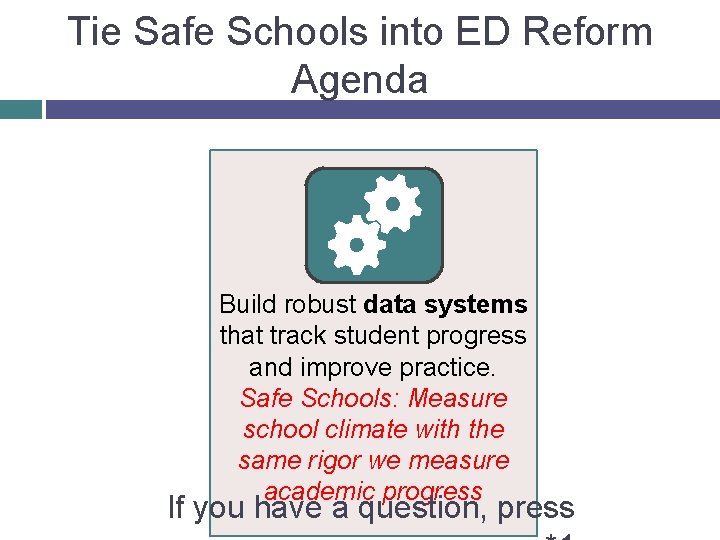
Tie Safe Schools into ED Reform Agenda Build robust data systems that track student progress and improve practice. Safe Schools: Measure school climate with the same rigor we measure academic progress If you have a question, press
What Gets Measured is What Gets Done If you have a question, press *1.
School Safety Index How? 2010: Safe and Supportive Climates 2011 Proposal : Successful, Safe and Healthy Students What? Staff, Student, and Family Surveys Incident Data Why? School-level Evaluation If you have a question, press Greater linkage between data collection and
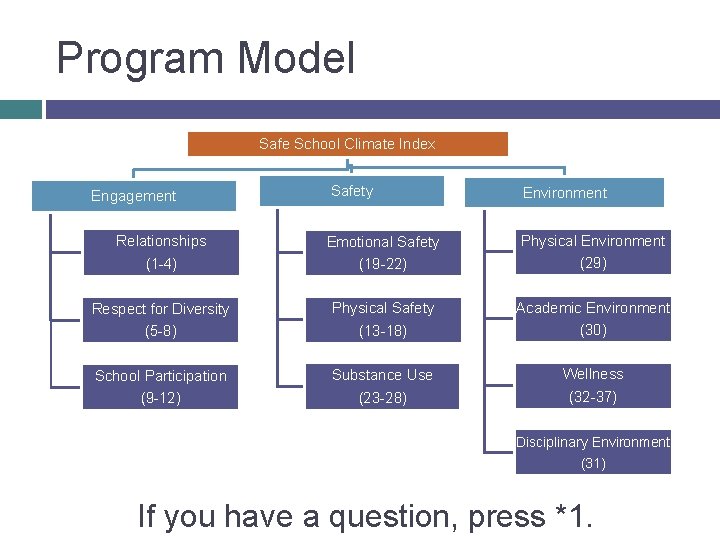
Program Model Safe School Climate Index Safety Environment Relationships (1 -4) Emotional Safety (19 -22) Physical Environment (29) Respect for Diversity (5 -8) Physical Safety (13 -18) Academic Environment (30) School Participation (9 -12) Substance Use (23 -28) Wellness (32 -37) Engagement Disciplinary Environment (31) If you have a question, press *1.
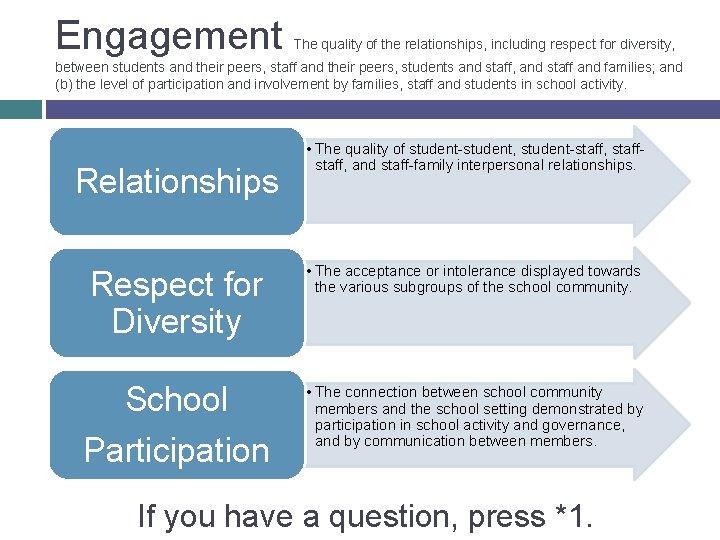
Engagement The quality of the relationships, including respect for diversity, between students and their peers, staff and their peers, students and staff, and staff and families; and (b) the level of participation and involvement by families, staff and students in school activity. Relationships • The quality of student-student, student-staff, and staff-family interpersonal relationships. Respect for Diversity • The acceptance or intolerance displayed towards the various subgroups of the school community. School Participation • The connection between school community members and the school setting demonstrated by participation in school activity and governance, and by communication between members. If you have a question, press *1.
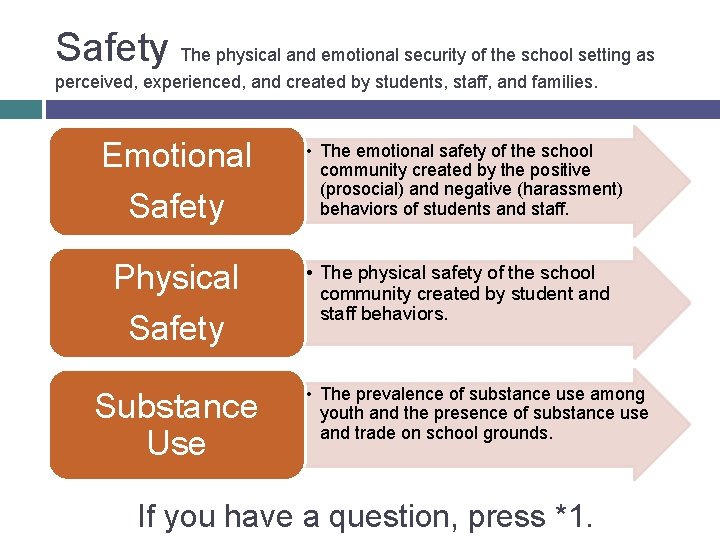
Safety The physical and emotional security of the school setting as perceived, experienced, and created by students, staff, and families. Emotional Safety Physical Safety Substance Use • The emotional safety of the school community created by the positive (prosocial) and negative (harassment) behaviors of students and staff. • The physical safety of the school community created by student and staff behaviors. • The prevalence of substance use among youth and the presence of substance use and trade on school grounds. If you have a question, press *1.
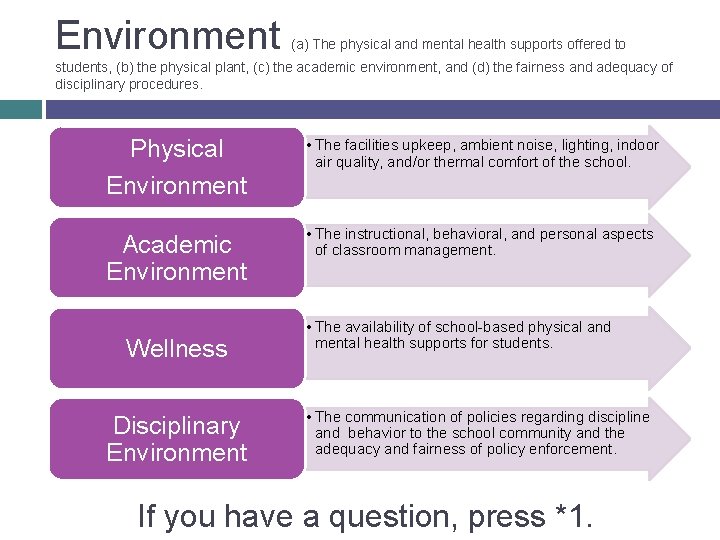
Environment (a) The physical and mental health supports offered to students, (b) the physical plant, (c) the academic environment, and (d) the fairness and adequacy of disciplinary procedures. Physical Environment • The facilities upkeep, ambient noise, lighting, indoor air quality, and/or thermal comfort of the school. Academic Environment • The instructional, behavioral, and personal aspects of classroom management. Wellness Disciplinary Environment • The availability of school-based physical and mental health supports for students. • The communication of policies regarding discipline and behavior to the school community and the adequacy and fairness of policy enforcement. If you have a question, press *1.
Keep in Touch! Kevin. Jennings@Ed. gov 202 -245 -7830 If you have a question, press *1.
Appendix
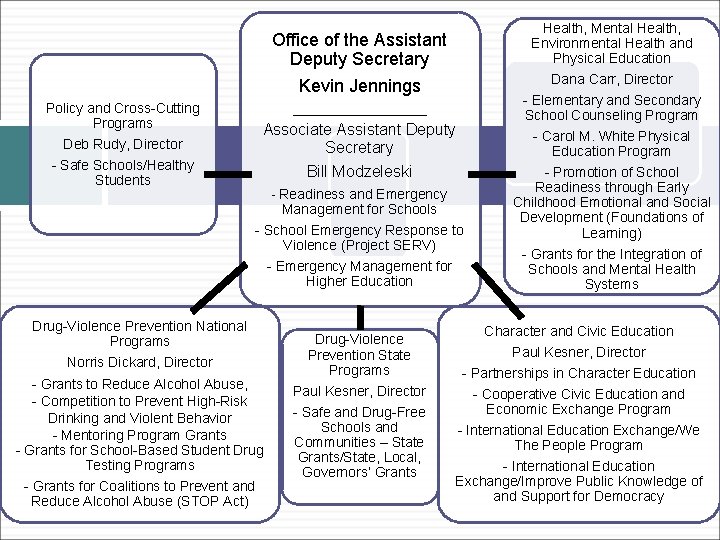
Health, Mental Health, Environmental Health and Physical Education Office of the Assistant Deputy Secretary Kevin Jennings Policy and Cross-Cutting Programs Deb Rudy, Director - Safe Schools/Healthy Students __________ Associate Assistant Deputy Secretary Bill Modzeleski - Readiness and Emergency Management for Schools - School Emergency Response to Violence (Project SERV) - Emergency Management for Higher Education Drug-Violence Prevention National Programs Norris Dickard, Director - Grants to Reduce Alcohol Abuse, - Competition to Prevent High-Risk Drinking and Violent Behavior - Mentoring Program Grants - Grants for School-Based Student Drug Testing Programs - Grants for Coalitions to Prevent and Reduce Alcohol Abuse (STOP Act) Drug-Violence Prevention State Programs Paul Kesner, Director - Safe and Drug-Free Schools and Communities – State Grants/State, Local, Governors’ Grants Dana Carr, Director - Elementary and Secondary School Counseling Program - Carol M. White Physical Education Program - Promotion of School Readiness through Early Childhood Emotional and Social Development (Foundations of Learning) - Grants for the Integration of Schools and Mental Health Systems Character and Civic Education Paul Kesner, Director - Partnerships in Character Education - Cooperative Civic Education and Economic Exchange Program - International Education Exchange/We The People Program - International Education Exchange/Improve Public Knowledge of and Support for Democracy
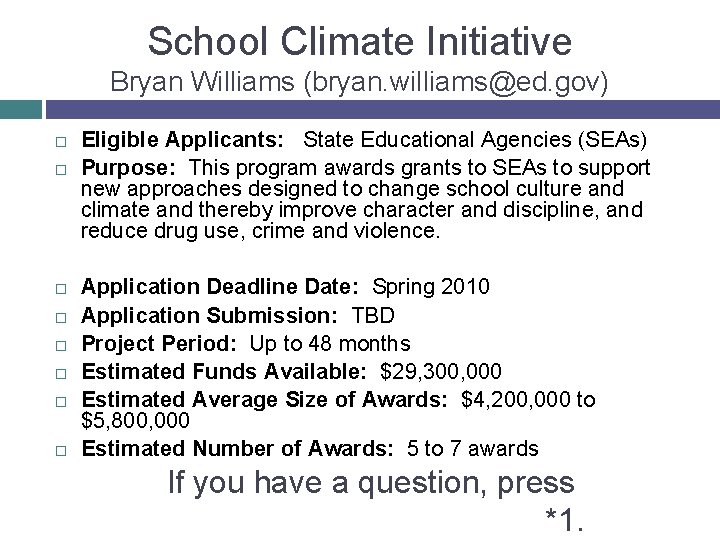
School Climate Initiative Bryan Williams (bryan. williams@ed. gov) Eligible Applicants: State Educational Agencies (SEAs) Purpose: This program awards grants to SEAs to support new approaches designed to change school culture and climate and thereby improve character and discipline, and reduce drug use, crime and violence. Application Deadline Date: Spring 2010 Application Submission: TBD Project Period: Up to 48 months Estimated Funds Available: $29, 300, 000 Estimated Average Size of Awards: $4, 200, 000 to $5, 800, 000 Estimated Number of Awards: 5 to 7 awards If you have a question, press *1.
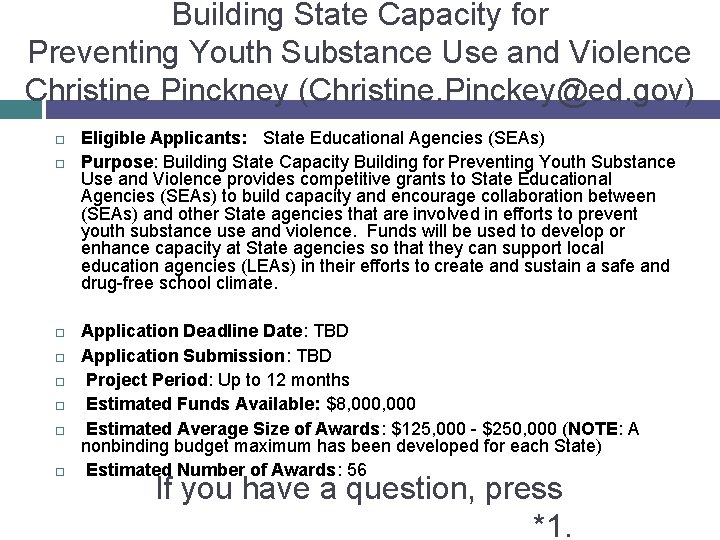
Building State Capacity for Preventing Youth Substance Use and Violence Christine Pinckney (Christine. Pinckey@ed. gov) Eligible Applicants: State Educational Agencies (SEAs) Purpose: Building State Capacity Building for Preventing Youth Substance Use and Violence provides competitive grants to State Educational Agencies (SEAs) to build capacity and encourage collaboration between (SEAs) and other State agencies that are involved in efforts to prevent youth substance use and violence. Funds will be used to develop or enhance capacity at State agencies so that they can support local education agencies (LEAs) in their efforts to create and sustain a safe and drug-free school climate. Application Deadline Date: TBD Application Submission: TBD Project Period: Up to 12 months Estimated Funds Available: $8, 000 Estimated Average Size of Awards: $125, 000 - $250, 000 (NOTE: A nonbinding budget maximum has been developed for each State) Estimated Number of Awards: 56 If you have a question, press *1.
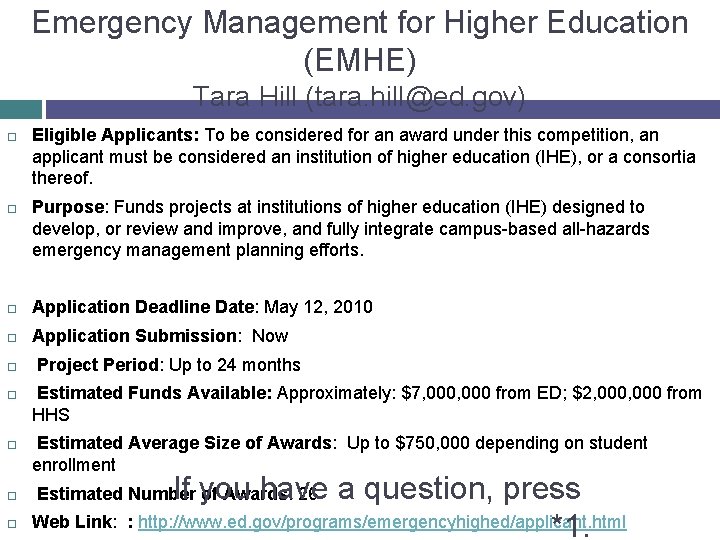
Emergency Management for Higher Education (EMHE) Tara Hill (tara. hill@ed. gov) Eligible Applicants: To be considered for an award under this competition, an applicant must be considered an institution of higher education (IHE), or a consortia thereof. Purpose: Funds projects at institutions of higher education (IHE) designed to develop, or review and improve, and fully integrate campus-based all-hazards emergency management planning efforts. Application Deadline Date: May 12, 2010 Application Submission: Now Project Period: Up to 24 months Estimated Funds Available: Approximately: $7, 000 from ED; $2, 000 from HHS Estimated Average Size of Awards: Up to $750, 000 depending on student enrollment If you have a question, press Web Link: : http: //www. ed. gov/programs/emergencyhighed/applicant. html *1. Estimated Number of Awards: 26
Thank You! Office of Safe & Drug-Free Schools Internet: http: //www 2. ed. gov/about/offices/list/osdfs/index. html If you would like to self-enroll on the OSDFS Weekly LISTSERV OSDFS PREVENTION NEWS BULLETIN please visit: http: //www. ed. gov/newsletters/listserv/preventioned. html If you have a question, press *1.