Endrew F v Douglas County School District 2017

- Slides: 58
Endrew F. v. Douglas County School District (2017): What special education leaders need to know and why Special Education Leadership & the Law Mitchell L. Yell, Ph. D. myell@sc. edu University of South Carolina
The Primary Requirement of the IDEA and the crucial obligation of special educators is to provide a special education that confers a free appropriate public education (FAPE)
FAPE issues account for 85% to 90% of all special education litigation Gerl, 2014
Free Appropriate Public Education (FAPE) • Special education & related services that are: • Provided at public expense • Meet the standards of the SEA • Includes preschool, elementary, or secondary education • Are provided in conformity with the individualized education program (IEP) IDEA, 20 U. S. C. § 1401 (A)(18)
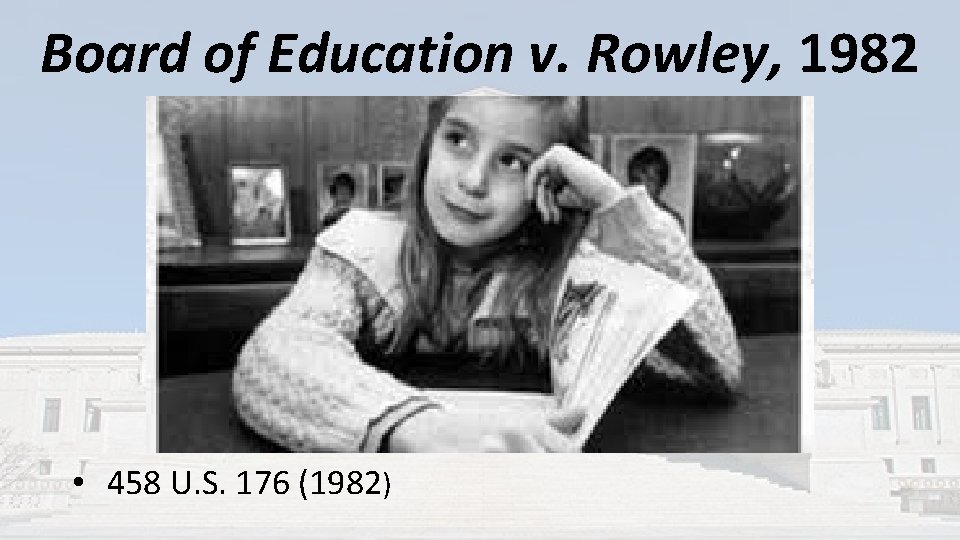
Board of Education v. Rowley, 1982 • 458 U. S. 176 (1982)
Maximization of Benefit The requirement that States provide "equal" educational opportunities would thus seem to present an entirely unworkable standard requiring impossible measurements and comparisons…. To require the furnishing of every special service necessary to maximize each handicapped child's potential is, we think, further than Congress intended to go (Rowley, p. 186).
Board of Education v. Rowley, 1982 “We therefore conclude that the ‘basic floor of opportunity’ consists of access to specialized instruction and related services which are individually designed to
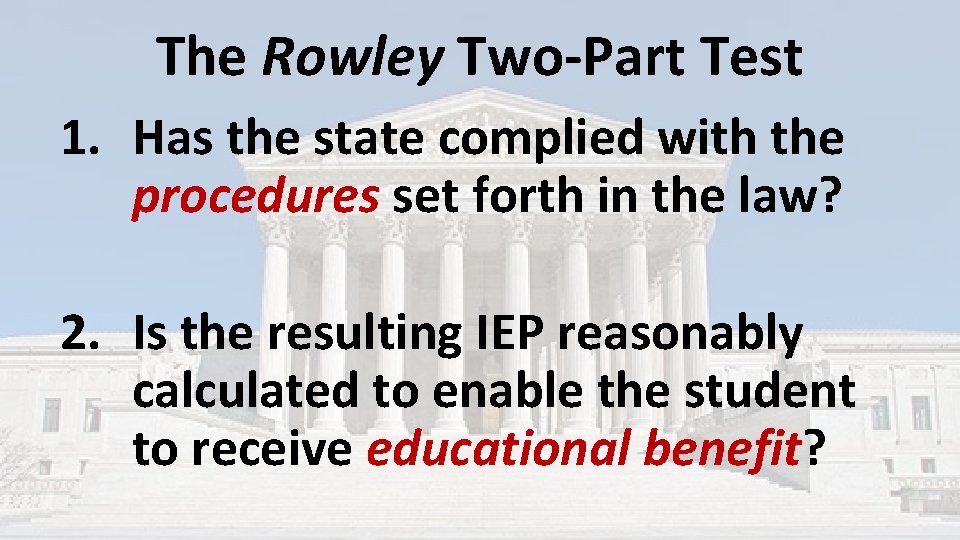
The Rowley Two-Part Test 1. Has the state complied with the procedures set forth in the law? 2. Is the resulting IEP reasonably calculated to enable the student to receive educational benefit?
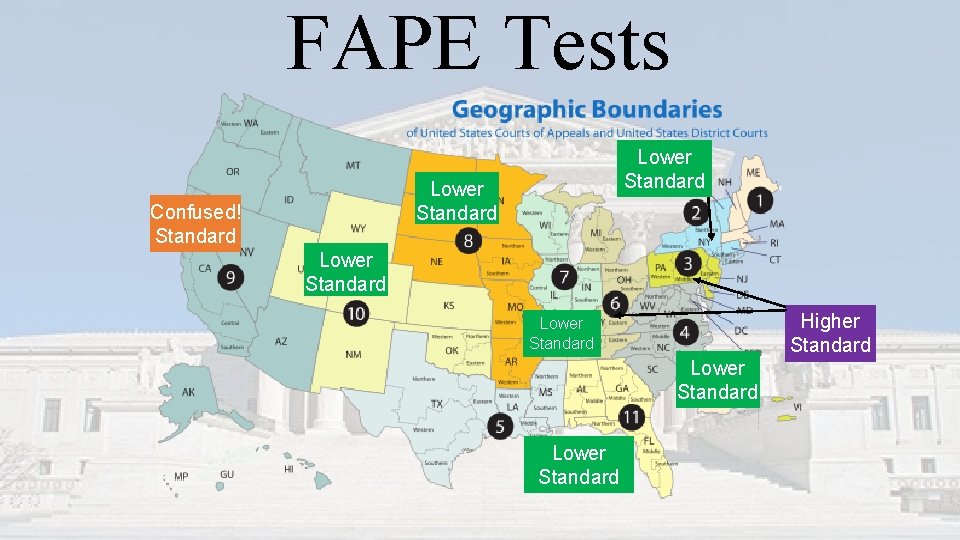
FAPE Tests Lower Standard Confused! Standard Lower Standard Higher Standard Lower Standard
The Tenth Circuit’s Educational Benefit Standard Endrew F. v. Douglas County School District R 1, 798 F. 3 d 1329, (10 th Cir. 2014)
The Tenth Circuit’s Educational Benefit Standard “The educational benefit mandated by the IDEA must merely be more than de minimis”
Appeal to the U. S. Supreme Court • On December 22, 2015 the parents appealed to the U. S. Supreme Court • Question Presented: What is the level of educational benefit school districts must confer on children with disabilities to provide them with the free appropriate public education guaranteed by the Individuals with Disabilities Education Act? Certiorari Granted on September 29, 2016
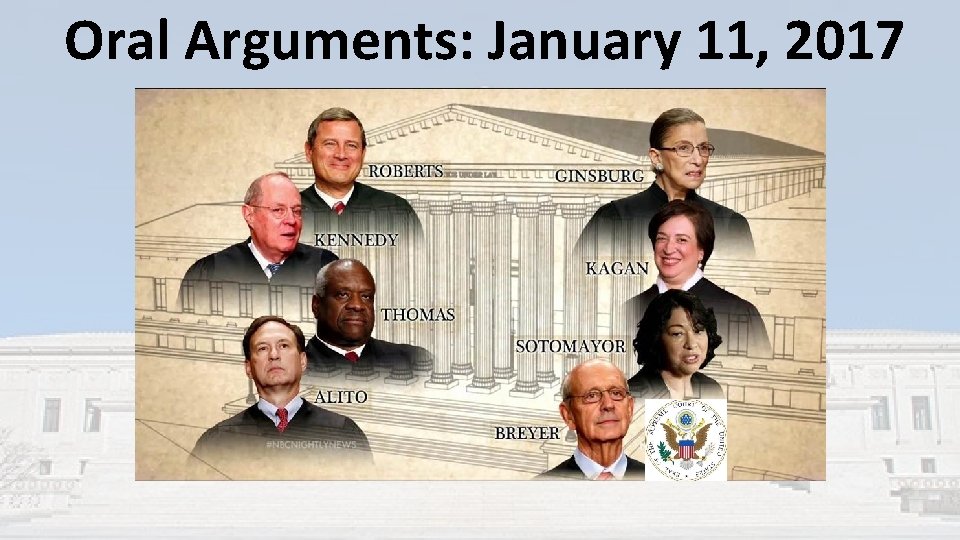
Oral Arguments: January 11, 2017
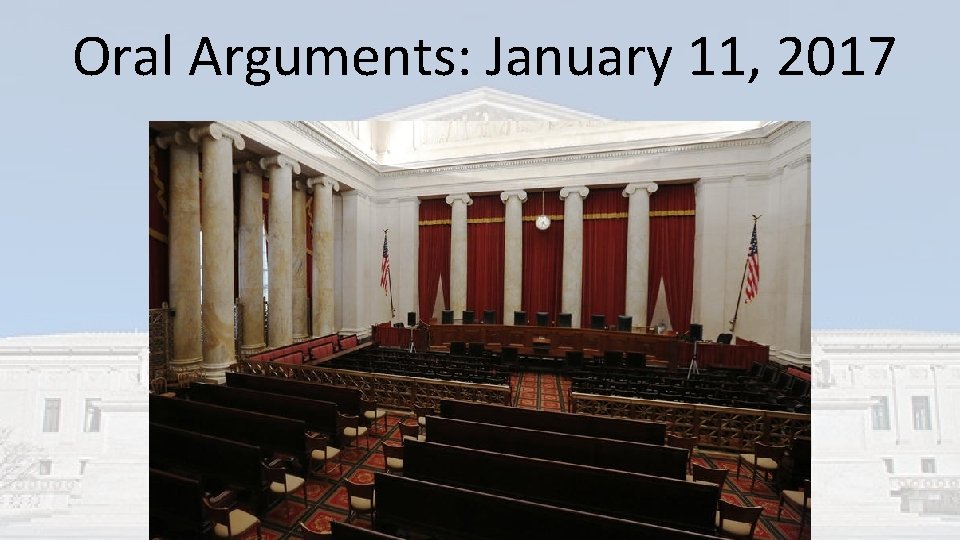
Oral Arguments: January 11, 2017
Oral Arguments: January 11, 2017
Oral Arguments: January 11, 2017
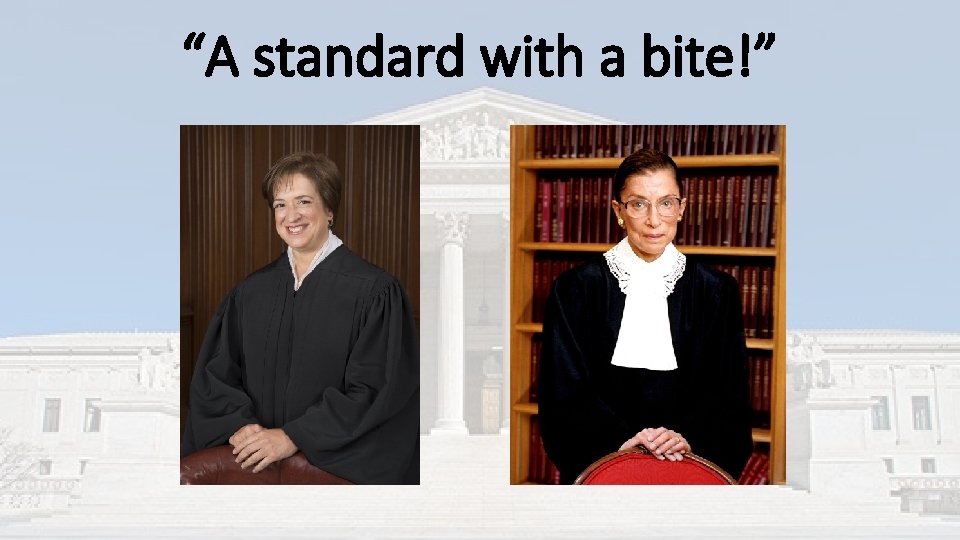
“A standard with a bite!”
“some benefit or SOME BENEFIT? ”
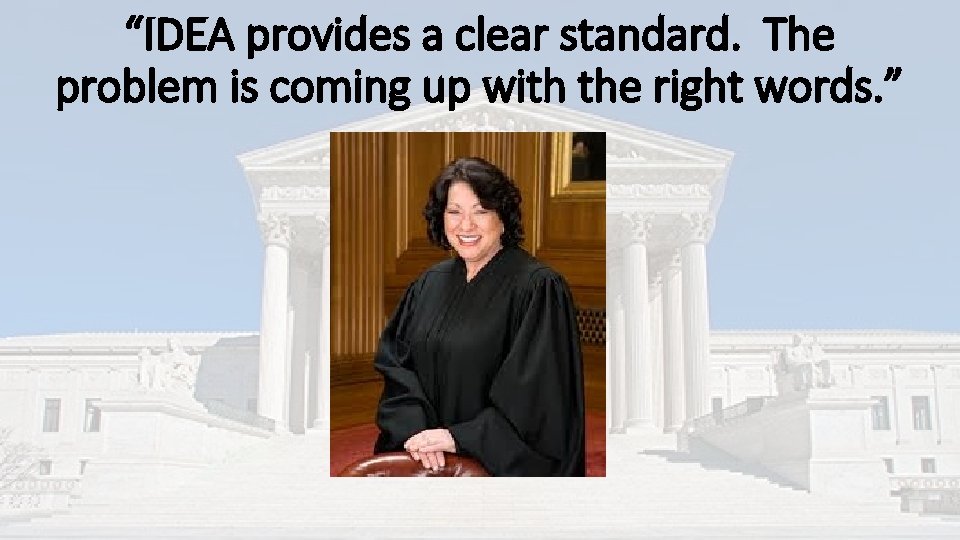
“IDEA provides a clear standard. The problem is coming up with the right words. ”
Supreme Court Ruling: March 22, 2017 In Rowley, “we declined…to endorse any one standard for determining when (students with disabilities) are receiving sufficient educational benefit to satisfy the requirements of the Act…“That more difficult problem is before us today. ” (Endrew, 2017, p. 1)
Supreme Court Ruling: March 22, 2017 • The High Court rejected the “merely more than de minimis” standard, vacating the decision and remanding the case back to the 10 th Circuit to apply the new standard. • “To meet its substantive obligation under the IDEA, a school must offer an IEP reasonably calculated to enable a child to make progress appropriate in light of the child’s circumstances. ” (Endrew, 2017, p. 16)
Endrew Takeaway #1 The Supreme Court rejected the “de minimis” or “trivial” educational benefit standard
The Demise of De Minimis “A student offered an educational program providing 'merely more than de minimis' progress from year to year can hardly be said to have been offered an education at all. ” “A substantive standard not focused on student progress would do little to remedy the pervasive and tragic academic stagnation that prompted Congress to act…. The IDEA demands more. ”
Endrew Takeaway #2 The Supreme Court rejected the maximizing standard the Court previously rejected in Rowley
Endrew Takeaway #3 The Endrew F. decision did not replace or overturn the Rowley decision; rather, it clarified its FAPE standard
“We find little significance in the Court’s language (in Rowley) concerning the requirement that States provide instruction calculated to confer some educational benefit. ” Endrew, 2017, p. 10
The Rowley/Endrew Test 1. In the development of an IEP, has the school agency complied with the procedures set forth in the IDEA? 2. Is the IEP developed through the IDEA’s procedures reasonably calculated to enable the child to make progress that is appropriate in light of his or her circumstances?
Endrew Takeaway #4 The full implications of the Endrew decision will not become clear until hearing officers and judges apply the Endrew standard to the facts presented in future FAPE litigation
The Role of the Courts “A standard not a formula” “We will not attempt to elaborate on what appropriate progress will look like from case to case…. The adequacy of a given IEP turns on the unique circumstances of the (student) for whom it was created. ”
The Role of the Courts "A reviewing court may fairly expect those authorities to be able to offer a cogent and responsive explanation for their decisions that shows the IEP is reasonably calculated to enable the child to make progress appropriate in light of his circumstances. ”
Endrew Takeaway #5 The Endrew decision provides guidance to special education leaders and teachers in developing IEPs that meet the Endrew standard.
Recommendation #1 Continue to train IEP teams to avoid procedural violations in the development of the IEP that could, in and of themselves, constitute a denial of FAPE.
Serious Procedural Errors • Improper IEP team membership • Failing to ensure a continuum of placement • Failing to include important components in an IEP • Predetermining services or placement • Placing a student prior to determining programming (“Shoehorning”)
Because the IEP process develops and formalizes a FAPE for a student with disabilities, the IEP is so important that the failure to properly develop and implement it may render a student’s entire special education program invalid in the eyes of the courts (Bateman, 2017)
Recommendation #2 Ensure meaningful parent involvement in IEP meetings and that their opinions are considered in establishing their child’s educational/behavioral goals.
Endrew & Parental Participation • An IEP must be drafted in compliance with a detailed set of procedures that “emphasize collaboration among parents and educators and require careful consideration of the child’s individual circumstances” • “this fact-intensive exercise (IEP development) will be informed not only by the expertise of school officials, but also by the input of the child’s parents” • “Judicial deference to school authorities will depend on their having provided parents in the IEP process with the opportunity to “fully air their … opinion on the requisite degree of progress”
Recommendation #3 When developing the content of a student’s IEP and subsequently reviewing and revising it, be sure that the present levels of performance and annual goals are based upon evaluations and other relevant data that are current.
Endrew, Assessment, PLAAFP statements • “A focus on the particular child is at the core of the IDEA. The instruction offered must be “specially designed” to meet a child’s “unique needs. ” (Endrew, 2017, p. 12) • An IEP is constructed only after careful consideration of the student’s present levels of achievement, disability, potential for growth. (Endrew, 2017, p. 12) • Courts have found IEPs invalid based solely on inadequate PLAAFP statements
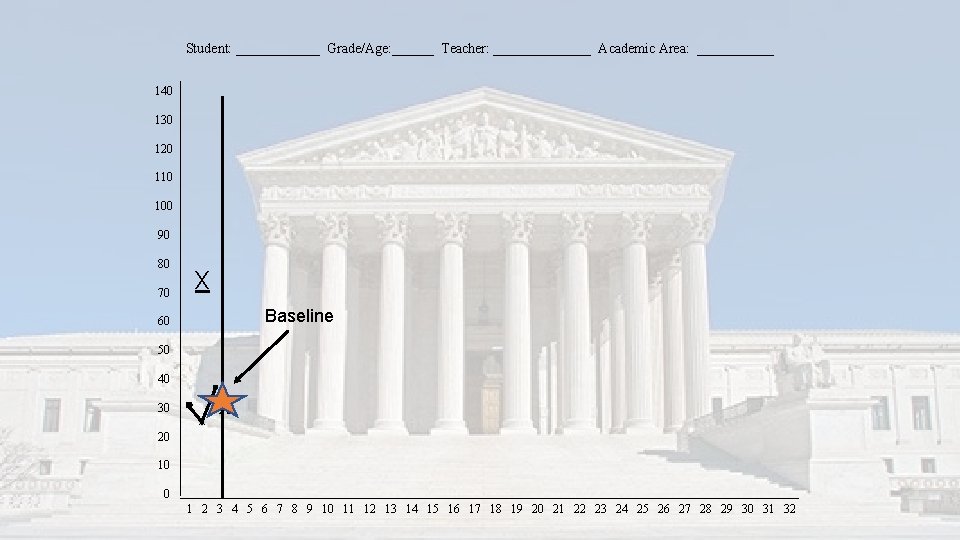
Student: ______ Grade/Age: ______ Teacher: _______ Academic Area: ______ 140 130 120 110 100 90 80 70 X Baseline 60 50 40 30 X 20 10 0 1 2 3 4 5 6 7 8 9 10 11 12 13 14 15 16 17 18 19 20 21 22 23 24 25 26 27 28 29 30 31 32
“In Light of the Child’s Circumstances” (Endrew, 2017, p. 11)
“There should be a direct relationship between the present levels of performance and the other components of the IEP. Thus, if the statement describes a problem with the child’s reading level and points to a deficiency in reading skills, the problem should be addressed under both (1) goals and (2) specific special education and related services provided to the child. ” (IDEA Regulations, 1997,
Recommendation #4 Ensure that annual IEP goals are challenging, appropriately ambitious, and measurable.
Endrew and Goals The essential function of the IEP is to set out a plan for pursuing academic and functional advancement (Endrew, 2017, p. 11)
“The goals may differ, but every child should have the chance to meet challenging objectives” (Endrew, 2017, p. 14)
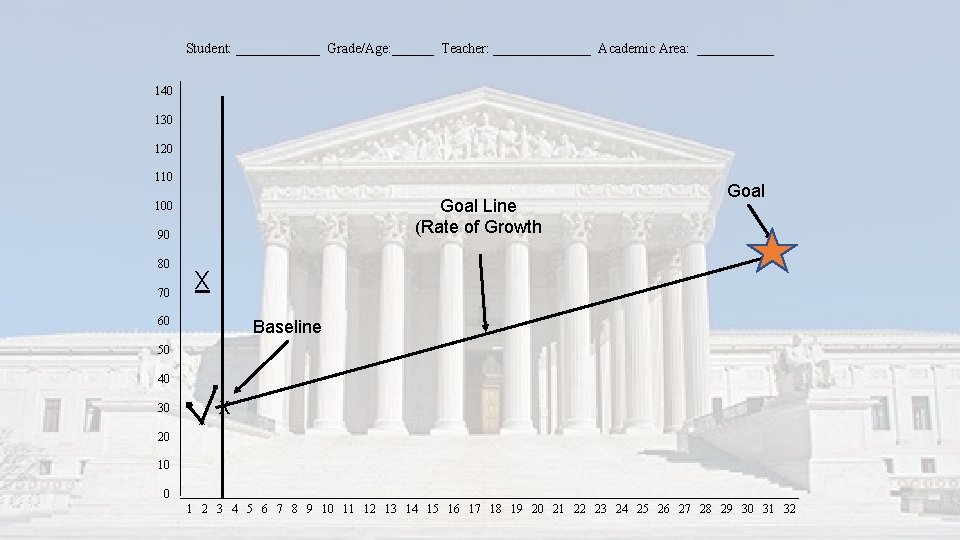
Student: ______ Grade/Age: ______ Teacher: _______ Academic Area: ______ 140 130 120 110 Goal Line (Rate of Growth 100 90 80 70 Goal X X 60 Baseline 50 40 30 X 20 10 0 1 2 3 4 5 6 7 8 9 10 11 12 13 14 15 16 17 18 19 20 21 22 23 24 25 26 27 28 29 30 31 32
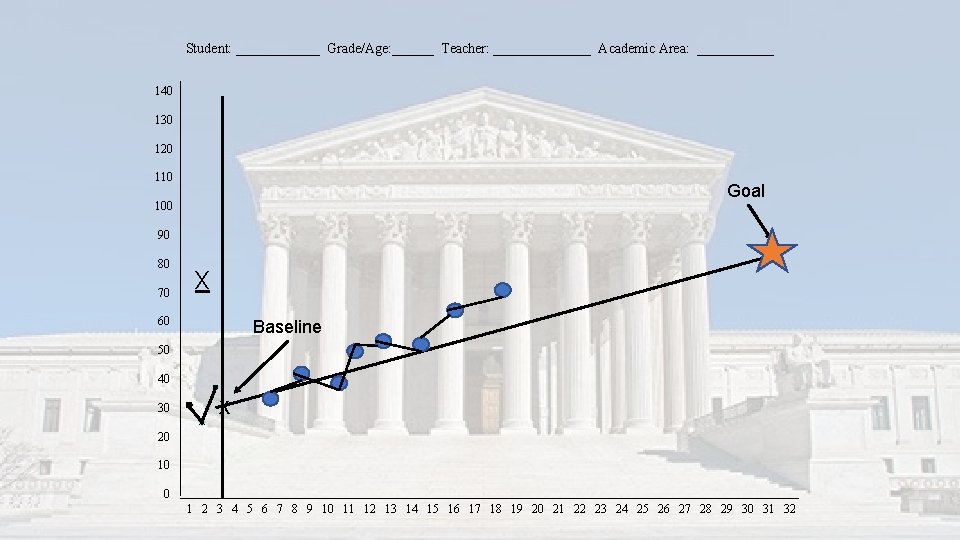
Recommendation #5 Continuously monitor and measure a child’s progress on annual goals (and objectives/benchmarks, if applicable) and maintain specific data to demonstrate that progress has been made.
The Importance of Measurable Goals • IEP teams must develop goal that can be measured. • Measurable must include three components: 1. Target behavior (observable & measurable) 2. How it will be measured 3. The criterion for acceptable performance
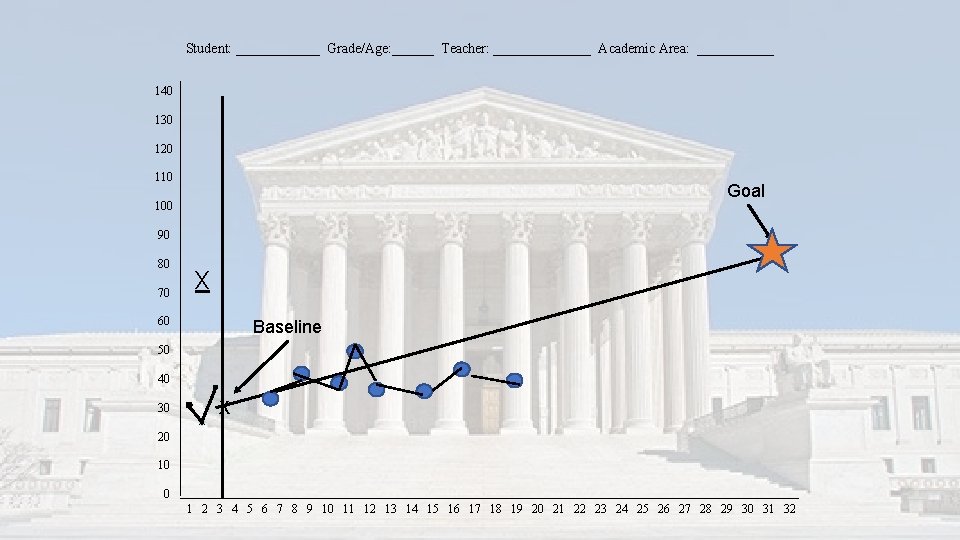
Recommendation #6 When progress report and other data do not reflect that an annual goal will be met, reconvene the IEP team to determine why, make needed instructional changes, and continue to collect data
“A substantive standard not focused on student progress would do little to remedy the pervasive and tragic academic stagnation that prompted Congress to act”
Student: ______ Grade/Age: ______ Teacher: _______ Academic Area: ______ 140 130 120 110 Goal 100 90 80 70 X X 60 Baseline 50 40 30 X 20 10 0 1 2 3 4 5 6 7 8 9 10 11 12 13 14 15 16 17 18 19 20 21 22 23 24 25 26 27 28 29 30 31 32
Student: ______ Grade/Age: ______ Teacher: _______ Academic Area: ______ 140 130 120 110 Goal 100 90 80 70 X X 60 Baseline 50 40 30 X 20 10 0 1 2 3 4 5 6 7 8 9 10 11 12 13 14 15 16 17 18 19 20 21 22 23 24 25 26 27 28 29 30 31 32
The Tenth Circuit Court’s Decision on Remand-9/2/17 “We therefore vacate our prior opinion, and remand to the United States District Court for the District of Colorado for further proceedings consistent with the Supreme Court’s decision. ”
The Colorado District Court’s Decision on Remand-2/12/18 • “I conclude that (Endrew) and his parent have met their burden to prove that the District’s April 2010 IEP failed to create an educational plan that was reasonably calculated to enable Petitioner to make progress, even in light of his unique circumstances. The IEP was not appropriately ambitious because it did not give (Endrew) the chance to meet challenging objectives. ” • “Accordingly, I reverse the Administrative Court Agency decision denying (Endrew) and his parents’ request for reimbursement of his tuition, transportation costs as well as reasonable attorneys; fees and litigation costs. ”
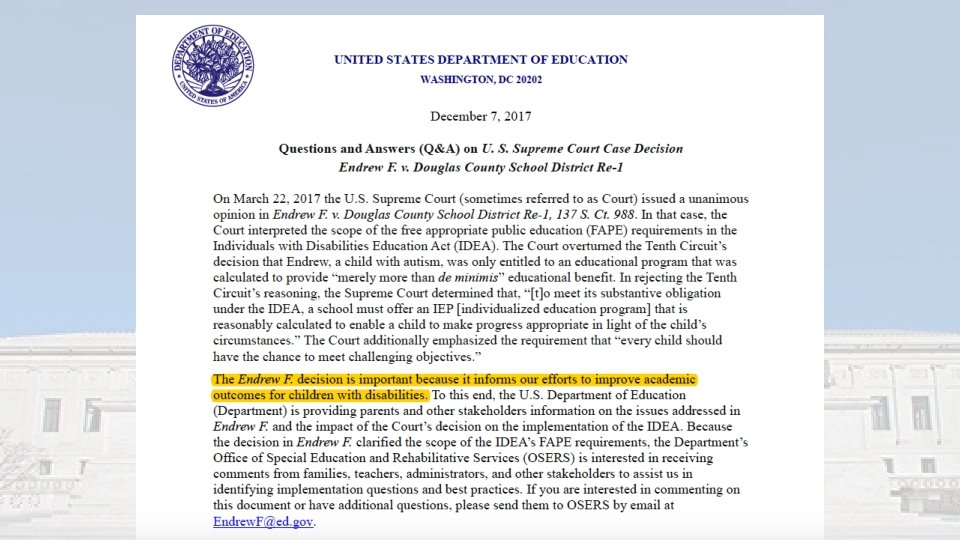
U. S. Department of Education • Question & Answer document on the Endrew F. decision on December 7, 2017 • “The Endrew F. decision is important because it informs our efforts to improve academic outcomes for children with disabilities” (Q & A, 2017, p. 1) • Comments to Q & A: Endrew F@ed. gov
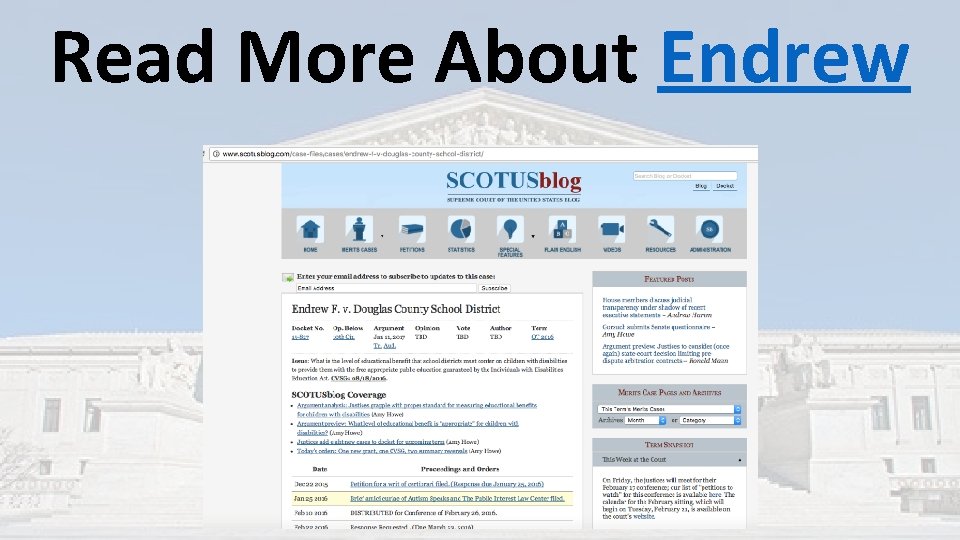
Read More About Endrew
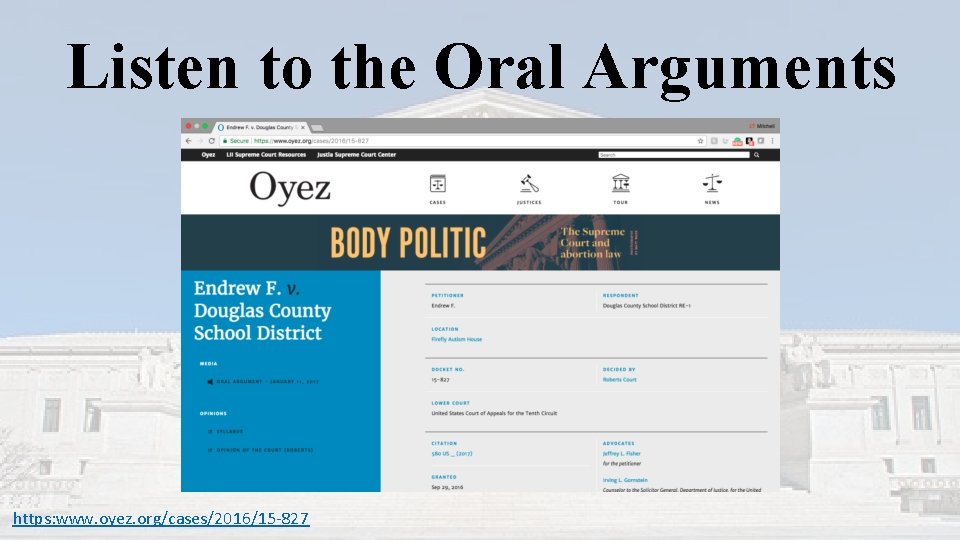
Listen to the Oral Arguments https: www. oyez. org/cases/2016/15 -827
Questions or Comments? ?