Chemistry Grade 10 Advanced Unit 4 p H

- Slides: 35
Chemistry Grade 10 Advanced Unit 4 p. H and acids Name: ------------------- Class: -----1
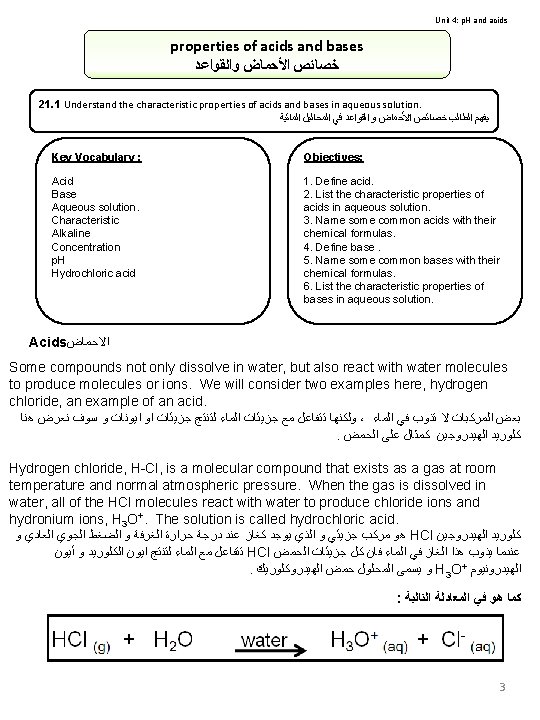
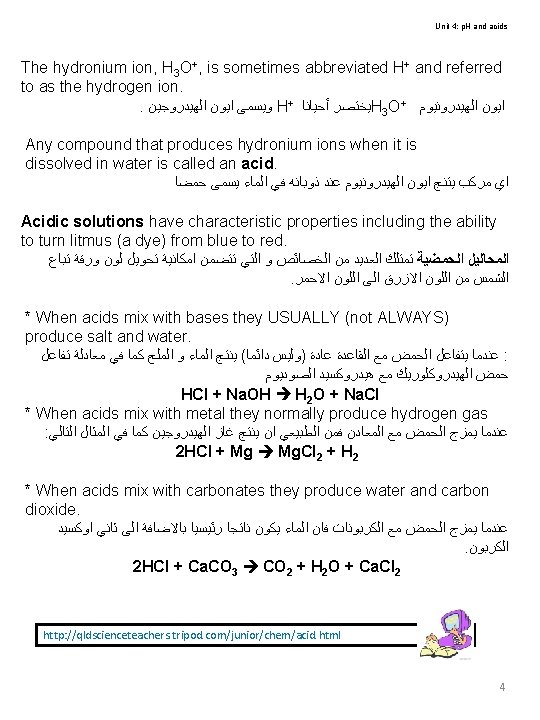
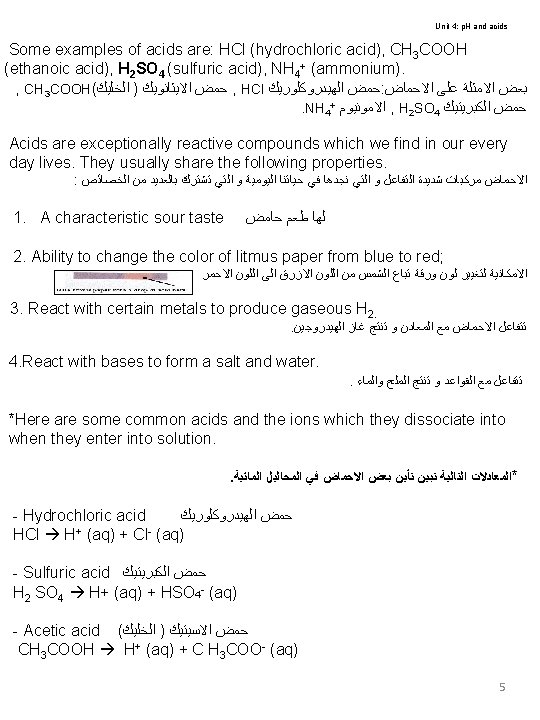
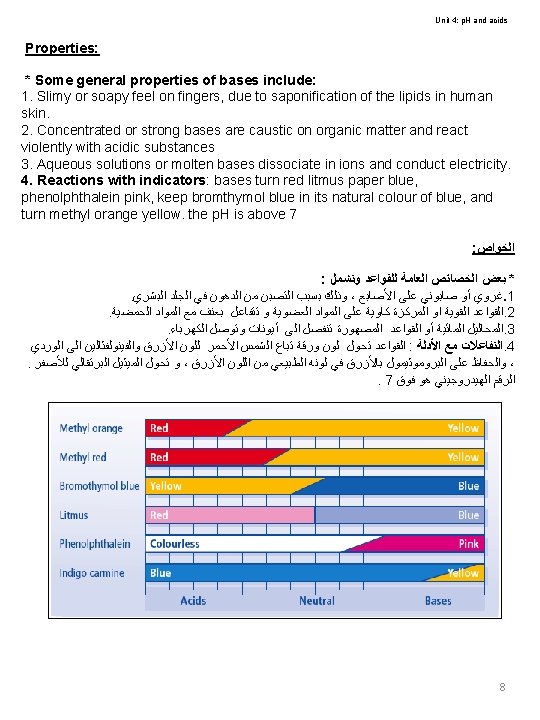
Unit 4: p. H and acids properties of acids and bases ﺧﺼﺎﺋﺺ ﺍﻷﺤﻤﺎﺽ ﻭﺍﻟﻘﻮﺍﻋﺪ 21. 1 Understand the characteristic properties of acids and bases in aqueous solution. ﻳﻔﻬﻢ ﺍﻟﻄﺎﻟﺐ ﺧﺼﺎﺋﺺ ﺍﻷﺤﻤﺎﺽ ﻭ ﺍﻟﻘﻮﺍﻋﺪ ﻓﻲ ﺍﻟﻤﺤﺎﻟﻴﻞ ﺍﻟﻤﺎﺋﻴﺔ Key Vocabulary : Objectives: Acid Base Aqueous solution. Characteristic Alkaline Concentration p. H Hydrochloric acid 1. Define acid. 2. List the characteristic properties of acids in aqueous solution. 3. Name some common acids with their chemical formulas. 4. Define base. 5. Name some common bases with their chemical formulas. 6. List the characteristic properties of bases in aqueous solution. Acids ﺍﻻﺣﻤﺎﺽ Some compounds not only dissolve in water, but also react with water molecules to produce molecules or ions. We will consider two examples here, hydrogen chloride, an example of an acid. ﻫﻨﺎ ﻧﻌﺮﺽ ﺳﻮﻑ ﻭ ﺍﻳﻮﻧﺎﺕ ﺍﻭ ﺟﺰﻳﺌﺎﺕ ﻟﺘﻨﺘﺞ ﺍﻟﻤﺎﺀ ﺟﺰﻳﺌﺎﺕ ﻣﻊ ﺗﺘﻔﺎﻋﻞ ﻭﻟﻜﻨﻬﺎ ، ﺍﻟﻤﺎﺀ ﻓﻲ ﺗﺬﻭﺏ ﻻ ﺍﻟﻤﺮﻛﺒﺎﺕ ﺑﻌﺾ . ﺍﻟﺤﻤﺾ ﻋﻠﻰ ﻛﻤﺜﺎﻝ ﺍﻟﻬﻴﺪﺭﻭﺟﻴﻦ ﻛﻠﻮﺭﻳﺪ Hydrogen chloride, H-Cl, is a molecular compound that exists as a gas at room temperature and normal atmospheric pressure. When the gas is dissolved in water, all of the HCl molecules react with water to produce chloride ions and hydronium ions, H 3 O+. The solution is called hydrochloric acid. ﻭ ﺍﻟﻌﺎﺩﻱ ﺍﻟﺠﻮﻱ ﺍﻟﻀﻐﻂ ﻭ ﺍﻟﻐﺮﻓﺔ ﺣﺮﺍﺭﺓ ﺩﺭﺟﺔ ﻋﻨﺪ ﻛﻐﺎﺯ ﻳﻮﺟﺪ ﺍﻟﺬﻱ ﻭ ﺟﺰﻳﺌﻲ ﻣﺮﻛﺐ ﻫﻮ HCl ﺍﻟﻬﻴﺪﺭﻭﺟﻴﻦ ﻛﻠﻮﺭﻳﺪ ﺃﻴﻮﻥ ﻭ ﺍﻟﻜﻠﻮﺭﻳﺪ ﺍﻳﻮﻥ ﻟﺘﻨﺘﺞ ﺍﻟﻤﺎﺀ ﻣﻊ ﺗﺘﻔﺎﻋﻞ HCl ﺍﻟﺤﻤﺾ ﺟﺰﻳﺌﺎﺕ ﻛﻞ ﻓﺎﻥ ﺍﻟﻤﺎﺀ ﻓﻲ ﺍﻟﻐﺎﺯ ﻫﺬﺍ ﻳﺬﻭﺏ ﻋﻨﺪﻣﺎ . ﺍﻟﻬﻴﺪﺭﻭﻛﻠﻮﺭﻳﻚ ﺣﻤﺾ ﺍﻟﻤﺤﻠﻮﻝ ﻳﺴﻤﻰ ﻭ H 3 O+ ﺍﻟﻬﻴﺪﺭﻭﻧﻴﻮﻡ : ﺍﻟﺘﺎﻟﻴﺔ ﺍﻟﻤﻌﺎﺩﻟﺔ ﻓﻲ ﻫﻮ ﻛﻤﺎ 3
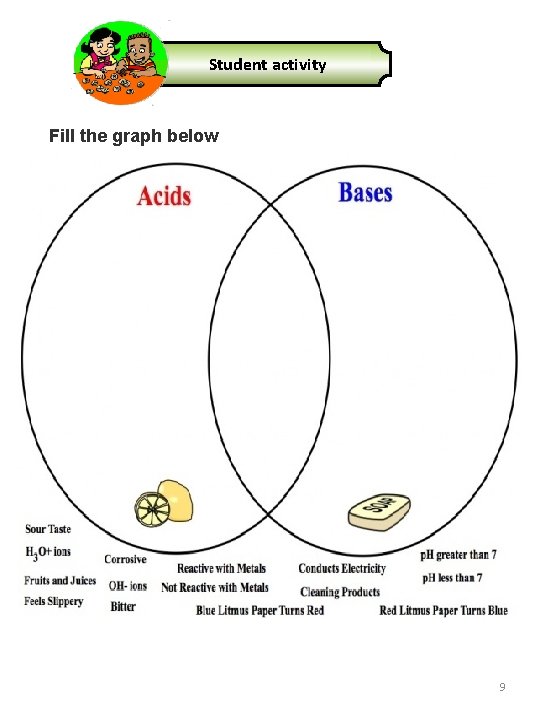
Student activity Fill the graph below 9
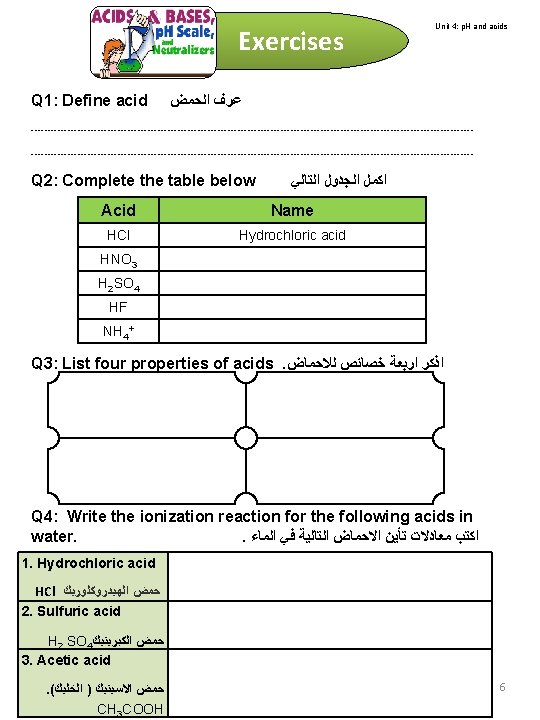
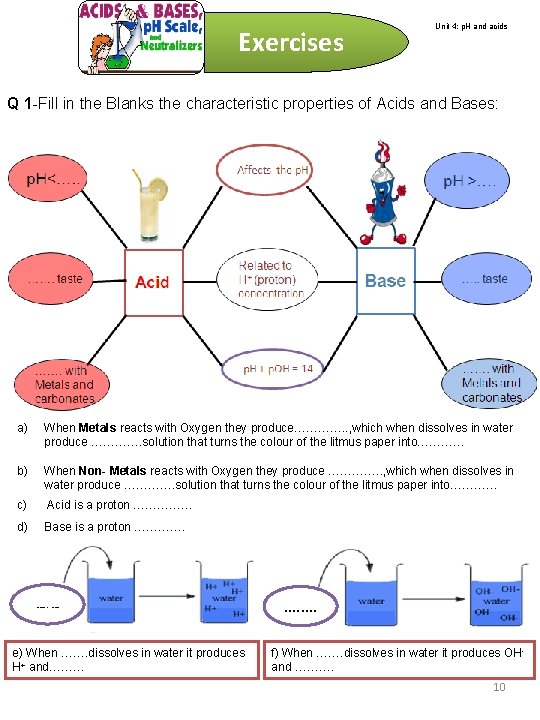
Exercises Unit 4: p. H and acids Q 1 -Fill in the Blanks the characteristic properties of Acids and Bases: a) When Metals reacts with Oxygen they produce…………. . , which when dissolves in water produce …………. solution that turns the colour of the litmus paper into………… b) When Non- Metals reacts with Oxygen they produce …………. . , which when dissolves in water produce …………. solution that turns the colour of the litmus paper into………… c) Acid is a proton …………… d) Base is a proton …………. …. . … e) When ……. dissolves in water it produces H+ and……… …. . … f) When ……. dissolves in water it produces OH- and ………. 10
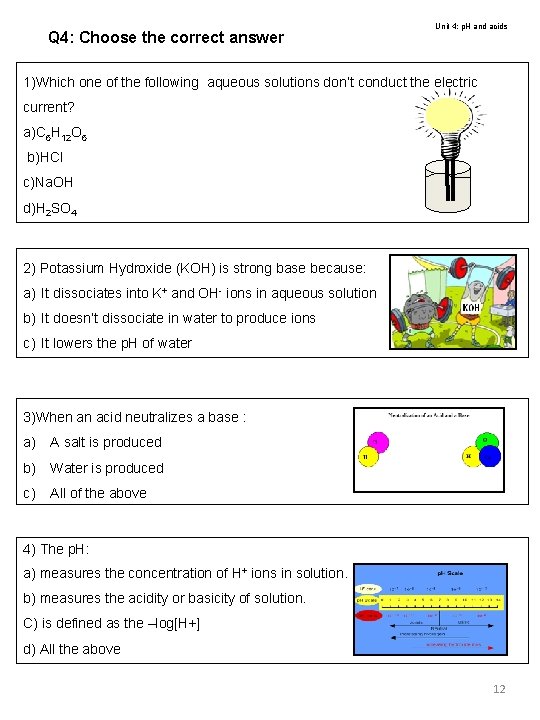
Q 4: Choose the correct answer Unit 4: p. H and acids 1)Which one of the following aqueous solutions don’t conduct the electric current? a)C 6 H 12 O 6 b)HCl c)Na. OH d)H 2 SO 4 2) Potassium Hydroxide (KOH) is strong base because: a) It dissociates into K+ and OH- ions in aqueous solution b) It doesn’t dissociate in water to produce ions c) It lowers the p. H of water 3)When an acid neutralizes a base : a) A salt is produced b) Water is produced c) All of the above 4) The p. H: a) measures the concentration of H+ ions in solution. b) measures the acidity or basicity of solution. C) is defined as the –log[H+] d) All the above 12
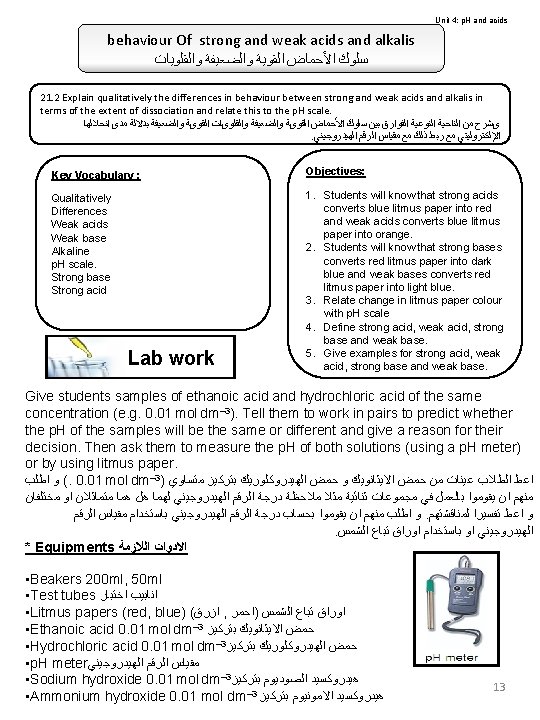
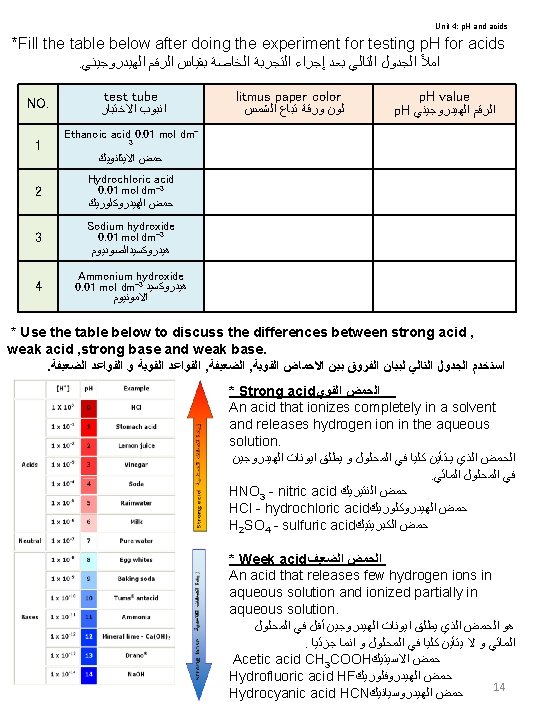
Unit 4: p. H and acids behaviour Of strong and weak acids and alkalis ﺳﻠﻮﻙ ﺍﻷﺤﻤﺎﺽ ﺍﻟﻘﻮﻳﺔ ﻭﺍﻟﻀﻌﻴﻔﺔ ﻭﺍﻟﻘﻠﻮﻳﺎﺕ 21. 2 Explain qualitatively the differences in behaviour between strong and weak acids and alkalis in terms of the extent of dissociation and relate this to the p. H scale. یﺸﺮﺡ ﻣﻦ ﺍﻟﻨﺎﺣﻴﺔ ﺍﻟﻨﻮﻋﻴﺔ ﺍﻟﻔﻮﺍﺭﻕ ﺑﻴﻦ ﺳﻠﻮﻙ ﺍﻷﺤﻤﺎﺽ ﺍﻟﻘﻮیﺔ ﻭﺍﻟﻀﻌﻴﻔﺔ ﻭﺍﻟﻘﻠﻮیﺎﺕ ﺍﻟﻘﻮیﺔ ﻭﺍﻟﻀﻌﻴﻔﺔ ﺑﺪﻻﻟﺔ ﻣﺪﻯ ﺍﻧﺤﻼﻟﻬﺎ . ﺍﻹﻟﻜﺘﺮﻭﻟﻴﺘﻲ ﻣﻊ ﺭﺑﻂ ﺫﻟﻚ ﻣﻊ ﻣﻘﻴﺎﺱ ﺍﻟﺮﻗﻢ ﺍﻟﻬﻴﺪﺭﻭﺟﻴﻨﻲ Key Vocabulary : Objectives: Qualitatively Differences Weak acids Weak base Alkaline p. H scale. Strong base Strong acid 1. Students will know that strong acids converts blue litmus paper into red and weak acids converts blue litmus paper into orange. 2. Students will know that strong bases converts red litmus paper into dark blue and weak bases converts red litmus paper into light blue. 3. Relate change in litmus paper colour with p. H scale 4. Define strong acid, weak acid, strong base and weak base. 5. Give examples for strong acid, weak acid, strong base and weak base. Lab work Give students samples of ethanoic acid and hydrochloric acid of the same concentration (e. g. 0. 01 mol dm– 3). Tell them to work in pairs to predict whether the p. H of the samples will be the same or different and give a reason for their decision. Then ask them to measure the p. H of both solutions (using a p. H meter) or by using litmus paper. ﺍﻃﻠﺐ ﻭ (. 0. 01 mol dm– 3) ﻣﺘﺴﺎﻭﻱ ﺑﺘﺮﻛﻴﺰ ﺍﻟﻬﻴﺪﺭﻭﻛﻠﻮﺭﻳﻚ ﺣﻤﺾ ﻭ ﺍﻻﻳﺜﺎﻧﻮﻳﻚ ﺣﻤﺾ ﻣﻦ ﻋﻴﻨﺎﺕ ﺍﻟﻄﻼﺏ ﺍﻋﻂ ﻣﺨﺘﻠﻔﺎﻥ ﺍﻭ ﻣﺘﻤﺎﺛﻼﻥ ﻫﻤﺎ ﻫﻞ ﻟﻬﻤﺎ ﺍﻟﻬﻴﺪﺭﻭﺟﻴﻨﻲ ﺍﻟﺮﻗﻢ ﺩﺭﺟﺔ ﻣﻼﺣﻈﺔ ﻣﺜﻼ ﺛﻨﺎﺋﻴﺔ ﻣﺠﻤﻮﻋﺎﺕ ﻓﻲ ﺑﺎﻟﻌﻤﻞ ﻳﻘﻮﻣﻮﺍ ﺍﻥ ﻣﻨﻬﻢ ﺍﻟﺮﻗﻢ ﻣﻘﻴﺎﺱ ﺑﺎﺳﺘﺨﺪﺍﻡ ﺍﻟﻬﻴﺪﺭﻭﺟﻴﻨﻲ ﺍﻟﺮﻗﻢ ﺩﺭﺟﺔ ﺑﺤﺴﺎﺏ ﻳﻘﻮﻣﻮﺍ ﺍﻥ ﻣﻨﻬﻢ ﺍﻃﻠﺐ ﻭ . ﻟﻤﻨﺎﻗﺸﺘﻬﻢ ﺗﻔﺴﻴﺮﺍ ﺍﻋﻂ ﻭ . ﺍﻟﺸﻤﺲ ﺗﺒﺎﻉ ﺍﻭﺭﺍﻕ ﺑﺎﺳﺘﺨﺪﺍﻡ ﺍﻭ ﺍﻟﻬﻴﺪﺭﻭﺟﻴﻨﻲ * Equipments ﺍﻟﻼﺯﻣﺔ ﺍﻻﺩﻭﺍﺕ • Beakers 200 ml, 50 ml • Test tubes ﺍﺧﺘﺒﺎﺭ ﺍﻧﺎﺑﻴﺐ • Litmus papers (red, blue) ( ﺍﺯﺭﻕ , )ﺍﺣﻤﺮ ﺍﻟﺸﻤﺲ ﺗﺒﺎﻉ ﺍﻭﺭﺍﻕ • Ethanoic acid 0. 01 mol dm– 3 ﺑﺘﺮﻛﻴﺰ ﺍﻻﻳﺜﺎﻧﻮﻳﻚ ﺣﻤﺾ • Hydrochloric acid 0. 01 mol dm– 3 ﺑﺘﺮﻛﻴﺰ ﺍﻟﻬﻴﺪﺭﻭﻛﻠﻮﺭﻳﻚ ﺣﻤﺾ • p. H meter ﺍﻟﻬﻴﺪﺭﻭﺟﻴﻨﻲ ﺍﻟﺮﻗﻢ ﻣﻘﻴﺎﺱ • Sodium hydroxide 0. 01 mol dm– 3 ﺑﺘﺮﻛﻴﺰ ﺍﻟﺼﻮﺩﻳﻮﻡ ﻫﻴﺪﺭﻭﻛﺴﻴﺪ • Ammonium hydroxide 0. 01 mol dm– 3 ﺑﺘﺮﻛﻴﺰ ﺍﻻﻣﻮﻧﻴﻮﻡ ﻫﻴﺪﺭﻭﻛﺴﻴﺪ 13
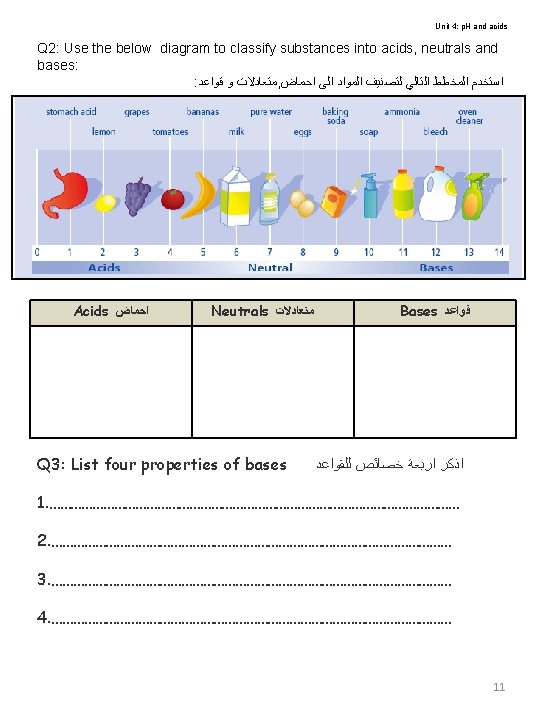
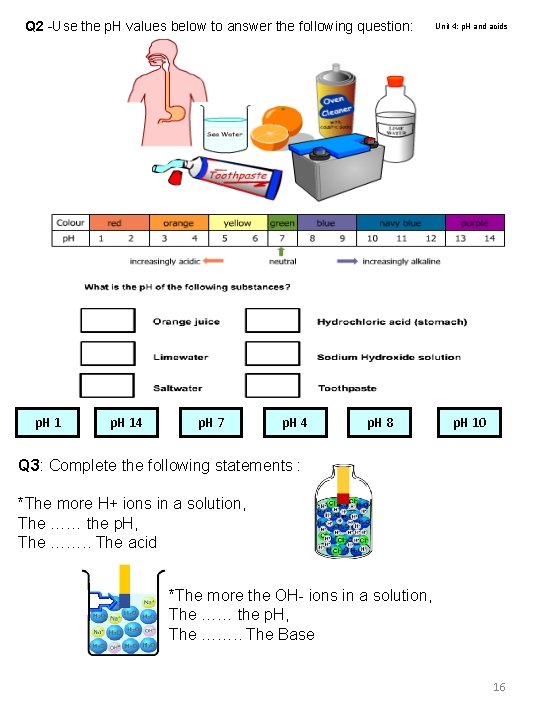
Q 2 -Use the p. H values below to answer the following question: p. H 14 p. H 7 p. H 4 p. H 8 Unit 4: p. H and acids p. H 10 Q 3: Complete the following statements : *The more H+ ions in a solution, The …… the p. H, The ……. . The acid *The more the OH- ions in a solution, The …… the p. H, The ……. . The Base 16
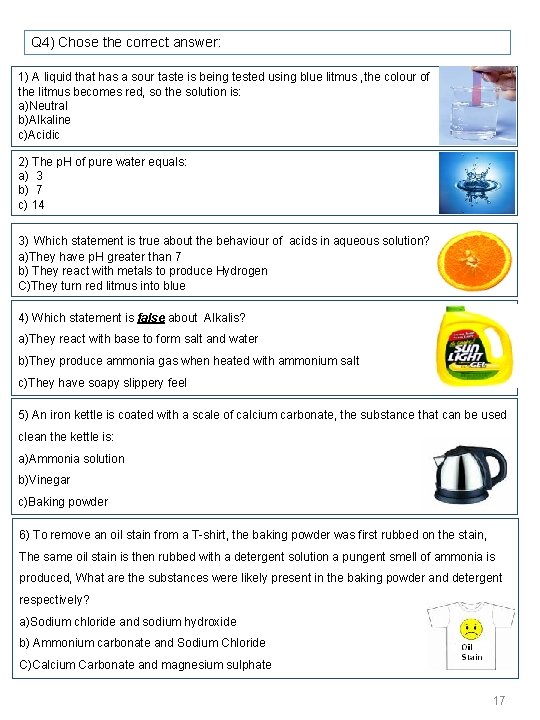
Q 4) Chose the correct answer: 1) A liquid that has a sour taste is being tested using blue litmus , the colour of the litmus becomes red, so the solution is: a)Neutral b)Alkaline c)Acidic 2) The p. H of pure water equals: a) 3 b) 7 c) 14 3) Which statement is true about the behaviour of acids in aqueous solution? a)They have p. H greater than 7 b) They react with metals to produce Hydrogen C)They turn red litmus into blue 4) Which statement is false about Alkalis? a)They react with base to form salt and water b)They produce ammonia gas when heated with ammonium salt c)They have soapy slippery feel 5) An iron kettle is coated with a scale of calcium carbonate, the substance that can be used clean the kettle is: a)Ammonia solution b)Vinegar c)Baking powder 6) To remove an oil stain from a T-shirt, the baking powder was first rubbed on the stain, The same oil stain is then rubbed with a detergent solution a pungent smell of ammonia is produced, What are the substances were likely present in the baking powder and detergent respectively? a)Sodium chloride and sodium hydroxide b) Ammonium carbonate and Sodium Chloride C)Calcium Carbonate and magnesium sulphate 17
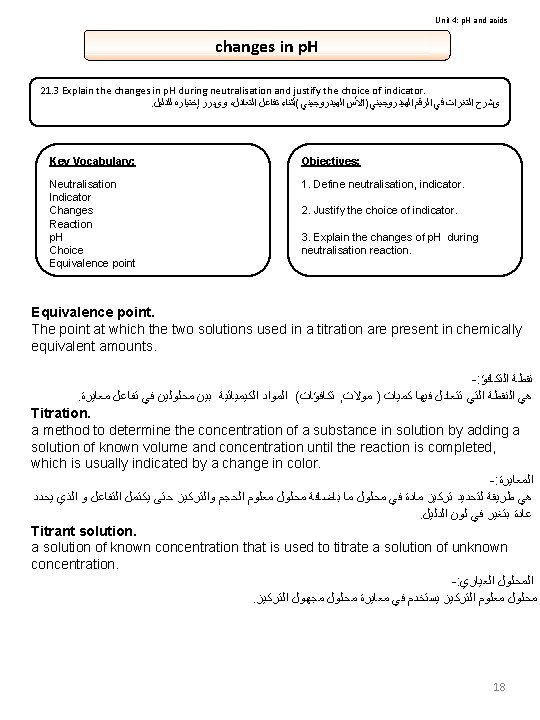
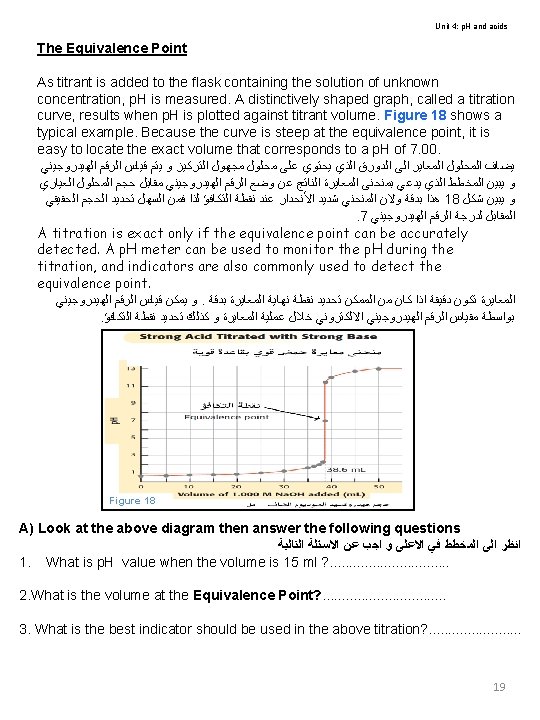
Unit 4: p. H and acids changes in p. H 21. 3 Explain the changes in p. H during neutralisation and justify the choice of indicator. . ﻭیﺒﺮﺭ ﺇﺧﺘﻴﺎﺭﻩ ﻟﻠﺪﻟﻴﻞ ، یﺸﺮﺡ ﺍﻟﺘﻐﺭﺍﺕ ﻓﻲ ﺍﻟﺮﻗﻢ ﺍﻟﻬﻴﺪﺭﻭﺟﻴﻨﻲ) ﺍﻷﺲ ﺍﻟﻬﻴﺪﺭﻭﺟﻴﻨﻲ (ﺃﺜﻨﺎﺀ ﺗﻔﺎﻋﻞ ﺍﻟﺘﻌﺎﺩﻝ Key Vocabulary: Objectives: Neutralisation Indicator Changes Reaction p. H Choice Equivalence point 1. Define neutralisation, indicator. 2. Justify the choice of indicator. 3. Explain the changes of p. H during neutralisation reaction. Equivalence point. The point at which the two solutions used in a titration are present in chemically equivalent amounts. -: ﺍﻟﺘﻜﺎﻓﺆ ﻧﻘﻄﺔ . ﻣﻌﺎﻳﺮﺓ ﺗﻔﺎﻋﻞ ﻓﻲ ﻣﺤﻠﻮﻟﻴﻦ ﺑﻴﻦ ﺍﻟﻜﻴﻤﻴﺎﺋﻴﺔ ﺍﻟﻤﻮﺍﺩ ( ﺗﻜﺎﻓﺆﺎﺕ , ﻣﻮﻻﺕ ) ﻛﻤﻴﺎﺕ ﻓﻴﻬﺎ ﺗﺘﻌﺎﺩﻝ ﺍﻟﺘﻲ ﺍﻟﻨﻘﻄﺔ ﻫﻲ Titration. a method to determine the concentration of a substance in solution by adding a solution of known volume and concentration until the reaction is completed, which is usually indicated by a change in color. -: ﺍﻟﻤﻌﺎﻳﺮﺓ ﻳﺤﺪﺩ ﺍﻟﺬﻱ ﻭ ﺍﻟﺘﻔﺎﻋﻞ ﻳﻜﺘﻤﻞ ﺣﺘﻰ ﻭﺍﻟﺘﺮﻛﻴﺰ ﺍﻟﺤﺠﻢ ﻣﻌﻠﻮﻡ ﻣﺤﻠﻮﻝ ﺑﺎﺿﺎﻓﺔ ﻣﺎ ﻣﺤﻠﻮﻝ ﻓﻲ ﻣﺎﺩﺓ ﺗﺮﻛﻴﺰ ﻟﺘﺤﺪﻳﺪ ﻃﺮﻳﻘﺔ ﻫﻲ . ﺍﻟﺪﻟﻴﻞ ﻟﻮﻥ ﻓﻲ ﺑﺘﻐﻴﺮ ﻋﺎﺩﺓ Titrant solution. a solution of known concentration that is used to titrate a solution of unknown concentration. -: ﺍﻟﻌﻴﺎﺭﻱ ﺍﻟﻤﺤﻠﻮﻝ . ﺍﻟﺘﺮﻛﻴﺰ ﻣﺠﻬﻮﻝ ﻣﺤﻠﻮﻝ ﻣﻌﺎﻳﺮﺓ ﻓﻲ ﻳﺴﺘﺨﺪﻡ ﺍﻟﺘﺮﻛﻴﺰ ﻣﻌﻠﻮﻡ ﻣﺤﻠﻮﻝ 18
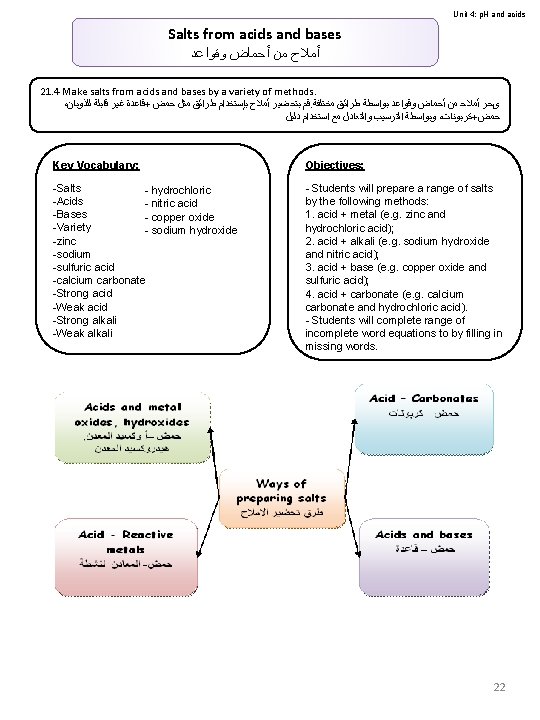
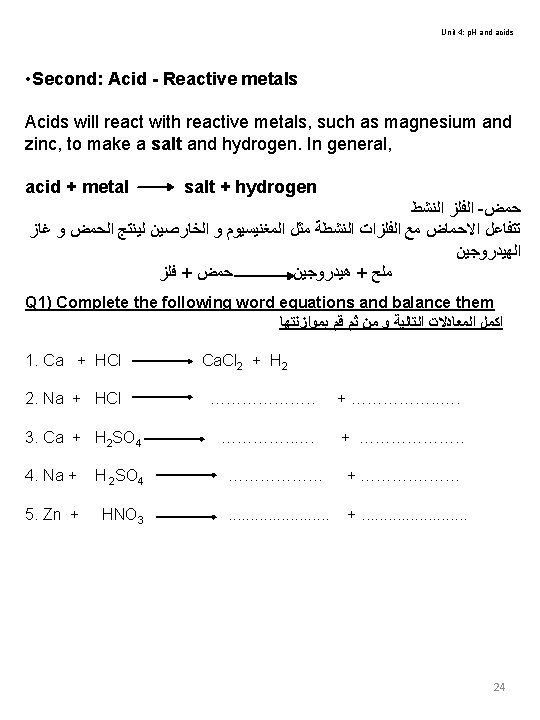
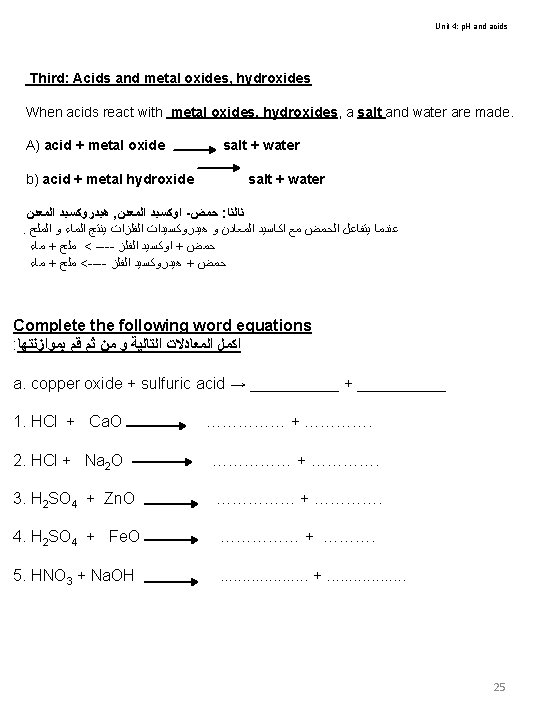
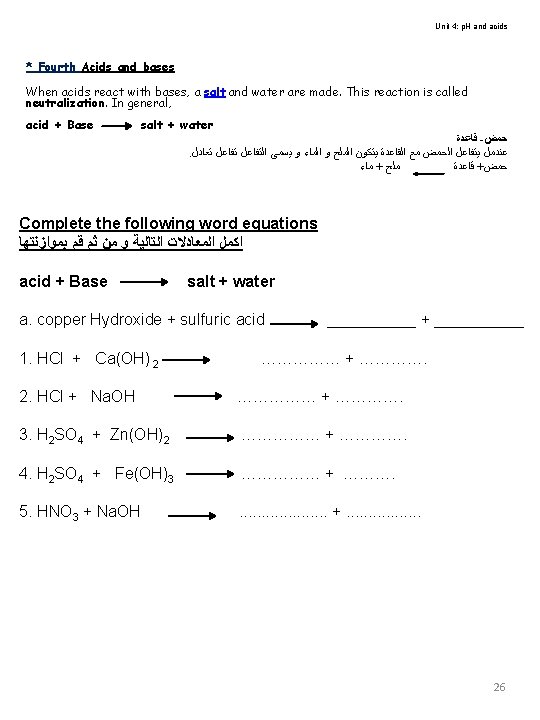
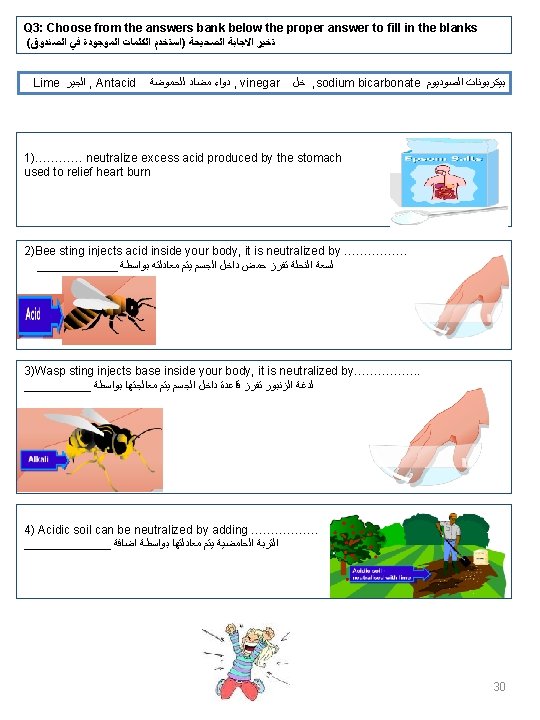
Unit 4: p. H and acids Salts from acids and bases ﺃﻤﻼﺡ ﻣﻦ ﺃﺤﻤﺎﺽ ﻭﻗﻮﺍﻋﺪ 21. 4 Make salts from acids and bases by a variety of methods. ، ﻗﺎﻋﺪﺓ ﻏﻴﺮ ﻗﺎﺑﻠﺔ ﻟﻠﺬﻭﺑﺎﻥ + ﻗﻢ ﺑﺘﺤﻀﻴﺮ ﺃﻤﻼﺡ ﺑﺈﺳﺘﺨﺪﺍﻡ ﻃﺮﺍﺋﻖ ﻣﺜﻞ ﺣﻤﺾ. یﺤﺭ ﺃﻤﻼﺣ ﻣﻦ ﺃﺤﻤﺎﺽ ﻭﻗﻮﺍﻋﺪ ﺑﻮﺍﺳﻄﺔ ﻃﺮﺍﺋﻖ ﻣﺨﺘﻠﻔﺔ ﻭﺑﻮﺍﺳﻄﺔ ﺍﻟﺘﺮﺳﻴﺐ ﻭﺍﻟﺘﻌﺎﺩﻝ ﻣﻊ ﺍﺳﺘﺨﺪﺍﻡ ﺩﻟﻴﻞ ، ﻛﺮﺑﻮﻧﺎﺕ + ﺣﻤﺾ Key Vocabulary: Objectives: -Salts - hydrochloric -Acids - nitric acid -Bases - copper oxide -Variety - sodium hydroxide -zinc -sodium -sulfuric acid -calcium carbonate -Strong acid -Weak acid -Strong alkali -Weak alkali - Students will prepare a range of salts by the following methods: 1. acid + metal (e. g. zinc and hydrochloric acid); 2. acid + alkali (e. g. sodium hydroxide and nitric acid); 3. acid + base (e. g. copper oxide and sulfuric acid); 4. acid + carbonate (e. g. calcium carbonate and hydrochloric acid). - Students will complete range of incomplete word equations to by filling in missing words. 22
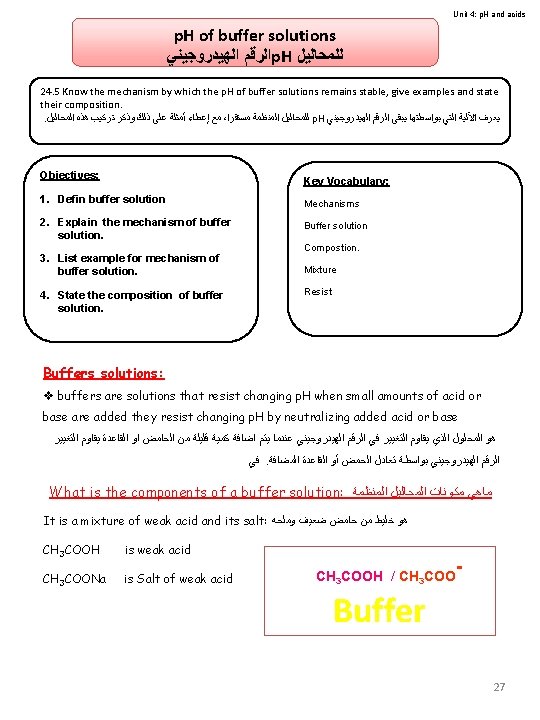
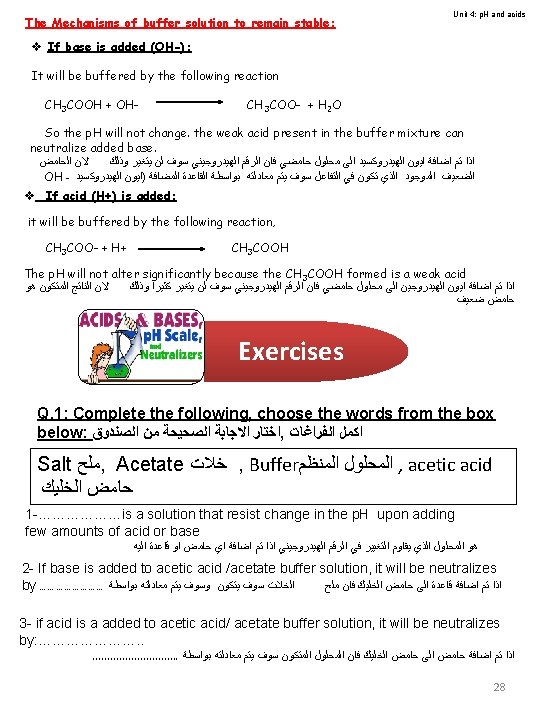
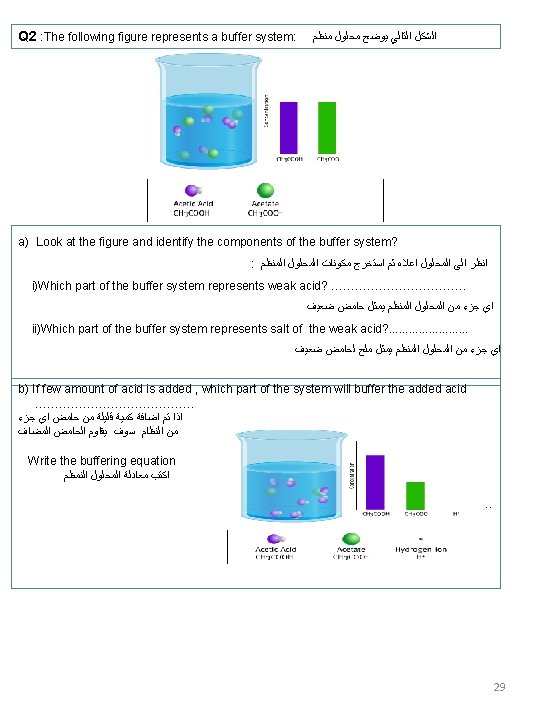
Unit 4: p. H and acids p. H of buffer solutions ﺍﻟﺮﻗﻢ ﺍﻟﻬﻴﺪﺭﻭﺟﻴﻨﻲ p. H ﻟﻠﻤﺤﺎﻟﻴﻞ 24. 5 Know the mechanism by which the p. H of buffer solutions remains stable, give examples and state their composition. . ﻣﻊ ﺇﻋﻄﺎﺀ ﺃﻤﺜﻠﺔ ﻋﻠﻰ ﺫﻟﻚ ﻭﺫﻛﺮ ﺗﺮﻛﻴﺐ ﻫﺬﻩ ﺍﻟﻤﺤﺎﻟﻴﻞ ، ﻟﻠﻤﺤﺎﻟﻴﻞ ﺍﻟﻤﻨﻈﻤﺔ ﻣﺴﺘﻘﺮﺍ p. H ﻳﻌﺮﻑ ﺍﻵﻠﻴﺔ ﺍﻟﺘﻲ ﺑﻮﺍﺳﻄﺘﻬﺎ ﻳﺒﻘﻰ ﺍﻟﺮﻗﻢ ﺍﻟﻬﻴﺪﺭﻭﺟﻴﻨﻲ Objectives: Key Vocabulary: 1. Defin buffer solution Mechanisms 2. Explain the mechanism of buffer solution. Buffer solution 3. List example for mechanism of buffer solution. 4. State the composition of buffer solution. Compostion. Mixture Resist Buffers solutions: v buffers are solutions that resist changing p. H when small amounts of acid or base are added they resist changing p. H by neutralizing added acid or base ﻫﻮ ﺍﻟﻤﺤﻠﻮﻝ ﺍﻟﺬﻱ ﻳﻘﺎﻭﻡ ﺍﻟﺘﻐﻴﻴﺮ ﻓﻲ ﺍﻟﺮﻗﻢ ﺍﻟﻬﻴﺪﺭﻭﺟﻴﻨﻲ ﻋﻨﺪﻣﺎ ﻳﺘﻢ ﺍﺿﺎﻓﺔ ﻛﻤﻴﺔ ﻗﻠﻴﻠﺔ ﻣﻦ ﺍﻟﺤﺎﻣﺾ ﺍﻭ ﺍﻟﻘﺎﻋﺪﺓ ﻳﻘﺎﻭﻡ ﺍﻟﺘﻐﻴﻴﺮ ﻓﻲ. ﺍﻟﺮﻗﻢ ﺍﻟﻬﻴﺪﺭﻭﺟﻴﻨﻲ ﺑﻮﺍﺳﻄﺔ ﺗﻌﺎﺩﻝ ﺍﻟﺤﻤﺾ ﺃﻮ ﺍﻟﻘﺎﻋﺪﺓ ﺍﻟﻤﻀﺎﻓﺔ What is the components of a buffer solution: ﻣﺎﻫﻲ ﻣﻜﻮﻧﺎﺕ ﺍﻟﻤﺤﺎﻟﻴﻞ ﺍﻟﻤﻨﻈﻤﺔ It is a mixture of weak acid and its salt: ﻫﻮ ﺧﻠﻴﻂ ﻣﻦ ﺣﺎﻣﺾ ﺿﻌﻴﻒ ﻭﻣﻠﺤﻪ CH 3 COOH is weak acid CH 3 COONa is Salt of weak acid CH COOH / CH COO- 3 3 Buffer 27
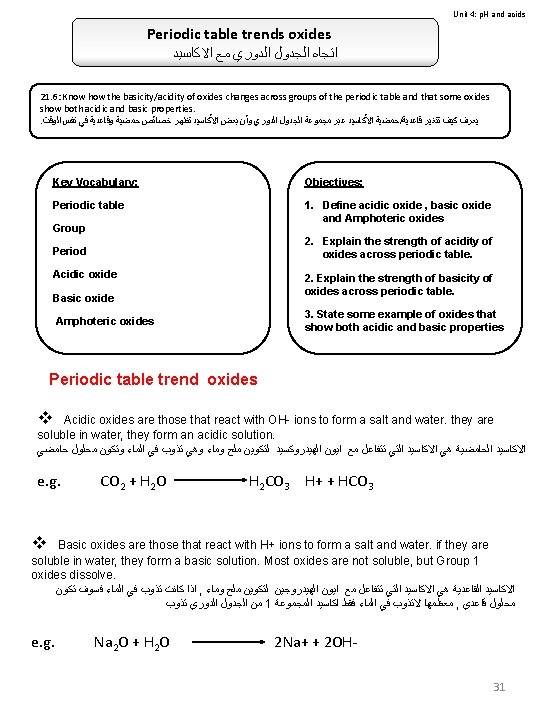
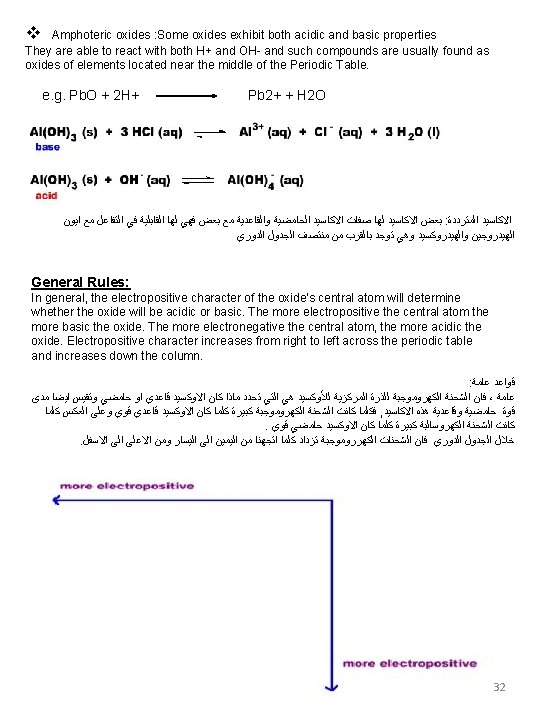
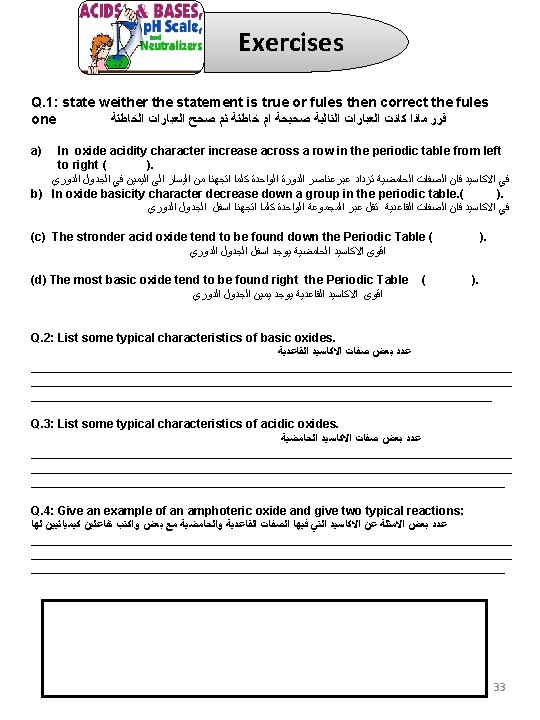
Unit 4: p. H and acids Periodic table trends oxides ﺍﺗﺠﺎﻩ ﺍﻟﺠﺪﻭﻝ ﺍﻟﺪﻭﺭﻱ ﻣﻊ ﺍﻻﻛﺎﺳﻴﺪ 21. 6: Know how the basicity/acidity of oxides changes across groups of the periodic table and that some oxides show both acidic and basic properties. . ﺣﻤﻀﻴﺔ ﺍﻷﻜﺎﺳﻴﺪ ﻋﺒﺮ ﻣﺠﻤﻮﻋﺔ ﺍﻟﺠﺪﻭﻝ ﺍﻟﺪﻭﺭﻱ ﻭﺃﻦ ﺑﻌﺾ ﺍﻷﻜﺎﺳﻴﺪ ﺗﻈﻬﺮ ﺧﺼﺎﺋﺺ ﺣﻤﻀﻴﺔ ﻭﻗﺎﻋﺪﻳﺔ ﻓﻲ ﻧﻔﺲ ﺍﻟﻮﻗﺖ / ﻳﻌﺮﻑ ﻛﻴﻒ ﺗﺘﻐﻴﺮ ﻗﺎﻋﺪﻳﺔ Key Vocabulary: Objectives: Periodic table 1. Define acidic oxide , basic oxide and Amphoteric oxides Group 2. Explain the strength of acidity of oxides across periodic table. Period Acidic oxide 2. Explain the strength of basicity of oxides across periodic table. Basic oxide 3. State some example of oxides that show both acidic and basic properties Amphoteric oxides Periodic table trend oxides v Acidic oxides are those that react with OH- ions to form a salt and water. they are soluble in water, they form an acidic solution. ﺣﺎﻣﻀﻲ ﻣﺤﻠﻮﻝ ﻭﺗﻜﻮﻥ ﺍﻟﻤﺎﺀ ﻓﻲ ﺗﺬﻭﺏ ﻭﻫﻲ ﻭﻣﺎﺀ ﻣﻠﺢ ﻟﺘﻜﻮﻳﻦ ﺍﻟﻬﻴﺪﺭﻭﻛﺴﻴﺪ ﺍﻳﻮﻥ ﻣﻊ ﺗﺘﻔﺎﻋﻞ ﺍﻟﺘﻲ ﺍﻻﻛﺎﺳﻴﺪ ﻫﻲ ﺍﻟﺤﺎﻣﻀﻴﺔ ﺍﻻﻛﺎﺳﻴﺪ e. g. CO 2 + H 2 O H 2 CO 3 H+ + HCO 3 v Basic oxides are those that react with H+ ions to form a salt and water. if they are soluble in water, they form a basic solution. Most oxides are not soluble, but Group 1 oxides dissolve. ﺗﻜﻮﻥ ﻓﺴﻮﻑ ﺍﻟﻤﺎﺀ ﻓﻲ ﺗﺬﻭﺏ ﻛﺎﻧﺖ ﺍﺫﺍ , ﻭﻣﺎﺀ ﻣﻠﺢ ﻟﺘﻜﻮﻳﻦ ﺍﻟﻬﻴﺪﺭﻭﺟﻴﻦ ﺍﻳﻮﻥ ﻣﻊ ﺗﺘﻔﺎﻋﻞ ﺍﻟﺘﻲ ﺍﻻﻛﺎﺳﻴﺪ ﻫﻲ ﺍﻟﻘﺎﻋﺪﻳﺔ ﺍﻻﻛﺎﺳﻴﺪ ﺗﺬﻭﺏ ﺍﻟﺪﻭﺭﻱ ﺍﻟﺠﺪﻭﻝ ﻣﻦ 1 ﺍﻟﻤﺠﻤﻮﻋﺔ ﺍﻛﺎﺳﻴﺪ ﻓﻘﻂ ﺍﻟﻤﺎﺀ ﻓﻲ ﻻﺗﺬﻭﺏ ﻣﻌﻈﻤﻬﺎ , ﻗﺎﻋﺪﻱ ﻣﺤﻠﻮﻝ e. g. Na 2 O + H 2 O 2 Na+ + 2 OH 31
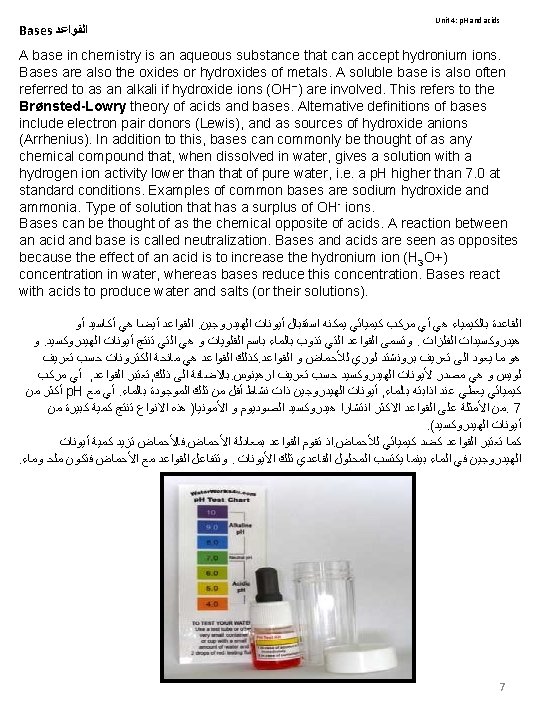
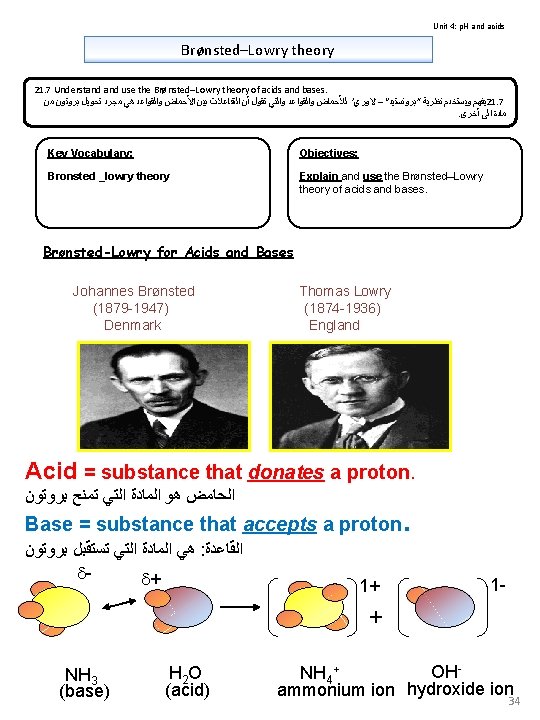
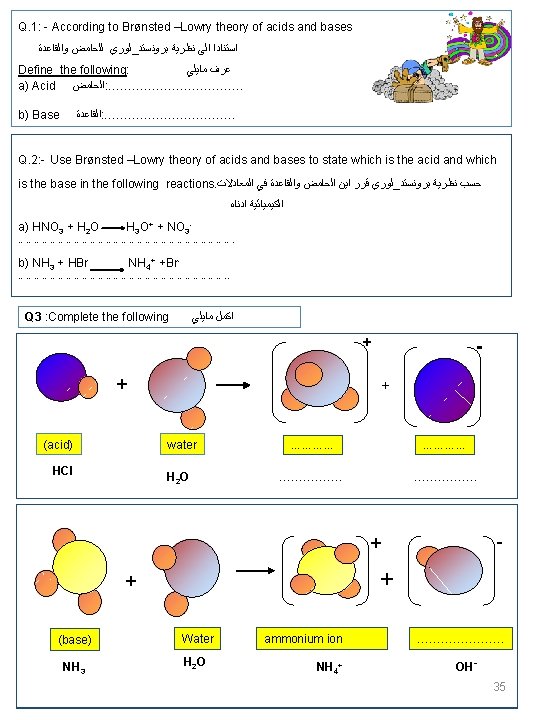
Unit 4: p. H and acids Brønsted–Lowry theory 21. 7 Understand use the Brønsted–Lowry theory of acids and bases. ﻳﻔﻬﻢ ﻭﻳﺴﺘﺨﺪﻡ ﻧﻈﺮﻳﺔ ”ﺑﺮﻭﻧﺴﺘﻴﺪ“ – ﻻﻭﺭﻱ’ ﻟﻸﺤﻤﺎﺽ ﻭﺍﻟﻘﻮﺍﻋﺪ ﻭﺍﻟﺘﻲ ﺗﻘﻮﻝ ﺃﻦ ﺍﻟﺘﻔﺎﻋﻼﺕ ﺑﻴﻦ ﺍﻷﺤﻤﺎﺽ ﻭﺍﻟﻘﻮﺍﻋﺪ ﻫﻲ ﻣﺠﺮﺩ ﺗﺤﻮﻳﻞ ﺑﺮﻭﺗﻮﻥ ﻣﻦ 21. 7. ﻣﺎﺩﺓ ﺍﻟﻰ ﺃﺨﺮﻯ Key Vocabulary: Objectives: Bronsted _lowry theory Explain and use the Brønsted–Lowry theory of acids and bases. Brønsted-Lowry for Acids and Bases Johannes Brønsted Thomas Lowry (1879 -1947) (1874 -1936) Denmark England Acid = substance that donates a proton. ﺑﺮﻭﺗﻮﻥ ﺗﻤﻨﺢ ﺍﻟﺘﻲ ﺍﻟﻤﺎﺩﺓ ﻫﻮ ﺍﻟﺤﺎﻣﺾ Base = substance that accepts a proton ﺑﺮﻭﺗﻮﻥ ﺗﺴﺘﻘﺒﻞ ﺍﻟﺘﻲ ﺍﻟﻤﺎﺩﺓ ﻫﻲ : ﺍﻟﻘﺎﻋﺪﺓ dd+ 1+ . 1 - + NH 3 (base) H 2 O (acid) OHNH 4+ ammonium ion hydroxide ion 34