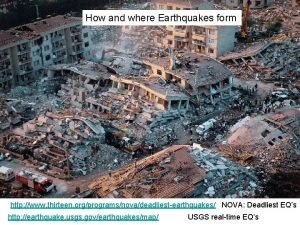
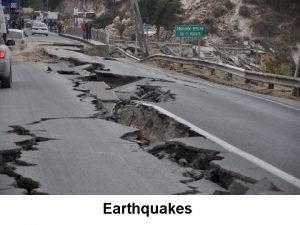
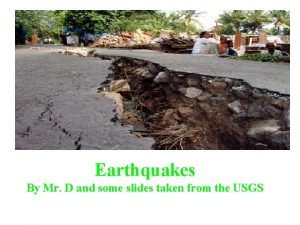
Chapter 16 Earthquakes What is an earthquake Shaking
- Slides: 71
Chapter 16 Earthquakes
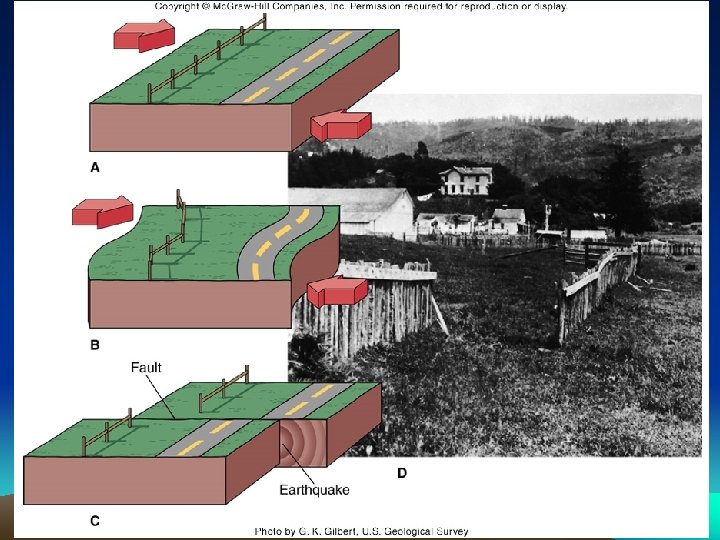
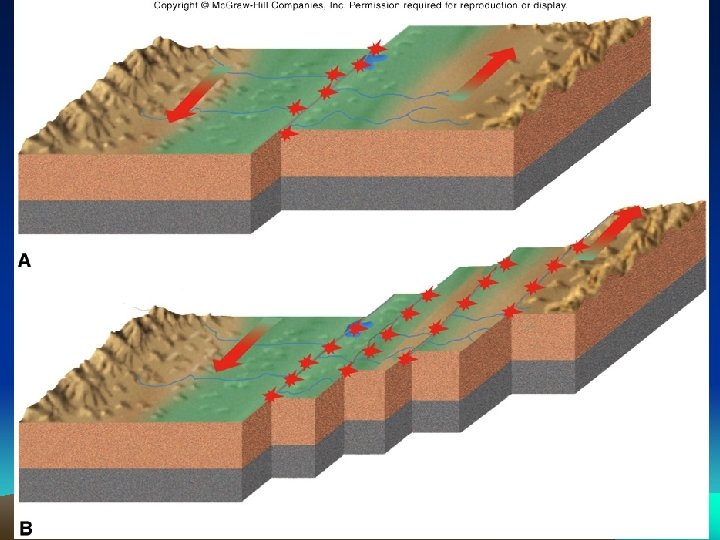
What is an earthquake? • Shaking of the ground caused by the sudden release of energy stored in the rocks. • When rocks are stressed, potential energy is stored in them.
• Rocks can behave plastically upto a certain limit (elastic limit), after which they fail and release the energy. • Energy waves produced by an earthquake are called Seismic Waves.
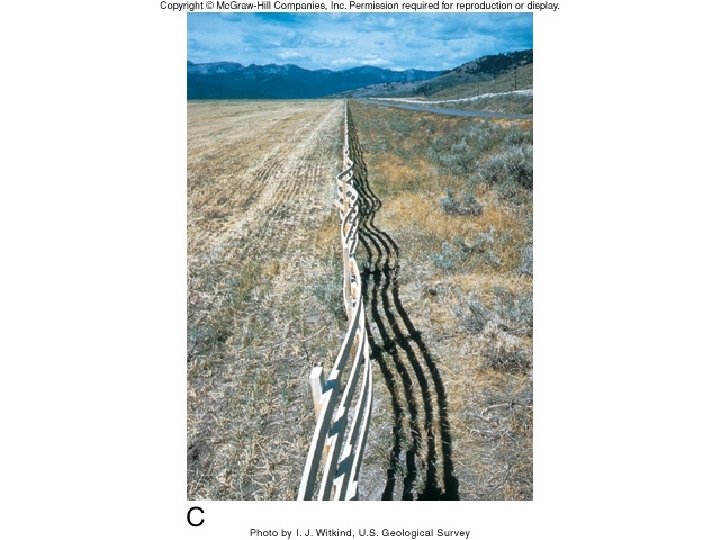
• The generation of an earthquake is explained by Elastic Rebound Theory. • According to this theory, the sudden release of progressively stored strain in rocks causes movement along a fault and an earthquake is generated.
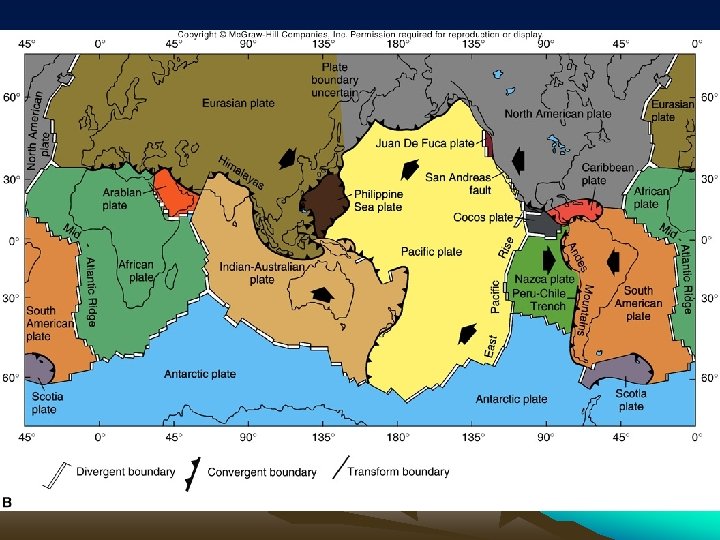
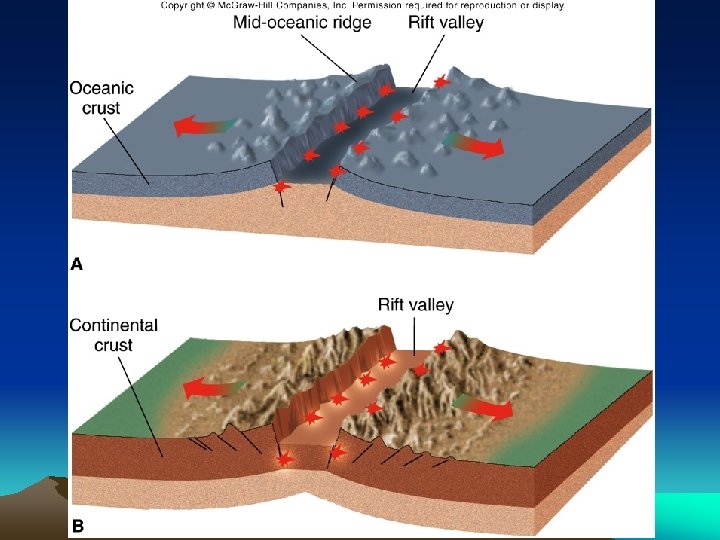
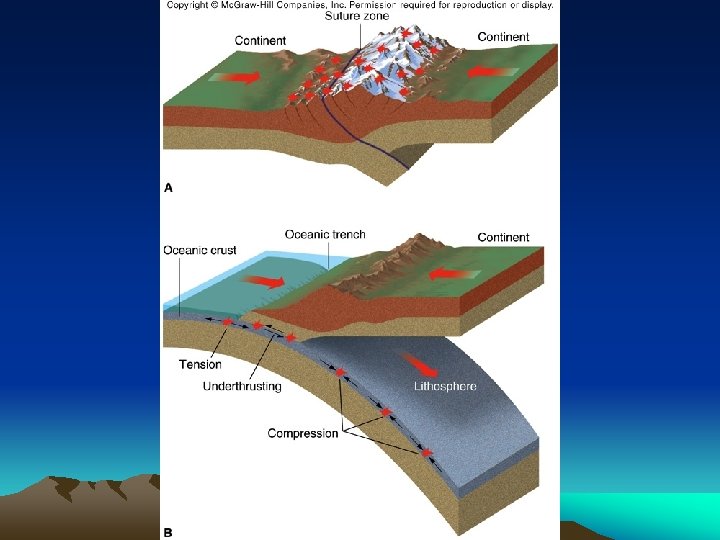
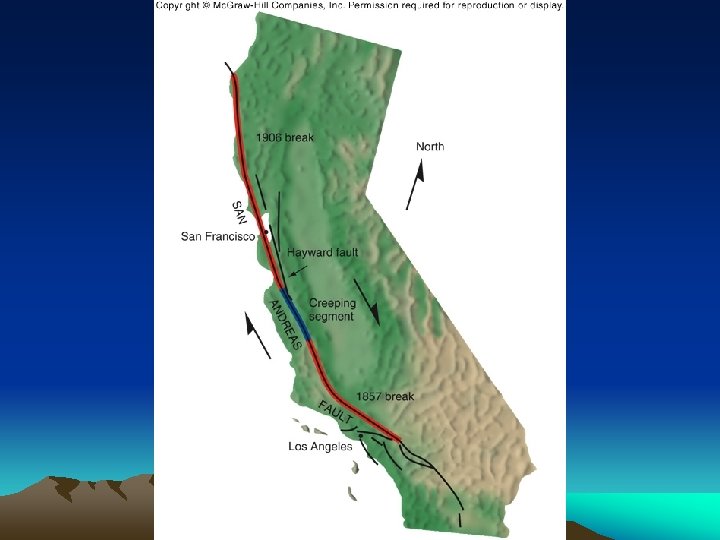
Causes of earthquakes • • Movement along a fault Volcanic eruptions Plate movement Subsidence
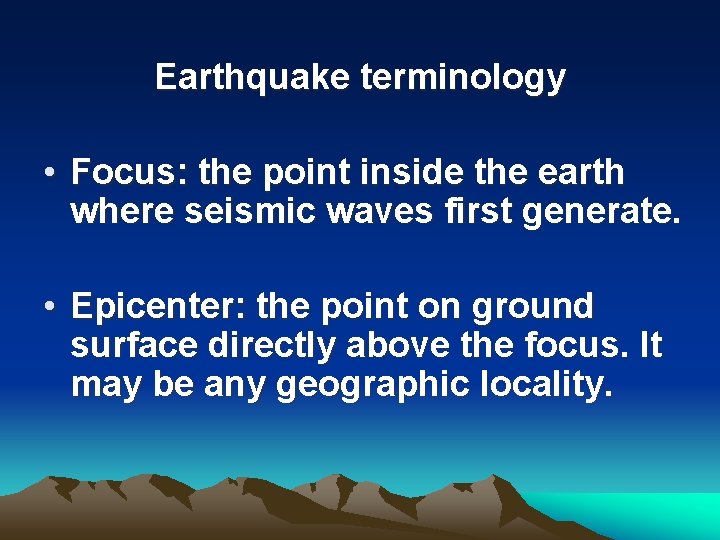
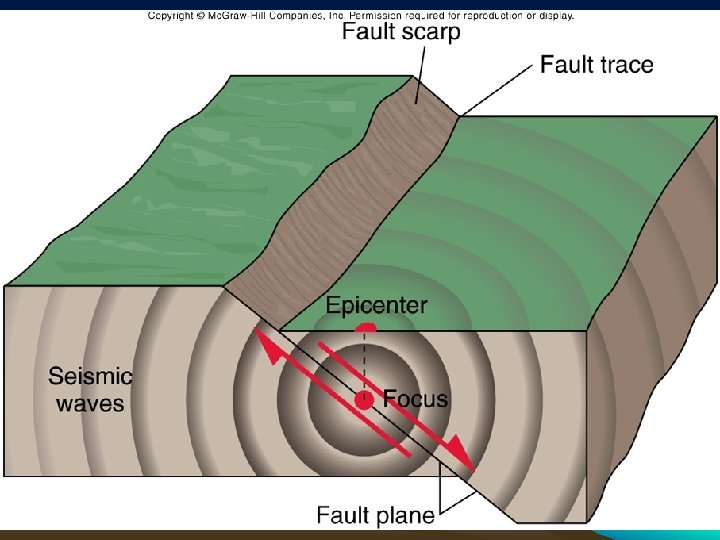
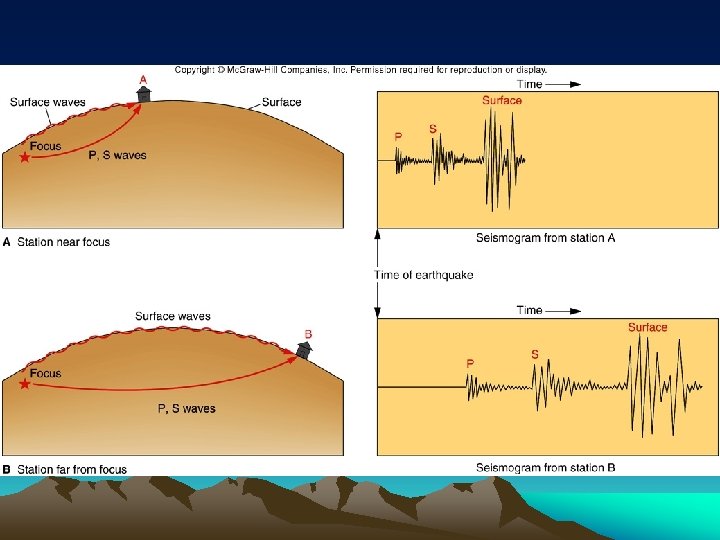
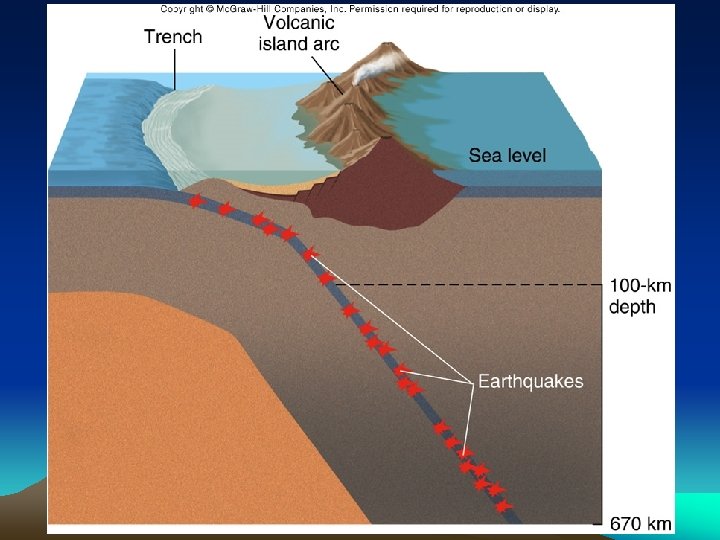
Earthquake terminology • Focus: the point inside the earth where seismic waves first generate. • Epicenter: the point on ground surface directly above the focus. It may be any geographic locality.
Seismic waves • 2 types – Body waves: traveling inside the earth – Surface waves: travel on the earth’s surface.
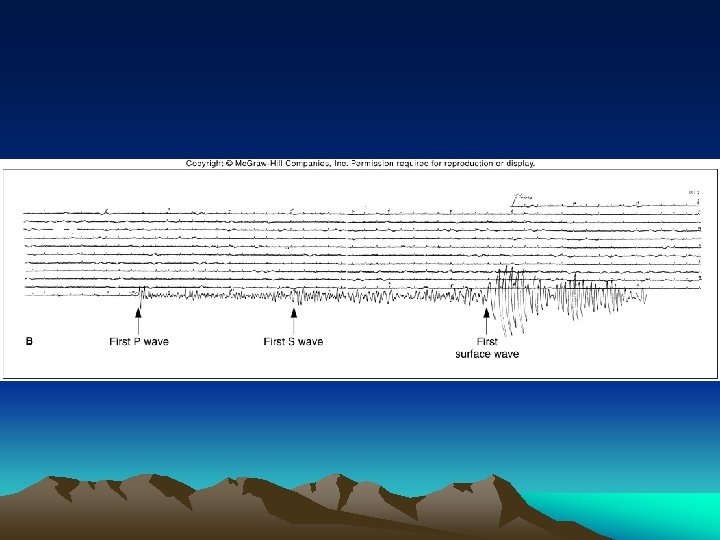
• Body waves: – P-waves (primary) – S-waves (secondary) • P-wave: is the fastest (4 -7 km/sec) and is the first to arrive at a recording station.
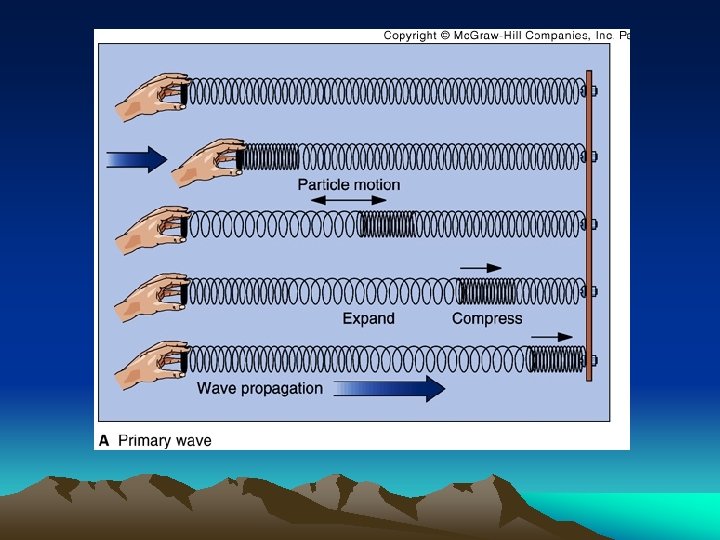
• P-wave: compressional or longitudinal wave in which rocks vibrate back and forth parallel to the direction of wave propagation.
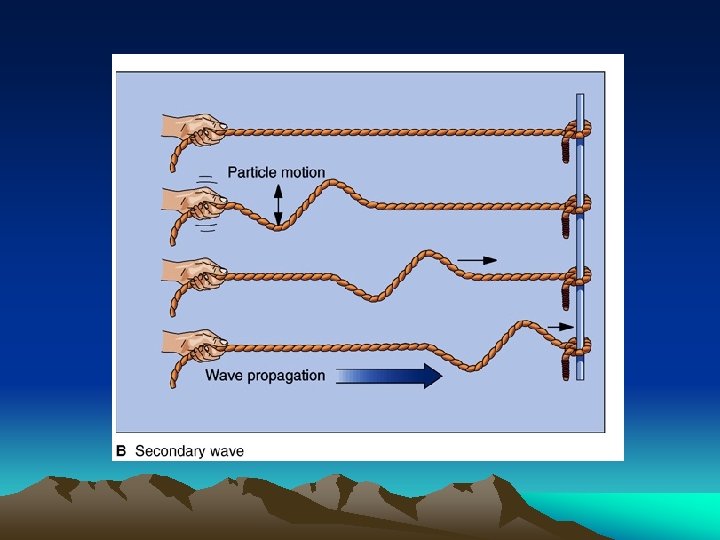
• S-wave: slower (2 -5 km/sec) and arrives after the P-wave at a recording station. • It’s a transverse wave in which the rock vibrates perpendicular to the direction of wave propagation.
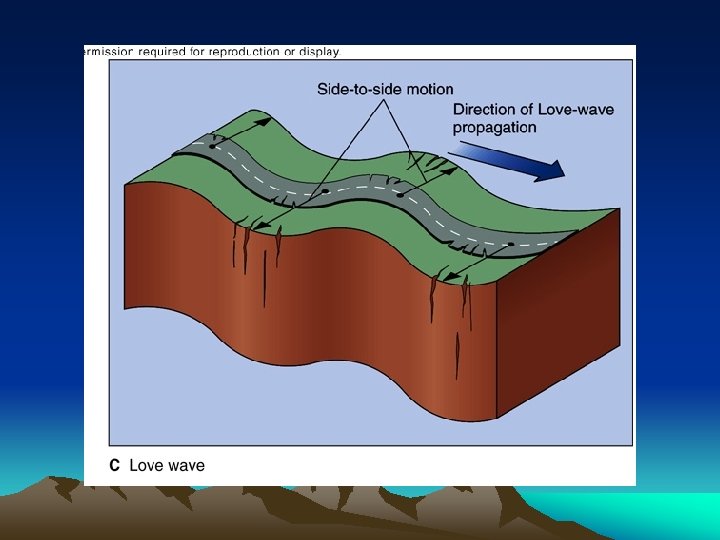
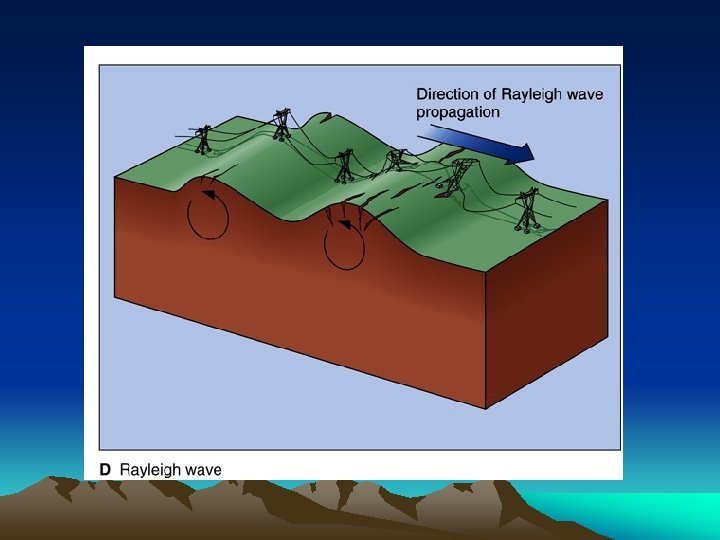
• Surface waves: – slowest waves generated by an earthquake. – They take longer to pass and cause more property damage.
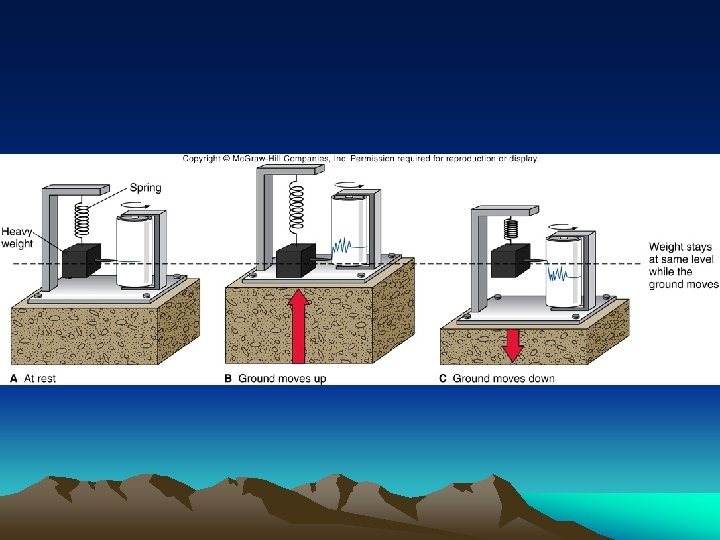
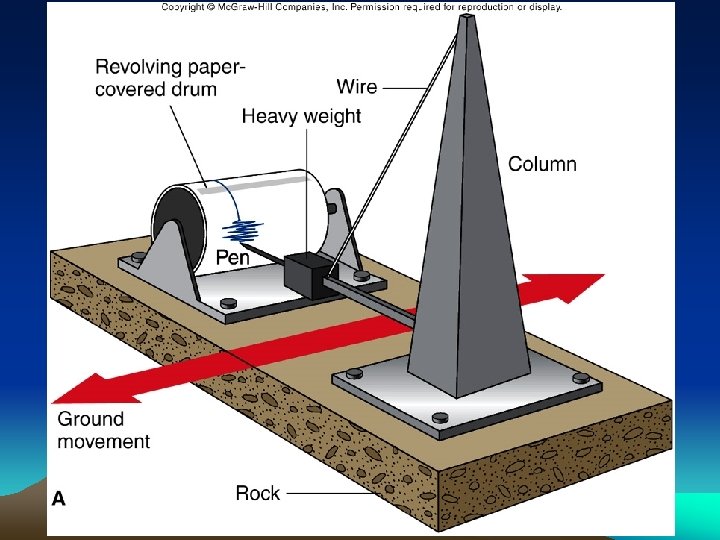
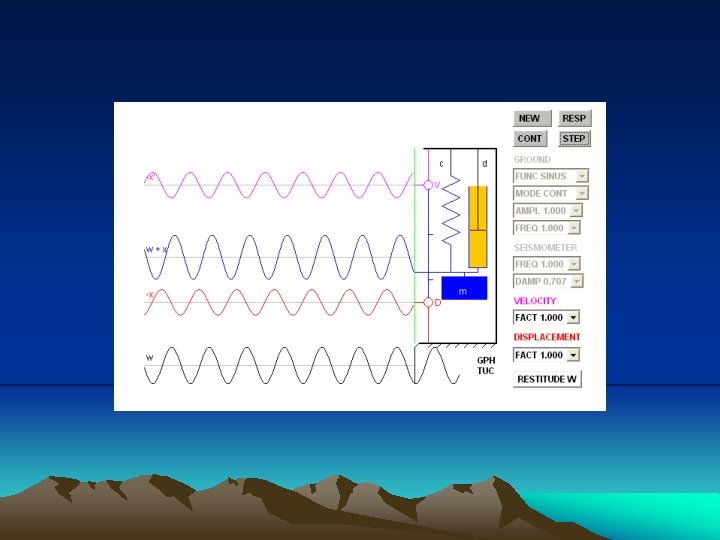
EQ measurement • The instrument used to measure an EQ is called a seismometer.
• Seismograph: paper or electronic record of an EQ.
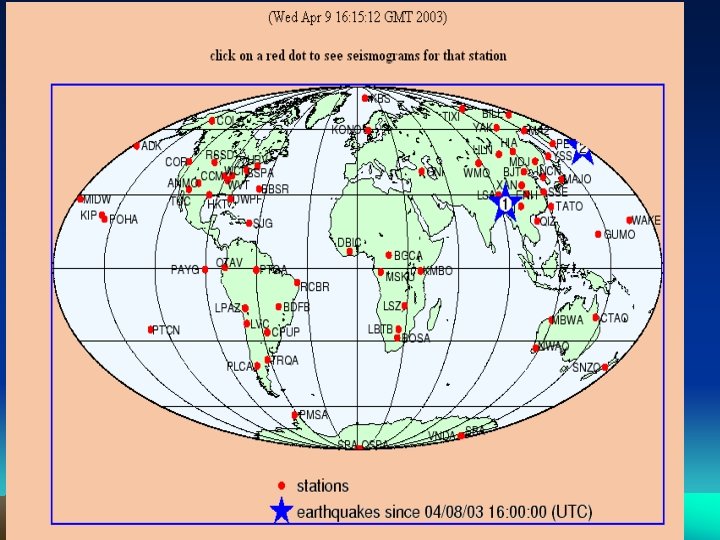
World seismograph stations
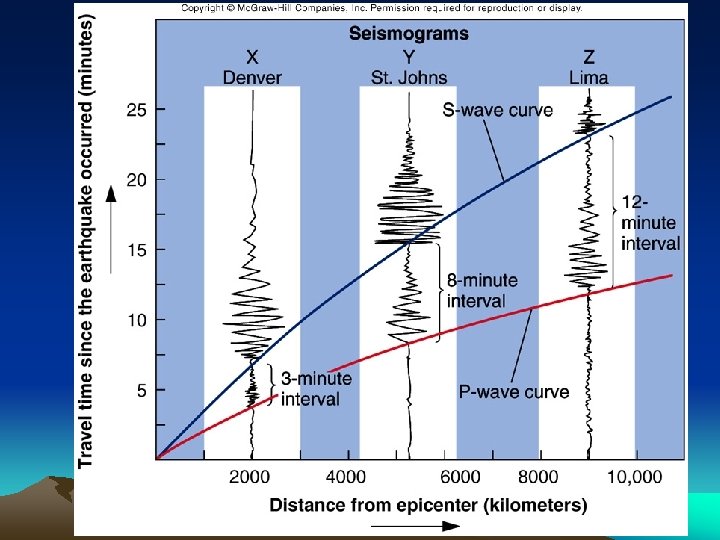
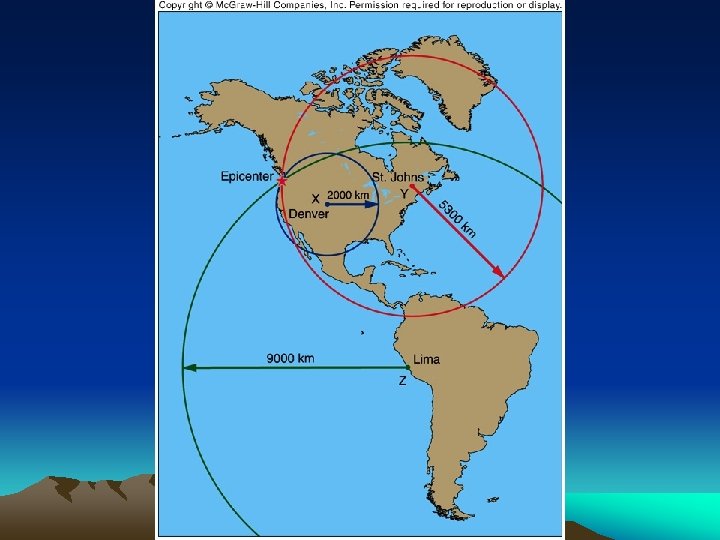
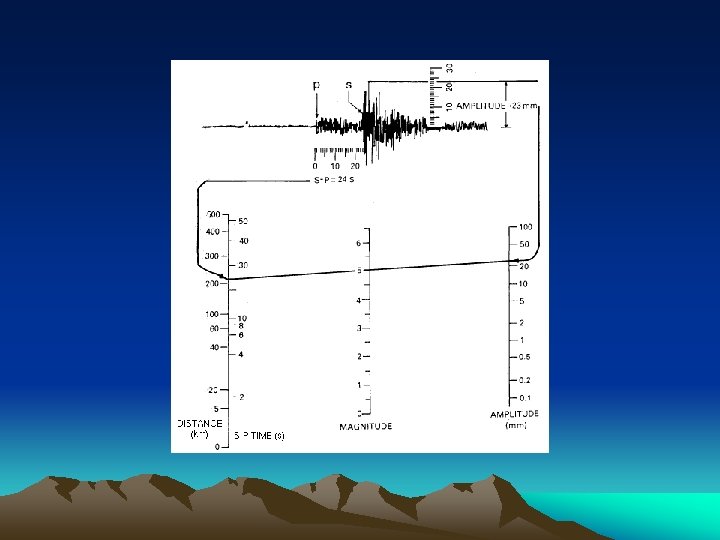
Locating EQ Epicenter • Travel time of the seismic waves from the focus to the seismograph station is used to determine the EQ epicenter. • P and S waves gradually separate because they travel at different velocities.
• The P-S interval is compared with a standard travel-time curve.
• Data from one station can be used to determine only distance to the station and not the direction. • At least three stations are required to determine the location of the epicenter.
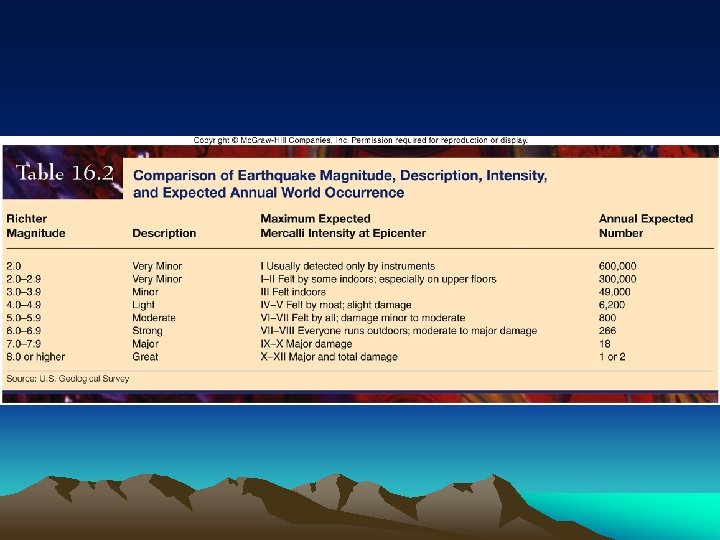
Measuring the size of an EQ • Two ways of determining the EQ size; – Intensity – Magnitude
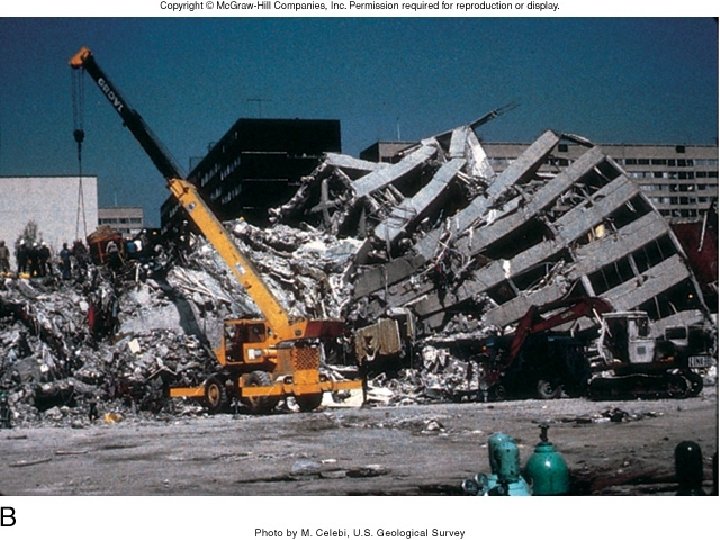
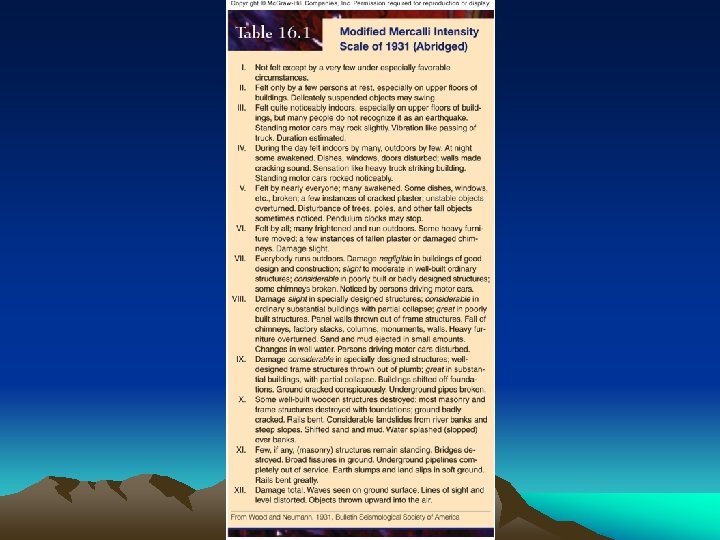
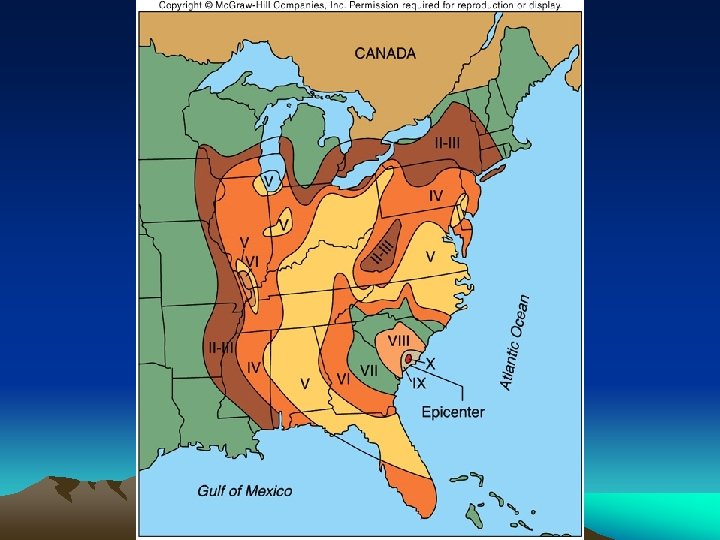
Measuring the size of an EQ • EQ Intensity: it is a measure of how an area has been damaged by the EQ. • Modified Mercalli Scale is used to measure intensity.
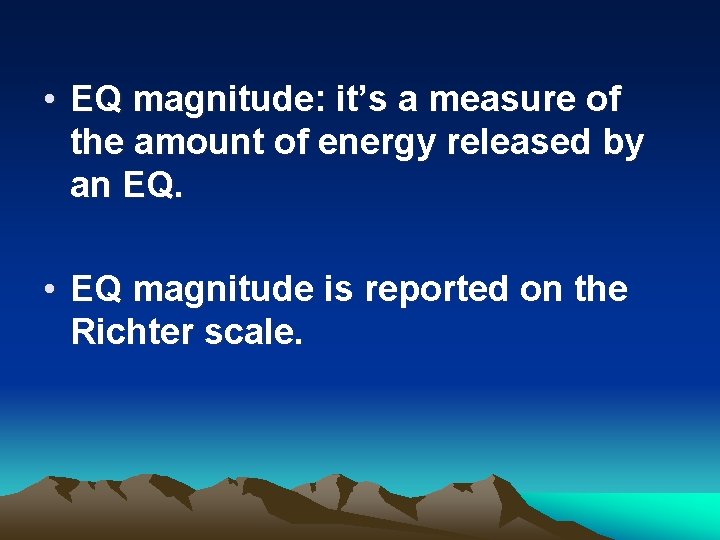
• EQ magnitude: it’s a measure of the amount of energy released by an EQ. • EQ magnitude is reported on the Richter scale.
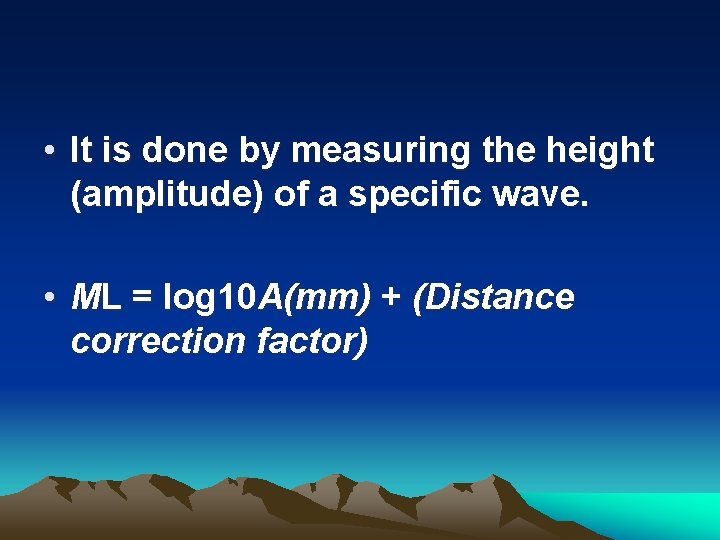
• It is done by measuring the height (amplitude) of a specific wave. • ML = log 10 A(mm) + (Distance correction factor)
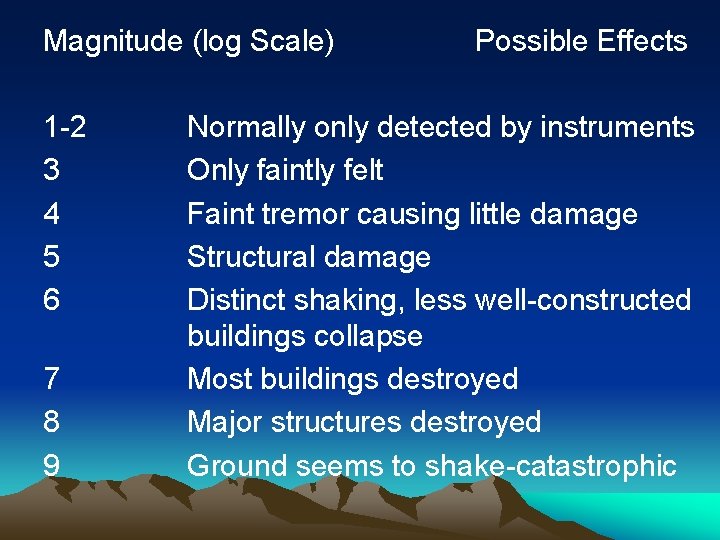
Magnitude (log Scale) 1 -2 3 4 5 6 7 8 9 Possible Effects Normally only detected by instruments Only faintly felt Faint tremor causing little damage Structural damage Distinct shaking, less well-constructed buildings collapse Most buildings destroyed Major structures destroyed Ground seems to shake-catastrophic
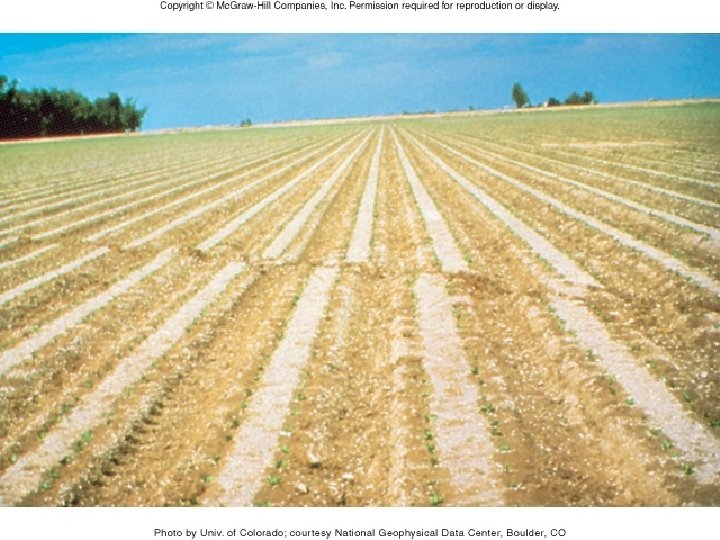
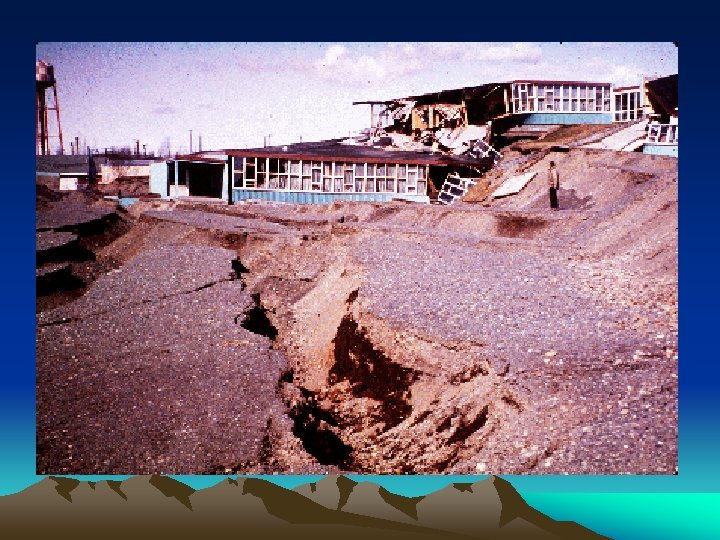
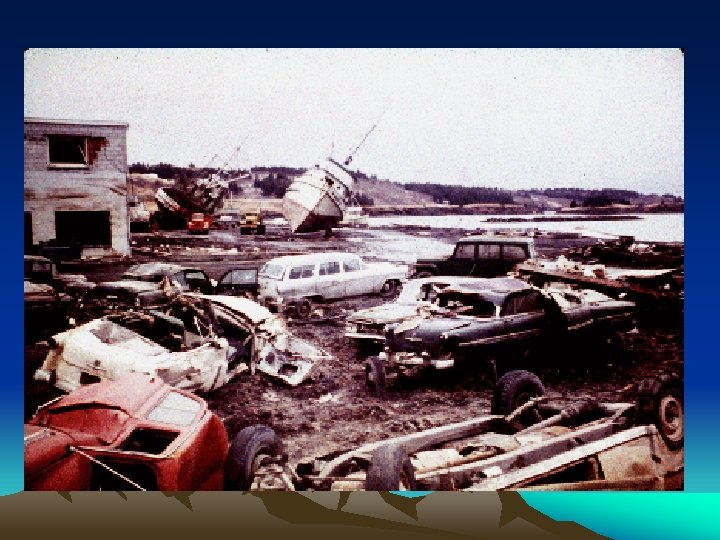
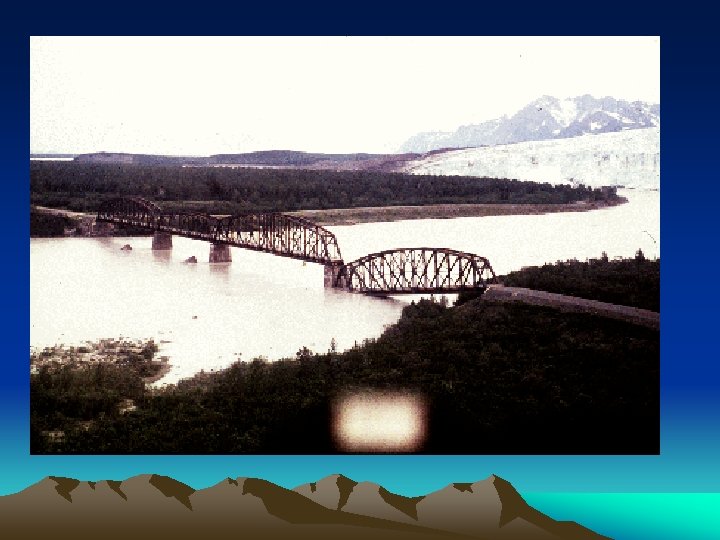
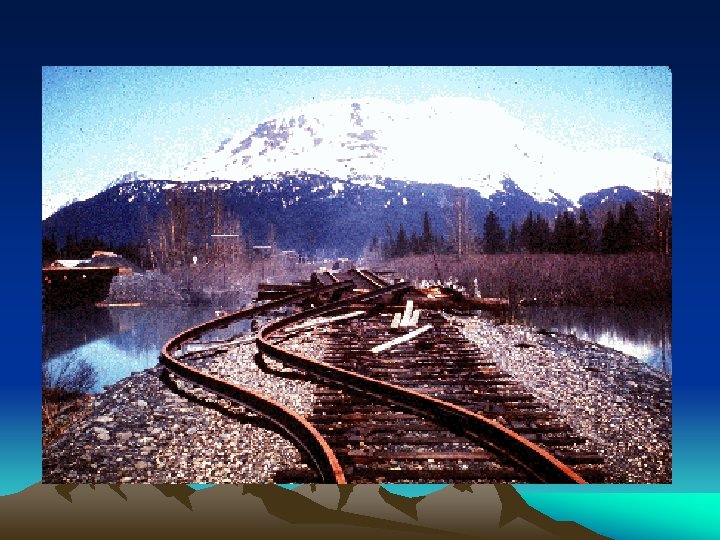
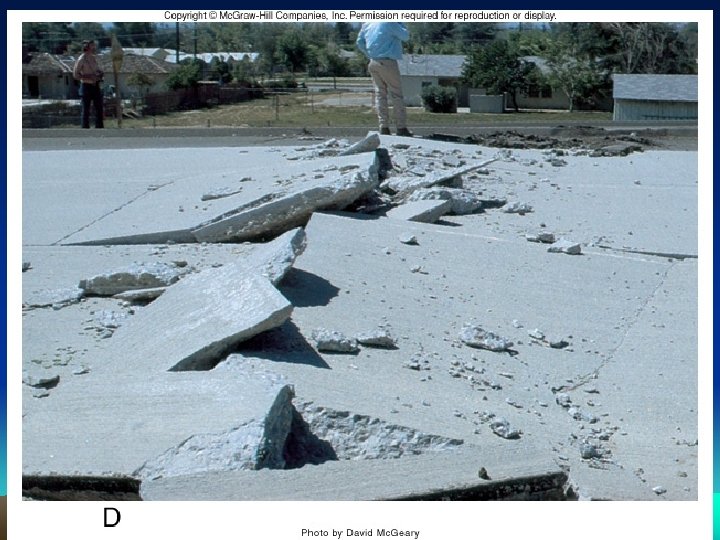
Effects of EQ • Primary effects: occur immediately from ground shaking • Secondary effects: damage caused by;
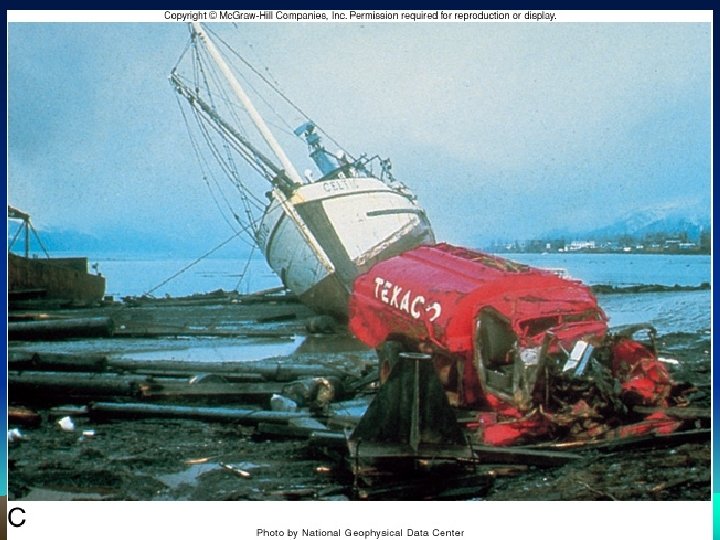
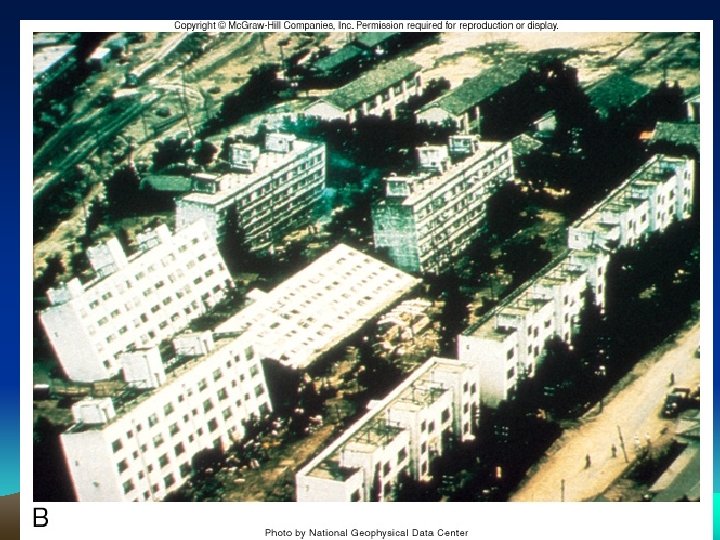
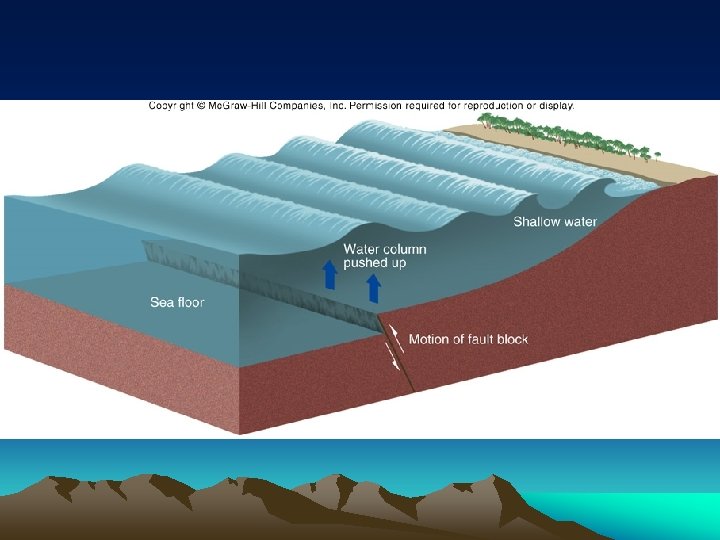
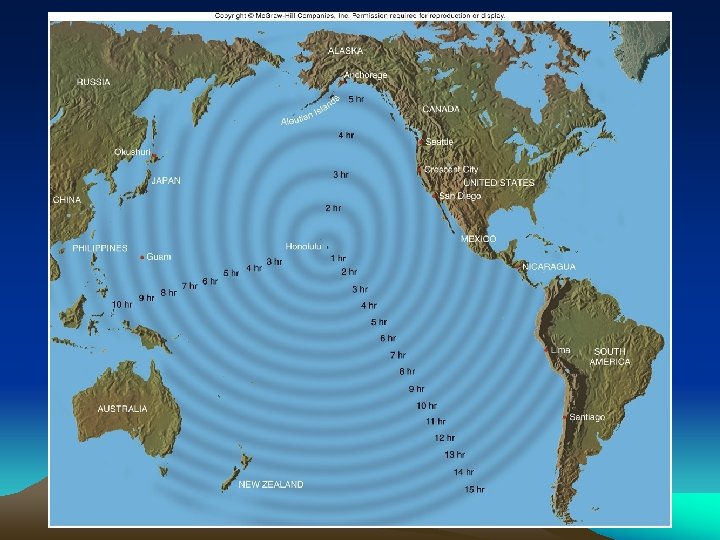
Effects of EQ – Floods – Fire – Landslides – Liquefaction: wet, saturated soil changes from solid to liquid as a result of shaking. – Tsunamis
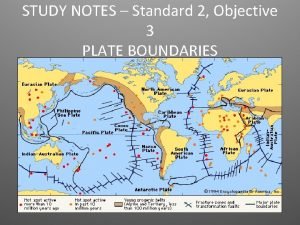
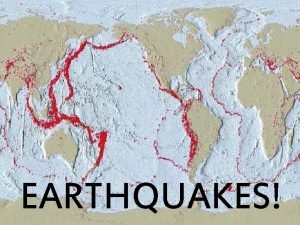
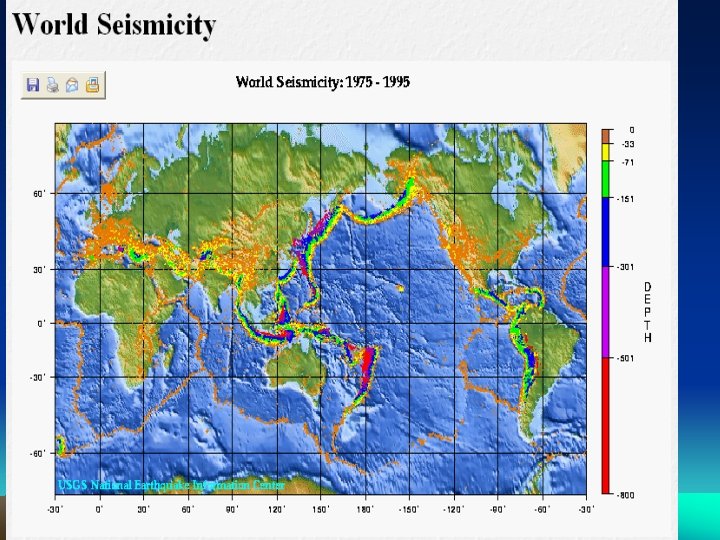
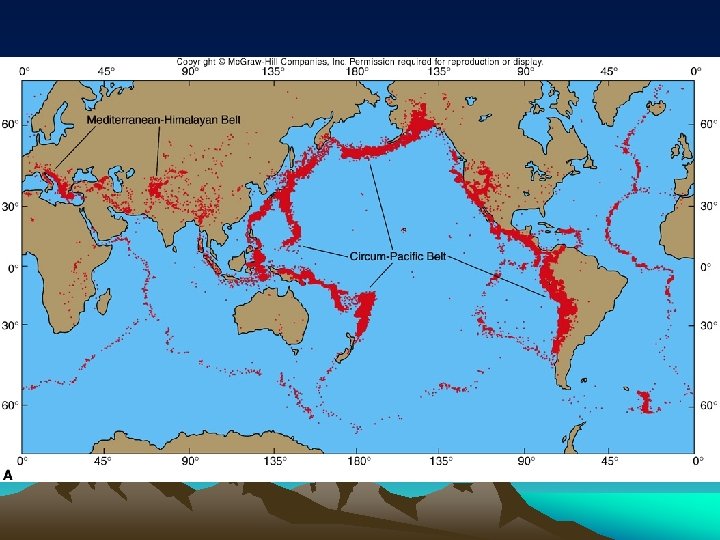
Global distribution of EQ • 3 belts; – Circum-Pacific belt – Mediterranean-Himalayan belt – Continental interior
Mitigating EQ effects • • Avoiding EQ prone zones Foundation design Structural modifications Building codes
Predicting EQ • Rock monitoring: rock properties begin to change before its failure. • Water levels: increase or decrease. • Radon emission: increases before an EQ.
Predicting EQ • Seismic gap: regular pattern of EQ occurrence. • Animal behavior: snakes, dogs.
Assignment 2 Rivers, groundwater, lakes Ohio EPA Great lakes, lake erie Relative proportions Maximum Contaminant Level Primary contaminants Secondary