
Falcon Focus QUIZIZZ MARCH 26 TH TWO ATTEMPTS





- Slides: 116
Falcon Focus • QUIZIZZ –MARCH 26 TH[ TWO ATTEMPTS] • EQ: DON’T FORGET TO ANSWER THE QUESTIONS AND SUBMIT ON FRIDAY, MARCH 30 TH
Standard 8. E. 5 EARTHQUAKES
STANDARD 8. E. 5 • The student will demonstrate an understanding of the processes that alter the structure of Earth and provide resources for life on the planet.
PERFORMANCE INDICATORS • 8. E. 5 B. 1 Analyze and interpret data to describe patterns in the location of volcanoes and earthquakes related to tectonic plate boundaries, interactions, and hot spots. • 8. E. 5 B. 2 Construct explanations of how forces inside Earth result in earthquakes and volcanoes. • 8. E. 5 B. 3 Define problems that may be caused by a catastrophic event resulting from plate movements and design possible devices or solutions to minimize the effects of that event on Earth’s surface and/or human structures.
PERFORMANCE INDICATORS • 8. E. 5 B. 2 Construct explanations of how forces inside Earth result in earthquakes and volcanoes.
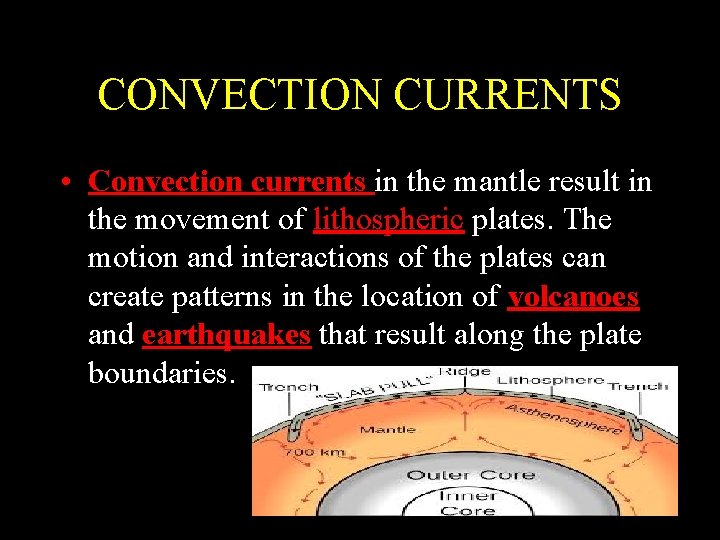
CONVECTION CURRENTS • Convection currents in the mantle result in the movement of lithospheric plates. The motion and interactions of the plates can create patterns in the location of volcanoes and earthquakes that result along the plate boundaries.
WHAT’S THE RELATIONSHIP? • Earthquakes can also occur along faults Scientists can specifically identify the type of boundary and fault that occurs along the edges of the plates by examining plate boundary maps. • Scientists can also use seismic data to understand the ways in which the plates are moving and the relationship between seismic activity and lithospheric plate motion.
PERFORMANCE INDICATORS • 8. E. 5 B. 1 Analyze and interpret data to describe patterns in the location of volcanoes and earthquakes related to tectonic plate boundaries, interactions, and hot spots.
WHAT’S THE RELATIONSHIP? • Scientists study and record seismic data and volcanic activity in order to support theory of plate tectonics. The evidence proves that there is a distinct relationship between seismic activity, volcanic activity, and the lithospheric plate boundaries.
Seismic Data and Plate Tectonics: • The interaction along plate boundaries results in an increased frequency of earthquakes at those locations. Additionally, stronger earthquakes are more likely to occur along active plate boundaries. • Strong earthquakes are more common at transform and convergent plate boundaries.
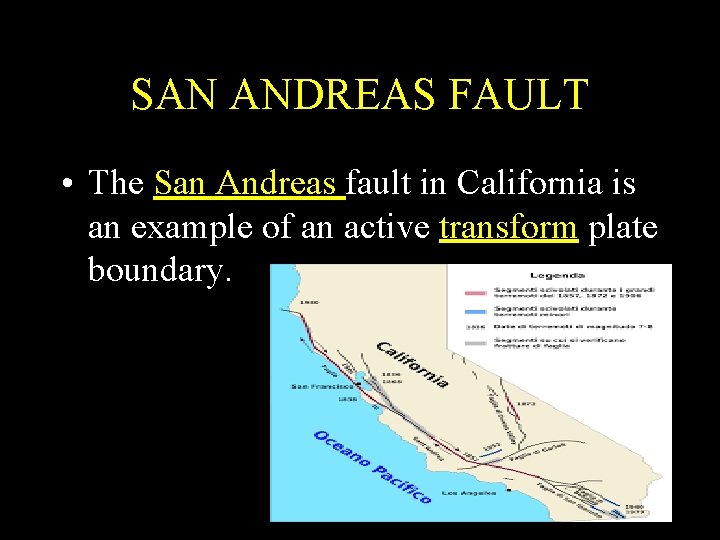
SAN ANDREAS FAULT • The San Andreas fault in California is an example of an active transform plate boundary.
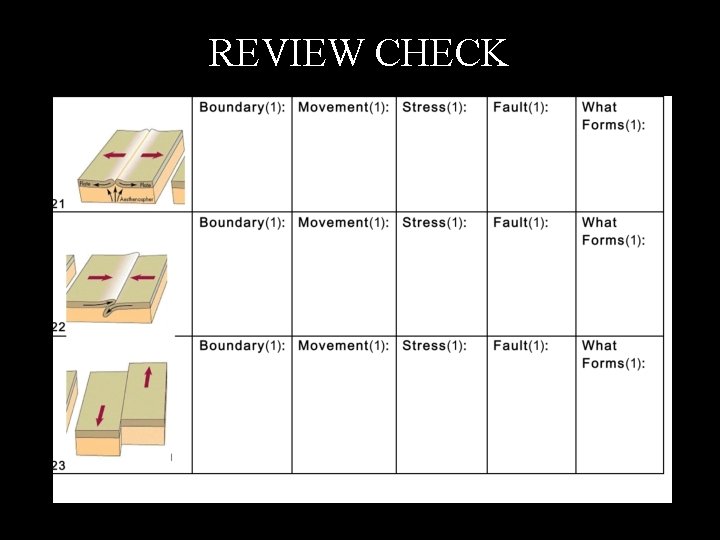
REVIEW CHECK
Assessing Prior Knowledge and Relativity • What have you heard about earthquakes lately? • Why should we study earthquakes? • http: //quakes. globalincidentmap. com • /
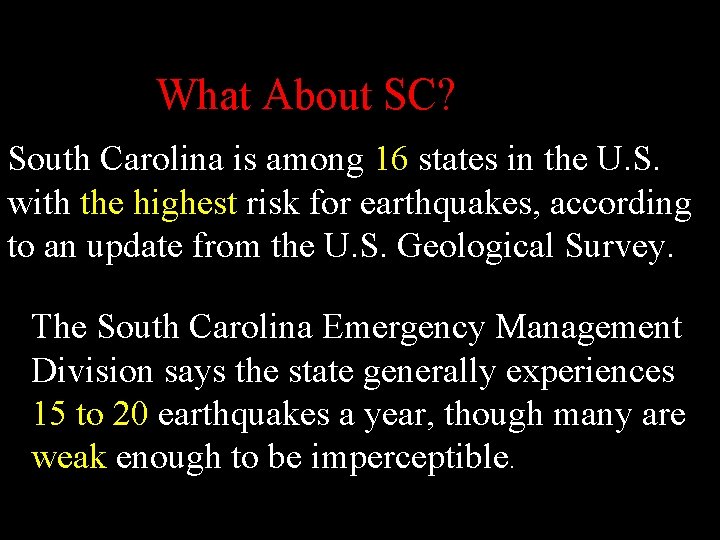
What About SC? South Carolina is among 16 states in the U. S. with the highest risk for earthquakes, according to an update from the U. S. Geological Survey. The South Carolina Emergency Management Division says the state generally experiences 15 to 20 earthquakes a year, though many are weak enough to be imperceptible.
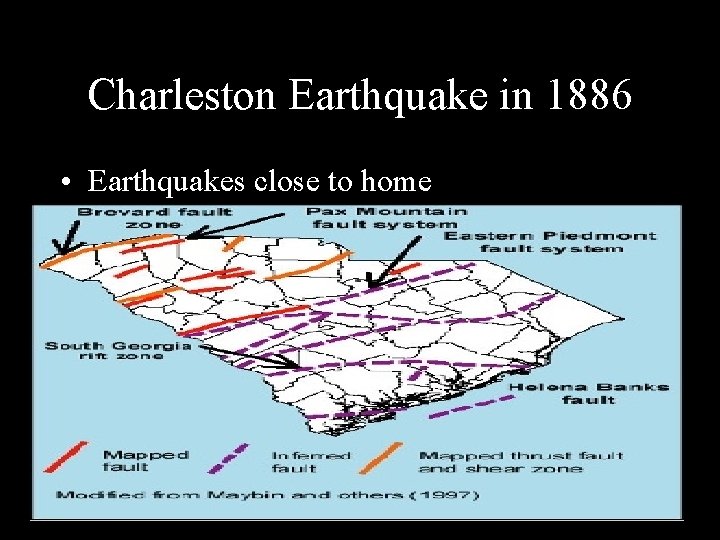
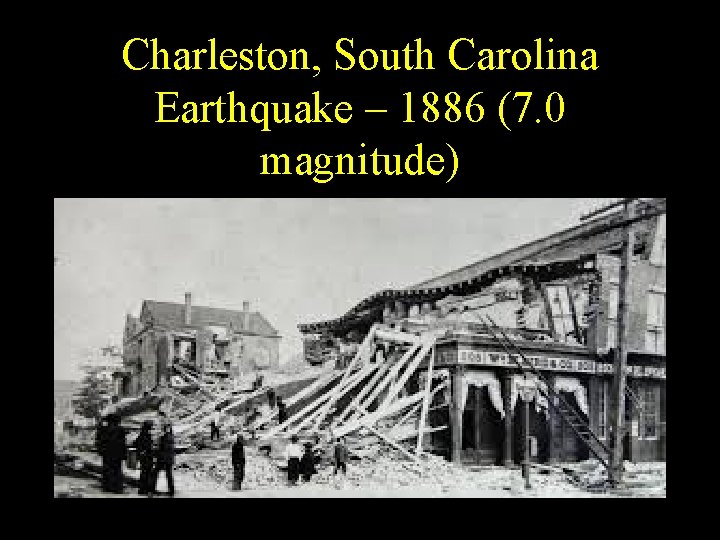
Charleston Earthquake in 1886 • Earthquakes close to home
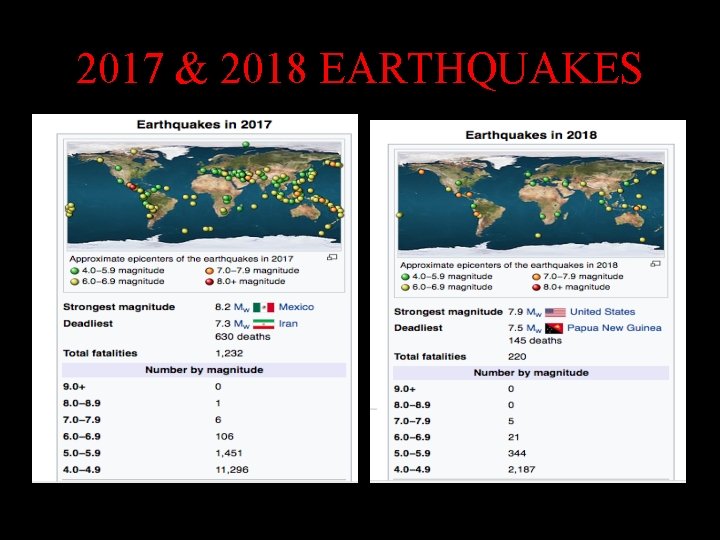
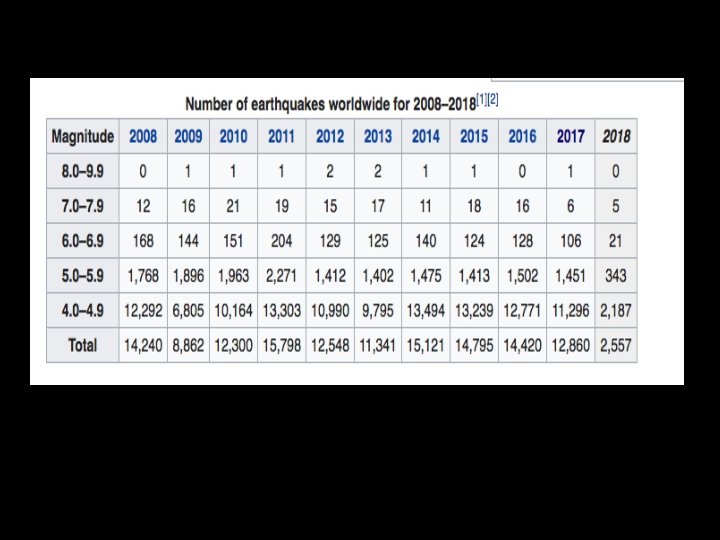
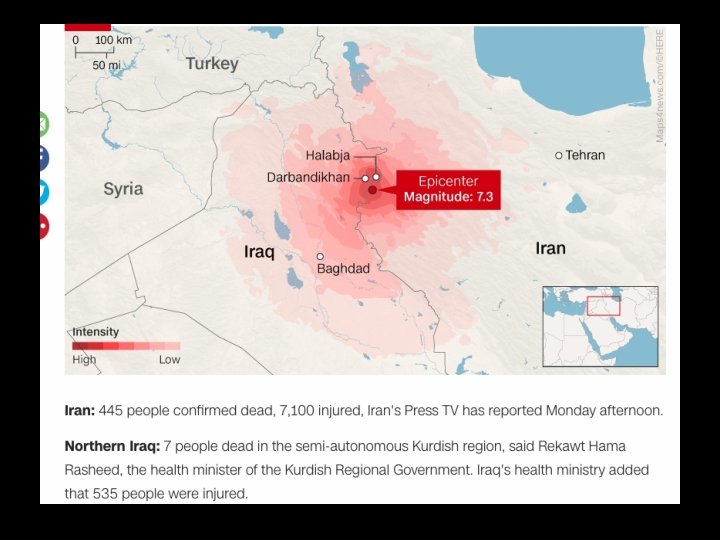
2017 & 2018 EARTHQUAKES
EARTHQUAKE VIDEO • https: //www. youtube. com/watch? v=e 7 ho 6 z 32 yyo
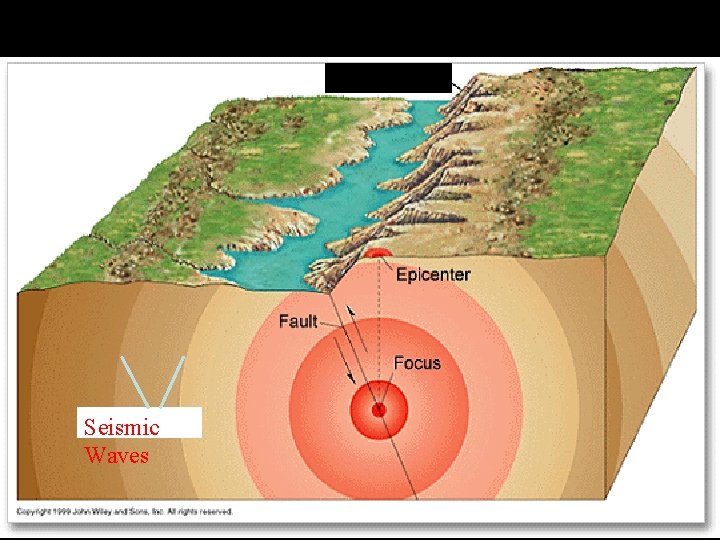
The definition of an earthquake is… vibrations that cause the breaking of rocks. These vibrations move in all directions through the earth. They begin at a point along a fault.
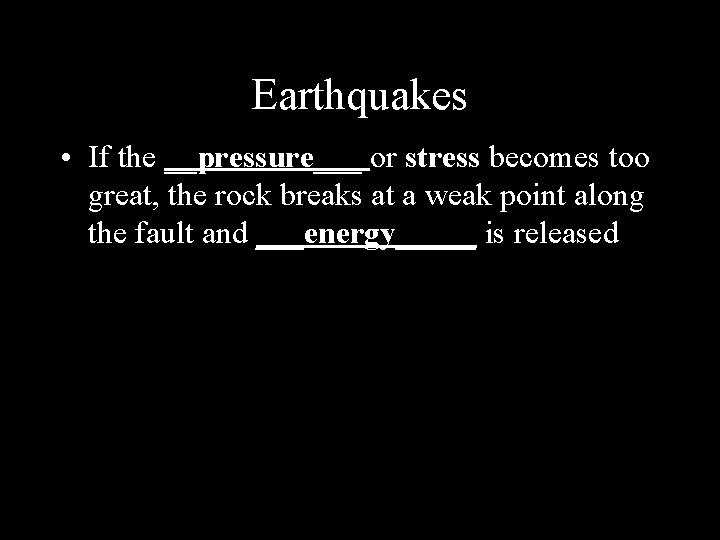
Earthquakes • If the __pressure___ or stress becomes too great, the rock breaks at a weak point along the fault and ___energy_____ is released
Epicenter Focus
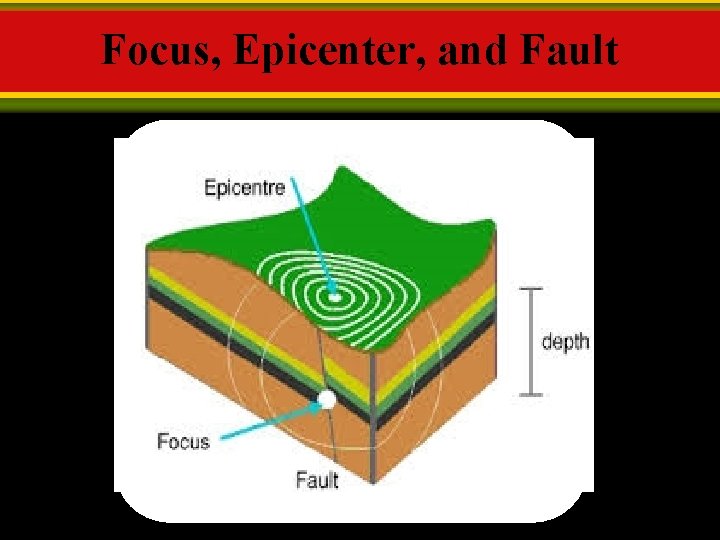
EARTHQUAKES OCCURS ALONG THE FAULT BUT BEGINS AT THE FOCUS
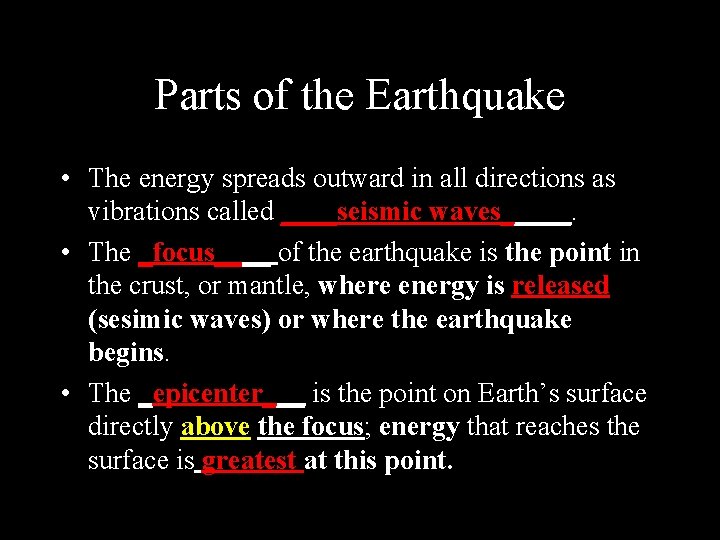
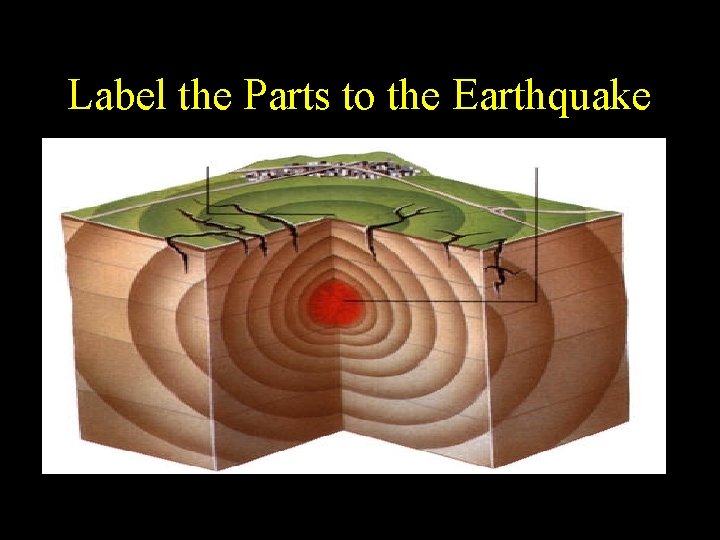
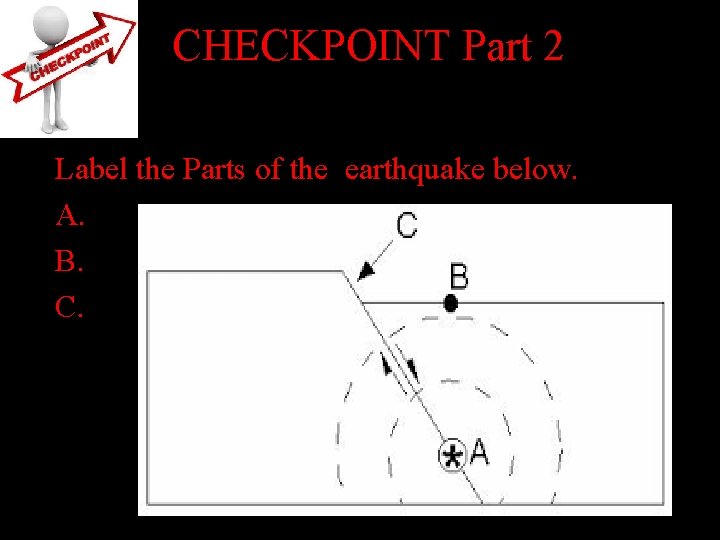
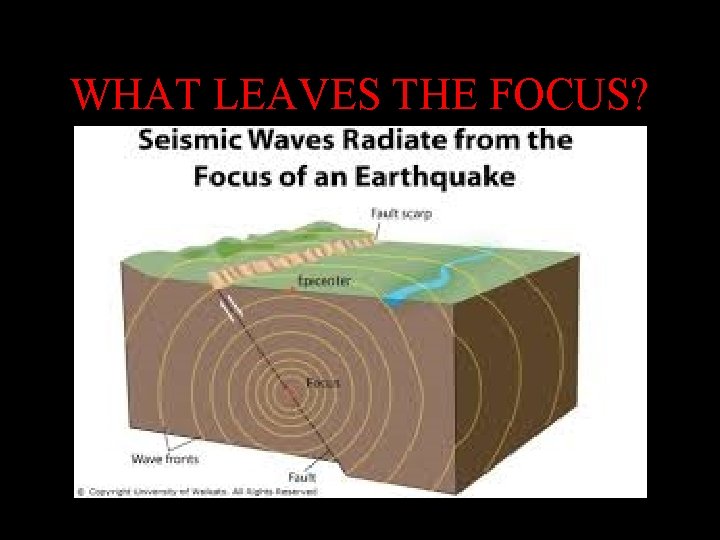
Parts of the Earthquake • The energy spreads outward in all directions as vibrations called ____seismic waves_____. • The _focus____ of the earthquake is the point in the crust, or mantle, where energy is released (sesimic waves) or where the earthquake begins. • The _epicenter___ is the point on Earth’s surface directly above the focus; energy that reaches the surface is greatest at this point.
Focus, Epicenter, and Fault
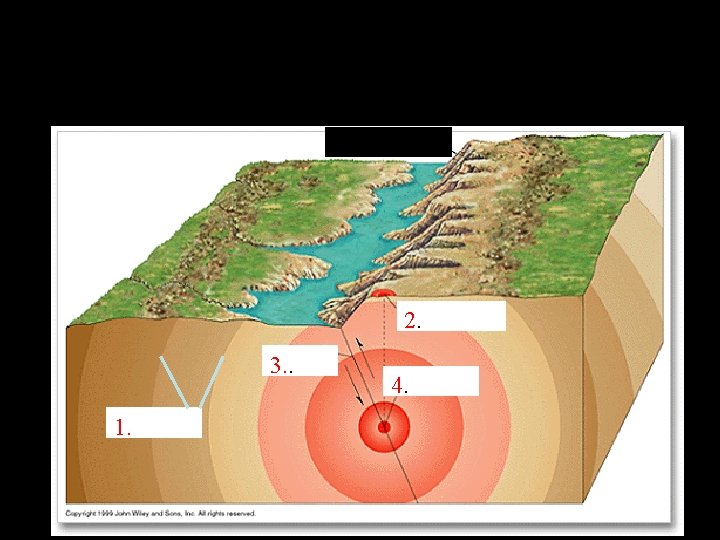
1. Label the parts of the Earthquake. 2. 3. . 1. 4.
Seismic Waves
Label the Parts to the Earthquake
CHECKPOINT Part 1 • Where do earthquakes begin? • What is located right above the focus? What releases the energy (seismic waves)? • What is a break in the Earth’s Crust (is where an earthquake takes place)? • What is the energy that is being sent out from the focus? • What releases the greatest amount of energy?
CHECKPOINT Part 2 Label the Parts of the earthquake below. A. B. C.
PERFORMANCE INDICATORS • 8. E. 5 B. 3 Define problems that may be caused by a catastrophic event resulting from plate movements and design possible devices or solutions to minimize the effects of that event on Earth’s surface and/or human structures.
• WHAT CAUSES EARTHQUAKES?
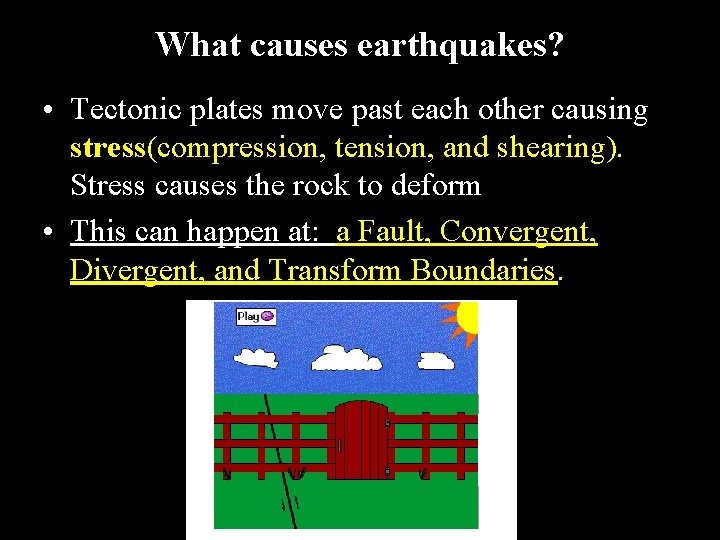
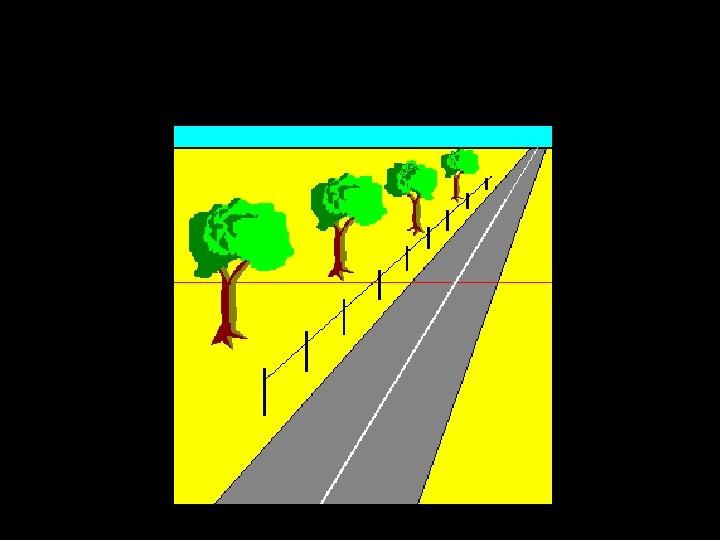
What causes earthquakes? • Tectonic plates move past each other causing stress(compression, tension, and shearing). Stress causes the rock to deform • This can happen at: a Fault, Convergent, Divergent, and Transform Boundaries.
http: //www. uwgb. edu/dutchs/Earth. SC-102 Visuals. Index. HTM
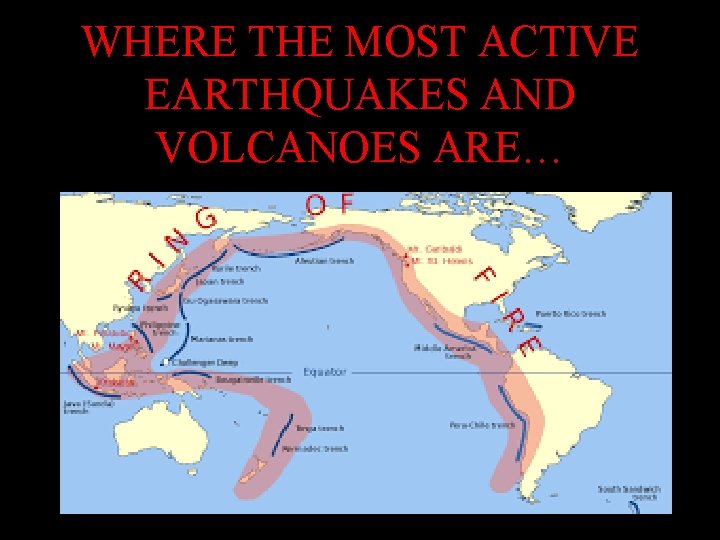
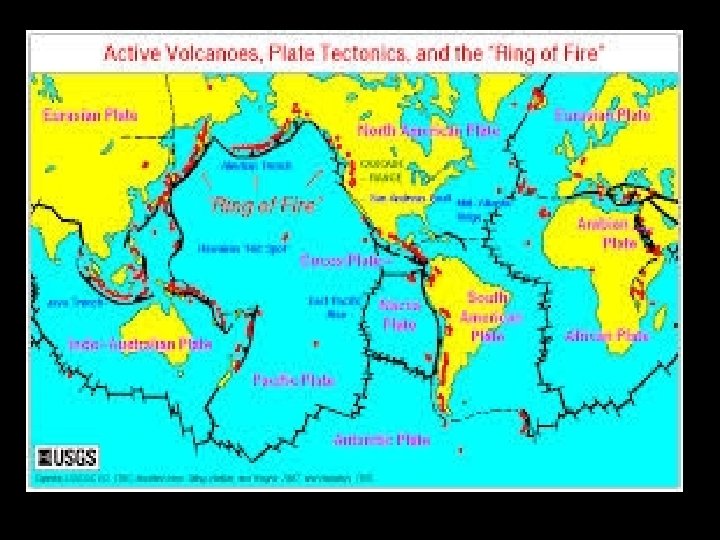
RING OF FIRE • Most earthquakes and volcanic eruptions do not strike randomly but occur in specific areas such as along plate boundaries. For example, the Ring of Fire where the Pacific Plate interacts with many surrounding plates, is known as one of the most seismically and volcanically active zones in the world.
WHERE THE MOST ACTIVE EARTHQUAKES AND VOLCANOES ARE…
Earthquakes and People: • Many population centers are located near active fault zones and/or active plate boundaries, such as the San Andreas Fault. • Millions of people in these population centers have suffered personal and economic losses due to volcanic and earthquake activity.
Defining problems associated with earthquakes: • There is evidence to support the idea that tectonic activity contributed to the demise of ancient civilizations. • Based on the locations of current population centers, scientists have developed models that show that populations today may be just as vulnerable to the aftereffects of powerful earthquakes.
LATERAL (Horizontal) FORCES • When exposed to sudden lateral forces produced by seismic waves buildings and bridges can FALL completely and collapse, crushing the people in and around them. • Modern population centers tend to be more densely packed with large numbers of tall buildings. • The complex infra-structure of modern cities also poses a danger in case of a major earthquake.
TODAY’S TECHNOLOGY • Over the past few decades, architects and engineers have developed a number of innovative technologies to ensure houses, multi-dwelling units, and skyscrapers bend instead of break. • Making these buildings more pliable, less brittle, and better able to move with the earthquake waves has made it possible for inhabitants to survive extremely destructive earthquakes.
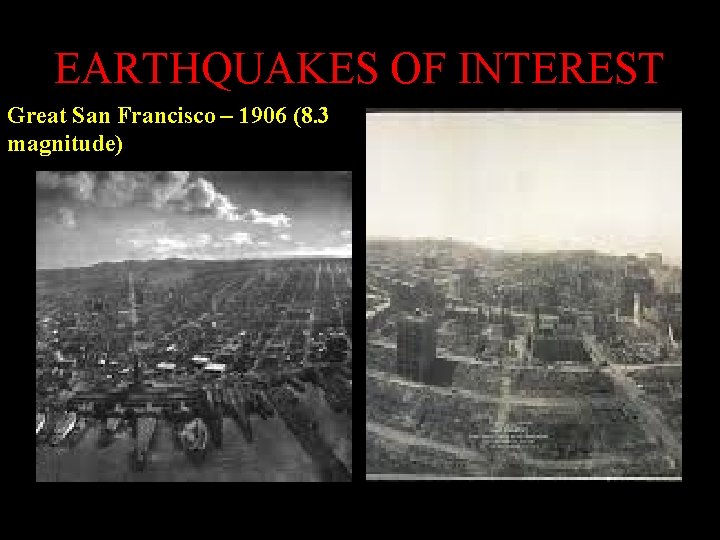
EARTHQUAKES OF INTEREST Great San Francisco – 1906 (8. 3 magnitude)
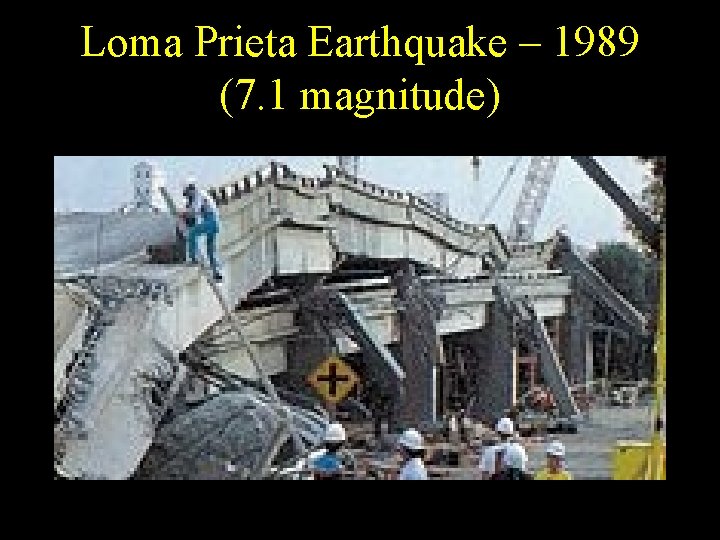
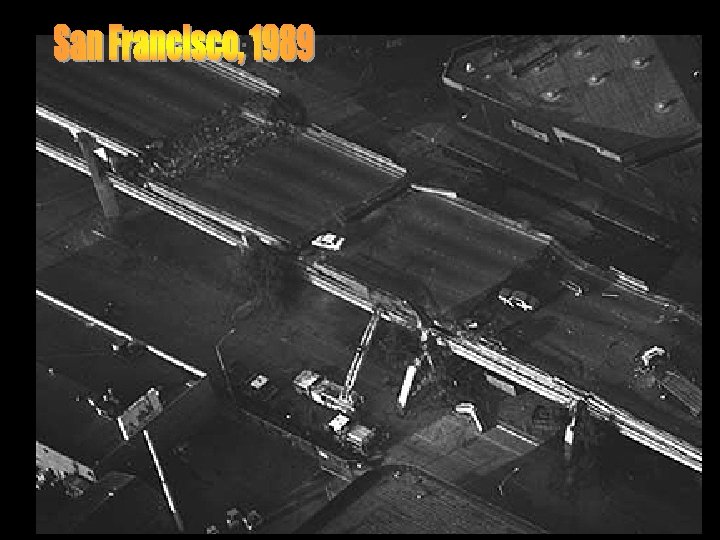
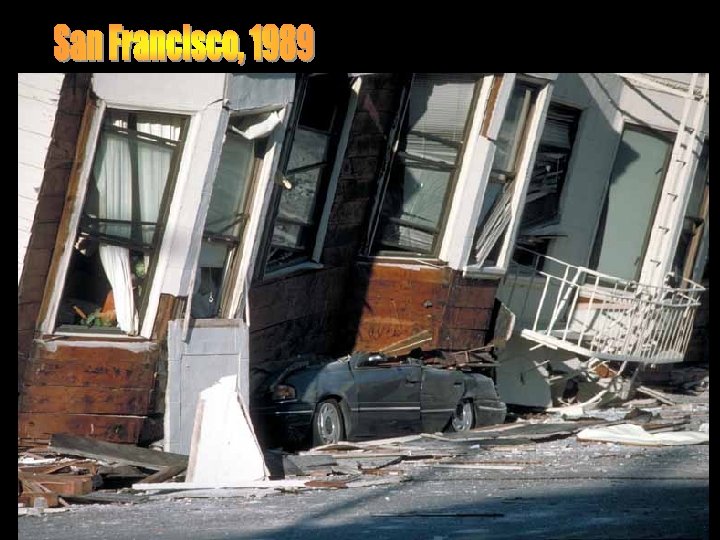
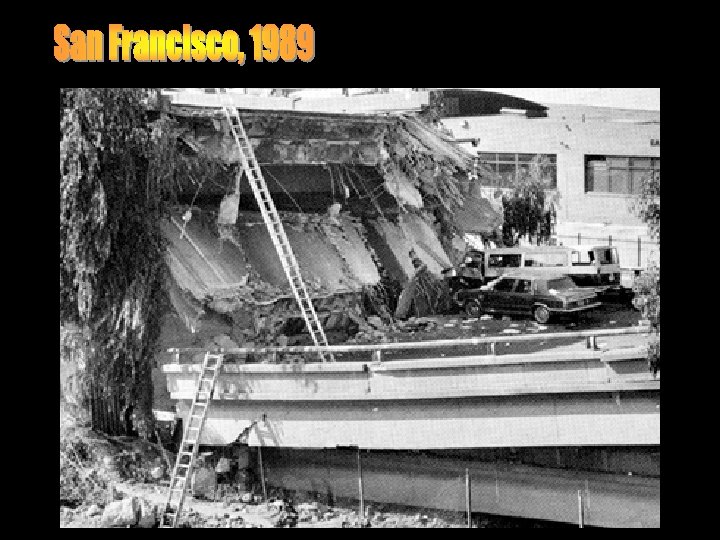
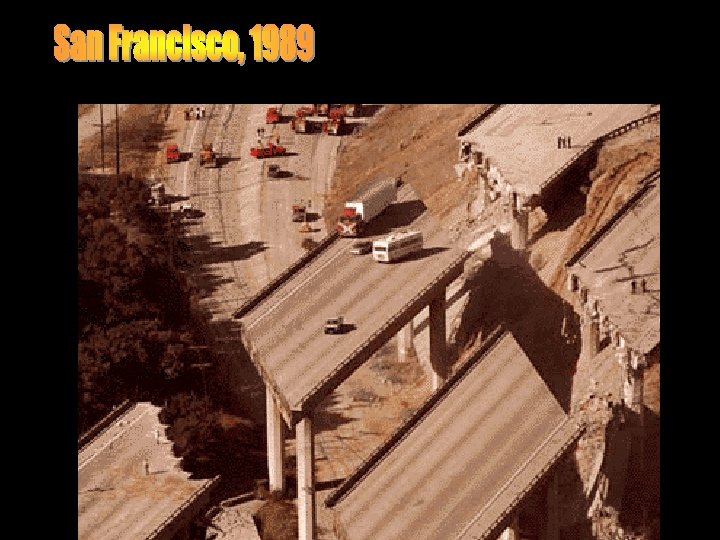
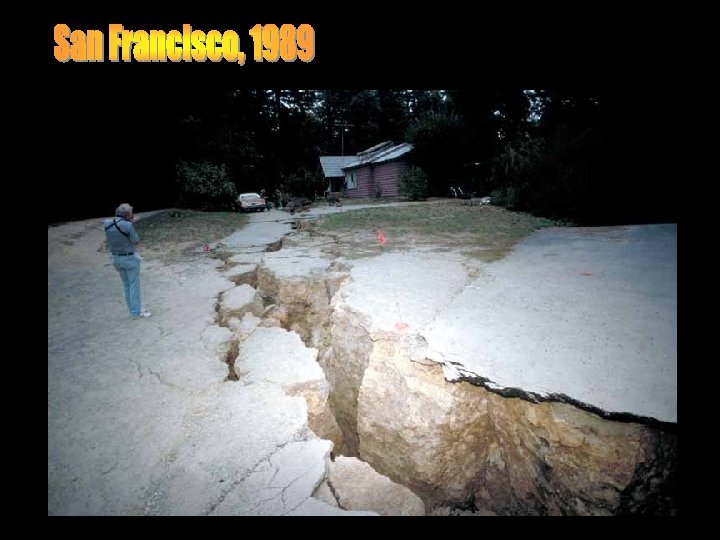
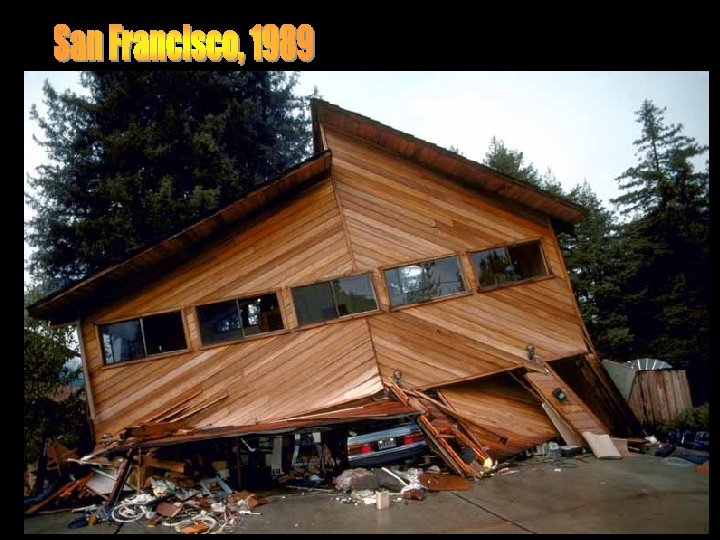
Loma Prieta Earthquake – 1989 (7. 1 magnitude)
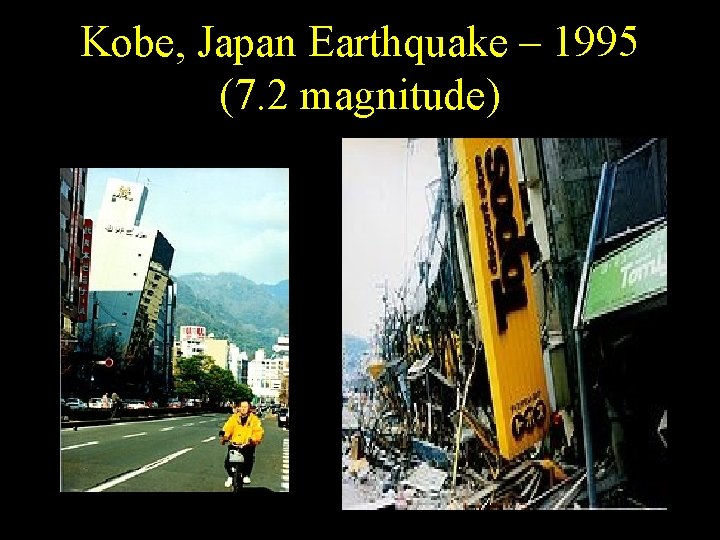
Kobe, Japan Earthquake – 1995 (7. 2 magnitude)
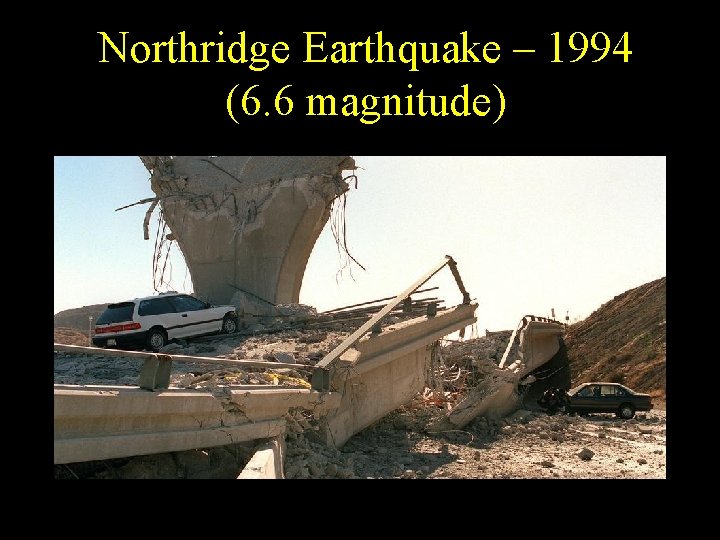
Northridge Earthquake – 1994 (6. 6 magnitude)
Charleston, South Carolina Earthquake – 1886 (7. 0 magnitude)
OTHER PICTURES
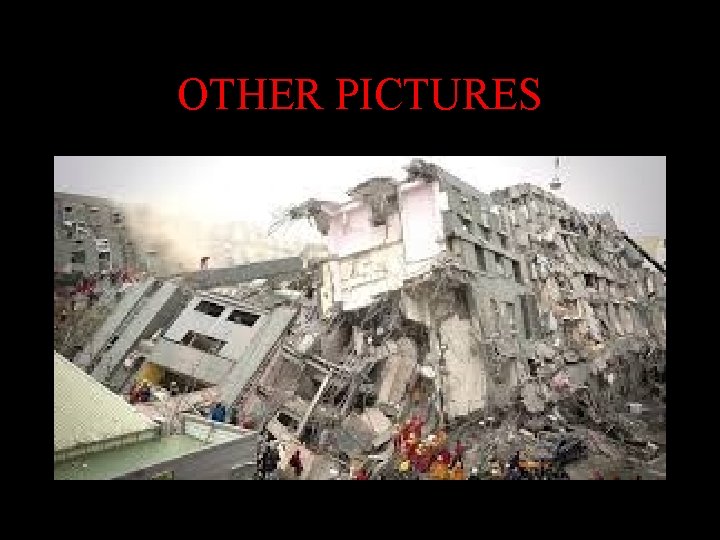
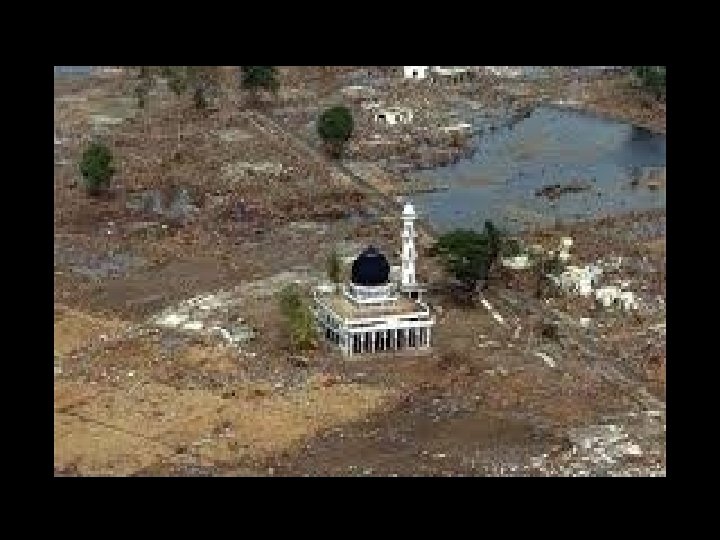
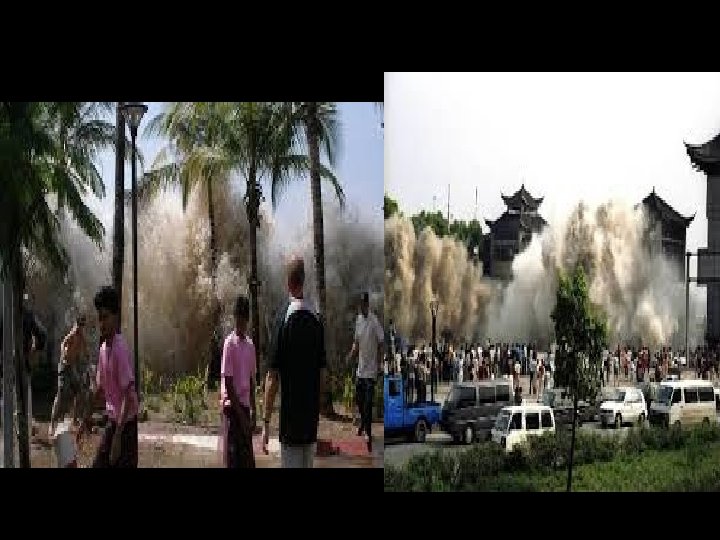
Earthquakes can also cause landslides, sudden eruptions as in the case of a hot lava flow from a volcano or giant waves called tsunamis. Sometimes new land mass are also formed. Such earthquakes are attributed with the creation of the greatest undersea mountain range and the longest land mountain range.
…And that was just a 7. 2 on the Richter scale!
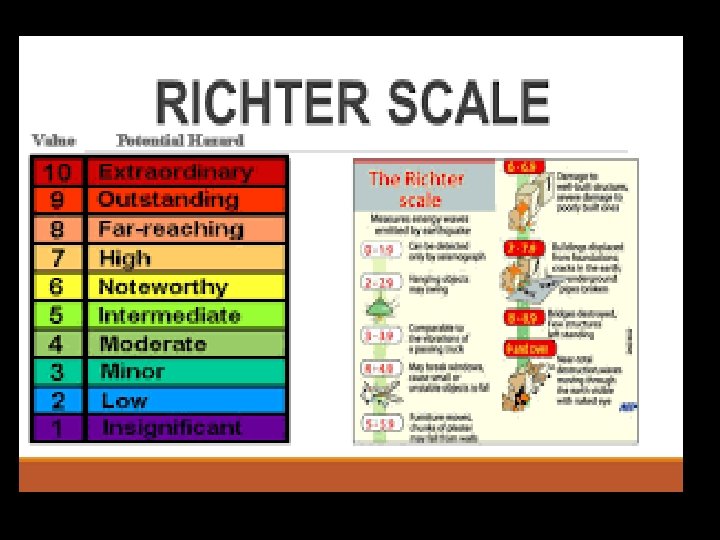
SO WHAT IS A RICHTER SCALE a numerical scale for expressing the magnitude of an earthquake on the basis of seismograph oscillations. The more destructive earthquakes typically have magnitudes between about 5. 5 and 8. 9; the scale is logarithmic and a difference of one represents an approximate thirtyfold difference in magnitude.
RICHTER SCALE
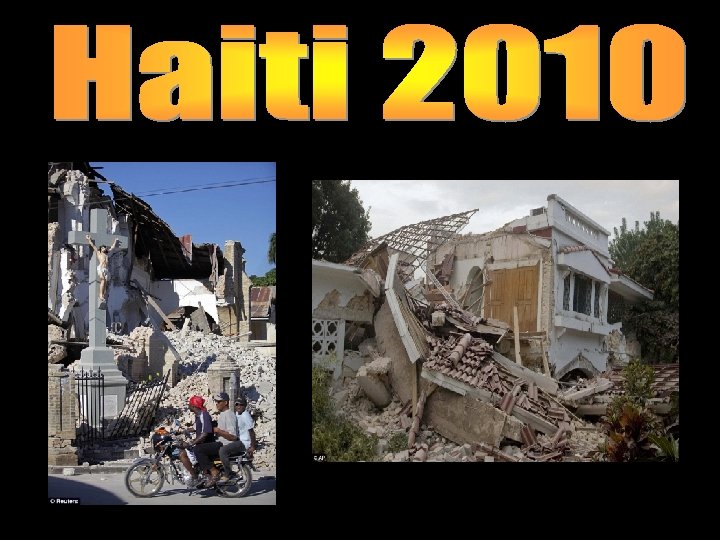
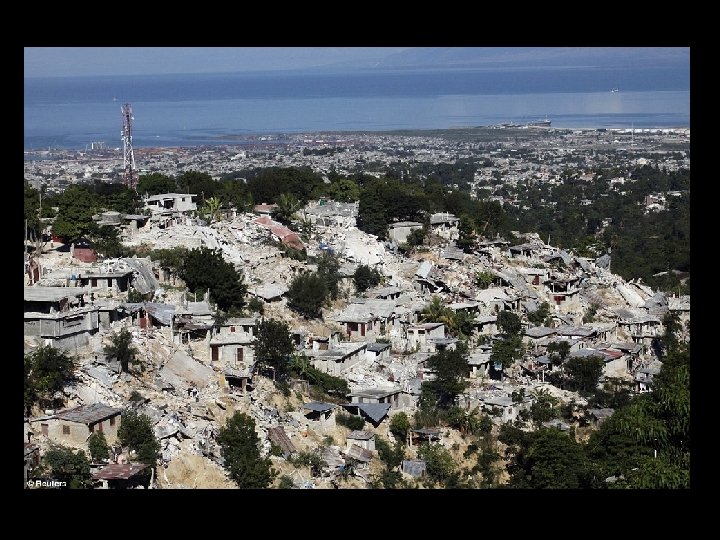
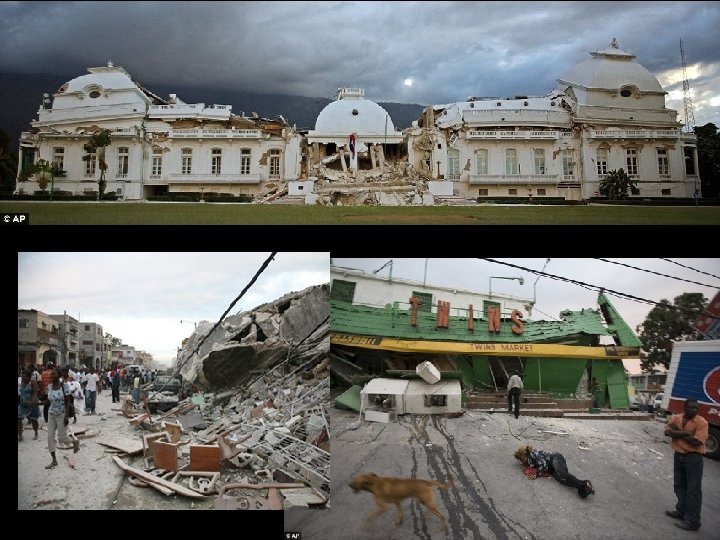
• Haiti Earthquake – 2010 (7. 0 magnitude)
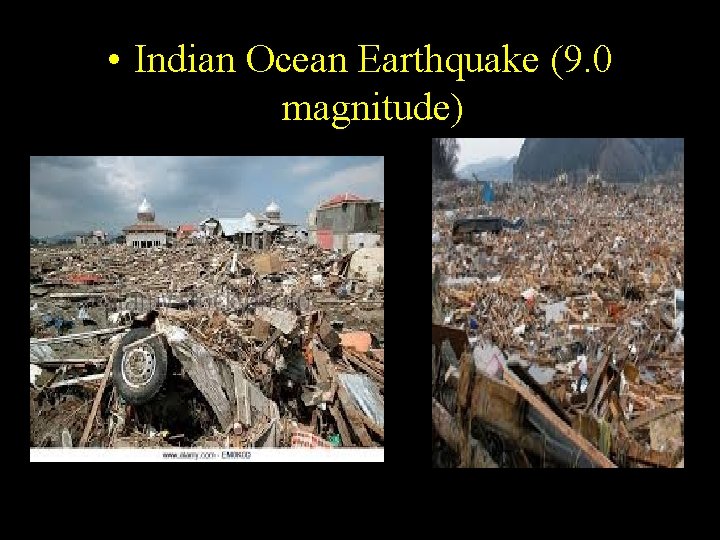
• Indian Ocean Earthquake (9. 0 magnitude)
WHAT LEAVES THE FOCUS?
SEISMIC WAVES • _SEISMIC WAVES___ are waves generated by an earthquake that travel through the Earth. These waves can cause the ground to move forward, backward, up, down, and even to ripple. Seismic Waves are generated at the __SAME___ time but move in different ways, and at different speeds.
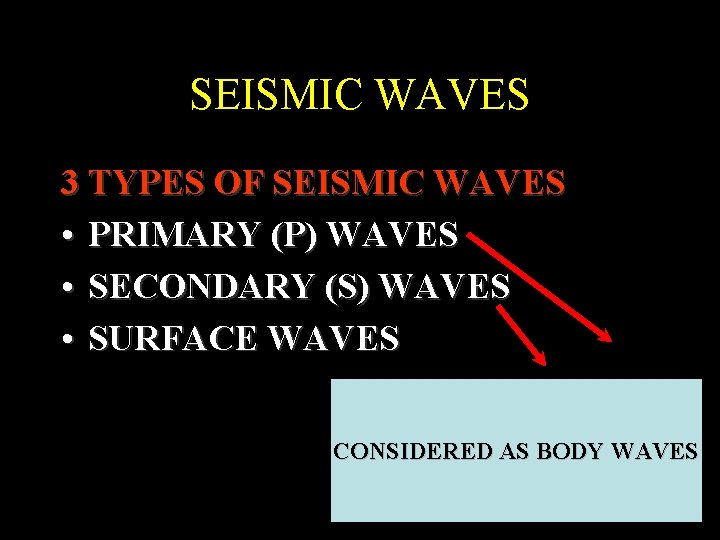
SEISMIC WAVES 3 TYPES OF SEISMIC WAVES • PRIMARY (P) WAVES • SECONDARY (S) WAVES • SURFACE WAVES CONSIDERED AS BODY WAVES
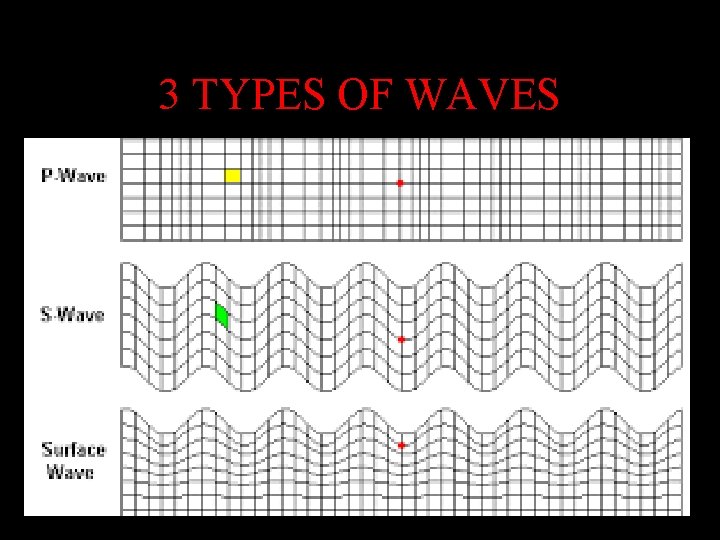
3 TYPES OF WAVES
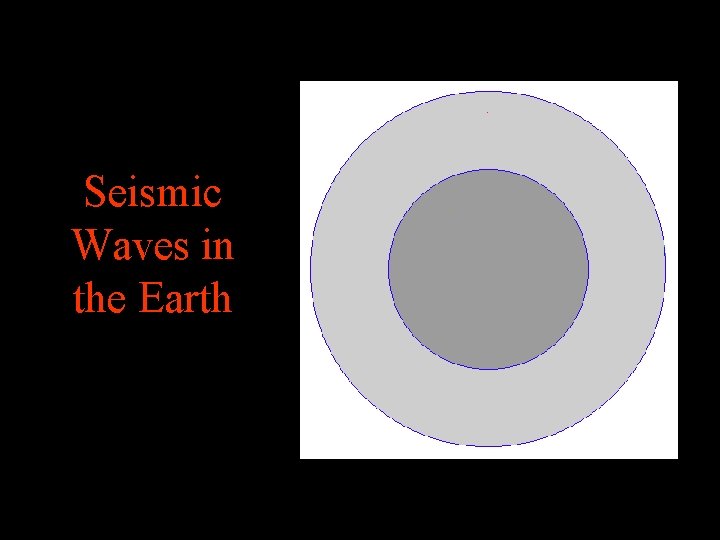
Seismic Waves in the Earth http: //www. uwgb. edu/dutchs/Earth. SC-102 Visuals. Index. HTM
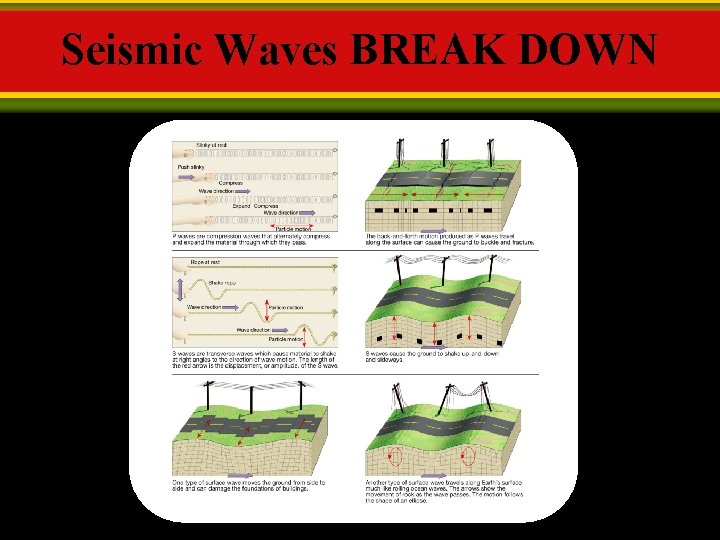
Seismic Waves BREAK DOWN
PRIMARY (P) WAVE • First seismic wave to Move out from the earthquake focus, the point where the energy is released • Travel the fastest of the three waves • Push and pull rock creating a back-andforth motion in the direction the wave is moving • (known as longitudinal or compressional waves)
P-WAVES LOCATION • LOCATION: _INTERIOR_ (INSIDE THE EARTH LAYERS)
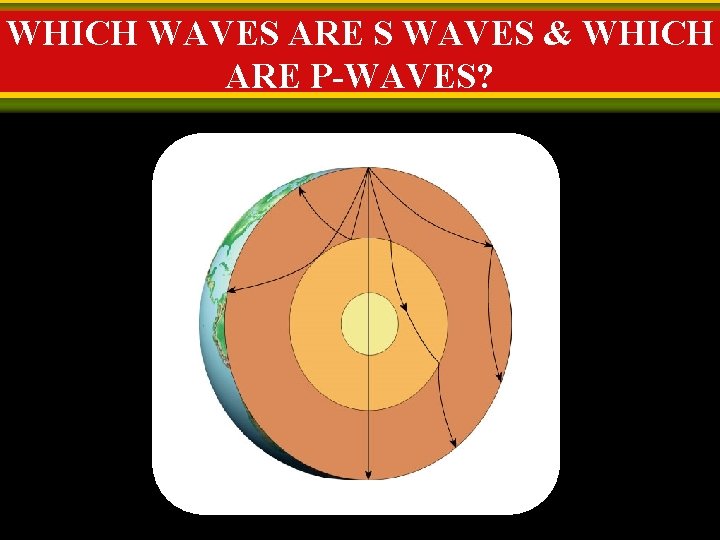
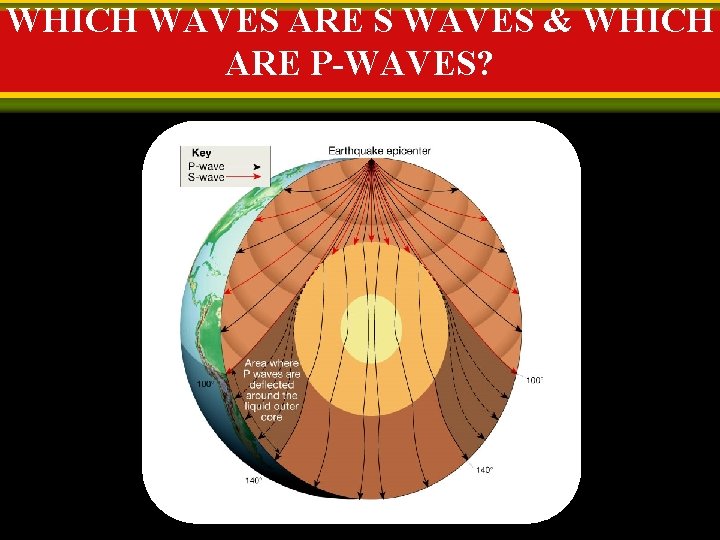
P WAVES • Move through solid and liquid layers of Earth (therefore it can move through all layers)
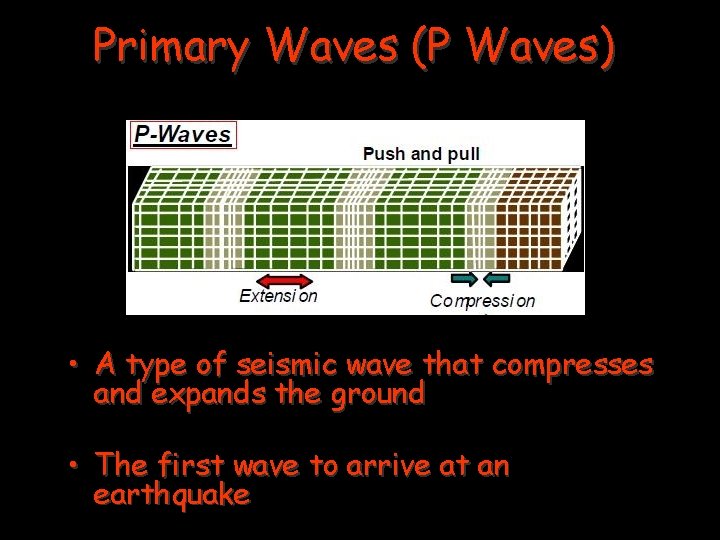
Primary Waves (P Waves) • A type of seismic wave that compresses and expands the ground • The first wave to arrive at an earthquake http: //daphne. meccahosting. com/~a 0000 e 89/insideearth 2. htm
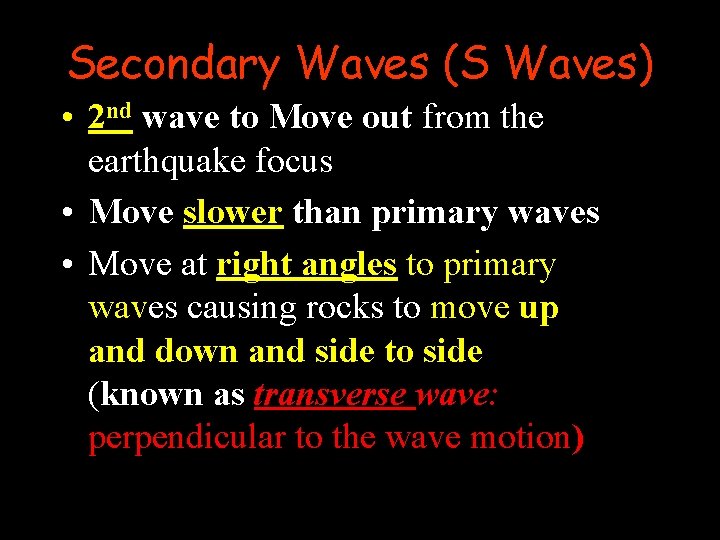
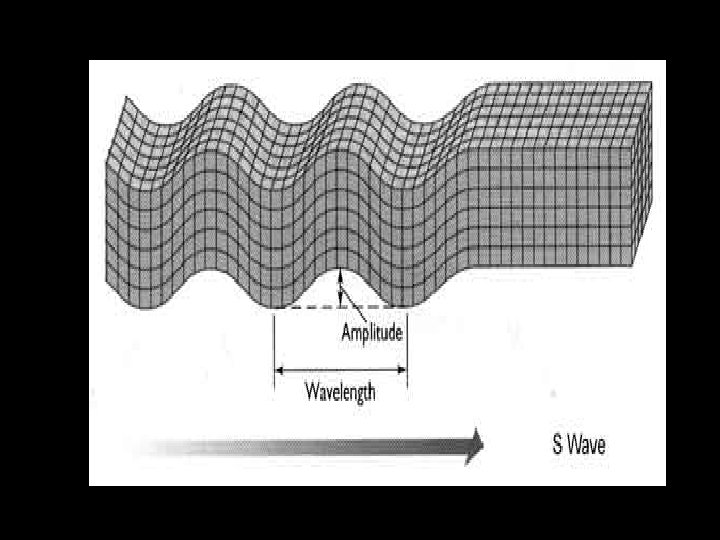
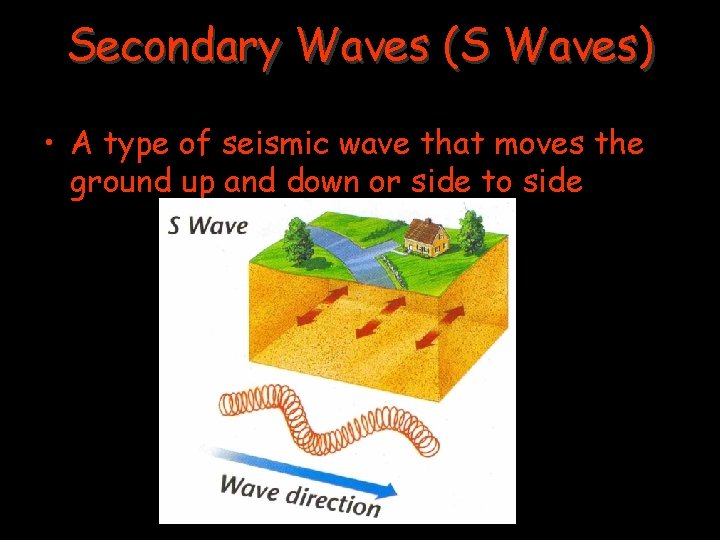
Secondary Waves (S Waves) • 2 nd wave to Move out from the earthquake focus • Move slower than primary waves • Move at right angles to primary waves causing rocks to move up and down and side to side (known as transverse wave: perpendicular to the wave motion)
S-WAVES LOCATION • LOCATION: _INTERIOR_ (INSIDE THE EARTH LAYERS)
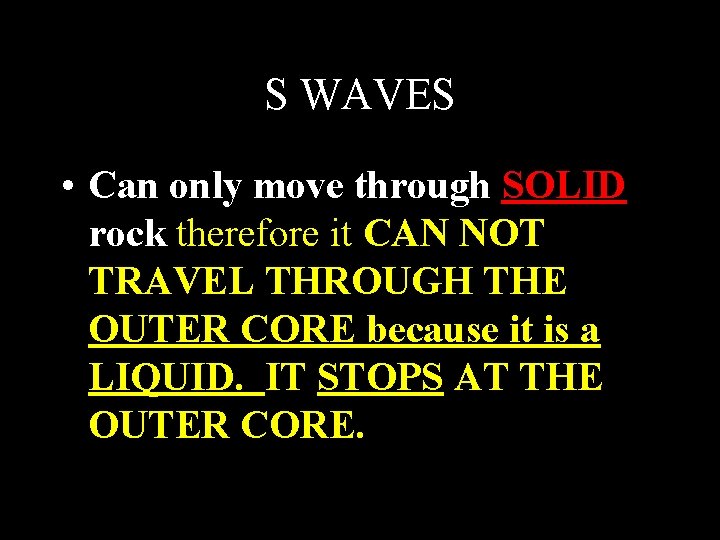
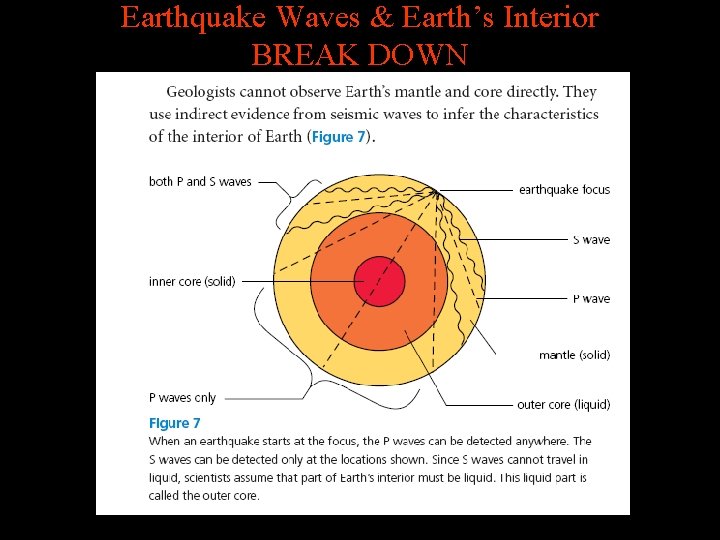
S WAVES • Can only move through SOLID rock therefore it CAN NOT TRAVEL THROUGH THE OUTER CORE because it is a LIQUID. IT STOPS AT THE OUTER CORE.
Secondary Waves (S Waves) • A type of seismic wave that moves the ground up and down or side to side http: //daphne. meccahosting. com/~a 0000 e 89/insideearth 2. htm
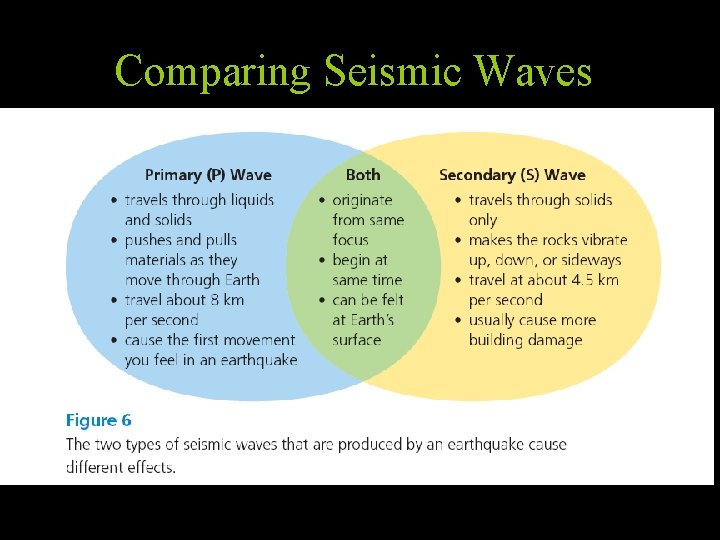
Comparing Seismic Waves
SURFACE WAVES • Form when P and S waves reach the surfacee • SLOWEST BUT MOST DESTRUCTIVE • Can cause the ground to shake making rock sway from side to side and roll like an ocean wave • Especially damaging to buildings • They release all of the energy of the earthquake • Travel just below or along the ground’s surface
SURFACE WAVES LOCATION • LOCATION: ON THE SURFACE
MOVEMENT • They move back and forth and in a rolling motion along the surface • • Produces motion in the upper crust • Motion can be up and down • Motion can be around • Motion can be back and forth
SURFACE WAVES • Move through solid and liquid layers of Earth (therefore it can move through all layers)
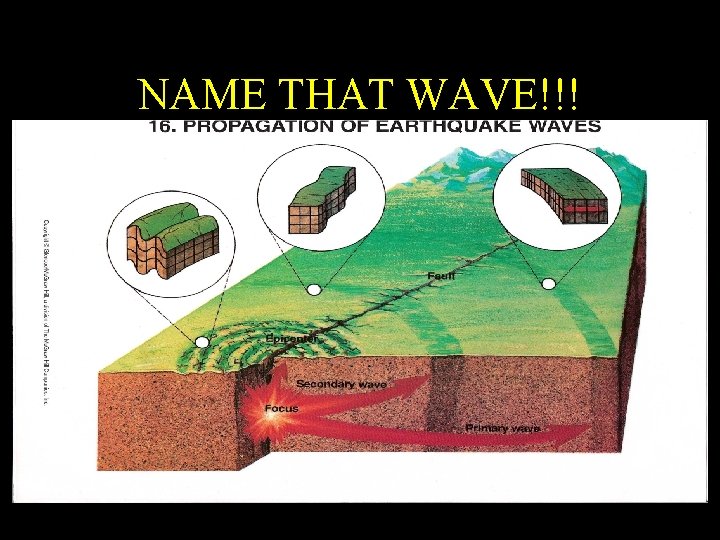
NAME THAT WAVE!!!
SEISMIC WAVES CONTINUED • Scientists use the principle that the speed and direction of a seismic wave depends on the material it travels through.
How does scientist study the Earth’s Core? • Because of the behavior of these different waves, scientists have indirect evidence for the solid inner core and liquid outer core of Earth because S waves don’t travel through the outer core because it’s a liquid. • Also because earthquake waves travel faster through the mantle than through the crust, scientists know that the mantle is denser than the crust.
WHICH WAVES ARE S WAVES & WHICH ARE P-WAVES?
WHICH WAVES ARE S WAVES & WHICH ARE P-WAVES?
Earthquake Waves & Earth’s Interior BREAK DOWN
CHECKPOINT 1. 2. 3. 4. 5. 6. WHAT RELEASES THE SEISMIC WAVES? NAME THE 3 TYPES OF SEISMIC WAVES? S-WAVES ARE KNOWN AS WHAT TYPE OF WAVE? P-WAVES ARE KNOWN AS WHAT TYPE OF WAVE? NAME 2 THINGS THE S & P WAVES HAVE IN COMMON. WHICH WAVE CAN’T TRAVEL THROUGH THE OUTER CORE AND WHY? 7. DO WAVES GENERATE AT THE SAME TIME? 8. PLACE IN ORDER HOW THE WAVES LEAVE THE FOCUS? 9. DO WAVES TRAVEL AT THE SAME SPEED? 10. WHICH WAVE IS THE MOST DESTRUCTIVE WAVE? 11. HOW WOULD YOU DESCRIBE THE MOVEMENT OF EACH WAVE?
• Measuring Earthquakes
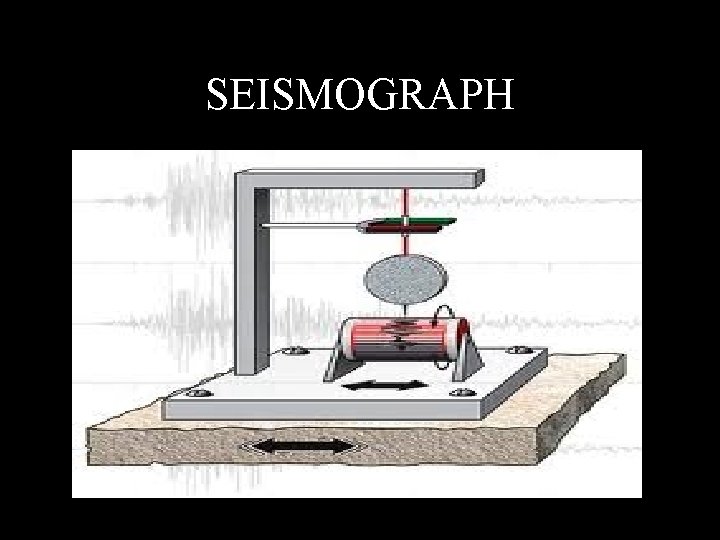
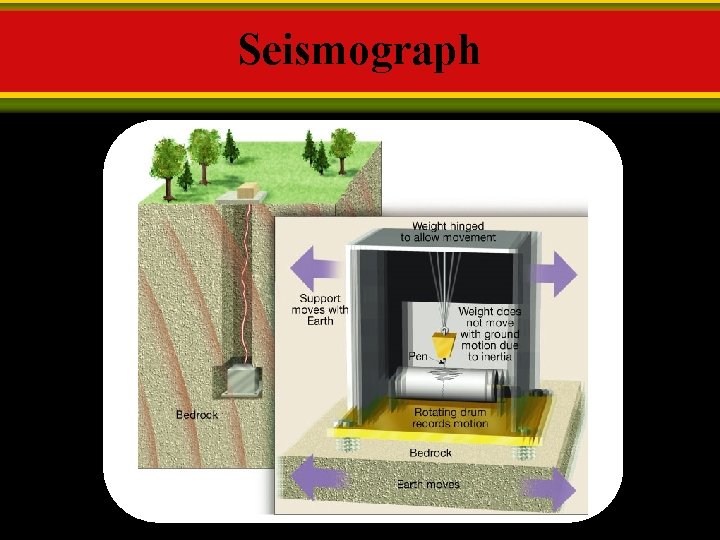
Measuring Earthquakes • The energy spreads outward in all directions as vibrations called ___Seismic Waves____. Seismic waves can be measured and recorded by a ____seismograph_______.
SEISMOGRAPH
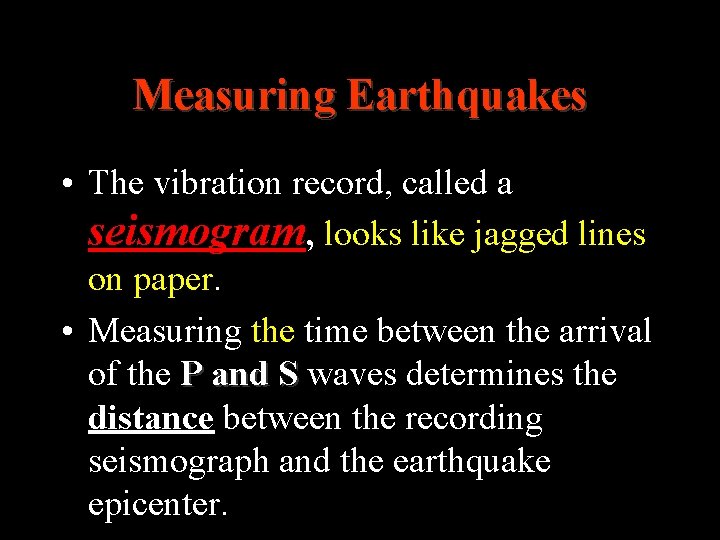
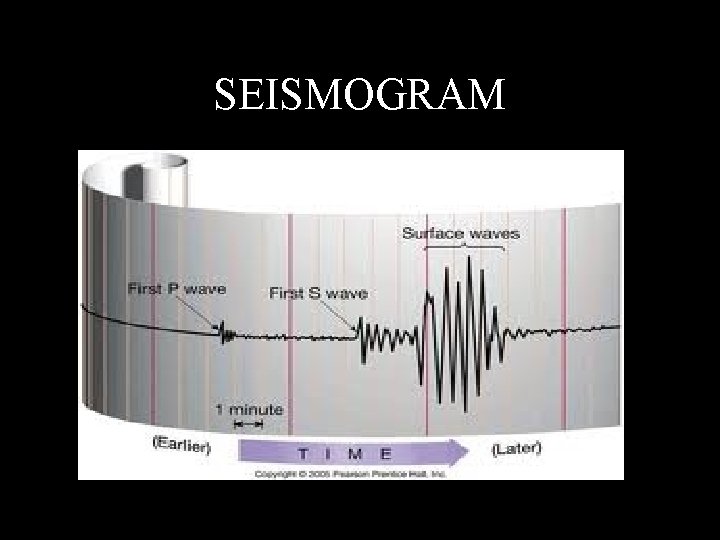
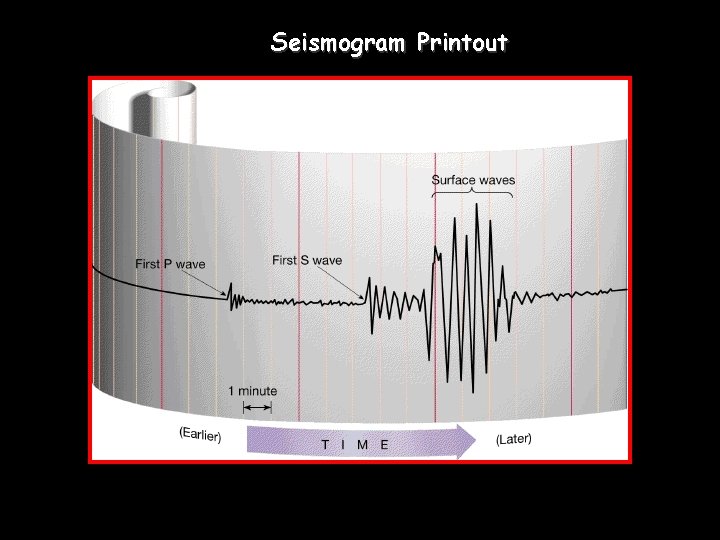
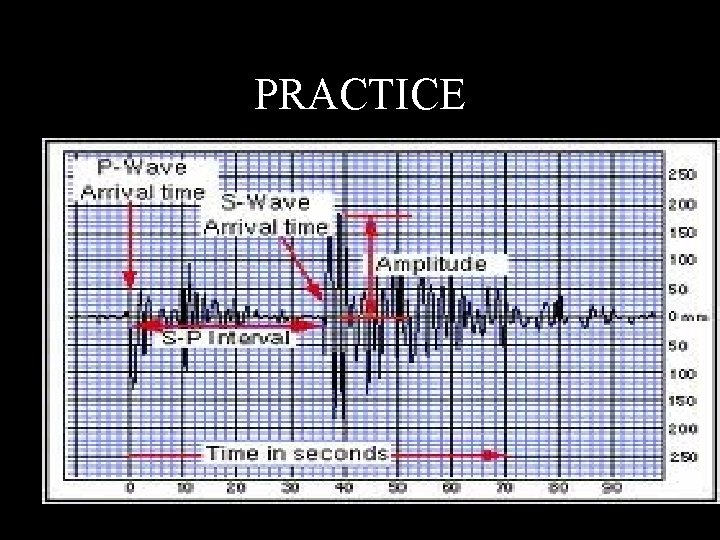
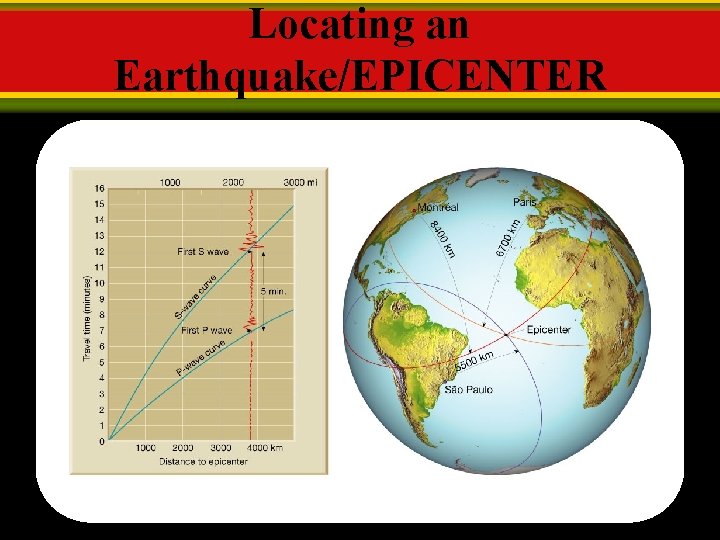
Measuring Earthquakes • The vibration record, called a seismogram, looks like jagged lines on paper. • Measuring the time between the arrival of the P and S waves determines the S distance between the recording seismograph and the earthquake epicenter.
SEISMOGRAM
Seismograph
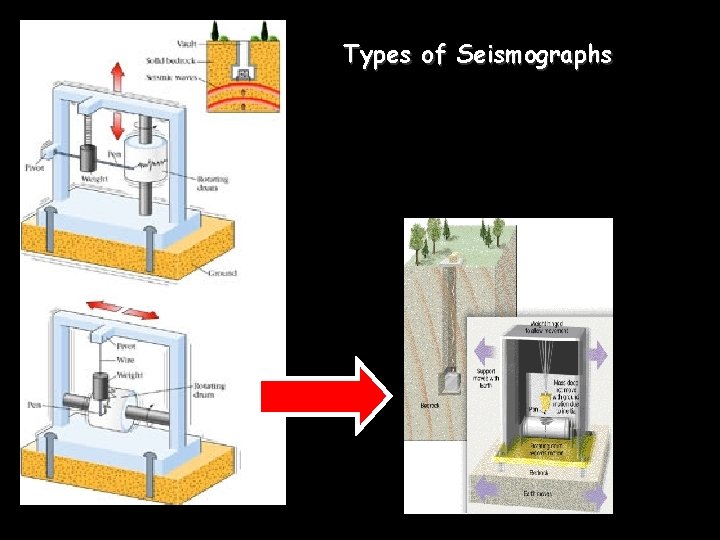
Types of Seismographs
Seismogram Printout
• How to find the S-P INTERVALS
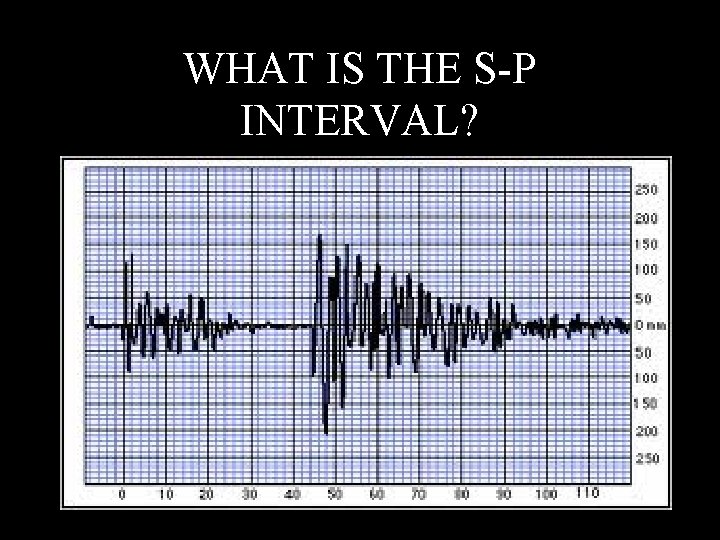
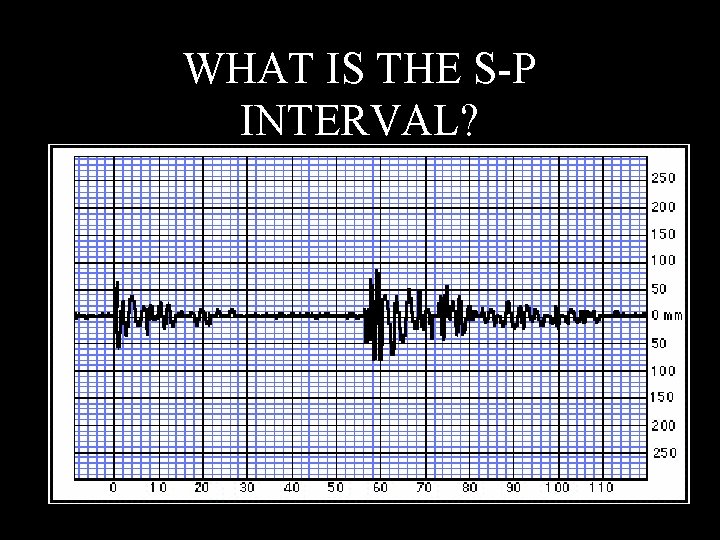
• To find the S-P intervals, you have to subtract the P Wave from the S Wave. • Measuring the time between the arrival of the P and S waves determines the distance between the recording seismograph and the earthquake epicenter.
• Find the S-P interval: Show your steps.
PRACTICE
WHAT IS THE S-P INTERVAL?
WHAT IS THE S-P INTERVAL?
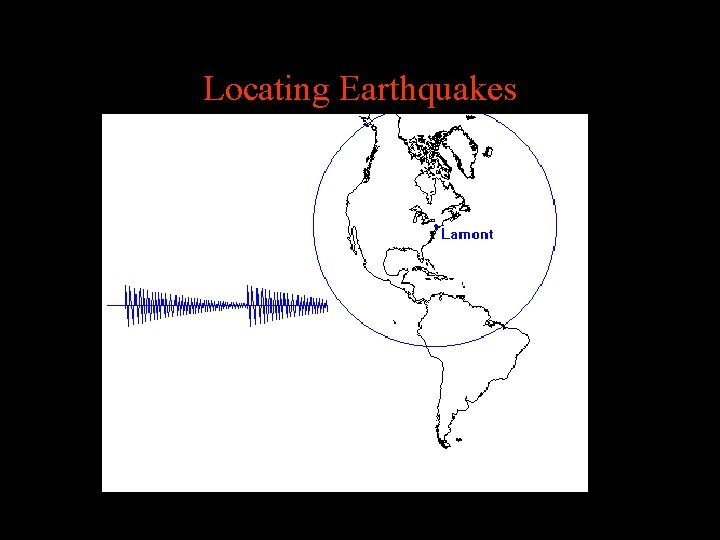
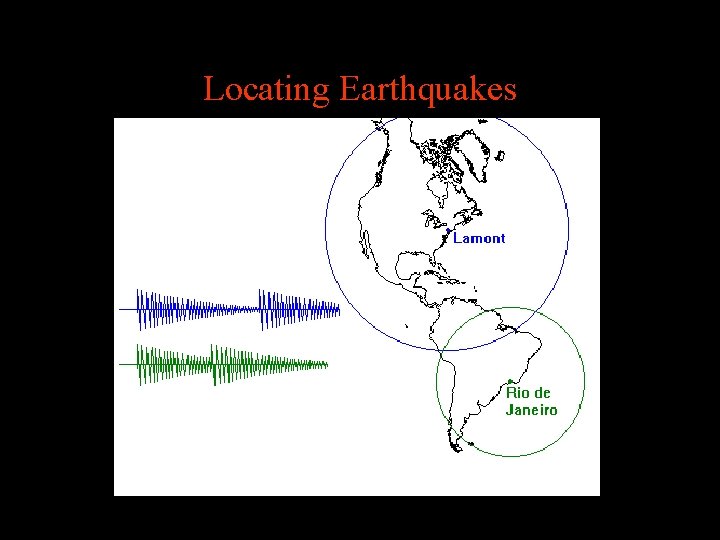
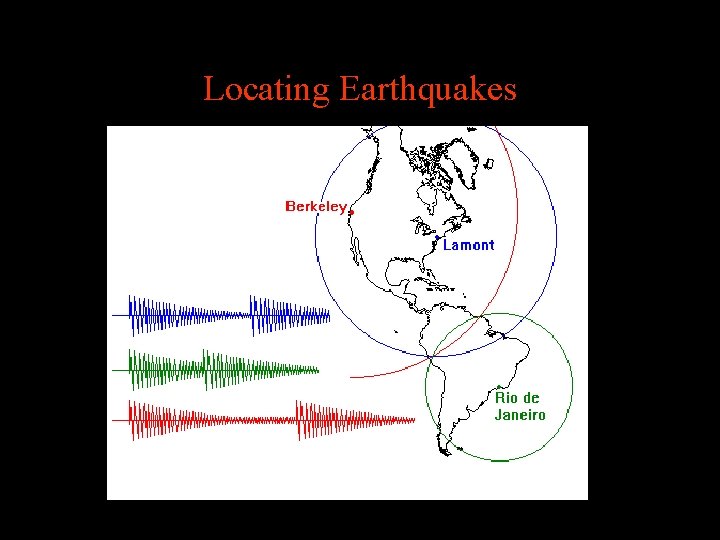
TO LOCATE THE EPICENTER OF AN EARTHQUAKE, THEY USE THE PROCESS CALLED TRIANGULATION
Locating an Earthquake/EPICENTER
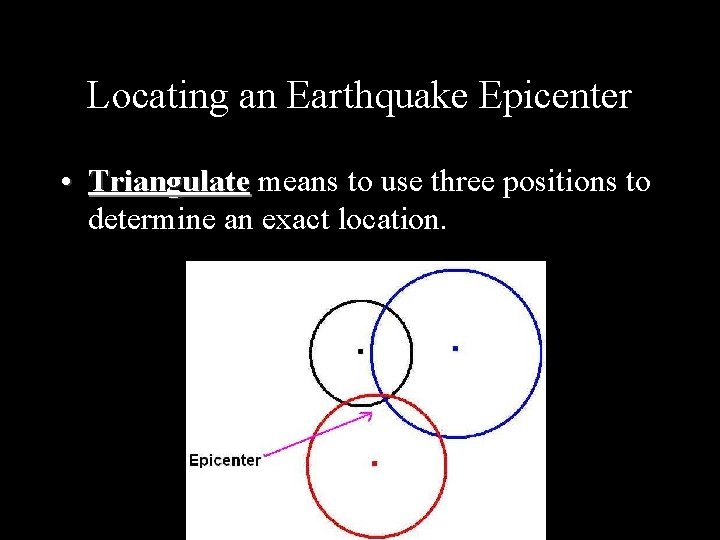
Locating an Earthquake Epicenter • Triangulate means to use three positions to Triangulate determine an exact location.
• TRIANGULATION identifies the epicenter of an earthquake. The location of an earthquake’s epicenter is found by plotting 3 circles on a map from the records of three seismograph stations and finding the point where three circles intersect. • Note where the 3 circles meet is where the epicenter is located.
Locating Earthquakes http: //www. uwgb. edu/dutchs/Earth. SC-102 Visuals. Index. HTM
Locating Earthquakes http: //www. uwgb. edu/dutchs/Earth. SC-102 Visuals. Index. HTM
Locating Earthquakes http: //www. uwgb. edu/dutchs/Earth. SC-102 Visuals. Index. HTM
Triangulation of 3 stations to locate earthquake epicenter