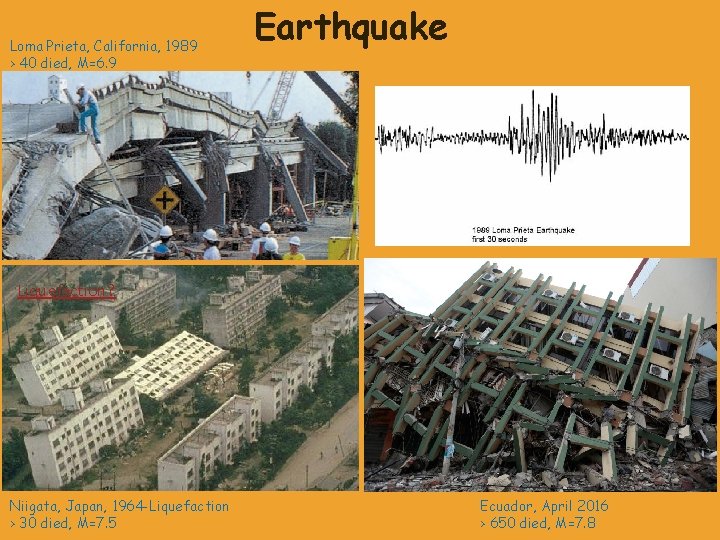
Loma Prieta California 1989 40 died M6 9
- Slides: 25
Loma Prieta, California, 1989 > 40 died, M=6. 9 Earthquake Liquefaction? Niigata, Japan, 1964 -Liquefaction > 30 died, M=7. 5 Ecuador, April 2016 > 650 died, M=7. 8
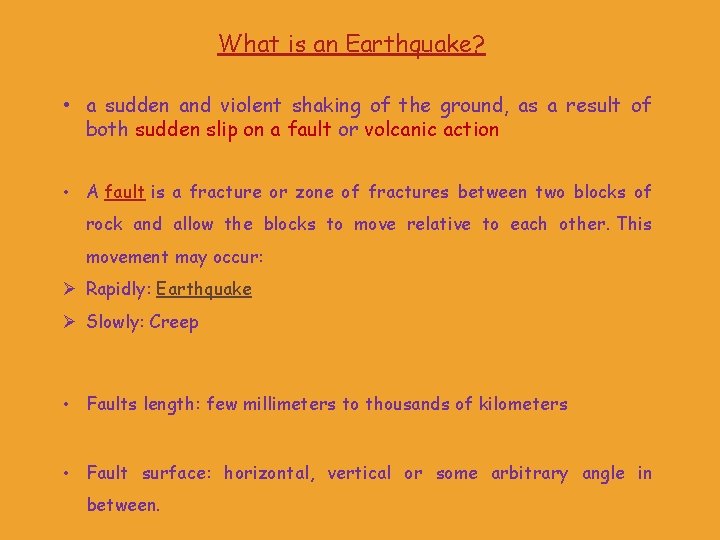
What is an Earthquake? • a sudden and violent shaking of the ground, as a result of both sudden slip on a fault or volcanic action • A fault is a fracture or zone of fractures between two blocks of rock and allow the blocks to move relative to each other. This movement may occur: Ø Rapidly: Earthquake Ø Slowly: Creep • Faults length: few millimeters to thousands of kilometers • Fault surface: horizontal, vertical or some arbitrary angle in between.
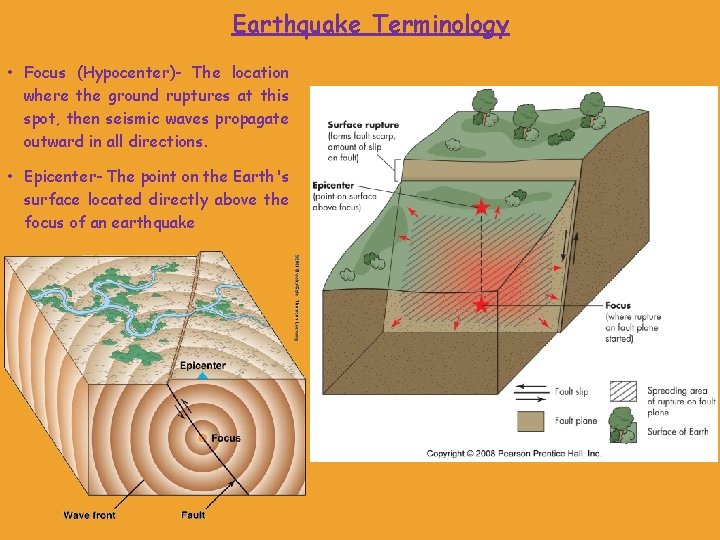
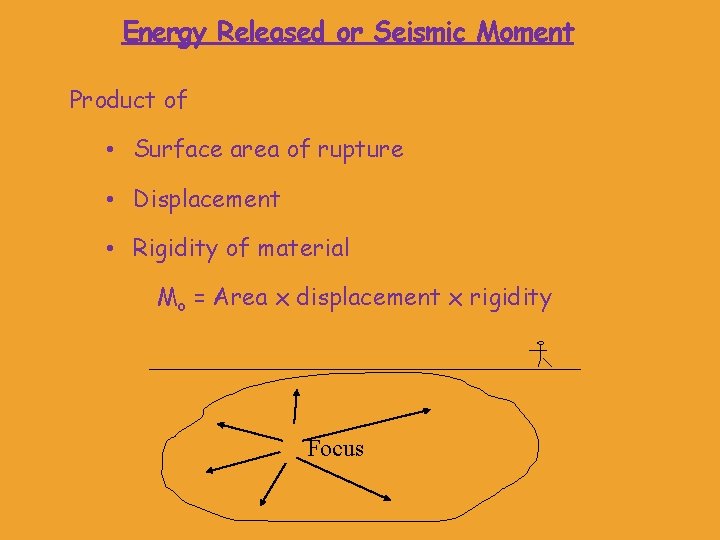
Earthquake Terminology • Focus (Hypocenter)- The location where the ground ruptures at this spot, then seismic waves propagate outward in all directions. • Epicenter- The point on the Earth's surface located directly above the focus of an earthquake
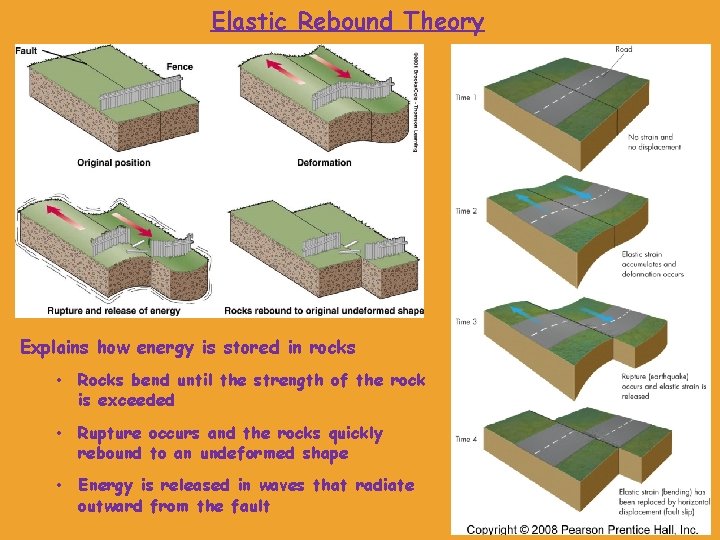
Elastic Rebound Theory Explains how energy is stored in rocks • Rocks bend until the strength of the rock is exceeded • Rupture occurs and the rocks quickly rebound to an undeformed shape • Energy is released in waves that radiate outward from the fault
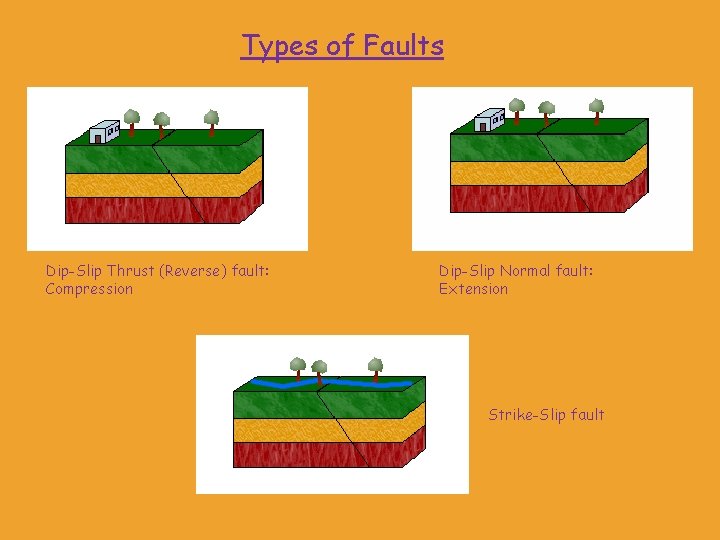
Types of Faults Dip-Slip Thrust (Reverse) fault: Compression Dip-Slip Normal fault: Extension Strike-Slip fault
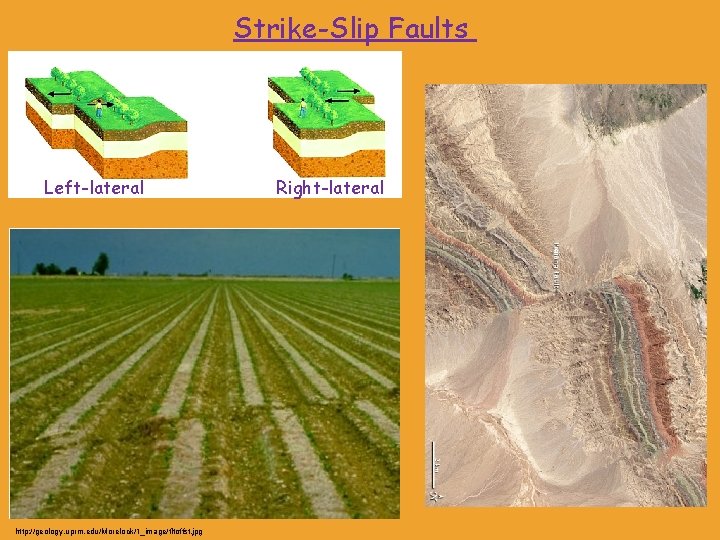
Strike-Slip Faults Left-lateral http: //geology. uprm. edu/Morelock/1_image/fltoffst. jpg Right-lateral
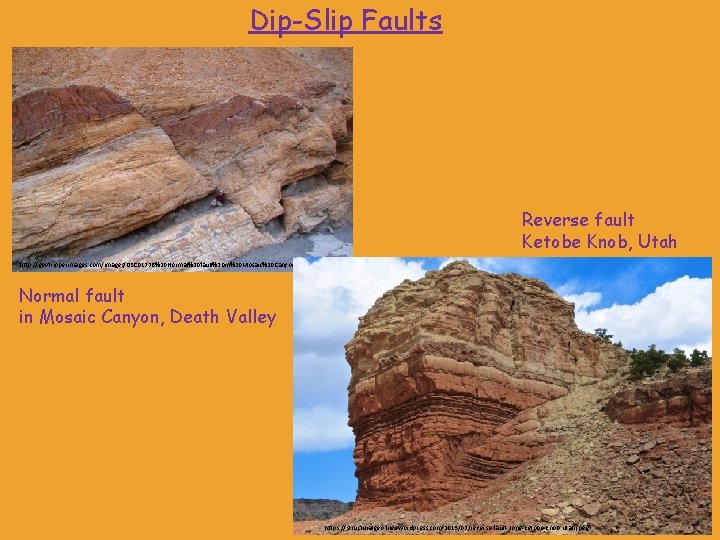
Dip-Slip Faults Reverse fault Ketobe Knob, Utah http: //geotripperimages. com/images/DSC 01776%20 Normal%20 fault%20 in%20 Mosaic%20 Canyon. jpg Normal fault in Mosaic Canyon, Death Valley https: //structuralgeo. files. wordpress. com/2013/07/reverse-fault-zone-ketobe-knob-utah. jpeg
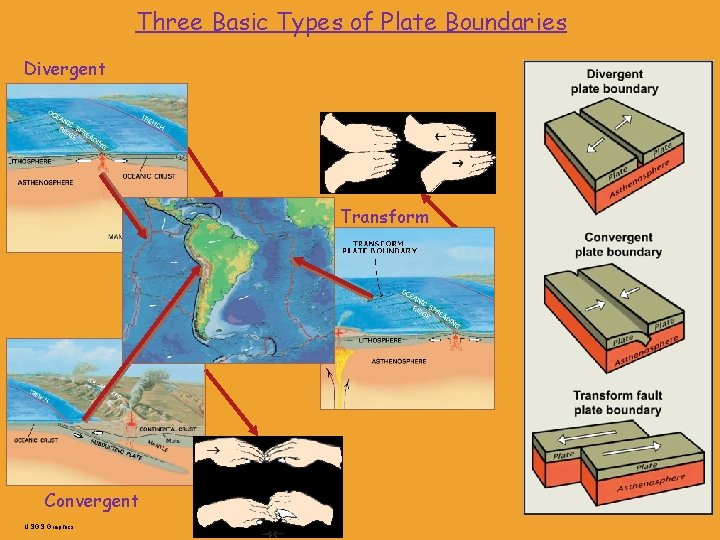
Three Basic Types of Plate Boundaries Divergent Transform Convergent USGS Graphics
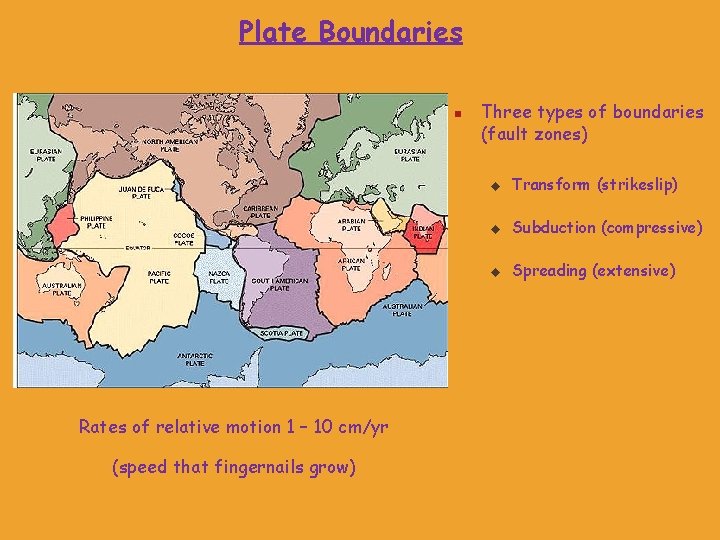
Plate Boundaries n Rates of relative motion 1 – 10 cm/yr (speed that fingernails grow) Three types of boundaries (fault zones) u Transform (strikeslip) u Subduction (compressive) u Spreading (extensive)
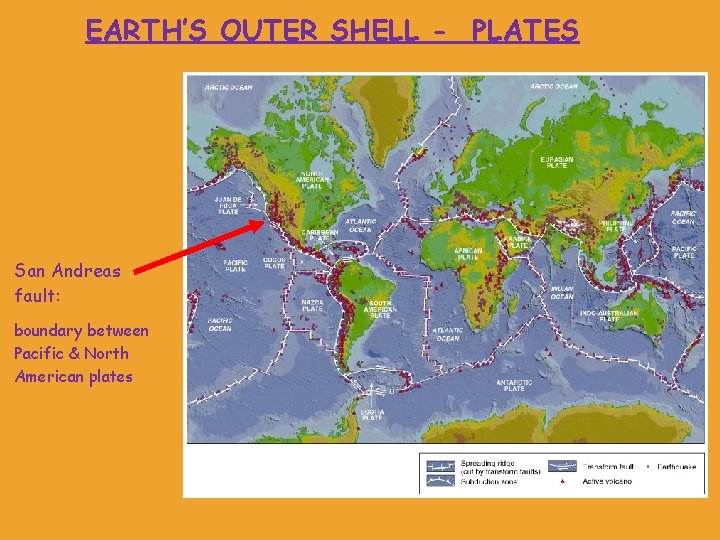
EARTH’S OUTER SHELL - PLATES San Andreas fault: boundary between Pacific & North American plates
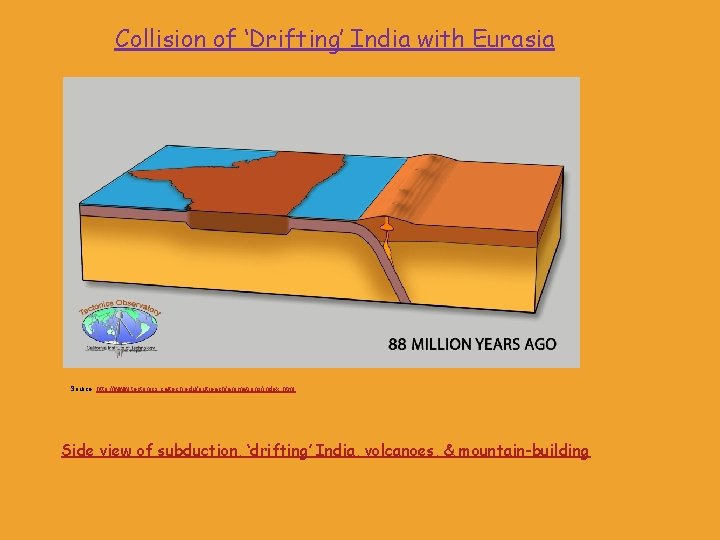
Collision of ‘Drifting’ India with Eurasia Source: http: //www. tectonics. caltech. edu/outreach/animations/index. html Side view of subduction, ‘drifting’ India, volcanoes, & mountain-building
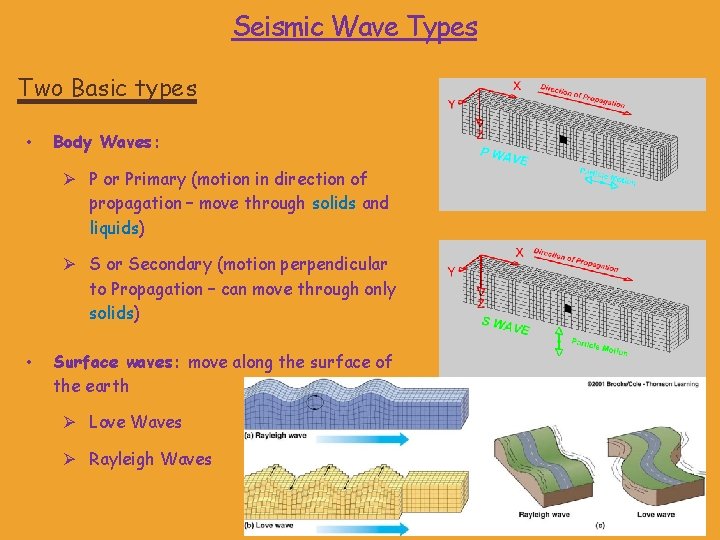
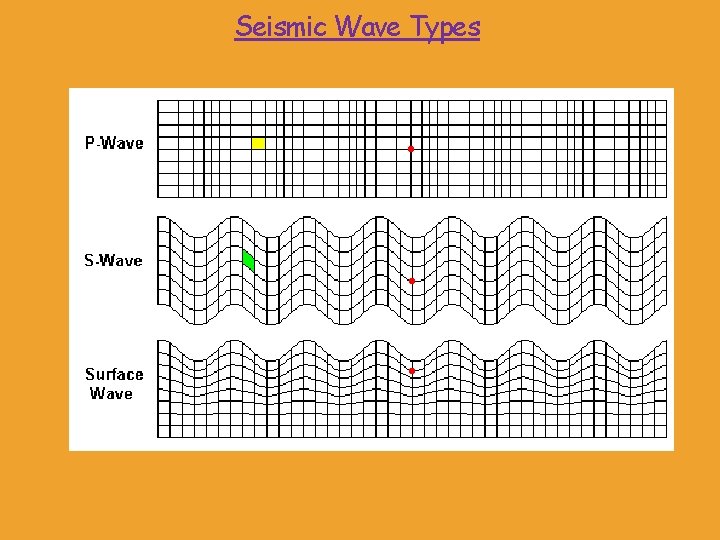
Seismic Wave Types Two Basic types • Body Waves: Ø P or Primary (motion in direction of propagation – move through solids and liquids) Ø S or Secondary (motion perpendicular to Propagation – can move through only solids) • Surface waves: move along the surface of the earth Ø Love Waves Ø Rayleigh Waves
Seismic Wave Types
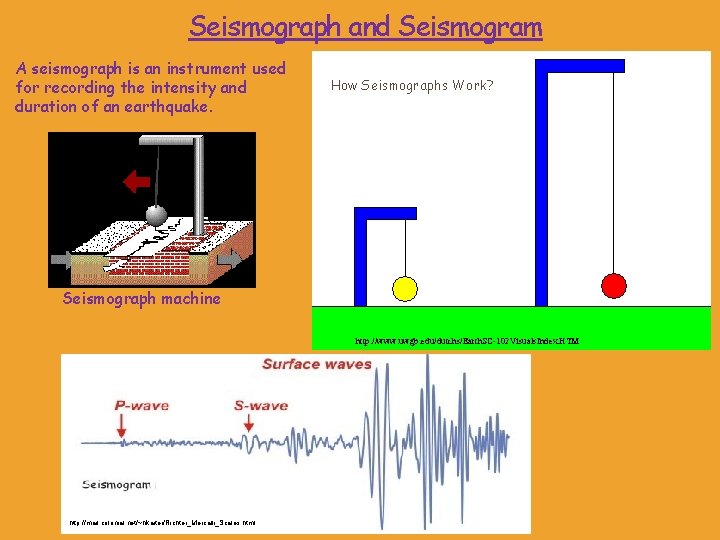
Seismograph and Seismogram A seismograph is an instrument used for recording the intensity and duration of an earthquake. How Seismographs Work? Seismograph machine http: //www. uwgb. edu/dutchs/Earth. SC-102 Visuals. Index. HTM http: //mail. colonial. net/~hkaiter/Richter_Mercalli_Scales. html
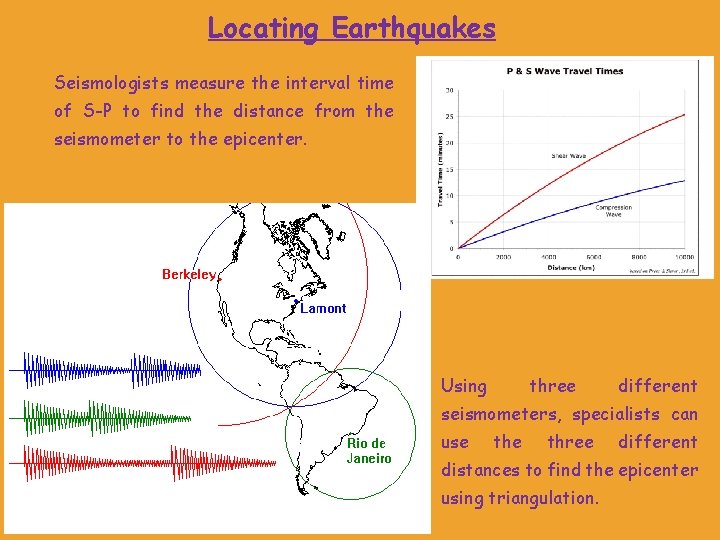
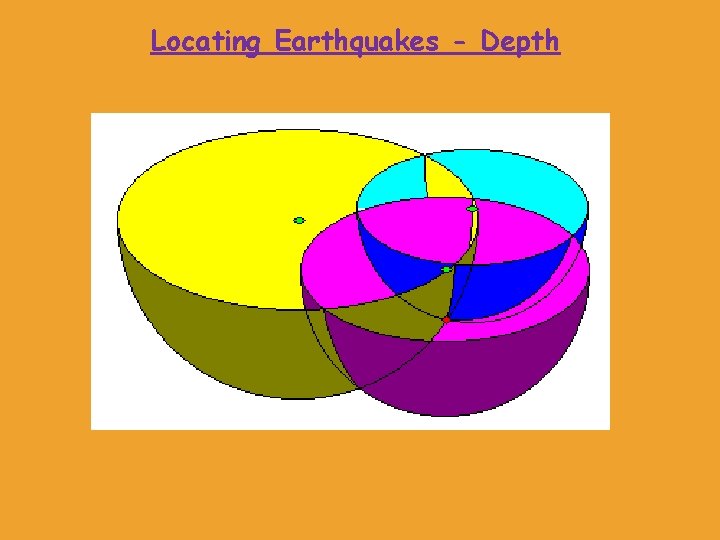
Locating Earthquakes Seismologists measure the interval time of S-P to find the distance from the seismometer to the epicenter. Using three different seismometers, specialists can use three different distances to find the epicenter using triangulation.
Locating Earthquakes - Depth
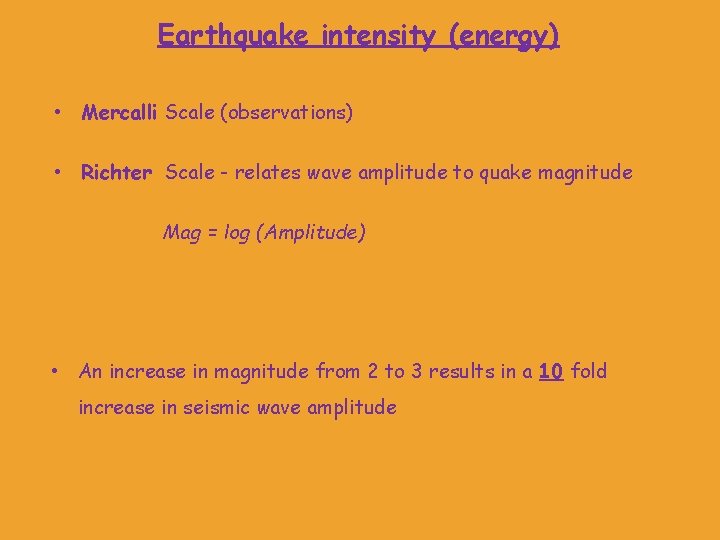
Earthquake intensity (energy) • Mercalli Scale (observations) • Richter Scale - relates wave amplitude to quake magnitude Mag = log (Amplitude) • An increase in magnitude from 2 to 3 results in a 10 fold increase in seismic wave amplitude
Energy Released or Seismic Moment Product of • Surface area of rupture • Displacement • Rigidity of material Mo = Area x displacement x rigidity Focus
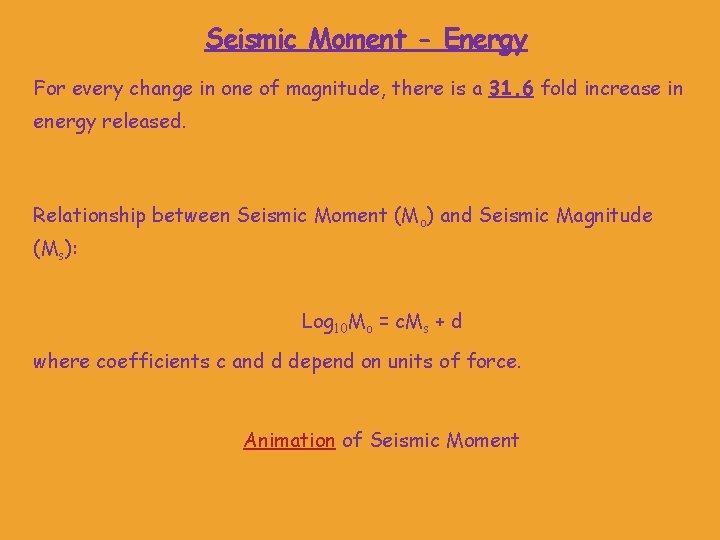
Seismic Moment - Energy For every change in one of magnitude, there is a 31. 6 fold increase in energy released. Relationship between Seismic Moment (Mo) and Seismic Magnitude (Ms): Log 10 Mo = c. Ms + d where coefficients c and d depend on units of force. Animation of Seismic Moment
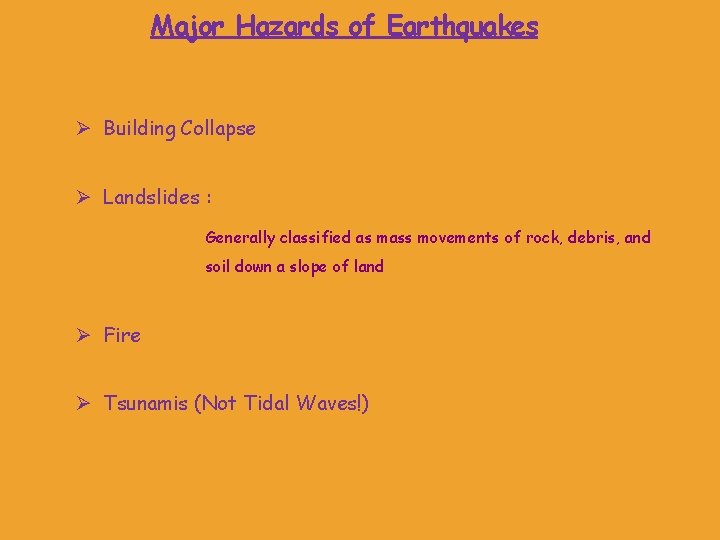
Major Hazards of Earthquakes Ø Building Collapse Ø Landslides : Generally classified as mass movements of rock, debris, and soil down a slope of land Ø Fire Ø Tsunamis (Not Tidal Waves!)
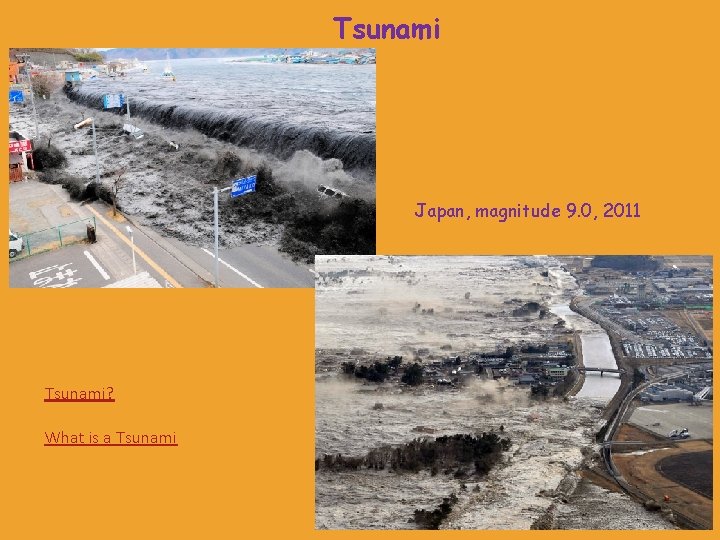
Tsunami Japan, magnitude 9. 0, 2011 Tsunami? What is a Tsunami
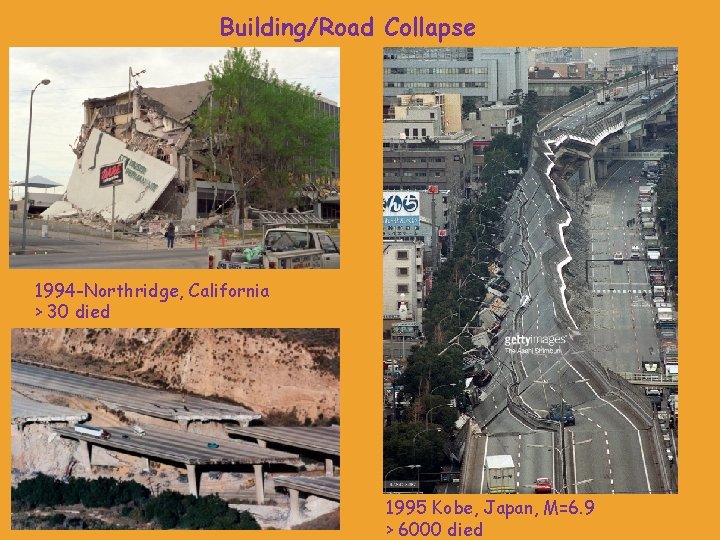
Building/Road Collapse 1994 -Northridge, California > 30 died 1995 Kobe, Japan, M=6. 9 > 6000 died
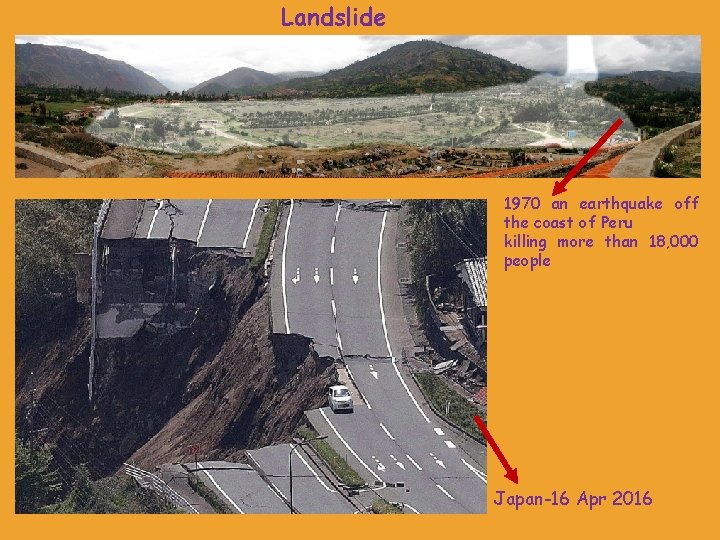
Landslide 1970 an earthquake off the coast of Peru killing more than 18, 000 people Japan-16 Apr 2016
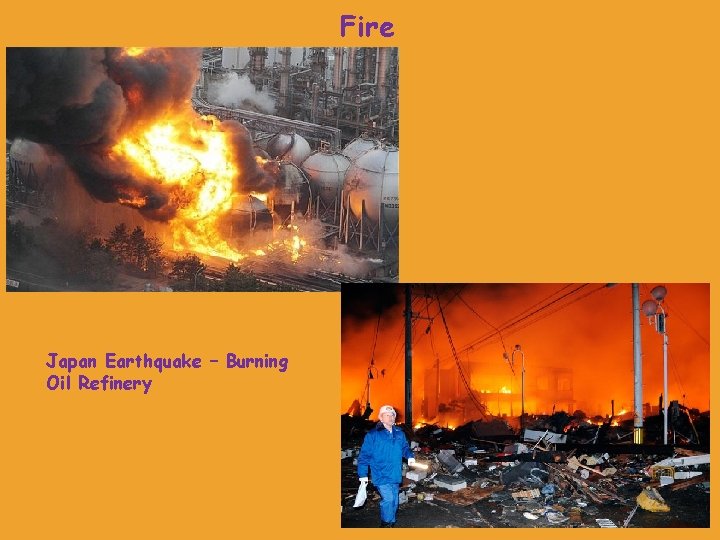
Fire Japan Earthquake – Burning Oil Refinery
Earthquake Summary Reference: http: //earthquake. usgs. gov/