
HOW TO PREPARE FOR IRB SUBMISSION Micheal A
HOW TO PREPARE FOR IRB SUBMISSION Micheal A. Kuhn, MD Vice Chair, Loma Linda University Institutional Review Board
What type of research needs IRB review? Anything and everything that involves human subjects
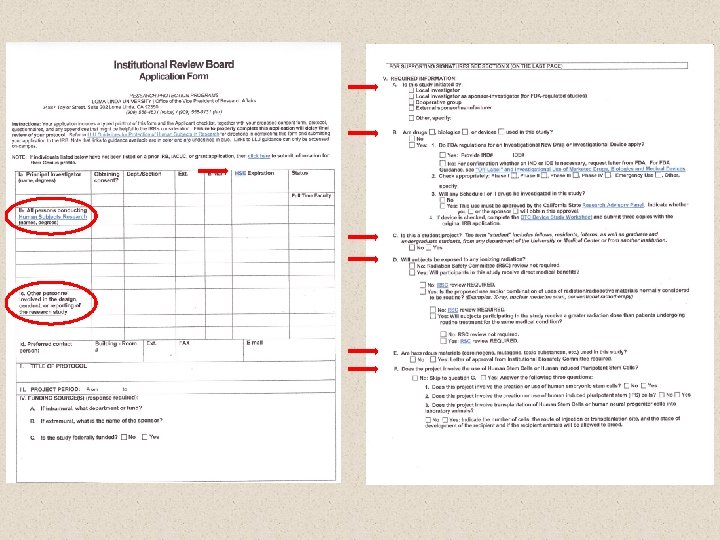
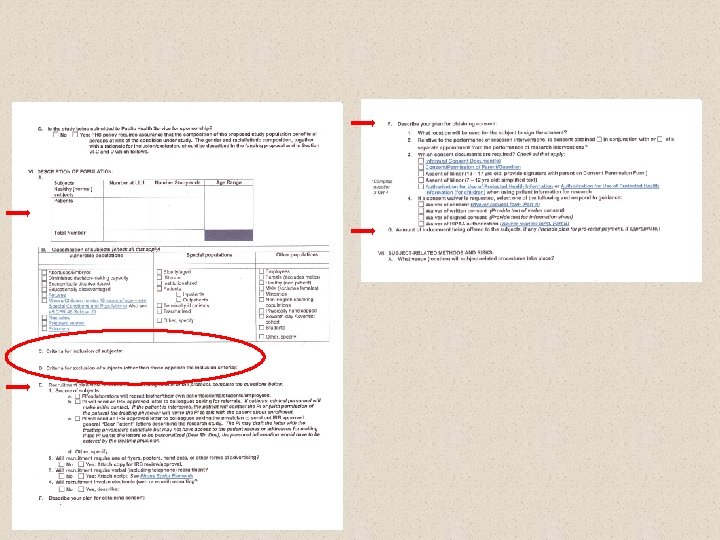
Navigating the IRB process • • • Application process IRB submission and review Revision Initial approval On going monitoring Yearly renewal http: //researchaffairs. llu. edu/ Start Here
Research Affairs Forms and Documents • Click on IRB link or scroll down – Four printed pages of options – Include: • Applications – – • • • Full board Expedited Retrospective Humanitarian use device application Checklists Consents How to prepare Experimental Bill of Rights Abstract/protocol outlines Radiation Safety applications Recruitment forms Emergency use of investigational device HIPAA forms Waivers/assents Conflict of interest forms
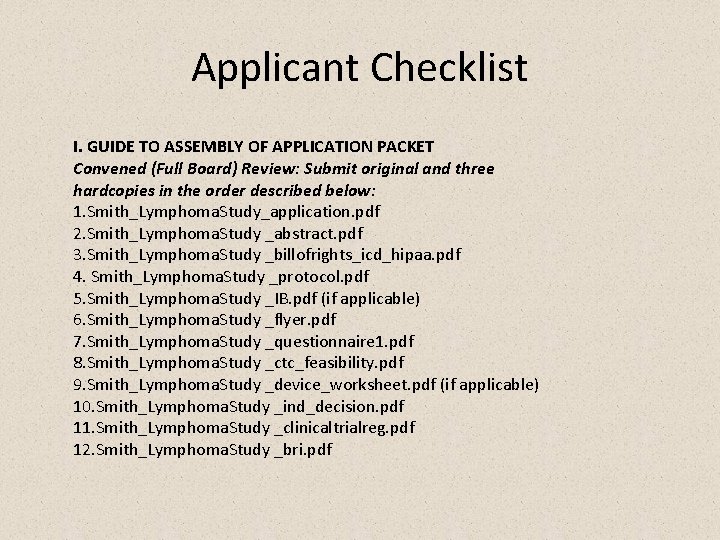
Applicant Checklist I. GUIDE TO ASSEMBLY OF APPLICATION PACKET Convened (Full Board) Review: Submit original and three hardcopies in the order described below: 1. Smith_Lymphoma. Study_application. pdf 2. Smith_Lymphoma. Study _abstract. pdf 3. Smith_Lymphoma. Study _billofrights_icd_hipaa. pdf 4. Smith_Lymphoma. Study _protocol. pdf 5. Smith_Lymphoma. Study _IB. pdf (if applicable) 6. Smith_Lymphoma. Study _flyer. pdf 7. Smith_Lymphoma. Study _questionnaire 1. pdf 8. Smith_Lymphoma. Study _ctc_feasibility. pdf 9. Smith_Lymphoma. Study _device_worksheet. pdf (if applicable) 10. Smith_Lymphoma. Study _ind_decision. pdf 11. Smith_Lymphoma. Study _clinicaltrialreg. pdf 12. Smith_Lymphoma. Study _bri. pdf
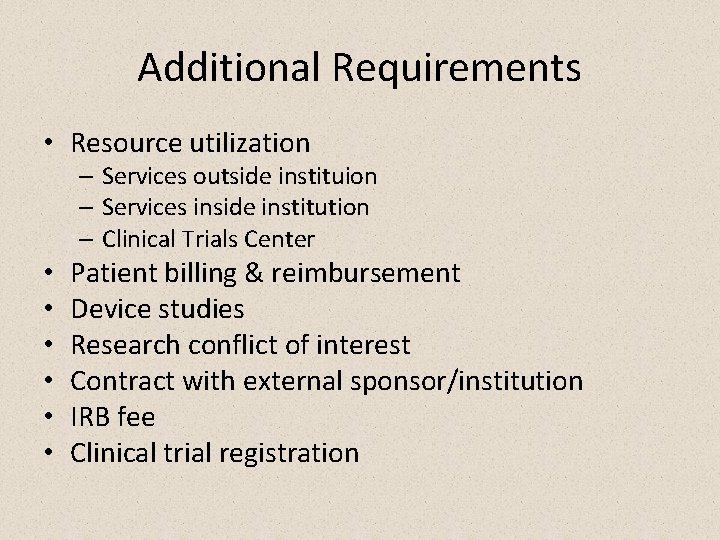
Additional Requirements • Resource utilization – Services outside instituion – Services inside institution – Clinical Trials Center • • • Patient billing & reimbursement Device studies Research conflict of interest Contract with external sponsor/institution IRB fee Clinical trial registration

Are you dizzy yet? ?

Or rethinking your career?
• It is not as daunting as it seems • Most is straight forward – Follow the instructions • Important areas – – Protocol Consent Support personnel Multi-center trials
General Considerations • Understanding of medical knowledge/jargon will be varied – The IRB is made up of physicians, nurses, ancillary personnel and lay people – Keep protocols simple and easy to understand • Know what you are submitting – As the PI, you have the final review before submitting. – REVIEW EVERYTHING • Do not rely on others to do it for you
General Considerations • As a rule, your consenting population will have little medical education. – Keep explanation simple • Using hospital resources for research needs to be cleared by individual entities – eg. Nursing, OR, cath lab, etc. • The Clinical Trials Center is an invaluable resource for assisting in multi-center trials
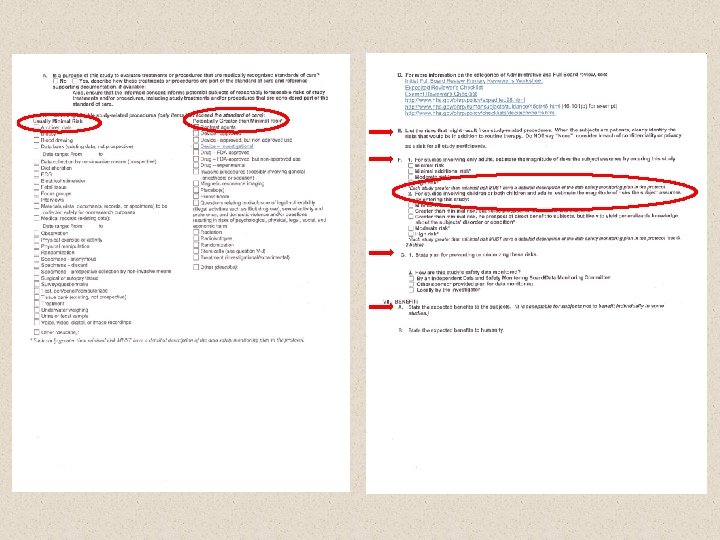
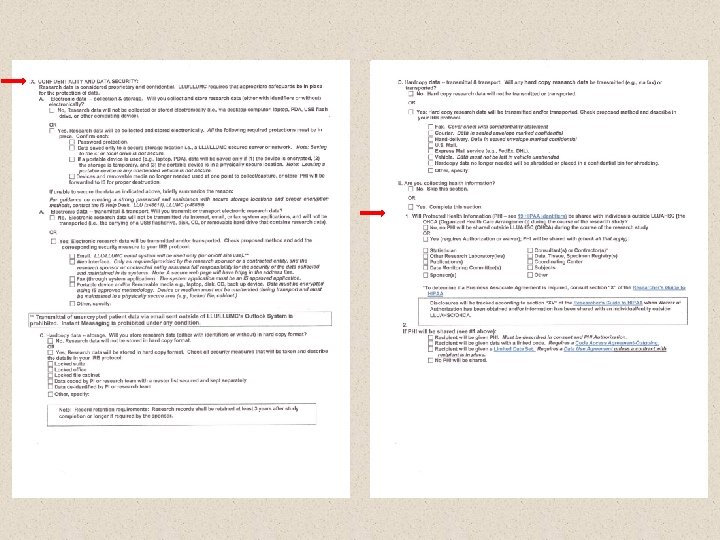
Application
Informed Consent
Quick Tips • Know your audience – Lay people – Different socioeconomic backgrounds – Varying level of education – Potential language barriers • Keep language in consent to a 6 th grade level • Minimize abbreviations
1. Why are we doing this study? • The first thing in the consent should be the study purpose • Be clear, concise and to the point
2. How will you be involved? • Section where the protocol is written • Keep concise and explain in lay person’s terms • Explain in clear terms the type of study – Especially important in randomized controlled studies – Make clear that placebo group is a possibility • Be mindful of canned language especially in corporate sponsored studies
3. What are the reasonably foreseeable risks or discomforts? • Explain the degree of risk • Use lay terminology – e. g. vomiting for emesis, bruising for ecchymosis • Describe in terms of varying risk – Most common to rarest – Mildest to most severe • Table format very useful in organizing risk – very common in drug studies • Do not explain standard of care risks
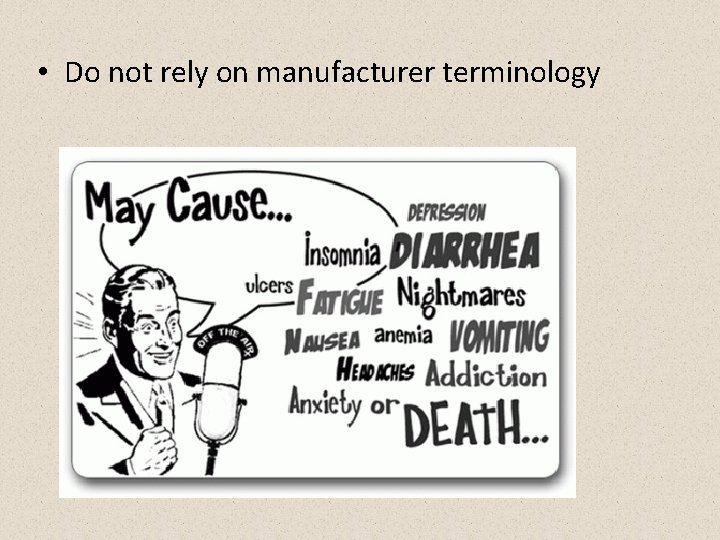
• Do not rely on manufacturer terminology
4. Will there be any benefit to me or others? • Explain direct benefit to patient – Important in studies with high risk groups – Can impact approval if no benefit/higher risk • Benefit to society in general
Other parts • • What are your rights as a subject? Will you be informed of significant new findings? What other choices do you have? How will information be kept confidential? What costs are involved? Will you paid to participate in the study? Will study staff receive payment? Who do you call if you are injured as a result of the study?
Who do you call if you have questions? • Who is handling the study? • Who can be reached 24/7? • Appropriate phone numbers/pagers
Guarantees of Patient Protection • You are required by law to protect patient information • Need to supply secure form of data storage • Need to supply secure form of data transmission • Need to inform patient of what patient information will be published • Provide HIPAA form to patient and in application for review
Failure to comply can cause serious problems
Genetic information • The practice of storing DNA information very common in industry • Can be limited to the specific study or planned for use in future study • DNA storage must be disclosed in the consent • Best done in a separate section with its own signature line
Recruitment/Reimbursement • All brochures, flyers and other recruitment information must be provided to the IRB for review • Reimbursement for visits is reasonable if financially appropriate • You must avoid coercing patient with financial reward
Reimbursement • Reasonable forms of reimbursement: – Small cash payment – Gift cards • Food • Gas
Other items • • California Bill of Rights Assents for underage subjects HIPAA authorization form Consent in second language Consult website for the IRB submission checklist
• So what happens if you get the application filled out correctly, have a well written consent, and provide all the appropriate information?
Controversies at the IRB Travis Losey, MD Chair, Loma Linda University IRB
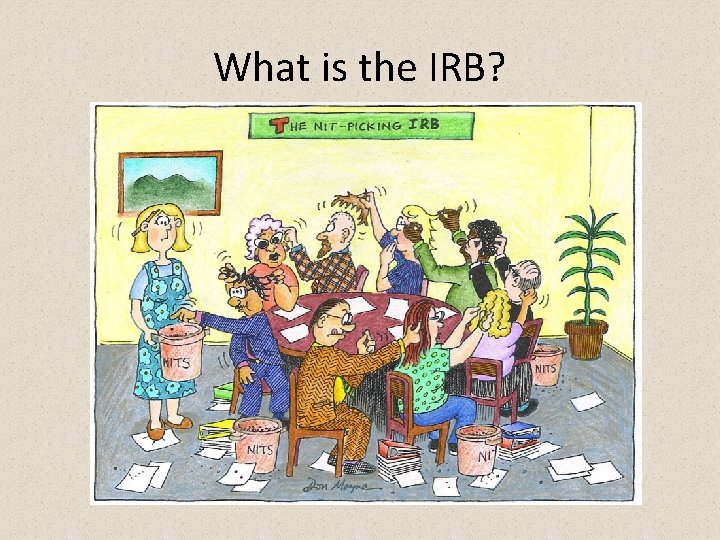
What is the IRB?
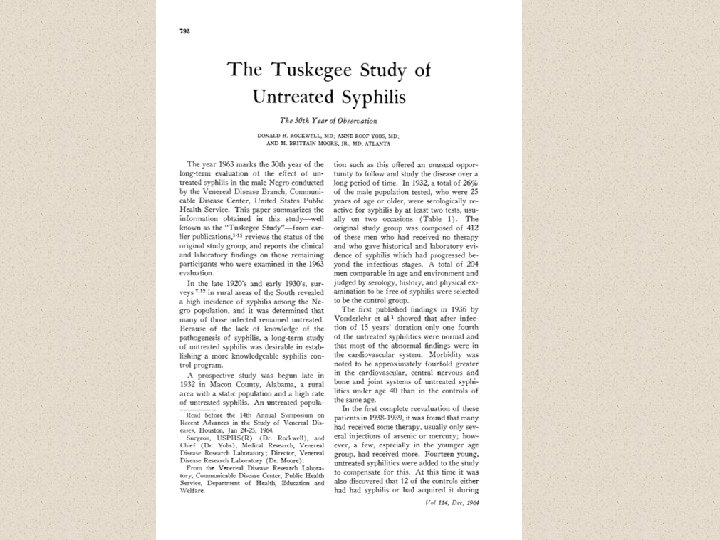
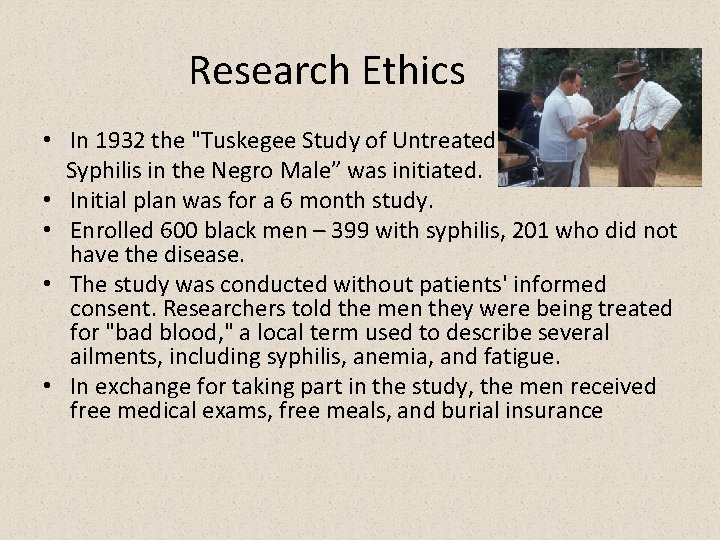
Research Ethics • In 1932 the "Tuskegee Study of Untreated Syphilis in the Negro Male” was initiated. • Initial plan was for a 6 month study. • Enrolled 600 black men – 399 with syphilis, 201 who did not have the disease. • The study was conducted without patients' informed consent. Researchers told the men they were being treated for "bad blood, " a local term used to describe several ailments, including syphilis, anemia, and fatigue. • In exchange for taking part in the study, the men received free medical exams, free meals, and burial insurance
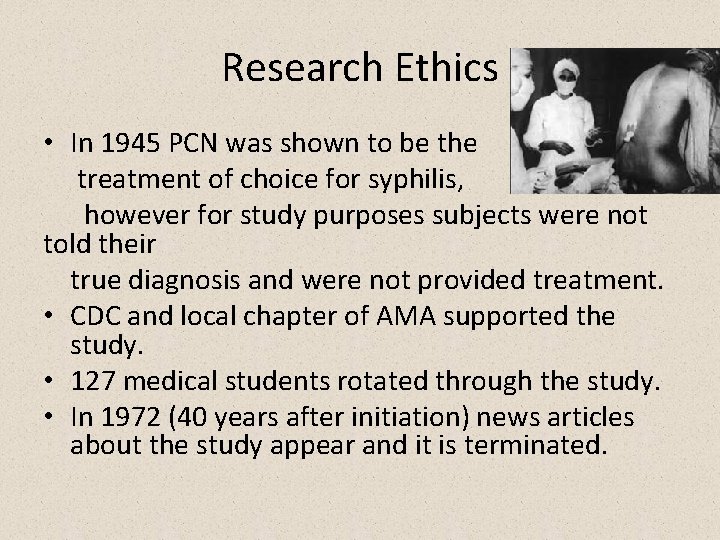
Research Ethics • In 1945 PCN was shown to be the treatment of choice for syphilis, however for study purposes subjects were not told their true diagnosis and were not provided treatment. • CDC and local chapter of AMA supported the study. • 127 medical students rotated through the study. • In 1972 (40 years after initiation) news articles about the study appear and it is terminated.
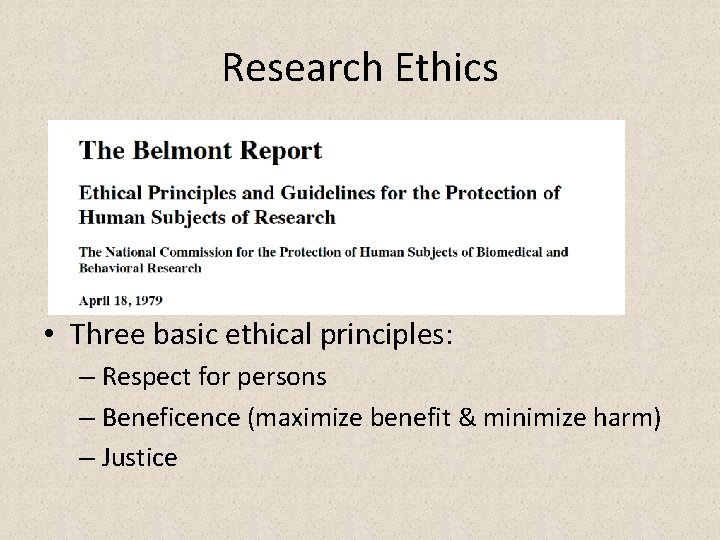
Research Ethics • Three basic ethical principles: – Respect for persons – Beneficence (maximize benefit & minimize harm) – Justice
What standards does the IRB use?
What are the common questions asked at IRB meetings? • Is the study ethical (respect for persons, beneficence, and justice)? • Are subjects appropriately informed of the nature of the study as well as its risks and benefits? • Are appropriate federal regulations addressed (i. e. IND)? • Are institutional policies followed (billing, collaboration with support services)?
What are the common questions asked at IRB meetings?
What is the IRB not focused on • The IRB is not an editorial service. • The IRB is not a scientific journal club. • The IRB is not the Office of Legal Counsel.
Controversy: QI project or research? • An investigator proposes five evidence-based procedures recommended by the CDC as having the greatest effect on the rate of catheter-related bloodstream infection and the lowest barriers to implementation (hand washing, using full-barrier precautions during the insertion of central venous catheters, cleaning the skin with chlorhexidine, avoiding the femoral site and removing unnecessary catheters). • All hospitalized patients will receive all interventions.
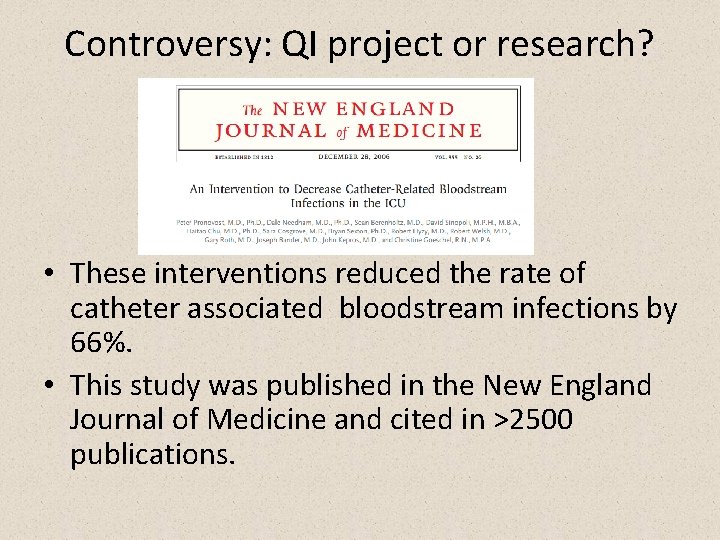
Controversy: QI project or research? • These interventions reduced the rate of catheter associated bloodstream infections by 66%. • This study was published in the New England Journal of Medicine and cited in >2500 publications.
Controversy: QI project or research? • A complaint was filed with OHRP due to the fact that this federally funded project was conducted without IRB review or subject consent. • JHU contended that it did not qualify as research and was a QI project. • OHRP rejected this contention and demanded a corrective action plan from Johns Hopkins University.
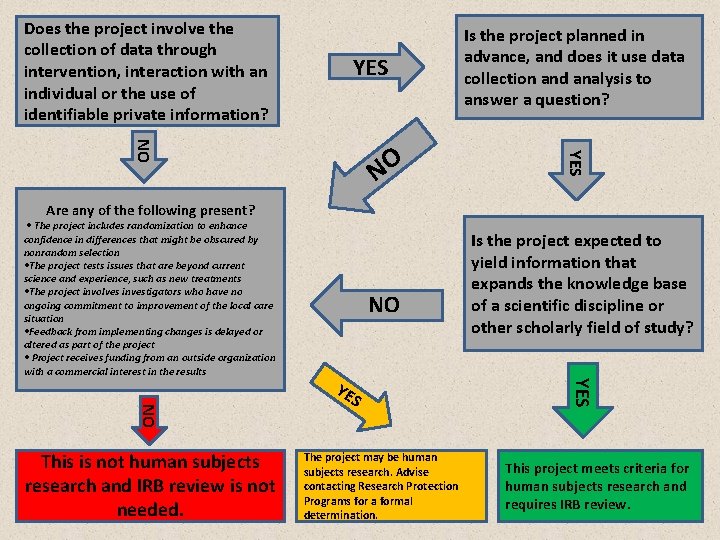
Does the project involve the collection of data through intervention, interaction with an individual or the use of identifiable private information? YES Is the project planned in advance, and does it use data collection and analysis to answer a question? YES ON NO Are any of the following present? YE S The project may be human subjects research. Advise contacting Research Protection Programs for a formal determination. Is the project expected to yield information that expands the knowledge base of a scientific discipline or other scholarly field of study? YES NO This is not human subjects research and IRB review is not needed. ON • The project includes randomization to enhance confidence in differences that might be obscured by nonrandom selection • The project tests issues that are beyond current science and experience, such as new treatments • The project involves investigators who have no ongoing commitment to improvement of the local care situation • Feedback from implementing changes is delayed or altered as part of the project • Project receives funding from an outside organization with a commercial interest in the results This project meets criteria for human subjects research and requires IRB review.
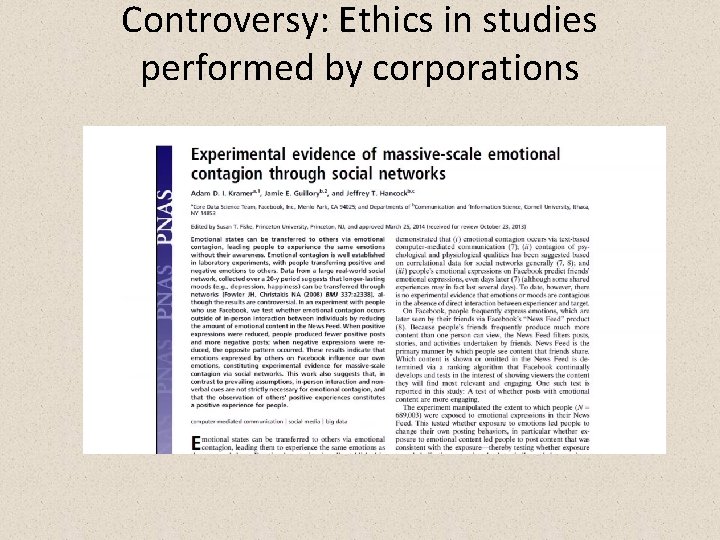
Controversy: Ethics in studies performed by corporations
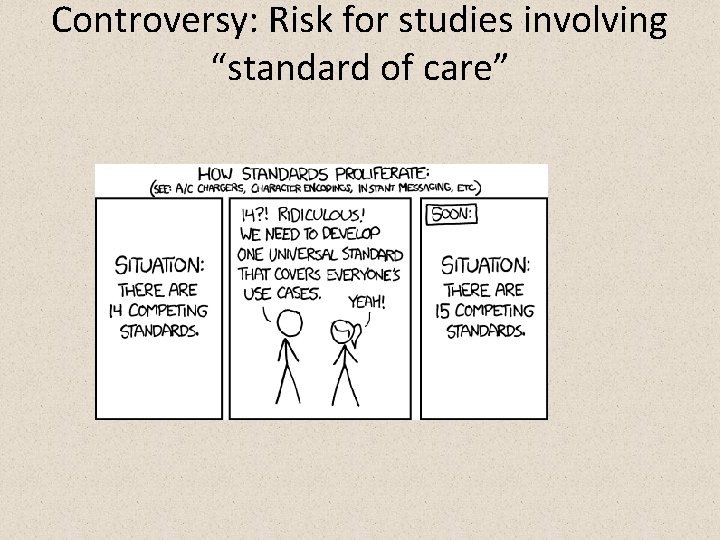
Controversy: Risk for studies involving “standard of care”
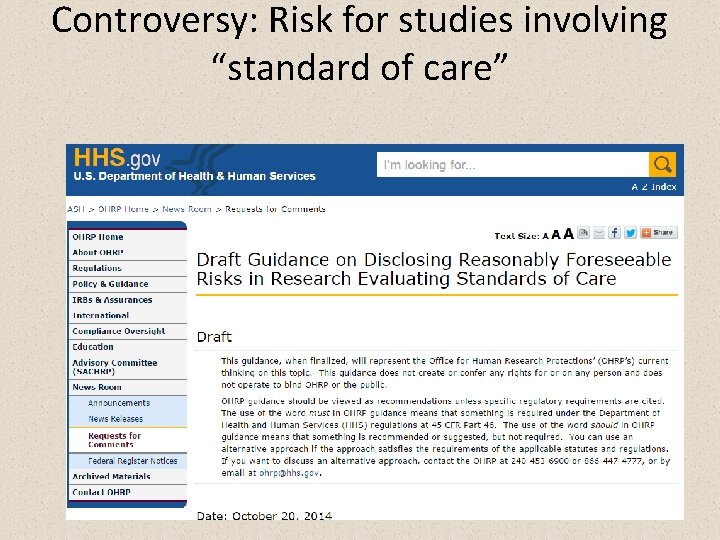
Controversy: Risk for studies involving “standard of care”
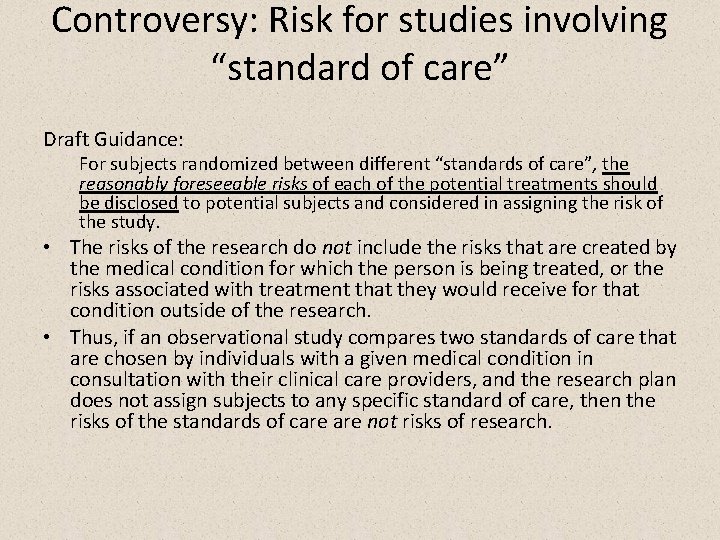
Controversy: Risk for studies involving “standard of care” Draft Guidance: For subjects randomized between different “standards of care”, the reasonably foreseeable risks of each of the potential treatments should be disclosed to potential subjects and considered in assigning the risk of the study. • The risks of the research do not include the risks that are created by the medical condition for which the person is being treated, or the risks associated with treatment that they would receive for that condition outside of the research. • Thus, if an observational study compares two standards of care that are chosen by individuals with a given medical condition in consultation with their clinical care providers, and the research plan does not assign subjects to any specific standard of care, then the risks of the standards of care not risks of research.
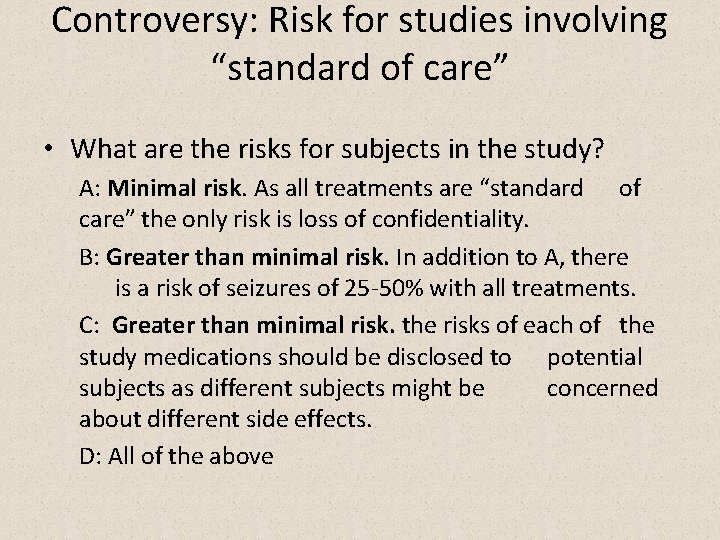
Controversy: Risk for studies involving “standard of care” • What are the risks for subjects in the study? A: Minimal risk. As all treatments are “standard of care” the only risk is loss of confidentiality. B: Greater than minimal risk. In addition to A, there is a risk of seizures of 25 -50% with all treatments. C: Greater than minimal risk. the risks of each of the study medications should be disclosed to potential subjects as different subjects might be concerned about different side effects. D: All of the above
Practical Advice • What to do when things go wrong.
Tips for IRB submissions
Tips for IRB submissions • Protocols should be clearly written, direct and internally consistent. The scientific rational should be included in the protocol, references should be cited for reviewers who have additional questions but critical findings from these references should be included in the protocol. Risks should be clearly and directly addressed. • Informed consent documents should avoid medical jargon, completely and honestly discuss risks of the study and explain how treatments in the study differ from standard care. A person who does not have a medical background should be able to understand the study after reading the consent.
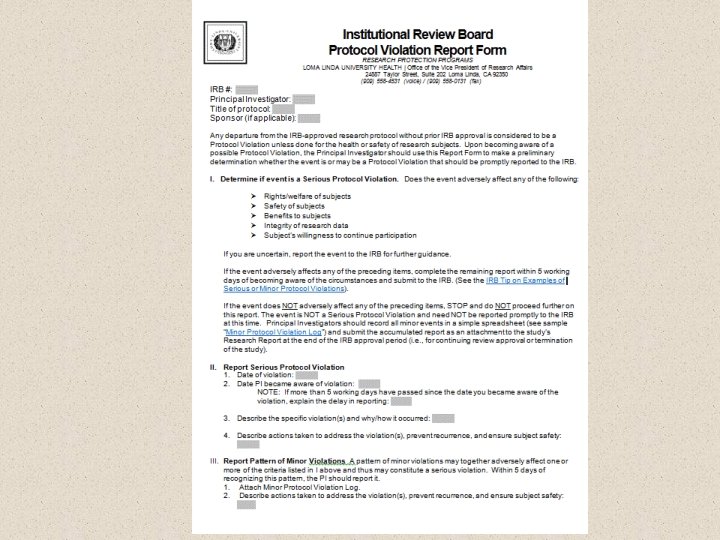
Tips for IRB submissions • Protocol deviations: – Should be requested in advance if possible as a one time change request. • Serious Protocol Violations: – Should be clearly acknowledged with a thoughtful plan to prevent recurrence. • Minor Protocol Violations – Should be recorded in a excel spreadsheet which should be attached the annual renewal request.
Emergency Research • In emergent situations, access to investigational drugs or devices may be required. Contact: – IRB chair ( Dr Travis Losey) or Vice Chair (Dr Michael Kuhn or Dr Andrea Rey) for ethics approval. – Research Coordinator (though department, Lila Dalton or Amy Casey at CTC can help to identify). – If institutional signature is needed, Dr Anthony Zuccarelli or Dr Michael Kirby.
- Slides: 59