Advancing Cell Therapies for Coronary Microvascular Dysfunction Experts

- Slides: 32
Advancing Cell Therapies for Coronary Microvascular Dysfunction: Experts Roundtable Stable Angina: State of the Art November 16, 2019 Peter H. Stone, M. D. Professor of Medicine Cardiovascular Division Brigham & Women’s Hospital Harvard Medical School Disclosure: Research support from NIH, Astra. Zeneca, St Jude Medical; Infraredx;
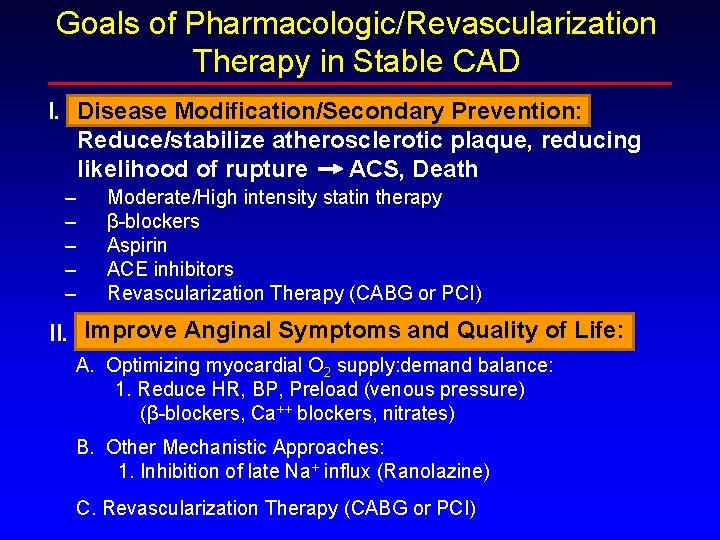
Goals of Pharmacologic/Revascularization Therapy in Stable CAD I. Disease Modification/Secondary Prevention: Reduce/stabilize atherosclerotic plaque, reducing likelihood of rupture ACS, Death – – – Moderate/High intensity statin therapy β-blockers Aspirin ACE inhibitors Revascularization Therapy (CABG or PCI) II. Improve Anginal Symptoms and Quality of Life: A. Optimizing myocardial O 2 supply: demand balance: 1. Reduce HR, BP, Preload (venous pressure) (β-blockers, Ca++ blockers, nitrates) B. Other Mechanistic Approaches: 1. Inhibition of late Na+ influx (Ranolazine) C. Revascularization Therapy (CABG or PCI)
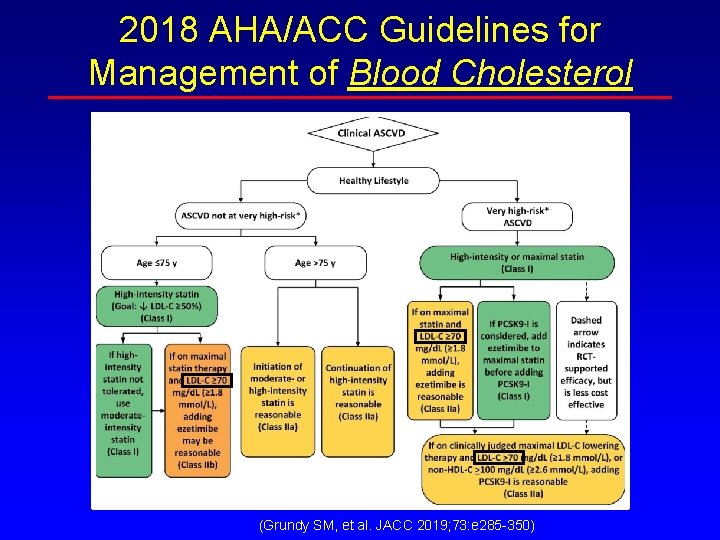
2018 AHA/ACC Guidelines for Management of Blood Cholesterol (Grundy SM, et al. JACC 2019; 73: e 285 -350)
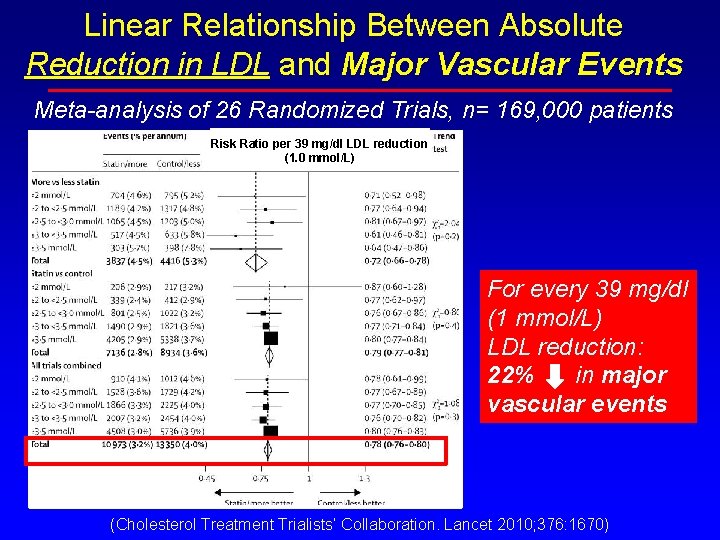
Linear Relationship Between Absolute Reduction in LDL and Major Vascular Events Meta-analysis of 26 Randomized Trials, n= 169, 000 patients Risk Ratio per 39 mg/dl LDL reduction (1. 0 mmol/L) For every 39 mg/dl (1 mmol/L) LDL reduction: 22% in major vascular events (Cholesterol Treatment Trialists’ Collaboration. Lancet 2010; 376: 1670)
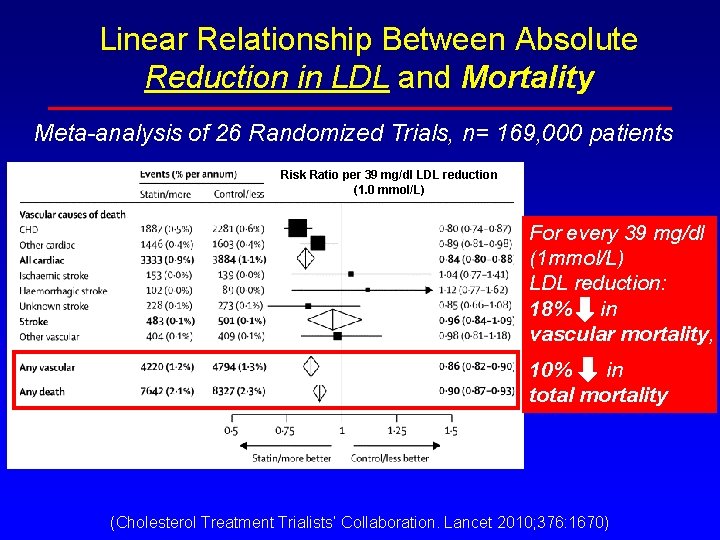
Linear Relationship Between Absolute Reduction in LDL and Mortality Meta-analysis of 26 Randomized Trials, n= 169, 000 patients Risk Ratio per 39 mg/dl LDL reduction (1. 0 mmol/L) For every 39 mg/dl (1 mmol/L) LDL reduction: 18% in vascular mortality, 10% in total mortality (Cholesterol Treatment Trialists’ Collaboration. Lancet 2010; 376: 1670)
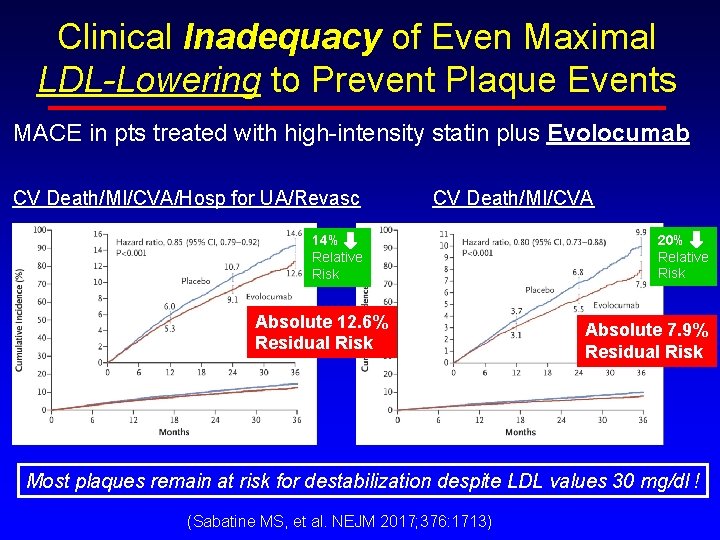
Clinical Inadequacy of Even Maximal LDL-Lowering to Prevent Plaque Events MACE in pts treated with high-intensity statin plus Evolocumab CV Death/MI/CVA/Hosp for UA/Revasc CV Death/MI/CVA 14% Relative Risk Absolute 12. 6% Residual Risk 20% Relative Risk Absolute 7. 9% Residual Risk Most plaques remain at risk for destabilization despite LDL values 30 mg/dl ! (Sabatine MS, et al. NEJM 2017; 376: 1713)
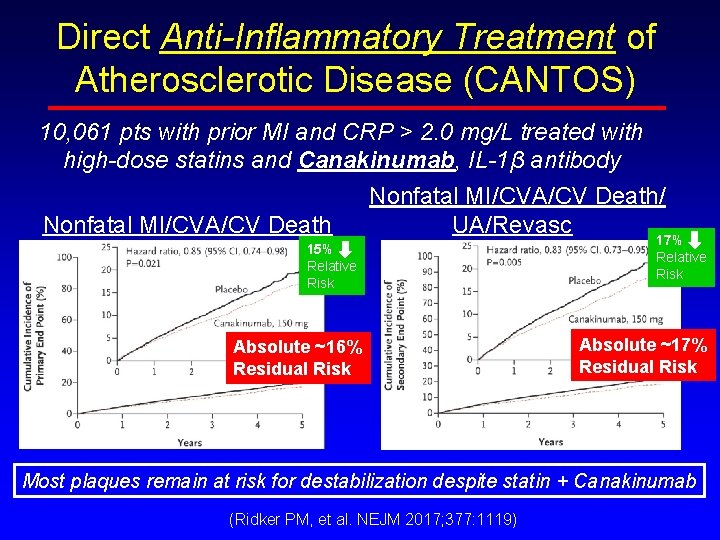
Direct Anti-Inflammatory Treatment of Atherosclerotic Disease (CANTOS) 10, 061 pts with prior MI and CRP > 2. 0 mg/L treated with high-dose statins and Canakinumab, IL-1β antibody Nonfatal MI/CVA/CV Death/ Nonfatal MI/CVA/CV Death UA/Revasc 15% Relative Risk Absolute ~16% Residual Risk 17% Relative Risk Absolute ~17% Residual Risk Most plaques remain at risk for destabilization despite statin + Canakinumab (Ridker PM, et al. NEJM 2017; 377: 1119)
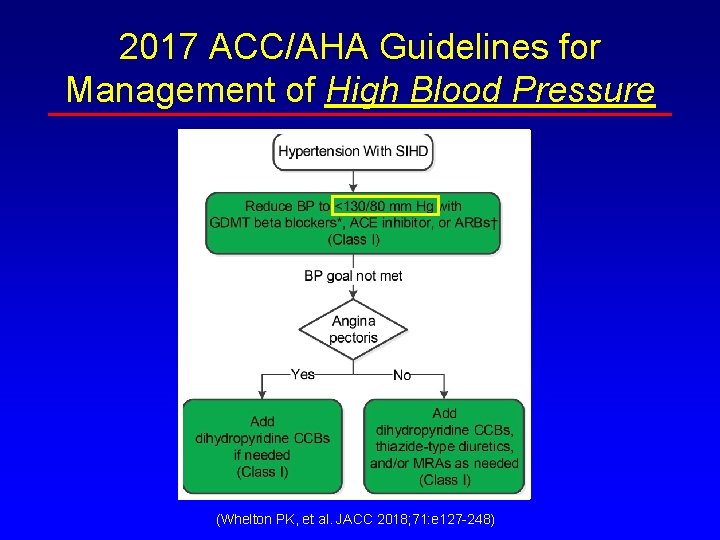
2017 ACC/AHA Guidelines for Management of High Blood Pressure (Whelton PK, et al. JACC 2018; 71: e 127 -248)
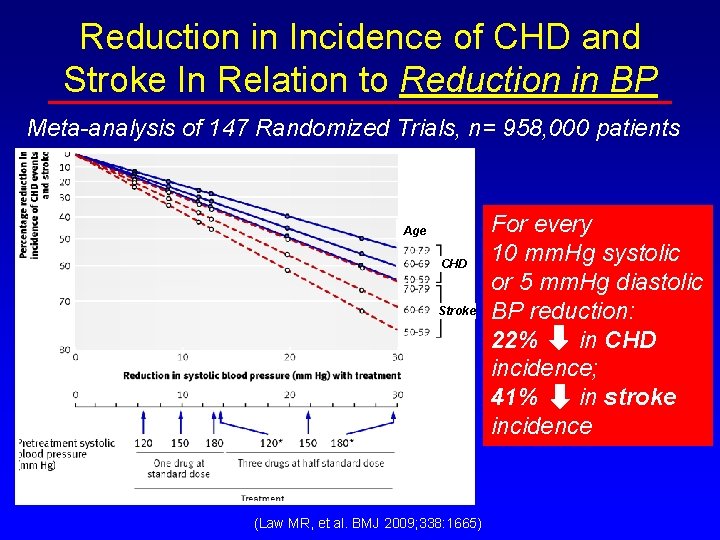
Reduction in Incidence of CHD and Stroke In Relation to Reduction in BP Meta-analysis of 147 Randomized Trials, n= 958, 000 patients Age CHD Stroke (Law MR, et al. BMJ 2009; 338: 1665) For every 10 mm. Hg systolic or 5 mm. Hg diastolic BP reduction: 22% in CHD incidence; 41% in stroke incidence
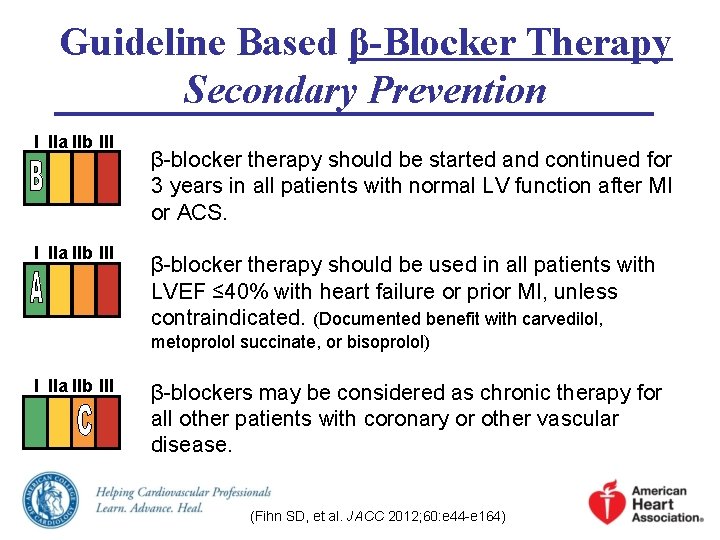
Guideline Based β-Blocker Therapy Secondary Prevention I IIa IIb III β-blocker therapy should be started and continued for 3 years in all patients with normal LV function after MI or ACS. β-blocker therapy should be used in all patients with LVEF ≤ 40% with heart failure or prior MI, unless contraindicated. (Documented benefit with carvedilol, metoprolol succinate, or bisoprolol) I IIa IIb III β-blockers may be considered as chronic therapy for all other patients with coronary or other vascular disease. (Fihn SD, et al. JACC 2012; 60: e 44 -e 164)
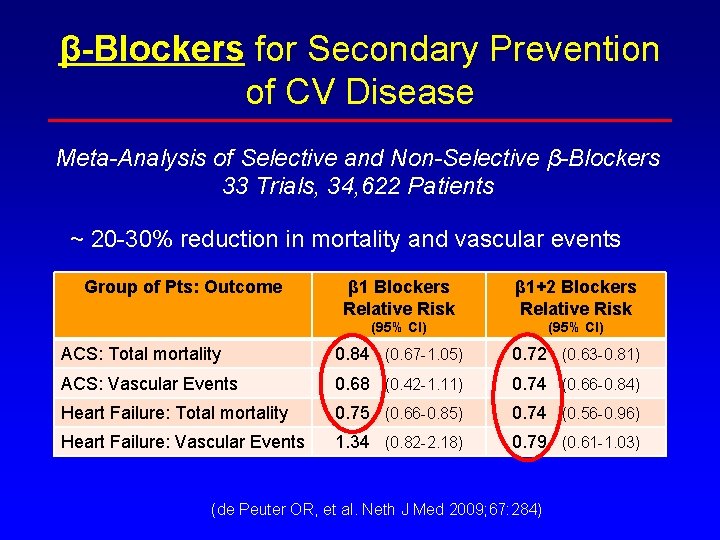
β-Blockers for Secondary Prevention of CV Disease Meta-Analysis of Selective and Non-Selective β-Blockers 33 Trials, 34, 622 Patients ~ 20 -30% reduction in mortality and vascular events Group of Pts: Outcome β 1 Blockers Relative Risk β 1+2 Blockers Relative Risk (95% CI) ACS: Total mortality 0. 84 (0. 67 -1. 05) 0. 72 (0. 63 -0. 81) ACS: Vascular Events 0. 68 (0. 42 -1. 11) 0. 74 (0. 66 -0. 84) Heart Failure: Total mortality 0. 75 (0. 66 -0. 85) 0. 74 (0. 56 -0. 96) Heart Failure: Vascular Events 1. 34 (0. 82 -2. 18) 0. 79 (0. 61 -1. 03) (de Peuter OR, et al. Neth J Med 2009; 67: 284)
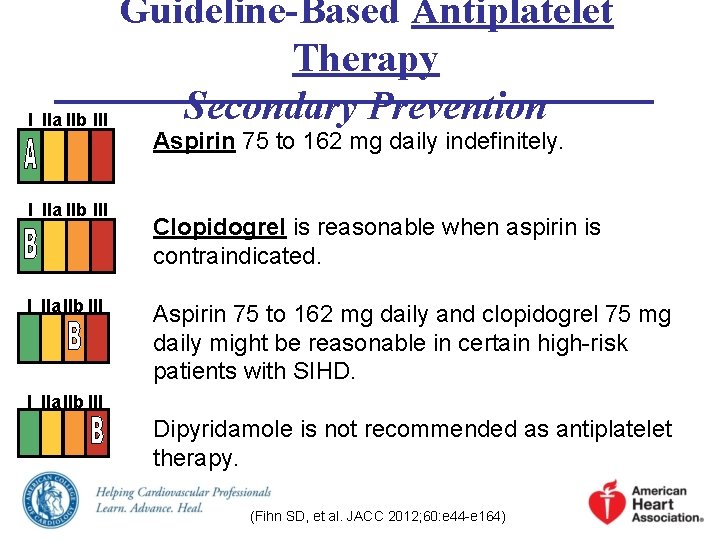
Guideline-Based Antiplatelet Therapy Secondary Prevention I IIa IIb III Aspirin 75 to 162 mg daily indefinitely. I IIa IIb III Clopidogrel is reasonable when aspirin is contraindicated. Aspirin 75 to 162 mg daily and clopidogrel 75 mg daily might be reasonable in certain high-risk patients with SIHD. I IIa IIb III Dipyridamole is not recommended as antiplatelet therapy. (Fihn SD, et al. JACC 2012; 60: e 44 -e 164)
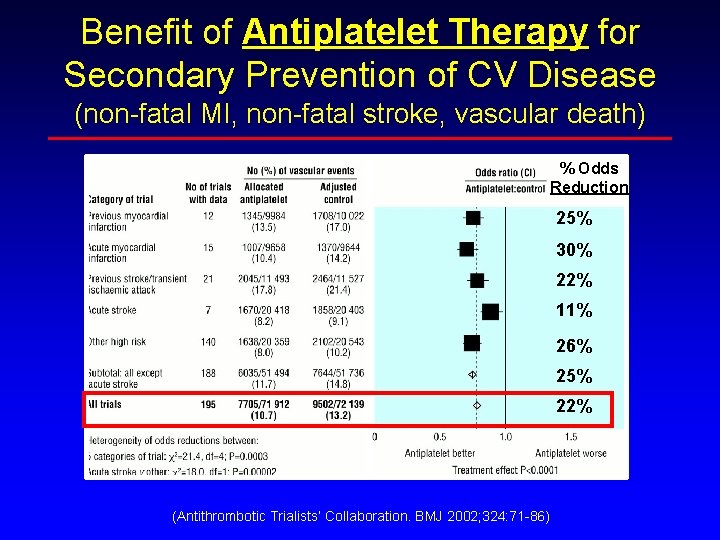
Benefit of Antiplatelet Therapy for Secondary Prevention of CV Disease (non-fatal MI, non-fatal stroke, vascular death) % Odds Reduction 25% 30% 22% 11% 26% 25% 22% (Antithrombotic Trialists’ Collaboration. BMJ 2002; 324: 71 -86)
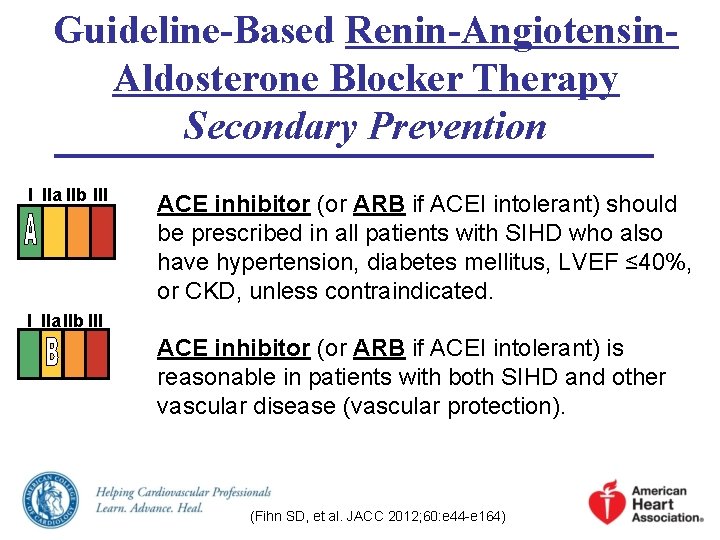
Guideline-Based Renin-Angiotensin. Aldosterone Blocker Therapy Secondary Prevention I IIa IIb III ACE inhibitor (or ARB if ACEI intolerant) should be prescribed in all patients with SIHD who also have hypertension, diabetes mellitus, LVEF ≤ 40%, or CKD, unless contraindicated. I IIa IIb III ACE inhibitor (or ARB if ACEI intolerant) is reasonable in patients with both SIHD and other vascular disease (vascular protection). (Fihn SD, et al. JACC 2012; 60: e 44 -e 164)
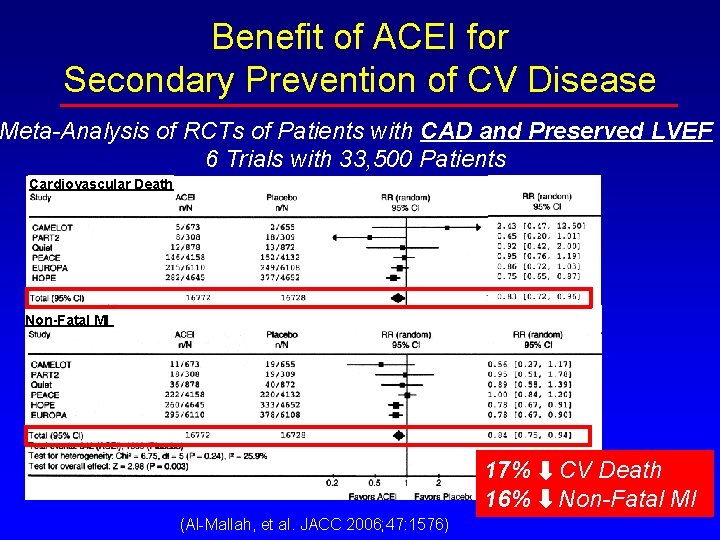
Benefit of ACEI for Secondary Prevention of CV Disease Meta-Analysis of RCTs of Patients with CAD and Preserved LVEF 6 Trials with 33, 500 Patients Cardiovascular Death Non-Fatal MI 17% 16% (Al-Mallah, et al. JACC 2006; 47: 1576) CV Death Non-Fatal MI
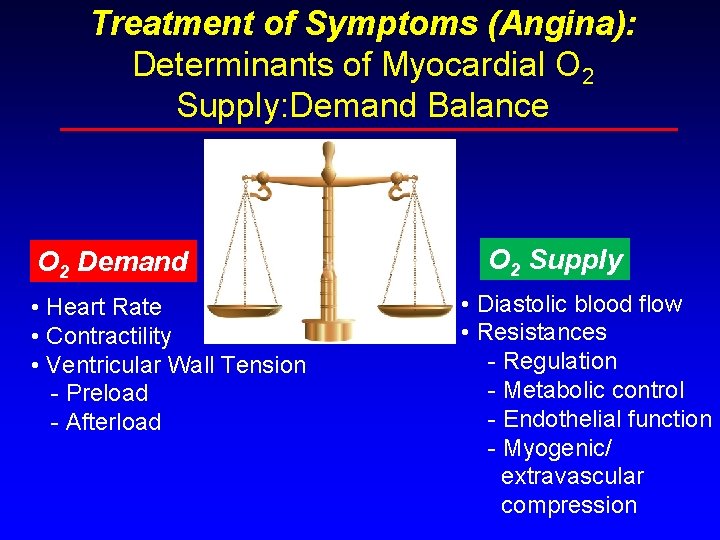
Treatment of Symptoms (Angina): Determinants of Myocardial O 2 Supply: Demand Balance O 2 Demand • Heart Rate • Contractility • Ventricular Wall Tension - Preload - Afterload O 2 Supply • Diastolic blood flow • Resistances - Regulation - Metabolic control - Endothelial function - Myogenic/ extravascular compression
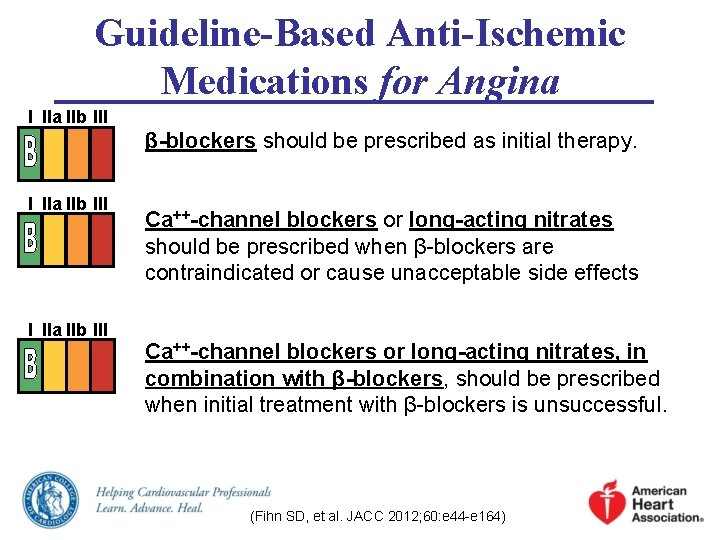
Guideline-Based Anti-Ischemic Medications for Angina I IIa IIb III β-blockers should be prescribed as initial therapy. I IIa IIb III Ca++-channel blockers or long-acting nitrates should be prescribed when β-blockers are contraindicated or cause unacceptable side effects I IIa IIb III Ca++-channel blockers or long-acting nitrates, in combination with β-blockers, should be prescribed when initial treatment with β-blockers is unsuccessful. (Fihn SD, et al. JACC 2012; 60: e 44 -e 164)
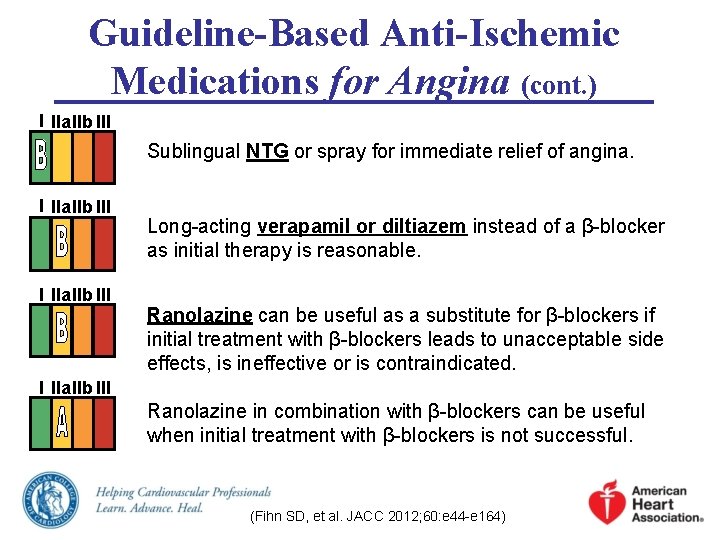
Guideline-Based Anti-Ischemic Medications for Angina (cont. ) I IIa. IIb III Sublingual NTG or spray for immediate relief of angina. I IIa. IIb III Long-acting verapamil or diltiazem instead of a β-blocker as initial therapy is reasonable. Ranolazine can be useful as a substitute for β-blockers if initial treatment with β-blockers leads to unacceptable side effects, is ineffective or is contraindicated. I IIa. IIb III Ranolazine in combination with β-blockers can be useful when initial treatment with β-blockers is not successful. (Fihn SD, et al. JACC 2012; 60: e 44 -e 164)
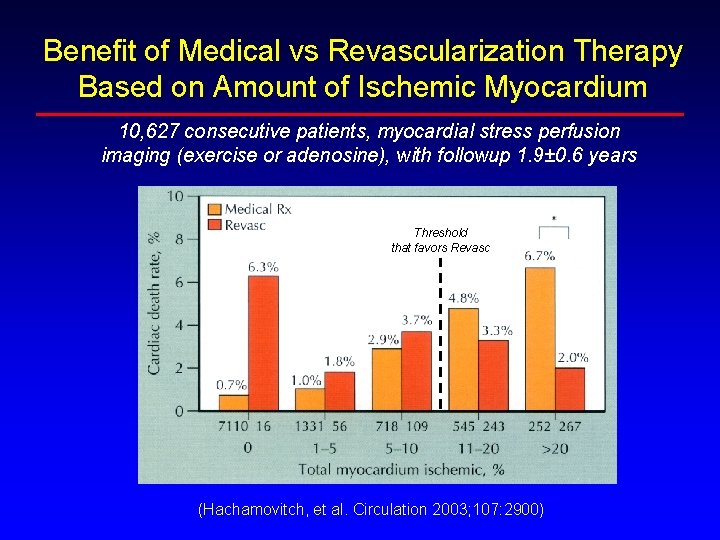
Benefit of Medical vs Revascularization Therapy Based on Amount of Ischemic Myocardium 10, 627 consecutive patients, myocardial stress perfusion imaging (exercise or adenosine), with followup 1. 9± 0. 6 years Threshold that favors Revasc (Hachamovitch, et al. Circulation 2003; 107: 2900)
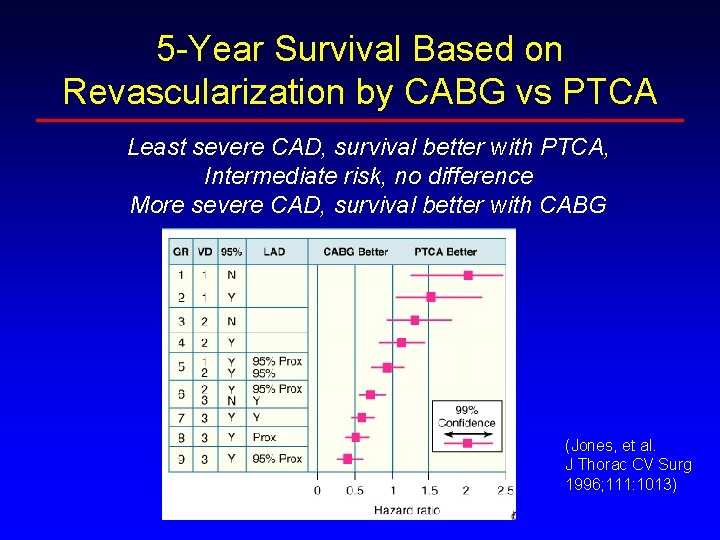
5 -Year Survival Based on Revascularization by CABG vs PTCA Least severe CAD, survival better with PTCA, Intermediate risk, no difference More severe CAD, survival better with CABG (Jones, et al. J Thorac CV Surg 1996; 111: 1013)
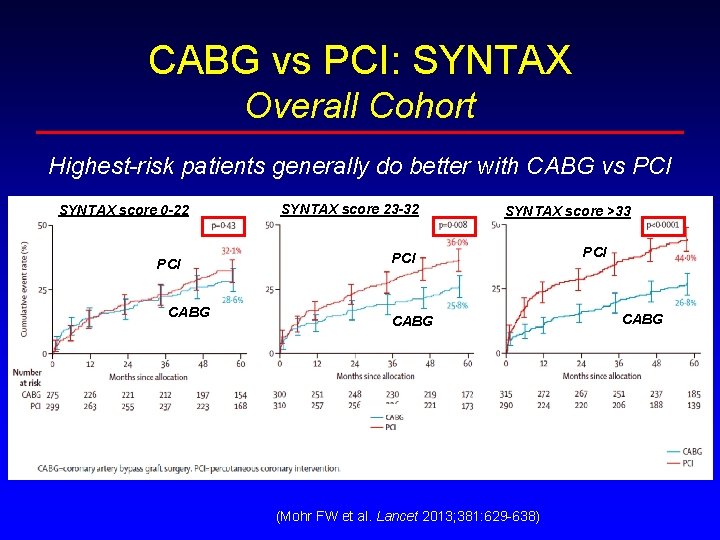
CABG vs PCI: SYNTAX Overall Cohort Highest-risk patients generally do better with CABG vs PCI SYNTAX score 0 -22 PCI CABG SYNTAX score 23 -32 SYNTAX score >33 PCI CABG (Mohr FW et al. Lancet 2013; 381: 629 -638) PCI CABG
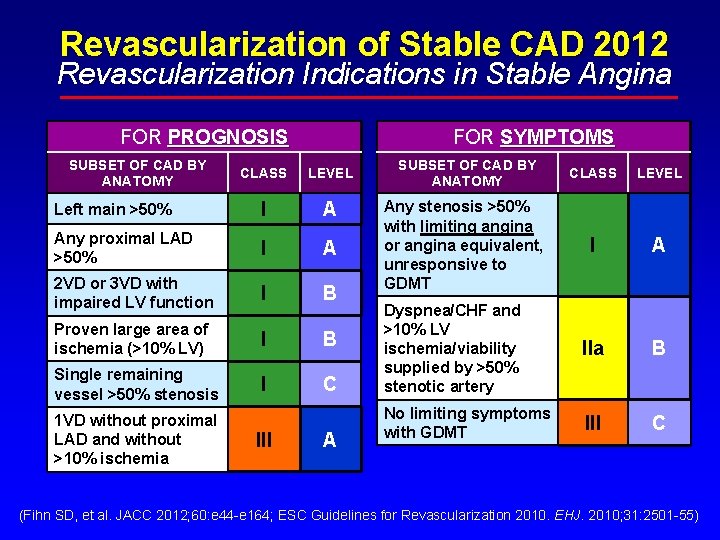
Revascularization of Stable CAD 2012 Revascularization Indications in Stable Angina FOR SYMPTOMS FOR PROGNOSIS SUBSET OF CAD BY ANATOMY CLASS LEVEL Left main >50% I A Any proximal LAD >50% I A 2 VD or 3 VD with impaired LV function I B Proven large area of ischemia (>10% LV) I B Single remaining vessel >50% stenosis I C 1 VD without proximal LAD and without >10% ischemia III A SUBSET OF CAD BY ANATOMY CLASS LEVEL Any stenosis >50% with limiting angina or angina equivalent, unresponsive to GDMT I A Dyspnea/CHF and >10% LV ischemia/viability supplied by >50% stenotic artery IIa B No limiting symptoms with GDMT III C (Fihn SD, et al. JACC 2012; 60: e 44 -e 164; ESC Guidelines for Revascularization 2010. EHJ. 2010; 31: 2501 -55)
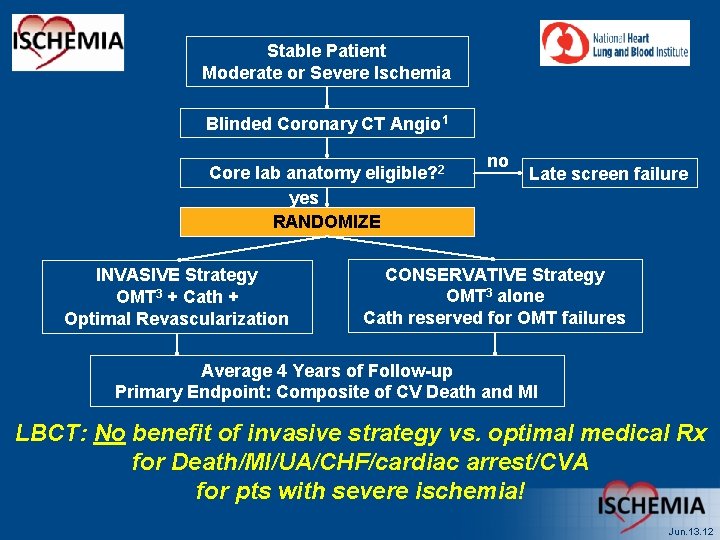
Stable Patient Moderate or Severe Ischemia Blinded Coronary CT Angio 1 Core lab anatomy eligible? 2 yes RANDOMIZE INVASIVE Strategy OMT 3 + Cath + Optimal Revascularization no Late screen failure CONSERVATIVE Strategy OMT 3 alone Cath reserved for OMT failures Average 4 Years of Follow-up Primary Endpoint: Composite of CV Death and MI LBCT: No benefit of invasive strategy vs. optimal medical Rx for Death/MI/UA/CHF/cardiac arrest/CVA for pts with severe ischemia! Jun. 13. 12
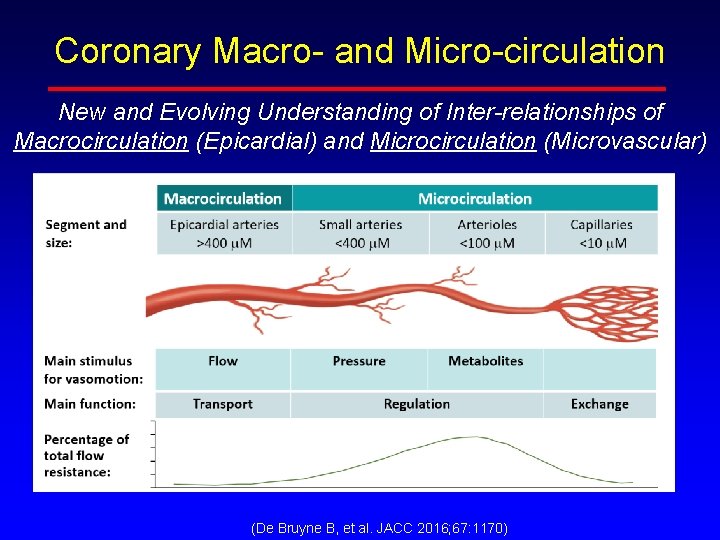
Coronary Macro- and Micro-circulation New and Evolving Understanding of Inter-relationships of Macrocirculation (Epicardial) and Microcirculation (Microvascular) (De Bruyne B, et al. JACC 2016; 67: 1170)
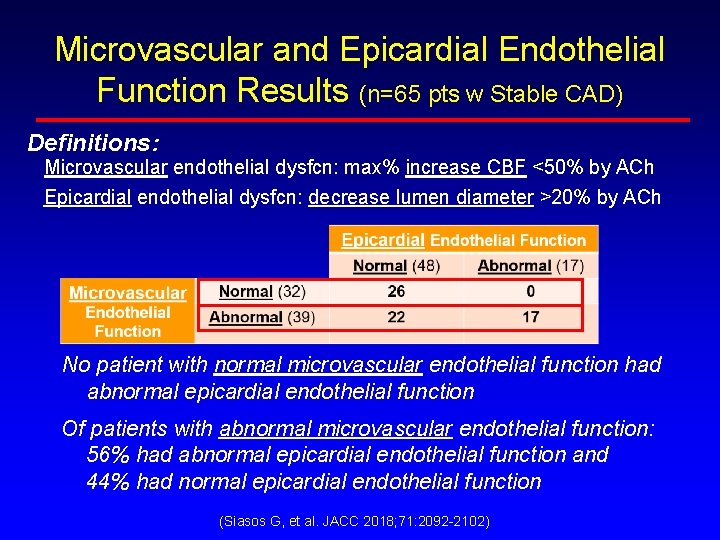
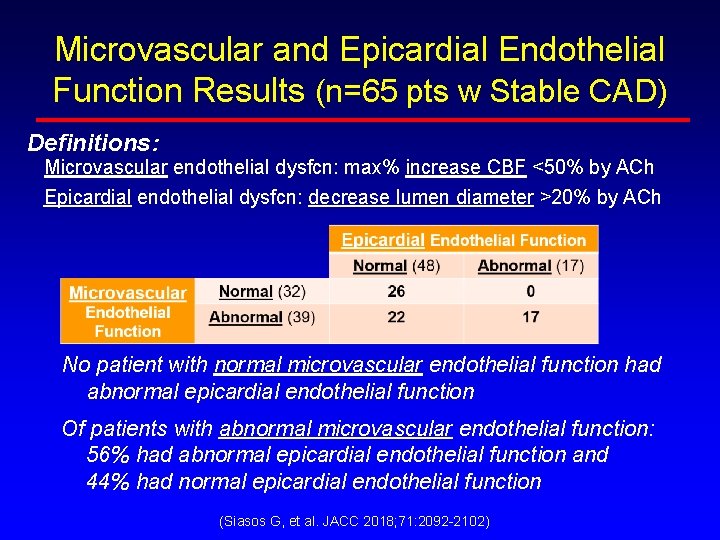
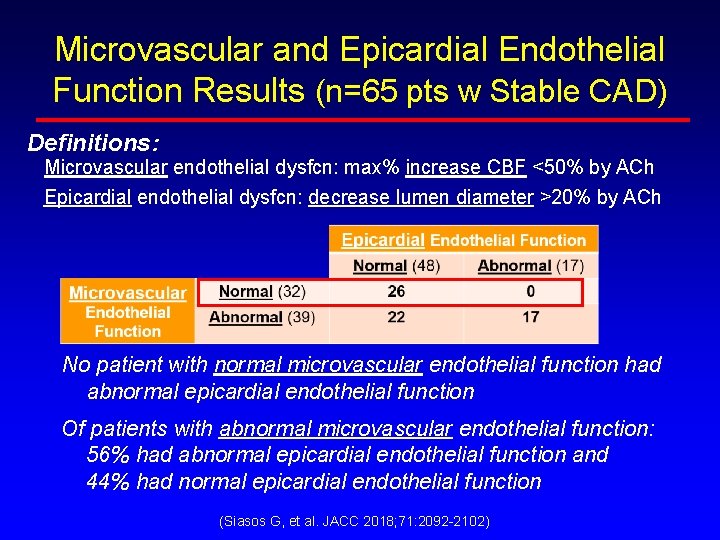
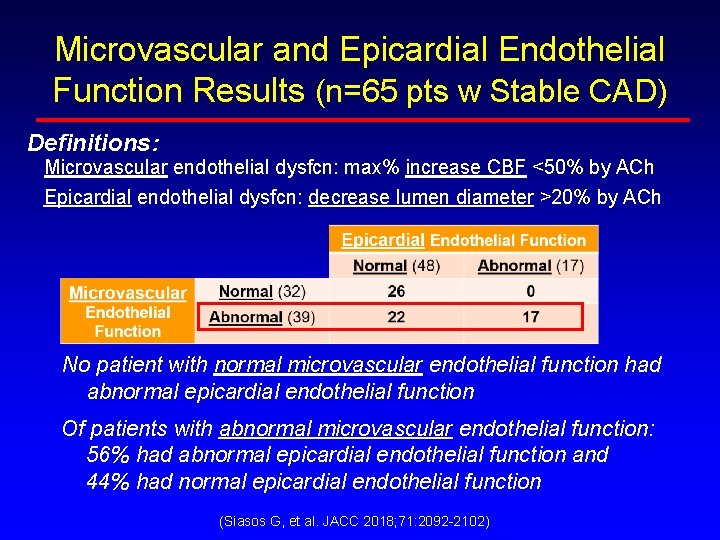
Microvascular and Epicardial Endothelial Function Results (n=65 pts w Stable CAD) Definitions: Microvascular endothelial dysfcn: max% increase CBF <50% by ACh Epicardial endothelial dysfcn: decrease lumen diameter >20% by ACh No patient with normal microvascular endothelial function had abnormal epicardial endothelial function Of patients with abnormal microvascular endothelial function: 56% had abnormal epicardial endothelial function and 44% had normal epicardial endothelial function (Siasos G, et al. JACC 2018; 71: 2092 -2102)
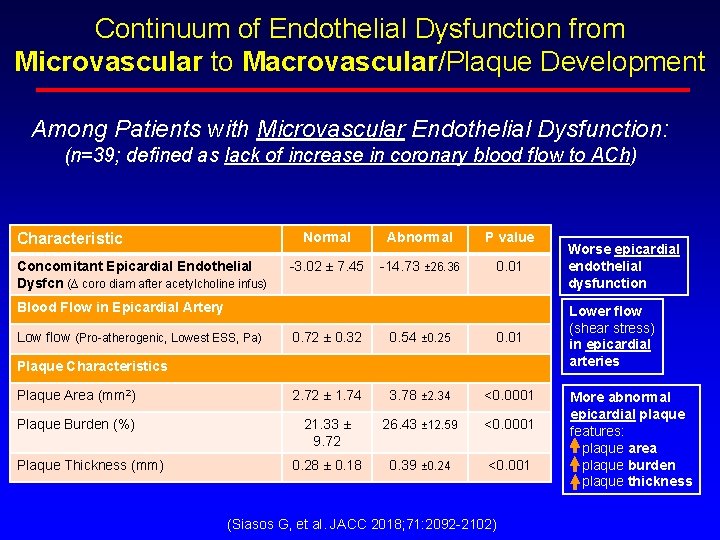
Continuum of Endothelial Dysfunction from Microvascular to Macrovascular/Plaque Development Among Patients with Microvascular Endothelial Dysfunction: (n=39; defined as lack of increase in coronary blood flow to ACh) Characteristic Concomitant Epicardial Endothelial Dysfcn (∆ coro diam after acetylcholine infus) Normal Abnormal P value -3. 02 ± 7. 45 -14. 73 ± 26. 36 0. 01 Worse epicardial endothelial dysfunction Lower flow (shear stress) in epicardial arteries Blood Flow in Epicardial Artery Low flow (Pro-atherogenic, Lowest ESS, Pa) 0. 72 ± 0. 32 0. 54 ± 0. 25 0. 01 Plaque Area (mm 2) 2. 72 ± 1. 74 3. 78 ± 2. 34 <0. 0001 Plaque Burden (%) 21. 33 ± 9. 72 26. 43 ± 12. 59 <0. 0001 0. 28 ± 0. 18 0. 39 ± 0. 24 <0. 001 Plaque Characteristics Plaque Thickness (mm) (Siasos G, et al. JACC 2018; 71: 2092 -2102) More abnormal epicardial plaque features: plaque area plaque burden plaque thickness
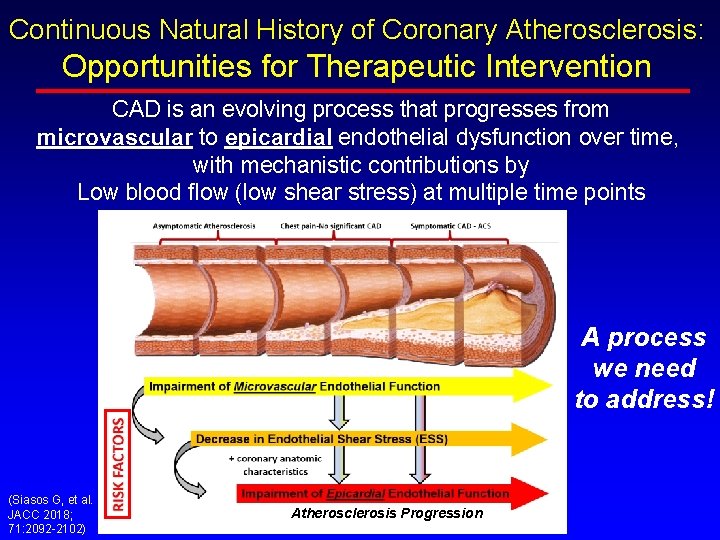
Continuous Natural History of Coronary Atherosclerosis: Opportunities for Therapeutic Intervention CAD is an evolving process that progresses from microvascular to epicardial endothelial dysfunction over time, with mechanistic contributions by Low blood flow (low shear stress) at multiple time points A process we need to address! (Siasos G, et al. JACC 2018; 71: 2092 -2102) Atherosclerosis Progression
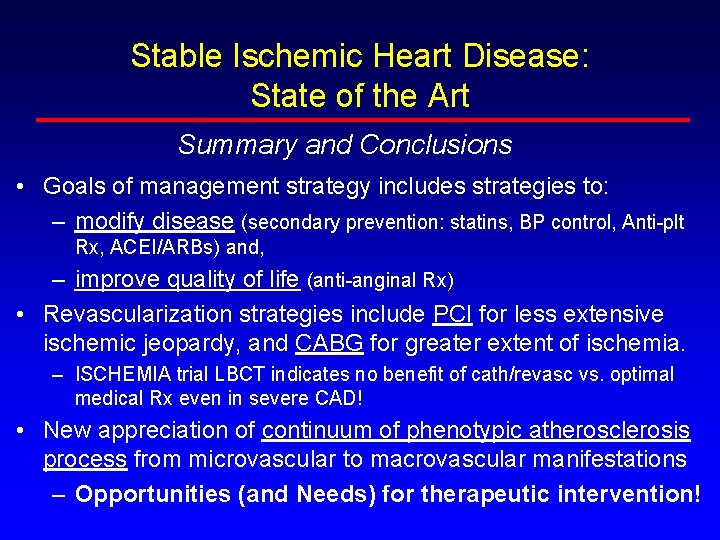
Stable Ischemic Heart Disease: State of the Art Summary and Conclusions • Goals of management strategy includes strategies to: – modify disease (secondary prevention: statins, BP control, Anti-plt Rx, ACEI/ARBs) and, – improve quality of life (anti-anginal Rx) • Revascularization strategies include PCI for less extensive ischemic jeopardy, and CABG for greater extent of ischemia. – ISCHEMIA trial LBCT indicates no benefit of cath/revasc vs. optimal medical Rx even in severe CAD! • New appreciation of continuum of phenotypic atherosclerosis process from microvascular to macrovascular manifestations – Opportunities (and Needs) for therapeutic intervention!
Microvascular and Epicardial Endothelial Function Results (n=65 pts w Stable CAD) Definitions: Microvascular endothelial dysfcn: max% increase CBF <50% by ACh Epicardial endothelial dysfcn: decrease lumen diameter >20% by ACh No patient with normal microvascular endothelial function had abnormal epicardial endothelial function Of patients with abnormal microvascular endothelial function: 56% had abnormal epicardial endothelial function and 44% had normal epicardial endothelial function (Siasos G, et al. JACC 2018; 71: 2092 -2102)
Microvascular and Epicardial Endothelial Function Results (n=65 pts w Stable CAD) Definitions: Microvascular endothelial dysfcn: max% increase CBF <50% by ACh Epicardial endothelial dysfcn: decrease lumen diameter >20% by ACh No patient with normal microvascular endothelial function had abnormal epicardial endothelial function Of patients with abnormal microvascular endothelial function: 56% had abnormal epicardial endothelial function and 44% had normal epicardial endothelial function (Siasos G, et al. JACC 2018; 71: 2092 -2102)
Microvascular and Epicardial Endothelial Function Results (n=65 pts w Stable CAD) Definitions: Microvascular endothelial dysfcn: max% increase CBF <50% by ACh Epicardial endothelial dysfcn: decrease lumen diameter >20% by ACh No patient with normal microvascular endothelial function had abnormal epicardial endothelial function Of patients with abnormal microvascular endothelial function: 56% had abnormal epicardial endothelial function and 44% had normal epicardial endothelial function (Siasos G, et al. JACC 2018; 71: 2092 -2102)