
Advances in Automated Theorem Proving Leonardo de Moura
- Slides: 40
Advances in Automated Theorem Proving Leonardo de Moura, Nikolaj Bjørner Ken Mc. Millan, Margus Veanes presented by Thomas Ball http: //research. microsoft. com/rise/ http: //rise 4 fun. com/z 3 py/
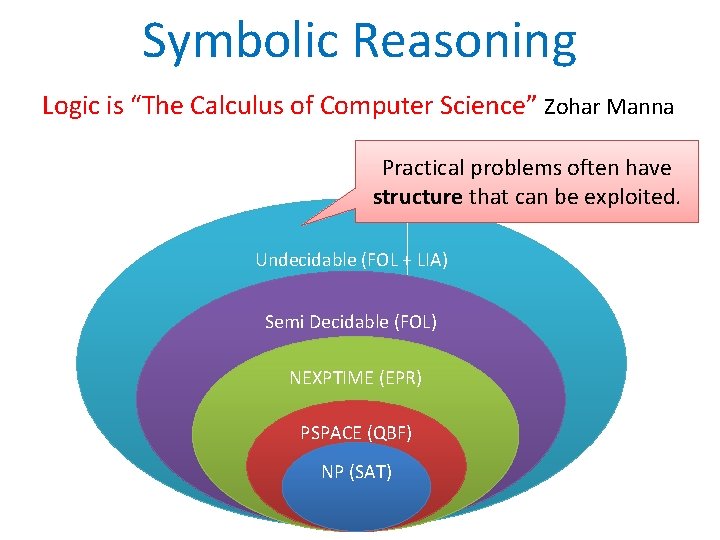
Symbolic Reasoning Logic is “The Calculus of Computer Science” Zohar Manna Practical problems often have structure that can be exploited. Undecidable (FOL + LIA) Semi Decidable (FOL) NEXPTIME (EPR) PSPACE (QBF) NP (SAT)
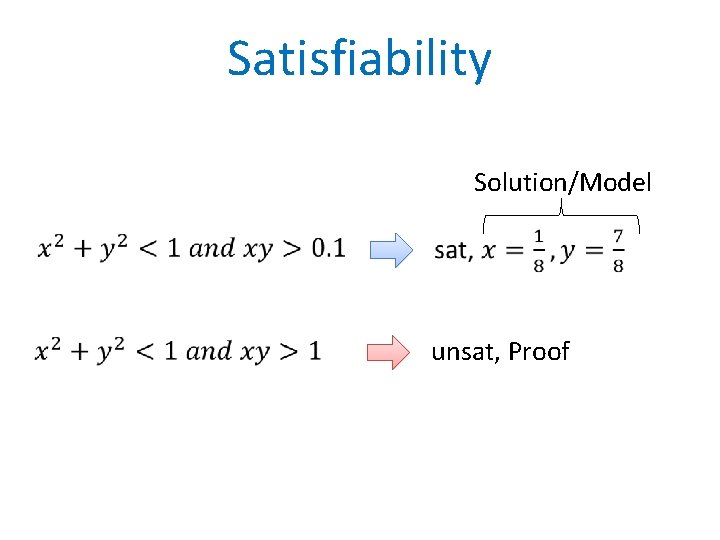
Satisfiability Solution/Model unsat, Proof
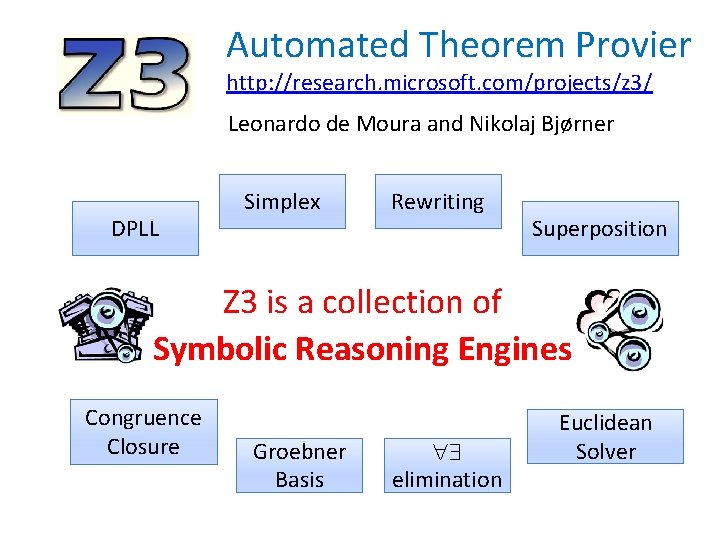
Automated Theorem Provier http: //research. microsoft. com/projects/z 3/ Leonardo de Moura and Nikolaj Bjørner DPLL Simplex Rewriting Superposition Z 3 is a collection of Symbolic Reasoning Engines Congruence Closure Groebner Basis elimination Euclidean Solver
Learn about Z 3 and get the source code! • Start here – http: //rise 4 fun. com/Z 3 Py/tutorial/guide • Strategies – http: //rise 4 fun. com/Z 3 Py/tutorial/strategies • Advanced topics – http: //rise 4 fun. com/Z 3 Py/tutorial/advanced • Source code – http: //z 3. codeplex. com/
Some Applications • • • Functional verification Defect detection Test generation Design-space exploration New programming languages
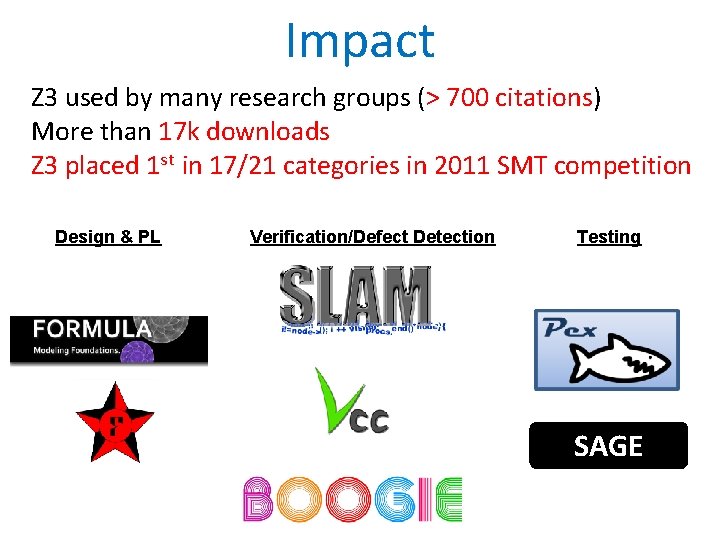
Impact Z 3 used by many research groups (> 700 citations) More than 17 k downloads Z 3 placed 1 st in 17/21 categories in 2011 SMT competition Design & PL Verification/Defect Detection Testing SAGE
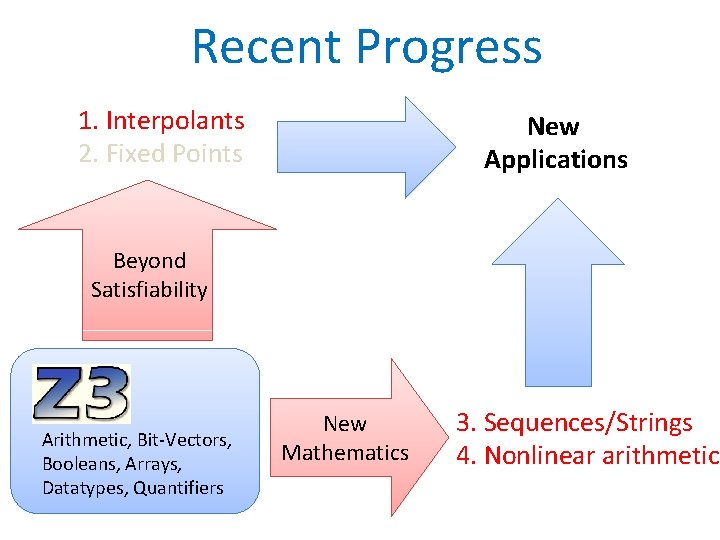
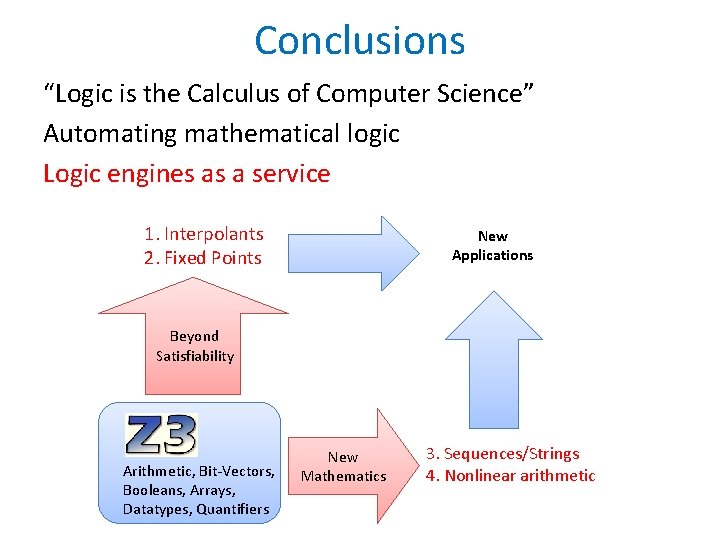
Recent Progress 1. Interpolants 2. Fixed Points New Applications Beyond Satisfiability Arithmetic, Bit-Vectors, Booleans, Arrays, Datatypes, Quantifiers New Mathematics 3. Sequences/Strings 4. Nonlinear arithmetic
Craig Interpolation and Interpolating Z 3 Ken Mc. Millan (FMCAD 2011)
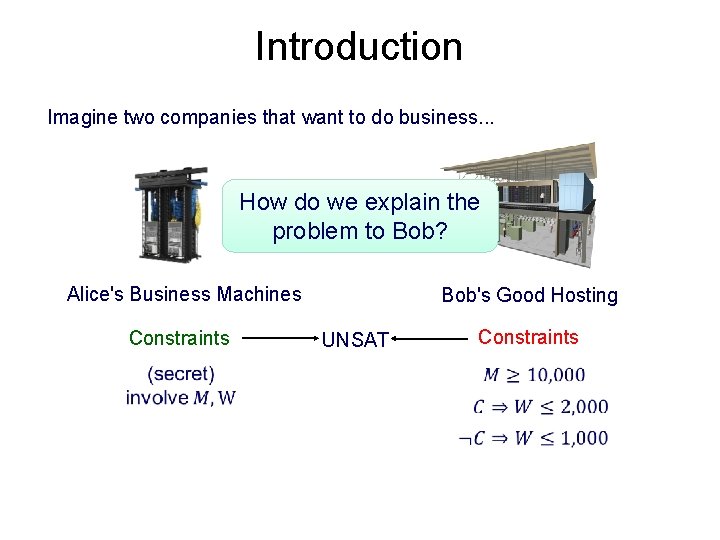
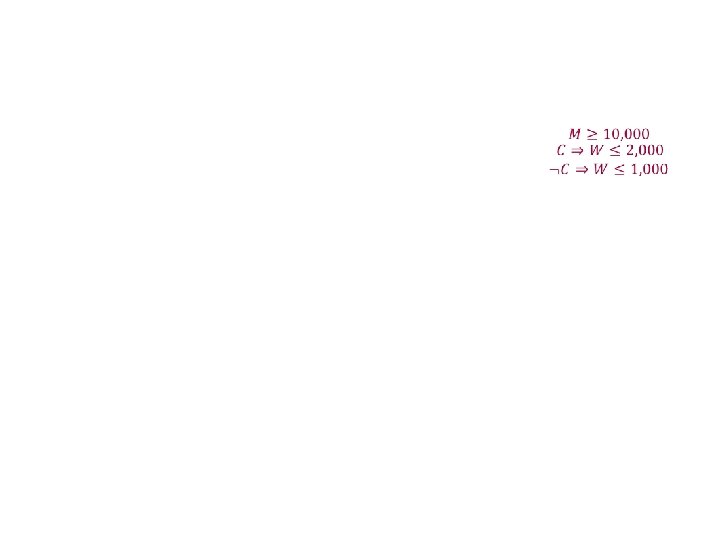
Introduction Imagine two companies that want to do business. . . How do we explain the problem to Bob? Alice's Business Machines Constraints Bob's Good Hosting UNSAT Constraints
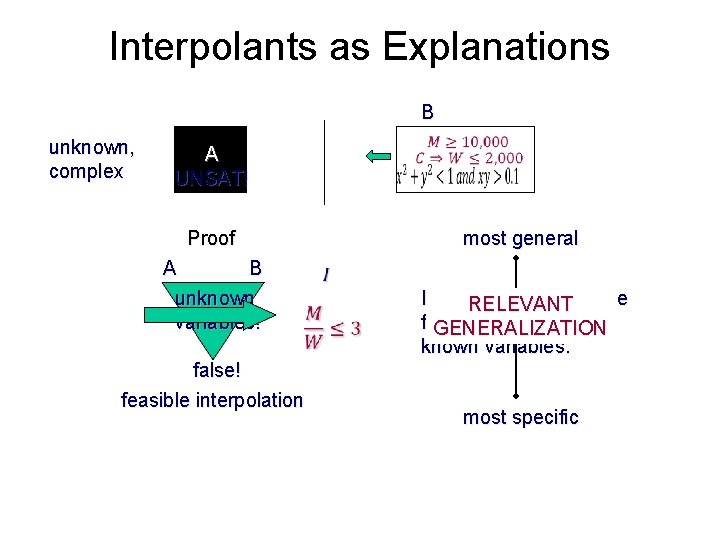
Interpolants as Explanations B unknown, complex A UNSAT! Proof A B unknown variables! false! feasible interpolation most general Interpolant explains the RELEVANT failure in terms of GENERALIZATION known variables. most specific
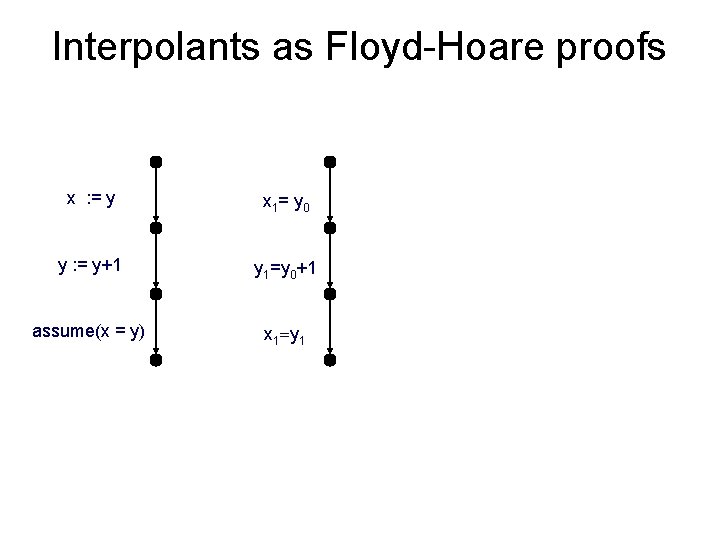
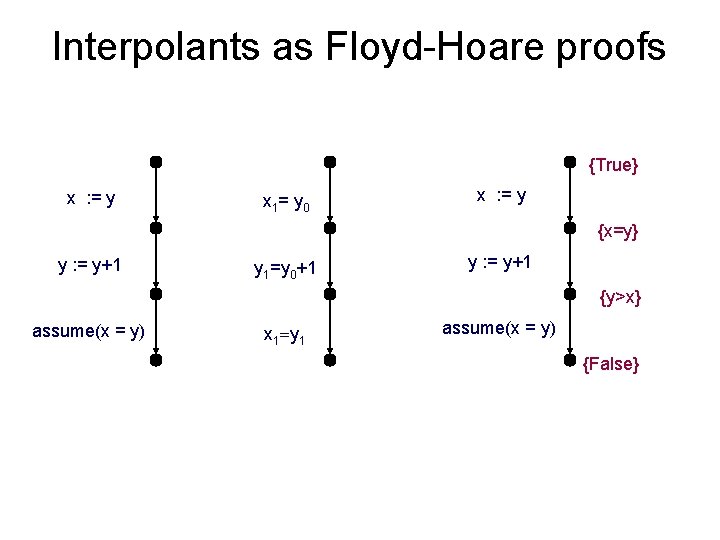
Interpolants as Floyd-Hoare proofs x : = y x 1= y 0 y : = y+1 y 1=y 0+1 assume(x = y) x 1=y 1
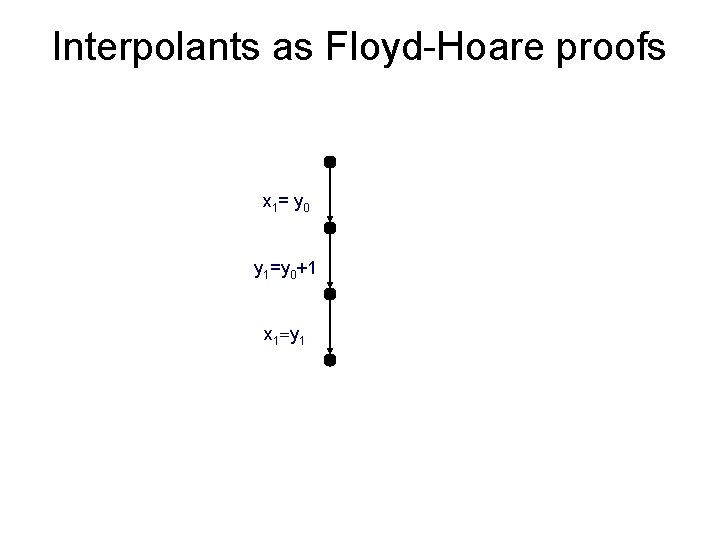
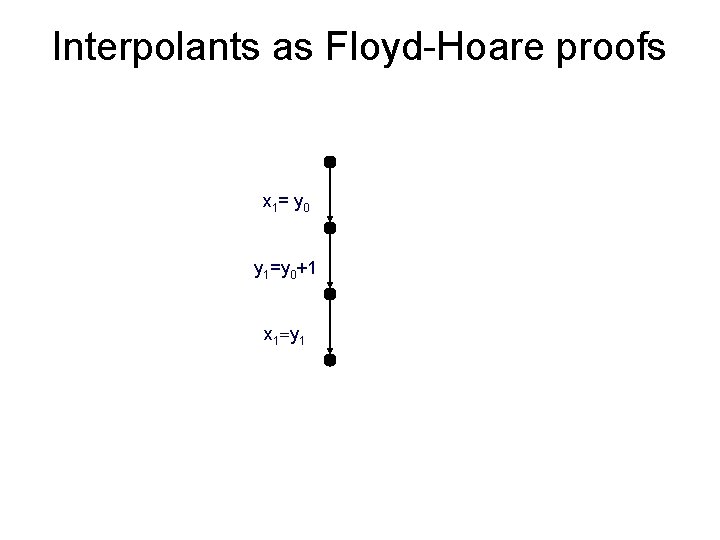
Interpolants as Floyd-Hoare proofs x 1= y 0 y 1=y 0+1 x 1=y 1
Interpolants as Floyd-Hoare proofs x 1= y 0 y 1=y 0+1 x 1=y 1
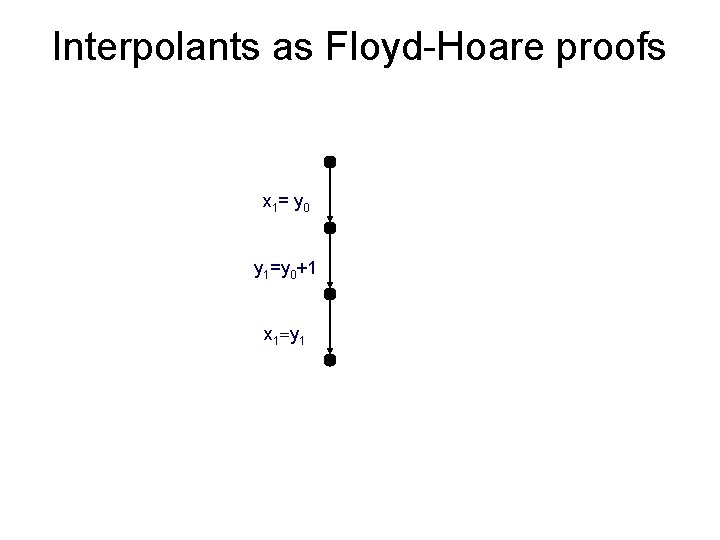
Interpolants as Floyd-Hoare proofs x 1= y 0 y 1=y 0+1 x 1=y 1
Interpolants as Floyd-Hoare proofs {True} x : = y x 1= y 0 x : = y {x=y} y : = y+1 y 1=y 0+1 y : = y+1 {y>x} assume(x = y) x 1=y 1 assume(x = y) {False}
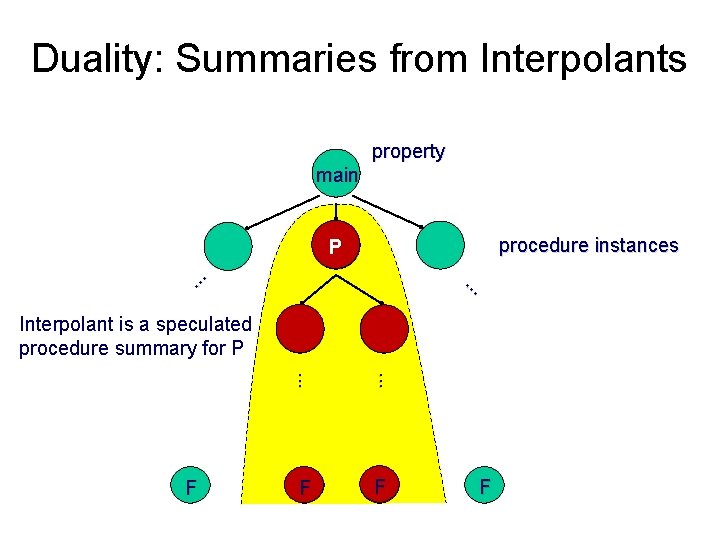
Duality: Summaries from Interpolants property main procedure instances. . . P Interpolant is a speculated procedure summary for P. . . F F
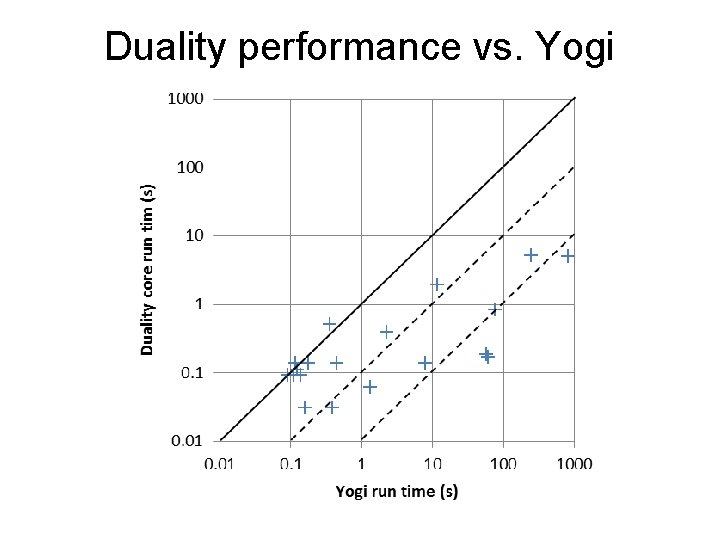
Duality performance vs. Yogi
Symbolic Automata and Transducers Margus Veanes, Nikolaj Bjørner (POPL 2011)
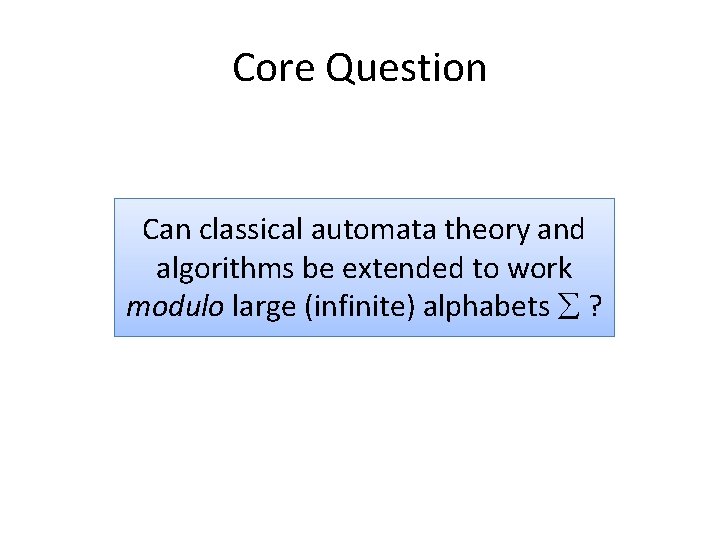
Core Question Can classical automata theory and algorithms be extended to work modulo large (infinite) alphabets ?
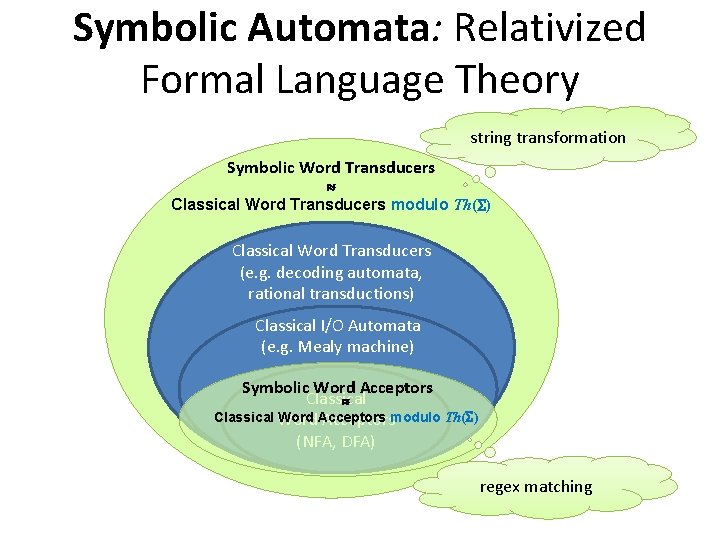
Symbolic Automata: Relativized Formal Language Theory string transformation Symbolic Word Transducers Classical Word Transducers modulo Th( ) Classical Word Transducers (e. g. decoding automata, rational transductions) Classical I/O Automata (e. g. Mealy machine) Symbolic Word Acceptors Classical Word Acceptorsmodulo Th( ) (NFA, DFA) regex matching
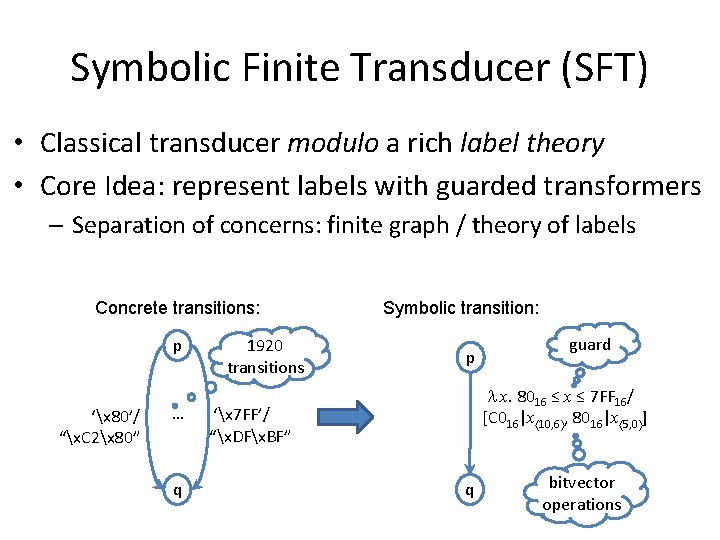
Symbolic Finite Transducer (SFT) • Classical transducer modulo a rich label theory • Core Idea: represent labels with guarded transformers – Separation of concerns: finite graph / theory of labels Concrete transitions: p ‘x 80’/ “x. C 2x 80” … q 1920 transitions Symbolic transition: p guard x. 8016 ≤ x ≤ 7 FF 16/ [C 016|x 10, 6 , 8016|x 5, 0 ] ‘x 7 FF’/ “x. DFx. BF” q bitvector operations
Algorithms • New algorithms for SFAs and SFTs Using Z 3 • Extensions of classical algorithms modulo Th( ) • Big-O complexity matches that of classical algorithms, with factor for decision procedure
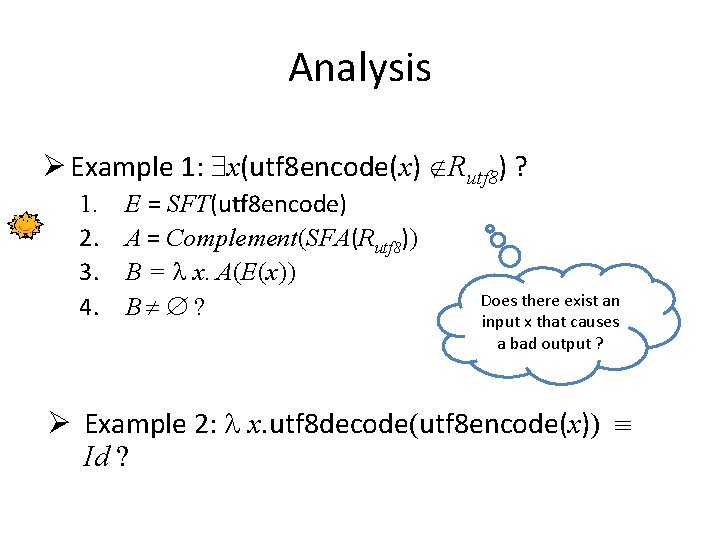
Analysis Ø Example 1: x(utf 8 encode(x) Rutf 8) ? 1. E = SFT(utf 8 encode) 2. A = Complement(SFA(Rutf 8)) 3. B = x. A(E(x)) 4. B ? Does there exist an input x that causes a bad output ? Ø Example 2: x. utf 8 decode(utf 8 encode(x)) Id ?
Links • Symbolic Automata Tool Kit http: //research. microsoft. com/automata/ • Rex (acceptors) online http: //rise 4 fun. com/rex/ • Bek (transducers) online Samples: http: //rise 4 fun. com/Bek/ Tutorials: http: //rise 4 fun. com/Bek/tutorial
Solving Nonlinear Arithmetic Dejan Jovanović (NYU) and Leonardo de Moura (IJCAR 2012)
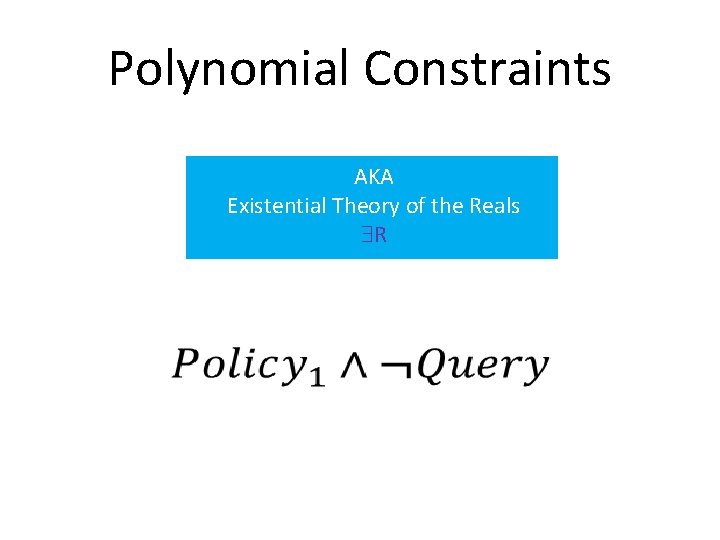
Polynomial Constraints AKA Existential Theory of the Reals R
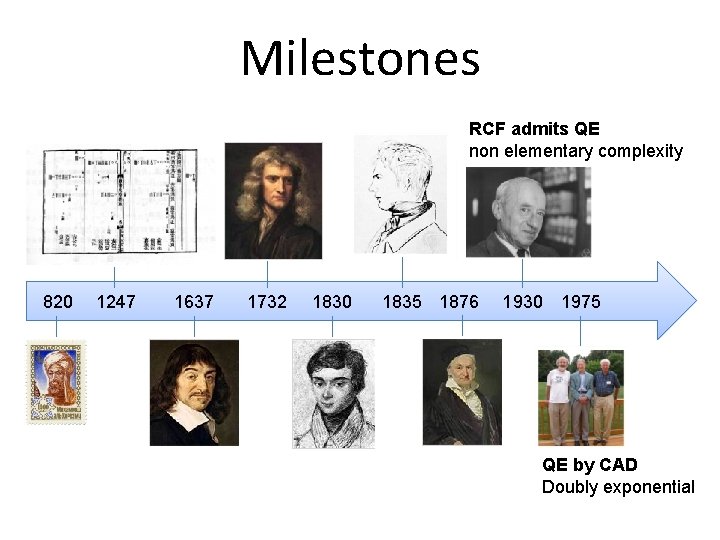
Milestones RCF admits QE non elementary complexity 820 1247 1637 1732 1830 1835 1876 1930 1975 QE by CAD Doubly exponential
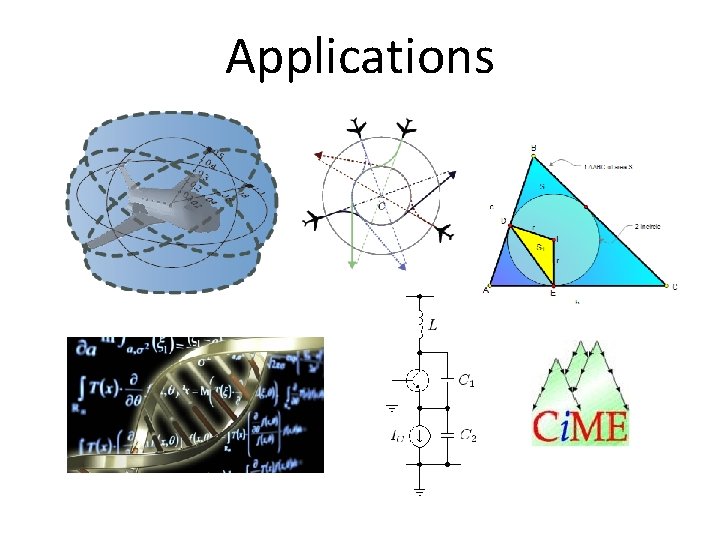
Applications
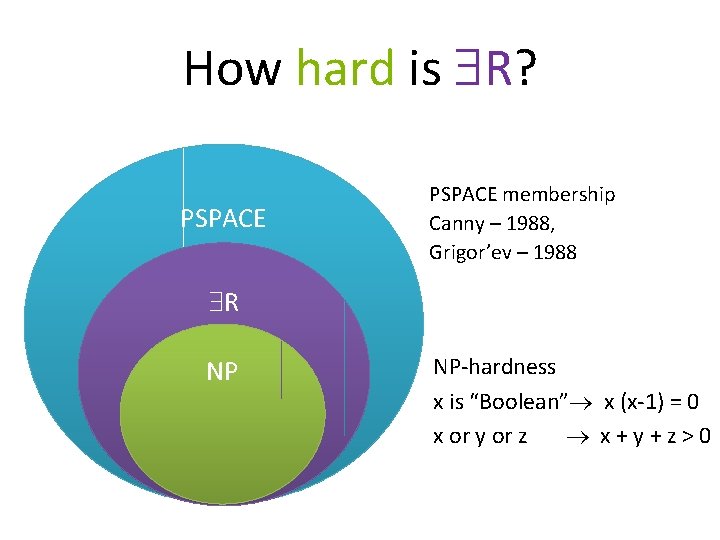
How hard is R? PSPACE membership Canny – 1988, Grigor’ev – 1988 R NP NP-hardness x is “Boolean” x (x-1) = 0 x or y or z x+y+z>0
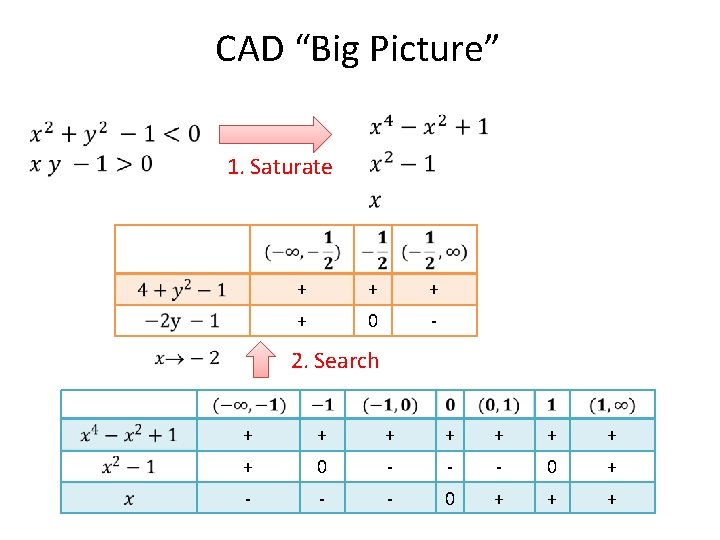
CAD “Big Picture” 1. Saturate + + 0 - 2. Search + + + + 0 - - - 0 + + +
Our Procedure • Start search before saturate/project • Saturate on demand • Apply SAT solver heuristics – Learn lemmas from conflicts – Non-chronological backtracking
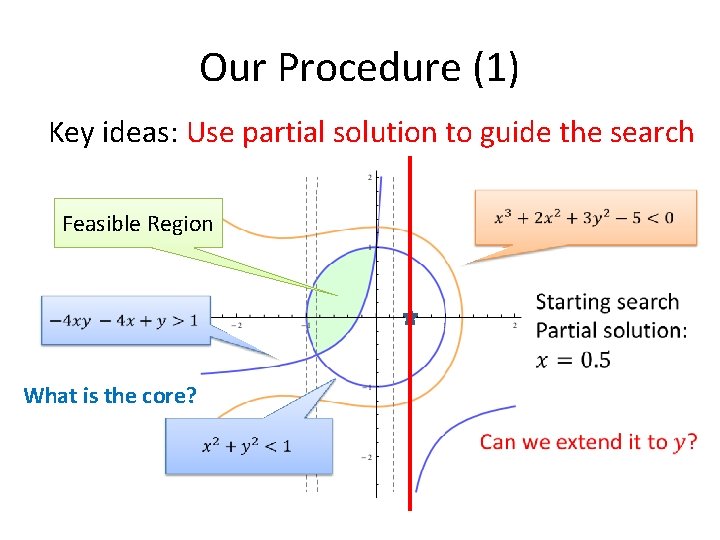
Our Procedure (1) Key ideas: Use partial solution to guide the search Feasible Region What is the core?
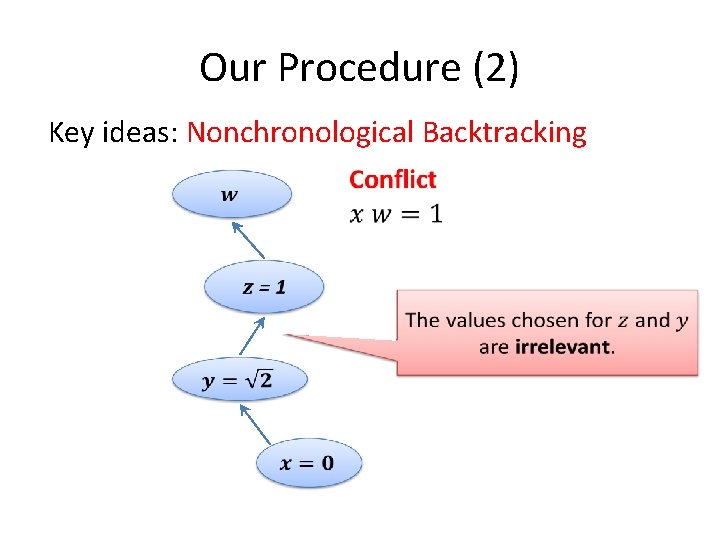
Our Procedure (2) Key ideas: Nonchronological Backtracking
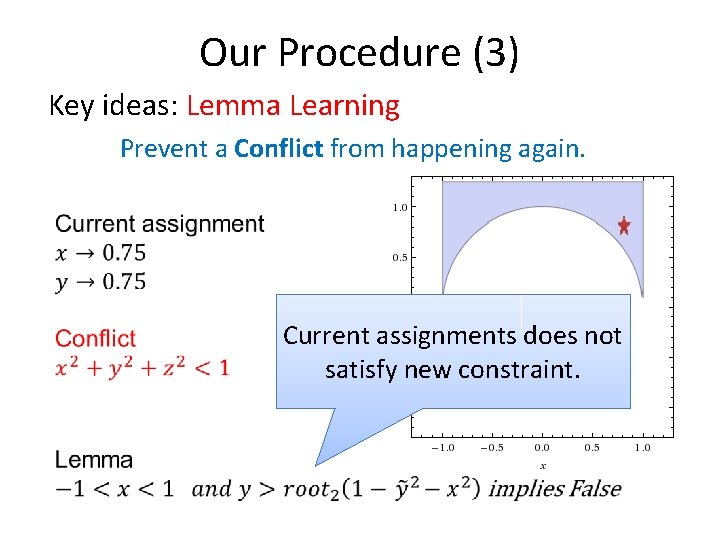
Our Procedure (3) Key ideas: Lemma Learning Prevent a Conflict from happening again. Current assignments does not satisfy new constraint.
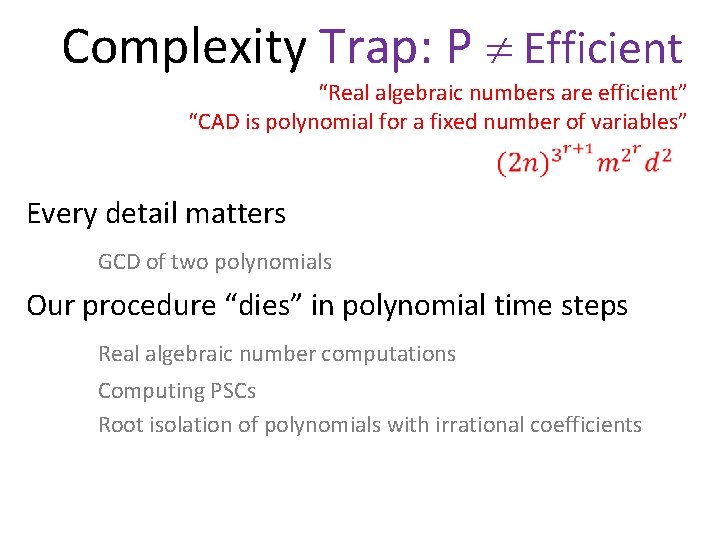
Complexity Trap: P Efficient “Real algebraic numbers are efficient” “CAD is polynomial for a fixed number of variables” Every detail matters GCD of two polynomials Our procedure “dies” in polynomial time steps Real algebraic number computations Computing PSCs Root isolation of polynomials with irrational coefficients
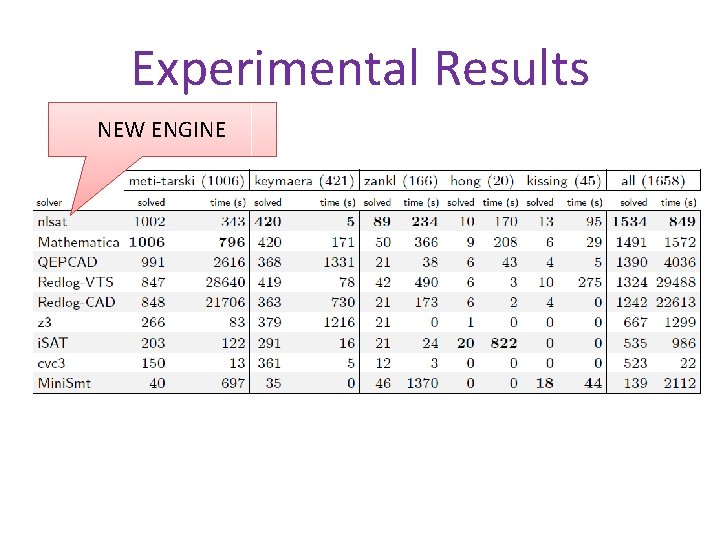
Experimental Results NEW ENGINE
Conclusions “Logic is the Calculus of Computer Science” Automating mathematical logic Logic engines as a service 1. Interpolants 2. Fixed Points New Applications Beyond Satisfiability Arithmetic, Bit-Vectors, Booleans, Arrays, Datatypes, Quantifiers New Mathematics 3. Sequences/Strings 4. Nonlinear arithmetic