Patient Interactions 2010 FINAL 1 Patient Interactions 1
- Slides: 40
Patient Interactions 2010 FINAL 1
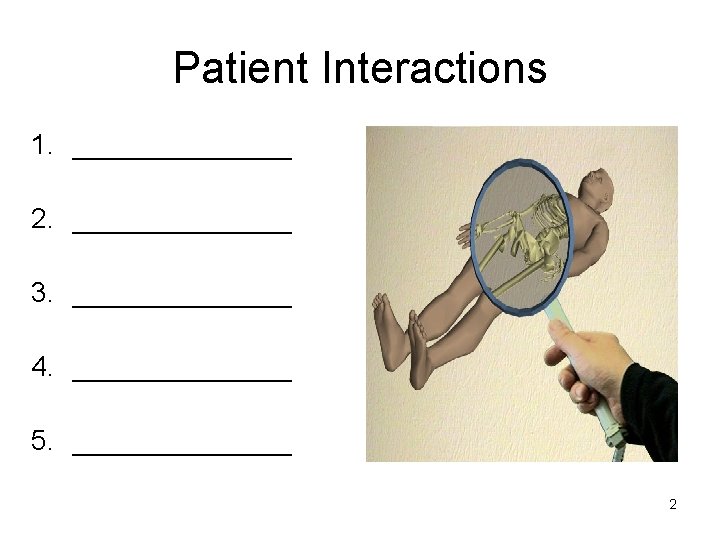
Patient Interactions 1. _______ 2. _______ 3. _______ 4. _______ 5. _______ 2
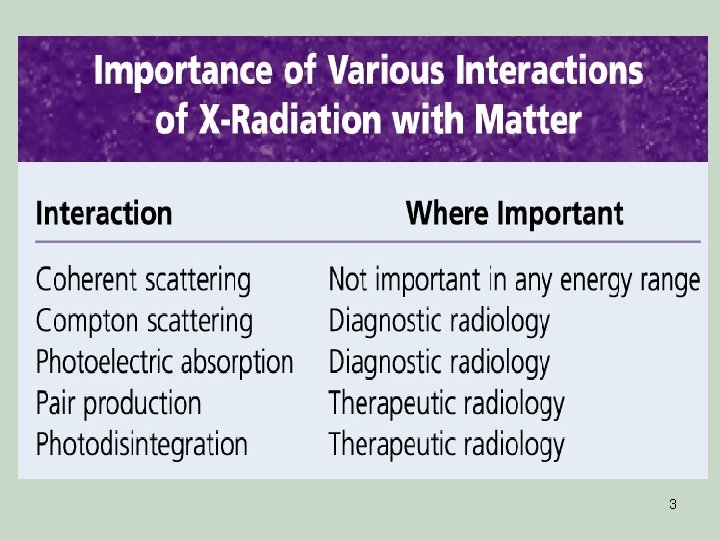
3
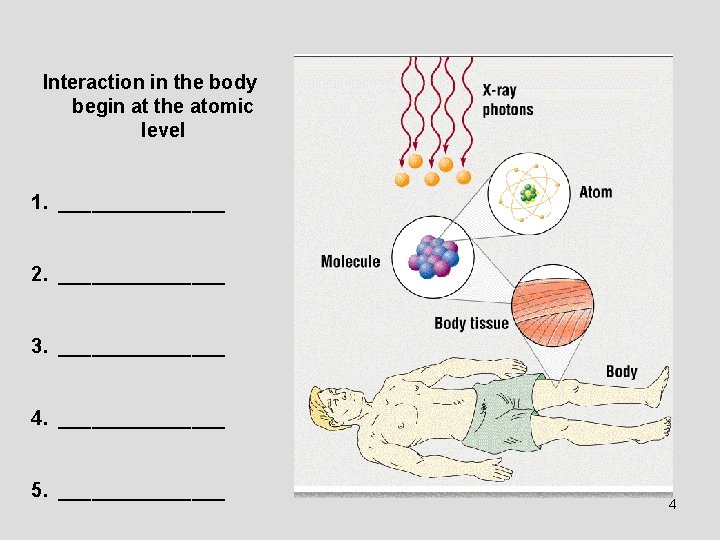
Interaction in the body begin at the atomic level 1. ________ 2. ________ 3. ________ 4. ________ 5. ________ 4
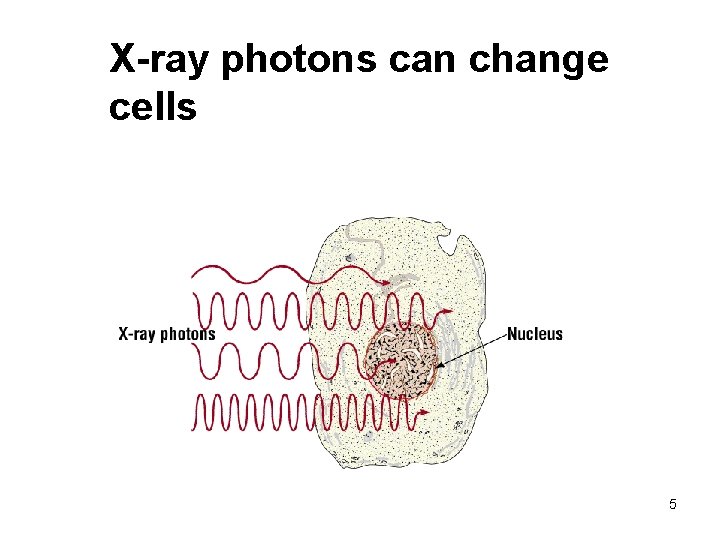
X-ray photons can change cells 5
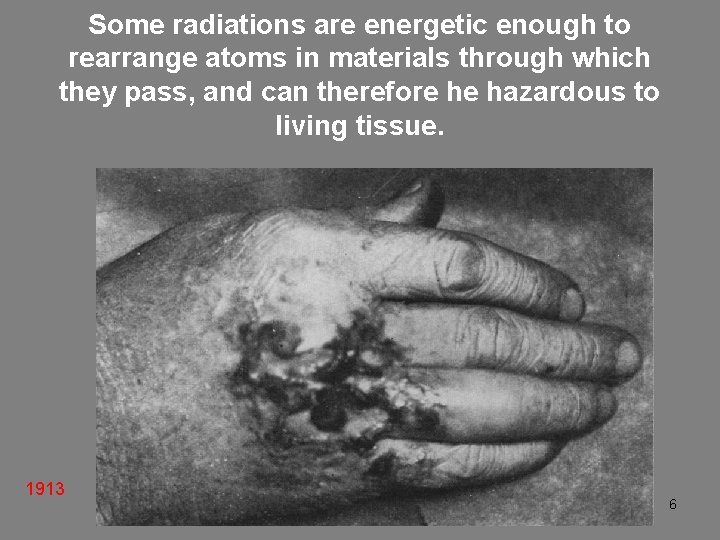
Some radiations are energetic enough to rearrange atoms in materials through which they pass, and can therefore he hazardous to living tissue. 1913 6
EM Interactions with Matter General interactions with matter include: 1. _______ – With or without partial absorption 2. _______ – Full attenuation 7
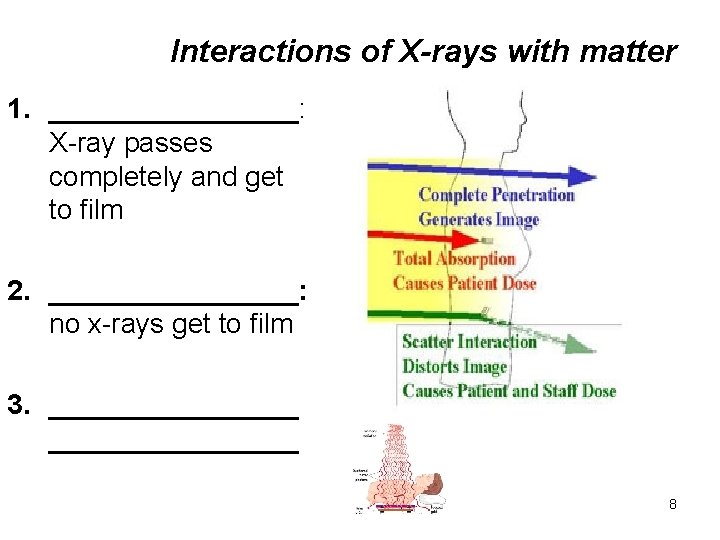
Interactions of X-rays with matter 1. ________: X-ray passes completely and get to film 2. ________: no x-rays get to film 3. ________________ 8
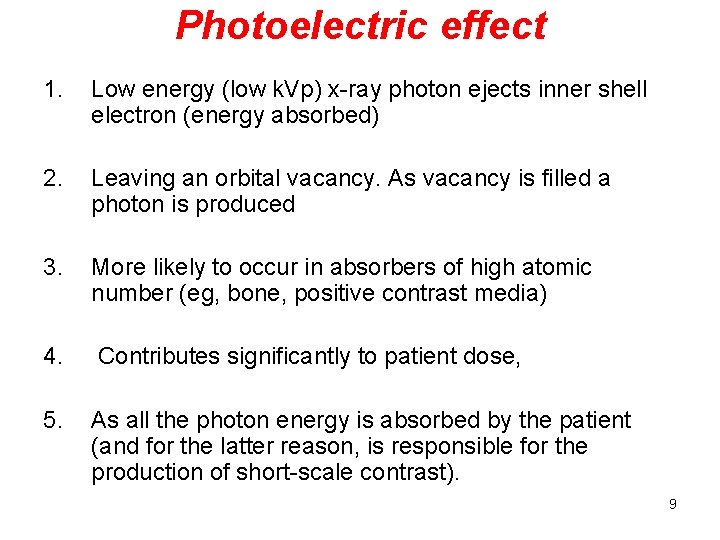
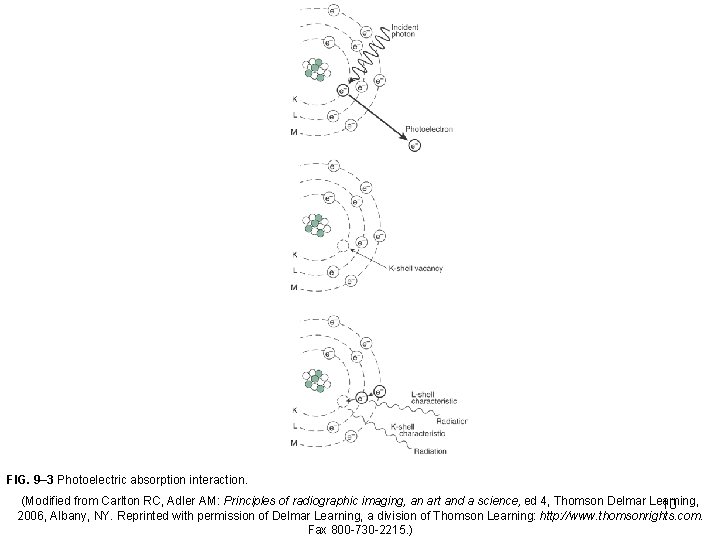
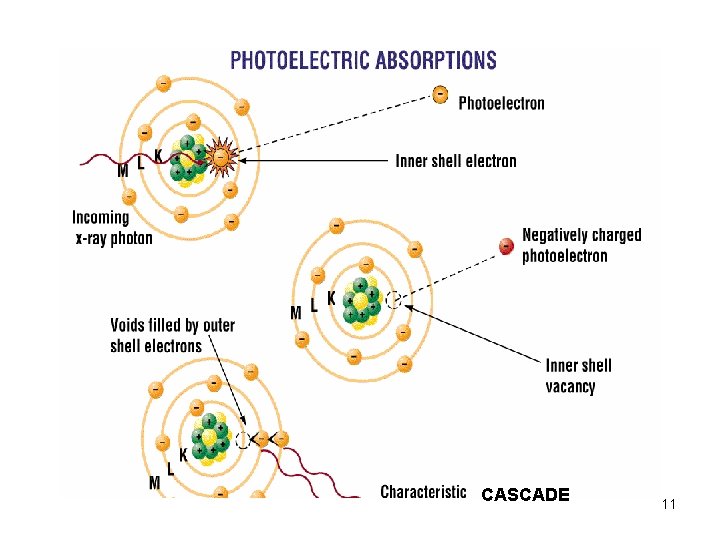
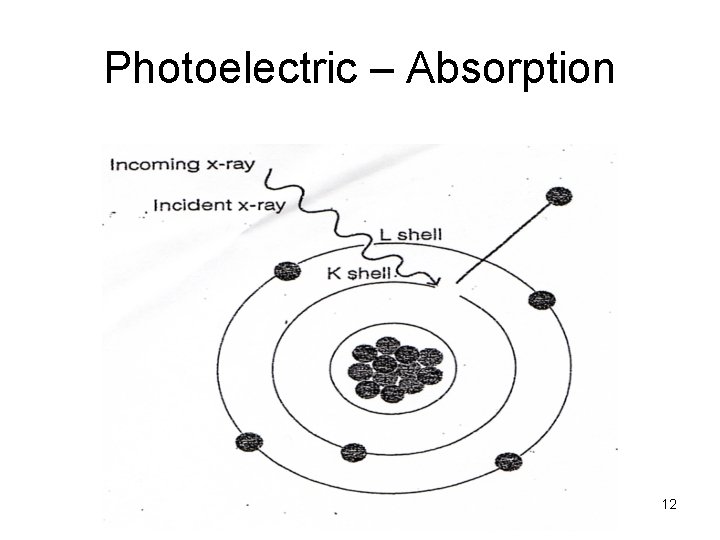
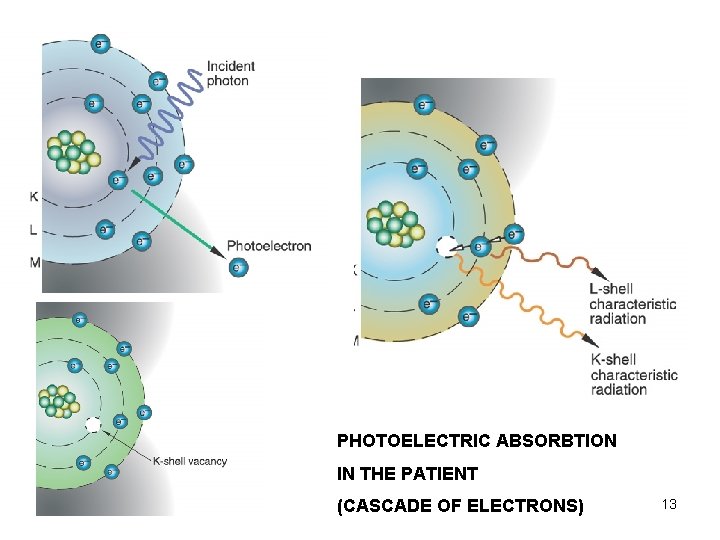
Photoelectric effect 1. Low energy (low k. Vp) x-ray photon ejects inner shell electron (energy absorbed) 2. Leaving an orbital vacancy. As vacancy is filled a photon is produced 3. More likely to occur in absorbers of high atomic number (eg, bone, positive contrast media) 4. Contributes significantly to patient dose, 5. As all the photon energy is absorbed by the patient (and for the latter reason, is responsible for the production of short-scale contrast). 9
FIG. 9– 3 Photoelectric absorption interaction. (Modified from Carlton RC, Adler AM: Principles of radiographic imaging, an art and a science, ed 4, Thomson Delmar Learning, 10 2006, Albany, NY. Reprinted with permission of Delmar Learning, a division of Thomson Learning: http: //www. thomsonrights. com. Fax 800 -730 -2215. )
CASCADE 11
Photoelectric – Absorption 12
PHOTOELECTRIC ABSORBTION IN THE PATIENT (CASCADE OF ELECTRONS) 13
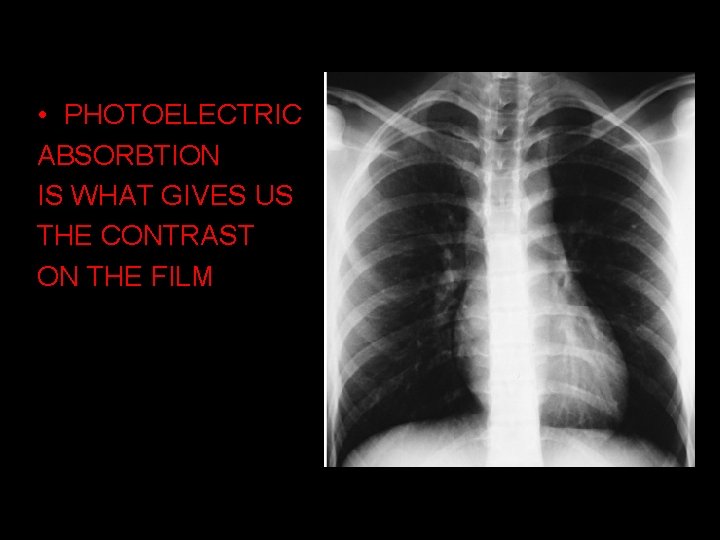
• PHOTOELECTRIC ABSORBTION IS WHAT GIVES US THE CONTRAST ON THE FILM 14
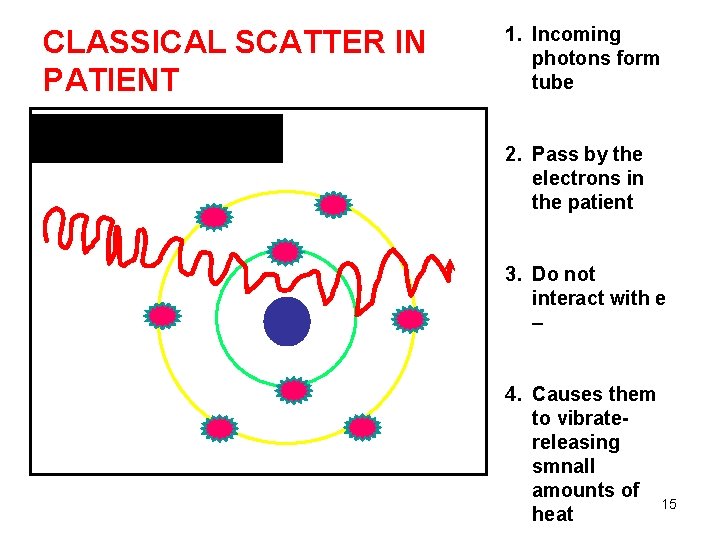
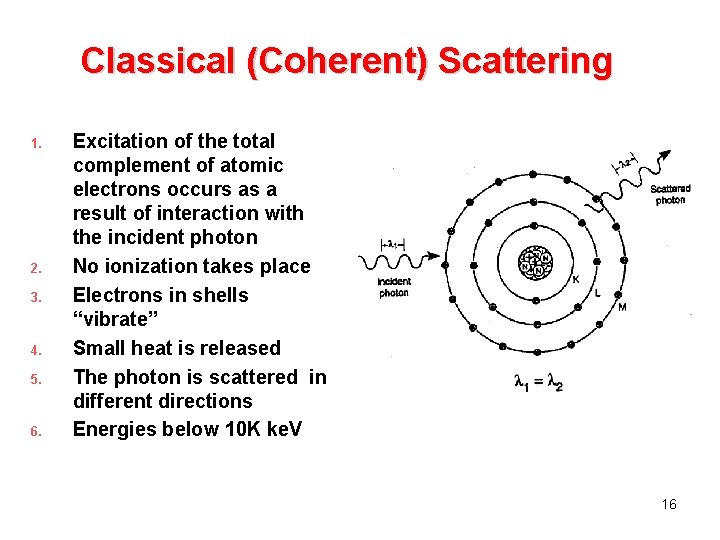
CLASSICAL SCATTER IN PATIENT 8 p+ + 8 e- = neutral atom 1. Incoming photons form tube 2. Pass by the electrons in the patient 3. Do not interact with e – 4. Causes them to vibratereleasing smnall amounts of 15 heat
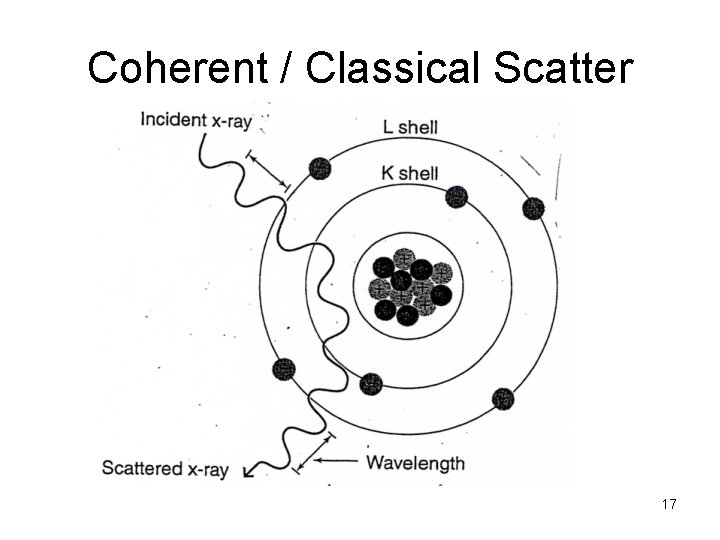
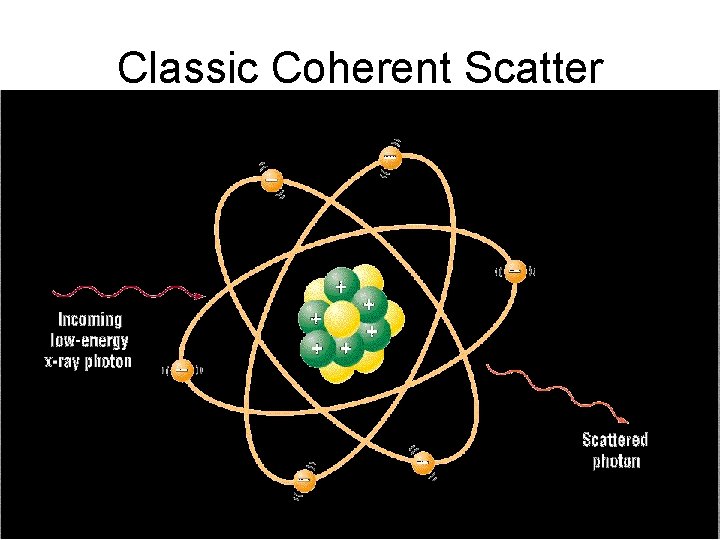
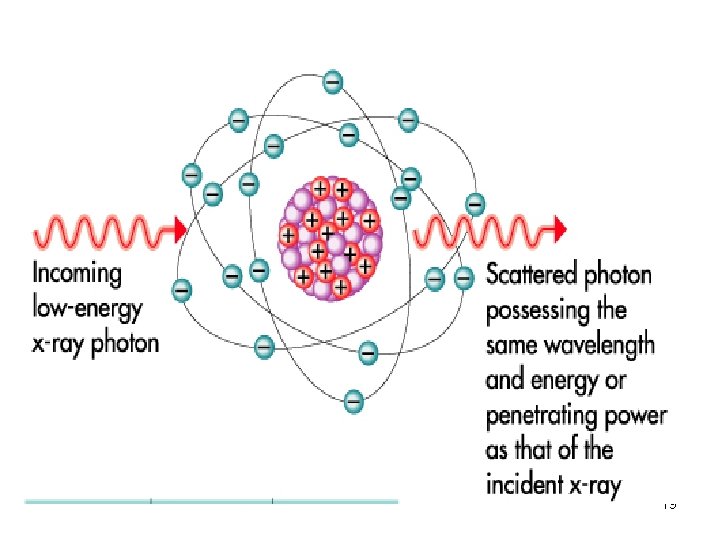
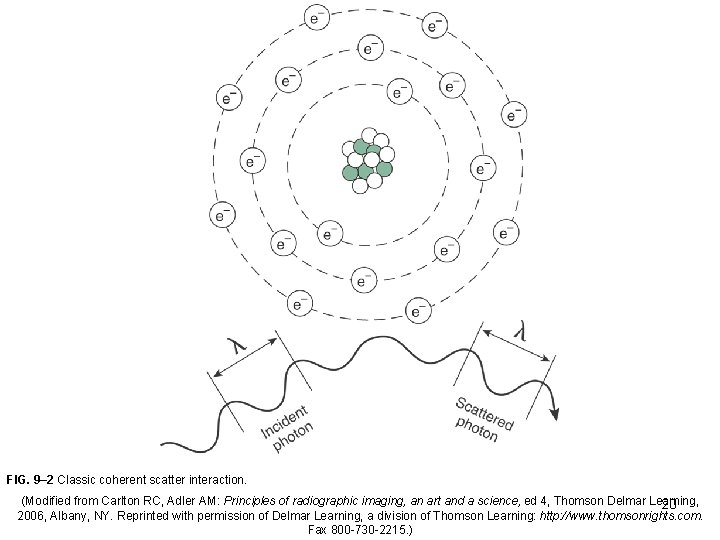
Classical (Coherent) Scattering 1. 2. 3. 4. 5. 6. Excitation of the total complement of atomic electrons occurs as a result of interaction with the incident photon No ionization takes place Electrons in shells “vibrate” Small heat is released The photon is scattered in different directions Energies below 10 K ke. V 16
Coherent / Classical Scatter 17
Classic Coherent Scatter 18
19
FIG. 9– 2 Classic coherent scatter interaction. (Modified from Carlton RC, Adler AM: Principles of radiographic imaging, an art and a science, ed 4, Thomson Delmar Learning, 20 2006, Albany, NY. Reprinted with permission of Delmar Learning, a division of Thomson Learning: http: //www. thomsonrights. com. Fax 800 -730 -2215. )
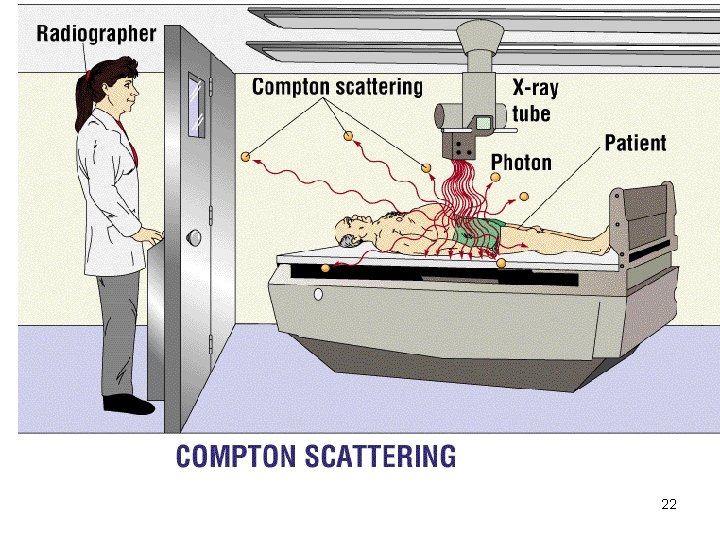
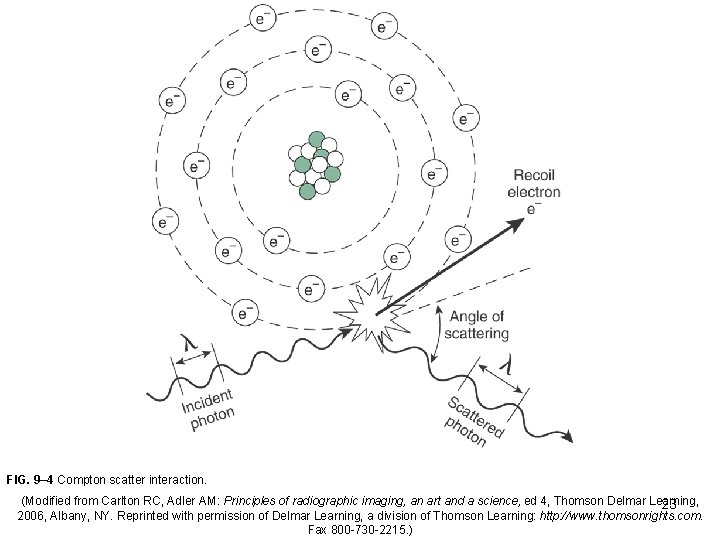
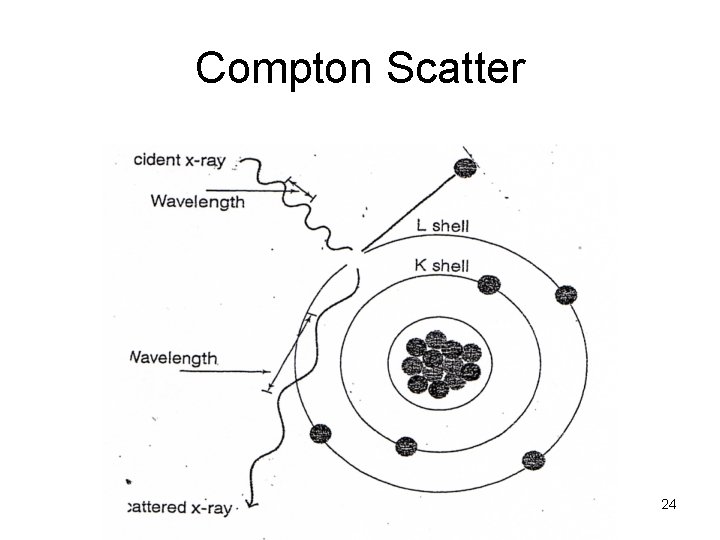
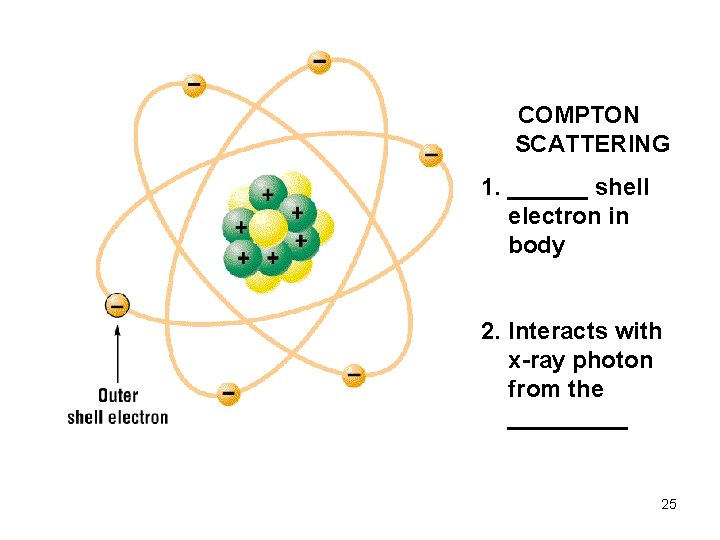
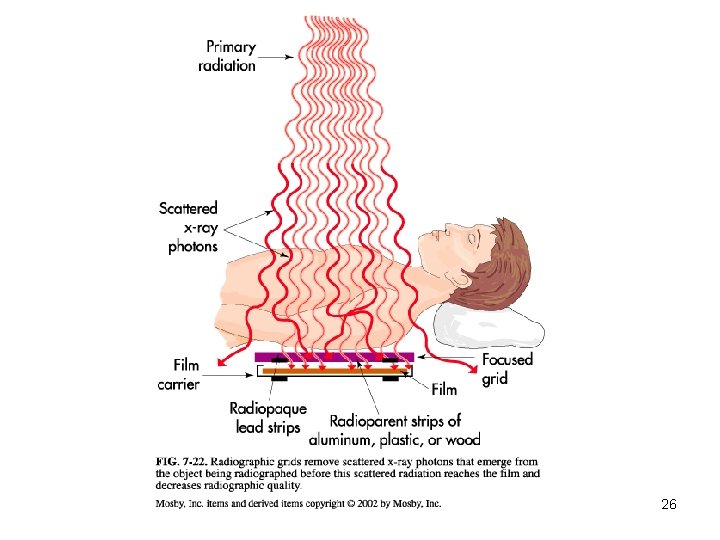
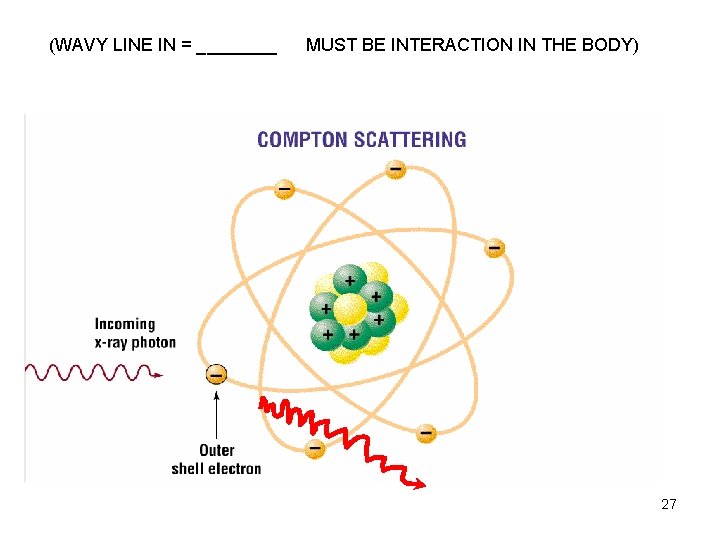
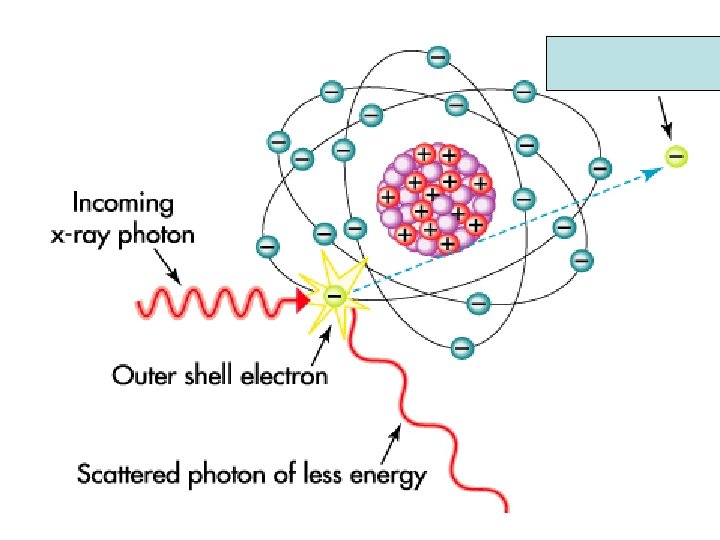
Compton scatter 1. High energy (high k. Vp) x-ray photon ejects an outer shell electron. 2. Energy is divided between scattered photon and the compton electron (ejected e-) 3. Scattered photon has sufficient energy to exit body. 4. Since the scattered photon exits the body, it does not pose a radiation hazard to the patient. 5. Can increase film fog (reduces contrast) 6. Radiation hazard to personnel 21
22
FIG. 9– 4 Compton scatter interaction. (Modified from Carlton RC, Adler AM: Principles of radiographic imaging, an art and a science, ed 4, Thomson Delmar Learning, 23 2006, Albany, NY. Reprinted with permission of Delmar Learning, a division of Thomson Learning: http: //www. thomsonrights. com. Fax 800 -730 -2215. )
Compton Scatter 24
COMPTON SCATTERING 1. ______ shell electron in body 2. Interacts with x-ray photon from the _____ 25
26
(WAVY LINE IN = ____ MUST BE INTERACTION IN THE BODY) 27
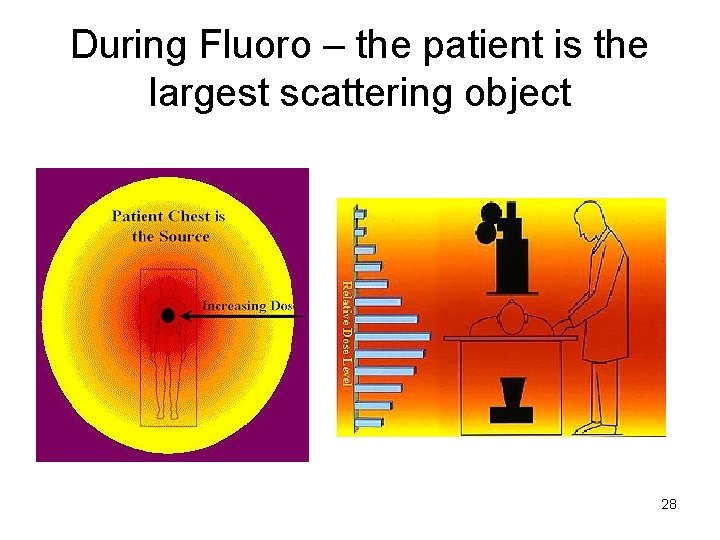
During Fluoro – the patient is the largest scattering object 28
XXXXX 29
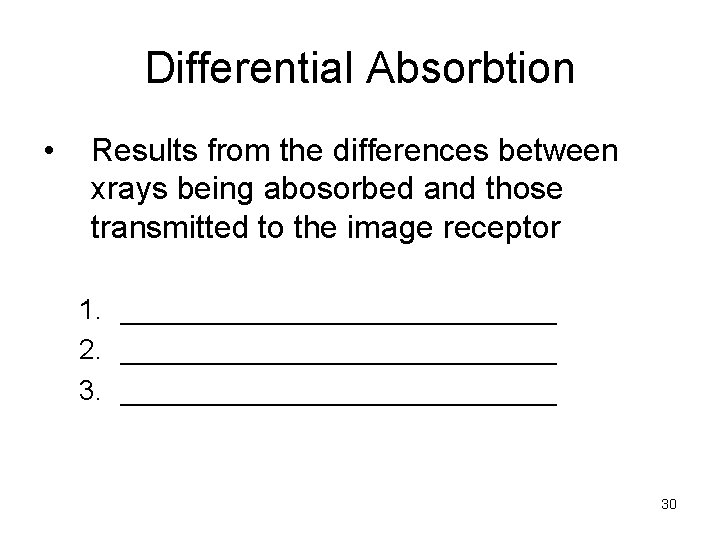
Differential Absorbtion • Results from the differences between xrays being abosorbed and those transmitted to the image receptor 1. ______________ 2. ____________________________ 30
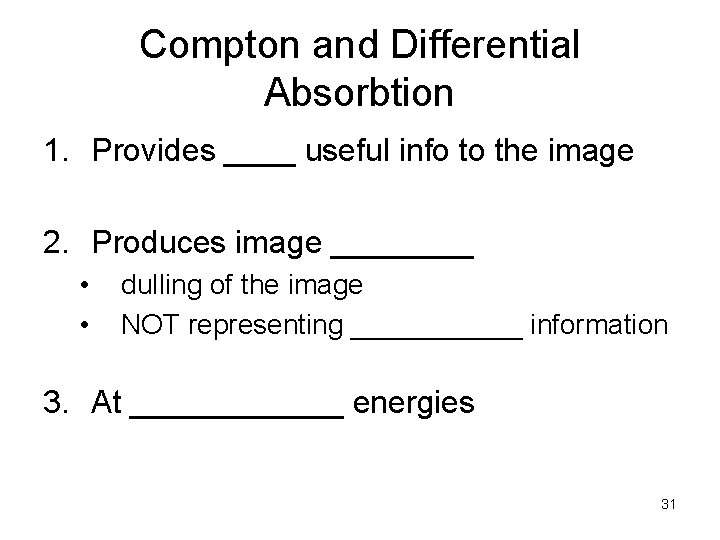
Compton and Differential Absorbtion 1. Provides ____ useful info to the image 2. Produces image ____ • • dulling of the image NOT representing ______ information 3. At ______ energies 31
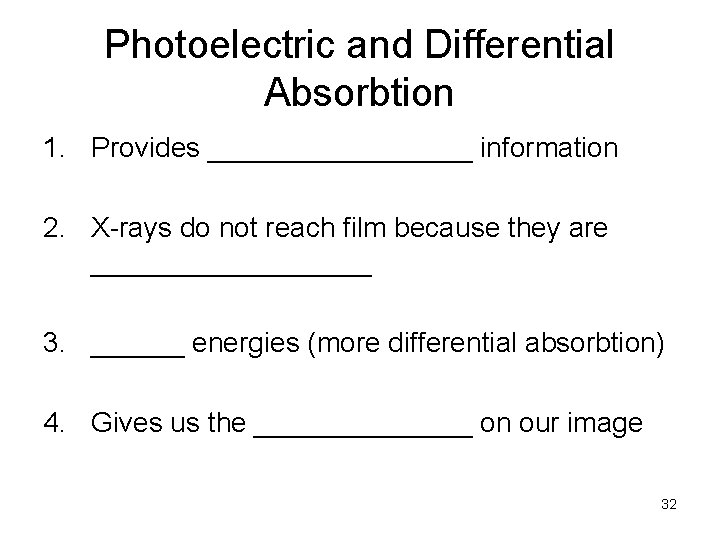
Photoelectric and Differential Absorbtion 1. Provides _________ information 2. X-rays do not reach film because they are _________ 3. ______ energies (more differential absorbtion) 4. Gives us the _______ on our image 32
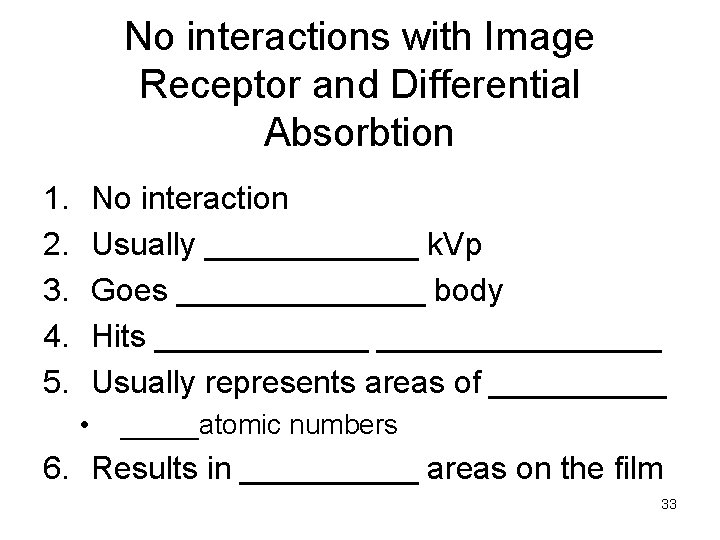
No interactions with Image Receptor and Differential Absorbtion 1. 2. 3. 4. 5. No interaction Usually ______ k. Vp Goes _______ body Hits ________________ Usually represents areas of _____ • _____atomic numbers 6. Results in _____ areas on the film 33
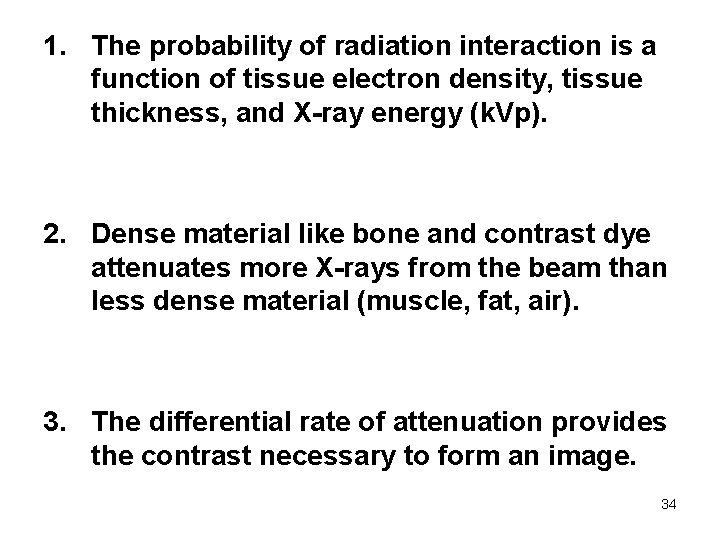
1. The probability of radiation interaction is a function of tissue electron density, tissue thickness, and X-ray energy (k. Vp). 2. Dense material like bone and contrast dye attenuates more X-rays from the beam than less dense material (muscle, fat, air). 3. The differential rate of attenuation provides the contrast necessary to form an image. 34
35
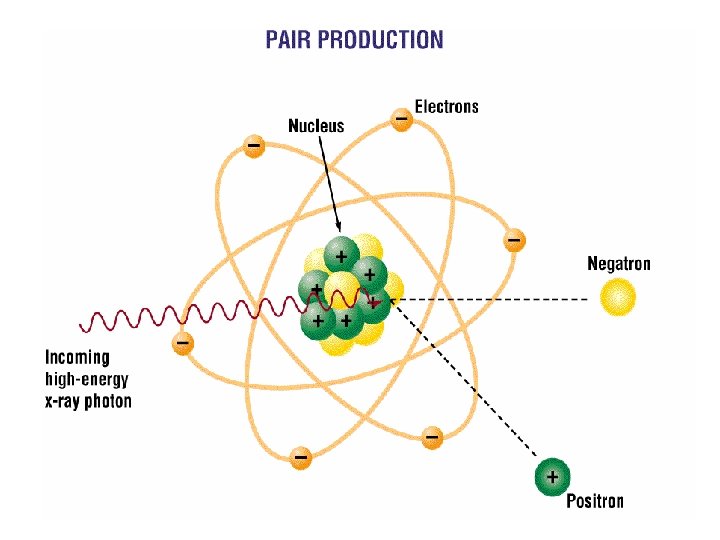
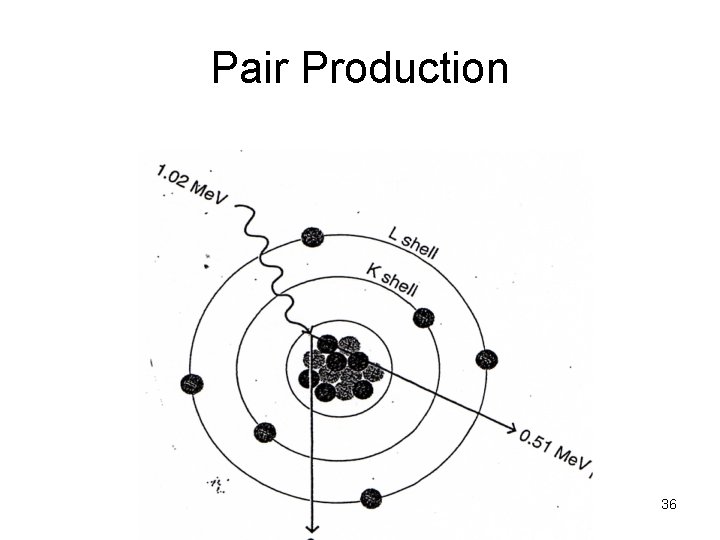
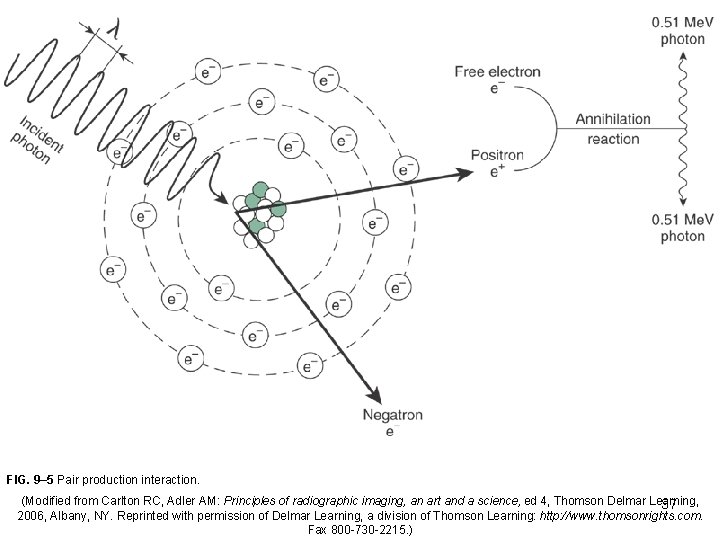
Pair Production 36
FIG. 9– 5 Pair production interaction. (Modified from Carlton RC, Adler AM: Principles of radiographic imaging, an art and a science, ed 4, Thomson Delmar Learning, 37 2006, Albany, NY. Reprinted with permission of Delmar Learning, a division of Thomson Learning: http: //www. thomsonrights. com. Fax 800 -730 -2215. )
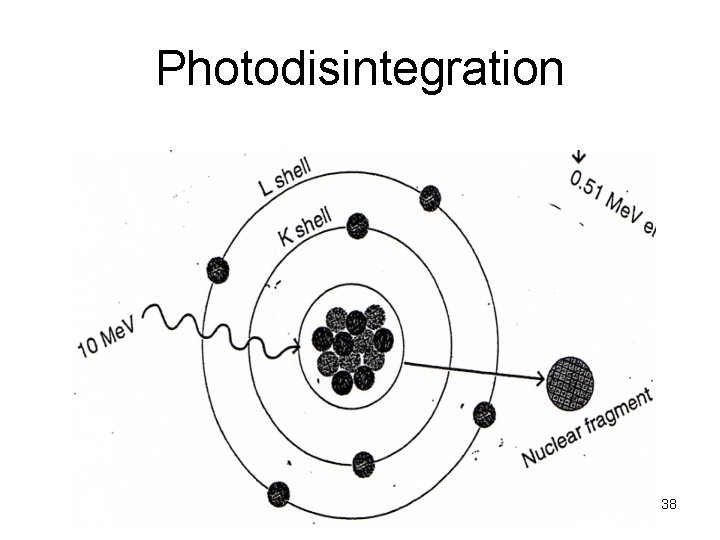
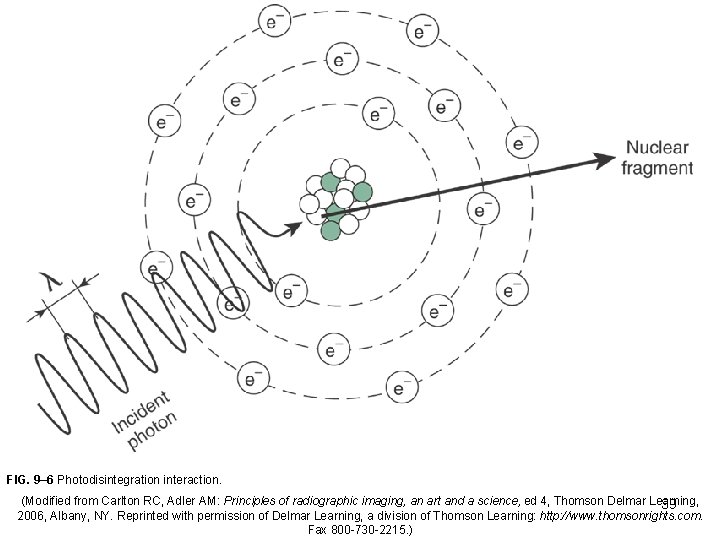
Photodisintegration 38
FIG. 9– 6 Photodisintegration interaction. (Modified from Carlton RC, Adler AM: Principles of radiographic imaging, an art and a science, ed 4, Thomson Delmar Learning, 39 2006, Albany, NY. Reprinted with permission of Delmar Learning, a division of Thomson Learning: http: //www. thomsonrights. com. Fax 800 -730 -2215. )
Remember…. When reviewing diagrams What is coming in (e or photon? Where is it occurring (the tube or body? ) Keep practicing – you will get it 40