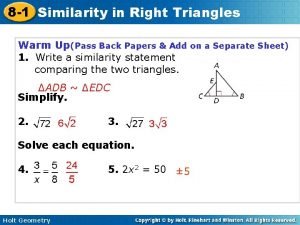
Unit 6 Test Review 4 Write a similarity







- Slides: 58
Unit 6 Test Review
4. Write a similarity statement for the two triangles below.
4. Write a similarity statement for the two triangles below.
5. Determine the value of x:
5. Determine the value of x:
6. Find the value of x:
6. Find the value of x:
7. The quadrilaterals shown are similar. Find the scale factor of the larger quadrilateral to the smaller, then find the values of x, y, and z.
7. The quadrilaterals shown are similar. Find the scale factor of the larger quadrilateral to the smaller, then find the values of x, y, and z.
8. Determine if the following triangles are similar. If so, give the similarity statement and state the postulate or theorem that justifies the similarity. If not, write ‘not similar’.
8. Determine if the following triangles are similar. If so, give the similarity statement and state the postulate or theorem that justifies the similarity. If not, write ‘not similar’.
9. Determine if the following triangles are similar. If so, give the similarity statement and state the postulate or theorem that justifies the similarity. If not, write ‘not similar’.
9. Determine if the following triangles are similar. If so, give the similarity statement and state the postulate or theorem that justifies the similarity. If not, write ‘not similar’.
10. Determine if the following triangles are similar. If so, give the similarity statement and state the postulate or theorem that justifies the similarity. If not, write ‘not similar’.
10. Determine if the following triangles are similar. If so, give the similarity statement and state the postulate or theorem that justifies the similarity. If not, write ‘not similar’.
11. Find DF
11. Find DF
12. Find the value of x.
12. Find the value of x.
13. Sarah wants to find the height of a building. She is 5 ft tall and stands 20 ft away from the building. Her shadow is 15 ft long. Find the height of the building.
13. Sarah wants to find the height of a building. She is 5 ft tall and stands 20 ft away from the building. Her shadow is 15 ft long. Find the height of the building.
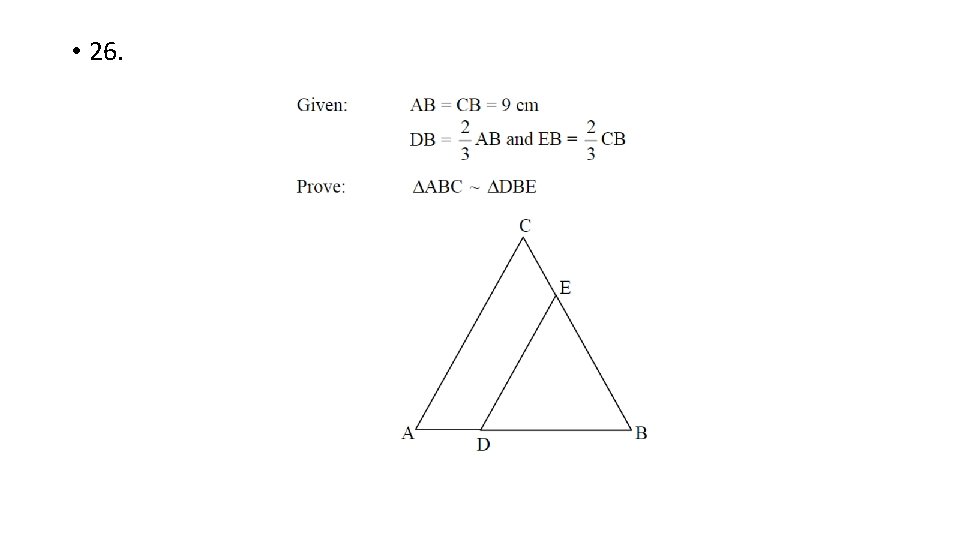
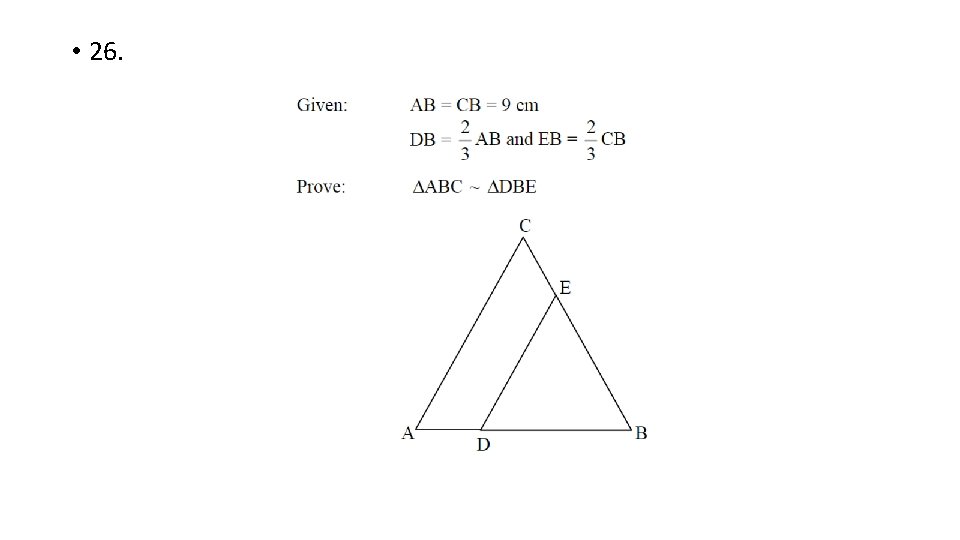
14. Complete the proof Given: Prove:
14. Complete the proof Given: Prove:
15. Label the three triangles with correct vertices, side lengths, and angle measures using the information in the original figure. Find x and y.
15. Label the three triangles with correct vertices, side lengths, and angle measures using the information in the original figure. Find x and y.
16. Solve for x.
16. Solve for x.
17. Solve for x.
17. Solve for x.
18. Solve for x.
18. Solve for x.
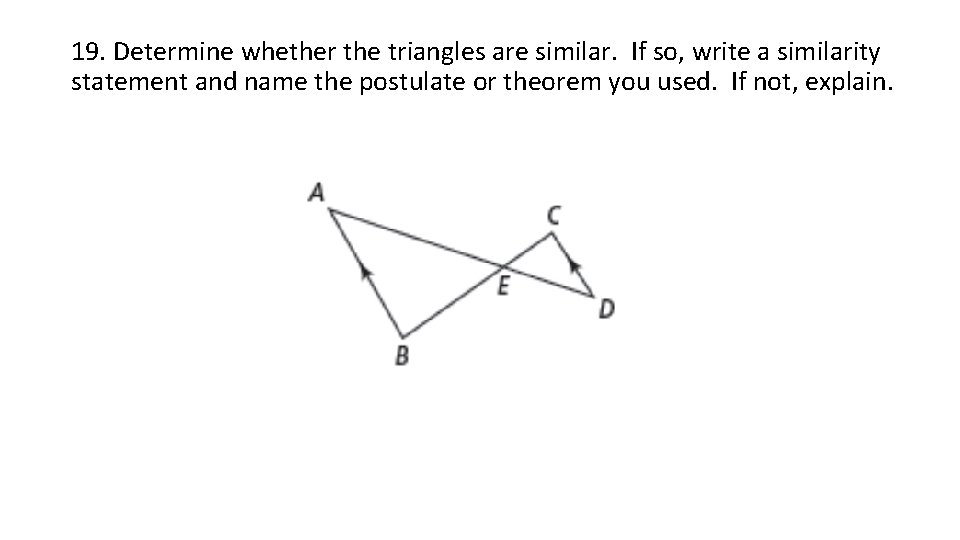
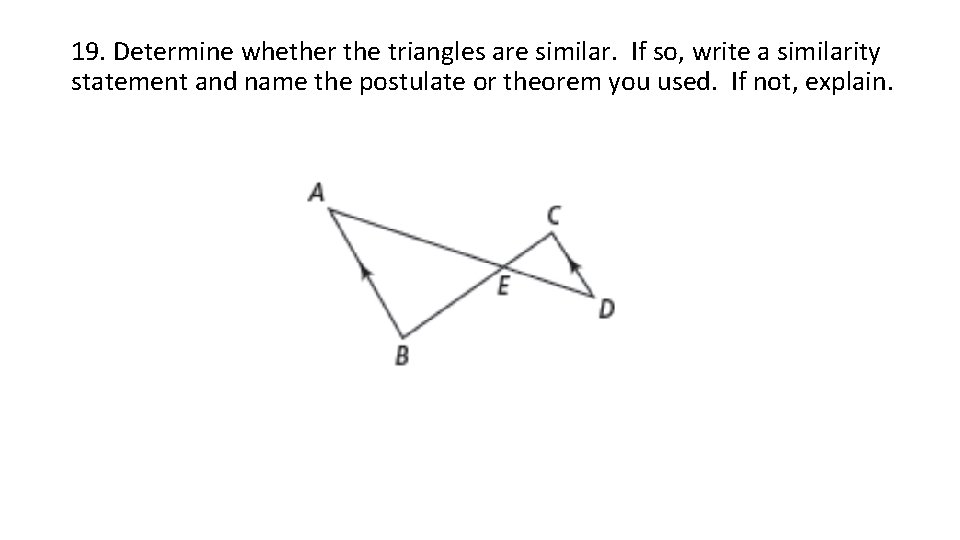
19. Determine whether the triangles are similar. If so, write a similarity statement and name the postulate or theorem you used. If not, explain.
19. Determine whether the triangles are similar. If so, write a similarity statement and name the postulate or theorem you used. If not, explain.
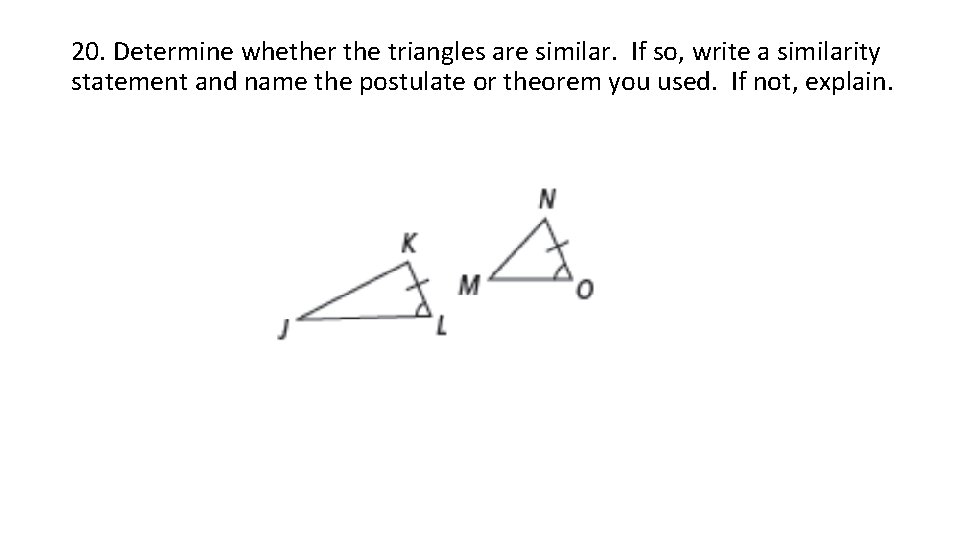
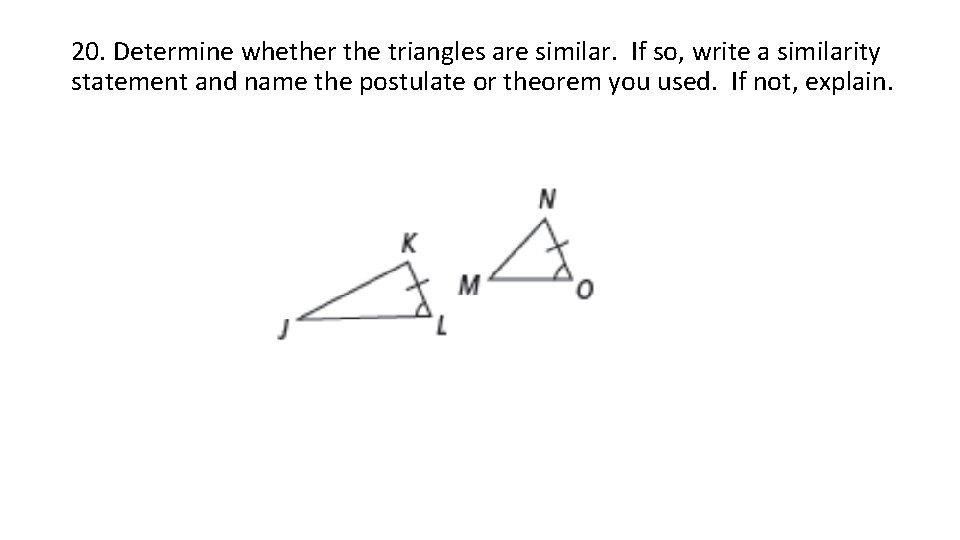
20. Determine whether the triangles are similar. If so, write a similarity statement and name the postulate or theorem you used. If not, explain.
20. Determine whether the triangles are similar. If so, write a similarity statement and name the postulate or theorem you used. If not, explain.
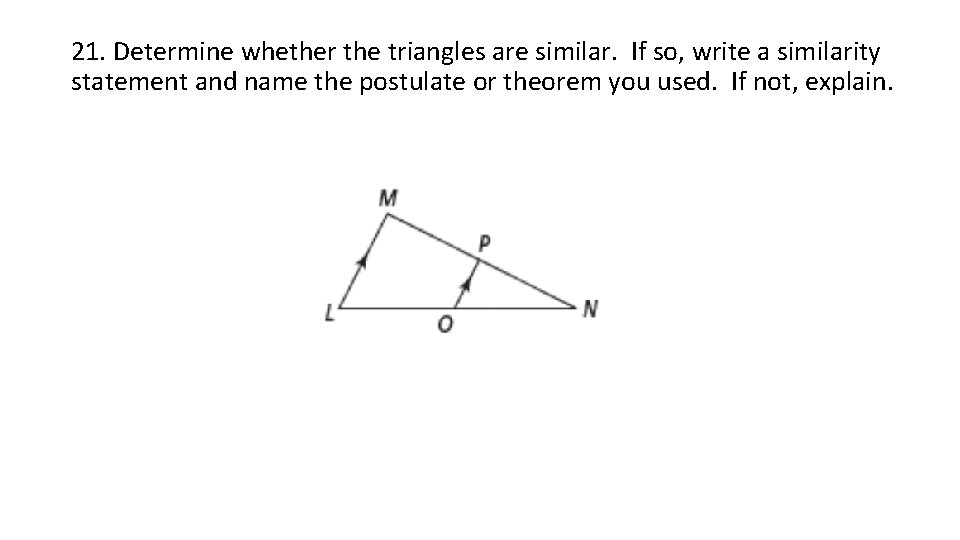
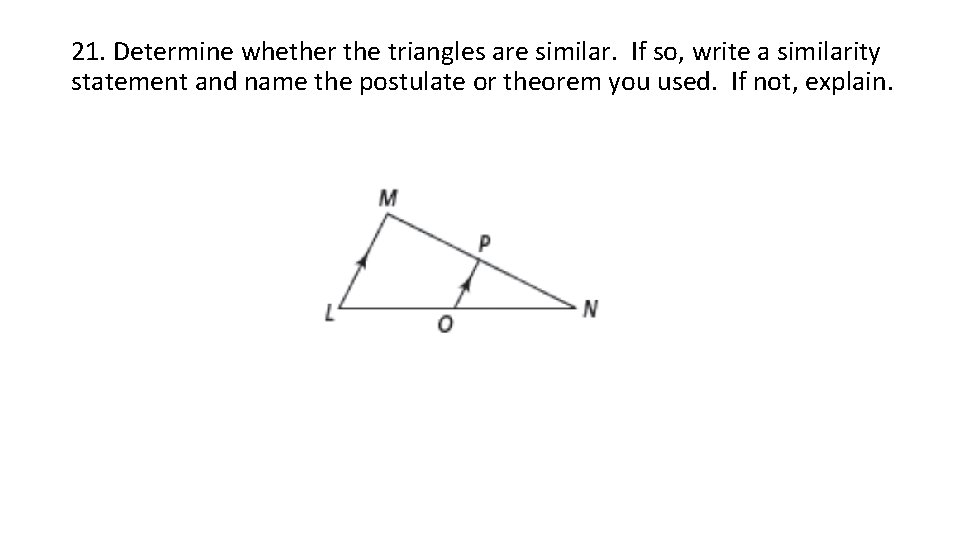
21. Determine whether the triangles are similar. If so, write a similarity statement and name the postulate or theorem you used. If not, explain.
21. Determine whether the triangles are similar. If so, write a similarity statement and name the postulate or theorem you used. If not, explain.
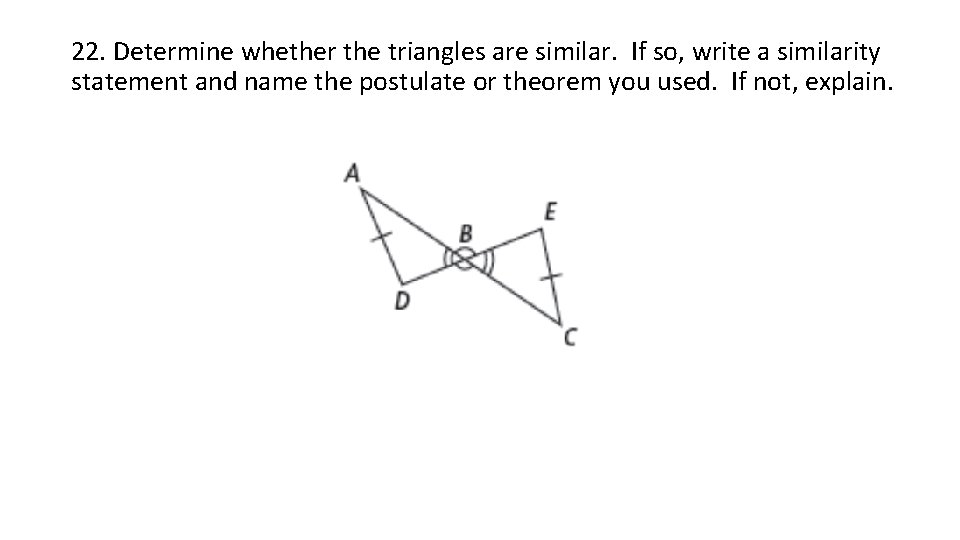
22. Determine whether the triangles are similar. If so, write a similarity statement and name the postulate or theorem you used. If not, explain.
22. Determine whether the triangles are similar. If so, write a similarity statement and name the postulate or theorem you used. If not, explain.
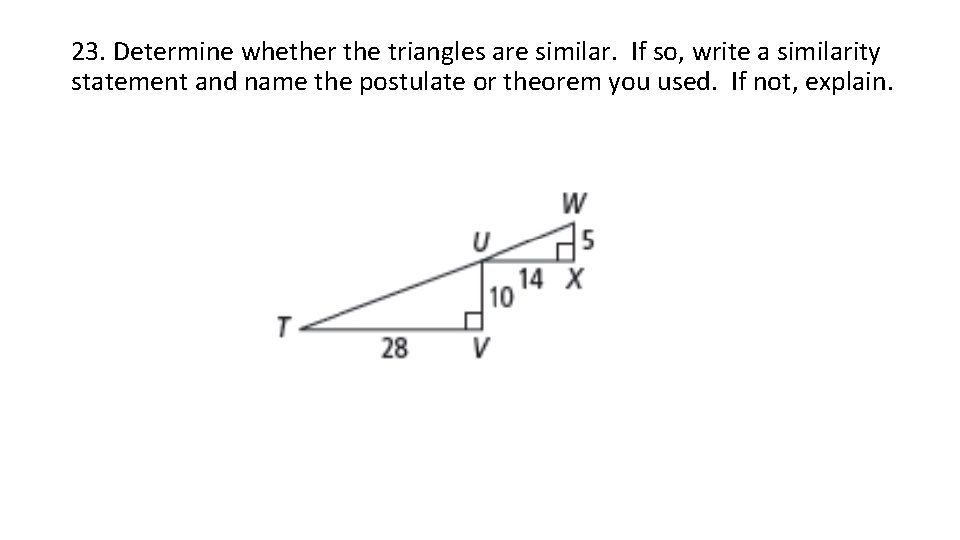
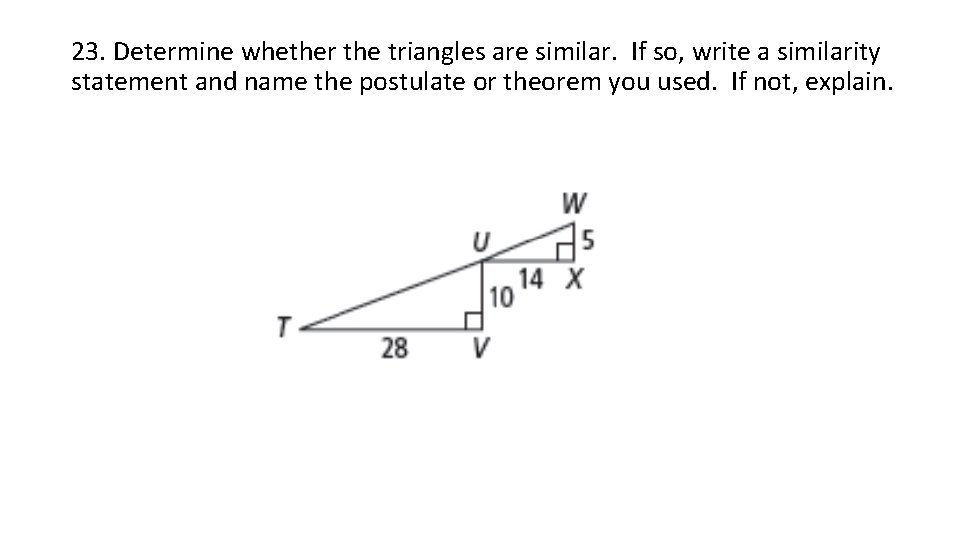
23. Determine whether the triangles are similar. If so, write a similarity statement and name the postulate or theorem you used. If not, explain.
23. Determine whether the triangles are similar. If so, write a similarity statement and name the postulate or theorem you used. If not, explain.
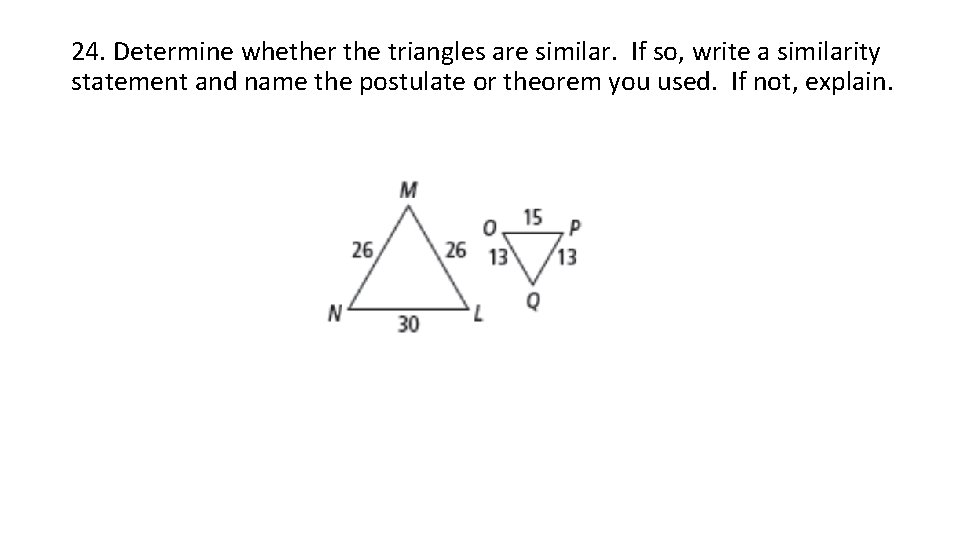
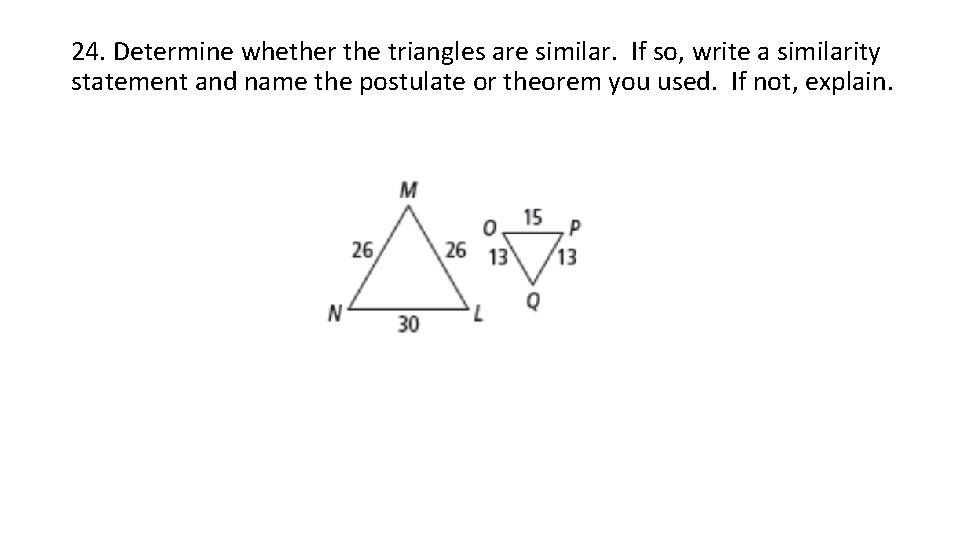
24. Determine whether the triangles are similar. If so, write a similarity statement and name the postulate or theorem you used. If not, explain.
24. Determine whether the triangles are similar. If so, write a similarity statement and name the postulate or theorem you used. If not, explain.
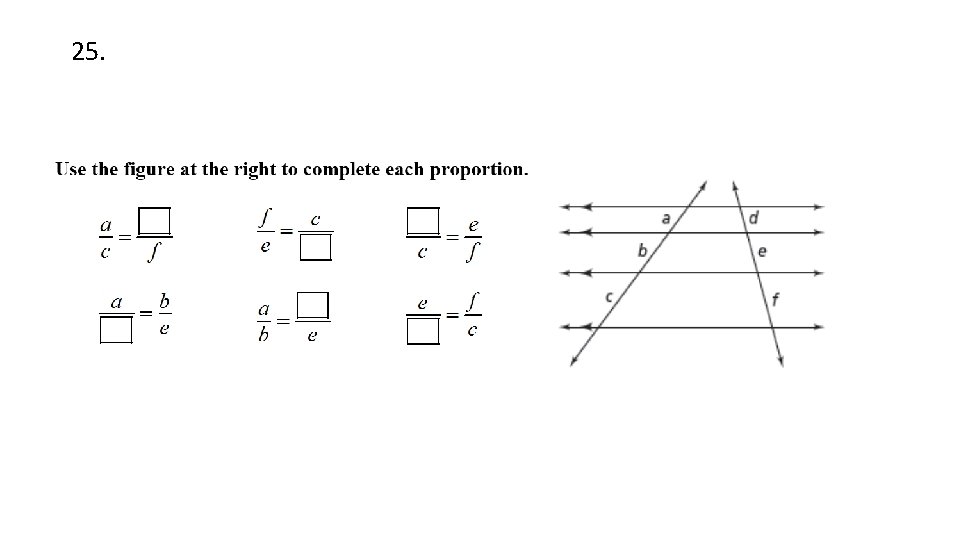
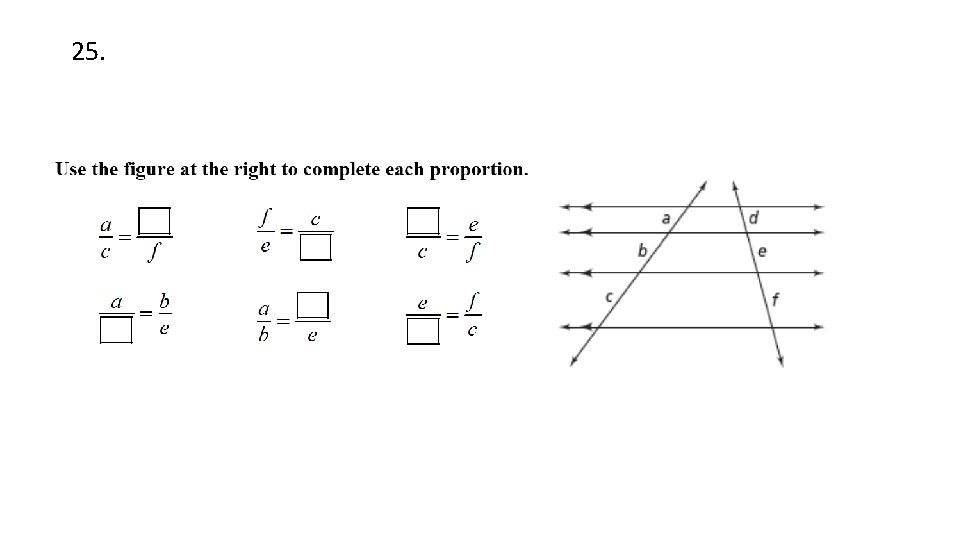
25.
25.
THE END!!!